Bathroom cleaning
How to Clean a Basin and Faucet Limescale
Remove soap film and limescale gently for the material
Overview
Faucet finishes, basin materials, and stoppers vary. Check the manufacturer care instructions and begin with soft cloths, water, and a mild compatible product; vinegar, acidic descaler, and abrasive tools are not universal methods.
Tools needed
- Two soft cotton cloths
- Soft non-abrasive sponge
- Warm water
- Mild product compatible with the material
- Small soft brush only where permitted
- Dry cloth
- Cleaning gloves
Cleaning steps
Clear the basin and identify materials
Remove personal items, identify ceramic, stone, plated metal, or other finishes, and check care instructions.
Dry the floor and rinse loose soil
Remove water underfoot, then rinse hair, toothpaste, and loose soil from the basin.
Clean the stopper and drain rim
Remove only an approved stopper and wipe reachable dirt with a soft cloth or brush. Never reach blindly into the drain.
Clean the basin with a soft sponge
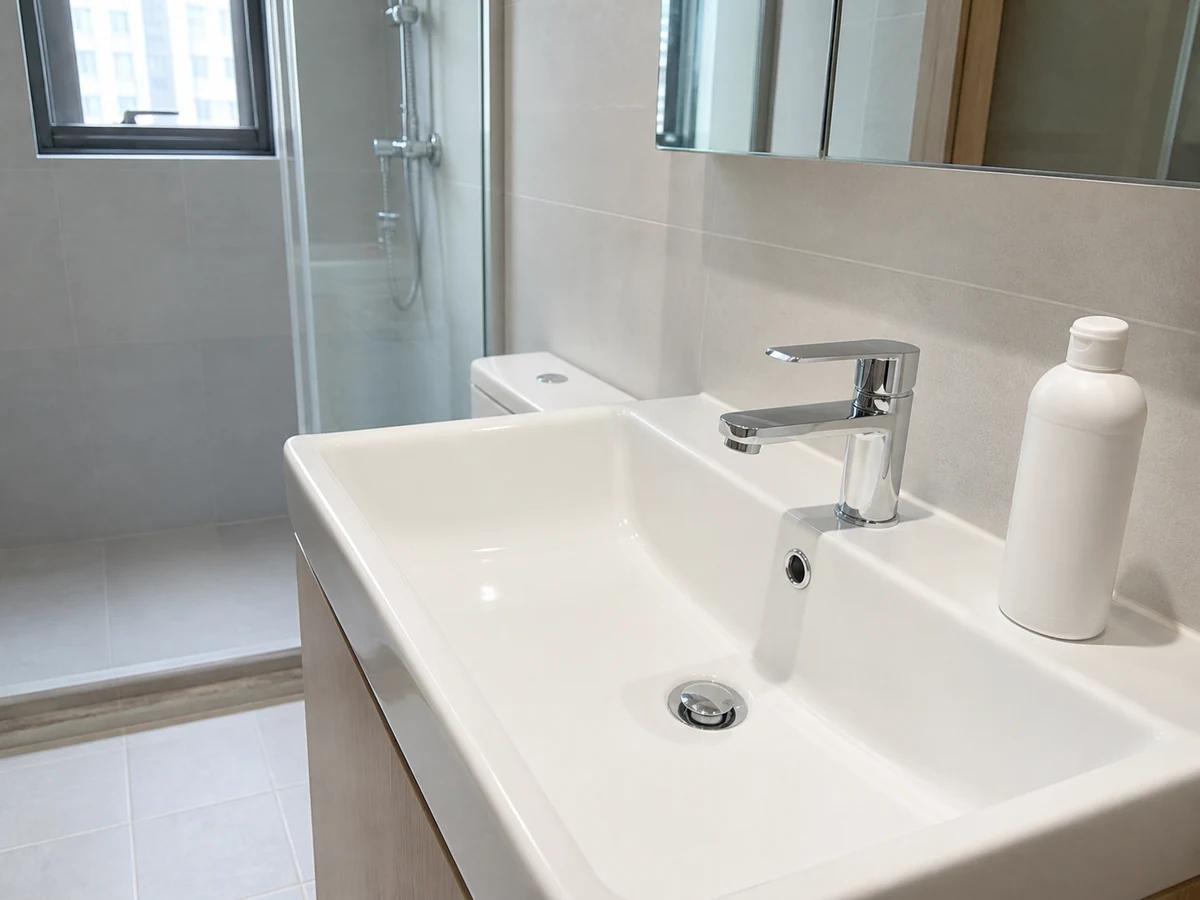
Put a little compatible mild product on the sponge and clean the rim, bowl, base, and around the overflow opening.
Clean the faucet with a soft cloth
Apply product to the cloth, not directly to the faucet, and gently wipe the outlet, handle, base, and outer seams.
Treat limescale as the maker directs
Use only the specified descaler and contact time where care instructions allow it; patch-test first.
Rinse and dry
Remove all product, especially at seams and plated surfaces, then dry basin and faucet with a soft cloth.
Refit and test drainage
Refit the stopper correctly and briefly run water. Report persistent leakage, looseness, or slow drainage.
Common mistakes
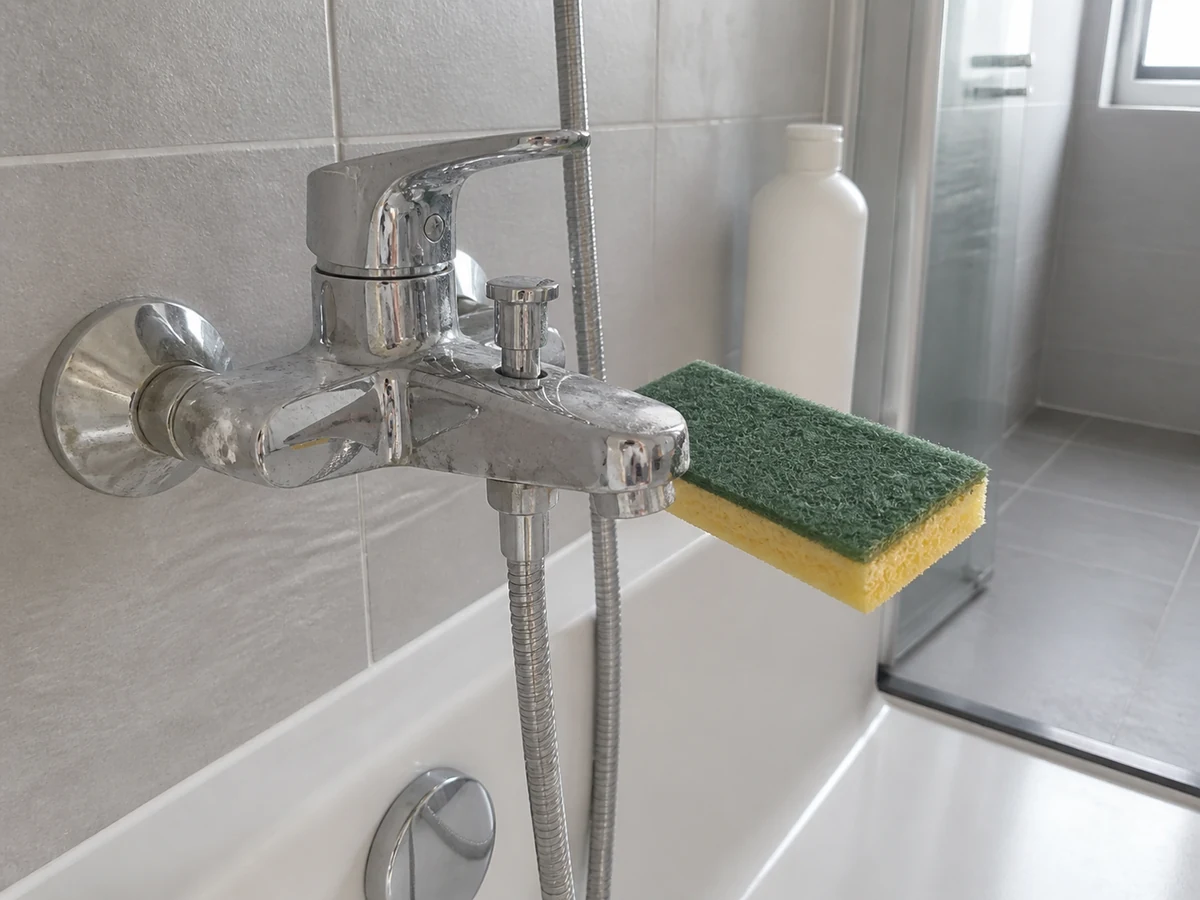
Scrubbing a finish with an abrasive sponge
✓ Correct actionUse a soft cotton cloth and mild compatible product.
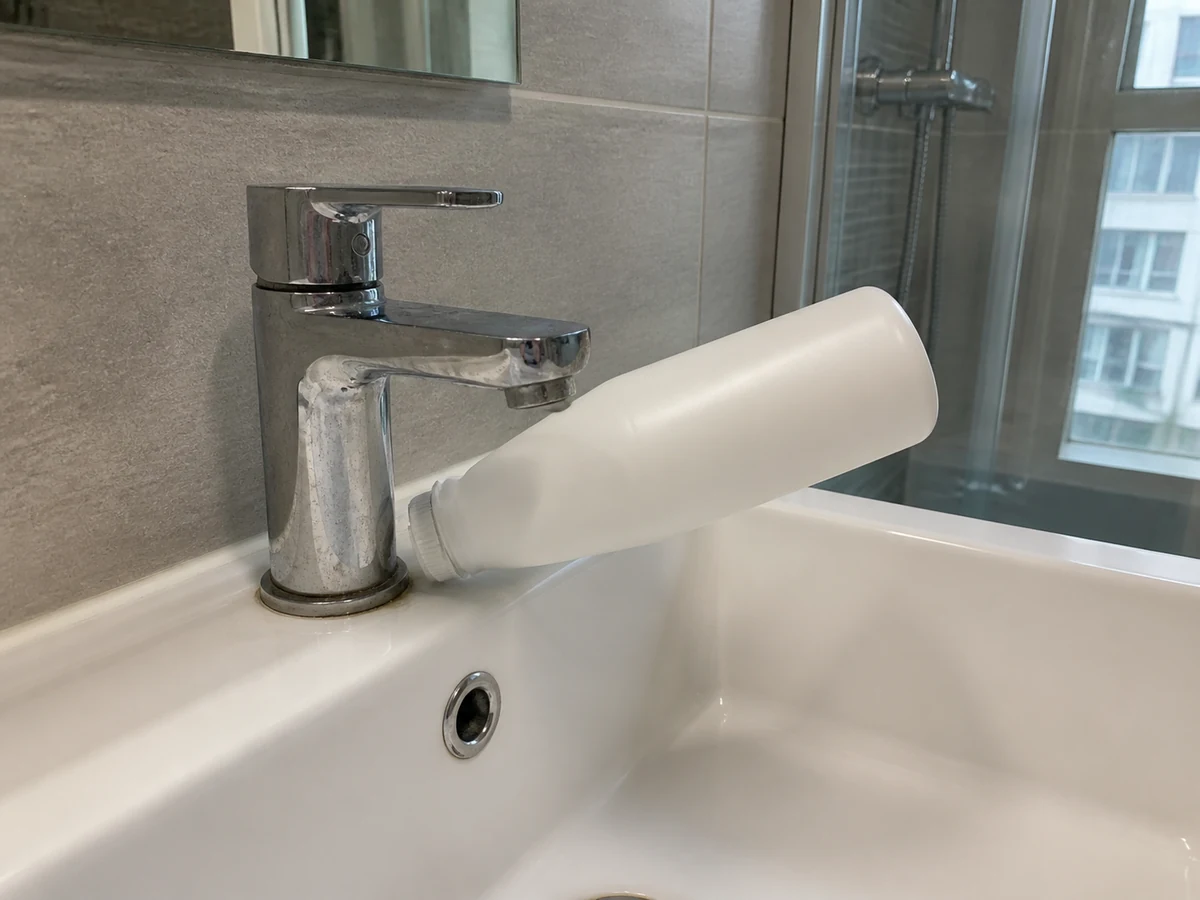
Spraying concentrate directly on the faucet
✓ Correct actionPut a small amount on a cloth so it cannot run into seams.
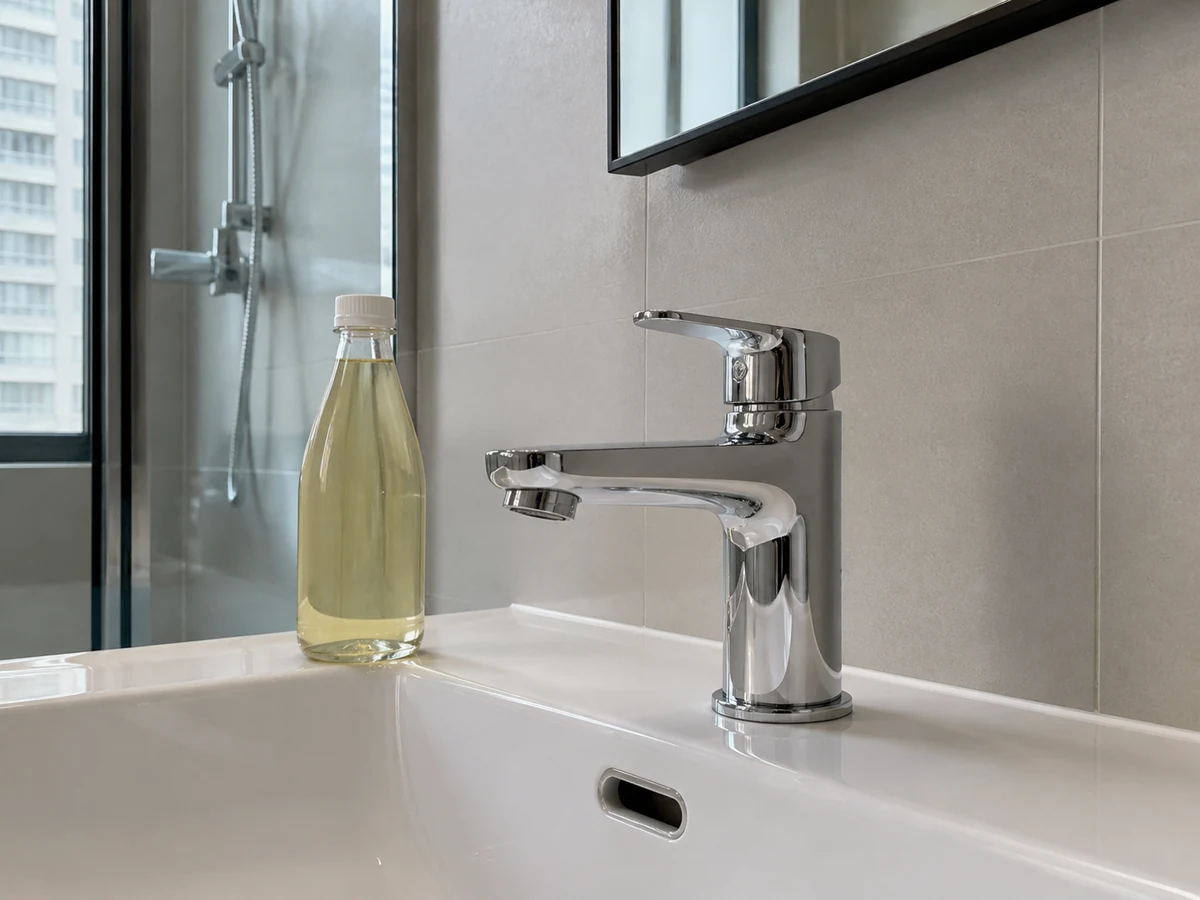
Treating vinegar as universal faucet descaler
✓ Correct actionFollow the maker; some finishes must not receive acidic products.
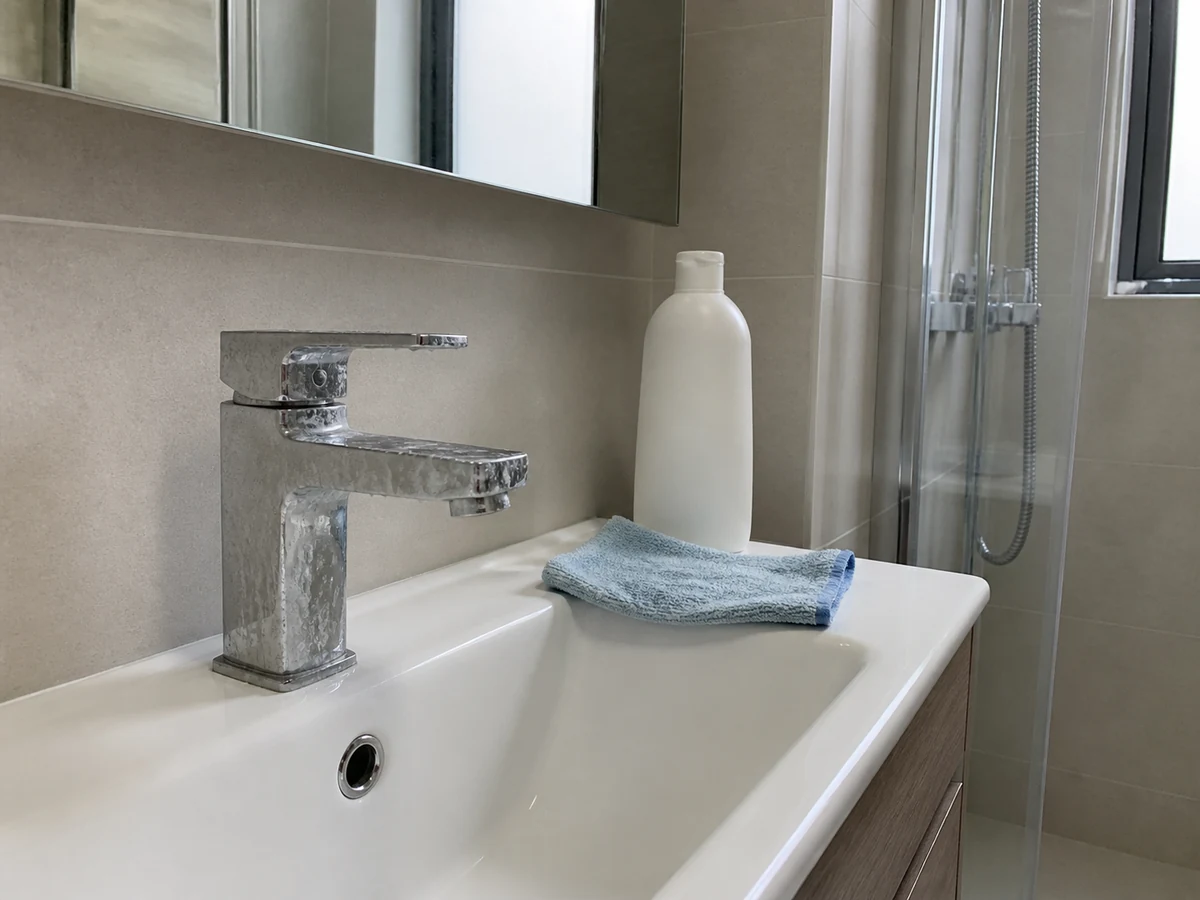
Leaving cleaner residue or water behind
✓ Correct actionRinse completely and dry with a soft cloth.
Practical tips
Tips for helpers
- Dry faucet and basin edges after use to slow water spots.
- Patch-test and continue only if there is no colour change or clouding.
- Use a slightly damp cloth at seams and do not let liquid pool.
Tips for employers
- Provide care instructions for special stone, finishes, or sensor faucets.
- Arrange repair for leaks, looseness, or persistent slow drainage; do not ask a helper to dismantle the faucet.
Completion checklist
Checked 0 / 8