Elderly households
How to Clean a Bathroom Floor and Reduce Slip Risk
Close the route, remove water and residue, then reopen only when fully dry
Overview
Wet flooring, cleaner residue, doorway clutter and an active route can all increase slip risk. This is a general cleaning process, not medical or rehabilitation advice, and it cannot guarantee slip prevention. Follow professional advice for an elder’s specific mobility or assistive-device needs.
Tools needed
- Bathroom-only mop or soft brush
- Two clearly separate clean-water containers
- Original labelled floor-compatible cleaner
- Squeegee and absorbent cloths
- Stable route barrier kept out of the walkway
- Slip-resistant footwear and label-directed gloves
Cleaning steps
Arrange an alternative route
Tell the household which area is being cleaned and keep elders, children and pets on another dry route. Remove doorway and floor clutter.
Remove standing water first
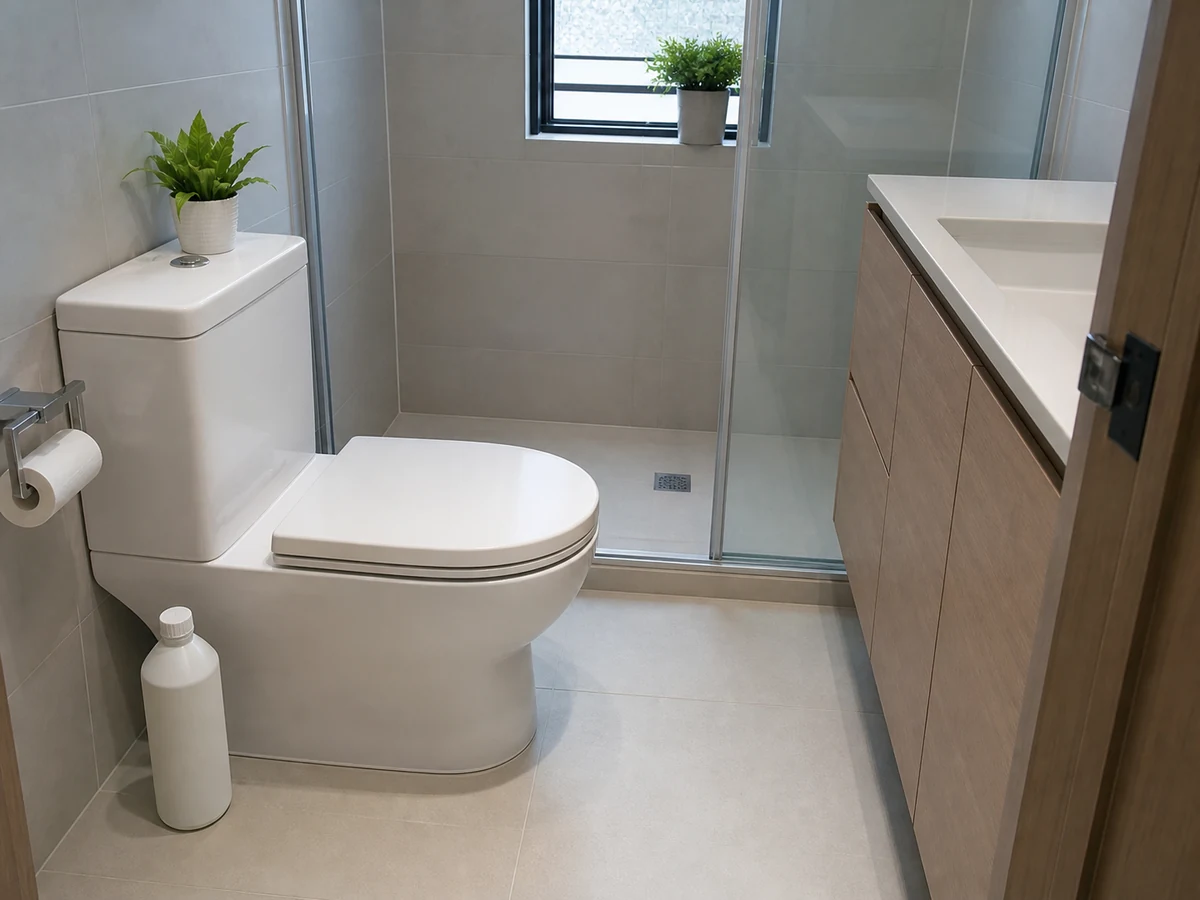
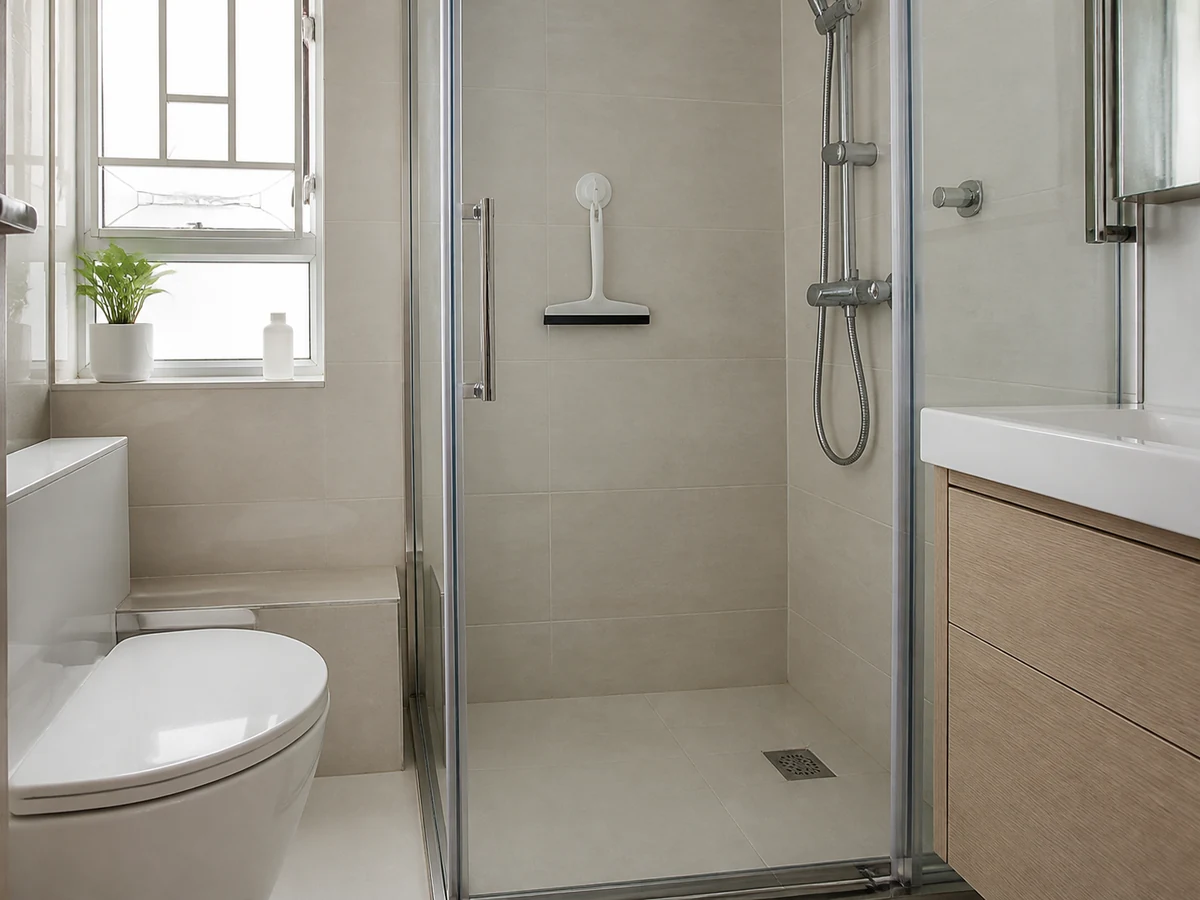
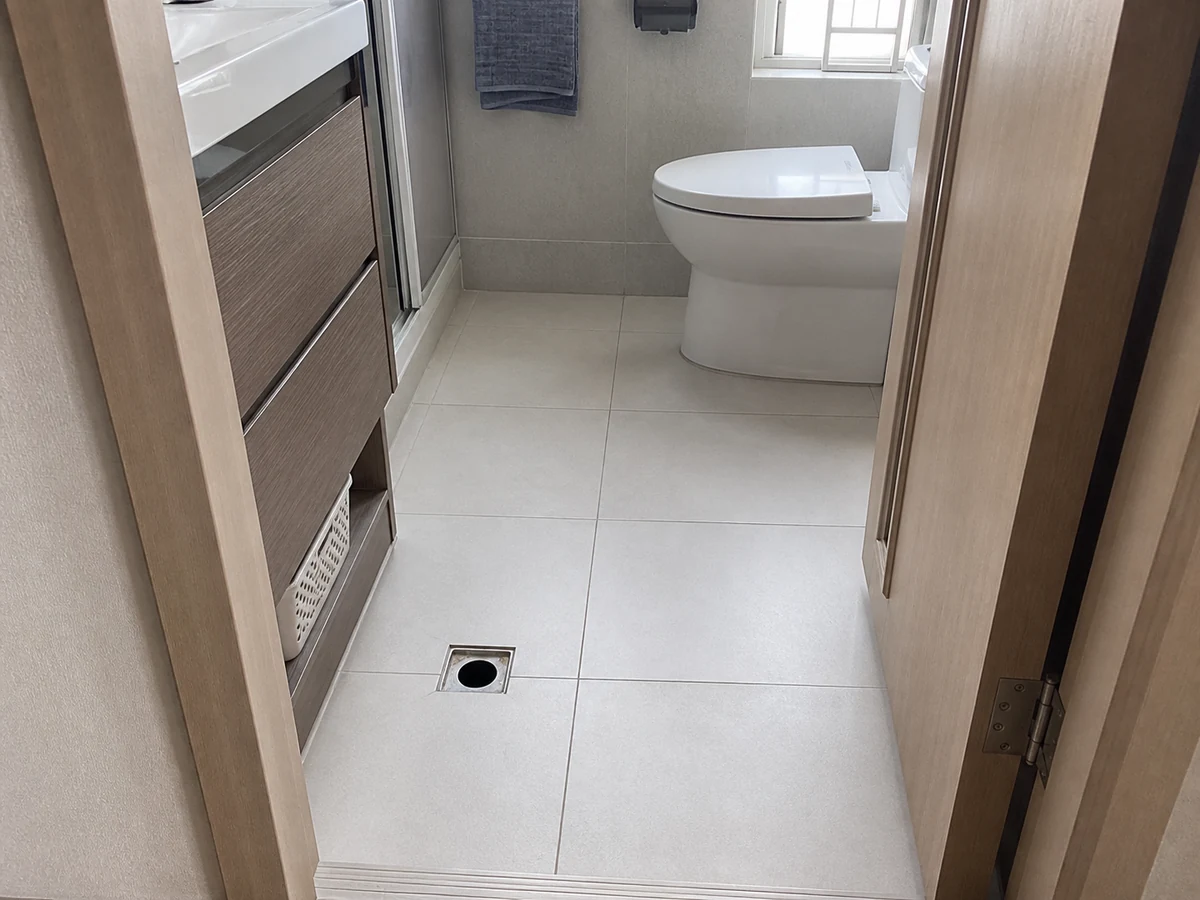
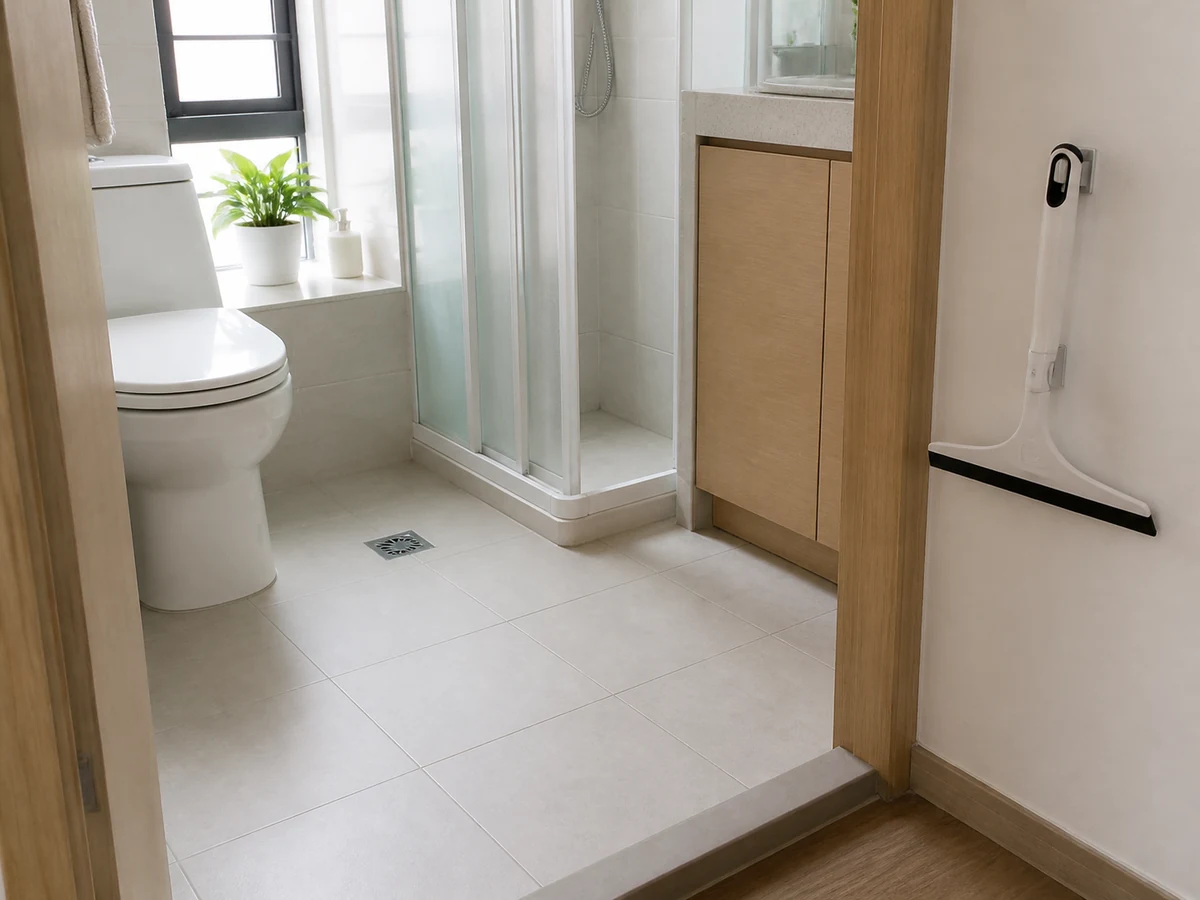
Use a squeegee and absorbent cloths, keep the drain clear, and prevent water entering the dry zone or corridor.
Prepare one label-directed product
Use only an original labelled cleaner compatible with the floor. Follow its amount and ventilation directions; never mix cleaners.
Clean from far side to exit
Work in small sections with minimal solution from the inner bathroom toward the exit, keeping handrails, stool legs and drain visible.
Remove cleaner residue
Rinse or wipe exactly as the label directs, then squeegee away wastewater. Repeat with clean water if the floor still feels slippery or soapy.
Dry fully before reopening
Dry corners, threshold and beneath the mat, ventilate, and reopen only after the whole route is visibly and physically dry and clear.
Common mistakes
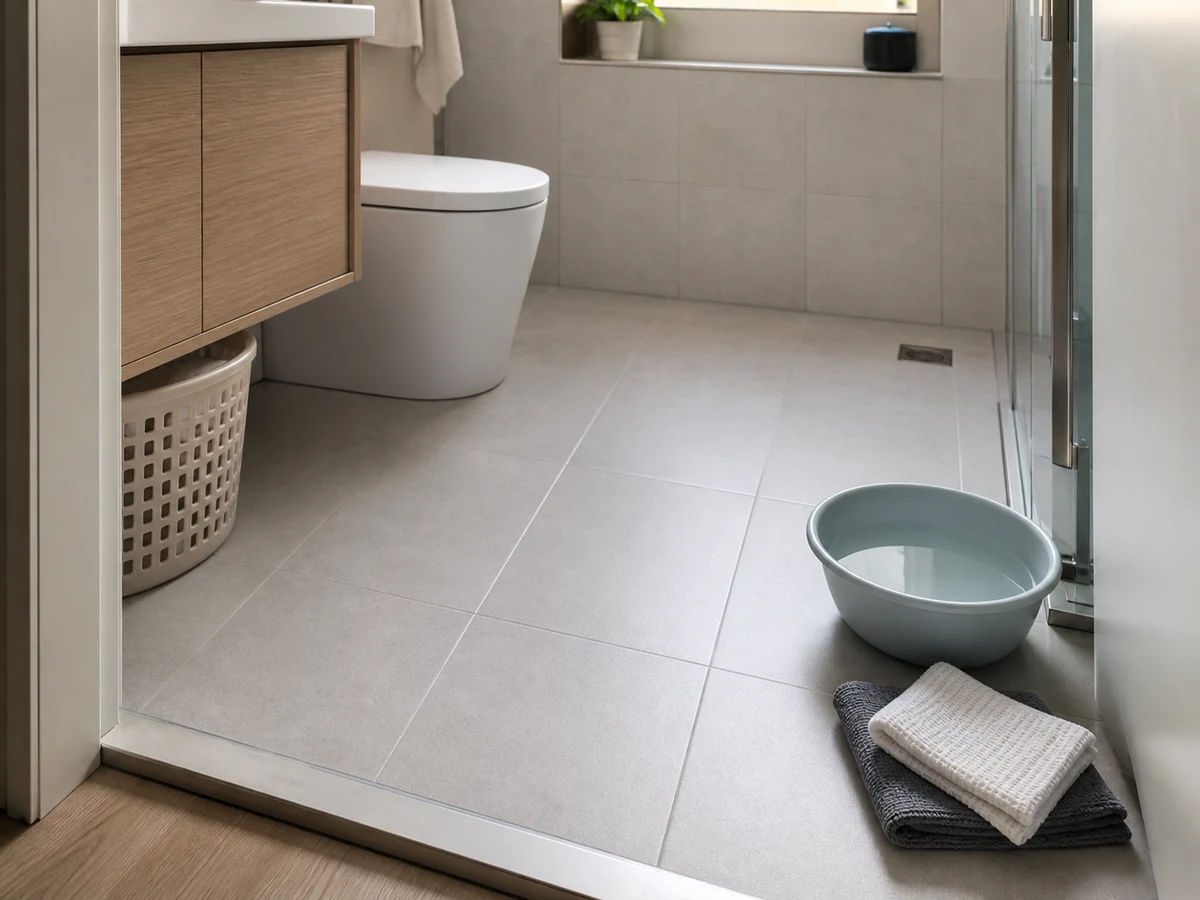
Removing water but leaving slippery cleaner residue
✓ Correct actionUse clean water as directed until the surface no longer feels slippery or soapy.
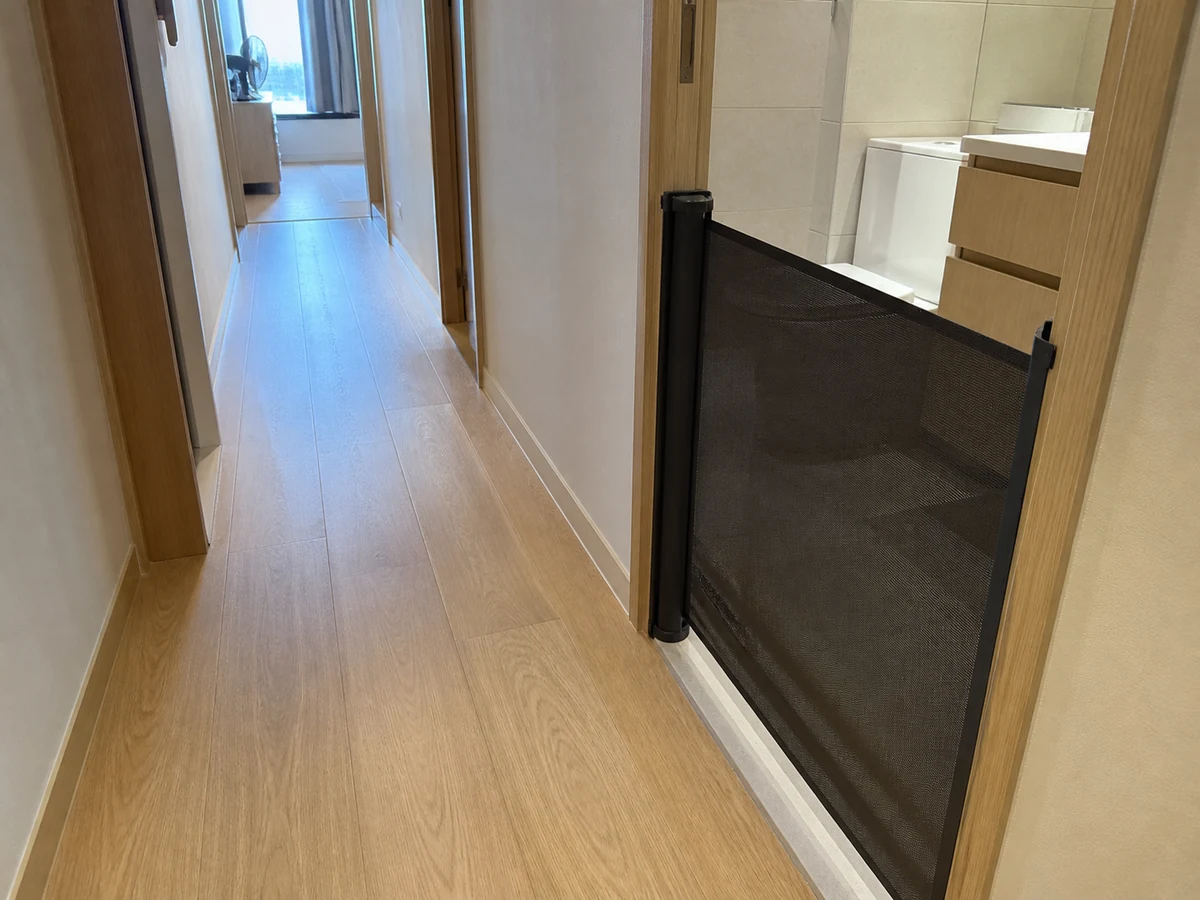
Allowing traffic through during cleaning
✓ Correct actionMaintain an alternative route and barrier until the floor is fully dry.
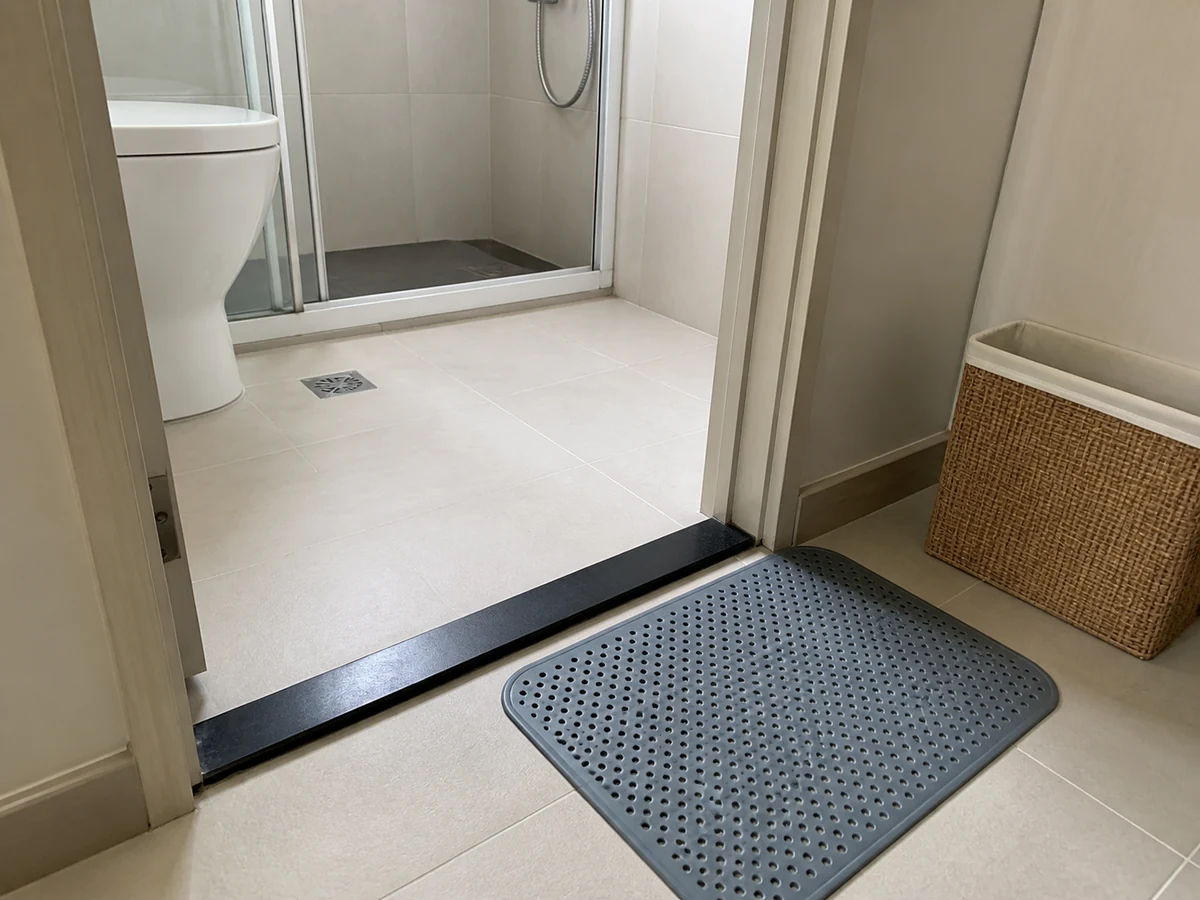
Using a towel or cardboard as a floor mat
✓ Correct actionRemove loose trip items and use only suitable stable anti-slip products.
Promising the cleaned floor cannot cause a fall
✓ Correct actionState only that environmental risk is reduced and keep monitoring for water and obstacles.
Practical tips
Tips for helpers
- Clean at the quietest time and tell everyone first.
- Always check the threshold, beneath the mat and around the drain last.
Tips for employers
- Provide another toilet or a clear alternative route during drying.
- Arrange qualified inspection for persistent pooling, poor drainage or damaged flooring.
Completion checklist
Checked 0 / 6