Bathroom cleaning
How to Clean a Bathroom Floor Drain and Reduce Odour
Remove visible debris and maintain the water-trap seal
Overview
Drain odour may come from hair, soap film, a dry water trap, leakage, or pipe faults. A household cleaner should handle only reachable parts and restore clean water; never dismantle pipes or combine drain chemicals.
Tools needed
- Durable cleaning gloves
- Long-handled tongs
- Small soft brush
- Warm water and mild cleaner
- Waste bag
- Water measuring container
- Clean water and dry cloth
Cleaning steps
Ventilate and control the wet area
Use ventilation, remove mats and personal items, and keep others away from the slippery work area.
Check for faults and sharp objects
Look for backflow, sewage, cracks, loose parts, needles, or broken glass. Stop and report any of these.
Glove up and remove visible hair
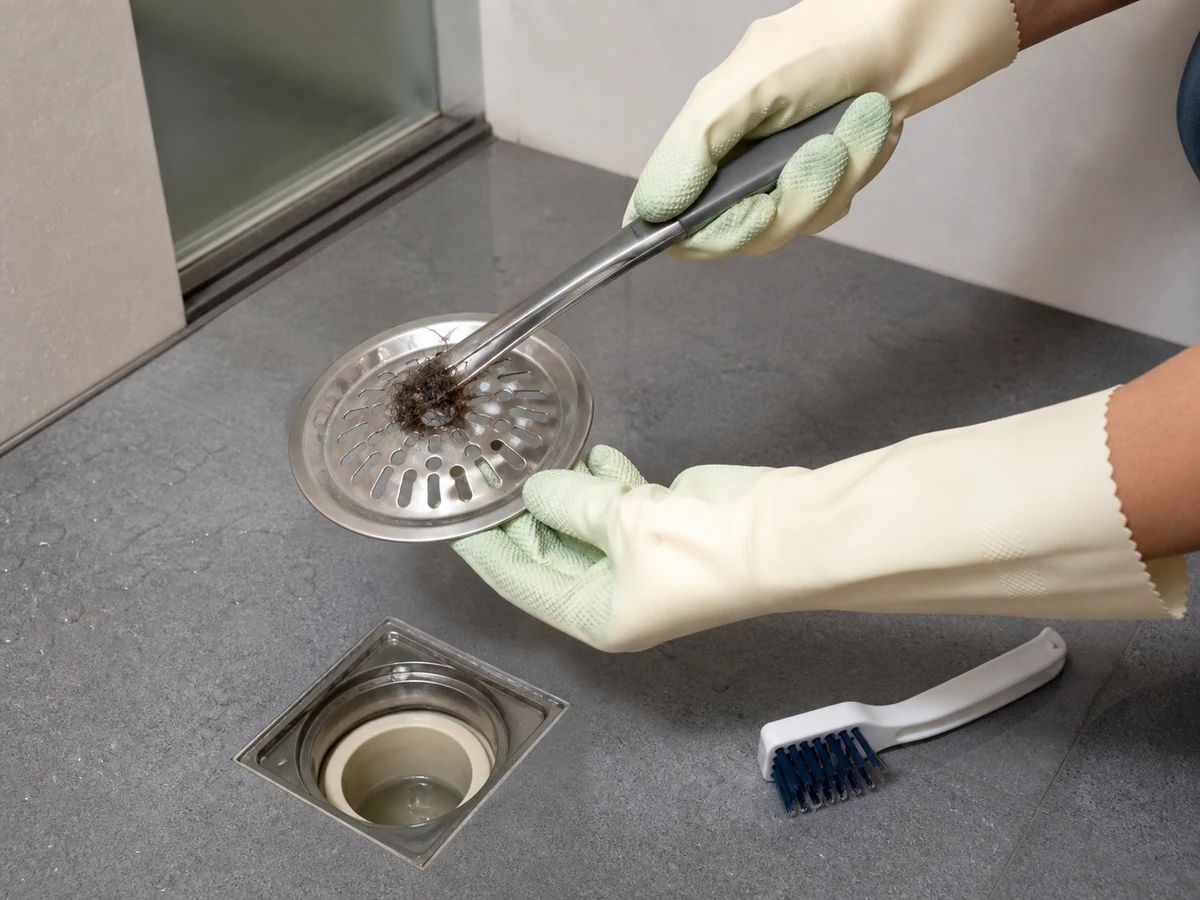
Use tongs to lift hair and debris from the surface and grate into the bin. Never reach a hand into the drain.
Remove only a lift-out grate
Lift only a grate or cover designed to be removable and note its direction. Never dismantle pipes, traps, or fixed parts.
Clean the grate and drain edge
Use warm water, mild cleaner, and a soft brush on reachable surfaces, then rinse with clean water.
Refit and test drainage
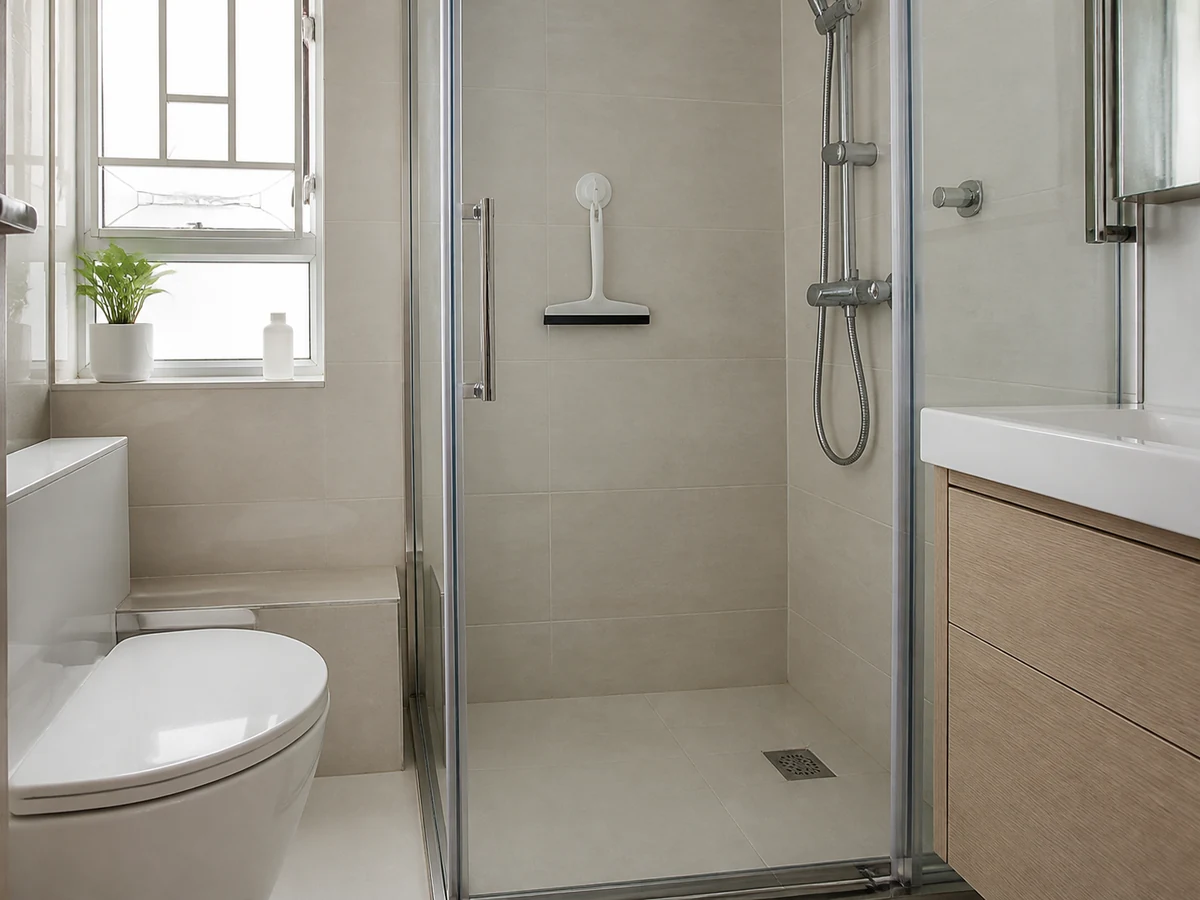
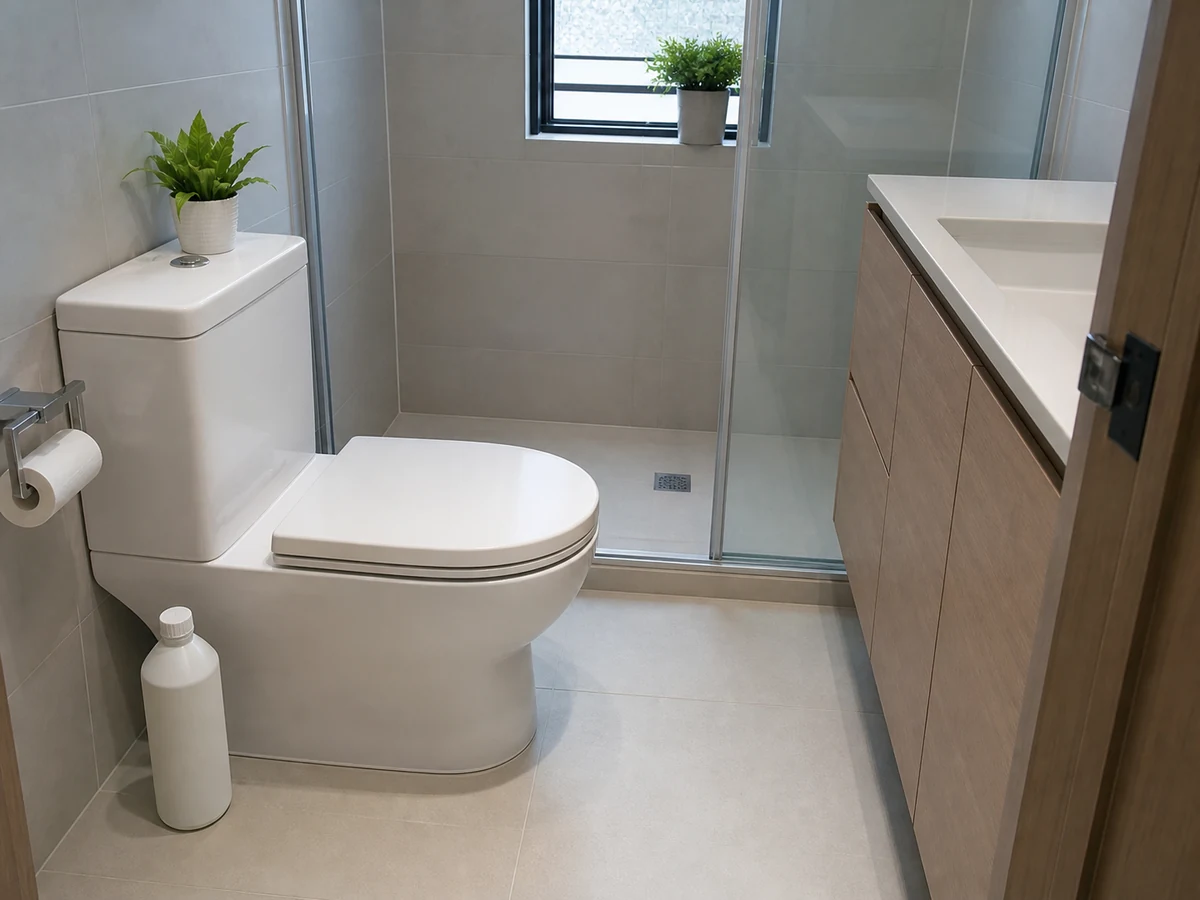
Seat the grate or cover flat and pour in a small amount of clean water to confirm free flow without backflow.
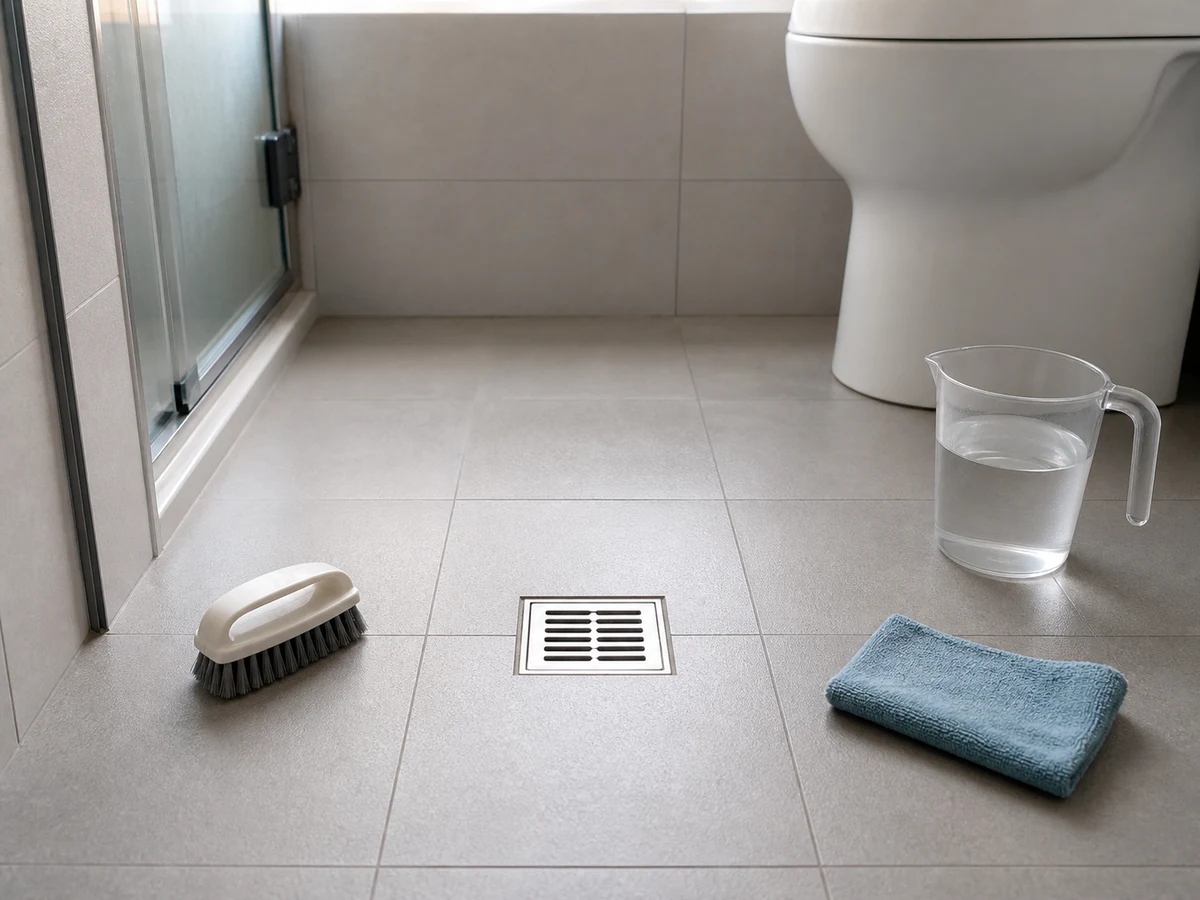
Add half a litre of clean water
Following Hong Kong CHP guidance, pour about 0.5 litre of clean water into every drain once a week to maintain the water seal.
Dry the floor and report persistent odour
Dry the floor and tools. Report odour after water is restored, slow flow, backflow, or leakage for inspection.
Common mistakes
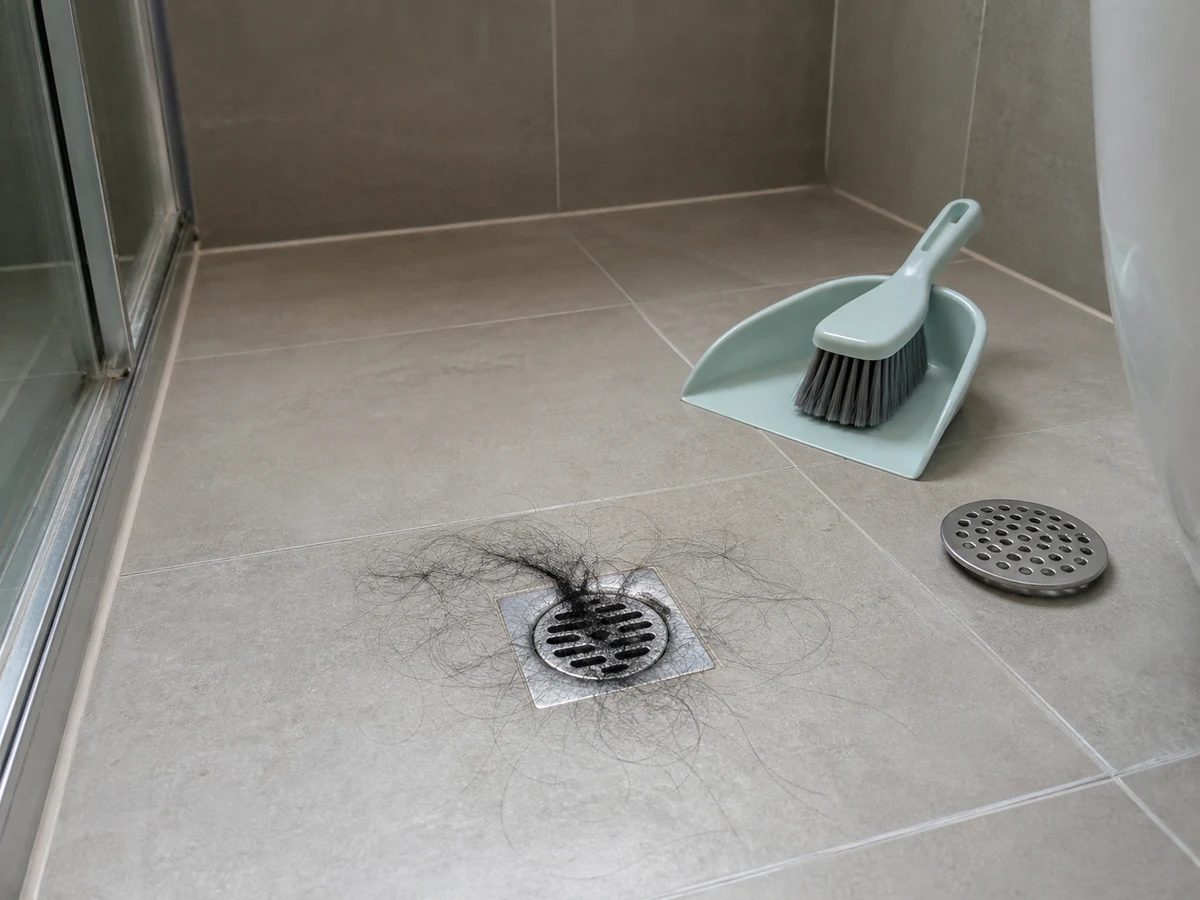
Flushing loose hair into the floor drain
✓ Correct actionLift it with tongs and put it in the bin.
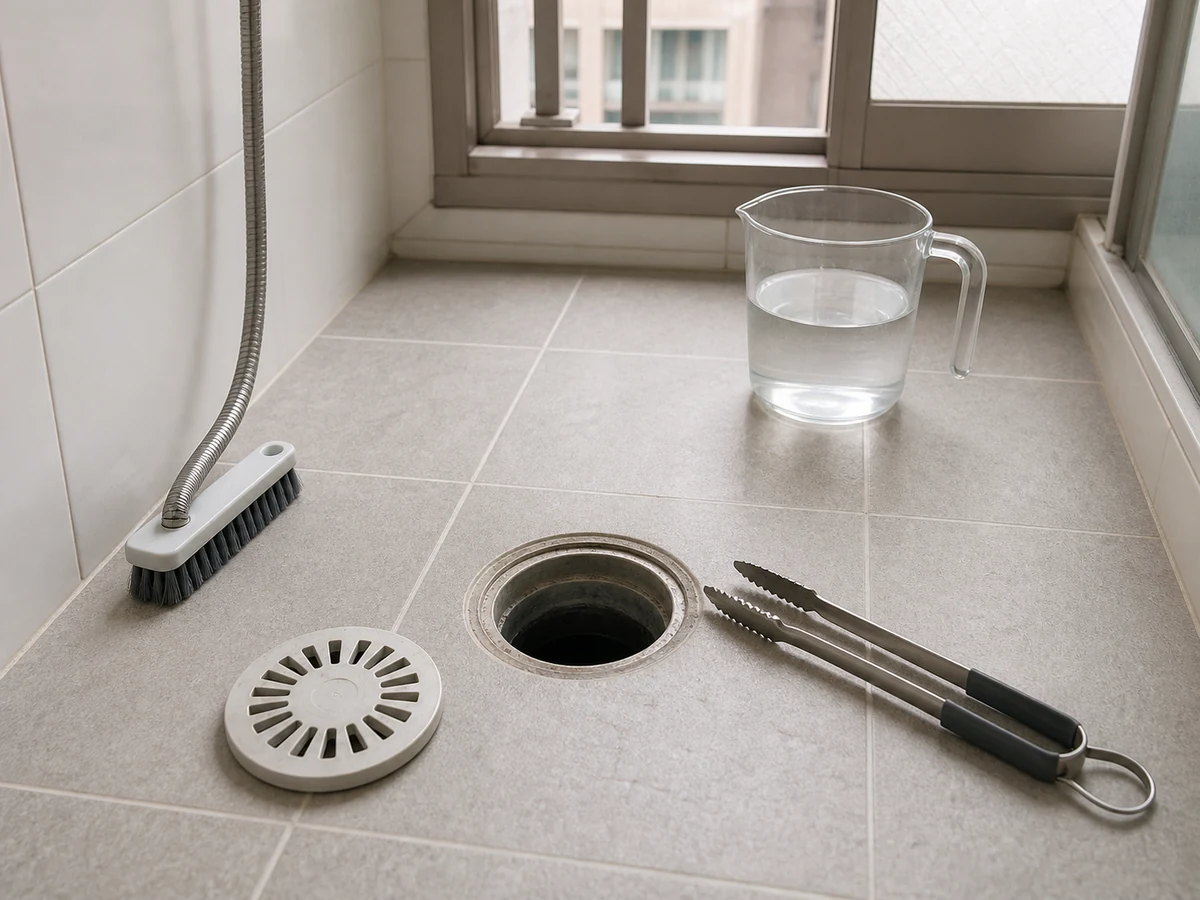
Reaching into the drain or dismantling the trap
✓ Correct actionHandle only visible lift-out parts; refer deeper faults.
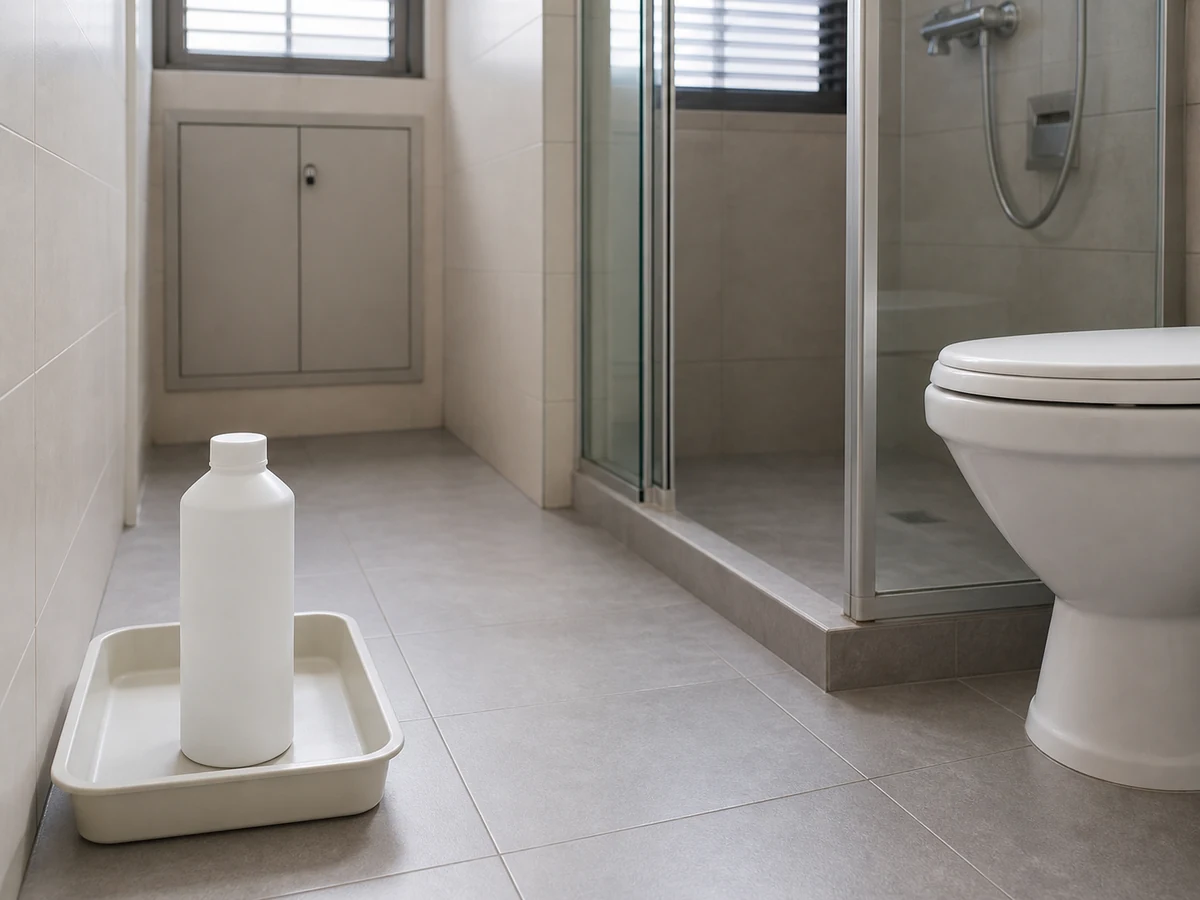
Pouring mixed drain products or bleach
✓ Correct actionNever mix or guess quantities; begin with physical debris removal and clean water.
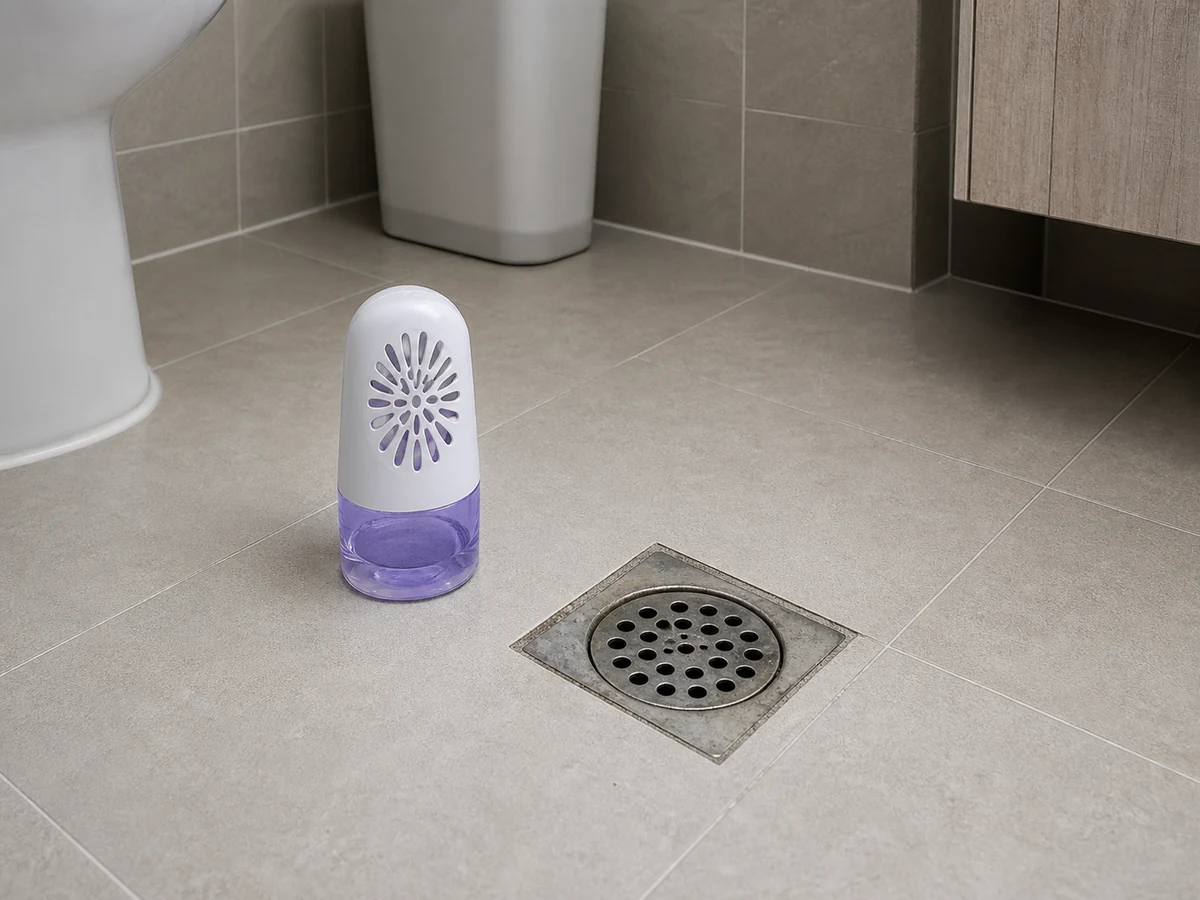
Masking odour without restoring trap water
✓ Correct actionAdd about 0.5 litre weekly and report persistent odour.
Practical tips
Tips for helpers
- Put loose hair in the bin after showering.
- Photograph the grate before lifting so it returns in the correct direction.
- After a long absence, restore water in infrequently used drains.
Tips for employers
- Identify every drain and add weekly water restoration to the housework schedule.
- Arrange professional inspection for persistent odour, backflow, leakage, or deep blockage; do not ask a helper to mix chemicals or dismantle drainage.
Completion checklist
Checked 0 / 8