Cleaning products and safety
How to Store Cleaning Products Safely
Keep every product in its original labelled container, locked away and separate from food
Overview
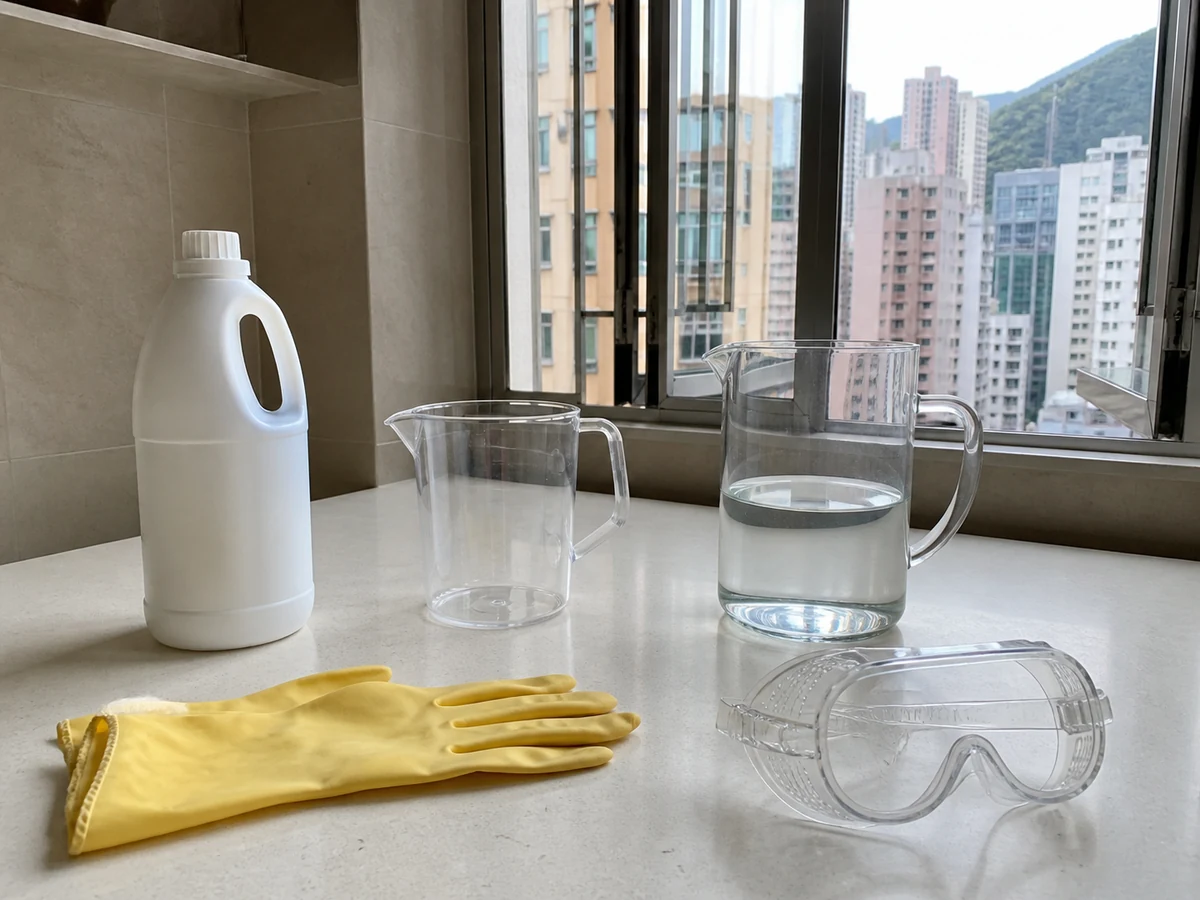
Cleaners, bleach, drain products, pesticides and laundry capsules can cause harm through ingestion, mixing, leaks or mistaken containers. Never decant into a drink bottle or unlabelled container. Do not use a product whose original identity and label cannot be confirmed.
Tools needed
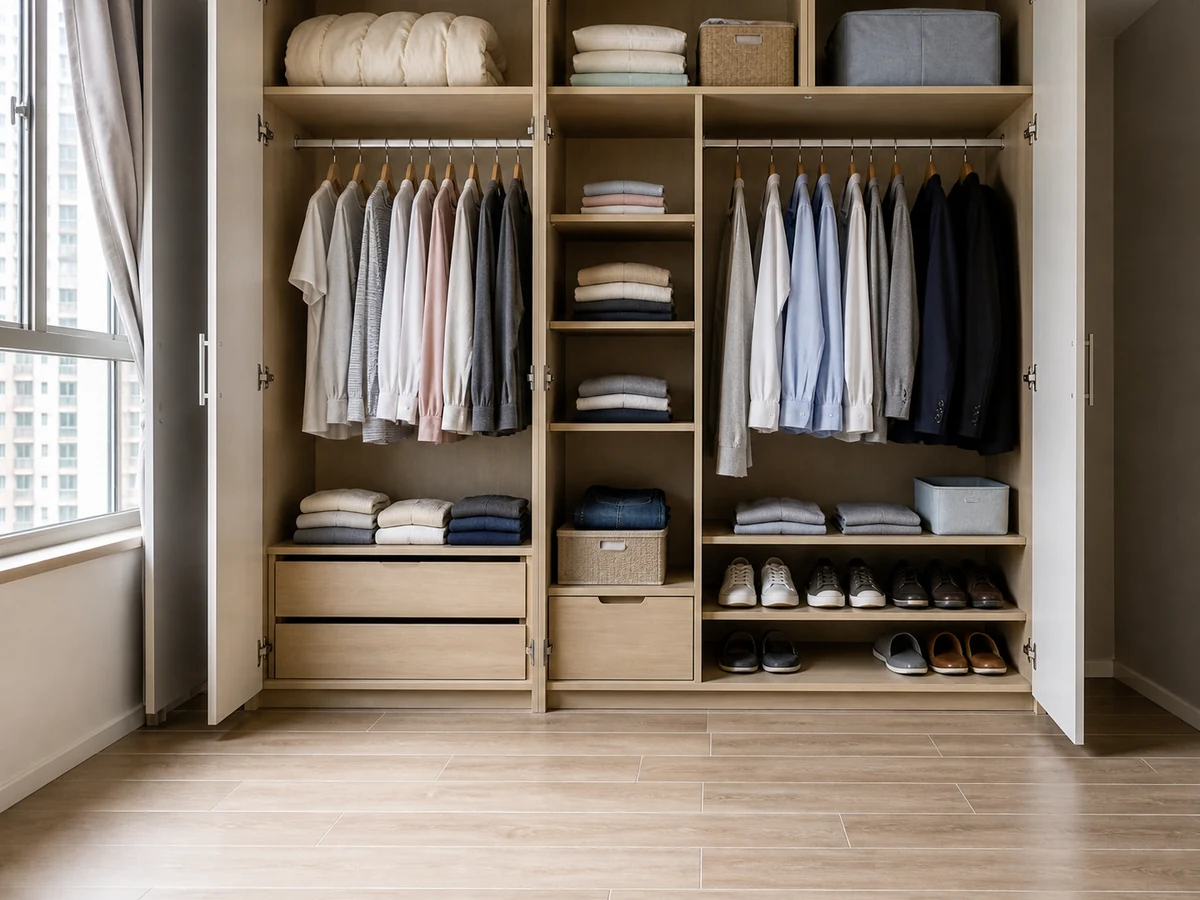
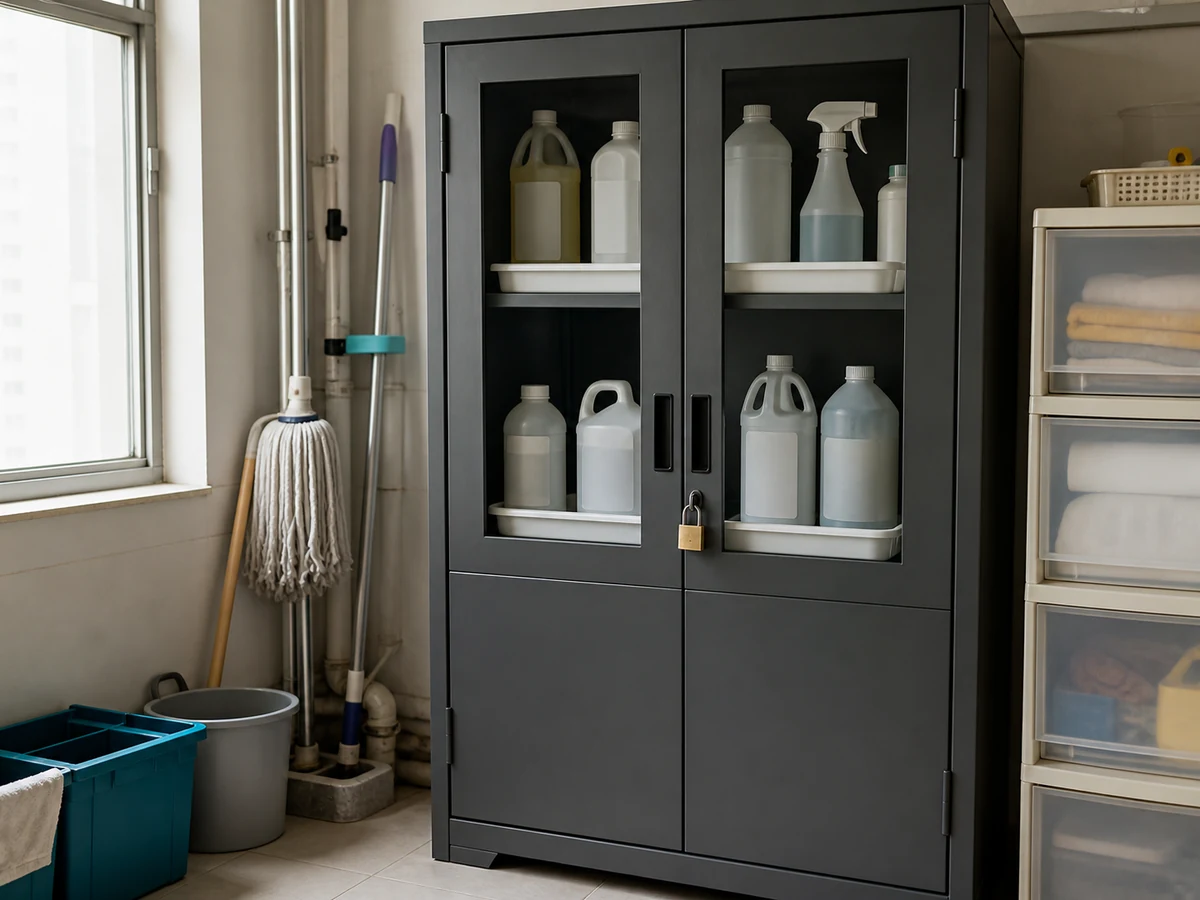
- Designated locked child-inaccessible cabinet
- Stable leak-containment trays
- Products in original complete labels
- Label-compatible separated zones
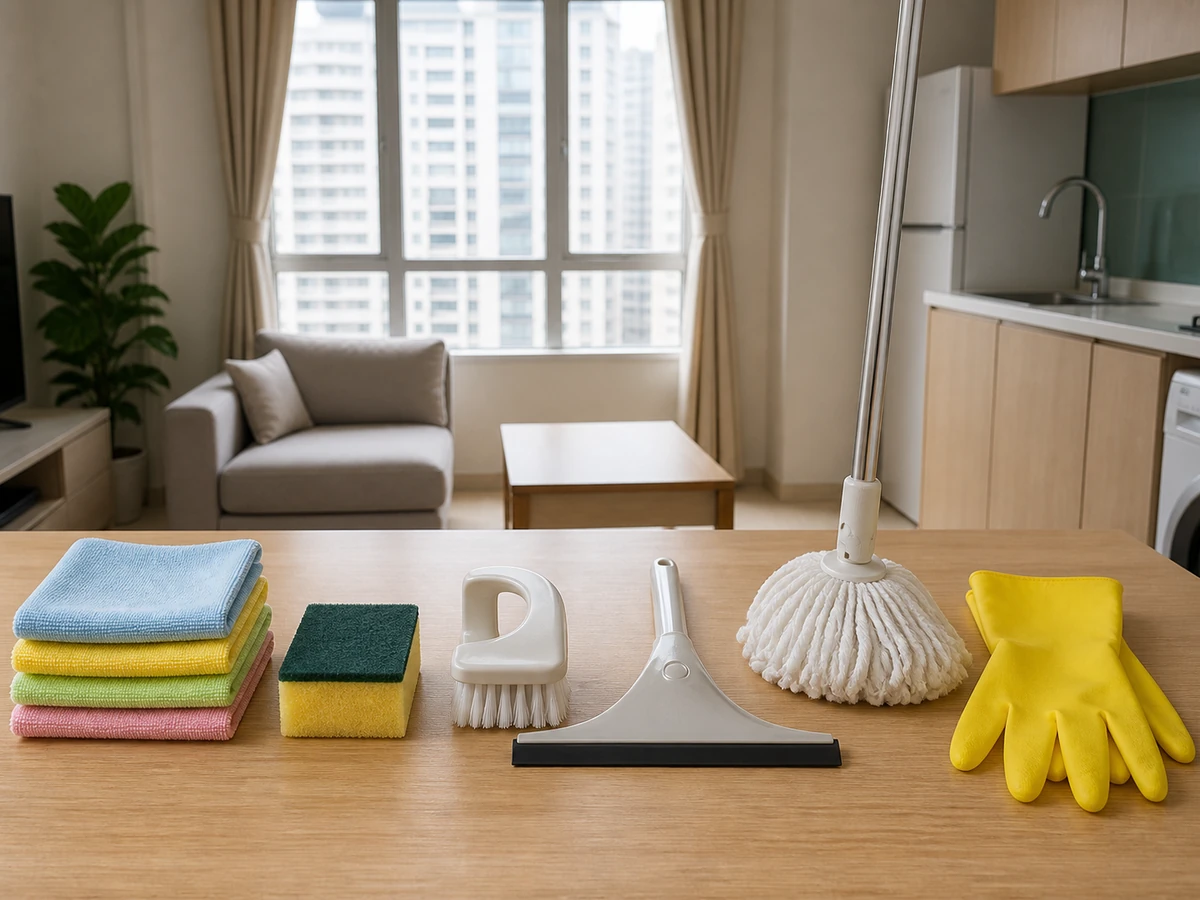
- Dry cloth and label-directed gloves
Cleaning steps
Check every original label
Confirm that identity, use, hazards, storage, ventilation and first-aid directions are readable. Isolate unknown or unlabelled product and tell the employer.
Keep original container sealed upright
Tighten the original cap and stand it in a containment tray. Never use a water or soft-drink bottle, food box or any unlabelled container.
Lock in a child-inaccessible cabinet
Use a designated locked cabinet inaccessible to children and pets; height alone is not a lock.
Separate completely from food and medicine
Never share a cabinet or tray with food, drink, tableware, baby bottles, medicine or personal items.
Separate incompatibles by each label
Follow each label for incompatible products, heat, sunlight and ventilation. Never guess which chemicals may share a zone.
Inspect leaks and stock
Check caps, containers and trays. Do not open or combine a leaking, swollen, damaged, expired or unidentifiable product; have the employer use local disposal guidance.
Common mistakes
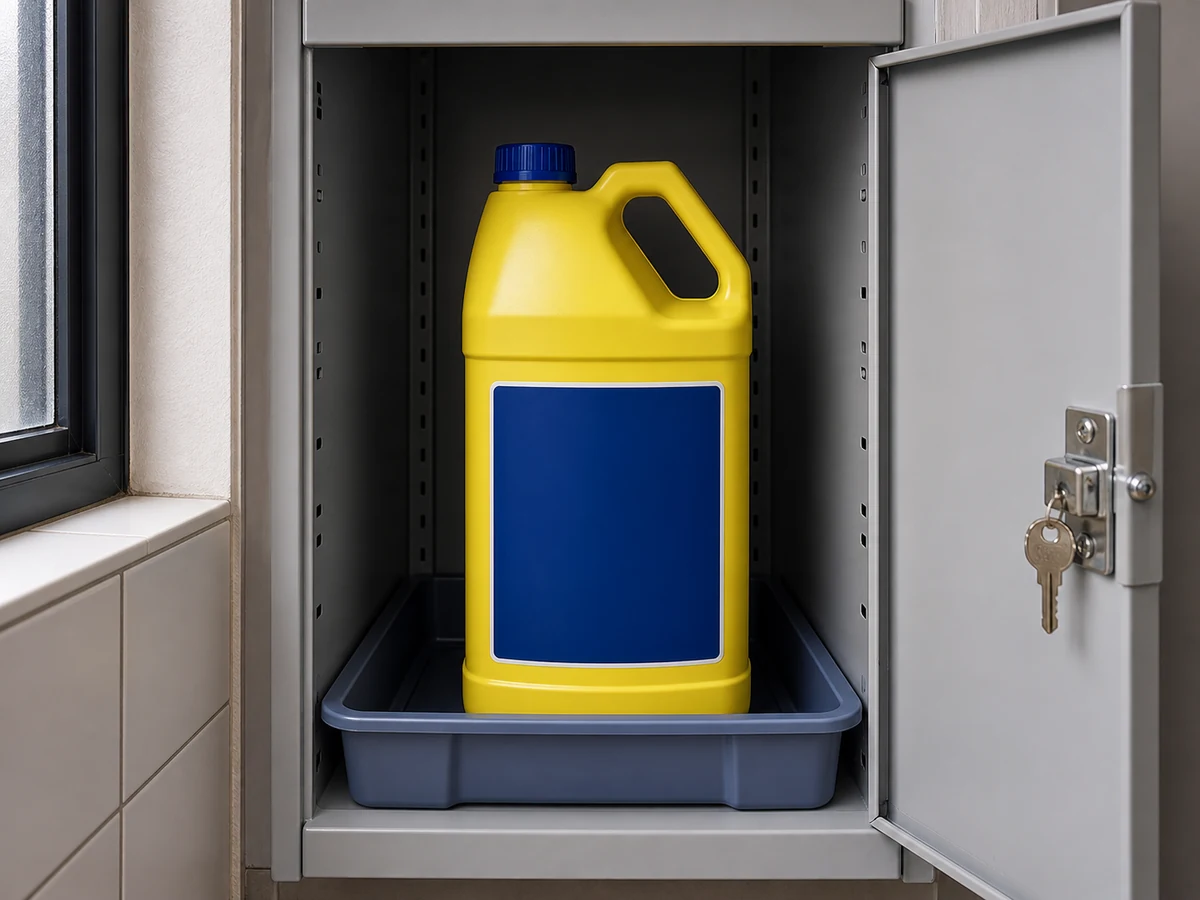
Decanting cleaner into a drink bottle or jar
✓ Correct actionAlways keep it in the complete original labelled container.
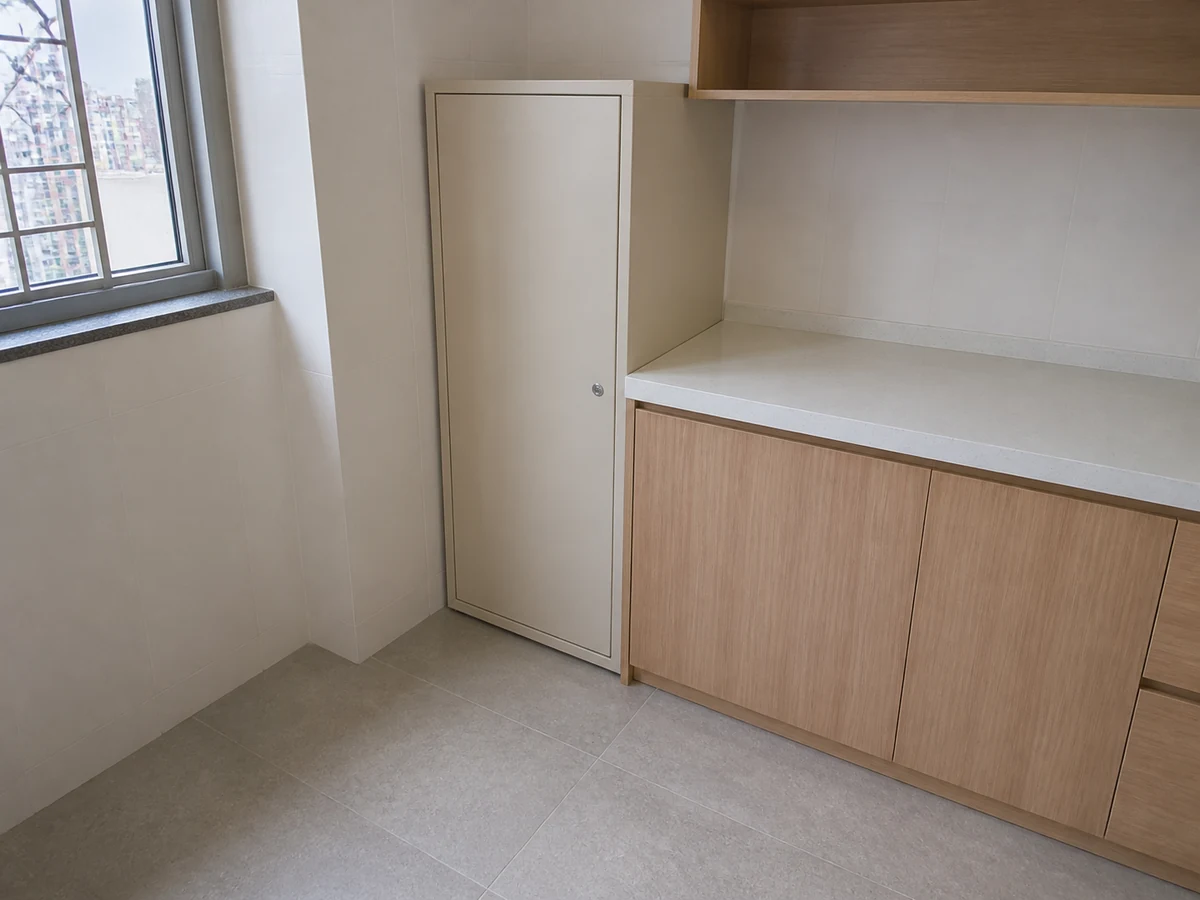
Sharing a cabinet with food or baby bottles
✓ Correct actionMove it to a separate locked chemical cabinet with containment.
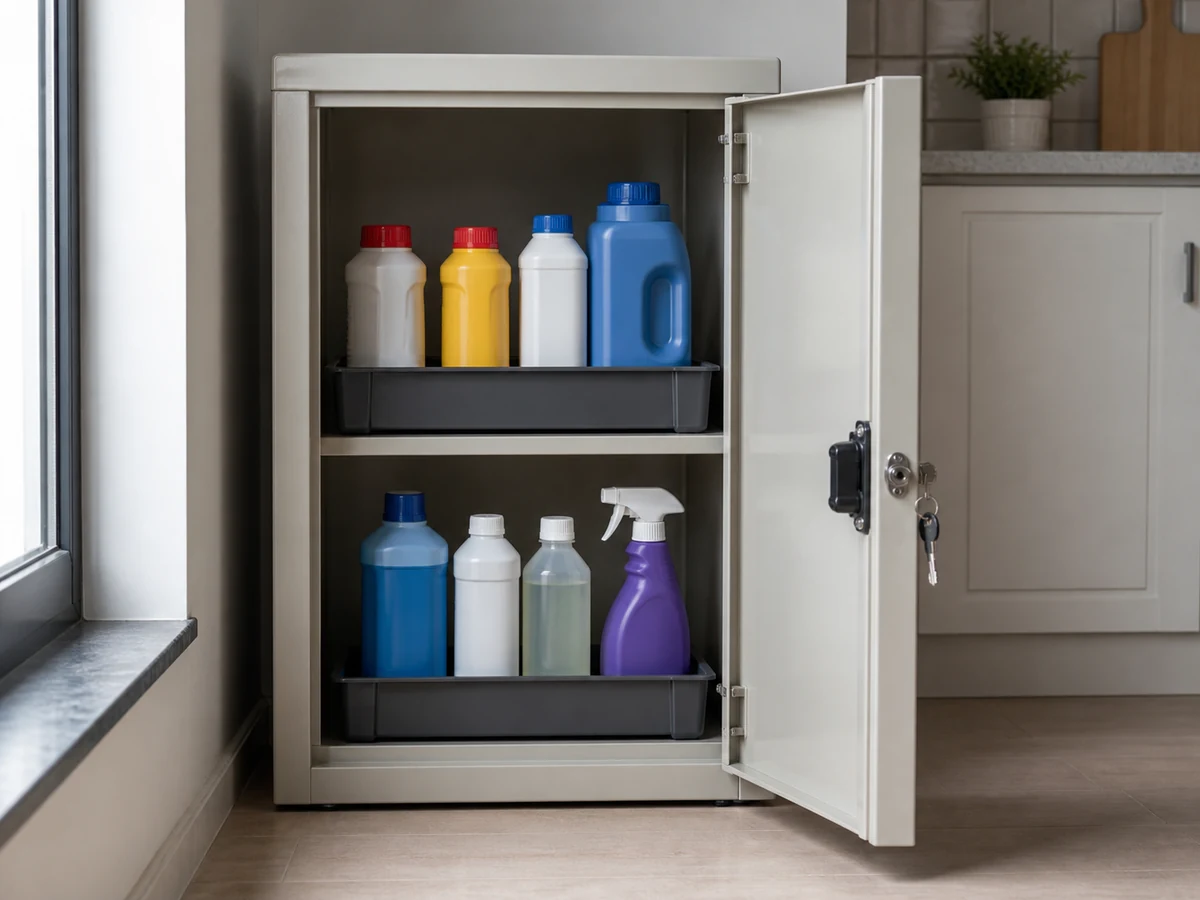
Combining products to save space
✓ Correct actionKeep every product separate; never mix or top up another product container.
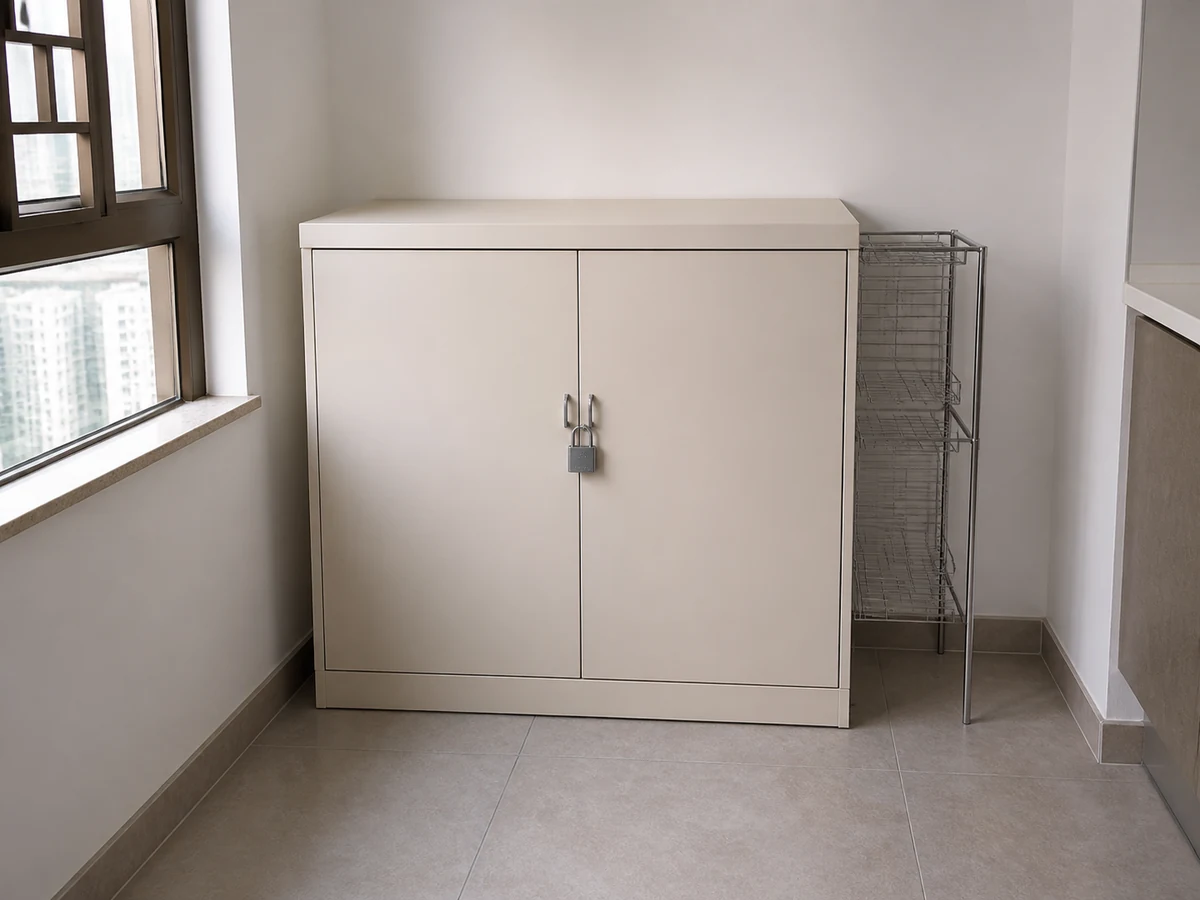
Placing products high but leaving cabinet unlocked
✓ Correct actionUse a genuinely locked designated storage location inaccessible to children.
Practical tips
Tips for helpers
- Reconcile a simple product list with container condition monthly.
- Take out only one product at a time, close it promptly and return it to the locked cabinet.
Tips for employers
- Provide a fixed lockable ventilated chemical cabinet away from food.
- Keep original labels and purchase information and explain local disposal arrangements.
Completion checklist
Checked 0 / 6