
Electrical safety
Stop using damaged electrical cords
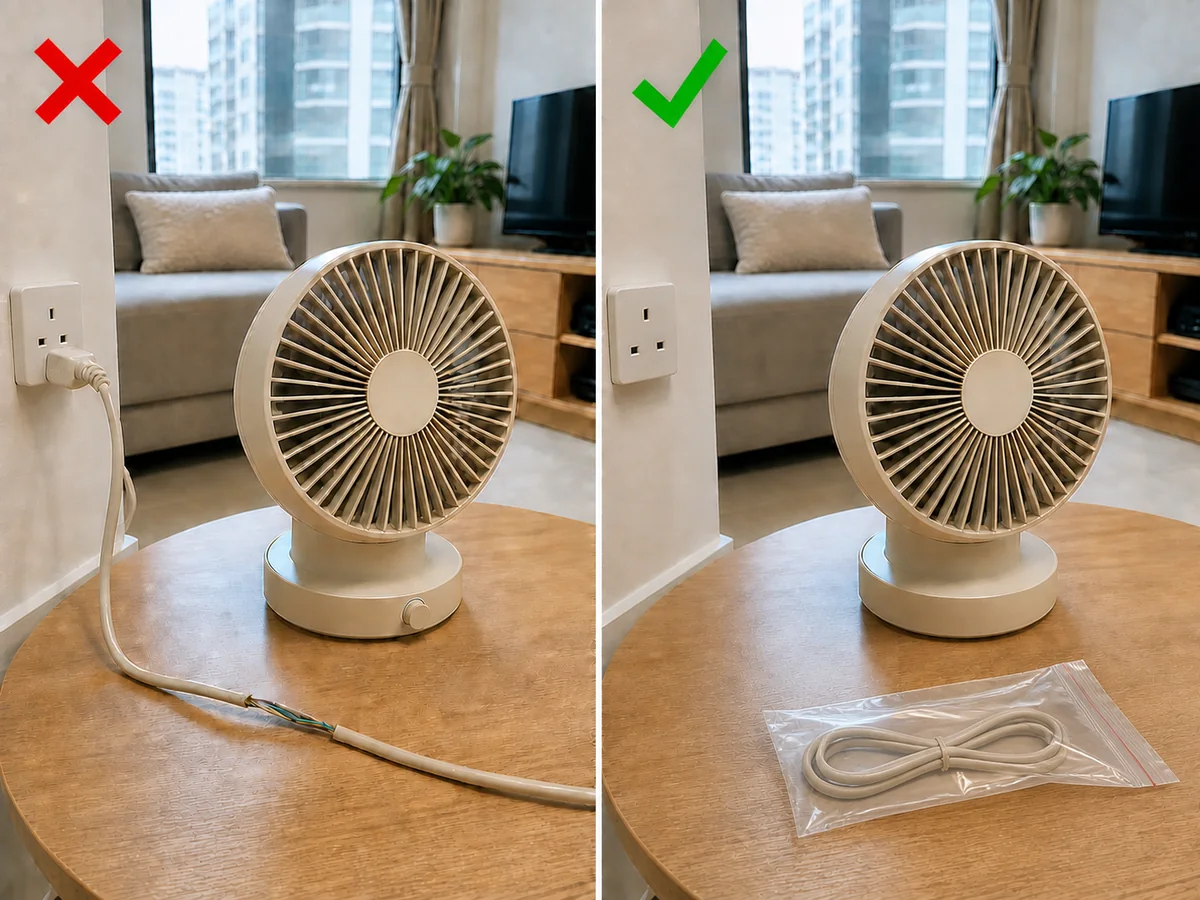
If a cord, plug, or casing is damaged, loose, discoloured, or charred, stop using it and have it checked by an experienced technician.
Last reviewed: 2026-10-12
Electrical safety
If a cord, plug, or casing is damaged, loose, discoloured, or charred, stop using it and have it checked by an experienced technician.
Last reviewed: 2026-10-12
Exposed wires, loose plugs, and overheating marks can cause electric shock, short circuits, or fire. Wrapping tape around damage does not make it safe.
Continuing to use a damaged cord while it is plugged in or covering exposed damage with tape and switching it back on.
Stop use immediately. Switch off and unplug by the plug body only with dry hands, a dry area, and an intact safely reachable plug. Do not touch exposed wires, damaged plugs, or wet areas; tell the employer and arrange qualified inspection.
If a cord smokes, sparks, or shocks someone, do not touch the damaged area. Switch off power only if safe and call 999 immediately.
This page provides general home-safety information and does not replace medical, legal, electrical, or other professional advice.
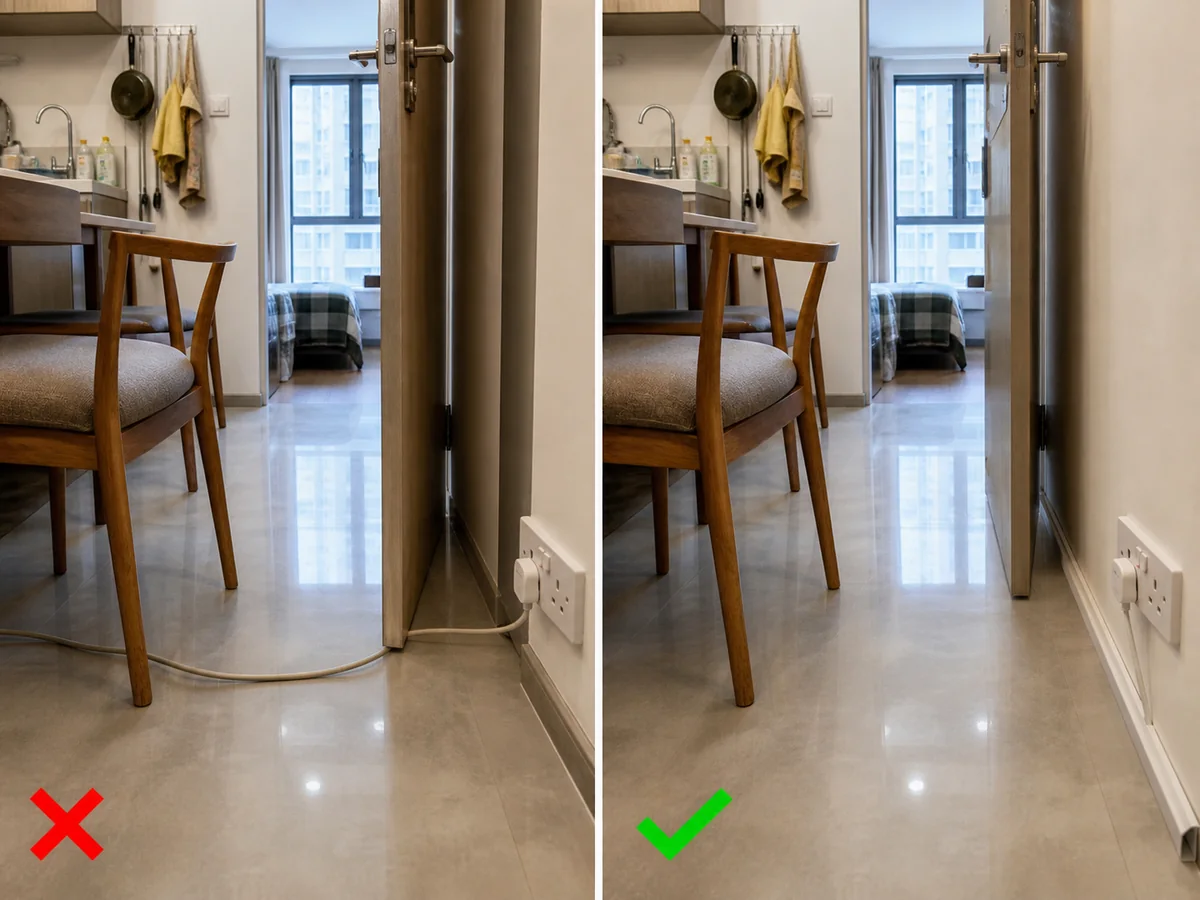
Do not run extension cords across walkways, through doors, under rugs or furniture, or where wheels, heavy items, or doors can crush them.
View safety lesson →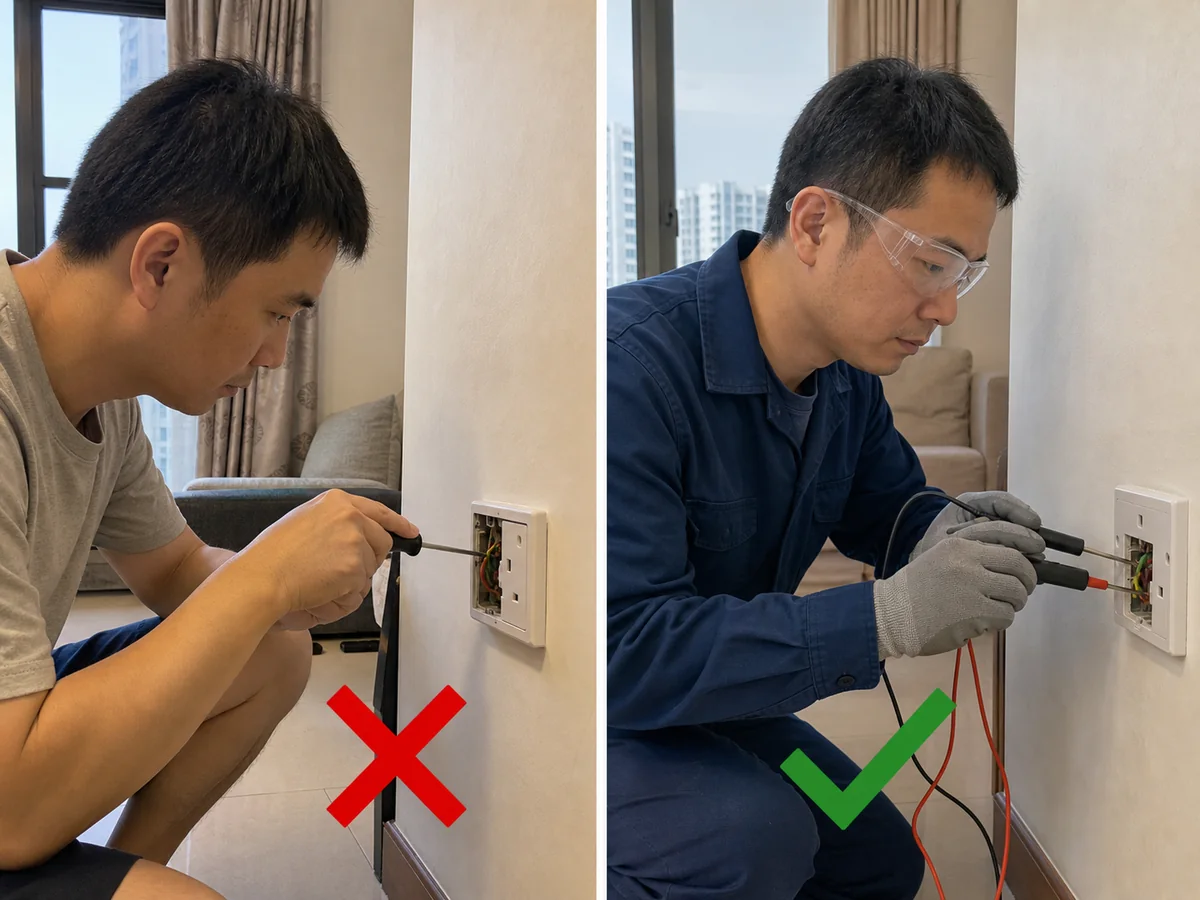
The employer must arrange a registered electrical contractor for fixed wiring, sockets, or distribution boards; a helper must not open or repair them.
View safety lesson →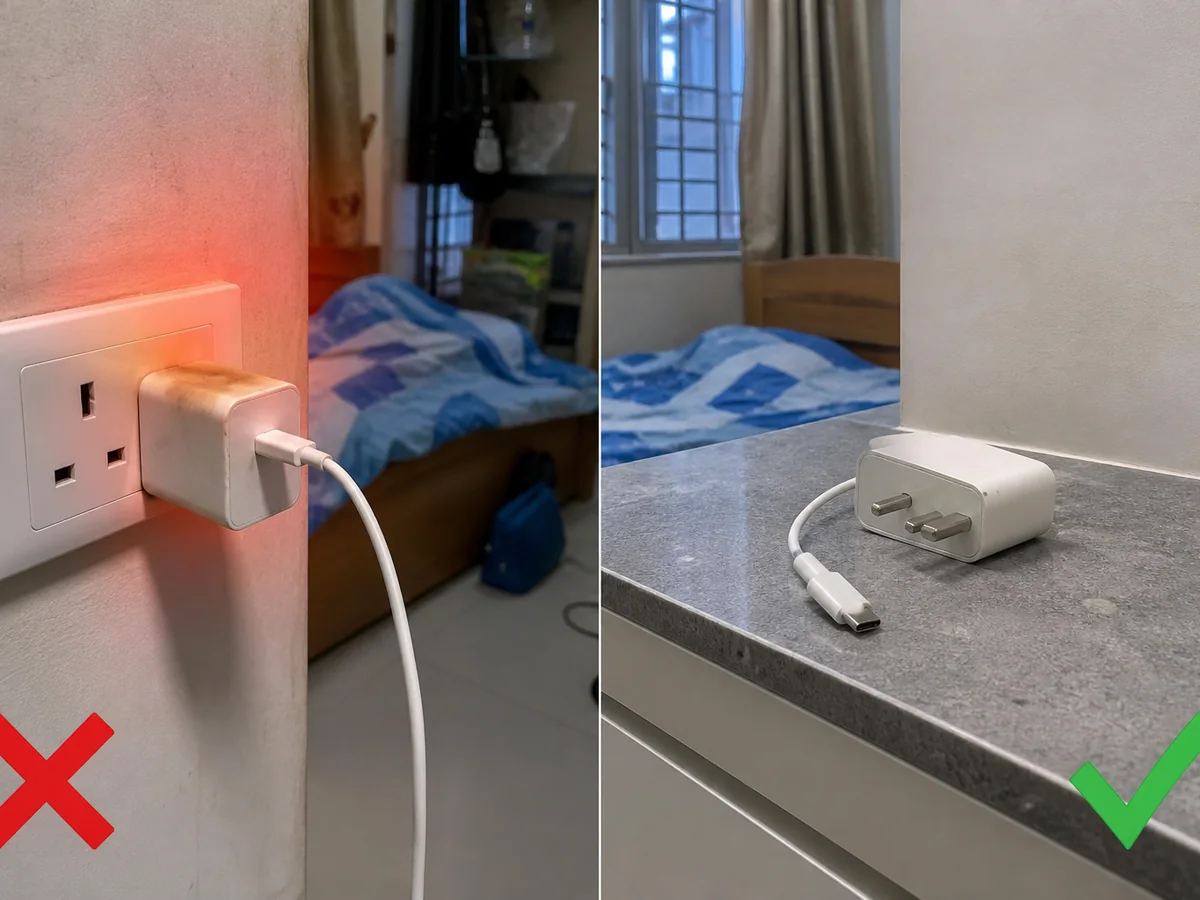
Unplug after charging; stop for excessive heat, discolouration, deformation, or a burning smell.
View safety lesson →