Families with children
How to Clean and Organise Children's Art Supplies
Retain product labels, clean washable materials and secure small pieces.
Overview
Let a parent decide which artwork and materials to keep; separate crayons, washable paint, glue and scissors, retaining age and product labels. Wipe excess water-based paint onto scrap paper first, then wash bristles and palettes as instructed; do not use solvents on unidentified paint.
Tools needed
- Divided trays
- Warm water
- Soft cloth
- Original resealable containers
Cleaning steps
Let the parent select materials
Let a parent decide which artwork and materials to keep; separate crayons, washable paint, glue and scissors, retaining age and product labels.
Clean water-based paint brushes
Wipe excess water-based paint onto scrap paper first, then wash bristles and palettes as instructed; do not use solvents on unidentified paint.
Dry and cap supplies
Wipe crayons and handles dry, cap usable pens, glue and paint, and reshape washed brushes to dry flat or bristles down as directed.
Sort beyond toddler reach
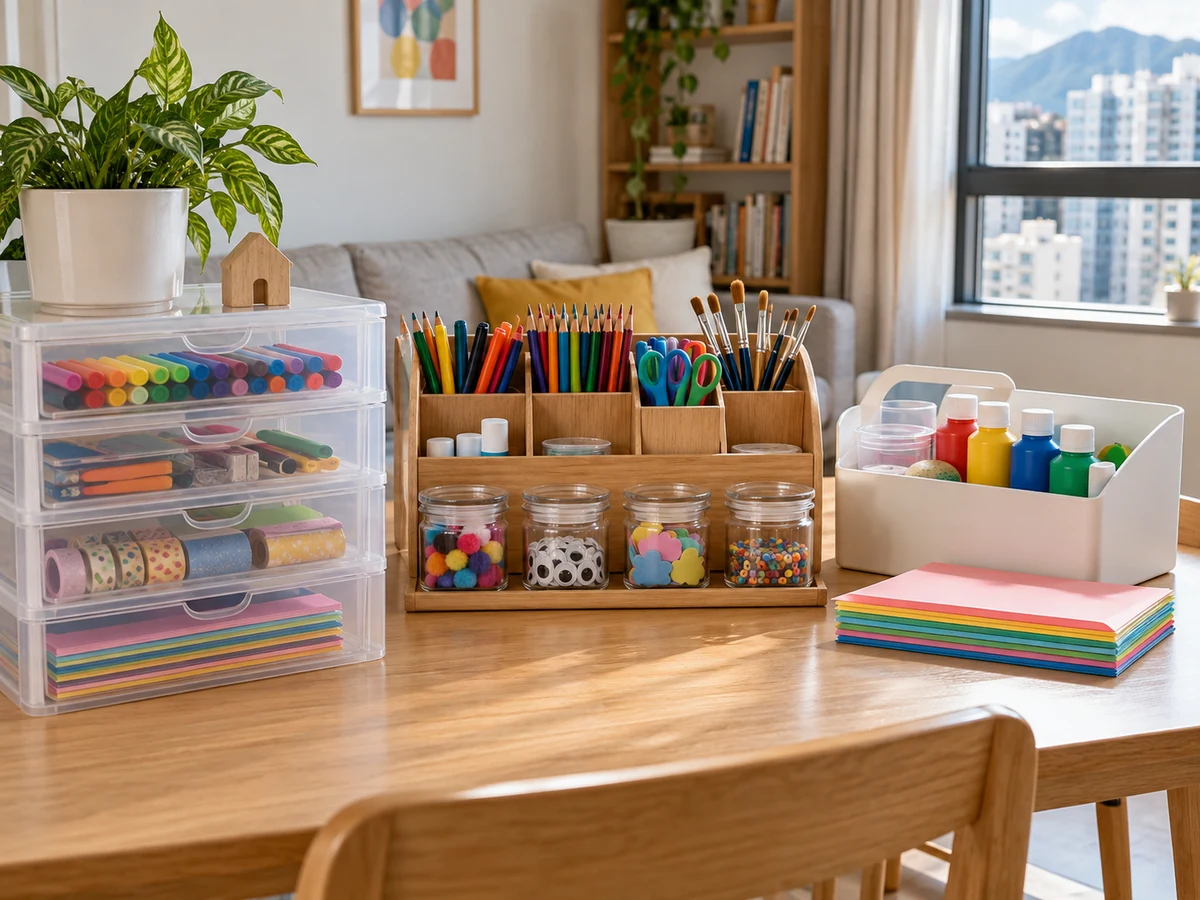
Store fully dry supplies by type; keep scissors, small pieces and adult-supervised materials out of children's independent reach and refer mouldy materials to the parent.
Common mistakes
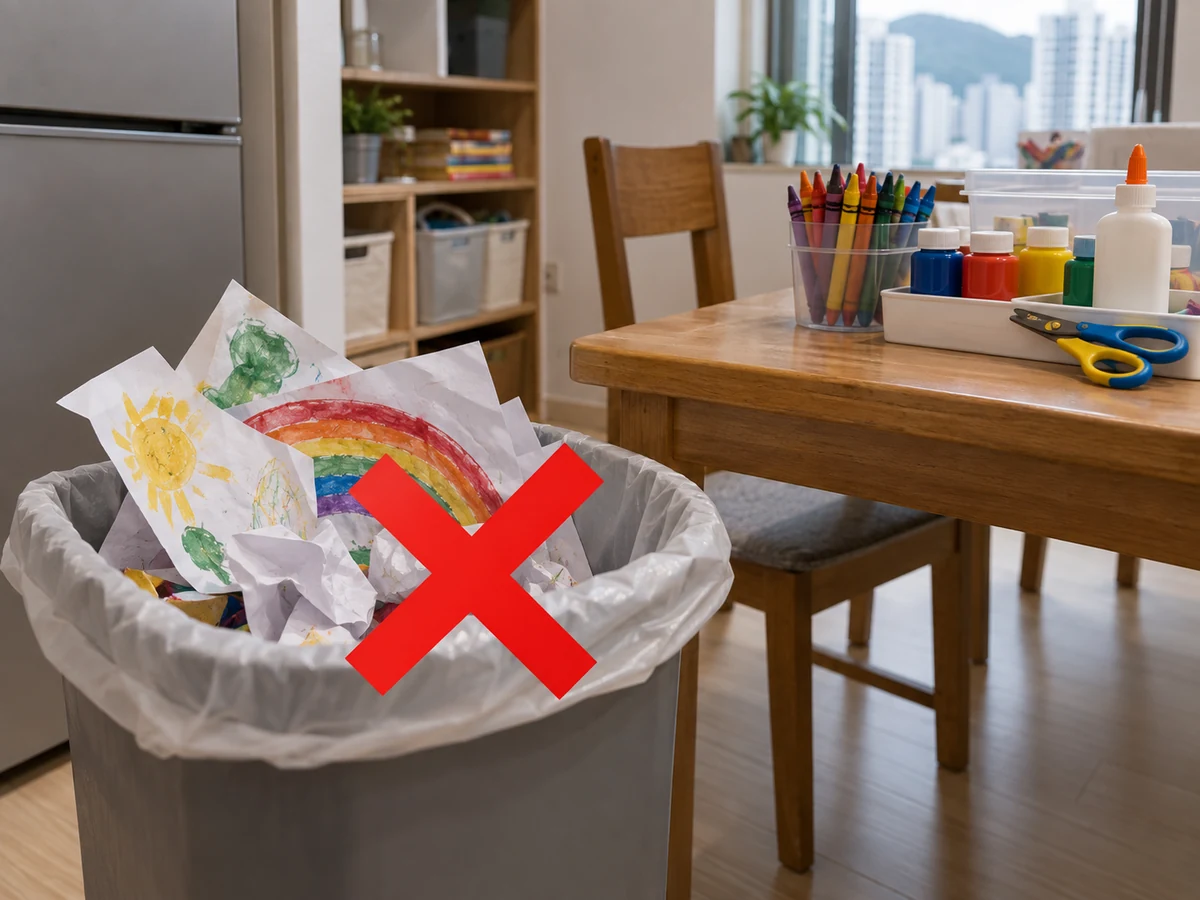
Discarding artwork without asking
✓ Correct actionLet a parent decide which artwork and materials to keep; separate crayons, washable paint, glue and scissors, retaining age and product labels.
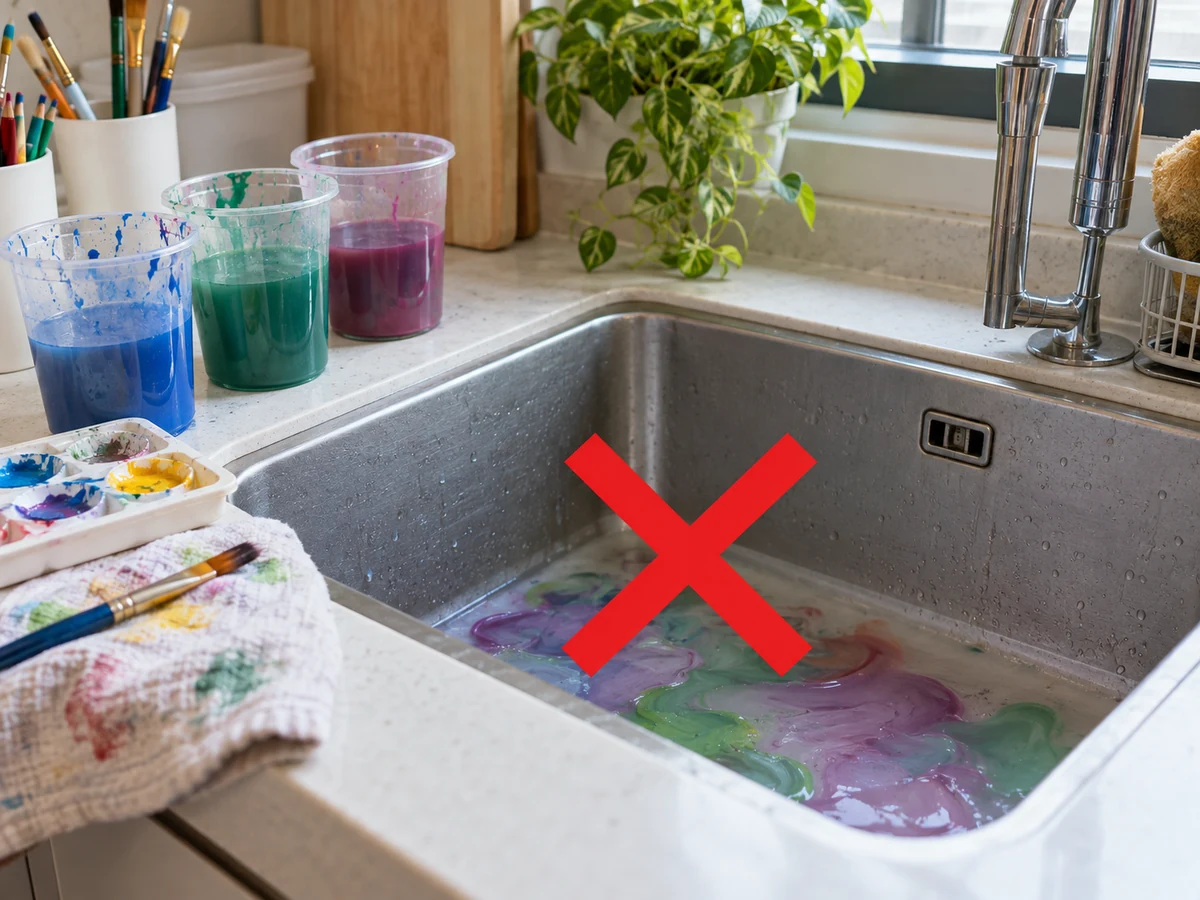
Mixing and rinsing unknown paint away
✓ Correct actionThis guide excludes oil-paint solvents, resin, spray paint and unknown chemicals; the parent arranges handling by product instructions.
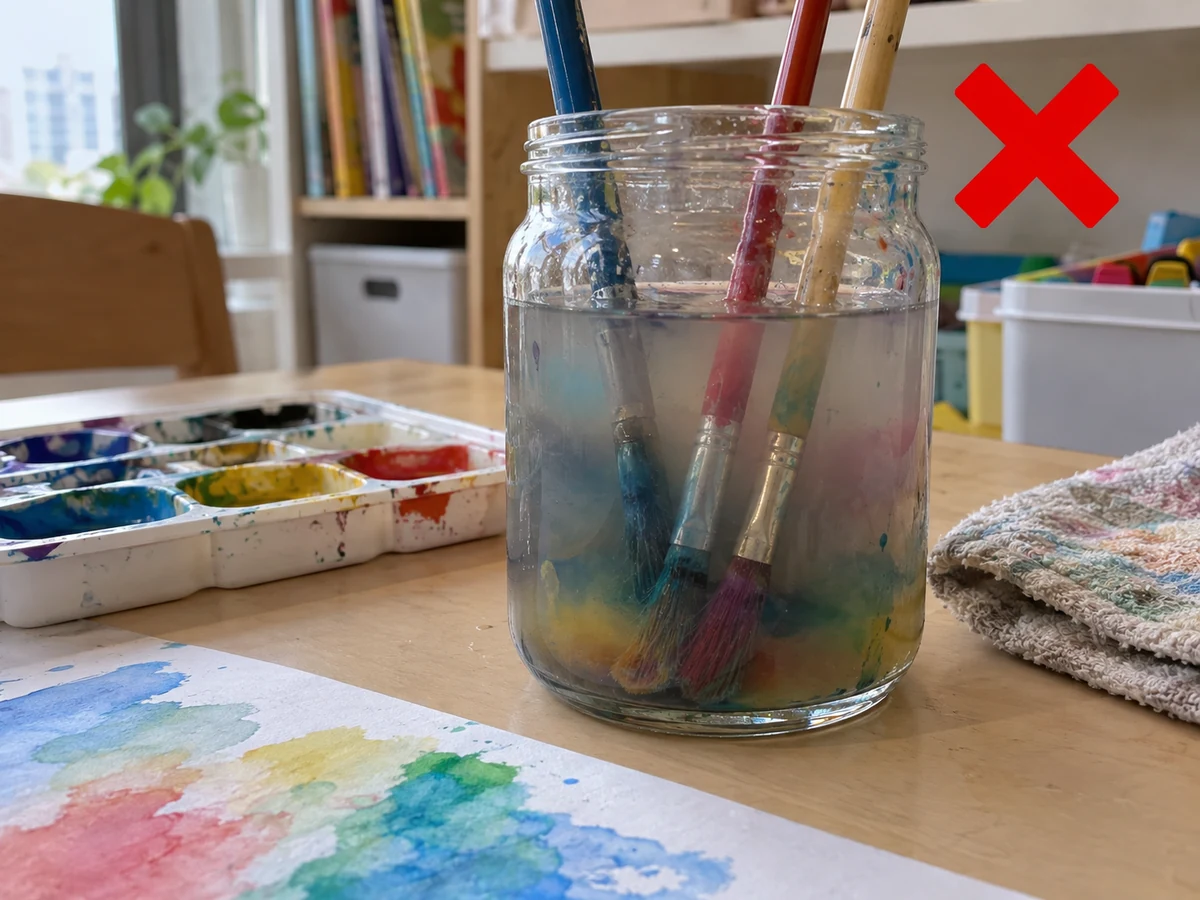
Leaving brushes soaking
✓ Correct actionWipe crayons and handles dry, cap usable pens, glue and paint, and reshape washed brushes to dry flat or bristles down as directed.
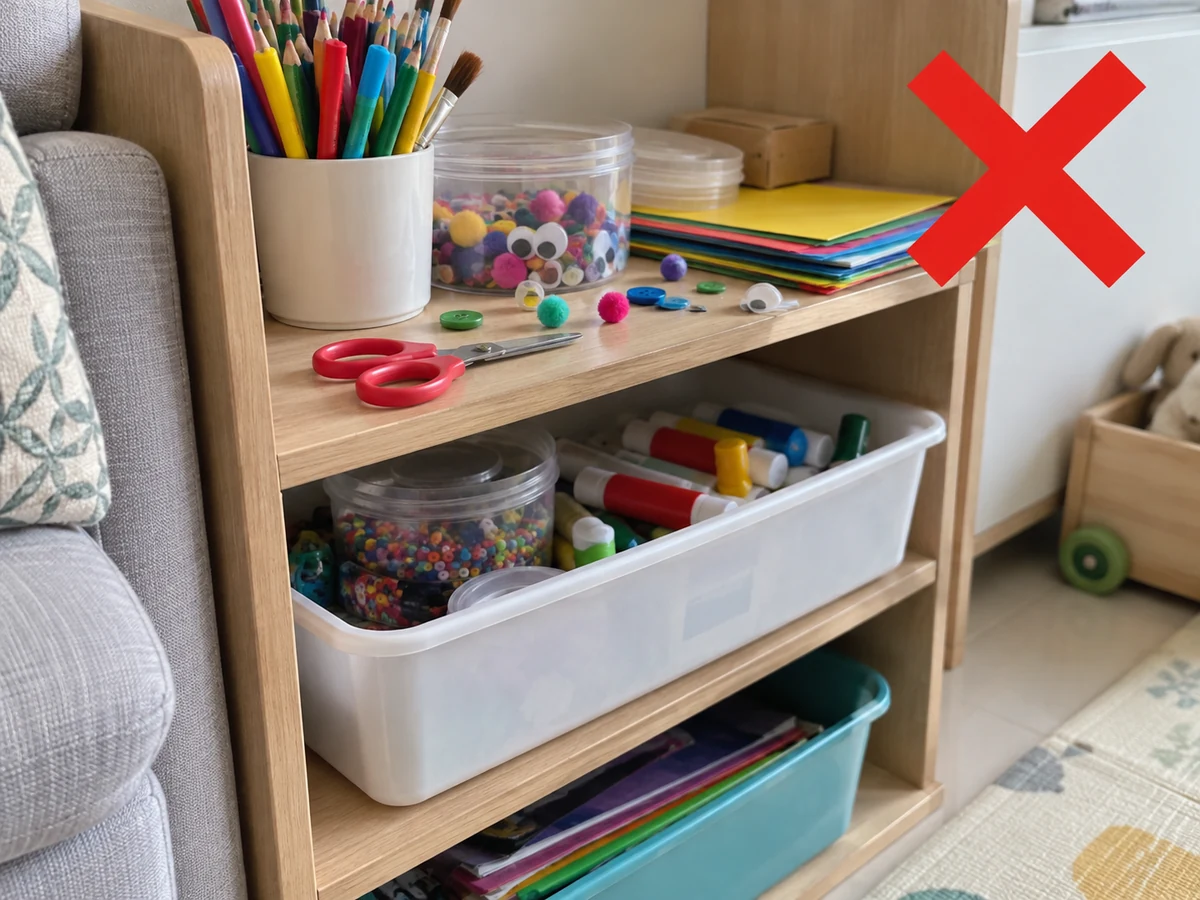
Giving toddlers free access to scissors and small parts
✓ Correct actionStore fully dry supplies by type; keep scissors, small pieces and adult-supervised materials out of children's independent reach and refer mouldy materials to the parent.
Practical tips
Tips for helpers
- Wipe spare paint onto scrap paper first.
- Reshape brushes before drying flat.
Tips for employers
- Decide which artwork to retain.
- Control scissors and adult-supervised materials.
Completion checklist
Checked 0 / 4