Kitchen cleaning
How to Clean Food Storage Containers and Reduce Odour
Remove grease, wash approved removable parts, and dry fully before closing
Overview
Food containers contact food directly, so empty and wash them promptly with dish soap and dry completely. Remove only seals or valves the manufacturer identifies as removable. If odour remains, rewash and ventilate; do not mask residue with guessed mixtures or chemicals.
Tools needed
- Dish soap used as labelled
- Soft non-abrasive sponge
- Dedicated small soft brush
- Running water
- Clean single-use paper towels
- Ventilated drying rack
Cleaning steps
Empty food and separate use
Handle leftovers by household rule, scrape solids into the bin, and separate raw-food from ready-to-eat containers.
Check material and care limits
Confirm whether the base, lid, seal, and valve are removable, dishwasher-safe, or heat-safe. Do not assume all plastics are alike.
Remove approved washable parts
Follow instructions to remove only seals or valves, placing each part in a basin without stretching or piercing it.
Wash every surface and groove
Use warm water, dish soap, a soft sponge, and a small soft brush on the base, lid, rim channel, and approved parts.
Rinse and check for grease
Rinse all suds and feel for slippery grease. Rewash with the same safe method if grease or odour remains.
Pat and air-dry separately
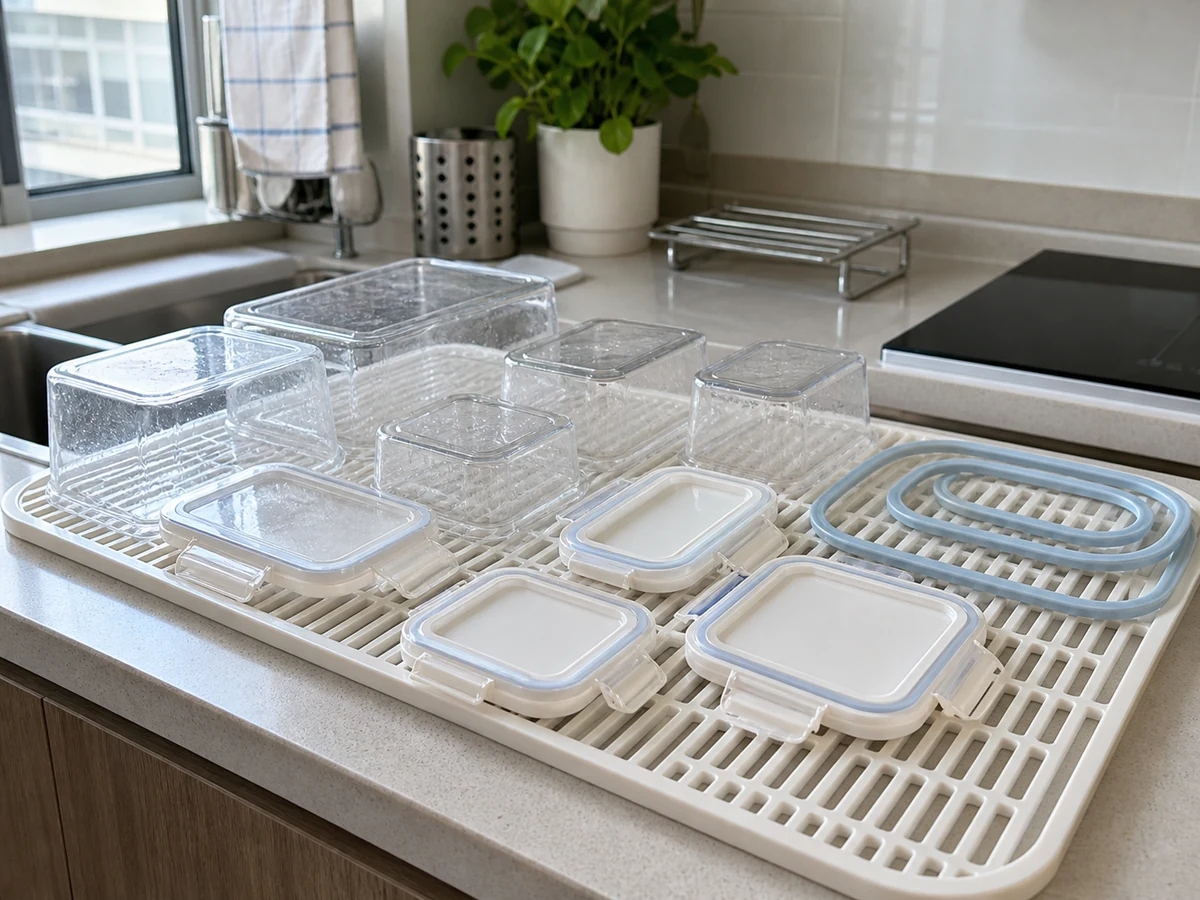
Remove excess water with clean paper towel and place bases, lids, and seals separately with good airflow.
Inspect and store loosely closed
Check cracks, warping, tackiness, mould, deep stains, or persistent odour. Replace damaged items and store dry containers with lids loose.
Common mistakes
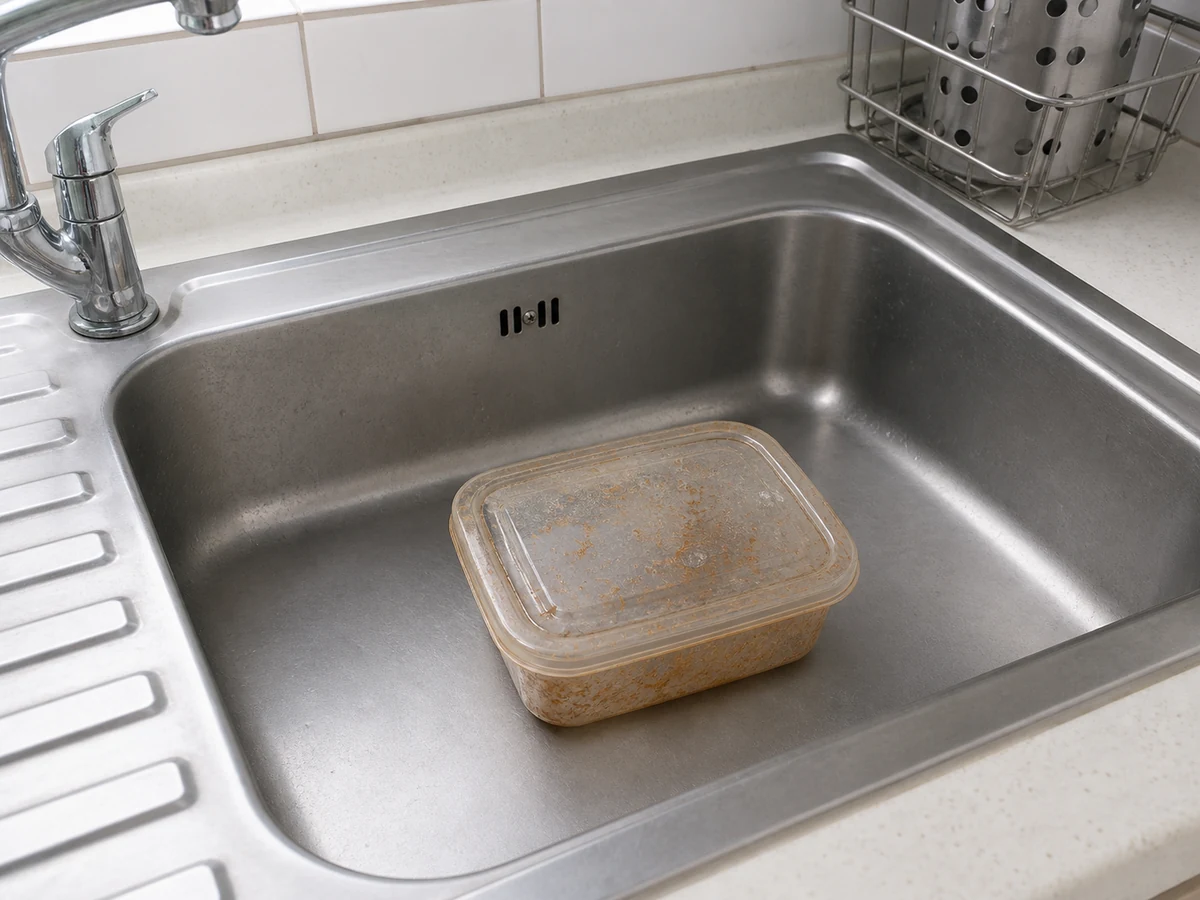
Leaving food residue for a long time
✓ Correct actionEmpty and wash promptly to limit grease and odour retention.
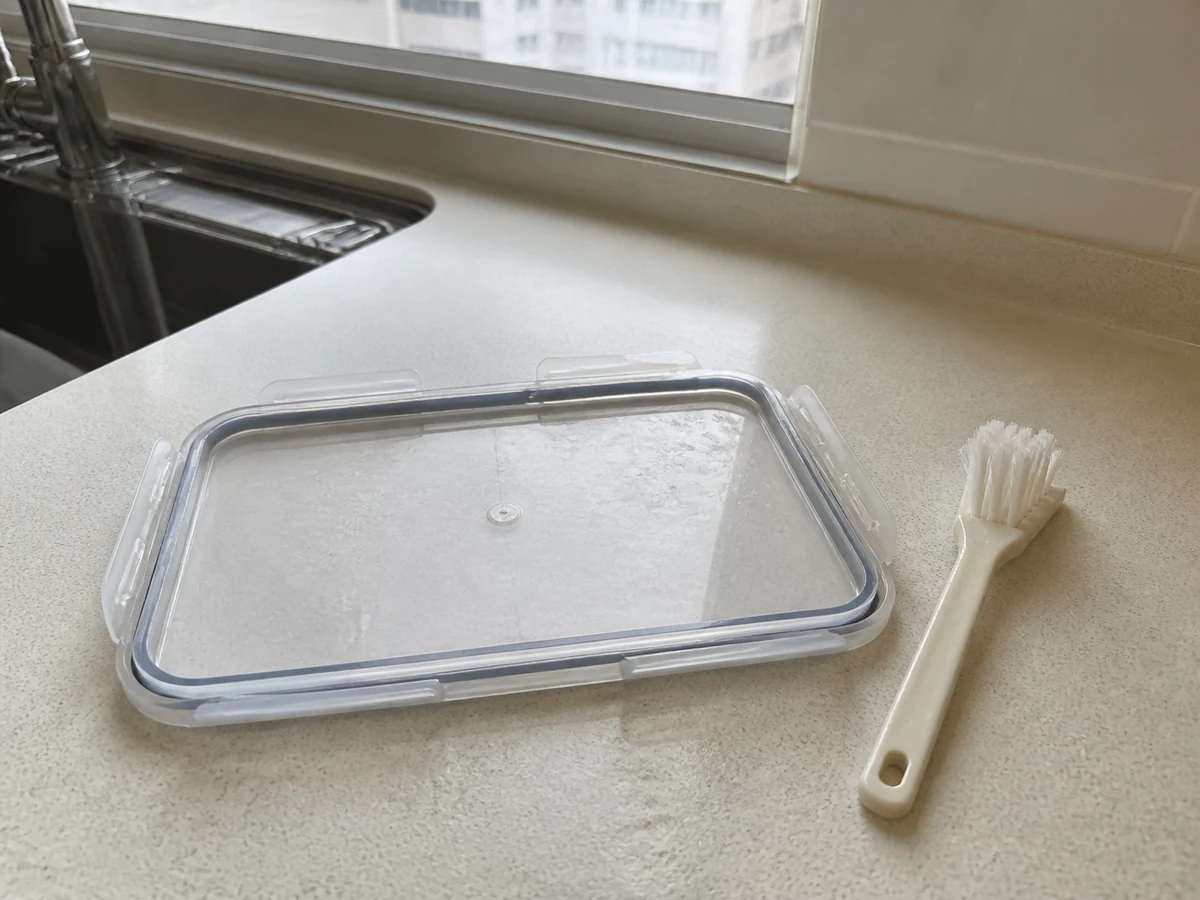
Wiping only the surface without an approved removable seal
✓ Correct actionRemove and wash the seal and channel as instructed, then dry fully.
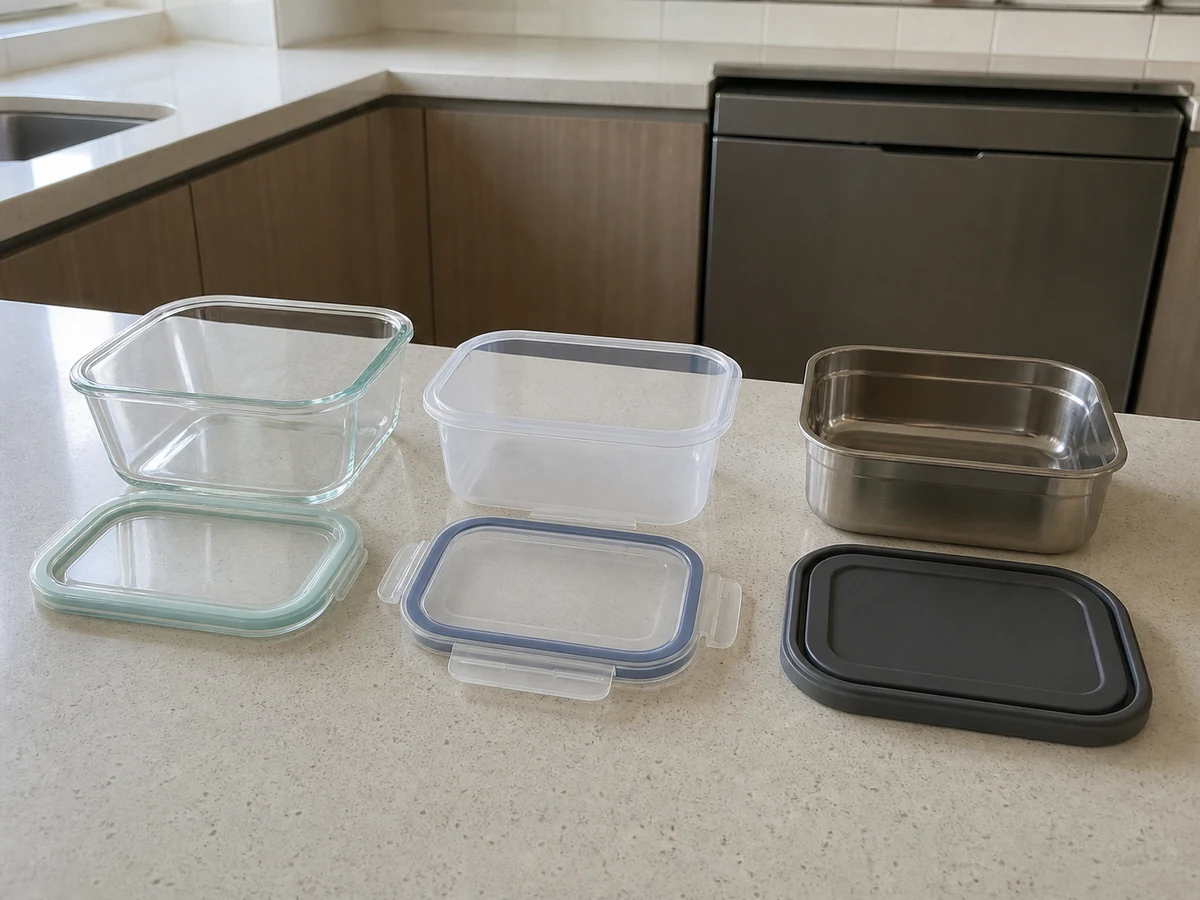
Putting every container in high heat or a dishwasher
✓ Correct actionCheck material and manufacturer heat and dishwasher limits first.
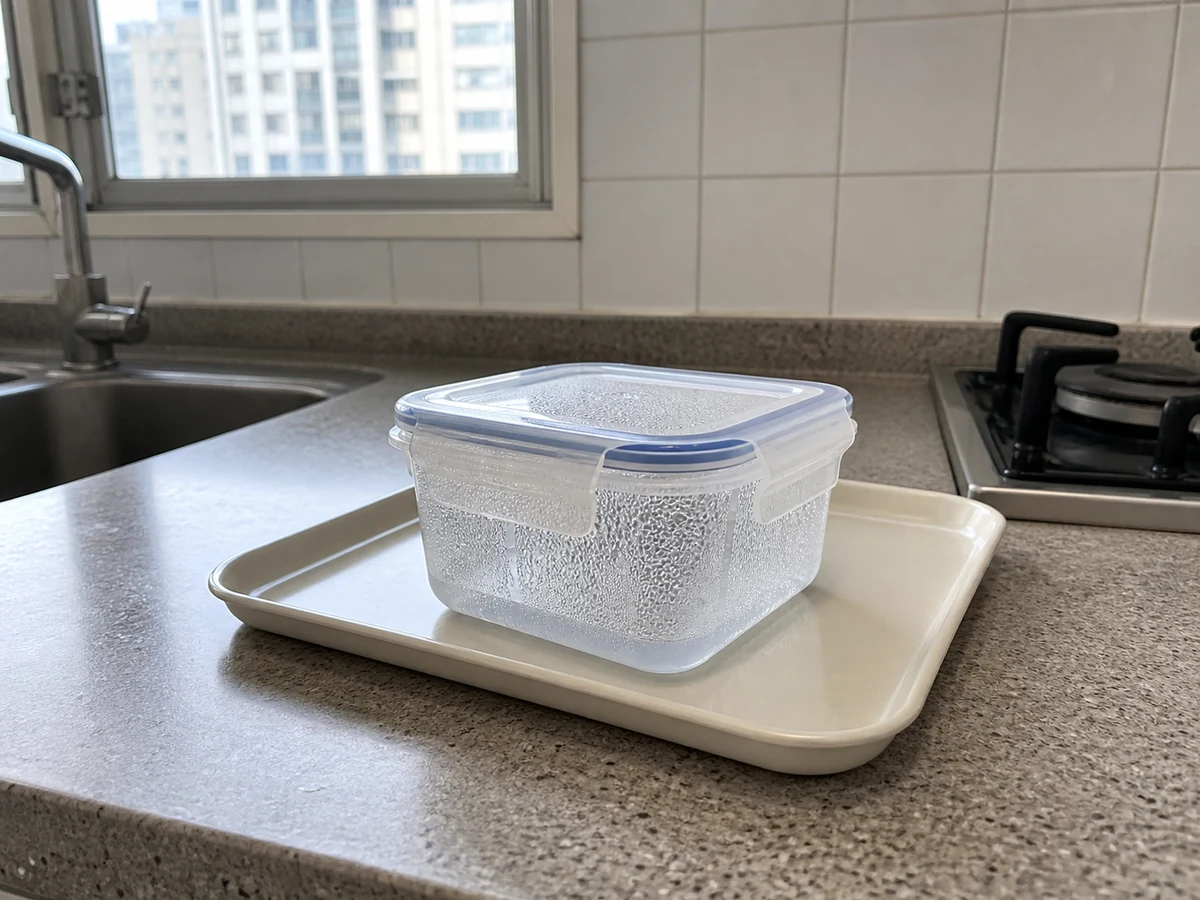
Closing and storing while damp
✓ Correct actionAir-dry bases, lids, and seals separately and store loosely closed only when dry.
Practical tips
Tips for helpers
- Wipe excess fat with paper towel before washing so grease does not enter the drain.
- For persistent odour, rewash and ventilate with the lid separate rather than covering the smell.
- Group matching lids and seals while drying to avoid incorrect reassembly.
Tips for employers
- Provide material, dishwasher, microwave, and disassembly instructions; do not apply one rule to every container.
- Replace cracked, warped, sticky, mouldy, or persistently odorous food containers.
Completion checklist
Checked 0 / 8