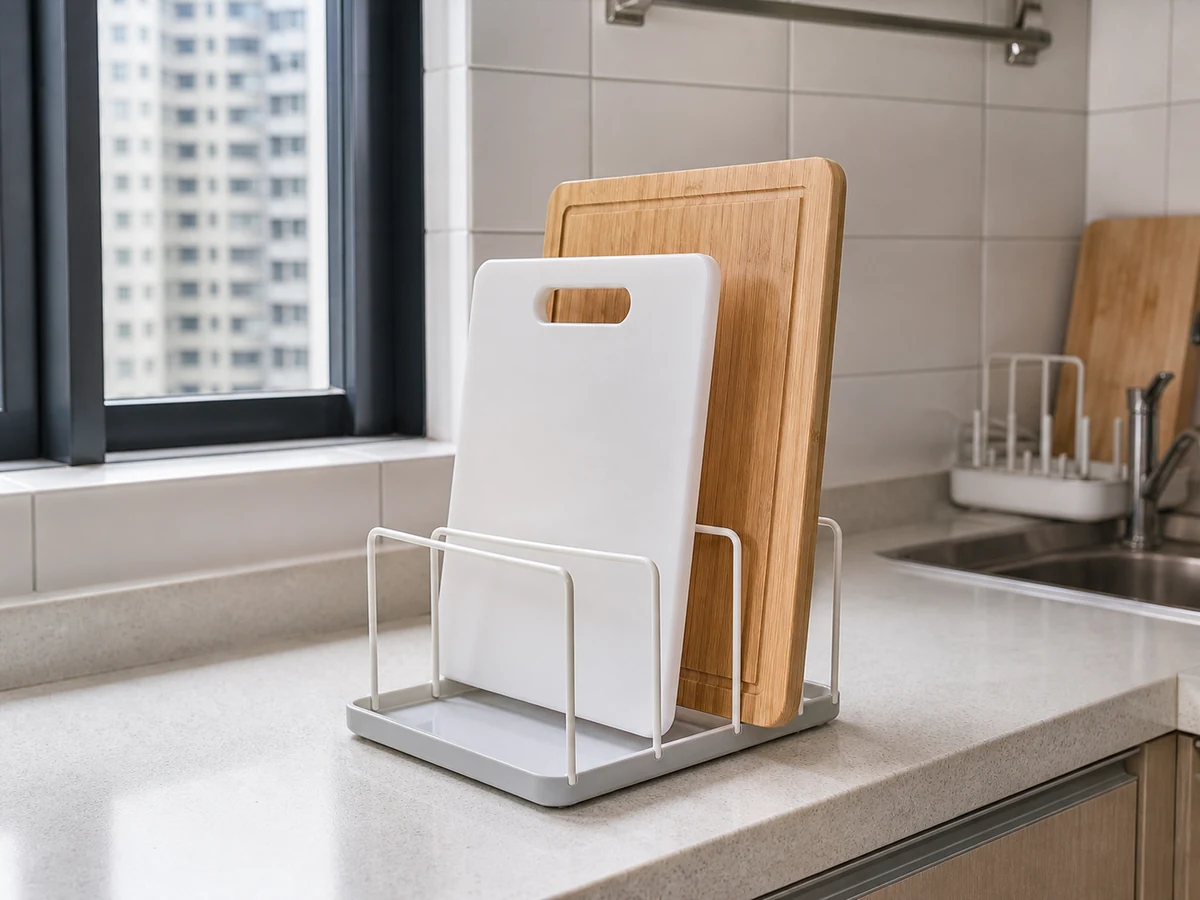
Kitchen cleaning
How to Clean and Dry a Chopping Board
Remove food residue, separate raw and ready-to-eat use, and dry fully
Overview
Clean a chopping board before and after use and between different foods. Prefer separate boards for raw meat, poultry, or seafood and ready-to-eat foods. Pat with clean paper towel or air-dry upright, and replace a board with hard-to-clean grooves, cracks, or damage.
Tools needed
- Dish soap used as labelled
- Dedicated soft brush or non-abrasive sponge
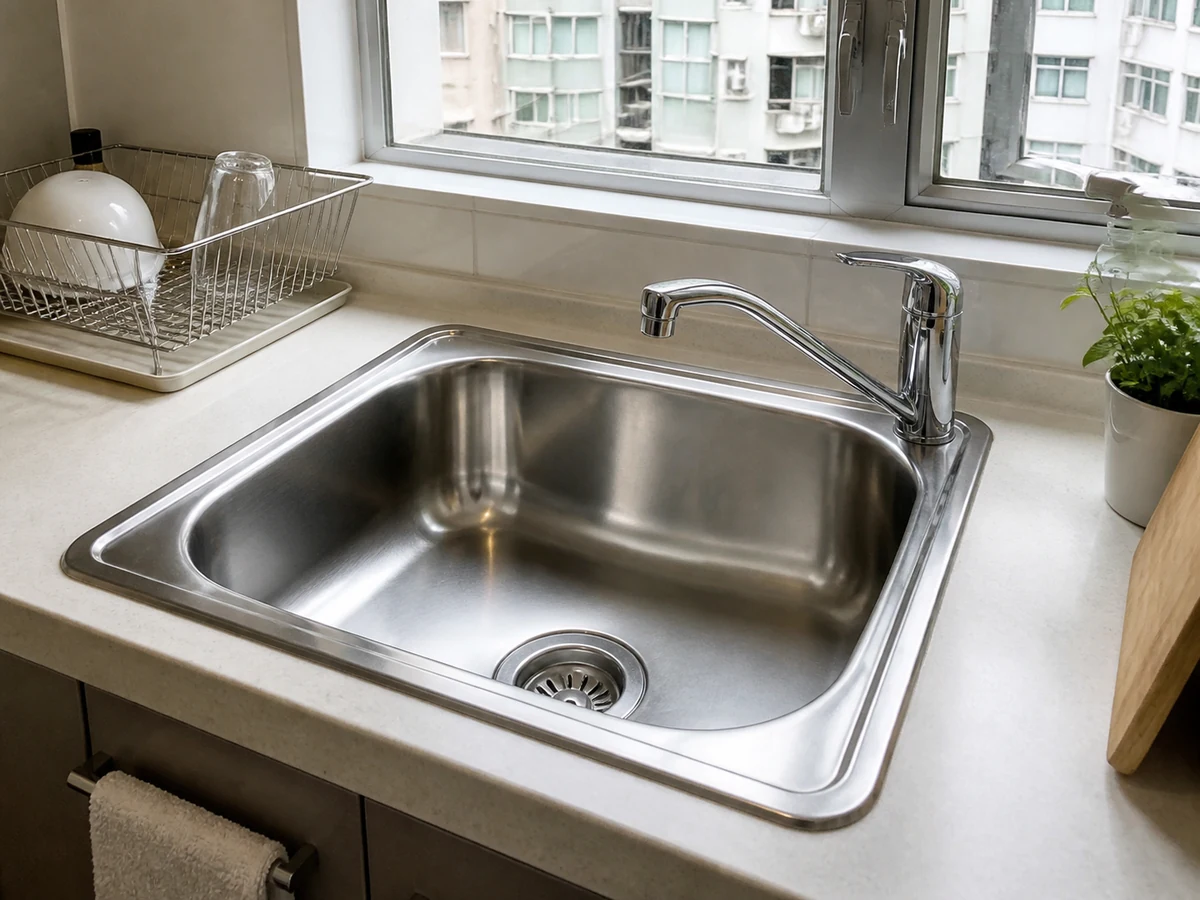
- Running water
- Clean single-use paper towels
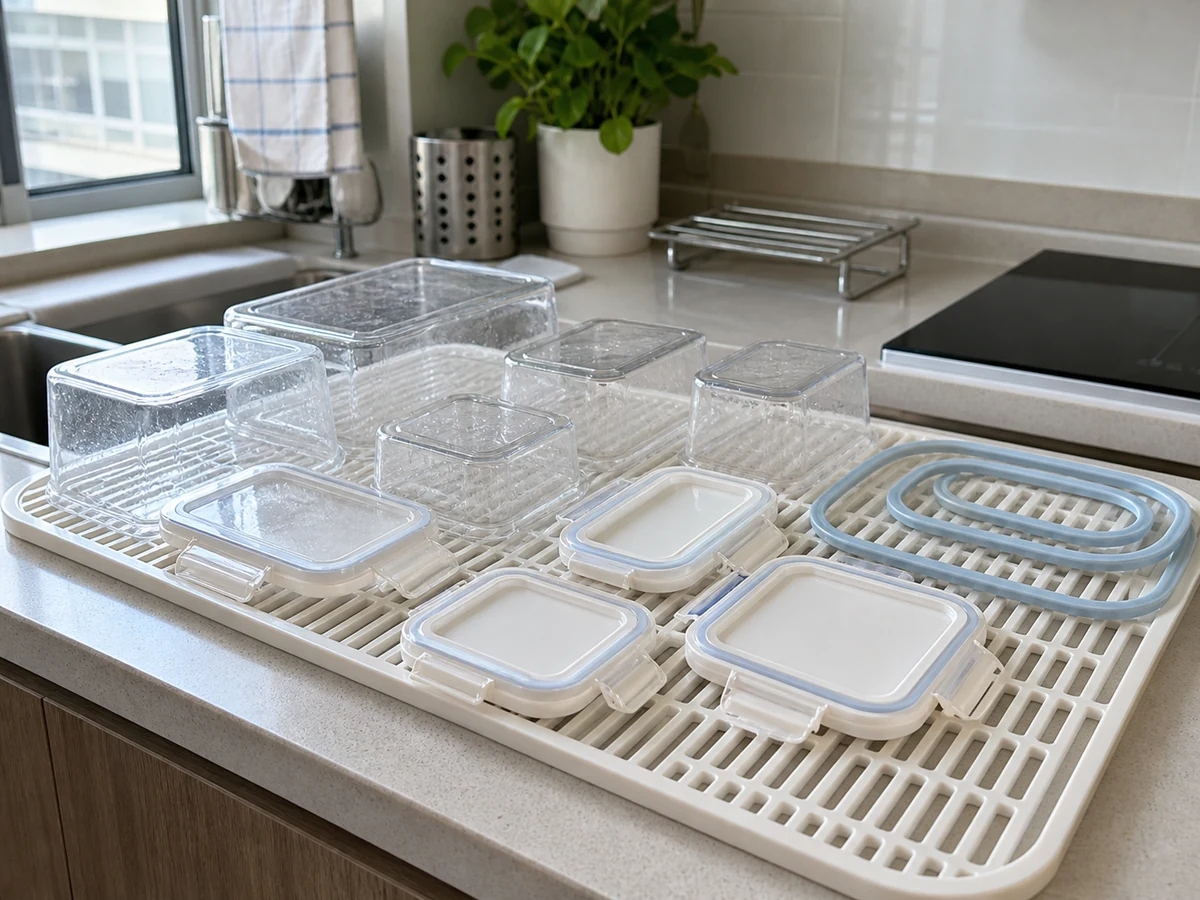
- Stable ventilated drying rack
- Lidded rubbish bin
Cleaning steps
Separate the board by use
Identify raw-food versus ready-to-eat use and keep the clean ready-to-eat board separate.
Scrape solids into the bin
Move food scraps into a lidded bin rather than flushing heavy debris into the drain.
Wash every surface
Use warm running water, dish soap, and a soft brush on both faces, edges, and the handle hole.
Rinse completely
Remove all suds and loosened debris so detergent does not remain on the food-contact surface.
Sanitise only when appropriate
After raw food or when household procedure requires it, use a food-contact-approved, material-compatible method exactly as labelled; never mix chemicals.
Pat and air-dry upright
Remove excess water with clean single-use paper towel, then stand securely with airflow on both sides.
Inspect and store dry
When fully dry, check for deep grooves, cracks, warping, mould, or odour. Replace a hard-to-clean board and store by use.
Common mistakes
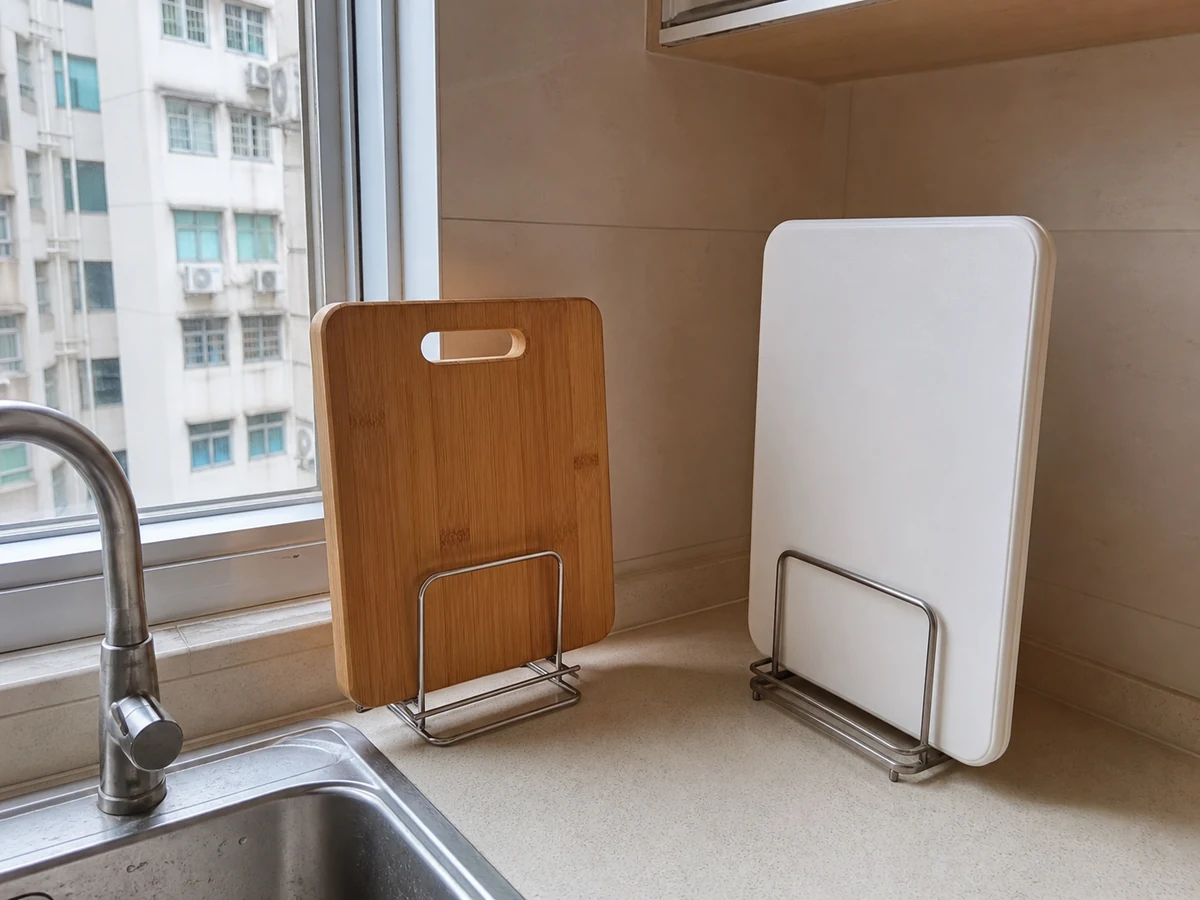
Using one board for raw and ready-to-eat food without separation
✓ Correct actionPrefer dedicated boards; if only one is available, prepare ready-to-eat food first and clean thoroughly before raw food.
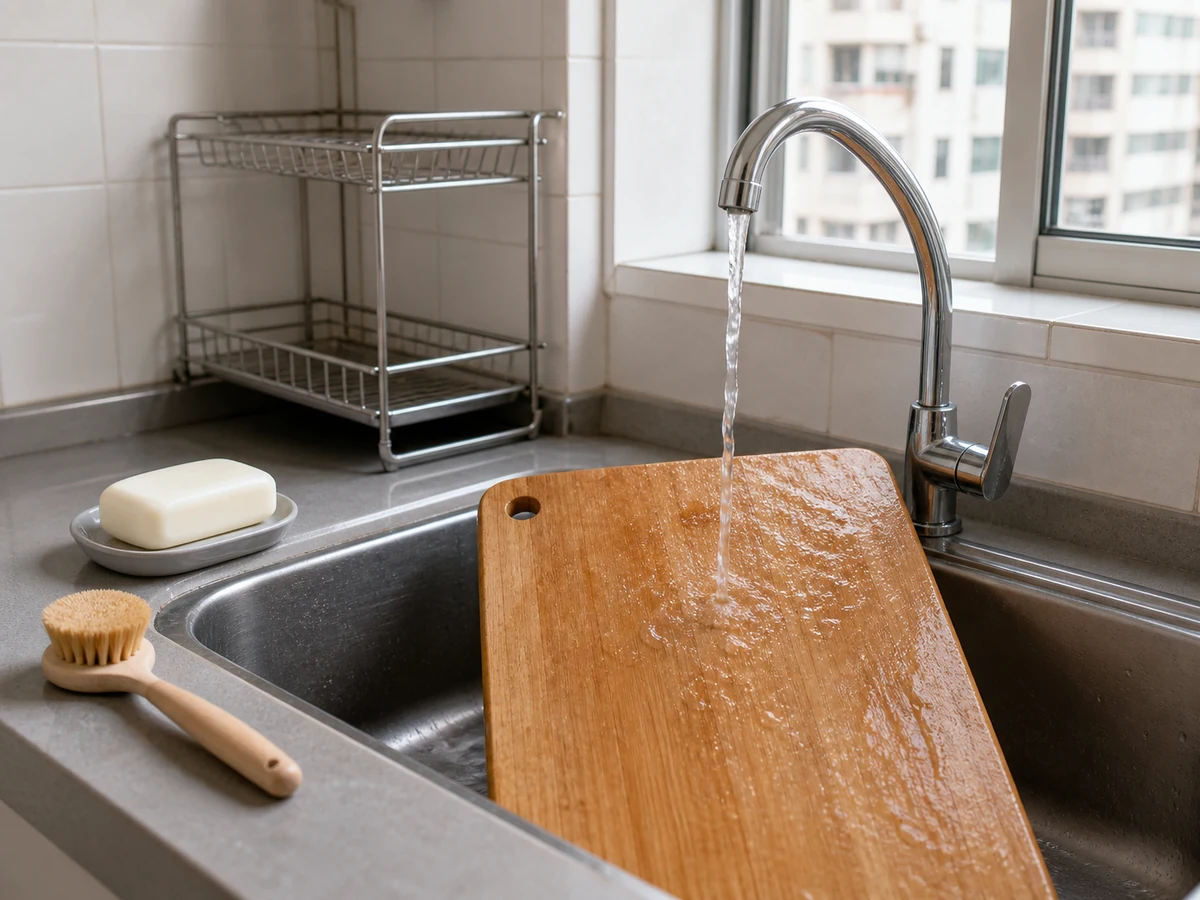
Rinsing without soap and scrubbing
✓ Correct actionWash both faces, edges, and holes with dish soap and a soft brush, then rinse.
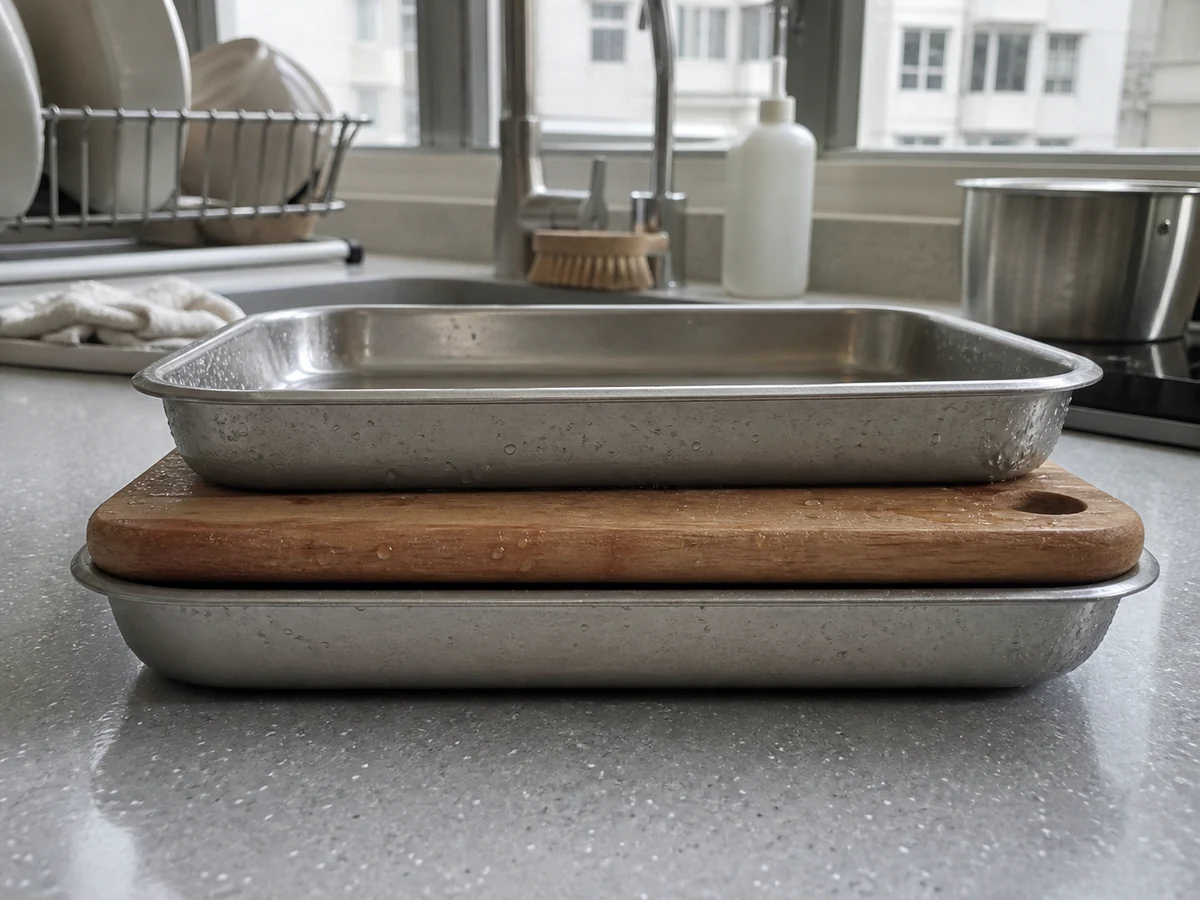
Leaving a wet board flat or pressed between surfaces
✓ Correct actionPat off water and stand with airflow on both sides.
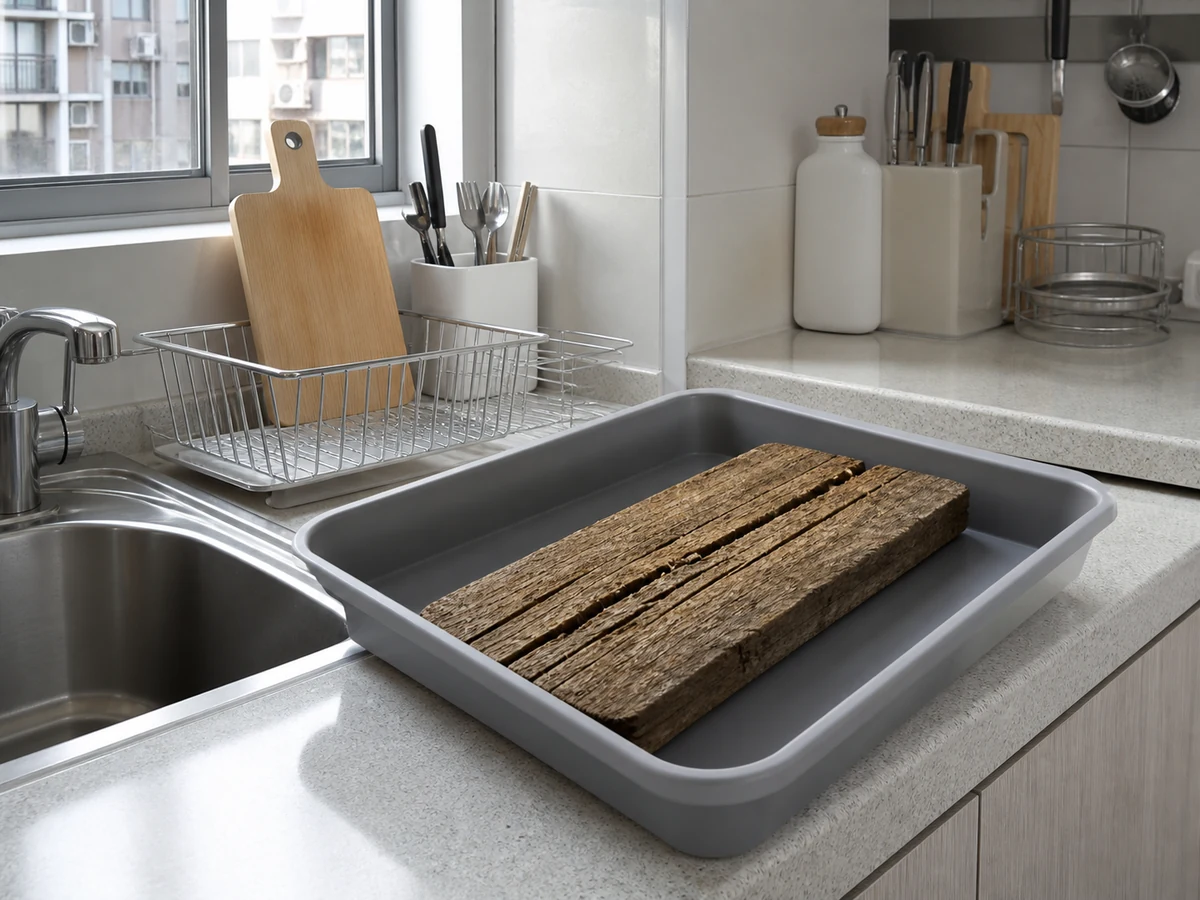
Keeping a board with deep grooves, cracks, or mould
✓ Correct actionReplace a worn board that cannot be cleaned thoroughly.
Practical tips
Tips for helpers
- Do not stack or close a board in a cabinet until fully dry.
- Colour can be a household cue, but the employer must define its meaning.
- Check manufacturer care for wood, bamboo, plastic, or composite boards.
Tips for employers
- Define separate raw and ready-to-eat board use; do not assume a universal colour code.
- Inspect grooves, cracks, warping, and mould regularly and replace worn boards.
Completion checklist
Checked 0 / 8