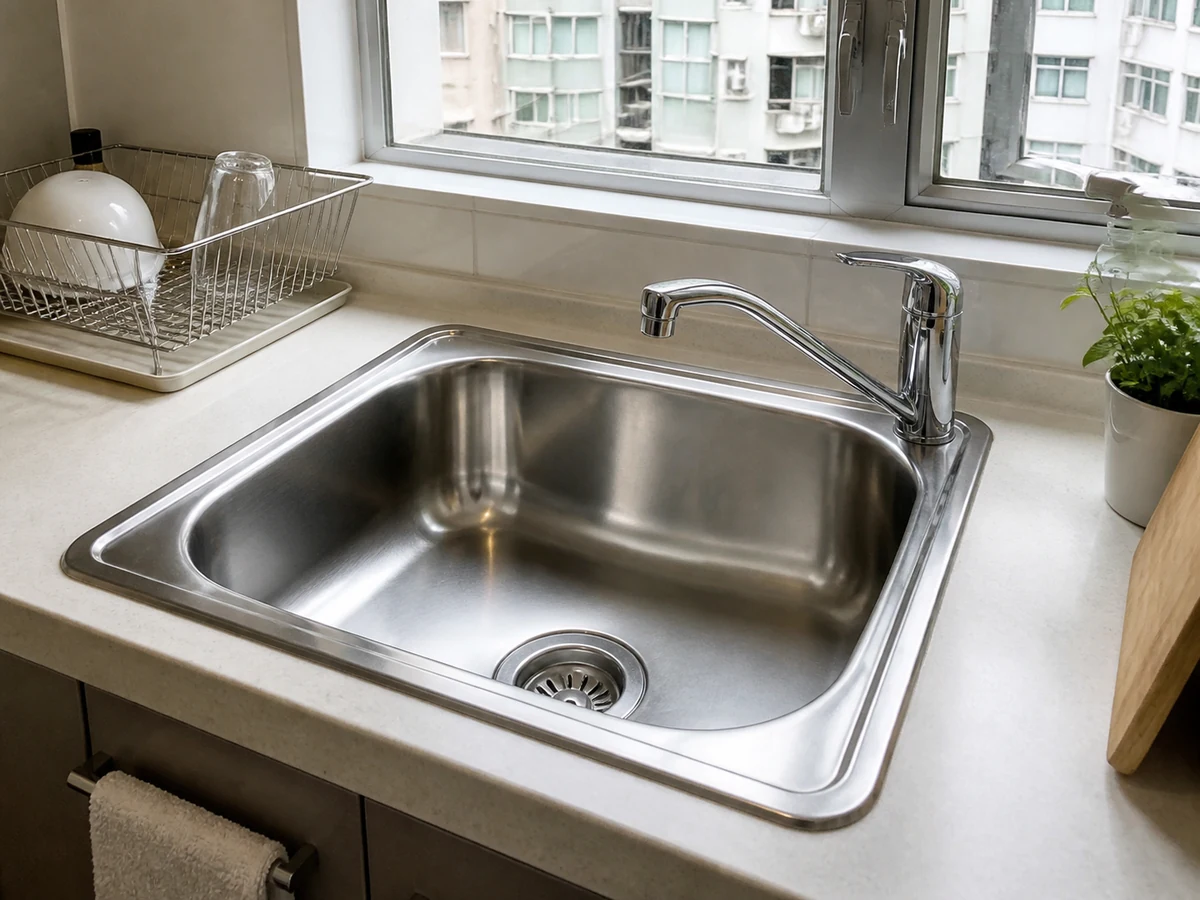
Kitchen cleaning
How to Clean a Kitchen Sink and Reduce Odour
Remove food debris, greasy film, and drain-edge dirt
Overview
Odour often comes from food trapped in the strainer, greasy film near the drain, or a dry water trap. Remove visible debris physically, then use products suitable for the sink and tap finish; never mix cleaning chemicals.
Tools needed
- Durable cleaning gloves
- Soft sponge or cloth
- Small soft brush
- Warm water and mild dish soap
- Waste bag or container
- Clean water and dry cloth
- Tongs for visible debris; never reach blindly
Cleaning steps
Clear the sink and inspect
Remove dishes and check for knives, broken glass, or an active waste disposer. Report and handle sharp objects safely.
Glove up and remove visible debris
Lift the strainer and collect food with tongs or paper into the bin. Do not push solids or fat down the drain.
Wash the strainer and stopper
Clean the strainer, stopper, and reachable rim with warm water, mild dish soap, and a small brush, then rinse.
Wipe from the rim toward the drain
Clean the rim, bowl, base, and seams with a soft sponge and a little mild dish soap. Avoid abrasive tools.
Clean the tap and its base
Apply cleaner to a soft cloth, not into seams. Treat special finishes or limescale only as that manufacturer directs.
Rinse and dry
Rinse away all product residue and dry the sink and tap to reduce water spots and new deposits.
Restore water in the trap
Run clean water into the drain to maintain the water seal. Do not cover a persistent odour with fragrance.
Check drainage and report faults
Confirm normal flow. For persistent odour, slow flow, backflow, or leaks, do not combine drain chemicals; tell the employer.
Common mistakes
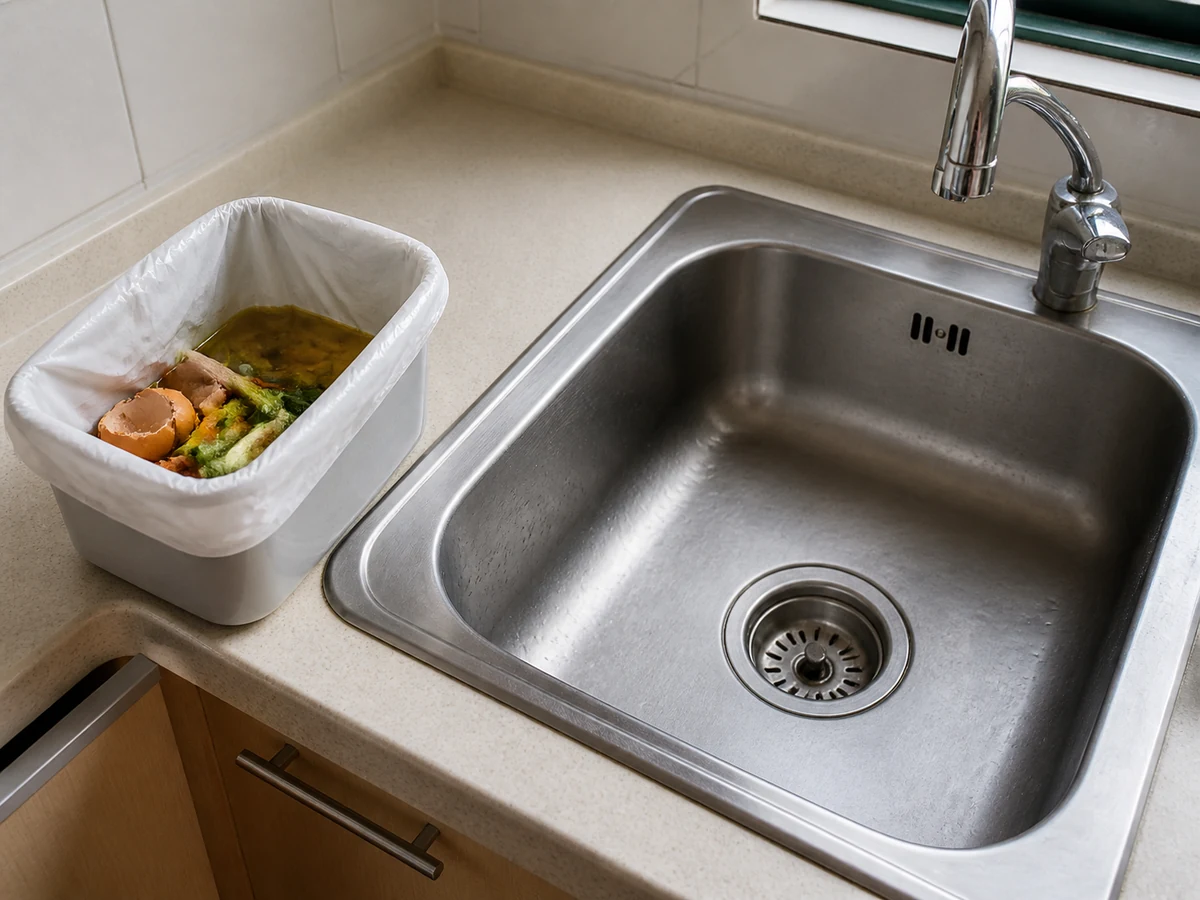
Washing fat and food scraps down the drain
✓ Correct actionCollect solids and fat into the bin before washing the sink.
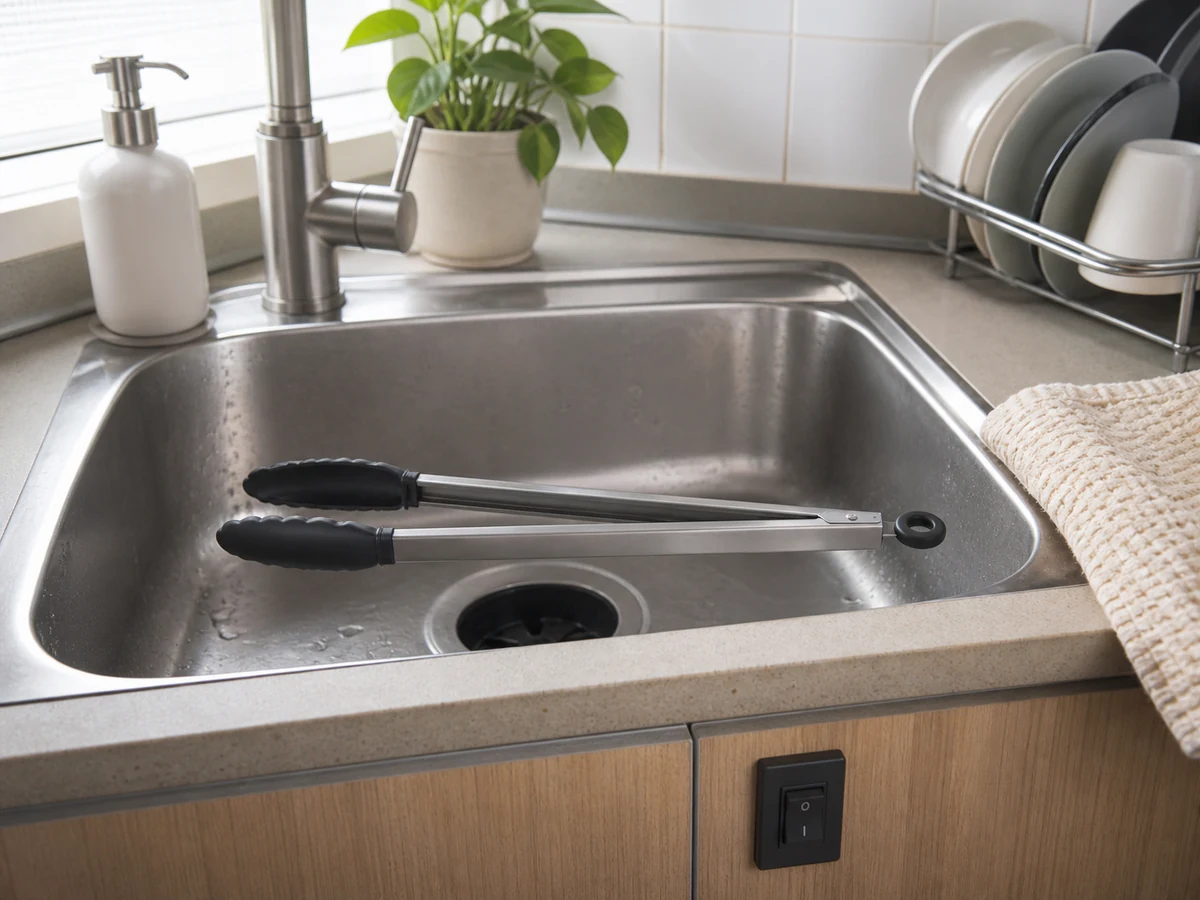
Reaching blindly into the drain
✓ Correct actionCheck for disposers and sharp objects; use a tool for visible debris.
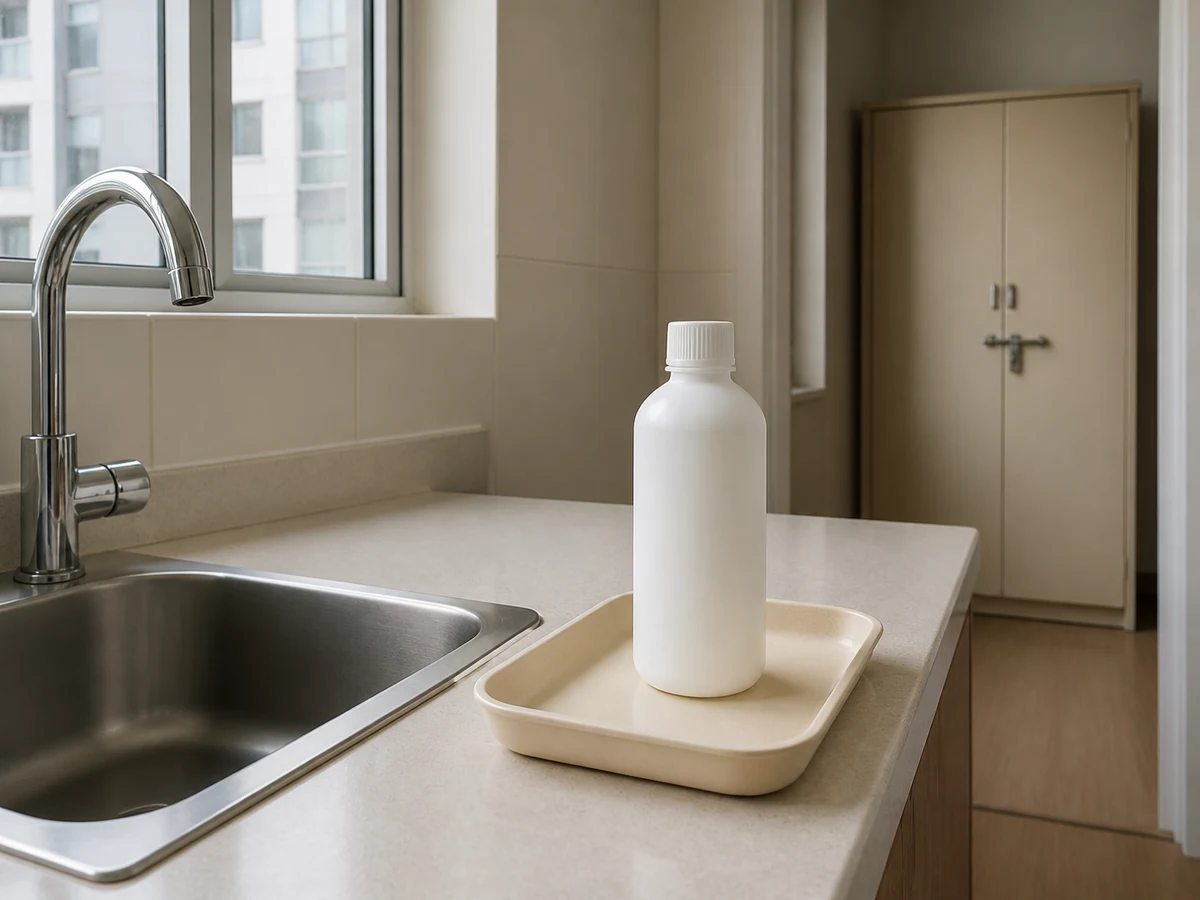
Mixing bleach, acid, or drain products
✓ Correct actionUse one material-compatible product exactly as labelled and never mix.
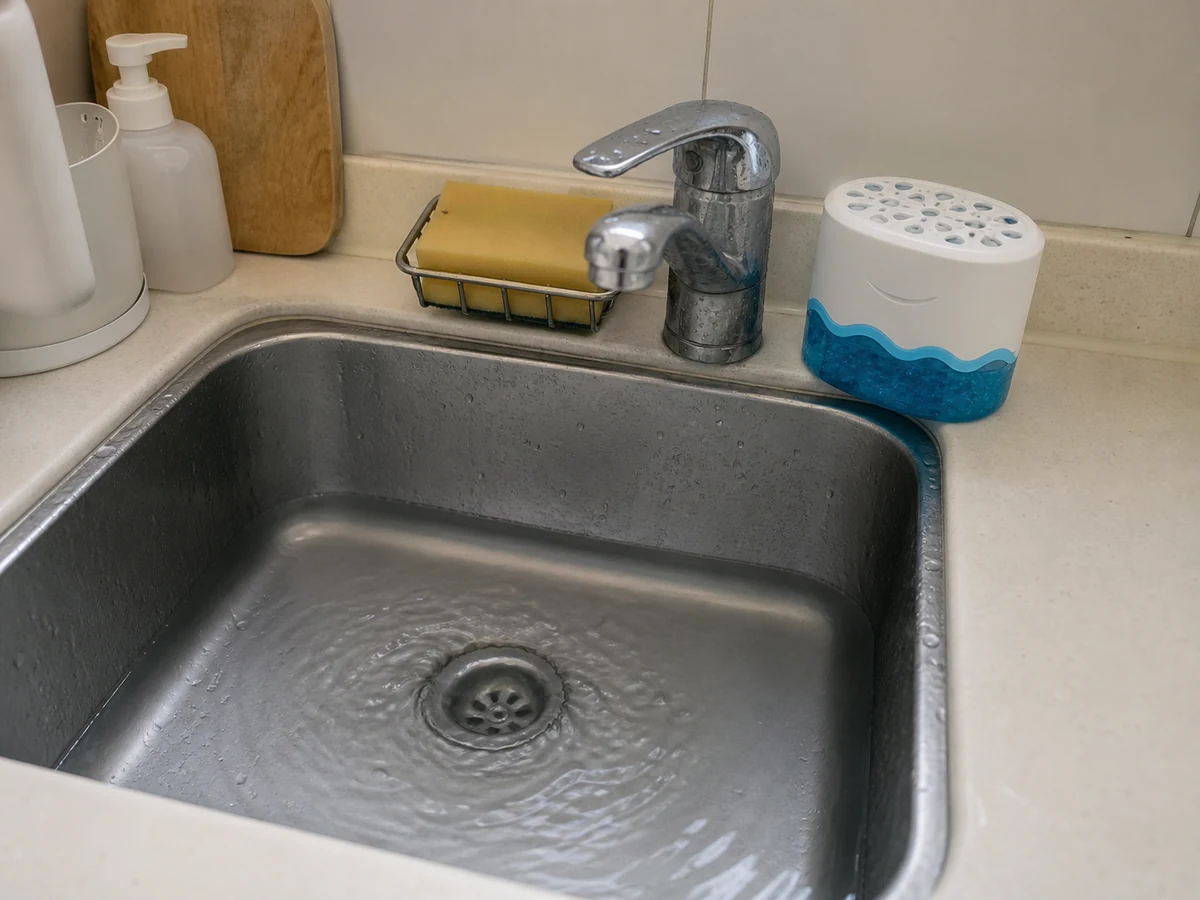
Masking persistent drain odour with fragrance
✓ Correct actionRestore trap water and have persistent odour or backflow checked.
Practical tips
Tips for helpers
- Put fat and scraps in the bin after cooking so daily cleaning is faster.
- Keep the dish sponge separate from the sink-cleaning sponge.
- Dry the tap after cleaning to slow water-spot buildup.
Tips for employers
- Explain whether a waste disposer is fitted and how it is safely isolated; provide special-finish care instructions.
- Arrange inspection for persistent odour, slow flow, backflow, or leakage instead of asking a helper to try several drain chemicals.
Completion checklist
Checked 0 / 8