Home organisation
How to Organise a Shoe Cabinet and Reduce Odour
Dry wet shoes in a ventilated place before cleaning and storing them loosely
Overview
Shoe-cabinet odour is commonly associated with moisture, soil and poor airflow. Do not cover dampness with fragrance. Clean each shoe and let it dry fully before storage.
Tools needed
- Dry cloth and soft brush
- Shoe-specific cleaning tools
- Ventilated rack or compartments
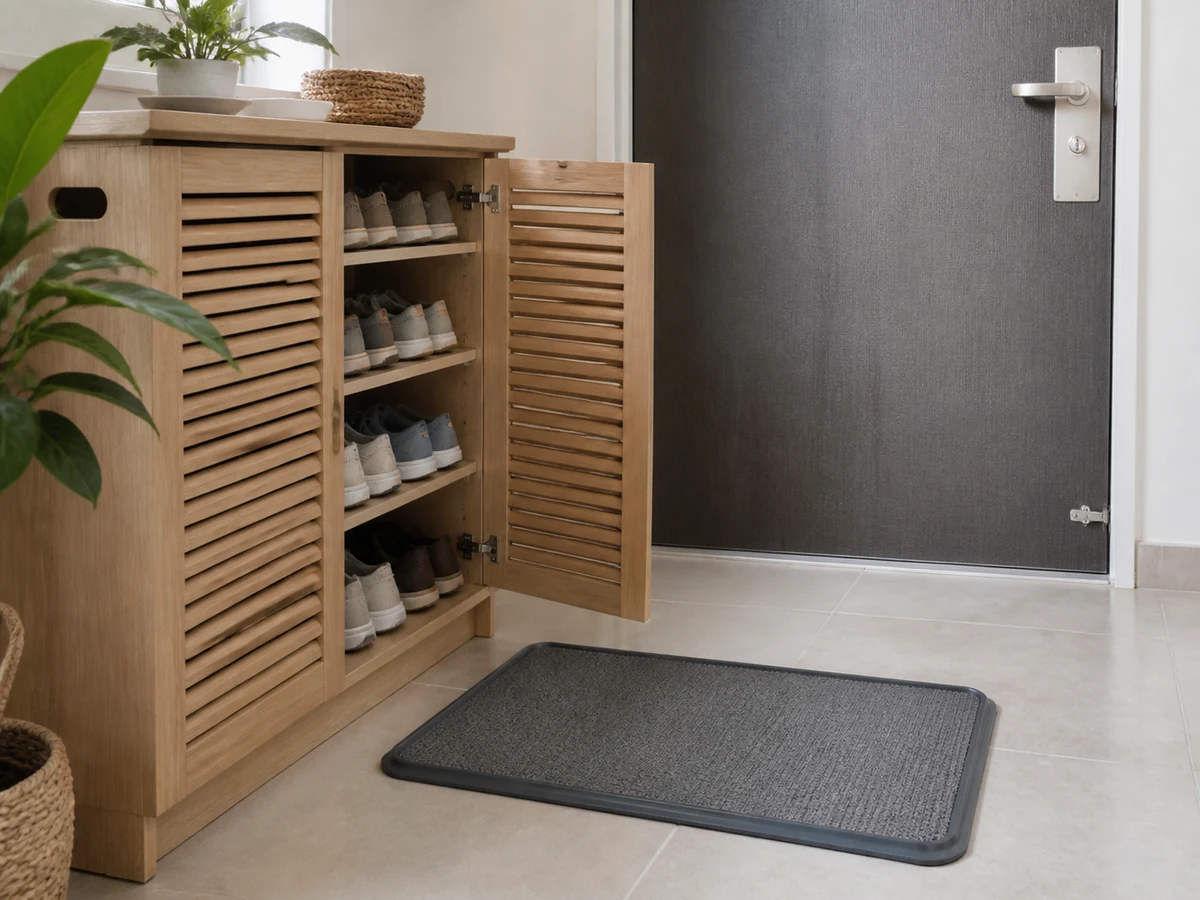
- Washable drip mat
- Products permitted by shoe material label
Cleaning steps
Separate dry and wet shoes
Keep wet or visibly dirty shoes outside the cabinet; group dry shoes as daily, seasonal or repair.
Remove cabinet dust
Work top to bottom with a dry cloth or soft brush. Wash the drip mat separately and dry it fully.
Clean each pair
Remove sole grit and upper soil according to the shoe material. Do not spray perfume or unidentified chemical into shoes.
Dry wet shoes with airflow
Open and separate shoes in a ventilated drip-safe area away from heat. Store only when inside and outside are fully dry.
Return in loose zones
Put daily shoes at accessible height, position heels stably inward, avoid crushing stacks and leave airflow gaps.
Check odour and moisture
If mould odour, spots or cabinet dampness remain, isolate affected shoes and investigate leaks or ventilation.
Common mistakes
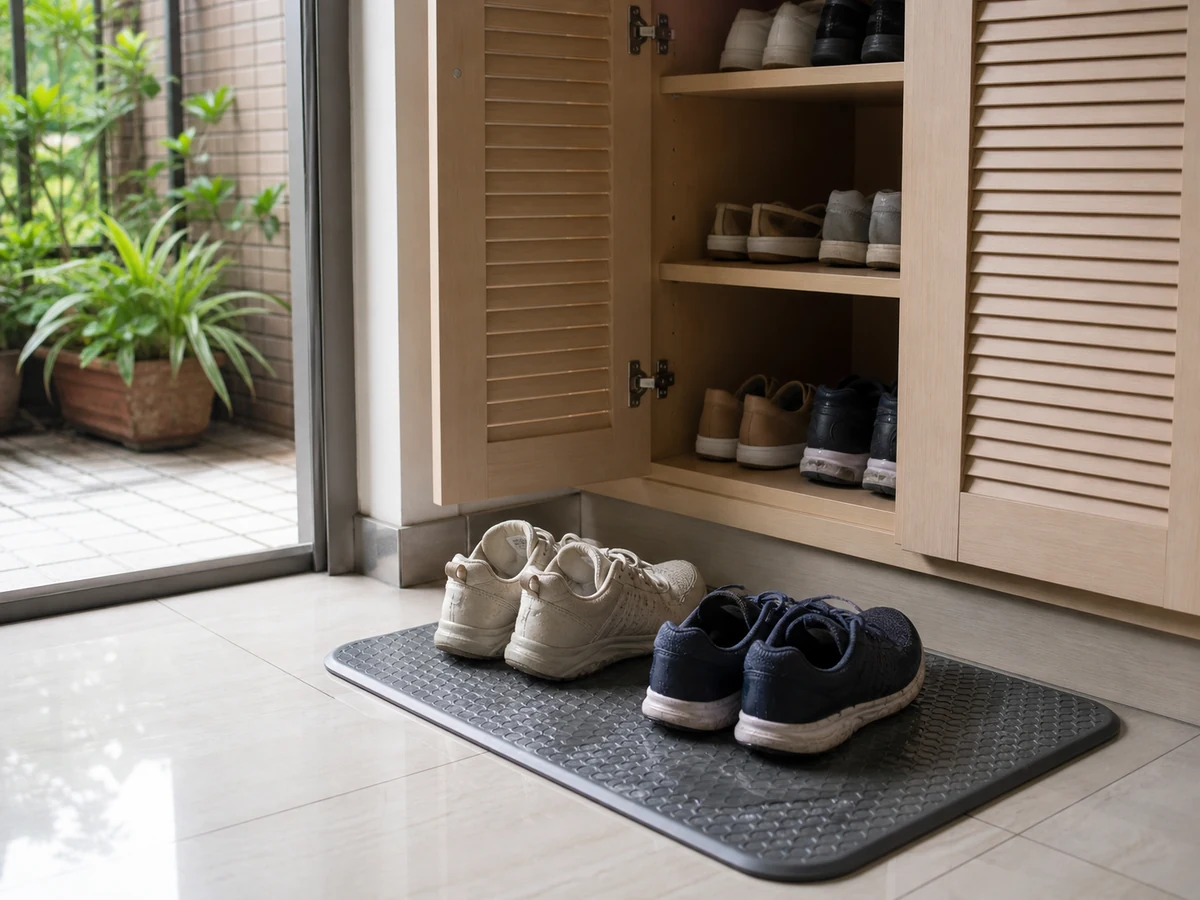
Closing wet shoes in the cabinet
✓ Correct actionDry fully in a ventilated drip-safe location first.
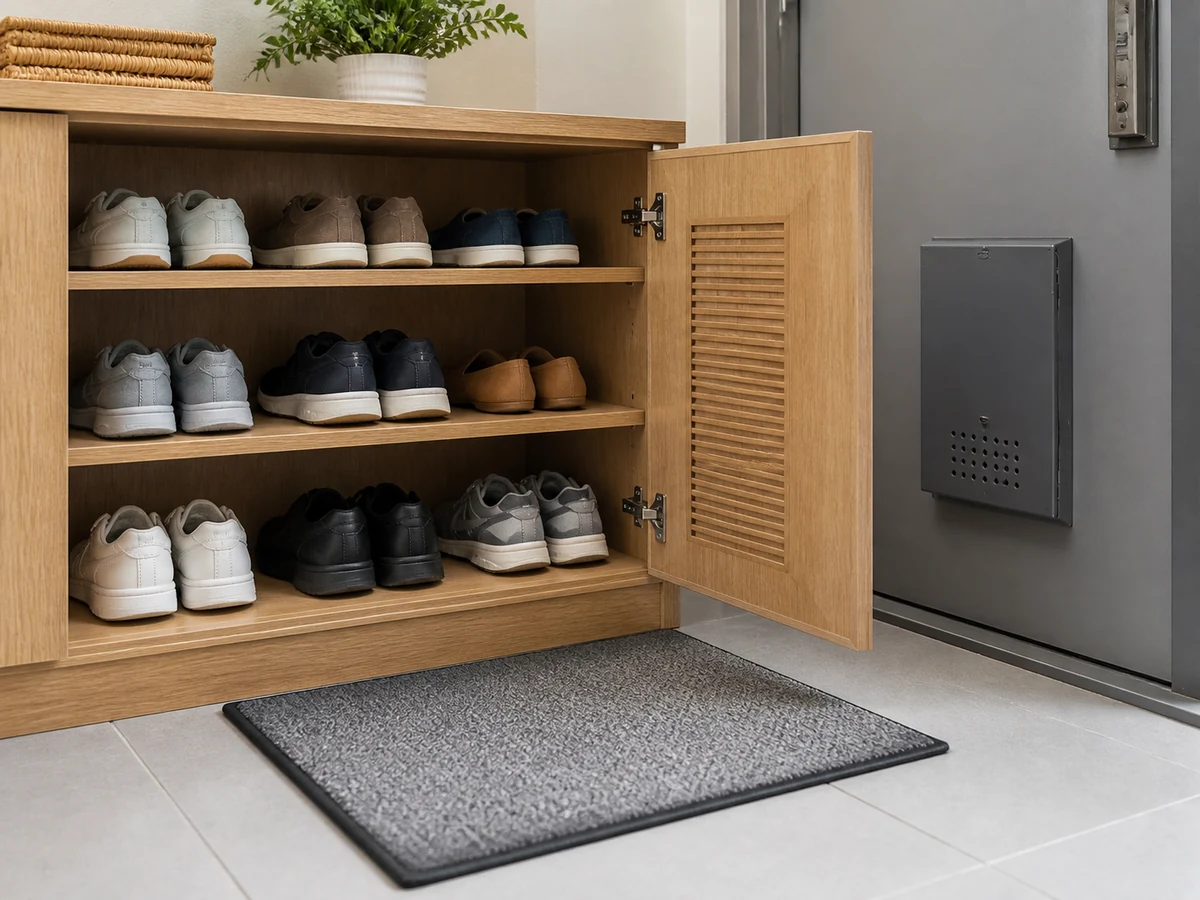
Masking a mould odour with strong fragrance
✓ Correct actionRemove soil and moisture and inspect for mould or leaks.
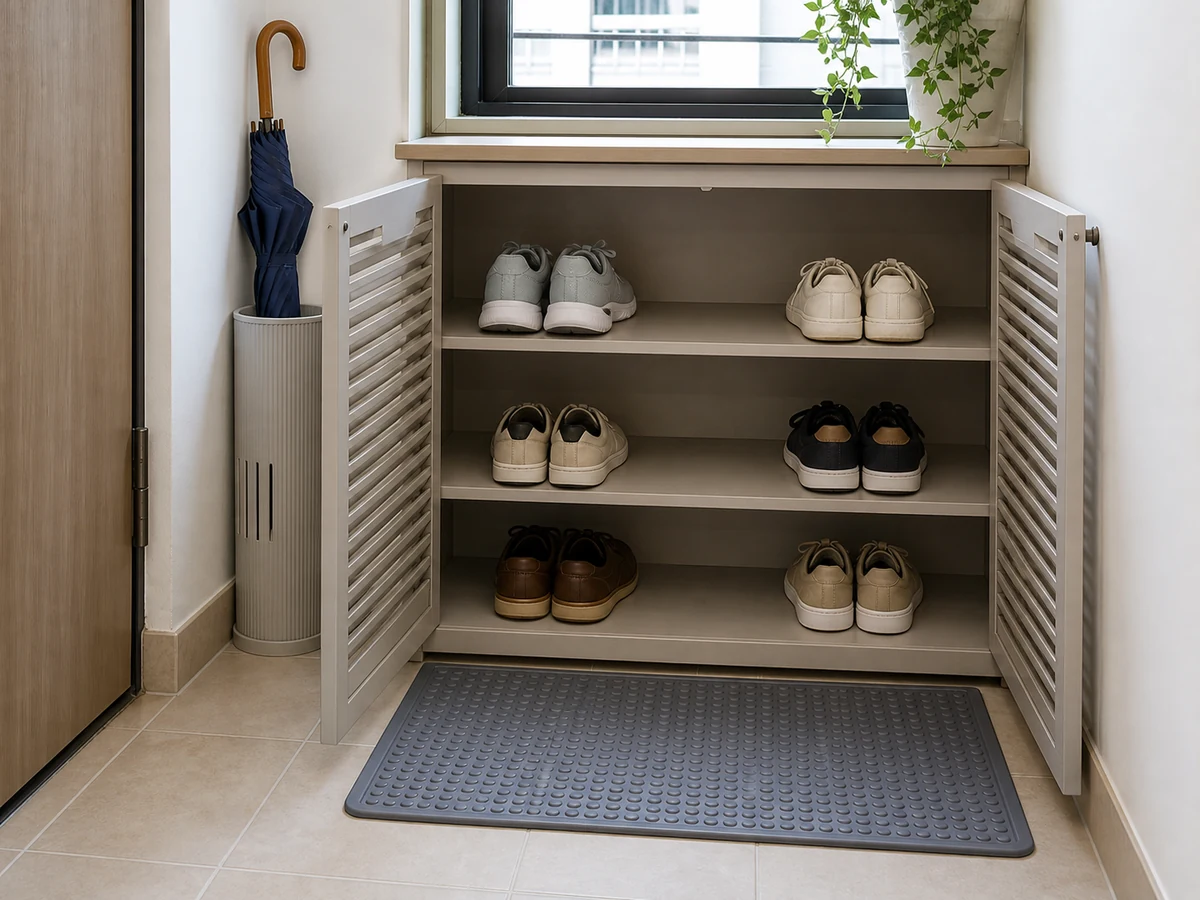
Packing the cabinet without airflow
✓ Correct actionReduce the load and leave gaps.
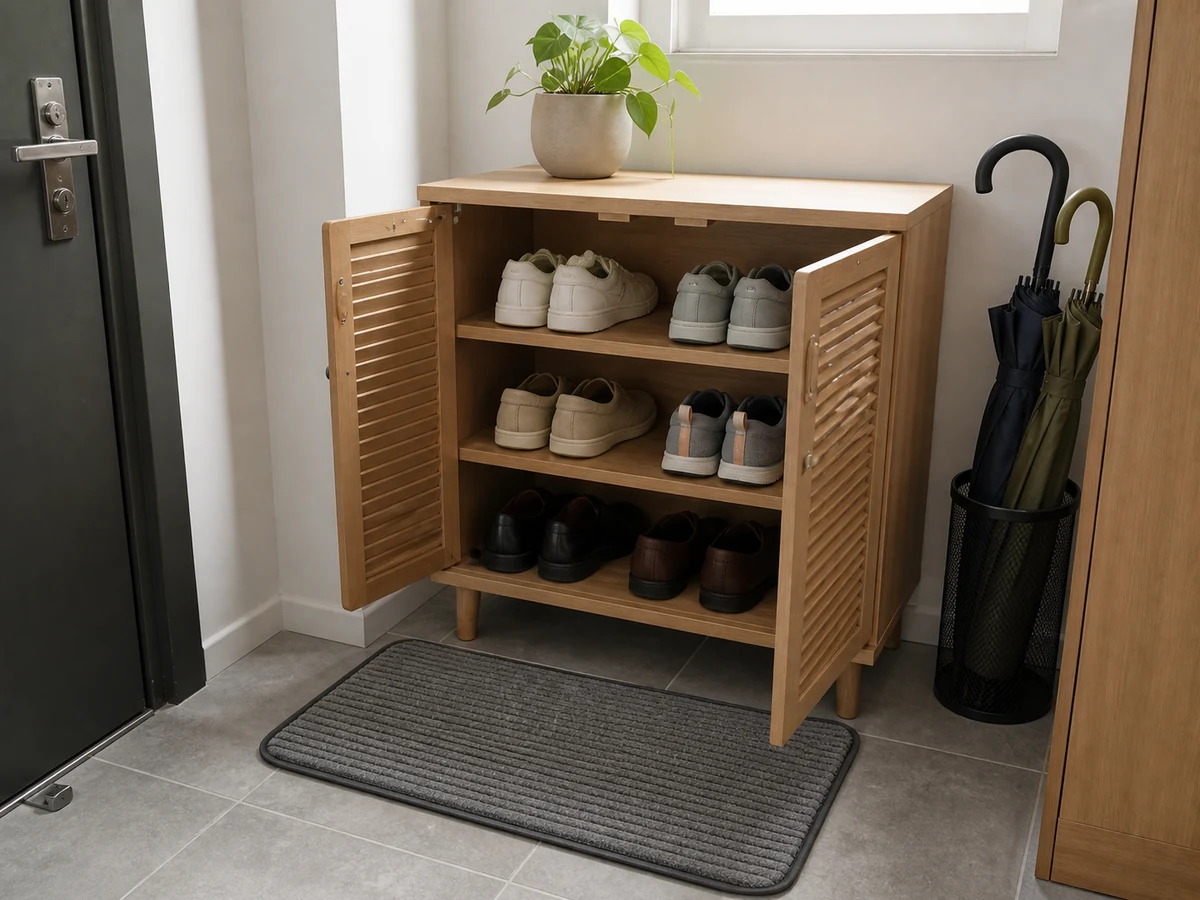
Storing cleaning chemicals in the shoe cabinet
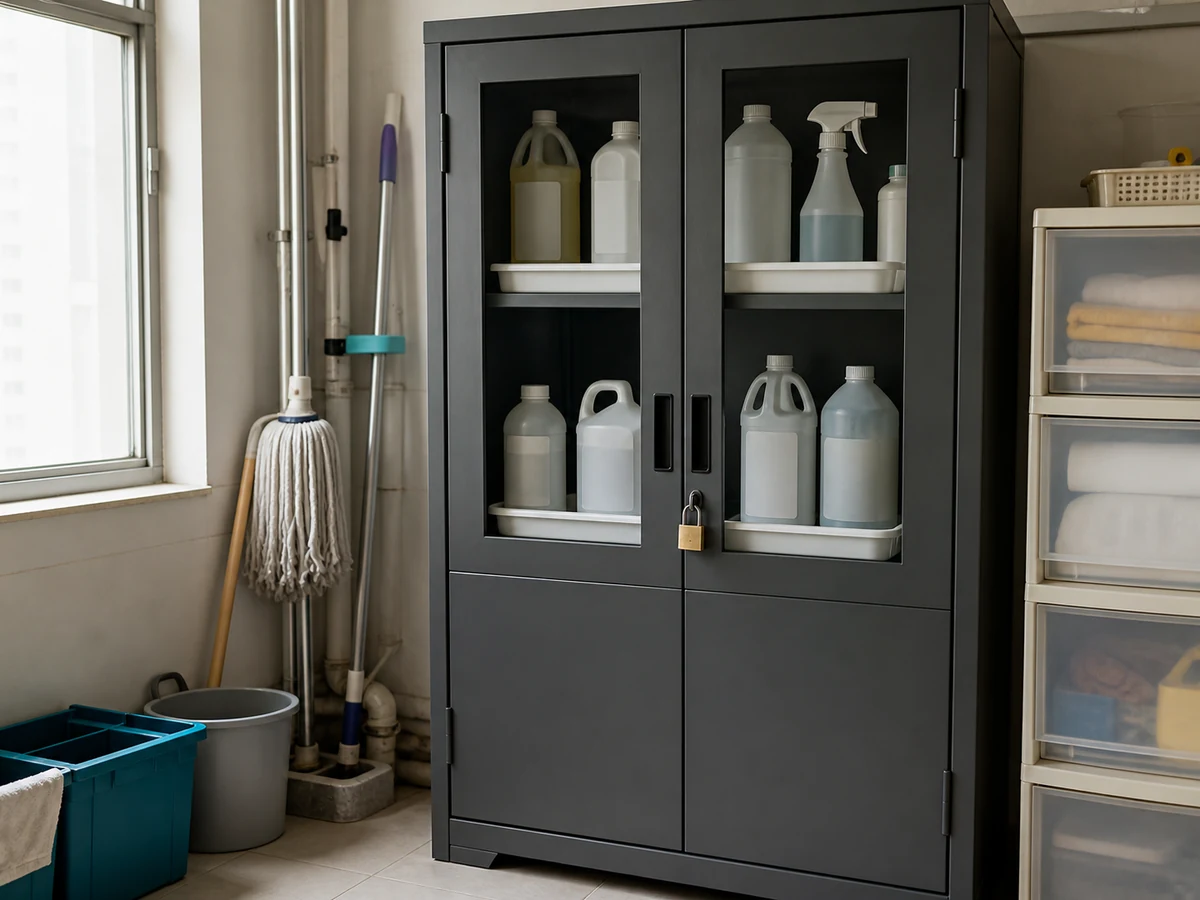
✓ Correct actionKeep chemicals in original labelled containers inside a designated locked cabinet.
Practical tips
Tips for helpers
- Set a washable drip station outside the cabinet for rainy days.
- Rotate daily shoes so each pair gets complete drying time.
Tips for employers
- Confirm manufacturer care restrictions for leather or specialist footwear.
- Investigate wall leaks or ventilation if the cabinet stays damp or mouldy.
Completion checklist
Checked 0 / 6