Bedroom and bedding
How to Store Dry Bedding in Vacuum Bags
Confirm filling compatibility and complete drying before vacuum storage.
Overview
Confirm both bedding and bag instructions permit compression; do not vacuum down, wool, memory foam or unknown filling without confirmation. Wash and dry bedding completely, checking thick edges and filling; cool and fold flat, and remove sharp objects or crumbs from the bag.
Tools needed
- Compatible vacuum storage bag
- Matching pump or vacuum cleaner
- Clean folding surface
- Content and date labels
Cleaning steps
Confirm bedding tolerates compression
Confirm both bedding and bag instructions permit compression; do not vacuum down, wool, memory foam or unknown filling without confirmation.
Dry, cool and fold
Wash and dry bedding completely, checking thick edges and filling; cool and fold flat, and remove sharp objects or crumbs from the bag.
Seal and extract within limits
Stay below the fill line, flatten and seal the closure, then use compatible equipment to the permitted compression level instead of maximum flatness.
Label and inspect periodically
Close the valve, label contents and date, and store flat in a dry cupboard; check for reinflation, condensation or mustiness as agreed and remove for inspection if abnormal.
Common mistakes
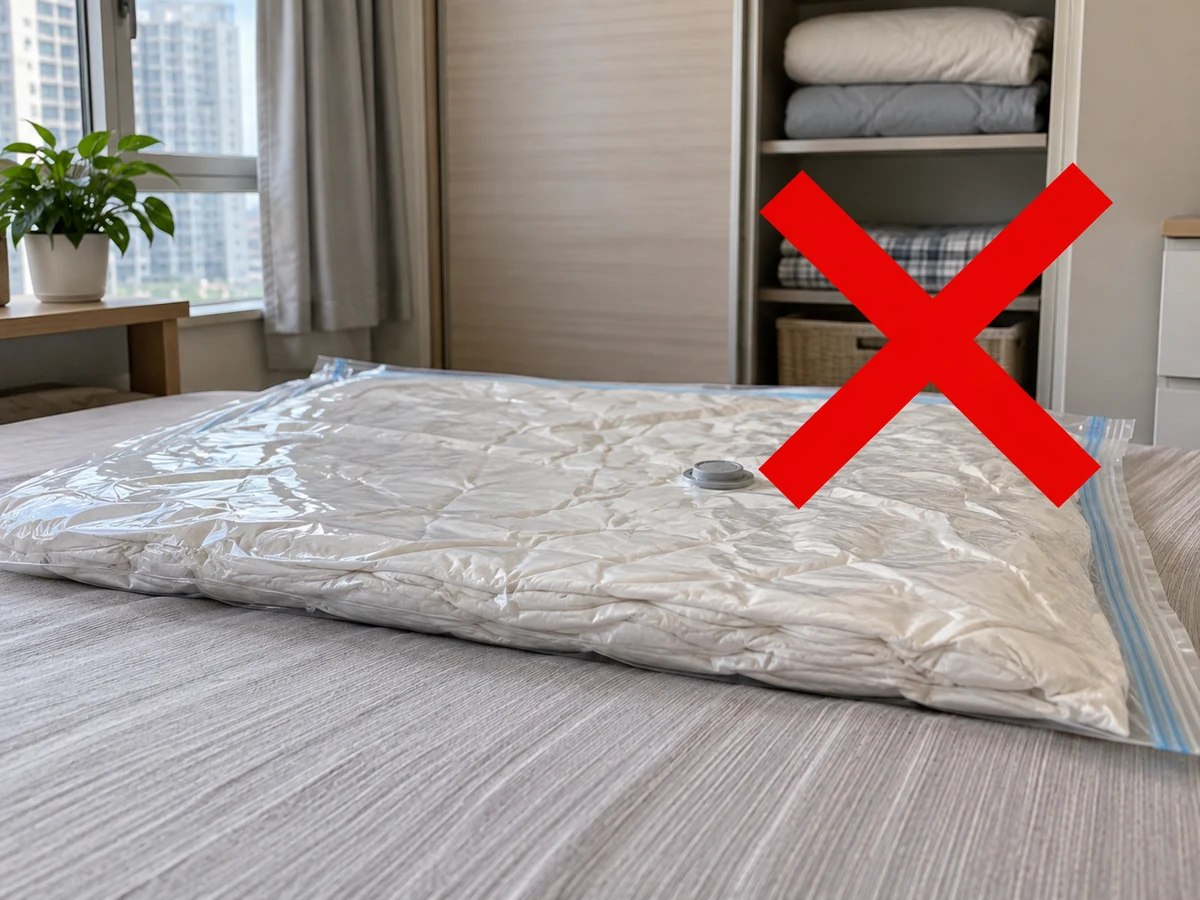
Compressing every filling as flat as possible
✓ Correct actionConfirm both bedding and bag instructions permit compression; do not vacuum down, wool, memory foam or unknown filling without confirmation.
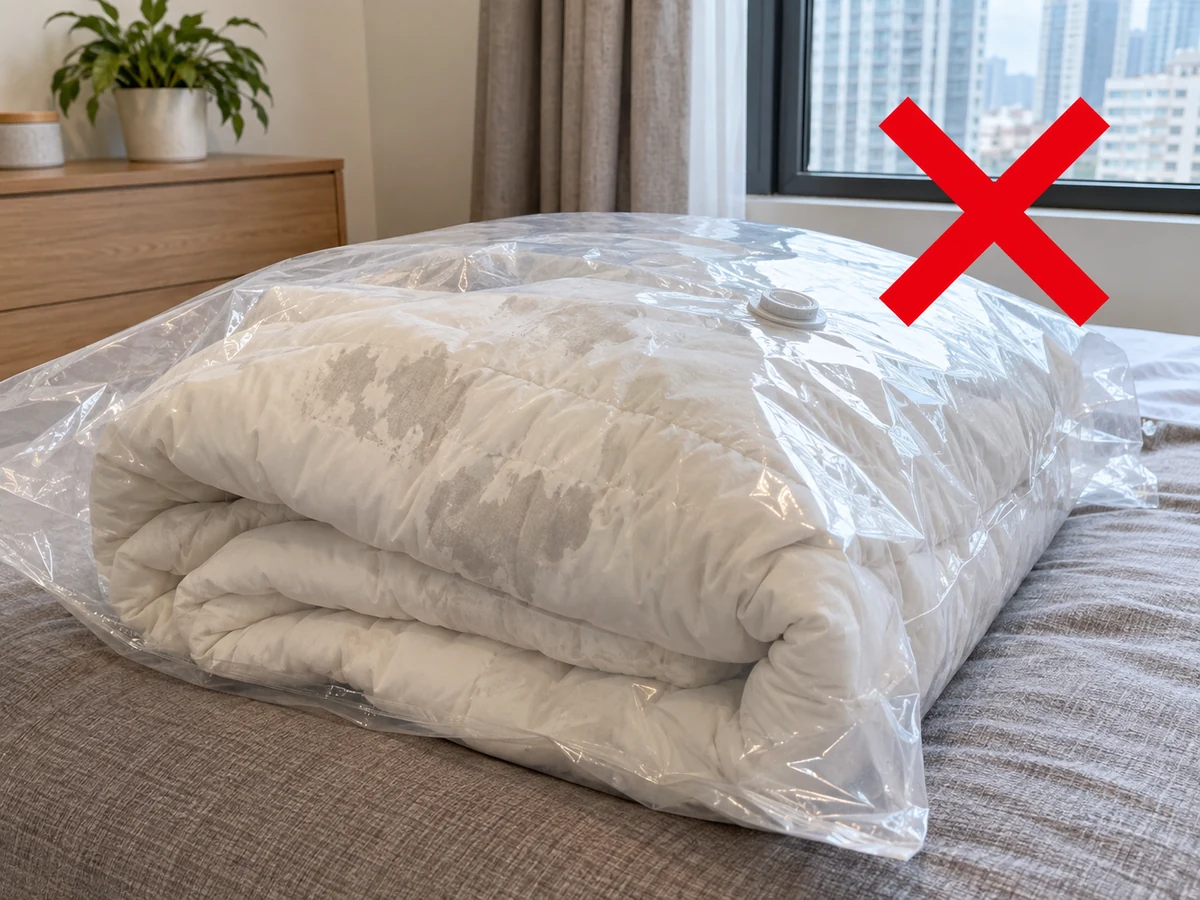
Bagging damp or warm bedding
✓ Correct actionWash and dry bedding completely, checking thick edges and filling; cool and fold flat, and remove sharp objects or crumbs from the bag.
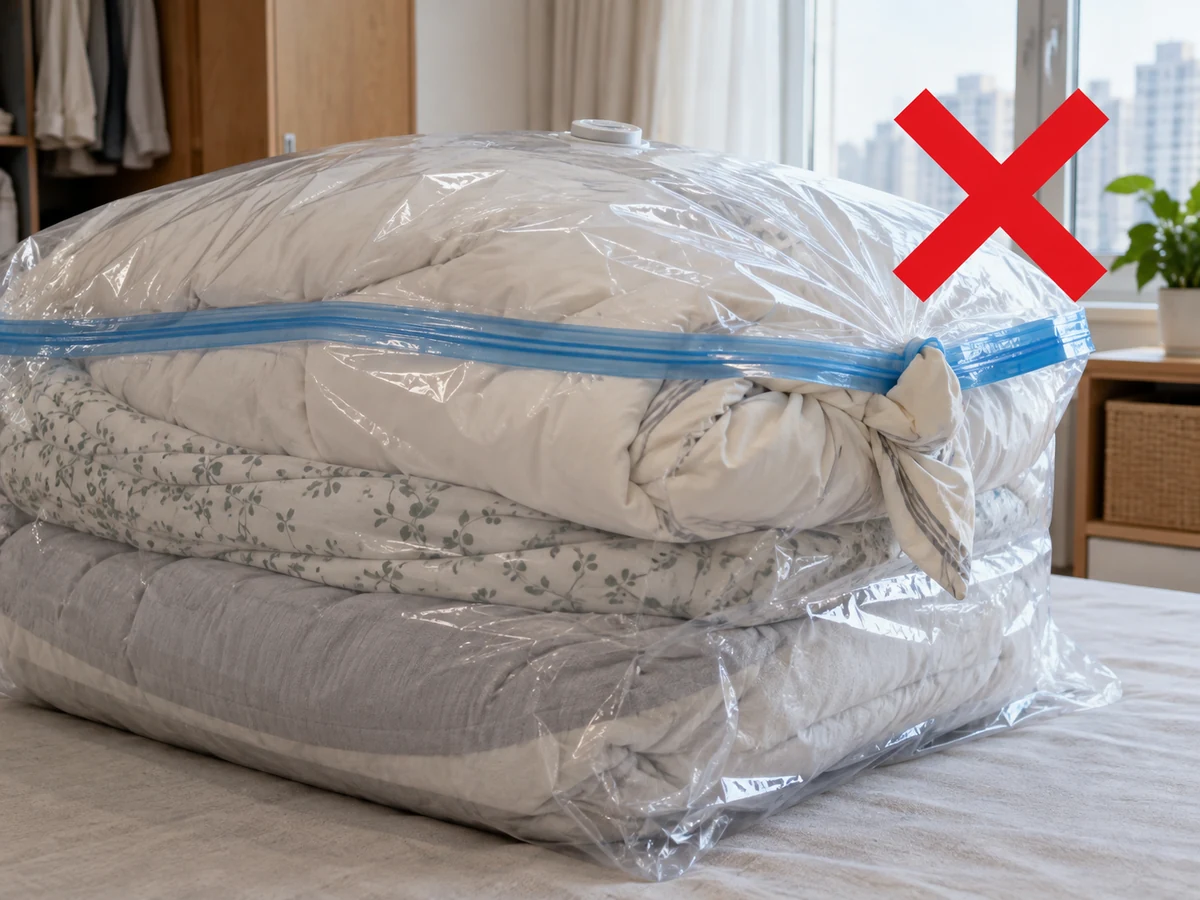
Overfilling or trapping fabric in the seal
✓ Correct actionStay below the fill line, flatten and seal the closure, then use compatible equipment to the permitted compression level instead of maximum flatness.
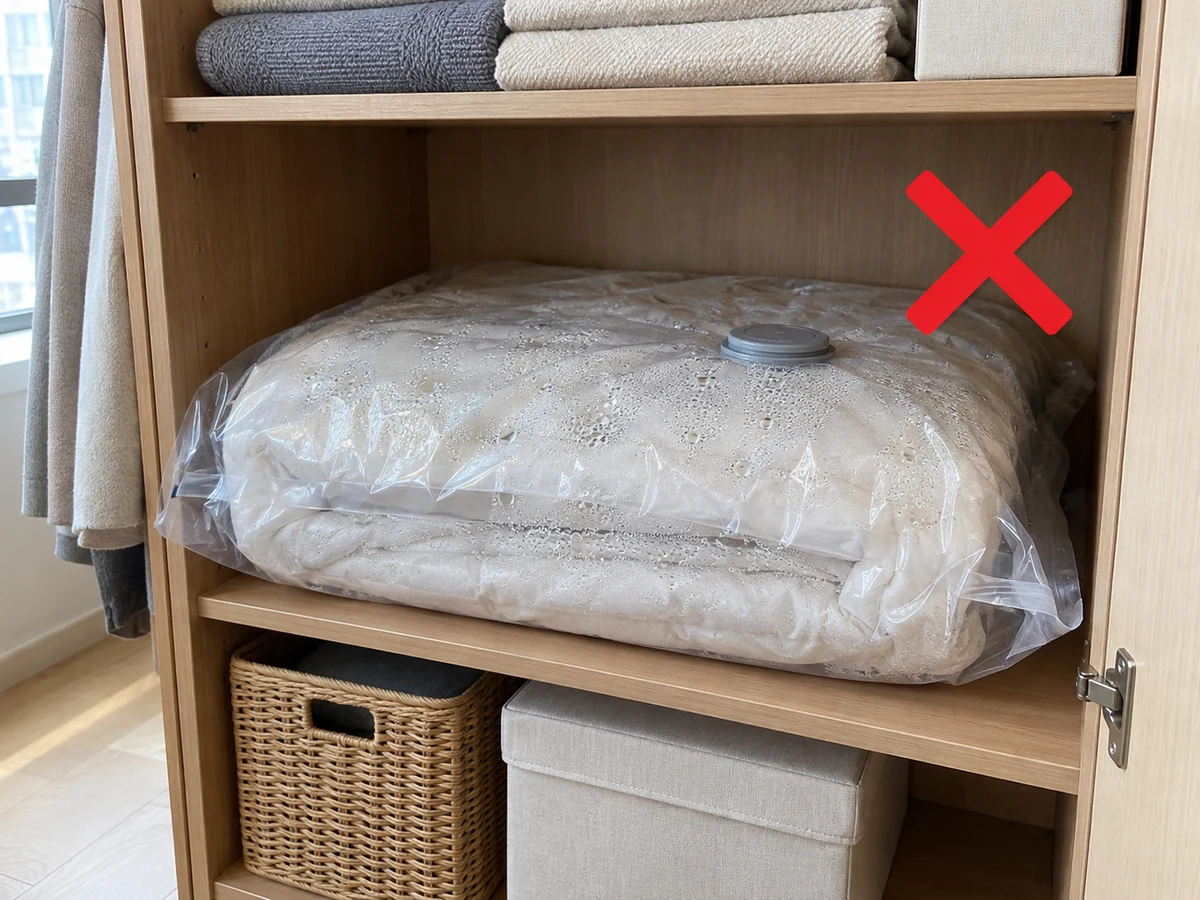
Ignoring condensation
✓ Correct actionClose the valve, label contents and date, and store flat in a dry cupboard; check for reinflation, condensation or mustiness as agreed and remove for inspection if abnormal.
Practical tips
Tips for helpers
- Leave space around the seal.
- Remove sharp objects before extracting air.
Tips for employers
- Check down, wool and other filling restrictions.
- Schedule moisture checks during storage.
Completion checklist
Checked 0 / 4