Bathroom cleaning
How to Clean Combs and Hairbrushes
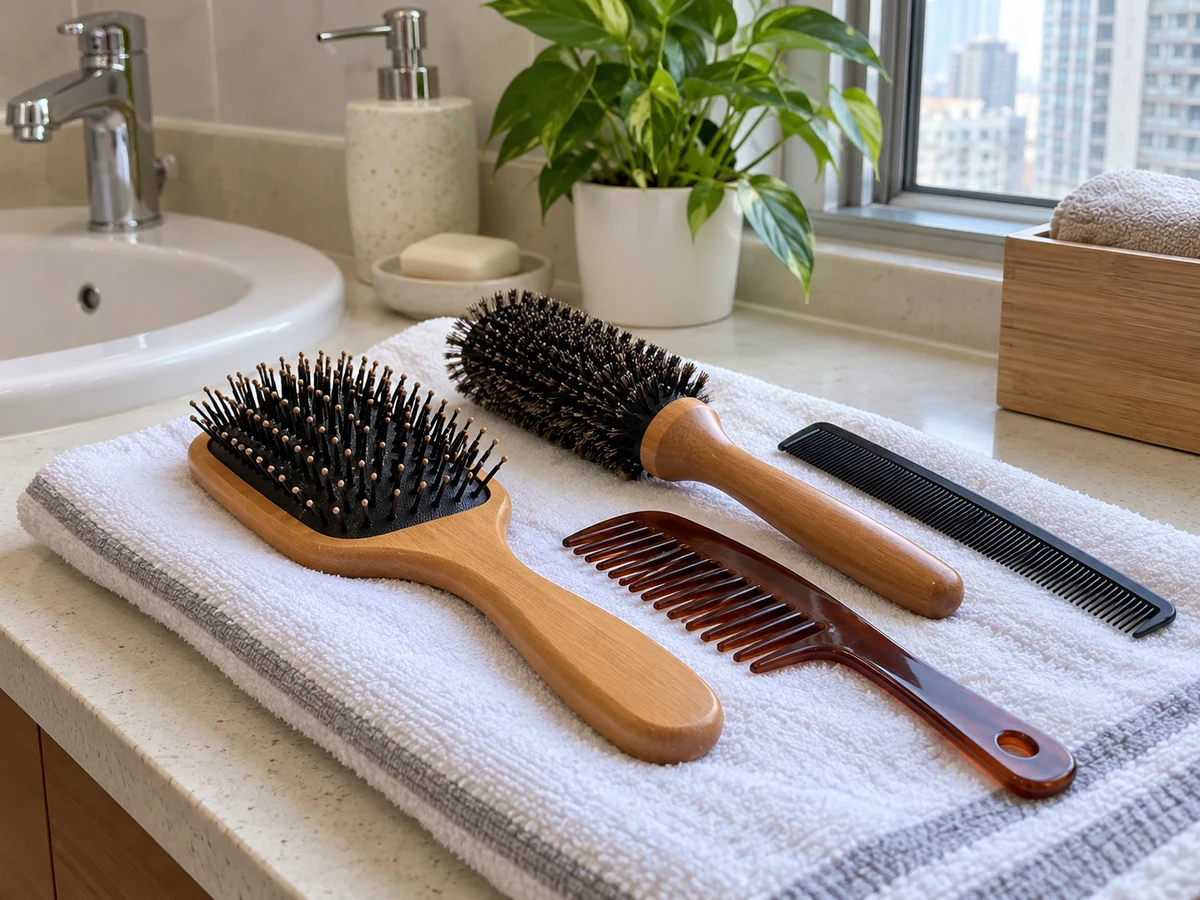
Wood, cushions and all-plastic brushes need different wet-cleaning limits.
Overview
Keep owners' tools separate and identify plastic, wooden, cushioned or natural-bristle parts; powered brushes are outside this washing guide. Lift trapped hair with a blunt tool along the teeth without tearing bristles or puncturing the cushion.
Tools needed
- Blunt hair-removal tool
- Soft toothbrush
- Mild cleaner
- Absorbent cloth
Cleaning steps
Identify brush materials
Keep owners' tools separate and identify plastic, wooden, cushioned or natural-bristle parts; powered brushes are outside this washing guide.
Lift trapped hair
Lift trapped hair with a blunt tool along the teeth without tearing bristles or puncturing the cushion.
Clean handles and cushions appropriately
Briefly hand-wash all-plastic tools only if allowed; spot-wipe wood, cushions and natural bristles by their instructions without soaking.
Drain and dry teeth
Remove cleaner residue, blot moisture and ventilate bristles downward or as directed; dry teeth, cushions and joints fully before storage.
Common mistakes
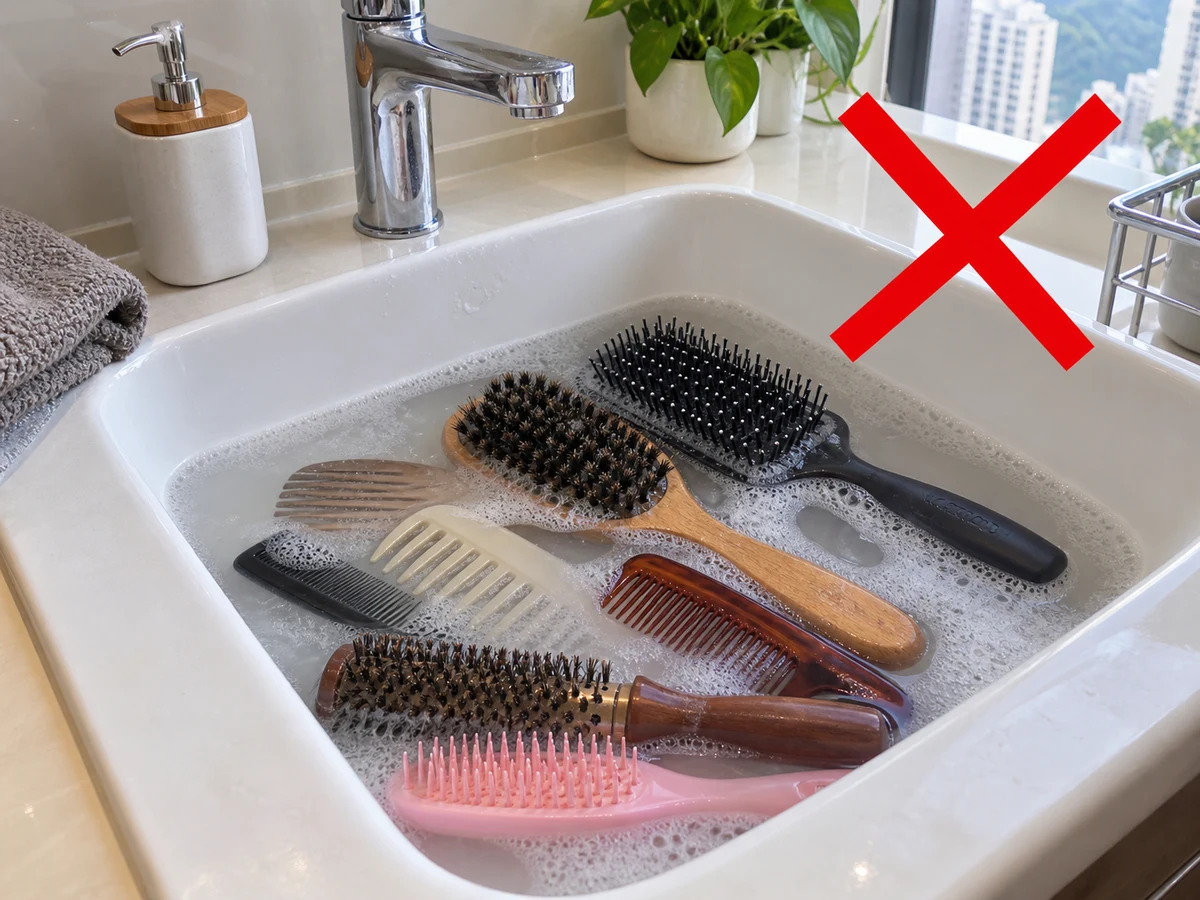
Soaking every material together
✓ Correct actionKeep owners' tools separate and identify plastic, wooden, cushioned or natural-bristle parts; powered brushes are outside this washing guide.
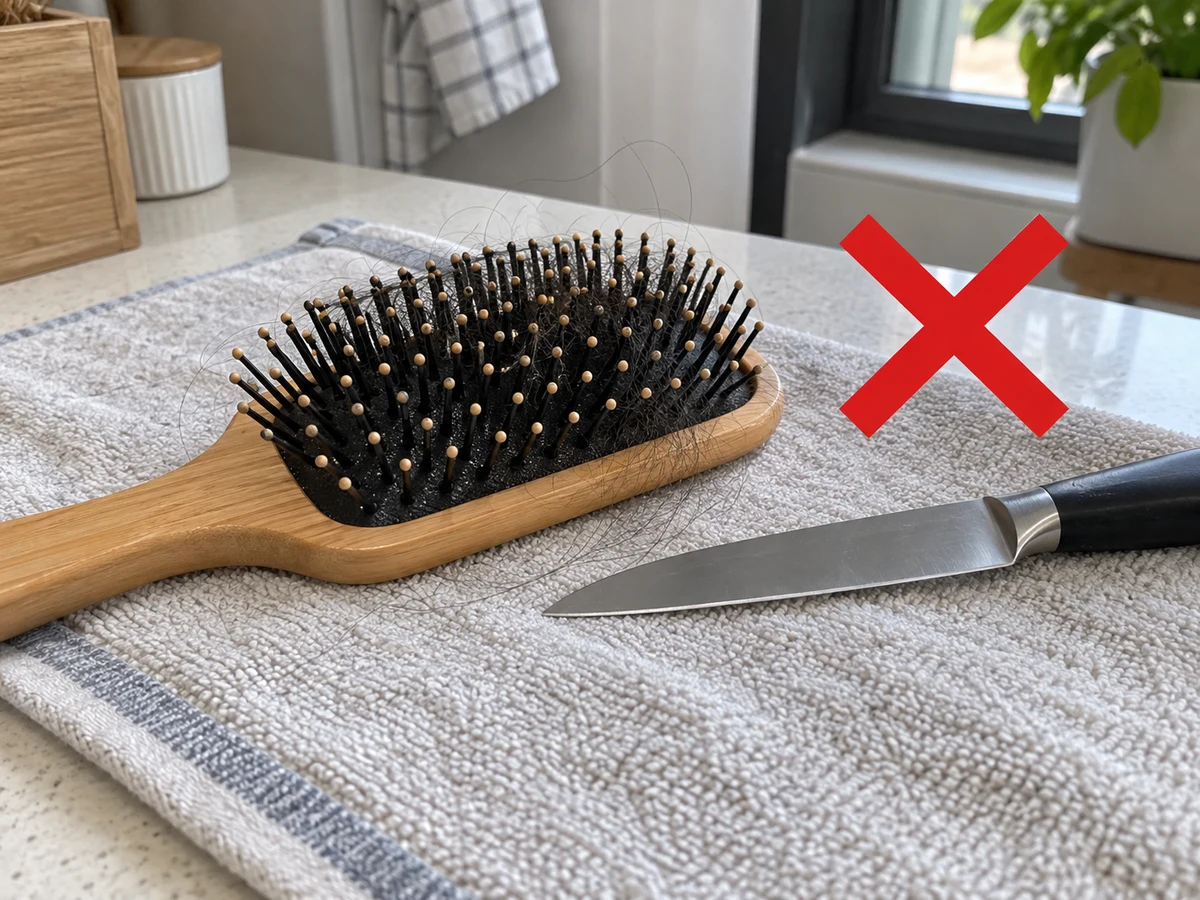
Picking hair out with a sharp knife
✓ Correct actionLift trapped hair with a blunt tool along the teeth without tearing bristles or puncturing the cushion.
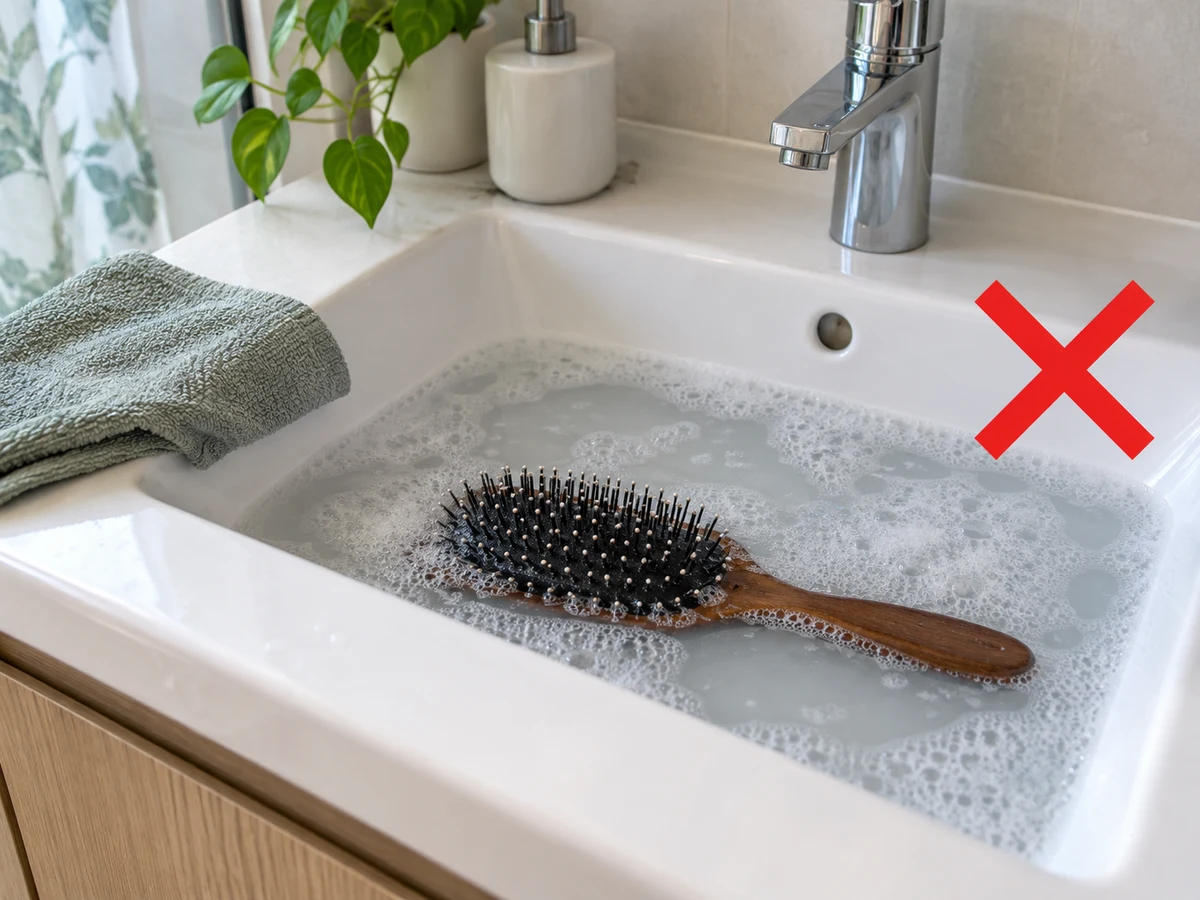
Flooding a brush cushion
✓ Correct actionBriefly hand-wash all-plastic tools only if allowed; spot-wipe wood, cushions and natural bristles by their instructions without soaking.
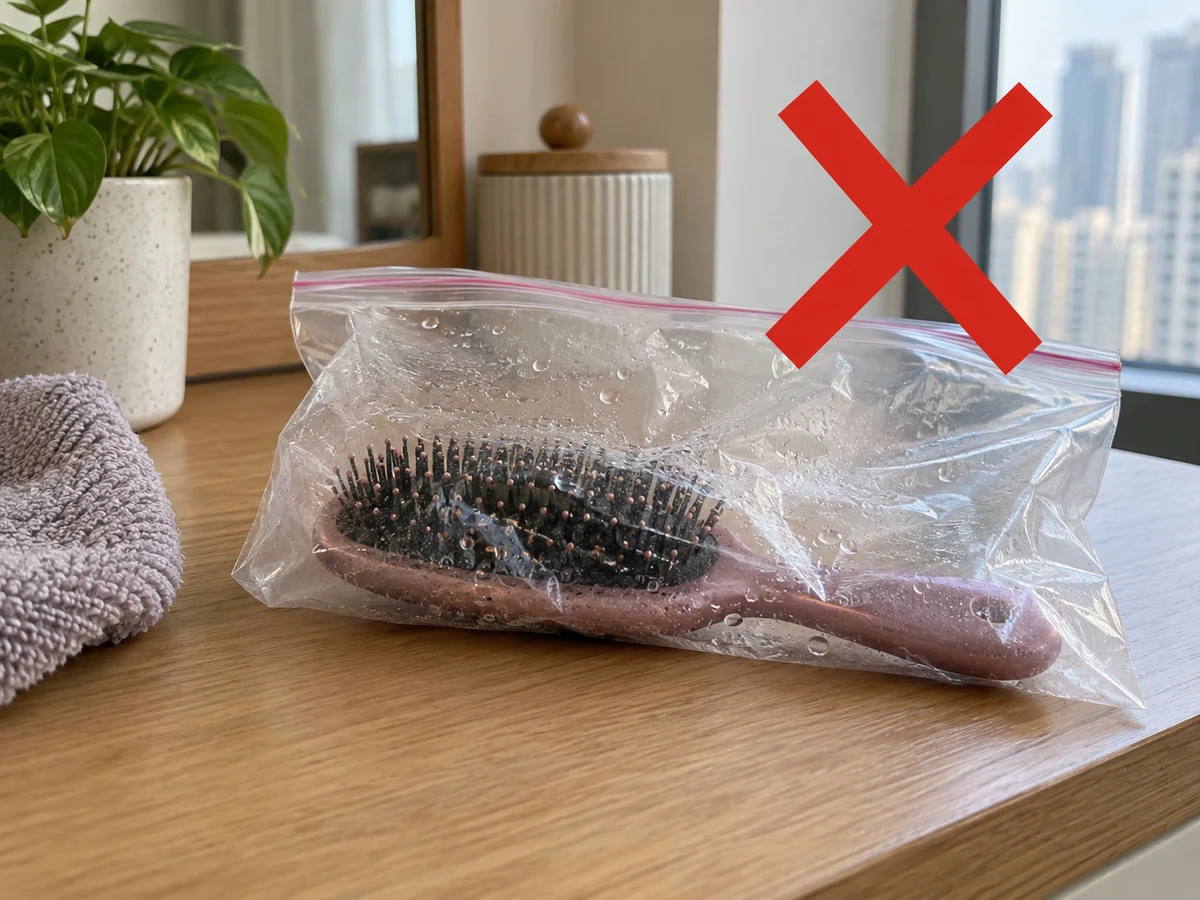
Sealing a damp brush in a bag
✓ Correct actionRemove cleaner residue, blot moisture and ventilate bristles downward or as directed; dry teeth, cushions and joints fully before storage.
Practical tips
Tips for helpers
- Move a blunt tool along the teeth.
- Do not leave water pooled on cushions.
Tips for employers
- Identify the owner of each brush.
- Provide separate directions for suspected lice.
Completion checklist
Checked 0 / 4