Kitchen cleaning
How to Clean a Rice Cooker Correctly
Wash approved removable parts after cooling and keep the body and sensors dry
Overview
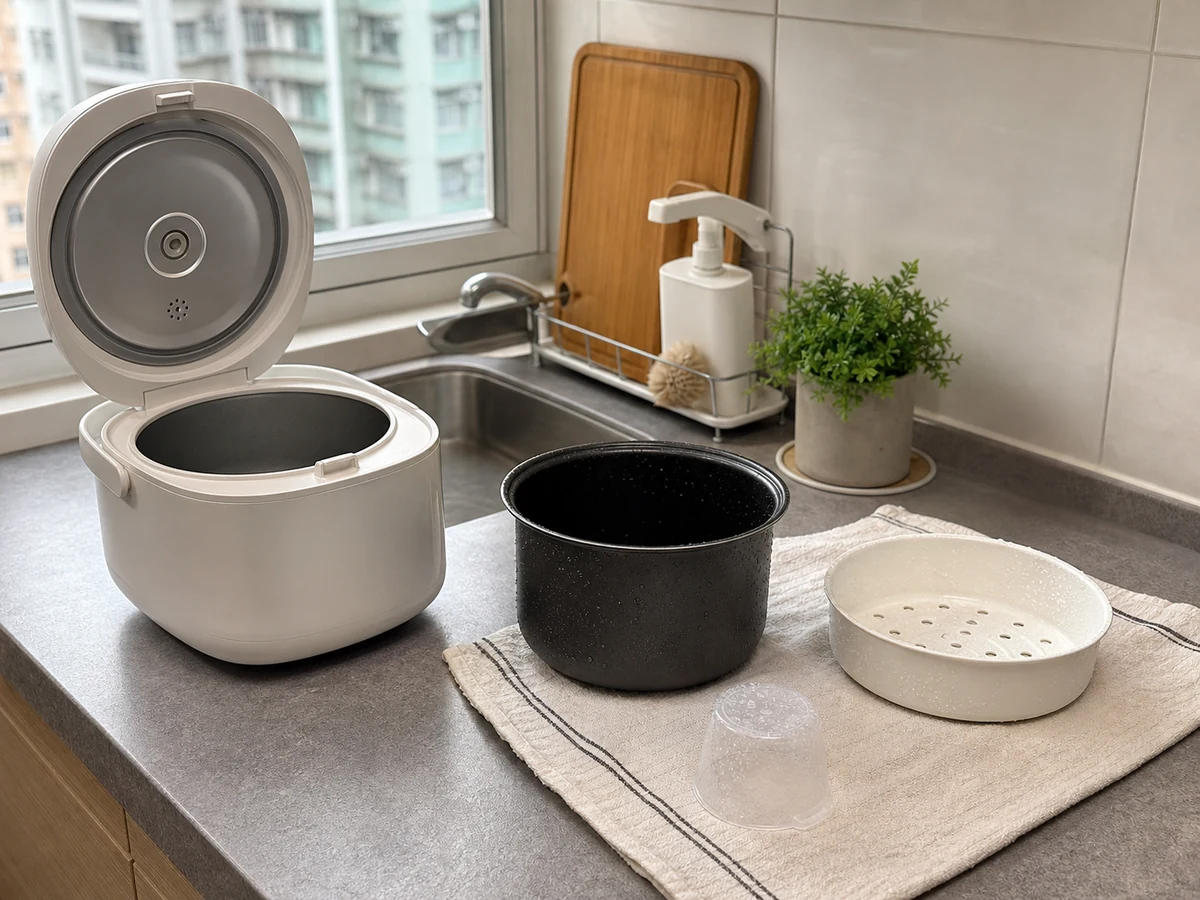
Unplug after cooking and wait until steam, inner pan, and body are completely cool. Wash only the inner pan, inner lid, steam cap, or other user-removable parts identified by the model manual; never immerse the body, sensor, connector, or controls.
Tools needed
- Two or three soft cloths
- Soft non-abrasive sponge
- Basin of warm water
- Mild dish soap used as labelled
- Dry towel
- Small soft brush only where the manual permits
Cleaning steps
Stop keep-warm and cool fully
End cooking and keep-warm, unplug, vent steam safely, and let the pan and body cool completely.
Check the model instructions
Identify which inner lid, steam cap, water collector, or seal is user-removable and washable, and note its orientation.
Remove the pan and approved parts
Lift the pan steadily with both hands and remove only listed parts. Do not pull seals or wiring.
Collect rice and water
Use a soft cloth for grains and empty the collector without dropping debris into the heater, sensor, or seams.
Wash food-contact parts
Use warm water, mild dish soap, and a soft sponge on the pan and approved parts, protecting non-stick coating.
Wipe the body and sensor area
Use a well-wrung cloth on the body, rim, and manual-approved sensor area. Never pour water into the cooker.
Rinse and dry completely
Rinse washable parts and dry every surface, especially the outer pan bottom, connectors, and steam passages.
Reassemble and inspect
Refit every dry part as instructed and reconnect only when the pan bottom is clean, dry, and seated correctly.
Common mistakes
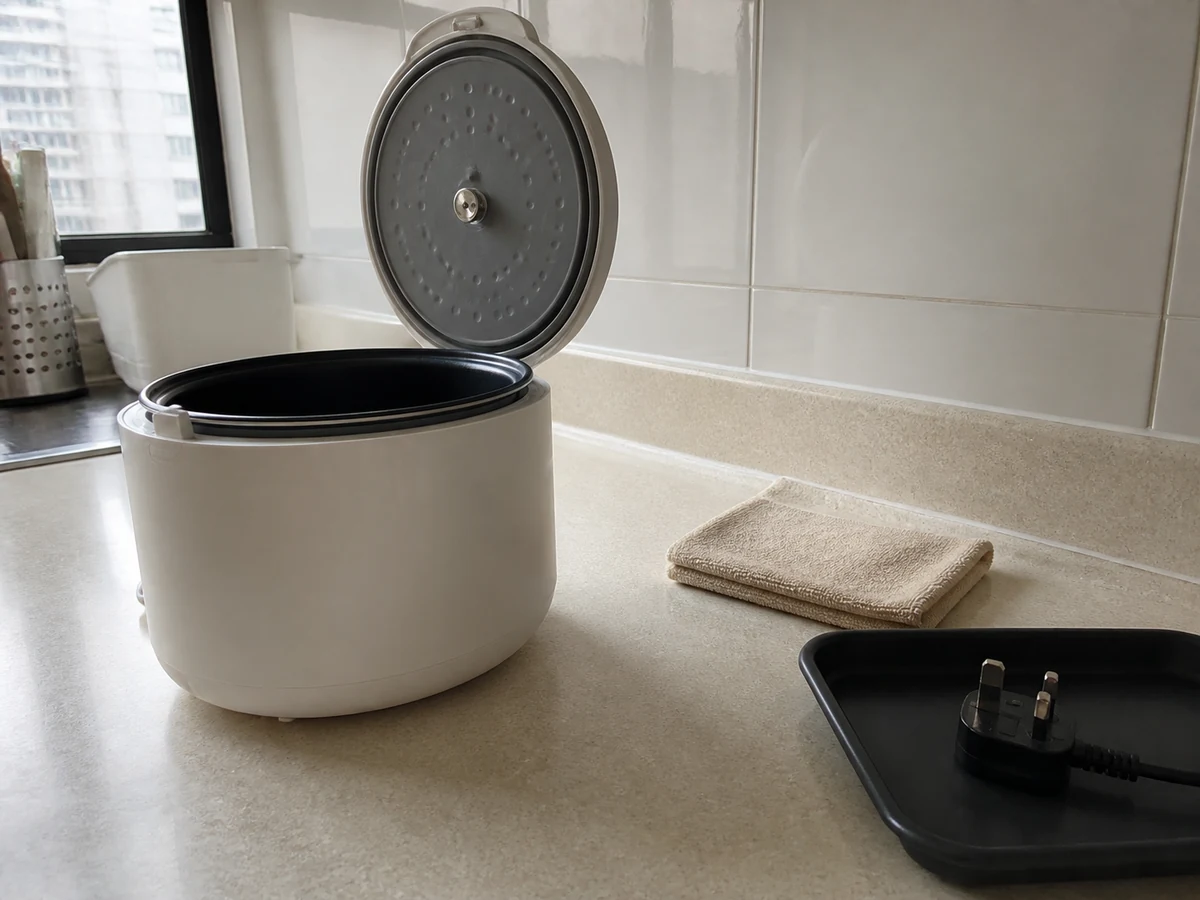
Cleaning while hot or steaming
✓ Correct actionEnd keep-warm, unplug, vent safely, and cool completely.
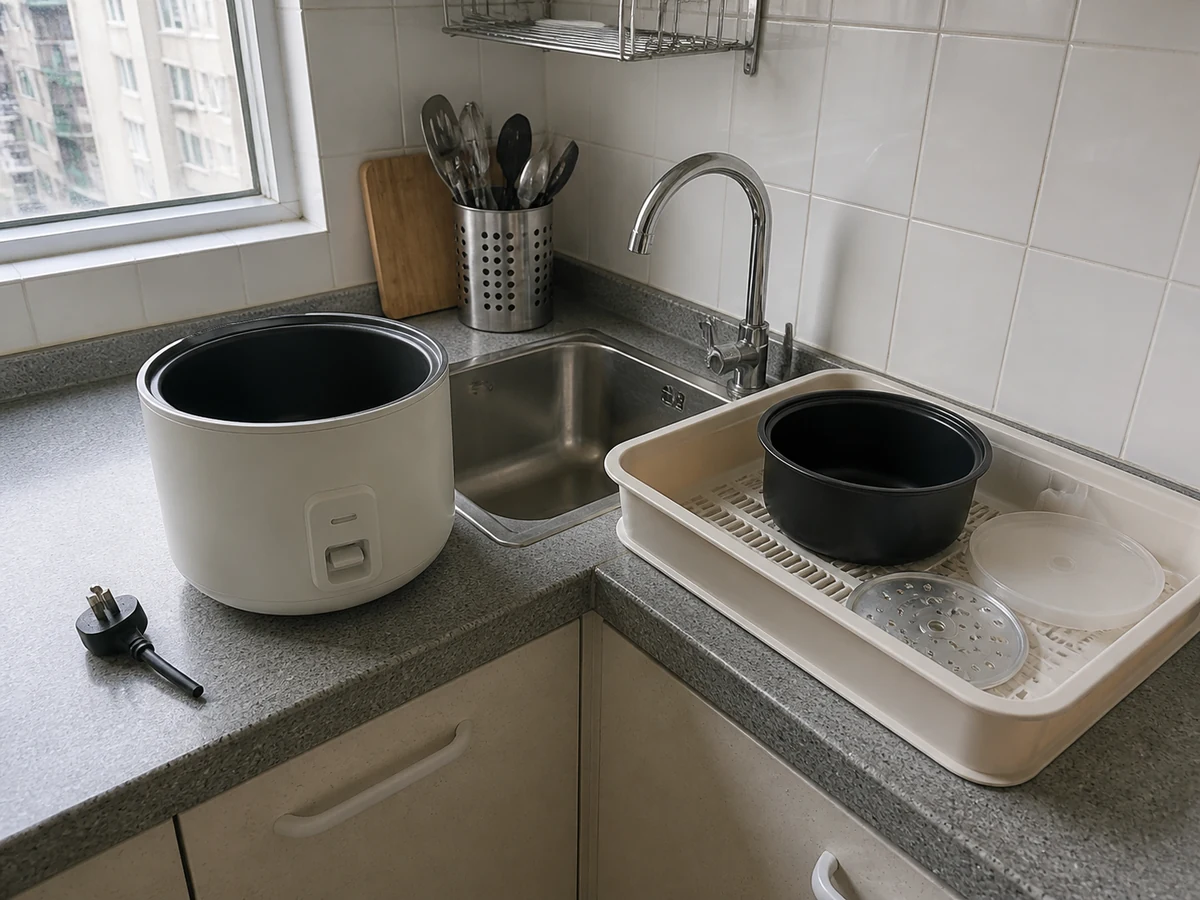
Immersing or rinsing the whole cooker
✓ Correct actionWash only approved removable parts; wipe the body with a wrung cloth.
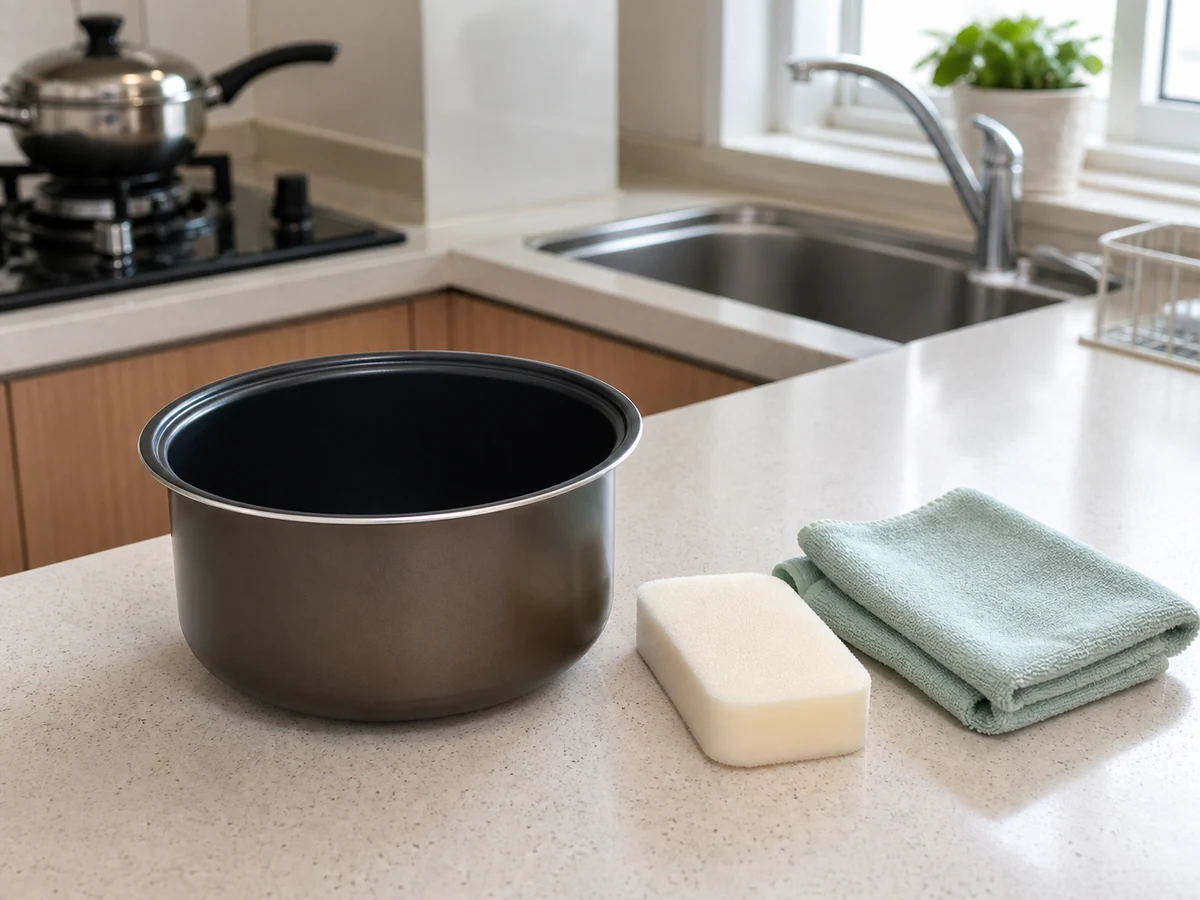
Scrubbing the pan with steel wool
✓ Correct actionUse a soft non-abrasive sponge to protect the coating.
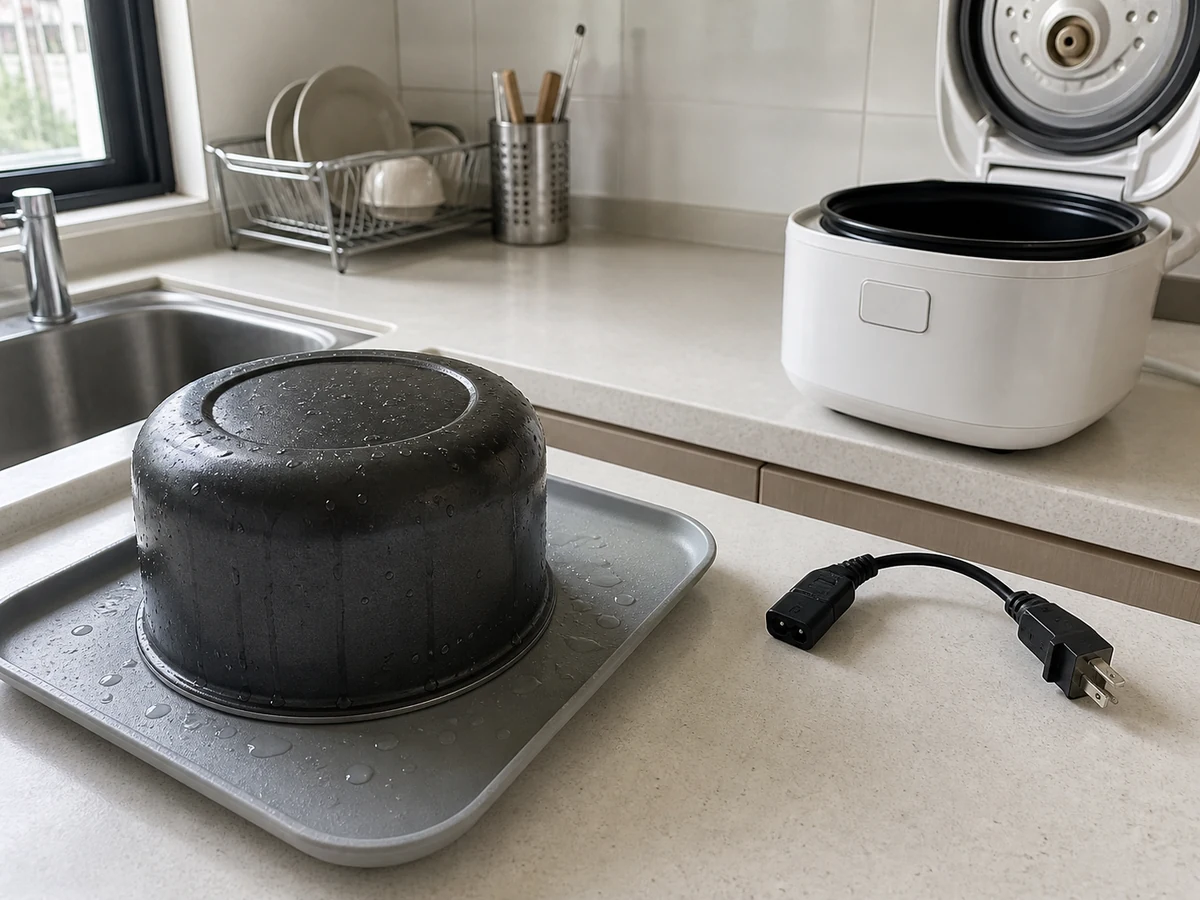
Refitting wet parts or a wet pan bottom
✓ Correct actionDry parts, connectors, steam paths, and the pan exterior fully.
Practical tips
Tips for helpers
- Collect fresh rice grains before they harden.
- Photograph removable-part orientation if permitted; leave uncertain parts in place.
- Keep the outer pan bottom and sensor contact clean and dry.
Tips for employers
- Provide the model manual, especially limits for the inner lid, steam cap, seals, and cleaning function.
- Arrange manufacturer or qualified inspection for warped seals, abnormal steam leakage, damaged coating, or a hot plug.
Completion checklist
Checked 0 / 8