Laundry and garment care
Dry Laundry Indoors during Humid Weather
Sort by care label and thickness; ask the employer about items not suitable for indoor drying.
Overview
Sort by care label and thickness; ask the employer about items not suitable for indoor drying. Space garments apart from each other and the wall; use a safely positioned fan or dehumidifier without blocking vents or trailing leads.
Tools needed
- Hangers and drying rack
- Garment care labels
- Safely positioned fan or dehumidifier
- Dry cloth
Cleaning steps
Sort by care label and thickness
Sort by care label and thickness; ask the employer about items not suitable for indoor drying.
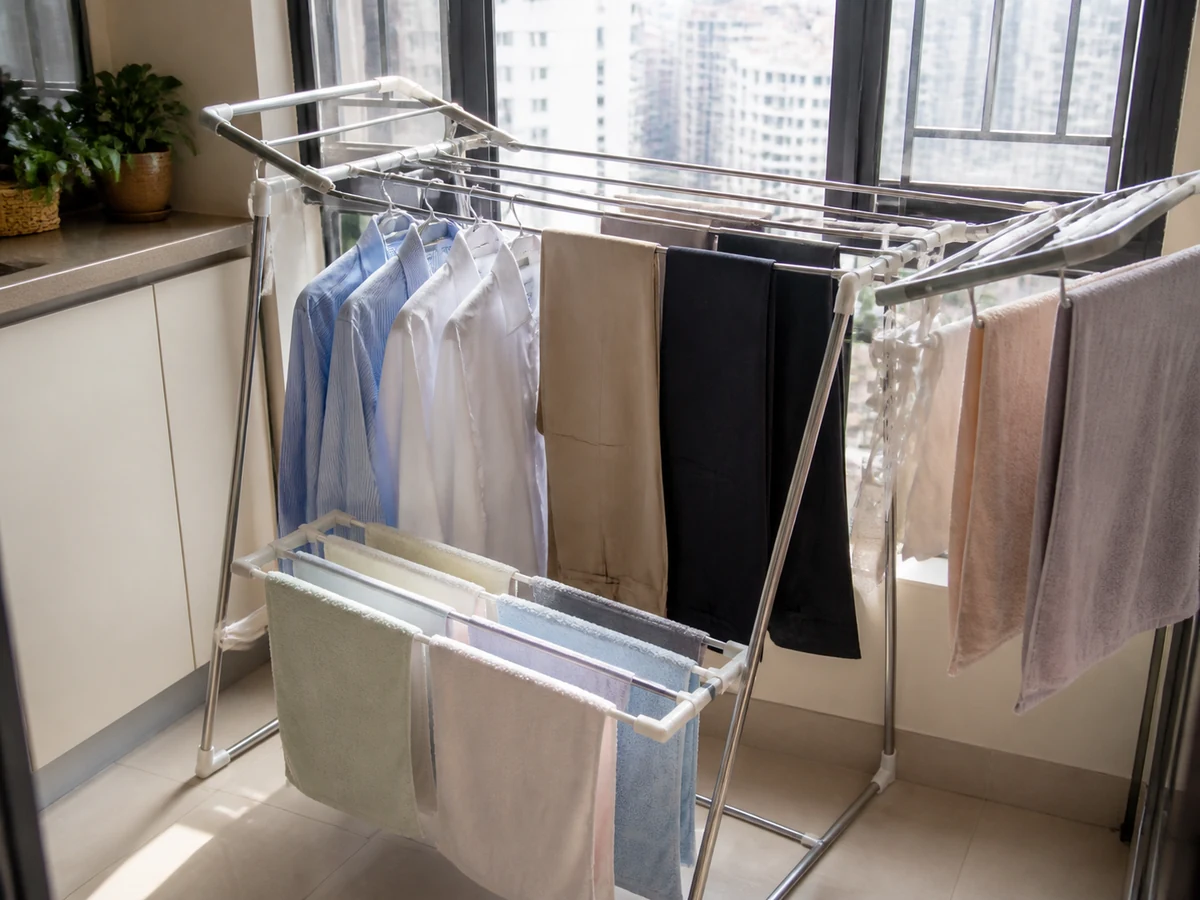
Space garments apart from each other and the wall
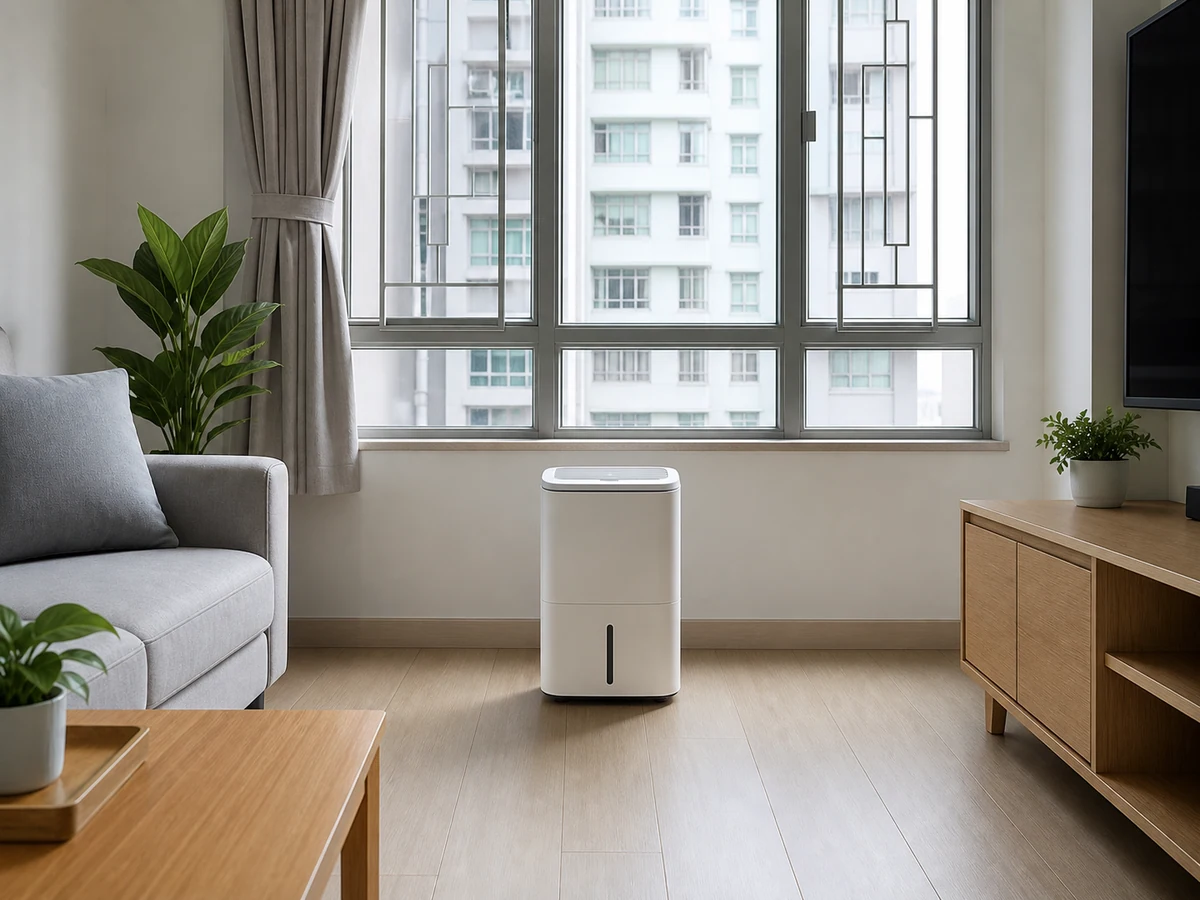
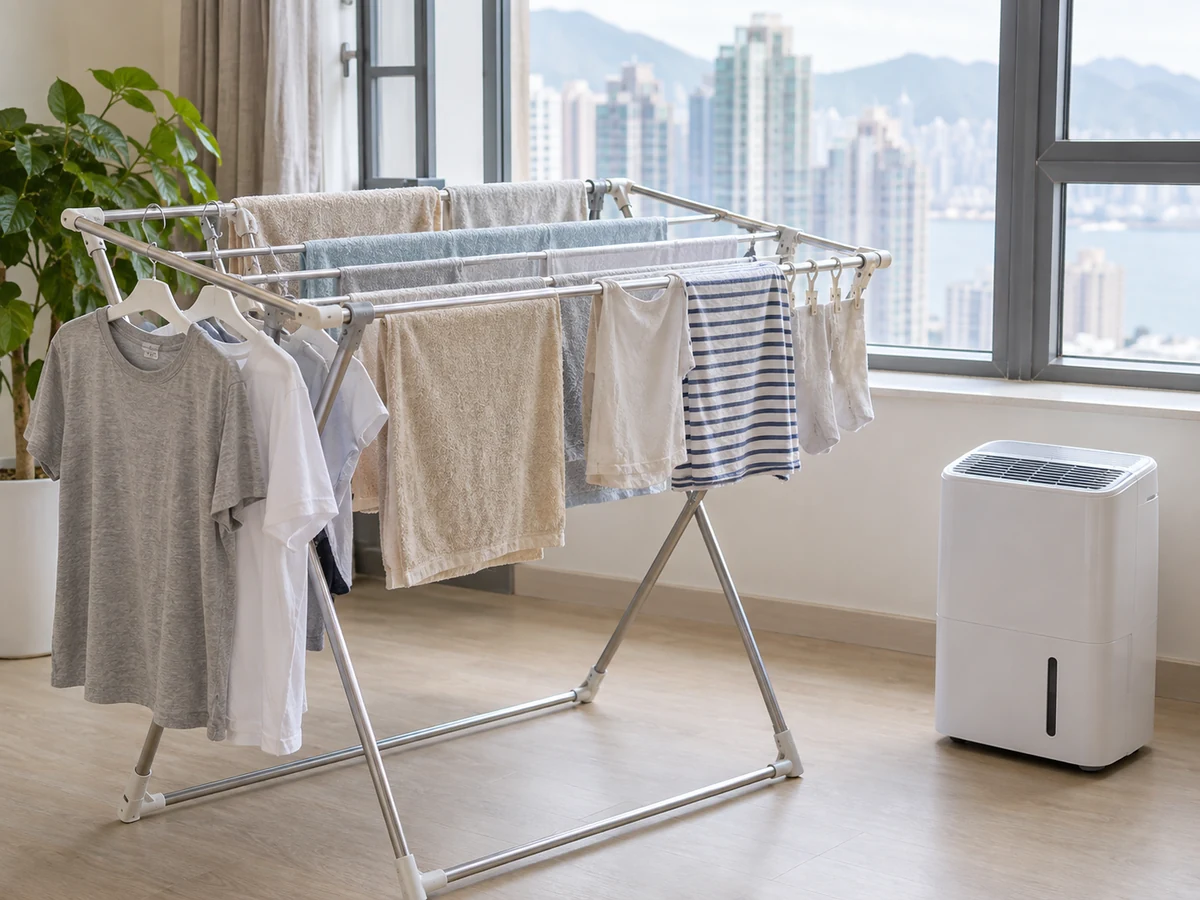
Space garments apart from each other and the wall; use a safely positioned fan or dehumidifier without blocking vents or trailing leads.
When partly dry, turn garments and open pockets and folds
When partly dry, turn garments and open pockets and folds; check jeans waistbands, towel edges and thick cotton areas.
Touch thick areas and store only when fully dry and free of a damp smell
Touch thick areas and store only when fully dry and free of a damp smell; continue ventilated drying for anything damp.
Common mistakes
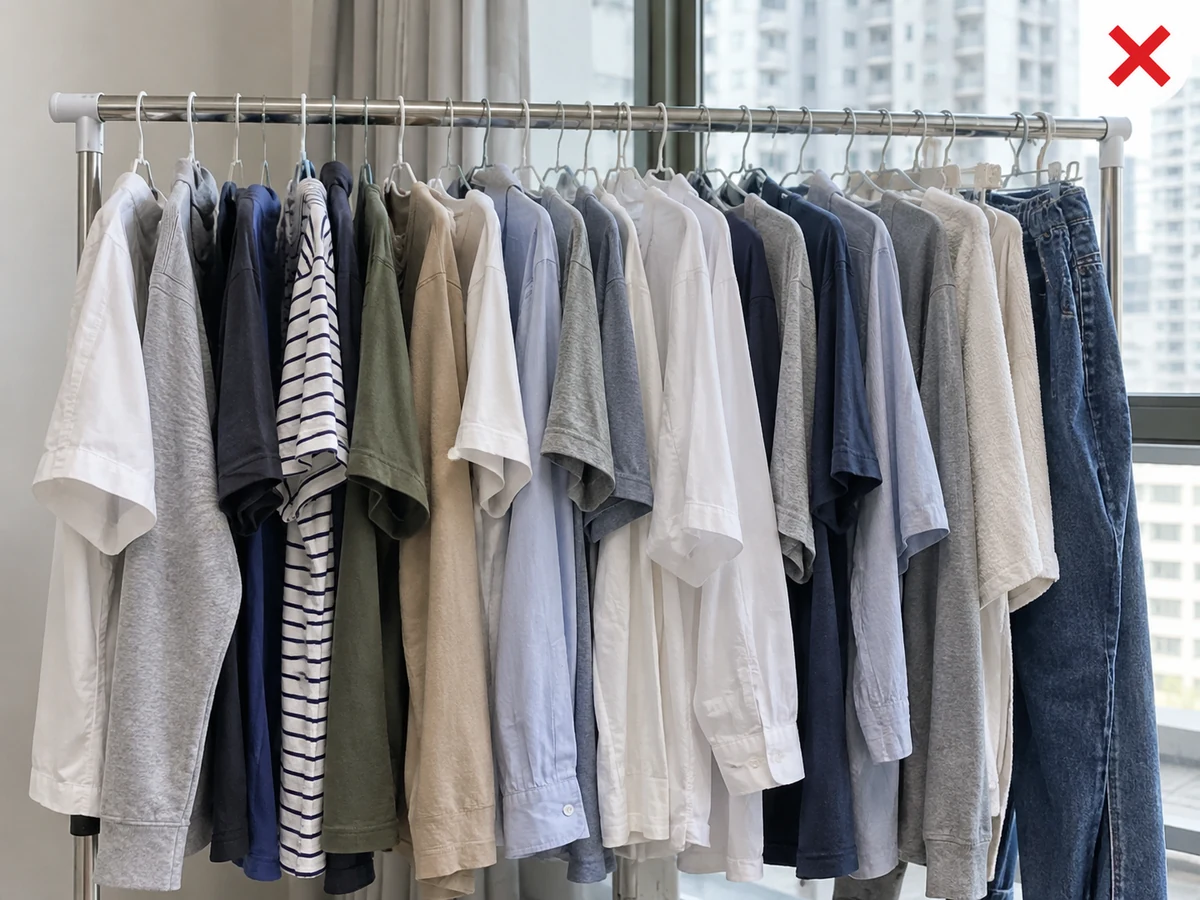
Hanging clothes with no gap
✓ Correct actionKeep air space between garments and away from the wall.
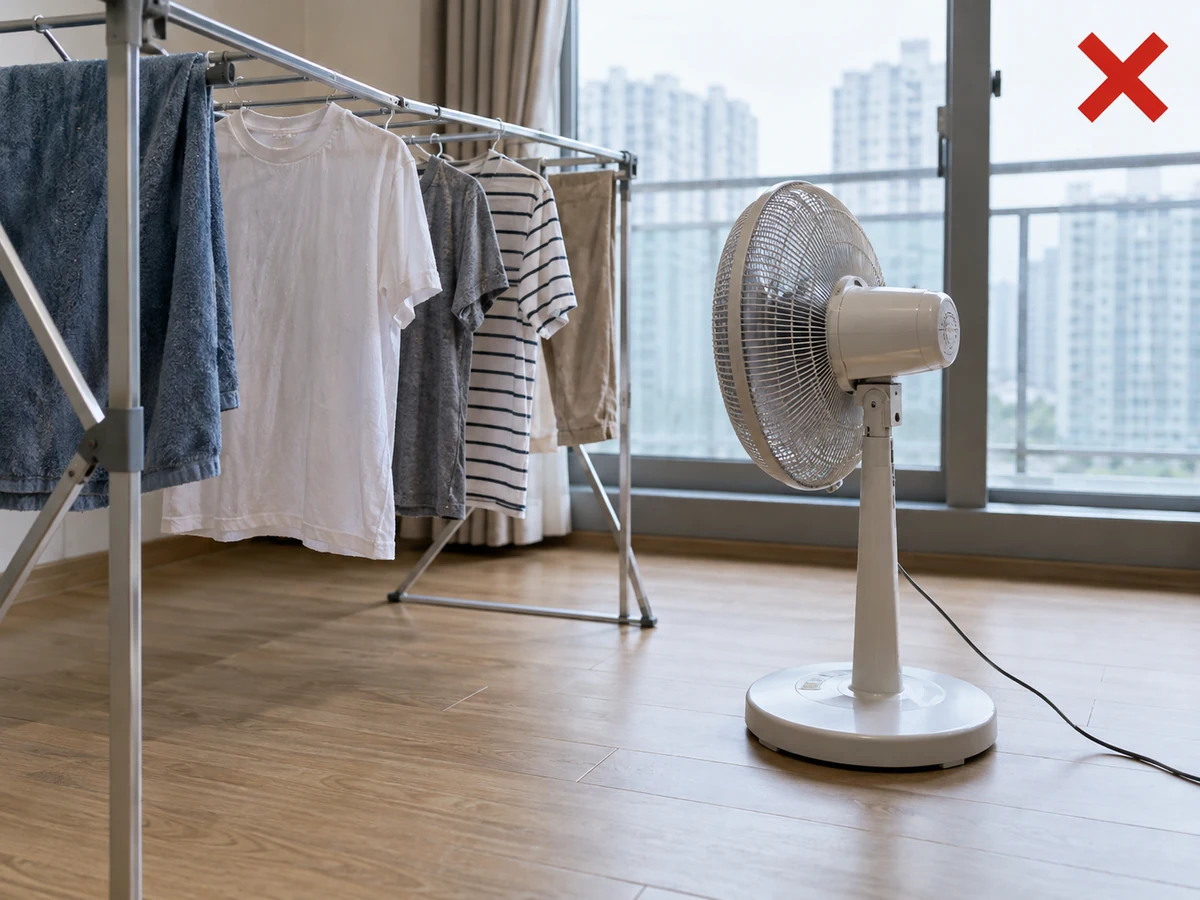
Pointing a fan at wet laundry with a trailing lead
✓ Correct actionPlace the fan or dehumidifier on a dry stable surface and keep leads clear.
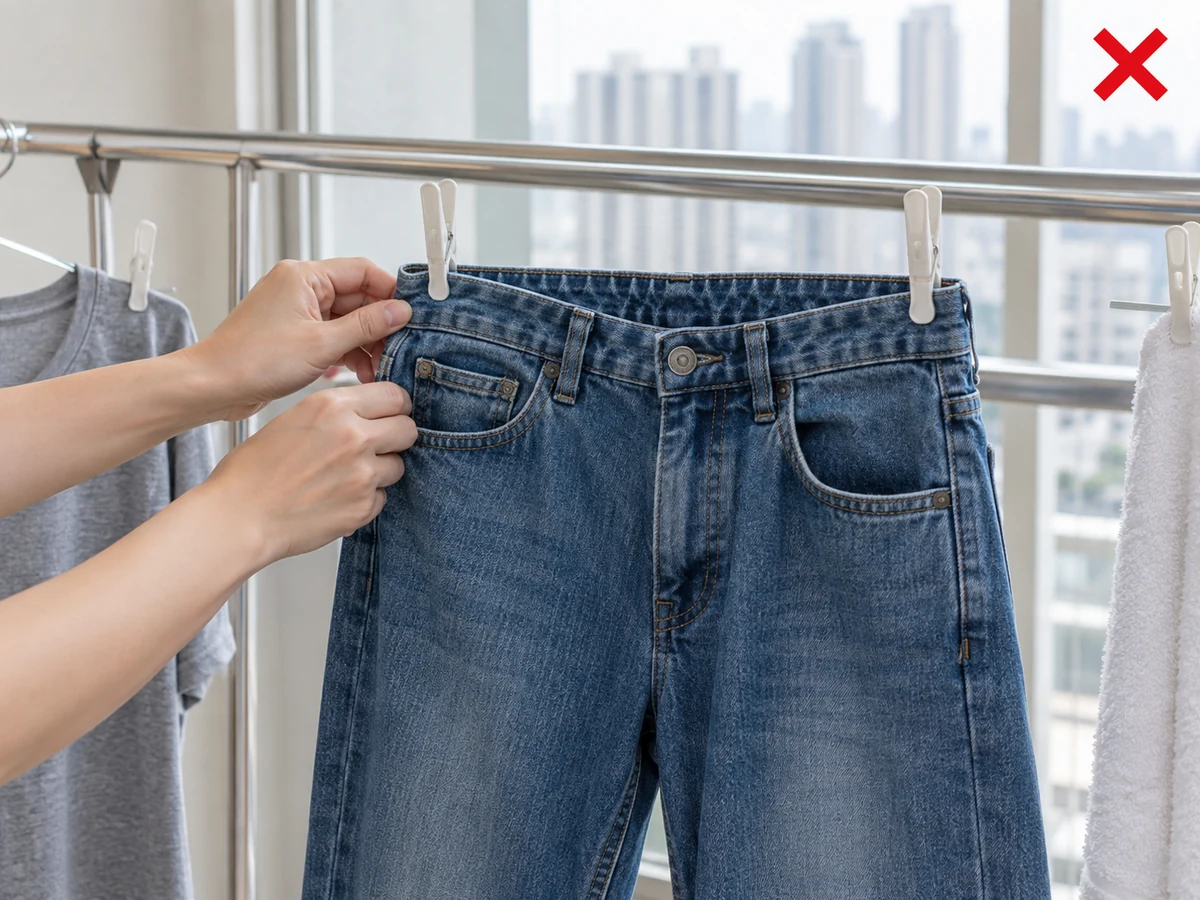
Leaving pockets and thick folds closed
✓ Correct actionTurn garments and open thick areas partway through drying.
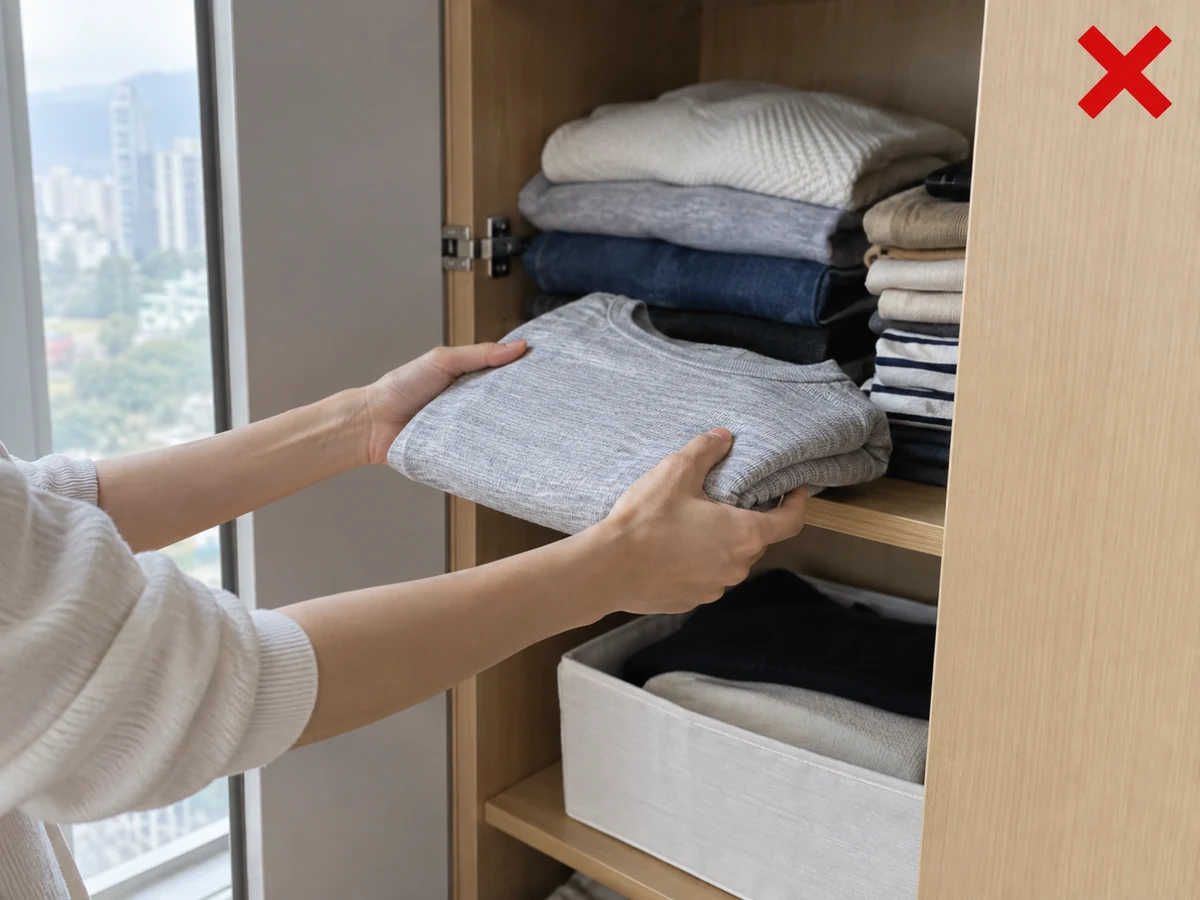
Storing clothes that feel dry only on the surface
✓ Correct actionCheck waistbands, seams and towel edges before storing.
Practical tips
Tips for helpers
- Leave a hand-width gap; place thick trousers and towels where airflow is strongest.
- Use the back of your hand on thick sections rather than judging by the surface.
Tips for employers
- Provide a safe drying rack, fan or dehumidifier and its approved position.
- Decide what must not dry indoors and what happens to items still damp.
Completion checklist
Checked 0 / 4