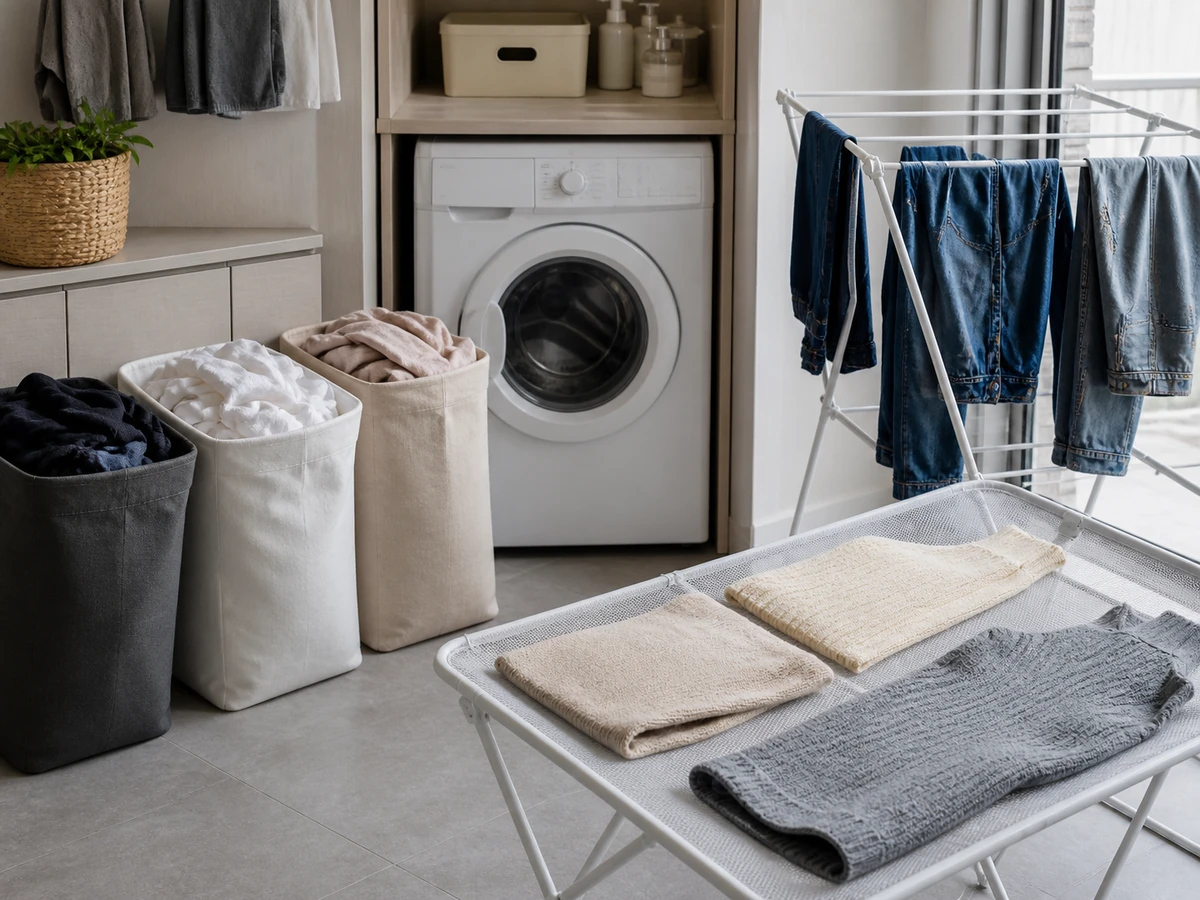
Laundry and garment care
How to Reduce Clothes Colour Fading and Shrinkage
Put the care label first, sort colours, reduce friction and heat, and dry as directed
Overview
Dyes, fibres and garment construction behave differently, so no one setting suits every item. Read the care label, separate new or dark clothes, and choose a compatible gentler wash and dry process. These steps reduce risk but cannot guarantee zero fading or shrinkage.
Tools needed
- Care label on every garment
- Light and dark sorting baskets
- Suitable laundry detergent
- Mesh bag where appropriate
- Shaded ventilated line or suitable dryer
Cleaning steps
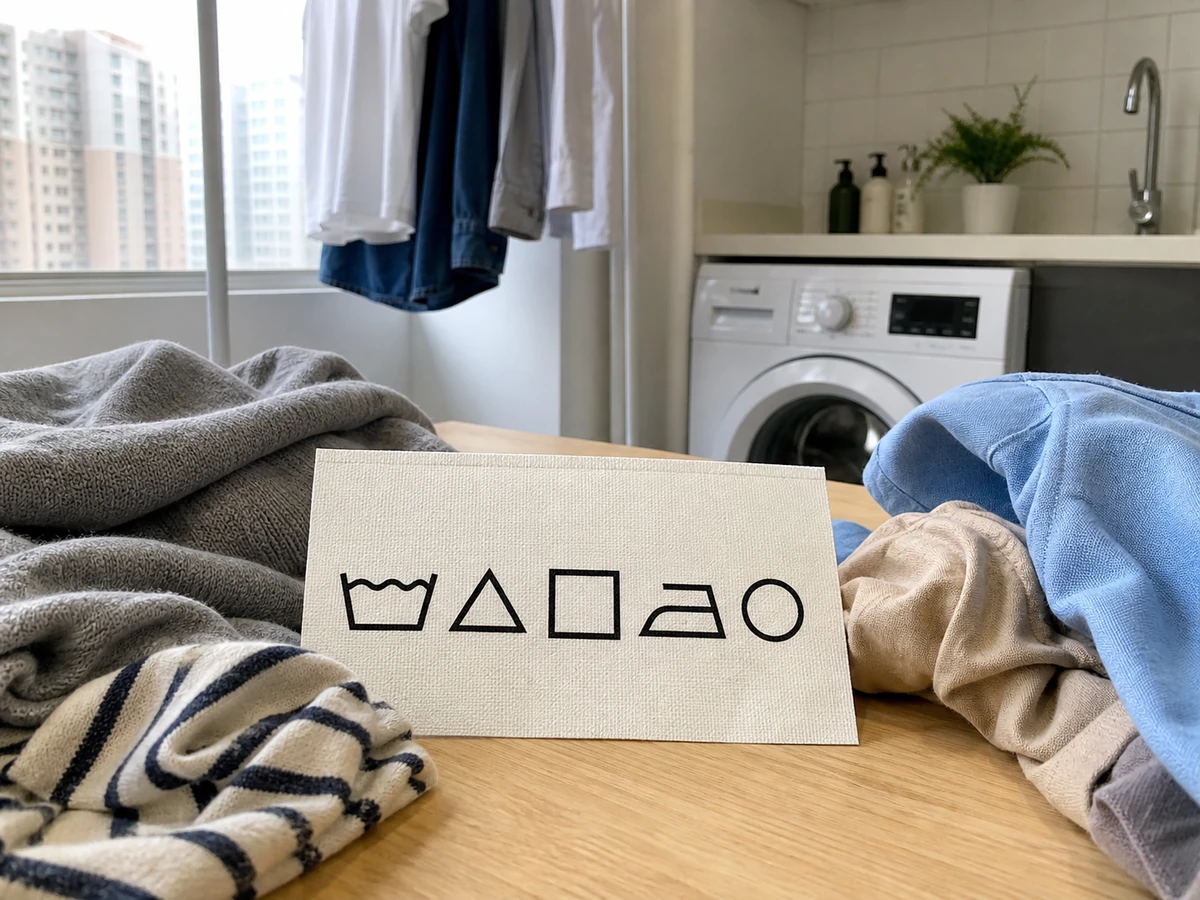
Read labels and identify risk
Note maximum temperature, mild processes and drying restrictions. Separate new, dark, bright, wool, knit or unshrunk items; ask the employer when a label is missing.
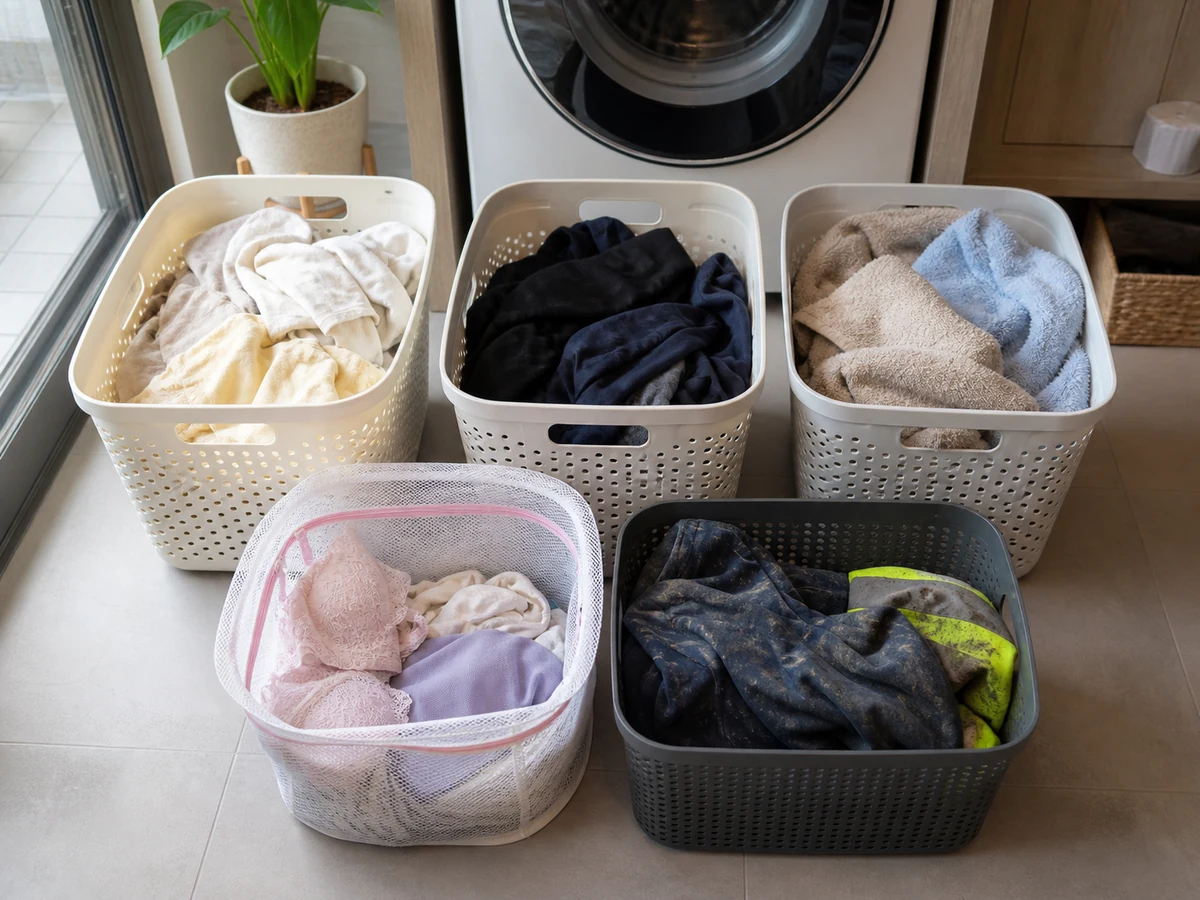
Sort colours and protect surfaces
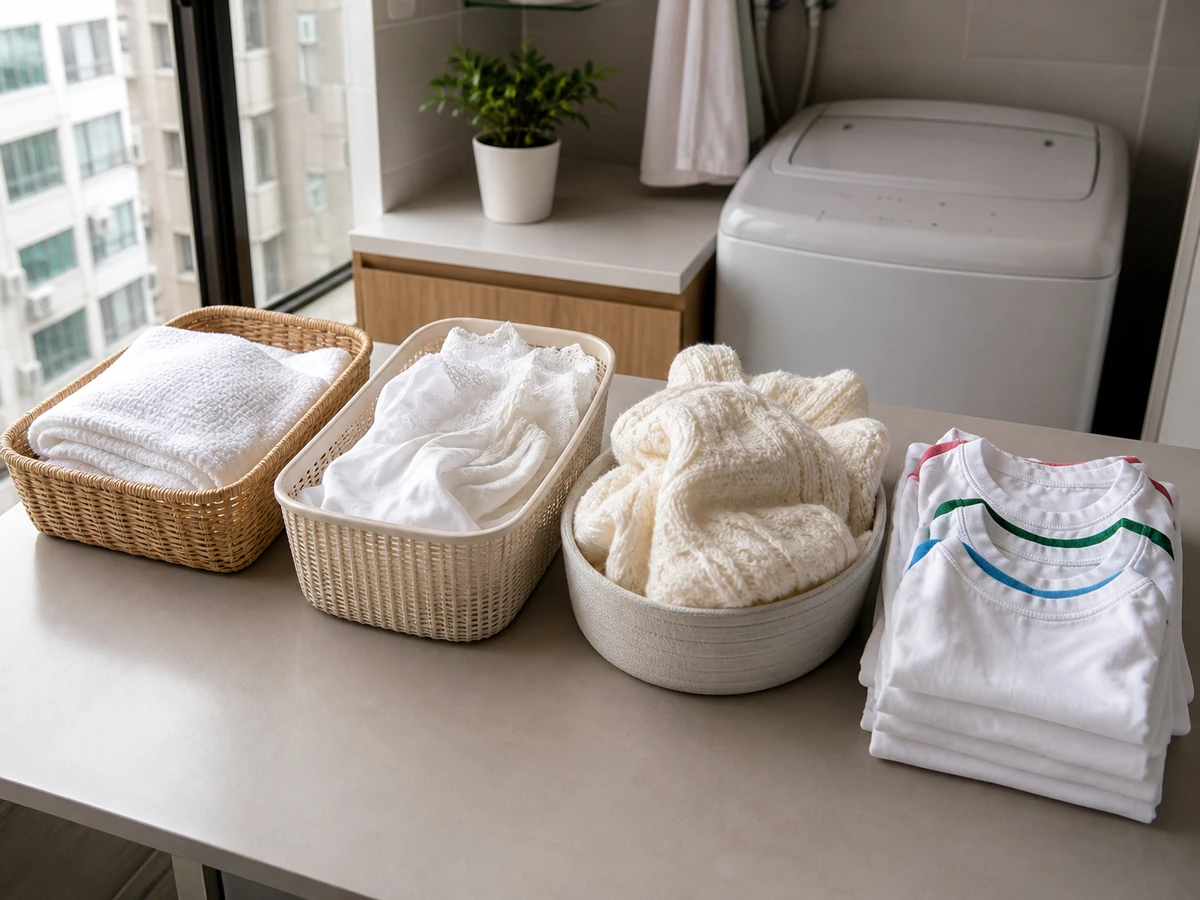
Separate lights and darks, and wash a new dark item alone when needed. Turn inside out and close zips as suitable; use a mesh bag for appropriate delicates.
Choose a compatible gentler wash
Within the care label, use a lower temperature and gentler process to reduce unnecessary heat and friction. Never exceed the label maximum.
Measure the labelled product
Use a detergent suitable for the garment and colour, dosed for load and water conditions. Do not improvise salt, vinegar or another recipe as a colour-fix guarantee.
Unload promptly and reshape
Remove at cycle end and gently restore seams and shape. Do not wring, stretch or hang a wet heavy knit in a way that distorts it.
Dry in shade or low heat as labelled
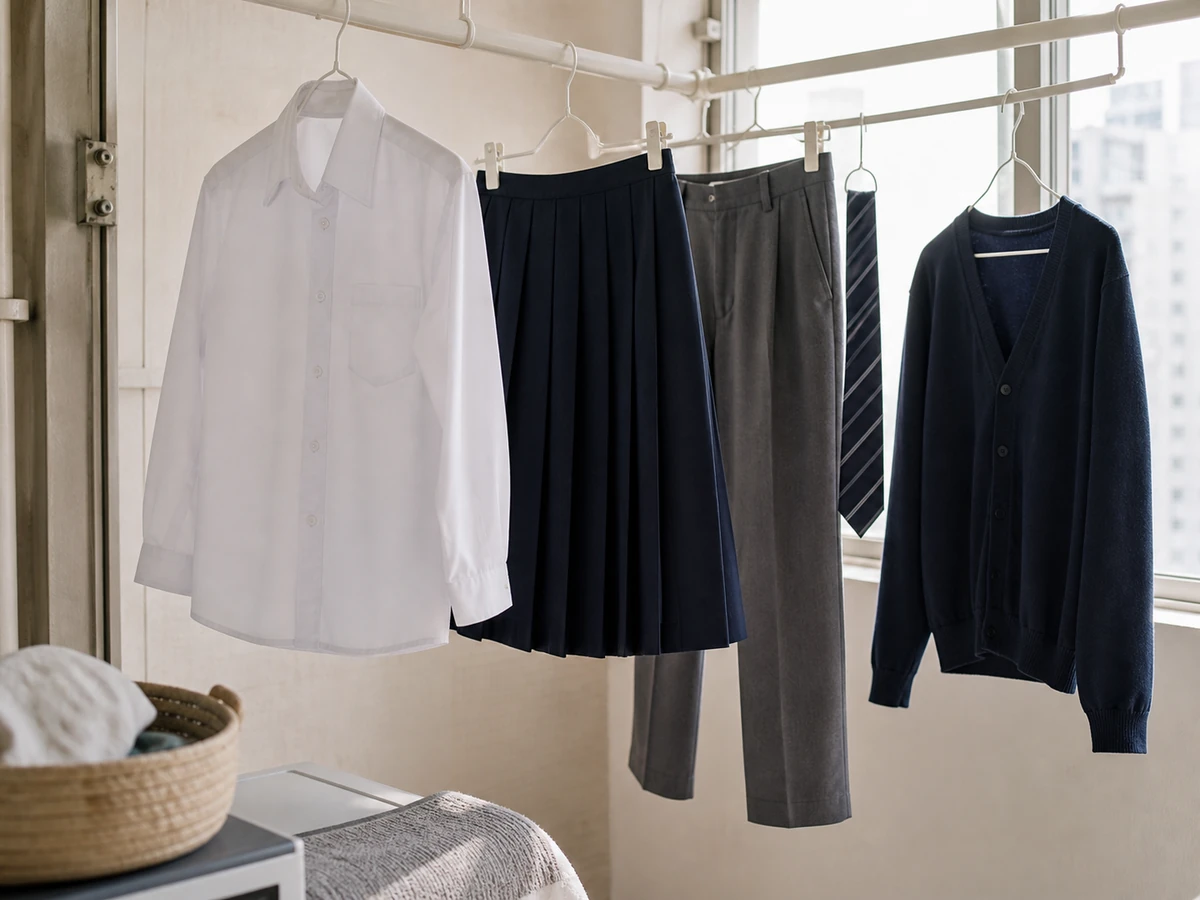
Air dry in moving shade, flat or hanging as permitted. Tumble only when allowed at the indicated heat, and avoid overdrying.
Common mistakes
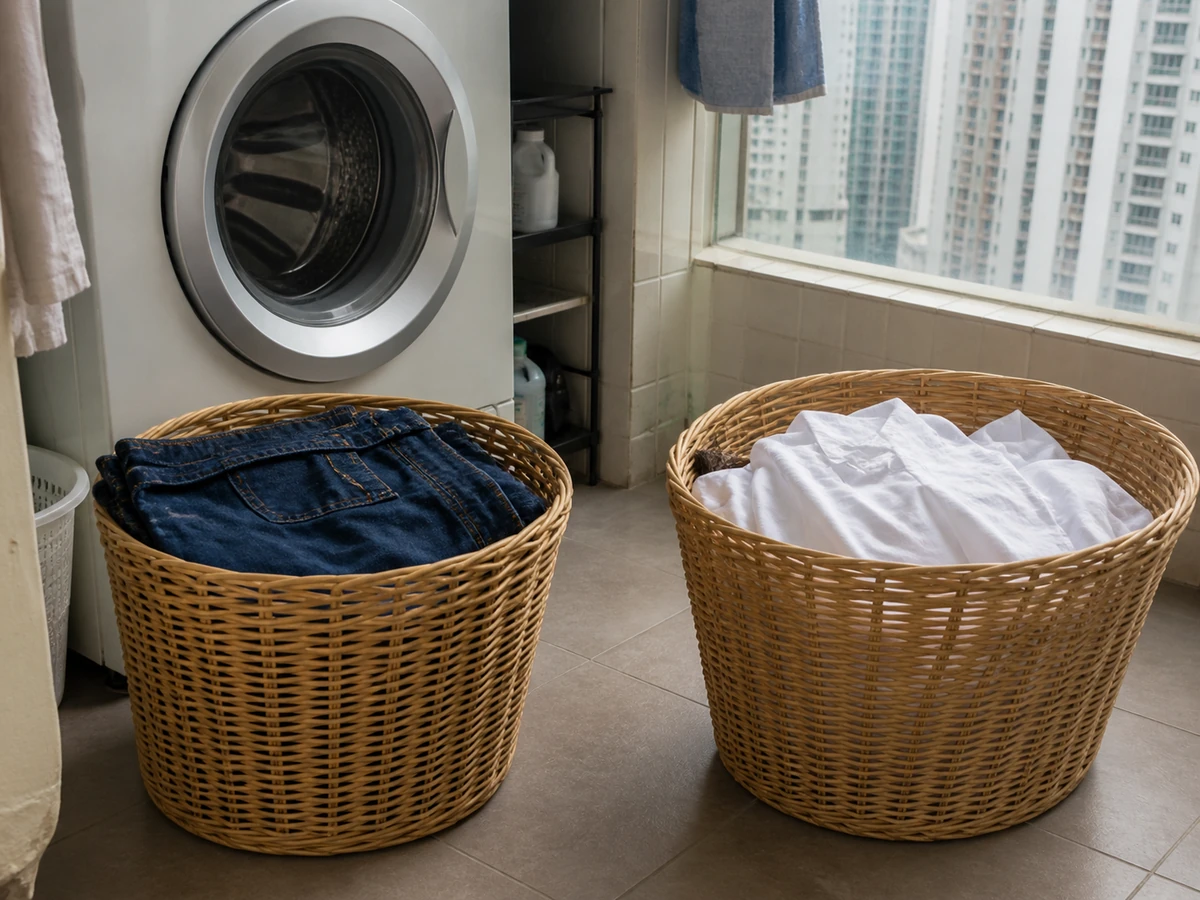
First-washing a new dark item with whites
✓ Correct actionKeep new or possible colour bleeders separate.
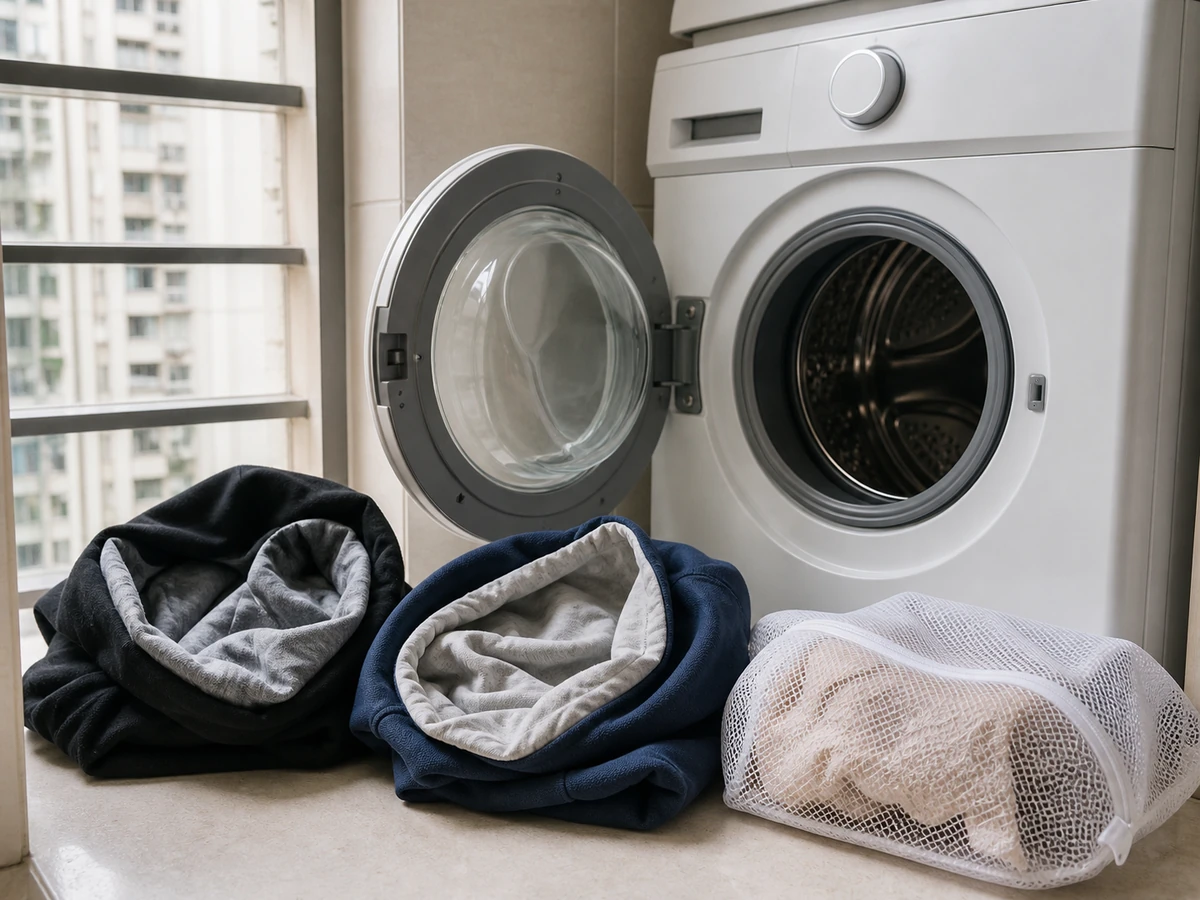
Using hot water or a strong cycle for everything
✓ Correct actionChoose a gentler compatible setting from the most restrictive label.
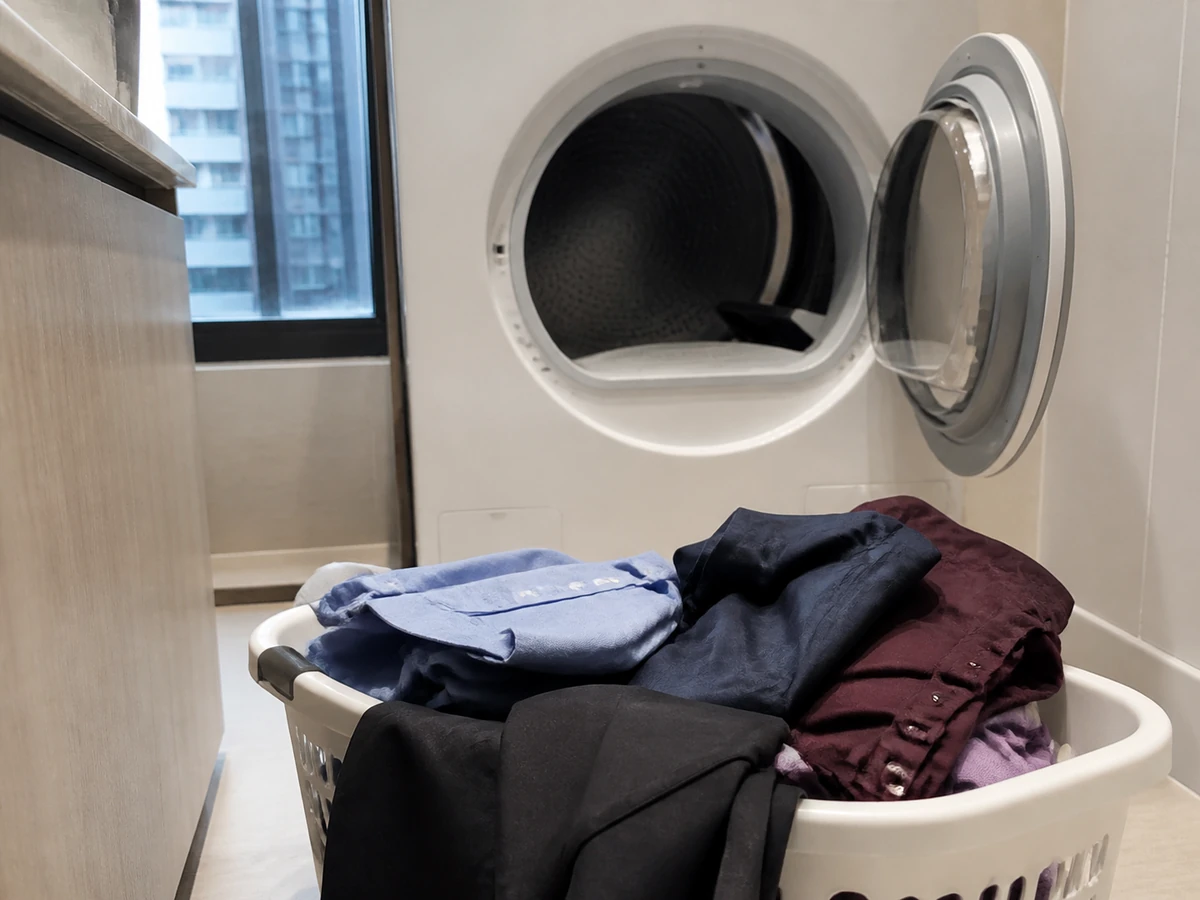
Long high-heat drying for every garment
✓ Correct actionUse only label-approved heat and stop when dry.
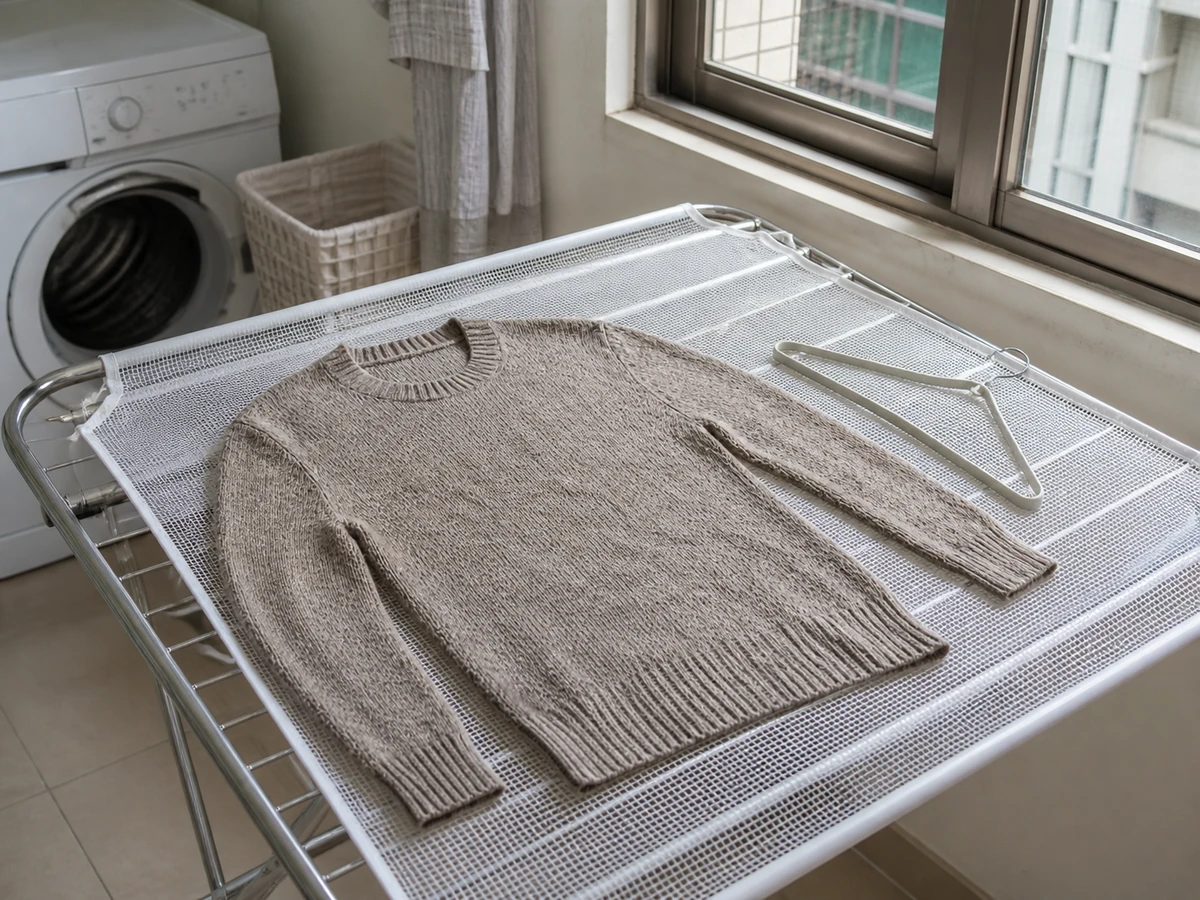
Wringing or hanging a wet heavy knit out of shape
✓ Correct actionPress water gently and flat-dry or support it as the label directs.
Practical tips
Tips for helpers
- For a new dark garment, watch for colour transfer and keep it separate when uncertain.
- Allow more time for low heat or air drying instead of raising the heat.
Tips for employers
- Identify valuable, wool, knit, unshrunk or known colour-bleeding garments.
- Expect natural variation and wear: this guide reduces but cannot eliminate fading or shrinkage.
Completion checklist
Checked 0 / 6