Cleaning products and safety
How to Remove Stagnant Water to Prevent Mosquitoes
A practical sequence from “Follow a check route” to “Record and report”
Overview
Every week and after heavy rain or a typhoon, check safely reachable places such as plant saucers, vases, air-conditioner or drip trays, umbrella stands and outdoor containers. Empty, scrub and dry or cover them. Never climb outside, dismantle fixed drainage or apply pesticides on your own.
Tools needed
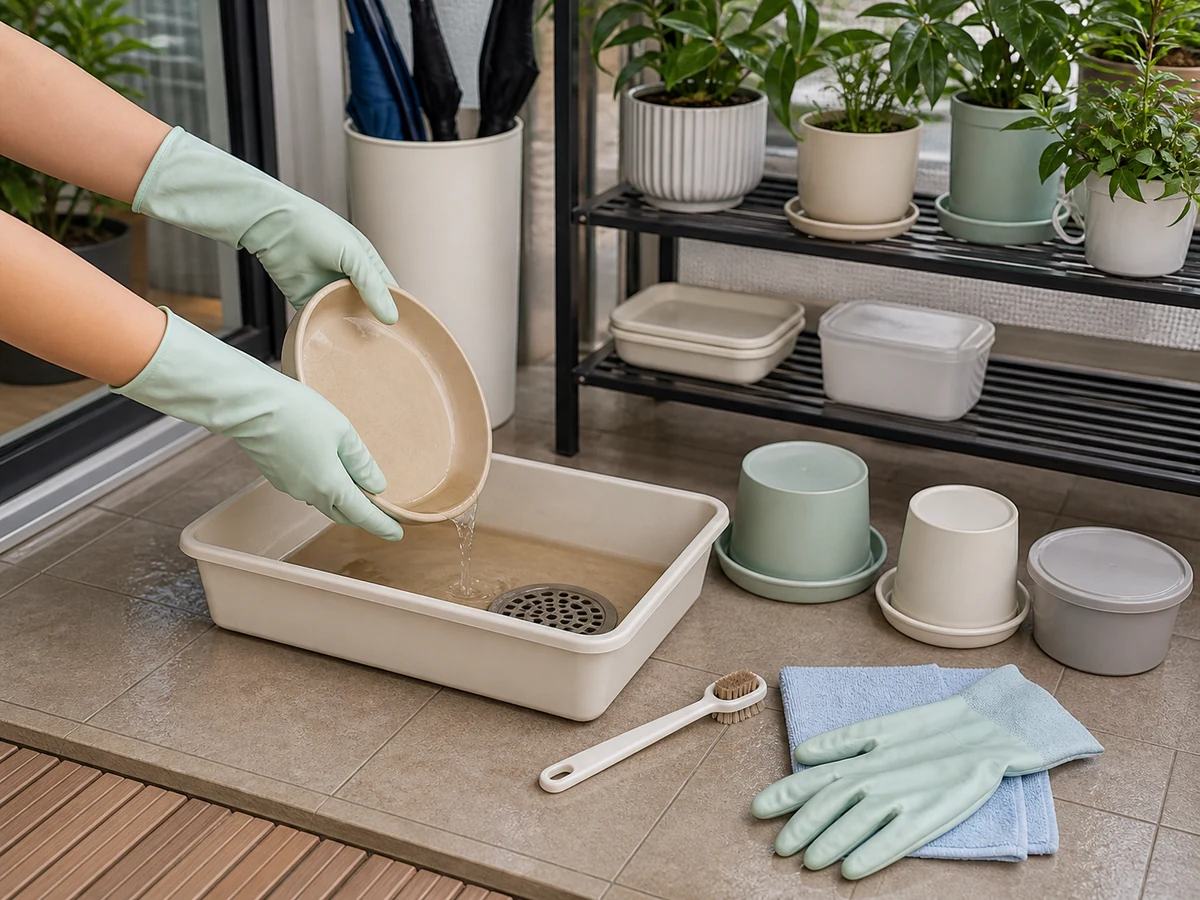
- Household gloves
- Long-handled small brush
- Absorbent cloth
- Fitted container lids
Cleaning steps
Follow a check route
Weekly and after rain, inspect safe indoor and balcony points and water-holding items.
Empty and scrub
Pour water into a suitable drain and brush container walls and rims.
Dry or cover
Invert or seal unused containers and change needed water on the household schedule.
Record and report
Note inaccessible areas, recurring water or heavy mosquito activity.
Common mistakes
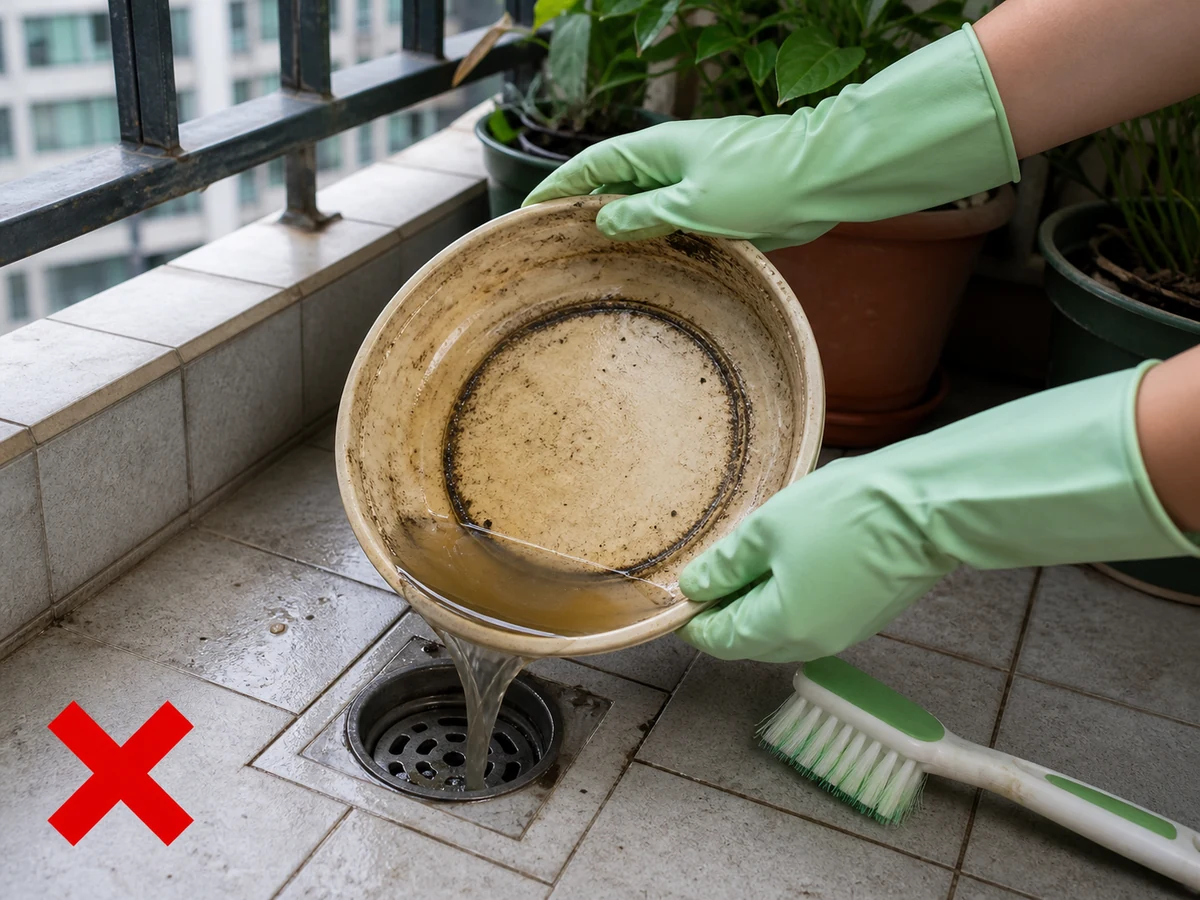
Pouring out water without brushing the rim
✓ Correct actionBrush inner surfaces and rims, then dry.
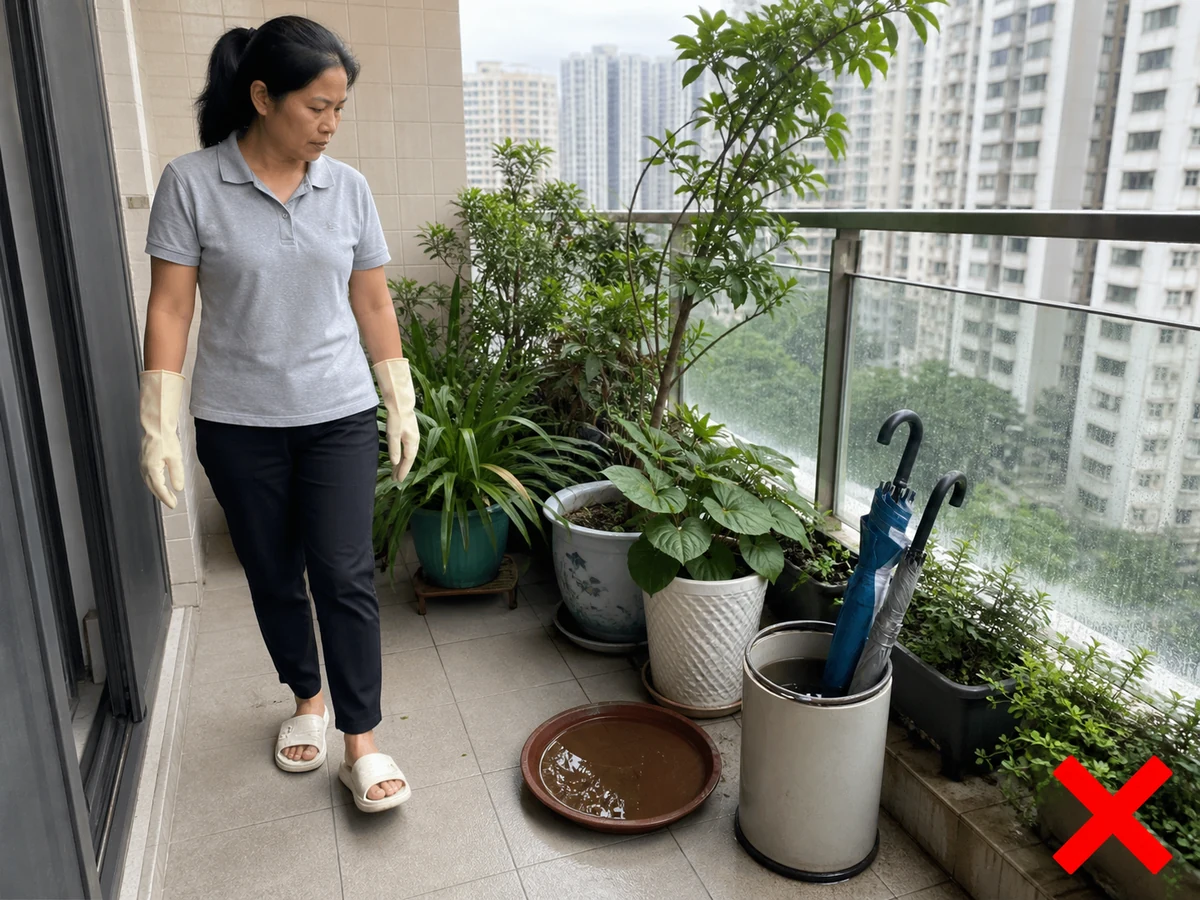
Missing plant saucers and umbrella stands
✓ Correct actionPut small water-holding items on the weekly list.
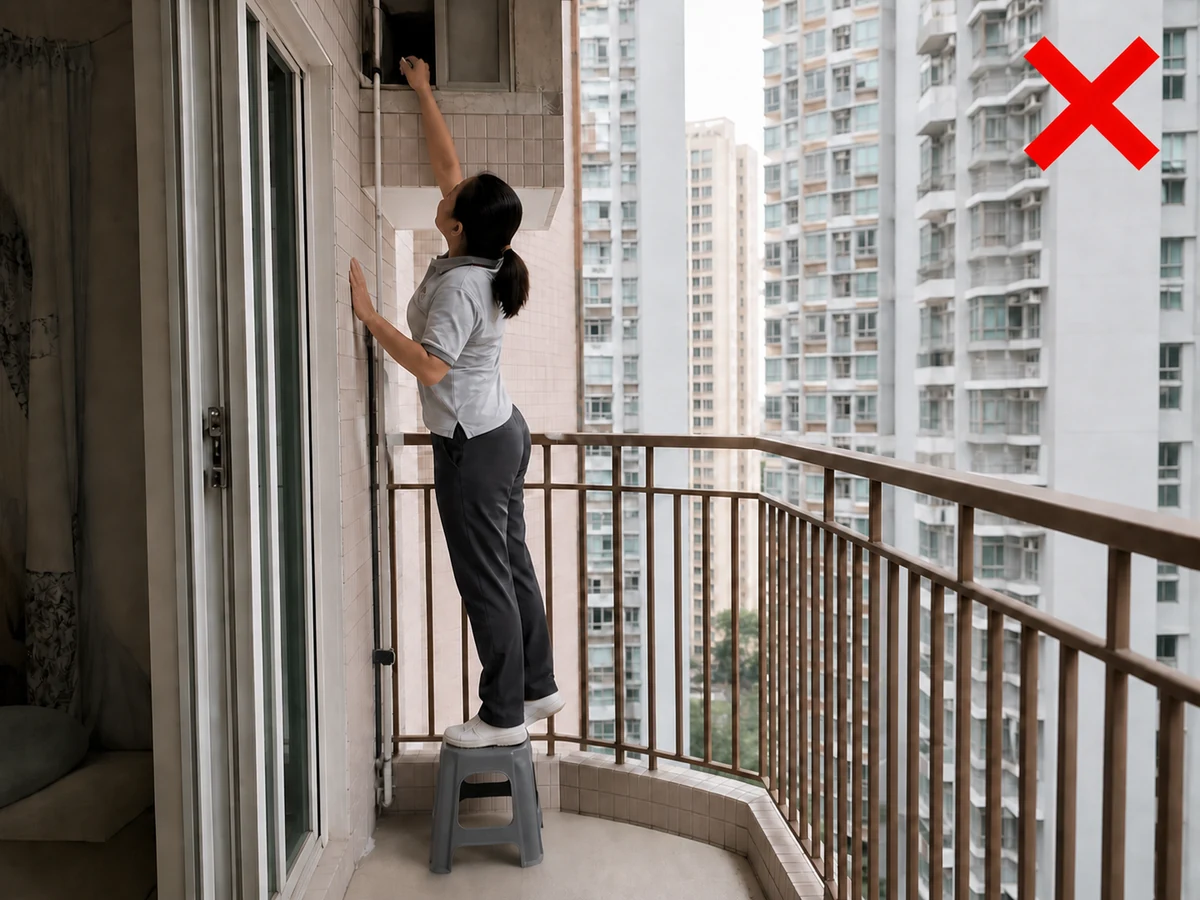
Climbing outside or up high to reach water
✓ Correct actionHandle only safe floor-level access and report the rest.
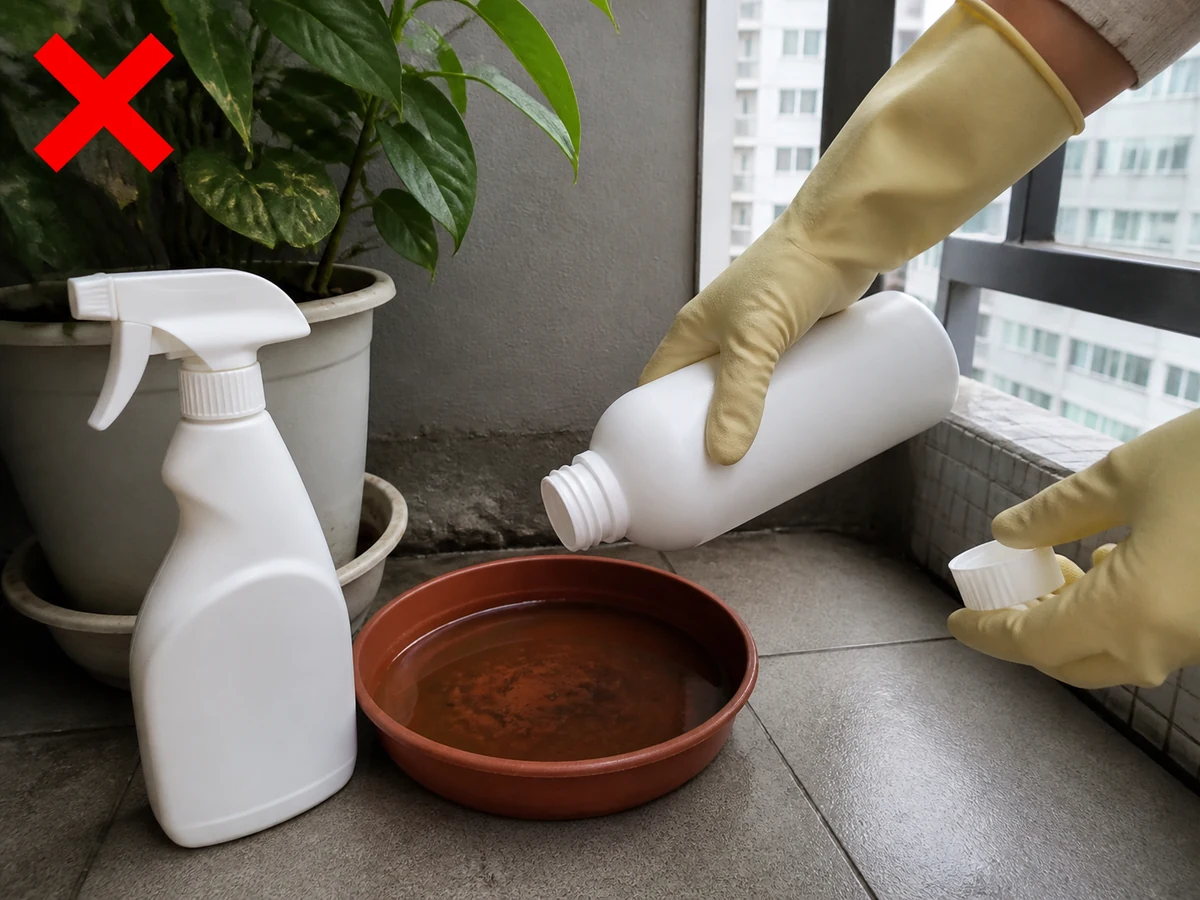
Adding pesticide or bleach independently
✓ Correct actionThis lesson removes water; the employer decides chemical measures under official or professional advice.
Practical tips
Tips for helpers
- Use the same weekly route, add a post-rain check and photograph places you cannot treat safely.
- Keep vase or pet water when needed, but change it and clean the vessel as agreed.
Tips for employers
- Identify safe indoor, balcony and common-area checks and who handles heights or exteriors.
- Provide the building or official reporting route and decide any pesticide or professional treatment.
Completion checklist
Checked 0 / 4