Laundry and garment care
How to Wash Tablecloths and Fabric Placemats
Treat food stains before washing within fabric and coating limits.
Overview
Remove tableware and decorations, read labels and separate plain fabric, coated, waterproof-backed and delicate embroidered items; note existing stains. Tip crumbs into the bin, lift solids with a blunt scraper and blot liquids with a white cloth without spreading the stain.
Tools needed
- Compatible laundry detergent
- Blunt scraper
- White absorbent cloth
- Drying rack
Cleaning steps
Separate table-linen materials
Remove tableware and decorations, read labels and separate plain fabric, coated, waterproof-backed and delicate embroidered items; note existing stains.
Lift solids and blot liquid
Tip crumbs into the bin, lift solids with a blunt scraper and blot liquids with a white cloth without spreading the stain.
Test, pretreat and wash
Test a hidden area for colourfastness and pretreat and wash by the label; avoid hot drying or ironing before food and grease stains are removed.
Dry by label and restore
Dry by the labelled method and reshape; return or fold only when the table, cloth and placemats are fully dry.
Common mistakes
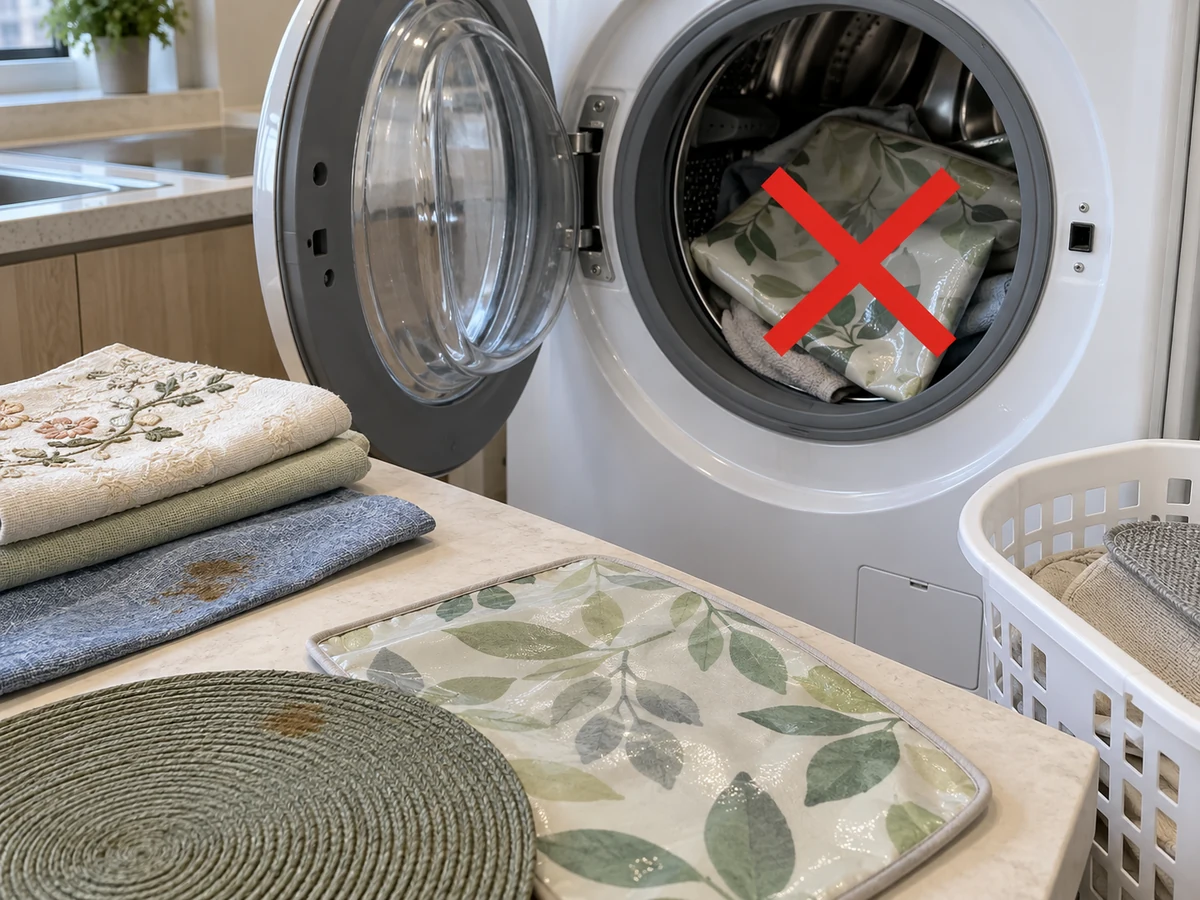
Washing coated mats like plain cotton
✓ Correct actionRemove tableware and decorations, read labels and separate plain fabric, coated, waterproof-backed and delicate embroidered items; note existing stains.
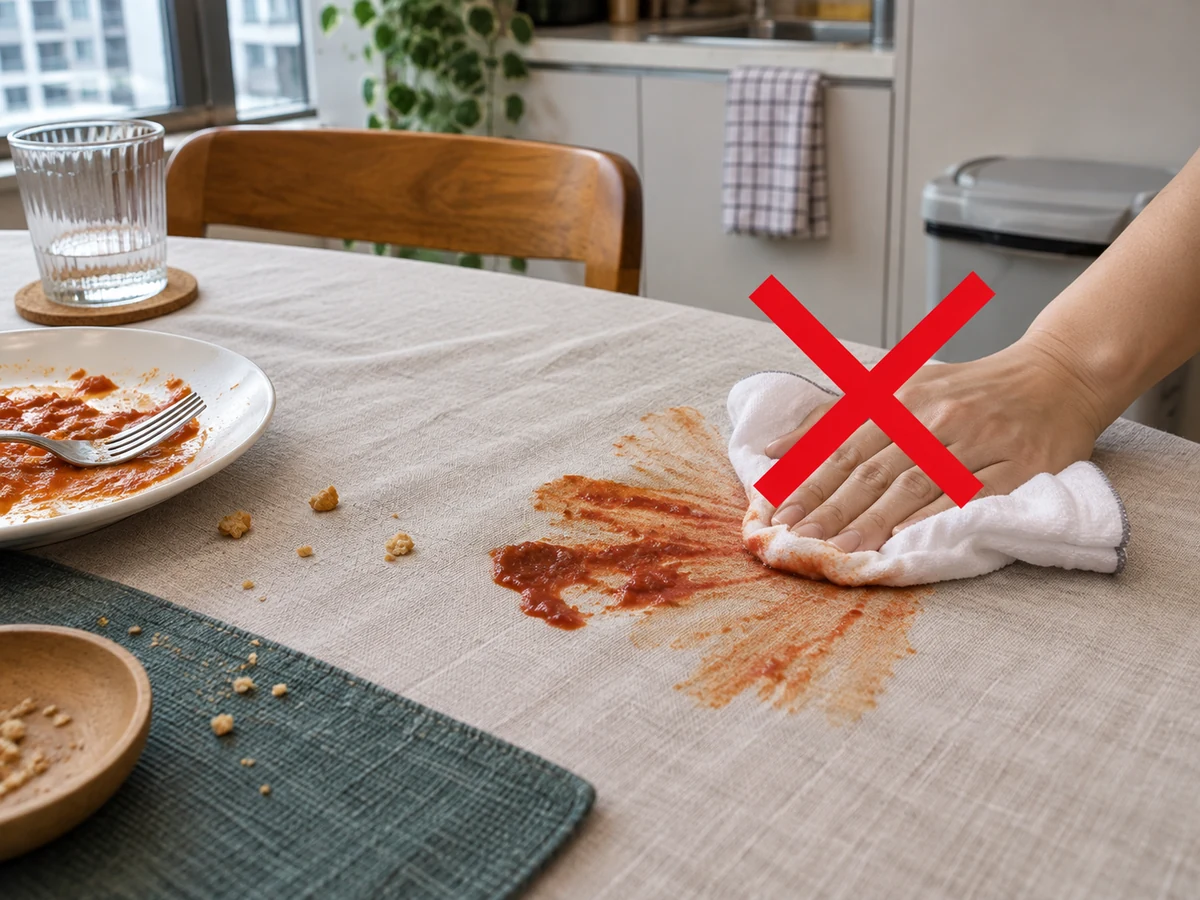
Rubbing food stains outward
✓ Correct actionTip crumbs into the bin, lift solids with a blunt scraper and blot liquids with a white cloth without spreading the stain.
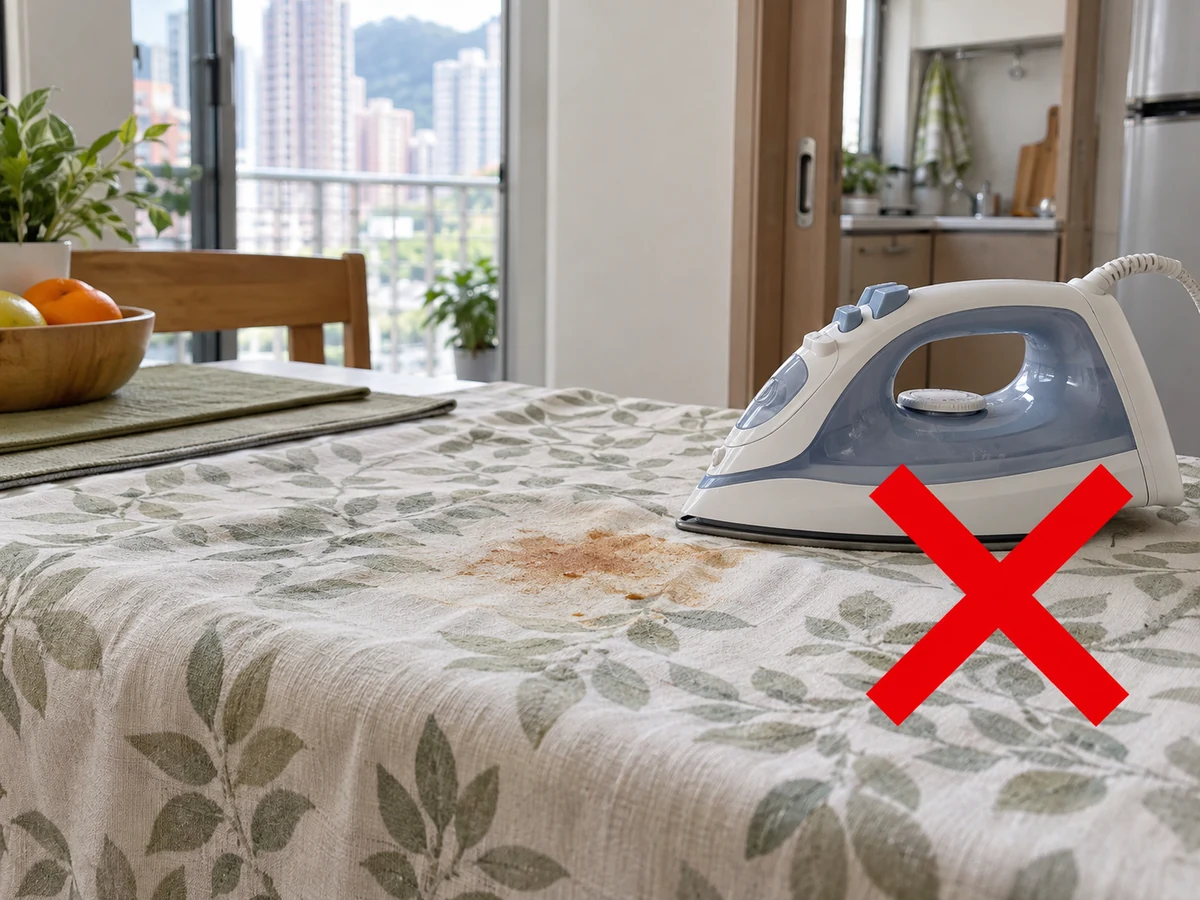
Heat-setting an untreated stain
✓ Correct actionTest a hidden area for colourfastness and pretreat and wash by the label; avoid hot drying or ironing before food and grease stains are removed.
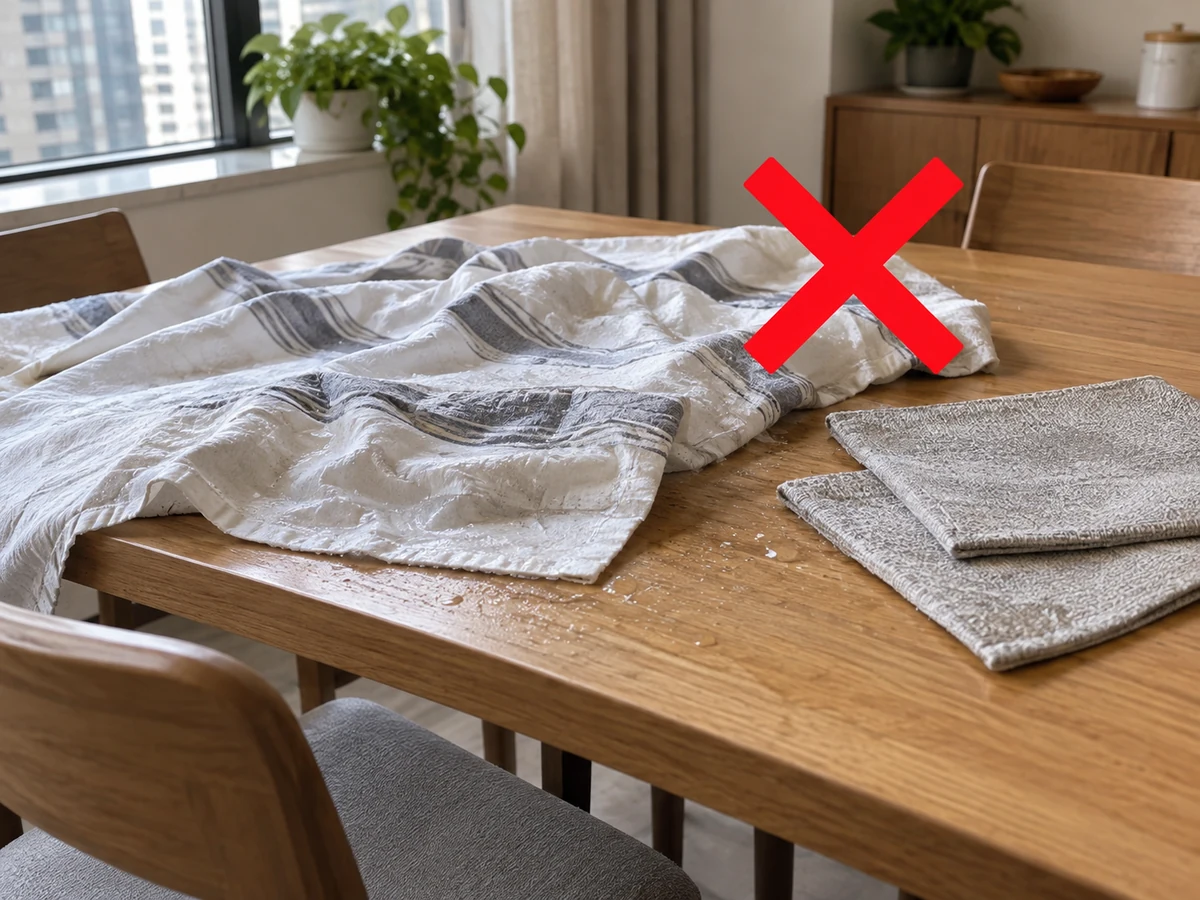
Putting damp cloth on a wooden table
✓ Correct actionDry by the labelled method and reshape; return or fold only when the table, cloth and placemats are fully dry.
Practical tips
Tips for helpers
- Blot with white cloth to avoid dye transfer.
- Keep coated placemats separate.
Tips for employers
- Specify embroidered or special table-linen care.
- Decide professional care for unknown stains.
Completion checklist
Checked 0 / 4