Home cleaning
How to Clean Different Dining Tables
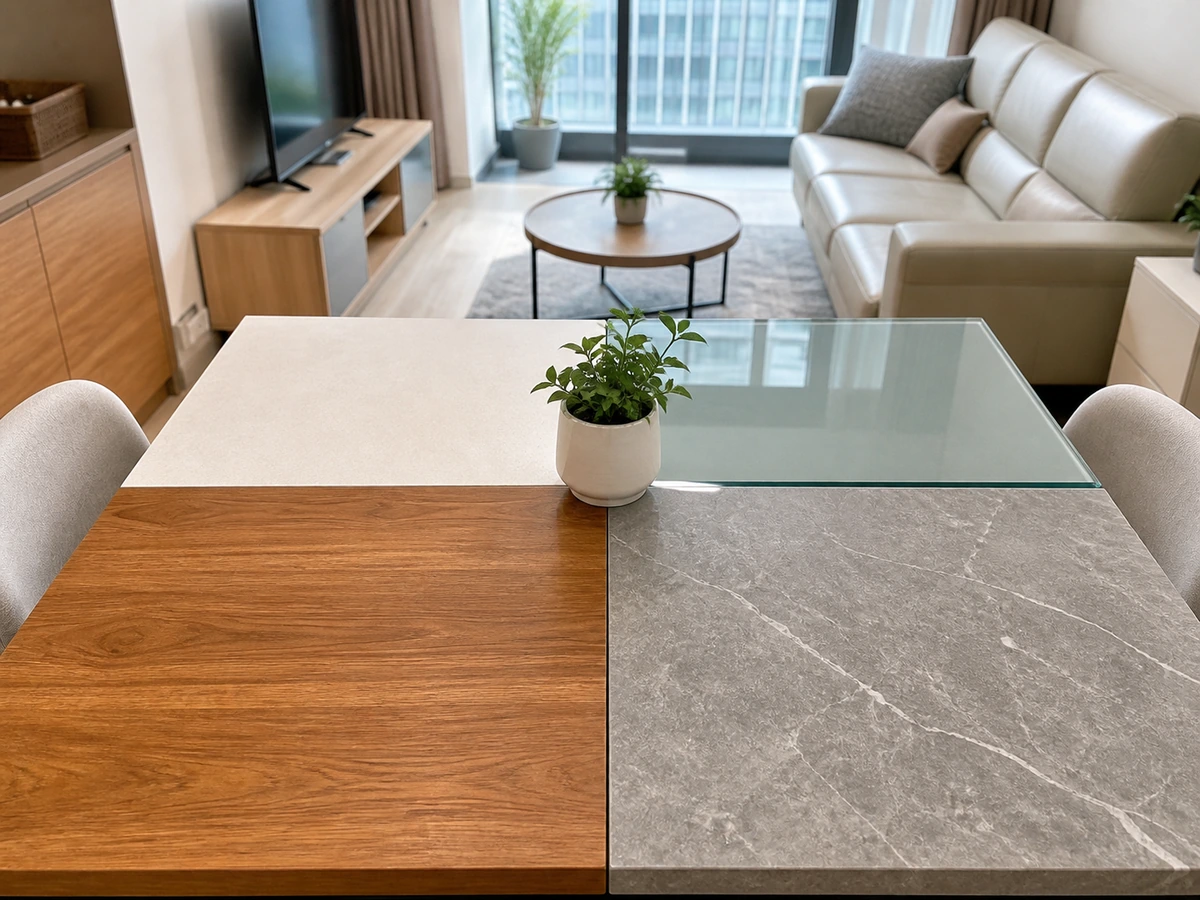
Treat laminate, glass, wood, and stone as separate materials
Overview
Identify the top and edge material before cleaning. Do not transfer glass methods to wood, acidic products to stone, or water into laminate seams.
Tools needed
- Material care information
- Two or three soft cloths
- Soft non-abrasive sponge
- Compatible cleaner
- Dry cloth
- Heat-resistant trivet
Cleaning steps
Identify the tabletop
Separate laminate, glass, sealed wood, and stone.
Clear loose debris
Remove tableware and lift grit with a soft cloth.
Match the method
Choose a material-compatible product and cloth; pretest.
Wipe gently
Use minimal moisture on laminate and wood; follow separate glass and stone care.
Treat spills promptly
Blot liquid and dry seams, edges, and stone surfaces.
Dry and reset
Finish with a dry cloth; replace mats only when dry and use trivets.
Common mistakes
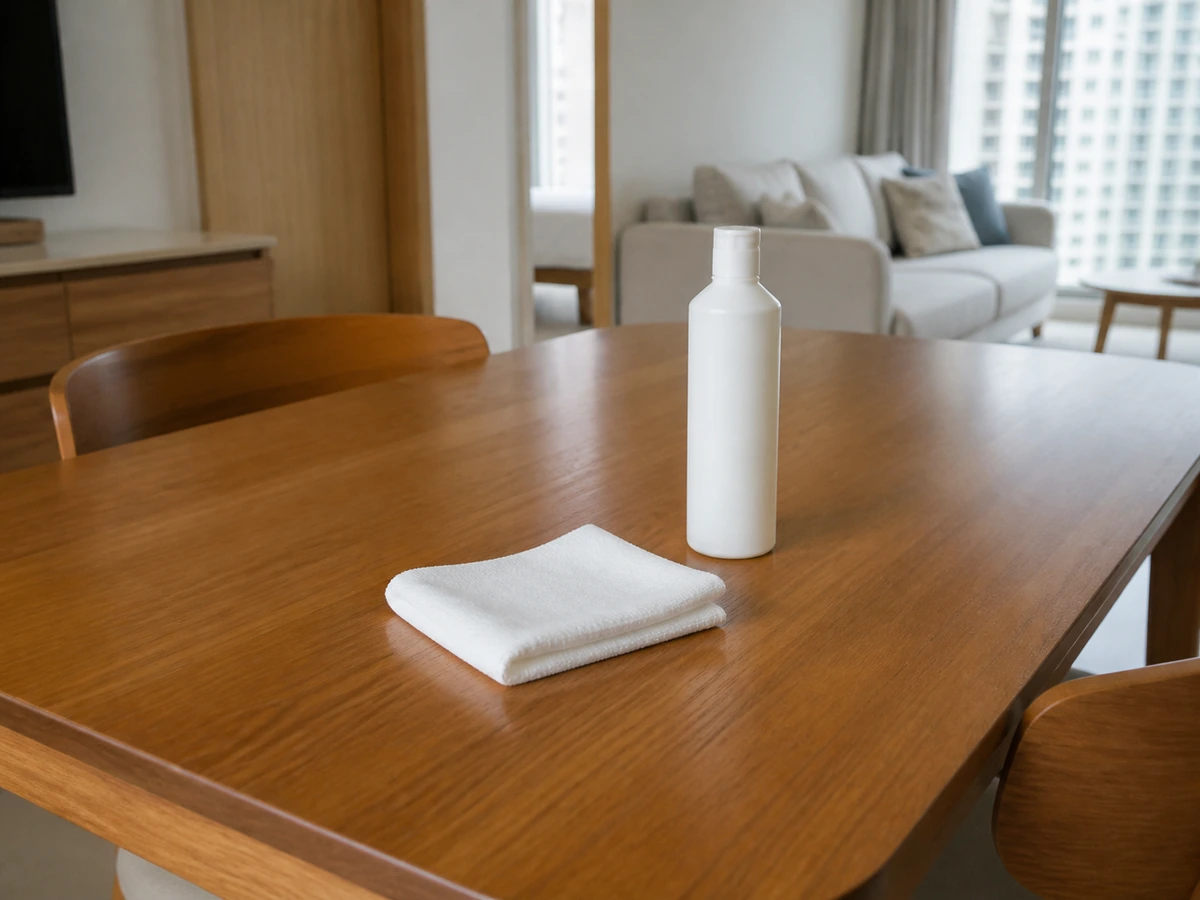
One cleaner for every table
✓ Correct actionIdentify the material and match the product.
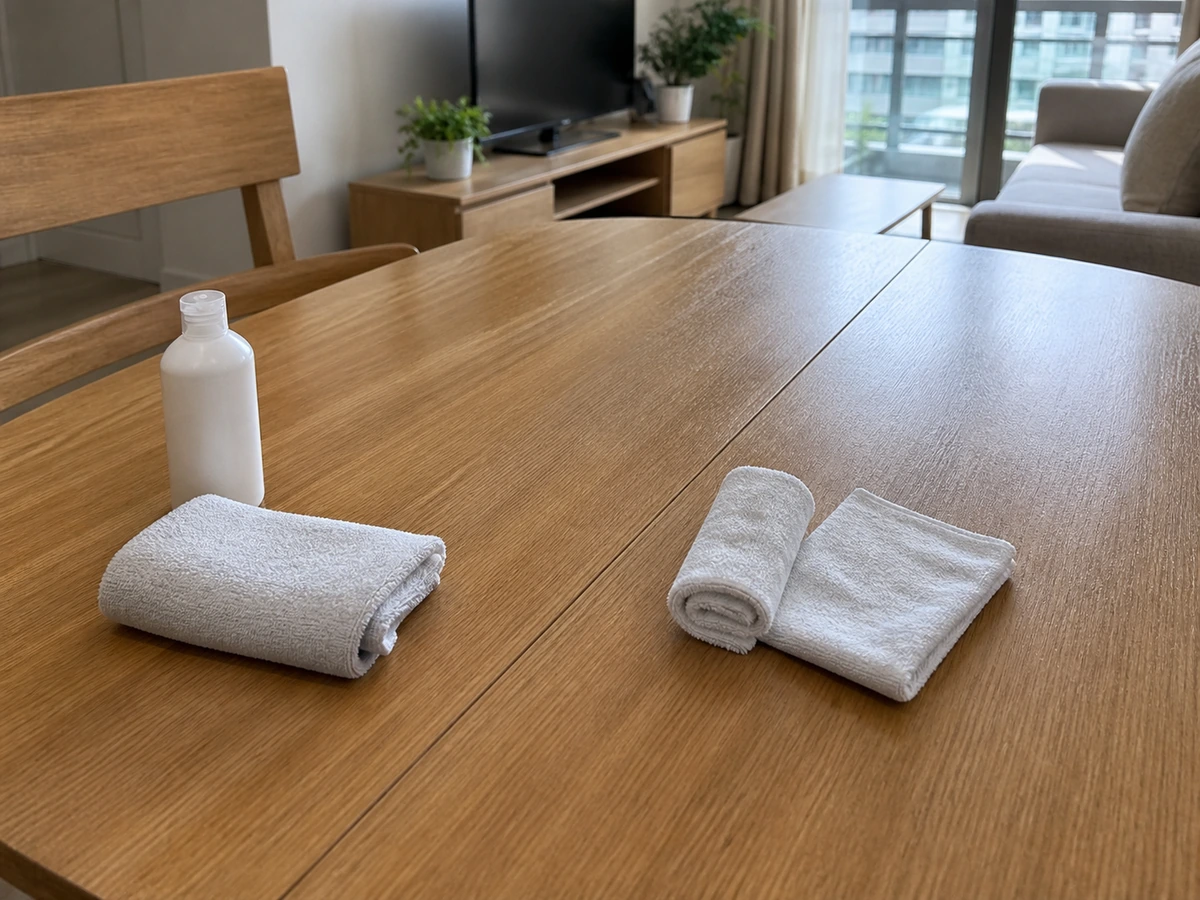
Soaking wood or laminate seams
✓ Correct actionUse a wrung cloth and dry immediately.
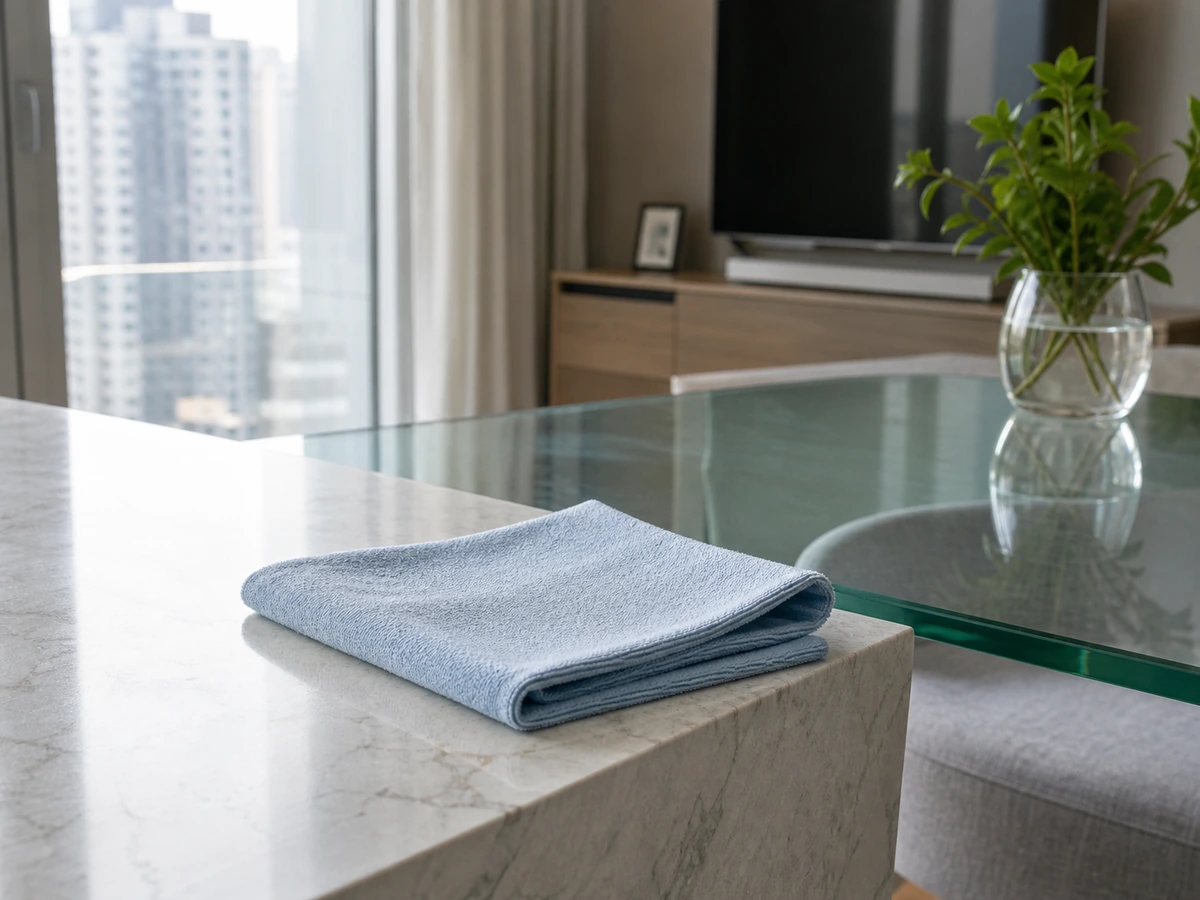
Abrasives on glass or stone
✓ Correct actionUse soft non-abrasive tools.
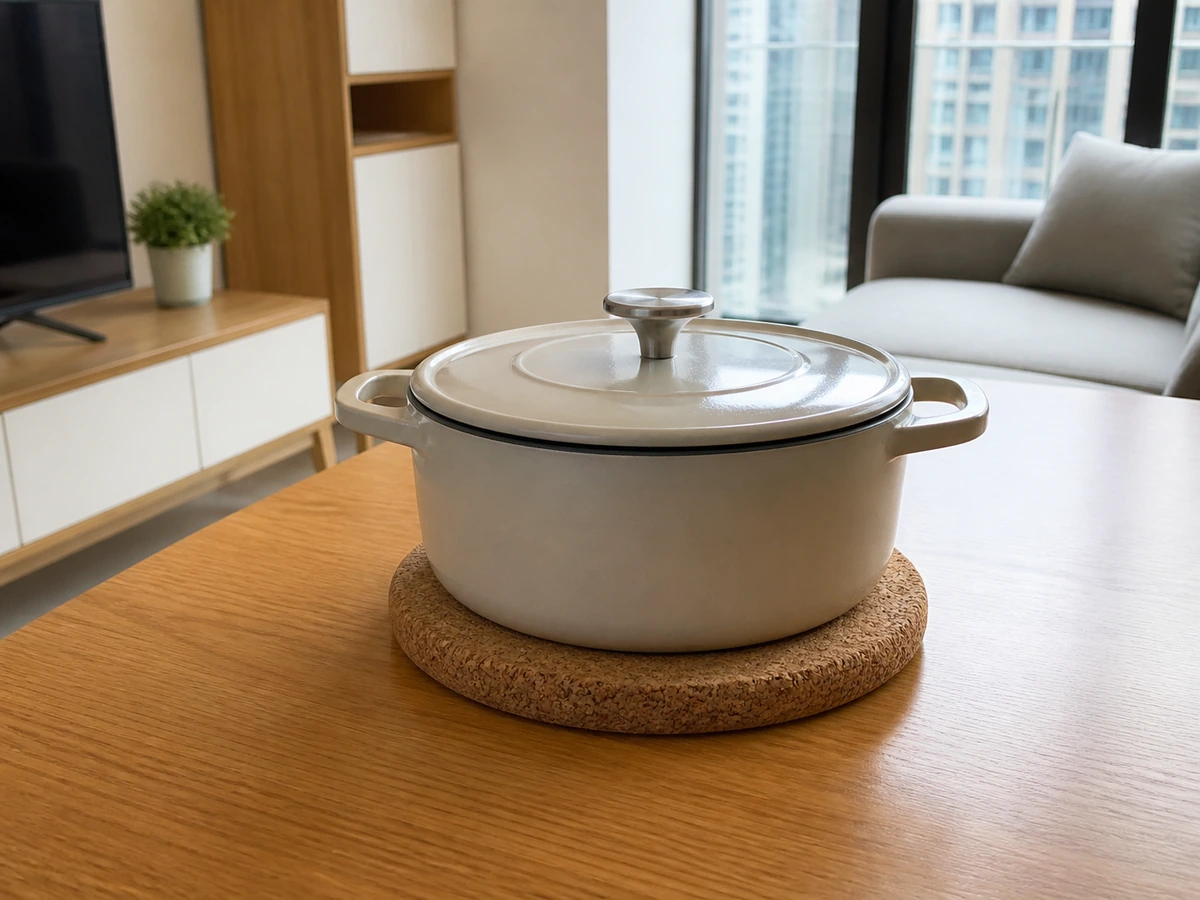
Hot cookware directly on the top
✓ Correct actionUse a stable heat-resistant trivet.
Practical tips
Tips for helpers
- Separate laminate, glass, sealed wood, and stone.
- Finish with a dry cloth; replace mats only when dry and use trivets.
Tips for employers
- Never mix products; rinse food-contact surfaces only as the product label requires.
- Stop for cracked glass, lifted laminate edges, unsealed wood, or unknown stone.
Completion checklist
Checked 0 / 6