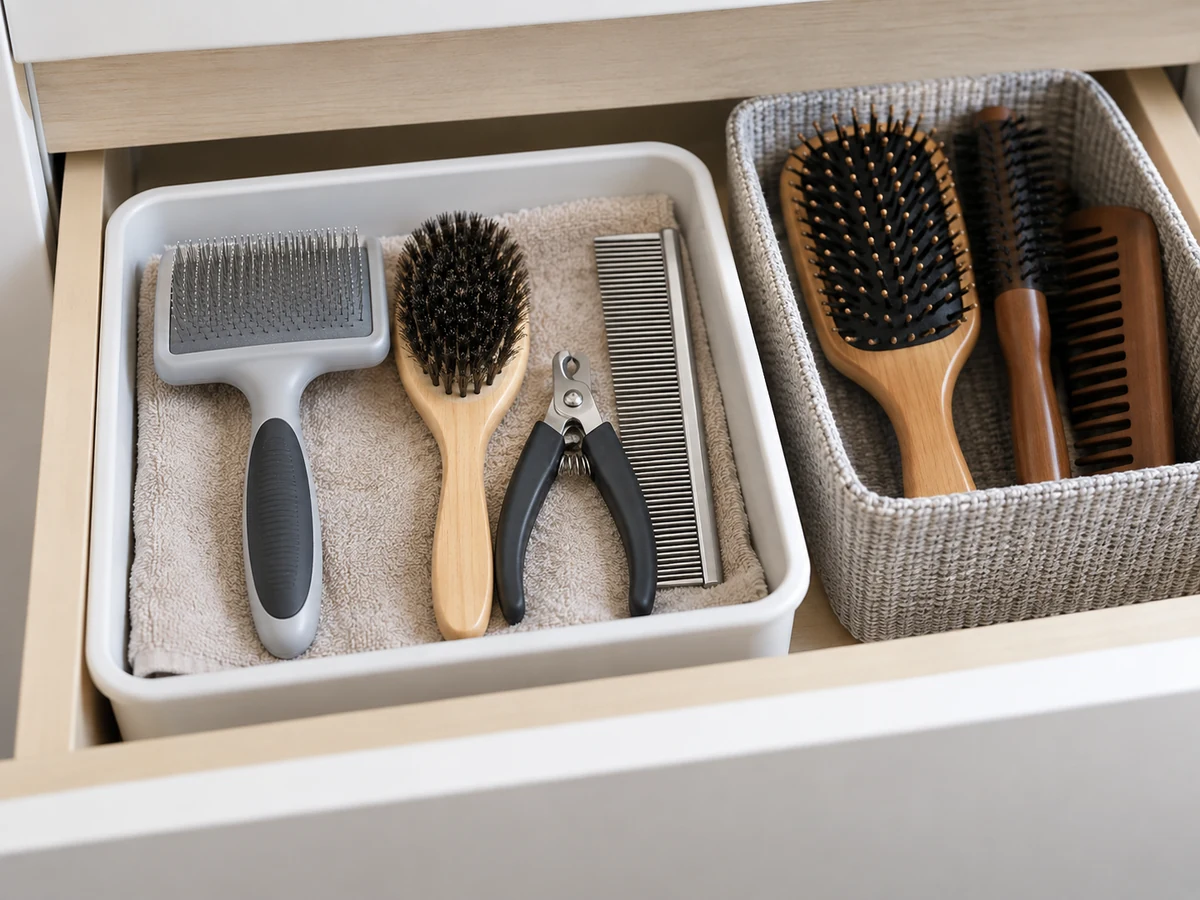
Pet households
Clean Pet Combs, Brushes and Nail-clipper Exteriors
Use the maker’s hair-release method for brush heads, then limit care to comb, brush and nail-tool exteriors.
Overview
This guide covers clean pet combs, brushes and nail-clipper exteriors. Work slowly, follow the item label or maker’s instructions, and stop for damage or a condition outside ordinary household care.
Tools needed
- Pet-only microfibre cloth
- Soft brush or paper towel
- Compatible mild cleaner
- Dry pet-only towel
Cleaning steps
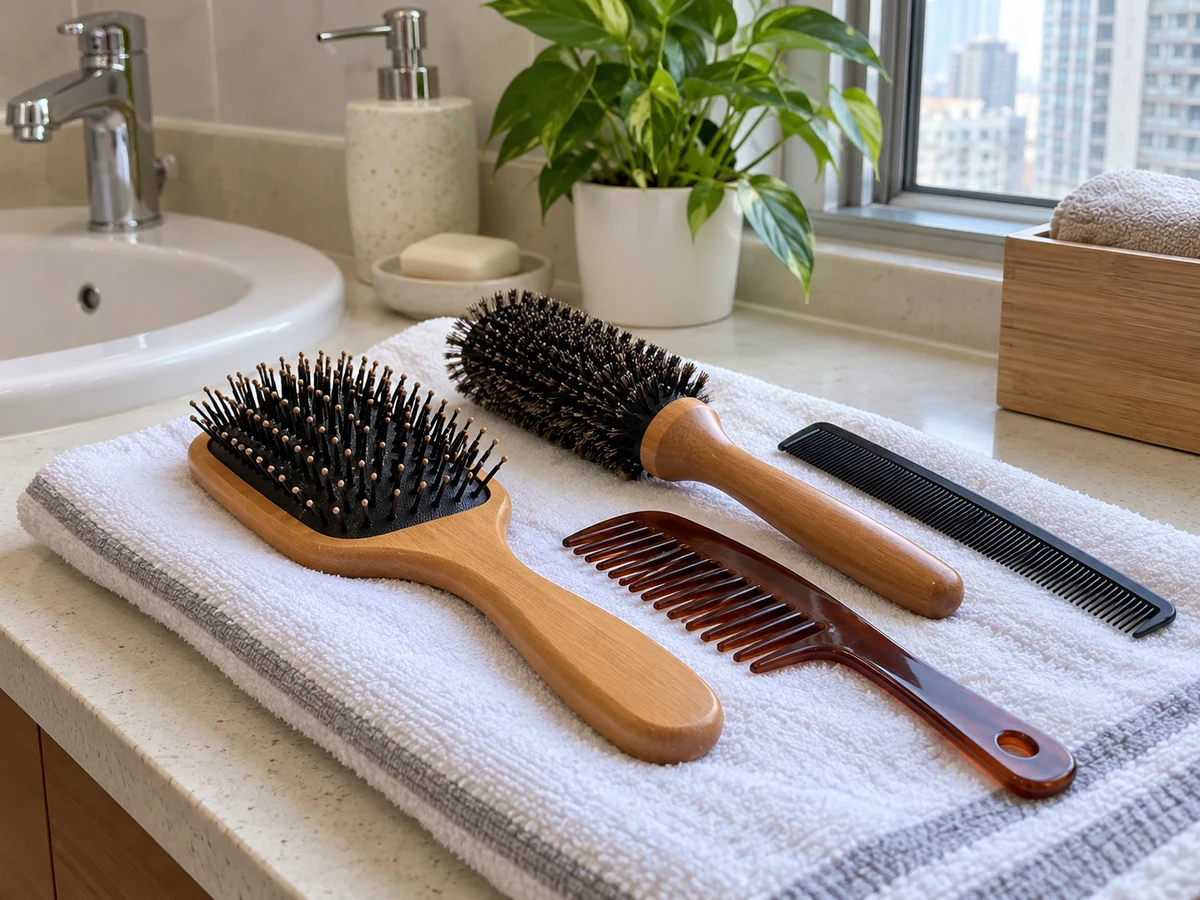
Collect shed hair
Keep the pet away and collect loose hair with a tissue or comb-cleaner; do not pull hard at bristles or the clipper hinge.
Wipe separate materials
Separate plastic, rubber and metal surfaces, then wipe the handles and outer metal with a barely damp cloth compatible with that tool.
Dry hinges and handles
Keep water out of joints, spring gaps and any electrical item; dry each tool open on a clean pet-only towel.
Quarantine worn tools
Check for bent teeth, loose bristles, rust, cracked handles or a sticky hinge; stop using damaged tools and tell the owner.
Common mistakes
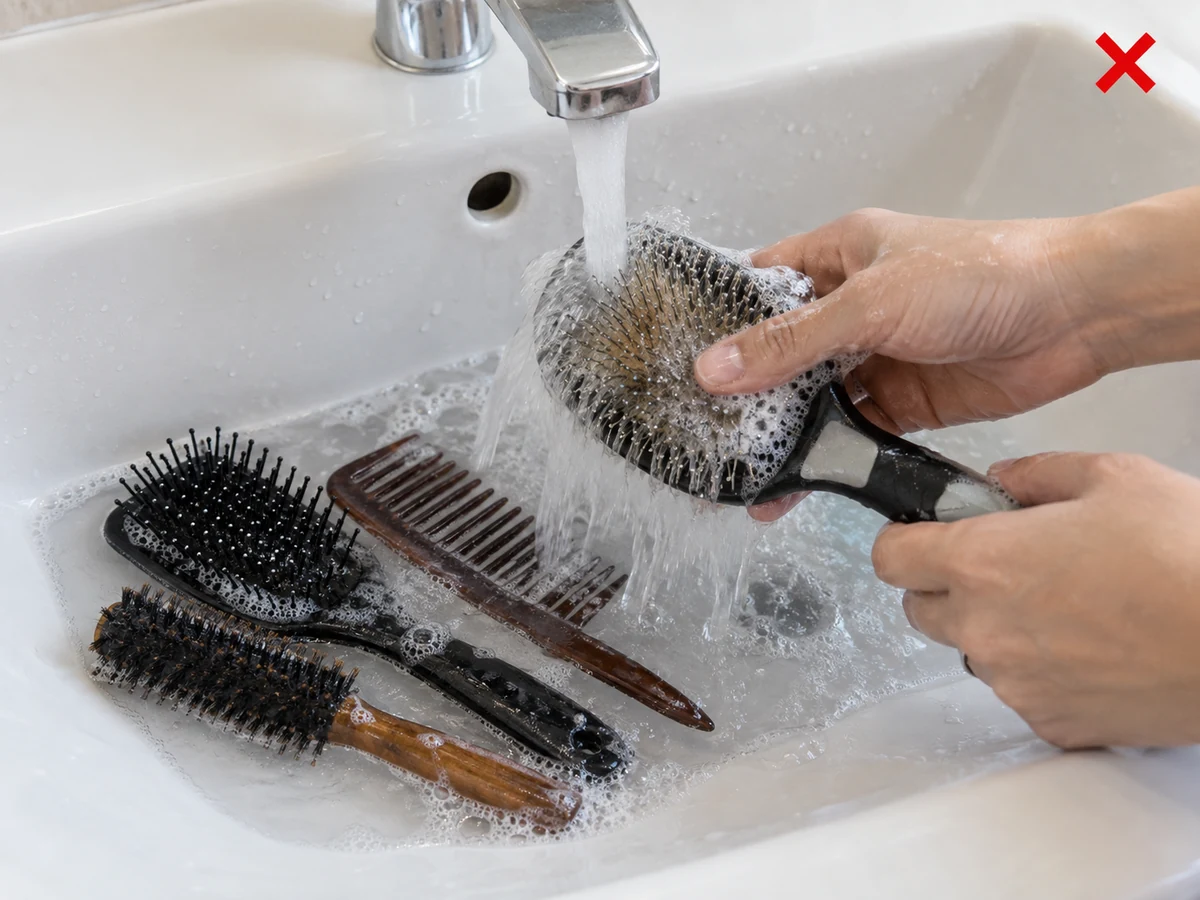
Washing a brush together with human hair tools
✓ Correct actionUse a labelled pet-only towel and storage container.
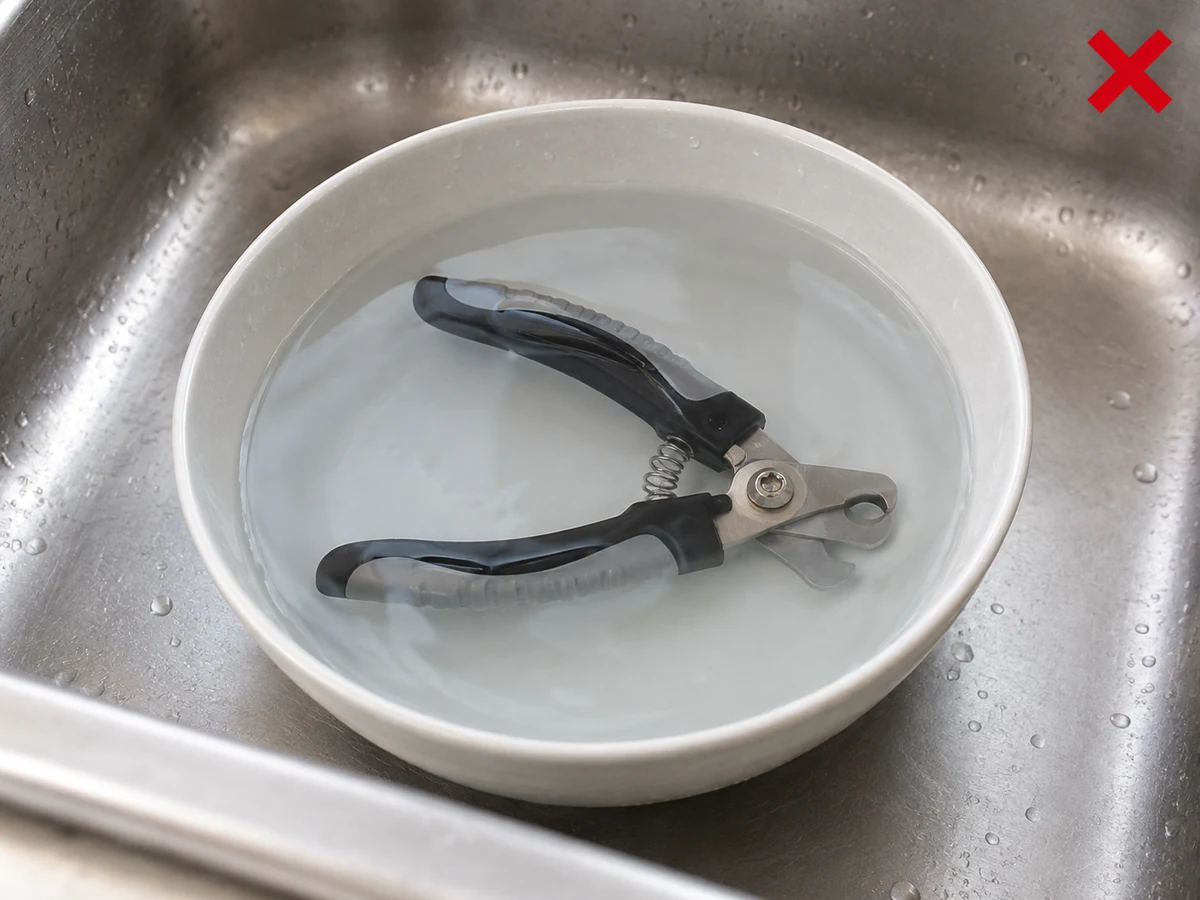
Soaking nail clippers or forcing the hinge
✓ Correct actionWipe only the exterior unless the maker gives a disassembly method.
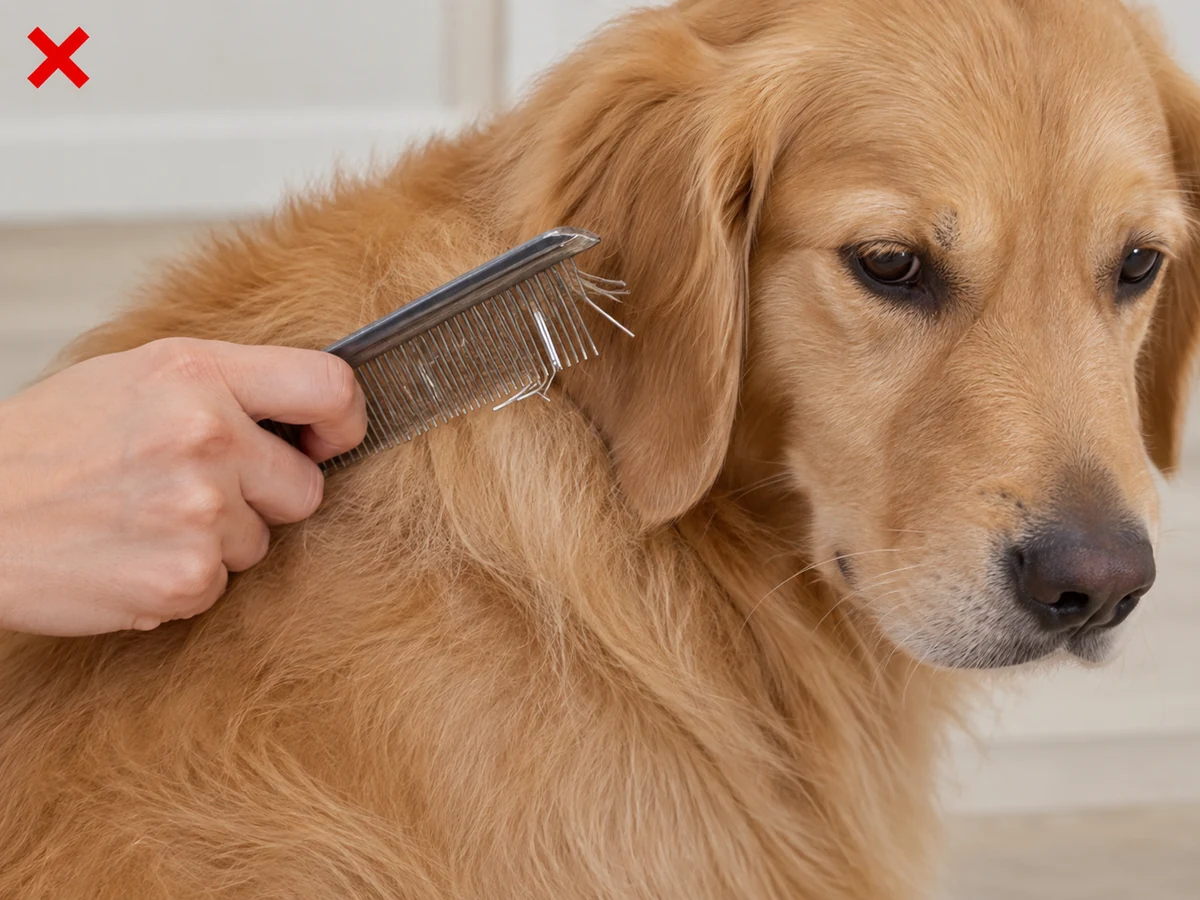
Using a damaged comb on an animal
✓ Correct actionSet aside bent teeth, rust or loose bristles for the owner.
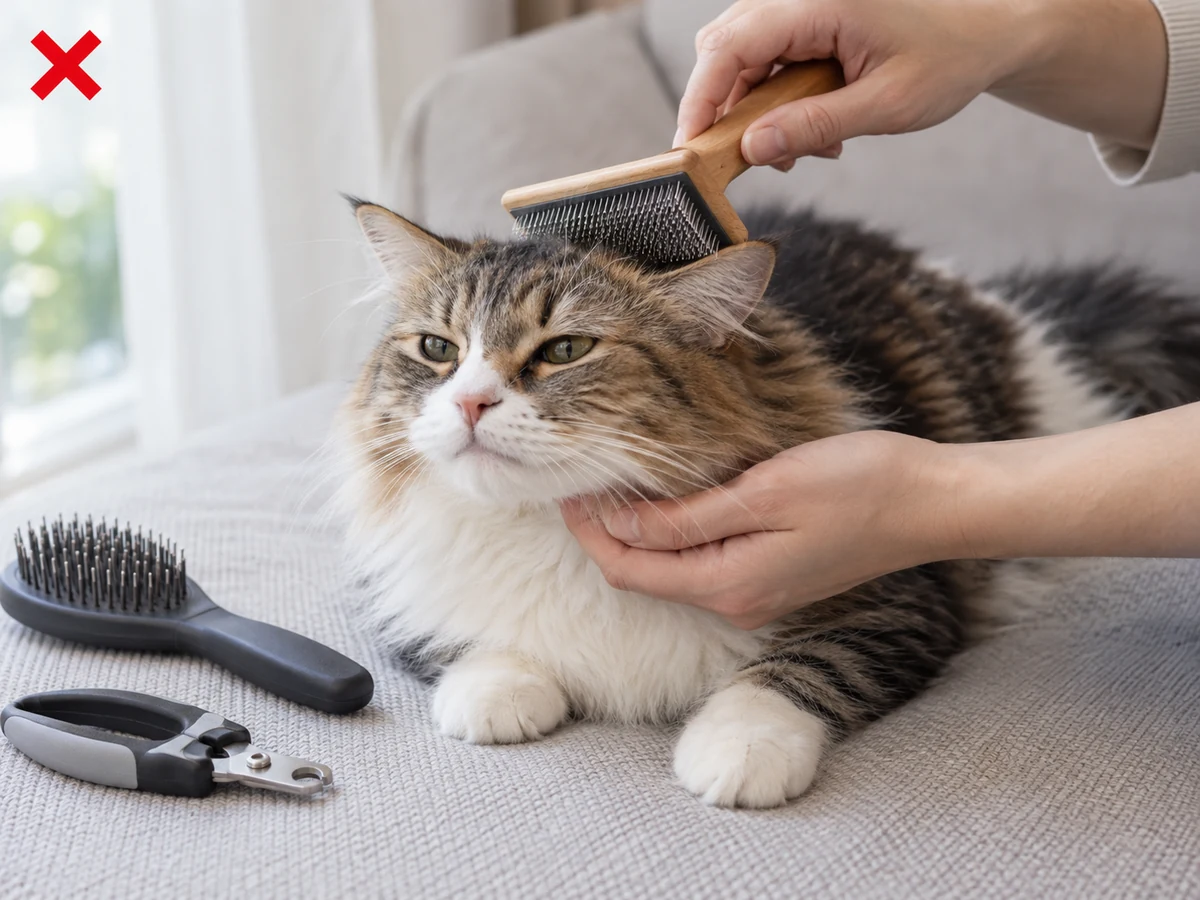
Treating cleaning as grooming advice
✓ Correct actionDo not clip nails or diagnose skin, coat or behaviour concerns.
Practical tips
Tips for helpers
- Separate combs, brushes and nail tools before lifting loose hair.
- Use a clean dry cloth on handles; switch off a powered nail tool first.
Tips for employers
- Provide make-specific directions and decide replacement of damaged tools.
- Assign dry storage away from food equipment and human grooming items.
Completion checklist
Checked 0 / 4