Home cleaning
How to Clean Vinyl or Resilient Flooring Safely
Remove grit first, then damp-mop sparingly and dry every seam.
Overview
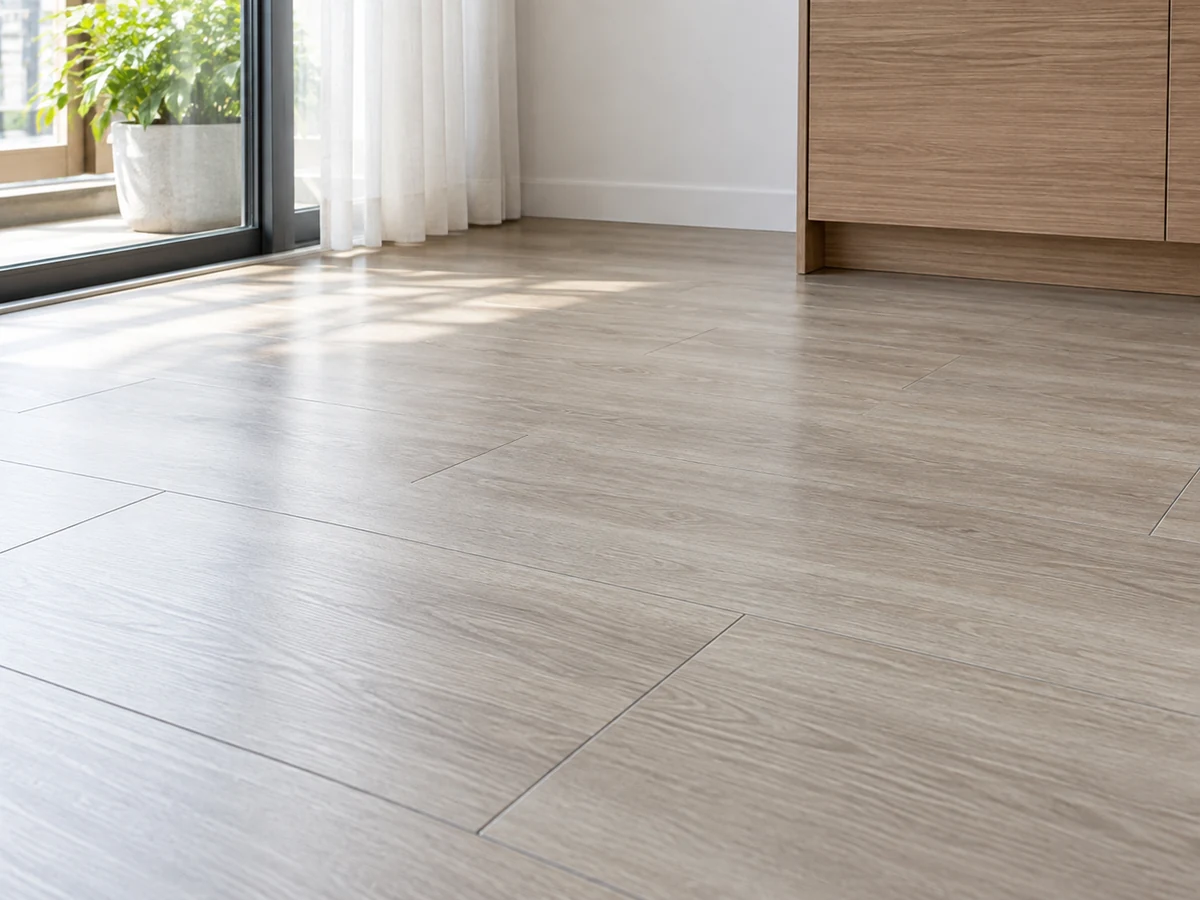
Vinyl, LVT and other resilient floors do not all tolerate heat, abrasion or standing water. Check the product care information first; dry-dust only when the material is unknown.
Tools needed
- Soft broom or vacuum with no beater bar
- Barely damp flat mop
- Manufacturer-approved resilient-floor cleaner
- Clean dry microfibre cloths
Cleaning steps
Check care limits
Read the label, product care sheet or employer instruction; stop wet cleaning for newly laid, lifting, unknown or cracked flooring.
Lift grit first
Use a soft broom or a vacuum with no beater bar to lift sand, hair and debris, especially along skirting and plank seams.
Damp-mop in small sections
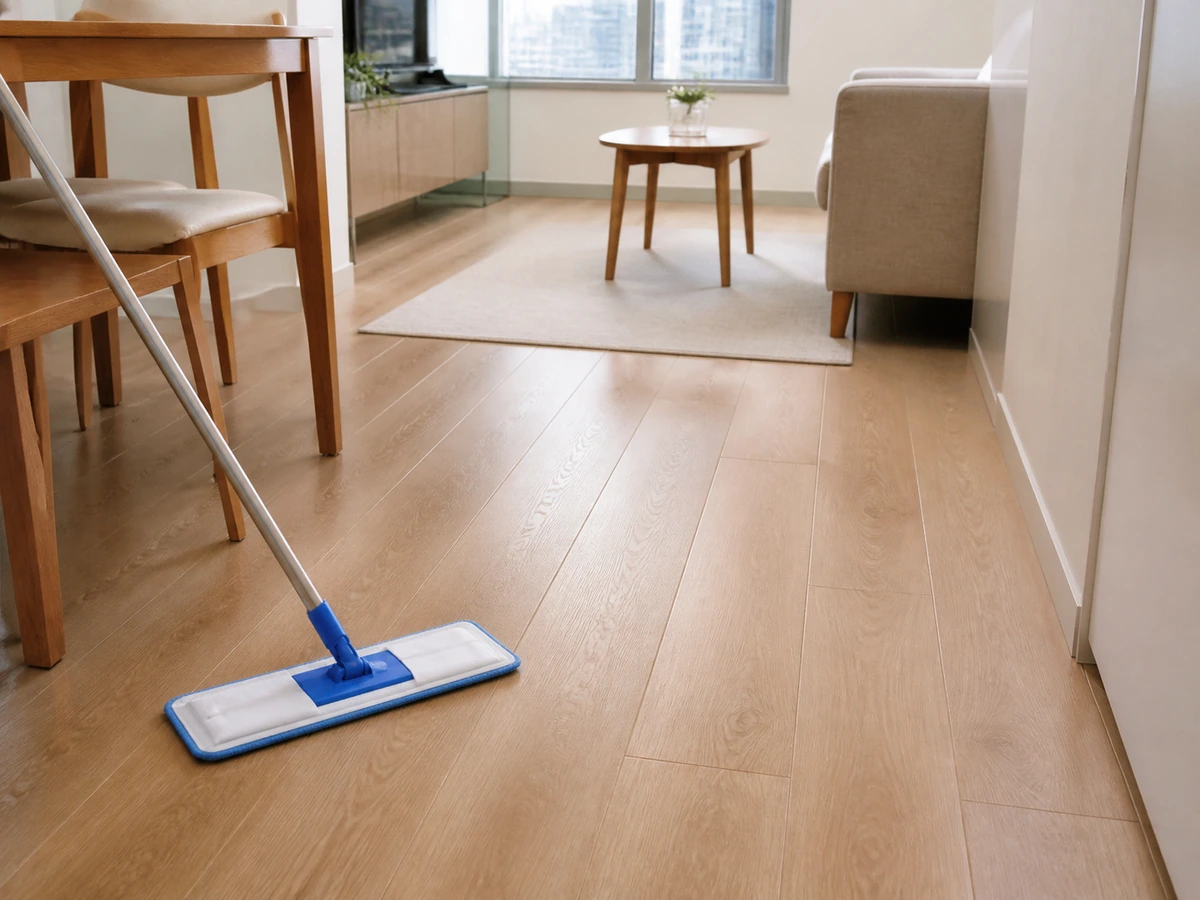
Wring the mop until barely damp and clean one small section at a time with approved cleaner; do not drive water into LVT, sheet-floor or skirting seams.
Dry edges and seams
Blot edges and seams with a dry cloth and reopen the area only when it is streak-free, dry and not tacky underfoot.
Common mistakes
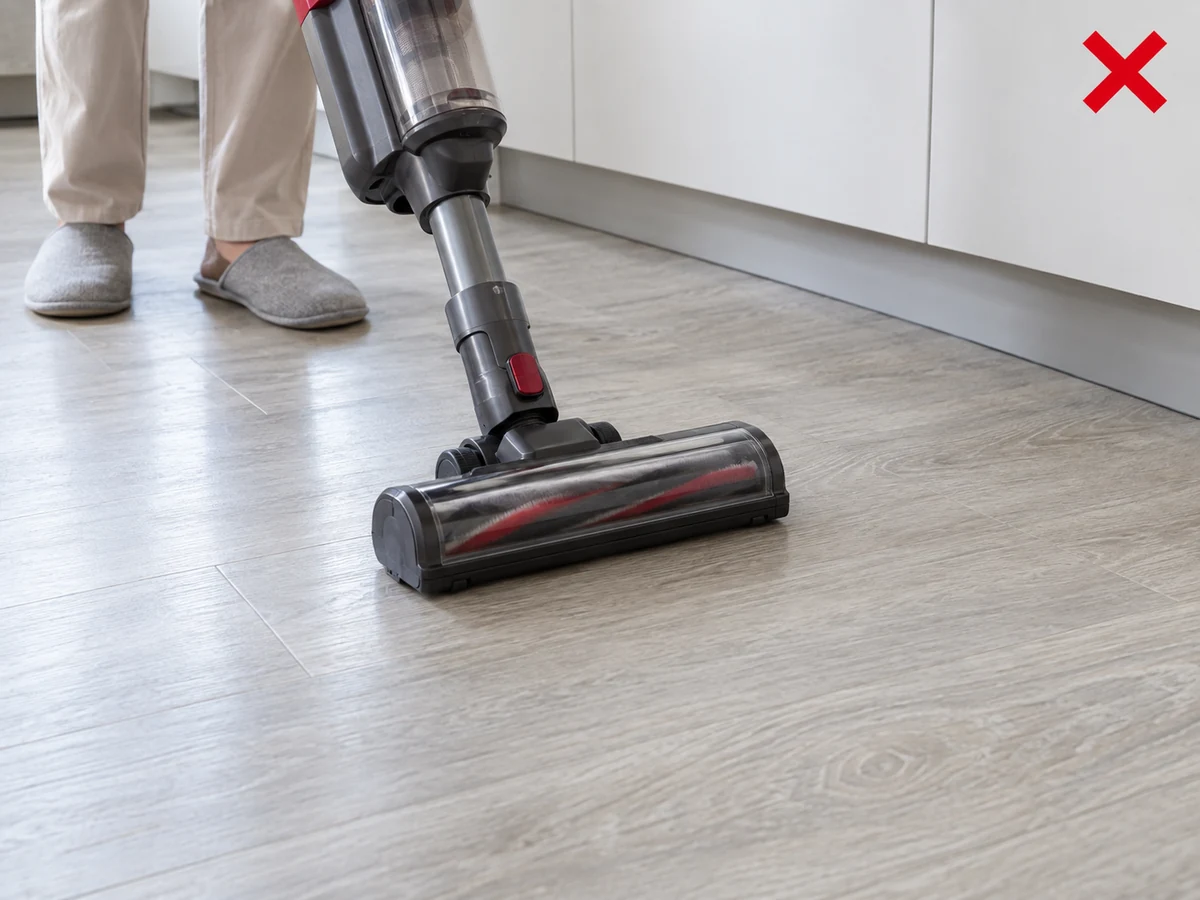
Running a beater-bar vacuum over the floor
✓ Correct actionUse a soft broom or switch the vacuum to a hard-floor setting.
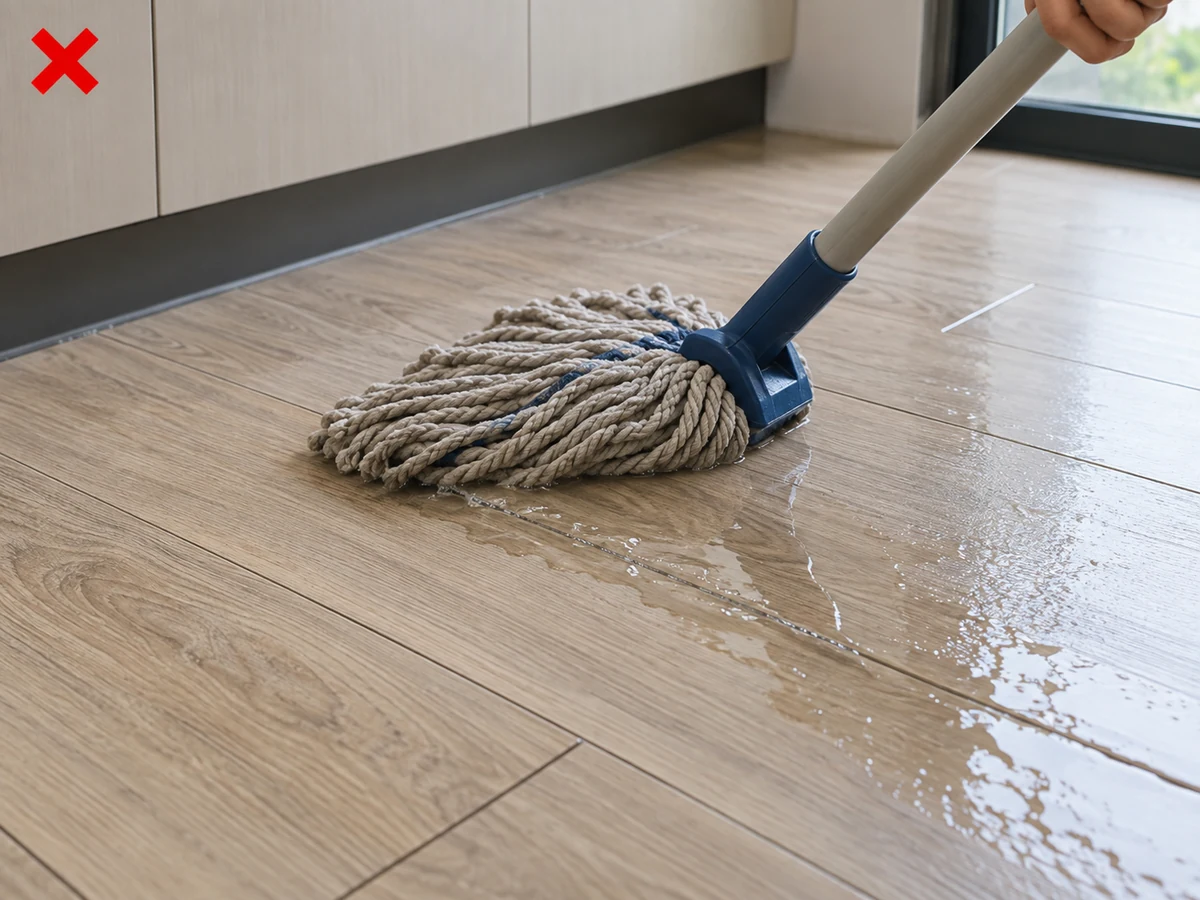
Pushing mop water into plank seams
✓ Correct actionWring the mop hard and blot seam water immediately.
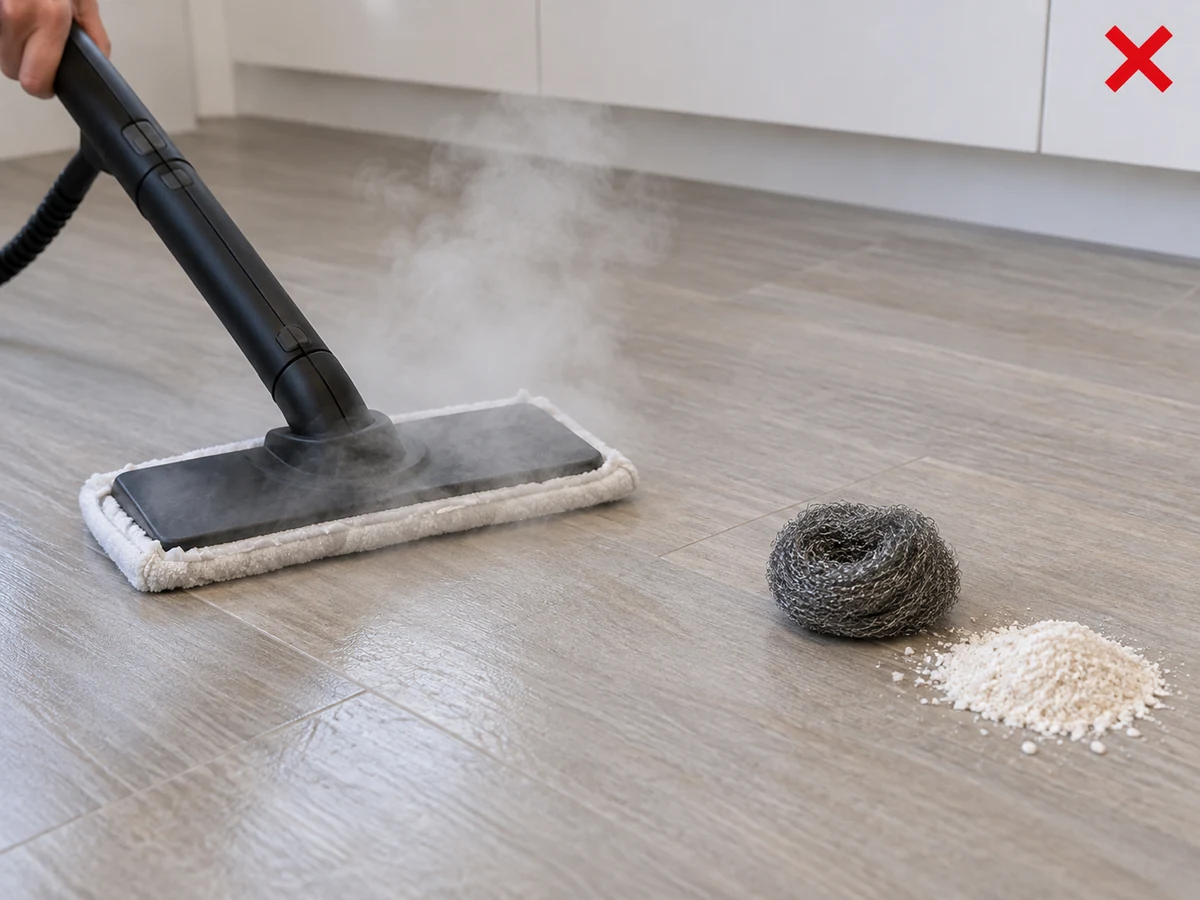
Using steam, steel wool or abrasive powder
✓ Correct actionUse only soft tools and the cleaner approved for that floor.
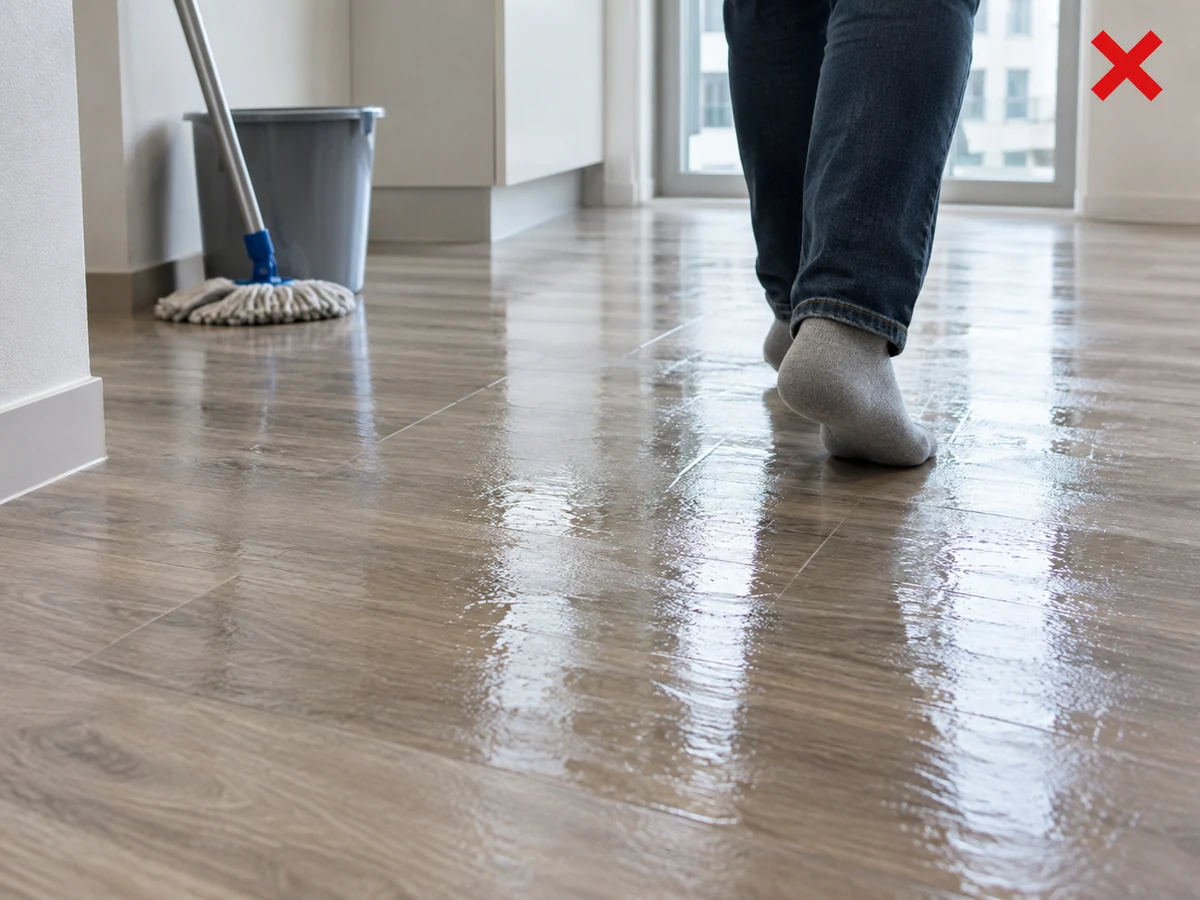
Letting people walk on a damp finish
✓ Correct actionAllow drying time and check that there is no wet sheen or slip feel.
Practical tips
Tips for helpers
- Set the vacuum for hard floors and remove entrance grit before it scratches the finish.
- Rinse and wring the mop after each small section so it does not leave a dirty film.
Tips for employers
- Keep the model, approved cleaner and new-floor restrictions with the cleaning supplies.
- Arrange repair of open seams or worn mats; do not ask a helper to patch the floor.
Completion checklist
Checked 0 / 4