Cleaning products and safety
How to Clean Cooking-oil Spills from Hard Floors and Reduce Slip Risk
Block the spill first; absorb, degrease by floor type, rinse residue and prove the floor is not slippery.
Overview
A small fresh cooking-oil spill can make a smooth hard floor hazardous. This is an immediate spill response, not routine mopping; ask the employer before treating unknown stone or damaged flooring.
Tools needed
- Warning sign or visible barrier
- Absorbent paper, old towels or granules
- Degreaser compatible with the floor material
- Clean water, dry mop and dry cloths
Cleaning steps
Block the slip zone
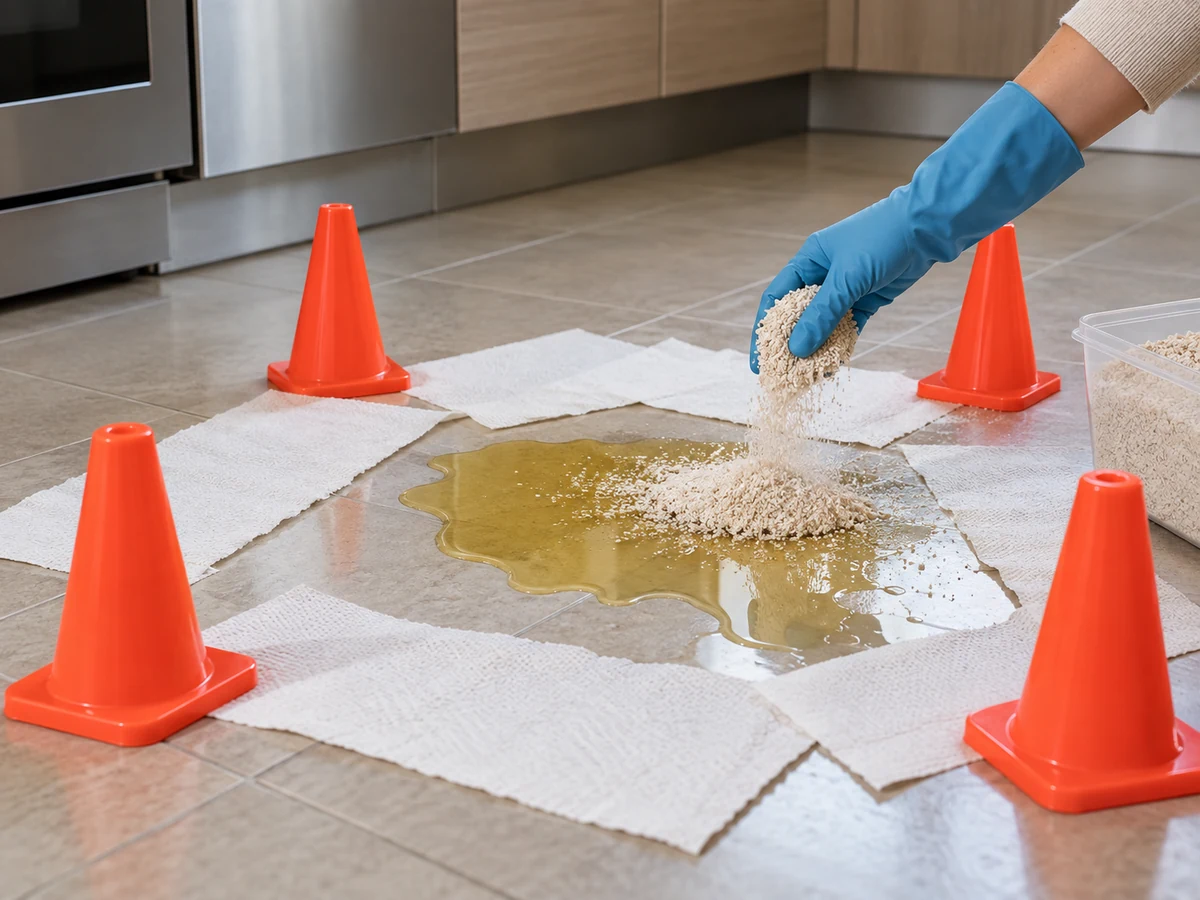
Keep people and pets away at once and place a sign or barrier around the spill; do not step into oil while fetching supplies.
Absorb from outside inward
Press paper, old towels or absorbent granules from the outer edge toward the centre, bag the waste, and do not wipe oil outward.
Degrease for that floor
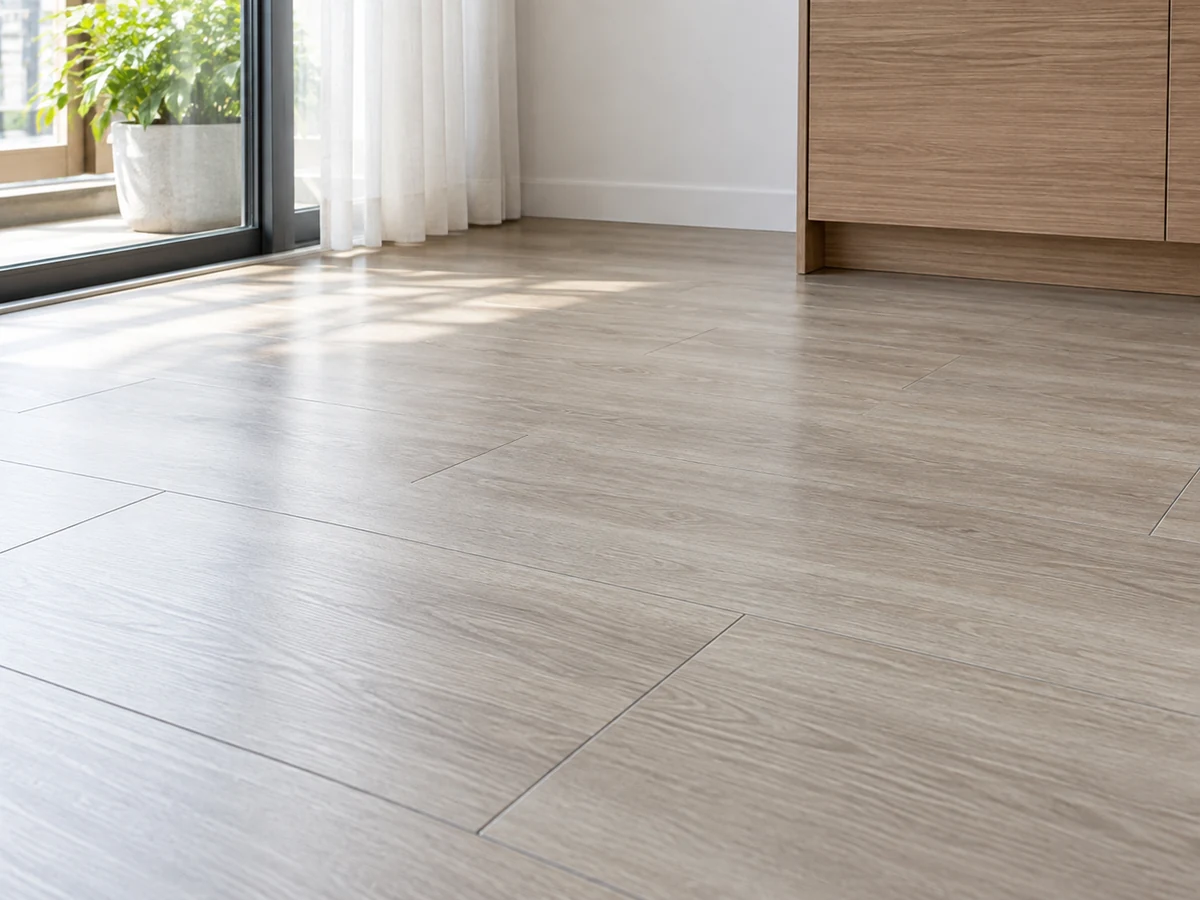
Identify tile, vinyl, wood or stone, then use a small amount of compatible degreaser as directed; never mix cleaning products.
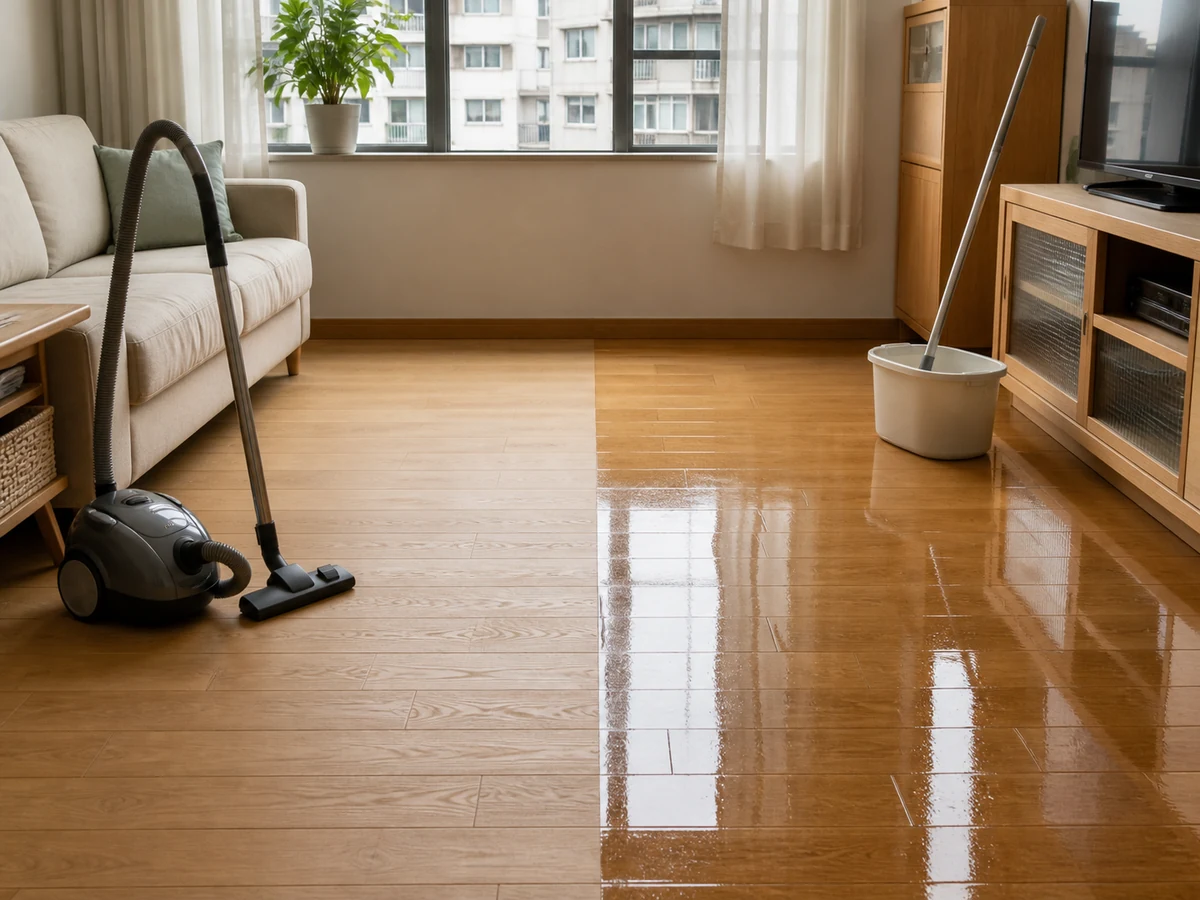
Rinse residue and test grip
Rinse only if the label calls for it, remove liquid with a clean cloth, then use a dry cloth and careful shoe contact to check for film, wetness or slip.
Common mistakes
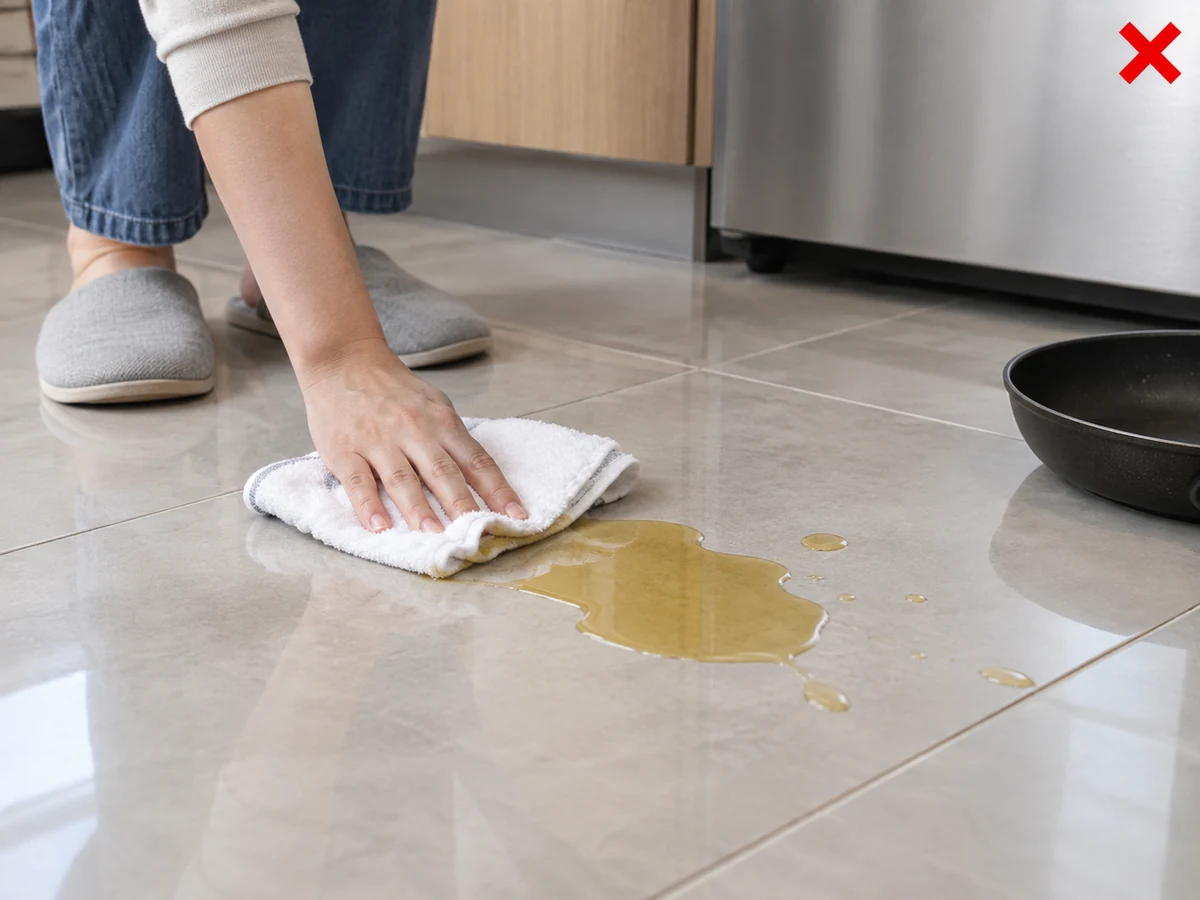
Wiping before blocking access
✓ Correct actionSet a barrier and direct people around the spill before cleaning.
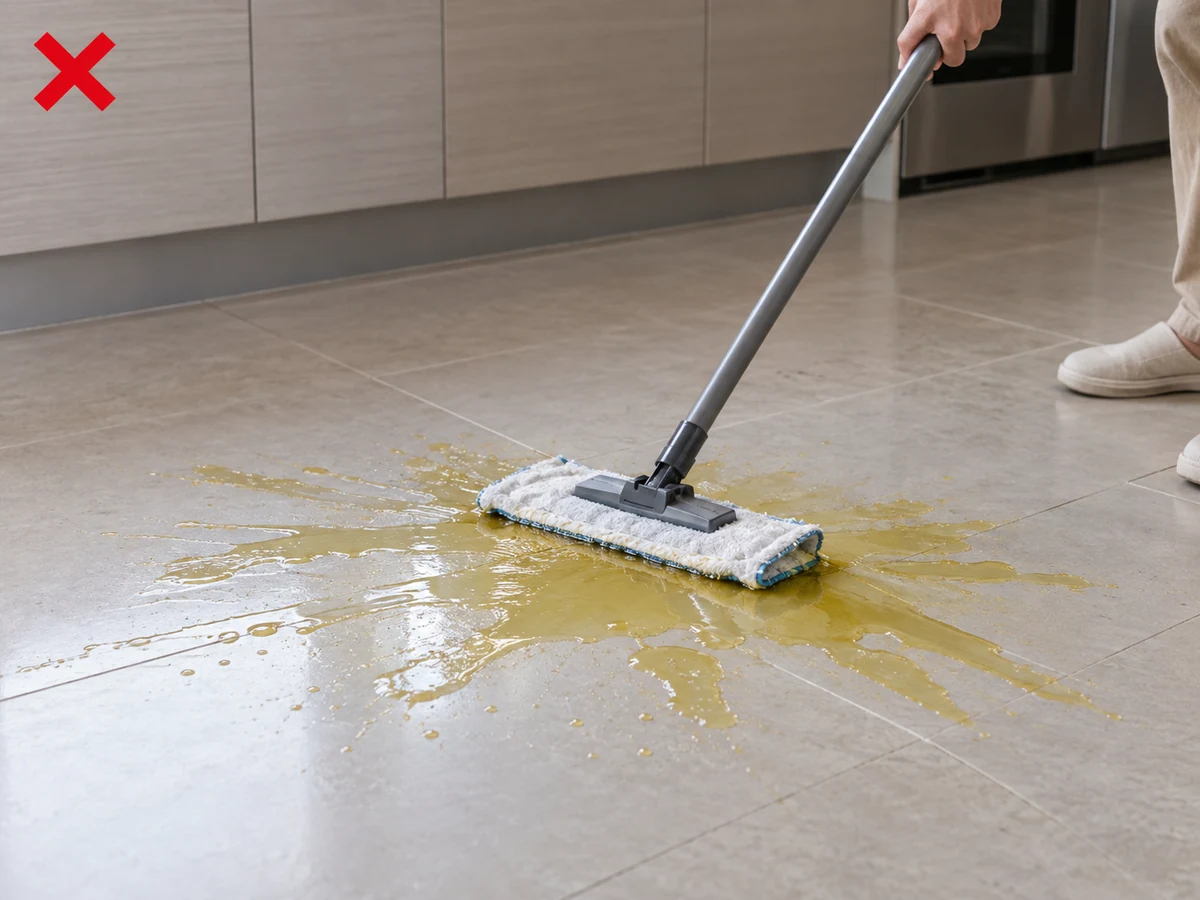
Pushing oil from the centre outward
✓ Correct actionAbsorb from the outside inward and remove used material immediately.
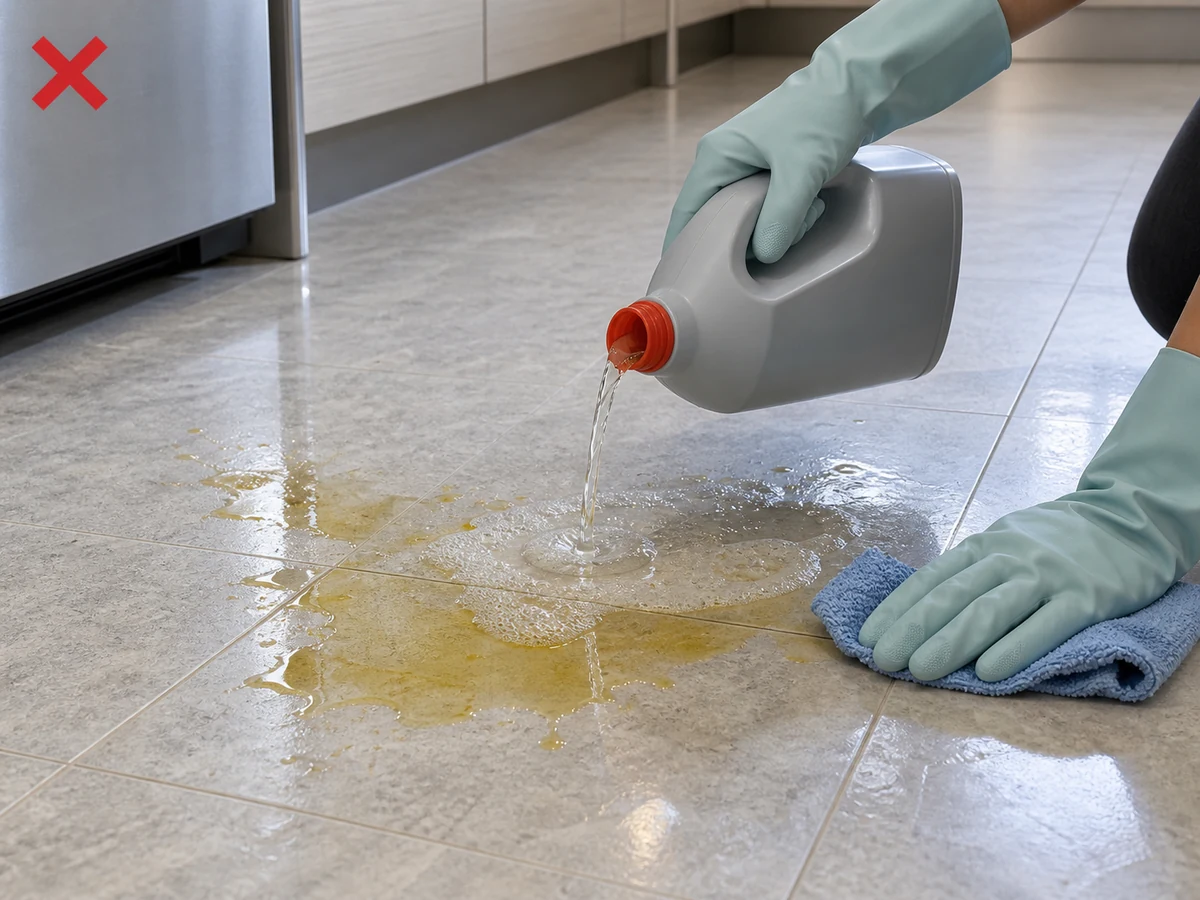
Using a harsh degreaser on every floor
✓ Correct actionIdentify the floor first; check maker limits for natural stone.
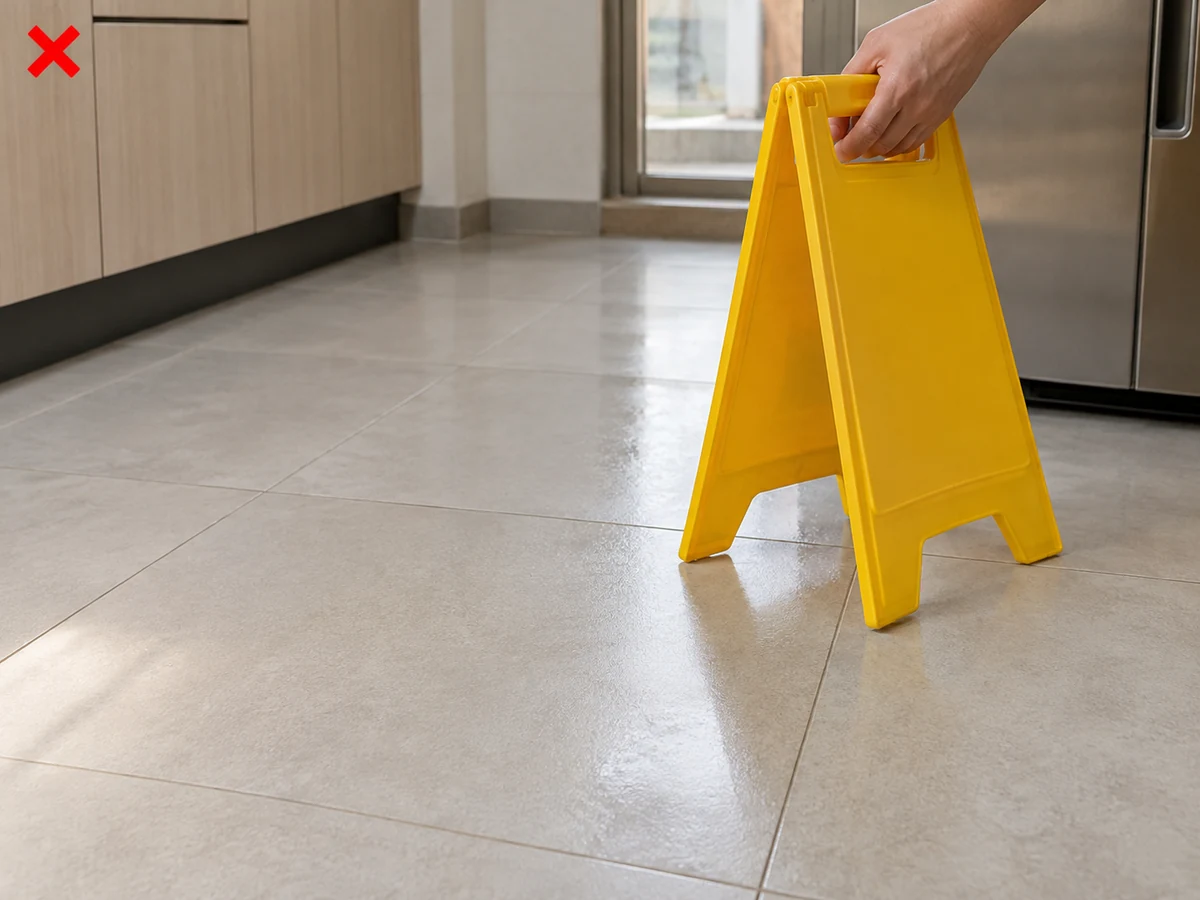
Removing the sign once oil is invisible
✓ Correct actionRinse away residue, dry the area and confirm grip before reopening it.
Practical tips
Tips for helpers
- Keep absorbent material, wash cloths and final dry cloths separate so oil is not carried elsewhere.
- If the oil is from an ongoing leak, leave protection in place and tell the employer about the source.
Tips for employers
- Keep suitable degreasers for each floor type together and labelled, rather than improvising during a spill.
- Arrange repair of a leaking appliance or container; confirm the next step for cracked flooring.
Completion checklist
Checked 0 / 4