Kitchen cleaning
How to Organise a Dry-food Pantry and Check Packaging
Keep product identity, dates and allergen information with stored food.
Overview
Empty one shelf at a time, keeping original labels; check use-by or best-before dates, storage instructions and opening dates. Inspect tears, leaks, swelling, pests and dampness; separate questionable food and tell the employer without tasting it.
Tools needed
- Clean tray
- Dry cloth
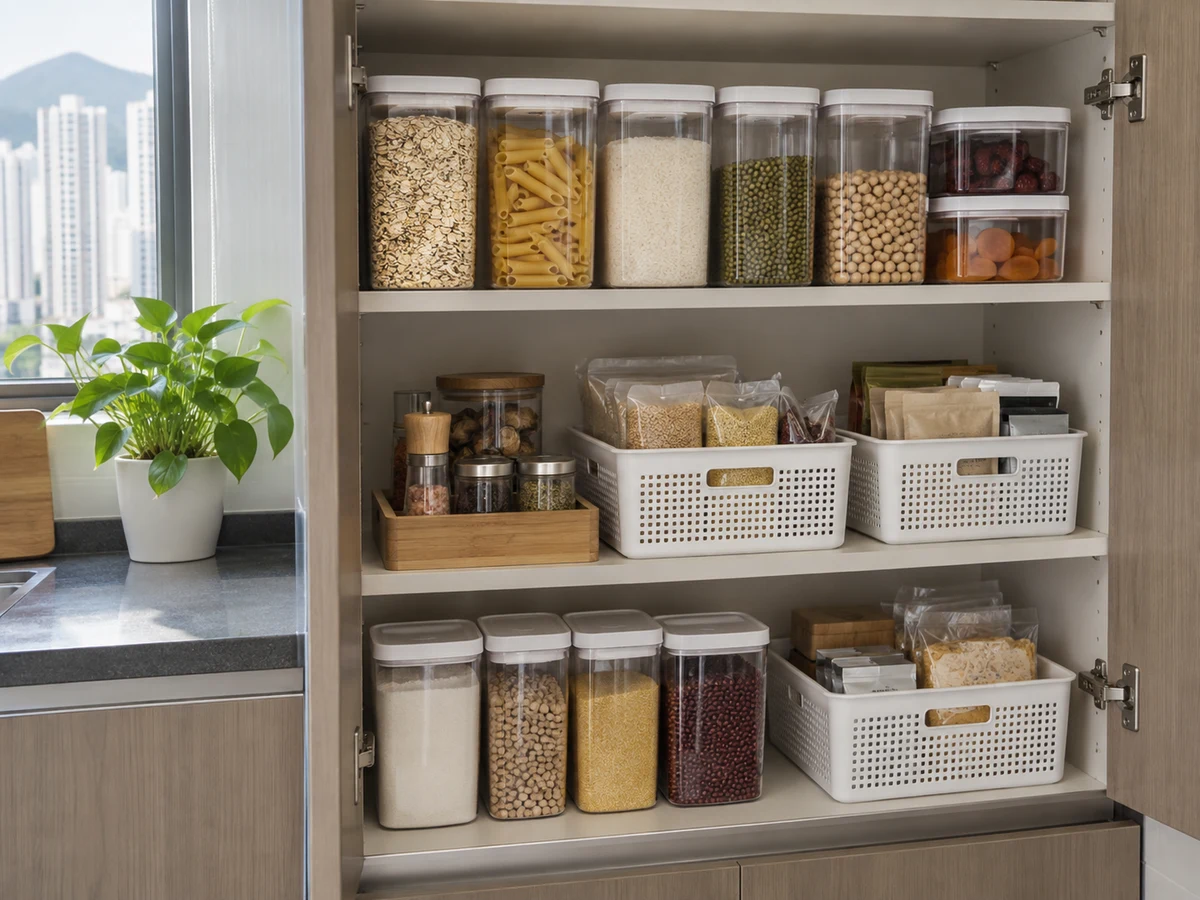
- Sealed food containers
- Date labels
Cleaning steps
Keep labels while emptying
Empty one shelf at a time, keeping original labels; check use-by or best-before dates, storage instructions and opening dates.
Inspect packs and dates
Inspect tears, leaks, swelling, pests and dampness; separate questionable food and tell the employer without tasting it.
Clean and dry shelves
Remove crumbs, clean according to the shelf material and dry completely; store food separately from cleaning products.
Return by date order
Return intact food to a cool dry place with earlier dates in front; keep names, allergens, batch details and dates when decanting.
Common mistakes
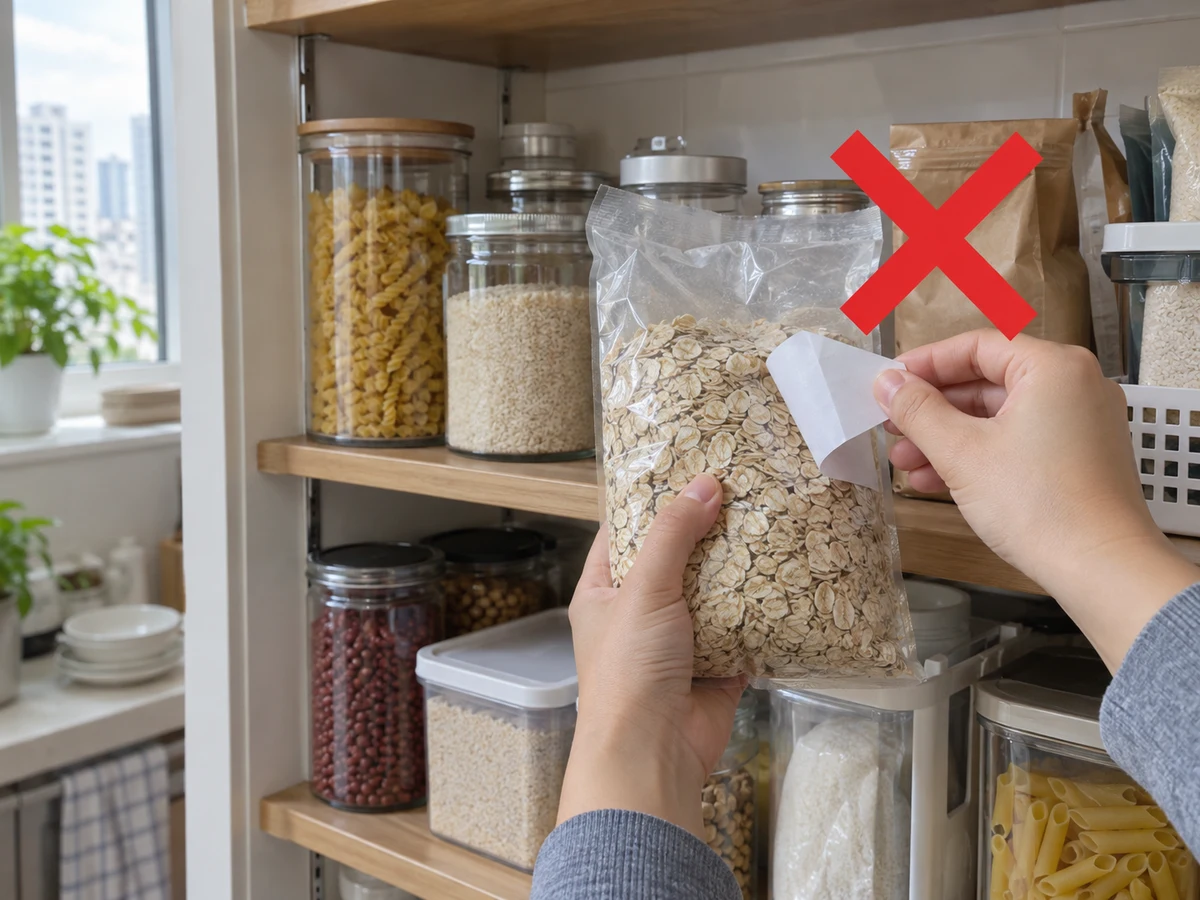
Discarding original date labels
✓ Correct actionEmpty one shelf at a time, keeping original labels; check use-by or best-before dates, storage instructions and opening dates.
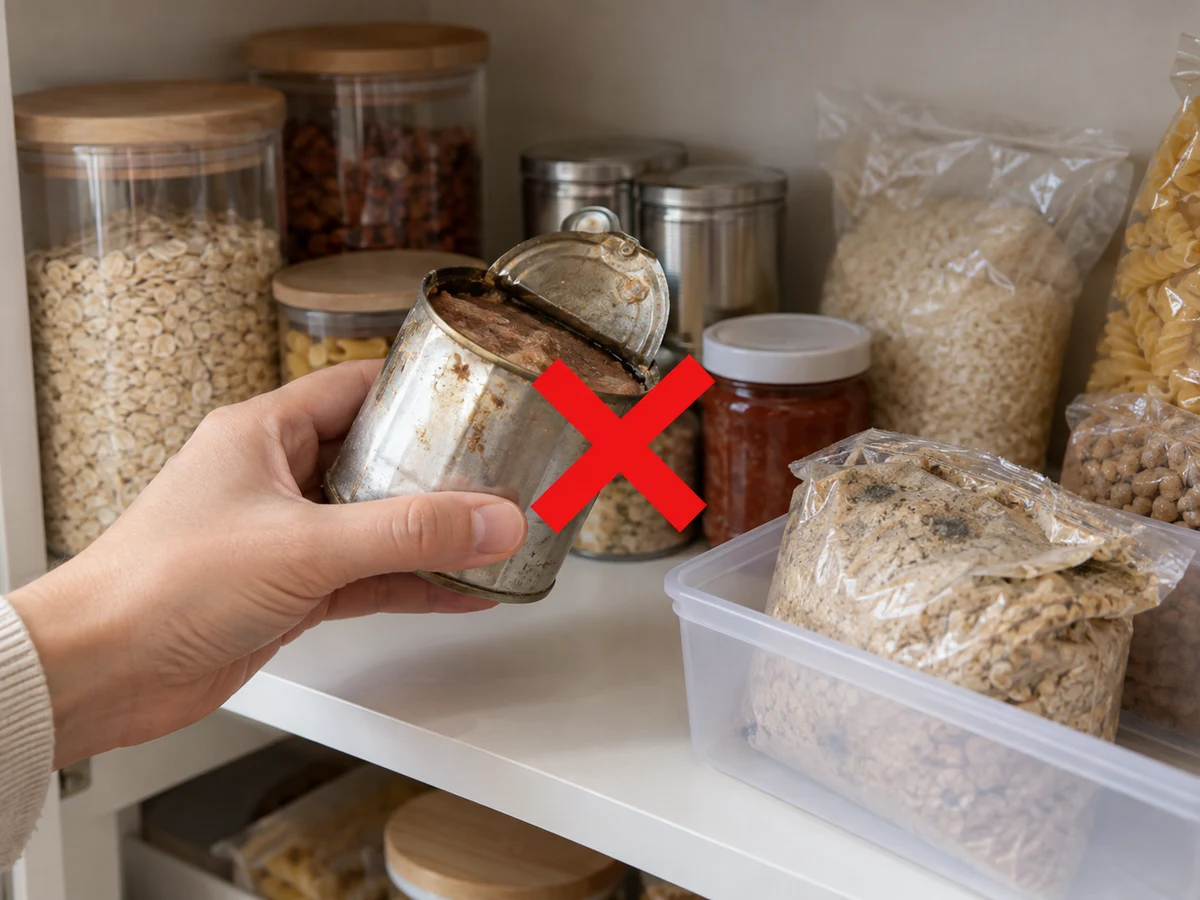
Tasting questionable food
✓ Correct actionInspect tears, leaks, swelling, pests and dampness; separate questionable food and tell the employer without tasting it.
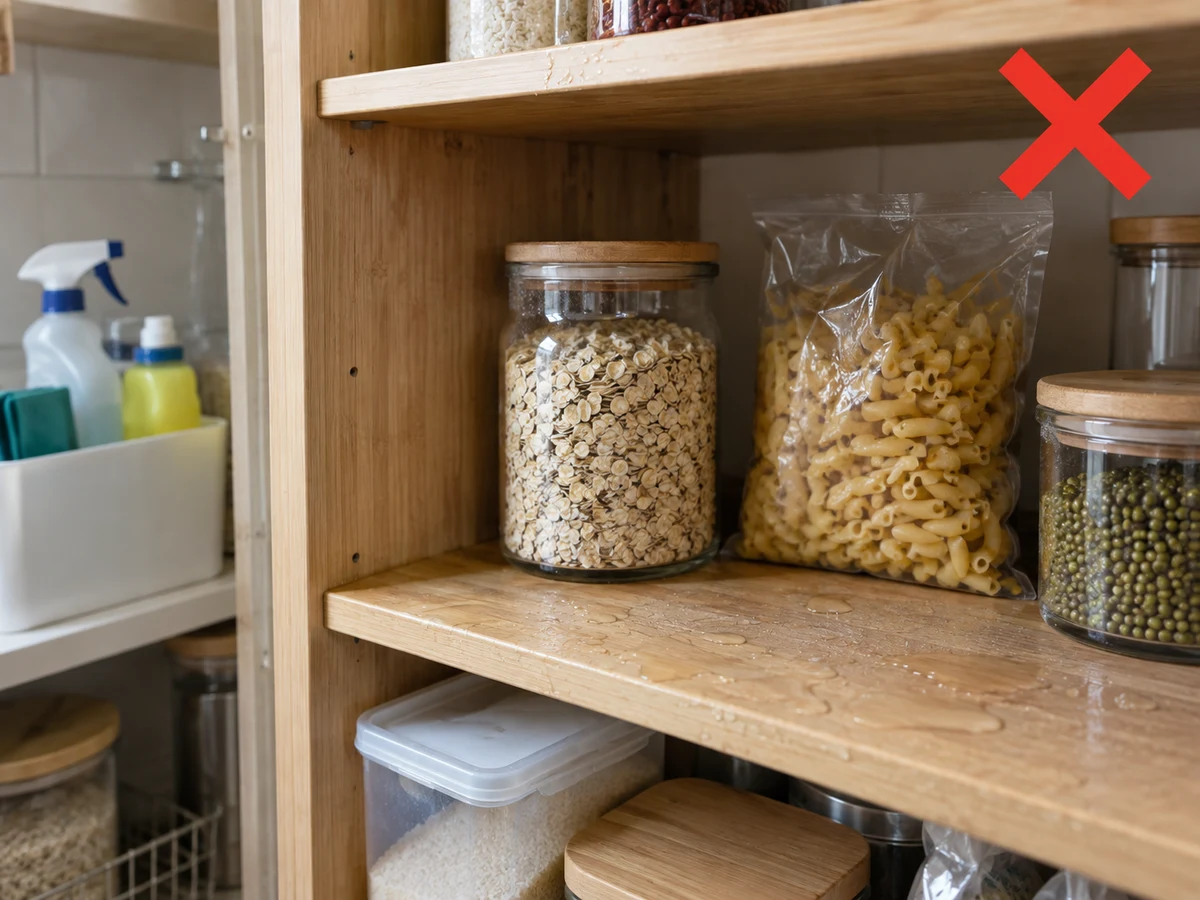
Returning food to damp shelves
✓ Correct actionRemove crumbs, clean according to the shelf material and dry completely; store food separately from cleaning products.
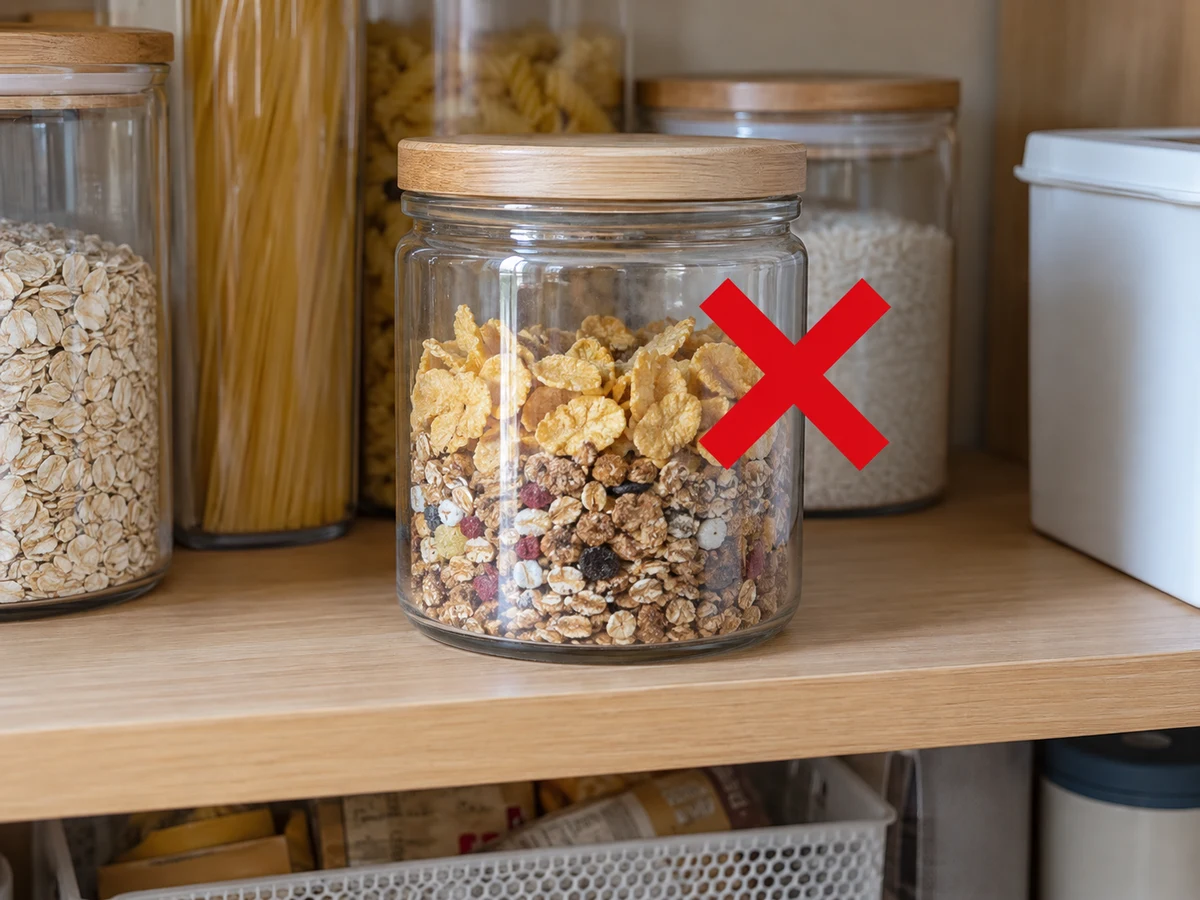
Mixing new and old food in one jar
✓ Correct actionReturn intact food to a cool dry place with earlier dates in front; keep names, allergens, batch details and dates when decanting.
Practical tips
Tips for helpers
- Work one shelf at a time.
- Record opening dates separately.
Tips for employers
- Decide how questionable food is handled.
- Specify packaging information to retain when decanting.
Completion checklist
Checked 0 / 4