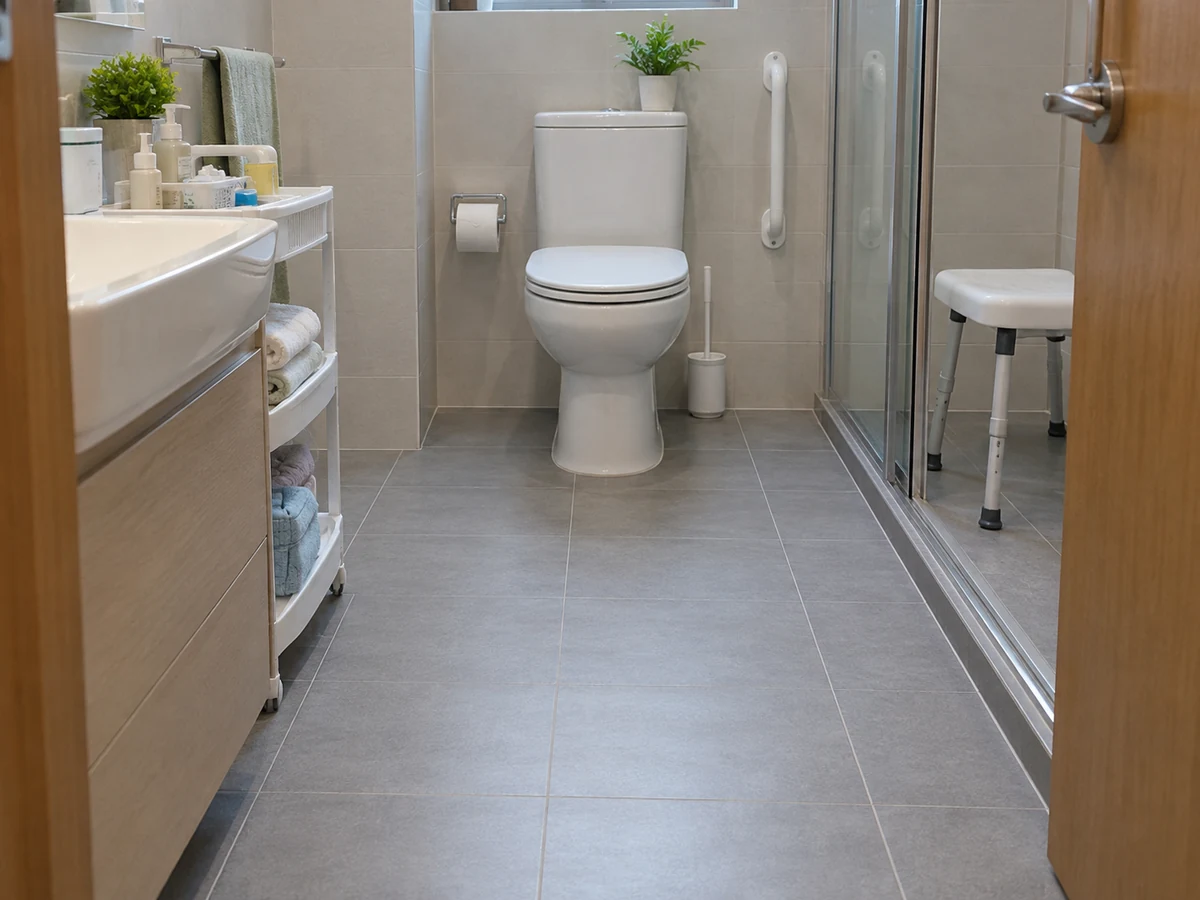
Elderly households
Organise an Elderly Person’s Bathroom Supplies and Keep the Route Safe
Keep daily wash items at the older person’s usual reach and the route from door to basin dry.
Overview
This guide covers organise an elderly person’s bathroom supplies and keep the route safe. Work slowly, follow the item label or maker’s instructions, and stop for damage or a condition outside ordinary household care.
Tools needed
- Approved basket or tray
- Dry microfibre cloth
- Absorbent floor cloth
- Label
Cleaning steps
Confirm approved locations
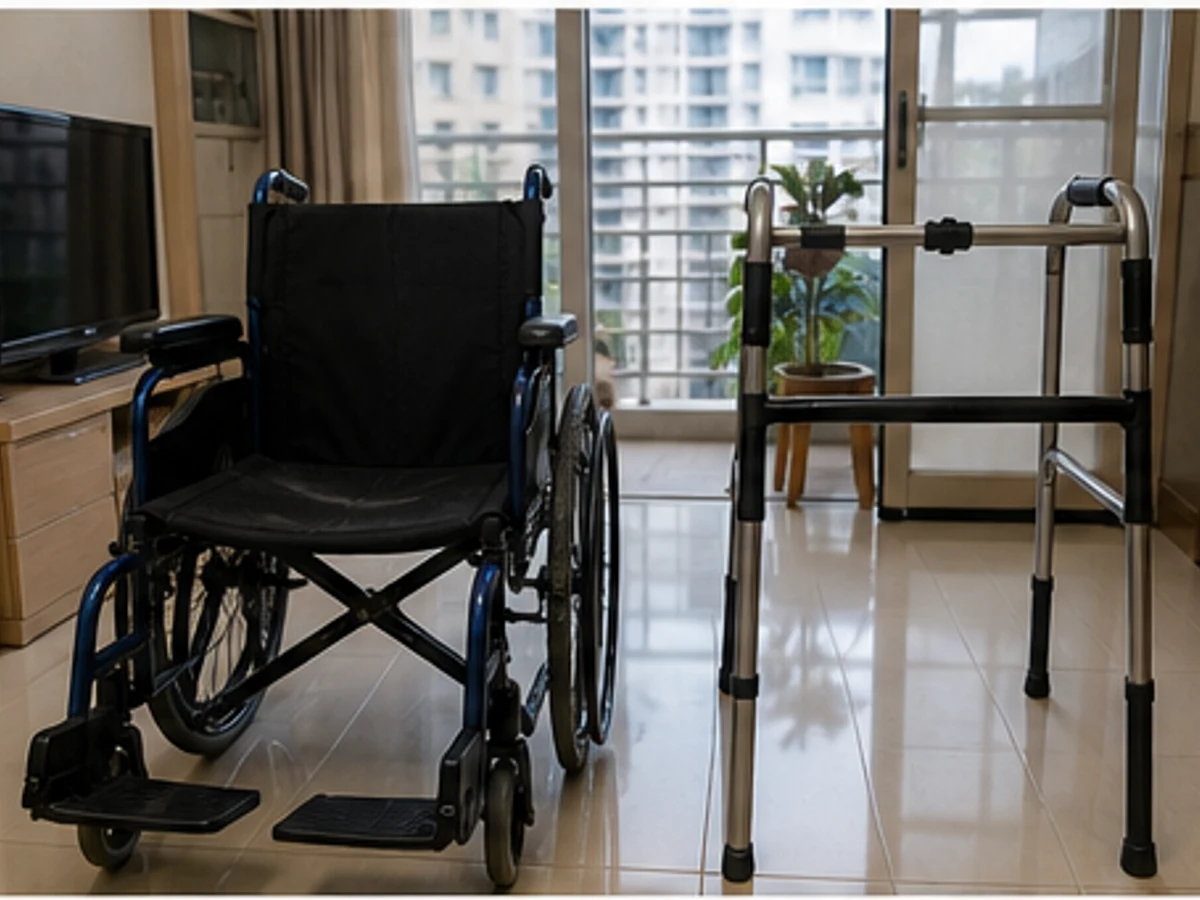
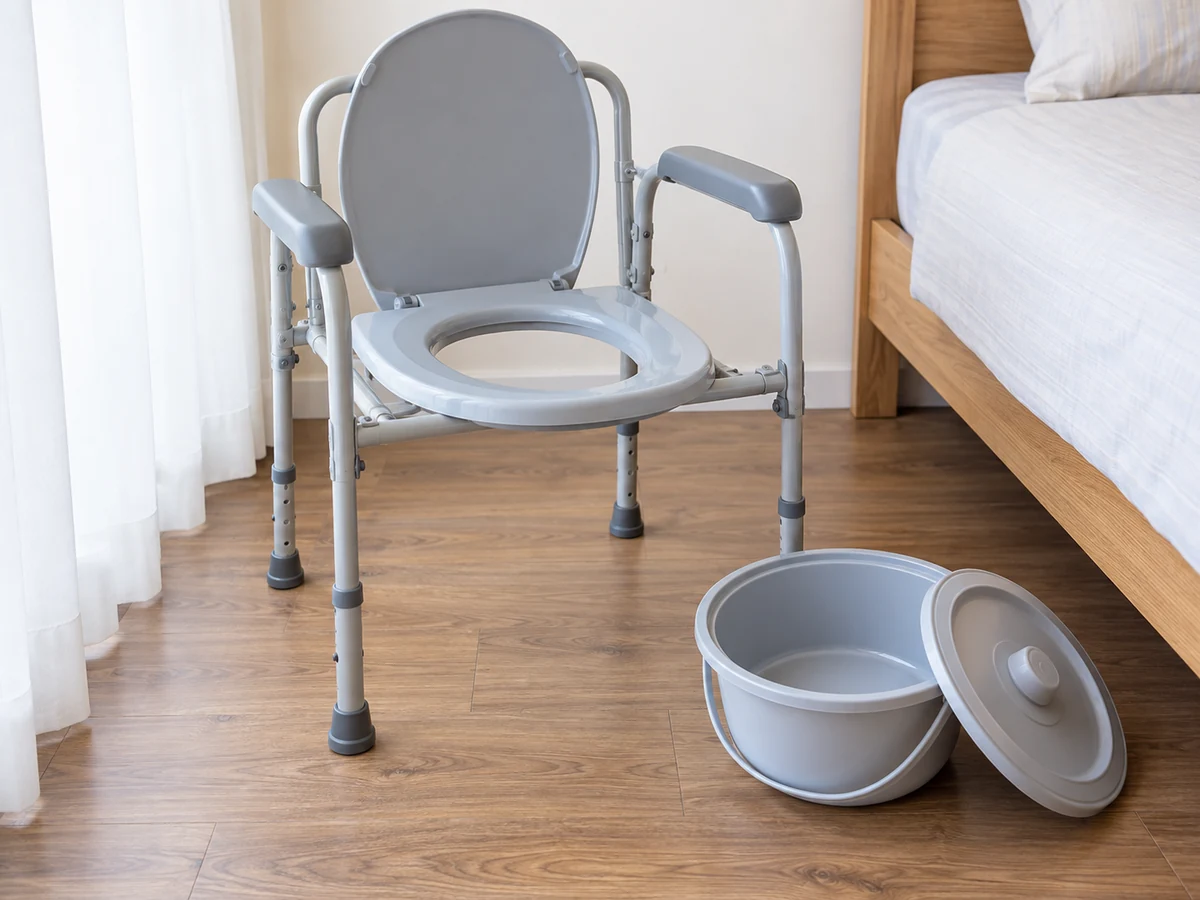
Ask which toiletries may move; leave medicines, mobility aids and prescribed equipment exactly where the owner has approved.
Clear the transfer route
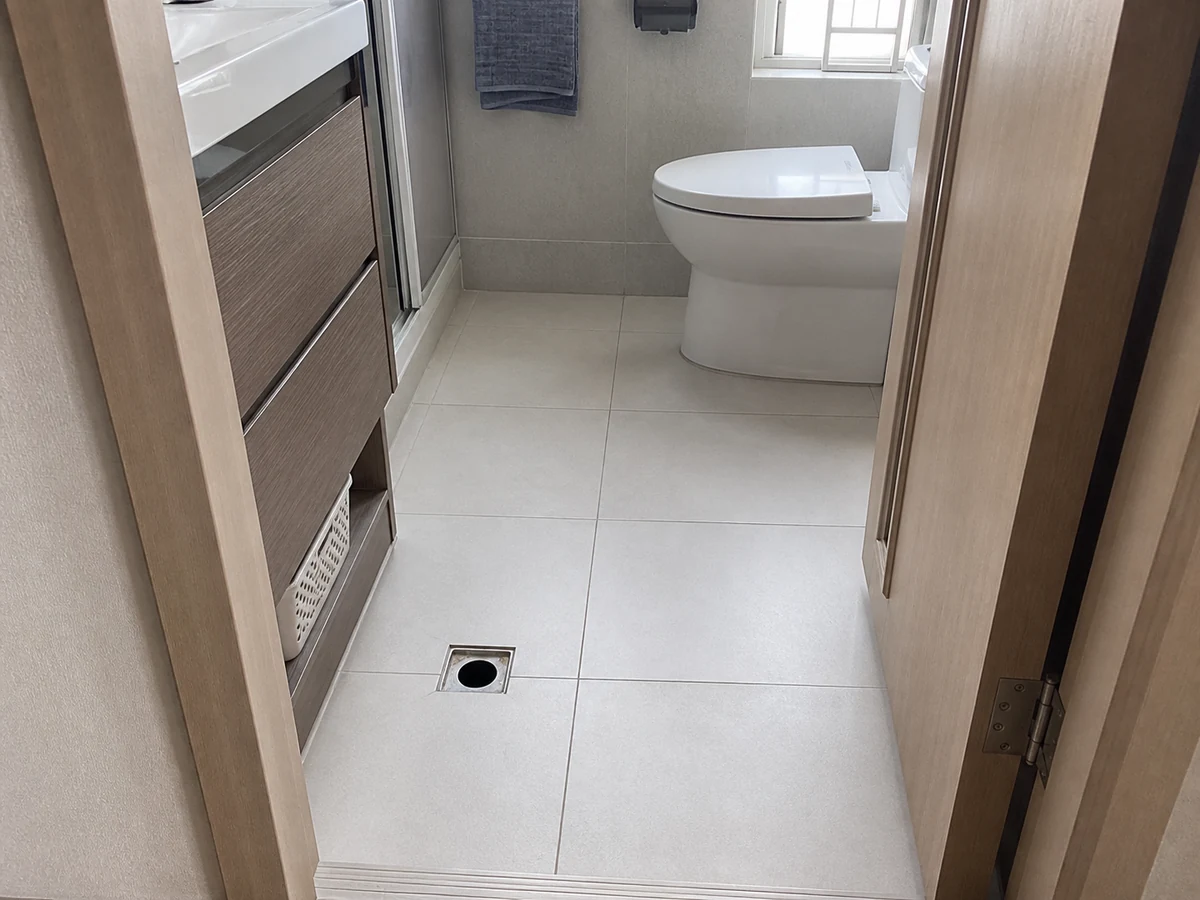
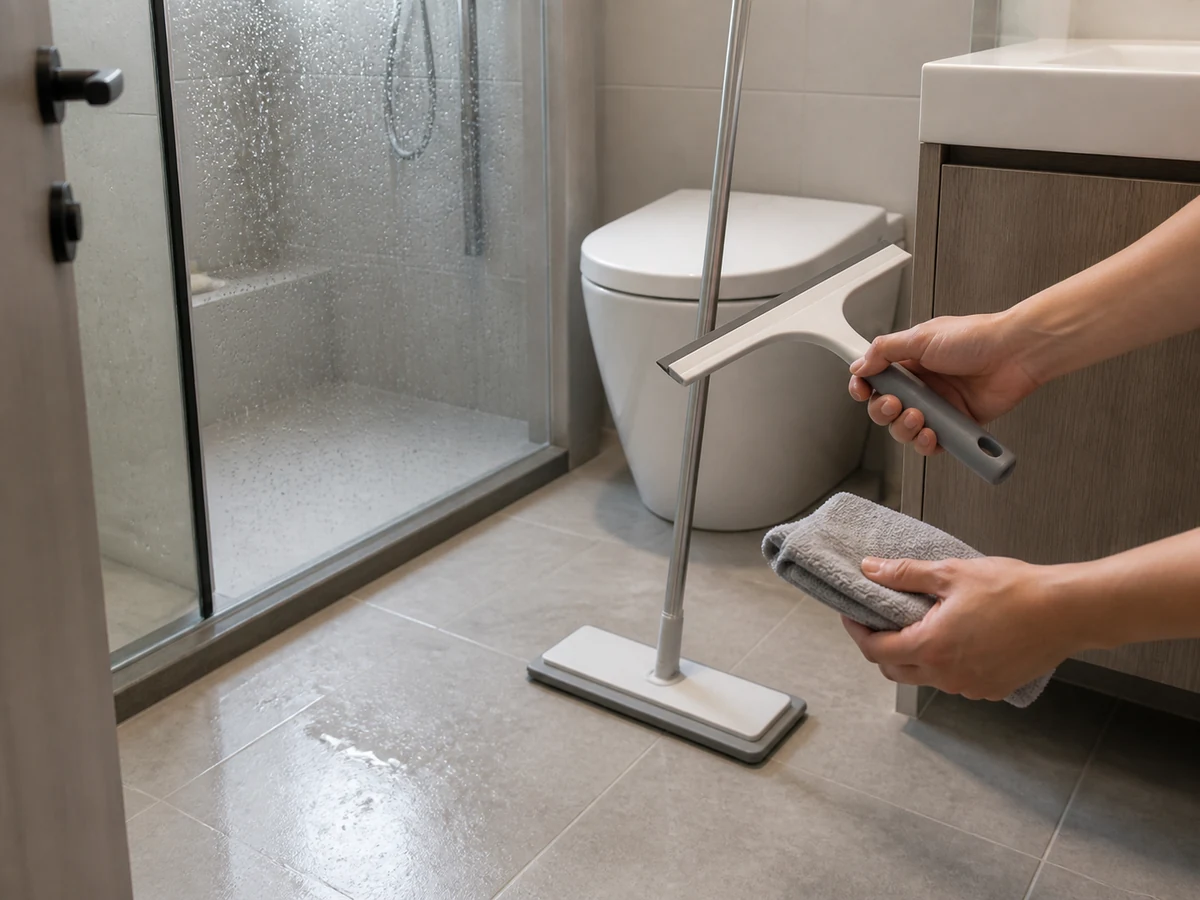
Dry the floor first, then return daily supplies to a reachable, labelled shelf; keep the door-to-toilet route and grab-rail area empty.
Set reachable supplies
Place only stable, closed items at waist-to-shoulder reach; keep wet items in a tray rather than on the floor.
Finish with a hazard check
Check light access, mat edges and floor dryness; report a loose rail, repeated water, poor lighting or a changed care need.
Common mistakes
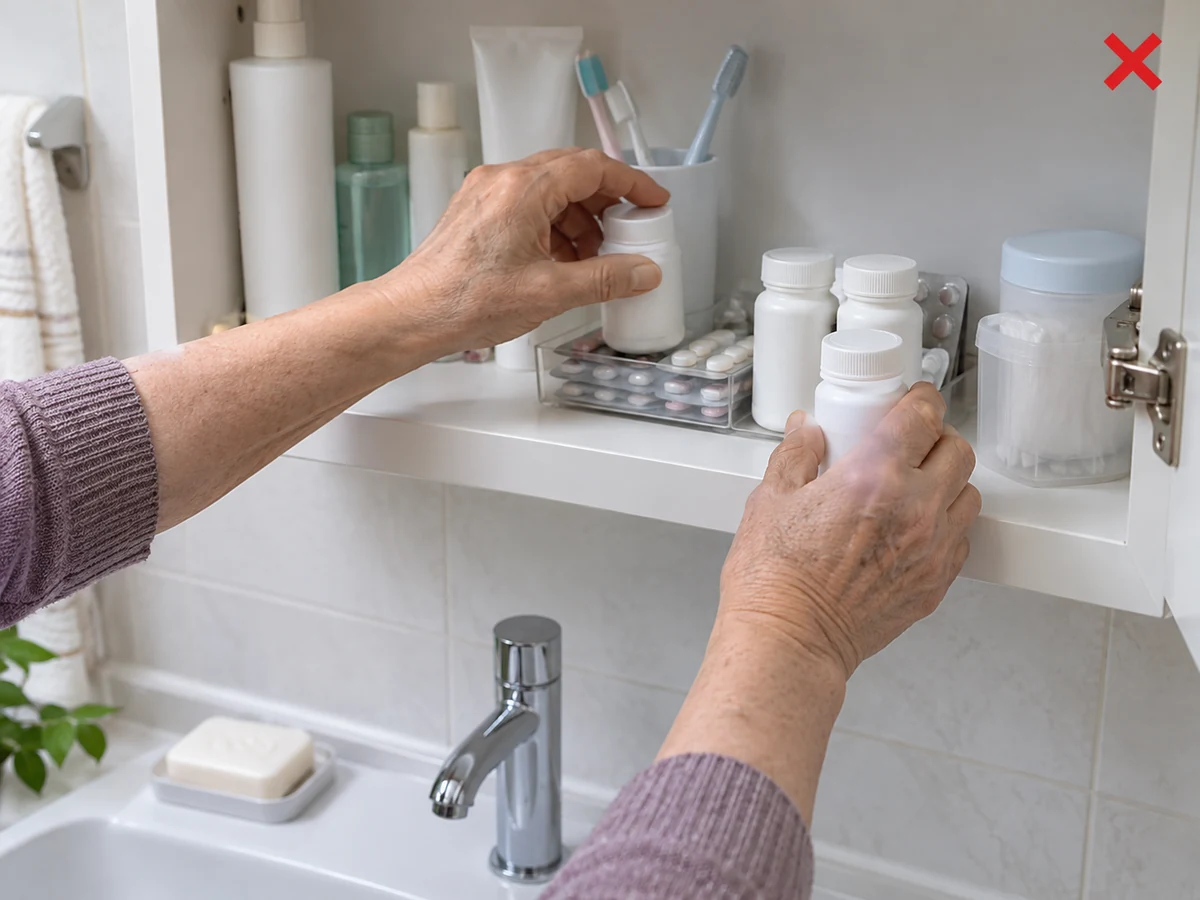
Moving medicines to “tidy” the shelf
✓ Correct actionAsk the employer before moving medicines or prescribed equipment.
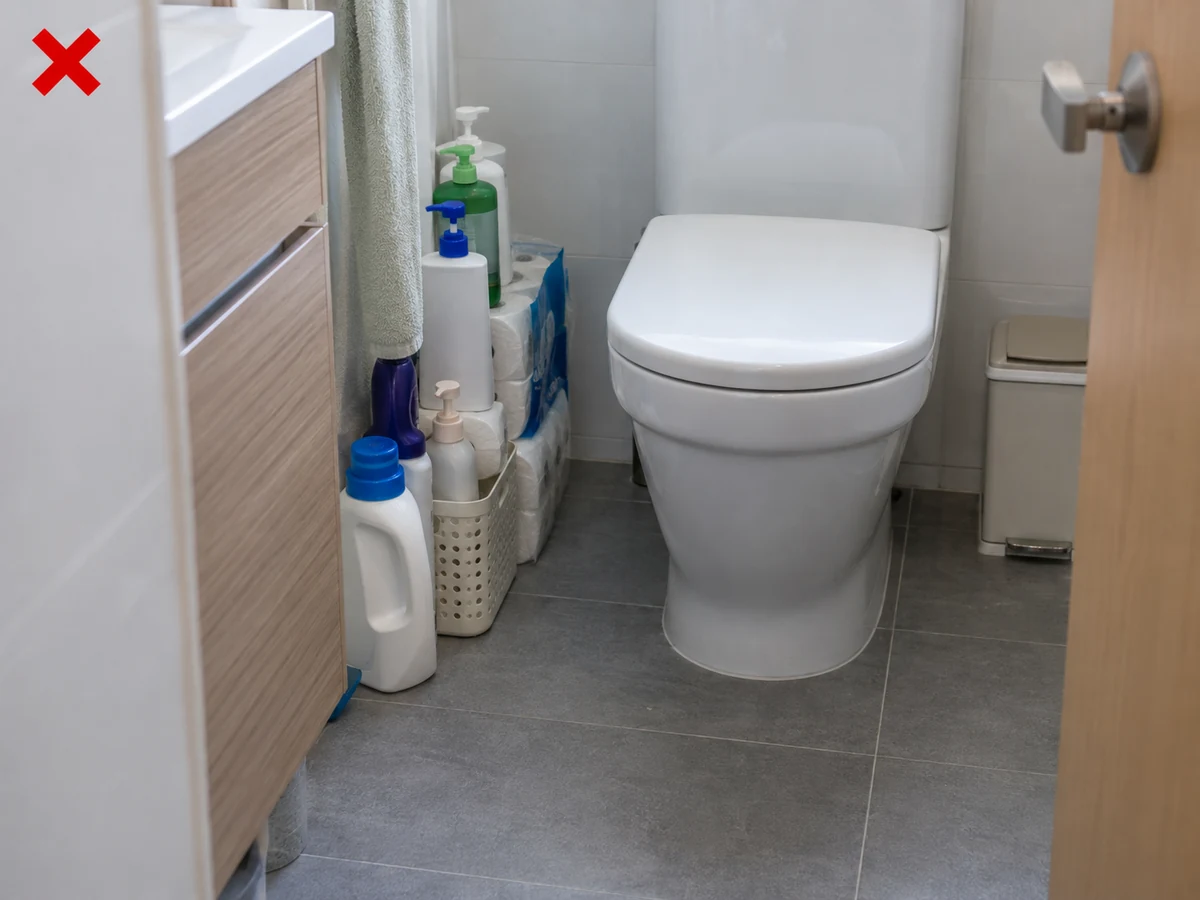
Stacking bottles beside the toilet route
✓ Correct actionUse one approved shelf or tray and leave the transfer path clear.
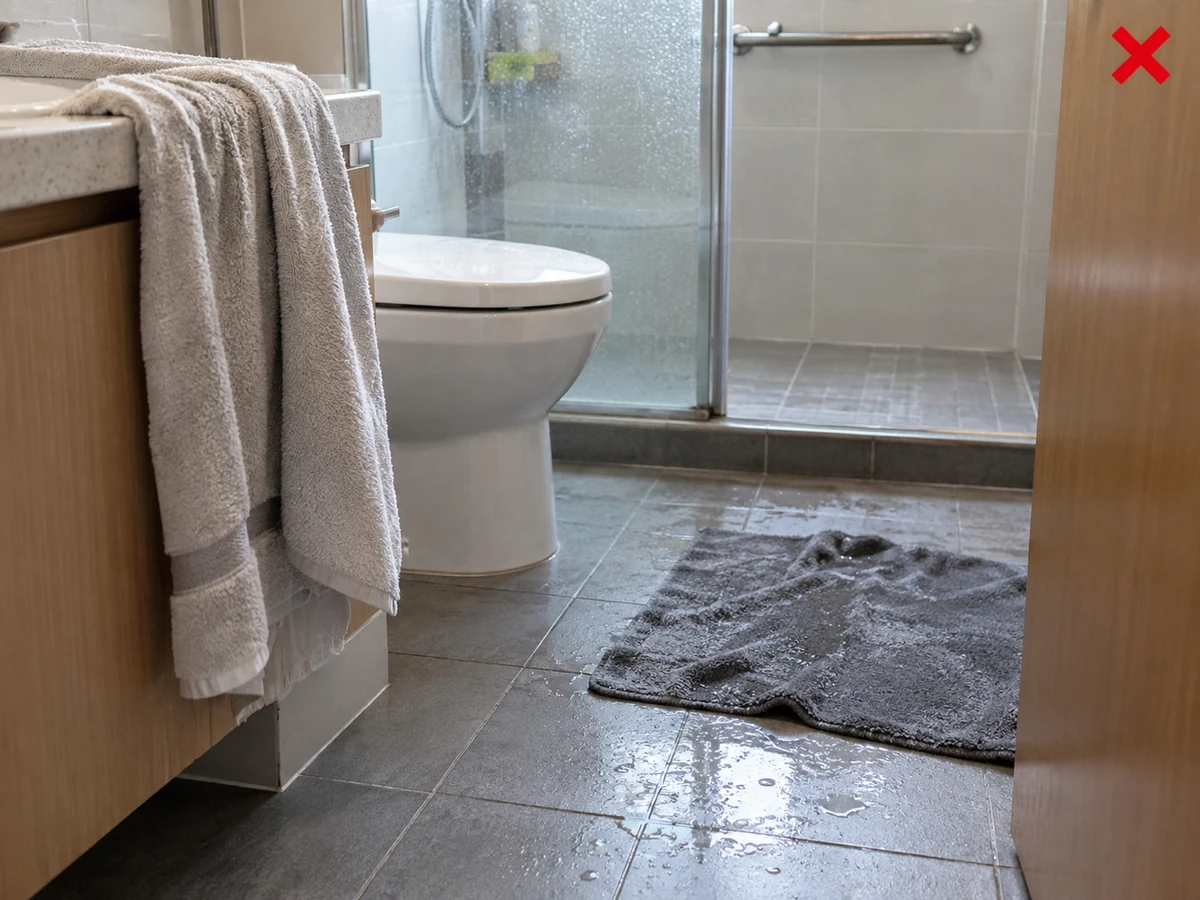
Leaving damp towels or a wet mat
✓ Correct actionHang towels and return a mat only when both sides and the floor are dry.
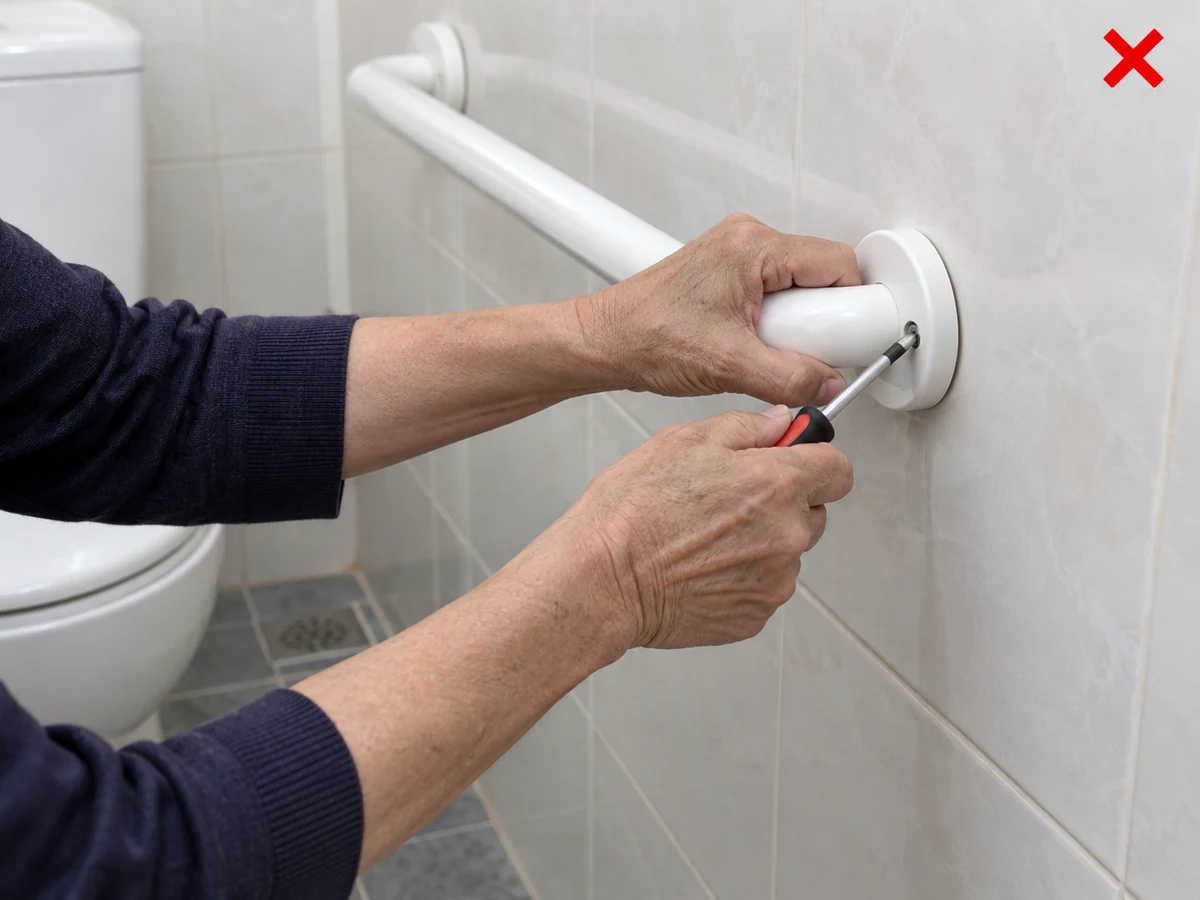
Trying to fix a rail or mobility aid
✓ Correct actionKeep it in place, stop using a loose item and report it.
Practical tips
Tips for helpers
- Group approved toiletries at the person’s normal reach.
- Walk door-to-basin-toilet, remove authorised loose items and dry splashes.
Tips for employers
- State what may move and what must remain untouched.
- Arrange changes to storage, lighting or support equipment separately.
Completion checklist
Checked 0 / 4