
Critical safety ruleElectrical safety
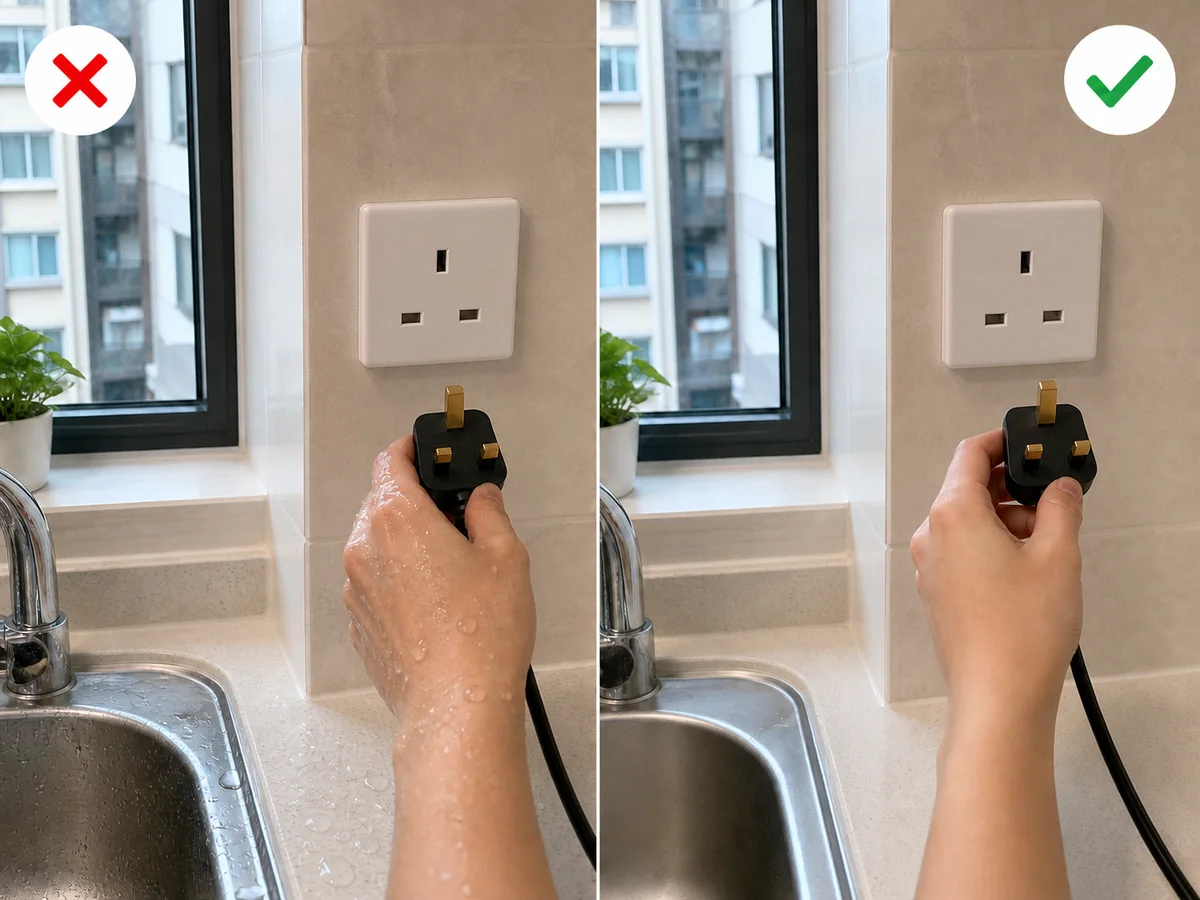
Never touch plugs or sockets with wet hands
Dry your hands first before plugging in, unplugging, or using a switch.
View safety lesson →Browse collection
Use electricity with dry hands, keep water away, use extensions properly, and protect every cord.
Dry your hands first before plugging in, unplugging, or using a switch.
View safety lesson →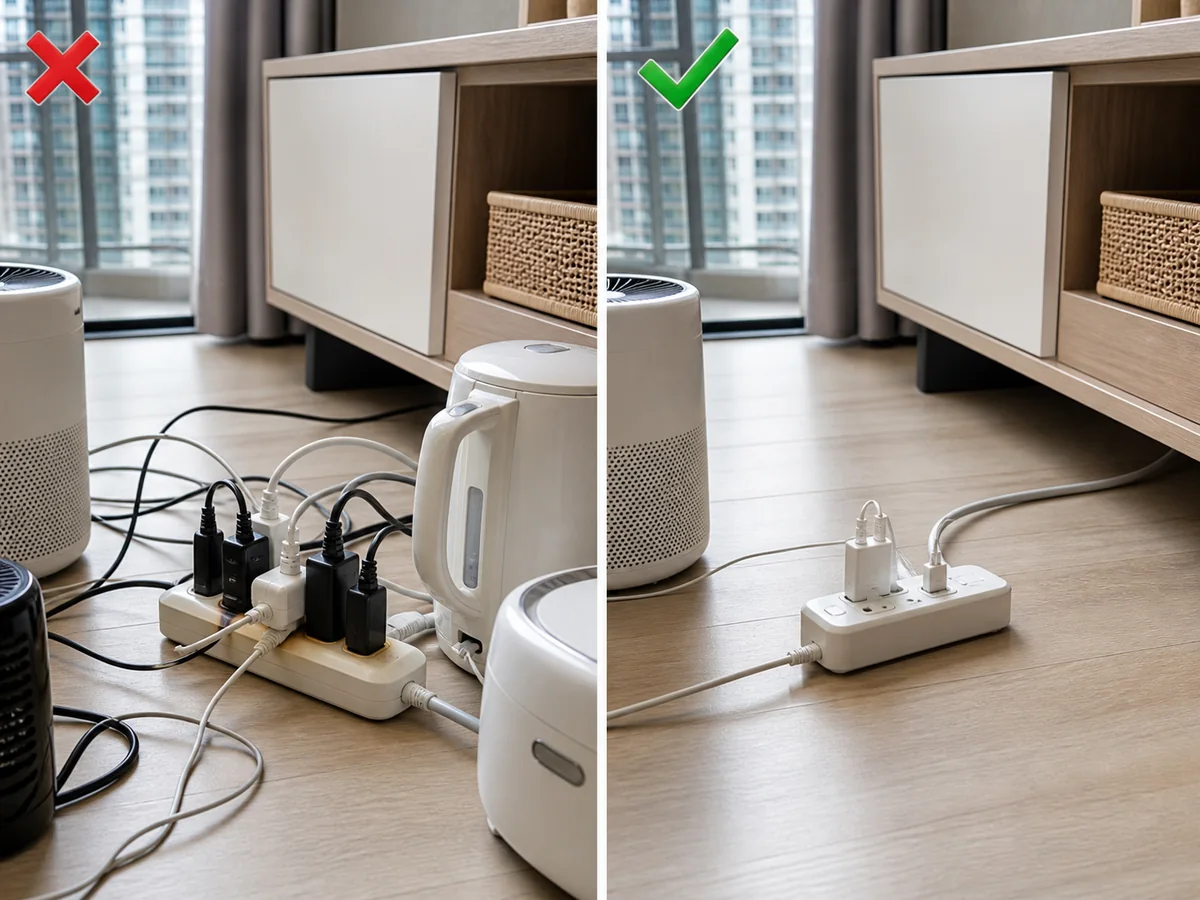
Connect only one extension unit or adaptor to each wall socket; use a separate fixed socket for high-power appliances.
View safety lesson →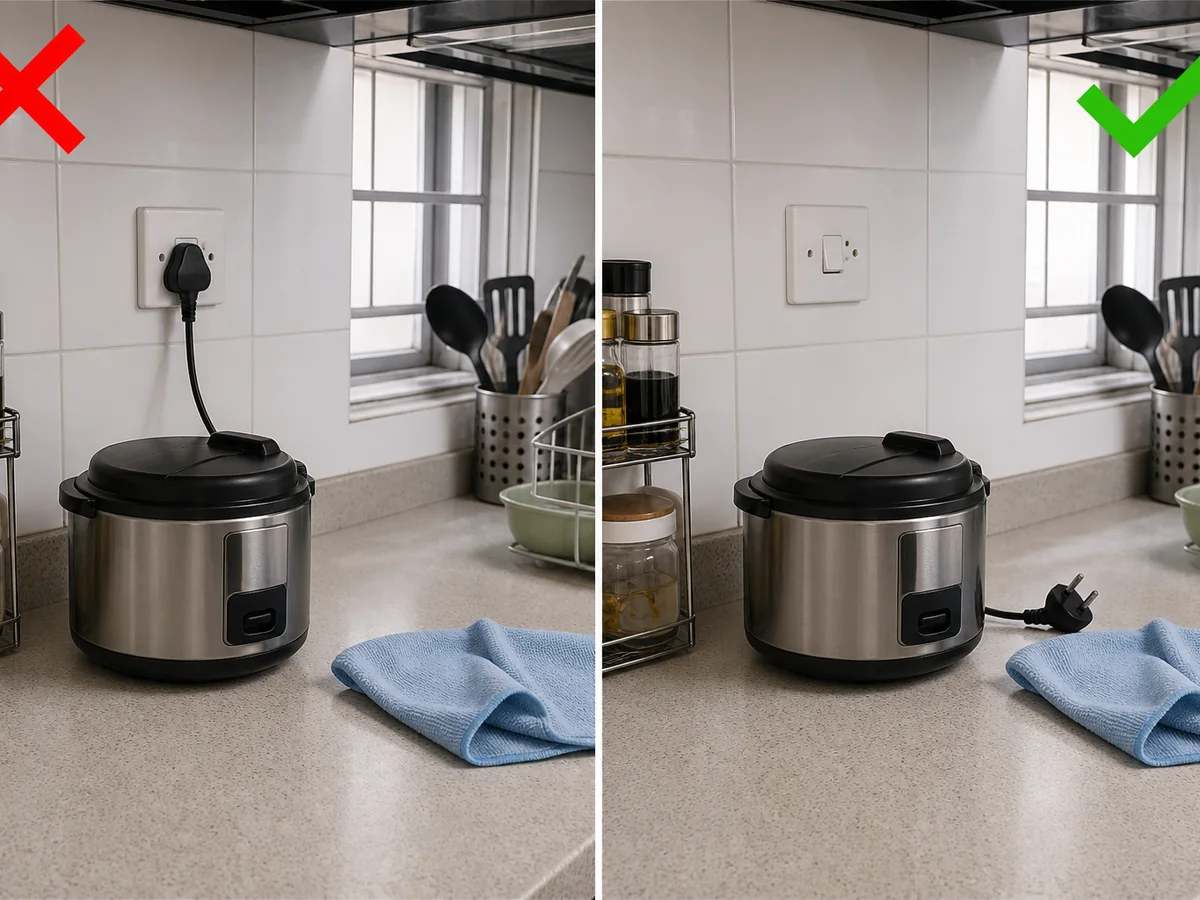
Switch off and unplug before wiping, washing, or removing movable parts.
View safety lesson →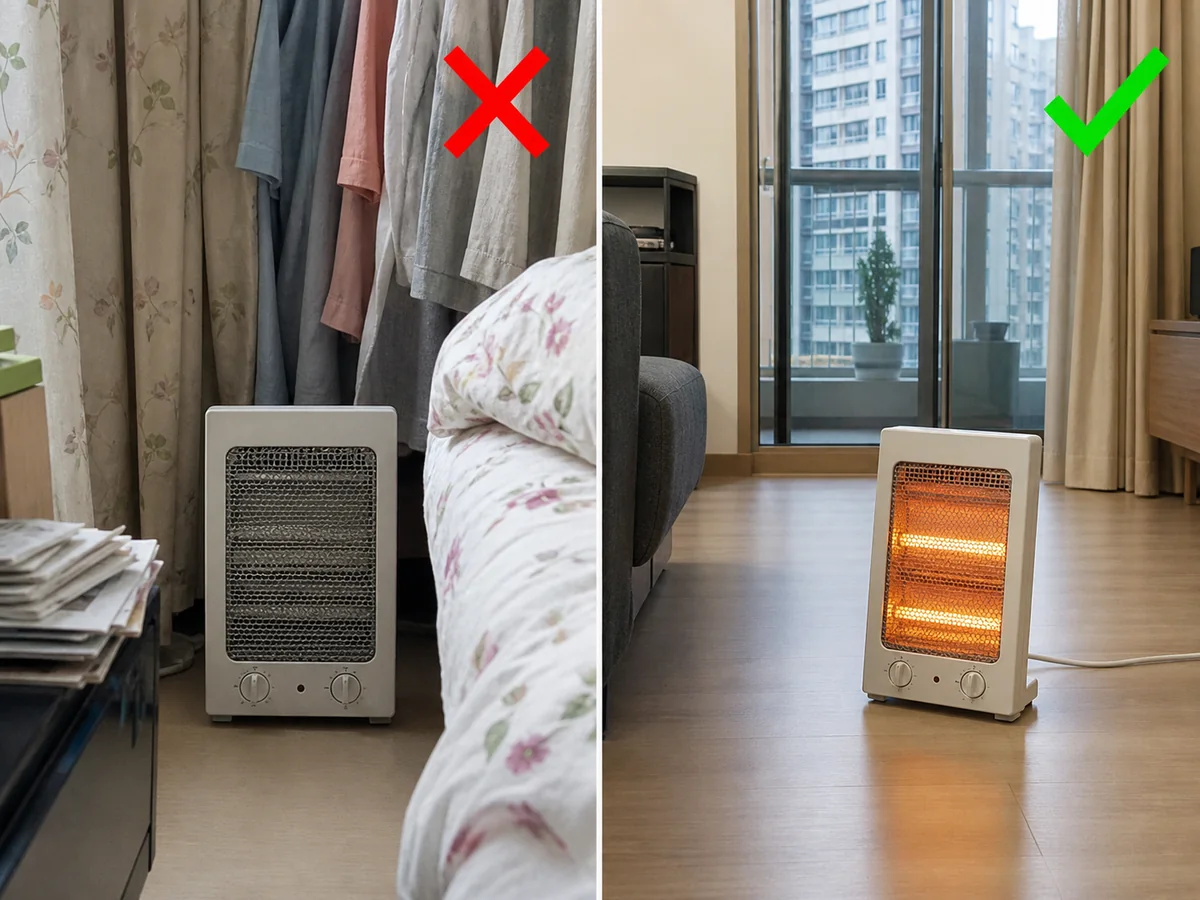
Follow the heater instructions for clearance and keep bedding, clothes, curtains, paper, and other combustibles away.
View safety lesson →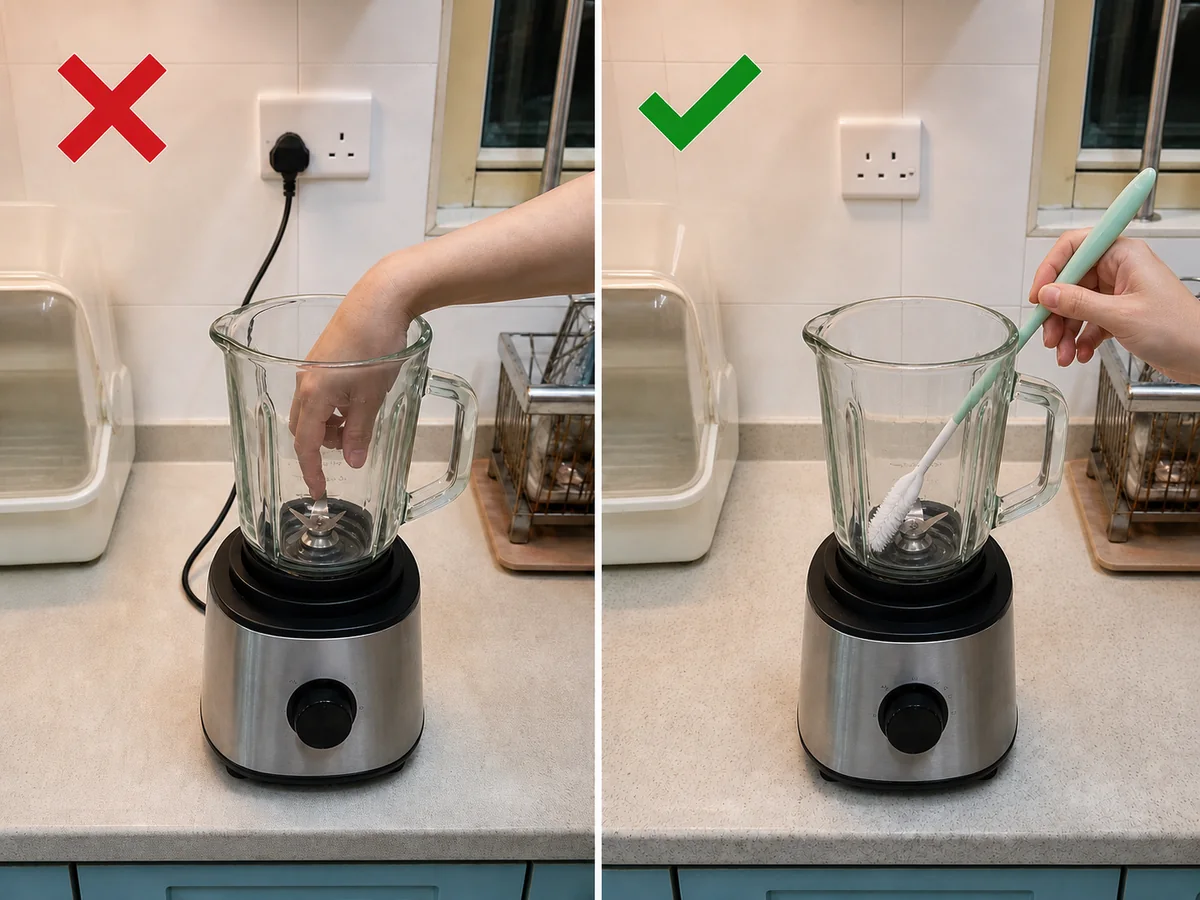
Switch off and unplug, wait for the blades to stop, then fit, remove, or clean them as instructed.
View safety lesson →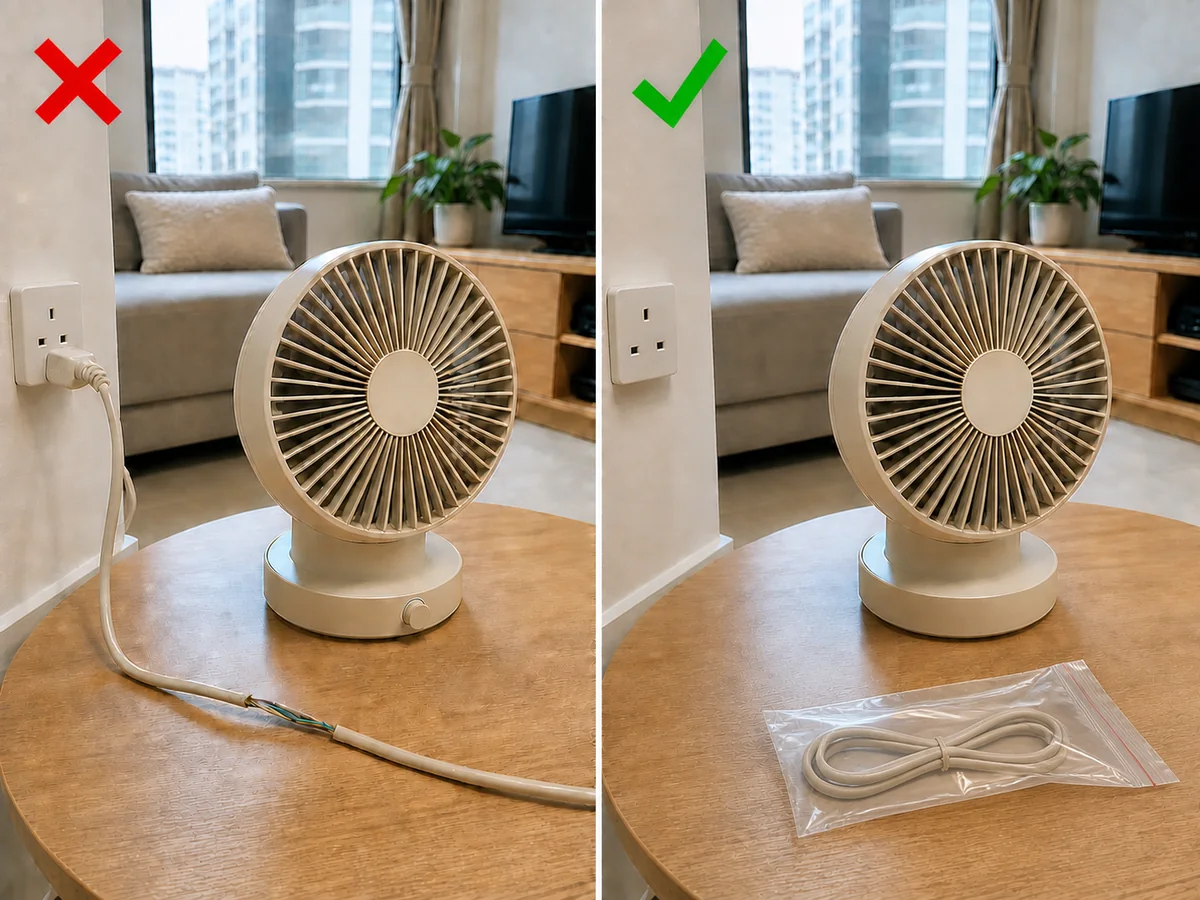
If a cord, plug, or casing is damaged, loose, discoloured, or charred, stop using it and have it checked by an experienced technician.
View safety lesson →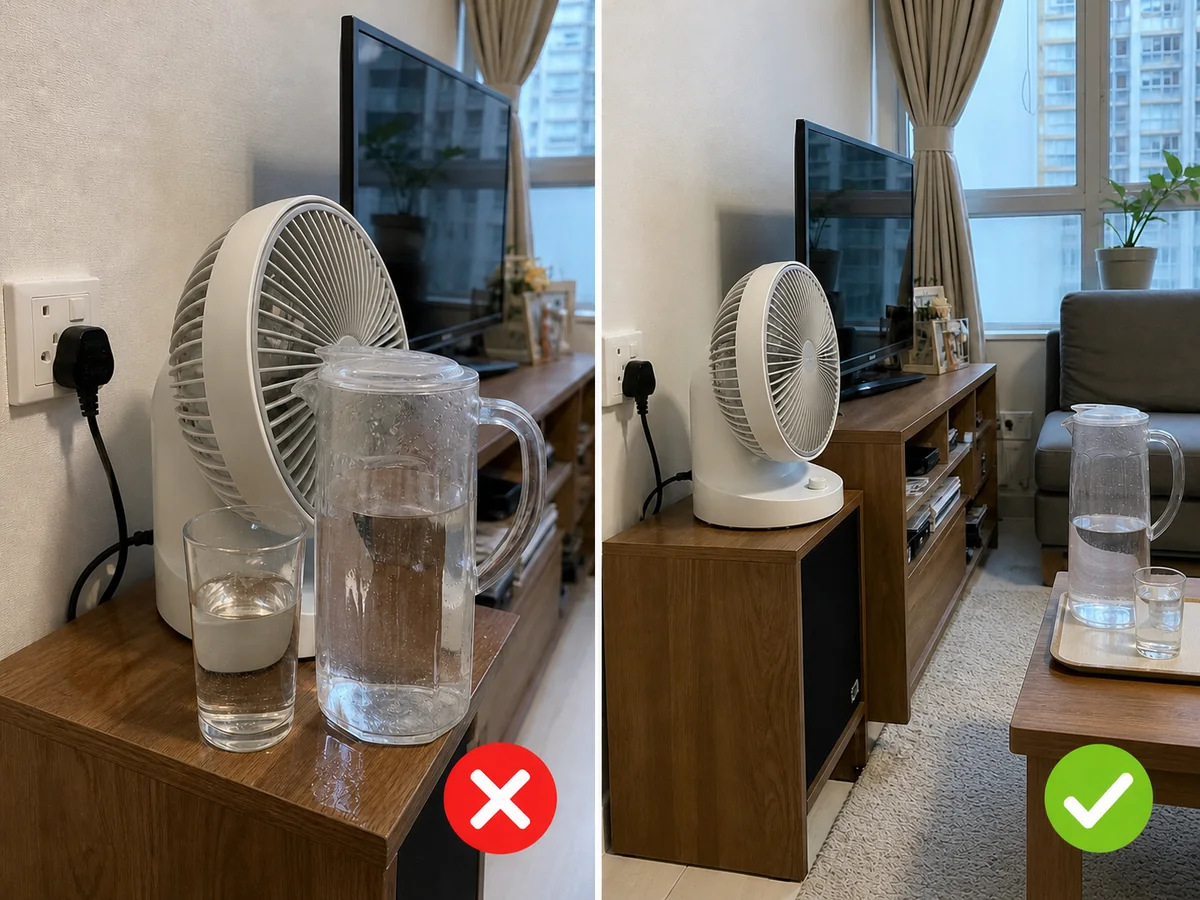
Never place cups, vases, basins, or wet items on or beside appliances, and keep appliances away from windows, balconies, and splash areas.
View safety lesson →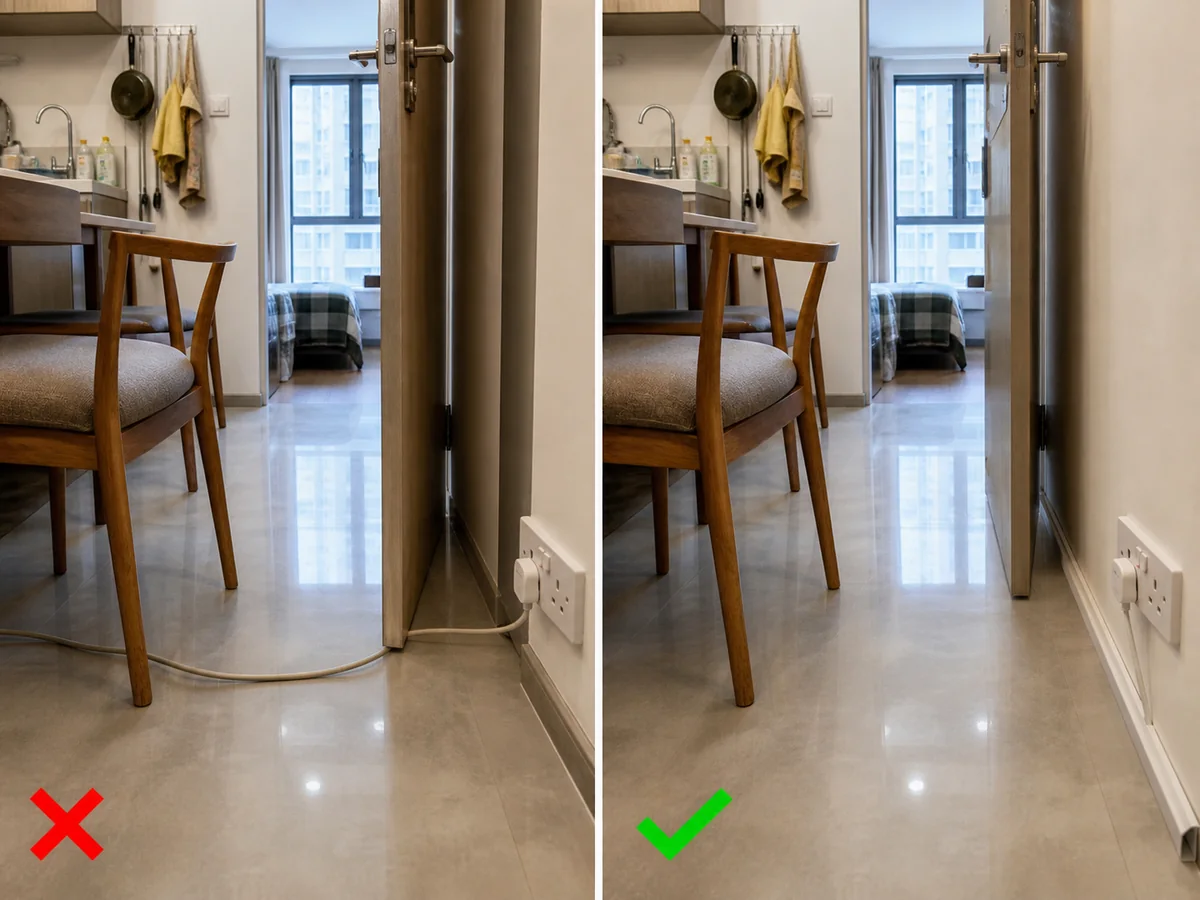
Do not run extension cords across walkways, through doors, under rugs or furniture, or where wheels, heavy items, or doors can crush them.
View safety lesson →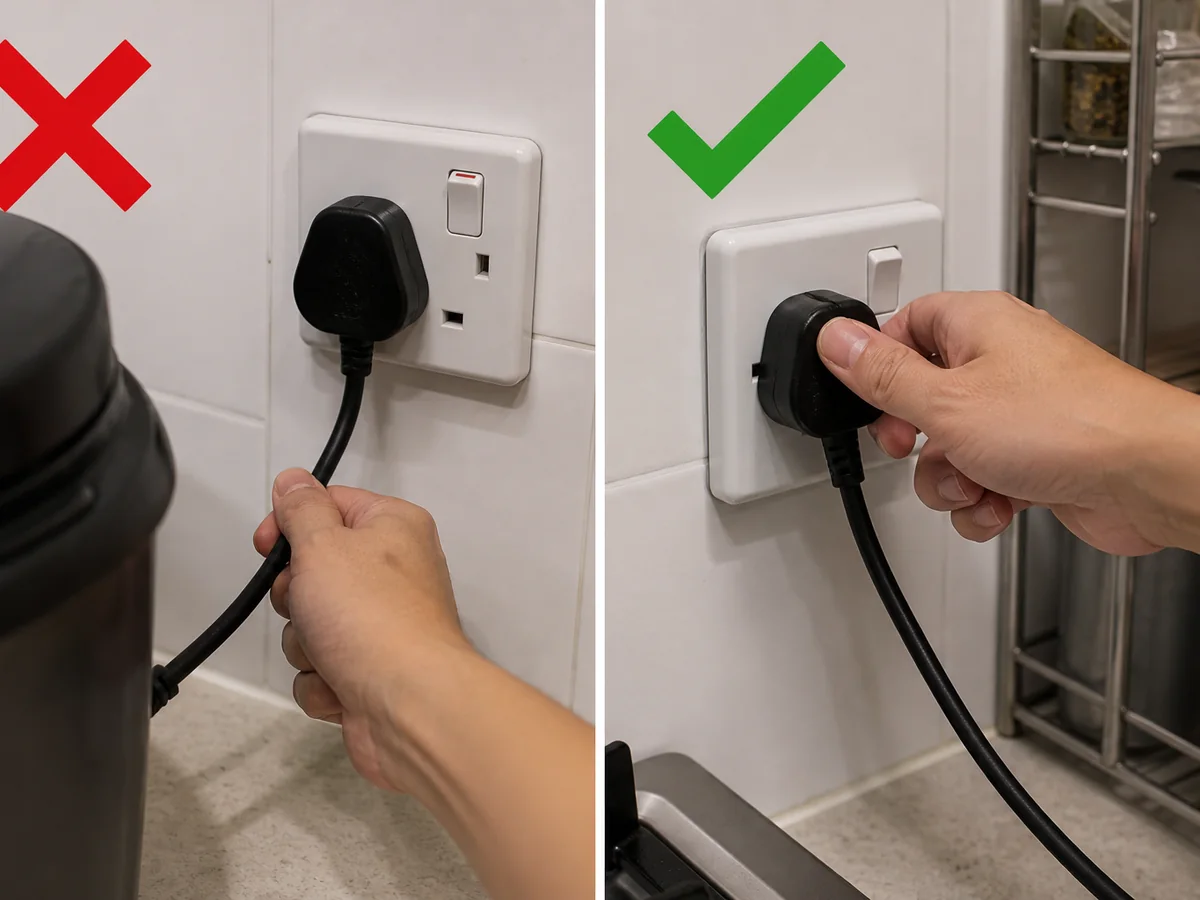
Switch the appliance off, then hold the plug body to unplug it; never pull the cord.
View safety lesson →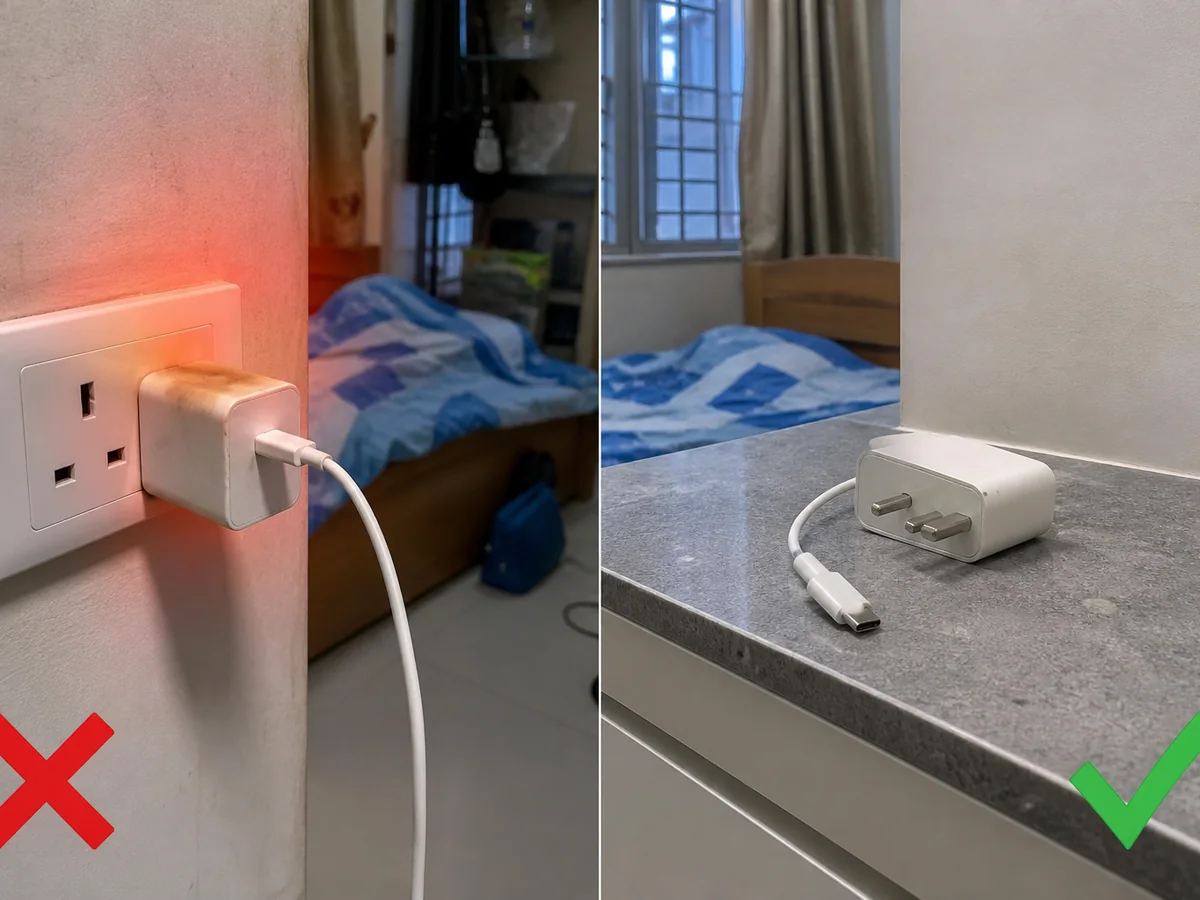
Unplug after charging; stop for excessive heat, discolouration, deformation, or a burning smell.
View safety lesson →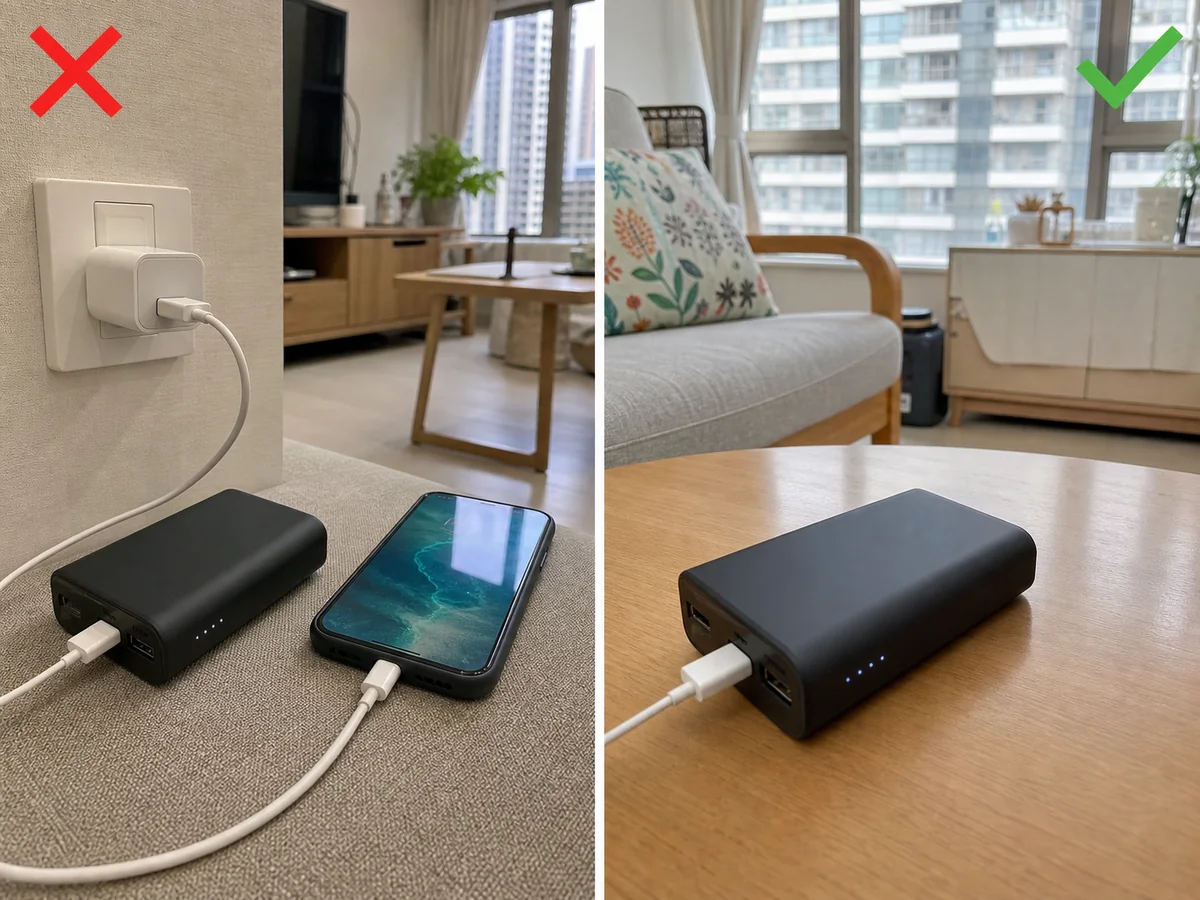
Do not use a power bank to charge a phone or another device while the power bank itself is charging.
View safety lesson →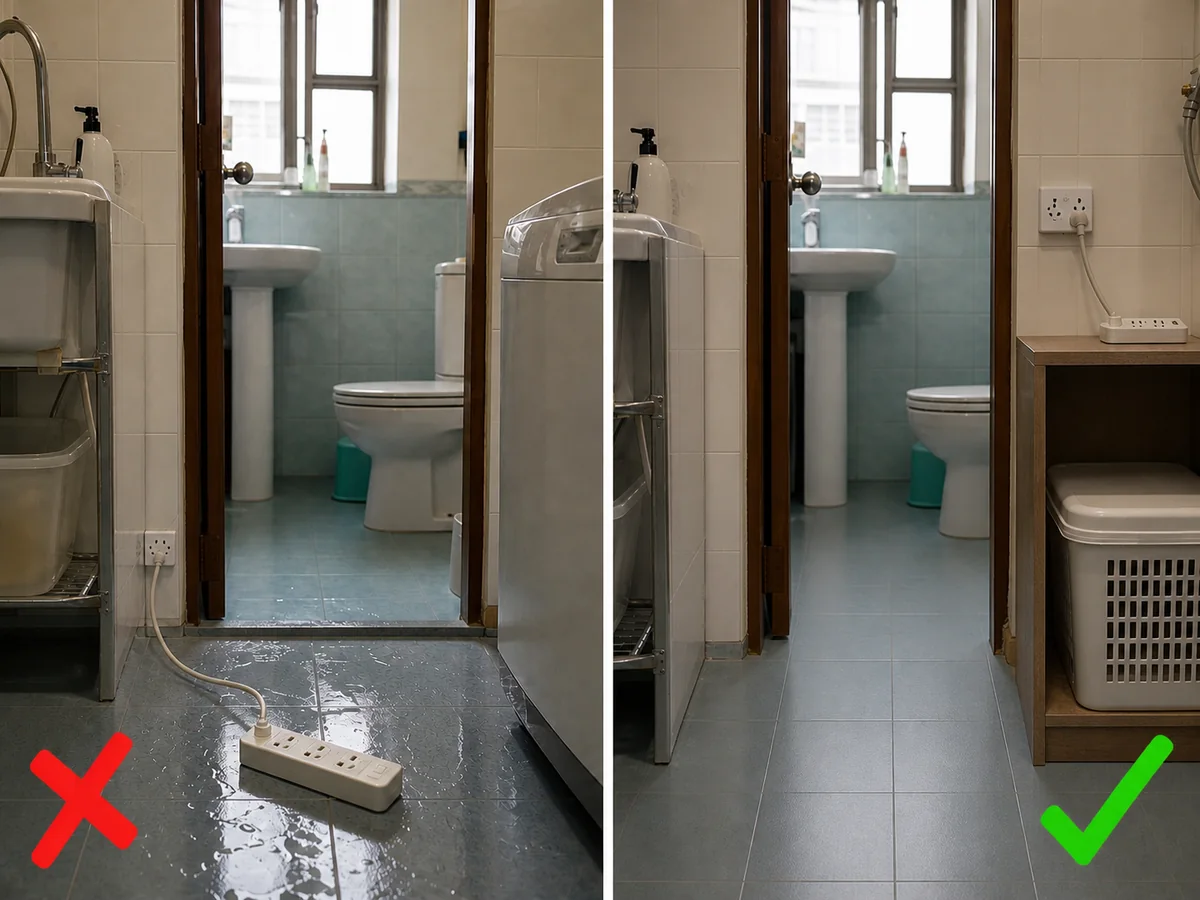
Use extension units and leads only in dry places, away from bathrooms, sinks, wet floors, and splashes.
View safety lesson →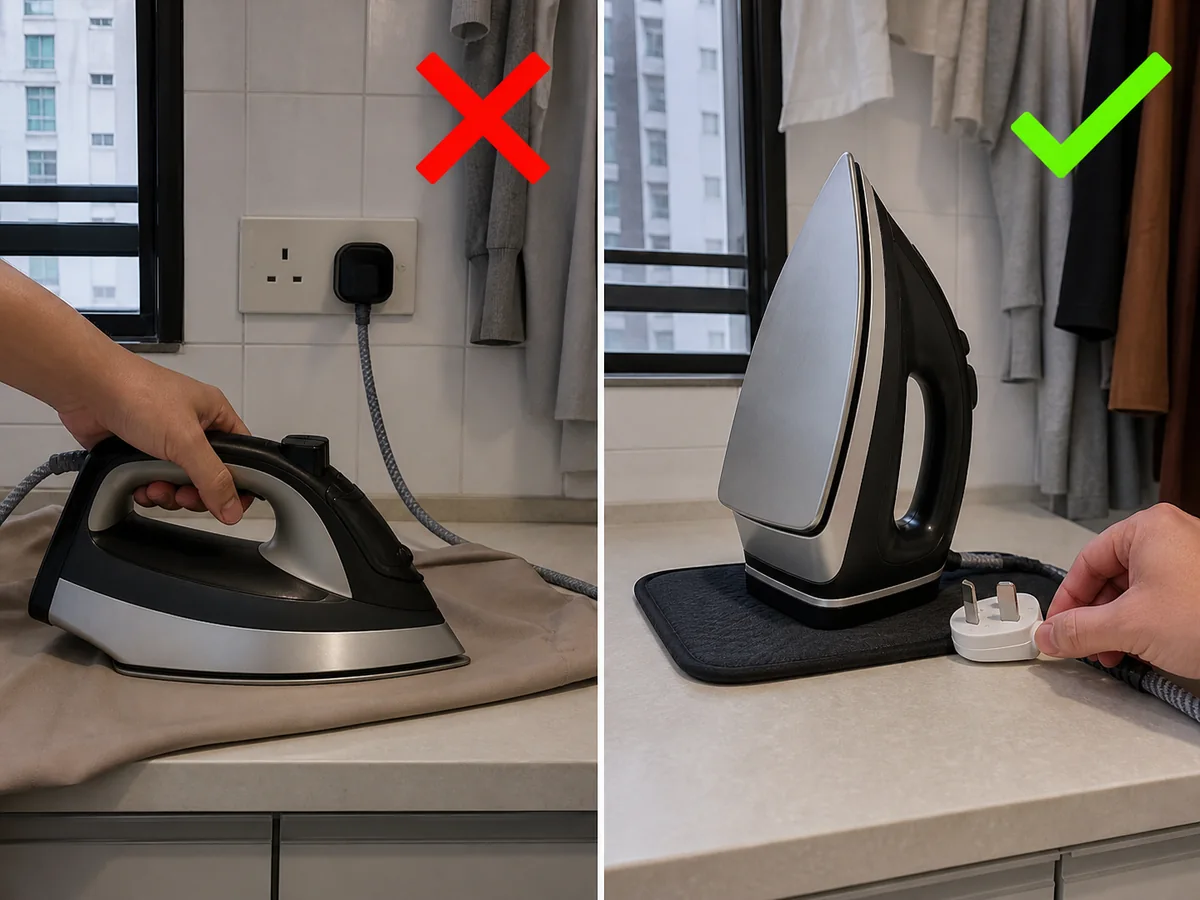
Switch off, unplug by the plug, and leave the iron upright on a stable heat-resistant surface out of children's reach until fully cool.
View safety lesson →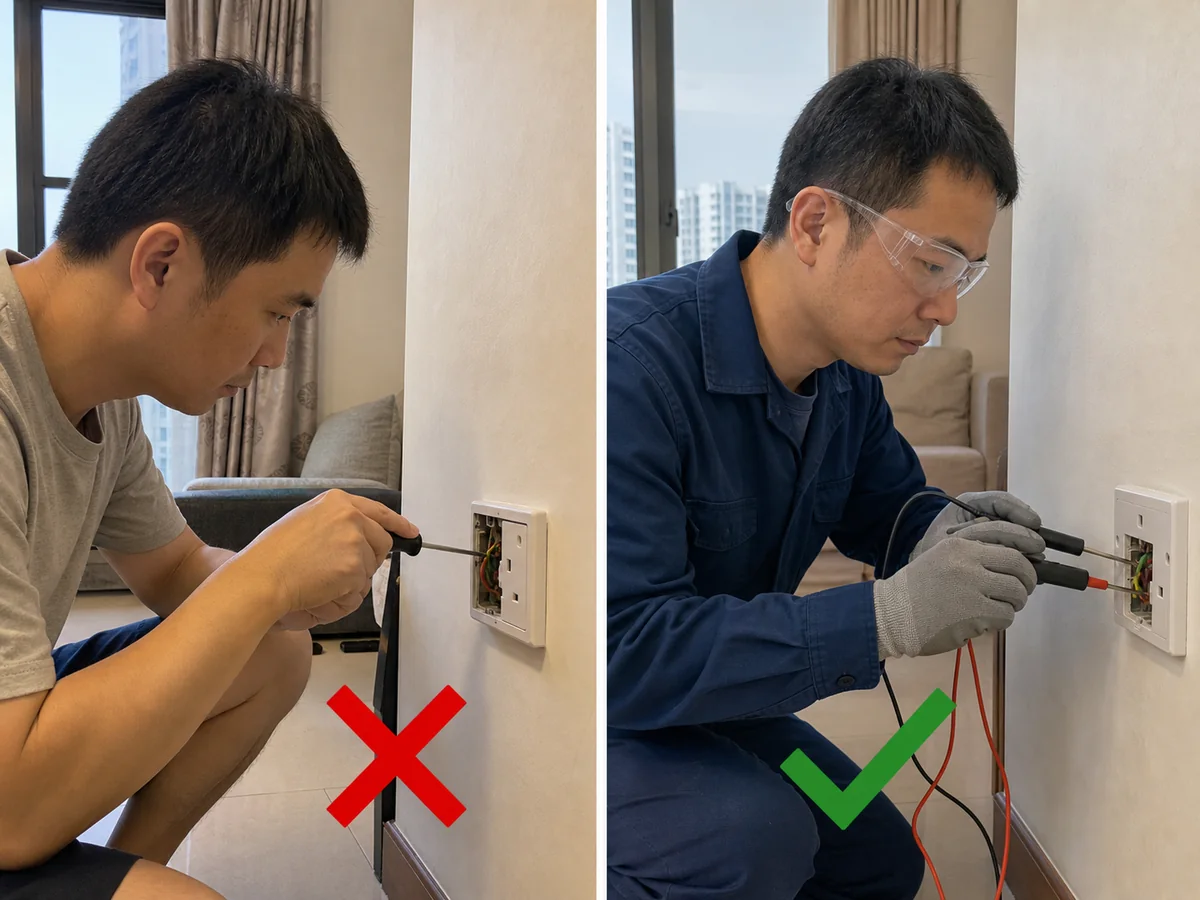
The employer must arrange a registered electrical contractor for fixed wiring, sockets, or distribution boards; a helper must not open or repair them.
View safety lesson →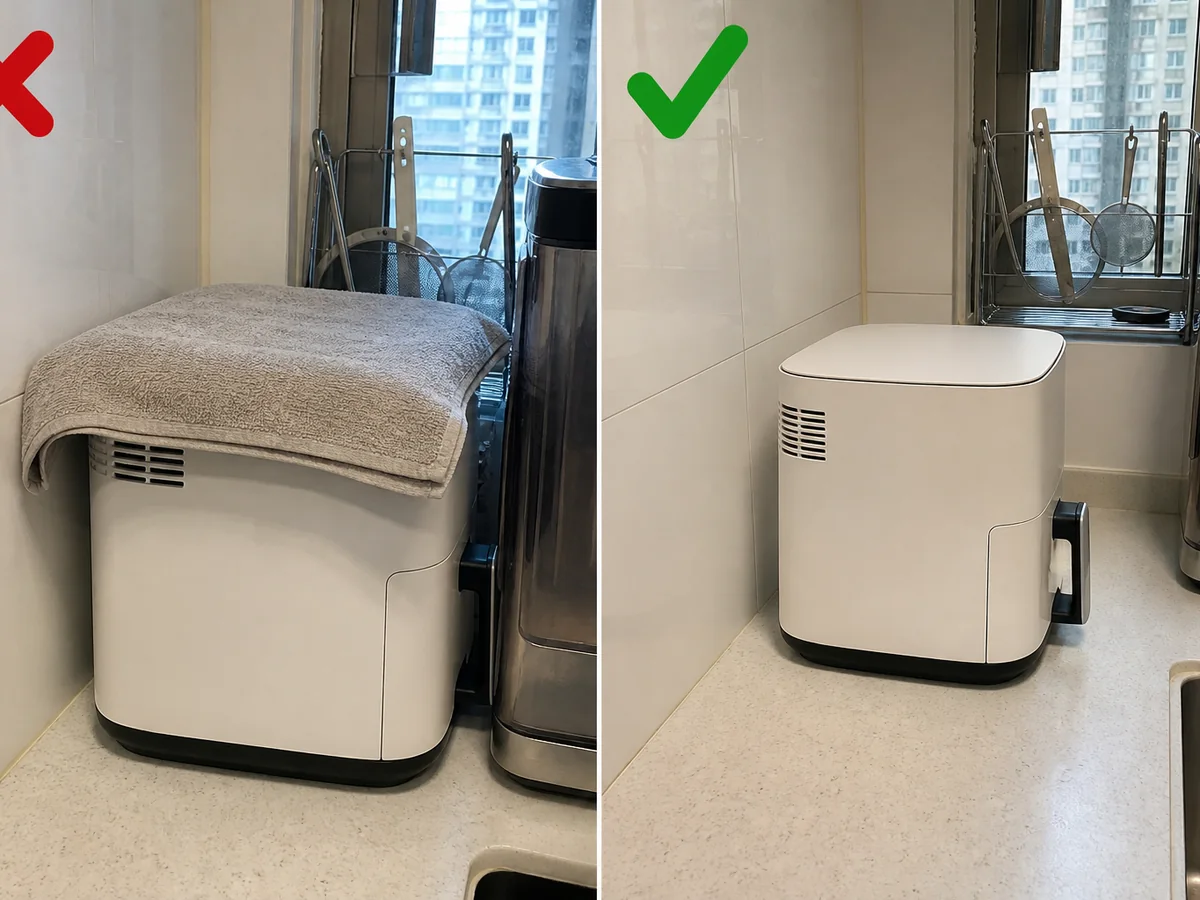
Leave the space required by the manual and never cover air inlets or outlets.
View safety lesson →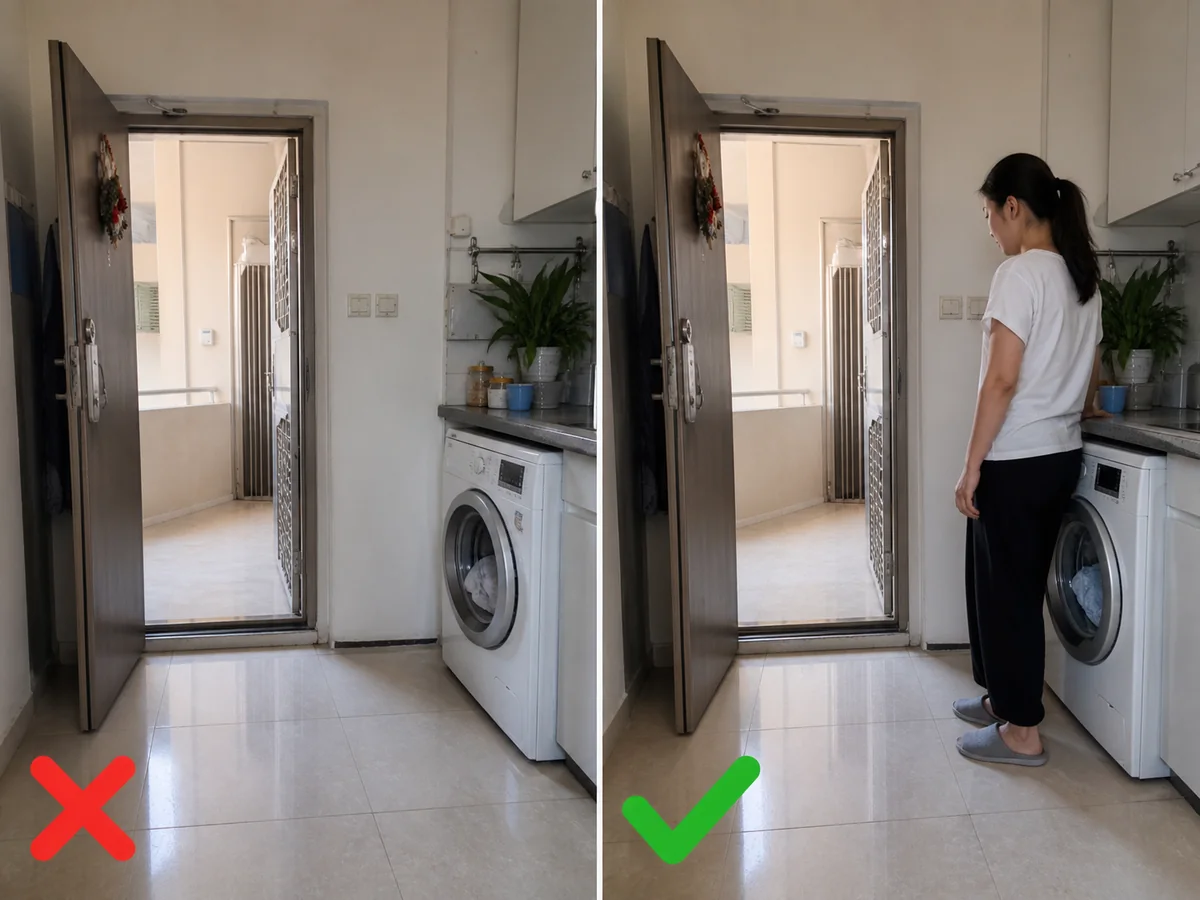
Stay home while it runs and watch for unusual noise, smell, vibration, or leaks; stop and unplug if anything is wrong.
View safety lesson →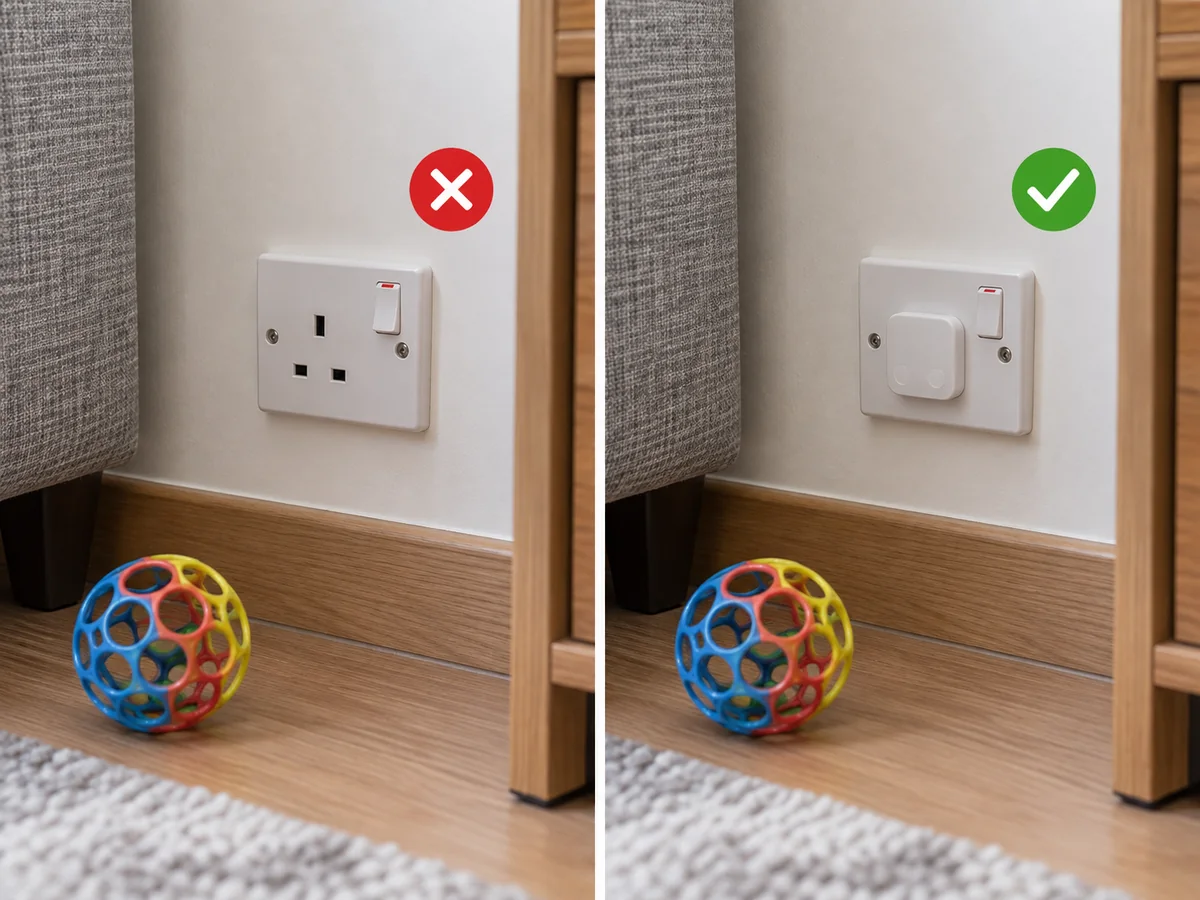
Fit suitable, secure childproof covers to unused sockets within a young child’s reach.
View safety lesson →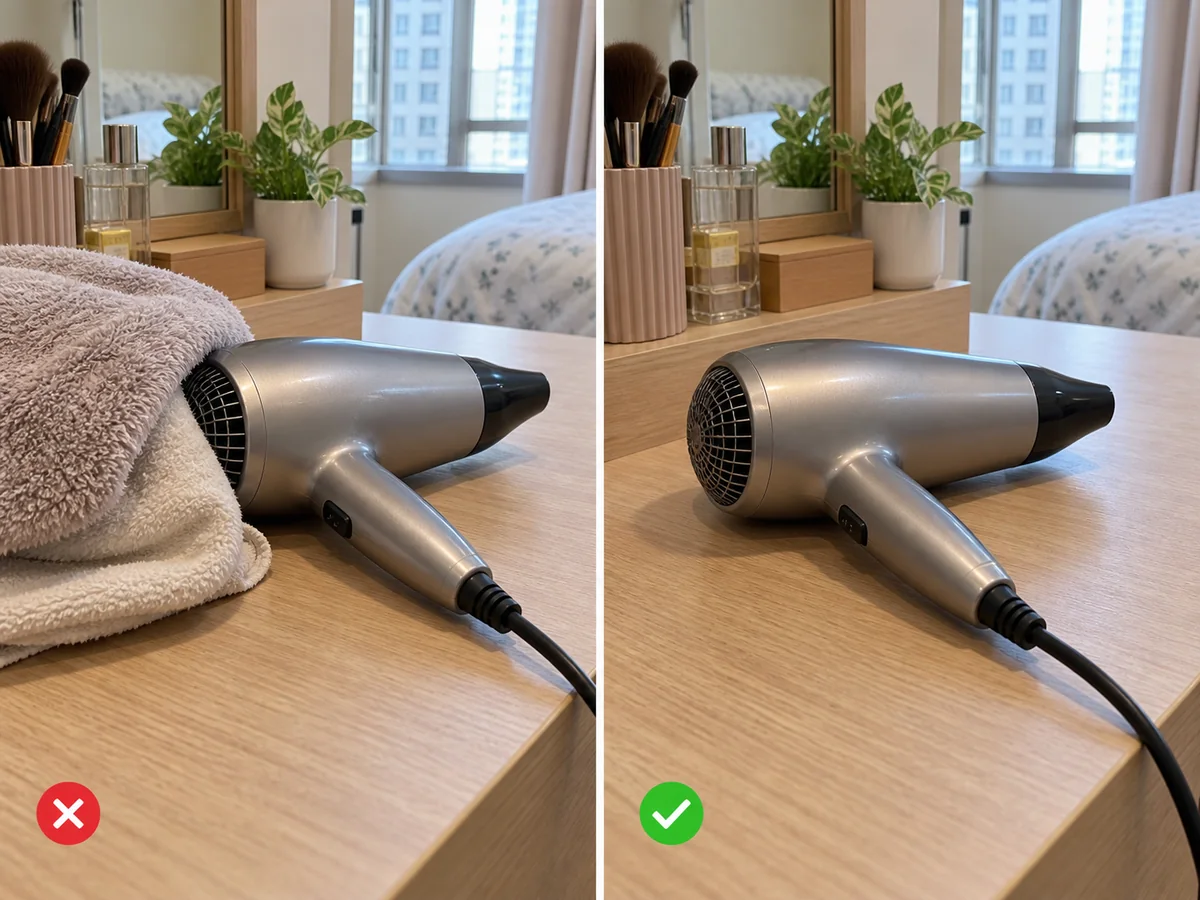
Never block the inlet or outlet during use, and remove dry lint regularly.
View safety lesson →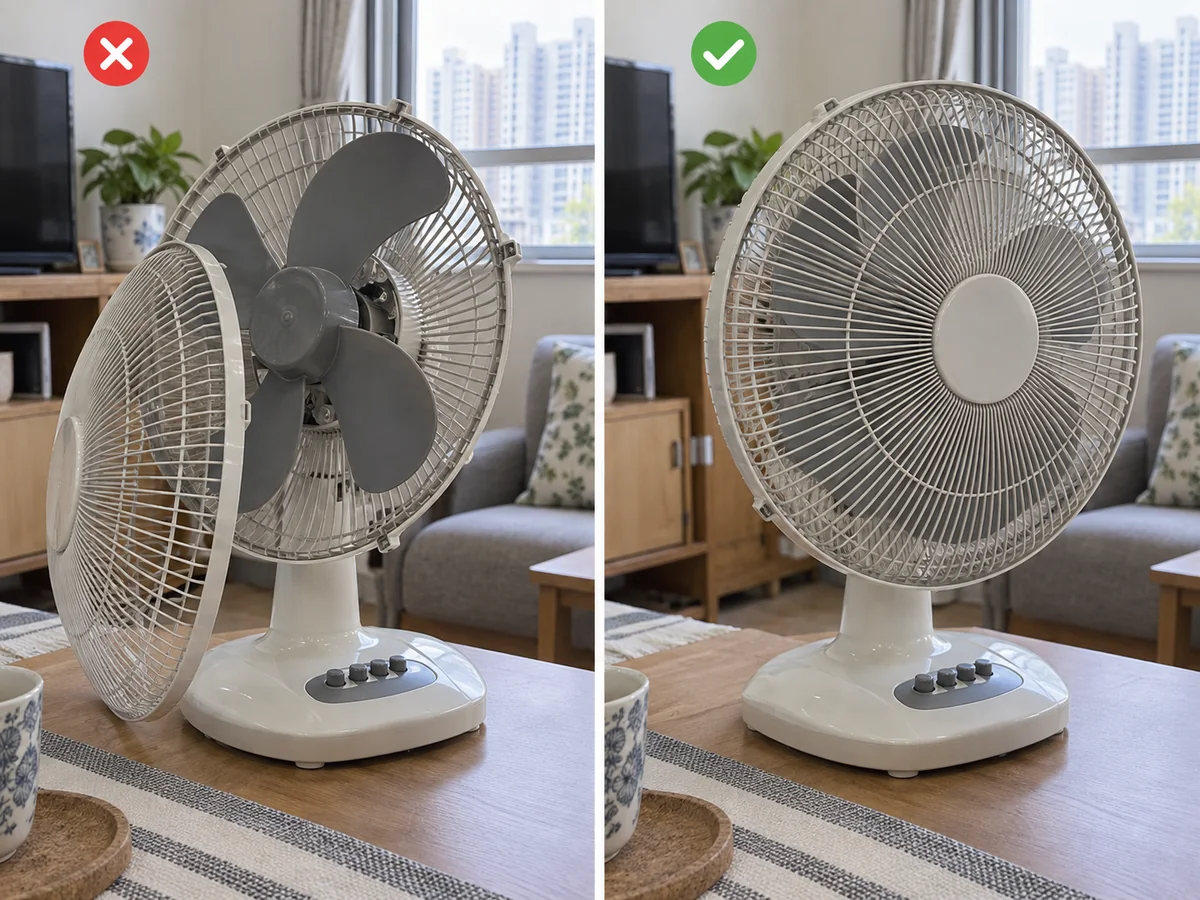
Before switching on a fan, check both guards are locked; stop if damaged or loose.
View safety lesson →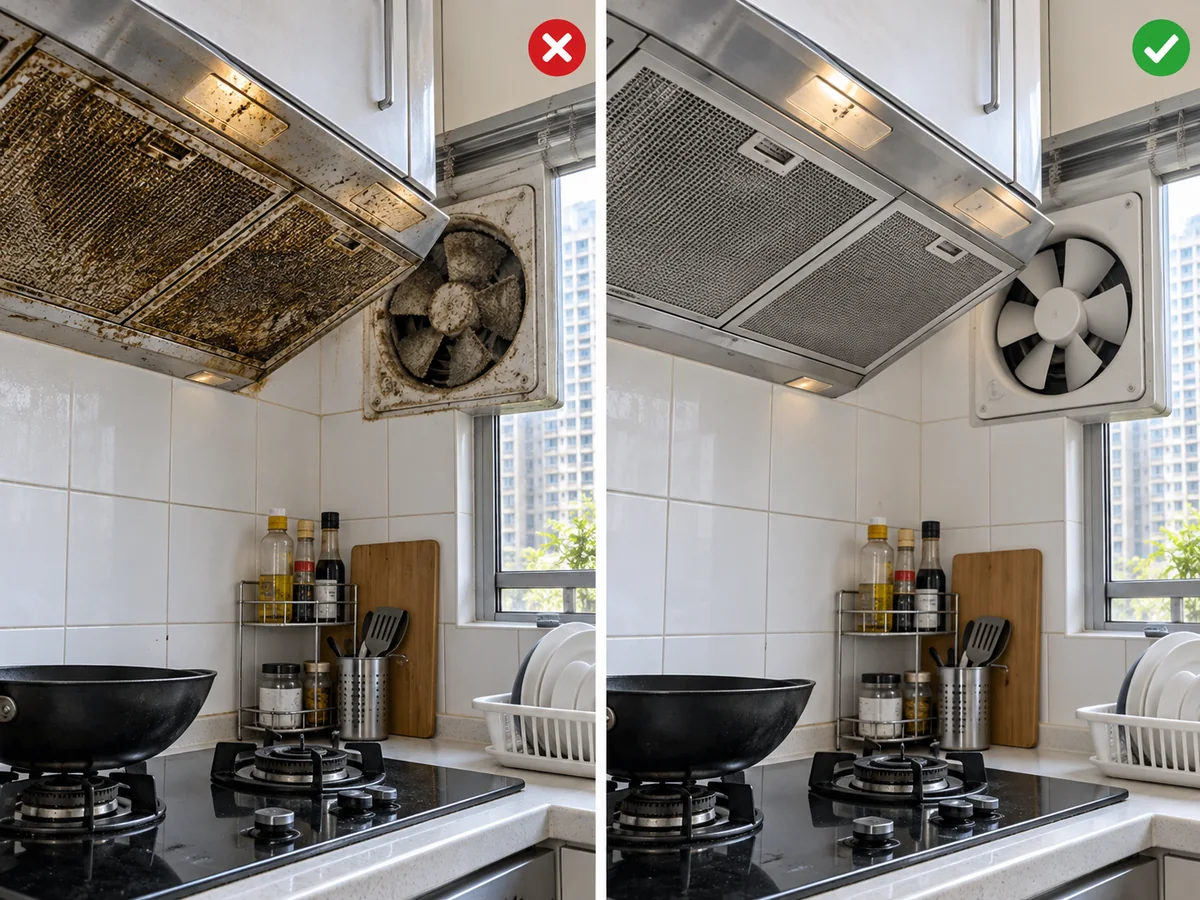
Following the maker’s instructions, remove dust and grease after power is off and parts are cool.
View safety lesson →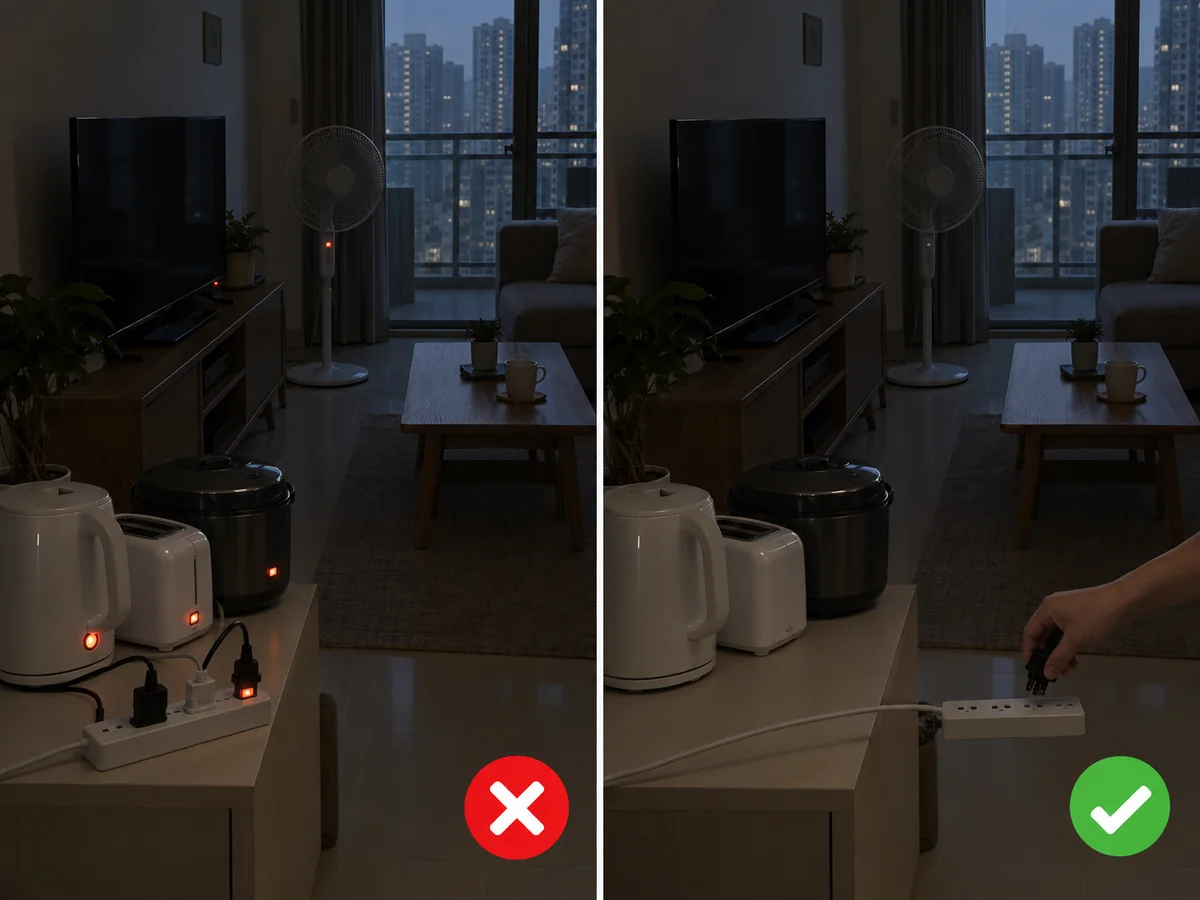
During a blackout or unstable supply, switch off and safely unplug non-essential appliances.
View safety lesson →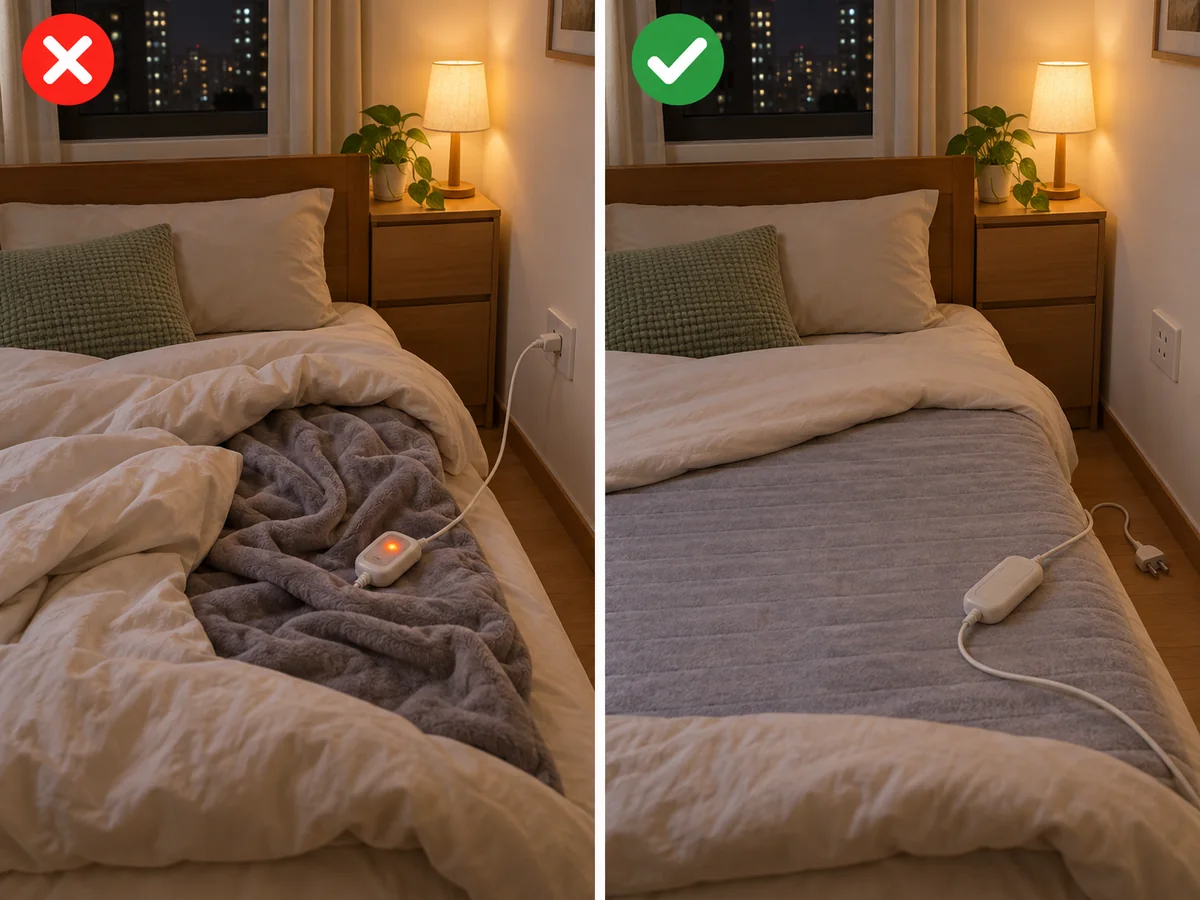
Use it flat as directed, never folded or trapped, and switch off and unplug before sleep.
View safety lesson →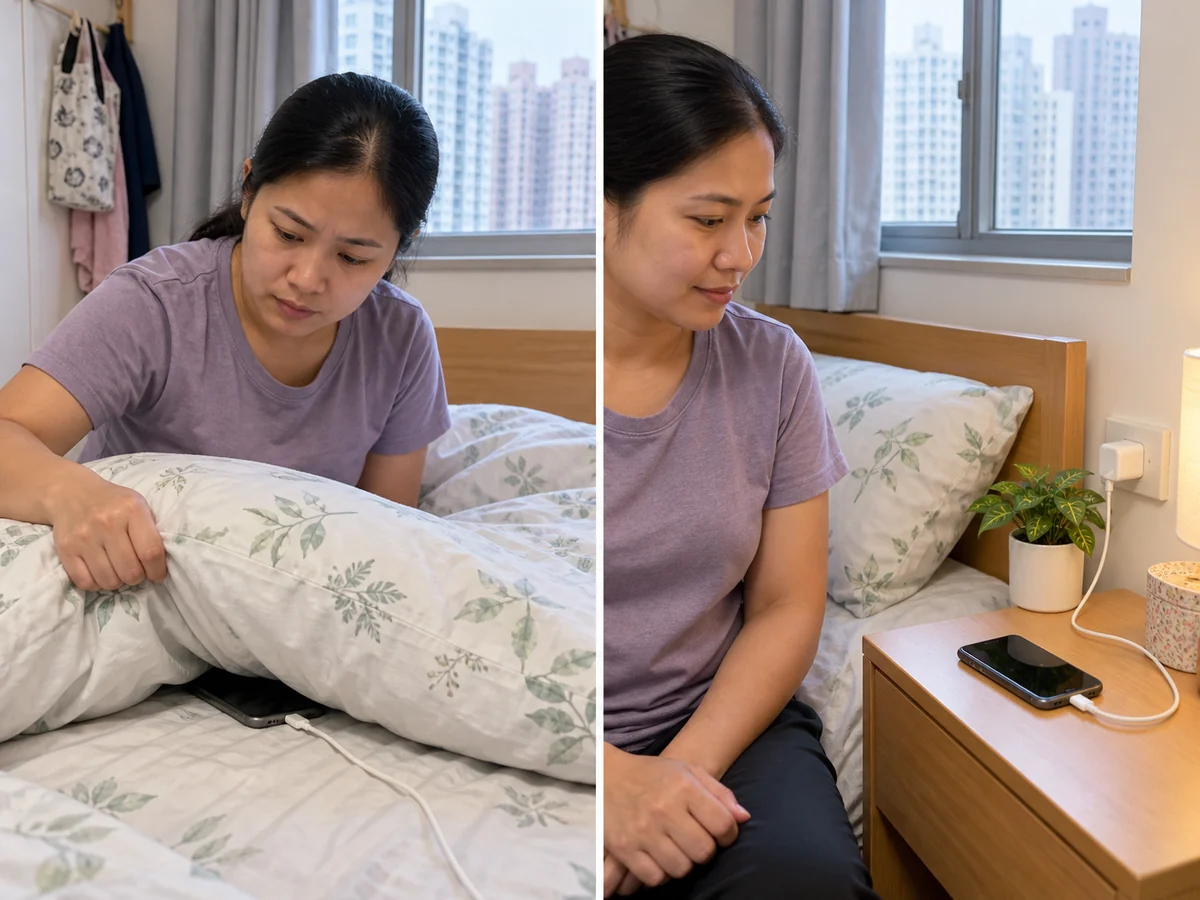
Charge phones, tablets, and power banks on a firm, dry, uncovered surface with space for heat to escape.
View safety lesson →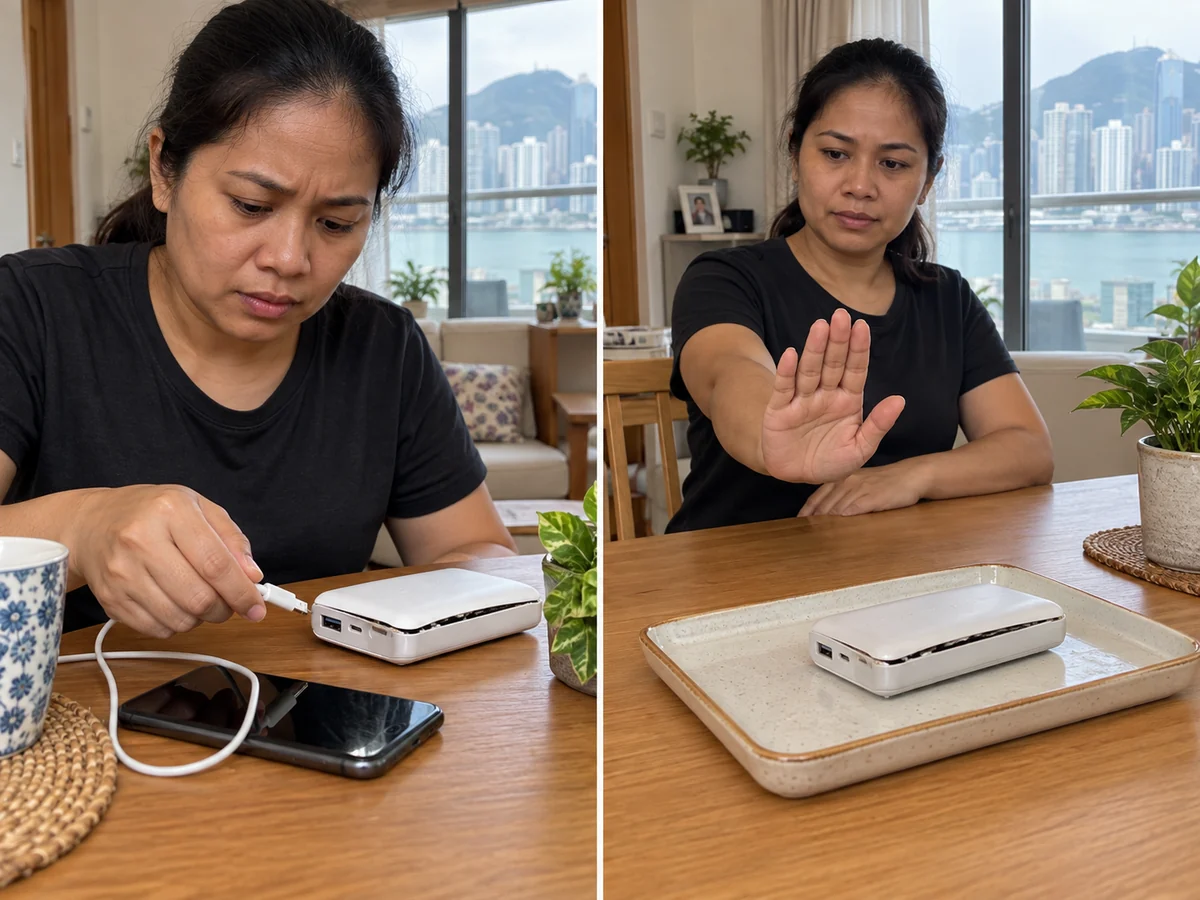
Stop charging or using a power bank or device if its battery swells, leaks, cracks, overheats, or smells unusual.
View safety lesson →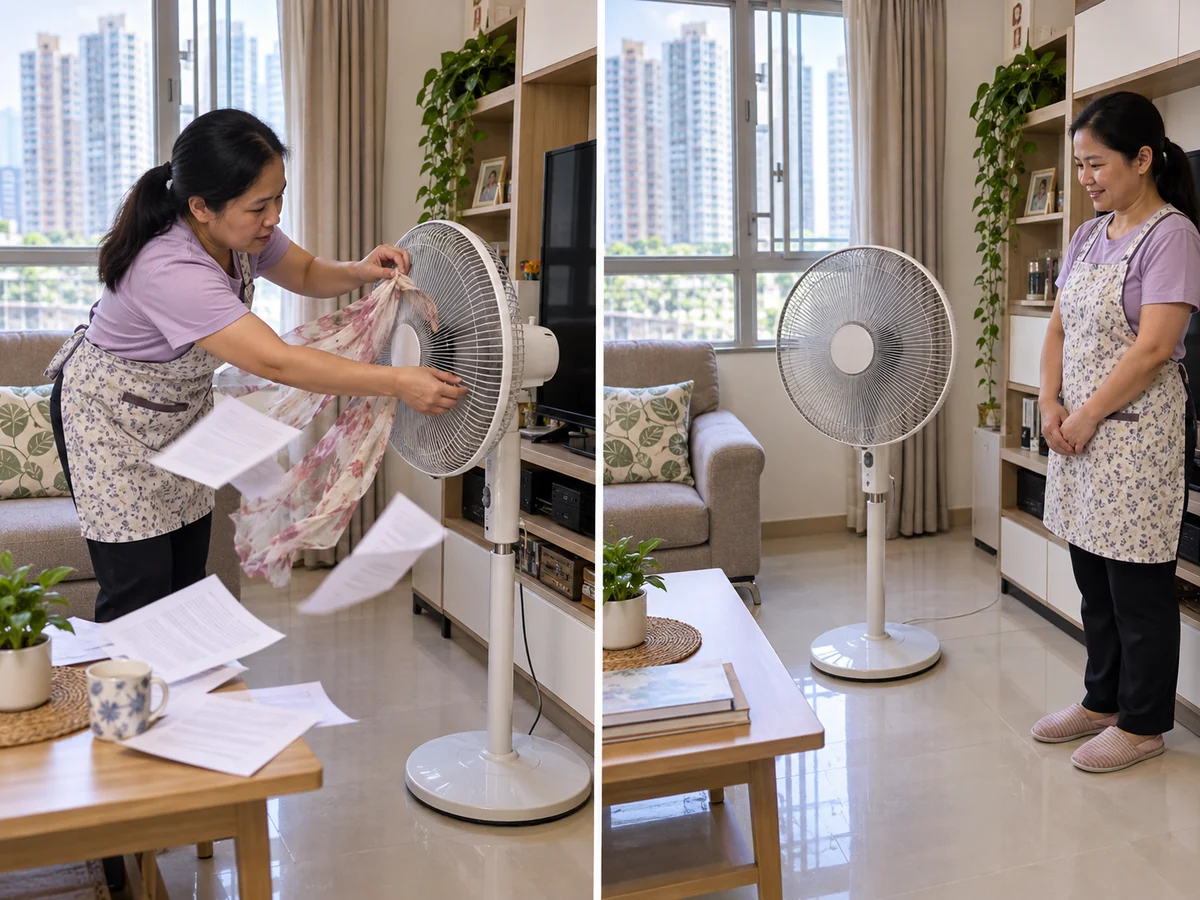
Keep paper, cloth, plastic bags, and loose cords away from operating fans, exhaust fans, and cooker hoods.
View safety lesson →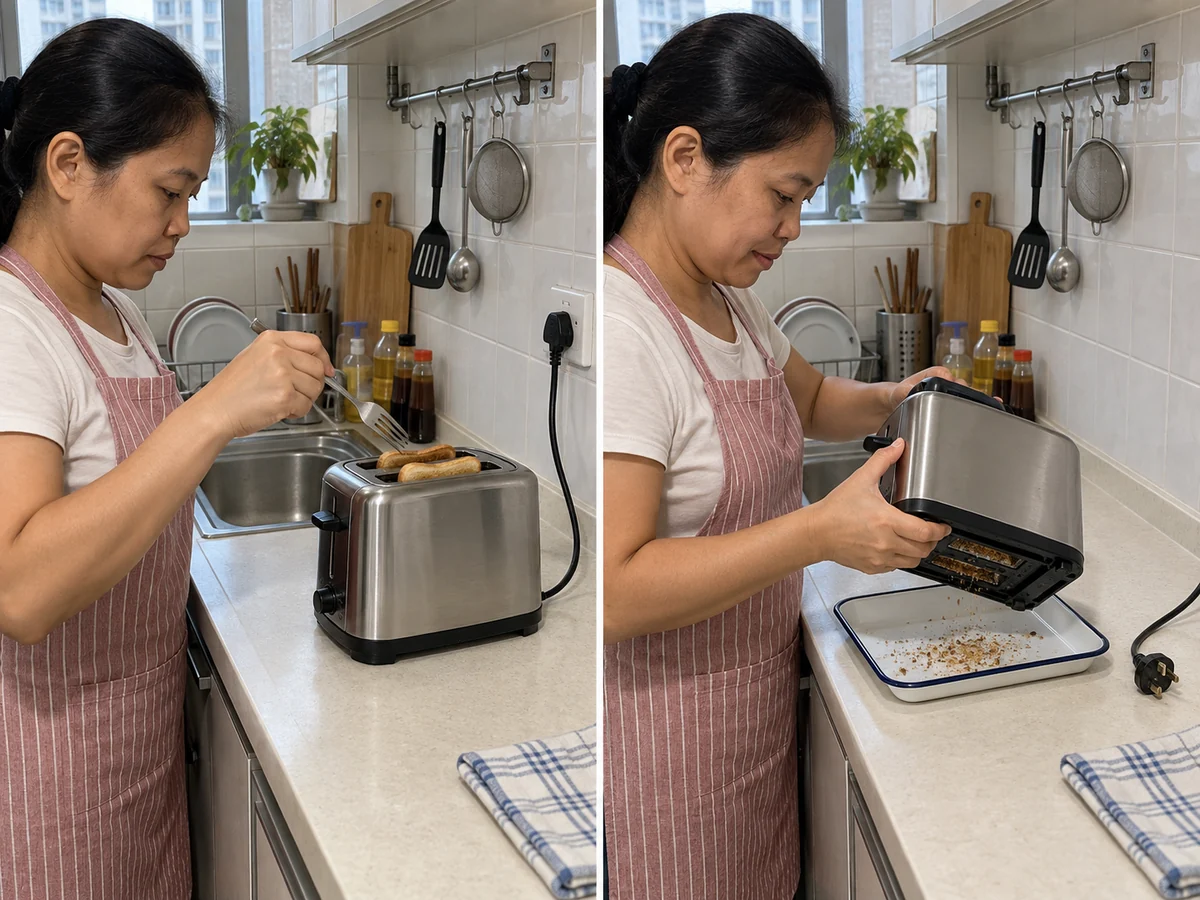
Switch off and unplug a toaster, let it cool, and use the maker's safe method before removing stuck food.
View safety lesson →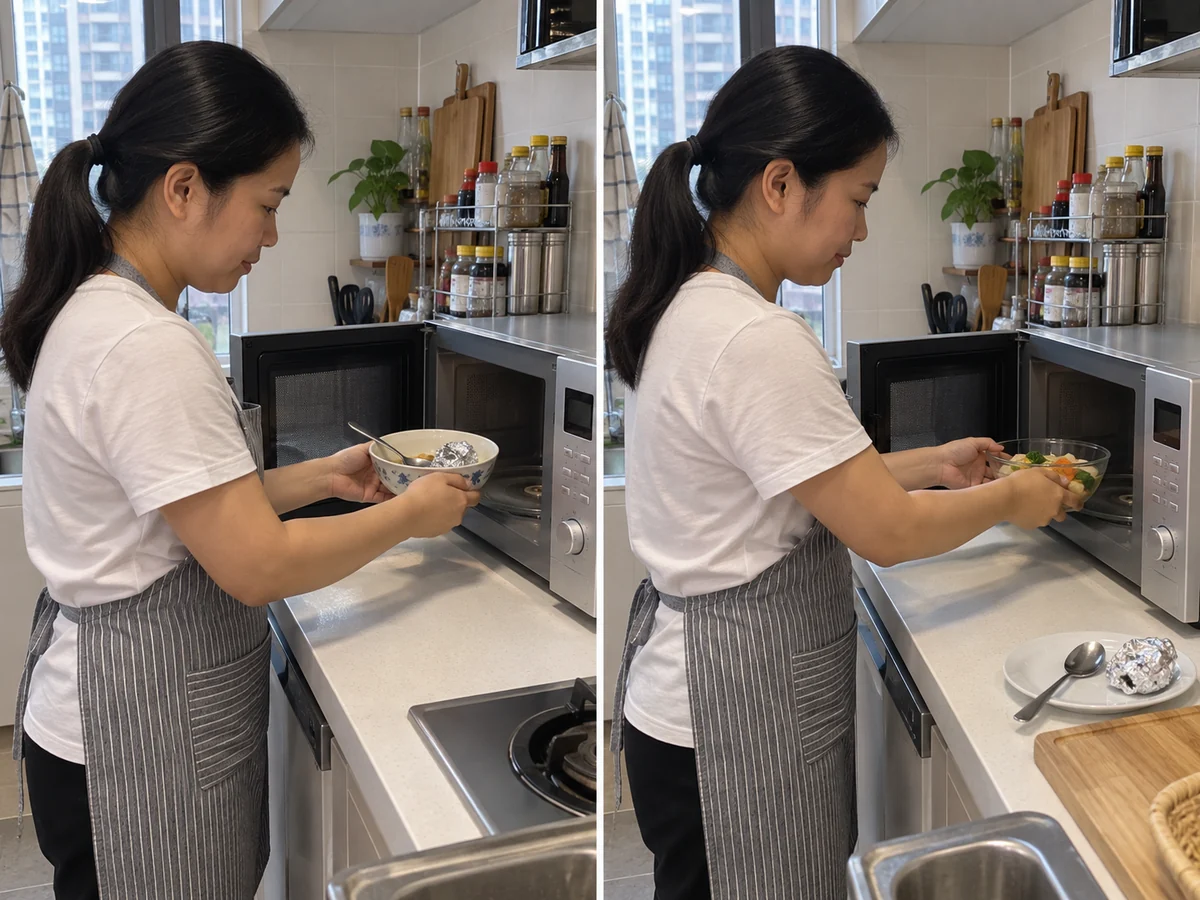
Use only containers confirmed suitable for microwave cooking and remove metal utensils, foil, and metal-trimmed items.
View safety lesson →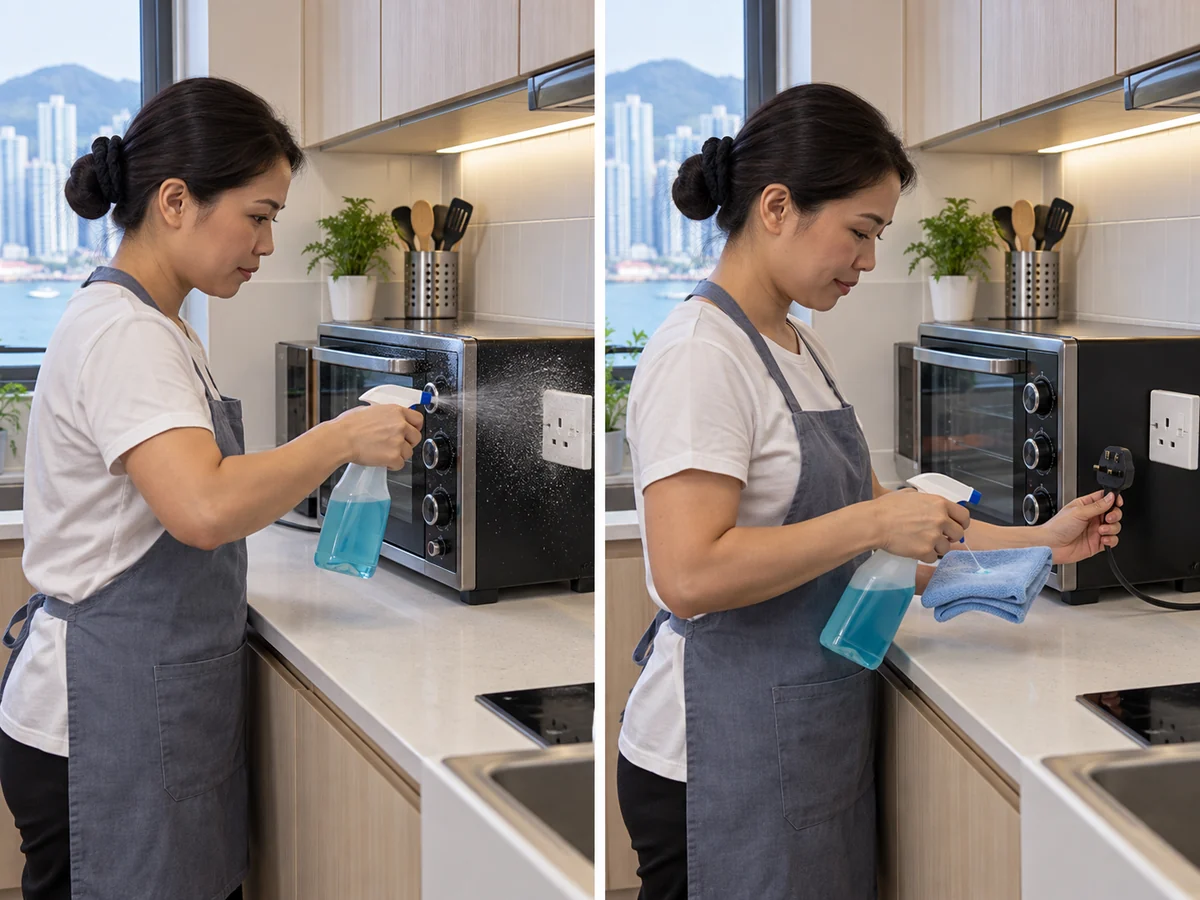
Before cleaning a socket, switch, or appliance panel, disconnect power safely and apply a small amount of cleaner to the cloth, keeping controls dry.
View safety lesson →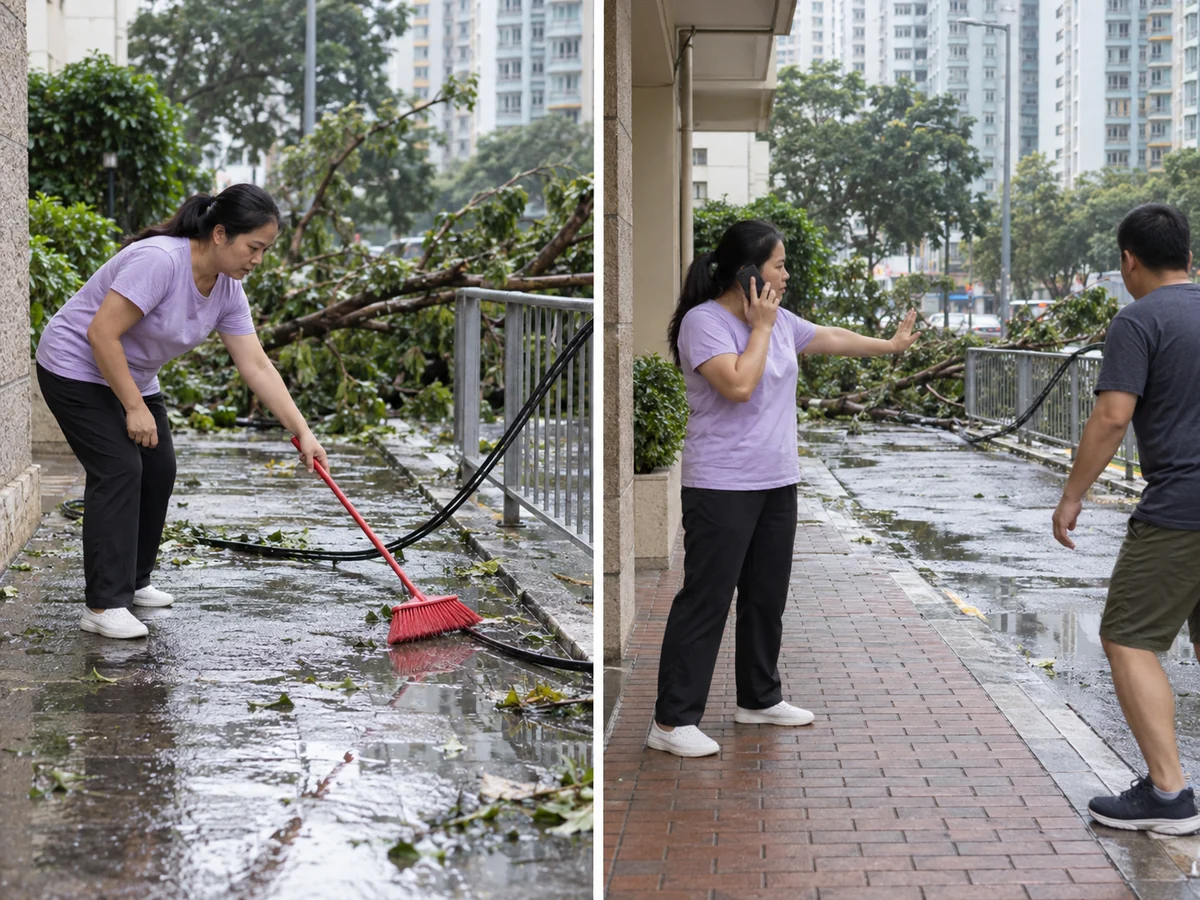
Treat every fallen, hanging, or damaged power line as live, keep well away, and stop others approaching.
View safety lesson →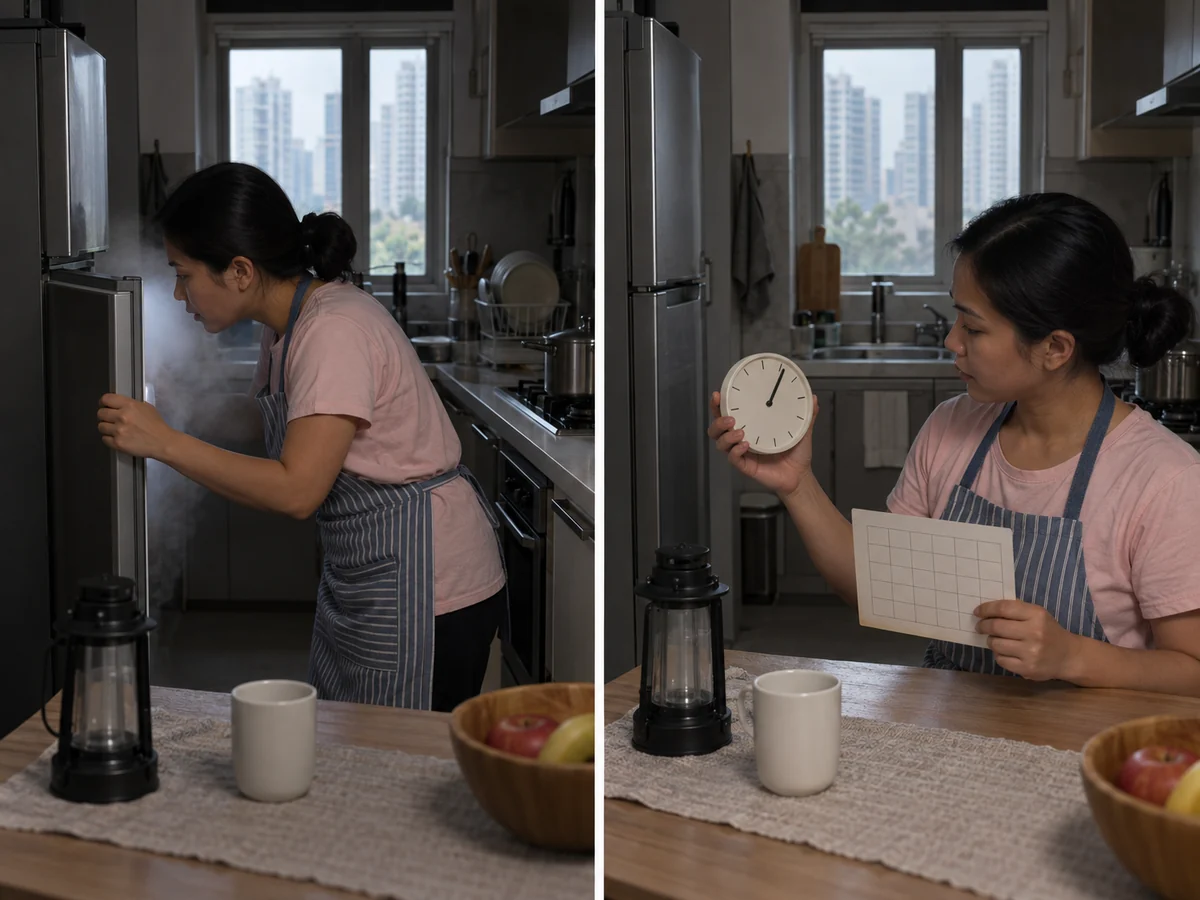
Note when the outage starts and keep refrigerator and freezer doors shut to preserve cold temperatures.
View safety lesson →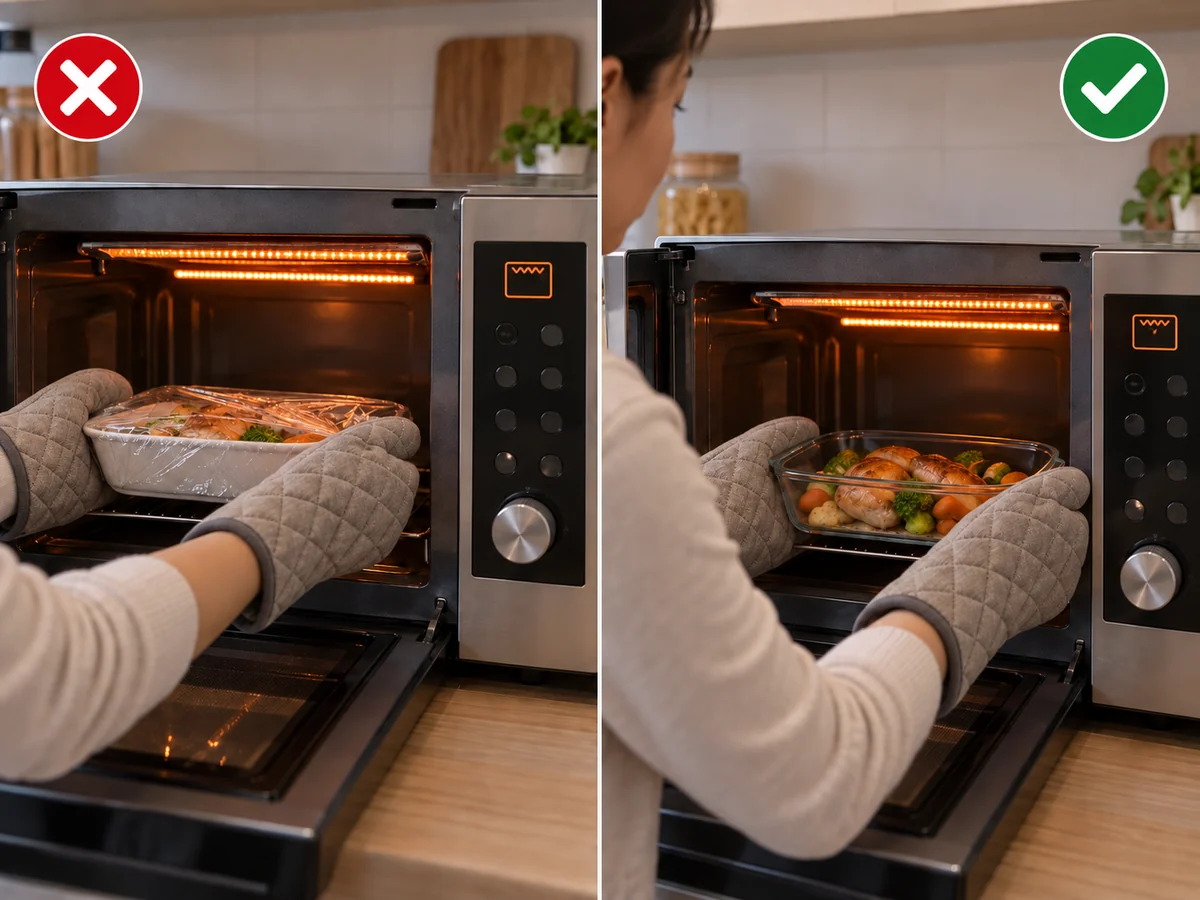
Use wrap only in the modes and conditions allowed by its label. Remove wrap for grill use and choose cookware approved for that mode.
View safety lesson →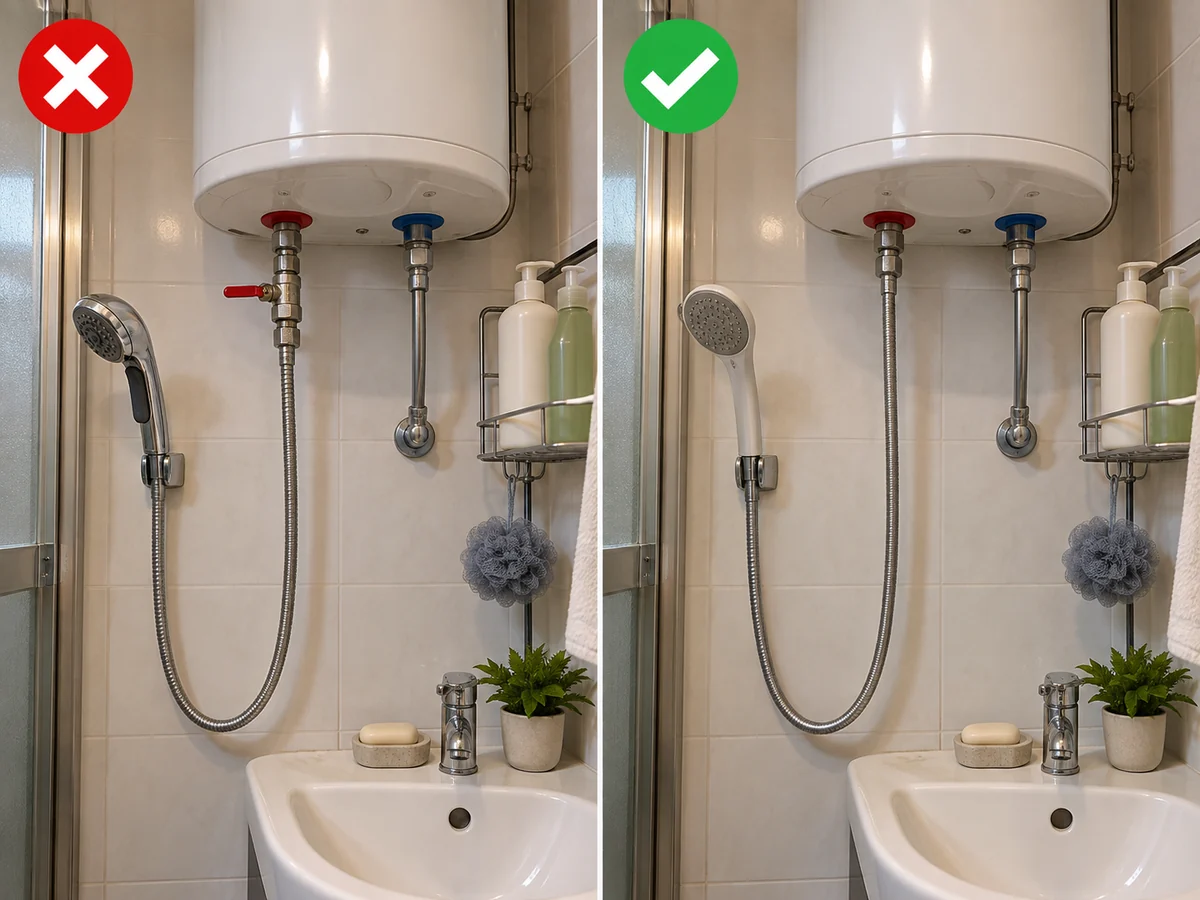
Never restrict the outlet of an open-outlet storage water heater. Ask a qualified person to confirm the manufacturer's specified fittings.
View safety lesson →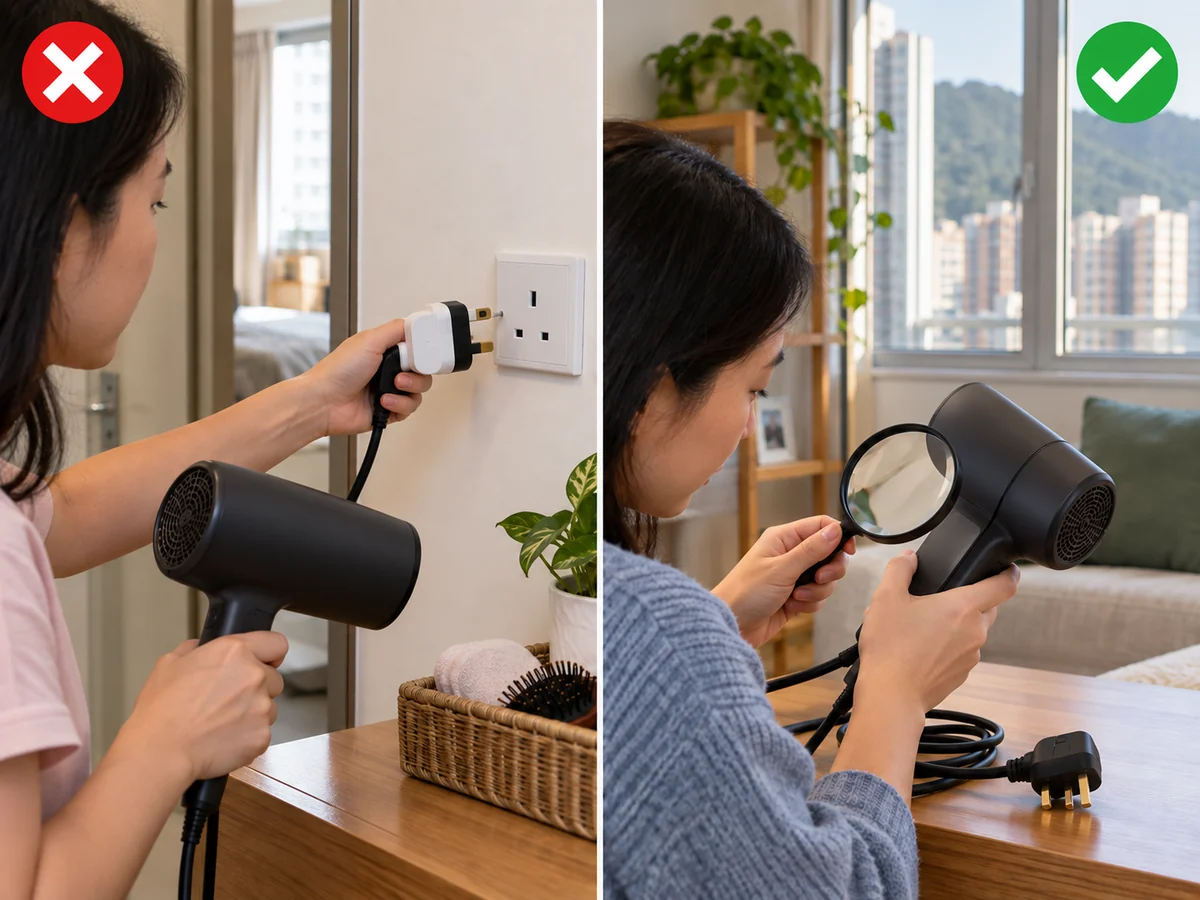
Use it only when its supply requirements and connection are suitable for Hong Kong. Keep it unplugged and ask the supplier if the rating is unclear or incompatible.
View safety lesson →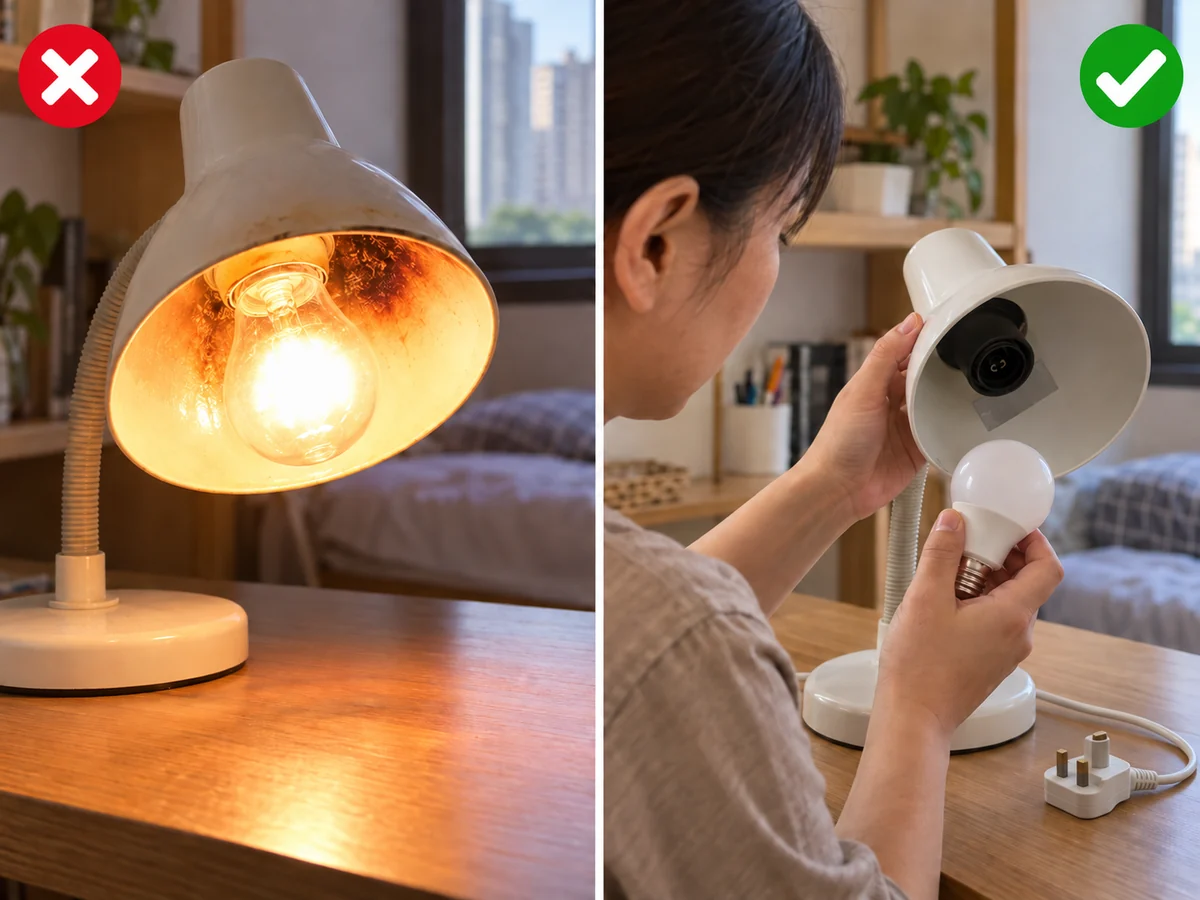
Fit only the permitted bulb type within the lamp holder's maximum wattage. If the rating cannot be read, ask for a suitable replacement to be confirmed.
View safety lesson →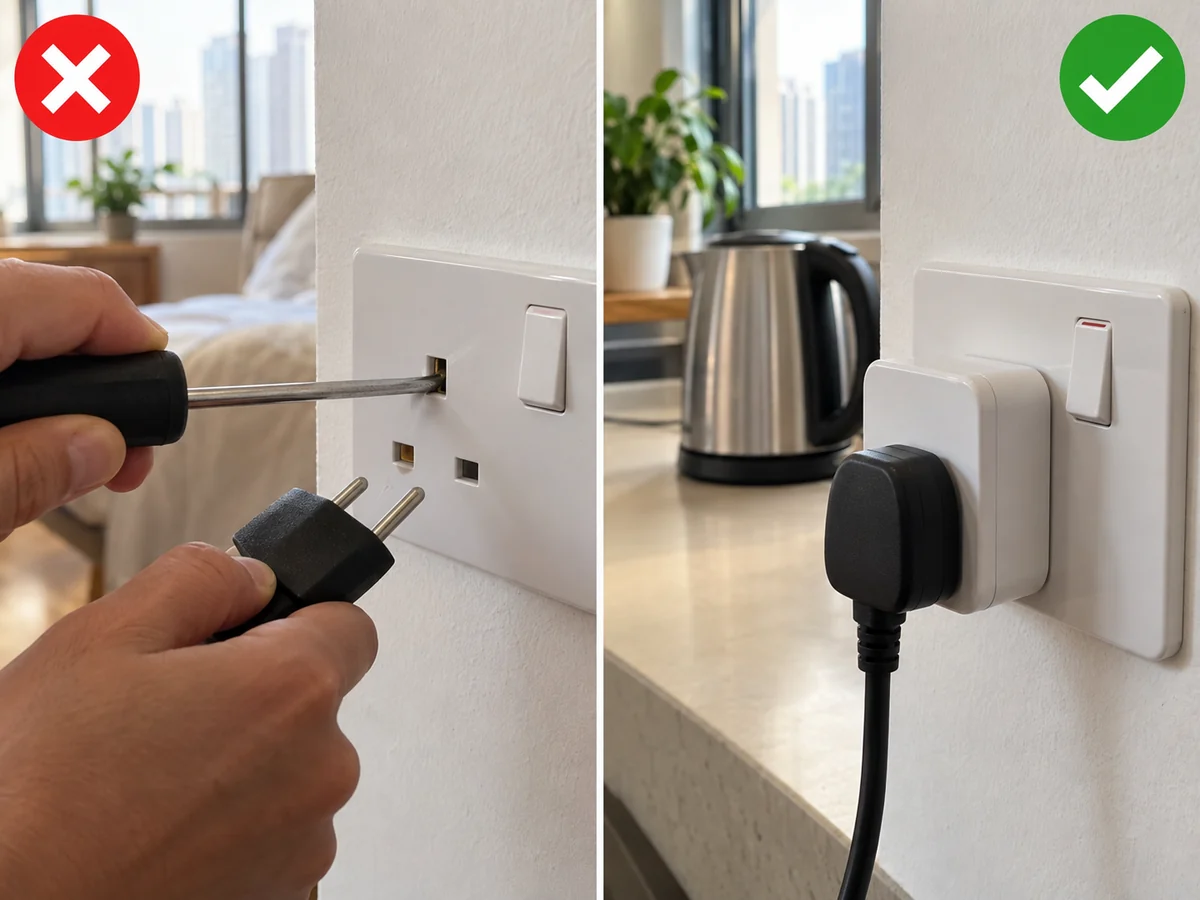
Use a suitable compliant connection instead of forcing the shutter open. Report a damaged socket and keep it out of use pending inspection.
View safety lesson →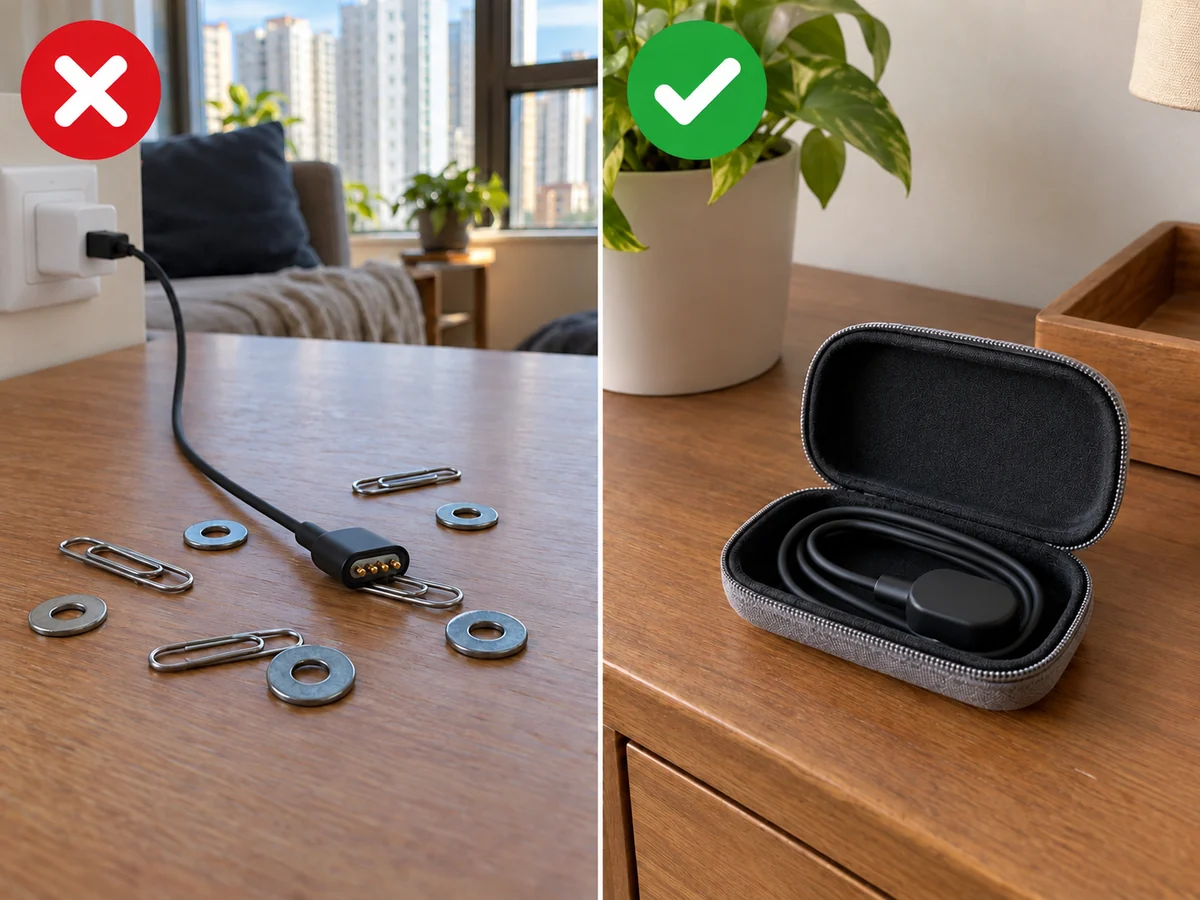
Keep the contacts protected and store the charger as its instructions specify. Unplug an unused charger and stop using one with damaged contacts or sparks.
View safety lesson →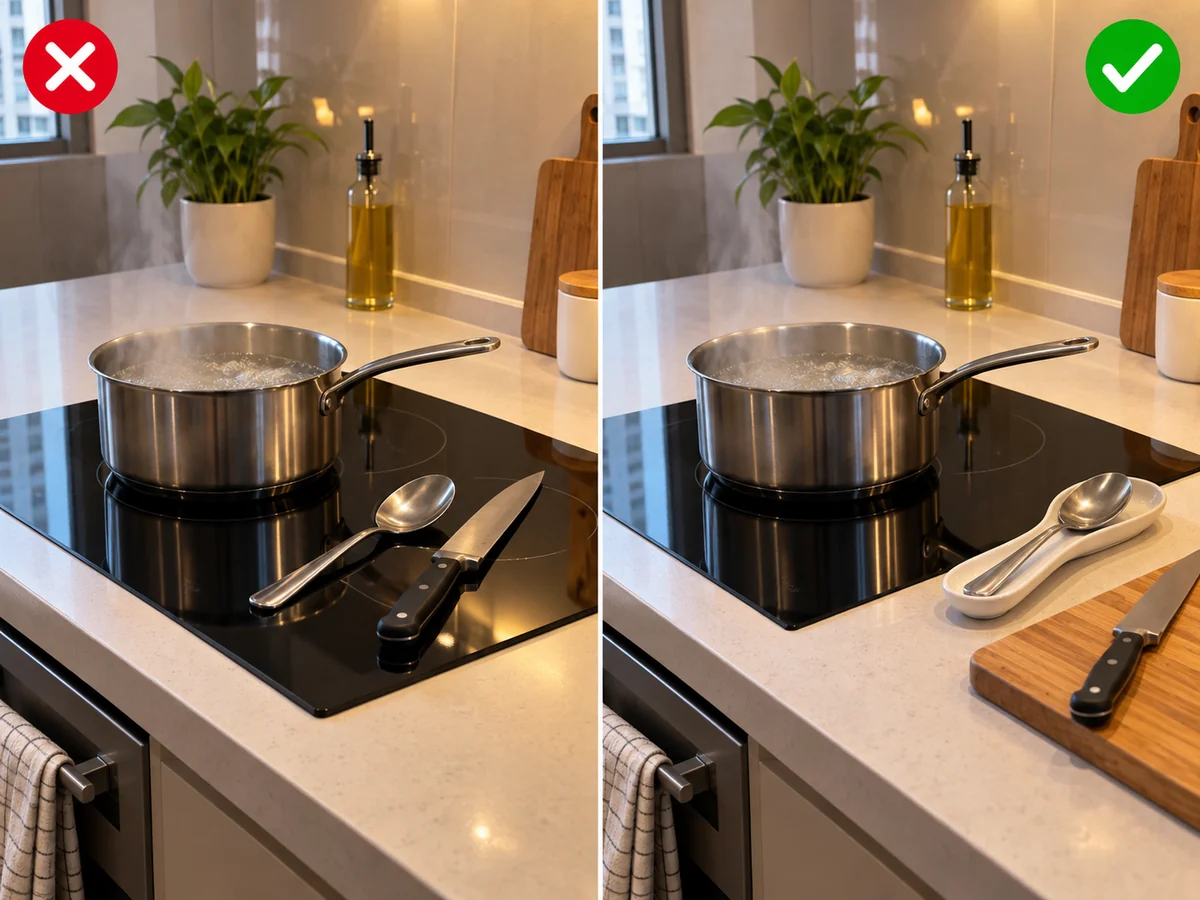
Keep the hob for suitable cookware and put utensils on a separate surface. Switch off after cooking and do not use the hob as storage.
View safety lesson →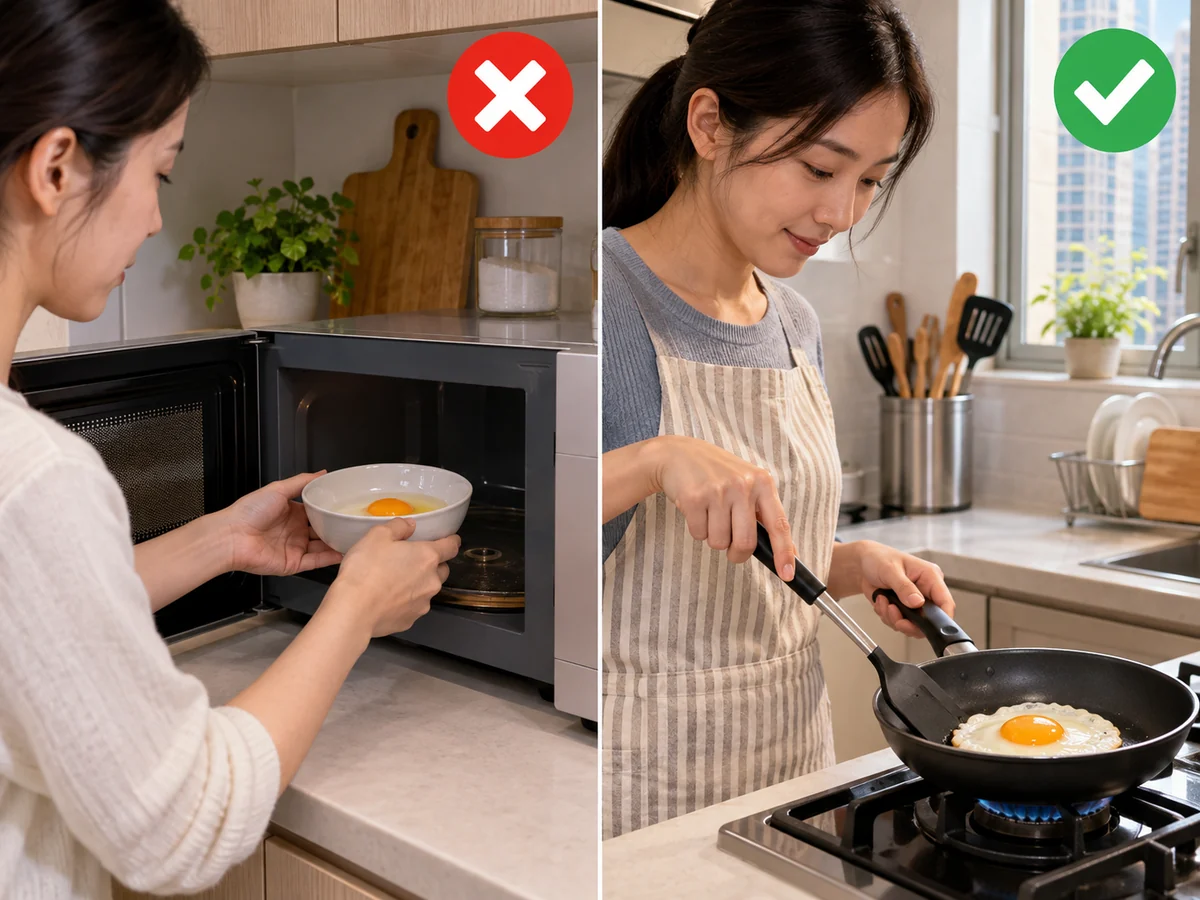
Do not directly microwave uncooked eggs; use a suitable alternative cooking method. Keep people back if an egg bursts and deal with burns promptly.
View safety lesson →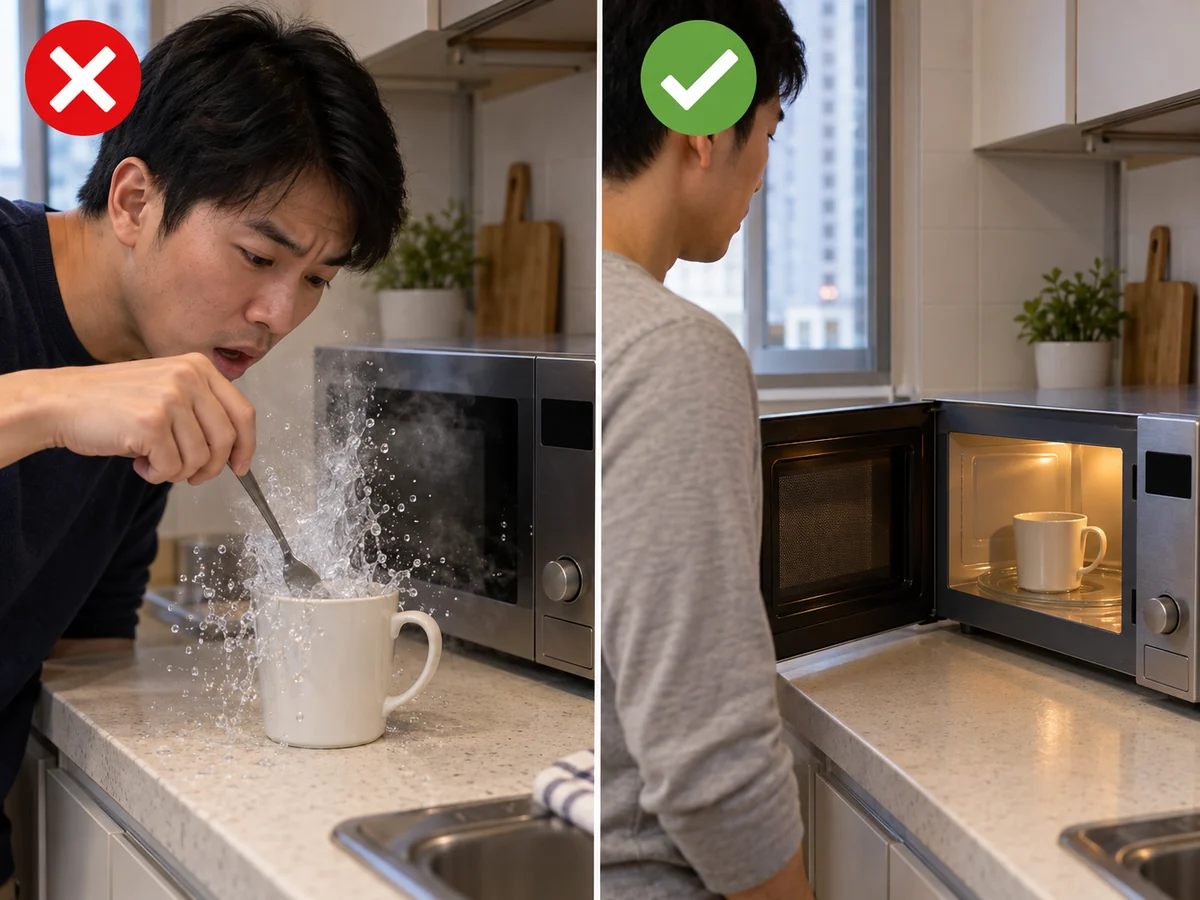
Avoid overheating water and allow the instructed standing time before handling. Keep your face away and do not abruptly add a spoon or powder to very hot water.
View safety lesson →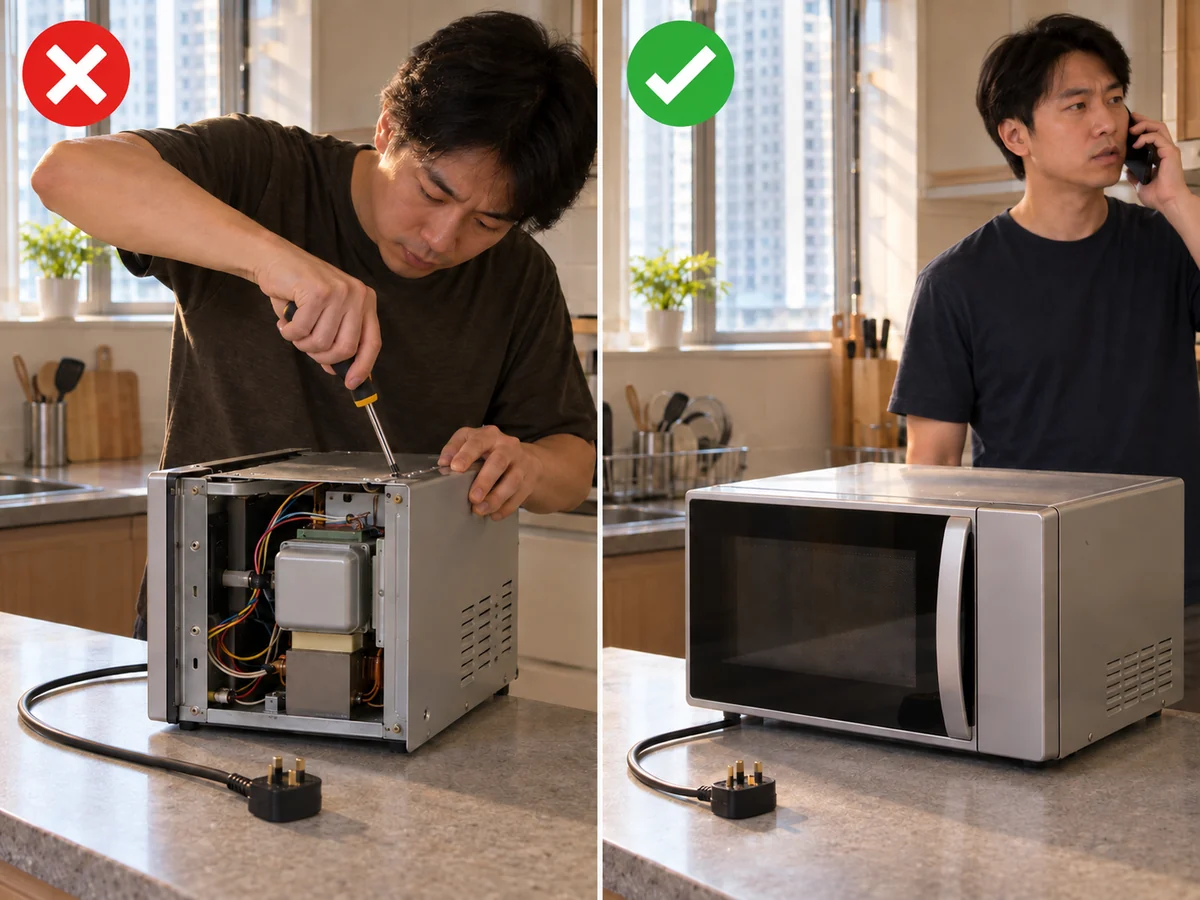
Never remove the microwave casing or touch internal components. Keep a faulty oven out of use and arrange qualified repair.
View safety lesson →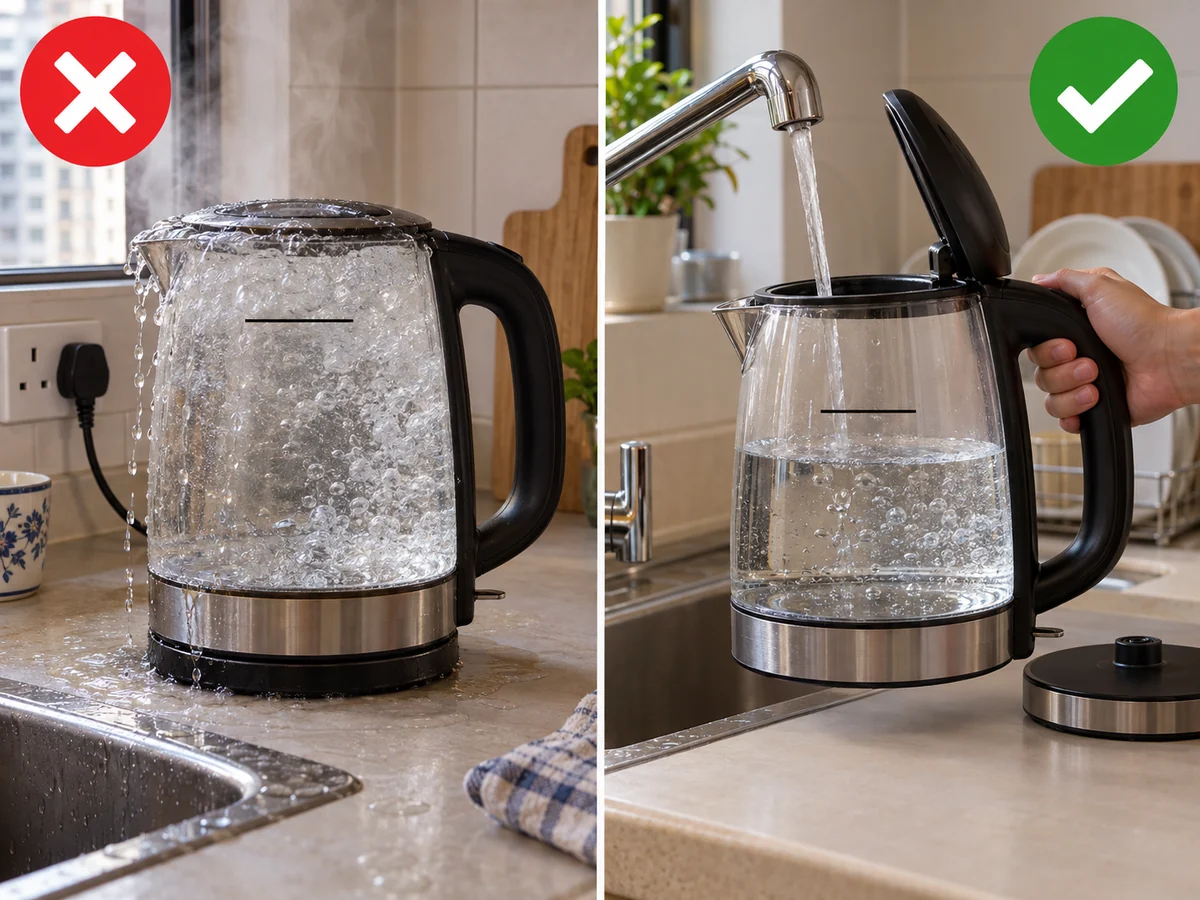
Keep water at or below the marked maximum level. Remove excess water before switching on and boil separate batches if needed.
View safety lesson →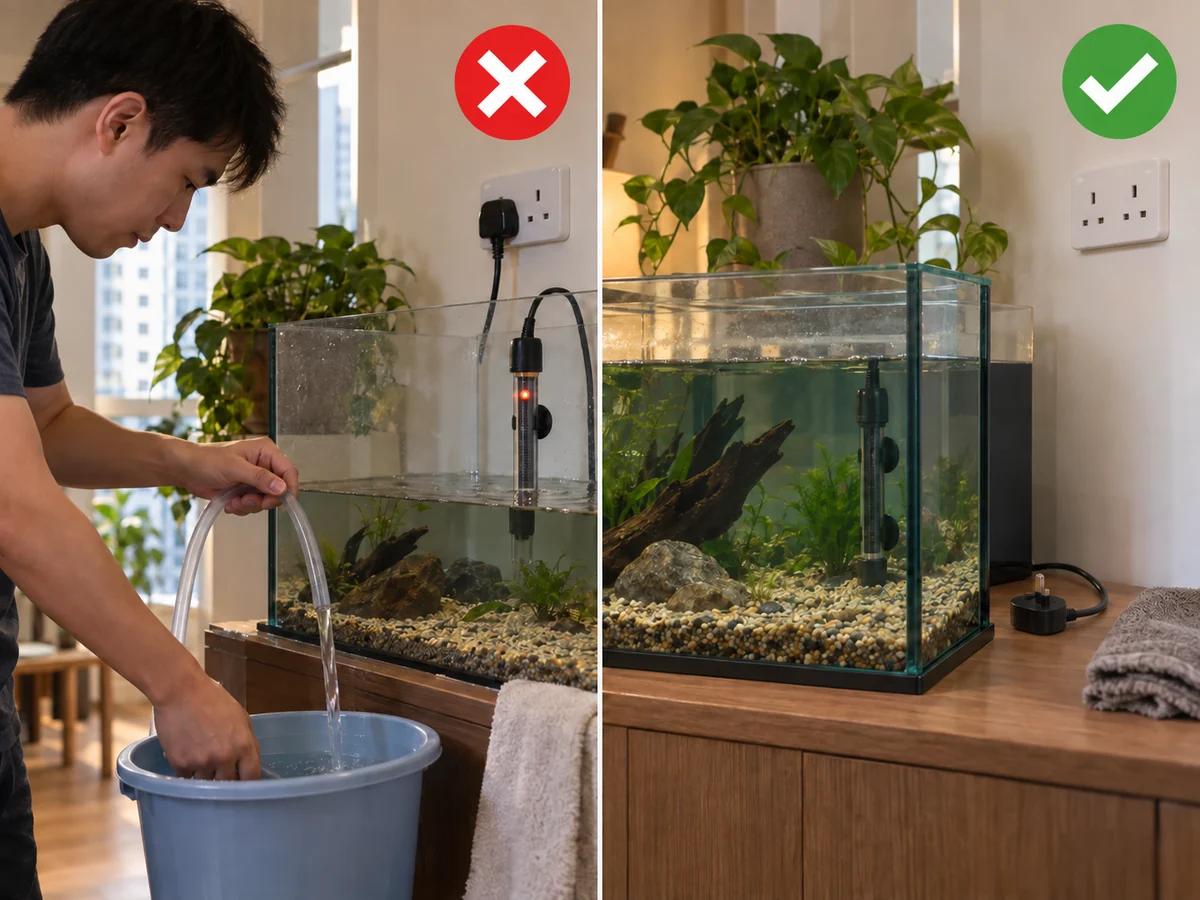
Restore the required water level before powering the heater again. Do not plunge a hot dry heater into water; arrange a check if it overheated.
View safety lesson →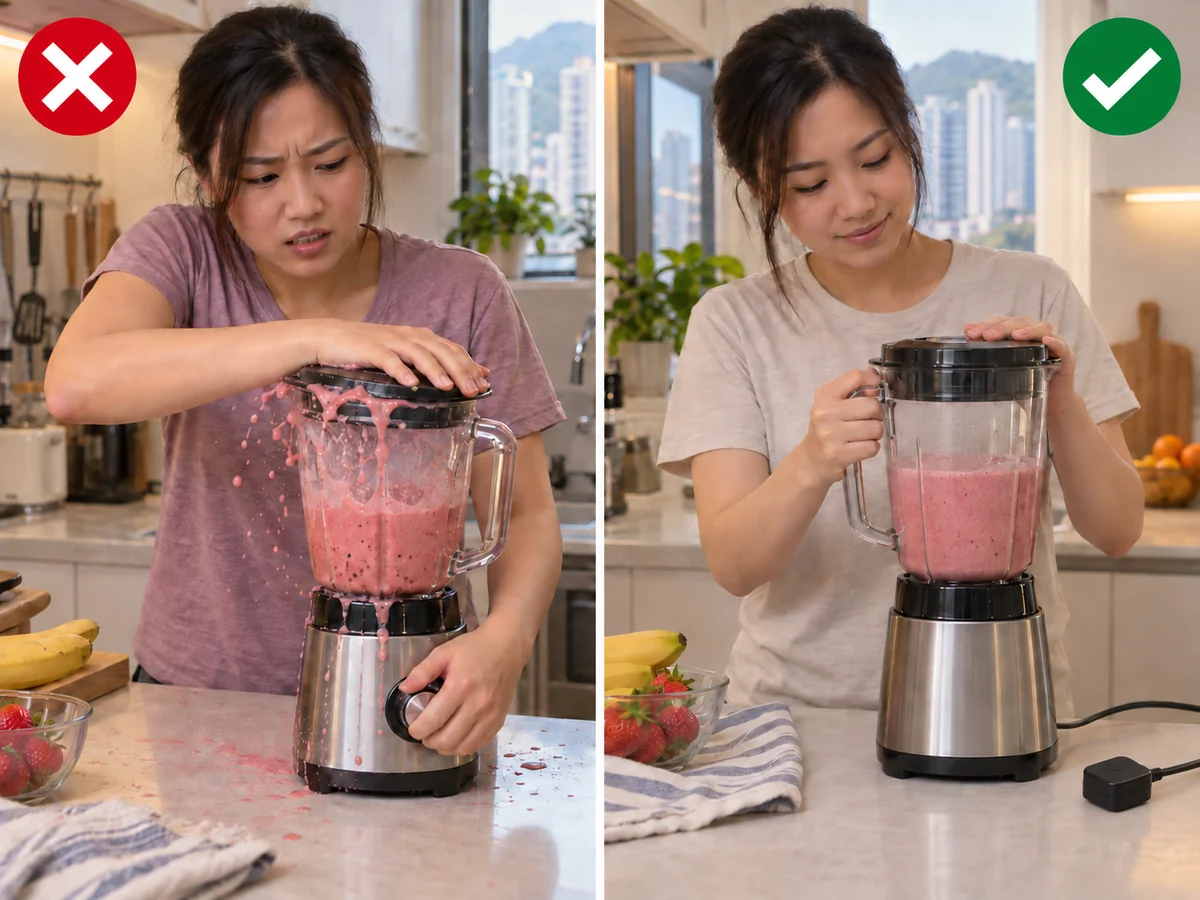
Confirm each required attachment is correctly locked before starting. Stop if a part will not lock; never bypass an interlock or hold a loose assembly together.
View safety lesson →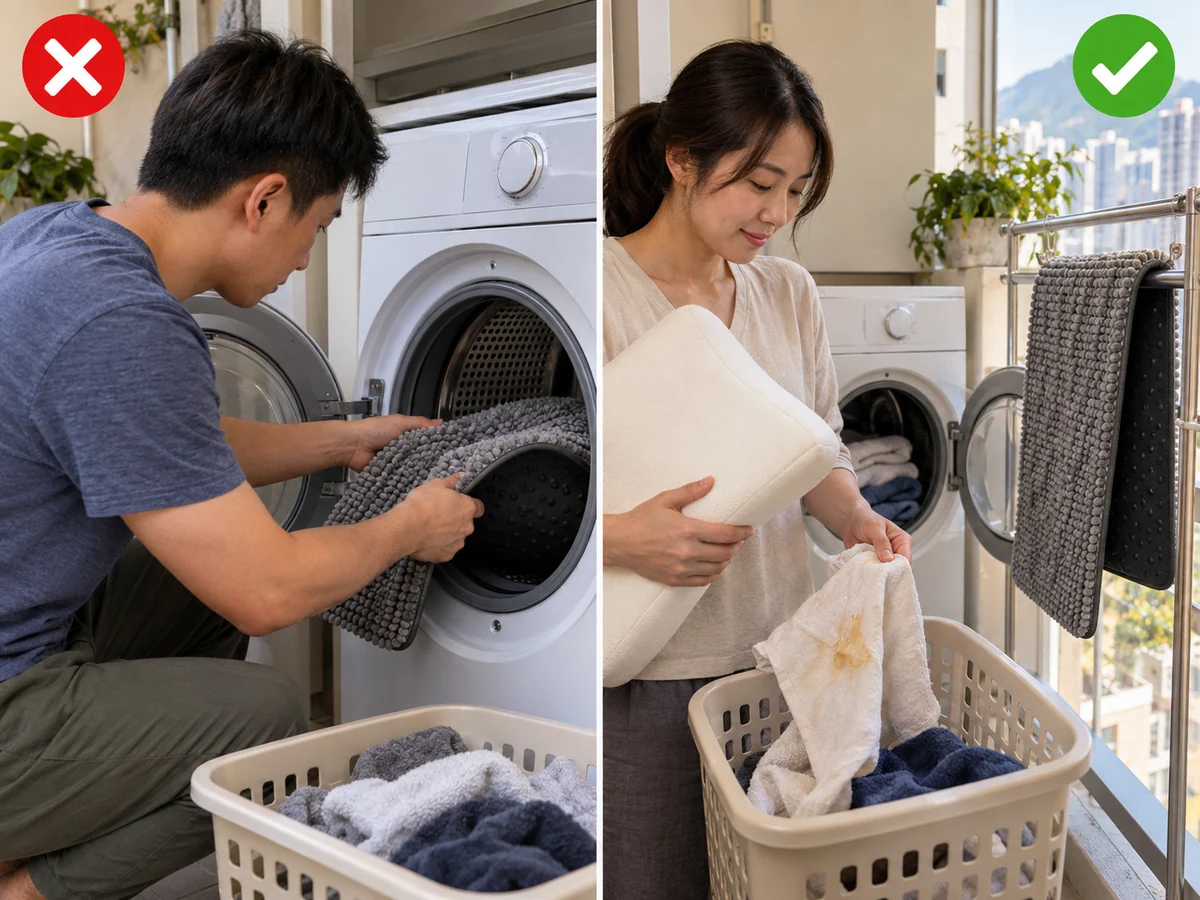
Keep prohibited materials out of the dryer as the garment and machine labels direct. Separate them from the load and choose a permitted drying method.
View safety lesson →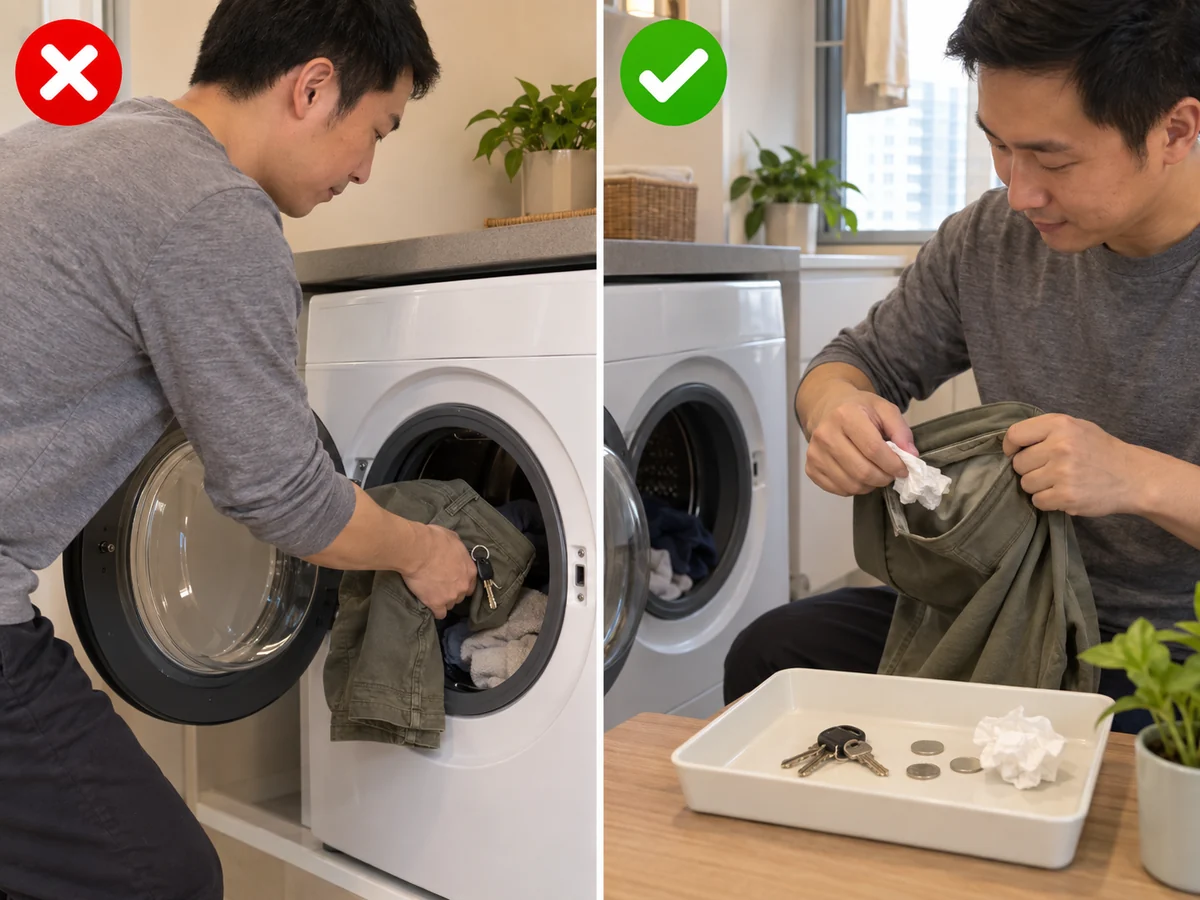
Load clothes only after the pockets are emptied. Put removed items safely away and stop the machine if an object or abnormal noise is noticed.
View safety lesson →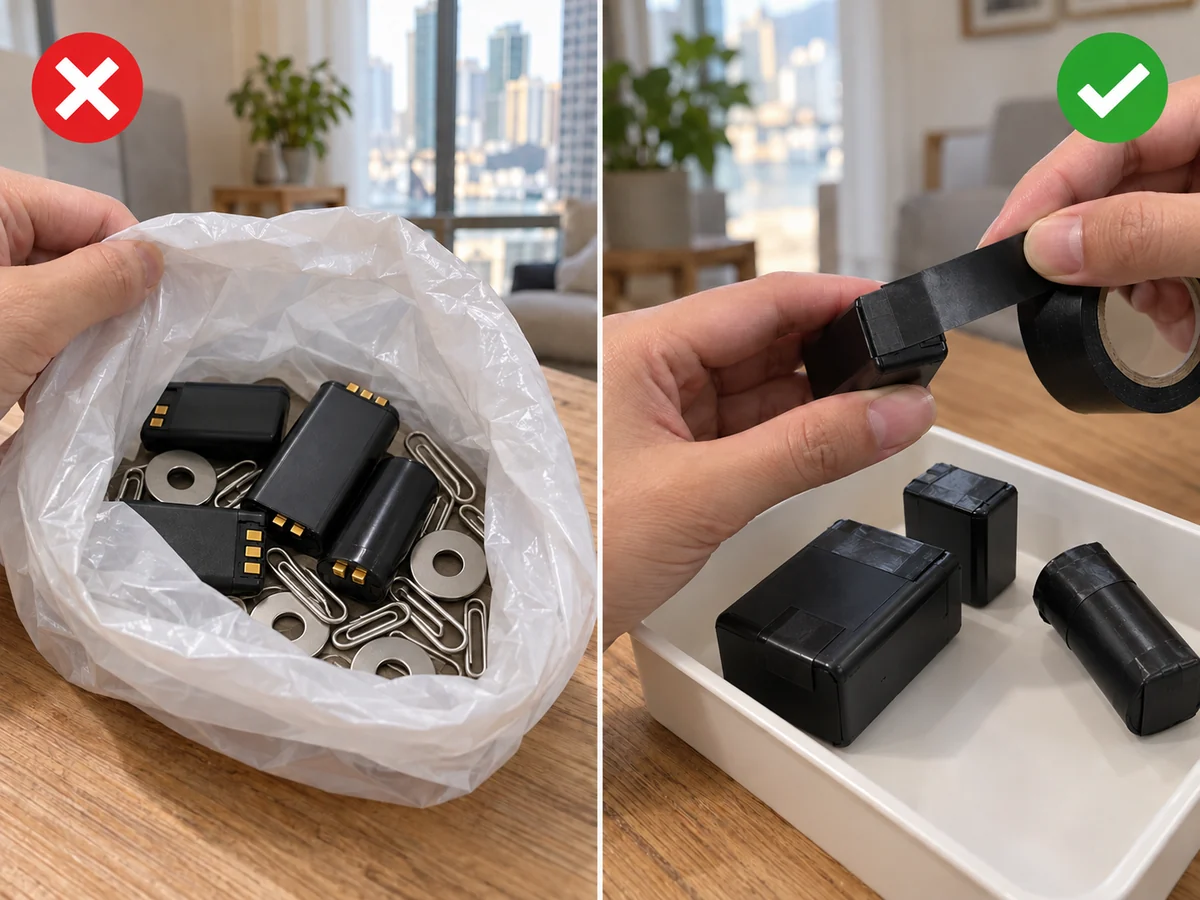
Insulate exposed terminals with suitable tape as the programme directs. Keep batteries separate from metal; ask the collector about damaged or leaking batteries before transport.
View safety lesson →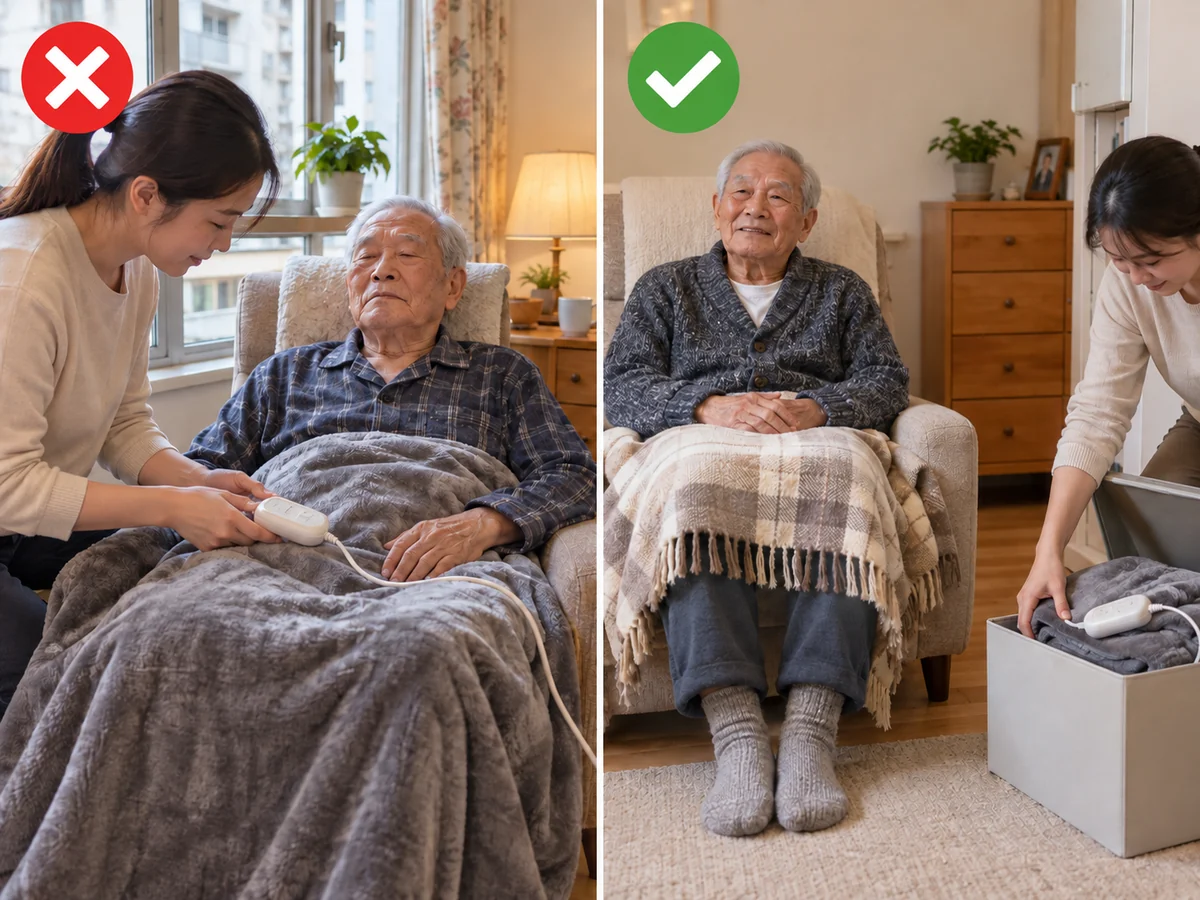
Do not use electric blankets for heat-insensitive people or young children; follow product limits and care advice for other users.
View safety lesson →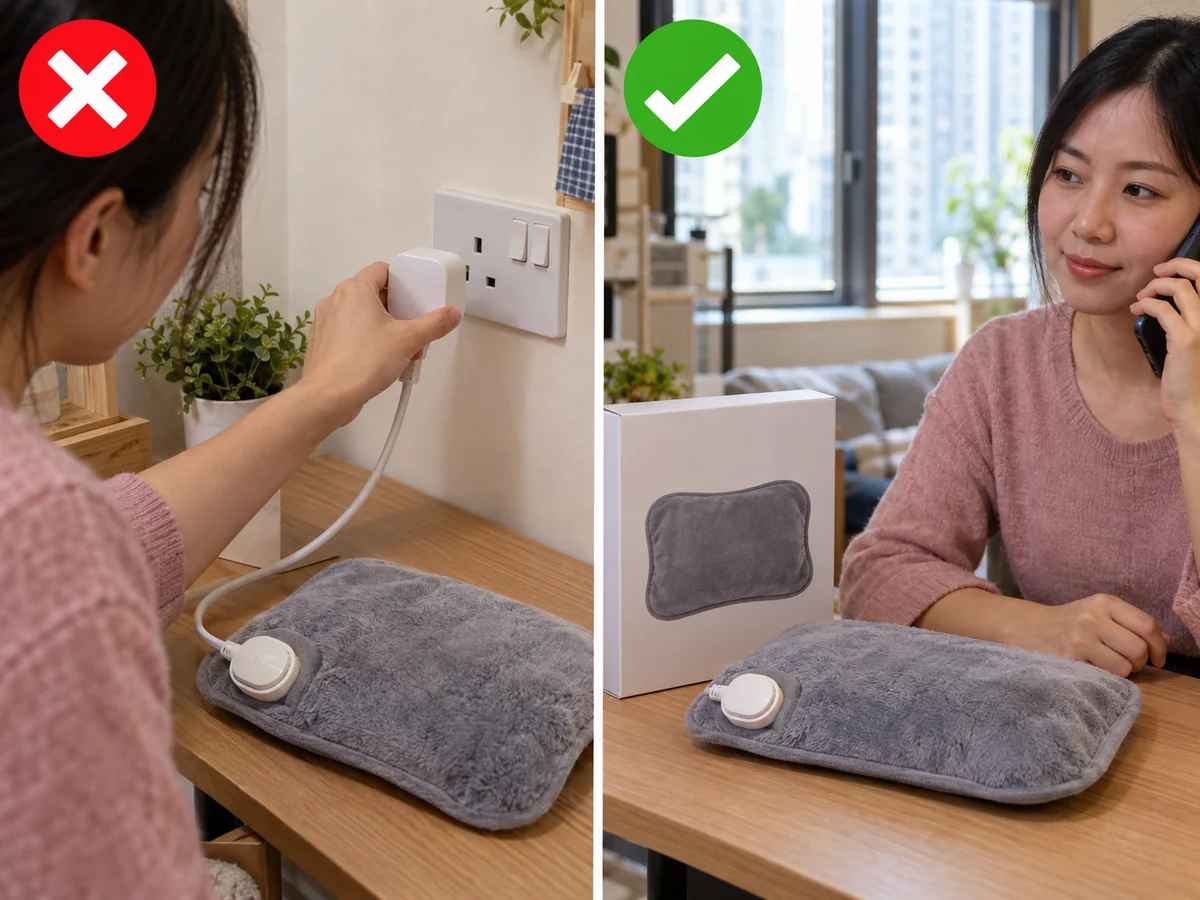
Do not use electrode-type electric warm bags; stop using an unidentified type and ask the supplier or EMSD. Do not open or repair the bag to identify it; tell the employer and arrange safe handling with the supplier.
View safety lesson →