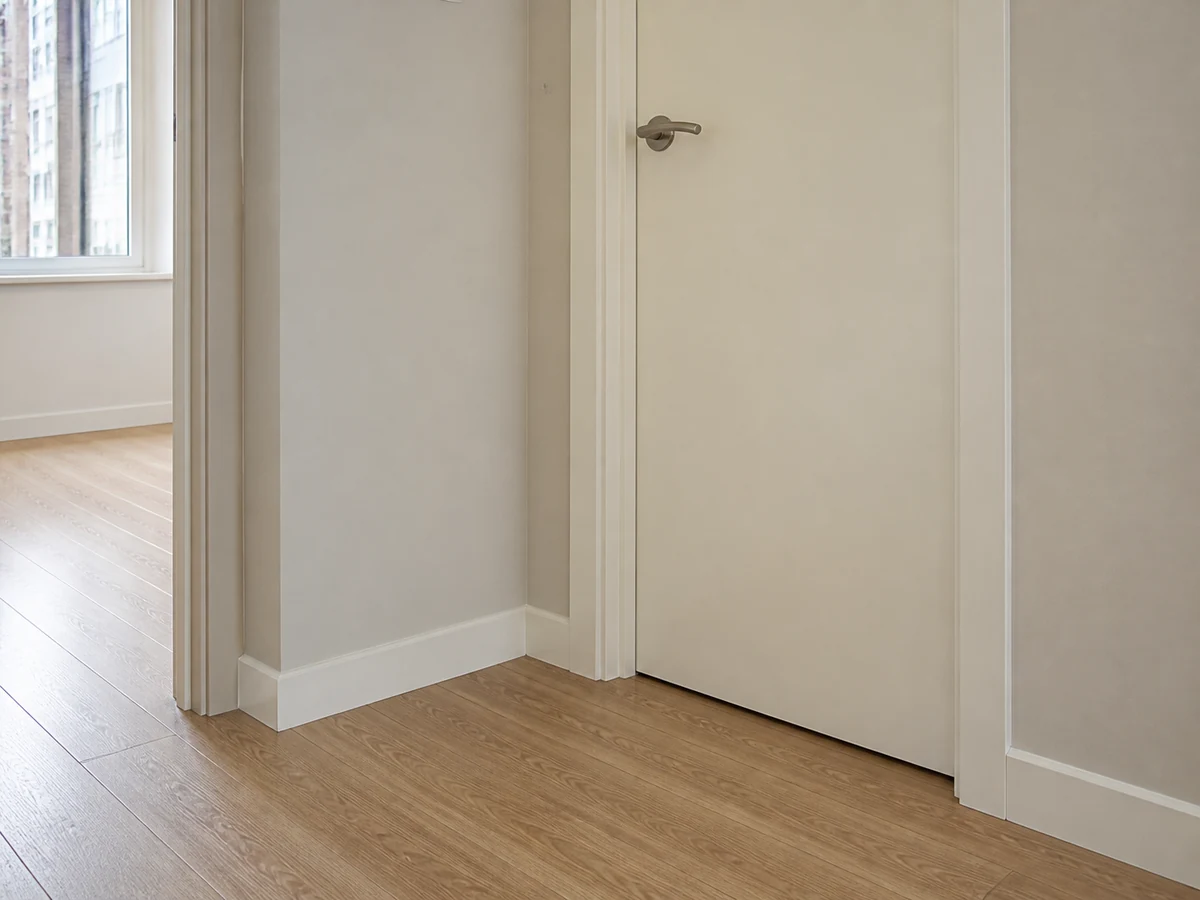
Home cleaning
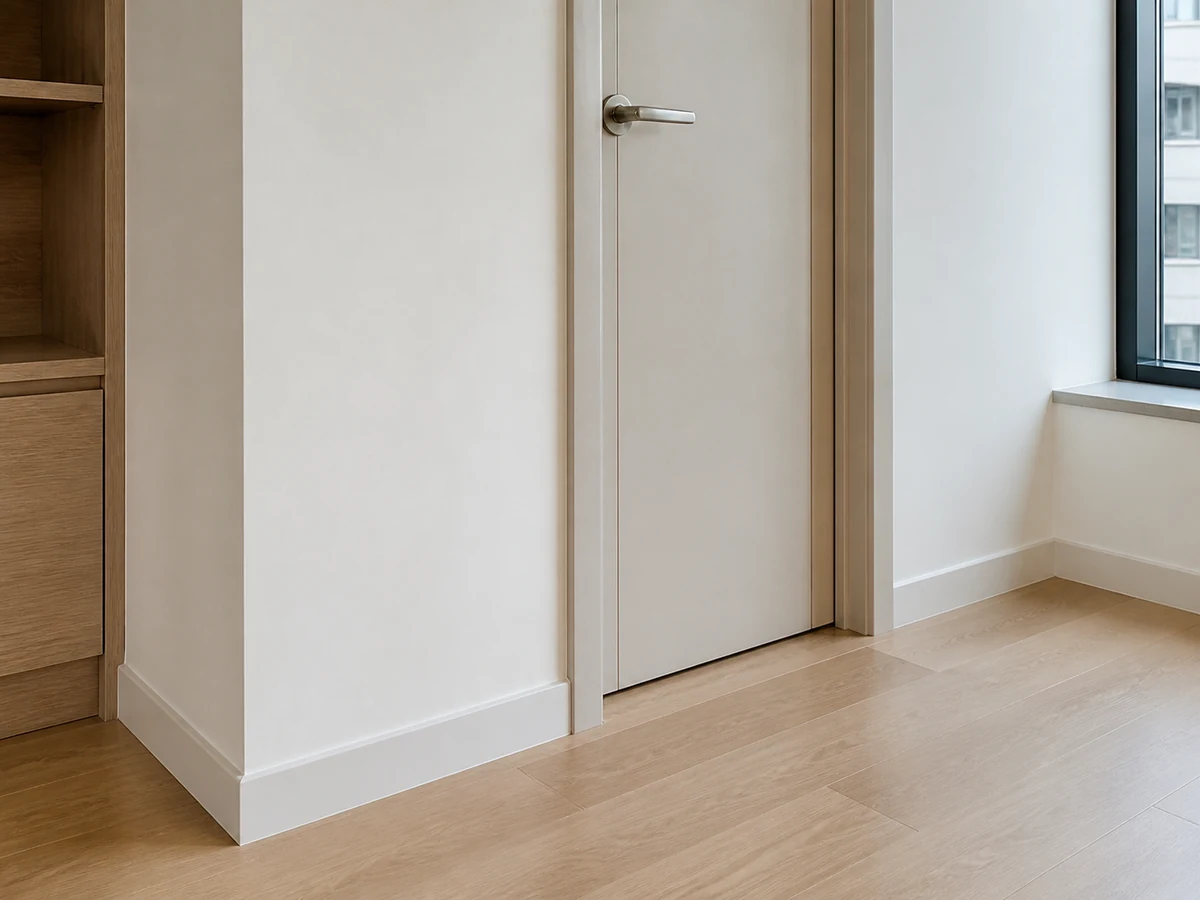
How to Clean Baseboards, Door Frames and Doors
Identify paint, wood, laminate or metal first, then use minimal moisture and non-abrasive care
Overview
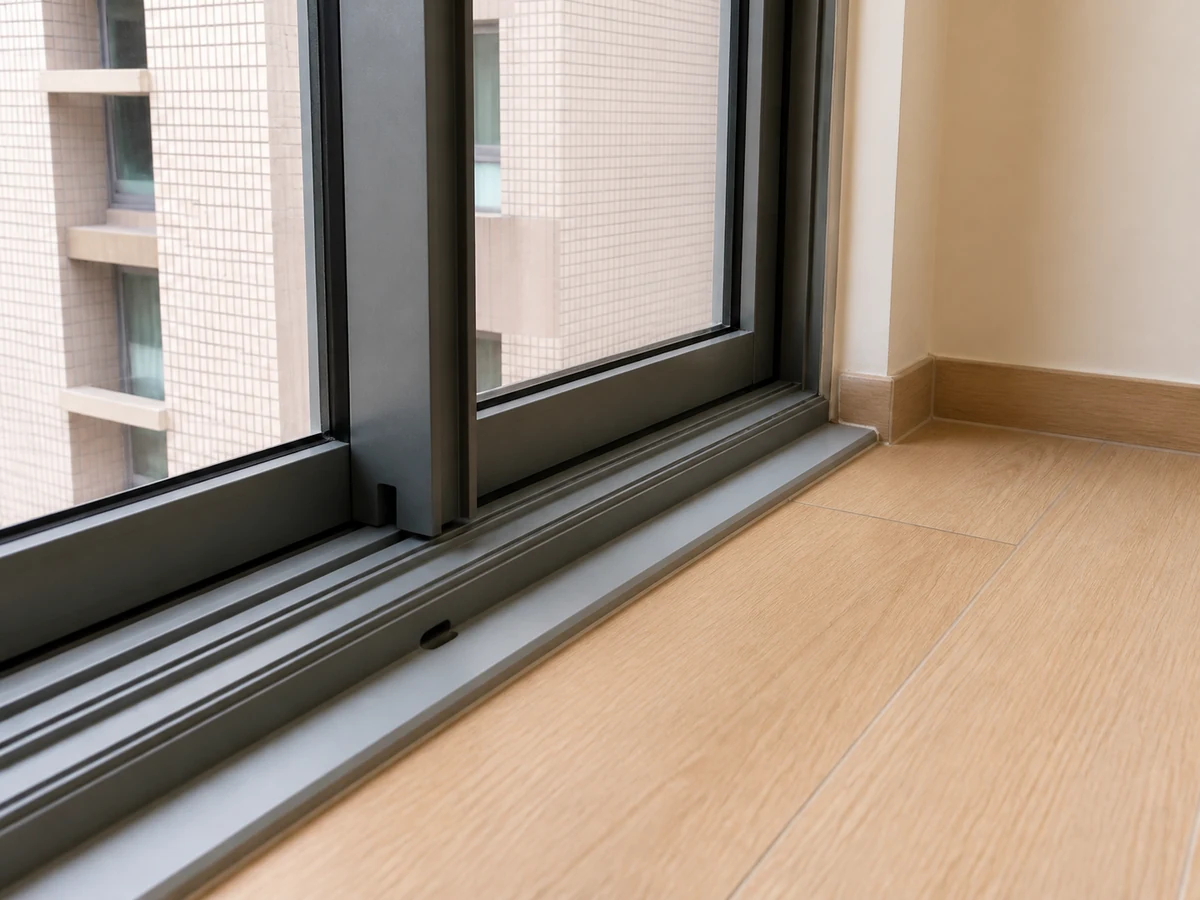
Baseboards, frames and doors may have different materials and finishes. Check manufacturer or paint-care guidance, patch-test discreetly and avoid soaking wood edges, hinges, joints or electronic locks.
Tools needed
- Vacuum soft-brush tool or duster
- Two soft white cloths
- Small bowl of clean water
- Non-abrasive sponge
- Mild cleaner permitted by material or paint guidance
Cleaning steps
Identify material and condition
Distinguish paint, wood, laminate or metal. Stop for uncured or peeling paint, swollen wood or exposed electronic components.
Clear and dry-dust
Move floor items and use a soft brush from the top of the frame down, then the door face and baseboards.
Patch-test discreetly
Test with a well-wrung white cloth and allow it to dry; check for colour loss, dulling or swelling.
Clean baseboards and frames
Work in small sections and dab marks with a non-abrasive sponge without pushing water into edges or joints.
Clean the door and touch areas
Work top to bottom around the door and handle area while keeping liquid out of hinges, keyholes and electronic locks.
Remove residue and dry
When the material allows, remove residue with a clean barely damp cloth, dry immediately and restore the area.
Common mistakes
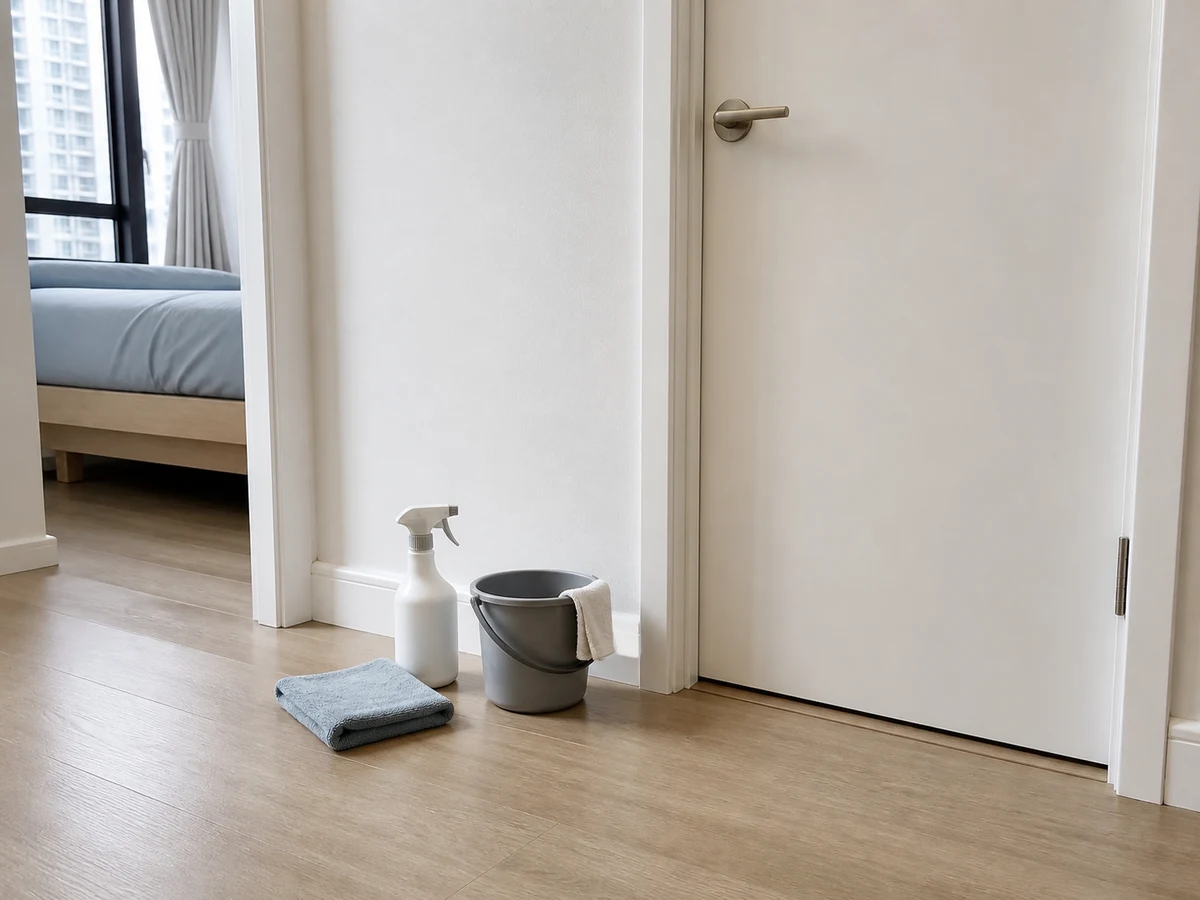
Using one product on every material
✓ Correct actionIdentify the finish and follow manufacturer or paint-care guidance.
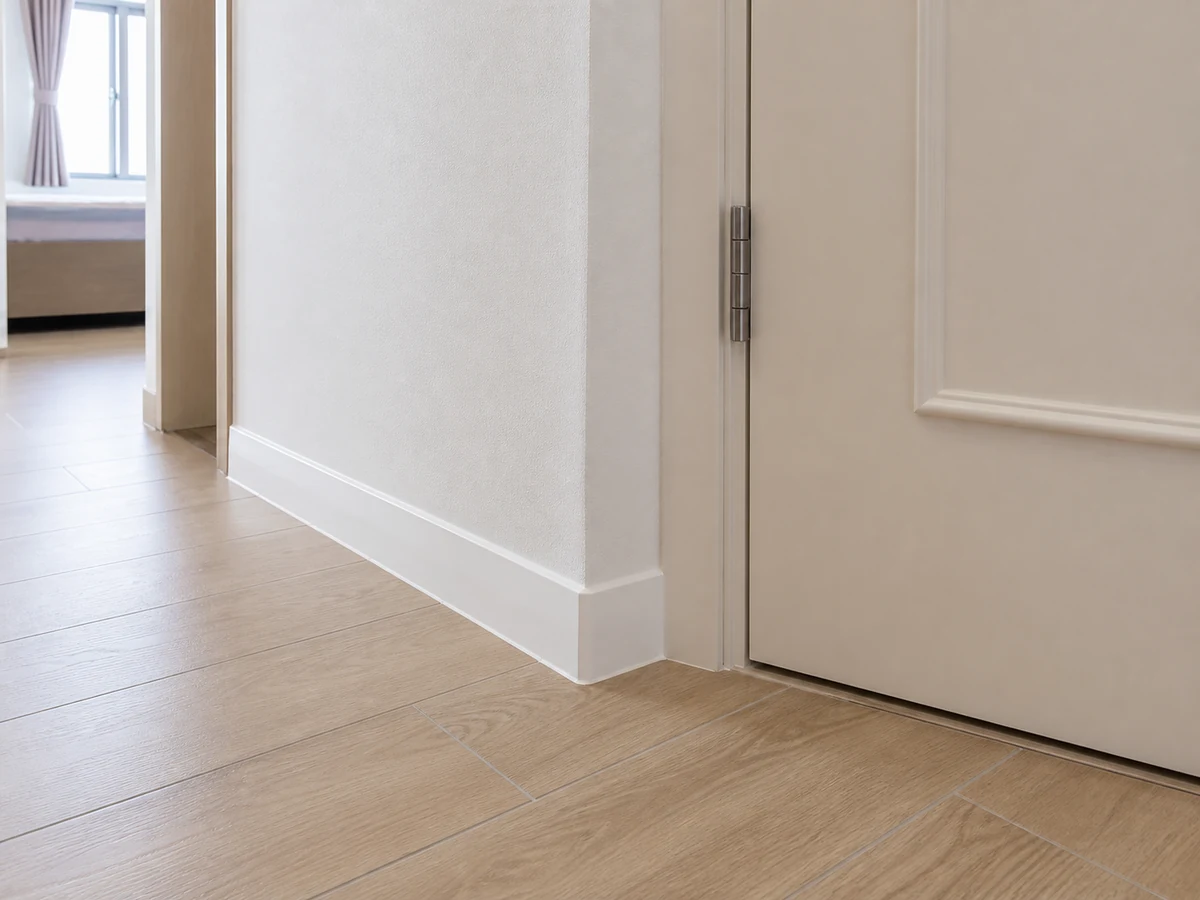
Soaking wood edges with a wet cloth
✓ Correct actionWring the cloth thoroughly and dry the surface immediately.
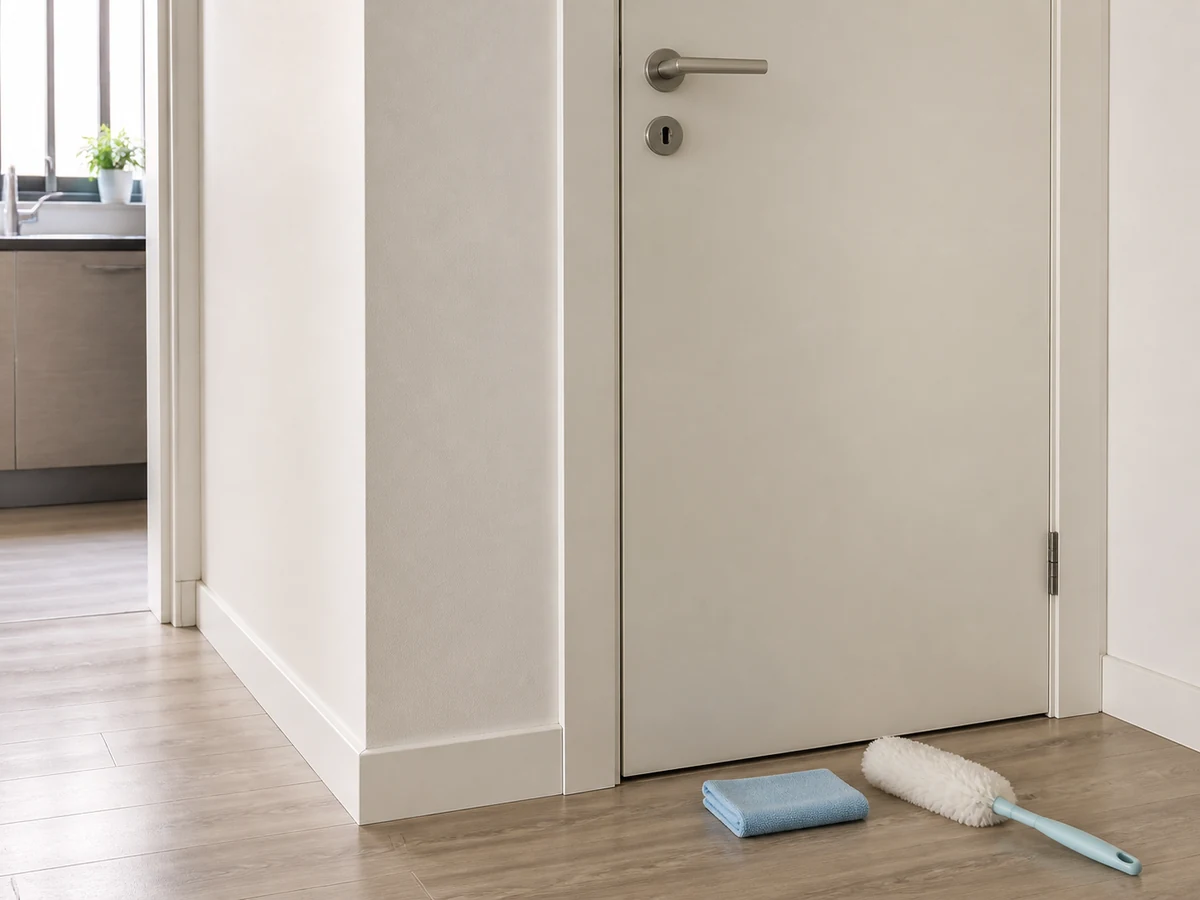
Hard scrubbing with an abrasive pad
✓ Correct actionUse a soft cloth or non-abrasive sponge with gentle dabbing.
Spraying liquid at locks or hinges
✓ Correct actionApply a small amount to the cloth and avoid component openings.
Practical tips
Tips for helpers
- Arrange tools within safe indoor reach without blocking the route.
- Dry each small section as it is completed so dirty water does not spread.
Tips for employers
- Provide manufacturer care information and suitable tools; do not assign elevated or unsafe exterior-window work.
- Identify damaged areas, electronics and special finishes that must be avoided.
Completion checklist
Checked 0 / 6