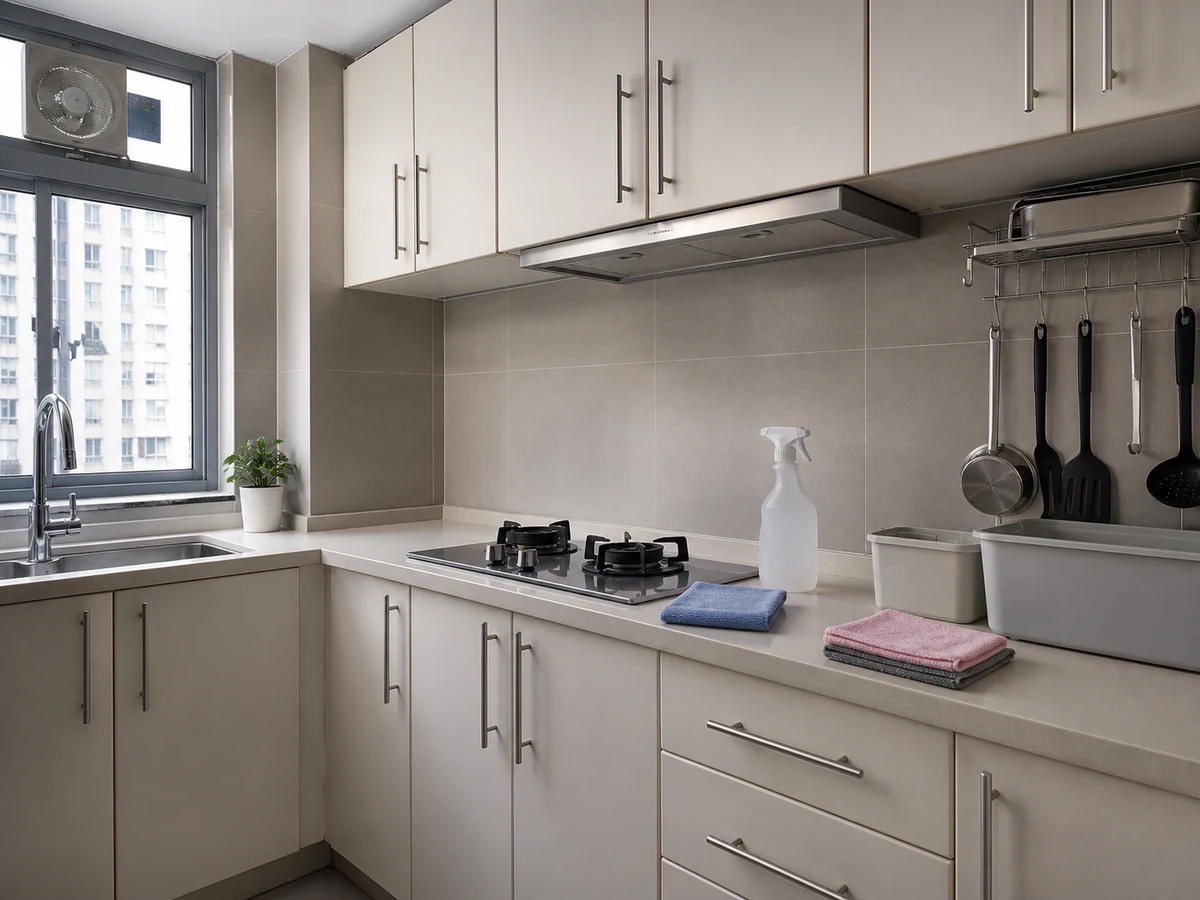
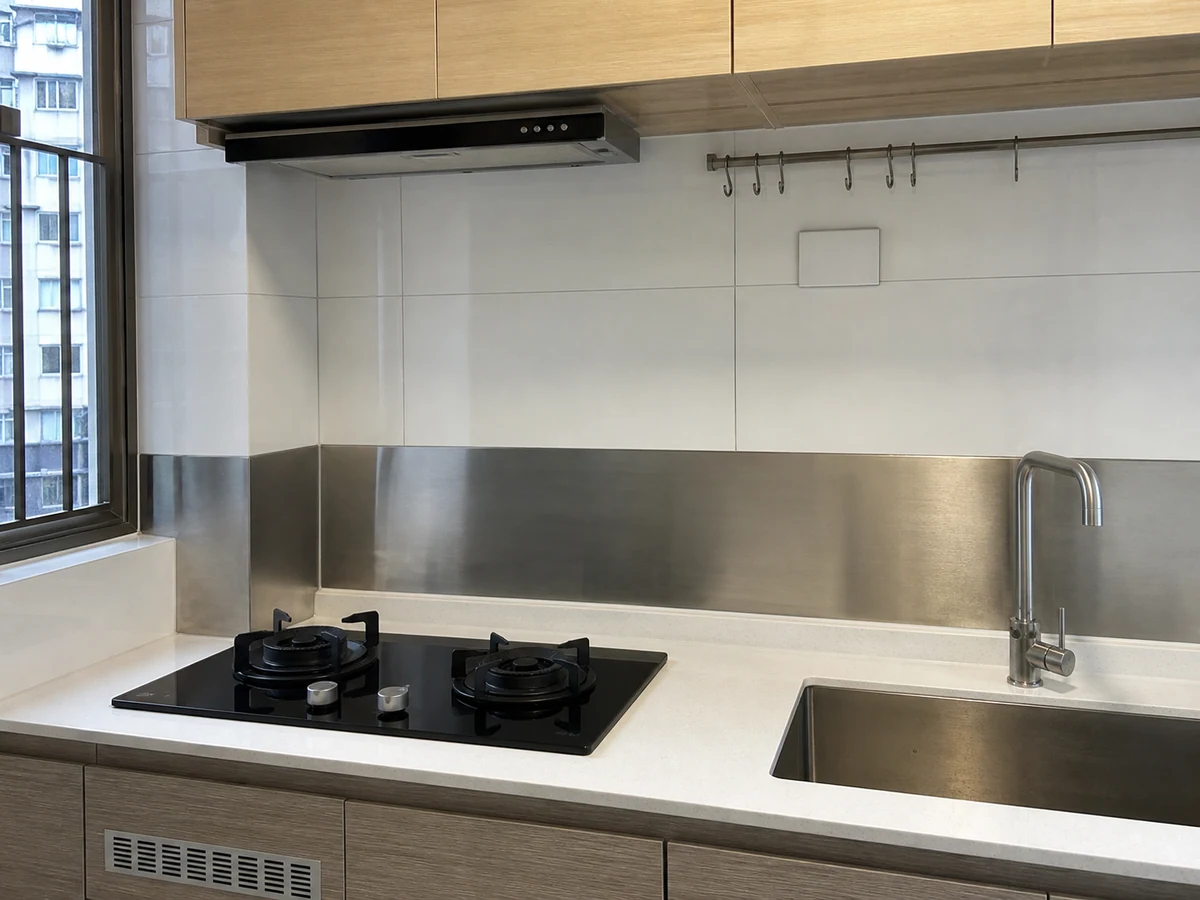
Kitchen cleaning
How to Clean Kitchen Walls and a Backsplash
Identify the material, then clean compatible sections and dry
Overview
Kitchen walls and backsplashes may be tile, glass, stainless steel or laminate. Check the surface and maker care instructions, use one compatible product and test a hidden spot. Never assume one method suits every material.
Tools needed
- Clean microfibre cloths
- Soft sponge or soft brush
- One product compatible with the surface
- Clean water
- Dry cloth
- Clean protective counter mat
Cleaning steps
Clear and identify the surface
Remove food, dishes and small appliances. Identify tile, glass, stainless steel or laminate and check available care instructions.
Remove dry soil first
Use a clean dry cloth from top to bottom to lift dust and loose debris without dragging grit through a wet surface.
Test a hidden spot
Apply a small amount of one compatible product in an inconspicuous area. Continue only if there is no colour, gloss or surface damage.
Wipe in small sections
Put product on the cloth or sponge and clean small sections. Keep sockets, switches, food and appliances dry; do not spray them directly.
Clean seams and edges
Use a soft brush or cloth on joints, corners and edges. Avoid wire or abrasive tools and do not flood laminate seams.
Remove residue and dry
Follow the product directions to remove residue with a clean-water cloth, then dry. Return items only when the wall and counter are fully dry.
Common mistakes
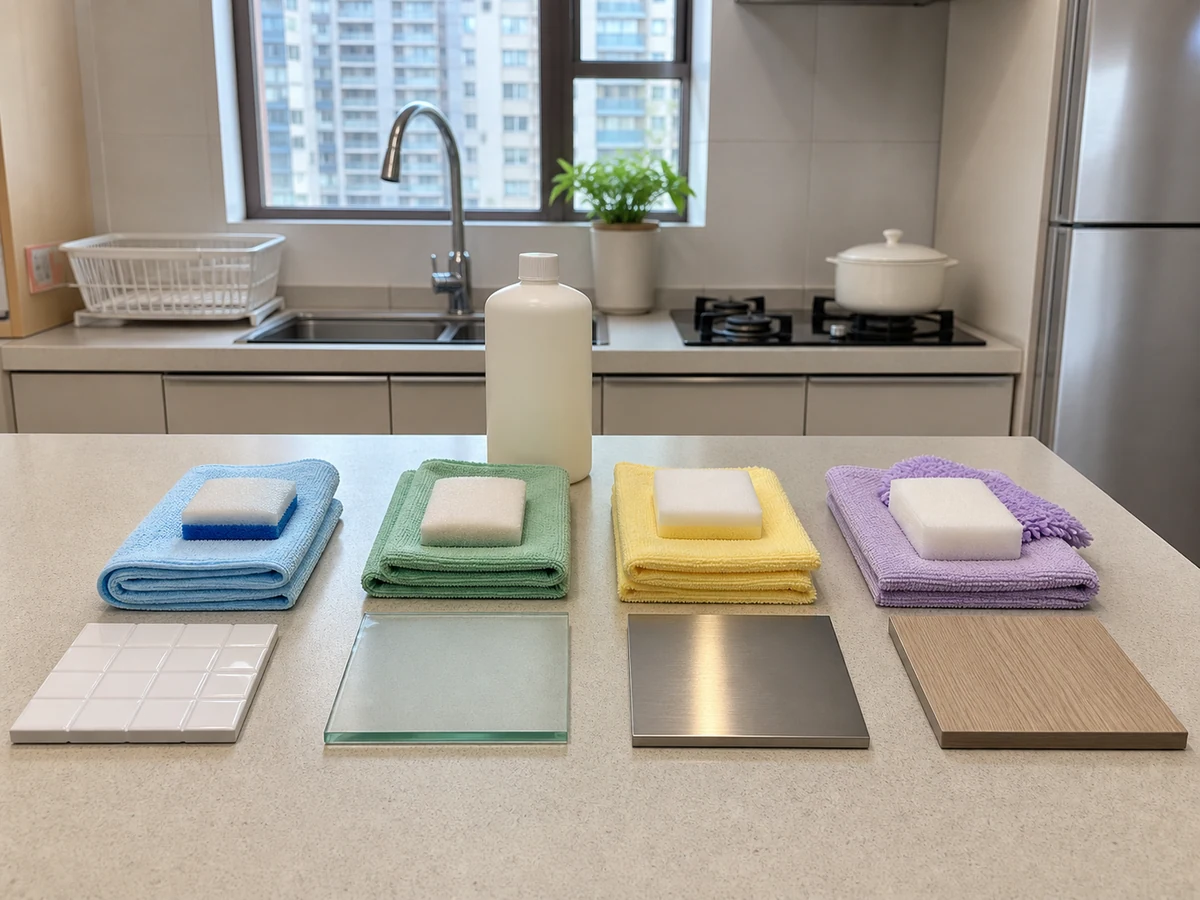
Using one cleaner on every surface
✓ Correct actionChoose a compatible product for each material and spot-test first.
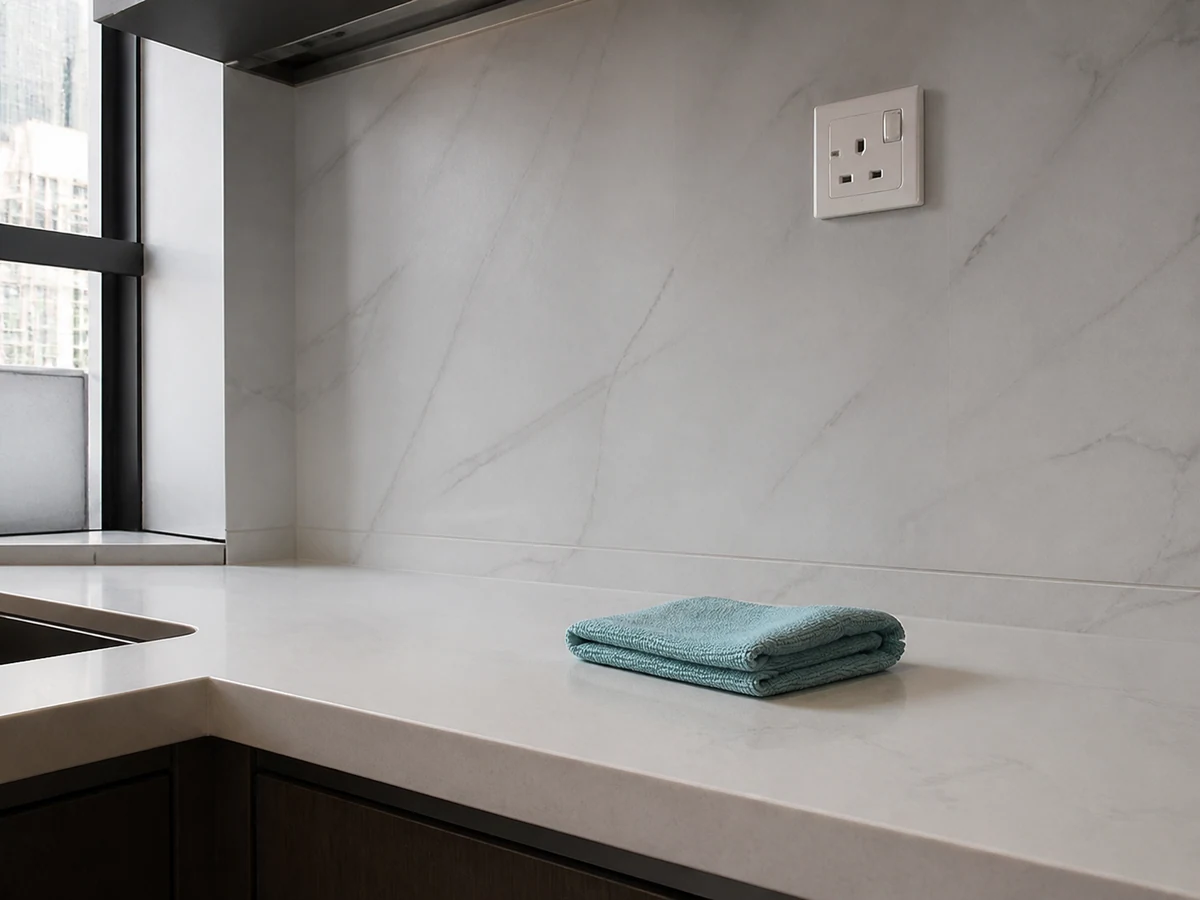
Spraying sockets or food directly
✓ Correct actionClear the counter, apply product to a cloth and avoid electrical points.
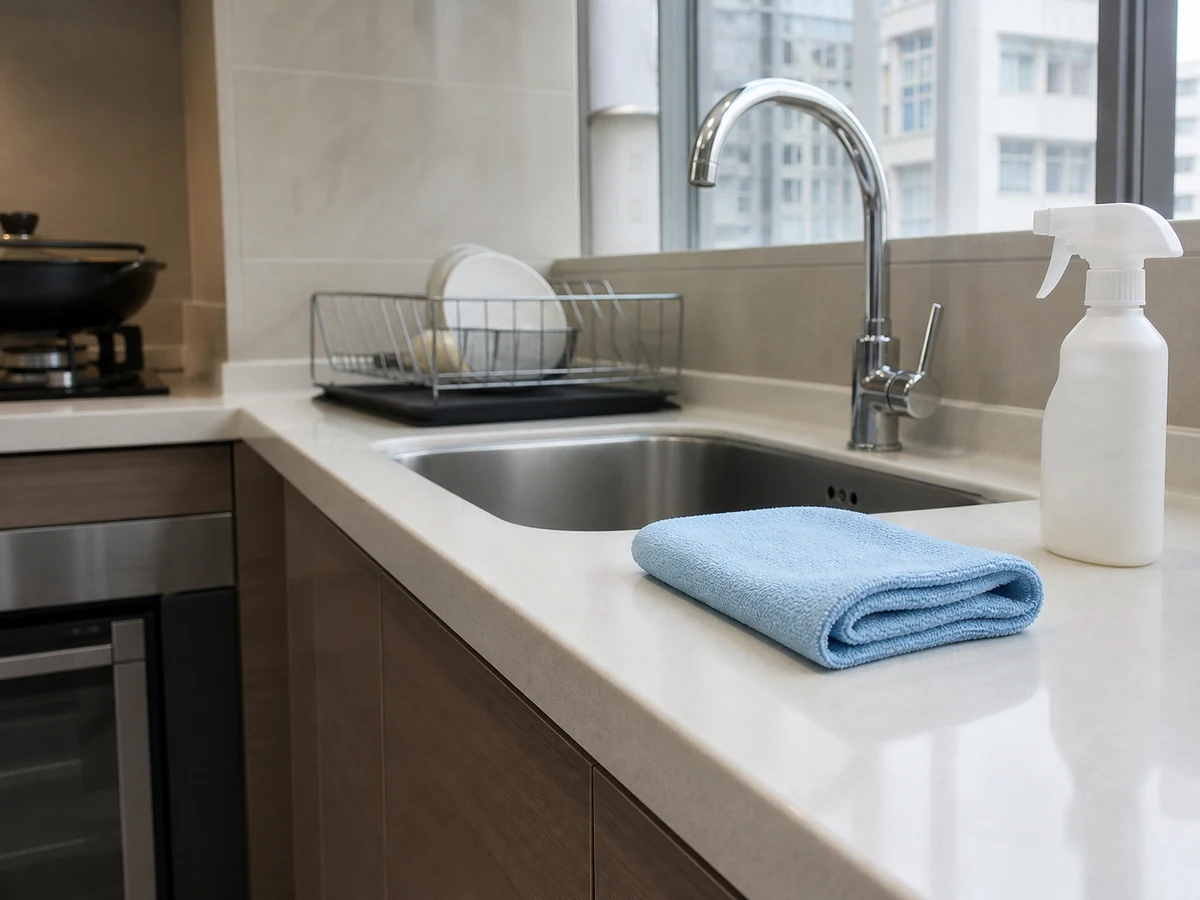
Scrubbing with a rough pad
✓ Correct actionUse a soft non-abrasive cloth or brush.
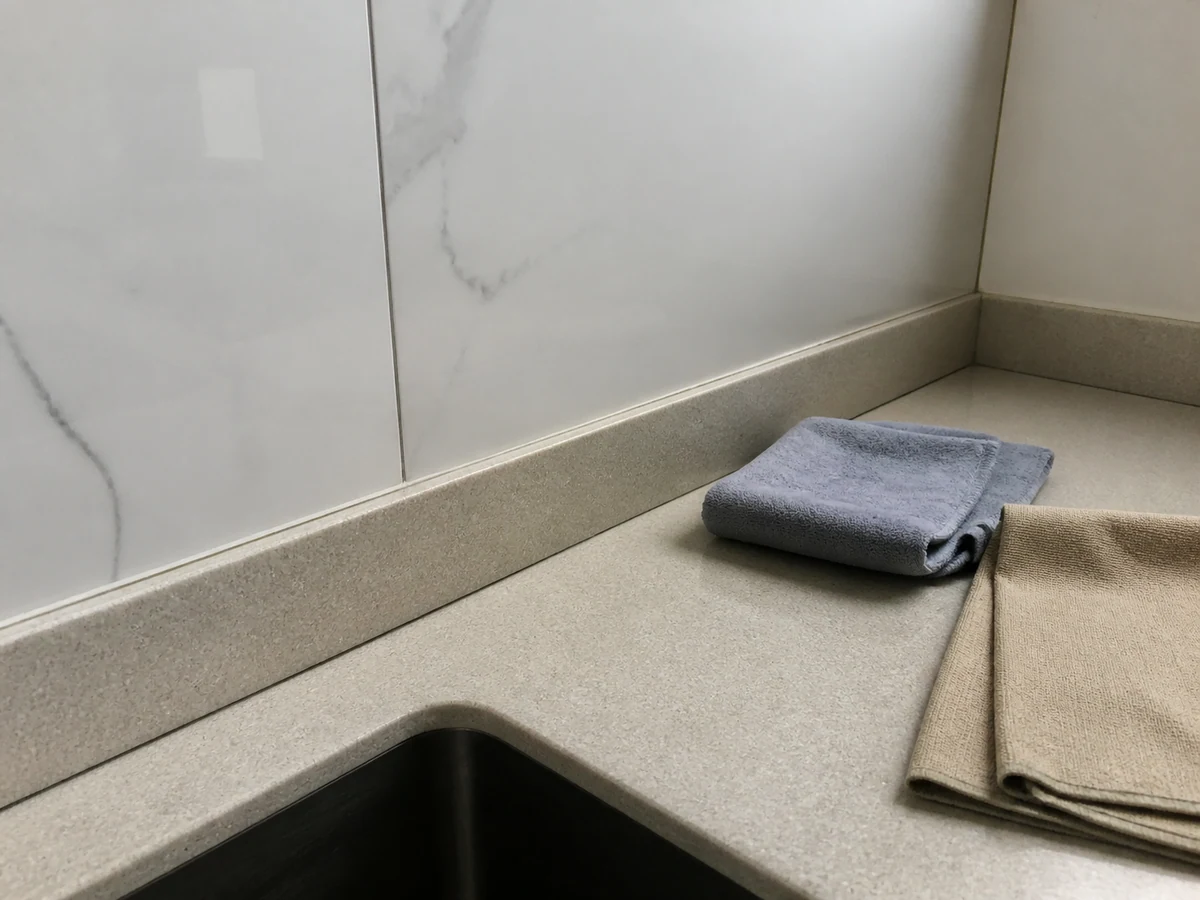
Leaving water on laminate seams
✓ Correct actionClean small areas with a damp cloth and dry seams immediately.
Practical tips
Tips for helpers
- Work from top to bottom so drips do not soil finished areas.
- Use a clean cloth face for each material so grit does not move onto glass or metal.
Tips for employers
- Provide soft tools and compatible products; do not require one hack for every surface.
- Stop and arrange inspection if seams lift, laminate swells or the finish is damaged.
Completion checklist
Checked 0 / 7