Kitchen cleaning
Clean Kitchen Worktops by Material
Identify the worktop first, then respect its moisture, scratch and heat limits
Overview
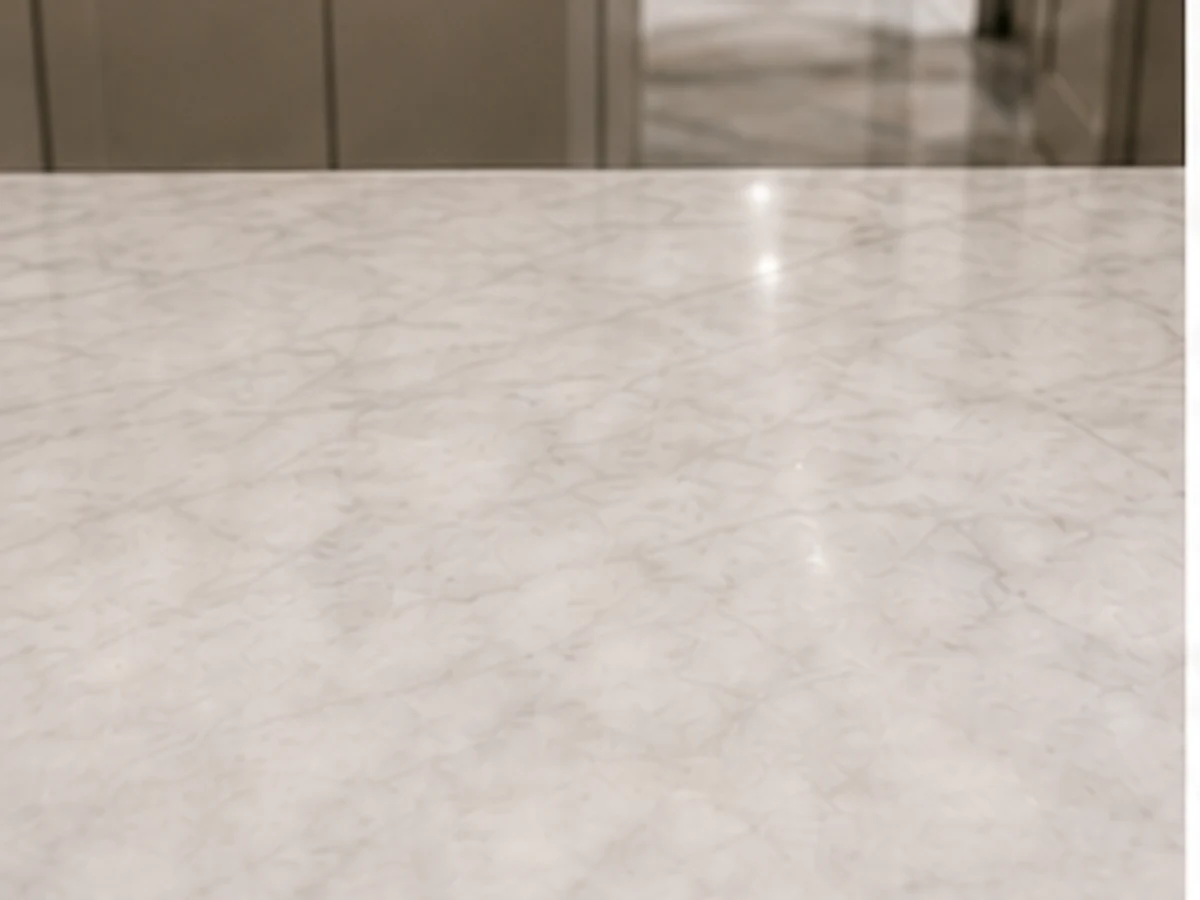
Worktops are not one material. Confirm whether the surface is laminate, sealed wood, engineered stone, natural stone or stainless steel; ask the employer about an unknown surface or failed edge instead of using one strong product everywhere.
Tools needed
- Soft cloth
- Warm water
- Material-approved cleaner
- Dry cloth
Cleaning steps
Clear food and small items
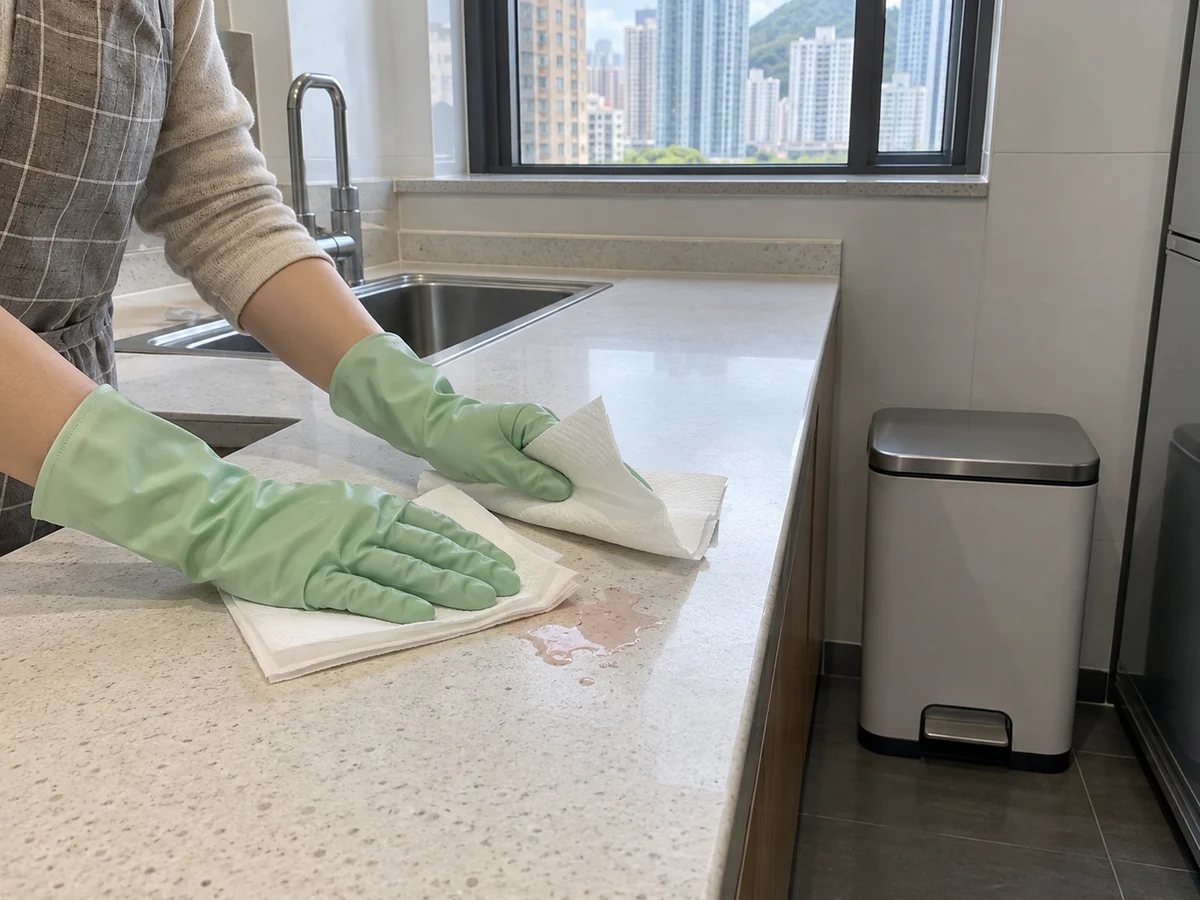
Remove food and utensils, then collect crumbs with a clean cloth without dragging sharp objects.
Confirm material and limits
Check the worktop or employer instructions; keep water from standing on natural stone, wood edges and laminate seams.
Wipe gently
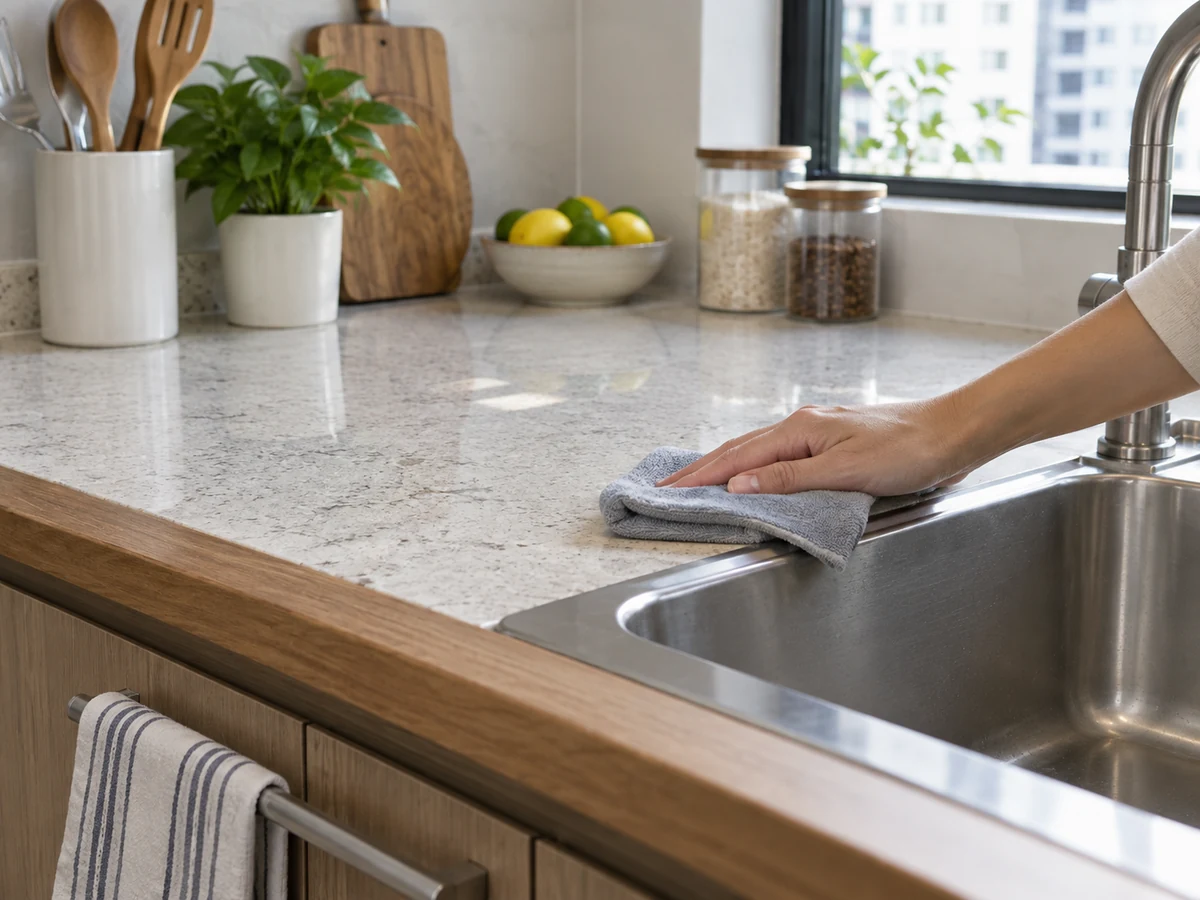
Use a damp soft cloth and suitable product from clean to dirty areas, rinsing residue when the label requires.
Dry and inspect
Dry edges, seams and stainless water marks promptly; report cracks, swelling or dulling.
Common mistakes
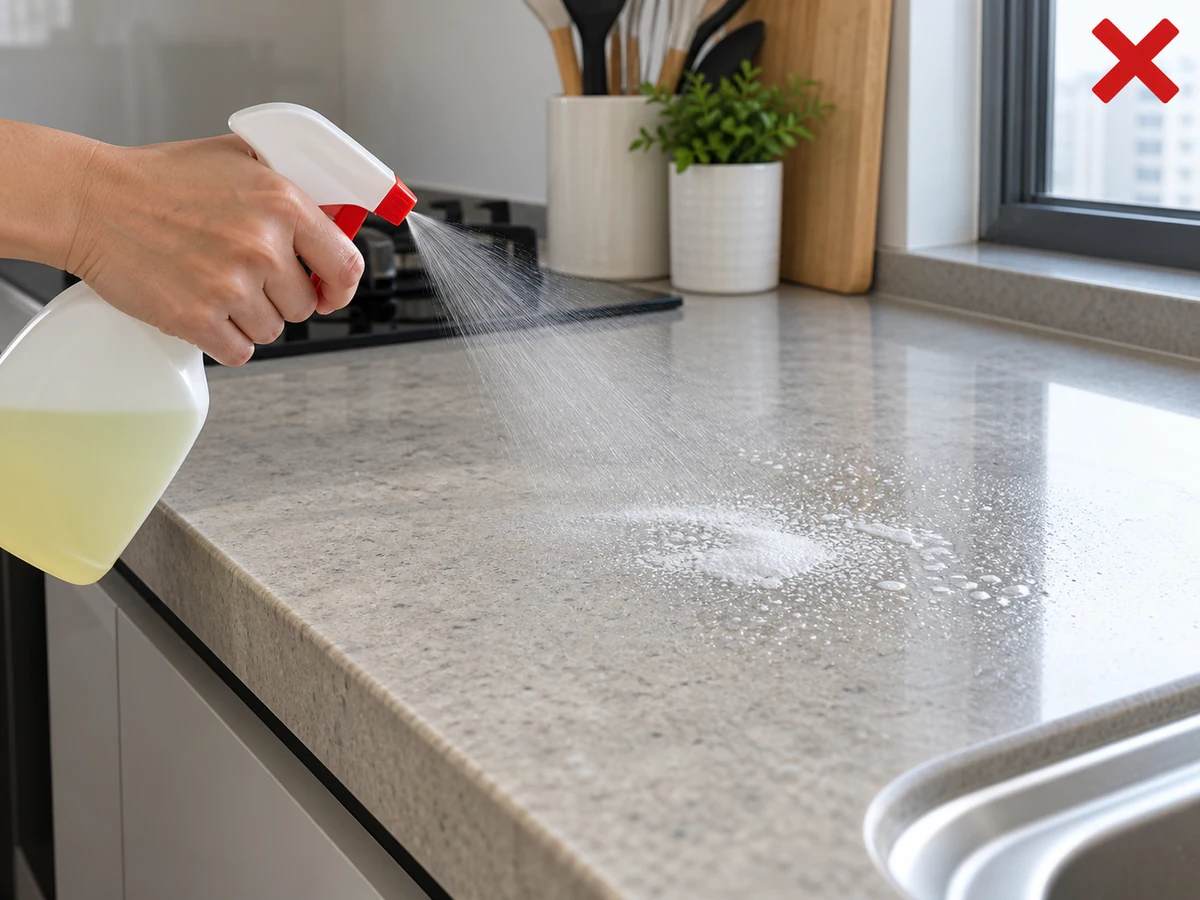
Spraying a strong product before identification
✓ Correct actionConfirm the material and product instructions first.
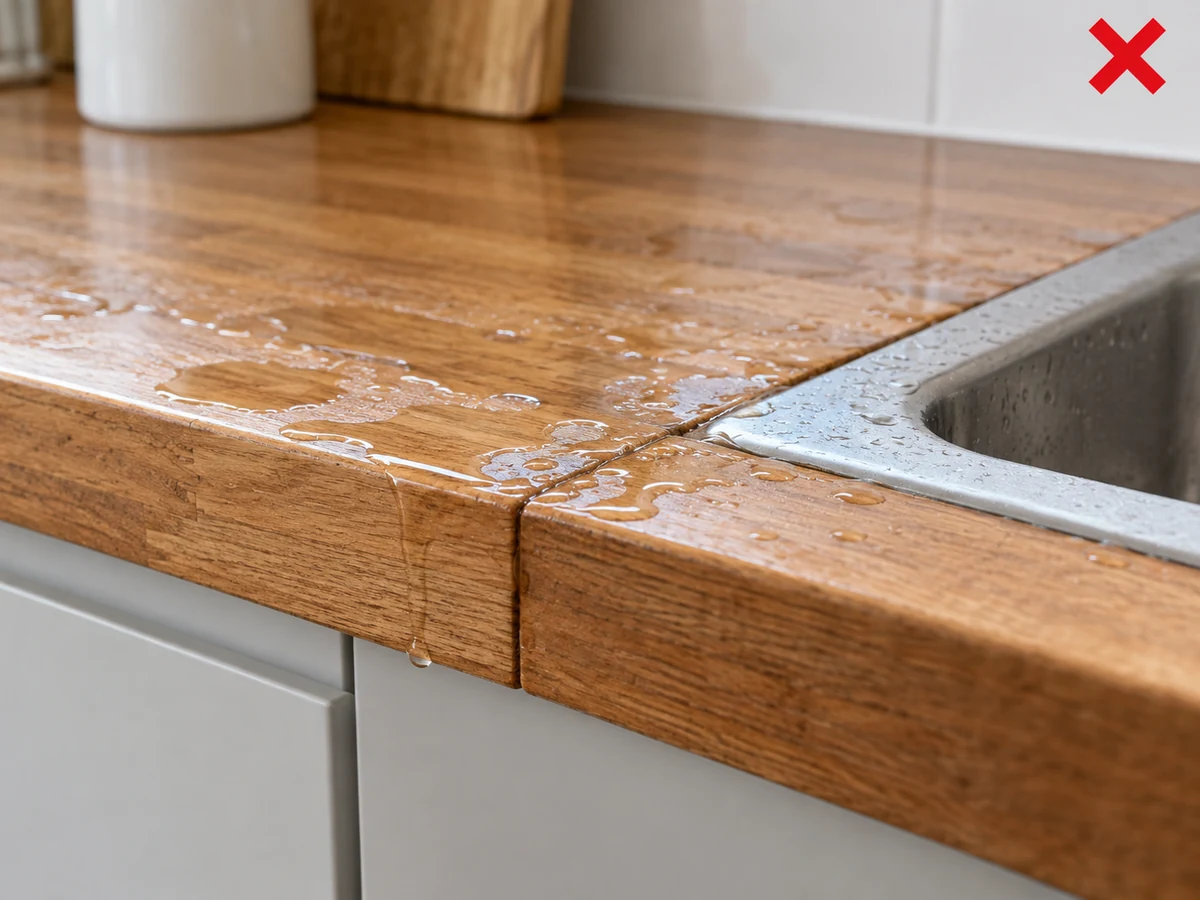
Leaving water on wood edges or seams
✓ Correct actionUse a damp—not wet—cloth and dry straight away.
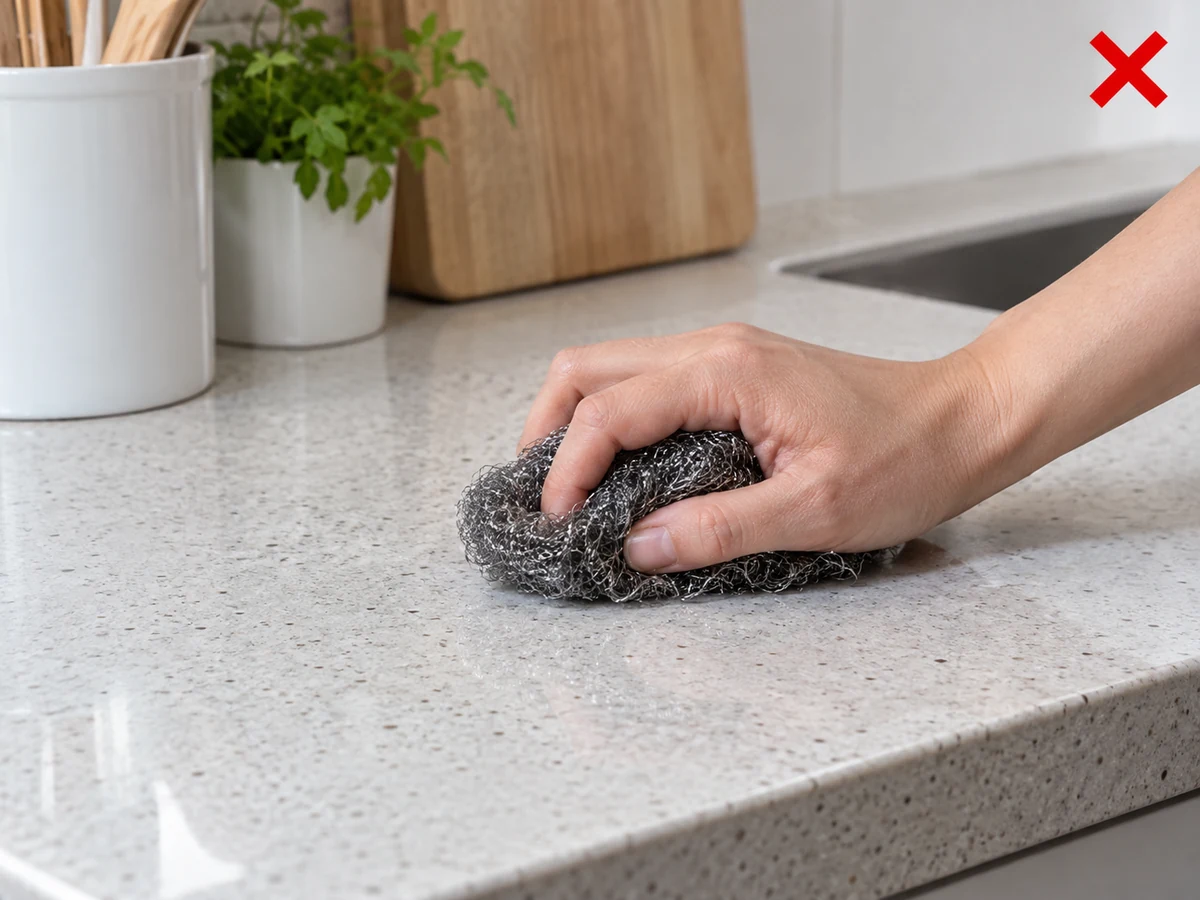
Using steel wool
✓ Correct actionUse a non-abrasive soft cloth or sponge.
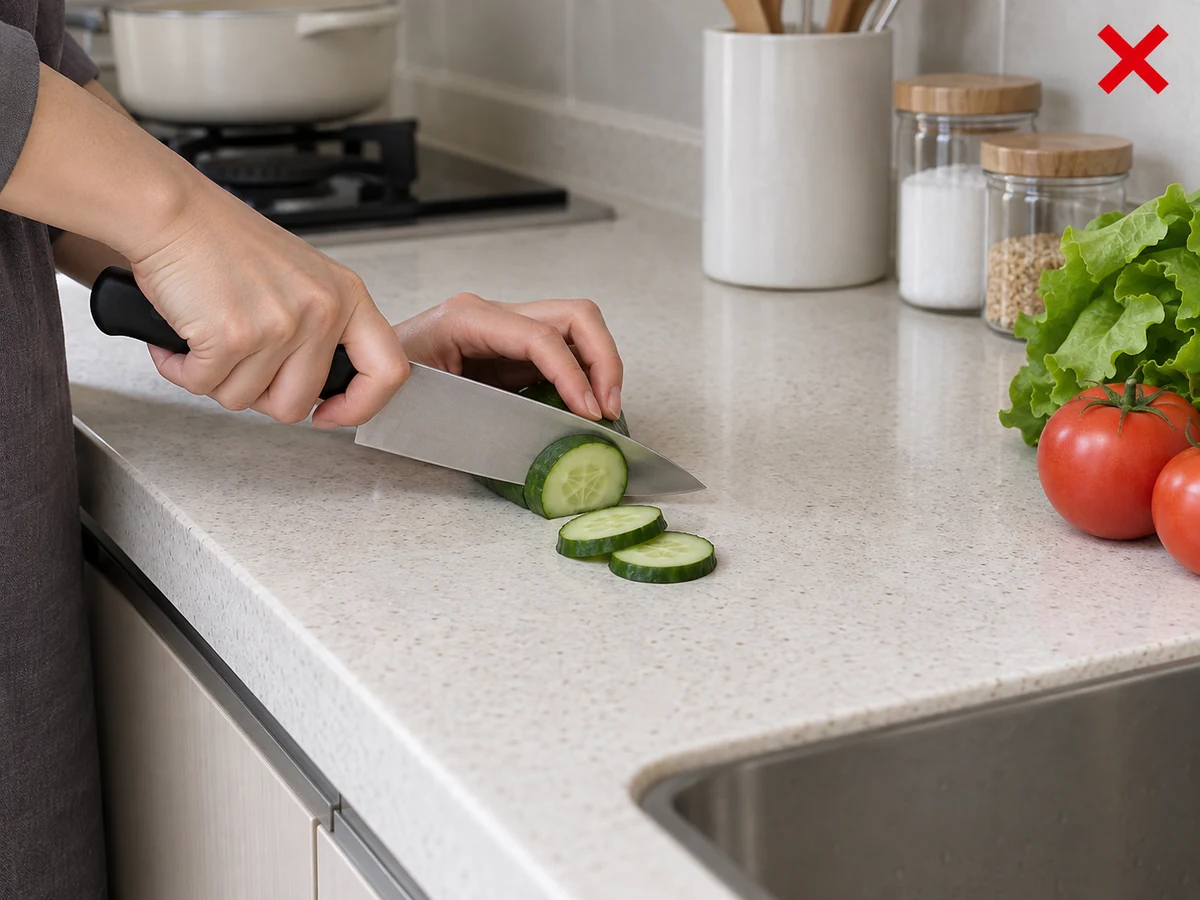
Using the worktop as a cutting board
✓ Correct actionUse a board and a trivet to protect the surface.
Practical tips
Tips for helpers
- Remove food and utensils, then collect crumbs with a clean cloth without dragging sharp objects.
- Dry edges, seams and stainless water marks promptly; report cracks, swelling or dulling.
Tips for employers
- Label each worktop material and prohibited product, especially natural stone and wood edges.
- Provide boards and trivets so knives and hot pans do not go directly on the worktop.
Completion checklist
Checked 0 / 4