Pet households
Clean Pet Accidents from Hard Floors by Surface Type
Contain the pet accident before treating residue and slip risk for the confirmed hard-floor material.
Overview
This guide covers clean pet accidents from hard floors by surface type. Work slowly, follow the item label or maker’s instructions, and stop for damage or a condition outside ordinary household care.
Tools needed
- Gloves
- Pet-only paper towels
- Surface-compatible cleaner
- Dry floor cloth
Cleaning steps
Contain the accident
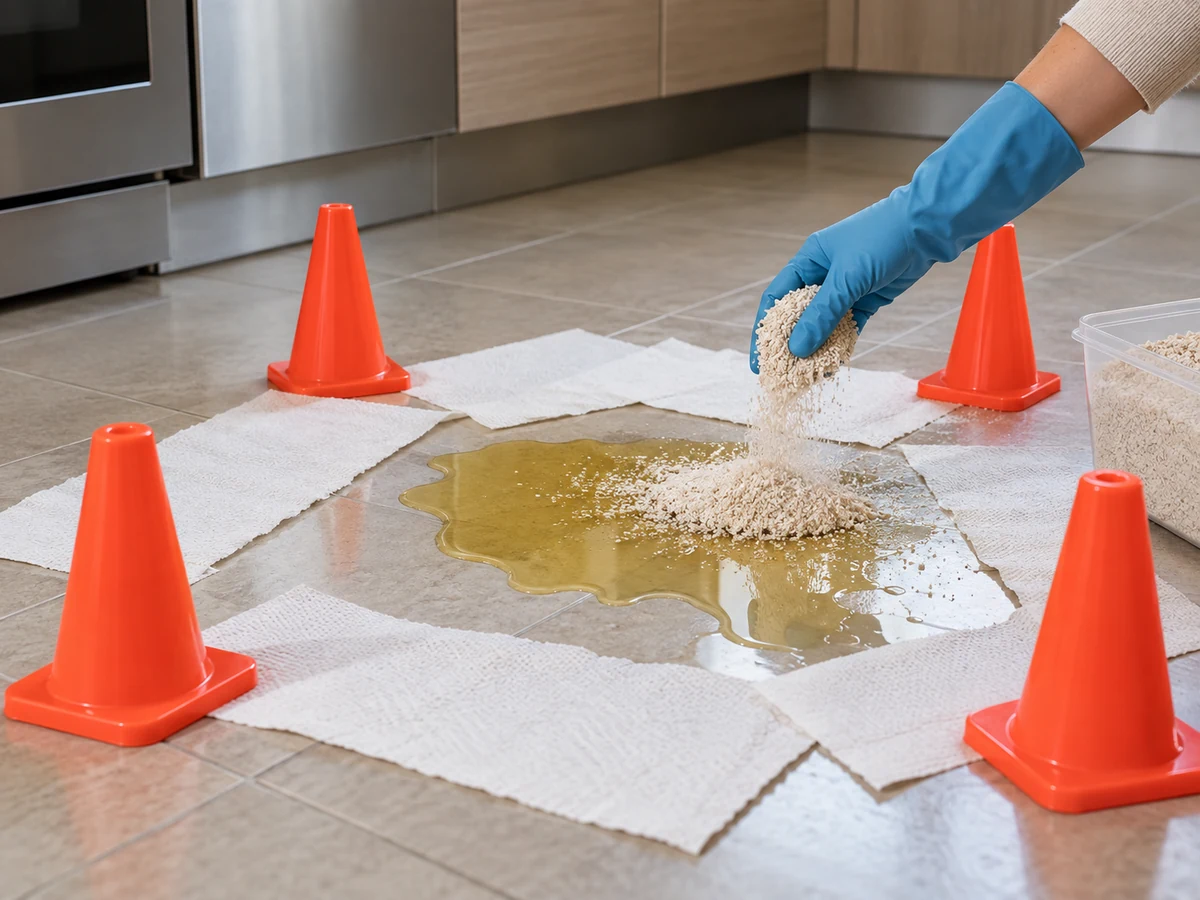
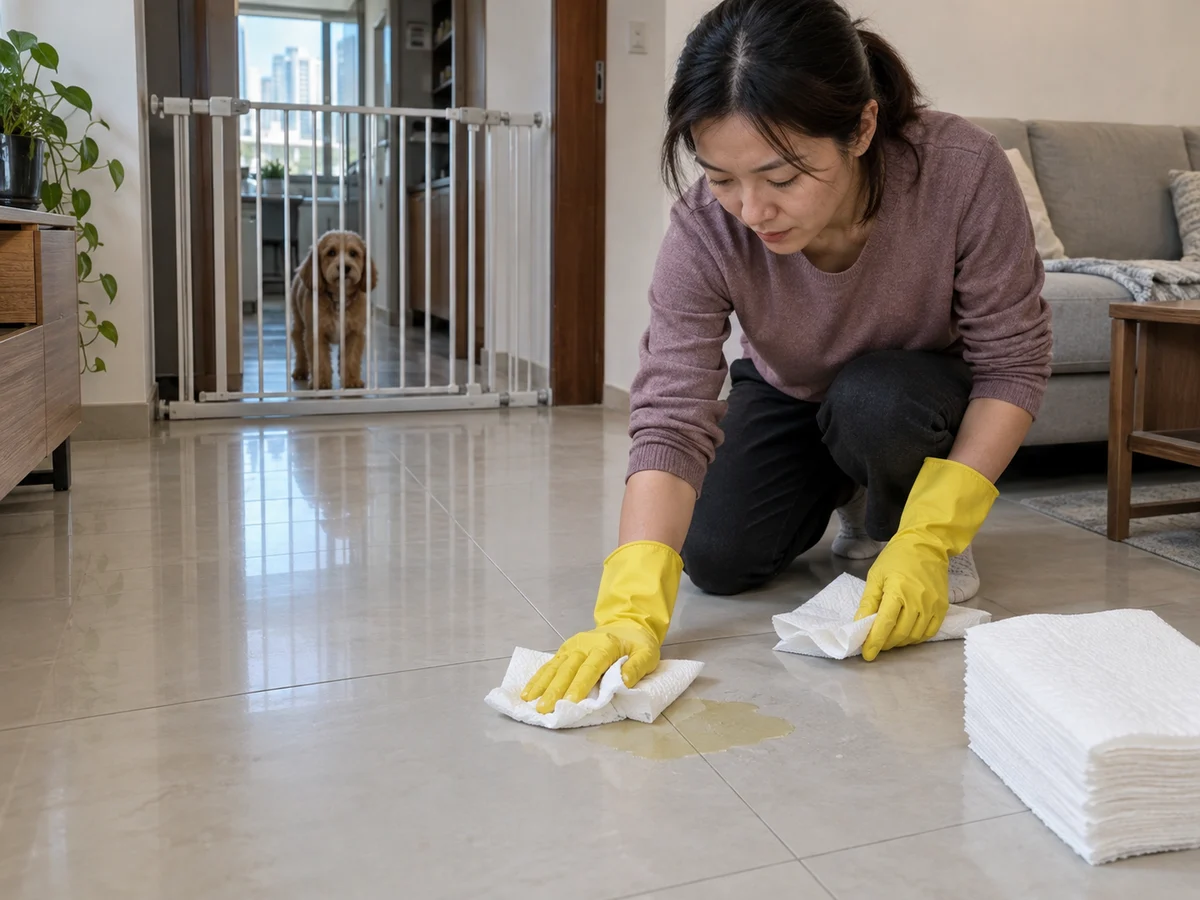
Keep people and pets away from the wet area; put on gloves and use pet-only paper or cloths to lift solid soil or blot liquid without spreading it.
Match the floor
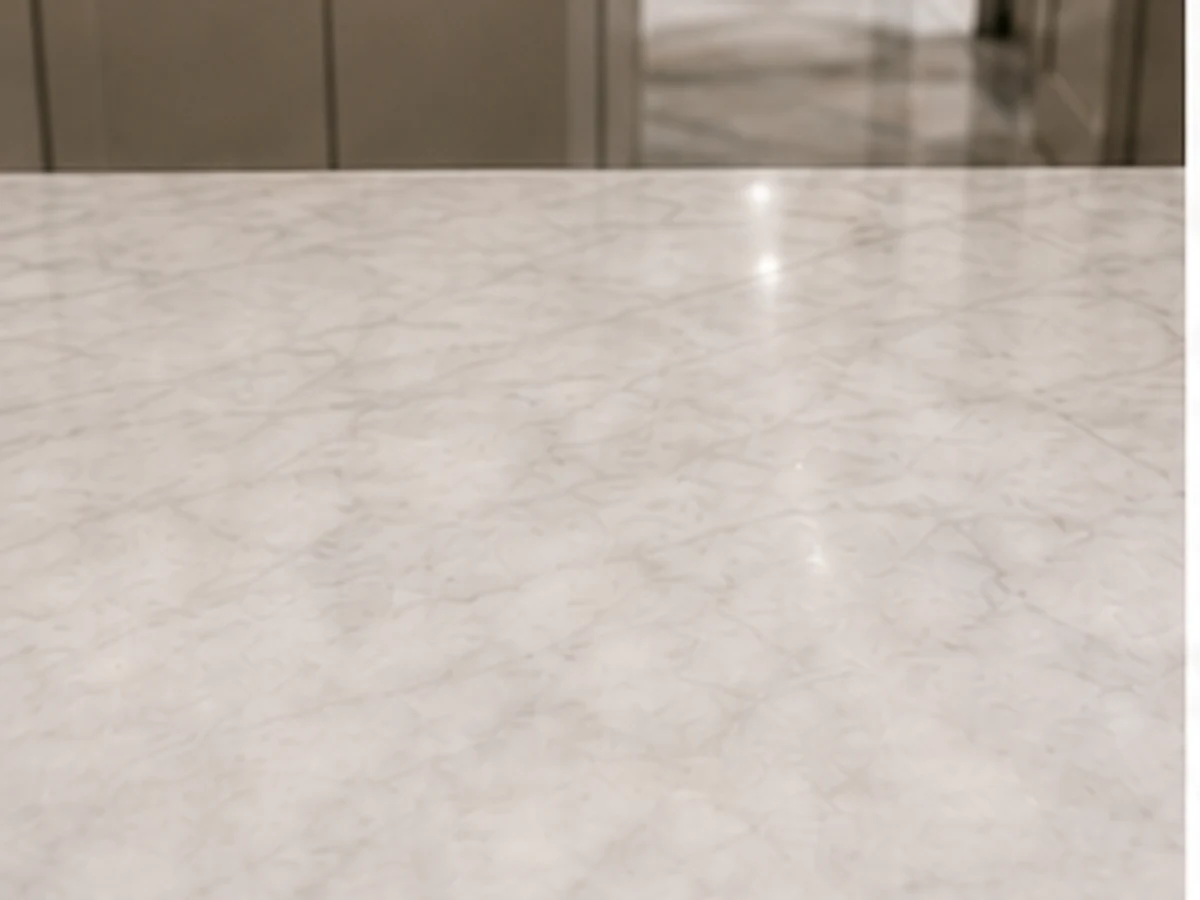
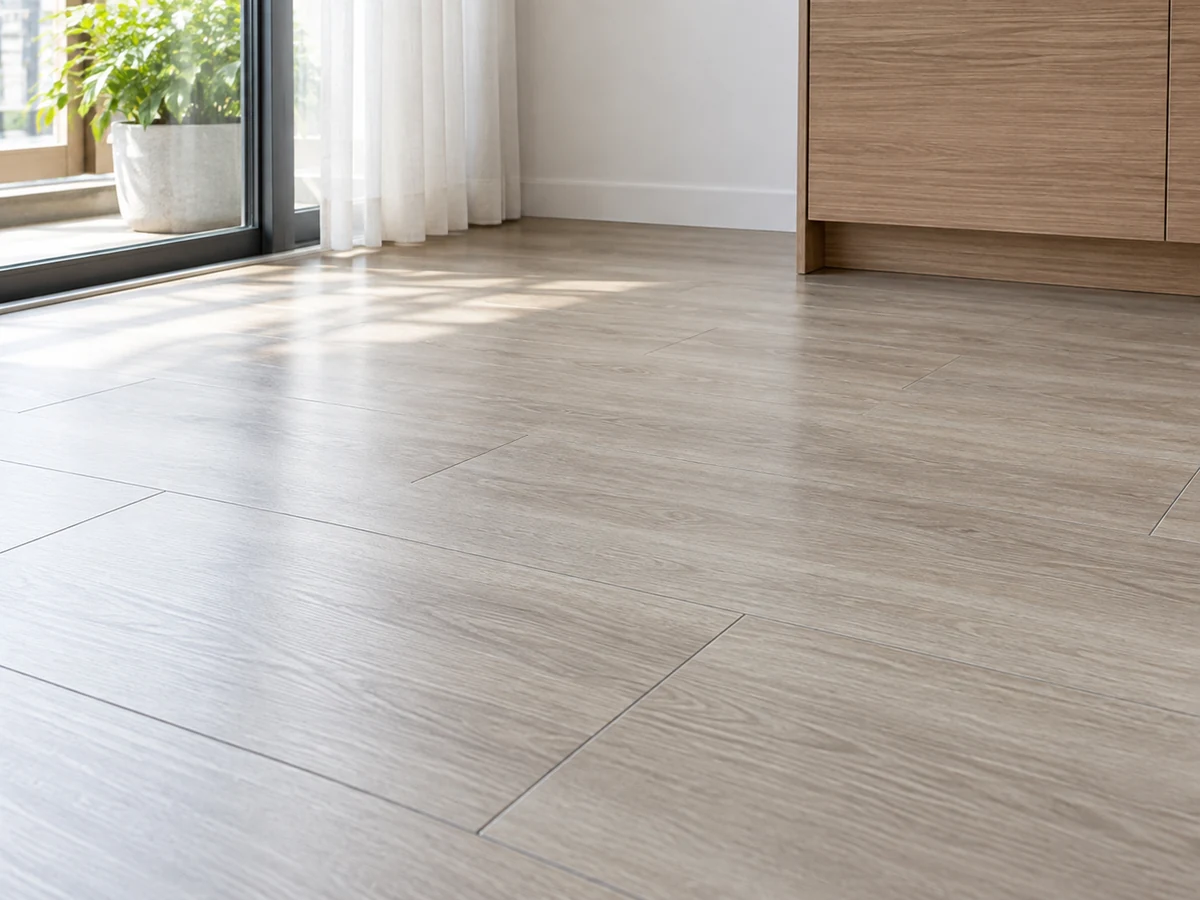
Identify sealed wood/laminate, stone, tile or vinyl before choosing a small amount of compatible cleaner; unknown or unsealed flooring needs owner direction.
Lift residue safely
Clean from the outside toward the centre, remove residue as the product label requires and avoid flooding seams, grout, wood edges or stone.
Restore a dry surface
Dry the floor completely, remove the barrier only after checking grip, and report staining, lifted finish, cracks or a repeated accident.
Common mistakes
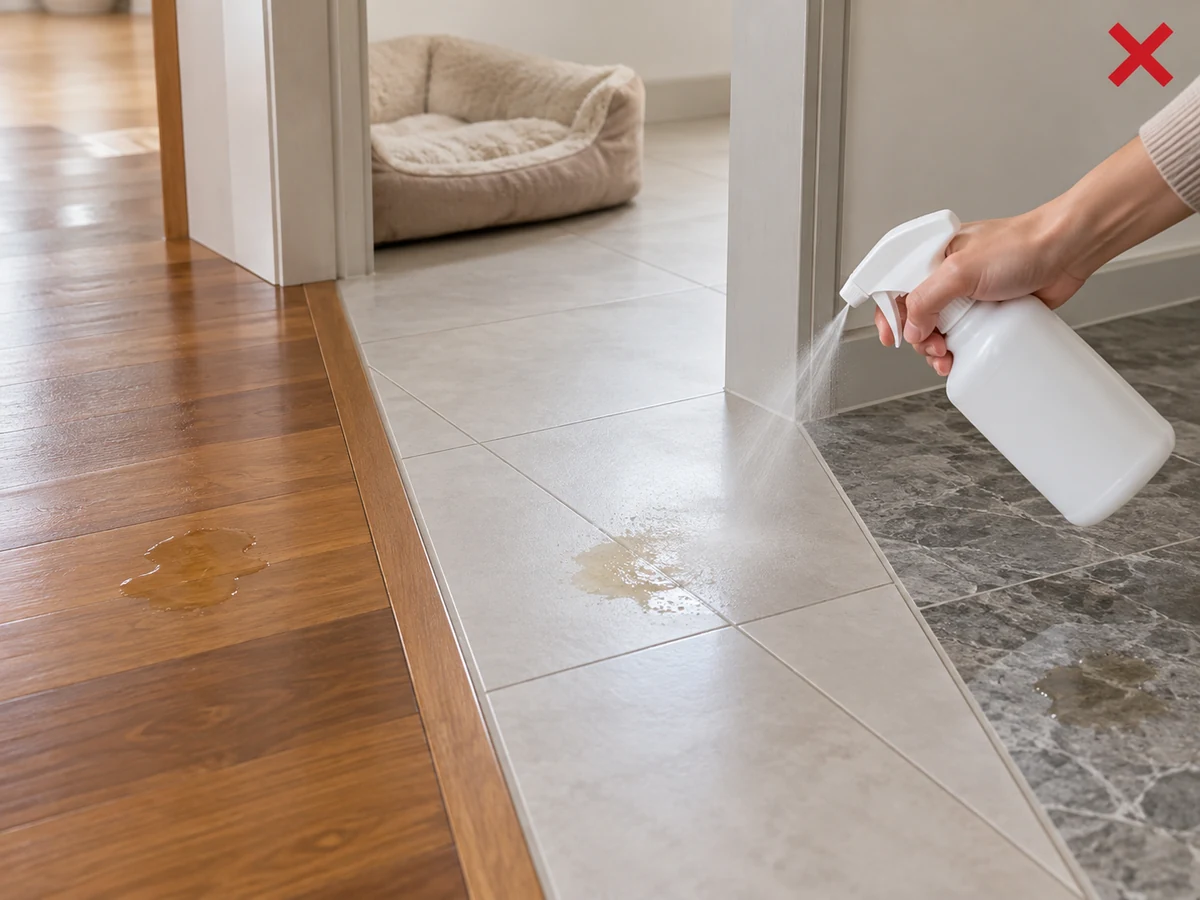
Using one strong chemical on every floor
✓ Correct actionMatch the product to the confirmed surface and test a hidden spot if allowed.
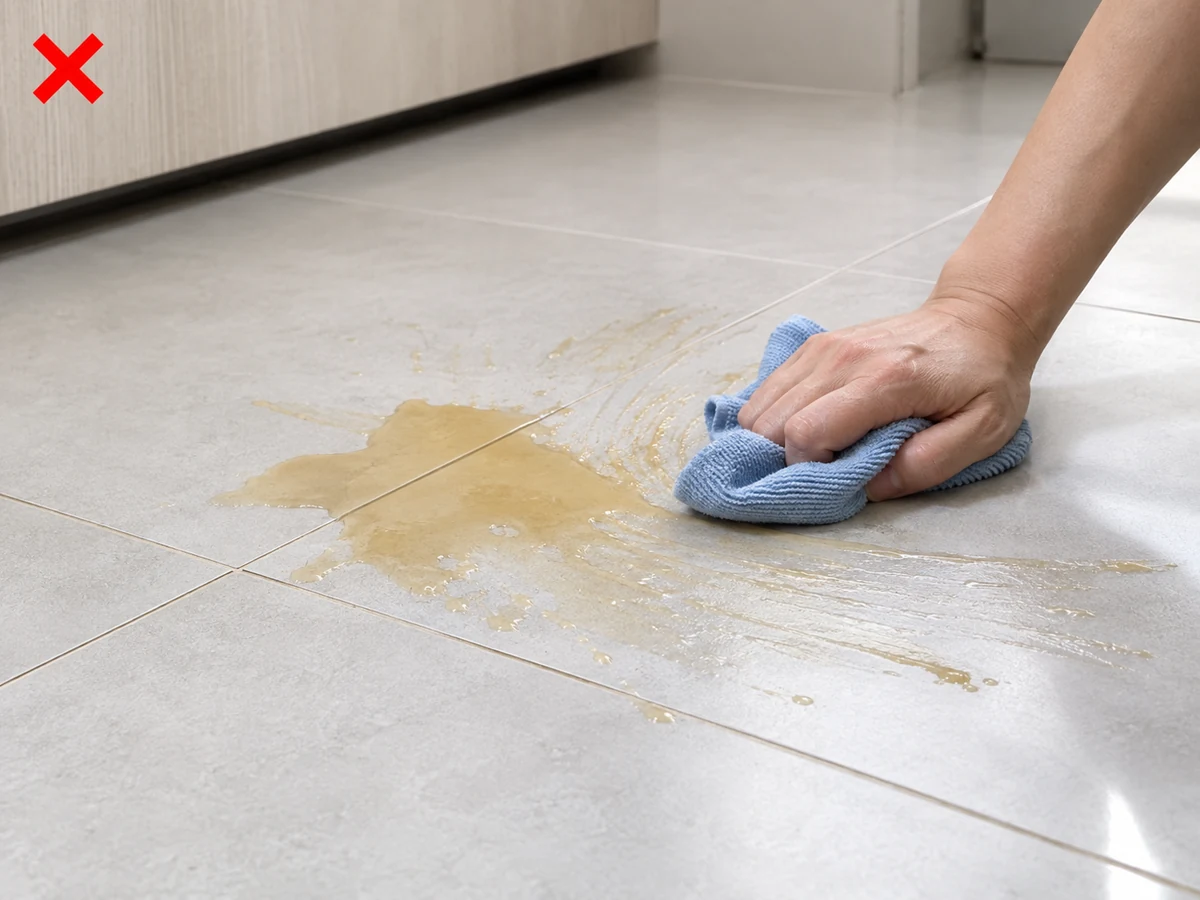
Scrubbing liquid outward
✓ Correct actionBlot and work from the outer edge inward.
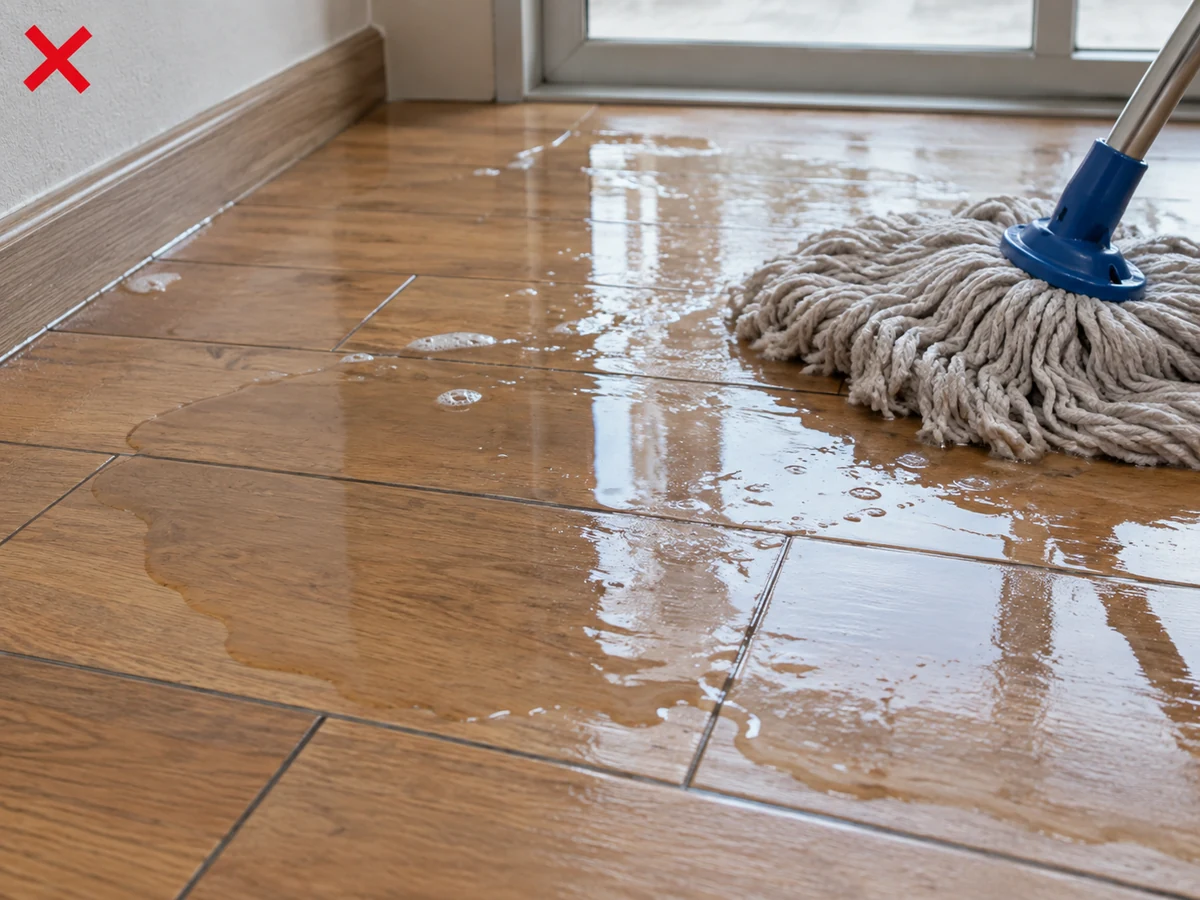
Flooding wood, laminate or grout lines
✓ Correct actionUse the least moisture needed and dry edges immediately.
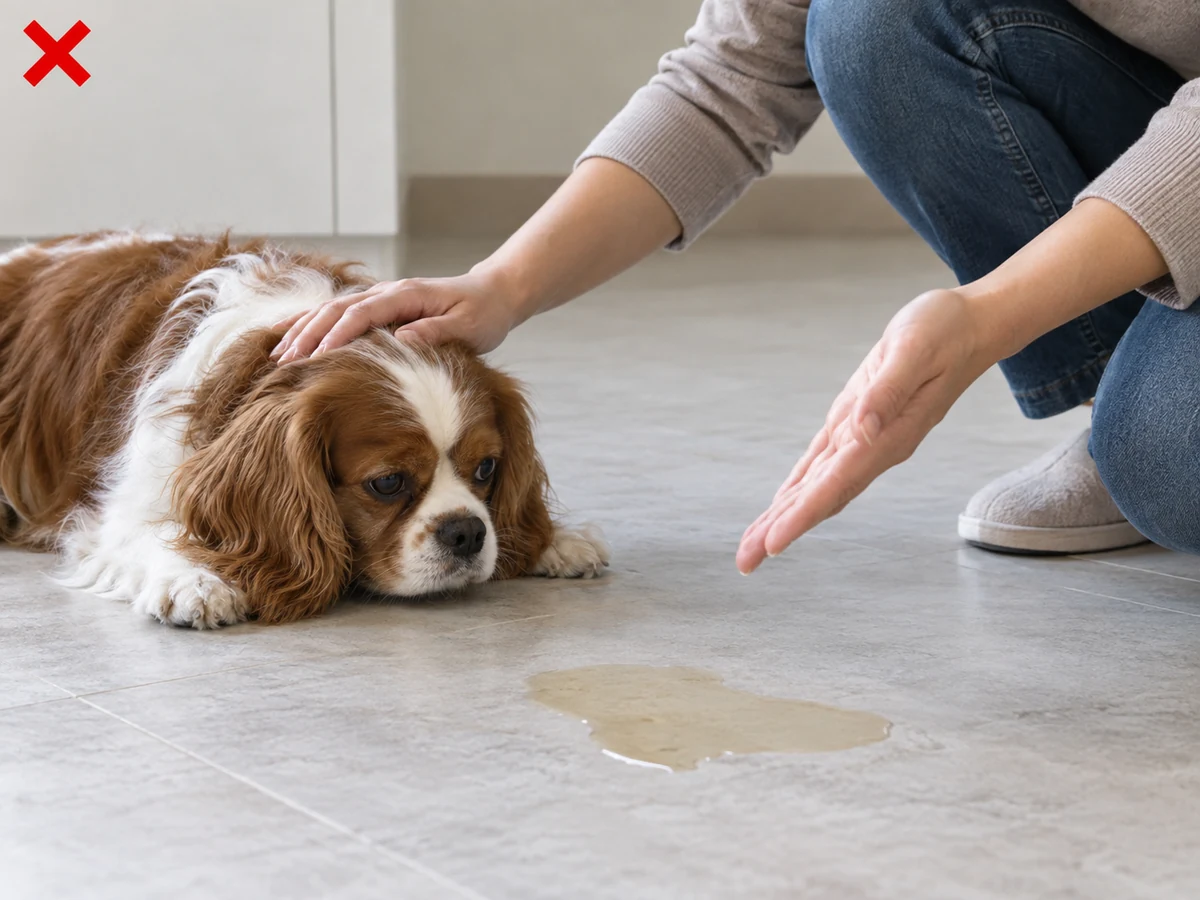
Assuming a cleaner diagnoses the pet’s health
✓ Correct actionReport repeated accidents to the owner; do not make a veterinary judgment.
Practical tips
Tips for helpers
- Move pets away, wear gloves and blot the material.
- Identify floor and product label before spot work, then dry-check the area.
Tips for employers
- State permitted products for each floor.
- Decide follow-up for seams, odour or a damaged wood finish.
Completion checklist
Checked 0 / 4