Families with children
How to Clean Plastic Toys Safely
Sort by material and use, then clean by the maker’s method and dry fully
Overview
Not every plastic toy can be immersed. Identify the material, batteries or electronics, and whether the toy goes into a child’s mouth before choosing a compatible method. Stop and tell the employer if there is damage or battery leakage.
Tools needed
- Manufacturer instructions or care label
- Clean soft cloth
- Small soft brush
- Clean water and compatible mild cleaner
- Clean drying rack or paper towels
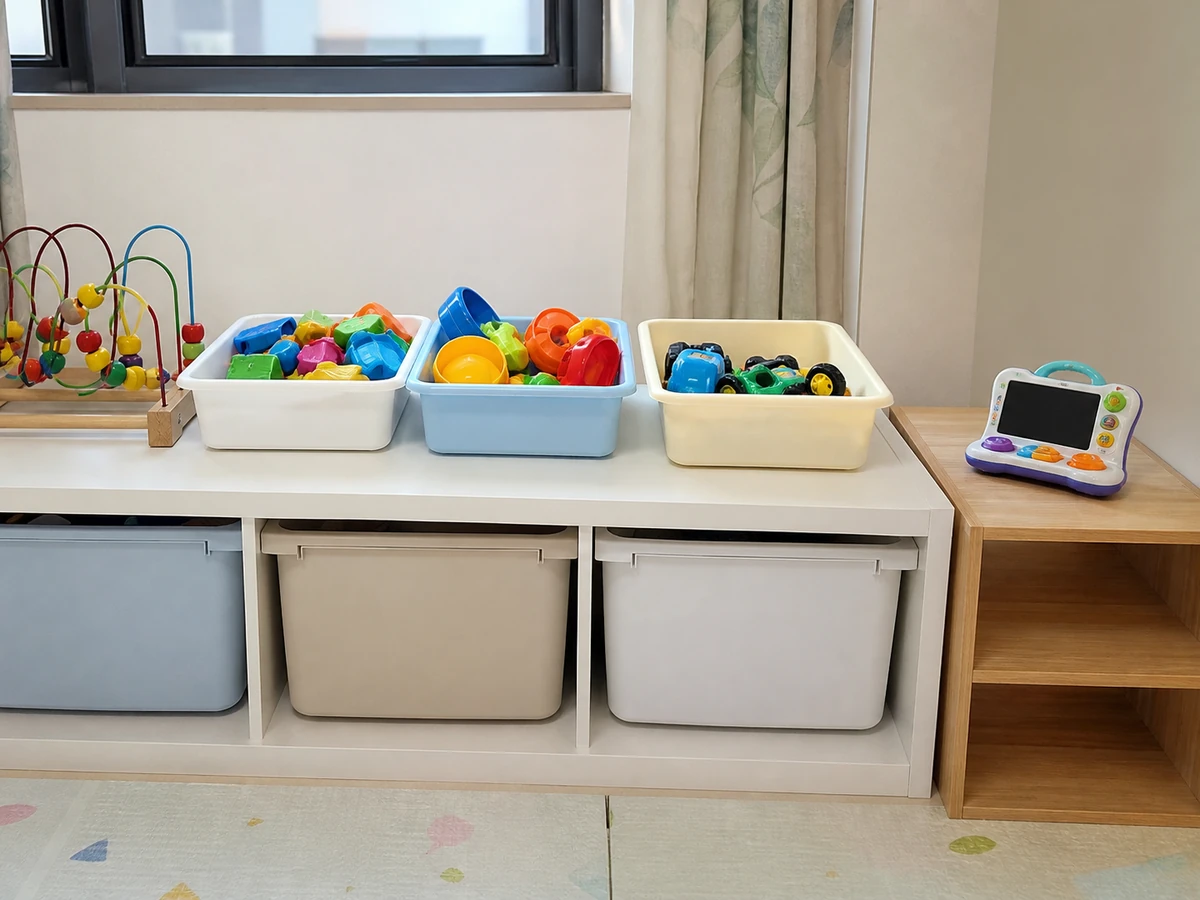
- Separate containers for soiled and clean toys
Cleaning steps
Sort and inspect
Separate ordinary hard plastic, electronic or battery toys, and toys that go into the mouth. Check for cracks, loose small parts and battery leakage; isolate problems and tell the employer.
Prepare a child-free work area
Keep children away and place all cleaning supplies beyond their reach. Wash your hands, clean the work surface, and read the toy and product instructions.
Clean for the material
Wipe ordinary hard plastic with a damp cloth and compatible cleaner as directed. Immerse only a non-electronic toy whose manufacturer clearly permits washing in water.
Handle mouthed toys separately
Wash and rinse a toy that has been in the mouth, then sanitize only by a method compatible with its material and maker’s instructions. Do not spray an unknown product on a mouth-contact surface.
Clean crevices gently
Use a soft brush around grooves and joints. Do not force a sharp tool into gaps or push water into a battery door, speaker opening or electronic seam.
Air-dry and inspect
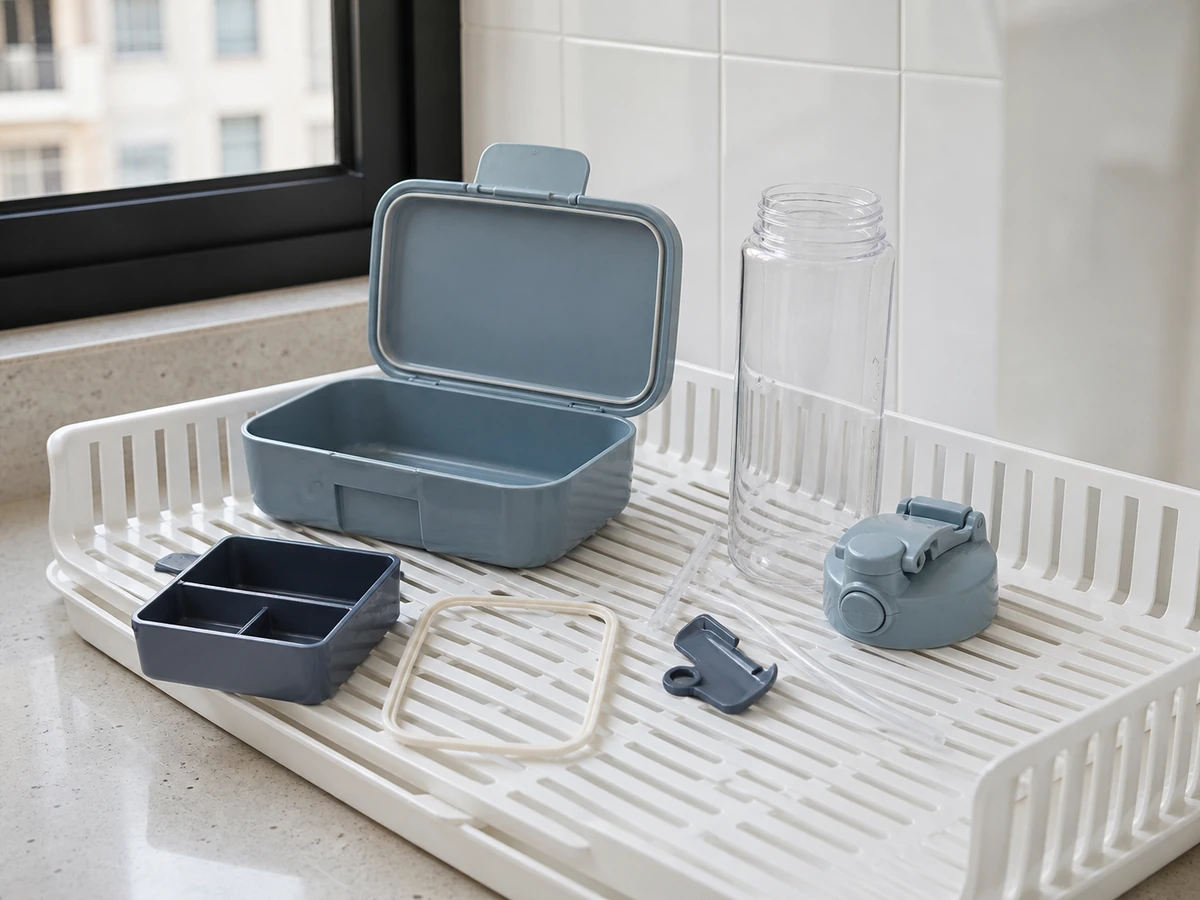
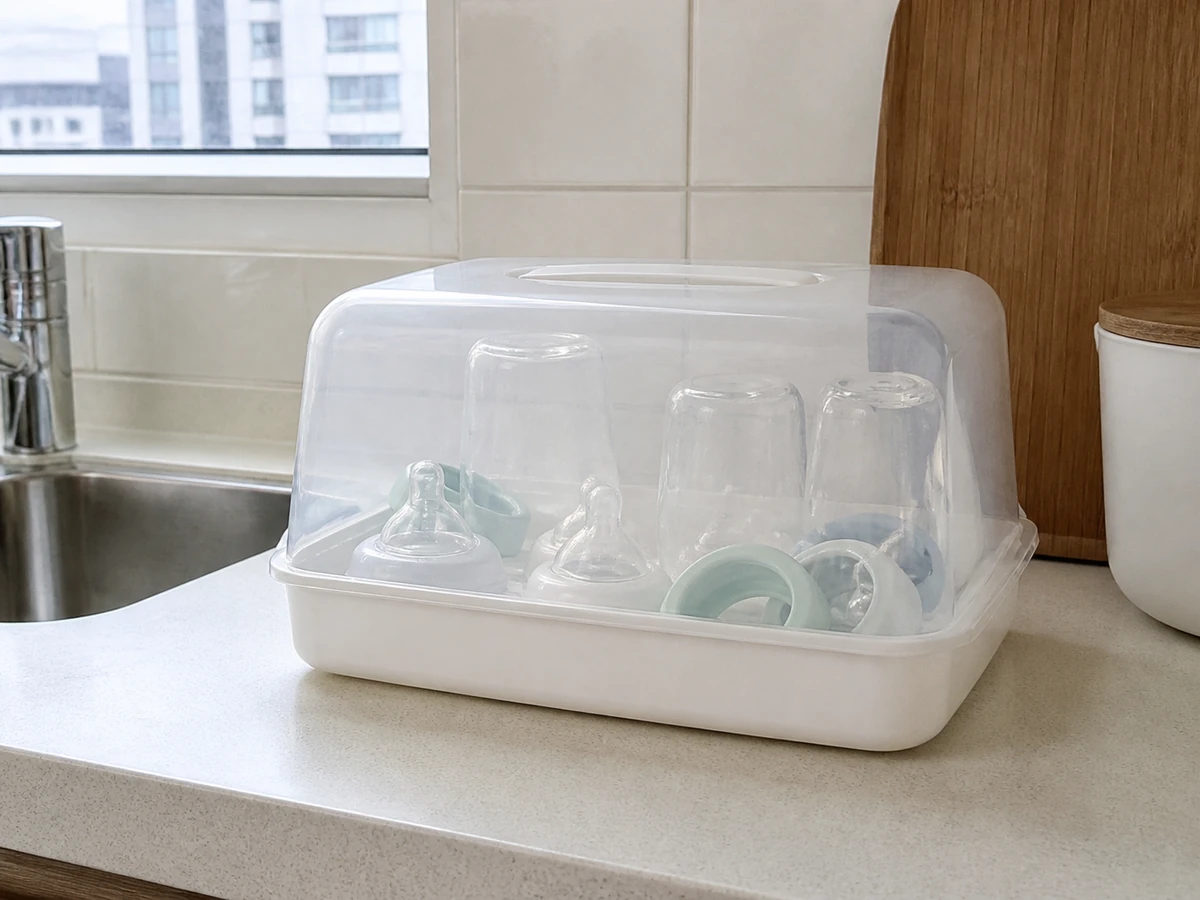
Leave parts separated in a clean place until fully dry. Check for trapped water, damage or loose parts and a secure battery door before returning the toy to play.
Common mistakes
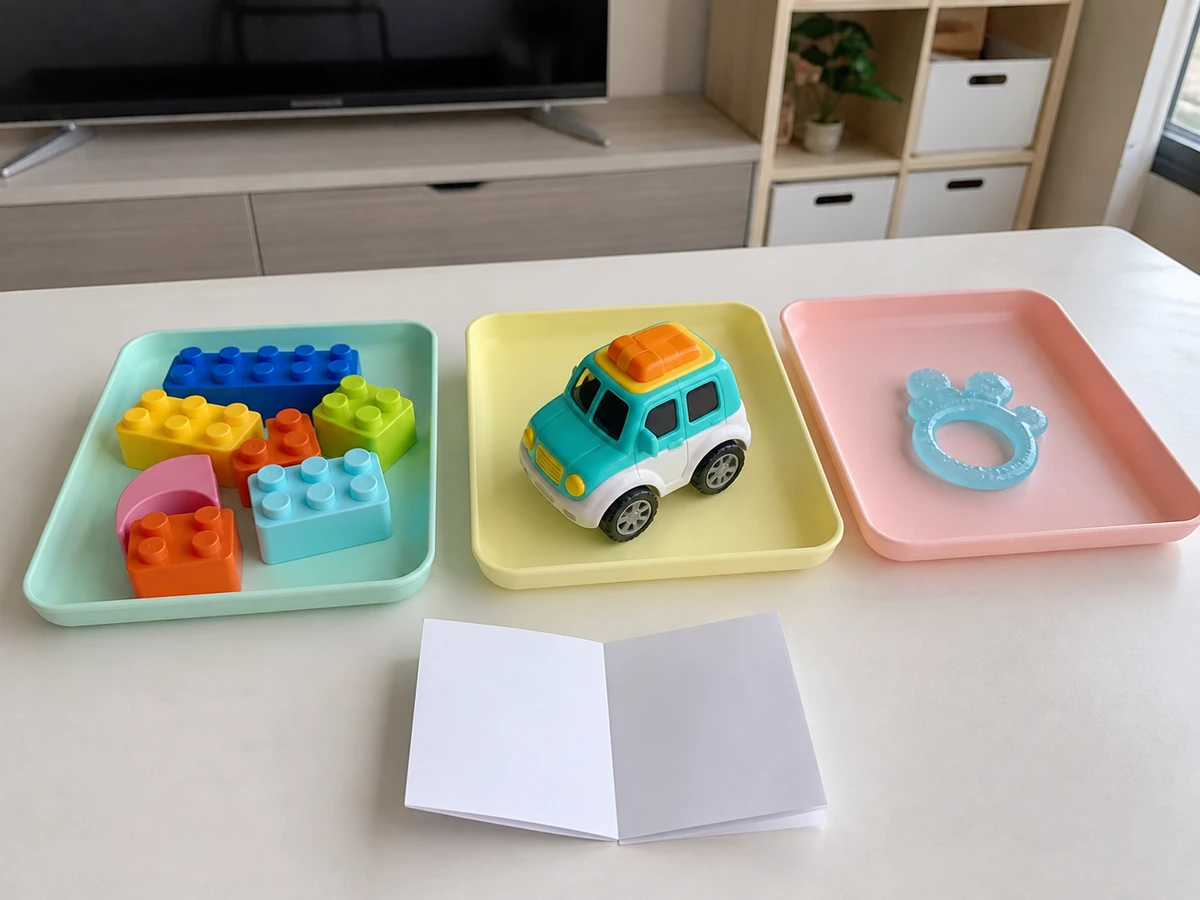
Immersing every plastic toy the same way
✓ Correct actionSort by material, electronics and mouth contact, then follow the manufacturer’s method.
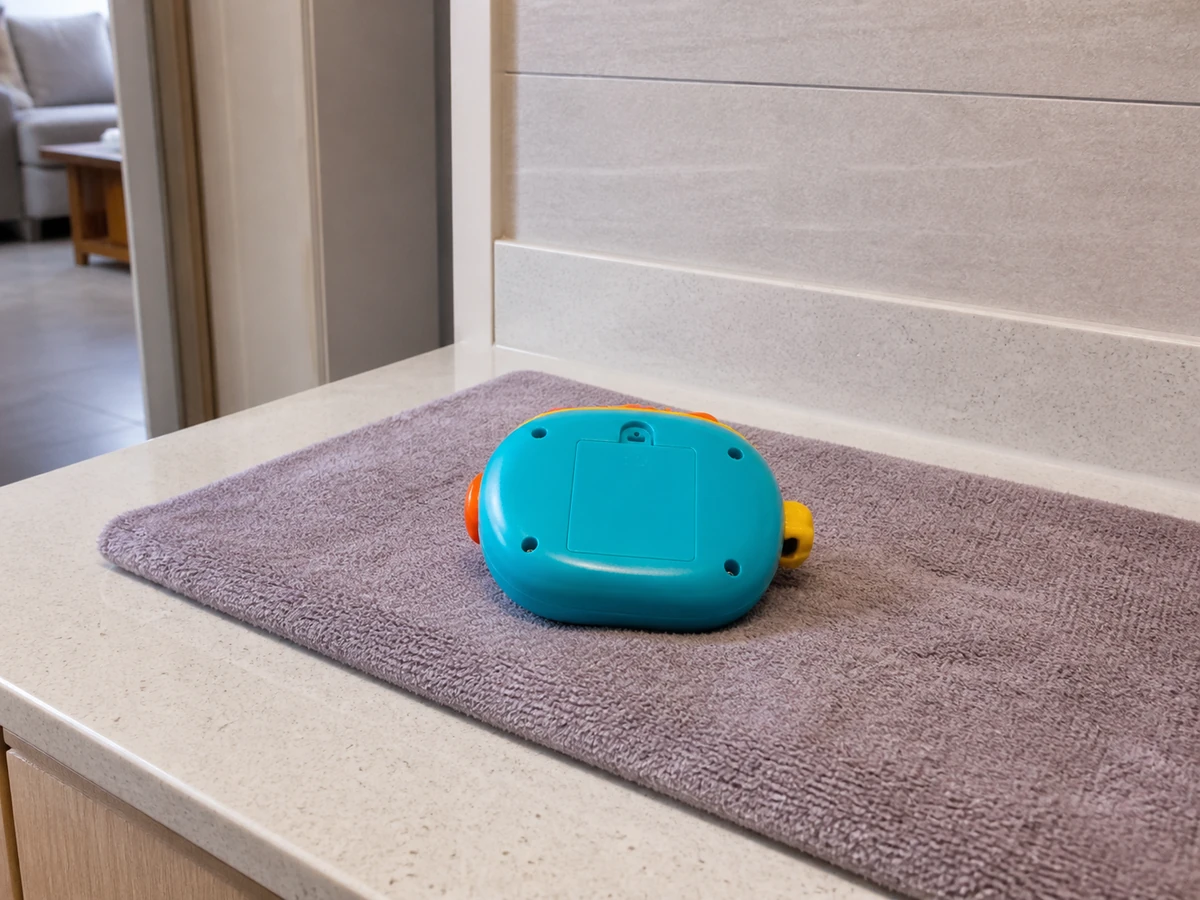
Washing a battery toy with lots of water
✓ Correct actionKeep electronic seams dry and use only an approved slightly damp surface wipe.
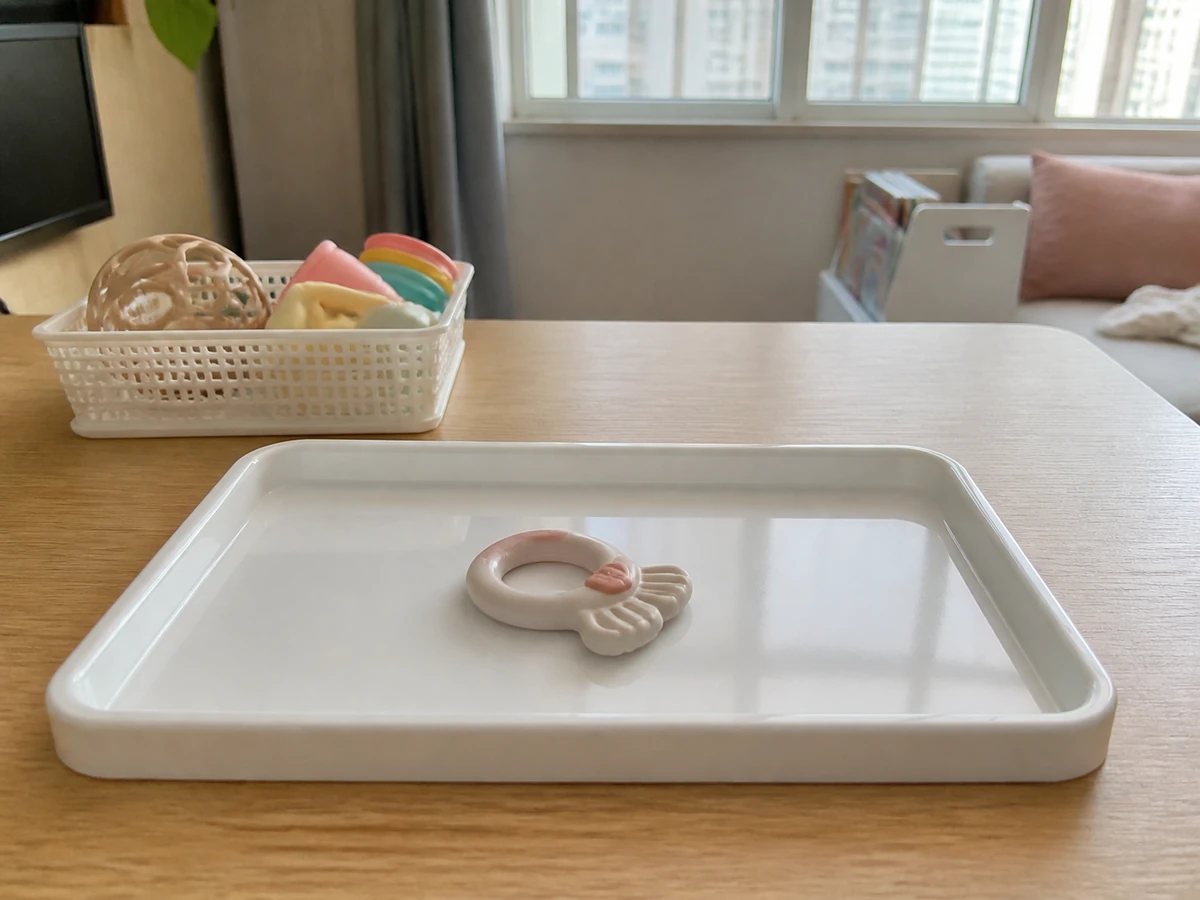
Mixing mouthed toys with ordinary toys
✓ Correct actionWash and rinse separately, then use only a material-compatible mouth-contact sanitizing method.
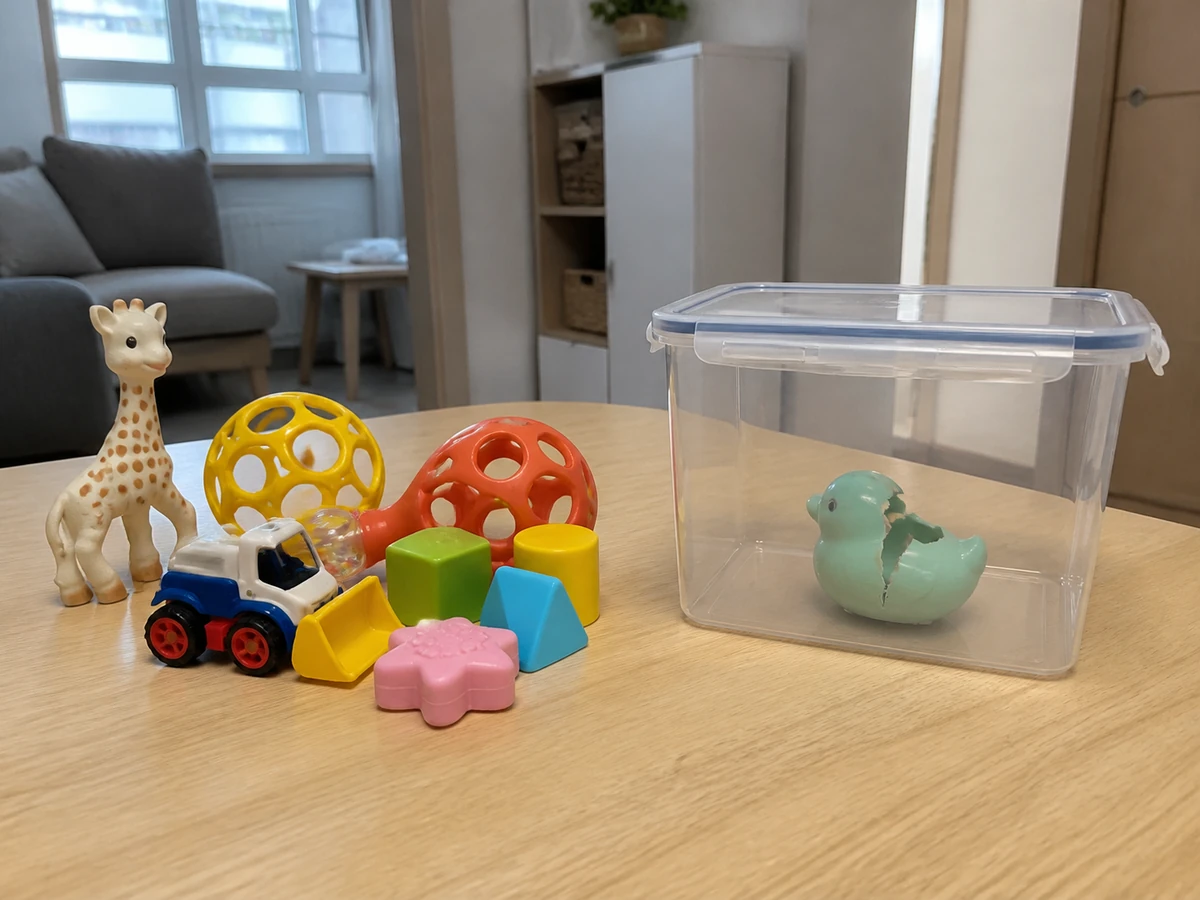
Returning a damp or cracked toy to the box
✓ Correct actionDry and inspect completely; isolate damage and tell the employer.
Practical tips
Tips for helpers
- Use separate containers for toys waiting to be cleaned and toys already clean.
- Photograph removable parts before cleaning so they can be fitted correctly after drying.
Tips for employers
- Provide manuals and identify which toys may be immersed, placed in a dishwasher, or surface-cleaned only.
- Replace toys with cracks, bite damage, loose parts or an abnormal battery compartment.
Completion checklist
Checked 0 / 6