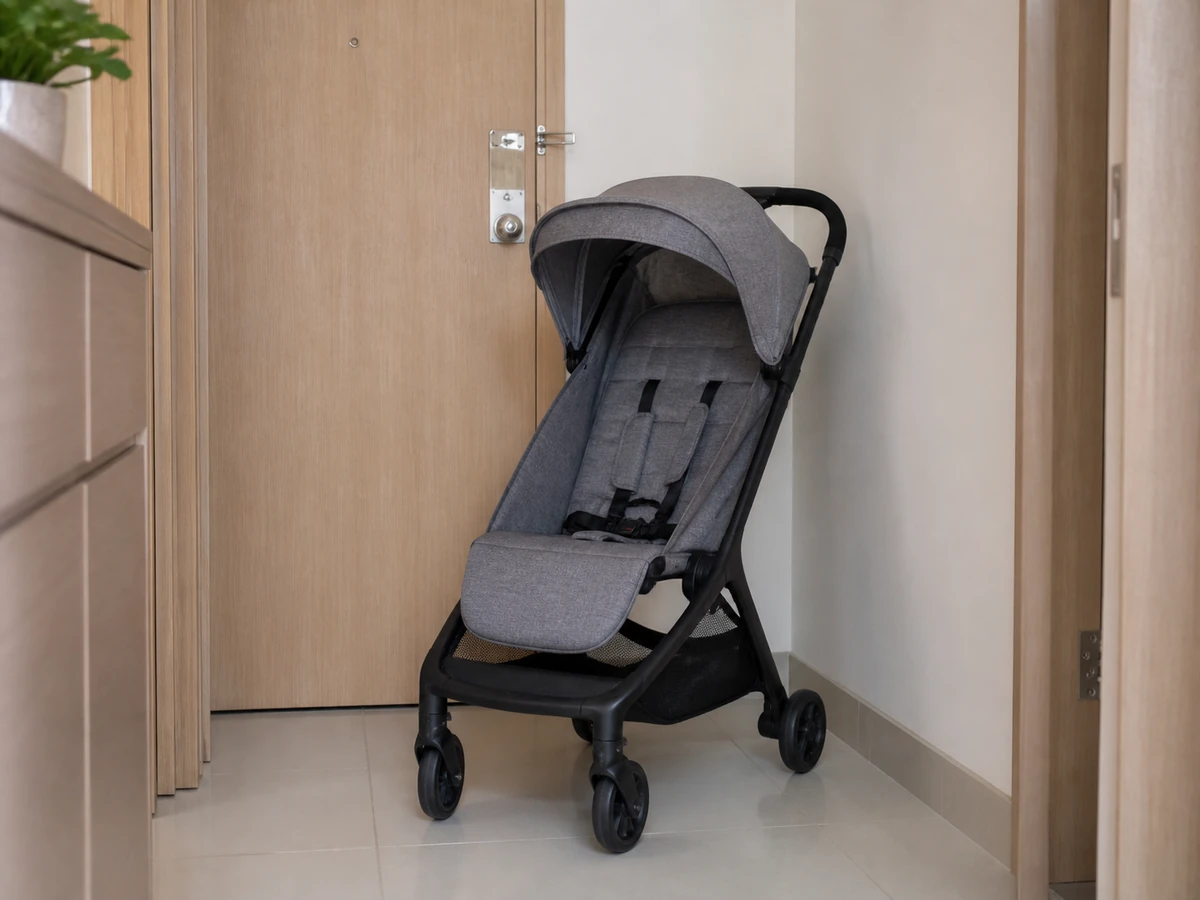
Families with children
How to Clean a Stroller by the Manufacturer’s Instructions
Treat fabric, frame, wheels and removable parts separately as directed
Overview
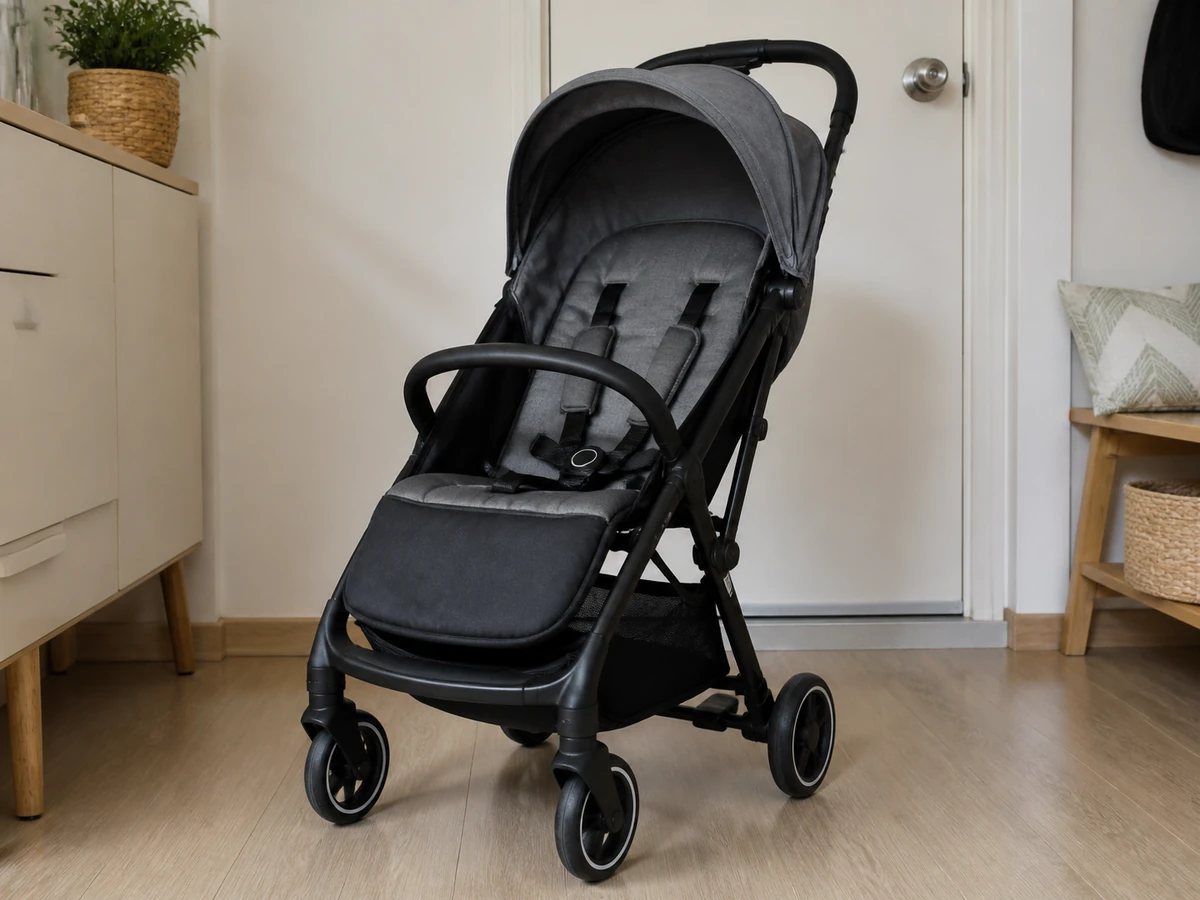
Stroller fabric, frame, wheels, bearings, harness and locks have different functions. Read the model instructions and remove only approved parts. Dry everything after separate cleaning, then inspect brakes, locks, harness and wheels before use.
Tools needed
- Model manual and fabric care label
- Clean soft cloth
- Soft brush
- Small wheel brush
- Compatible mild cleaner
- Clean towel and shaded ventilated place
Cleaning steps
Empty and stabilize the stroller
Remove the child and every item. Open the stroller on a level dry surface and apply the brake as directed. Record the original harness and removable-part positions.
Remove only approved parts
Detach fabric, pad, basket and wheel parts only when the manufacturer permits it. Do not dismantle fixed harnesses, hinges, brake cables or locking hardware.
Clean fabric by its care label
Remove crumbs, then use the labelled spot, hand or approved wash method. Use compatible products and do not assume bleach, machine washing or tumble drying is allowed.
Wipe the frame and handle
Use a slightly damp soft cloth and compatible cleaner as directed, then remove residue. Prevent standing water in hinges, locks and metal joints.
Clean wheels and axle areas
Brush sand, hair and fibres away from wheels and axles. Do not immerse bearings or apply a lubricant unless the manufacturer specifically approves it.
Dry reassemble and inspect
Dry fabric, frame and wheels fully in shade with airflow and reassemble as directed. Test brakes, fold locks, harness, buckle, seams and wheel operation.
Common mistakes
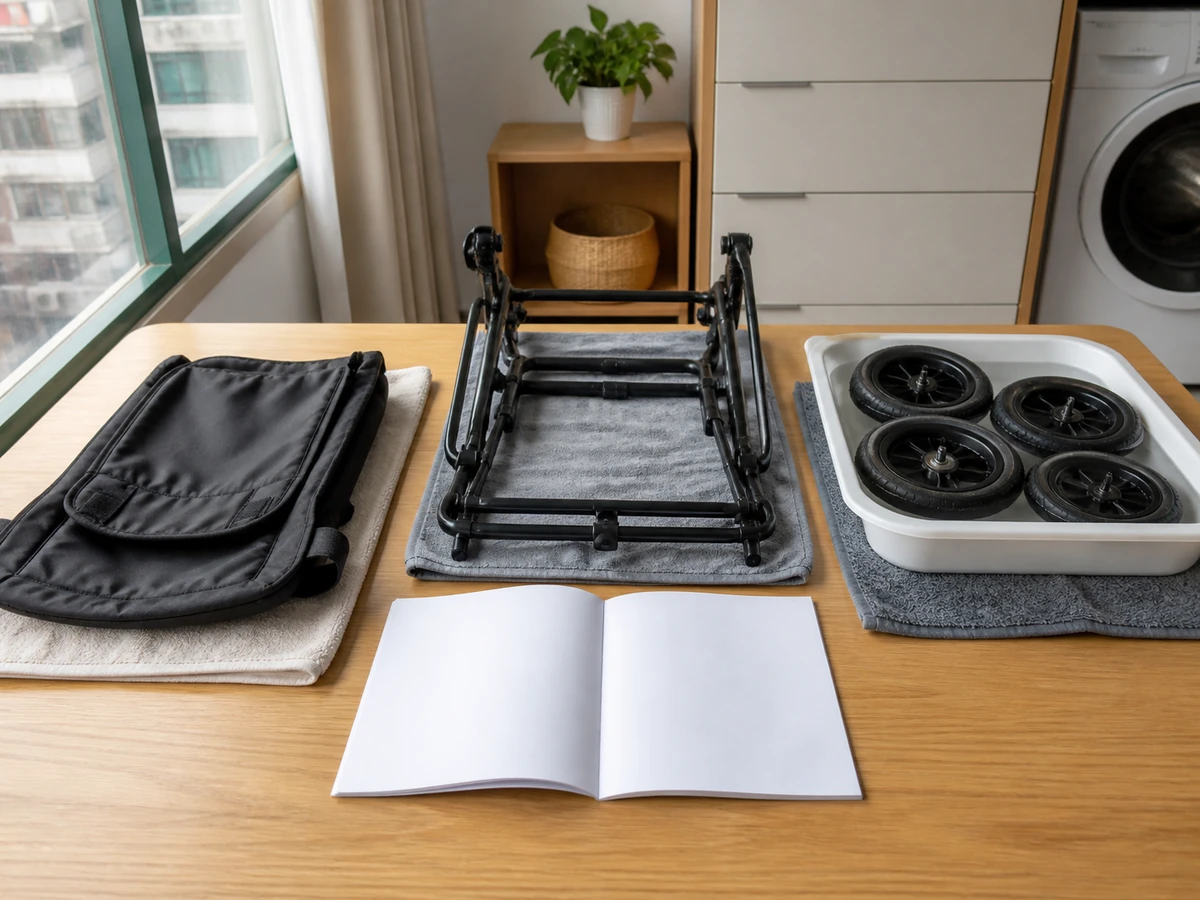
Hosing fabric frame and wheels together
✓ Correct actionSeparate materials by the manual and prevent water collecting in hinges, locks and bearings.
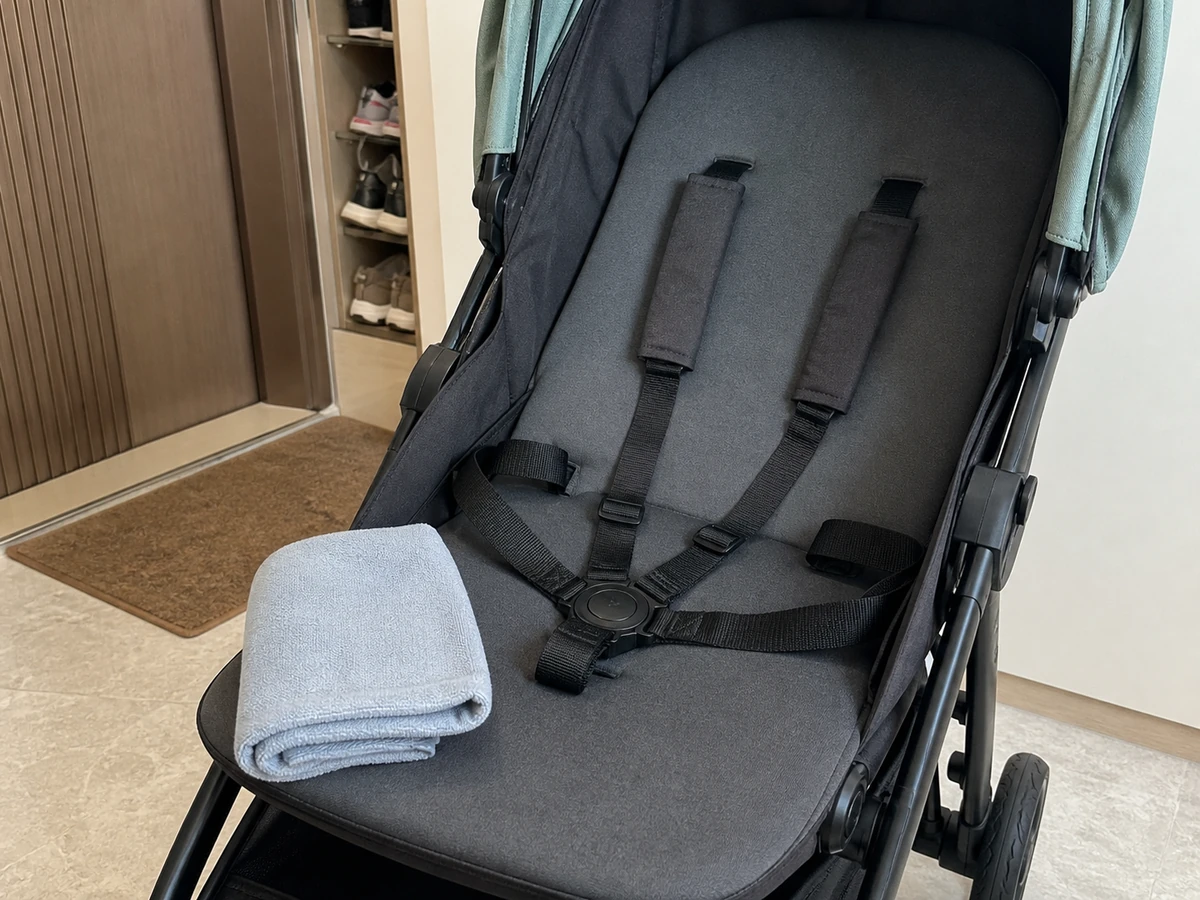
Removing fixed harness or brake hardware
✓ Correct actionDetach only listed parts and surface-clean fixed safety hardware as directed.
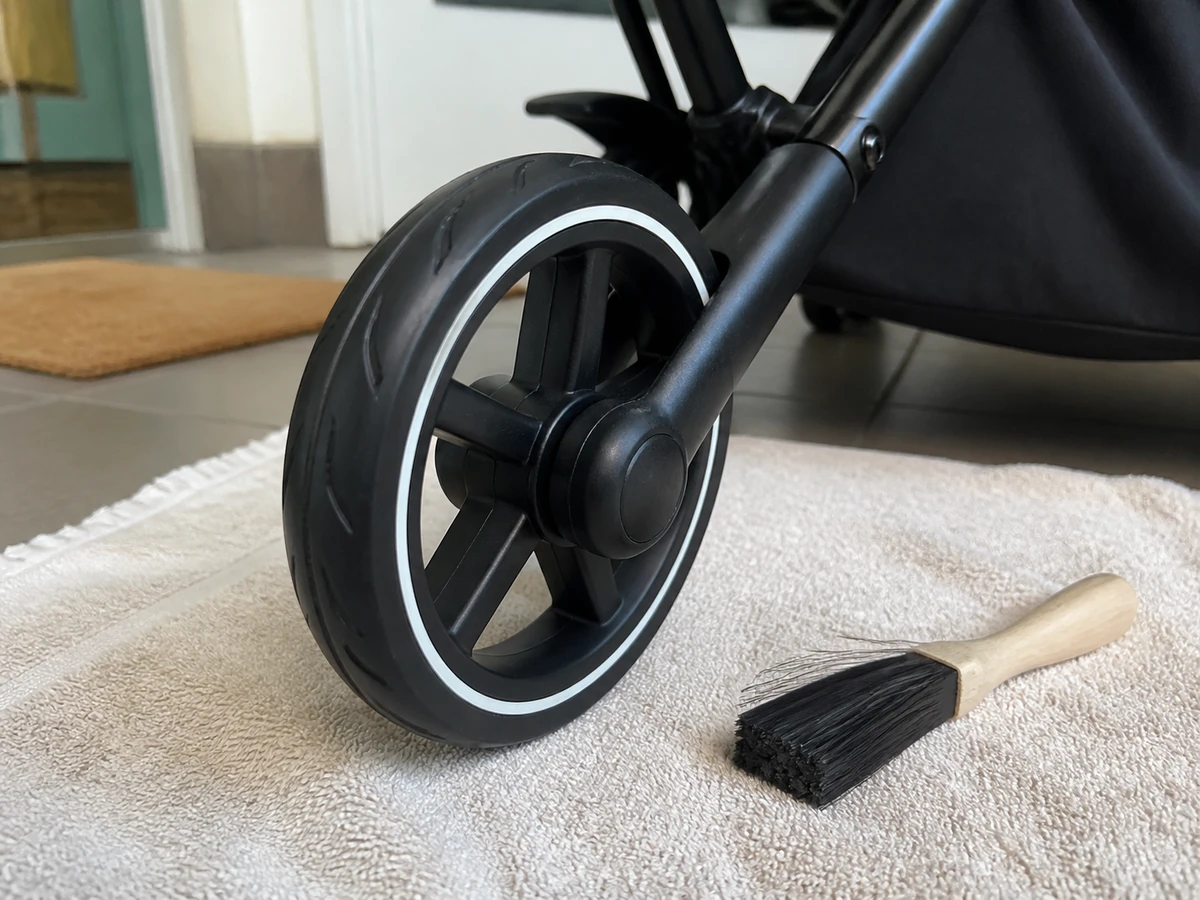
Soaking a wheel bearing or adding random oil
✓ Correct actionBrush away wrapped debris, keep bearings dry and use only approved care.
Folding or using the stroller while damp
✓ Correct actionDry fully while open, then reassemble and inspect every safety function.
Practical tips
Tips for helpers
- Remove crumbs first with an appropriate vacuum attachment or soft brush to reduce wet cleaning.
- Clean and inspect wheels one at a time so wrapped hair or looseness is easy to spot.
Tips for employers
- Keep the correct model manual and identify removable fabrics and wheels.
- Use only manufacturer-approved replacement parts, lubricants and repair services.
Completion checklist
Checked 0 / 6