
Home organisation
How to Manage Wardrobe Dampness and Reduce Mould Risk
Store only dry clothes, improve airflow and address the moisture source
Overview
A wardrobe can stay damp when wet clothing, crowded storage, leaks or poor airflow add moisture. Remove items in small groups, separate anything damp, dry the space and correct the source. These steps may reduce risk but cannot guarantee that mould will never appear.
Tools needed
- Clean dry microfibre cloths
- Soft brush or gentle vacuum attachment
- Breathable clean storage boxes
- Simple humidity monitor if available
- Sealed moisture absorber used only to its label
- Waste or isolation bag for damaged items
Cleaning steps
Empty in small groups and sort
Move a manageable group of clothes to a clean dry surface. Separate damp, musty or visibly affected items from dry items.
Inspect the empty wardrobe
Check shelves, corners, the back panel and nearby wall for moisture, leaks, damage or visible mould. Do not brush widespread growth into the room.
Remove dry dust and wipe moisture
Use a soft brush, gentle vacuum or dry cloth for dust. Wipe safely reachable condensation and keep liquids away from electrical points.
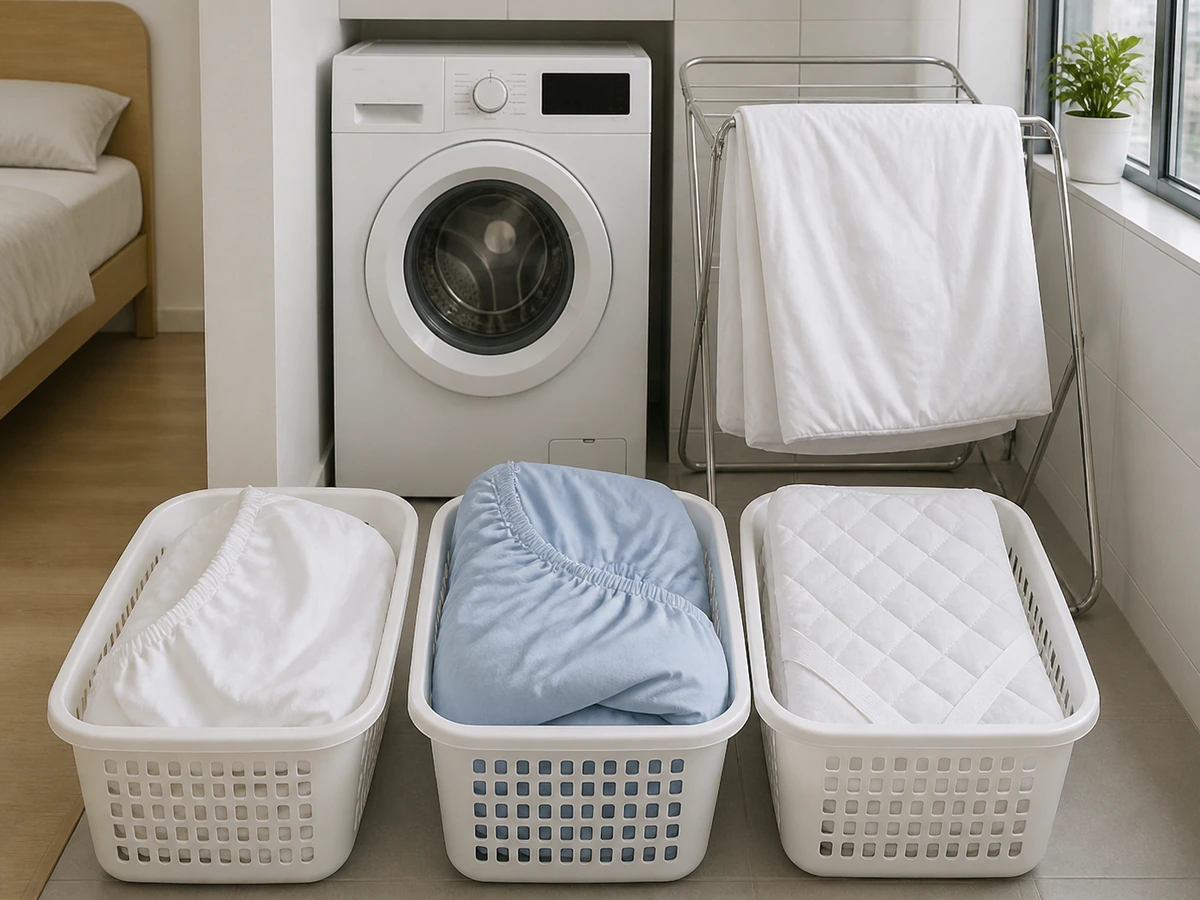
Dry clothes and storage fully
Follow garment care labels and return only fully dry clothing, boxes and shelf liners. Keep affected items isolated until handled appropriately.
Restore spacing and airflow
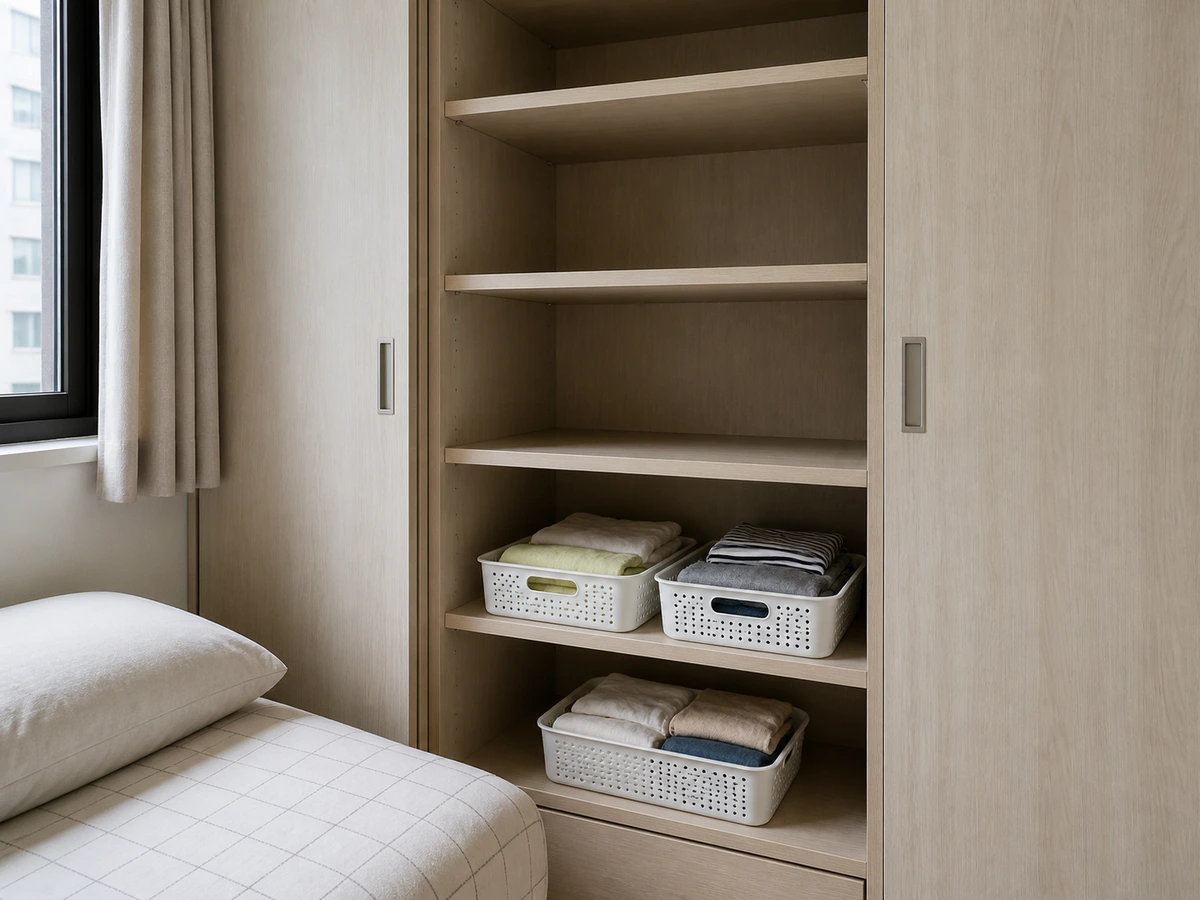
Avoid tight packing. Leave practical gaps between hangers, stacks and the wardrobe walls so intended room air can move.
Use a moisture absorber only as labelled
If the household approves one, keep the sealed product upright and stable, away from children, pets, fabric contact and spills; replace or dispose only by its label.
Common mistakes

Returning clothes while still damp
✓ Correct actionDry every garment fully according to its care label before storage.

Packing shelves and hangers tightly
✓ Correct actionReduce the load and leave airflow gaps.
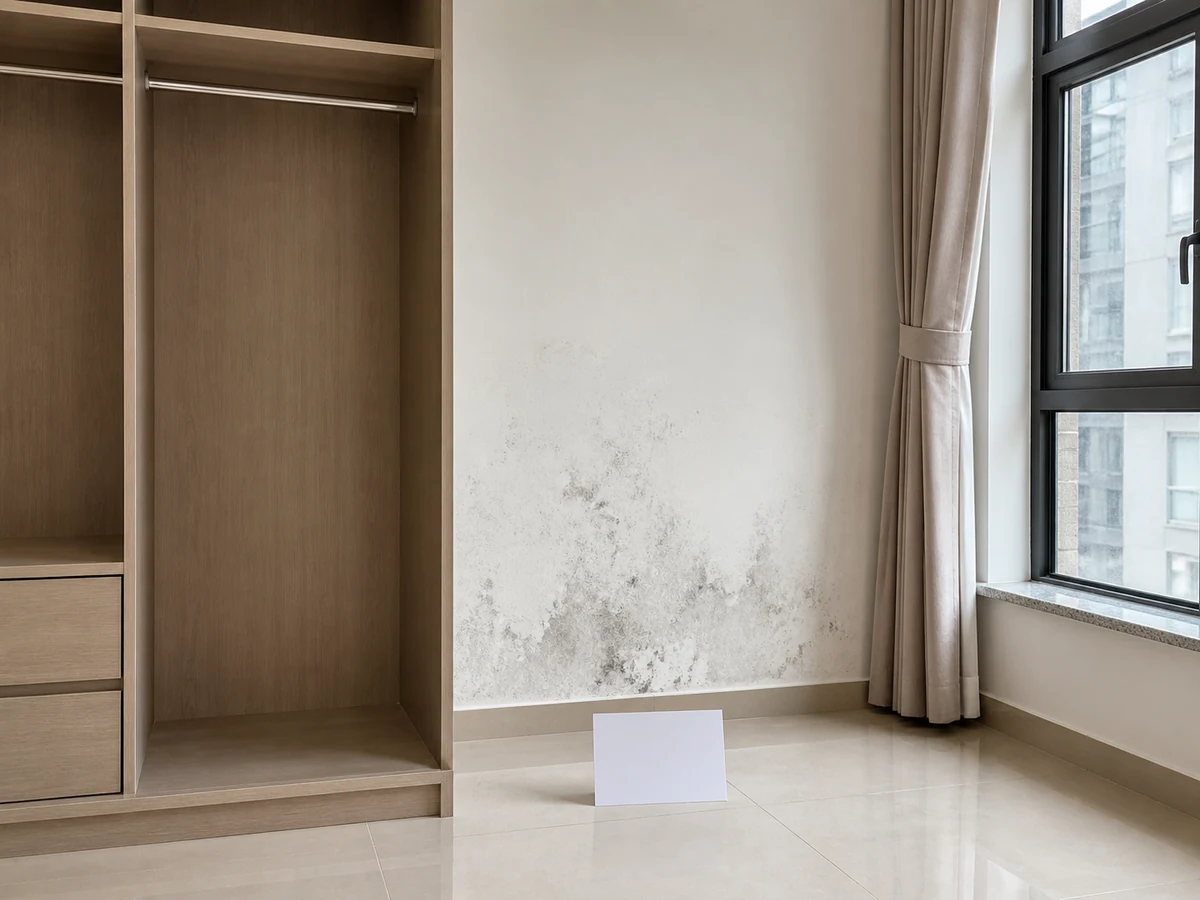
Ignoring a recurring damp wall or leak
✓ Correct actionKeep items away and arrange inspection of the moisture source.
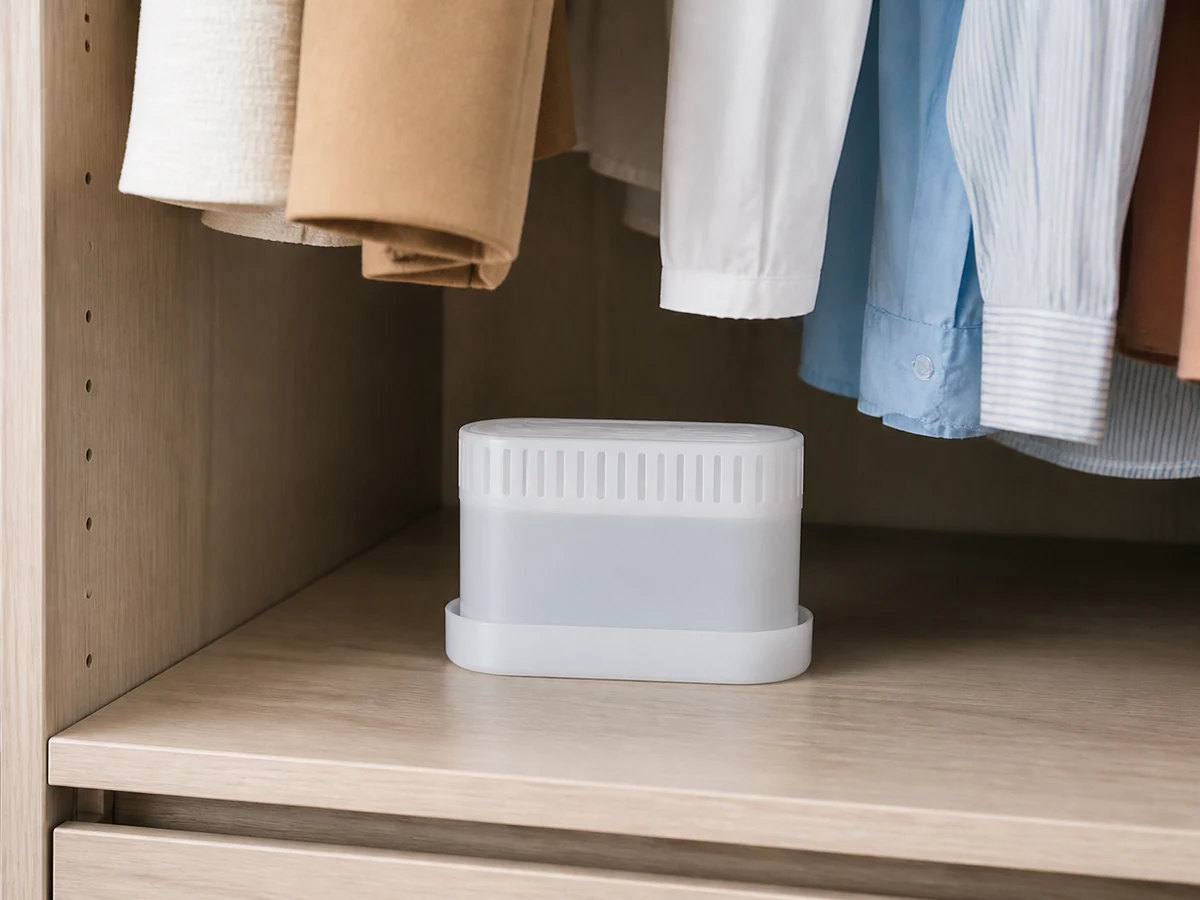
Opening or spilling a moisture absorber
✓ Correct actionUse only an intact sealed product upright in a stable holder and follow its label.
Practical tips
Tips for helpers
- Work one section at a time so clean dry clothing is not mixed back with damp items.
- Use breathable containers only where suitable and avoid placing fabric directly against a damp wall.
Tips for employers
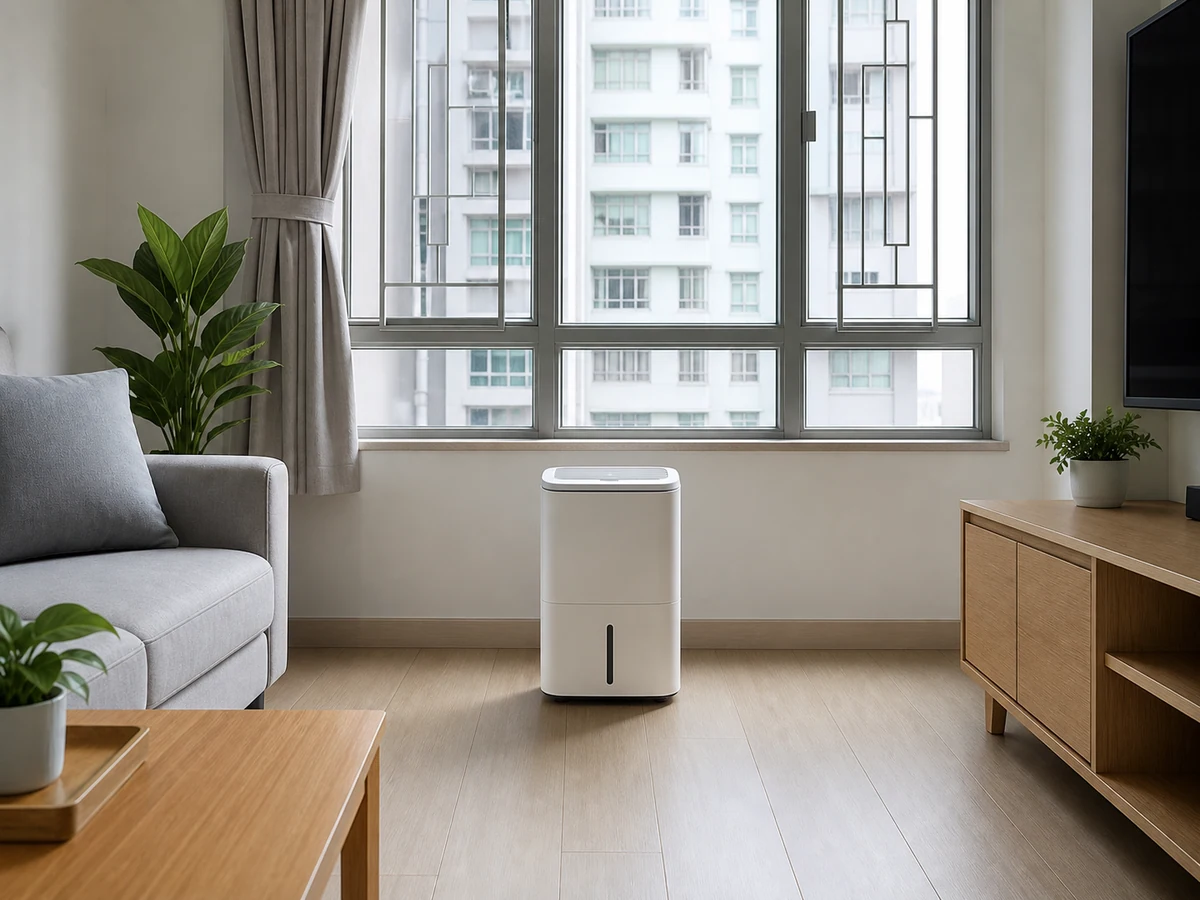
- Provide a clear dry temporary sorting area and approve any moisture-control product before use.
- Arrange repair or professional assessment for persistent wall dampness, leaks or extensive mould.
Completion checklist
Checked 0 / 7