Laundry and garment care
How to Wash Reusable Incontinence Bed Pads by Care Label
Fold the soiled surface inward, carry in the designated bag, follow that pad’s care label on a separate wash and rinse, then dry the absorbent and waterproof layers fully.
Overview
Fold the soiled surface inward, carry in the designated bag, follow that pad’s care label on a separate wash and rinse, then dry the absorbent and waterproof layers fully.
Tools needed
- disposable gloves
- designated laundry bag
- care label
- washing machine
- drying rack
Cleaning steps
Contain the soiled pad
Wear gloves, fold the soiled side inward without shaking, and place the pad in its designated bag or container.
Read that pad’s label
Read the care label on that pad for wash temperature, detergent, bleach, softener and drying limits; do not copy settings from another brand.
Run a separate wash and rinse
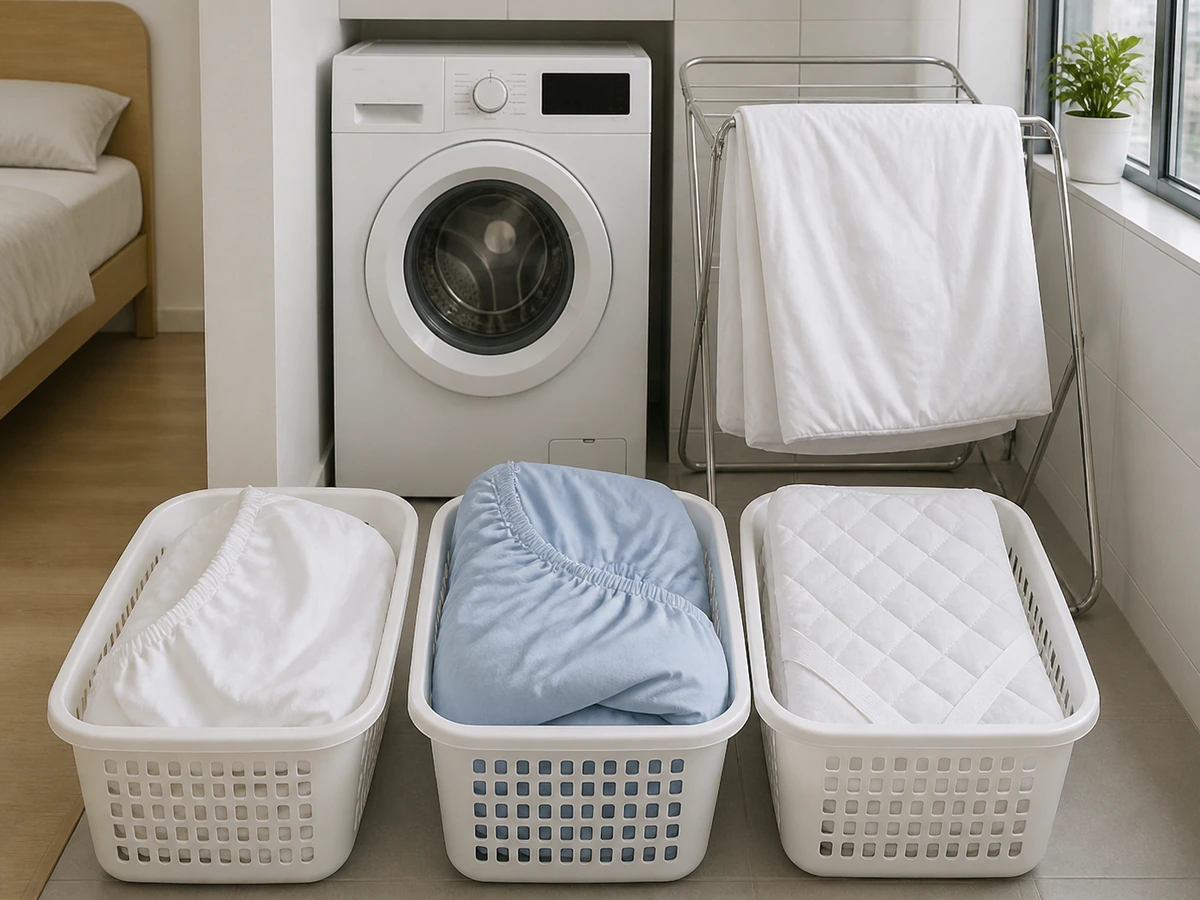
Run the pad separately from ordinary bedding on the stated cycle and add the label-permitted rinse; clean the machine area if the household plan requires.
Dry layers and inspect
Dry until both the absorbent core and waterproof backing are completely dry, then check seams, peeling backing and absorbency; give damaged pads to the employer for disposal.
Common mistakes
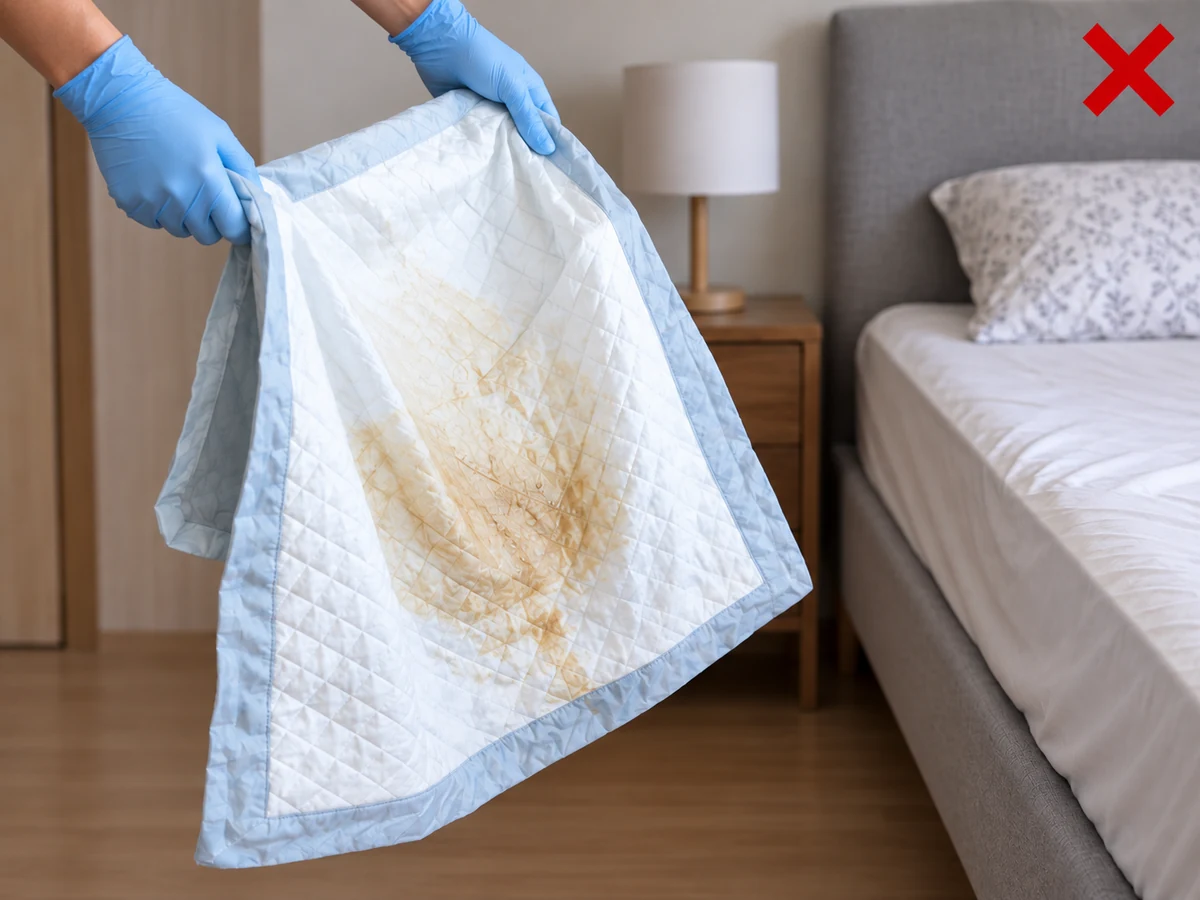
Shaking or carrying a soiled pad loose
✓ Correct actionWear gloves, fold the soiled face inward without shaking, and place the pad in its designated bag.
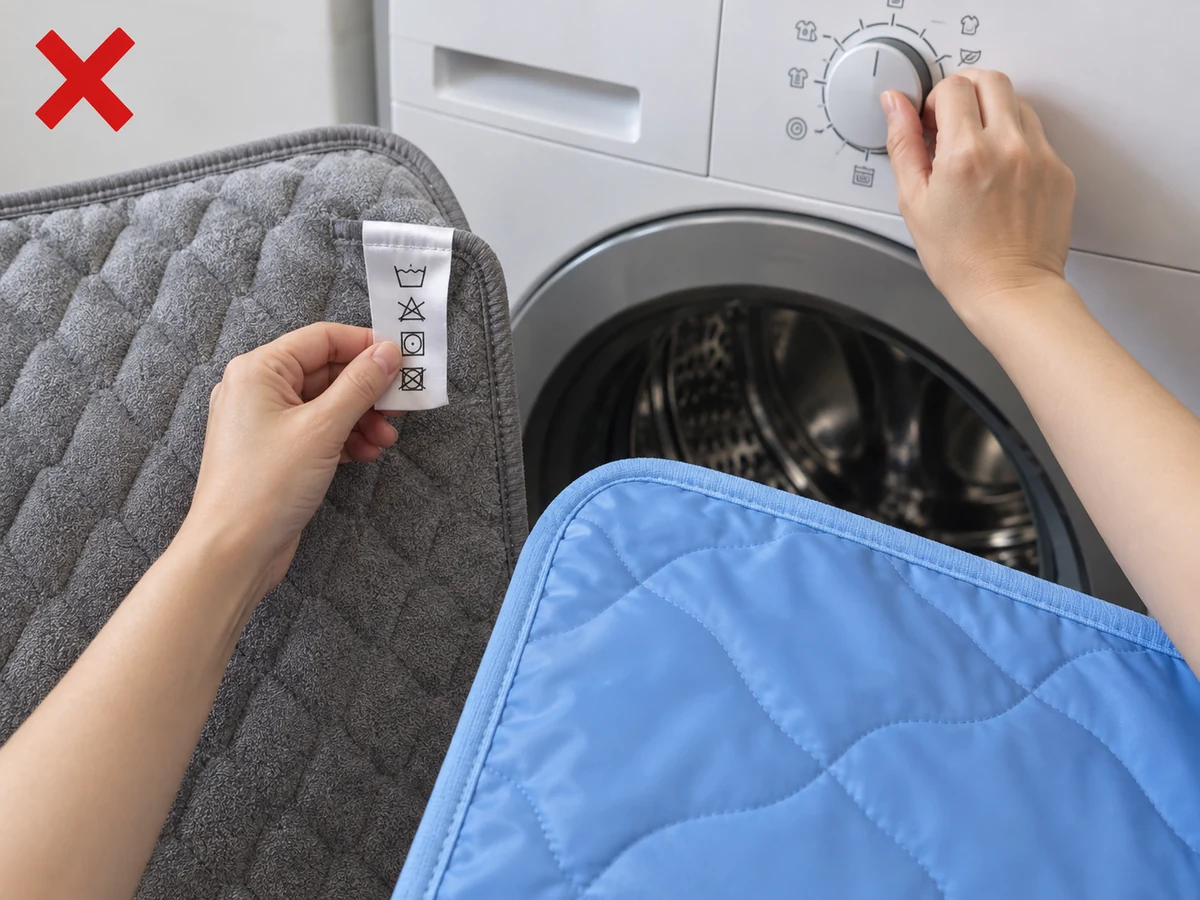
Using settings copied from another pad
✓ Correct actionRead that individual pad’s label before selecting temperature, detergent, bleach, softener or drying.
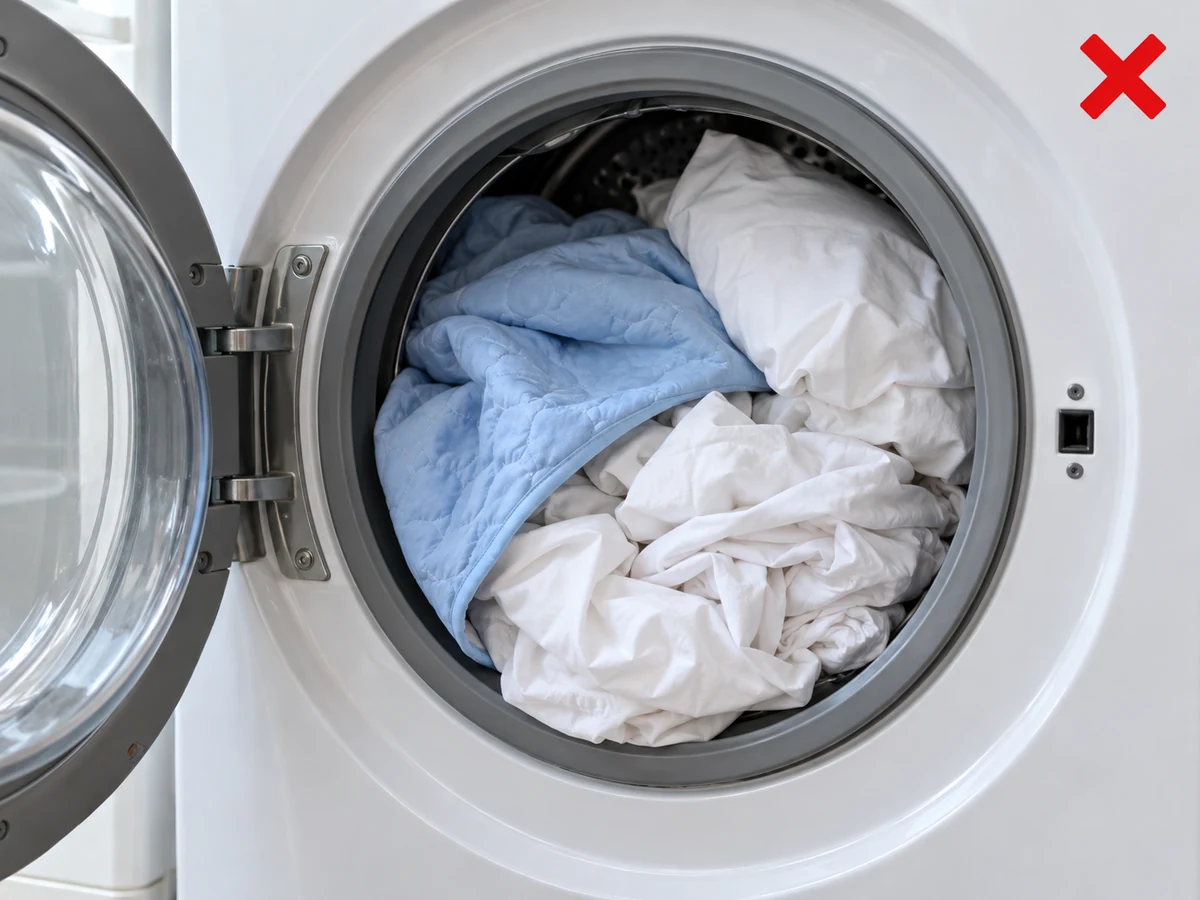
Washing the pad with ordinary bedding
✓ Correct actionWash and rinse the pad separately from ordinary bedding on the label-permitted cycle.
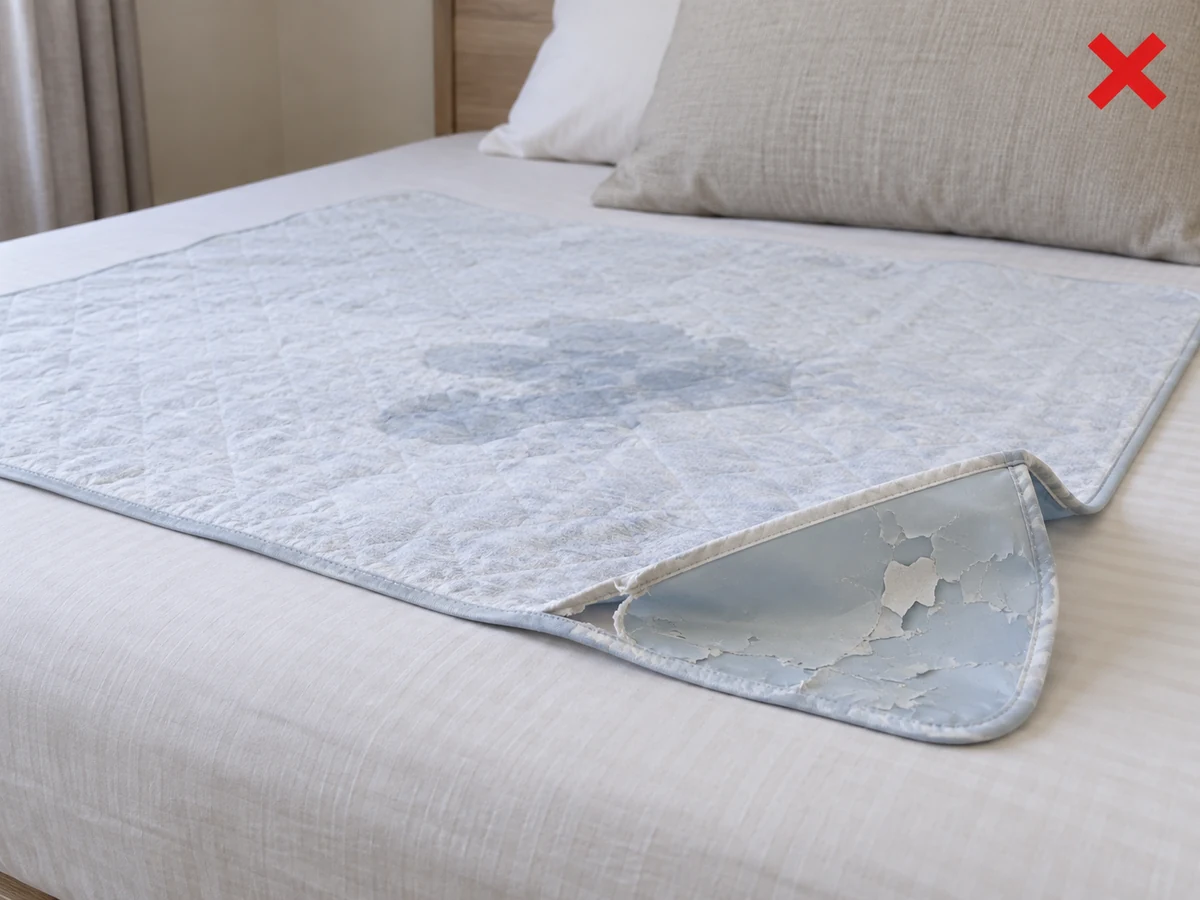
Reusing a damp or damaged pad
✓ Correct actionDo not reuse it until both layers are dry; give split, peeling or non-absorbent pads to the employer for disposal.
Practical tips
Tips for helpers
- Keep the designated bag beside the bed so a soiled pad is never carried loose.
- Use a spare pad while the washed one dries; rushing layered drying causes odour and damage.
Tips for employers
- Keep each pad’s label readable and provide a designated bag plus a spare pad.
- Confirm the care plan for substantial blood or unknown body fluid and disposal of damaged pads.
Completion checklist
Checked 0 / 4