Use suitable assistance when transferring a person
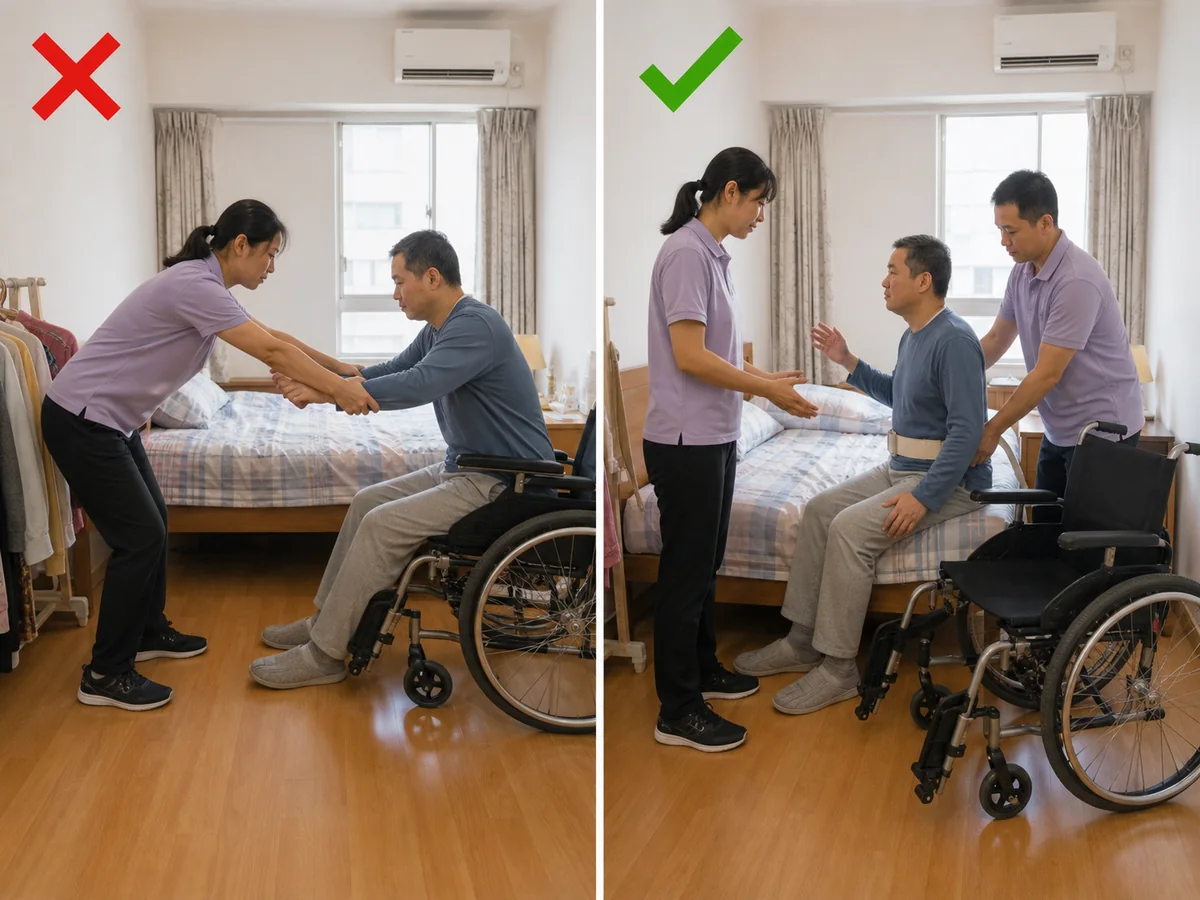
Follow the person's assessed ability and care plan, explain the move, apply wheelchair brakes, and use suitable aids or trained help when needed.
View safety lesson →Learn by situation
Learn transfers, beds, chairs, safe routes, bathroom grip, walking aids, dressing, medicine records, prescribed food texture, and cold-weather care. Follow the care plan and professional instructions; this pack does not confer medical or nursing competence.
Confirm the care plan and safe assistance boundaries, then prepare beds, chairs, walking routes, bathrooms, and walking aids. Continue with daily routines, meals, medicine assistance, and keeping warm. Open each lesson for the full steps.

Follow the person's assessed ability and care plan, explain the move, apply wheelchair brakes, and use suitable aids or trained help when needed.
View safety lesson →
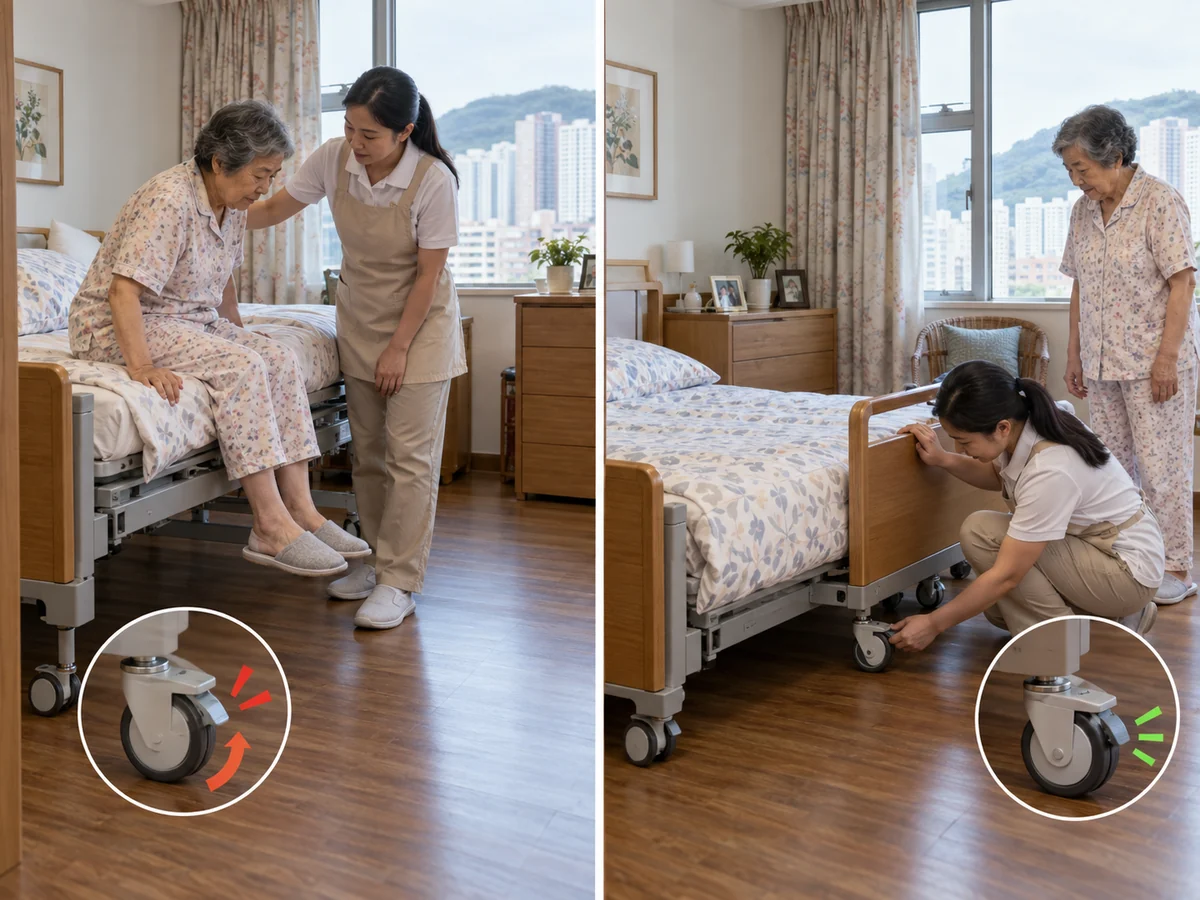
After care or adjustment, return the bed to the employer-agreed low position and lock every wheel.
View safety lesson →
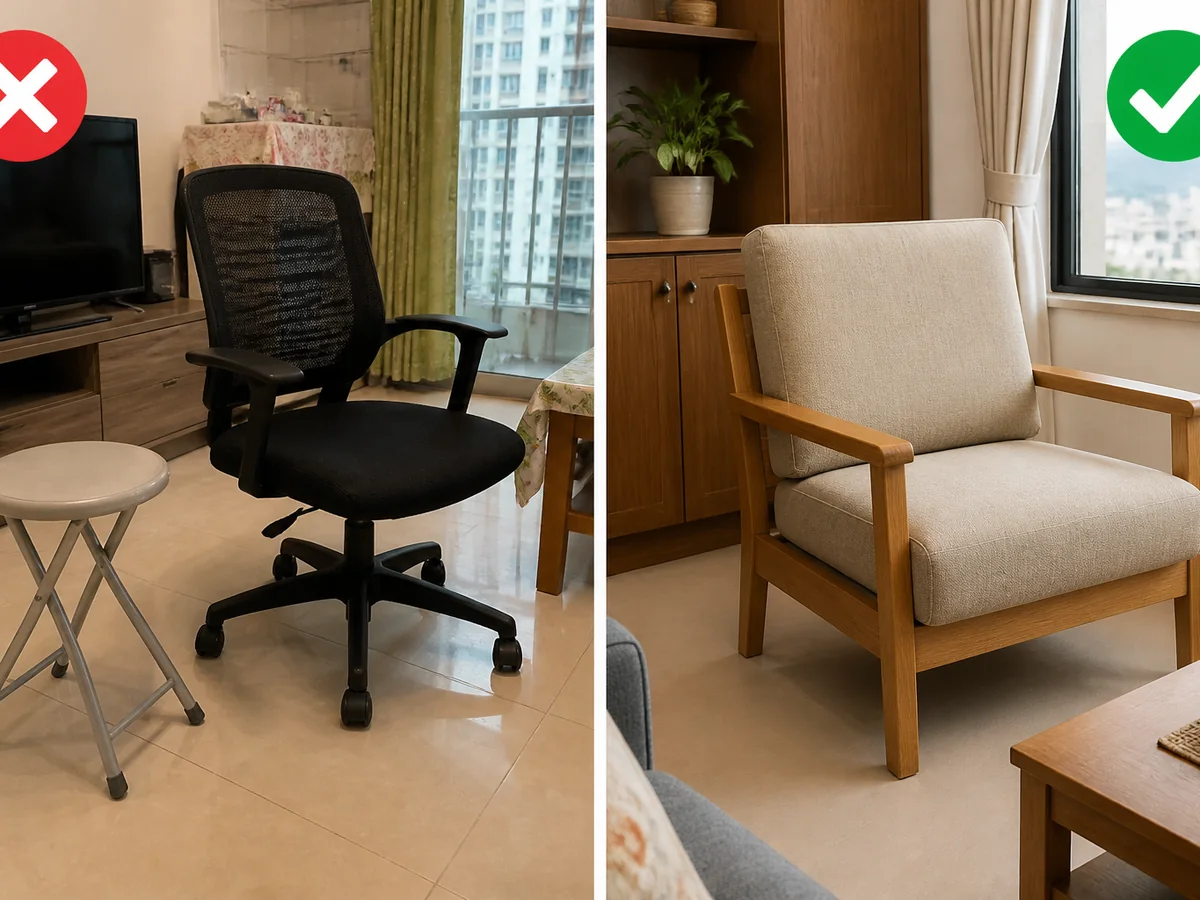
Choose a stable chair that lets both feet rest flat and provides armrests for standing.
View safety lesson →
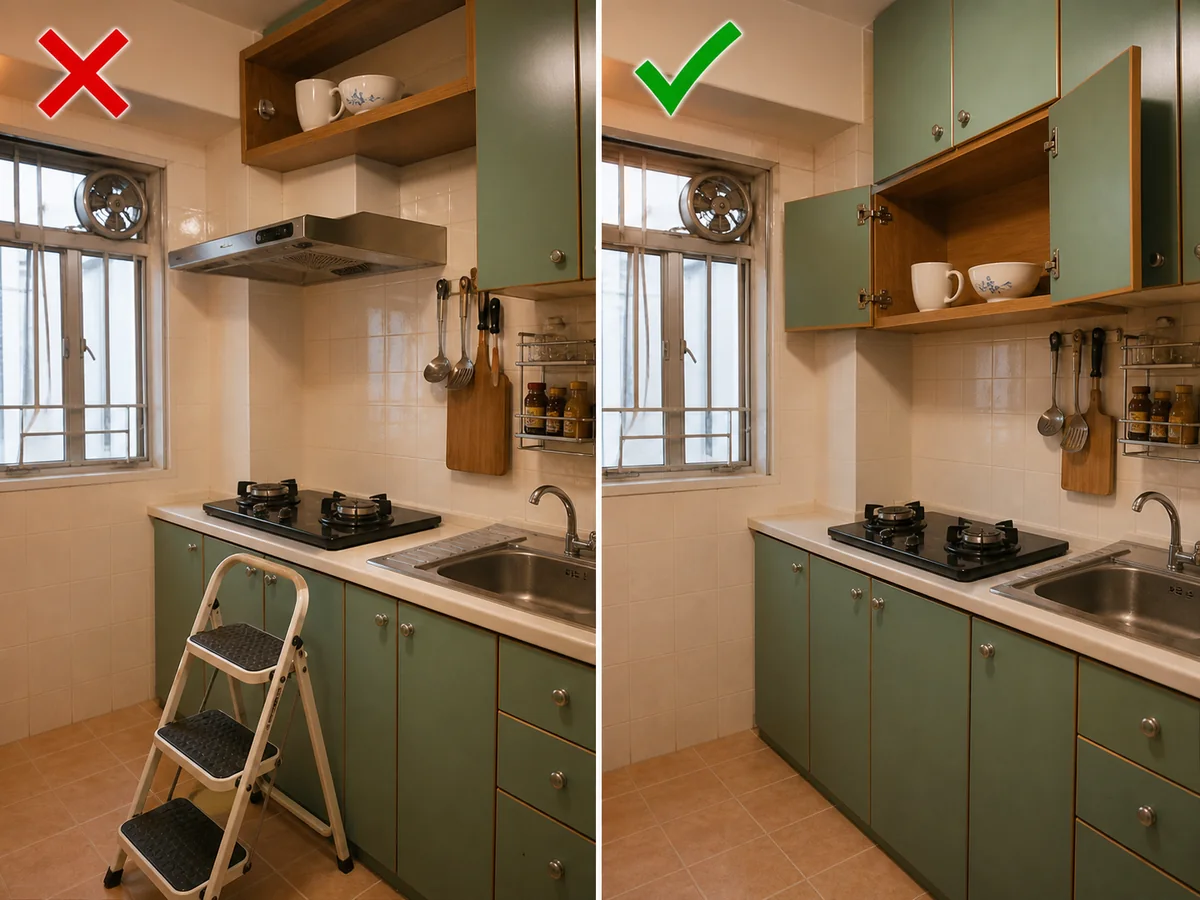
Store daily cookware, clothes, medicine boxes, and personal items in fixed positions around waist-to-shoulder height to avoid climbing or deep bending.
View safety lesson →
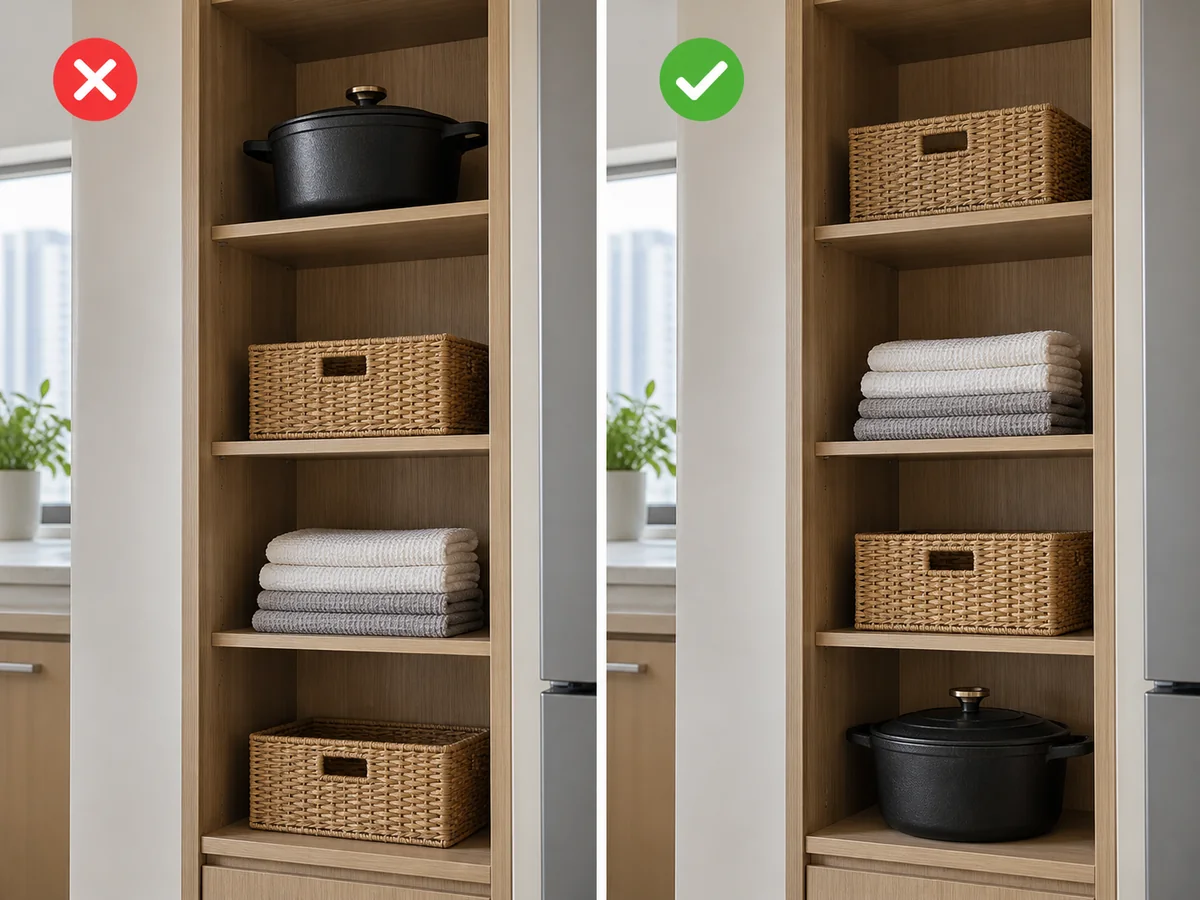
Keep frequently used heavy items on stable shelves below waist height, never overhead or on loose furniture.
View safety lesson →
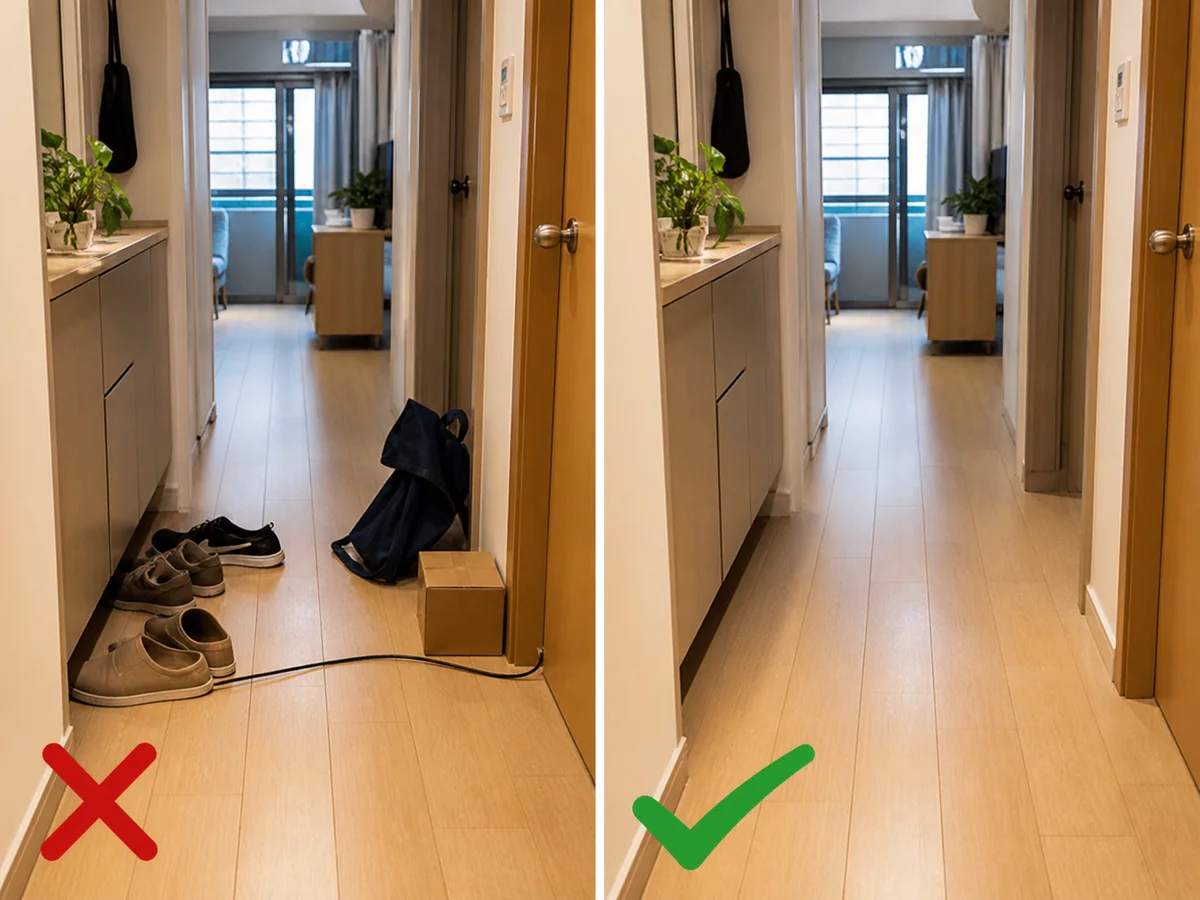
Put away toys, shoes, bags, boxes, and cords crossing the floor so routes to rooms, exits, and bathrooms stay clear.
View safety lesson →
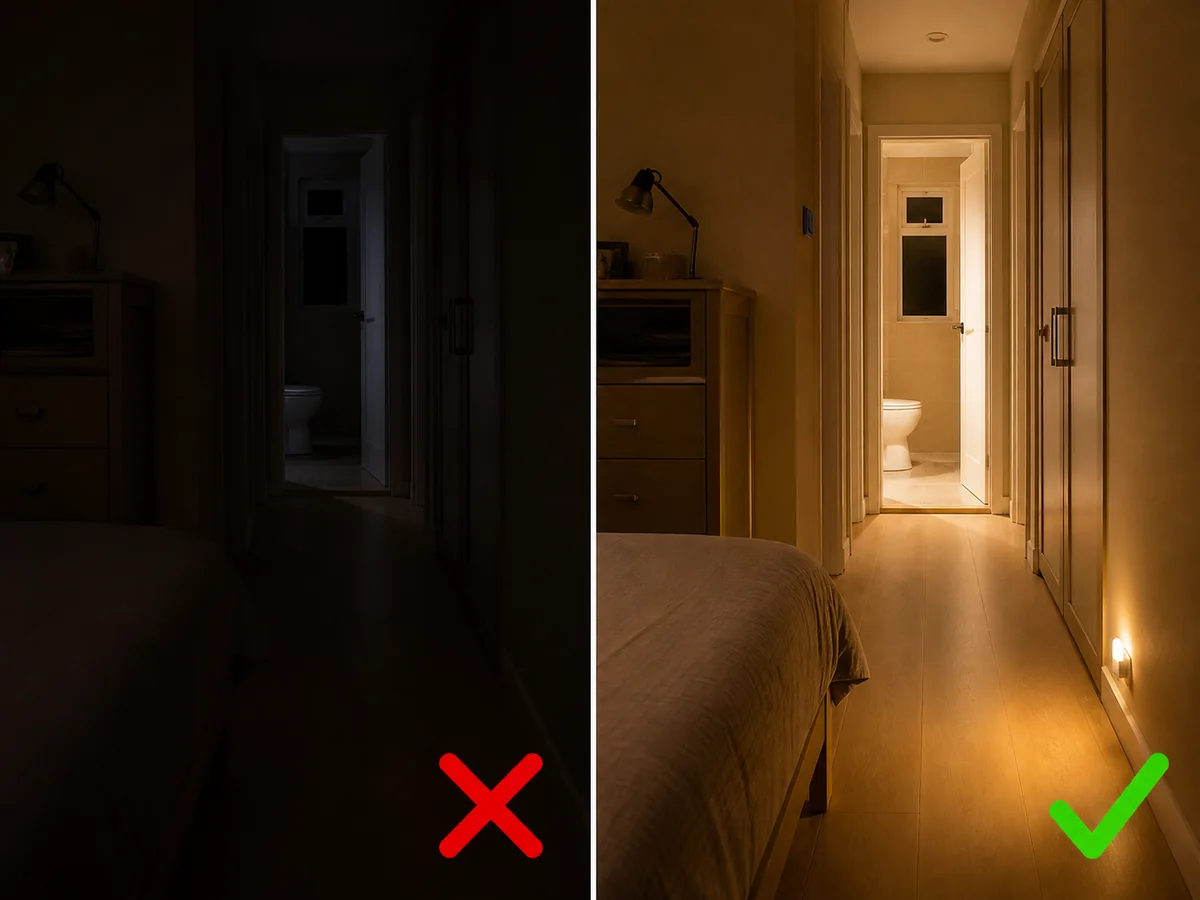
Provide an easy-to-use night light or sensor light beside the bed, in the hallway, and on the route to the bathroom, and test it before sleep.
View safety lesson →
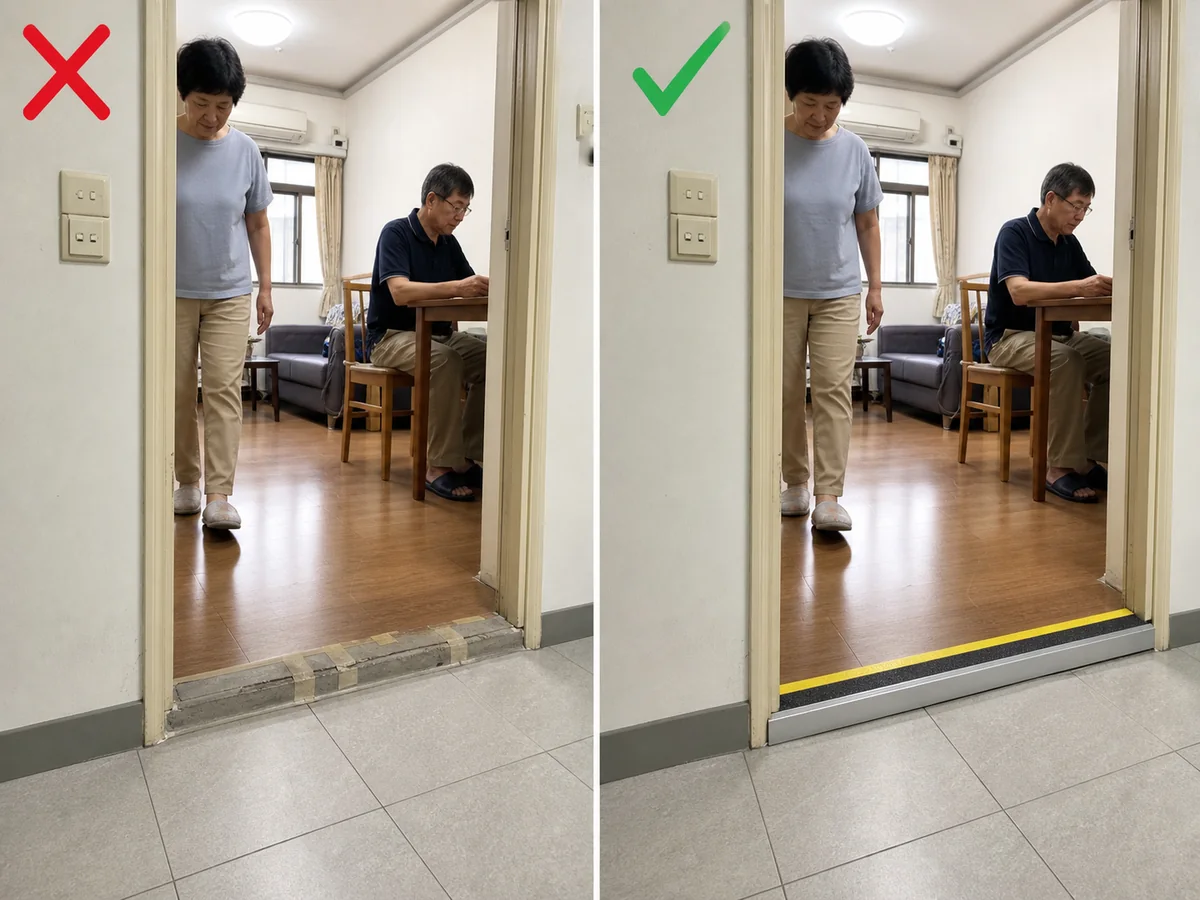
Keep thresholds clearly visible with a secure non-slip contrast treatment; the employer should arrange qualified help for structural changes.
View safety lesson →
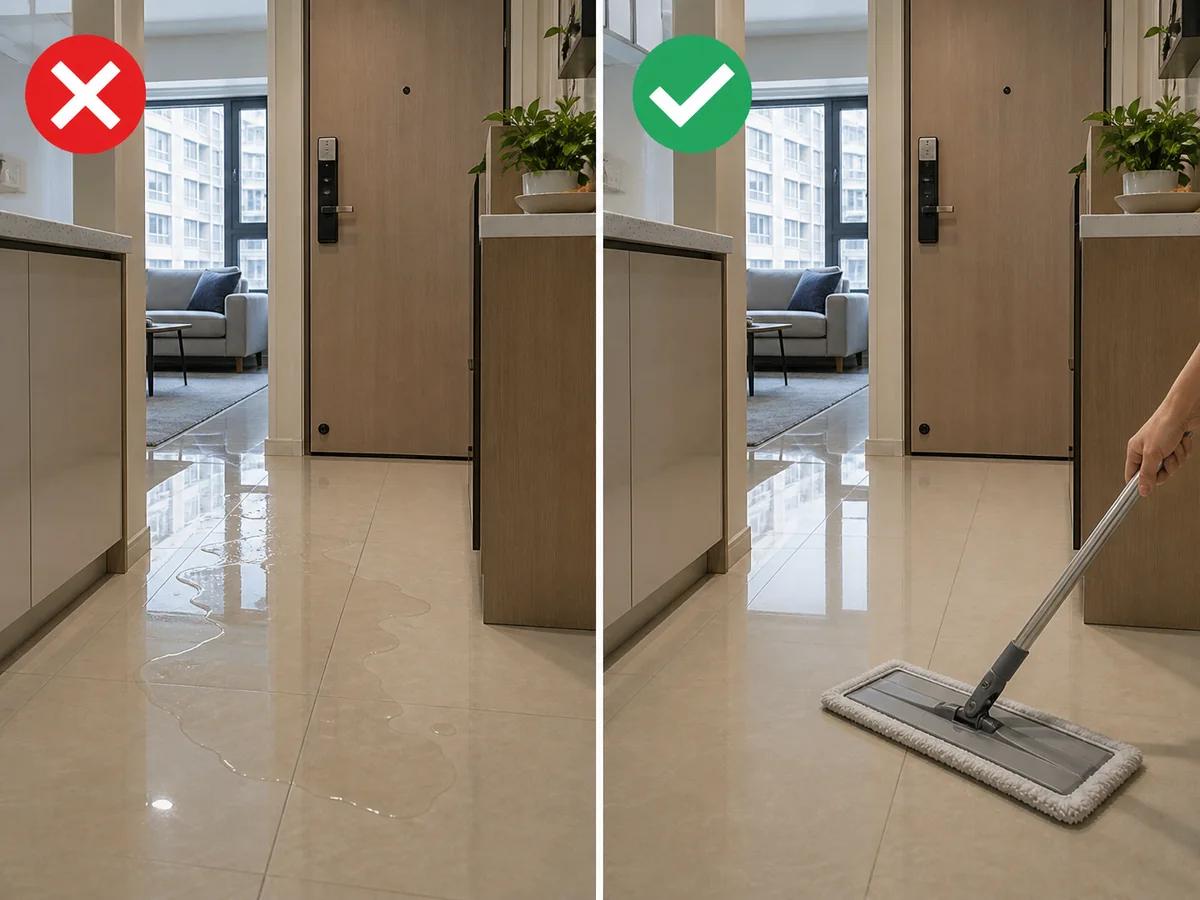
Clean up spills at once and dry the floor to prevent slips.
View safety lesson →
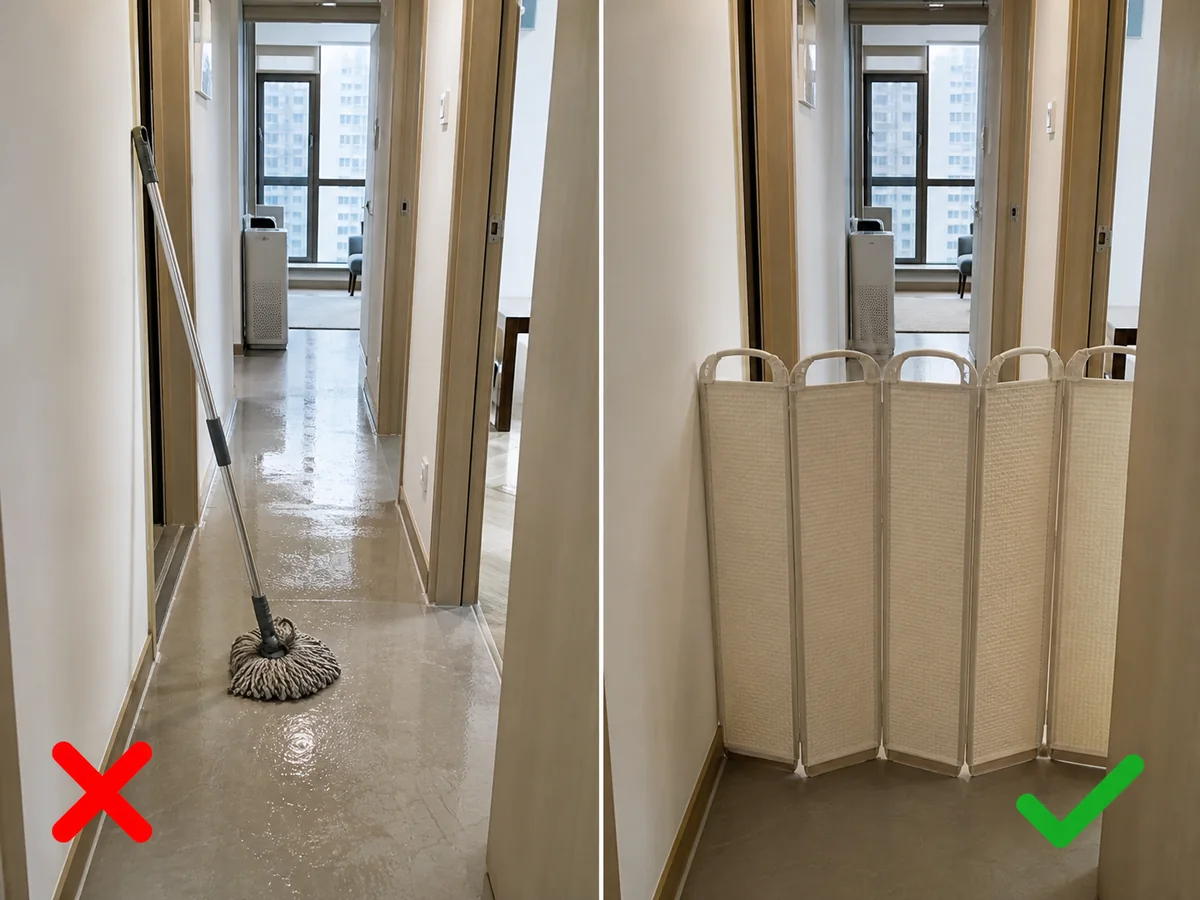
After mopping or wet cleaning, block the affected route, provide another path, and reopen only after checking the whole floor is dry.
View safety lesson →
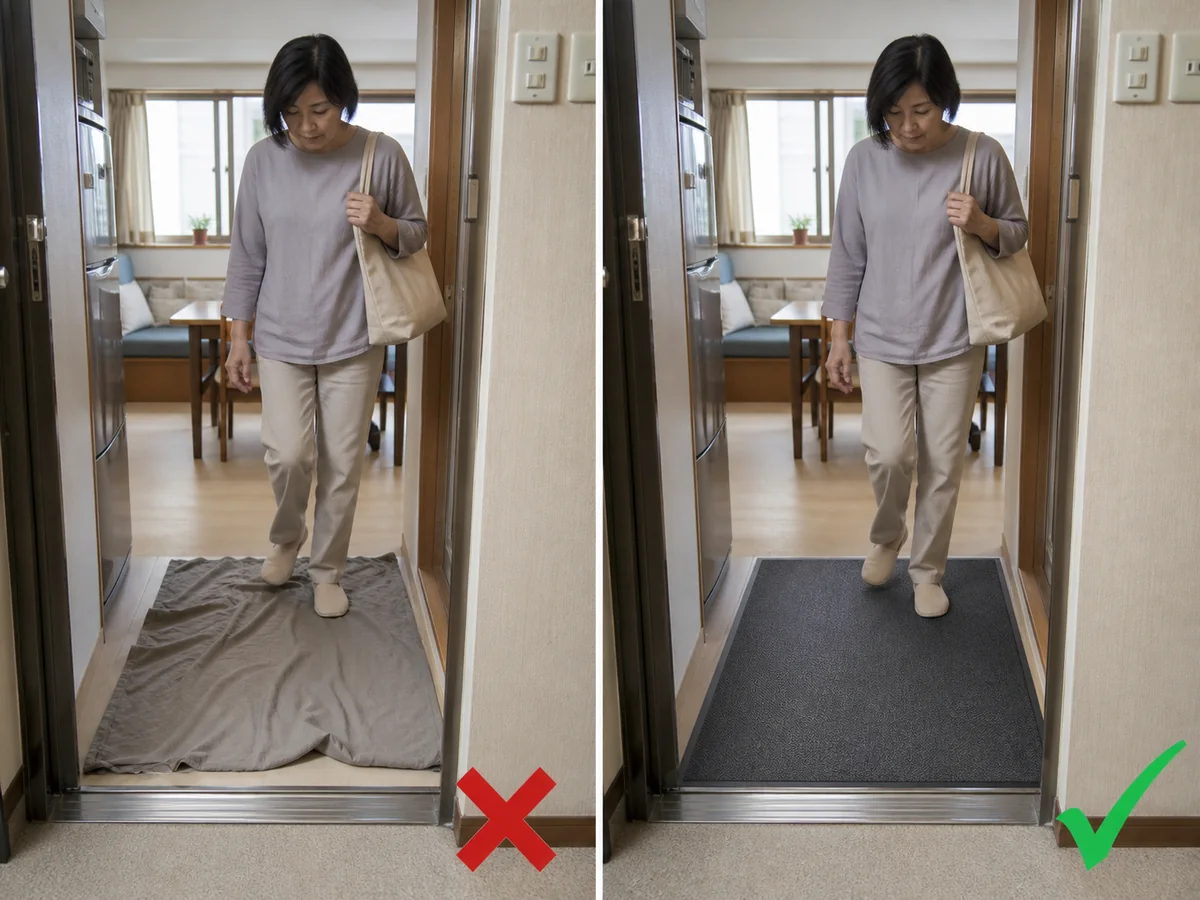
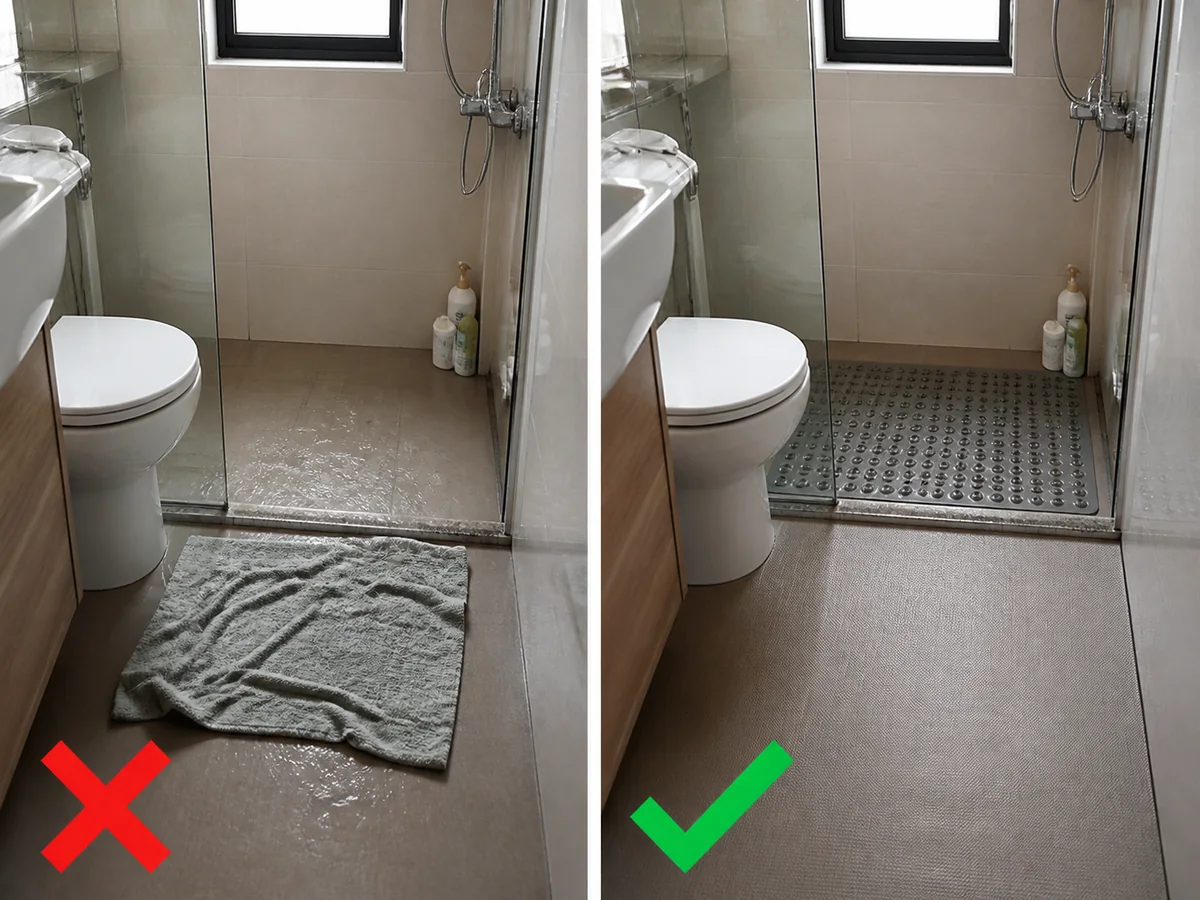
Remove loose cloth and unsecured mats from walking routes; use a flat, secure non-slip mat where one is needed.
View safety lesson →
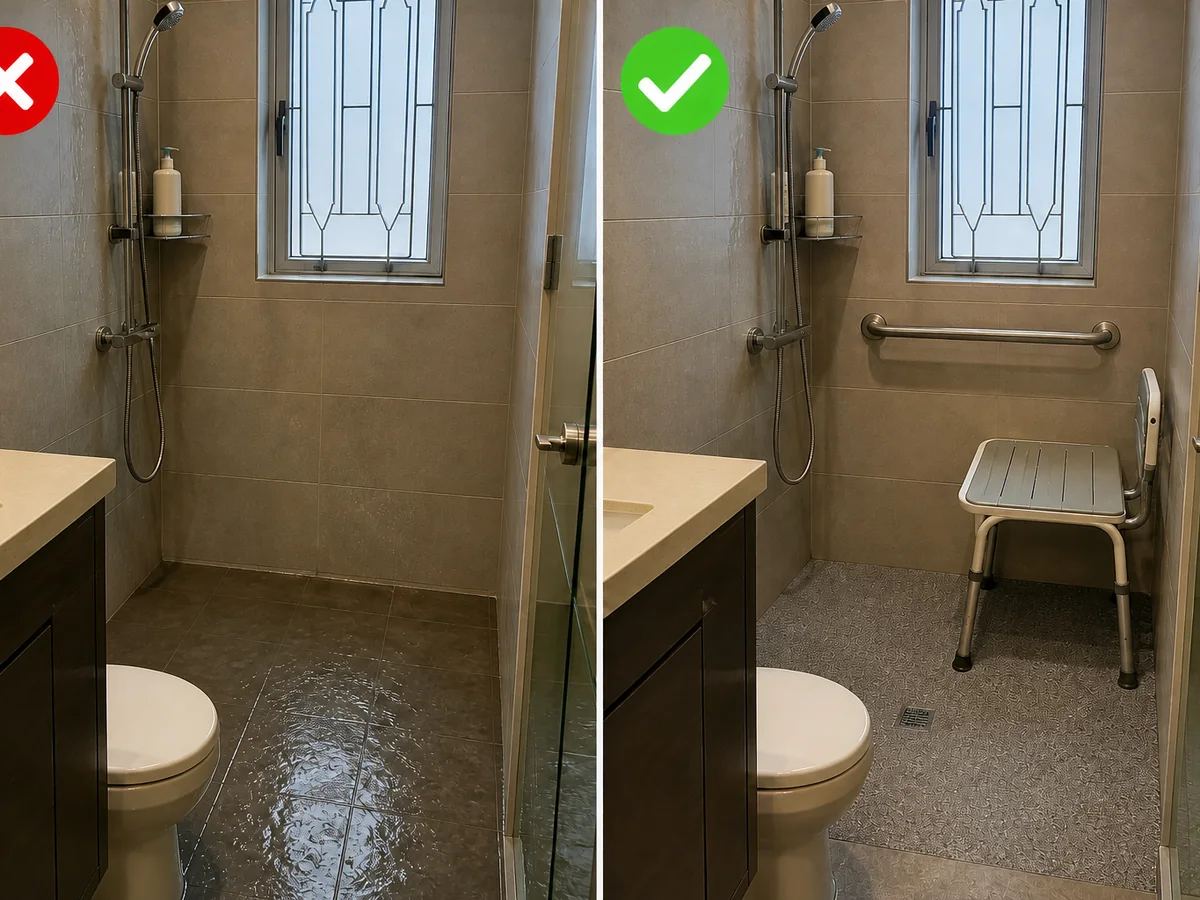
Fit and use secure grab bars in suitable positions beside the toilet, bath, and shower.
View safety lesson →
Use a secure, well-fitted anti-slip mat or surface in the bath or shower area, keep it in good condition, and keep the floor dry.
View safety lesson →
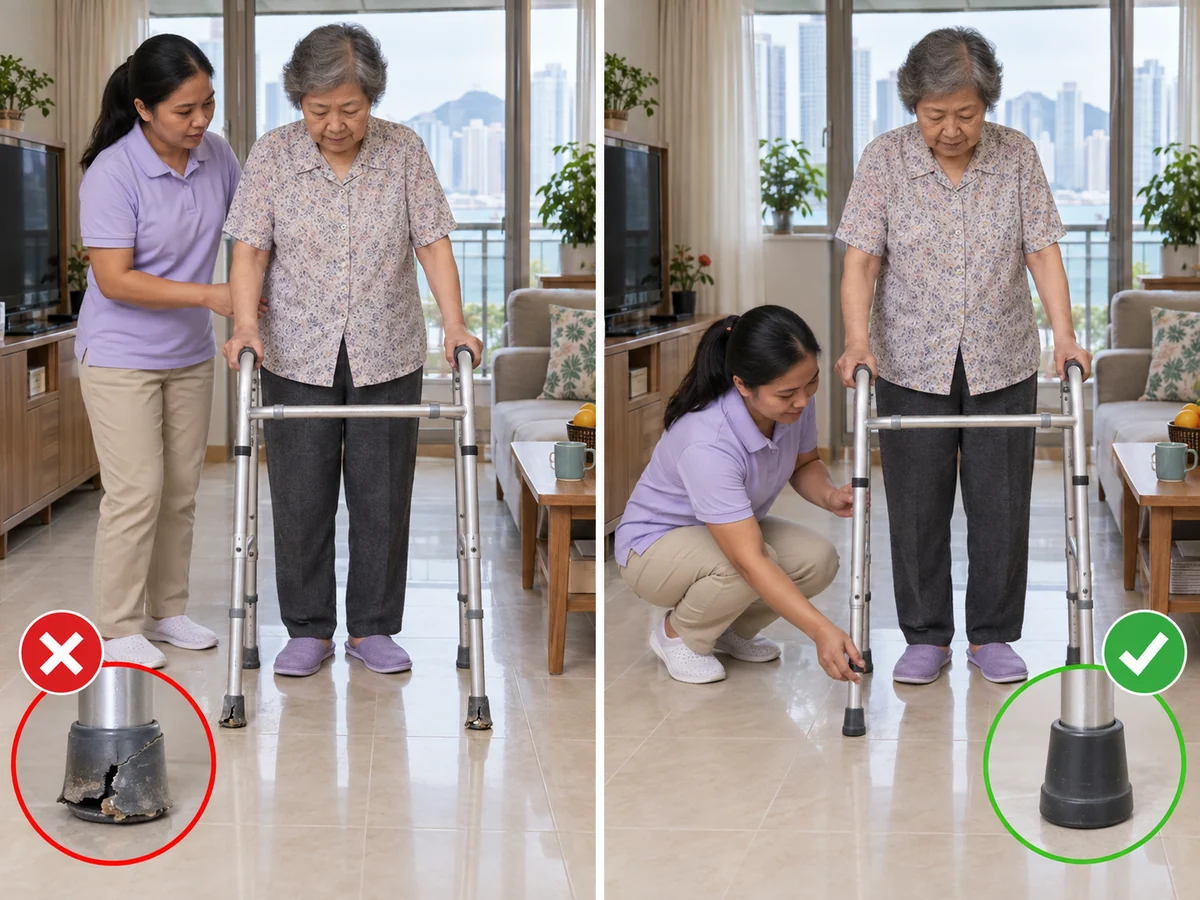
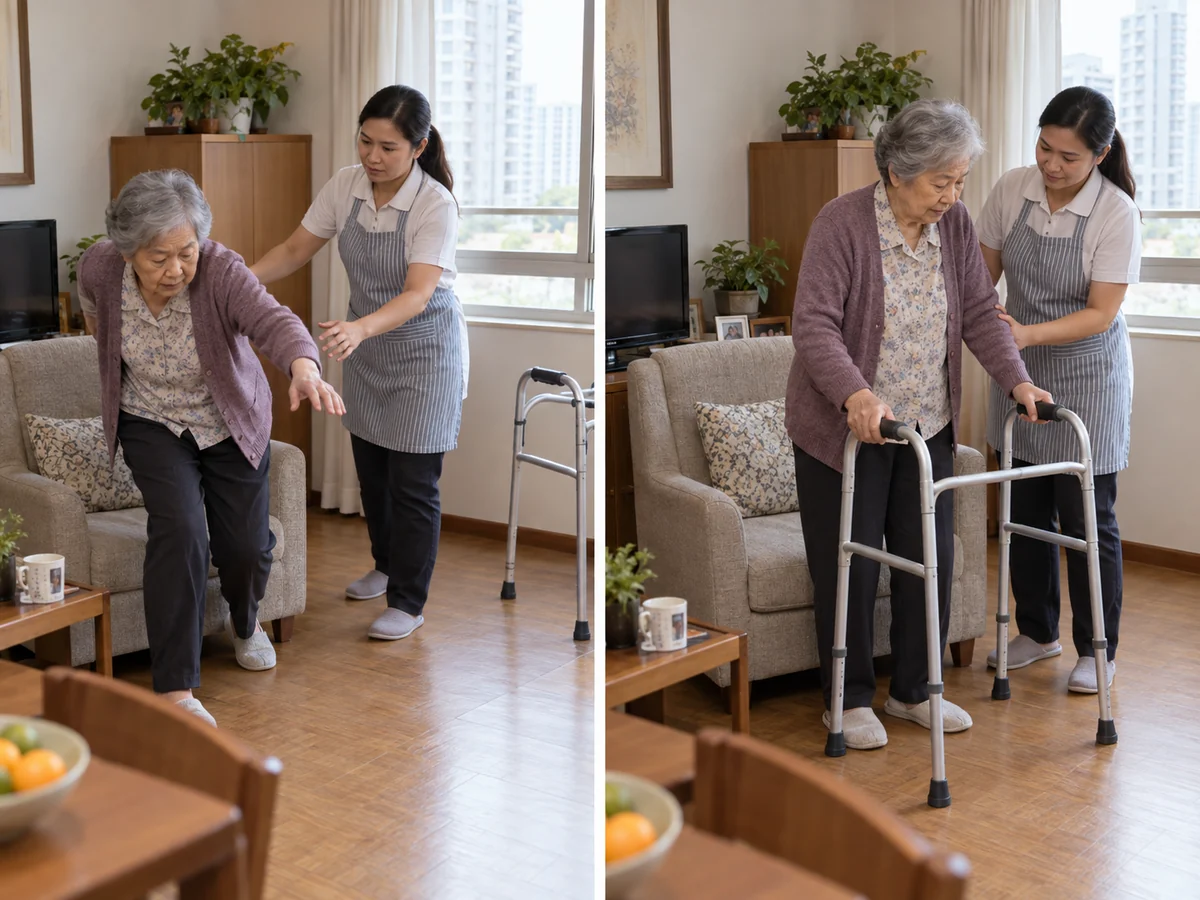
Before use, confirm the walking aid remains at the therapist-set height and its rubber tips are secure.
View safety lesson →
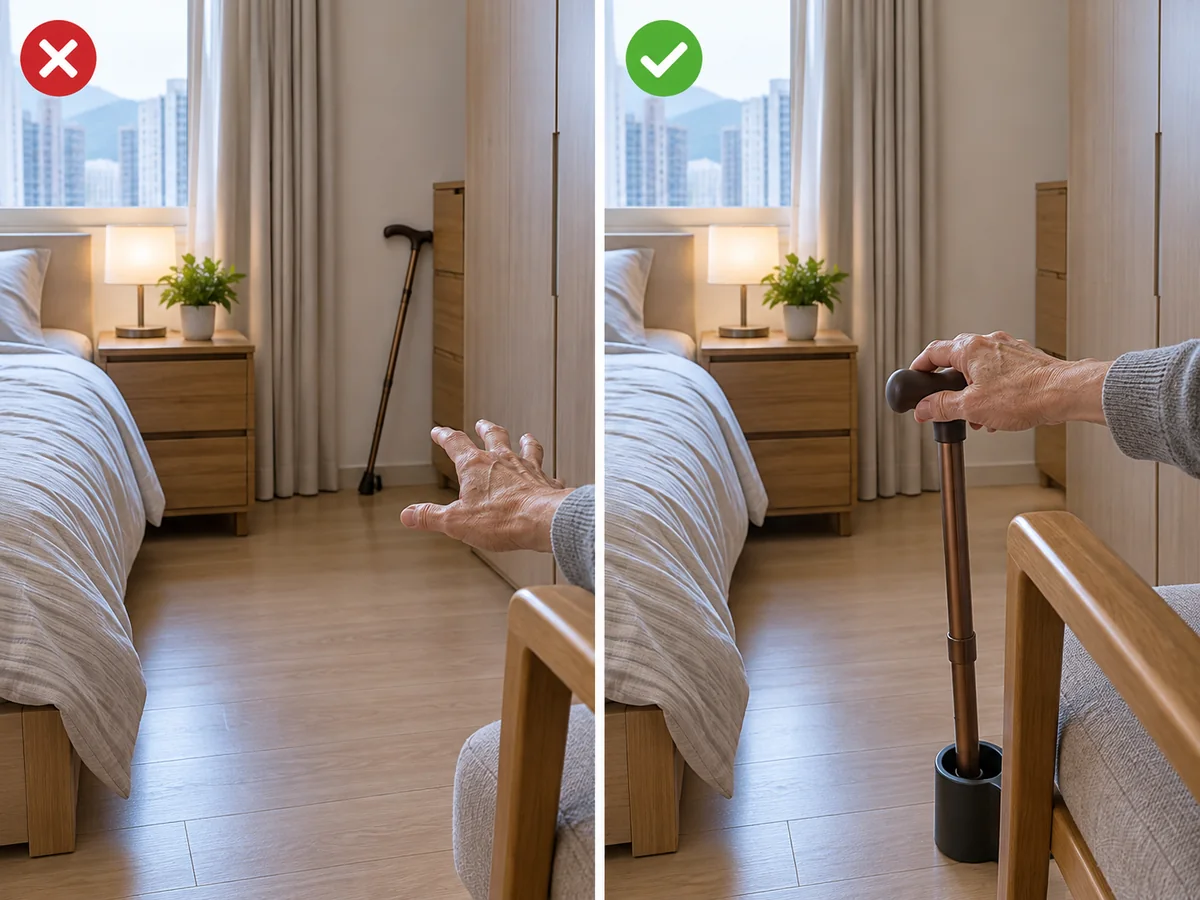
Before sitting, rising, or toileting, place the correct walking aid securely by the user’s usual hand.
View safety lesson →
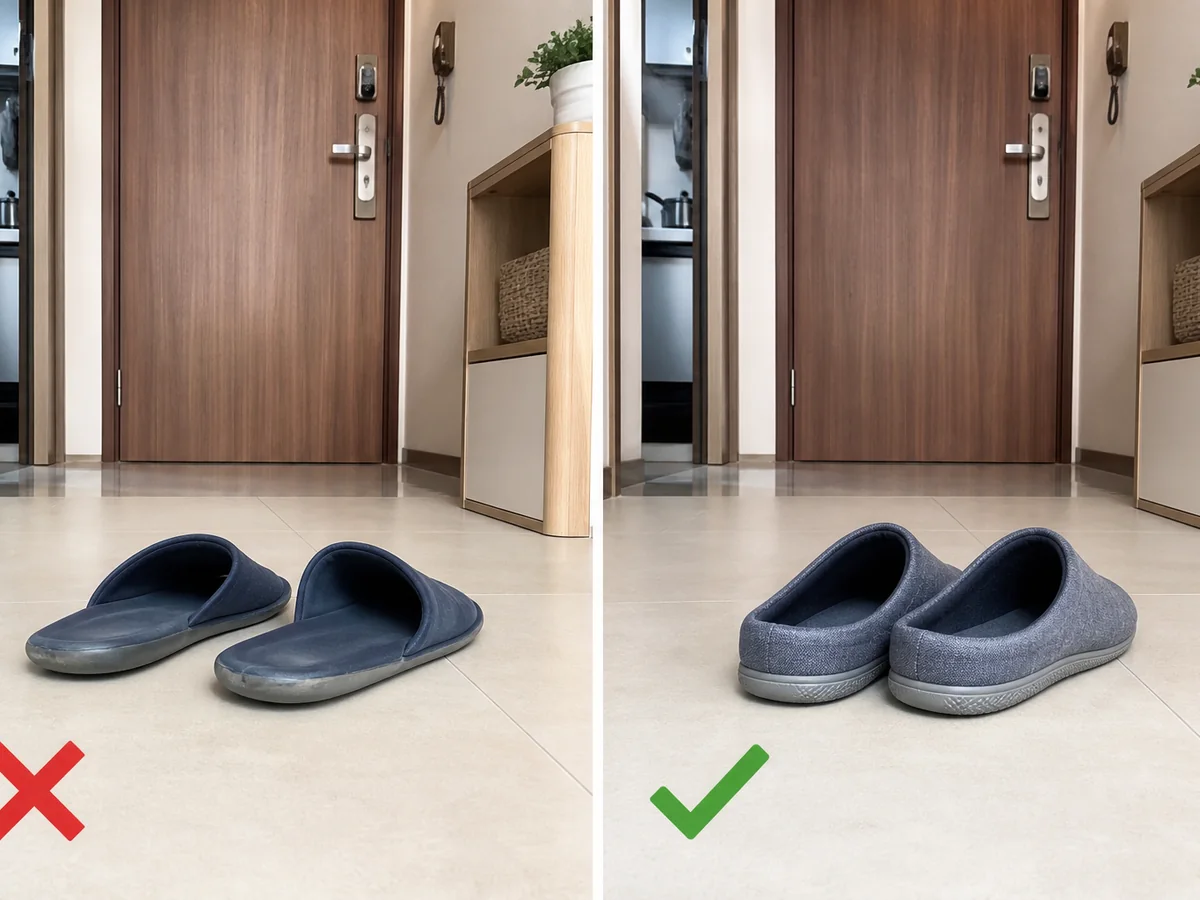
Wear shoes that fit, hold the heel securely, and have non-slip soles at home.
View safety lesson →
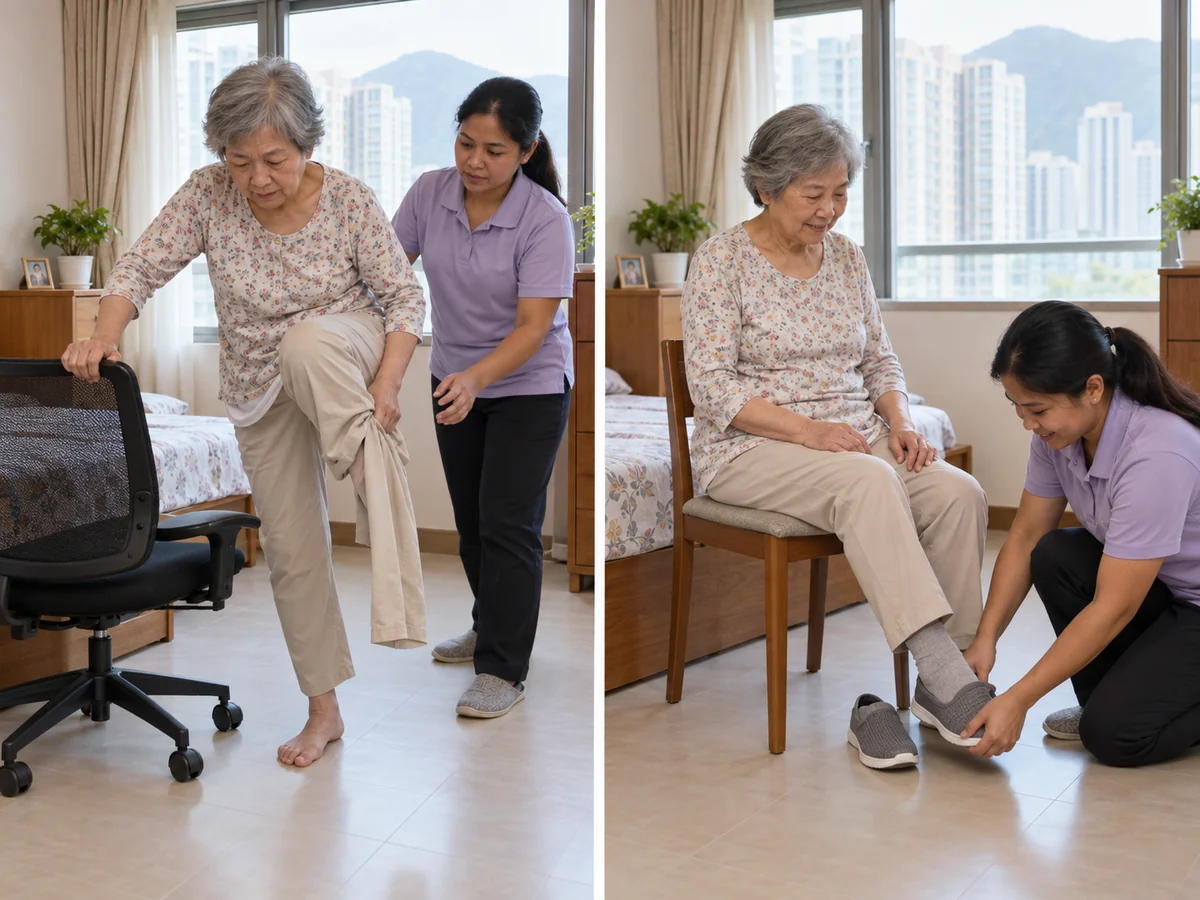
Have the older person dress on a stable chair instead of balancing on one leg or walking while adjusting clothes.
View safety lesson →
When getting up from a bed or chair, rise slowly and wait until balance is steady before walking.
View safety lesson →
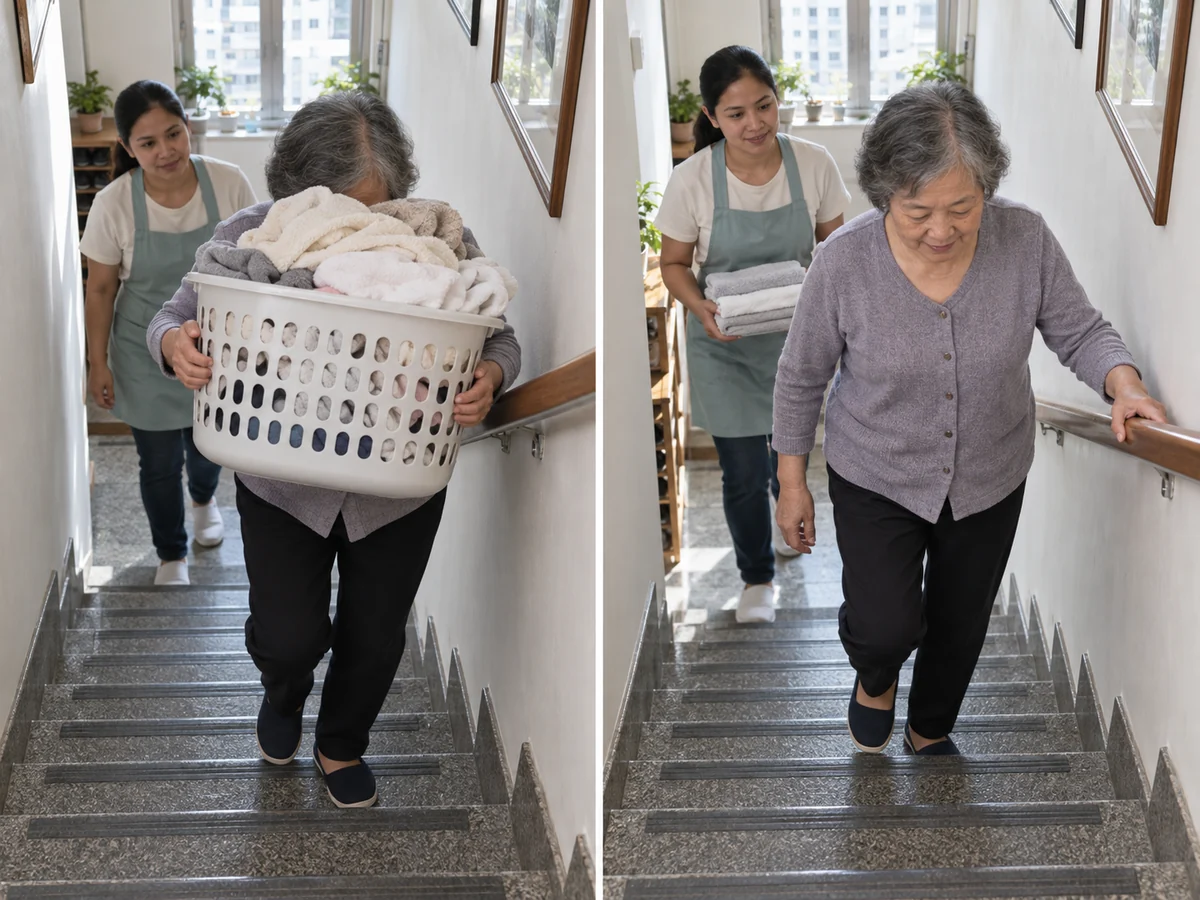
Use the handrail on stairs and carry items in small trips so at least one hand stays free.
View safety lesson →
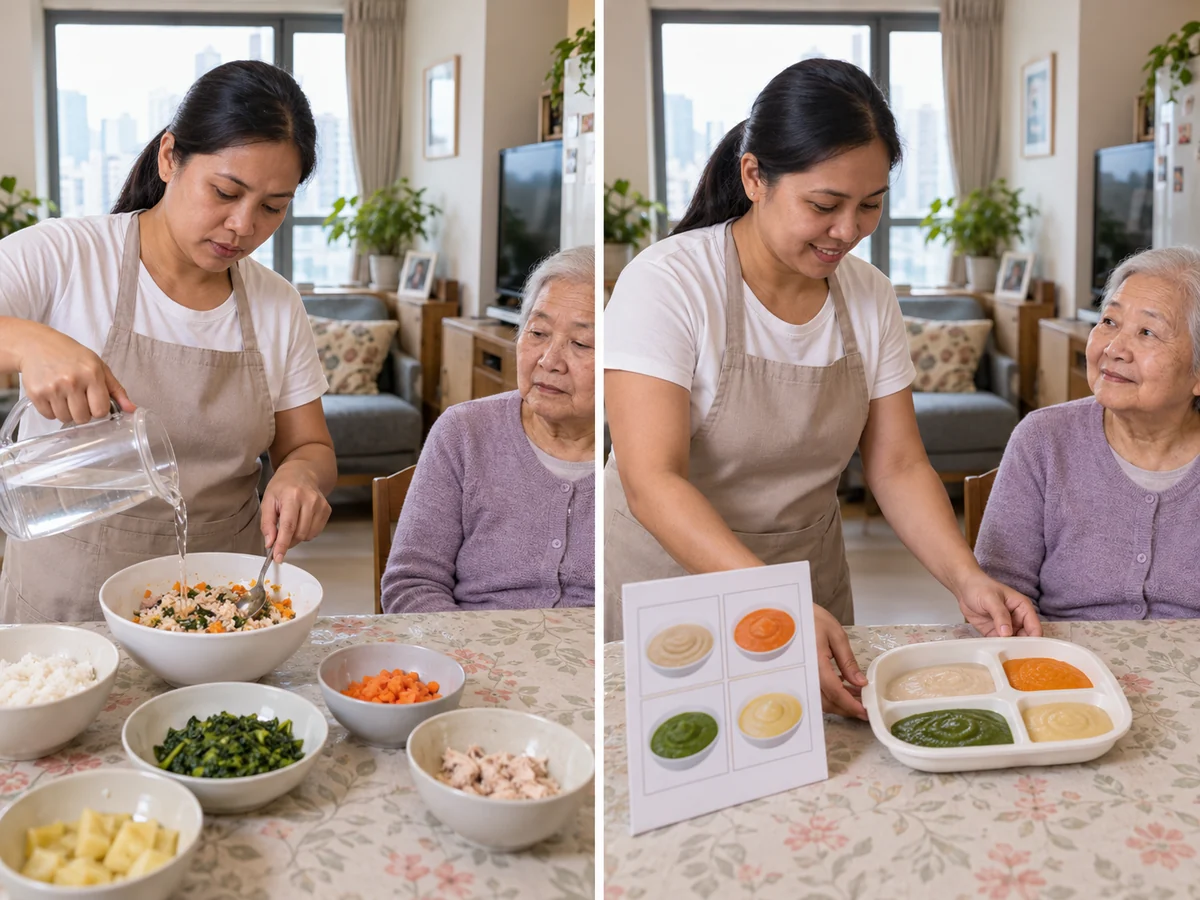
Prepare soft, minced, pureed, or thickened items exactly as specified by the healthcare, dietetic, or speech team.
View safety lesson →
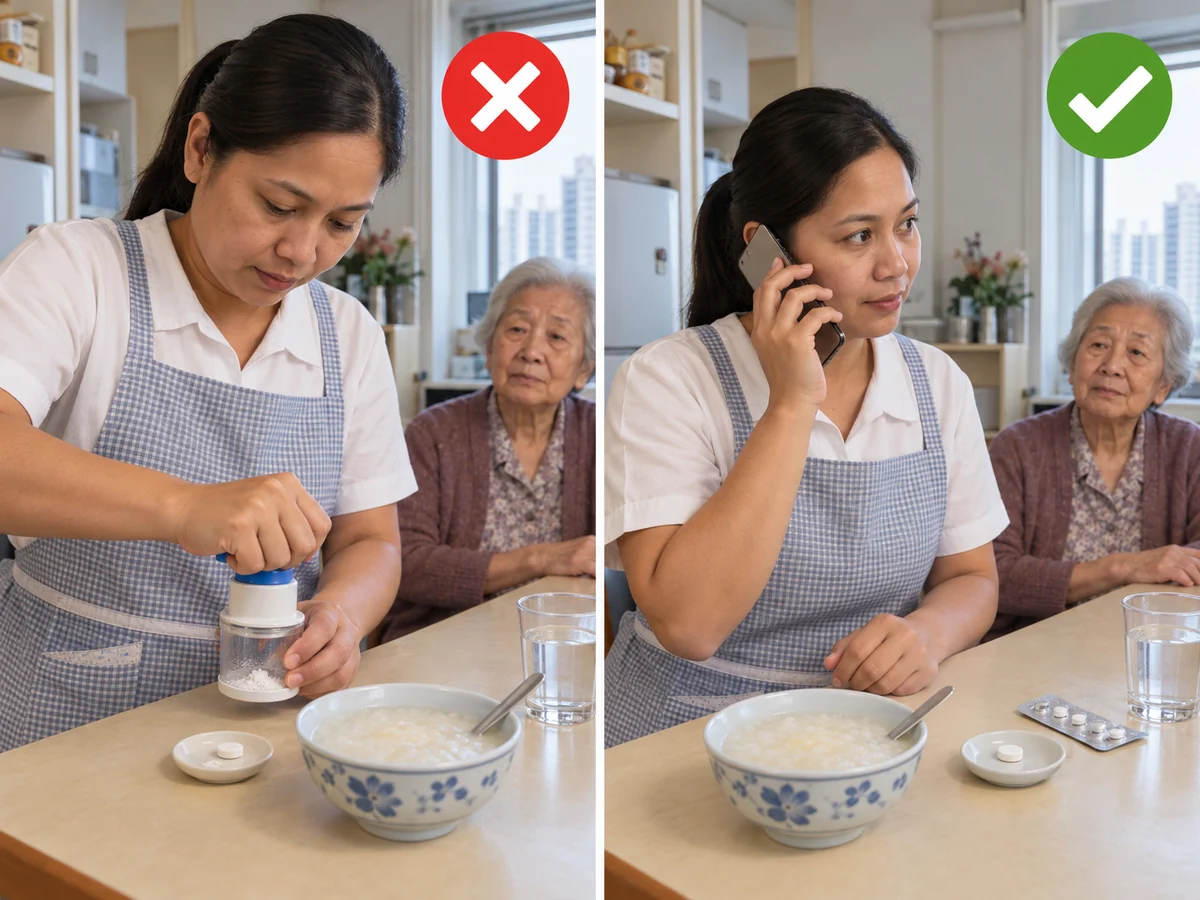
Keep tablets whole as labelled; split, chew, or crush only with explicit instructions from a doctor or pharmacist.
View safety lesson →
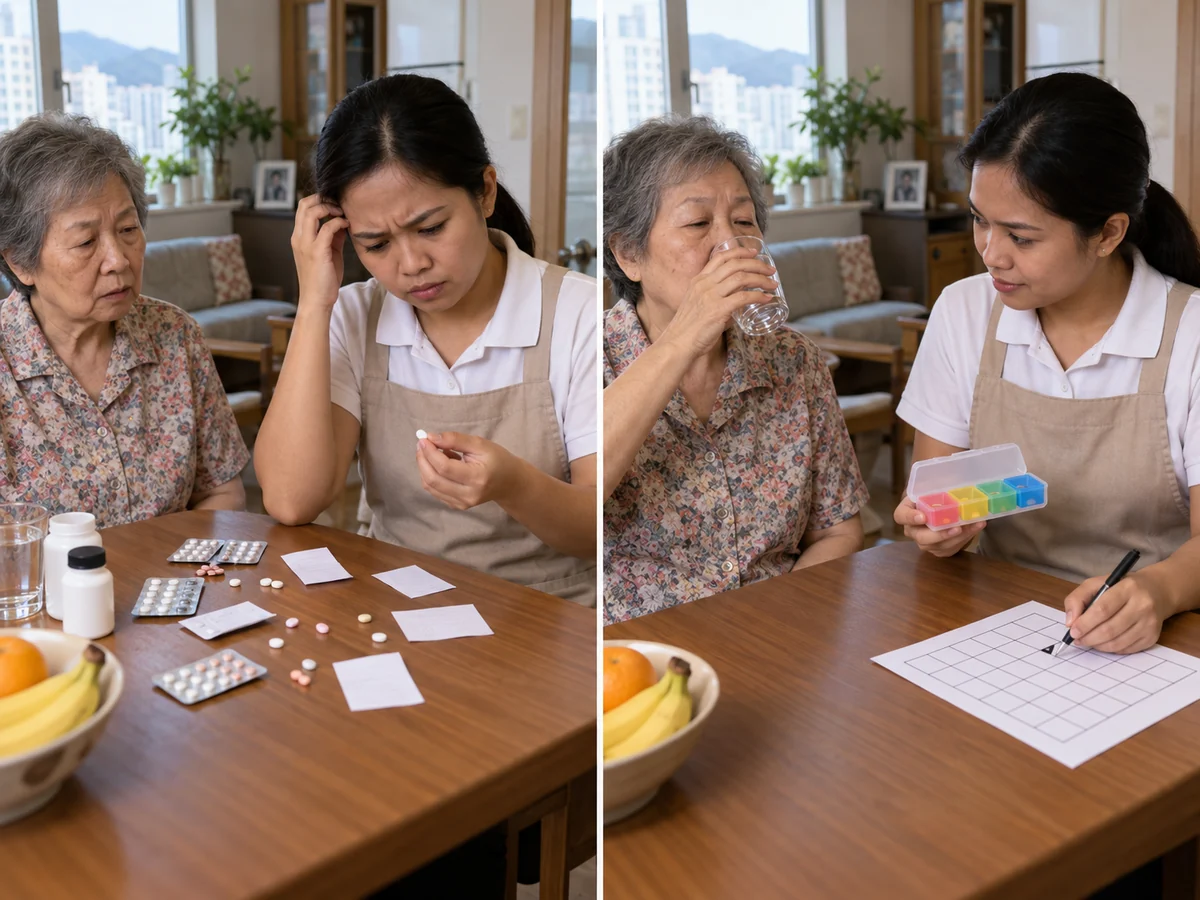
Assist only from the medicine label and employer-provided schedule, then record the dose immediately after it is taken.
View safety lesson →

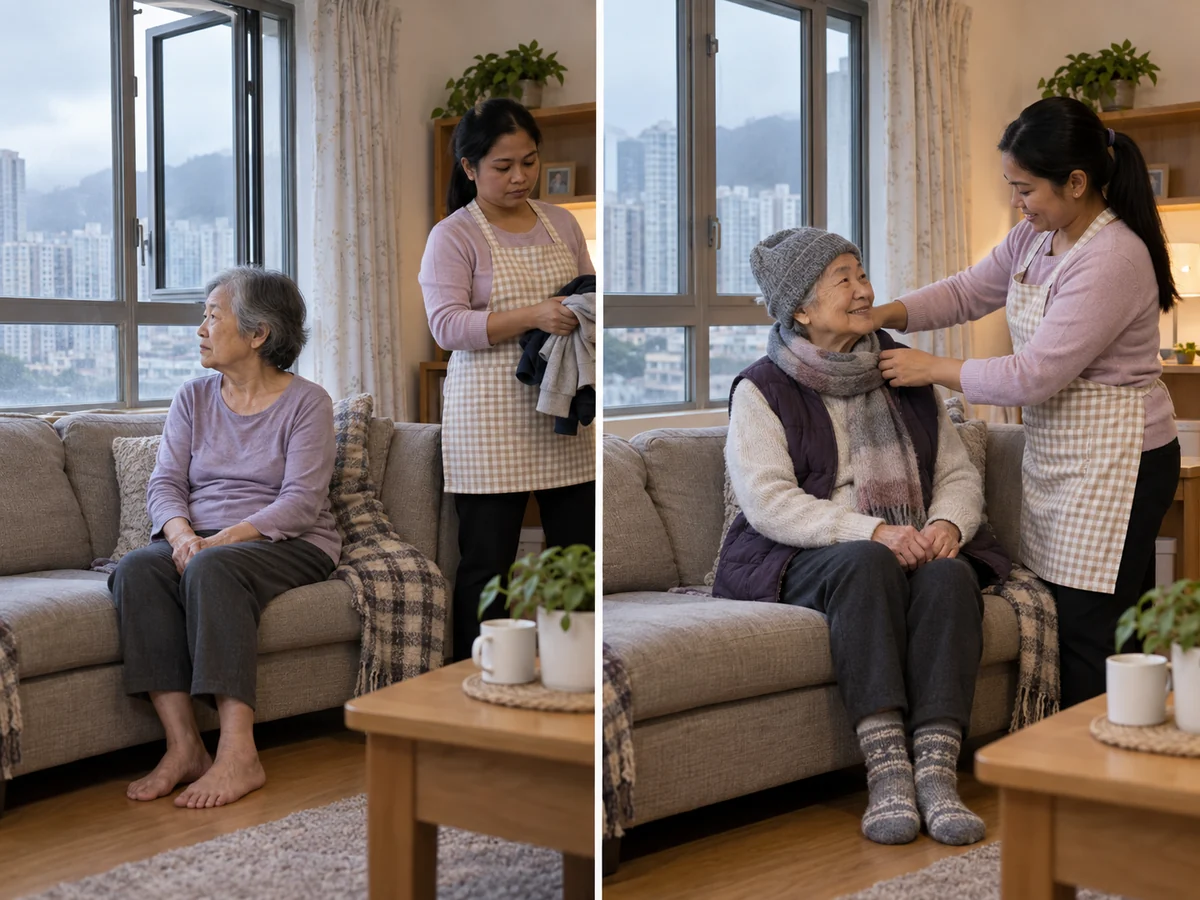
Check the forecast, add suitable layers, keep the room warm, and avoid long outings in colder morning and evening periods.
View safety lesson →
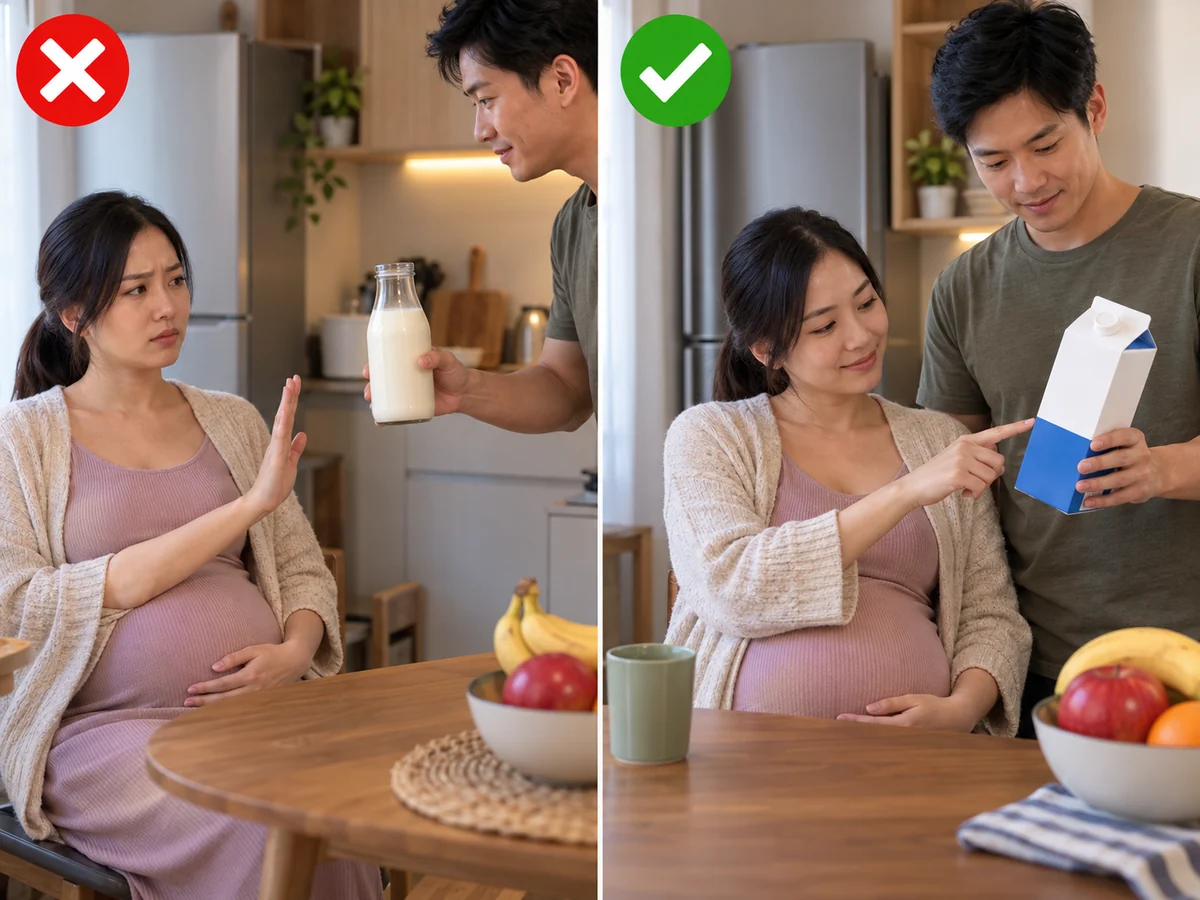
Choose suitably pasteurised dairy and read the product label before serving. Keep unpasteurised or unidentified dairy off that person's menu.
View safety lesson →
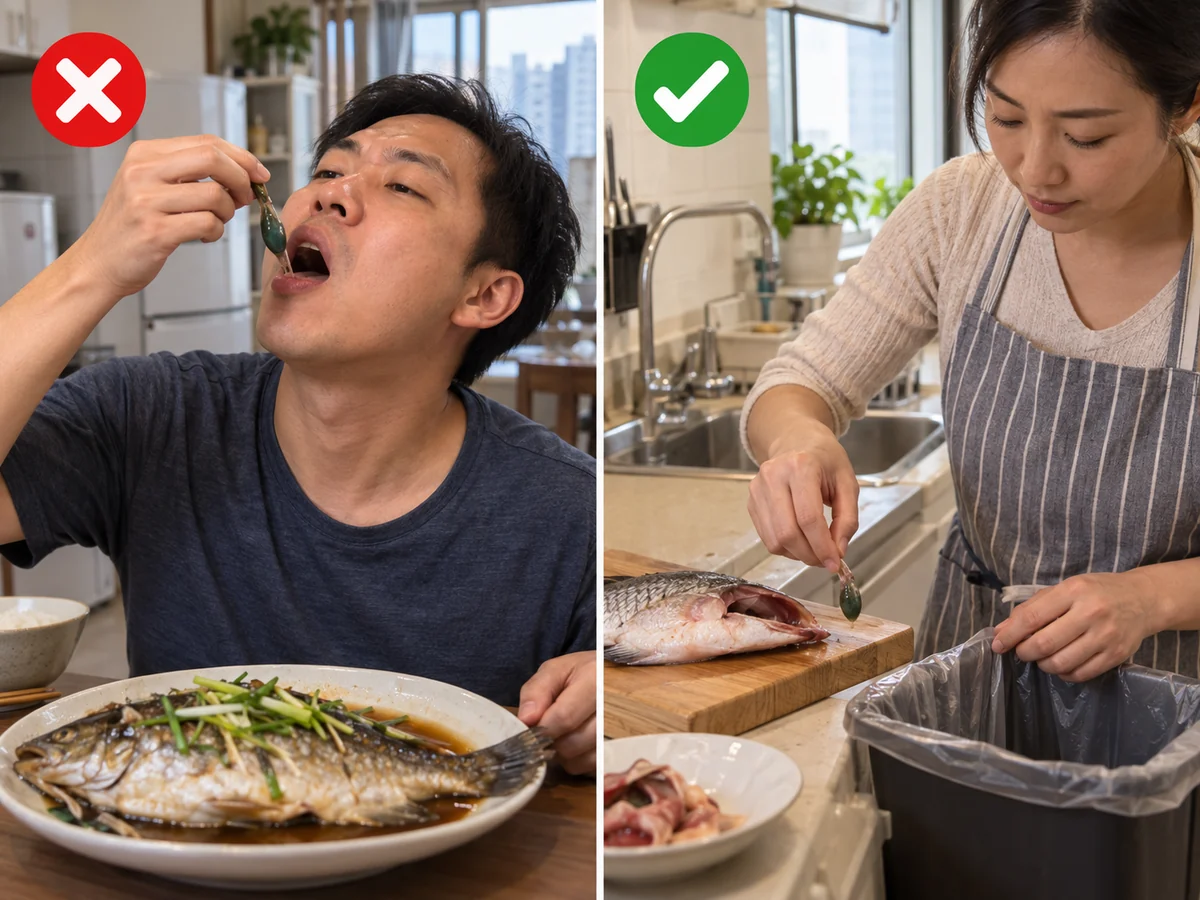
Never serve fish gall bladders as food or a home remedy. If swallowed, seek medical care promptly and report the fish type and time.
View safety lesson →
Do not serve uncooked cold-smoked fish to vulnerable people; choose thoroughly cooked fish instead. Refrigeration and a ready-to-eat label are not proof of safety; agree on a cooked alternative with the employer.
View safety lesson →
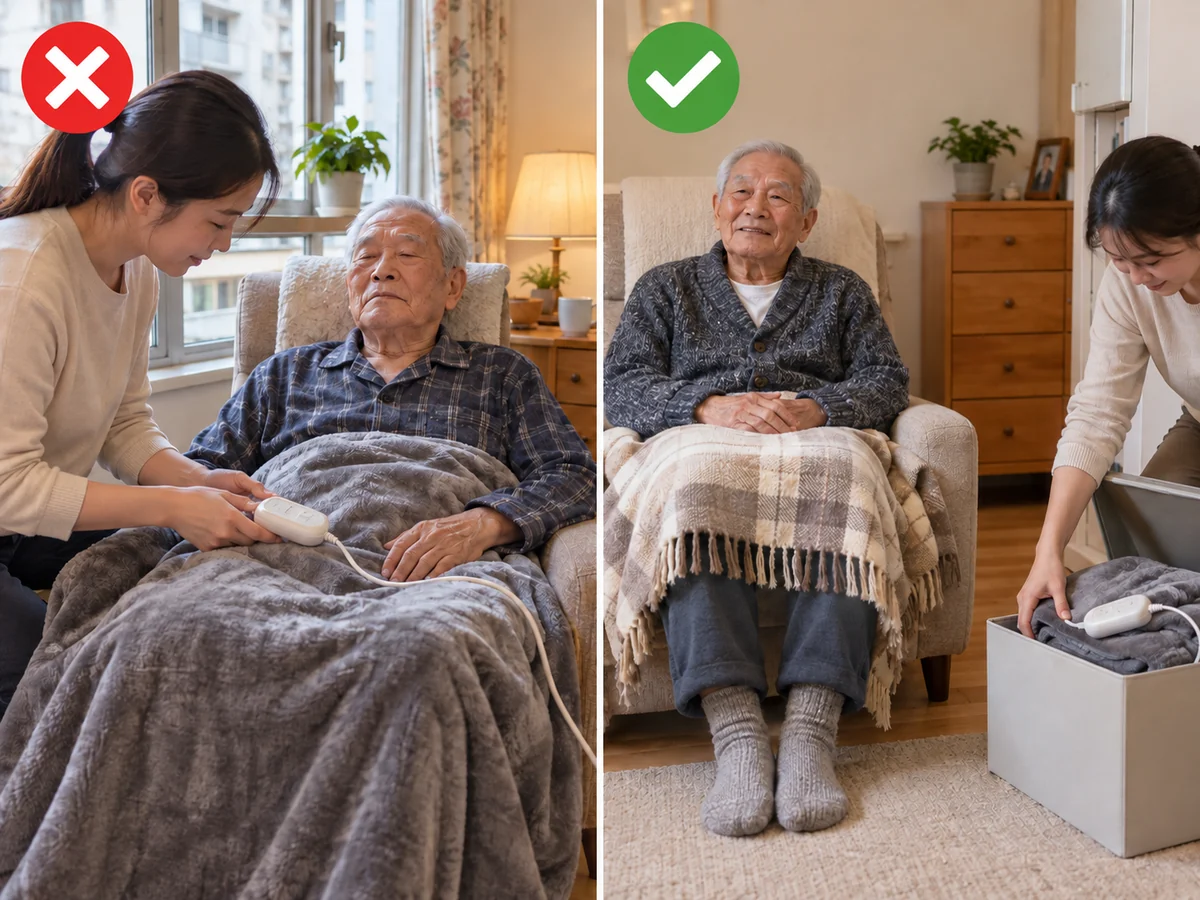
Do not use electric blankets for heat-insensitive people or young children; follow product limits and care advice for other users.
View safety lesson →
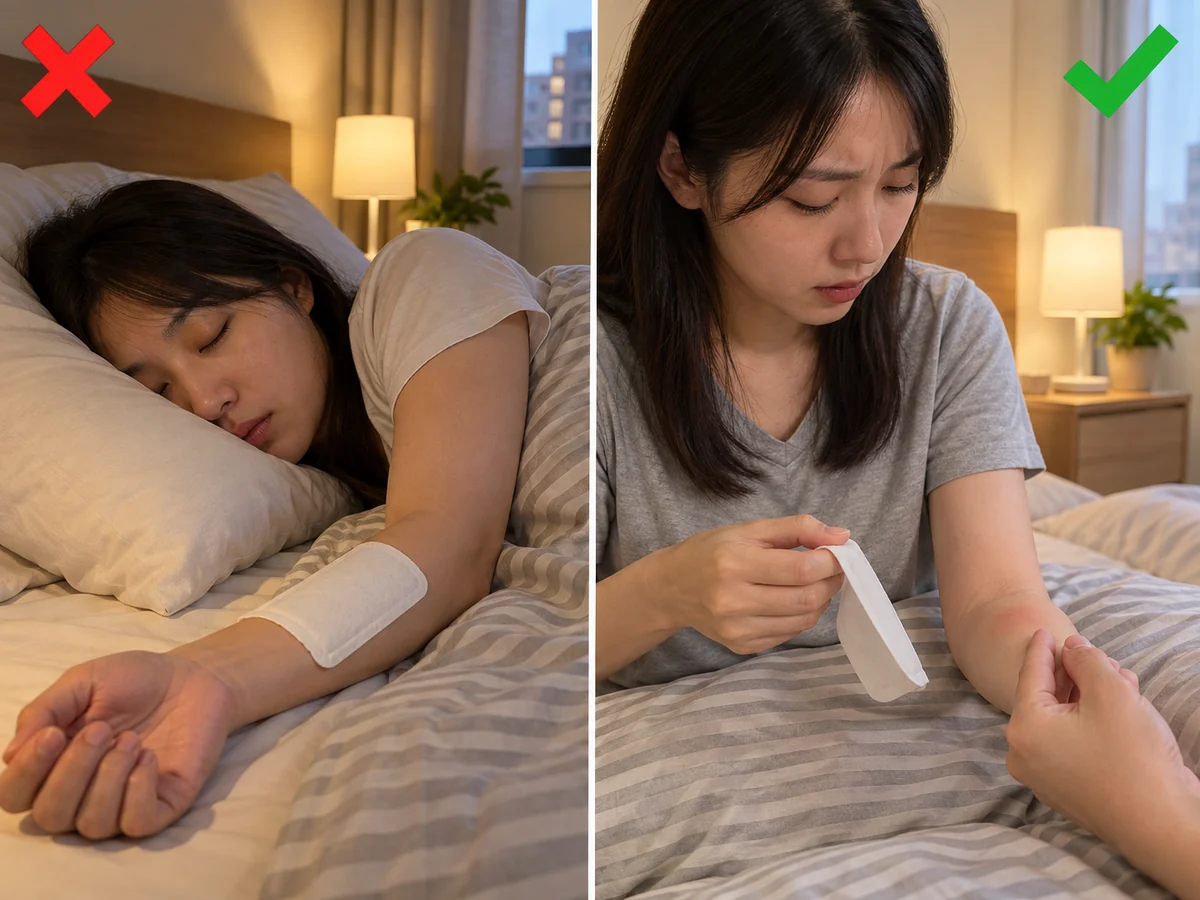
Avoid prolonged direct contact and do not sleep with a warm pad against the skin. Stop for redness or pain; seek professional advice for anyone with reduced sensation.
View safety lesson →
Pause care when fatigue appears and allow rest before the next stage. Tell the employer about unusual tiredness or breathlessness and seek advice if it persists.
View safety lesson →
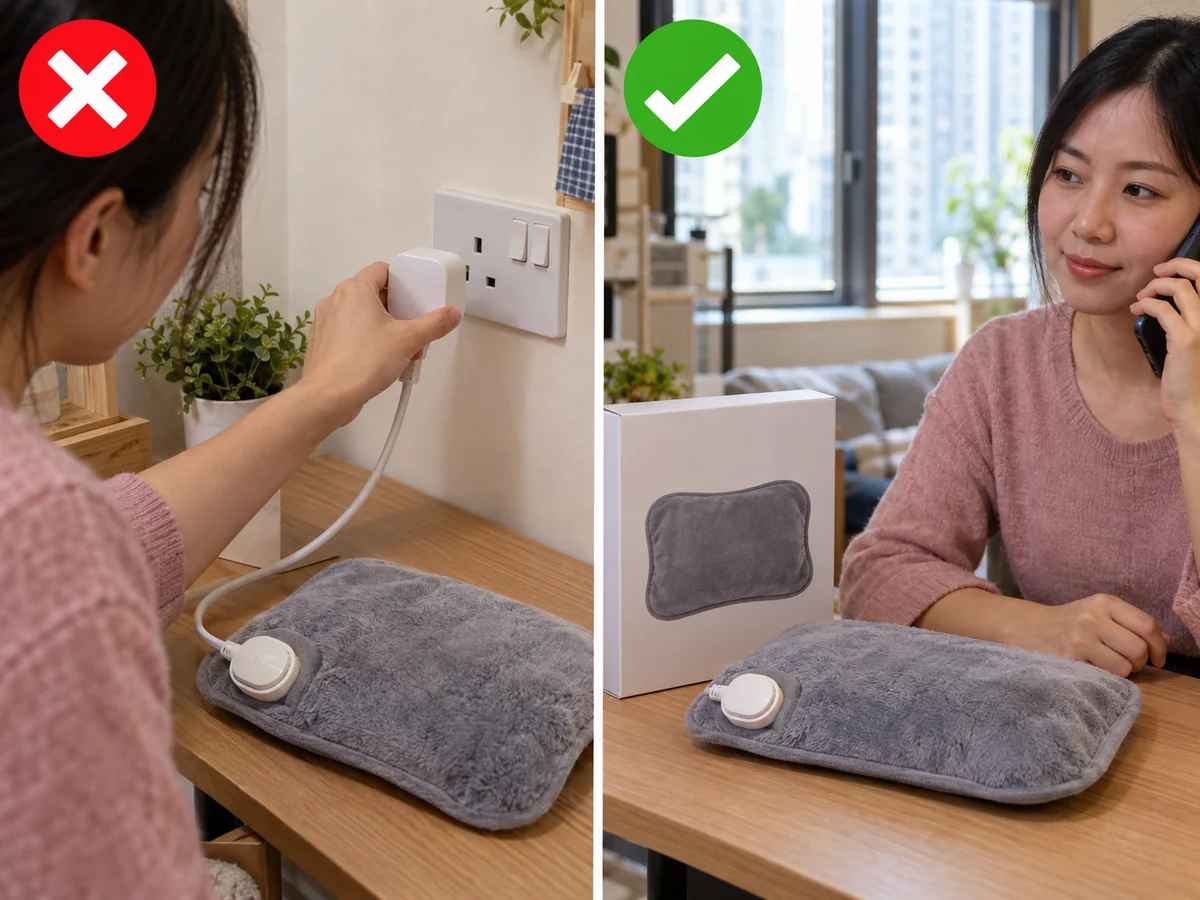
Do not use electrode-type electric warm bags; stop using an unidentified type and ask the supplier or EMSD. Do not open or repair the bag to identify it; tell the employer and arrange safe handling with the supplier.
View safety lesson →
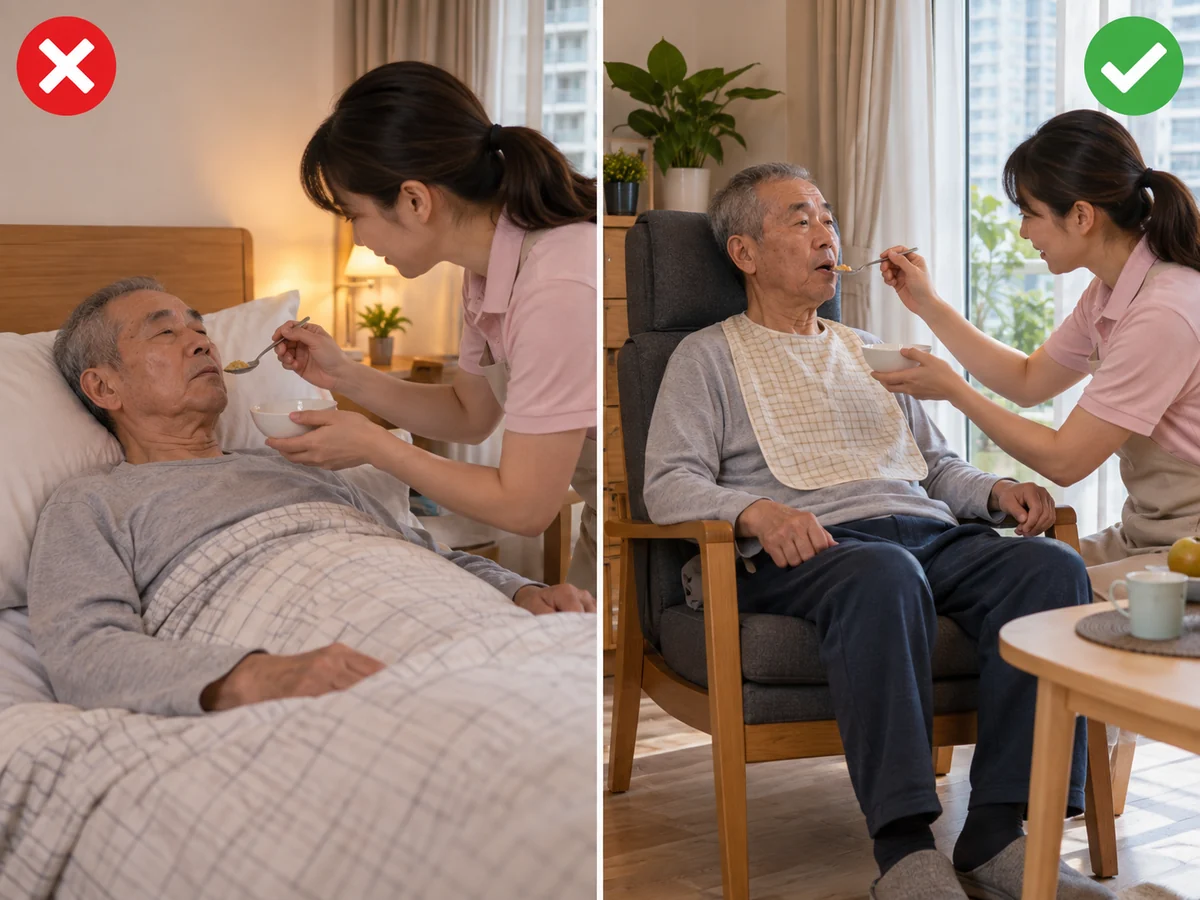
Support the person upright as their individual swallowing plan directs before feeding. Pause and obtain help if the position cannot be maintained; never feed while lying flat.
View safety lesson →
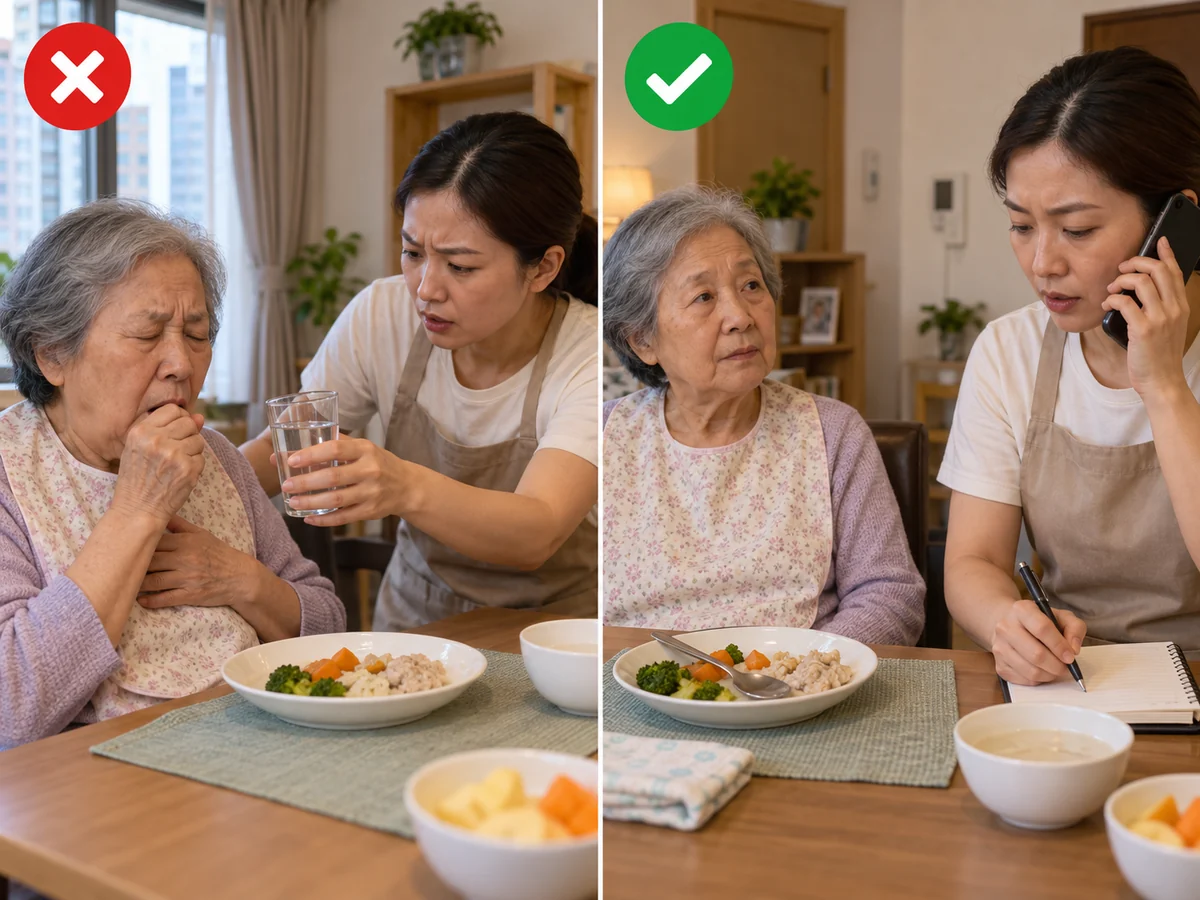
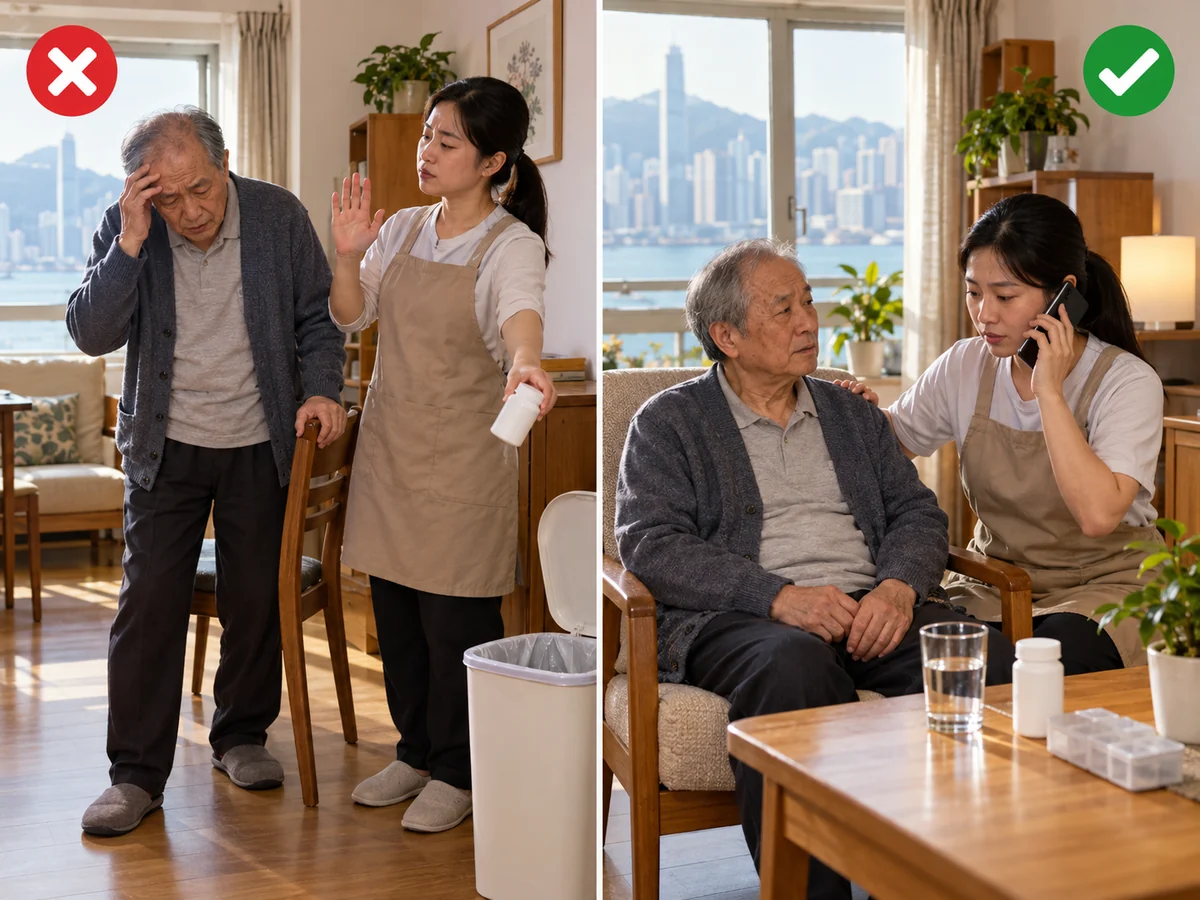
Pause feeding and tell the employer to arrange a healthcare assessment. Record the food and timing; do not force drinks or change prescribed textures yourself.
View safety lesson →
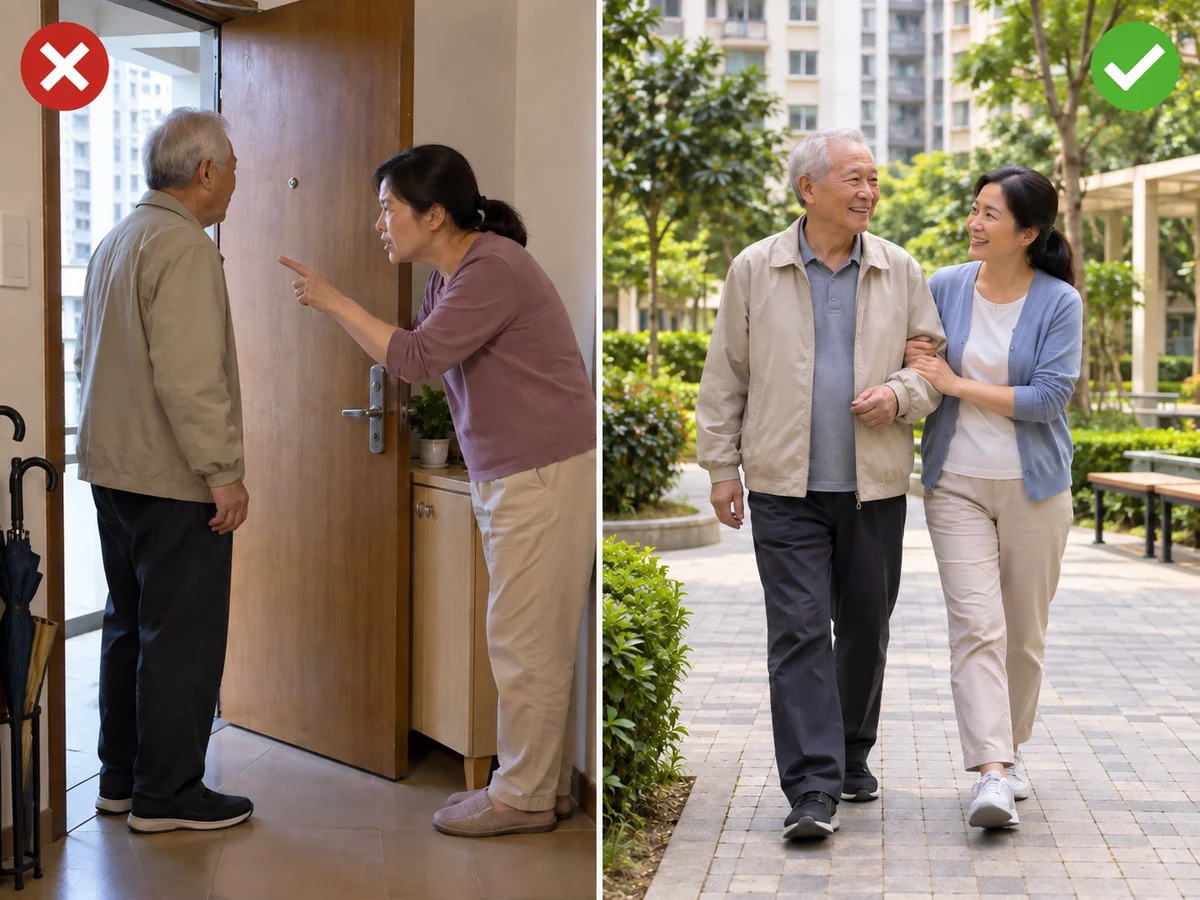
Arrange supported walks and predictable routines that address the person's needs. Hand over who is accompanying them; never improvise restraints as a substitute for care.
View safety lesson →
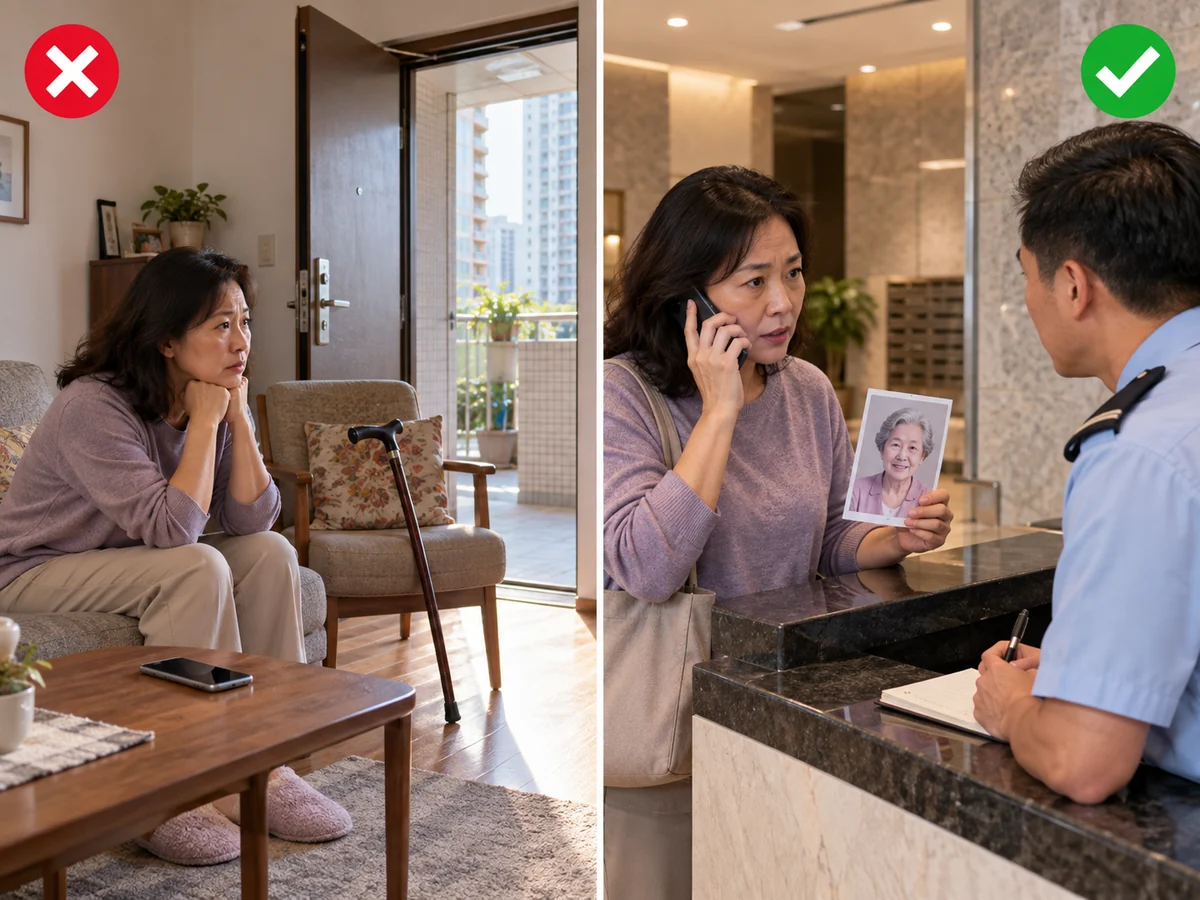
Report a missing older person promptly to family, police and relevant building staff. Give the last known time and place privately to responders; do not delay the report to search alone.
View safety lesson →
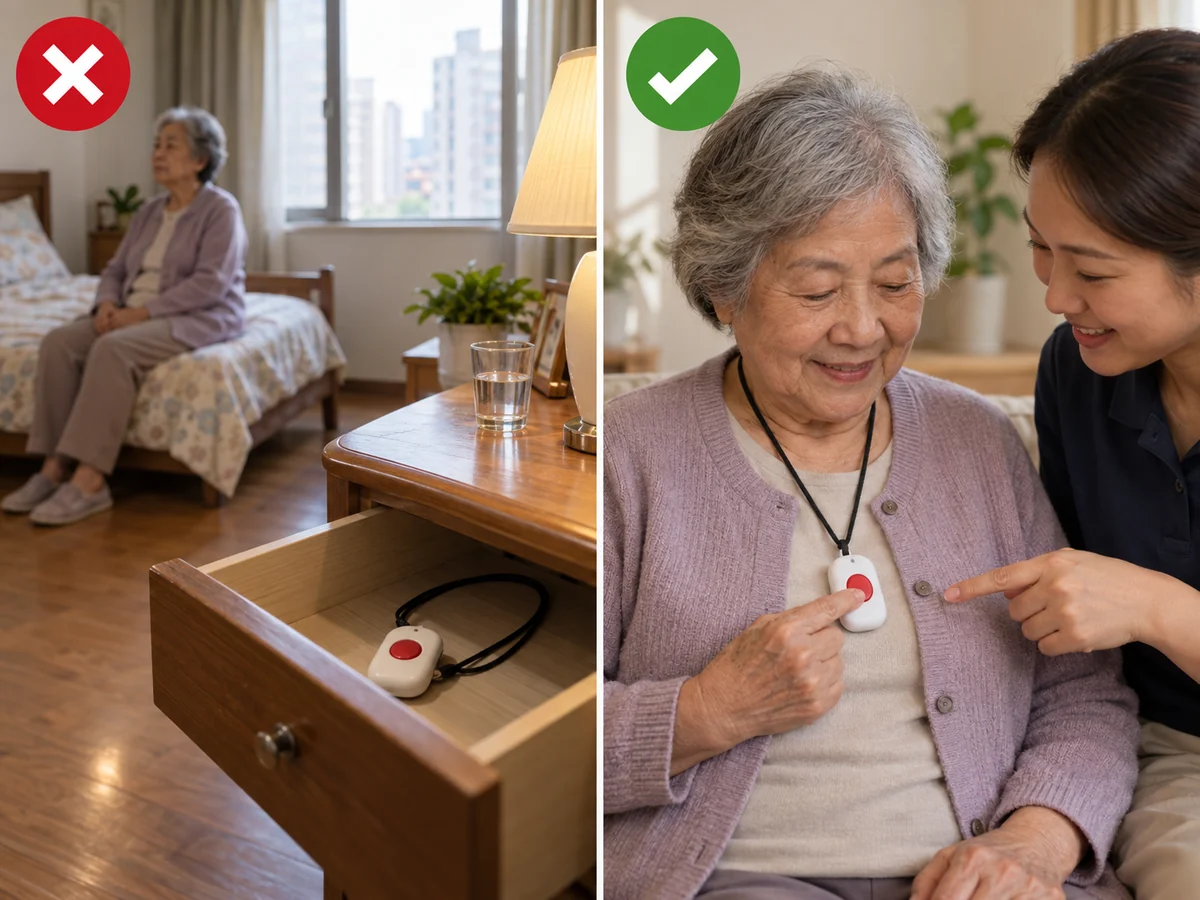
Keep the alarm accessible on the person and ready for use as instructed. Test it according to the service arrangement; it does not replace fall prevention or care.
View safety lesson →
Keep the person safely supported and tell the employer to contact the healthcare team. Do not change doses or stop medicine yourself; pass on the recorded symptoms.
View safety lesson →
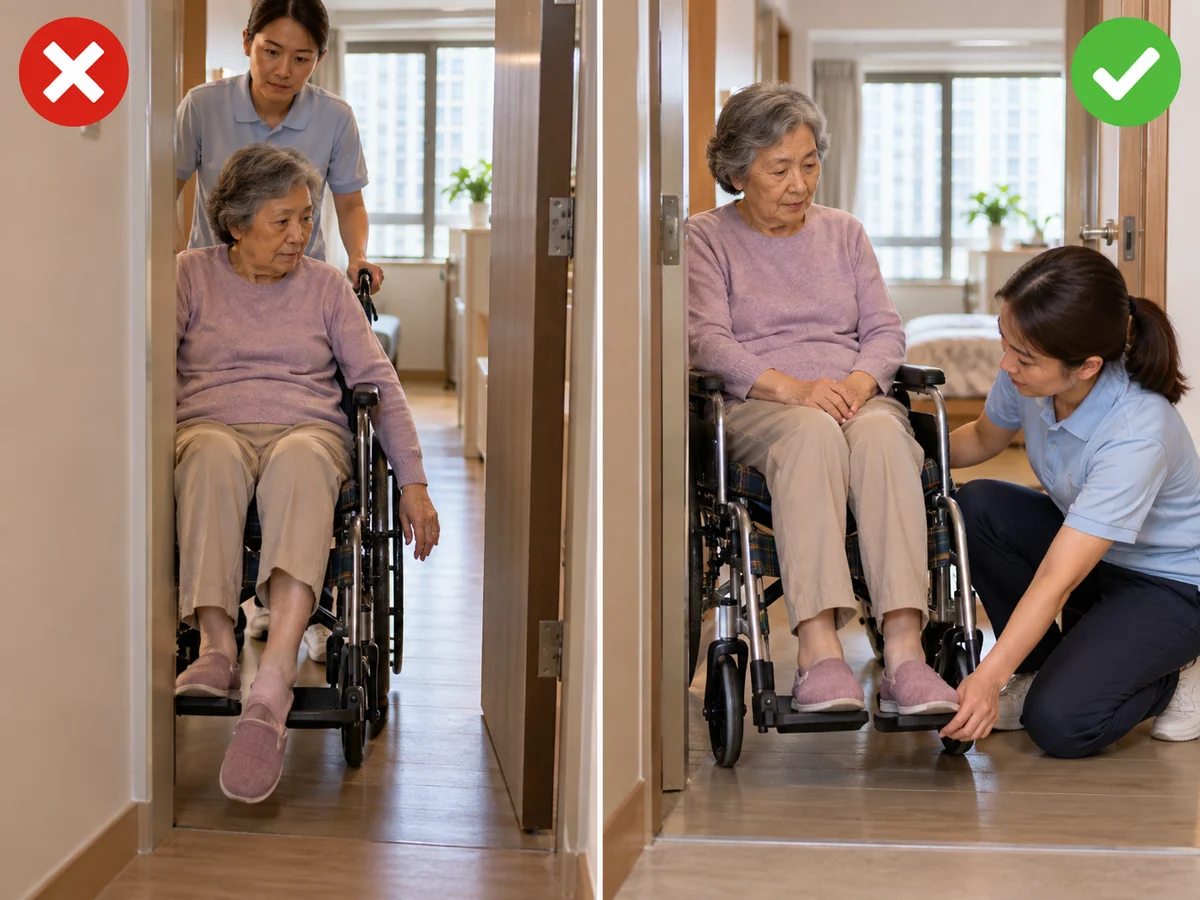
Check limbs before moving and again before narrow spaces. Stop before correcting a slipped limb; do not pull it into position while still moving.
View safety lesson →
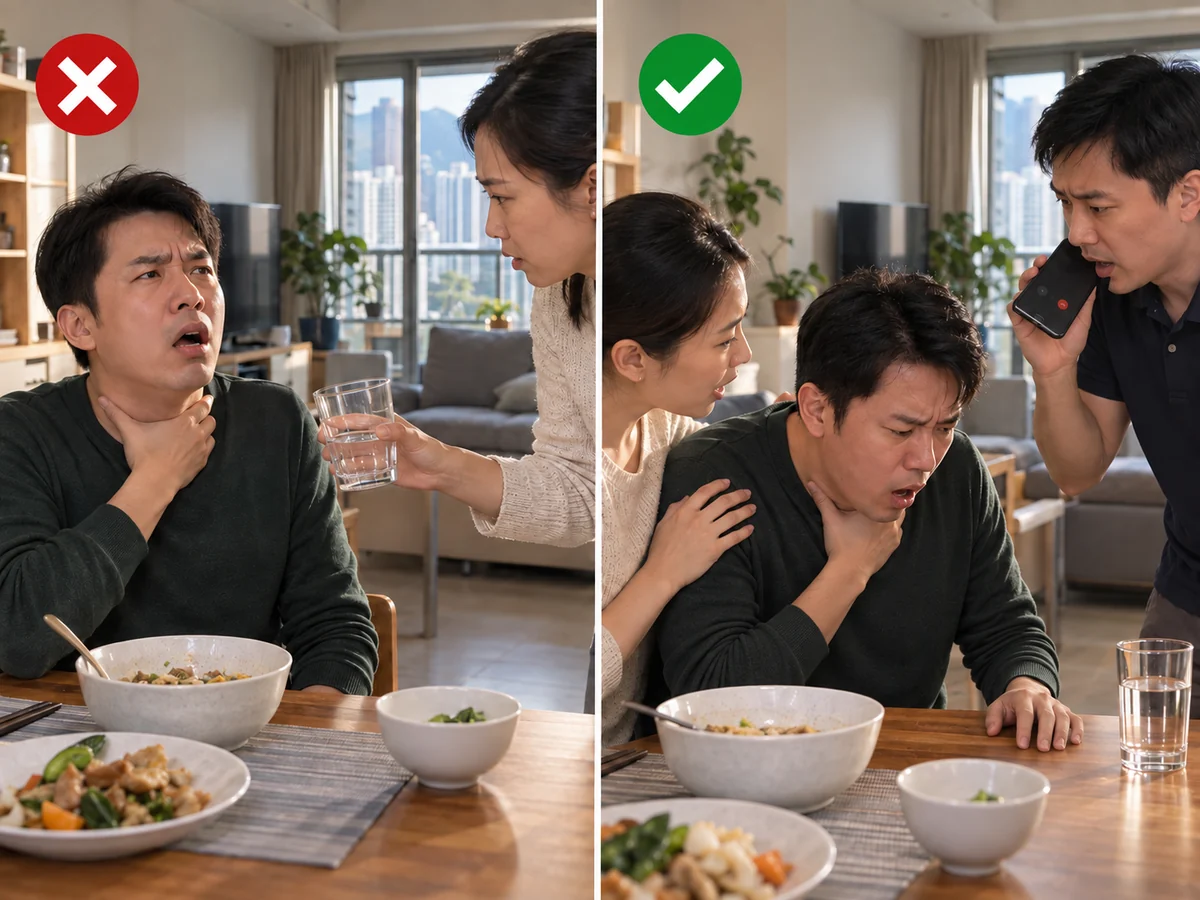
Encourage effective coughing; if they cannot speak or cough effectively, call 999 and follow age-appropriate trained or dispatcher-guided first aid. Do not give drinks or use adult abdominal thrusts on a baby; follow the operator if responsiveness changes.
View safety lesson →
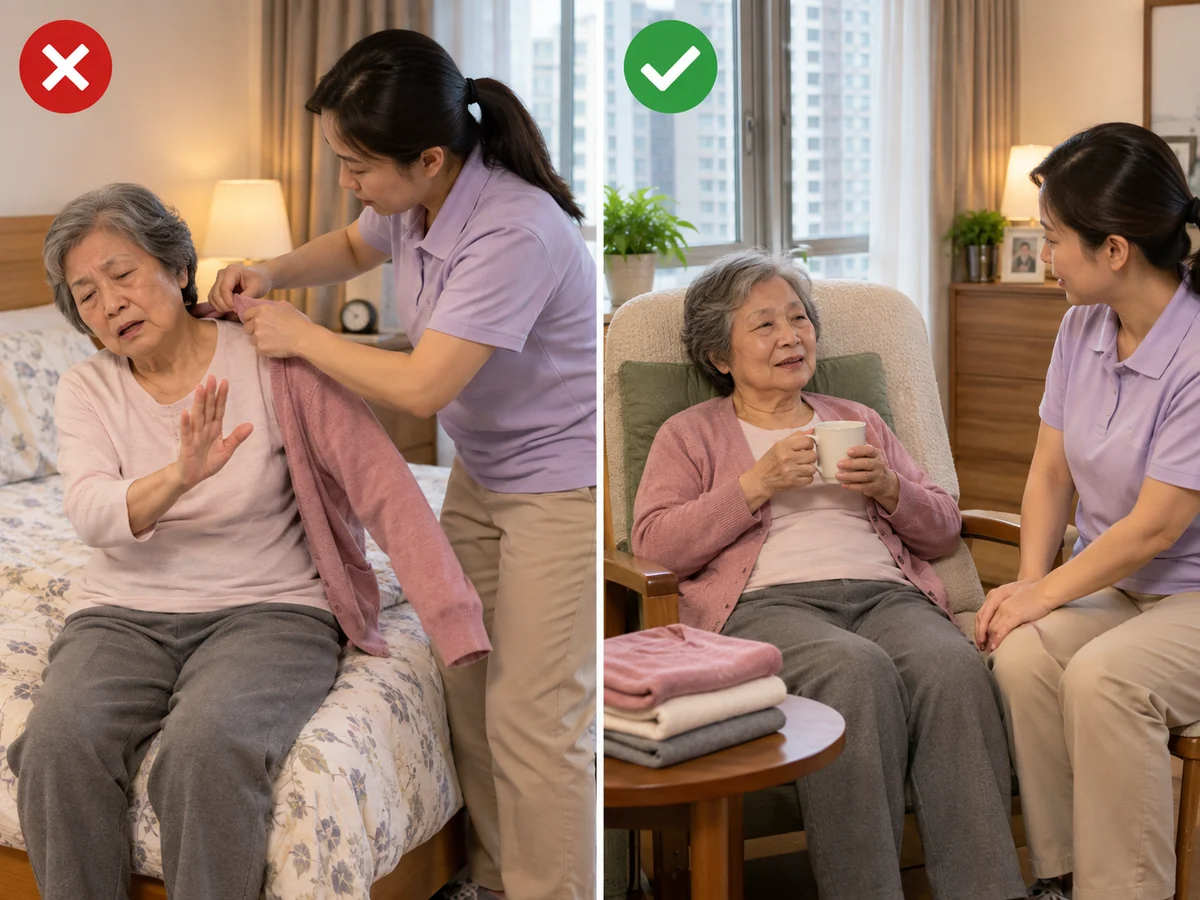
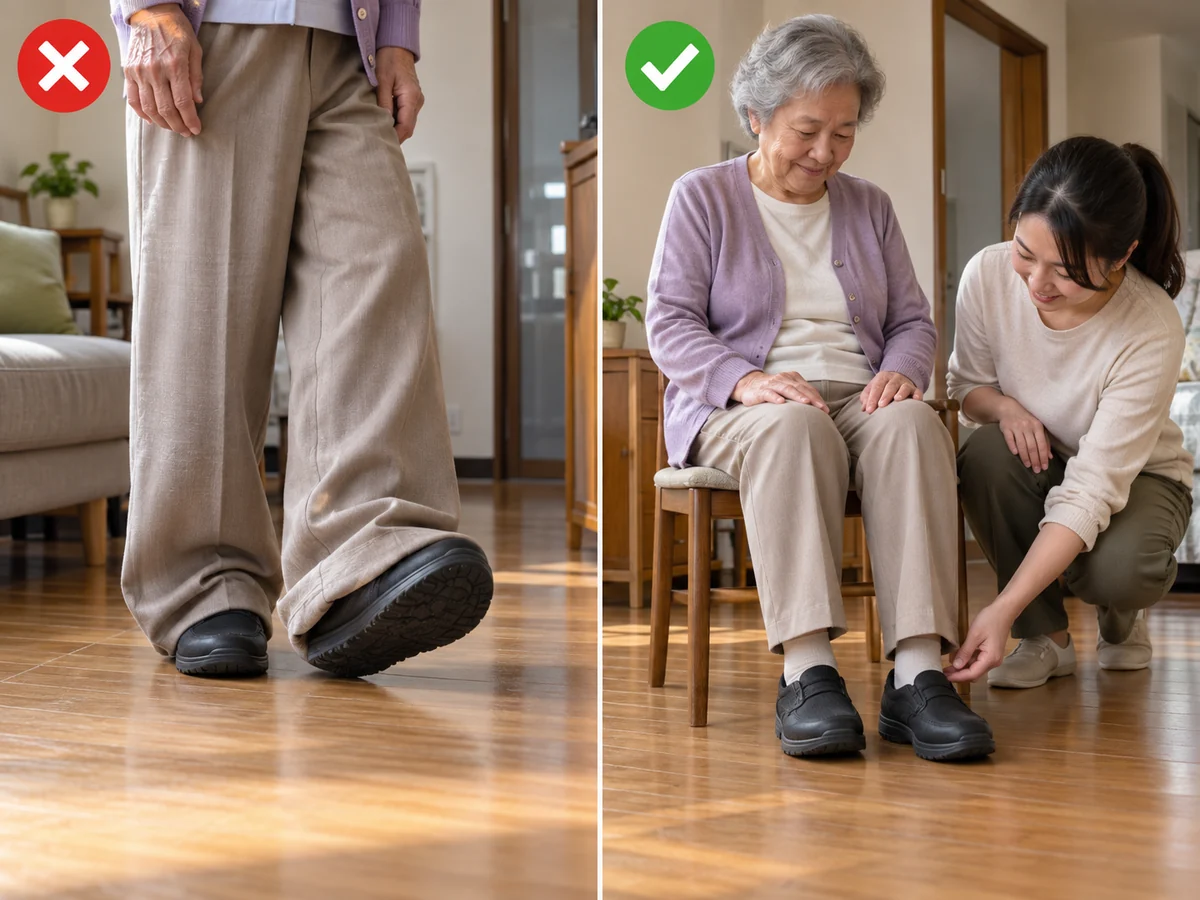
Choose clothing that fits and does not drag or catch the feet; change overly long trousers before walking. Help the person sit safely before changing clothes; do not ask them to hold up trailing hems while walking.
View safety lesson →
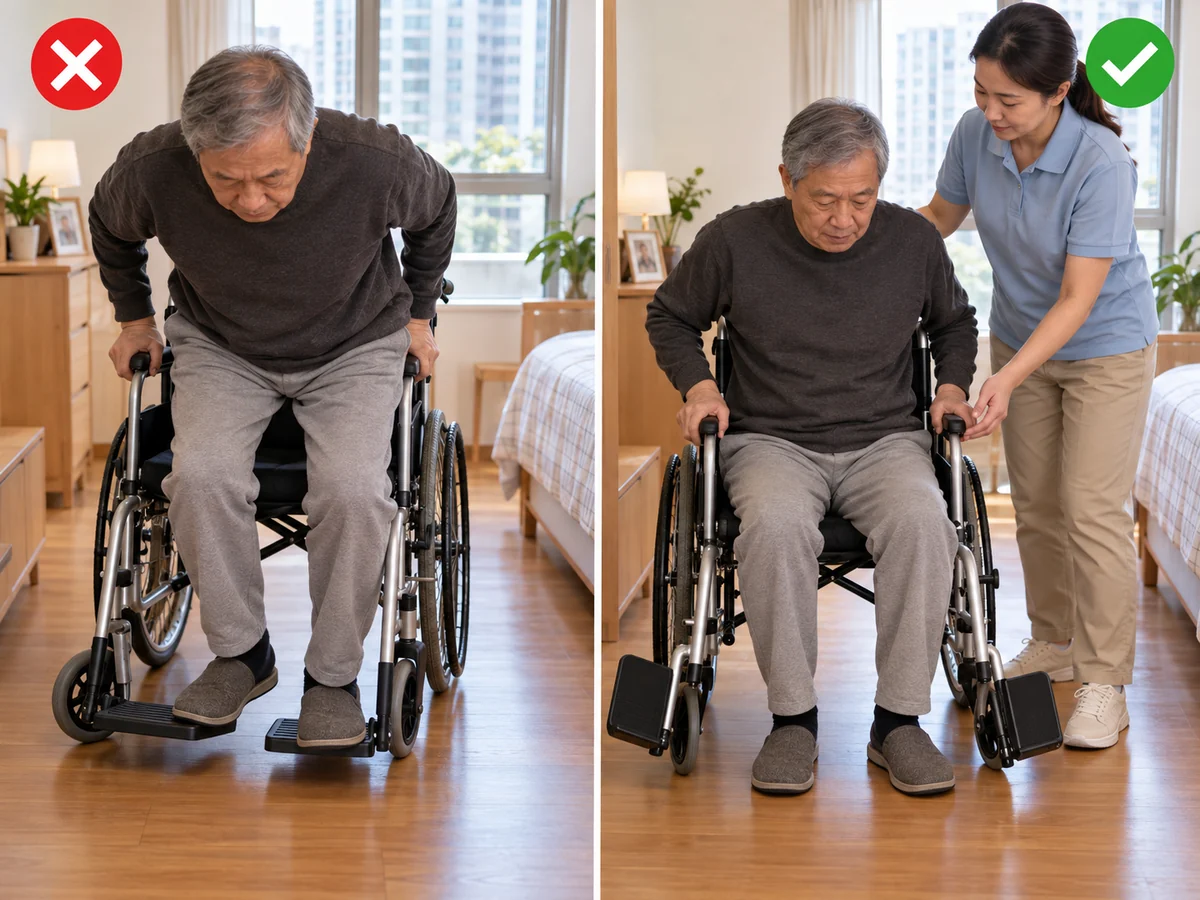
Move the footplates away as trained and place both feet flat on the floor before standing; never stand on the footplates. If the person cannot safely place their feet or stand as planned, stop and seek help rather than pulling them upright.
View safety lesson →