
Critical safety ruleChemical safety
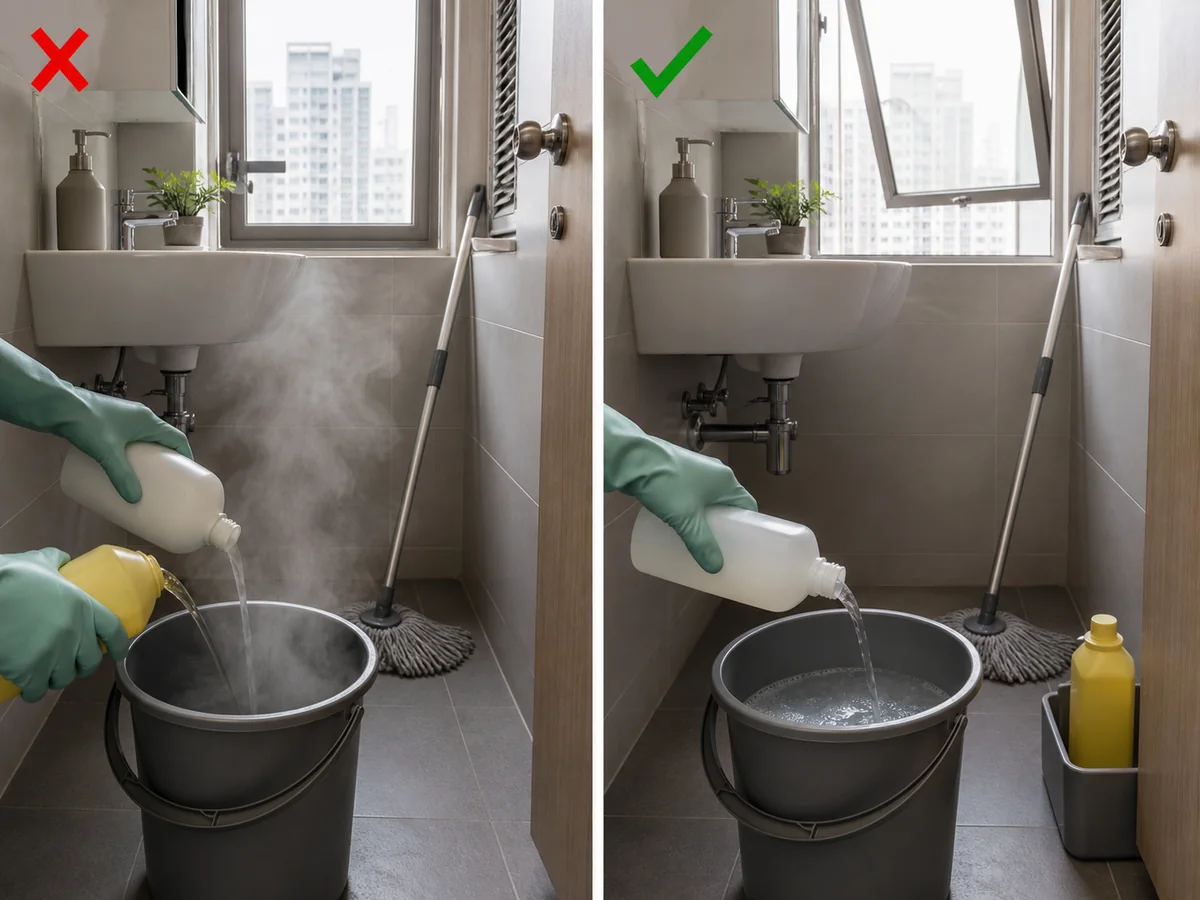
Never mix bleach with other cleaning products
If detergent is needed first, rinse thoroughly with water before using bleach, and keep the area well ventilated.
View safety lesson →Learn by situation
Never mix chemicals. Learn ventilation, protection, bleach, separate tools, cleaning order, unplugging, laundry, ironing, sharp items, windows, balconies, and wet floors. Close and lock products after each step; confirm safe conditions before outdoor work.
Confirm chemical rules and a safe work area, then prepare products, clean by area, and handle appliances, sharp items, and outdoor work. Finish by drying and reopening the area and checking supplies. Open each lesson for full steps.
If detergent is needed first, rinse thoroughly with water before using bleach, and keep the area well ventilated.
View safety lesson →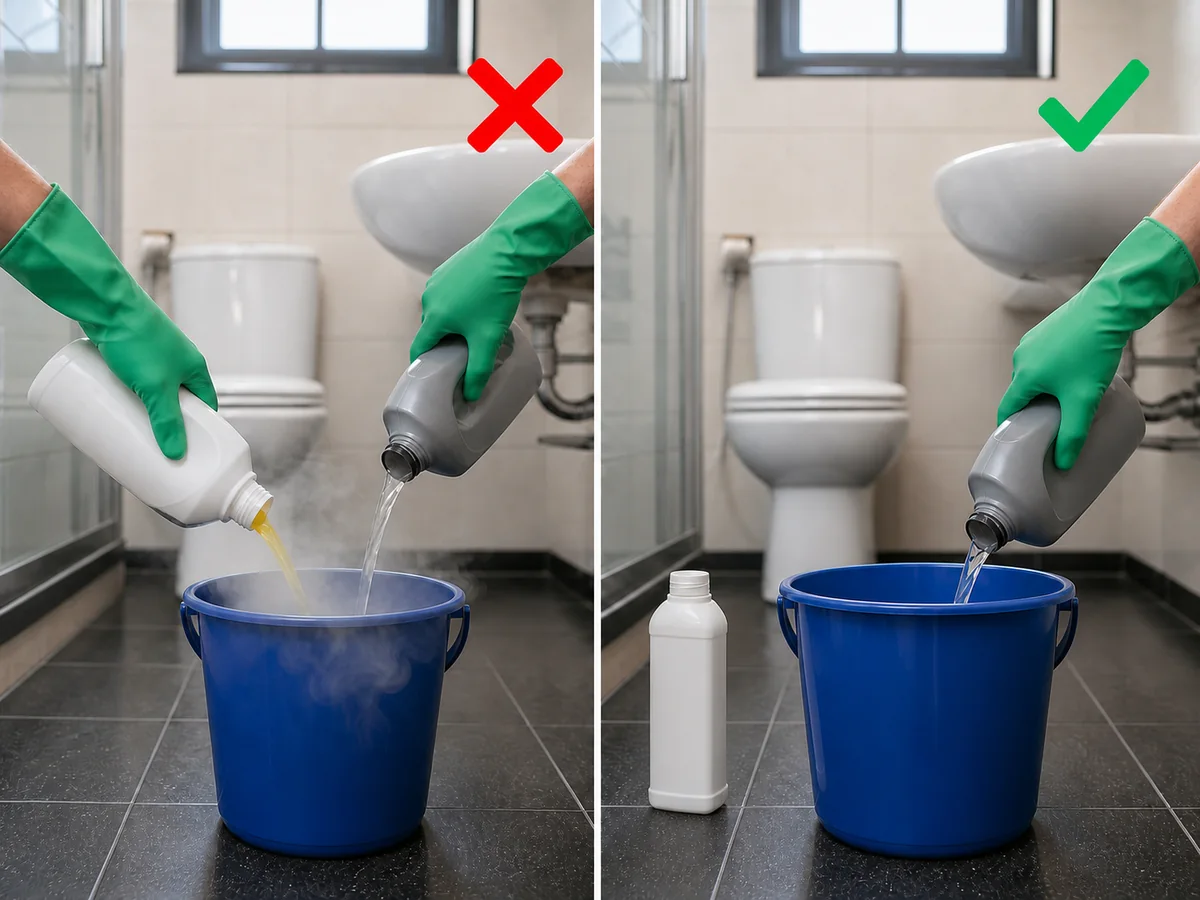
Never pour two products or leftover batches into the same bottle, spray bottle, or bucket; rinse surfaces fully with water before changing product.
View safety lesson →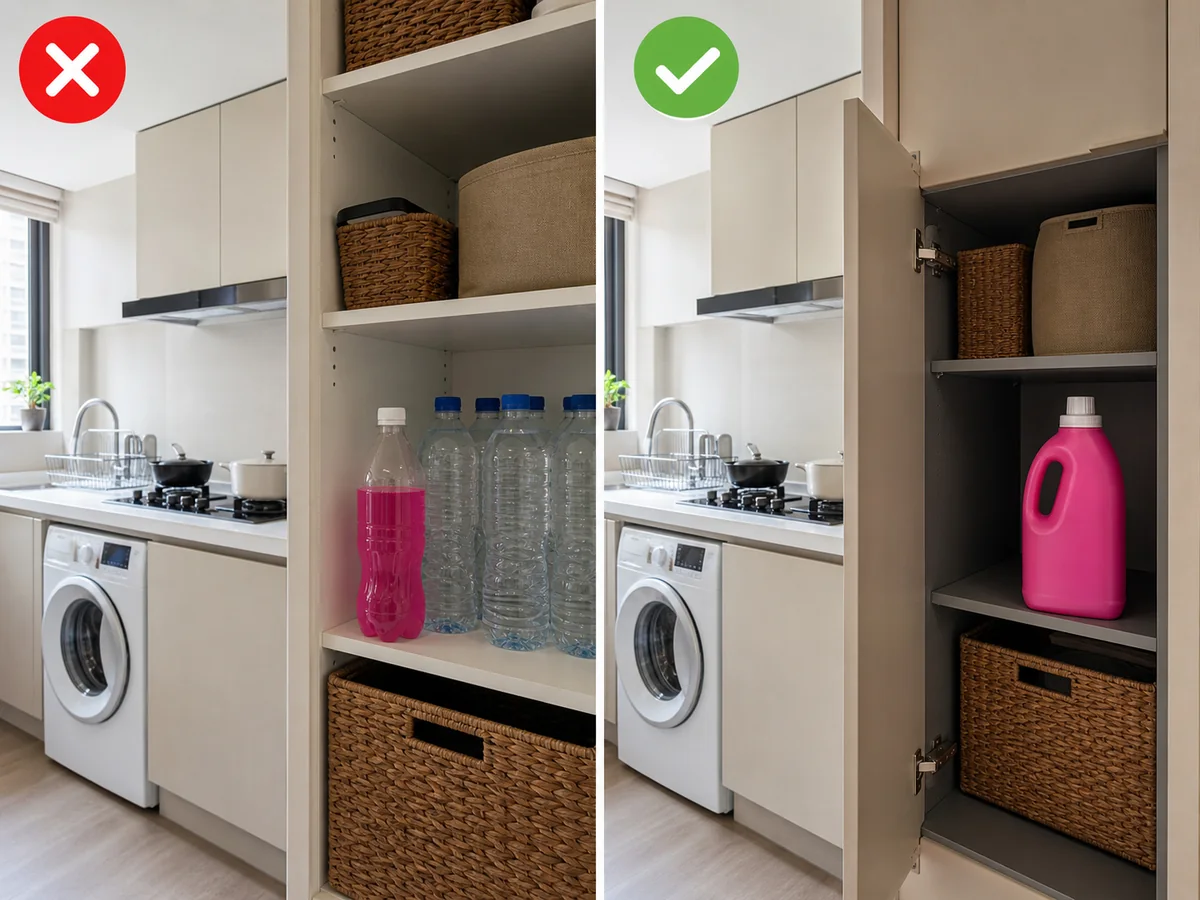
Keep cleaning products in their original, clearly labelled containers and out of children's reach.
View safety lesson →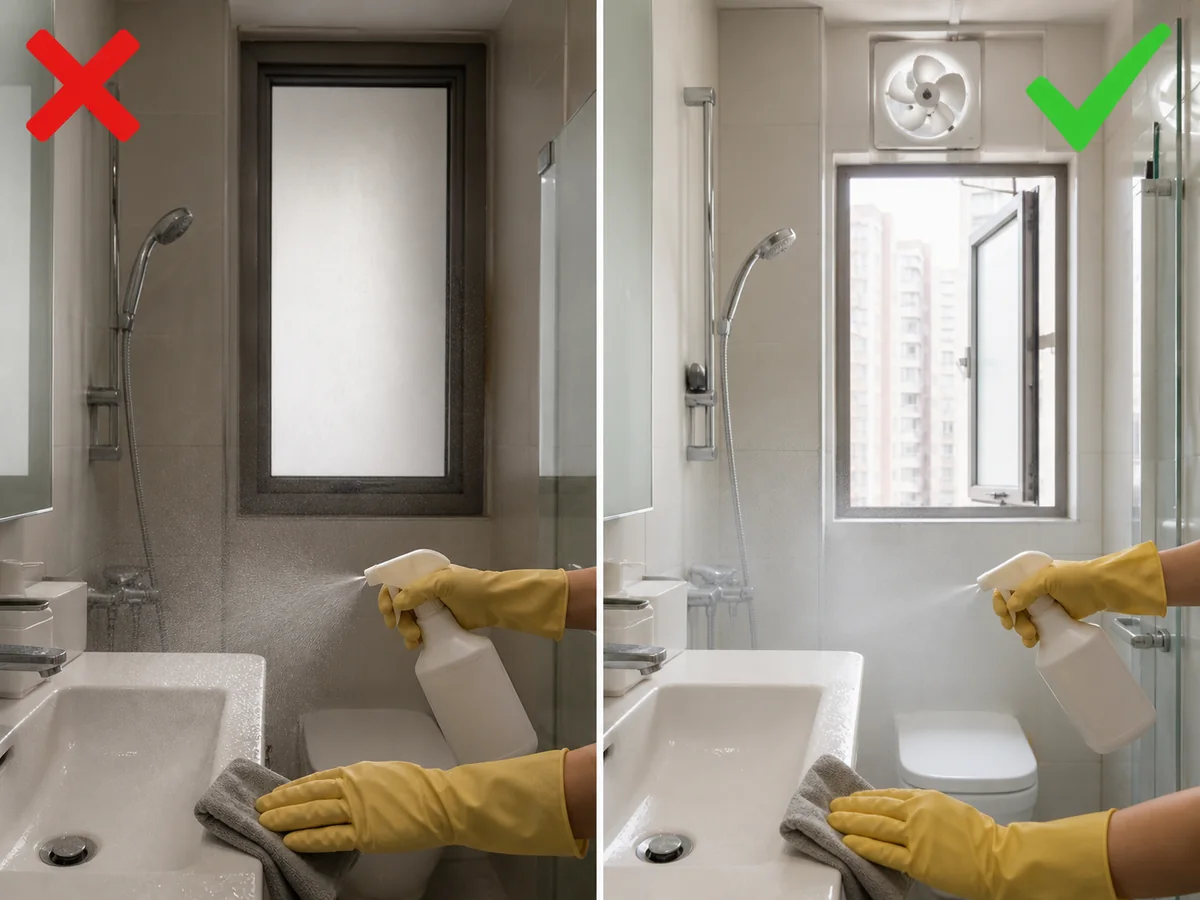
Before using bleach, sprays, or strong cleaners, read the label, open a window or run extraction, and keep ventilation operating during and after use.
View safety lesson →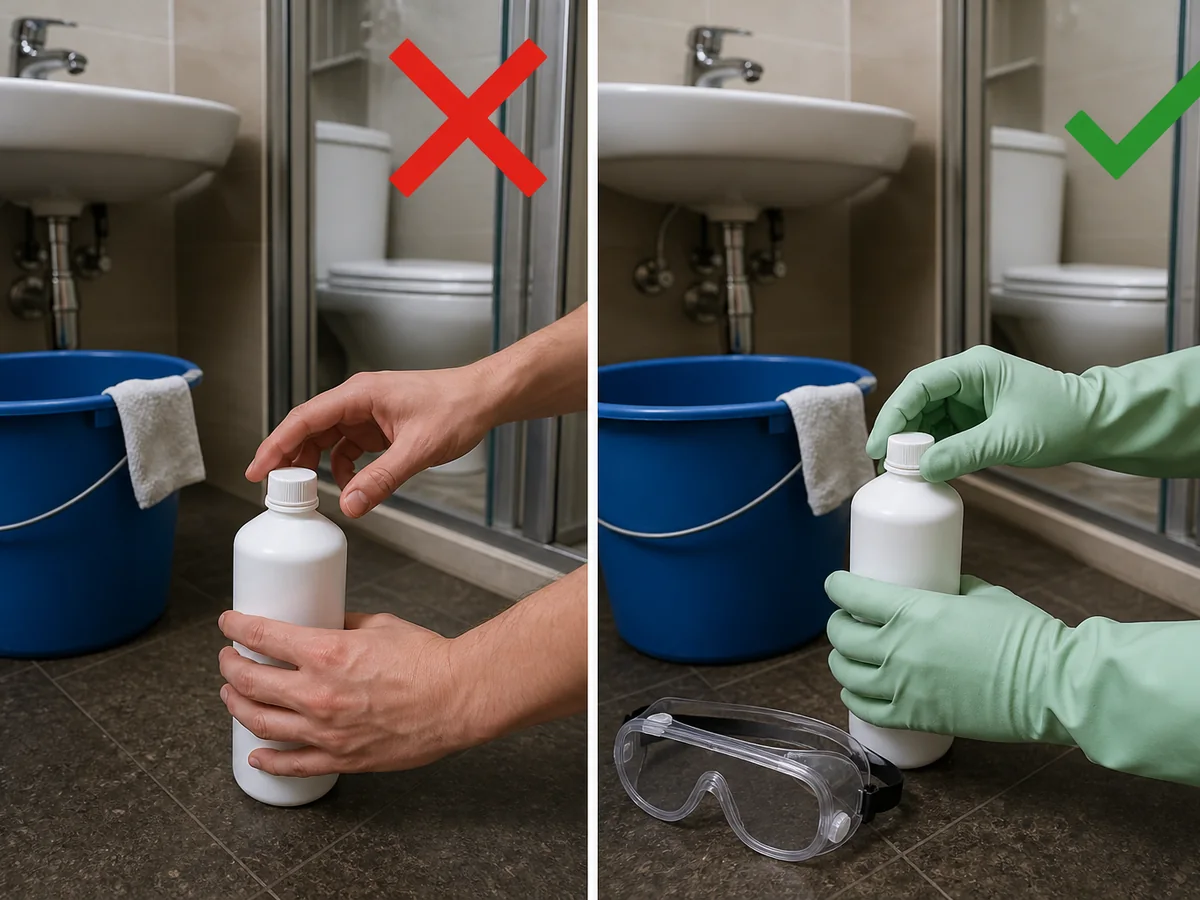
Before strong cleaners, wear the gloves, apron, and eye protection required by the original label.
View safety lesson →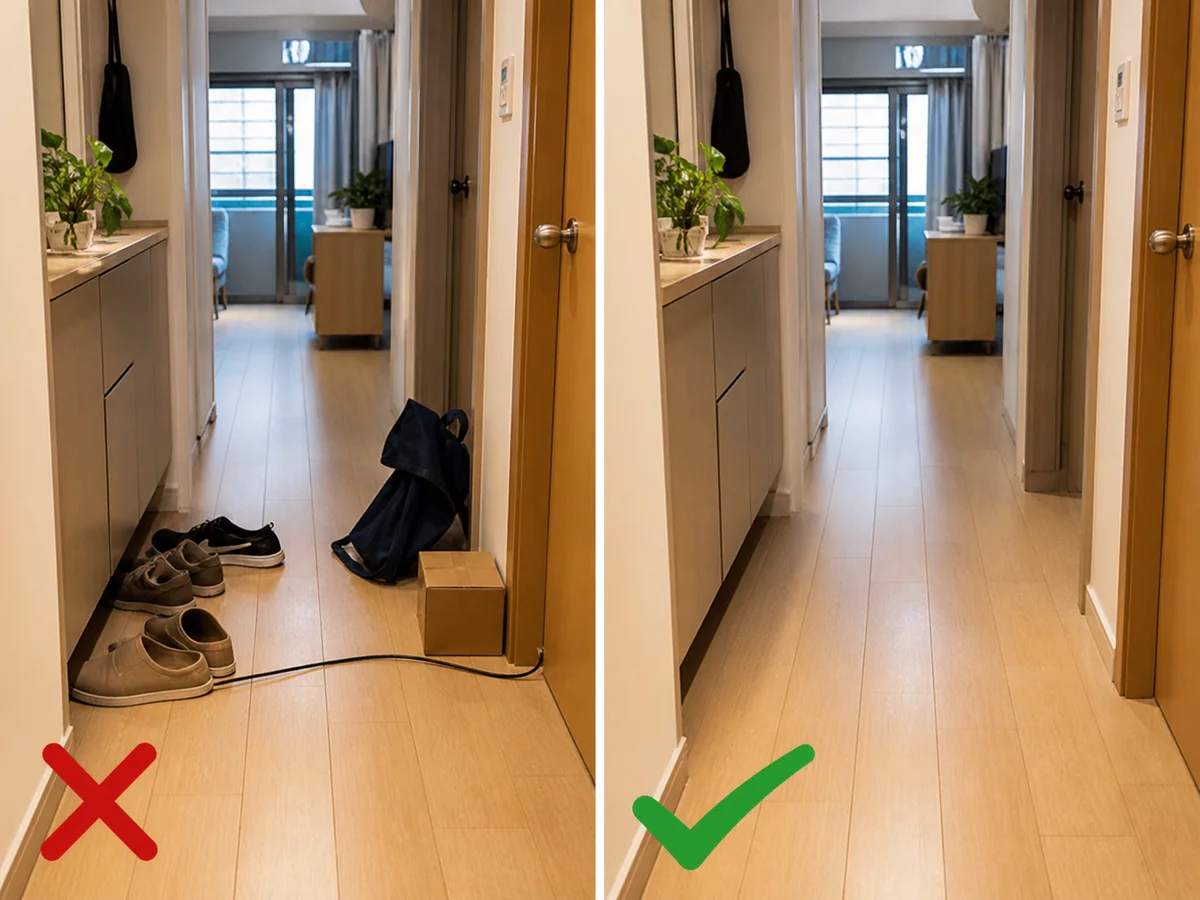
Put away toys, shoes, bags, boxes, and cords crossing the floor so routes to rooms, exits, and bathrooms stay clear.
View safety lesson →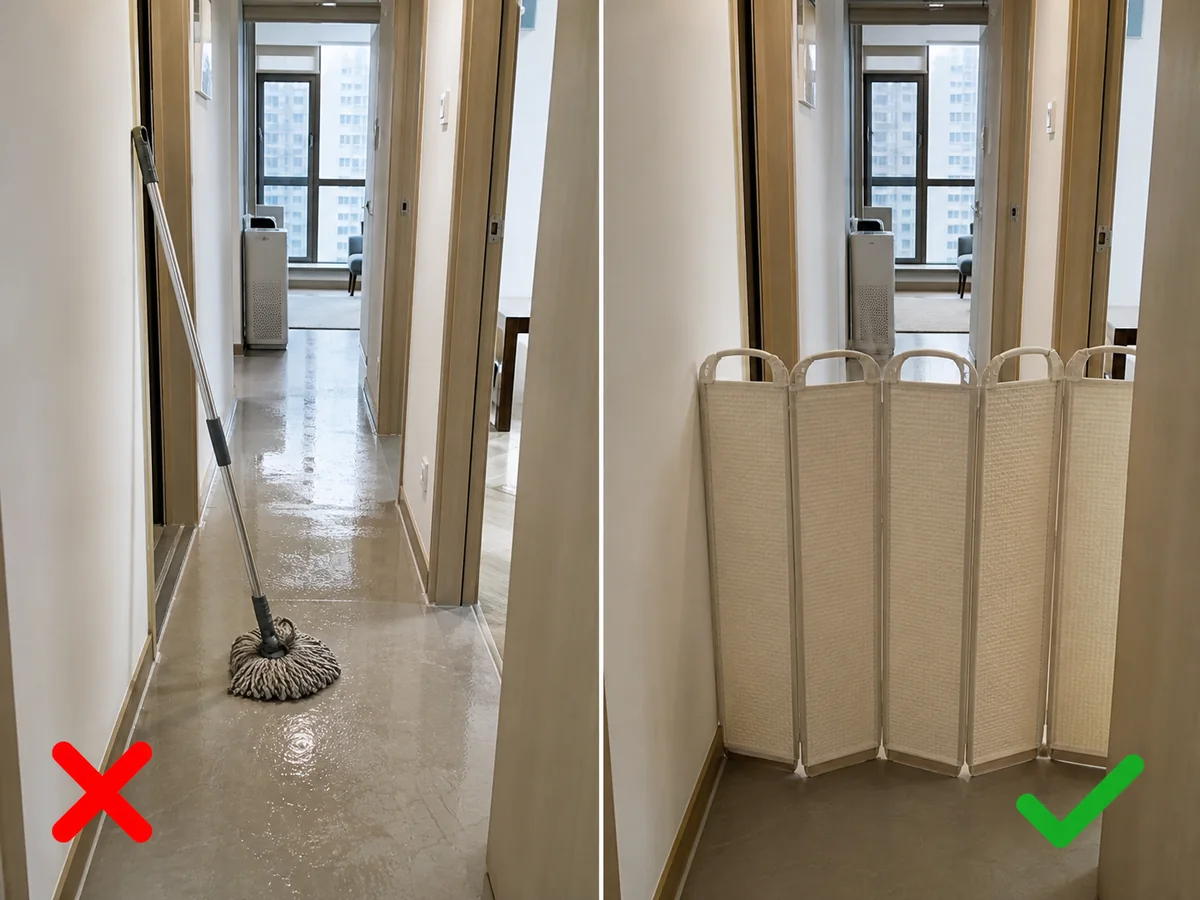
After mopping or wet cleaning, block the affected route, provide another path, and reopen only after checking the whole floor is dry.
View safety lesson →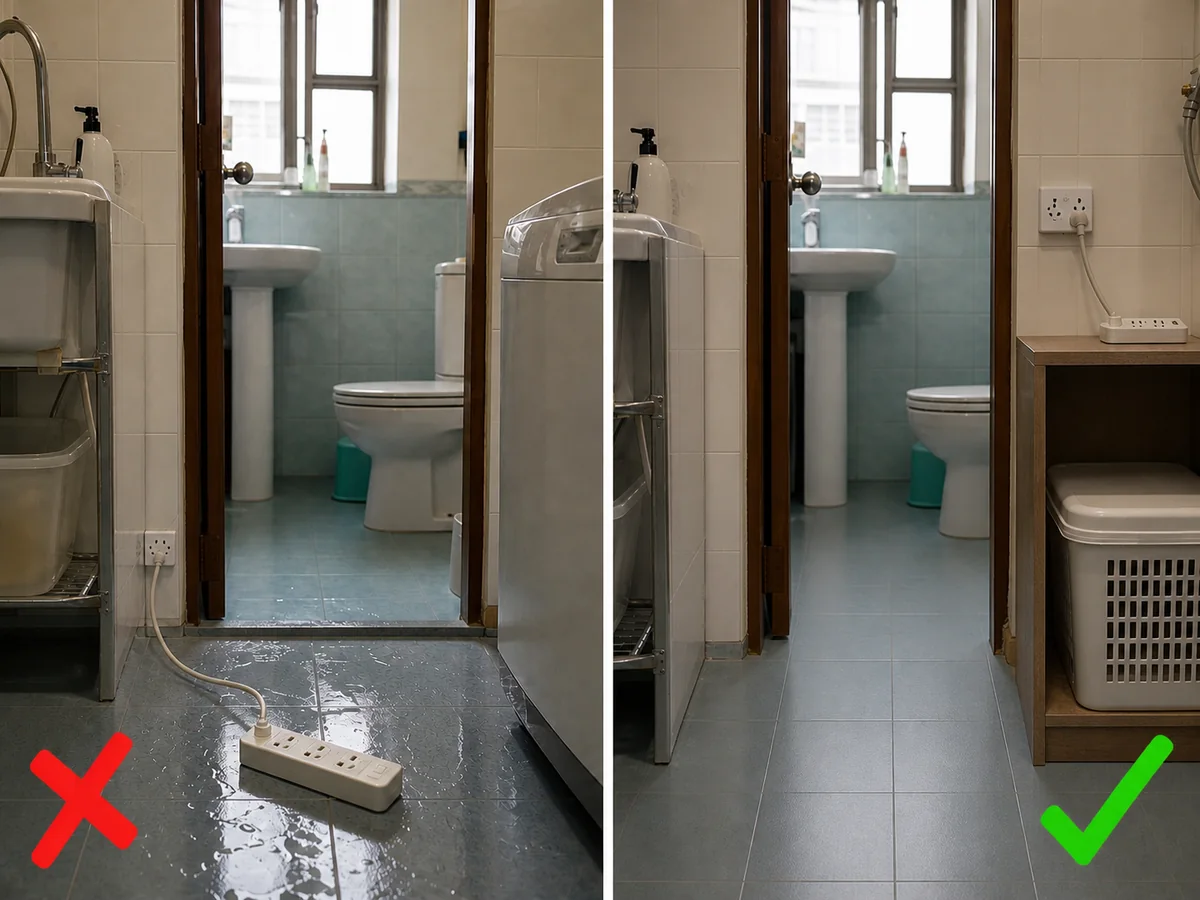
Use extension units and leads only in dry places, away from bathrooms, sinks, wet floors, and splashes.
View safety lesson →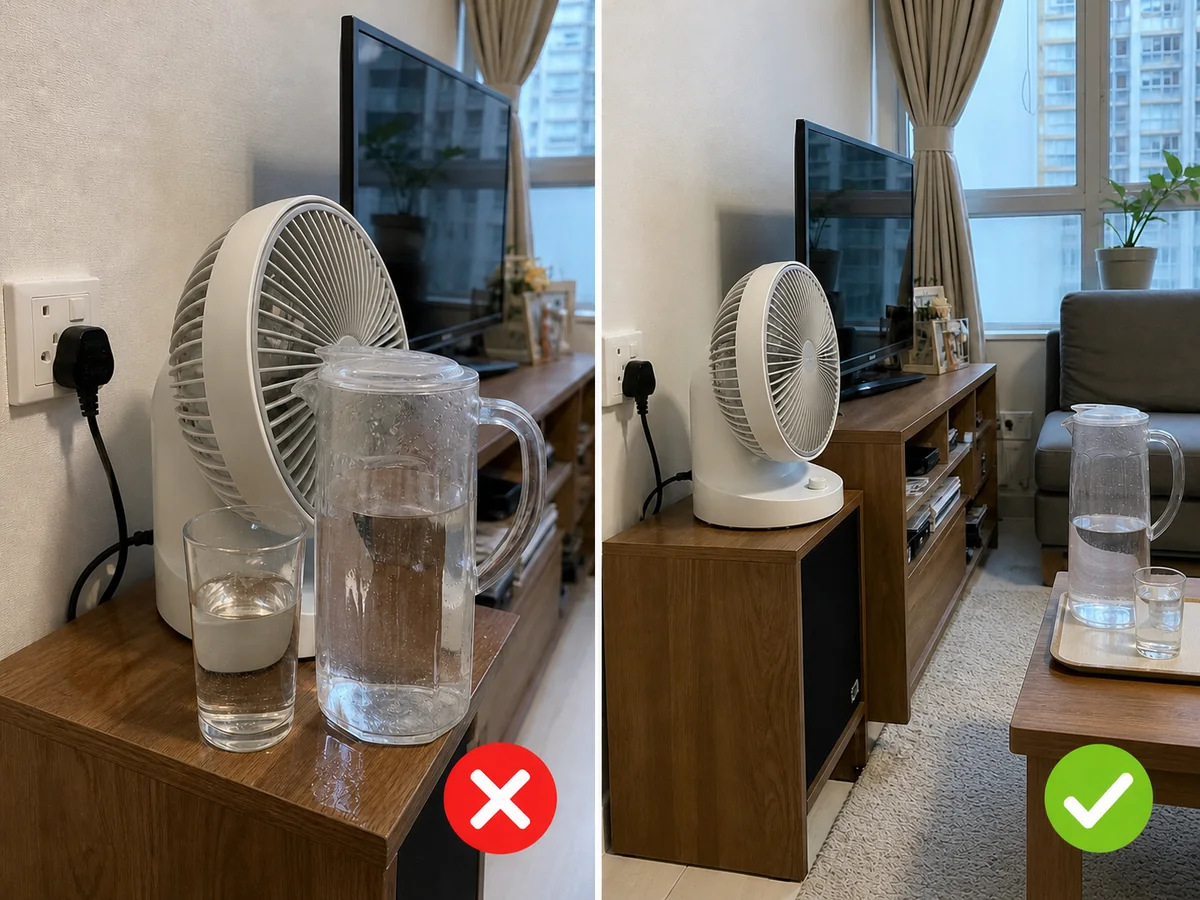
Never place cups, vases, basins, or wet items on or beside appliances, and keep appliances away from windows, balconies, and splash areas.
View safety lesson →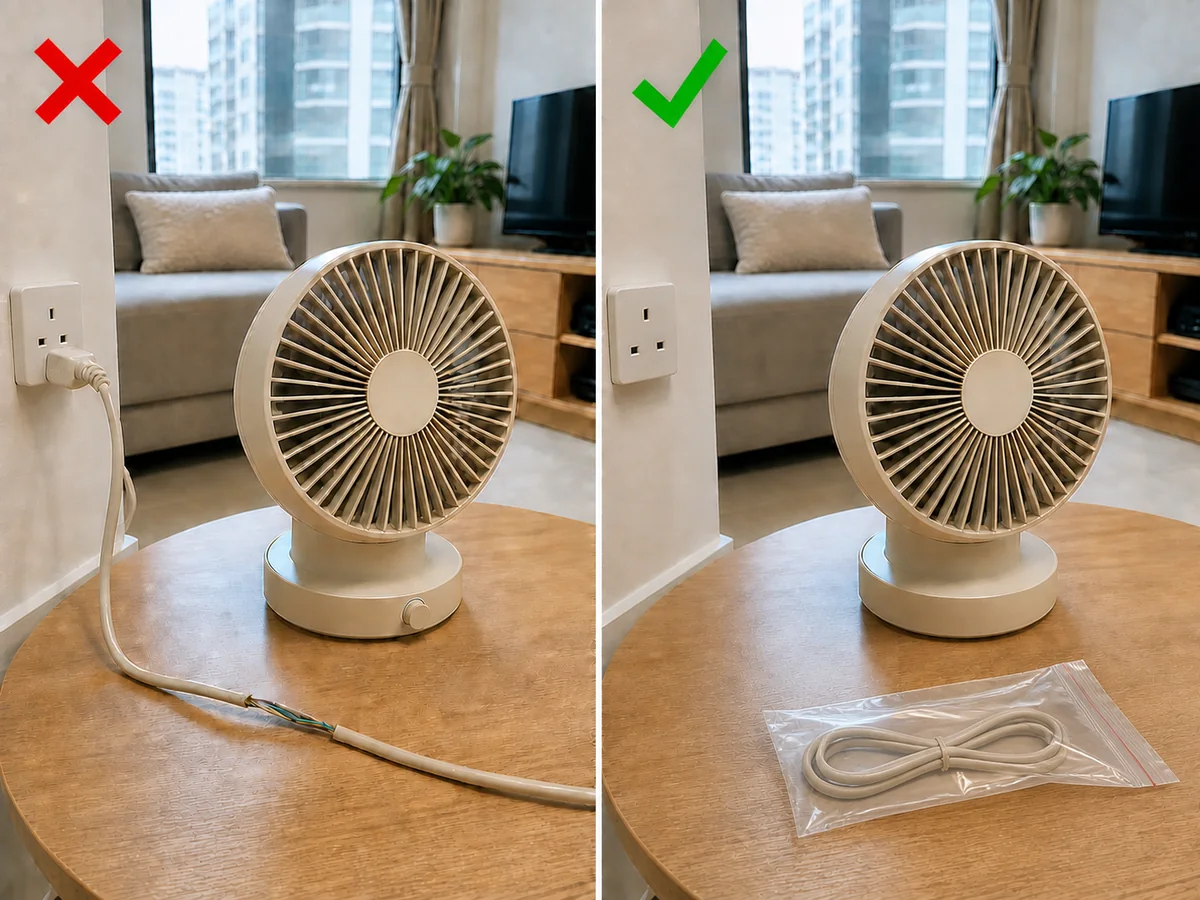
If a cord, plug, or casing is damaged, loose, discoloured, or charred, stop using it and have it checked by an experienced technician.
View safety lesson →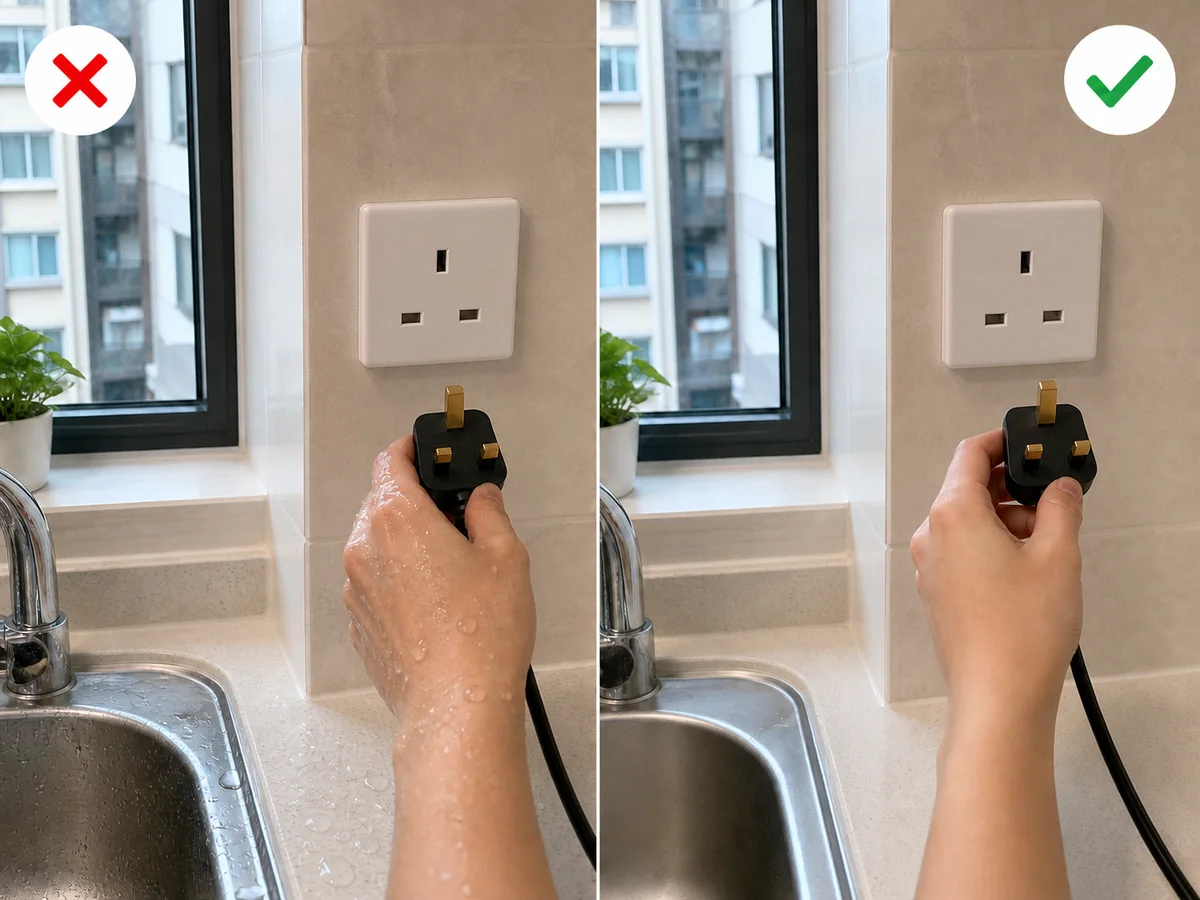
Dry your hands first before plugging in, unplugging, or using a switch.
View safety lesson →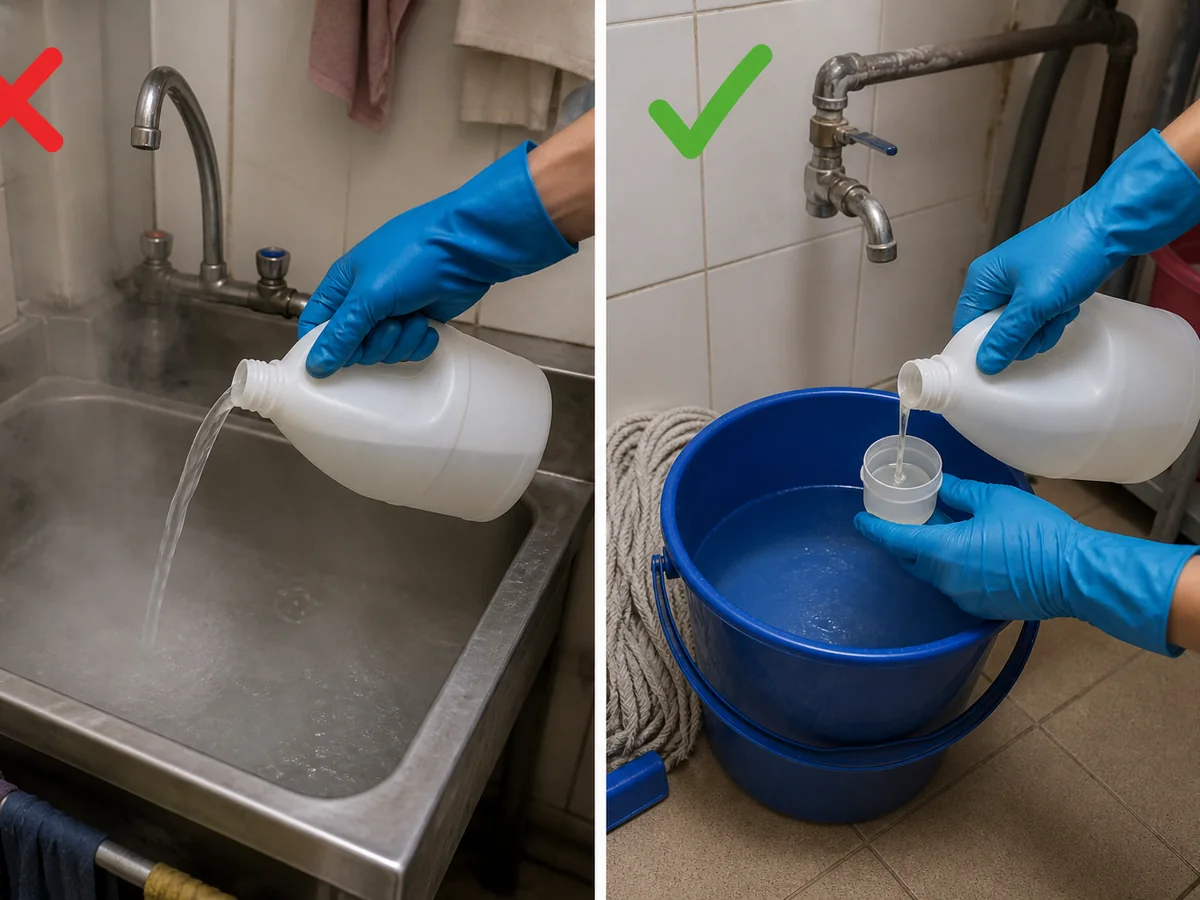
Read the original strength and purpose, then use cold water and a measuring jug according to current guidance.
View safety lesson →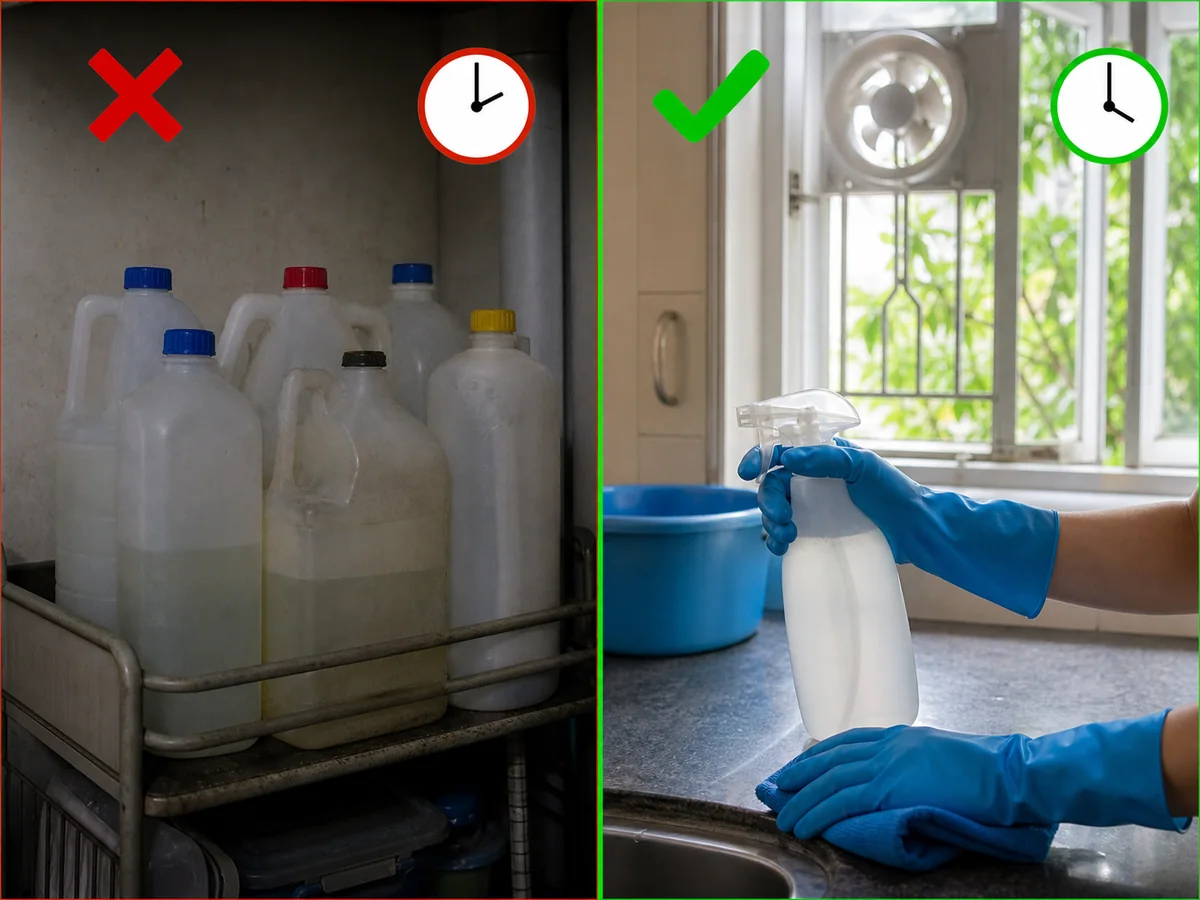
Prepare only what is needed, identify the container, use it with ventilation, and discard after 24 hours. Rinse disinfected objects with water where CHP guidance requires it.
View safety lesson →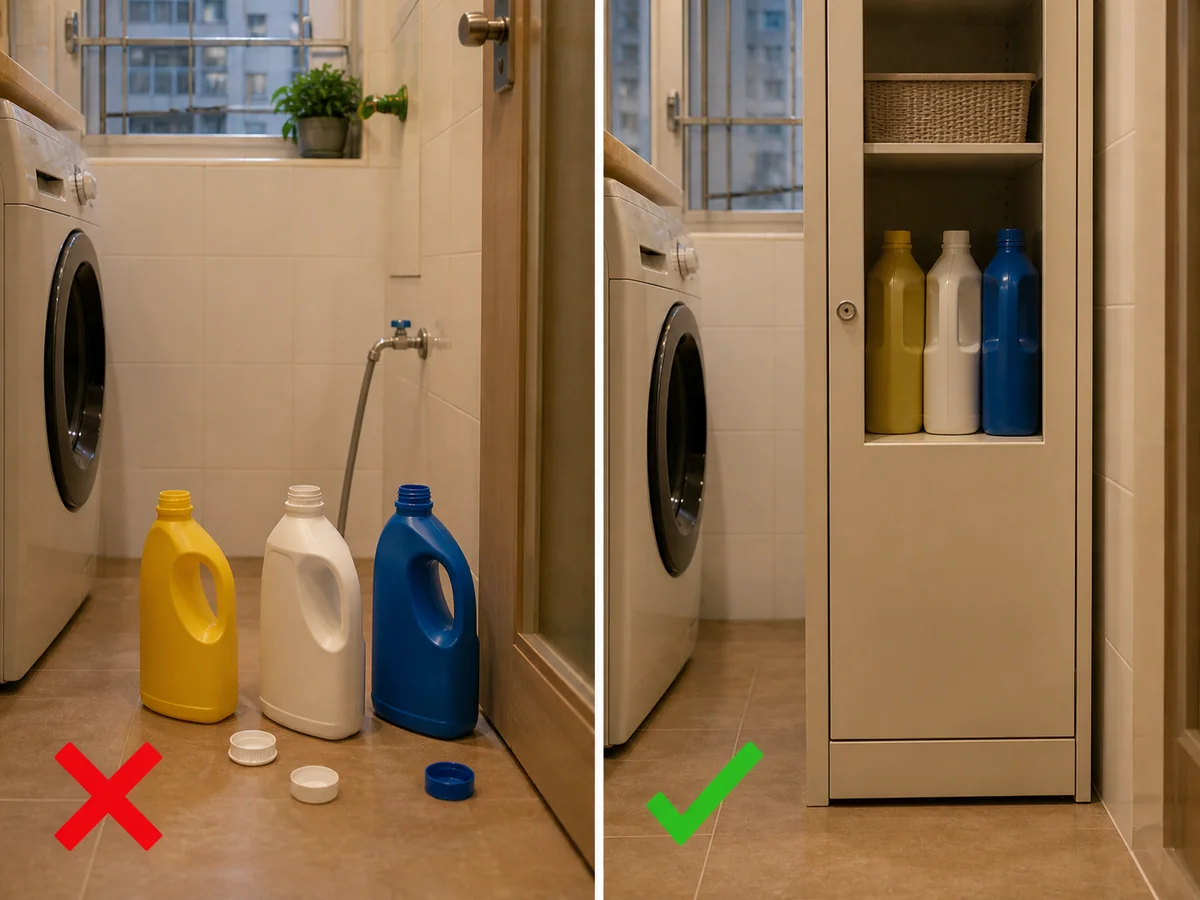
After each cleaning step, close the original cap and return the product to a locked cupboard; do not wait until the whole job is finished.
View safety lesson →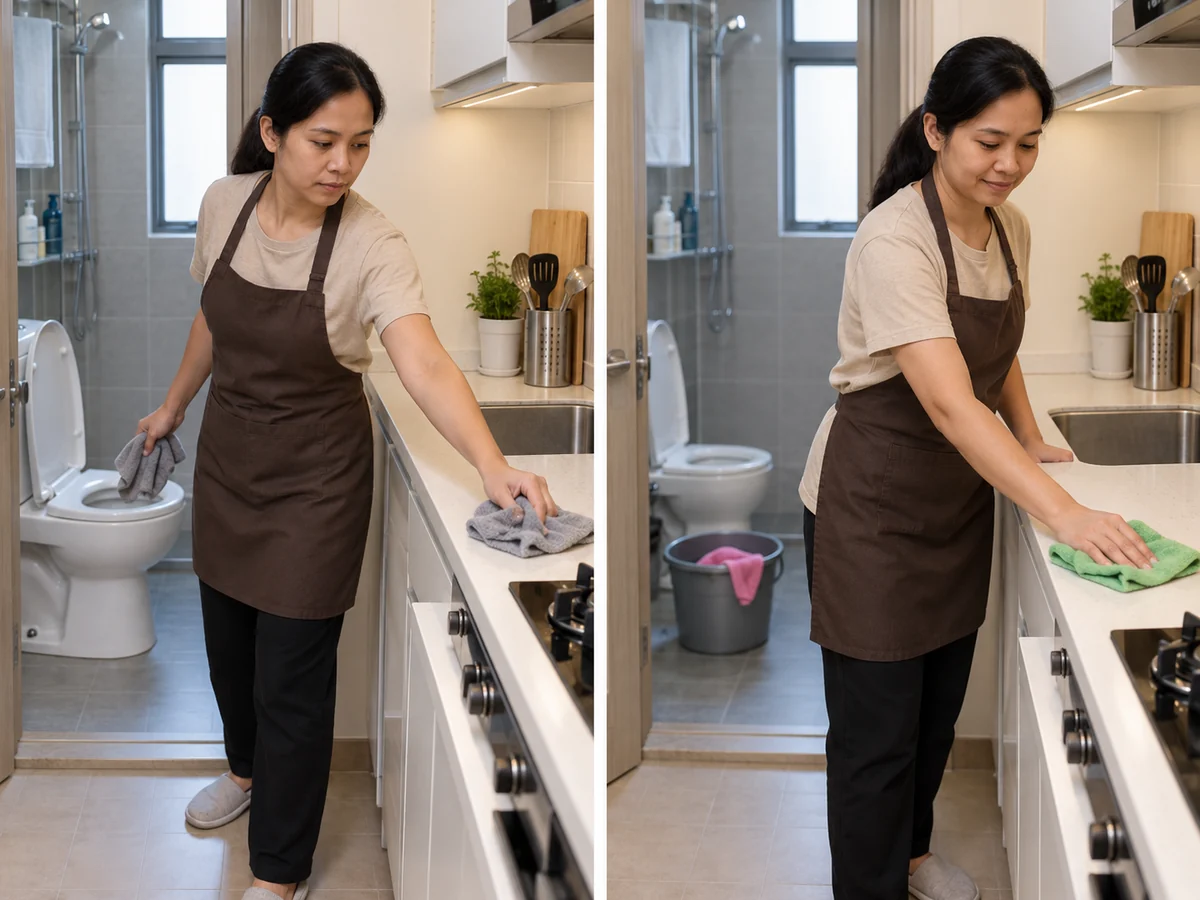
Colour-code or label toilet and kitchen cloths, and wash, dry, and store the two sets separately.
View safety lesson →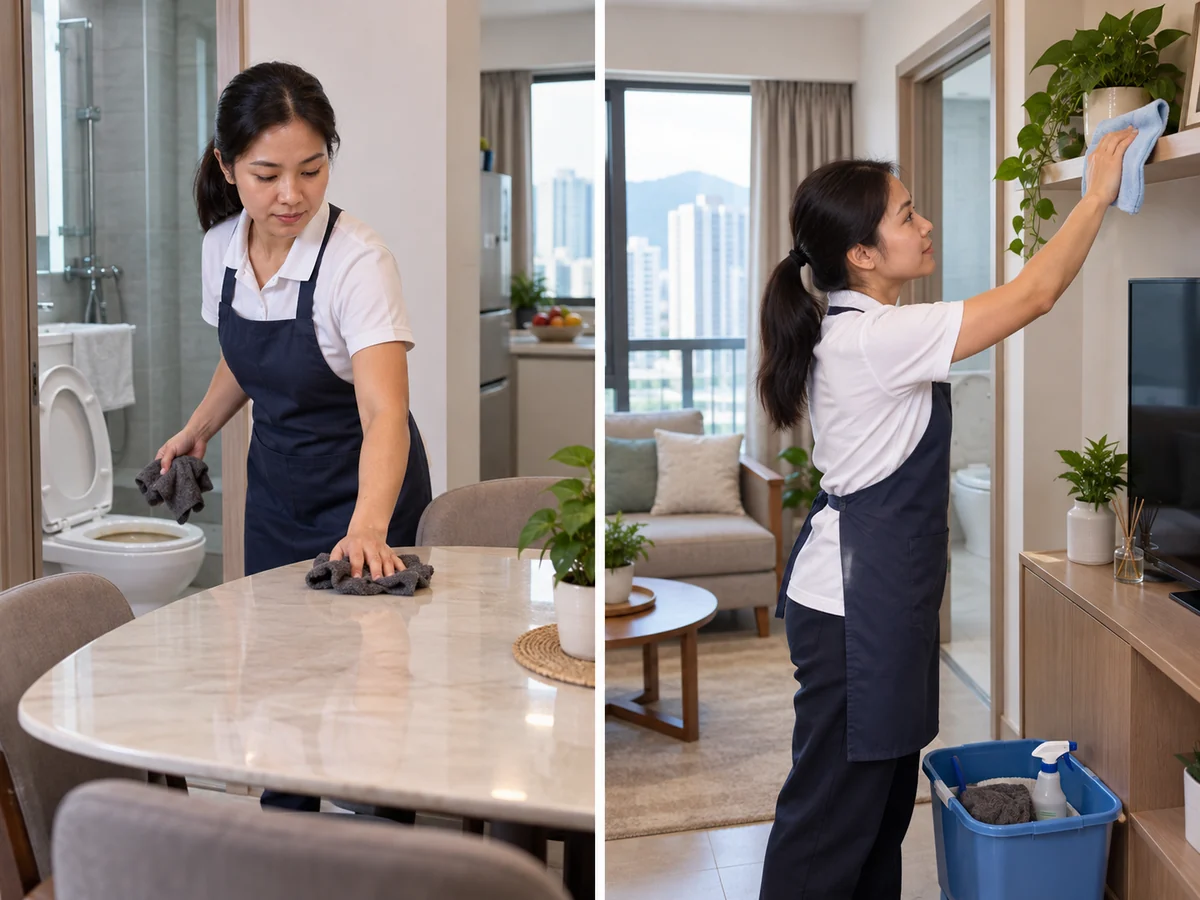
Work from cleaner and higher surfaces toward dirtier ones, leaving the toilet until last.
View safety lesson →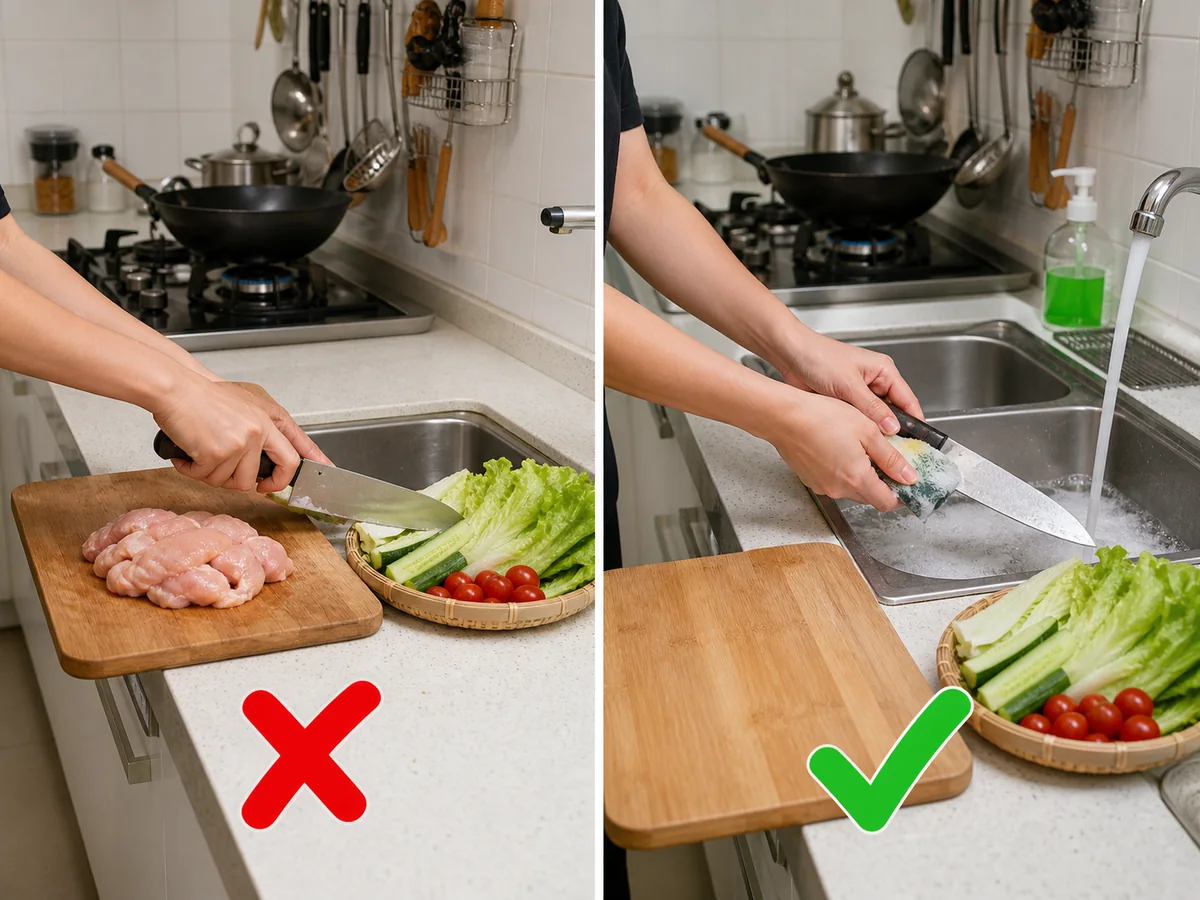
After raw meat, poultry, seafood, or eggs, clean utensils and worktops thoroughly with hot water and detergent, then sanitise where appropriate.
View safety lesson →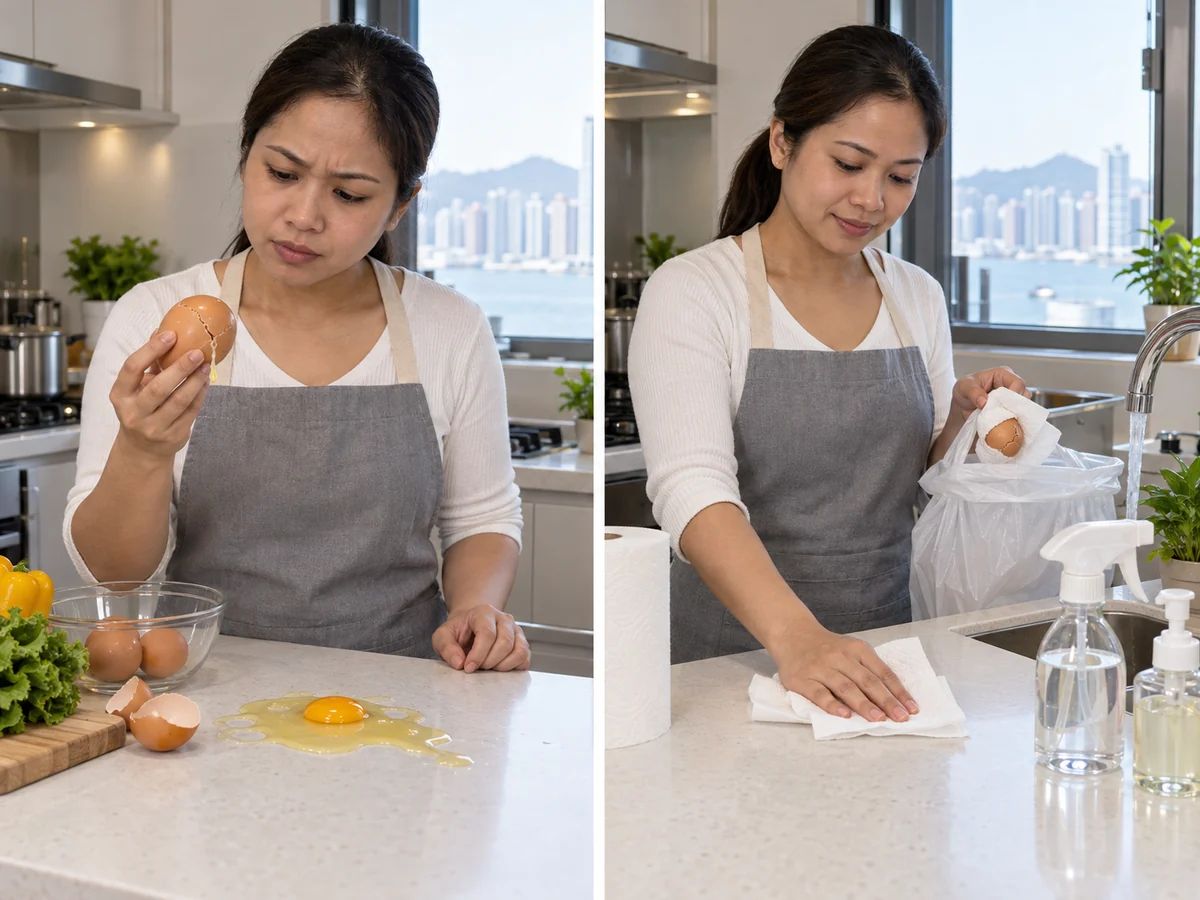
Seal and discard cracked eggs, then clean and disinfect every surface touched by the spill.
View safety lesson →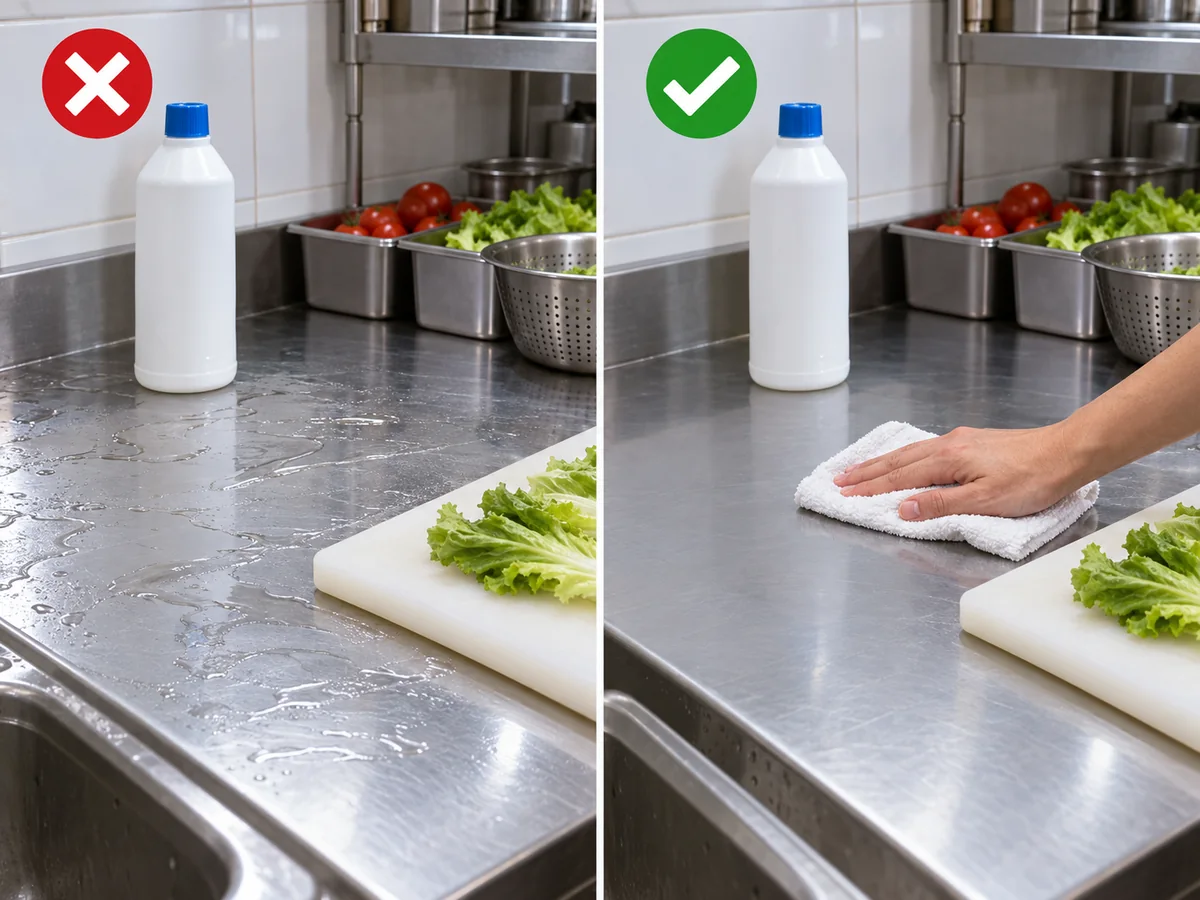
After the required contact time, rinse or wipe with clean water when official or product directions require it.
View safety lesson →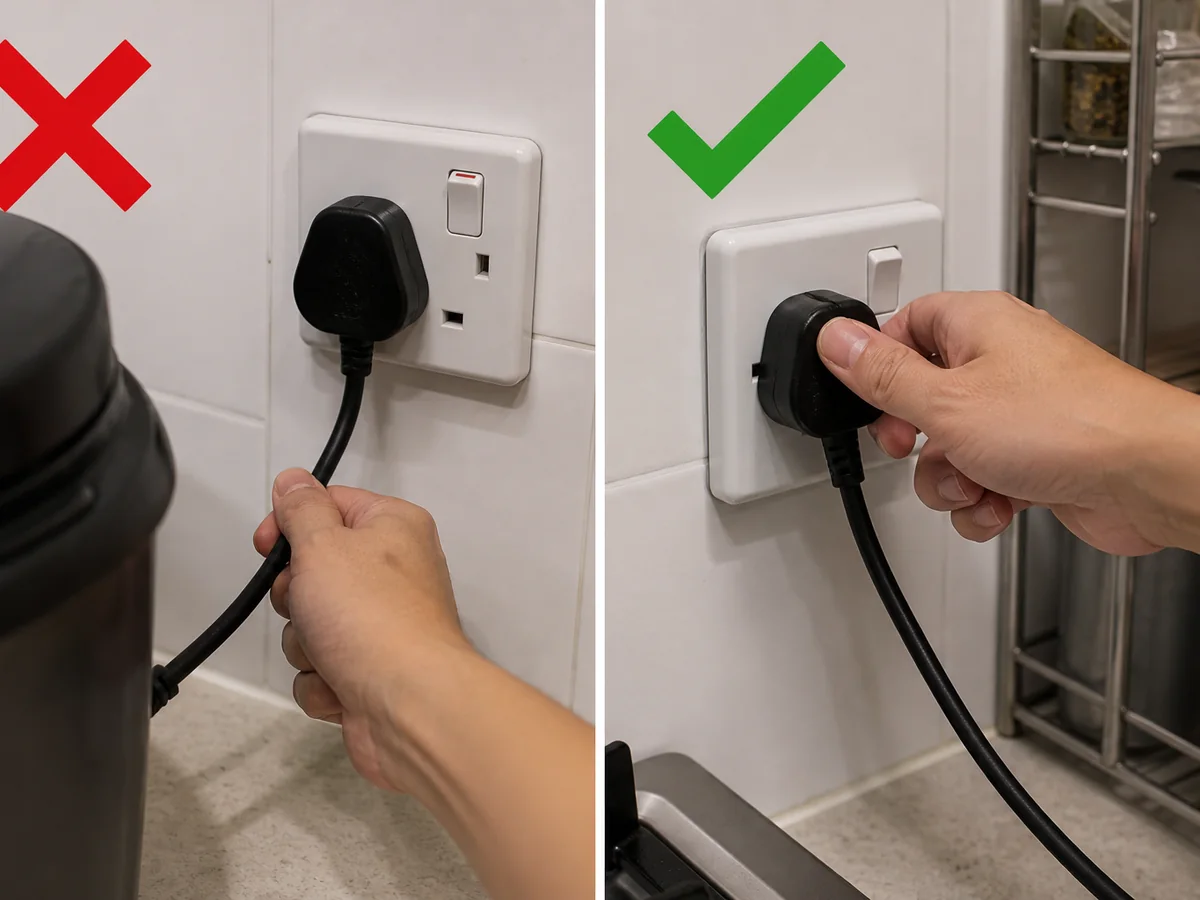
Switch the appliance off, then hold the plug body to unplug it; never pull the cord.
View safety lesson →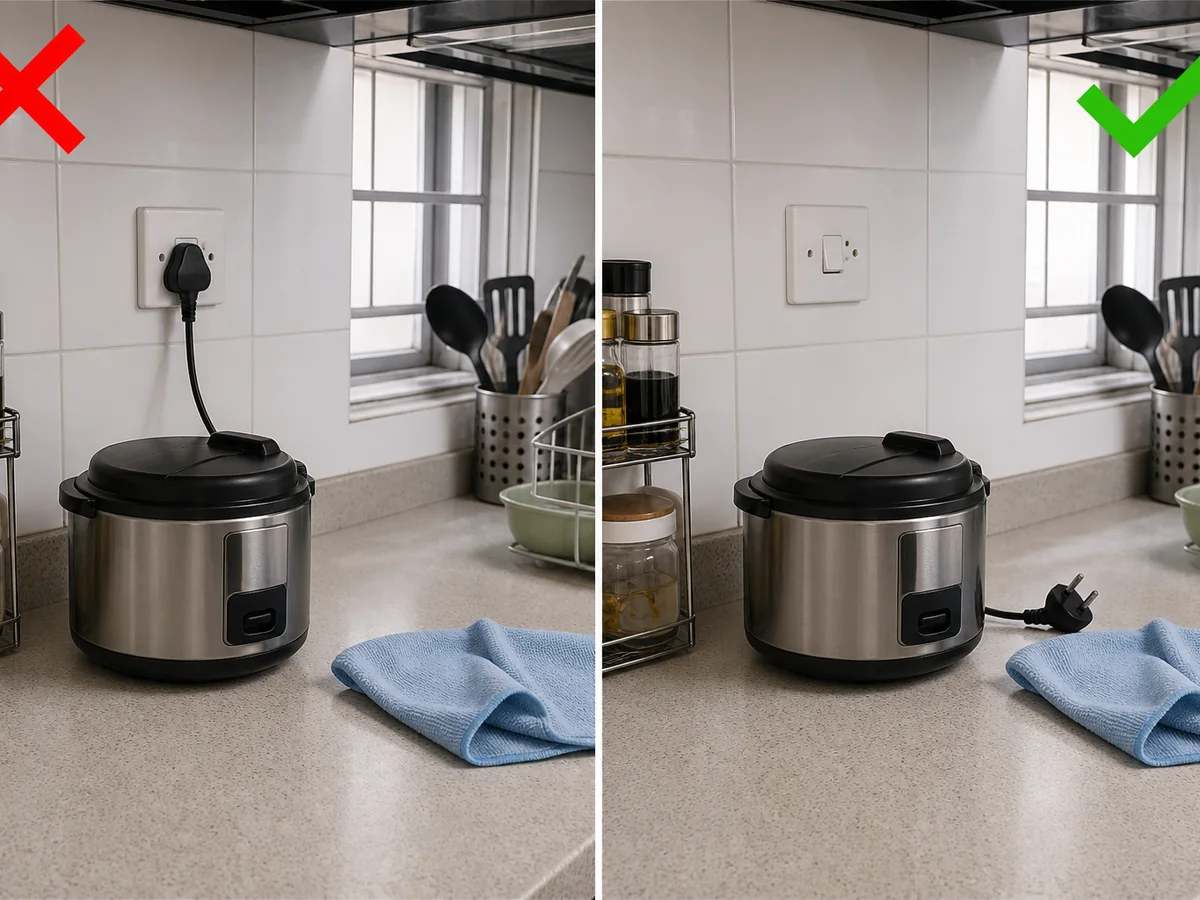
Switch off and unplug before wiping, washing, or removing movable parts.
View safety lesson →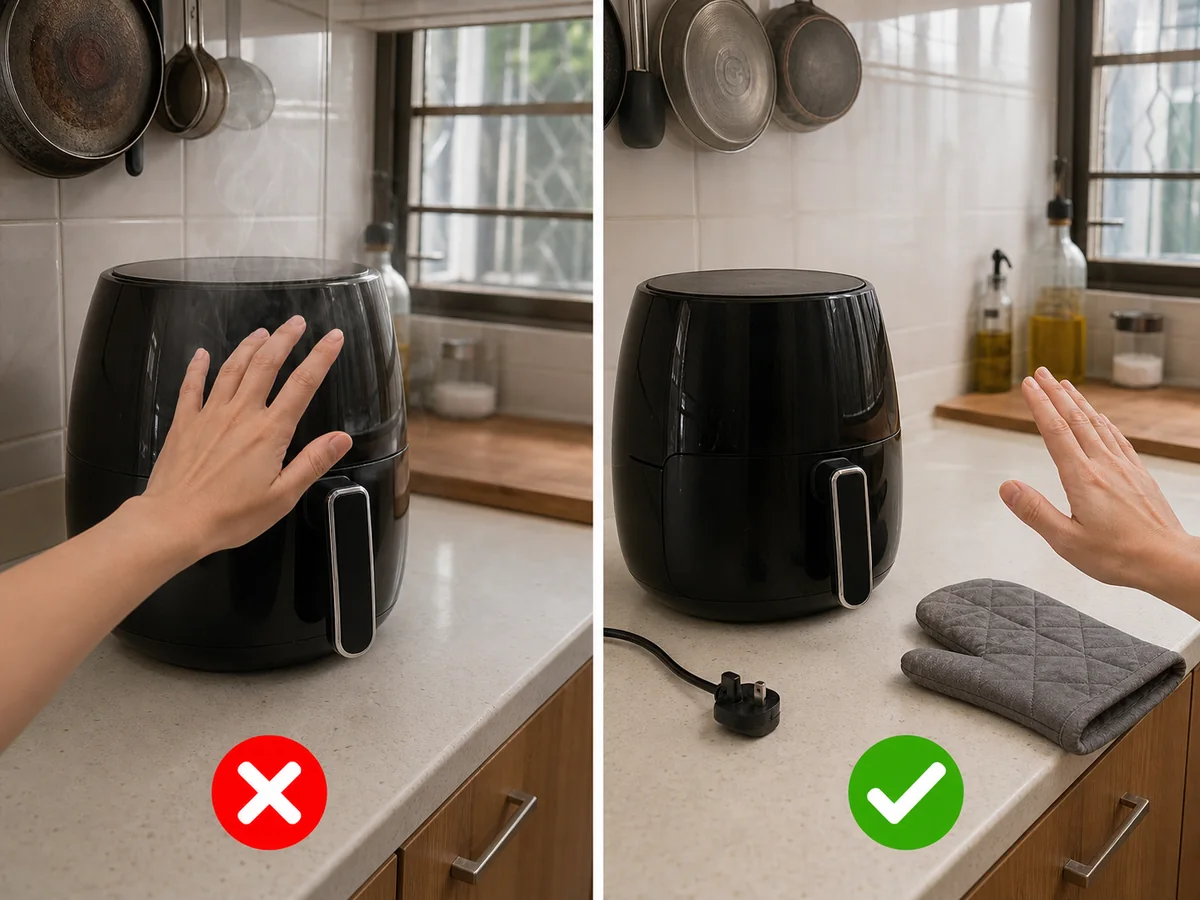
After use, switch off and unplug, then let the body, basket, tray, and interior cool as instructed before cleaning or storage.
View safety lesson →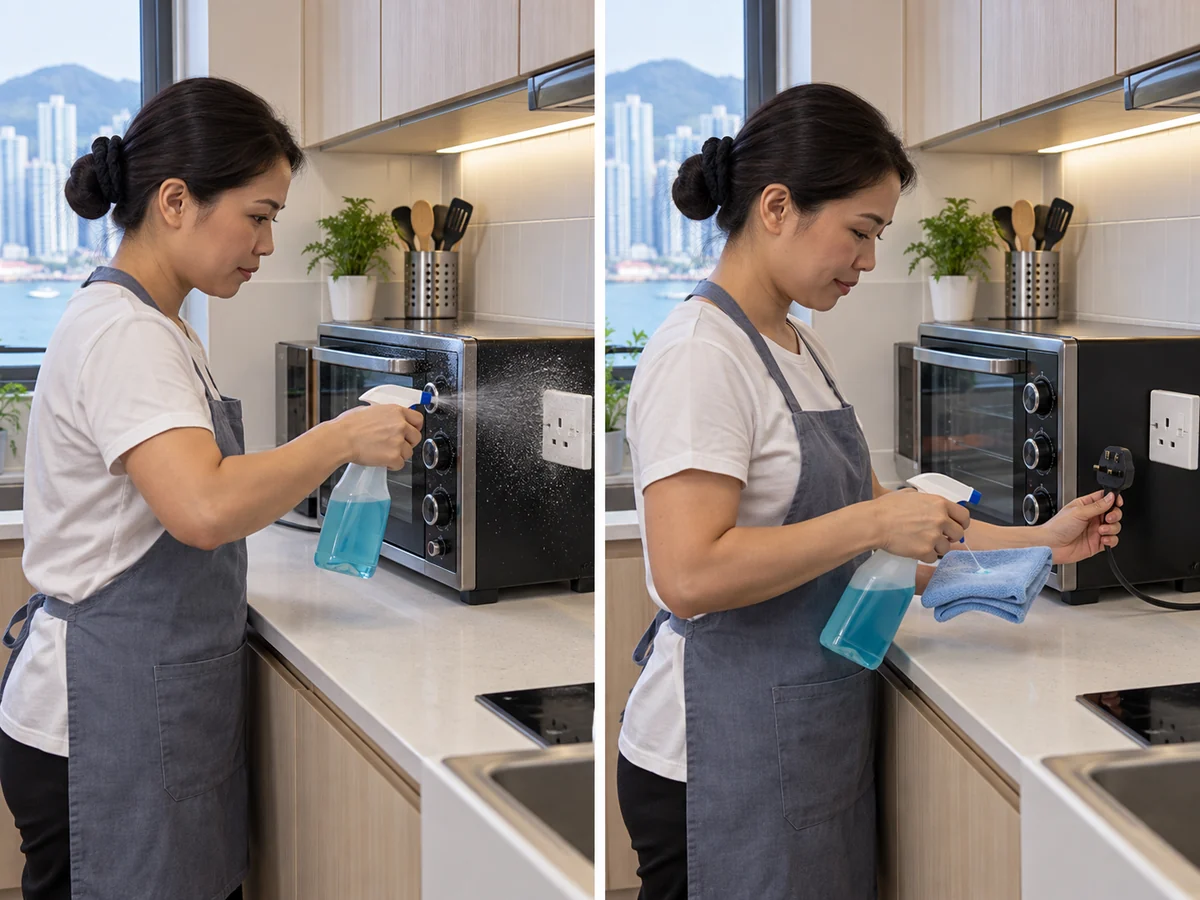
Before cleaning a socket, switch, or appliance panel, disconnect power safely and apply a small amount of cleaner to the cloth, keeping controls dry.
View safety lesson →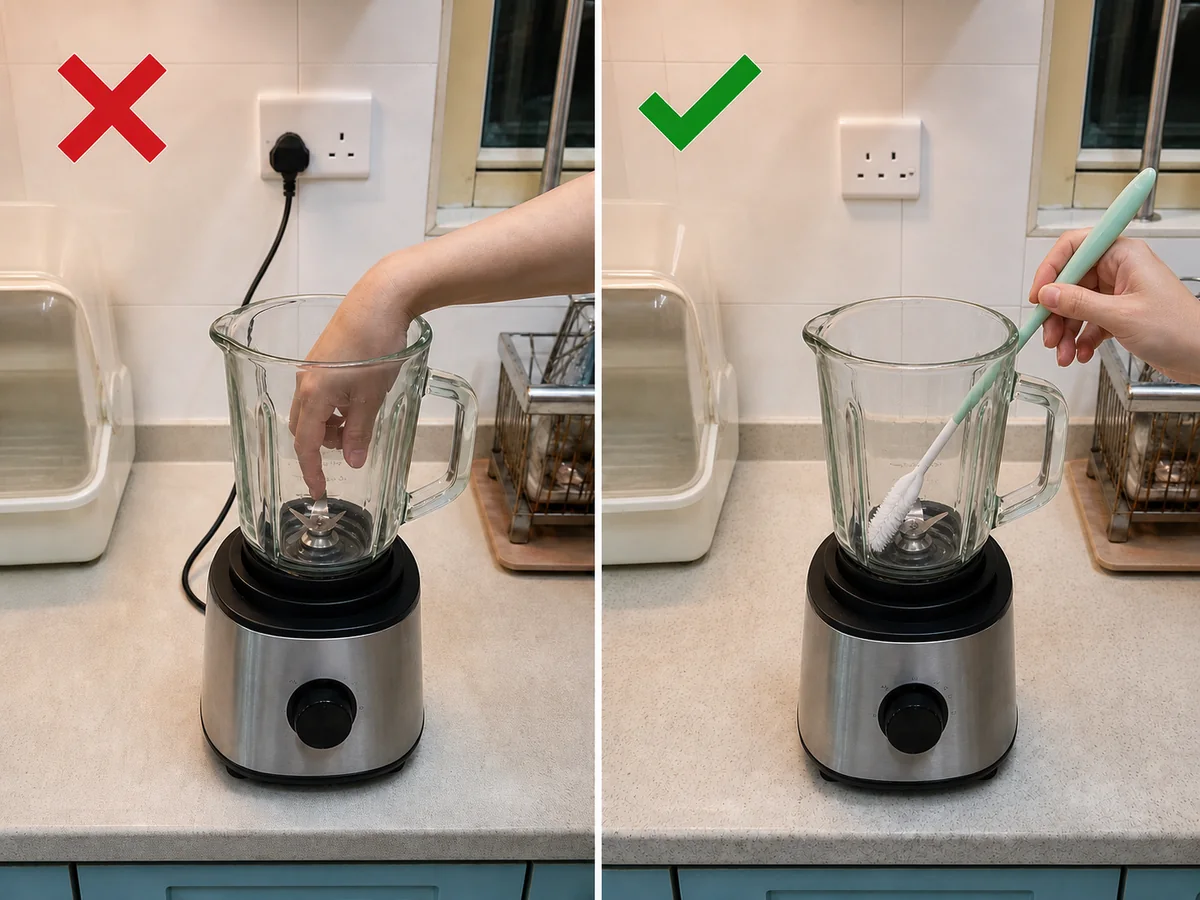
Switch off and unplug, wait for the blades to stop, then fit, remove, or clean them as instructed.
View safety lesson →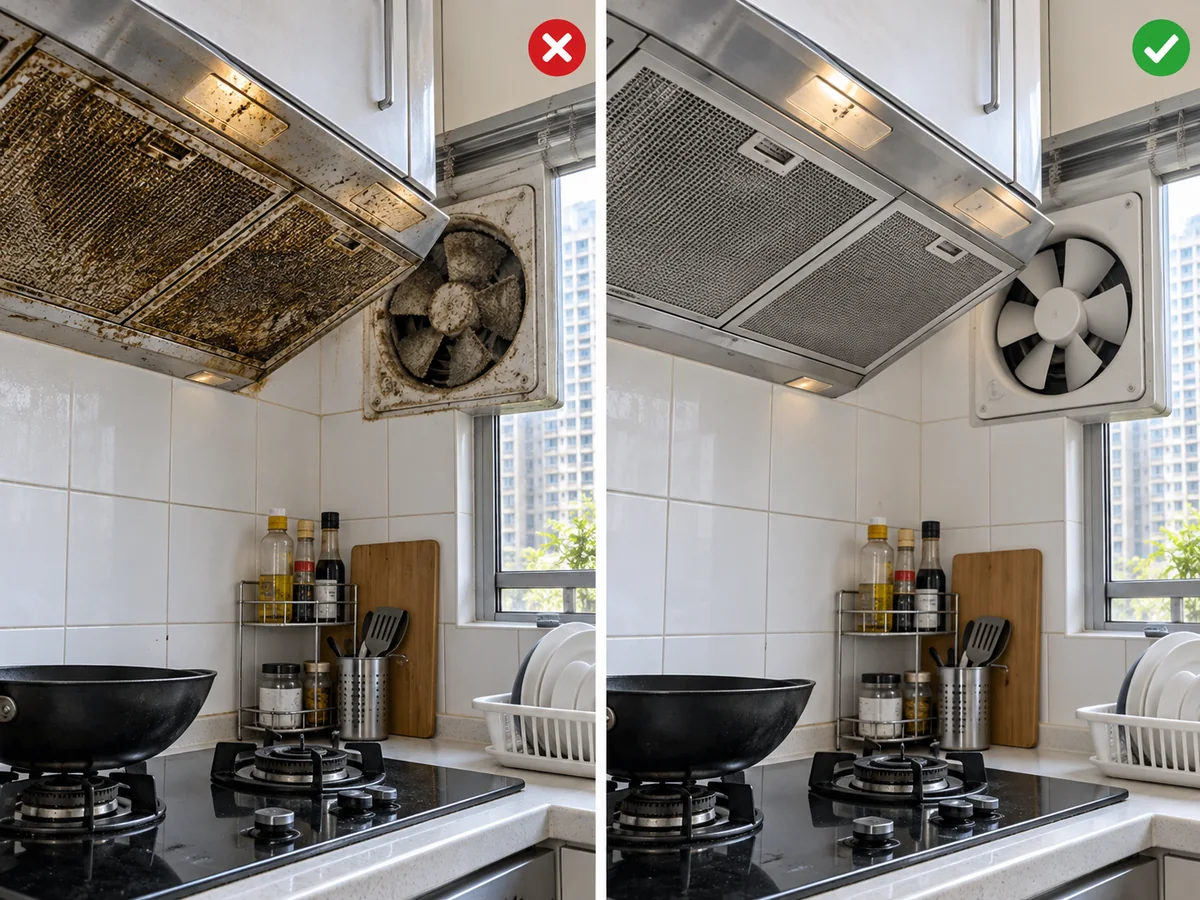
Following the maker’s instructions, remove dust and grease after power is off and parts are cool.
View safety lesson →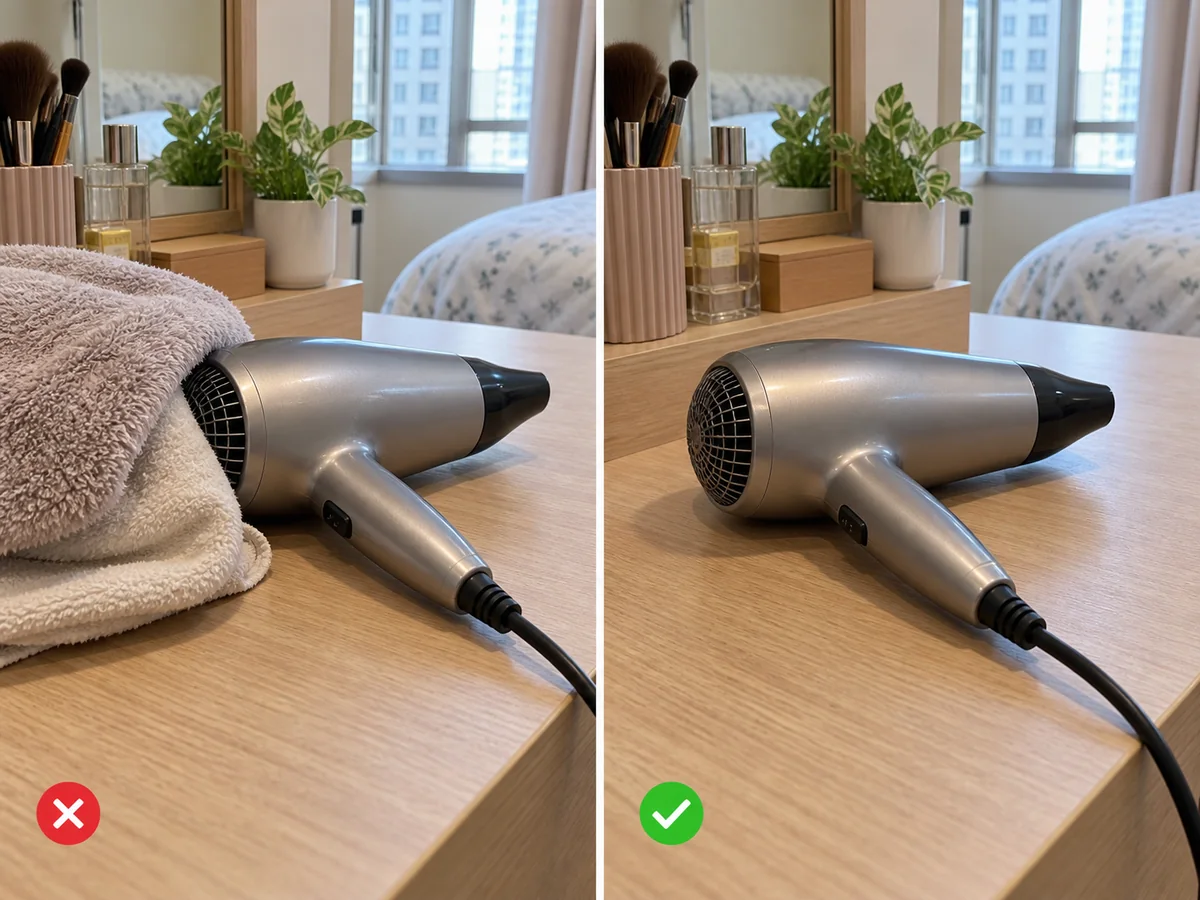
Never block the inlet or outlet during use, and remove dry lint regularly.
View safety lesson →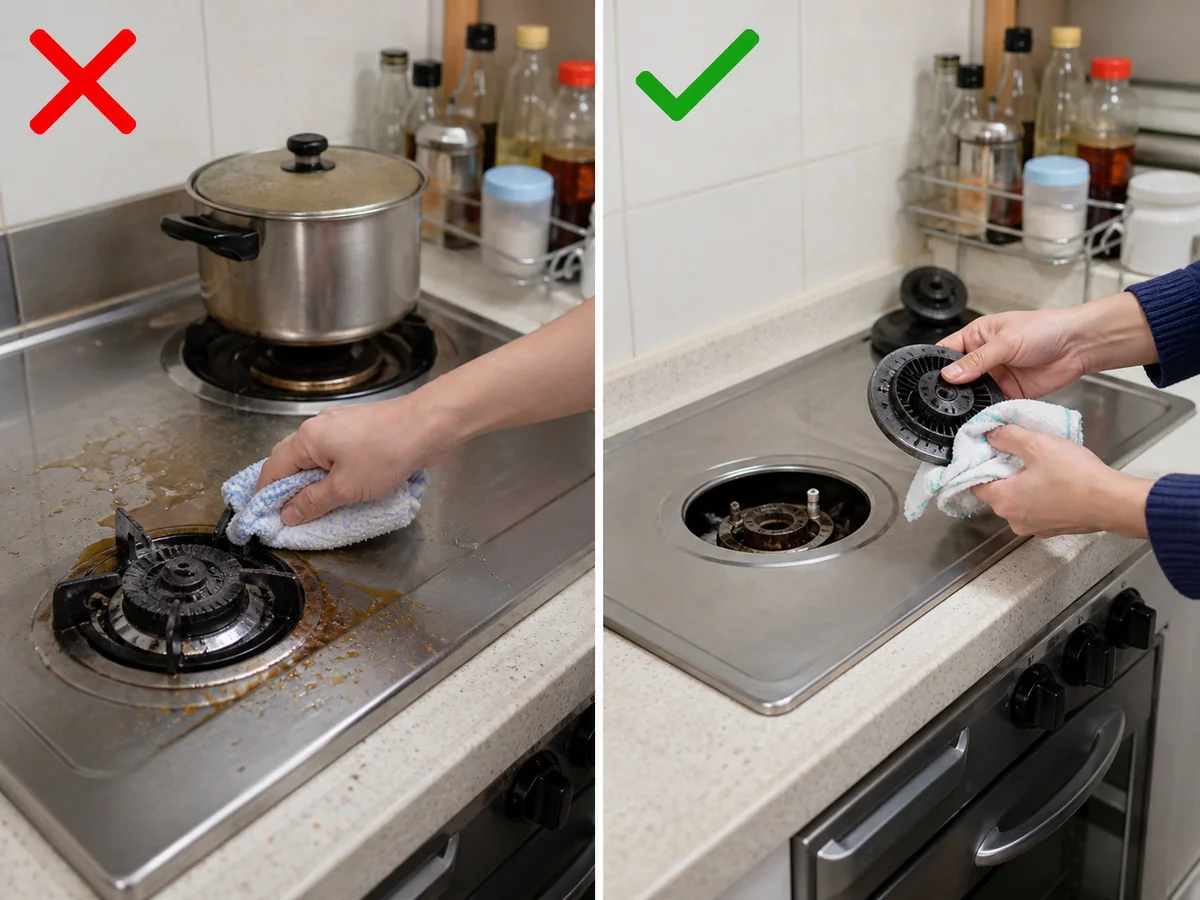
Switch off after a boil-over, let the cooker cool fully, and clean only as instructed; stop use and tell the employer if the flame is abnormal.
View safety lesson →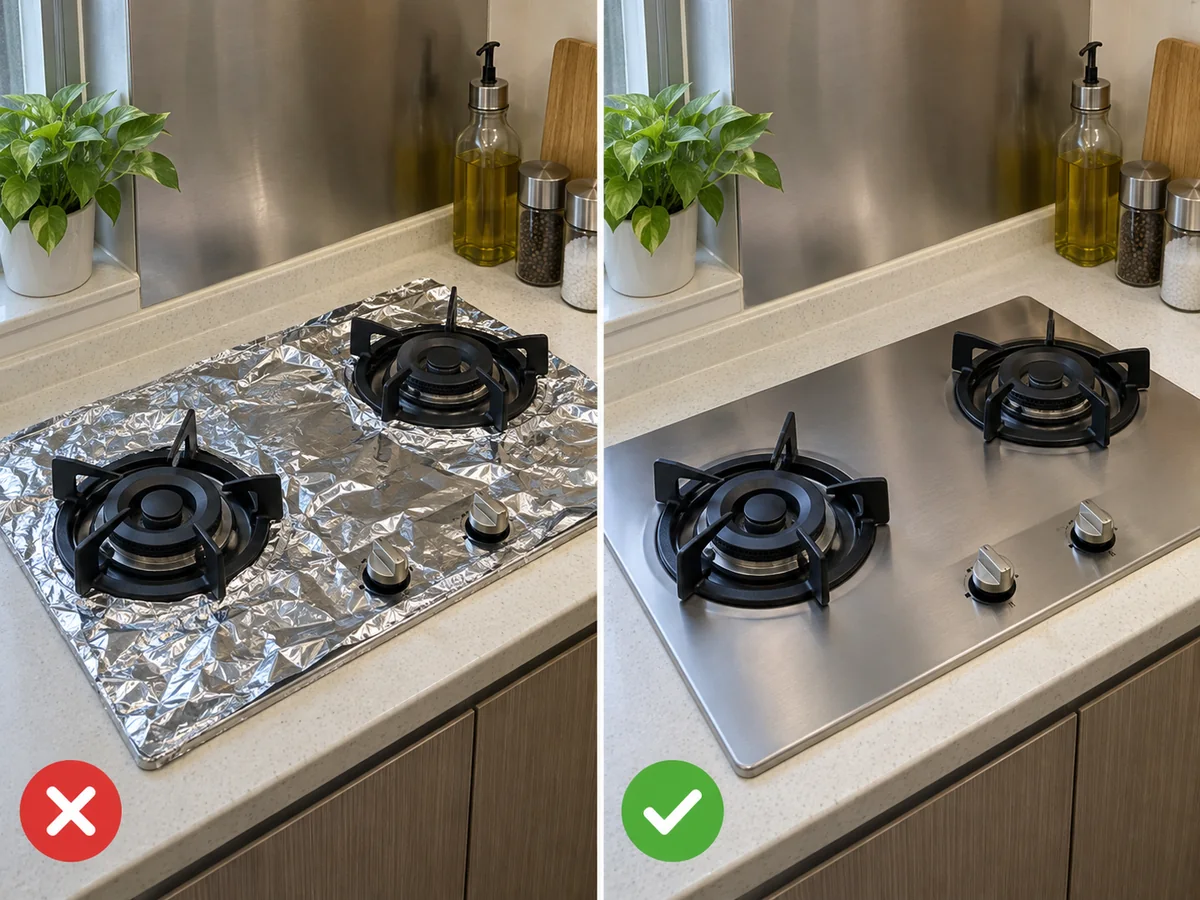
Keep burners, air inlets, and ventilation as designed; never cover the hob with foil.
View safety lesson →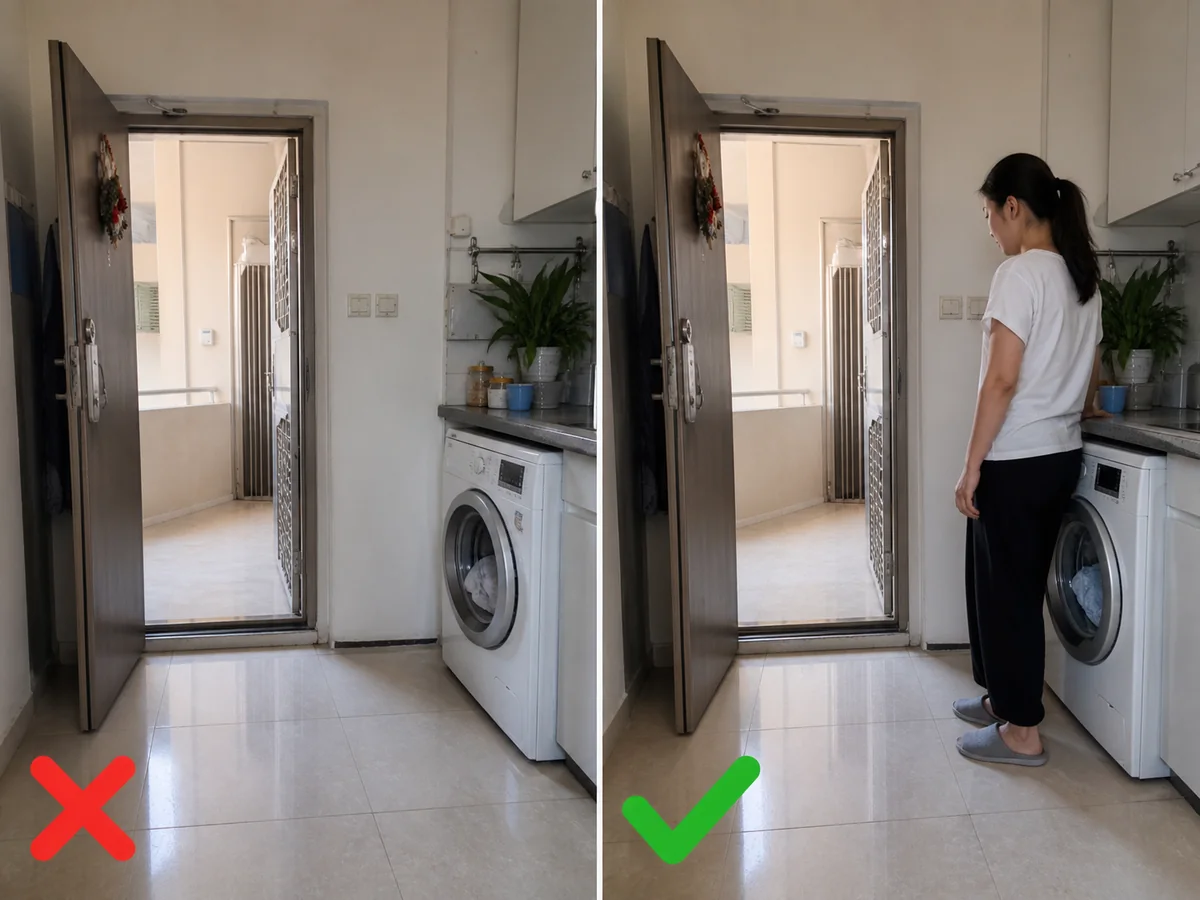
Stay home while it runs and watch for unusual noise, smell, vibration, or leaks; stop and unplug if anything is wrong.
View safety lesson →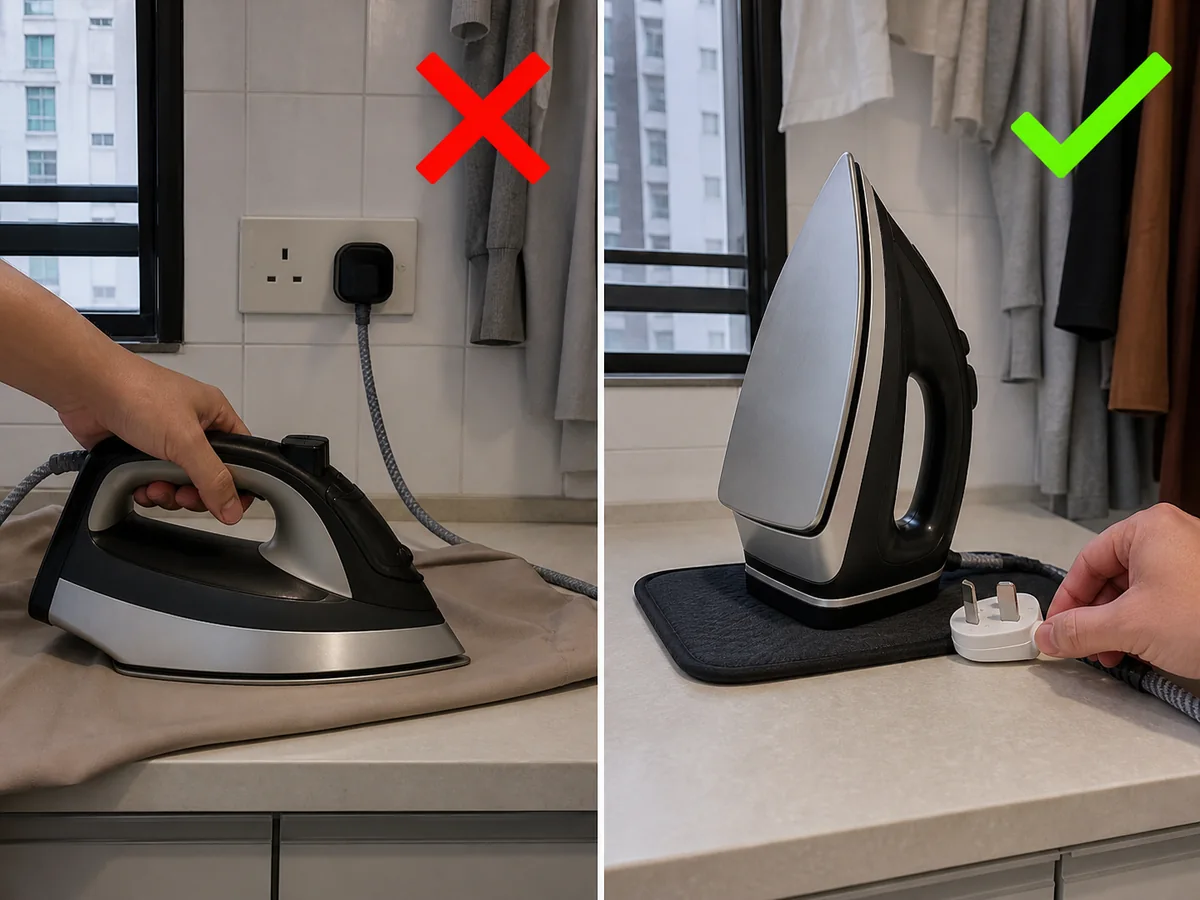
Switch off, unplug by the plug, and leave the iron upright on a stable heat-resistant surface out of children's reach until fully cool.
View safety lesson →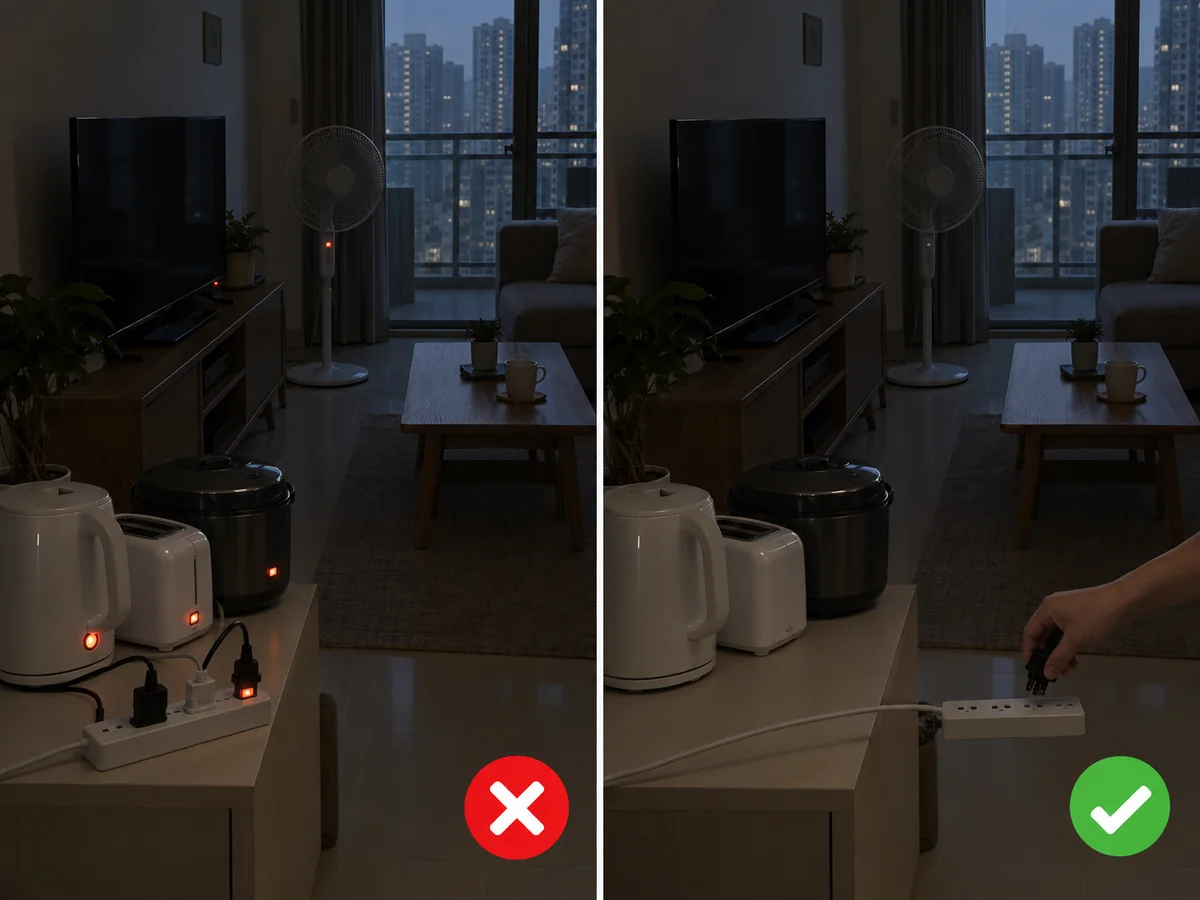
During a blackout or unstable supply, switch off and safely unplug non-essential appliances.
View safety lesson →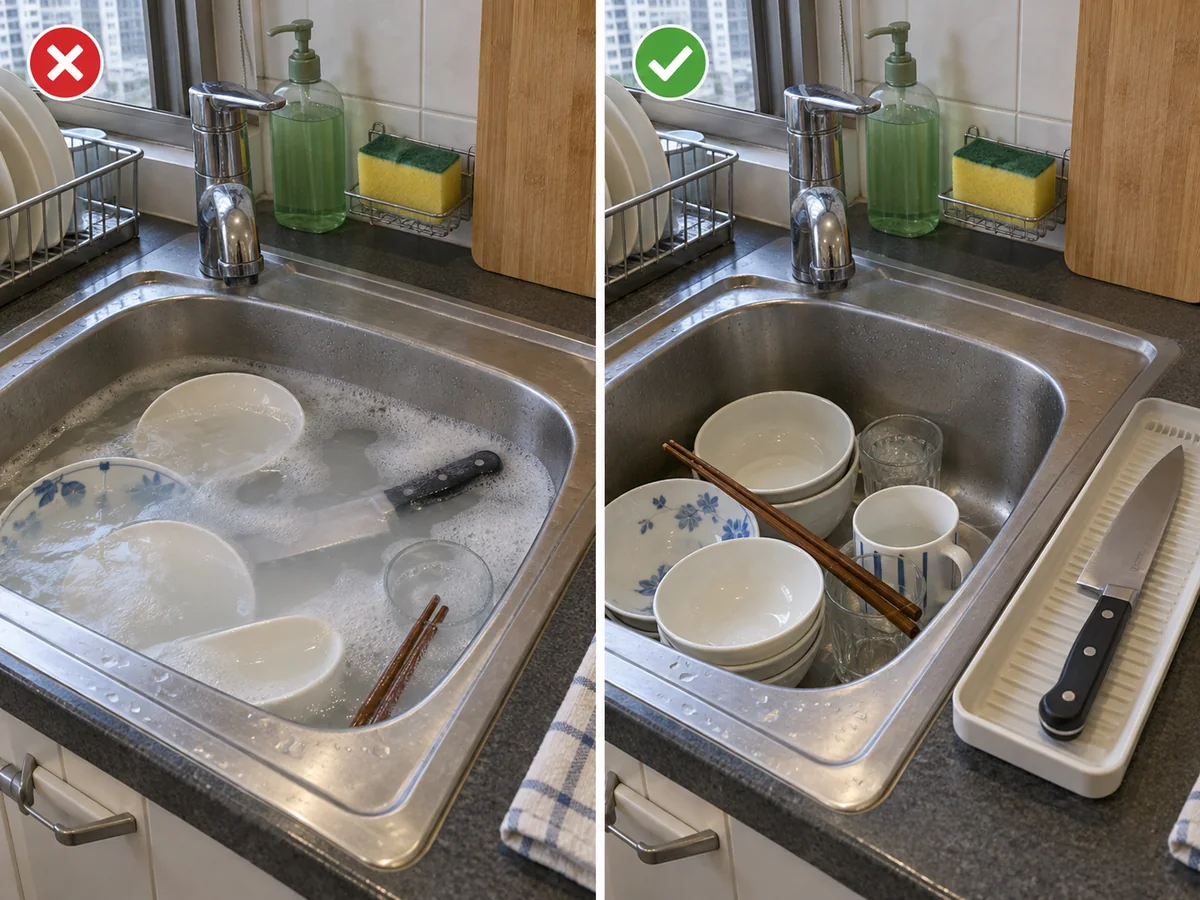
Keep used knives visible, wash them one at a time, and store them immediately.
View safety lesson →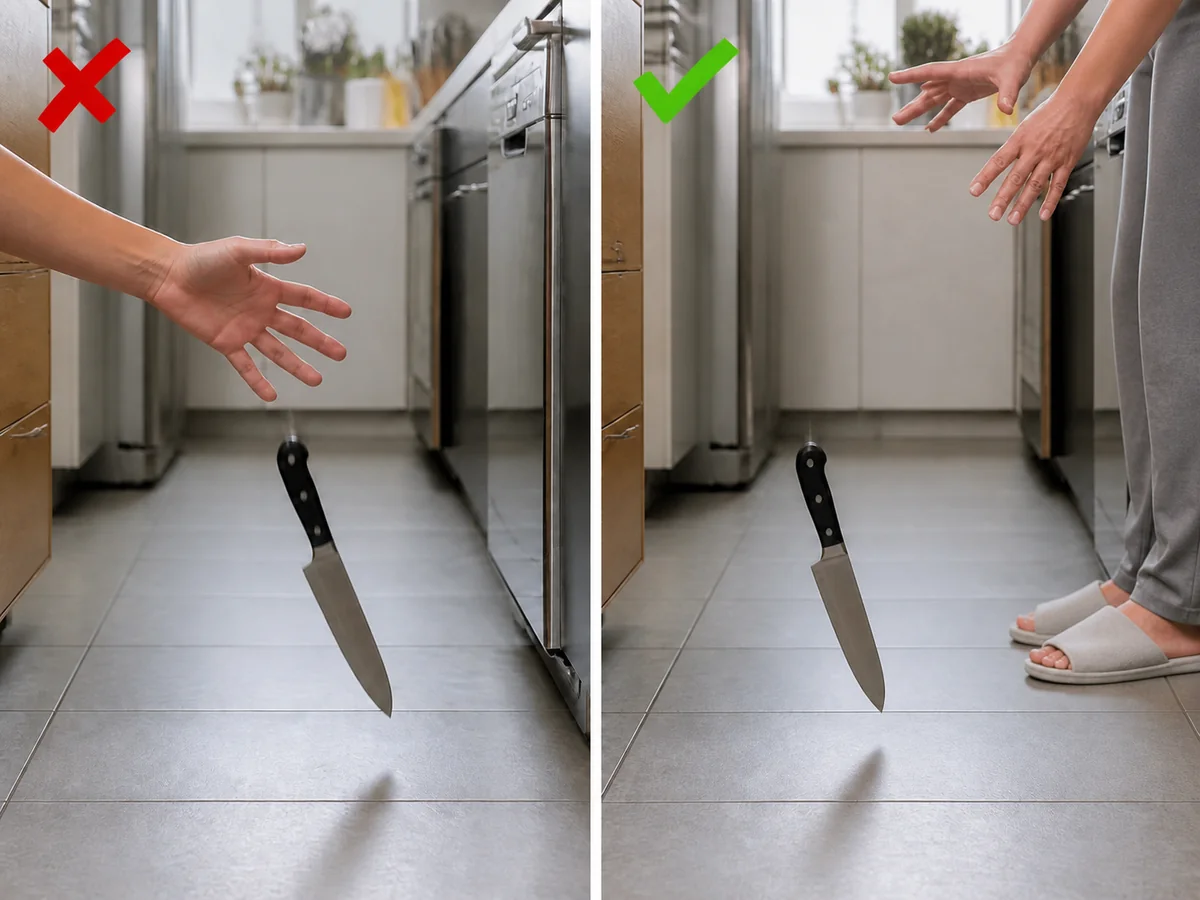
If a knife slips, let it fall, step back, warn people nearby, and pick it up only after it has stopped moving.
View safety lesson →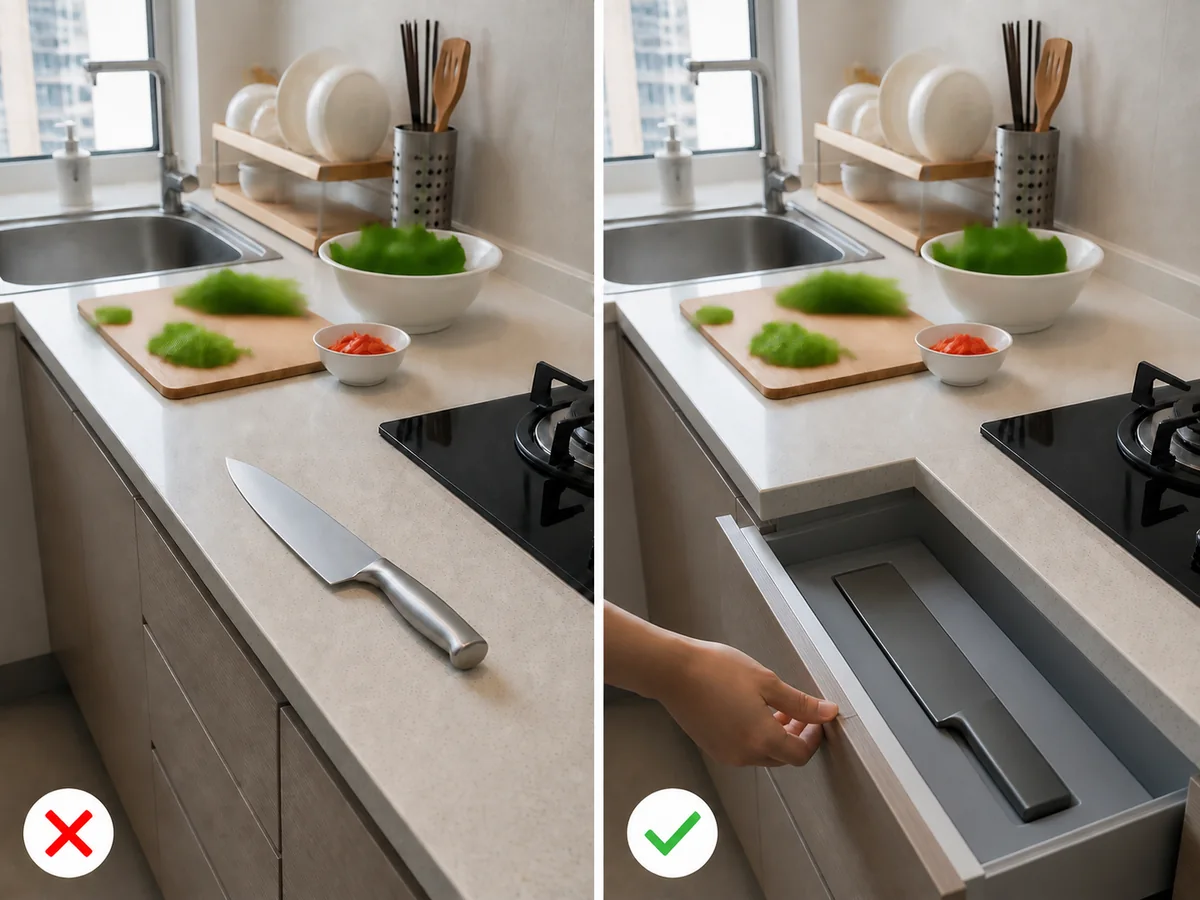
Store knives in a secure knife block, sheath, or safe place with the blade protected and out of children's reach.
View safety lesson →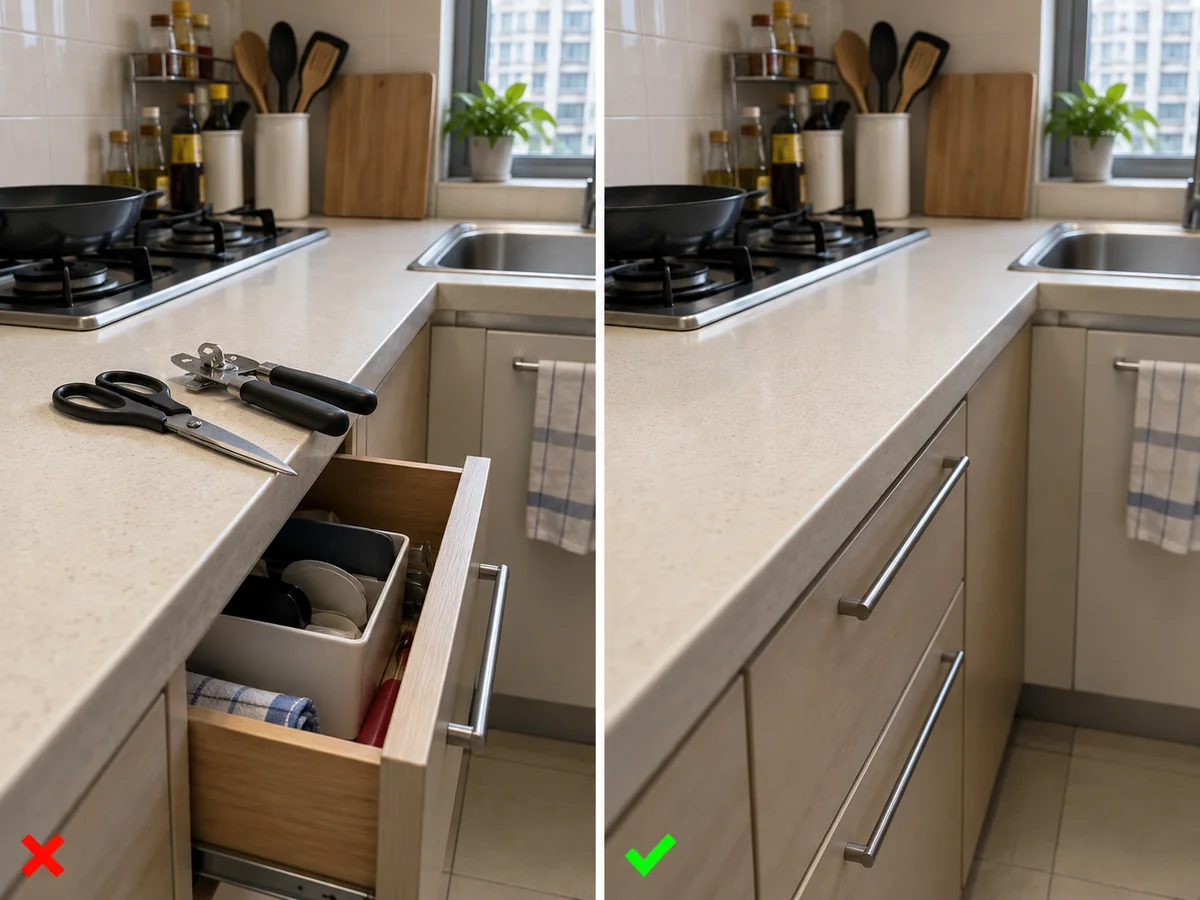
After cleaning and drying, return scissors and can openers to a closed or locked place.
View safety lesson →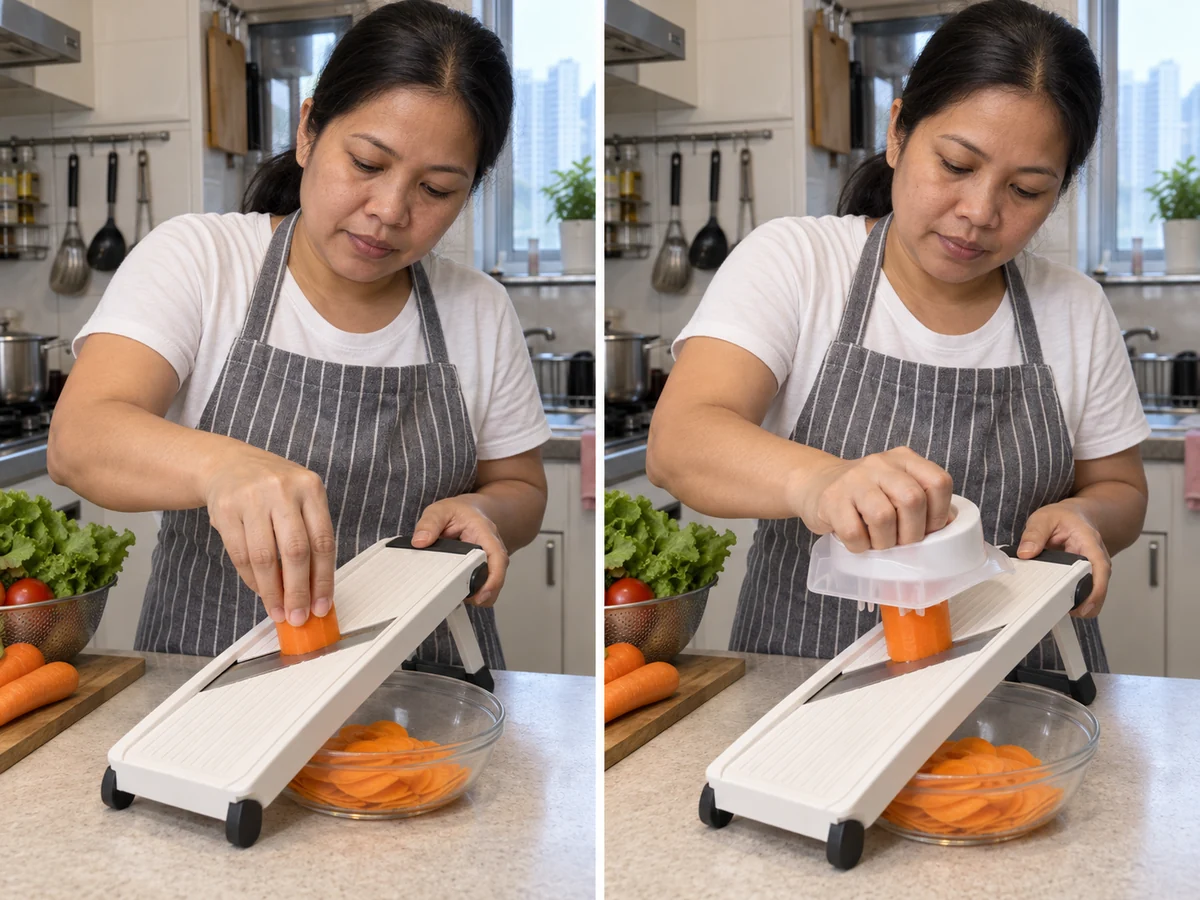
Fit the food holder or hand guard and follow the product instructions whenever using a mandoline slicer.
View safety lesson →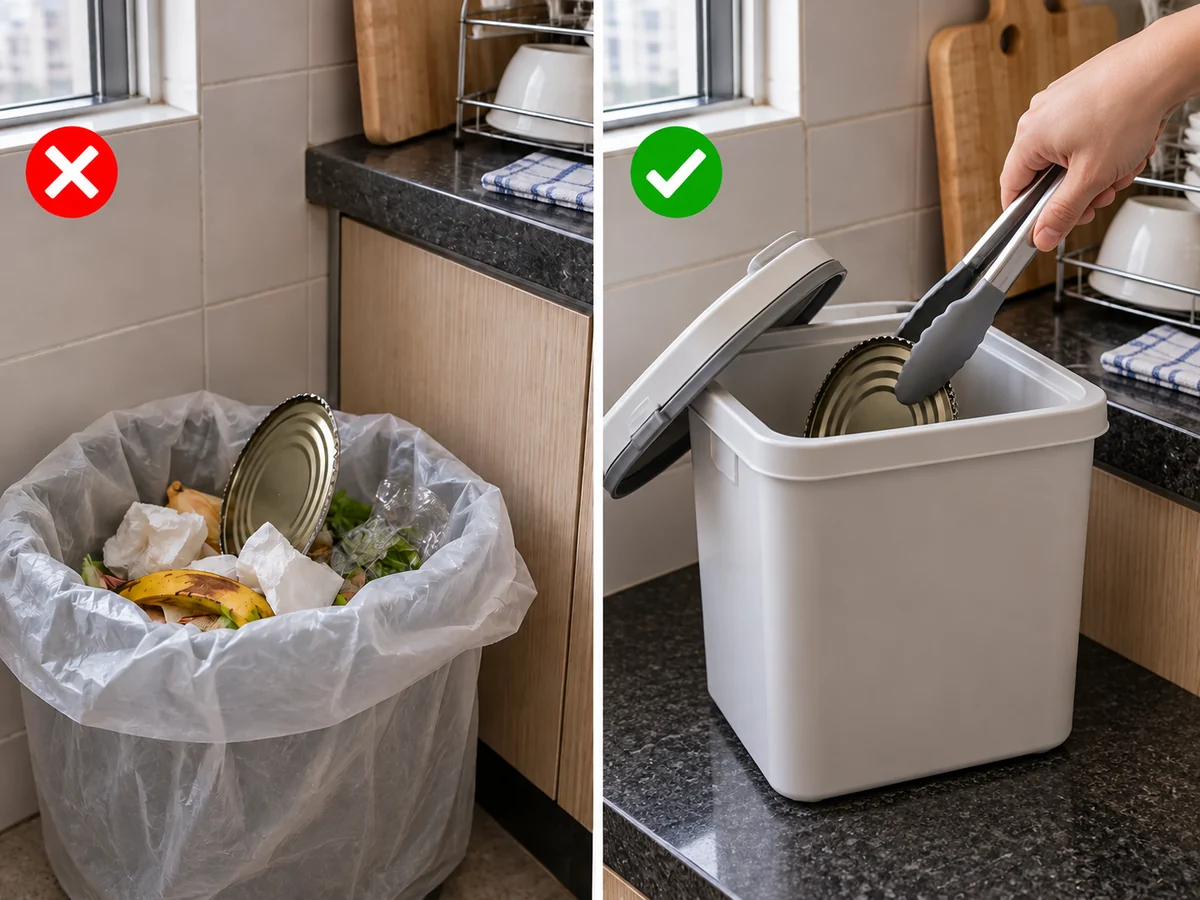
Control the sharp lid immediately after opening, wrap it, and place it in a puncture-resistant container.
View safety lesson →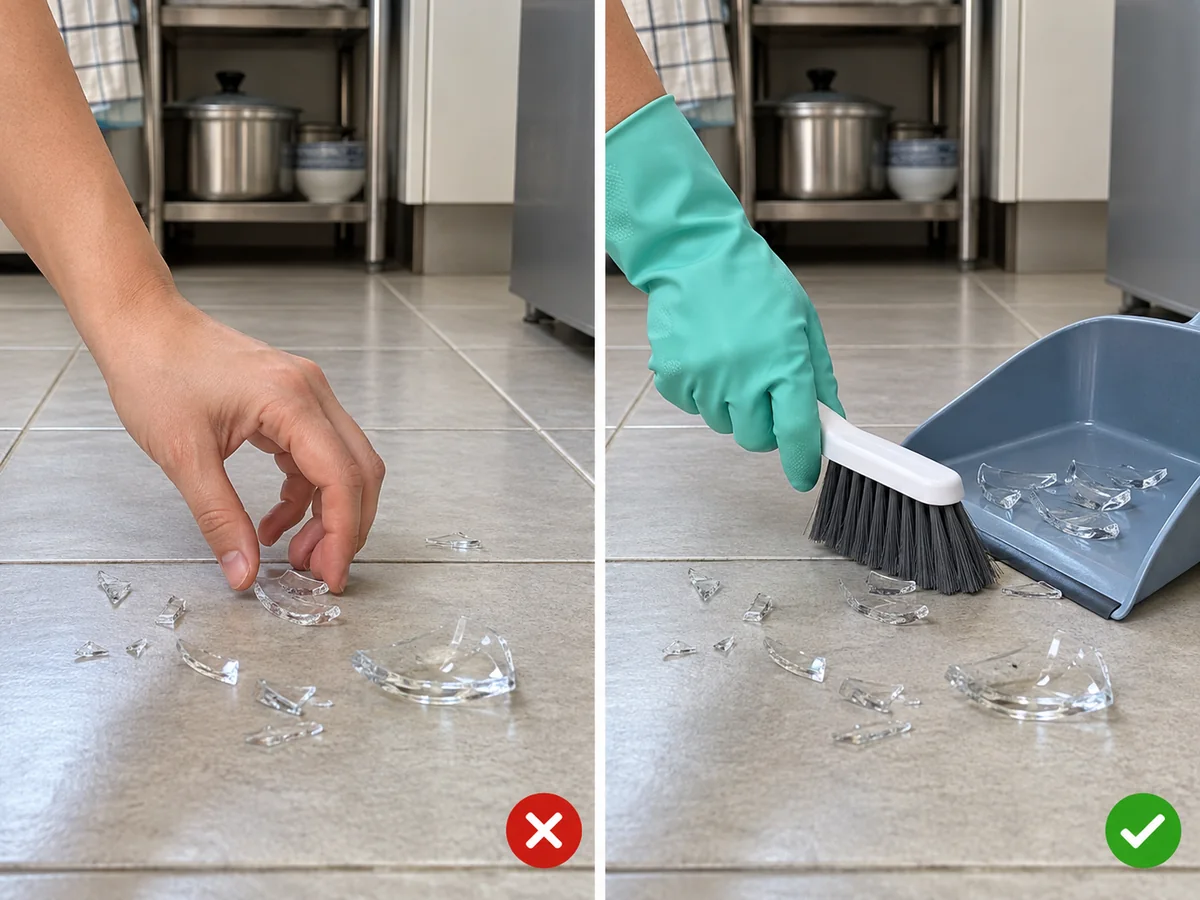
Isolate the area, then collect large and small fragments with a broom, tongs, and stiff card.
View safety lesson →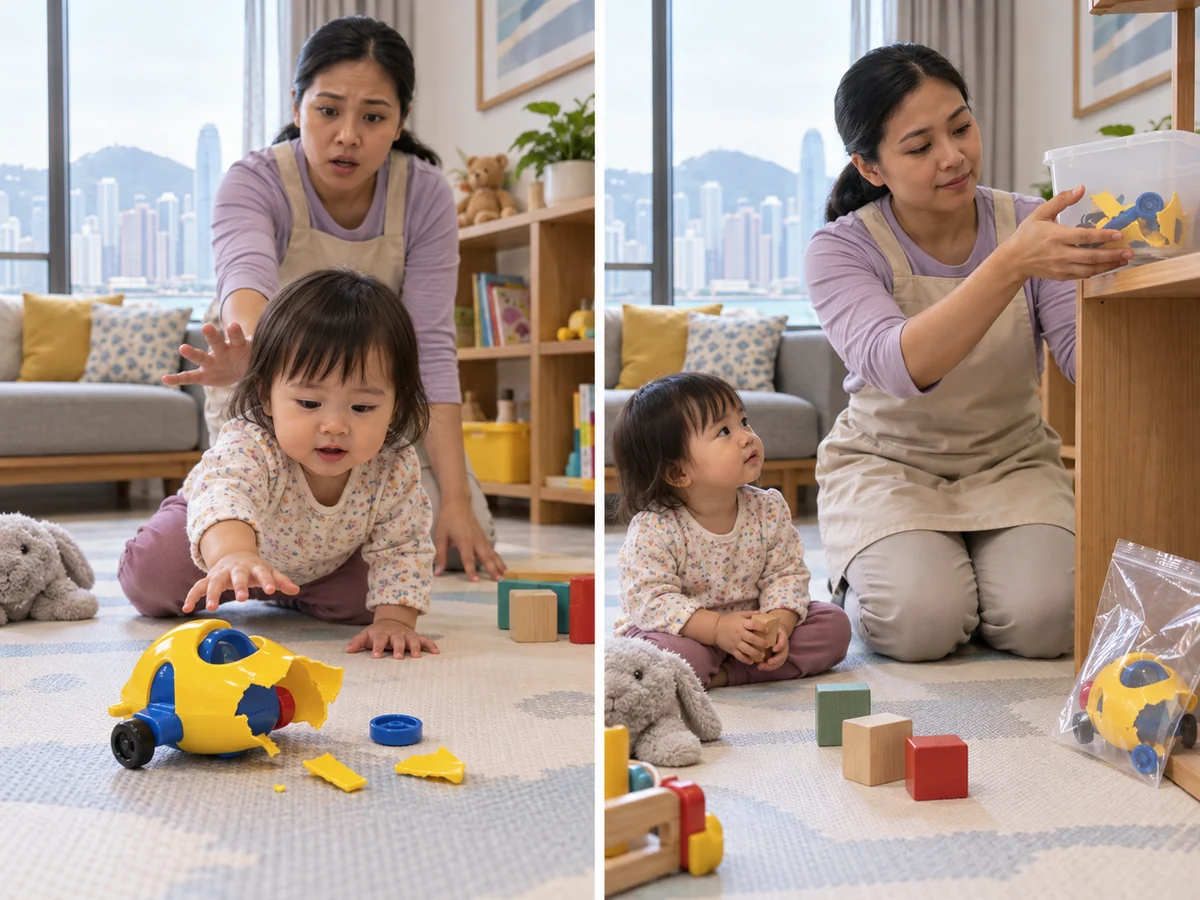
When a toy cracks, exposes a sharp edge, or sheds a small part, stop play immediately, collect the pieces, and isolate the whole toy.
View safety lesson →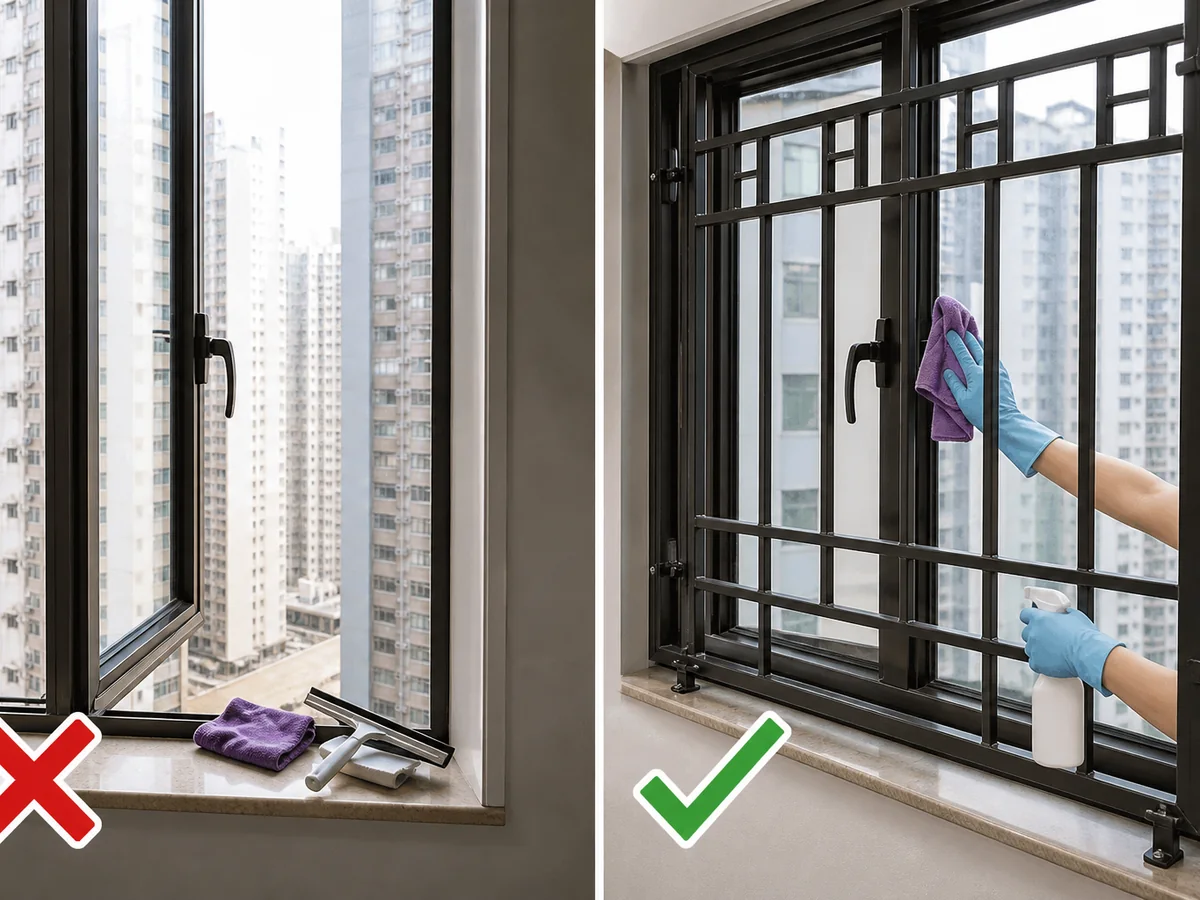
For non-ground-level windows, the grille must be locked and no body part except the arms may extend outside.
View safety lesson →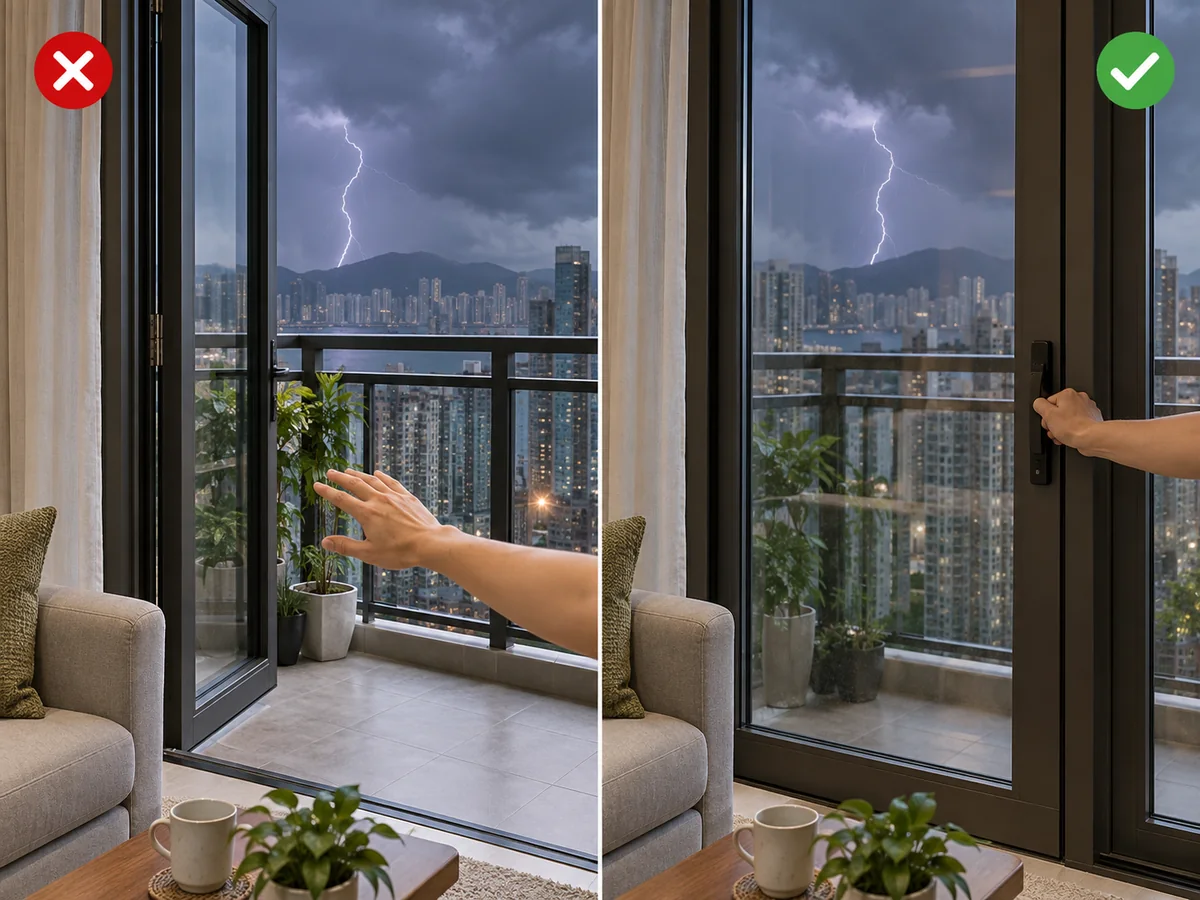
Monitor Hong Kong Observatory warnings, stop outdoor work, and enter a substantial building.
View safety lesson →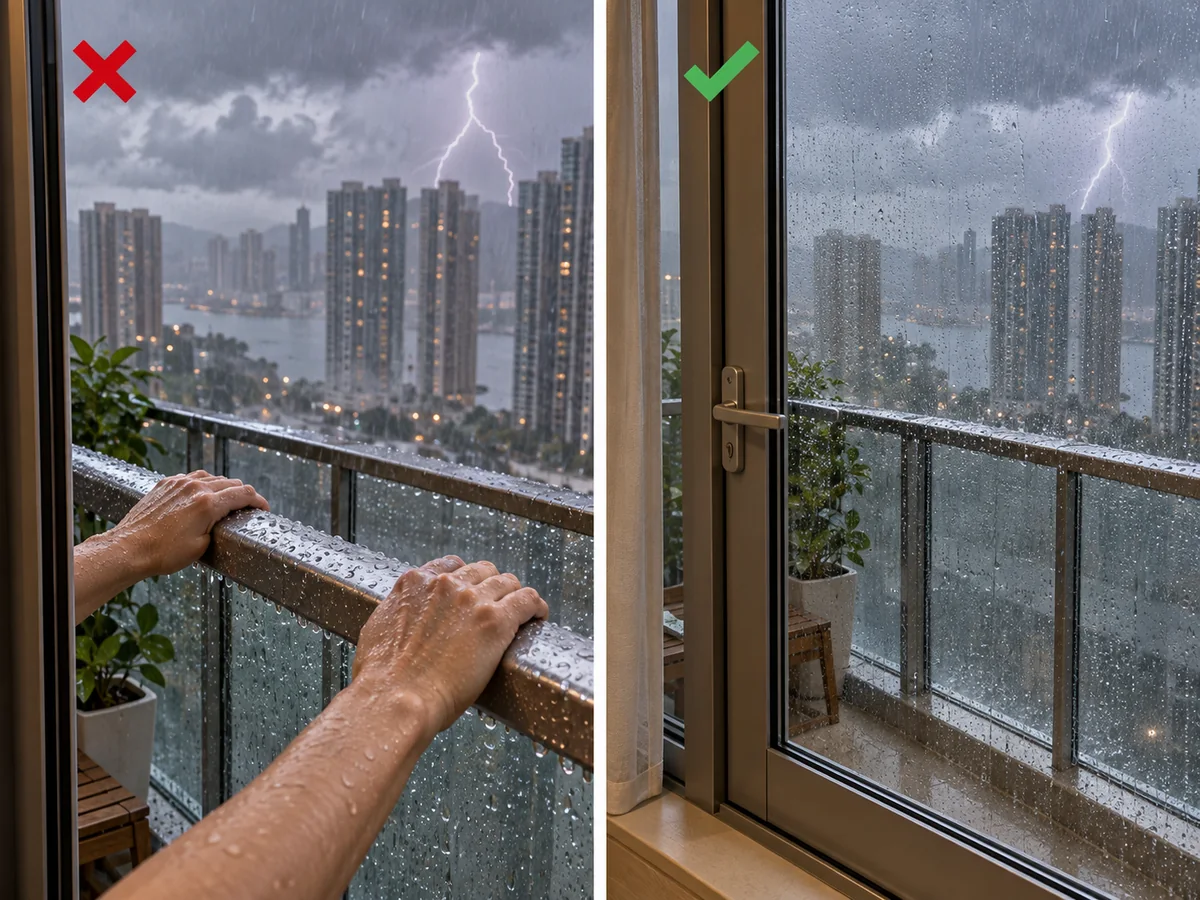
During warnings or nearby thunder, stay inside and postpone laundry, drain clearing, and rooftop work.
View safety lesson →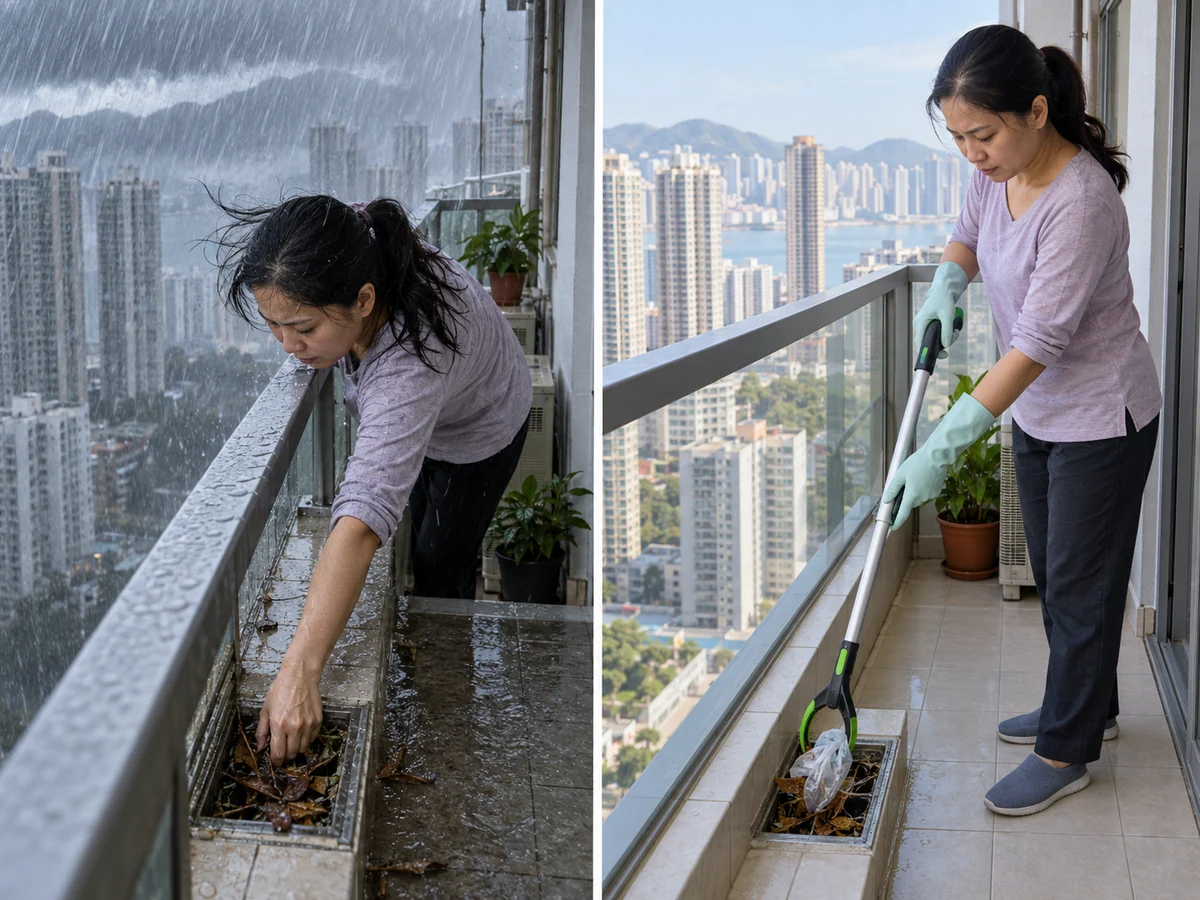
In safe weather, remove leaves, bags, and surface debris around balcony drain openings so water can flow.
View safety lesson →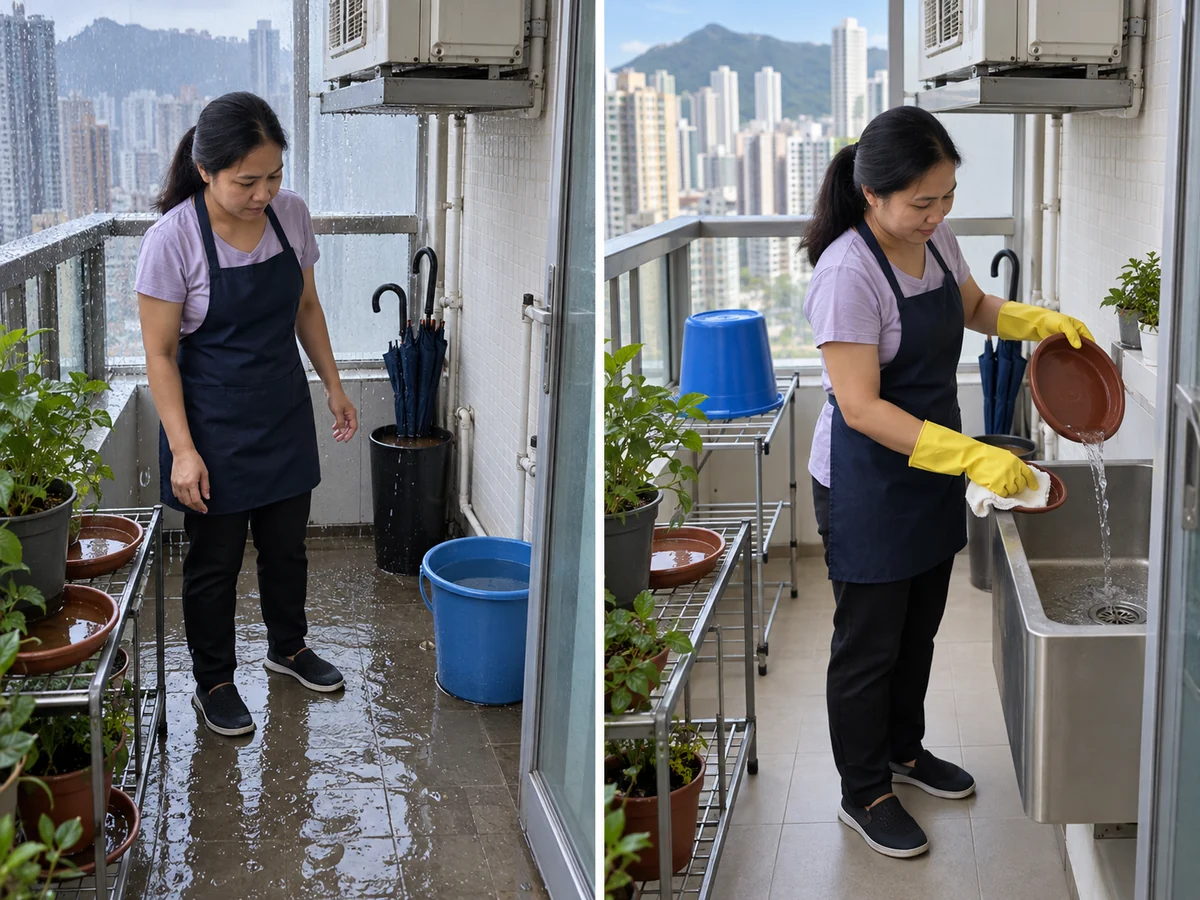
Once conditions are safe, check plant saucers, air-conditioner trays, umbrella stands, and balcony items, then empty water.
View safety lesson →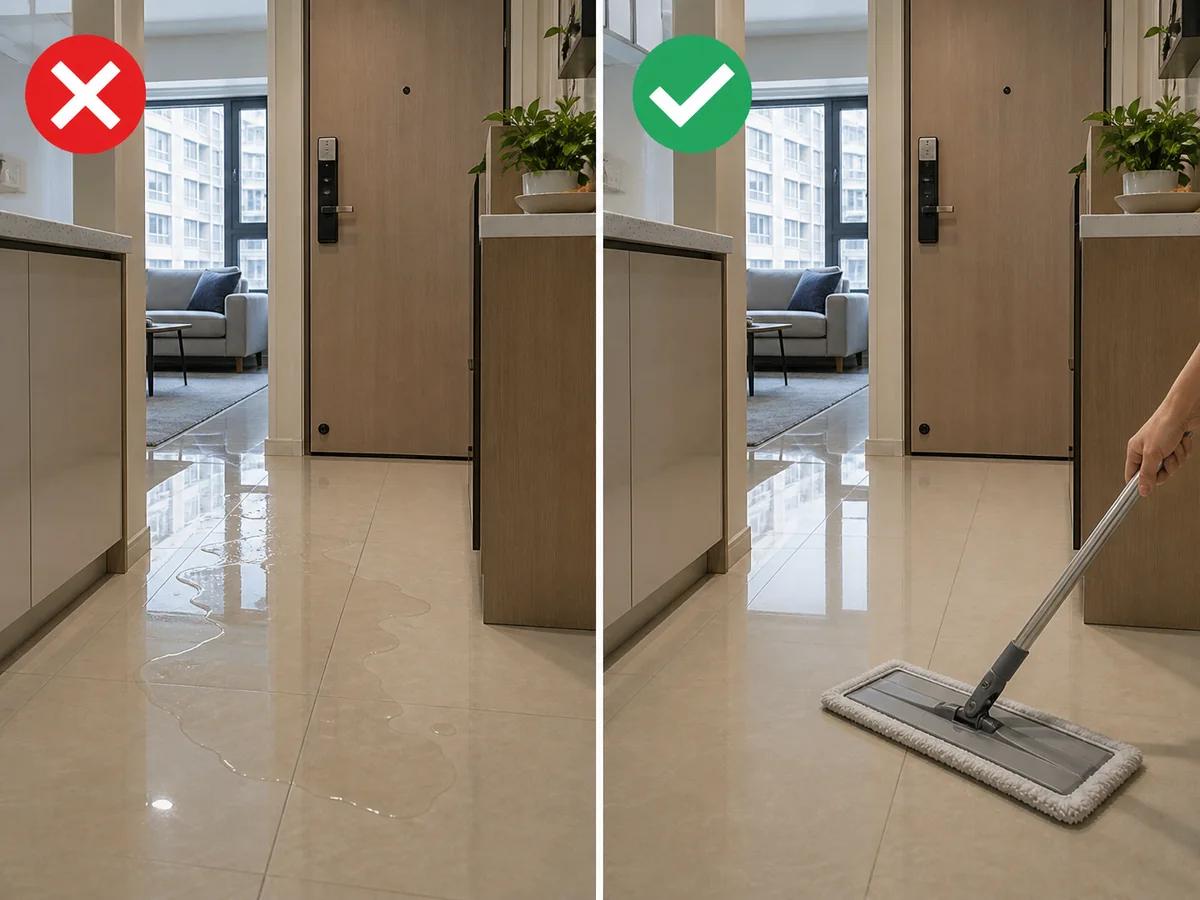
Clean up spills at once and dry the floor to prevent slips.
View safety lesson →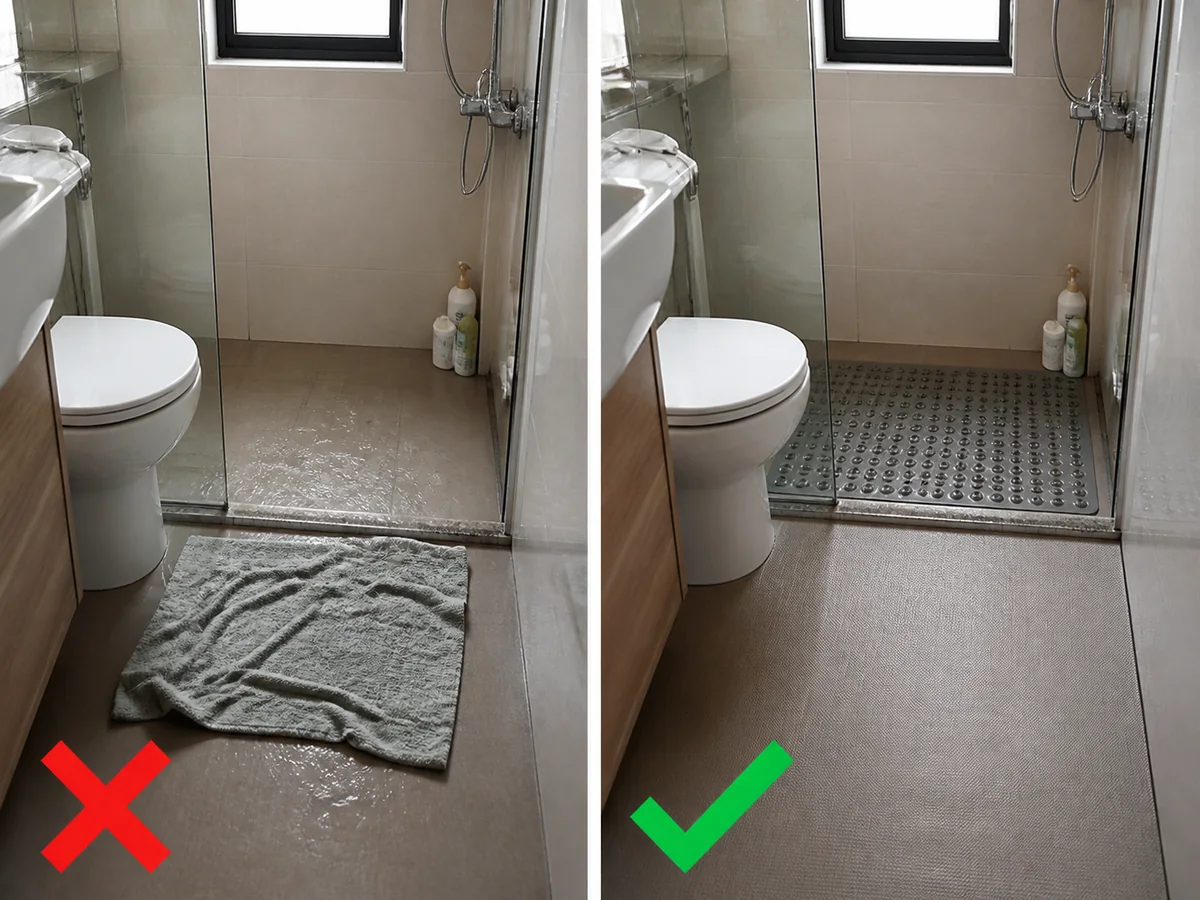
Use a secure, well-fitted anti-slip mat or surface in the bath or shower area, keep it in good condition, and keep the floor dry.
View safety lesson →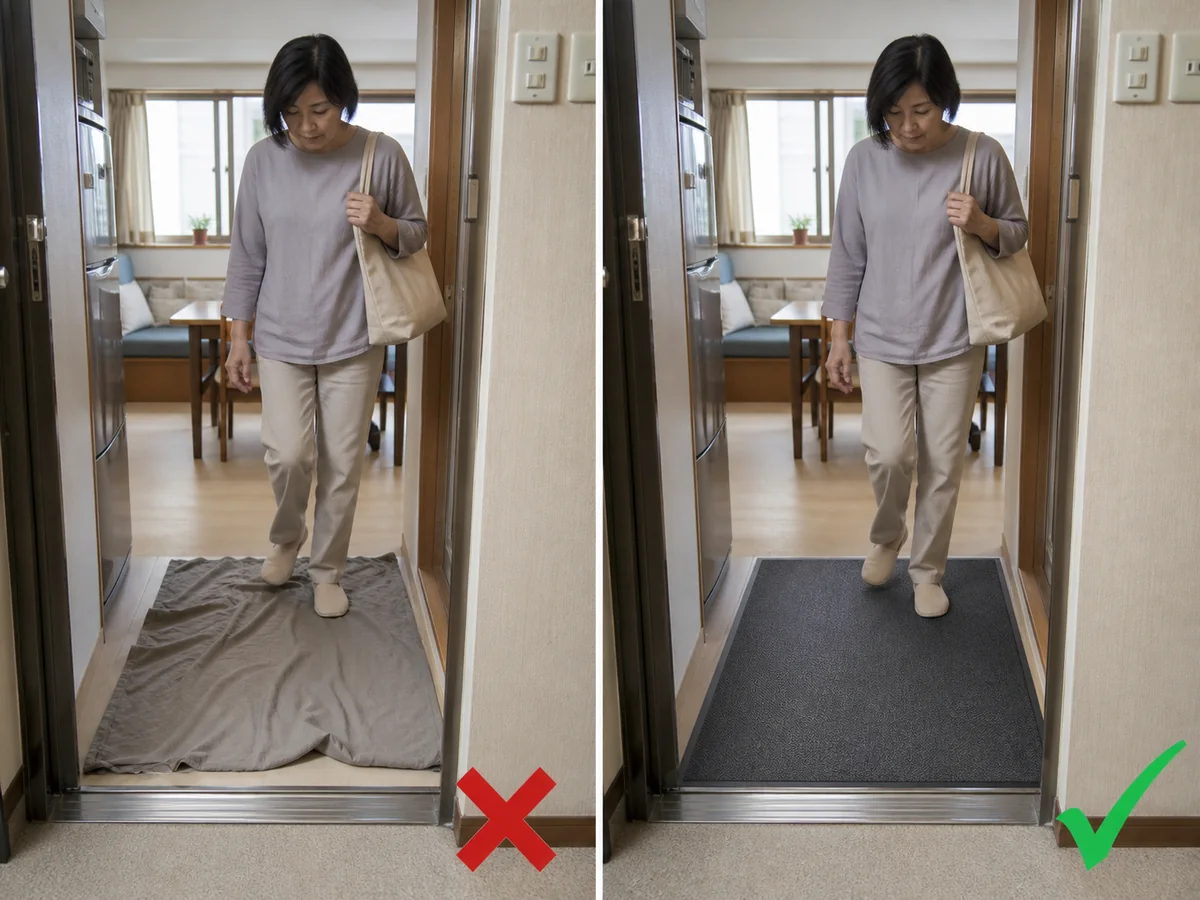
Remove loose cloth and unsecured mats from walking routes; use a flat, secure non-slip mat where one is needed.
View safety lesson →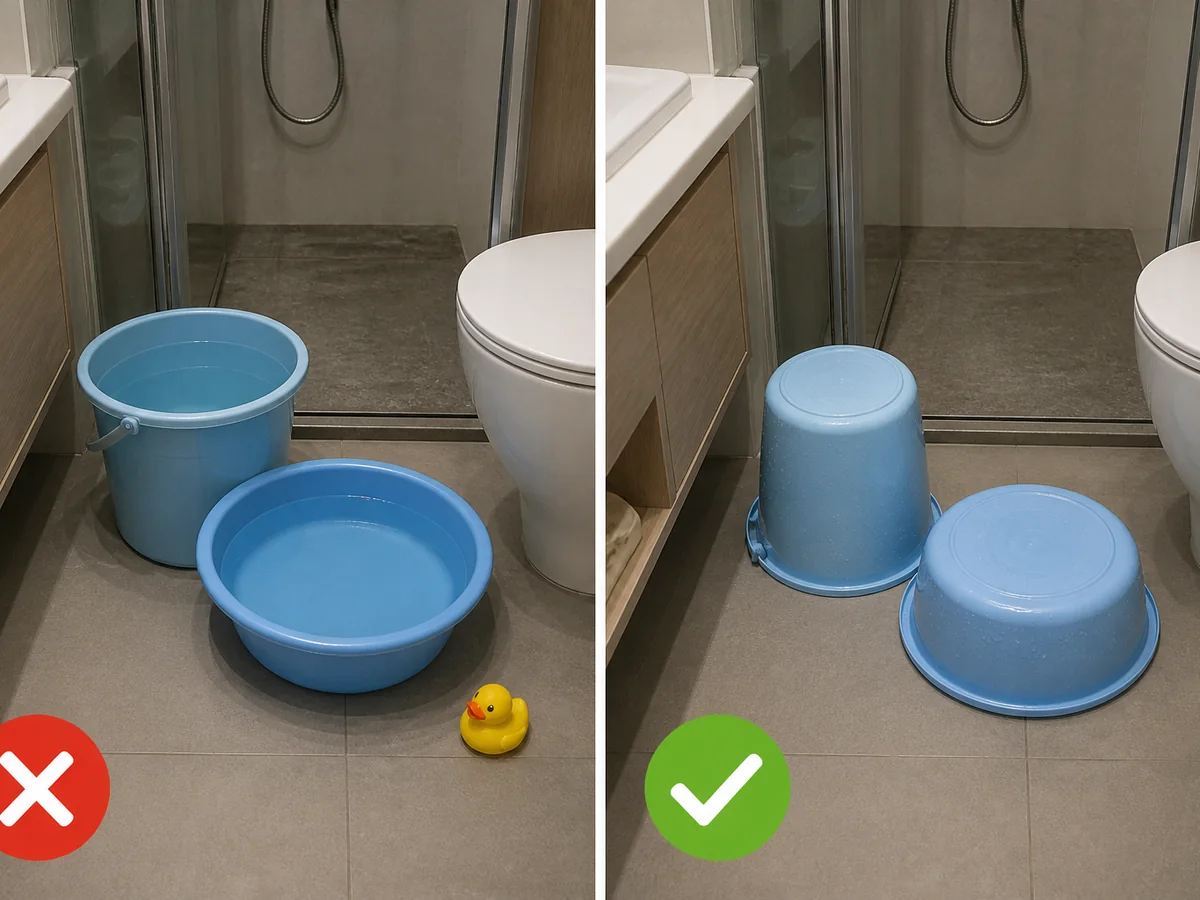
Empty baths, buckets, and basins immediately after bathing or cleaning, then store them upside down.
View safety lesson →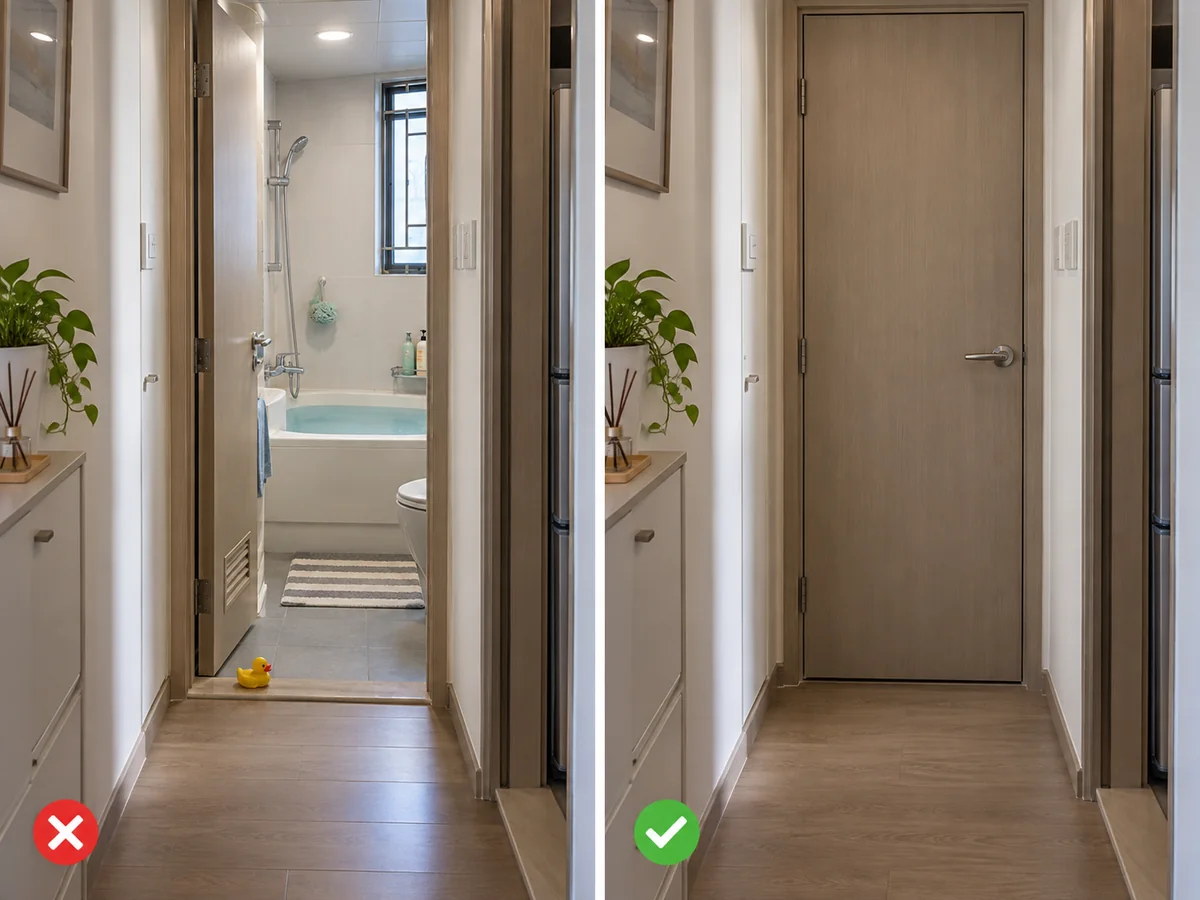
Close the bathroom when no adult is supervising and use an adult-controlled safe latch.
View safety lesson →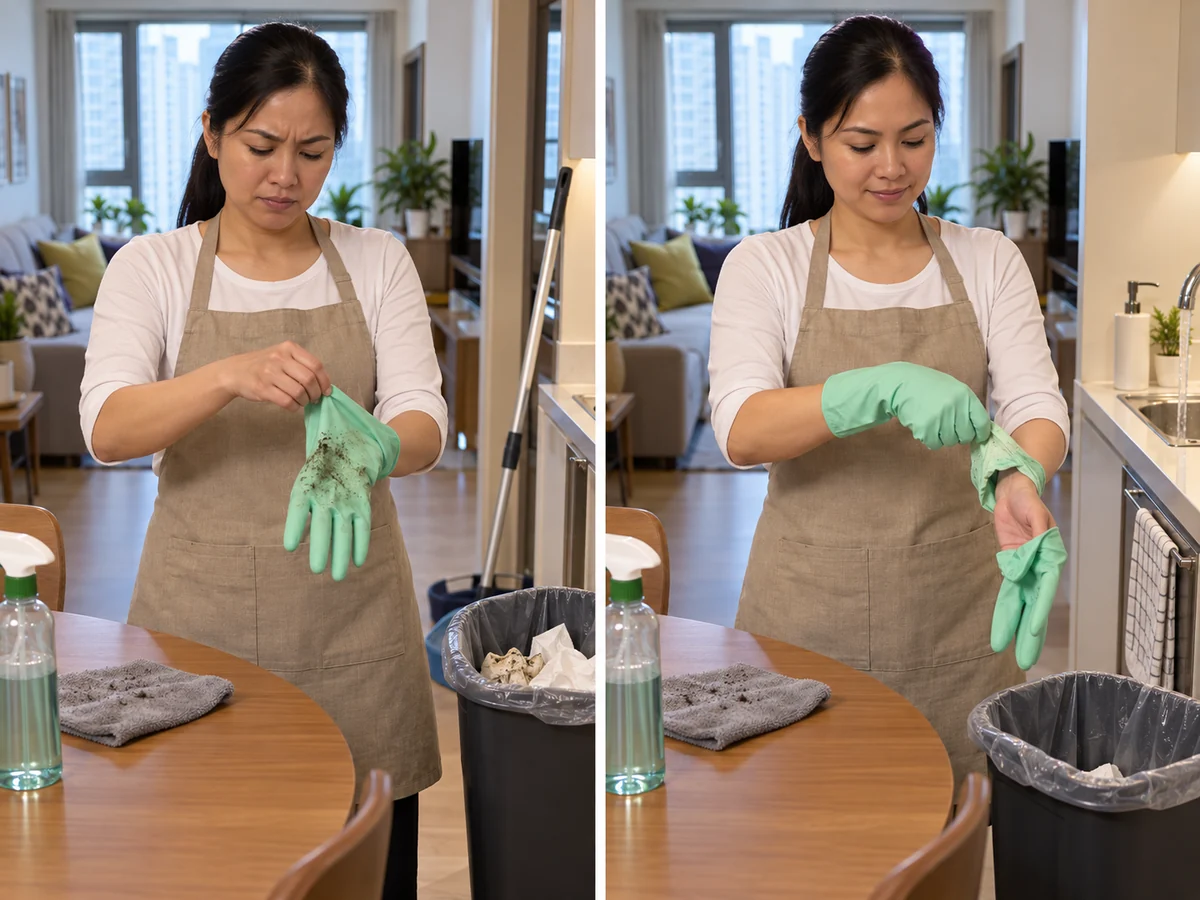
Peel gloves off from the wrists so the contaminated surfaces fold inward, then discard them and wash your hands.
View safety lesson →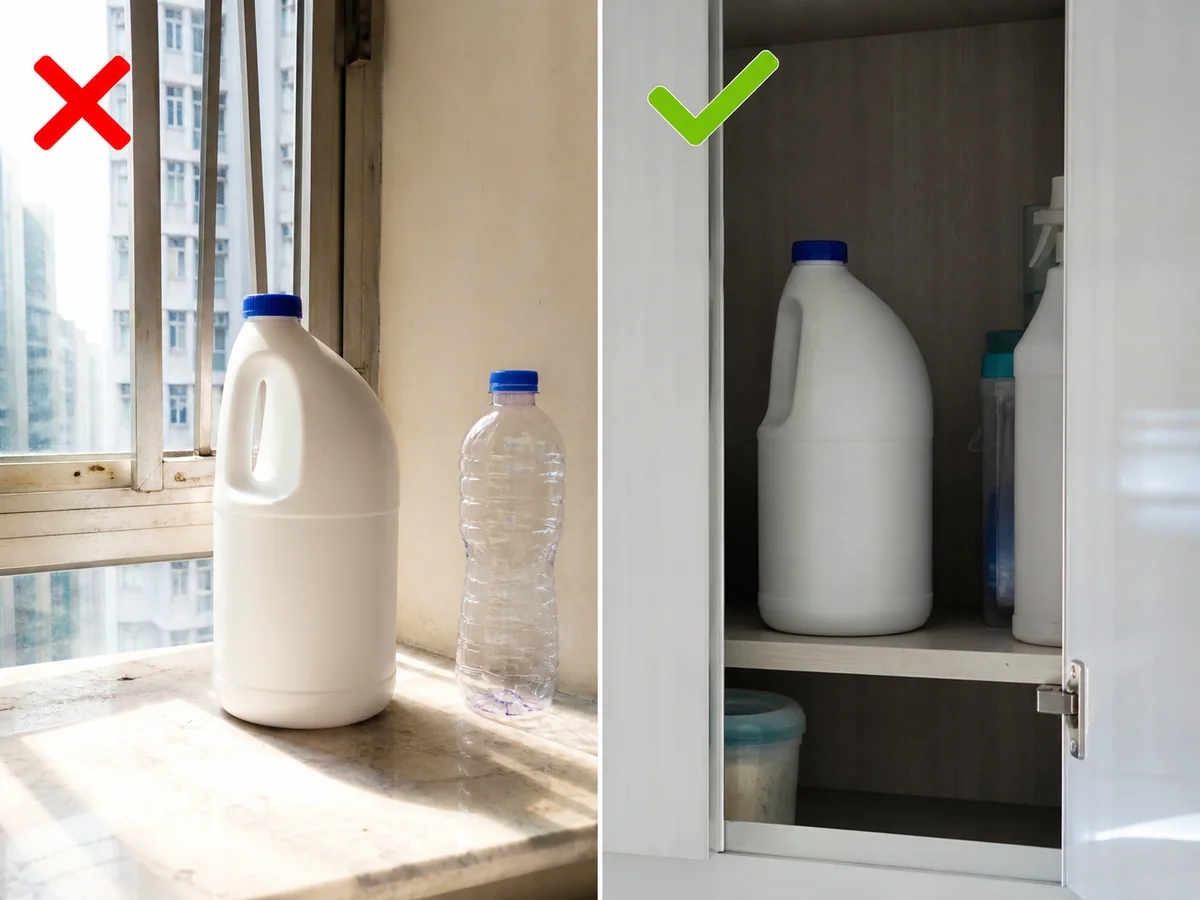
Keep bleach upright in its original labelled container, tightly closed, in a cool shaded place children cannot reach.
View safety lesson →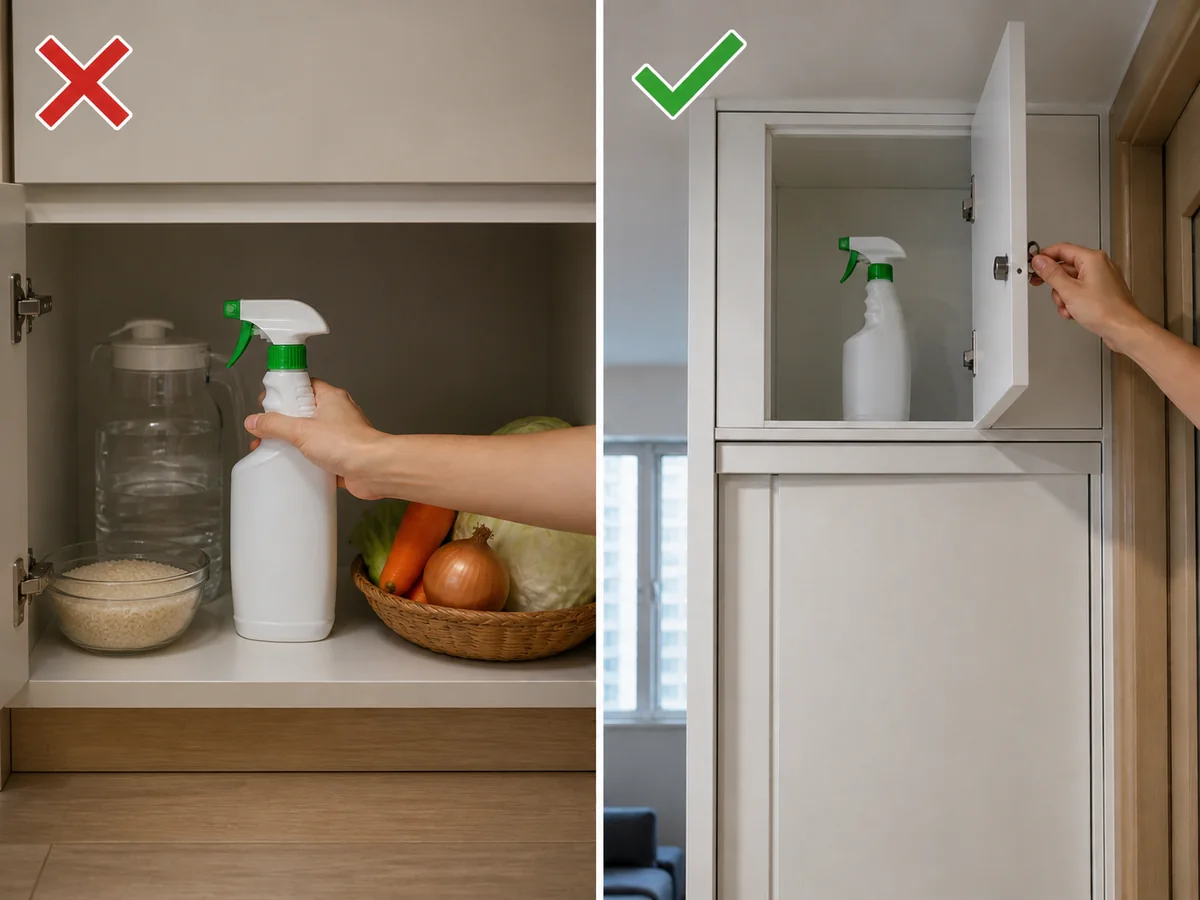
Keep pesticides in original labelled containers, locked out of children's reach, and separate from food, water, medicines, heat, and flame.
View safety lesson →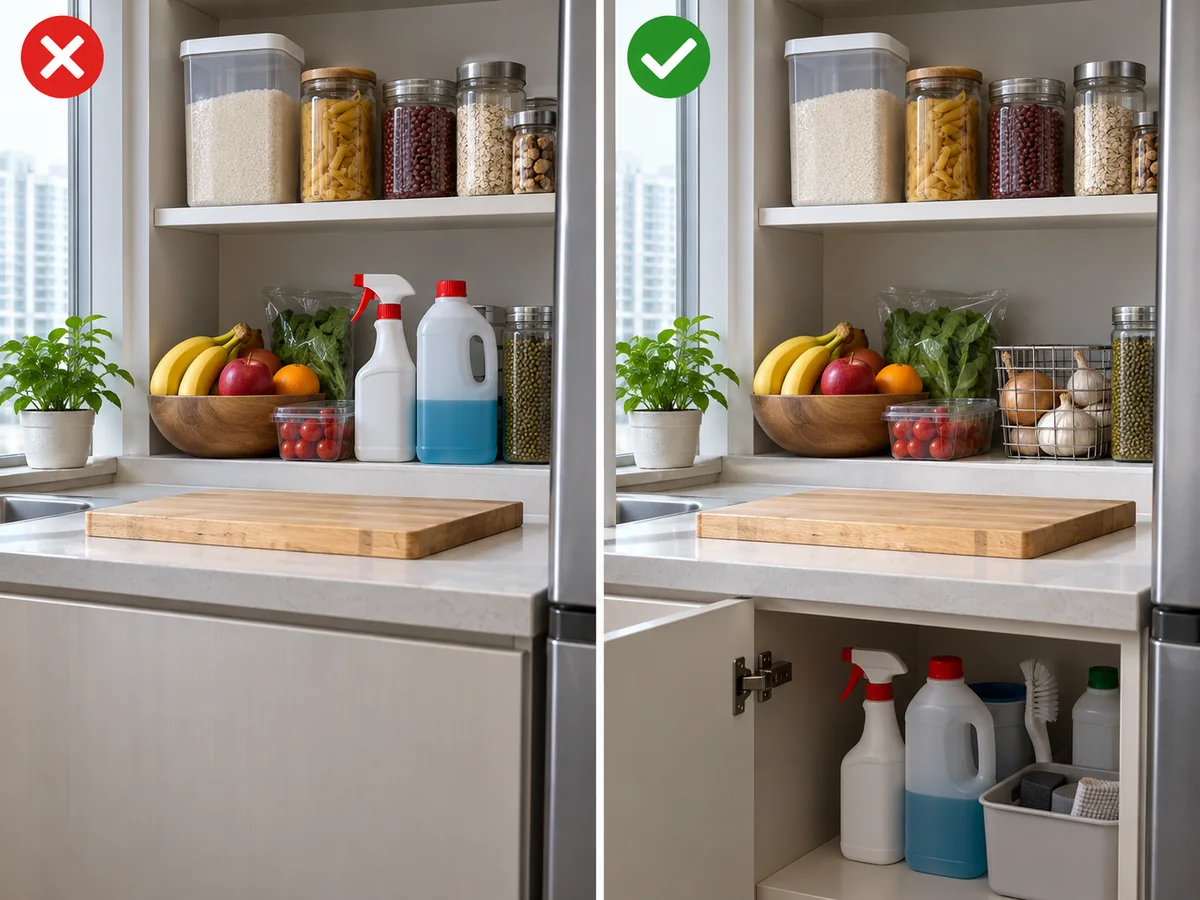
Lock cleaners, bleach, pesticides, and other chemicals together away from all food.
View safety lesson →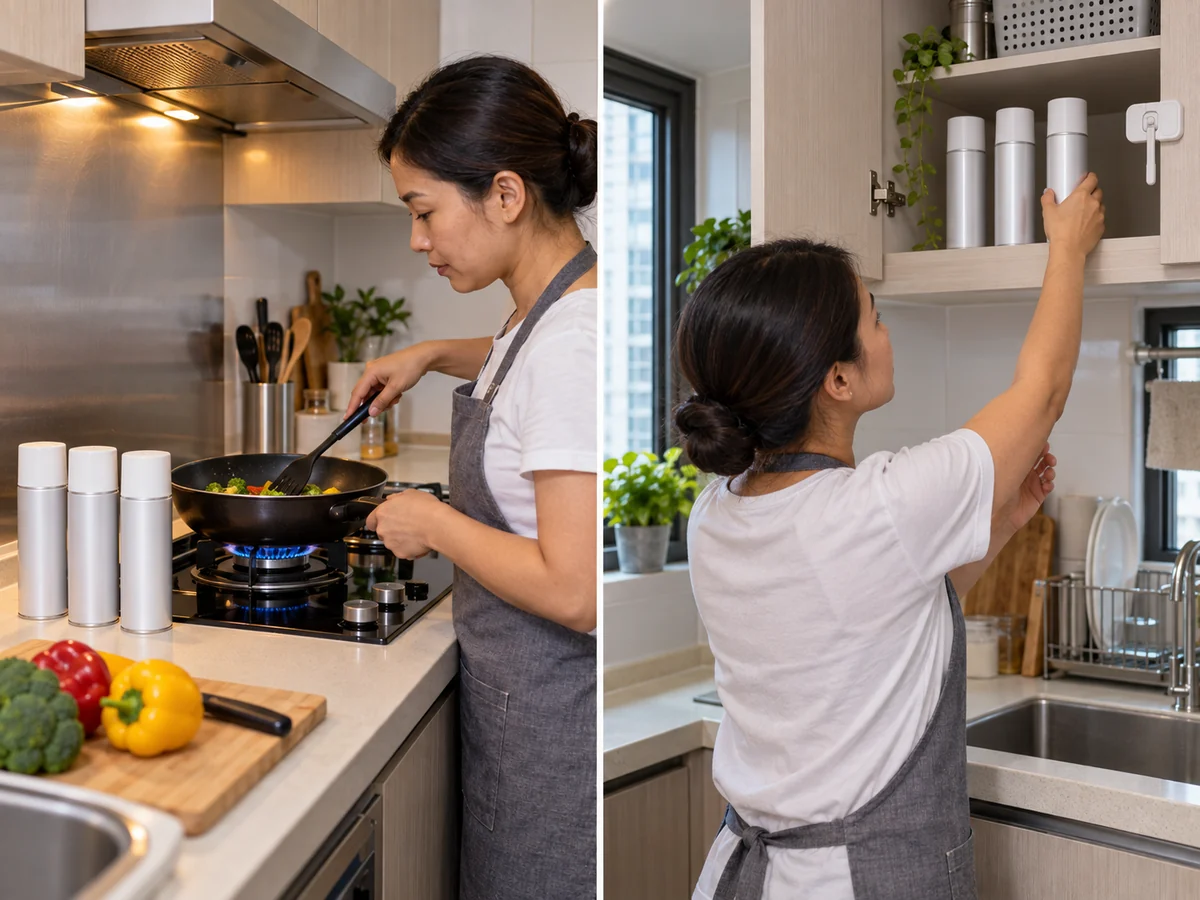
Keep aerosol cans upright in a cool, ventilated, locked place, away from cookers, heaters, flames, and sparks.
View safety lesson →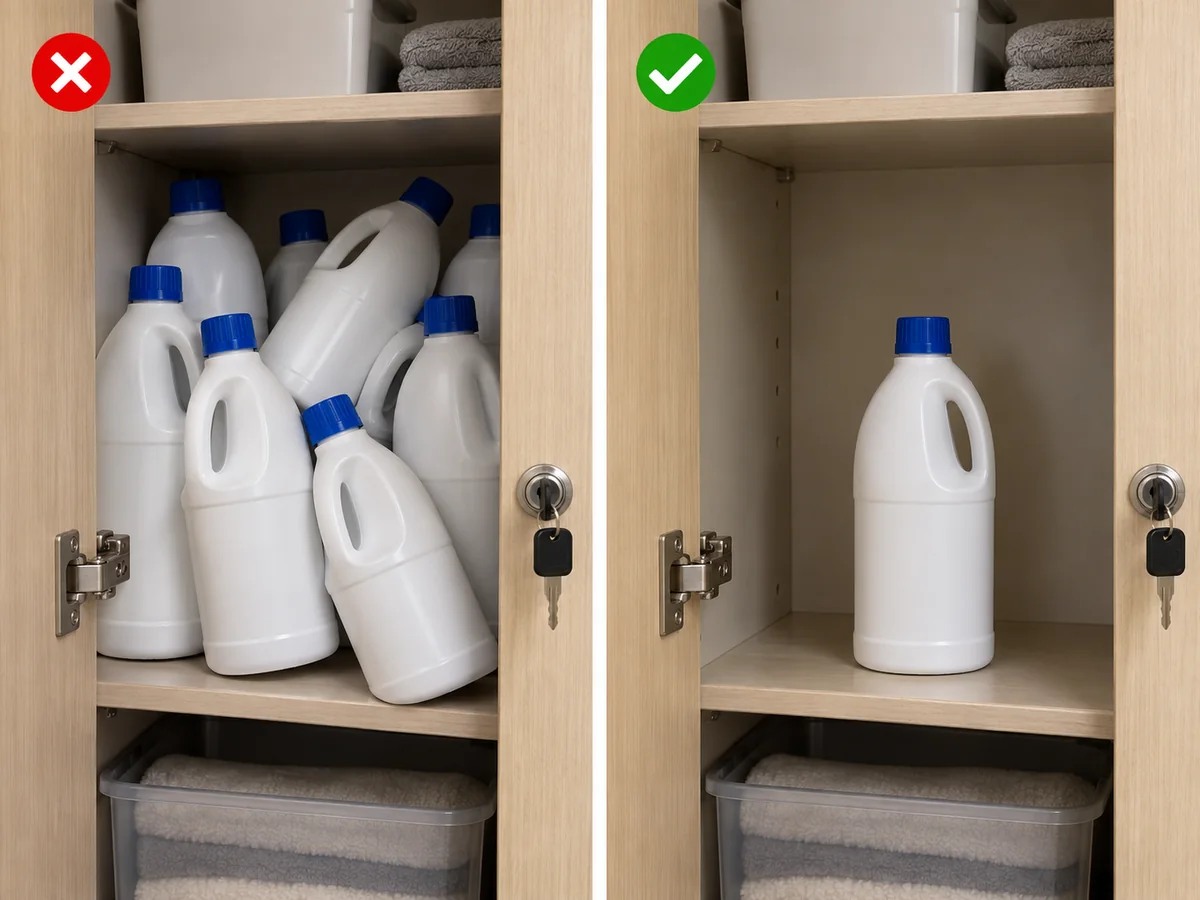
Buy only the household’s short-term need, rotate stock, and inspect it regularly.
View safety lesson →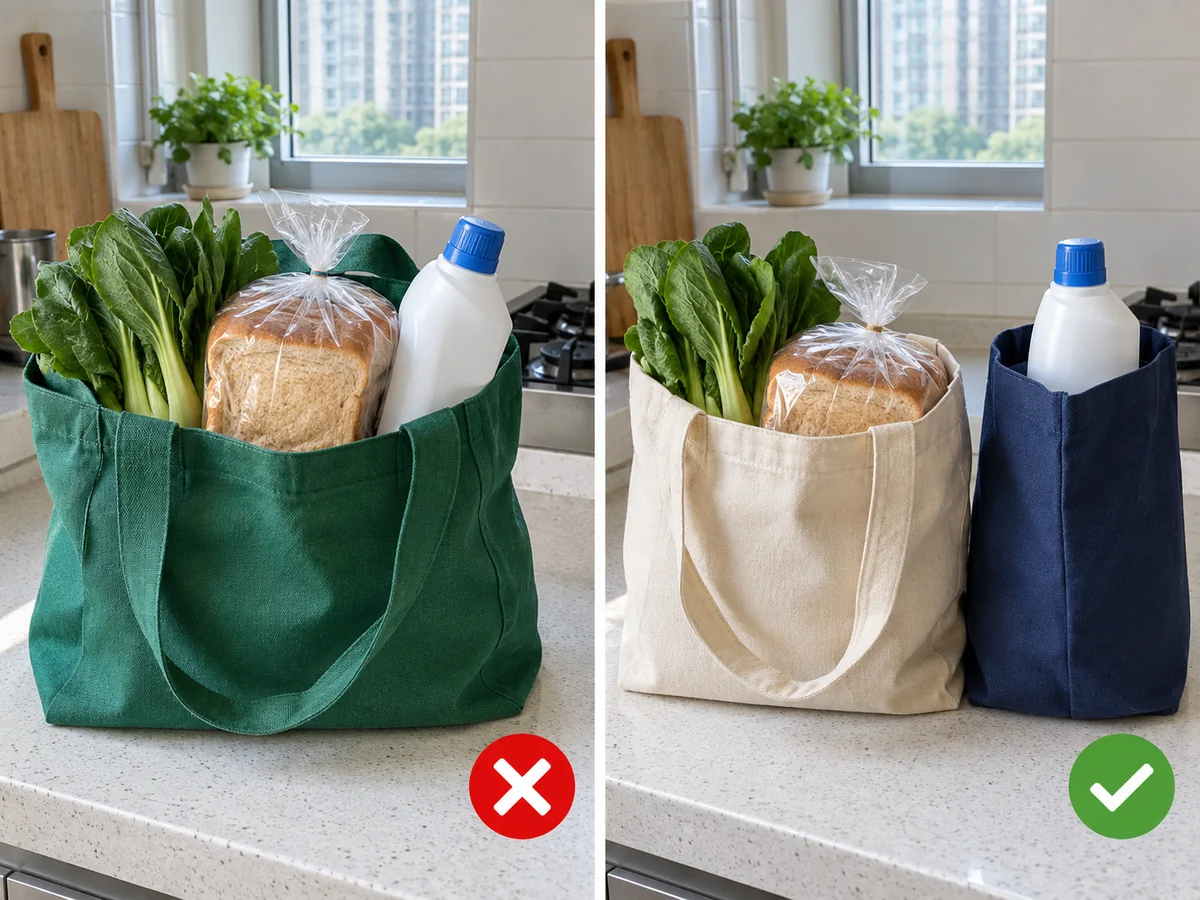
Place cleaners, bleach, and pesticides in bags separate from all food.
View safety lesson →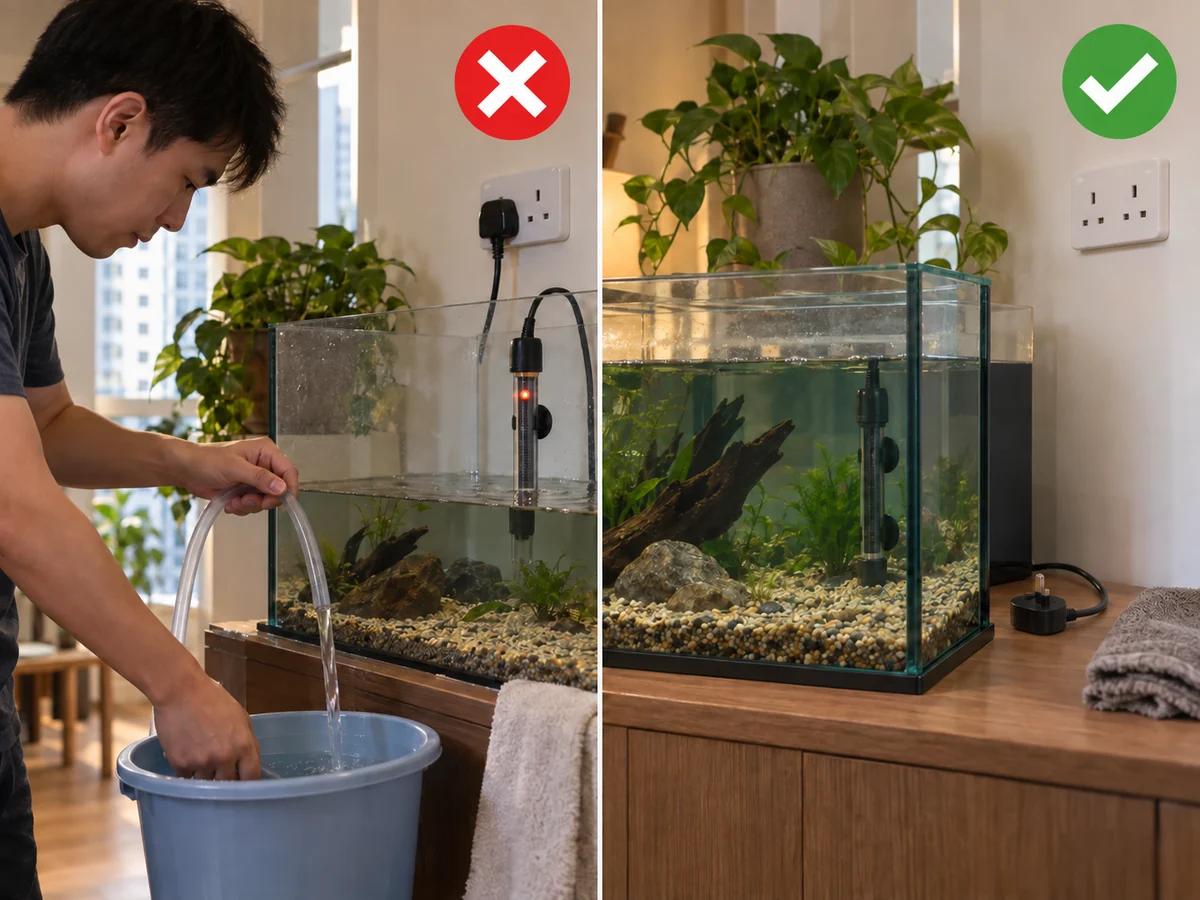
Restore the required water level before powering the heater again. Do not plunge a hot dry heater into water; arrange a check if it overheated.
View safety lesson →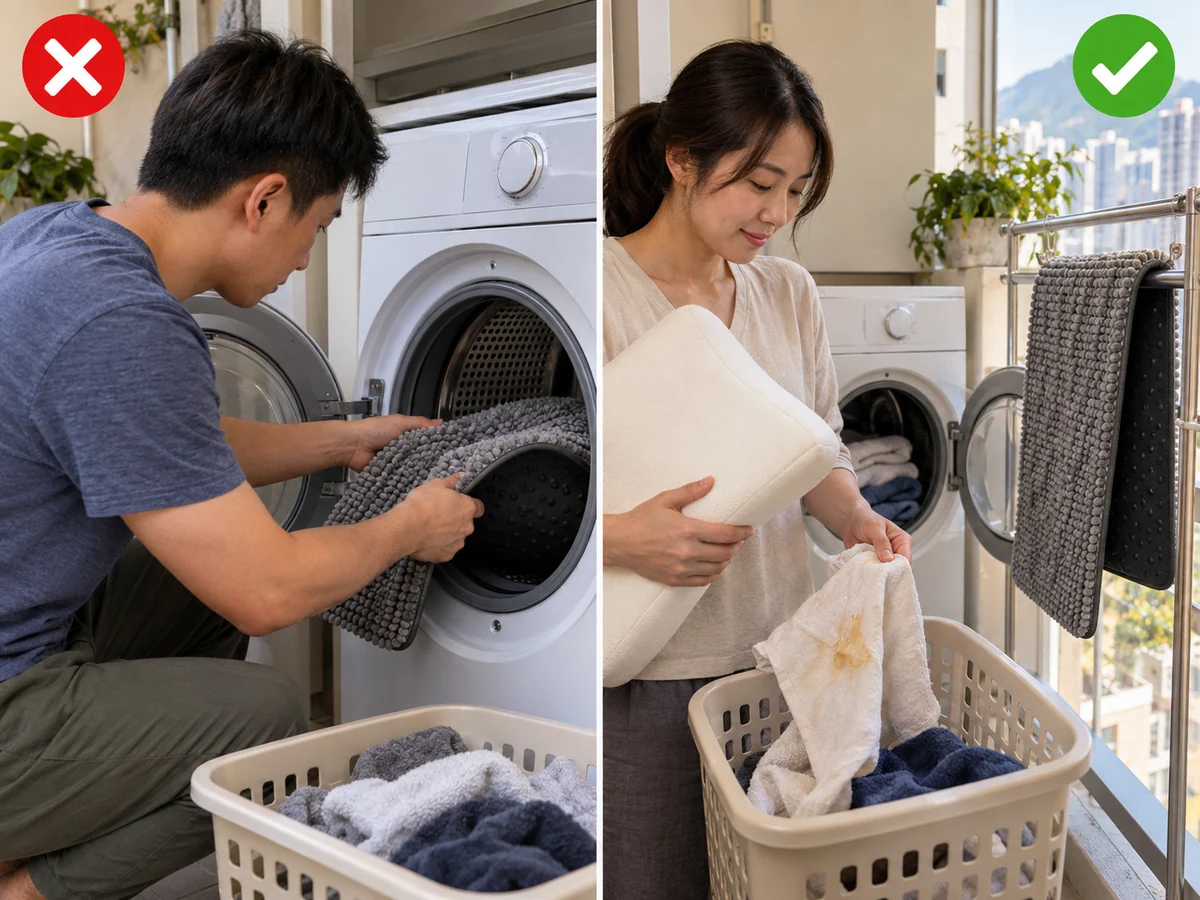
Keep prohibited materials out of the dryer as the garment and machine labels direct. Separate them from the load and choose a permitted drying method.
View safety lesson →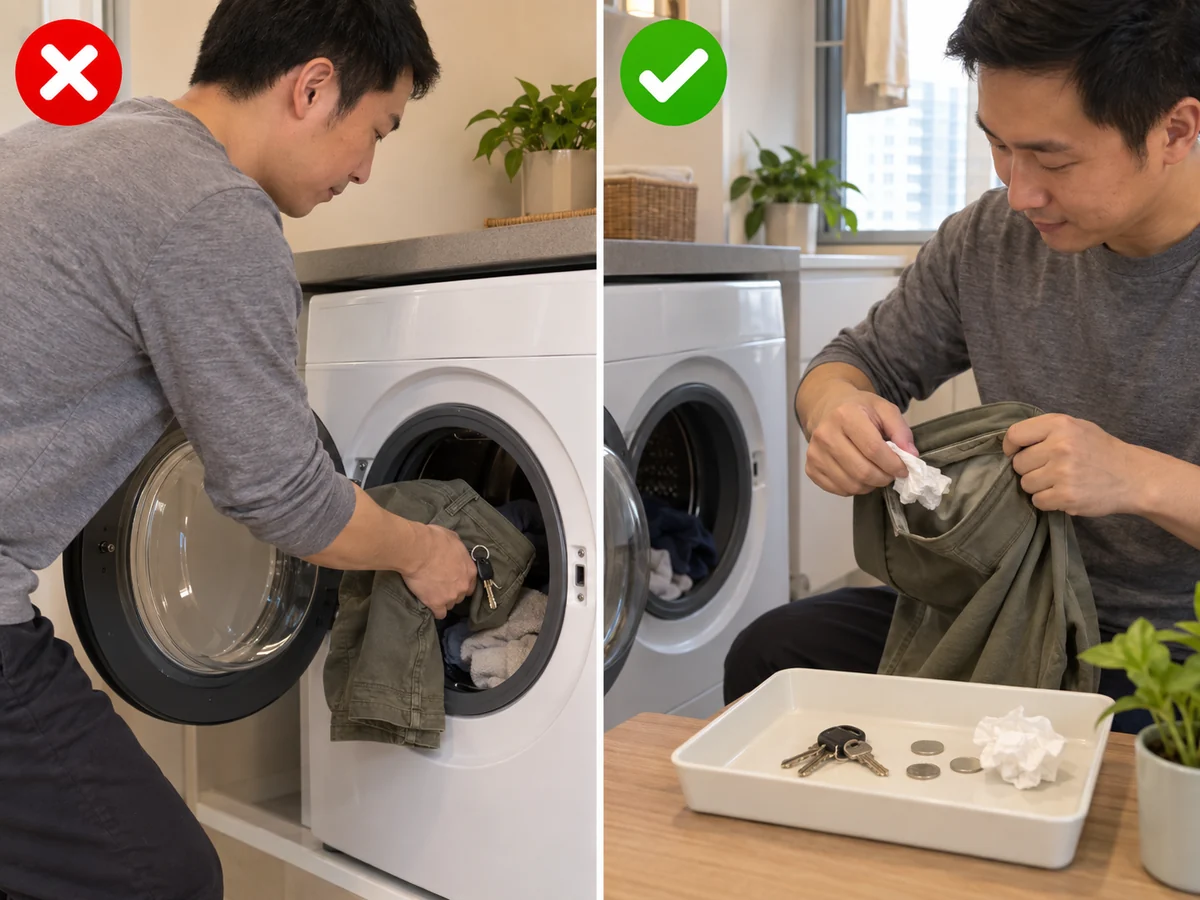
Load clothes only after the pockets are emptied. Put removed items safely away and stop the machine if an object or abnormal noise is noticed.
View safety lesson →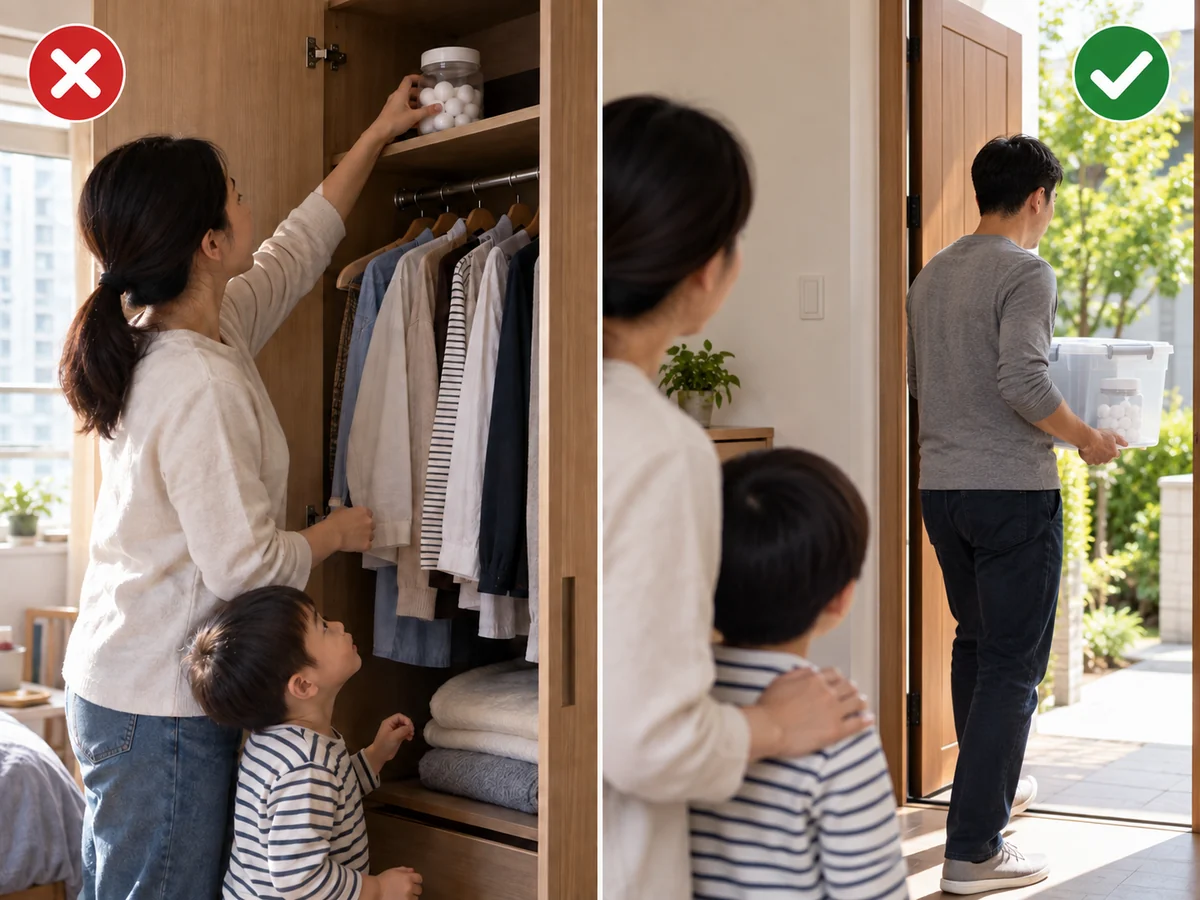
Avoid naphthalene products where a person with G6PD deficiency may be exposed. Keep an unidentified product unused and ask the healthcare team for suitable alternatives.
View safety lesson →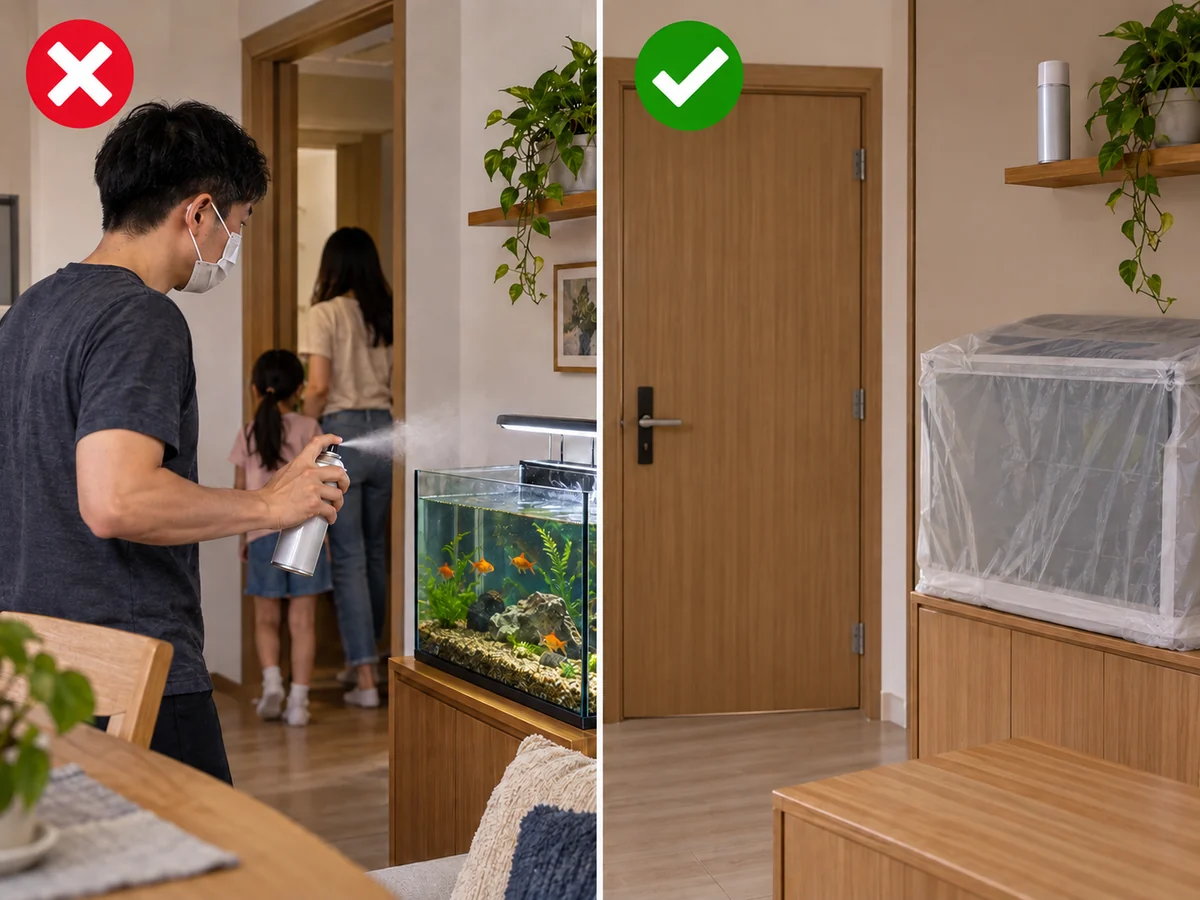
Remove pets and protect aquaria, food and feeding equipment exactly as the label directs. Do not spray if these protections cannot be completed.
View safety lesson →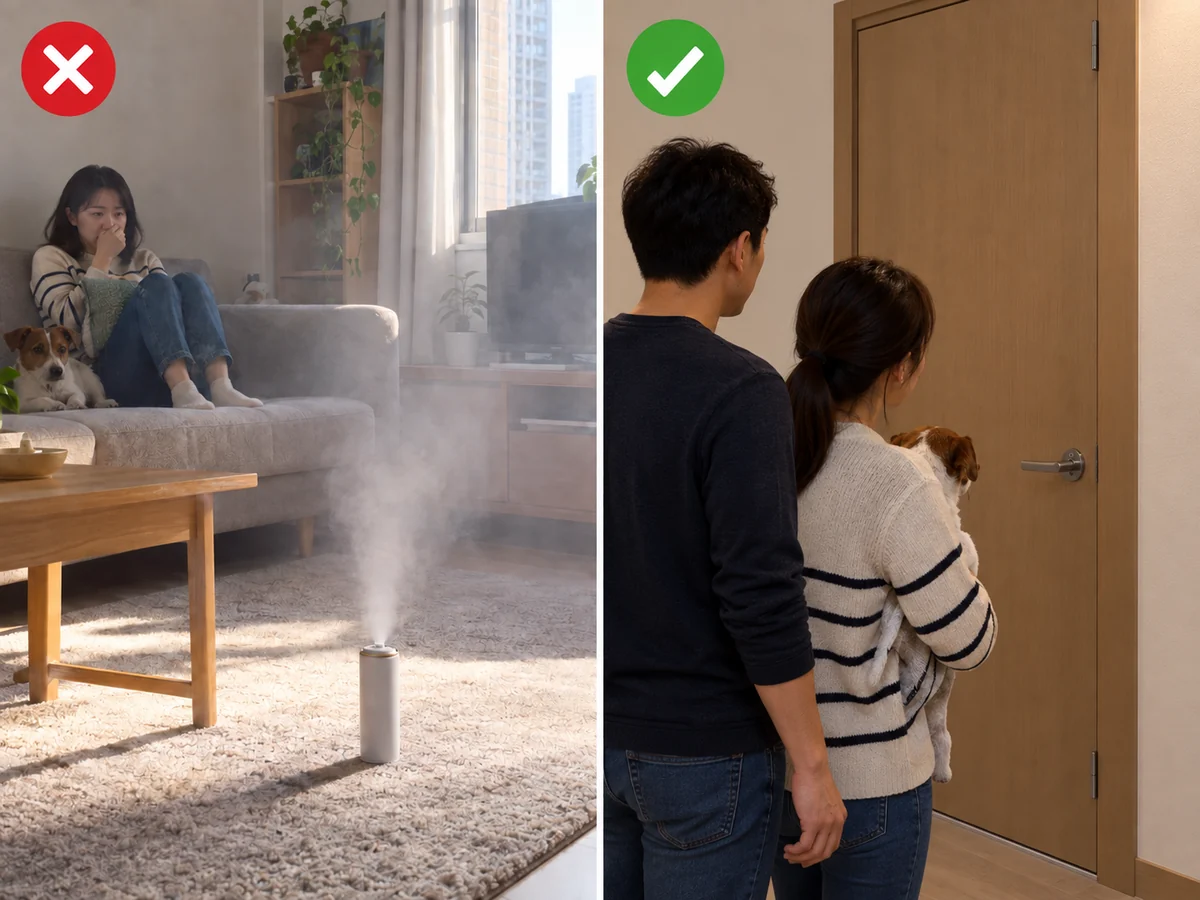
Remove all people and animals before treatment and keep them out for the labelled period. Ventilate as directed before re-entry; never shorten the waiting period yourself.
View safety lesson →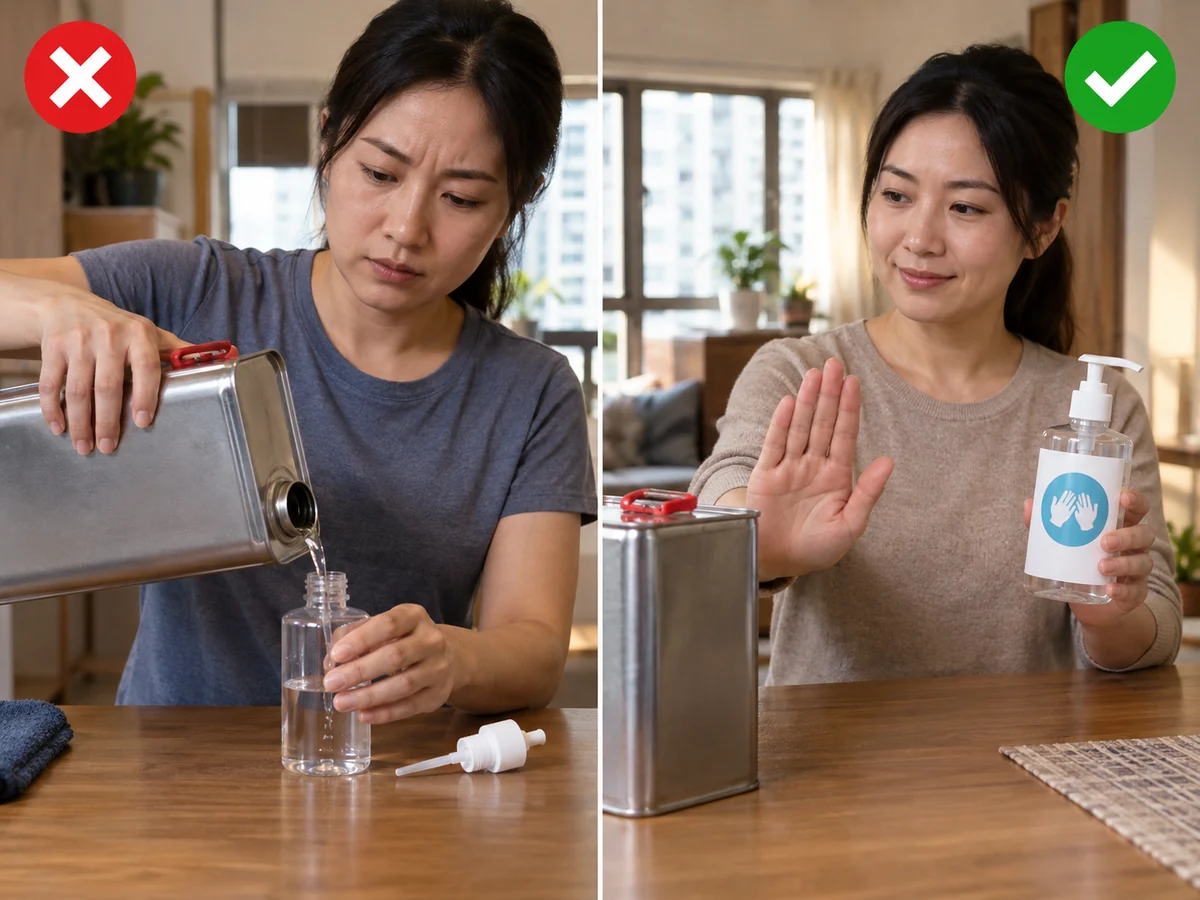
Use a properly labelled product intended for hands, never industrial alcohol. Keep unclear products out of use and ask the supplier for identification.
View safety lesson →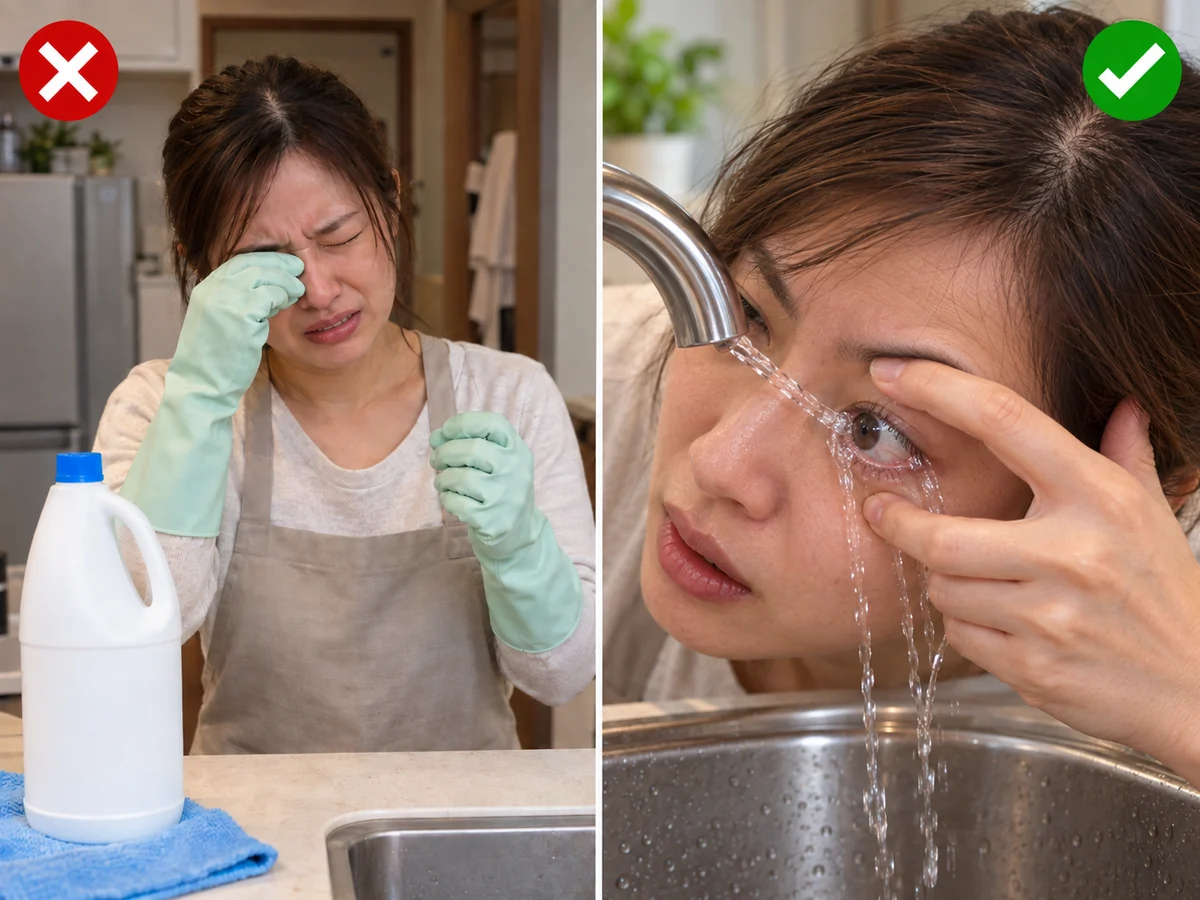
Immediately rinse a splashed eye with clean water for at least 15 minutes and seek prompt medical care. Do not rub or neutralise it; provide the product information to medical staff.
View safety lesson →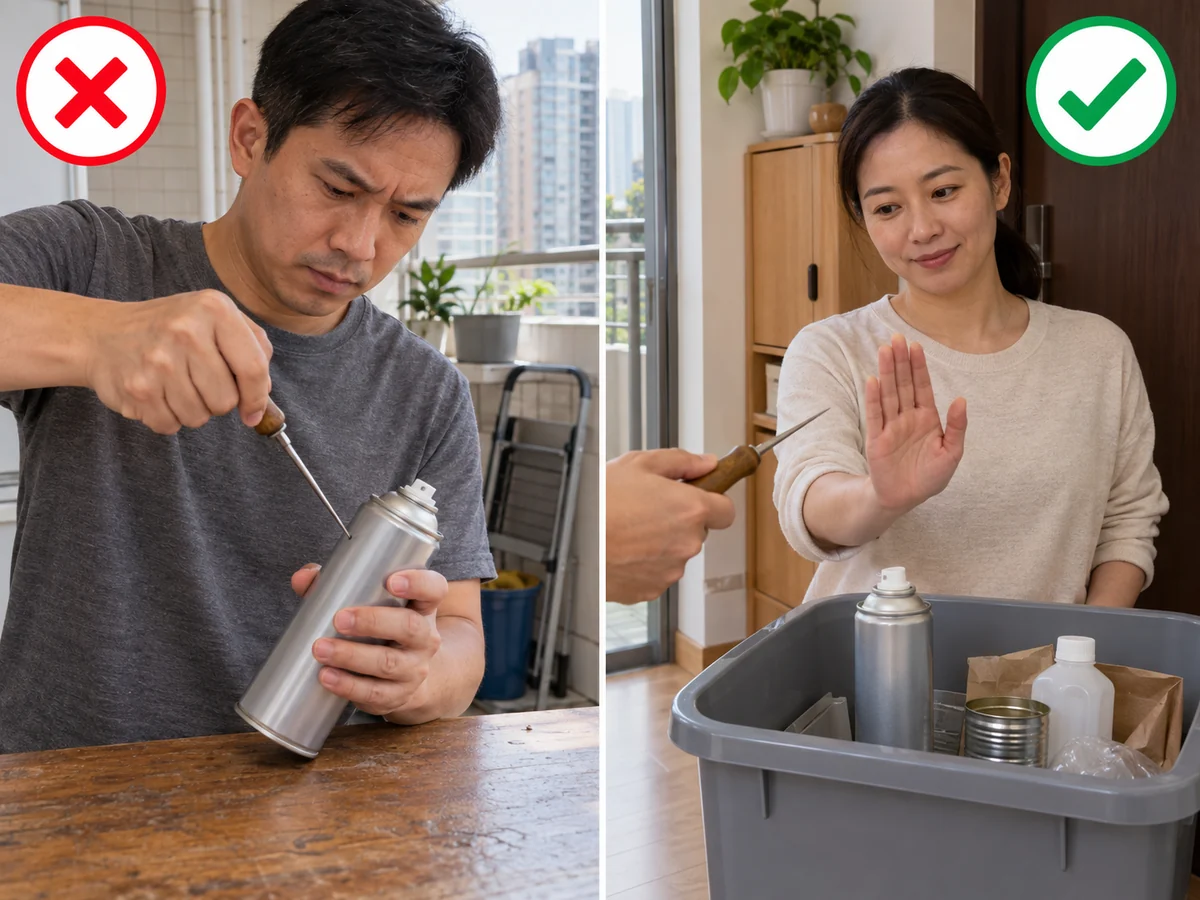
Keep aerosol cans intact; never puncture, crush or burn them. Follow the local disposal arrangement and keep them away from heat while waiting.
View safety lesson →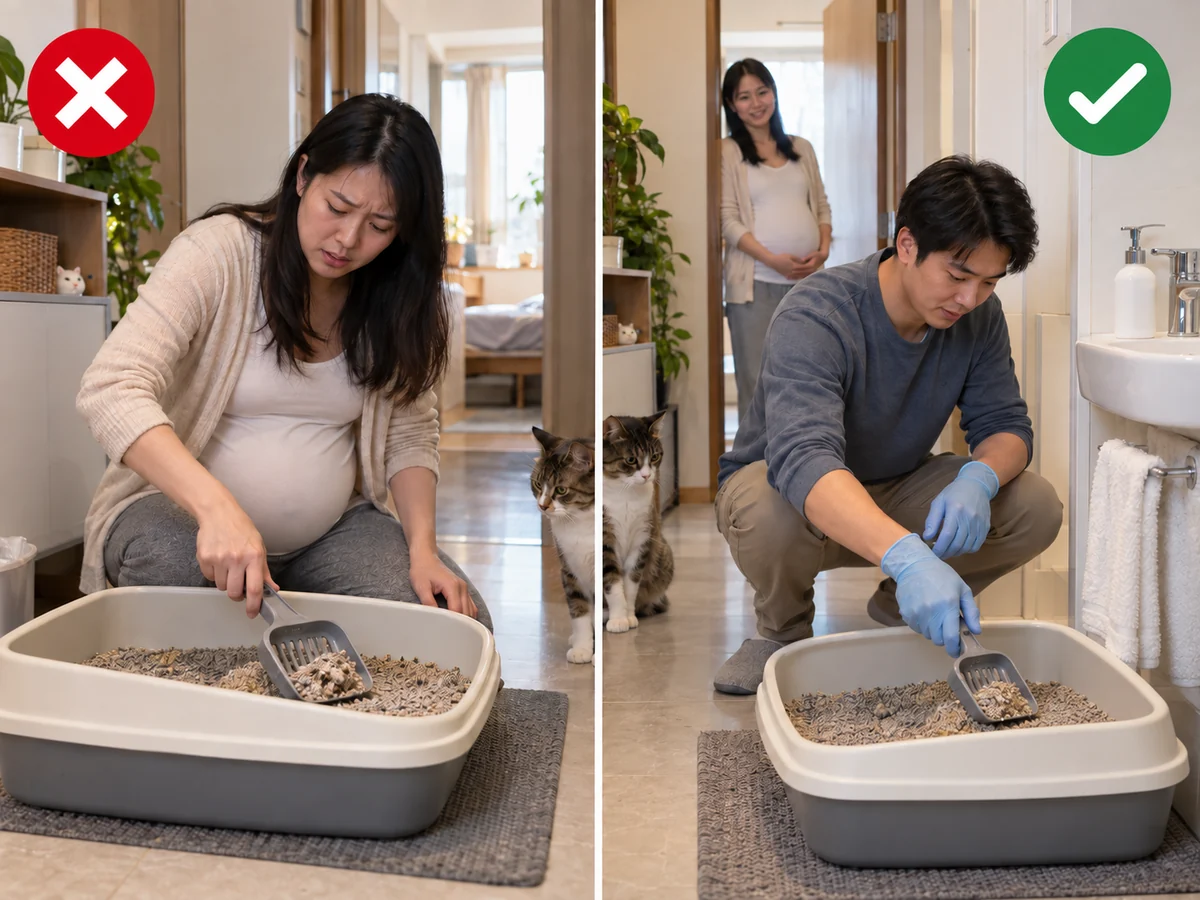
Clean litter daily, use gloves and wash hands with soap afterwards. If a pregnant person cannot avoid the task, seek healthcare advice on precautions.
View safety lesson →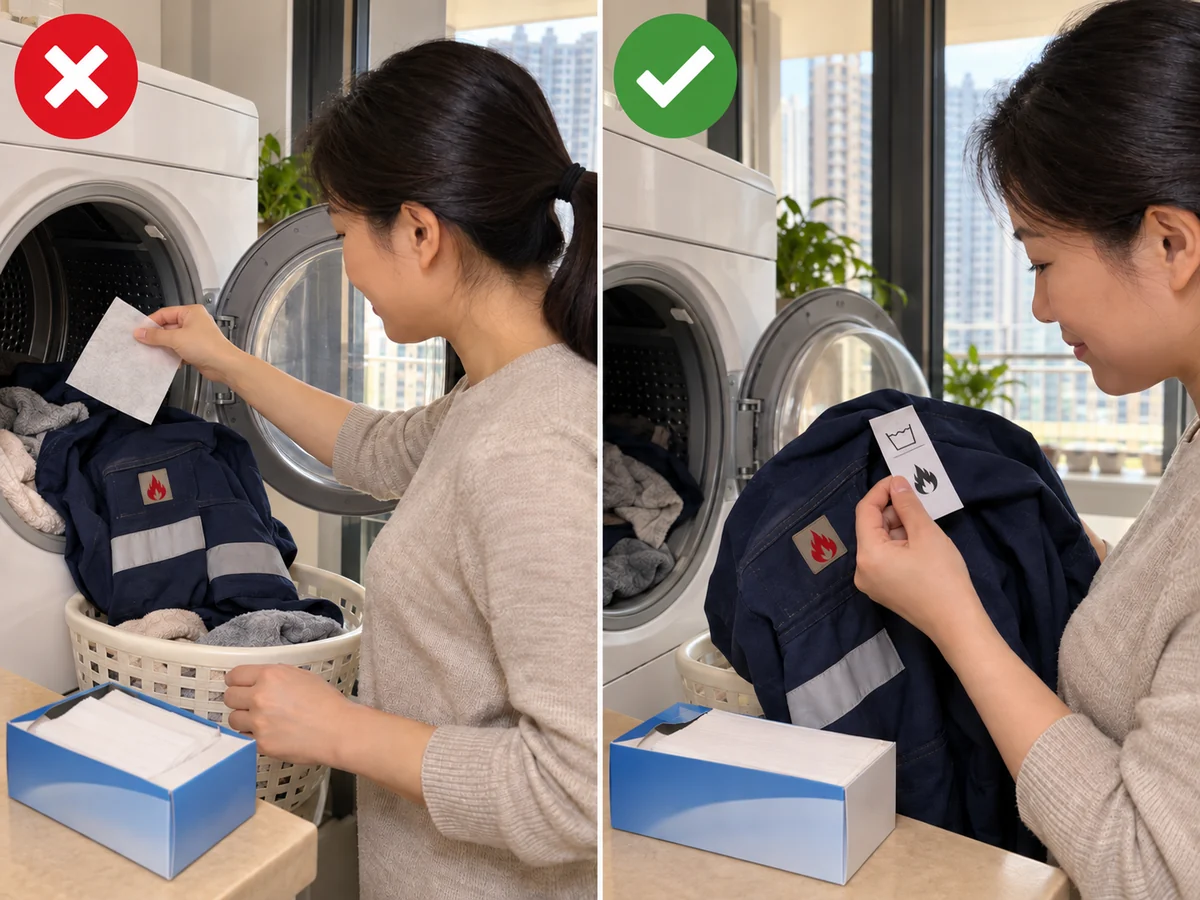
Do not add dryer sheets to flame-retardant clothing; follow the garment's care label. If an additive is unclear, leave it out and ask the employer or manufacturer; do not assume lost protection is restored.
View safety lesson →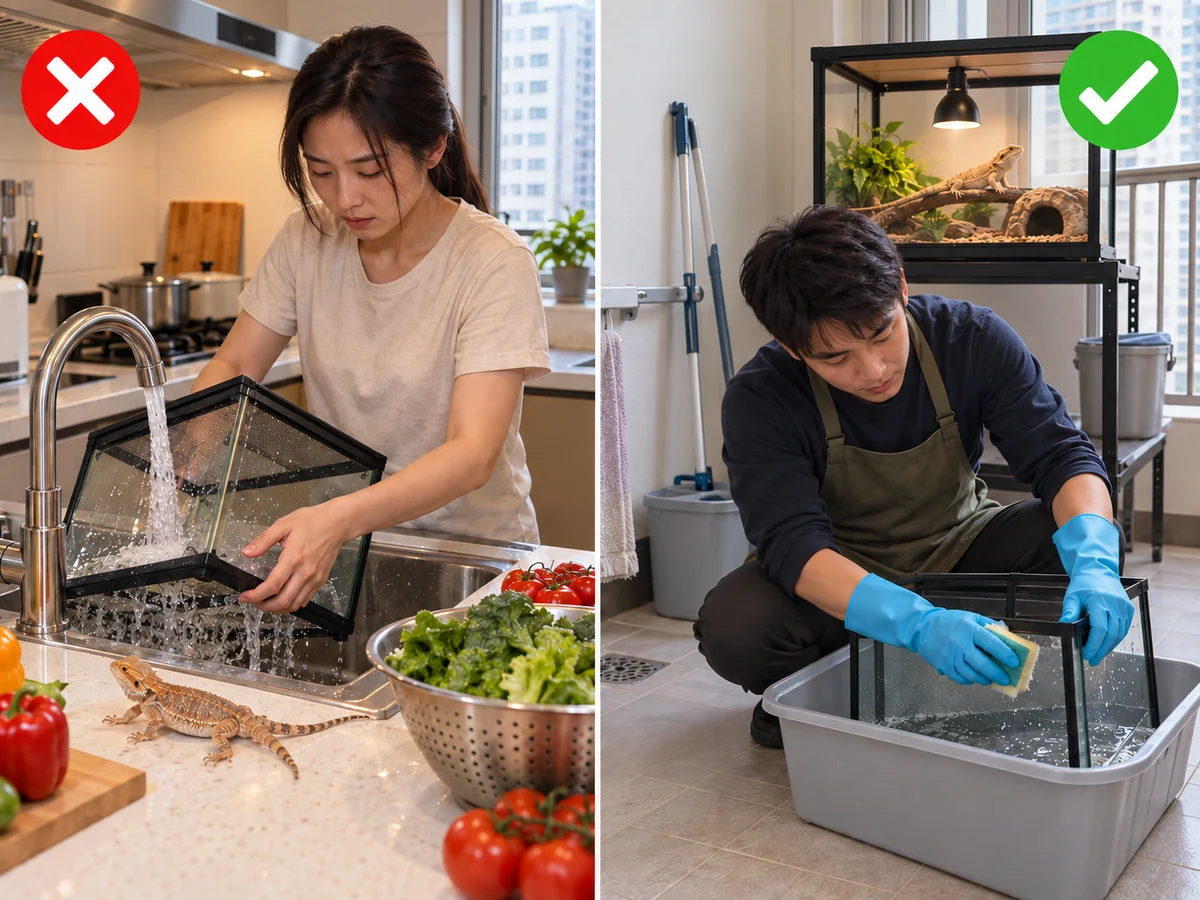
Keep reptiles and their tanks out of the kitchen and never wash tanks in the food sink. Wash hands with soap after touching the animal, equipment or tank water.
View safety lesson →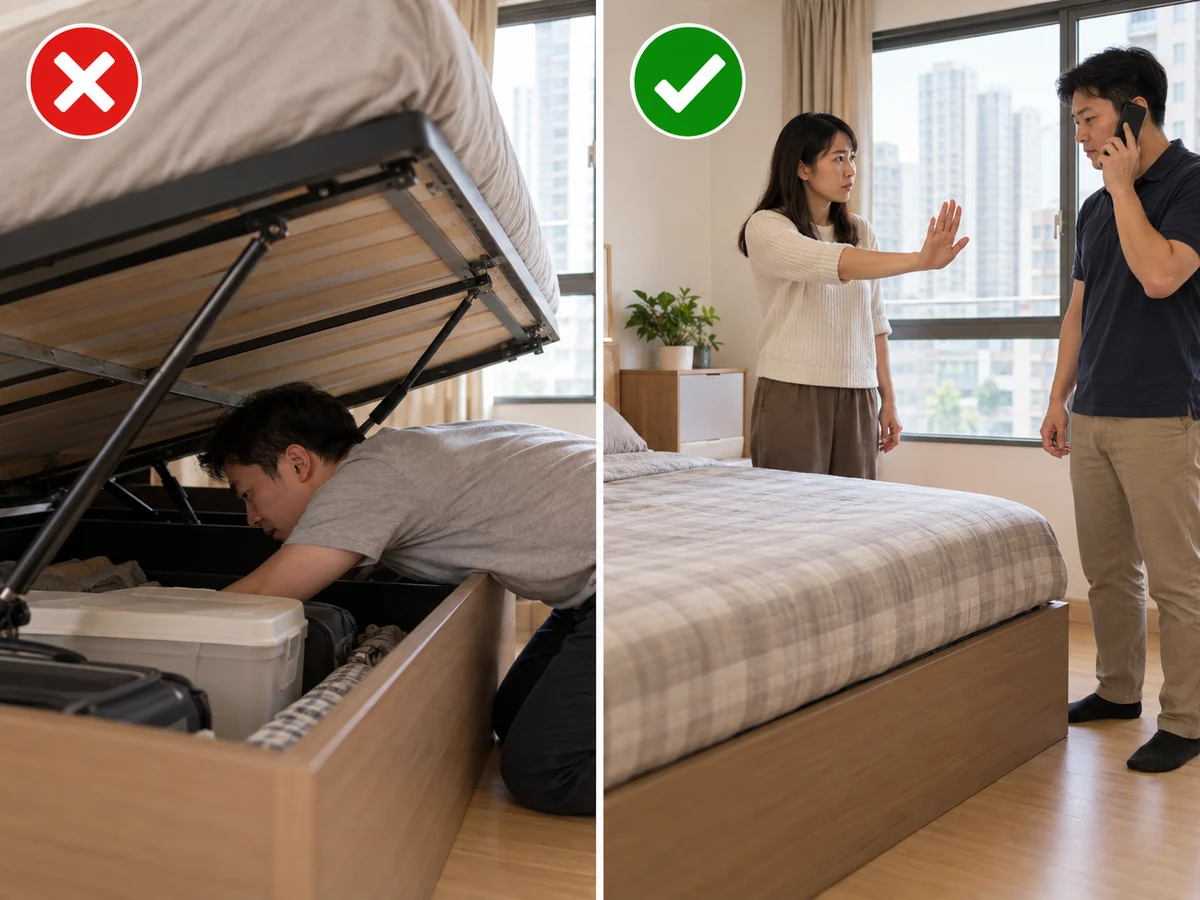
Do not operate a hydraulic storage bed alone or enter underneath without the specified secure support. Stop if the platform cannot be held safely and arrange repair.
View safety lesson →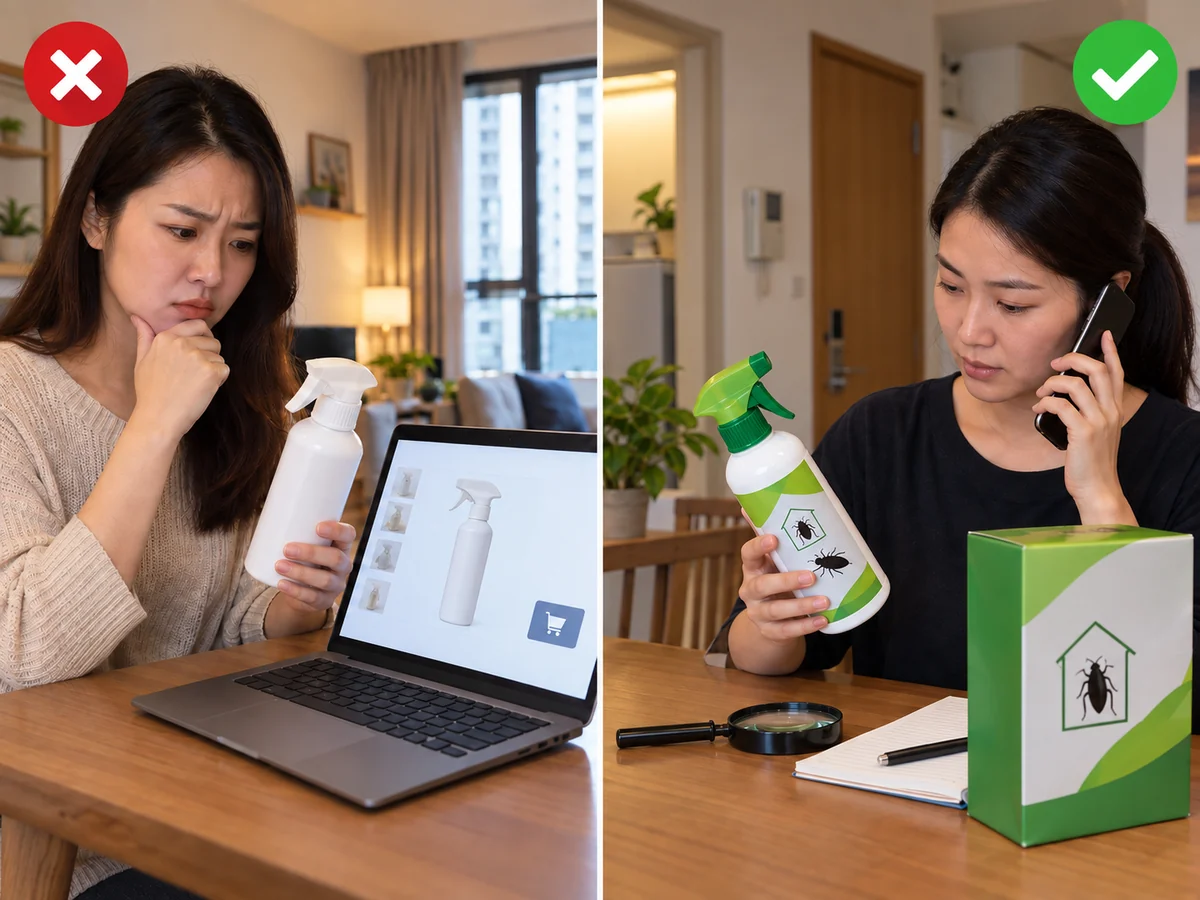
Before buying, check the Hong Kong pesticide registration number, intact packaging and household-use label; reject unclear products. Ask the employer or supplier to clarify missing information; do not substitute agricultural or industrial products.
View safety lesson →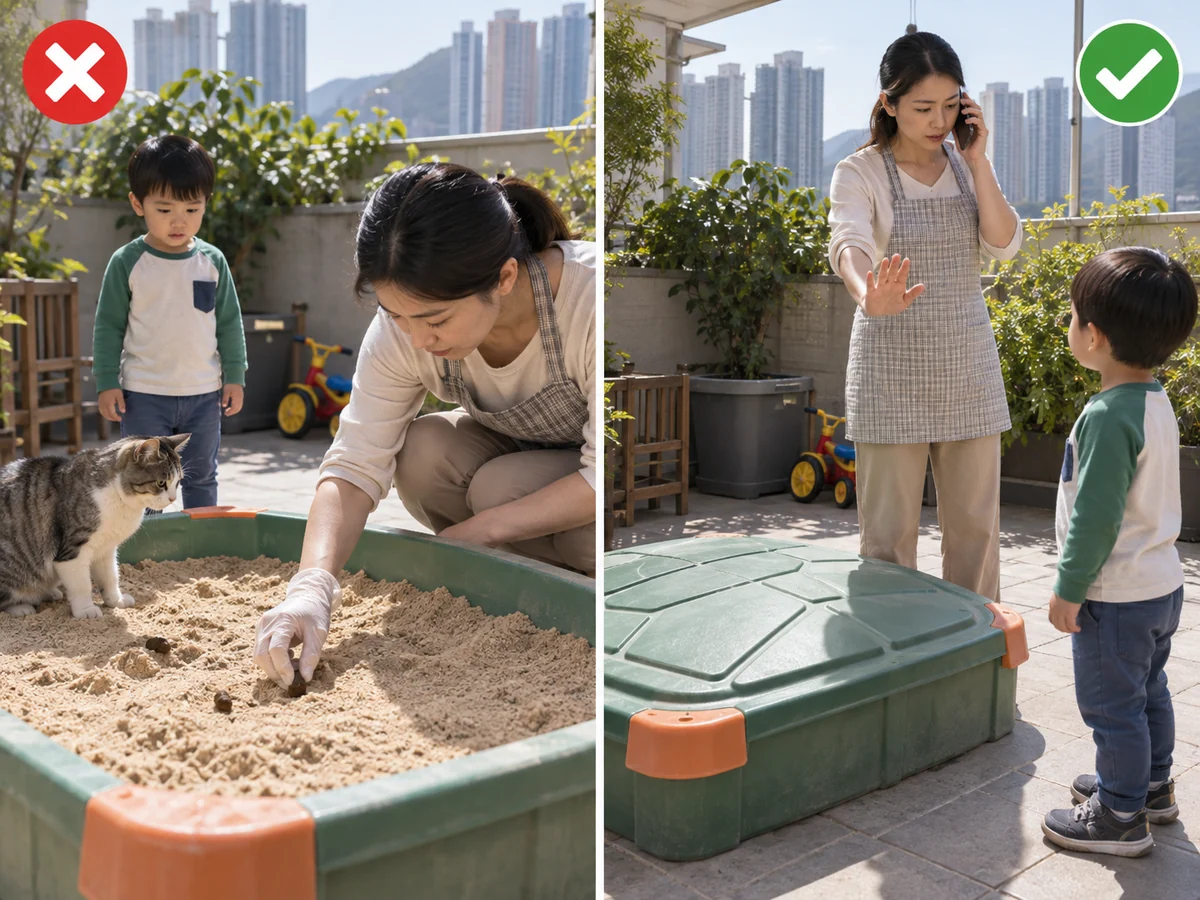
Cover a child's sandbox when unused to keep cats out; stop play and tell the employer if faecal contamination is found. Picking out visible faeces does not establish cleanliness; keep it out of use and wash hands with soap after sand contact.
View safety lesson →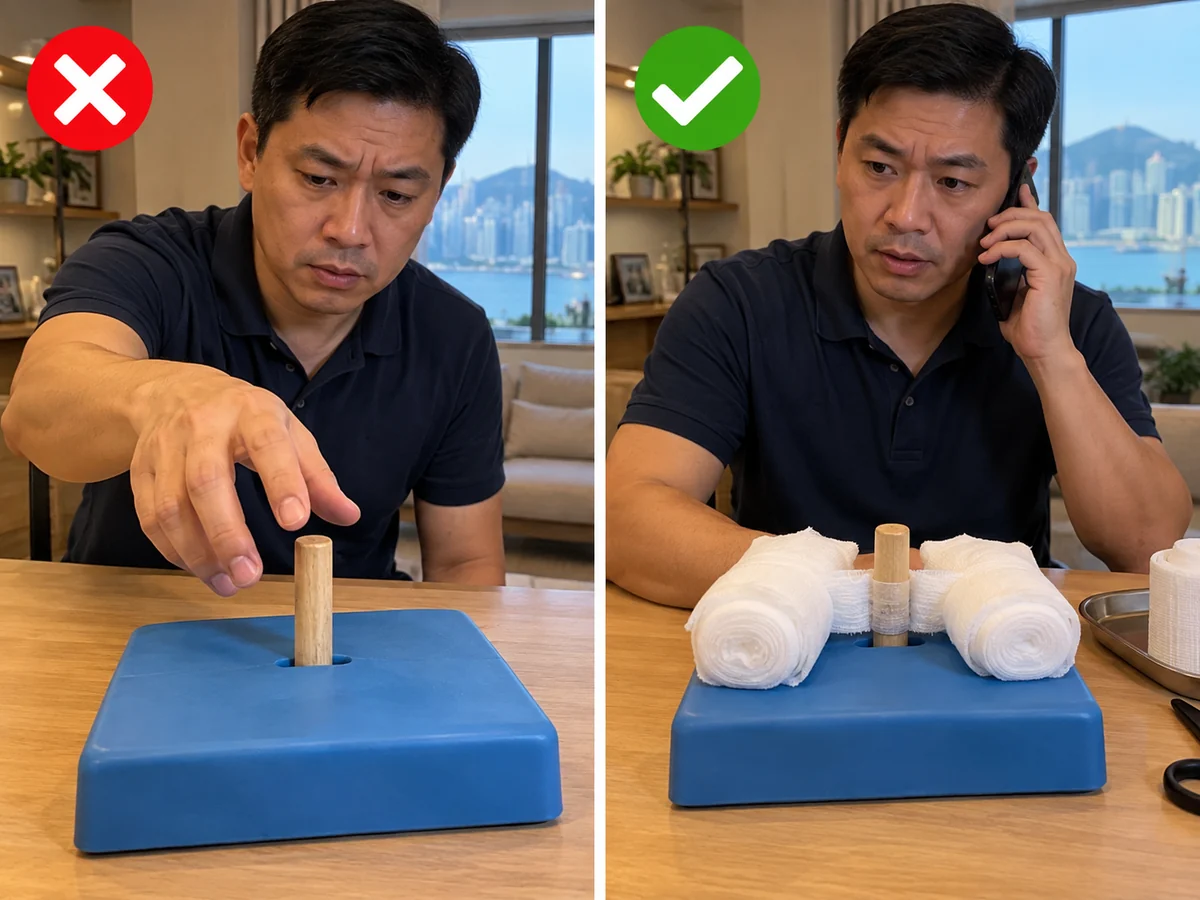
Leave the object in place; protect around it with dressings and apply pressure at the wound edges as instructed. Seek medical help and call 999 for severe bleeding; never push or pull the object.
View safety lesson →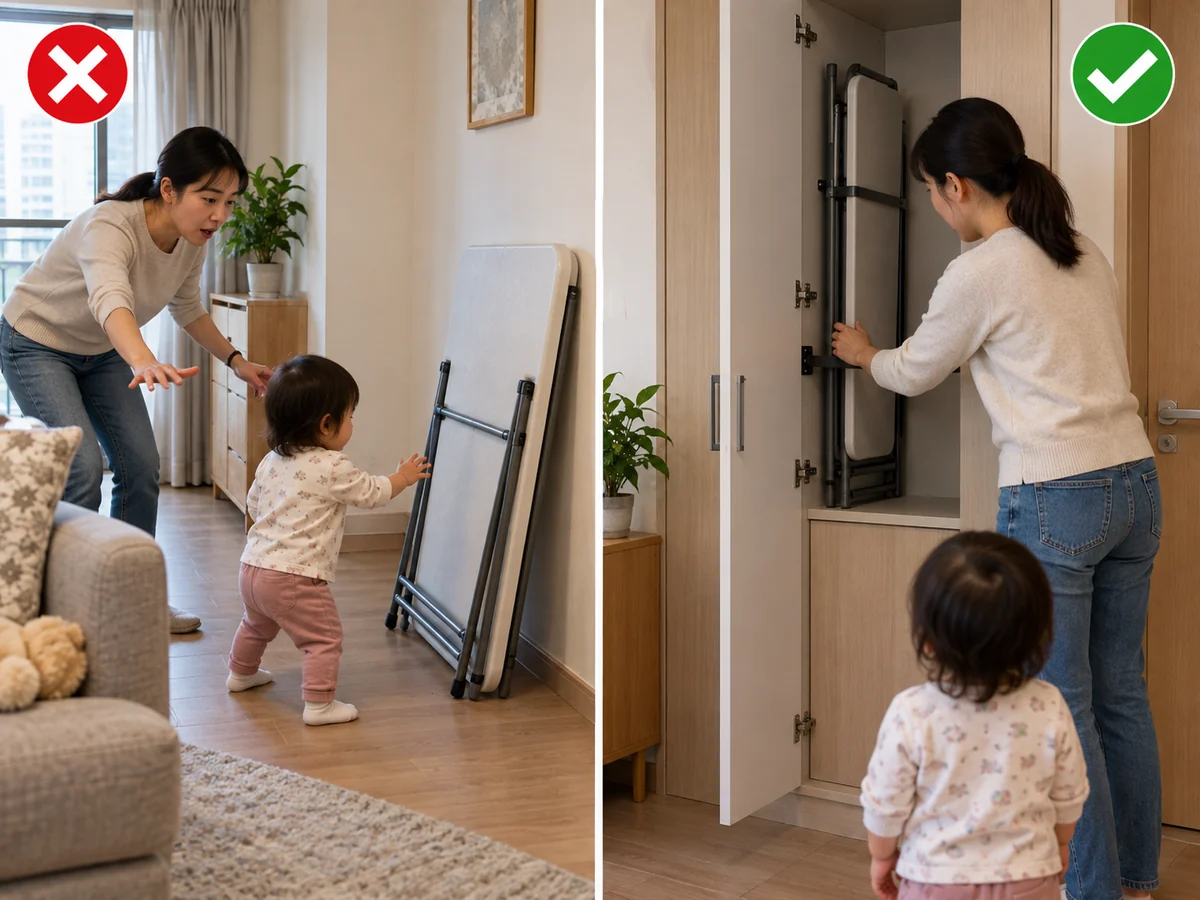
Secure the folded table as instructed so children cannot topple it; never let children crawl into or play with its leg frame. Do not leave it merely leaning against a wall; if it cannot be secured, arrange child-inaccessible storage with the employer.
View safety lesson →