Kitchen cleaning
How to Clean Stainless-steel Pots and Pans
Identify uncoated steel before cleaning burnt food and joints.
Overview
Turn off heat and let the pan cool naturally; confirm an uncoated stainless-steel cooking surface. Lift food residue, then add warm water and detergent to the cooled pan and soften stuck food briefly as directed.
Tools needed
- Mild dish detergent
- Non-scratch sponge
- Soft cloth
- Wooden or silicone scraper
Cleaning steps
Confirm the pan is cool
Turn off heat and let the pan cool naturally; confirm an uncoated stainless-steel cooking surface.
Soften stuck food
Lift food residue, then add warm water and detergent to the cooled pan and soften stuck food briefly as directed.
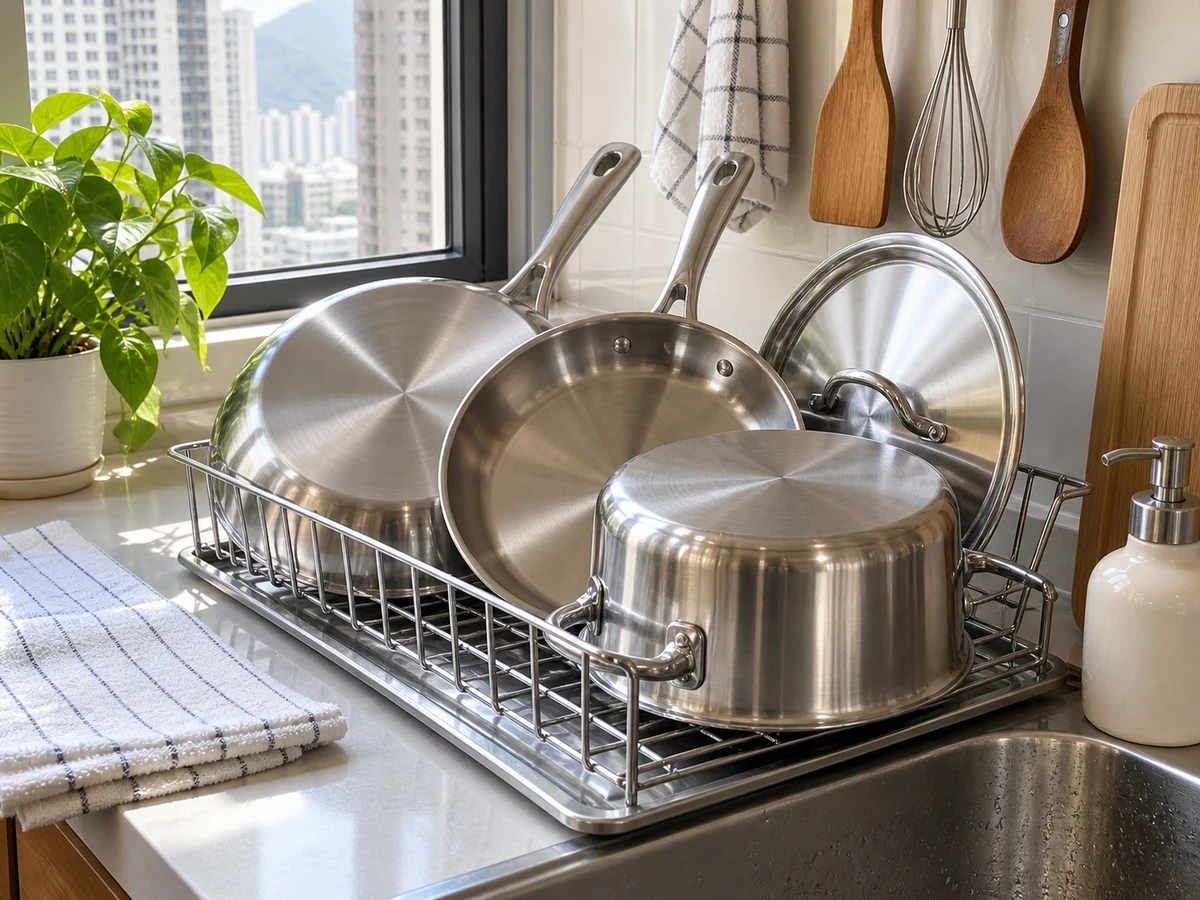
Clean along the grain
Wash gently along the grain with a non-scratch sponge; use only maker-approved stainless-steel cleaner for stubborn marks, without improvised mixtures.
Dry and inspect handles
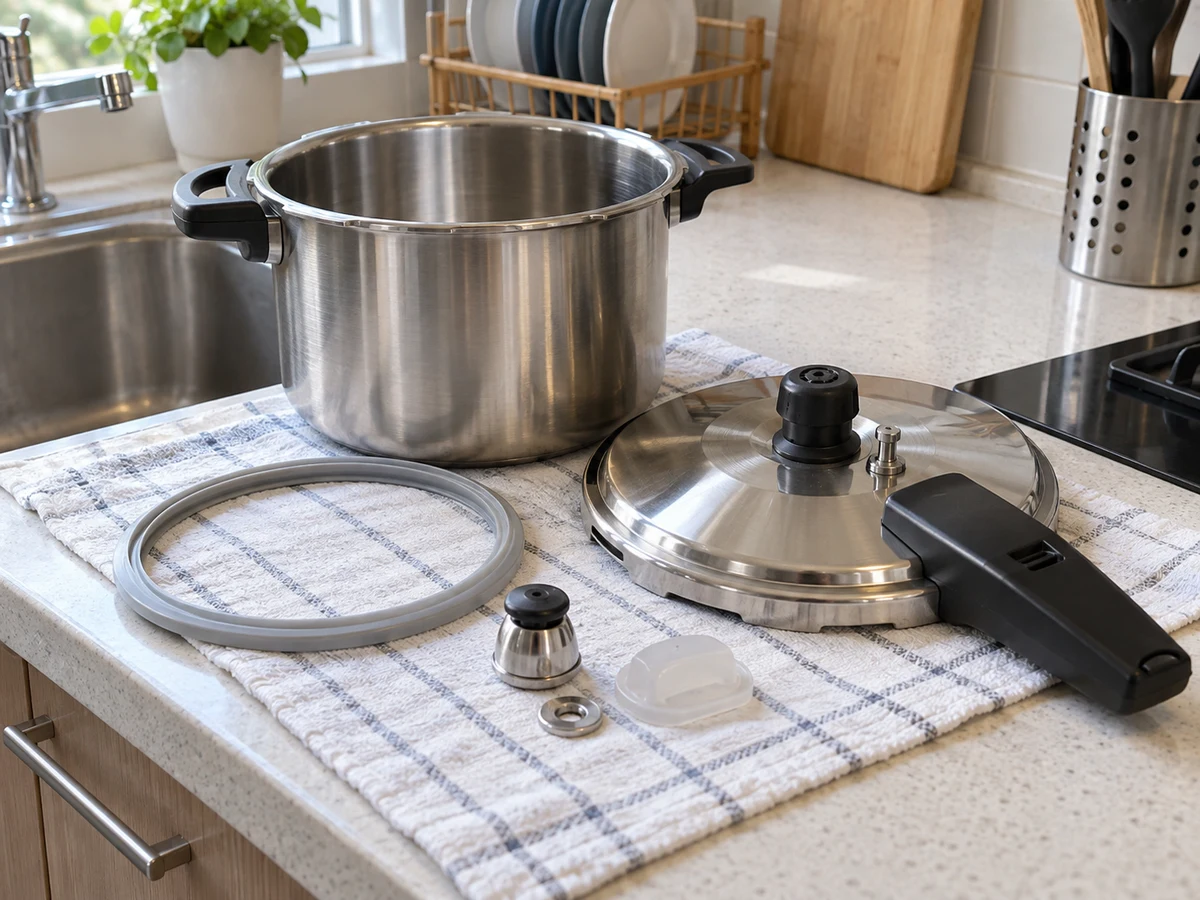
Rinse and dry rims, handle joints and bases; check loose handles, warping and sharp edges before storage.
Common mistakes
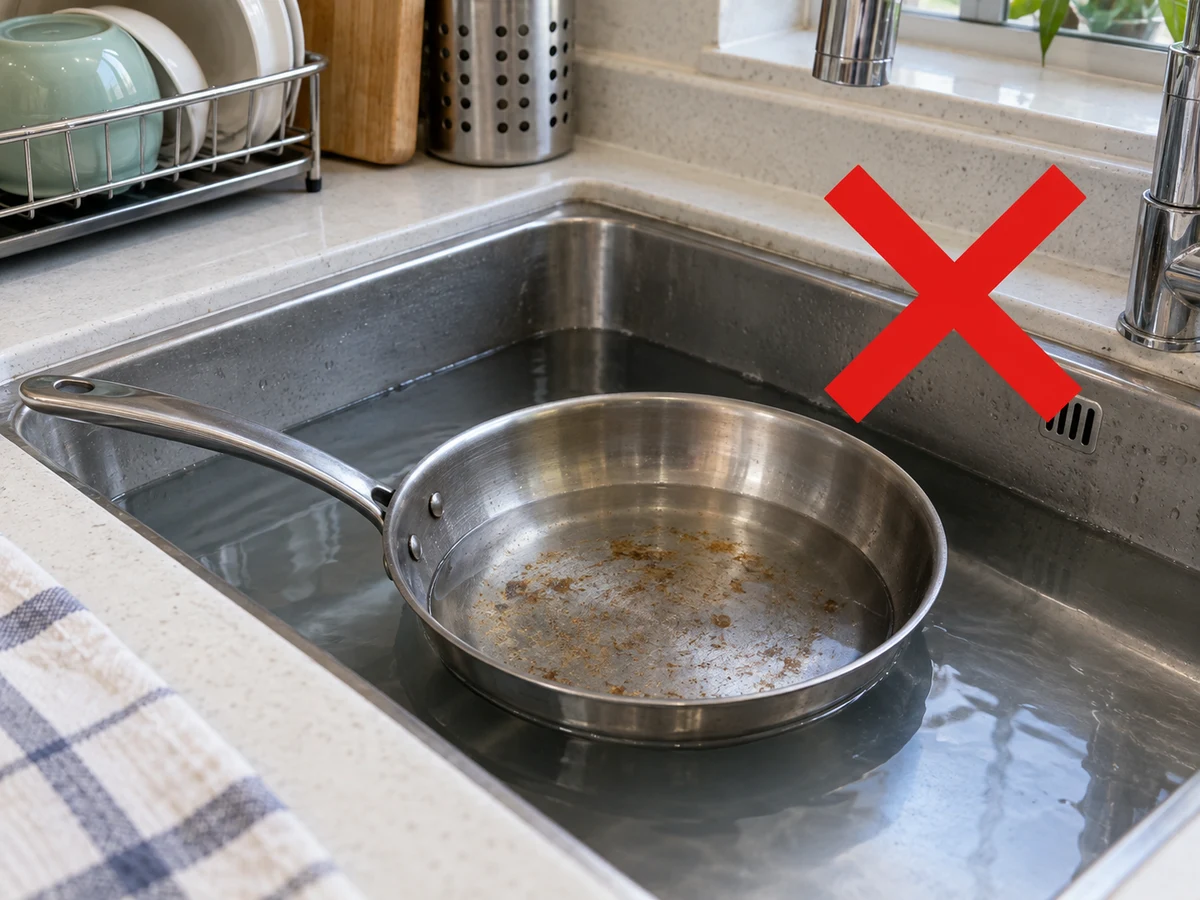
Putting a hot pan into cold water
✓ Correct actionTurn off heat and let the pan cool naturally; confirm an uncoated stainless-steel cooking surface.
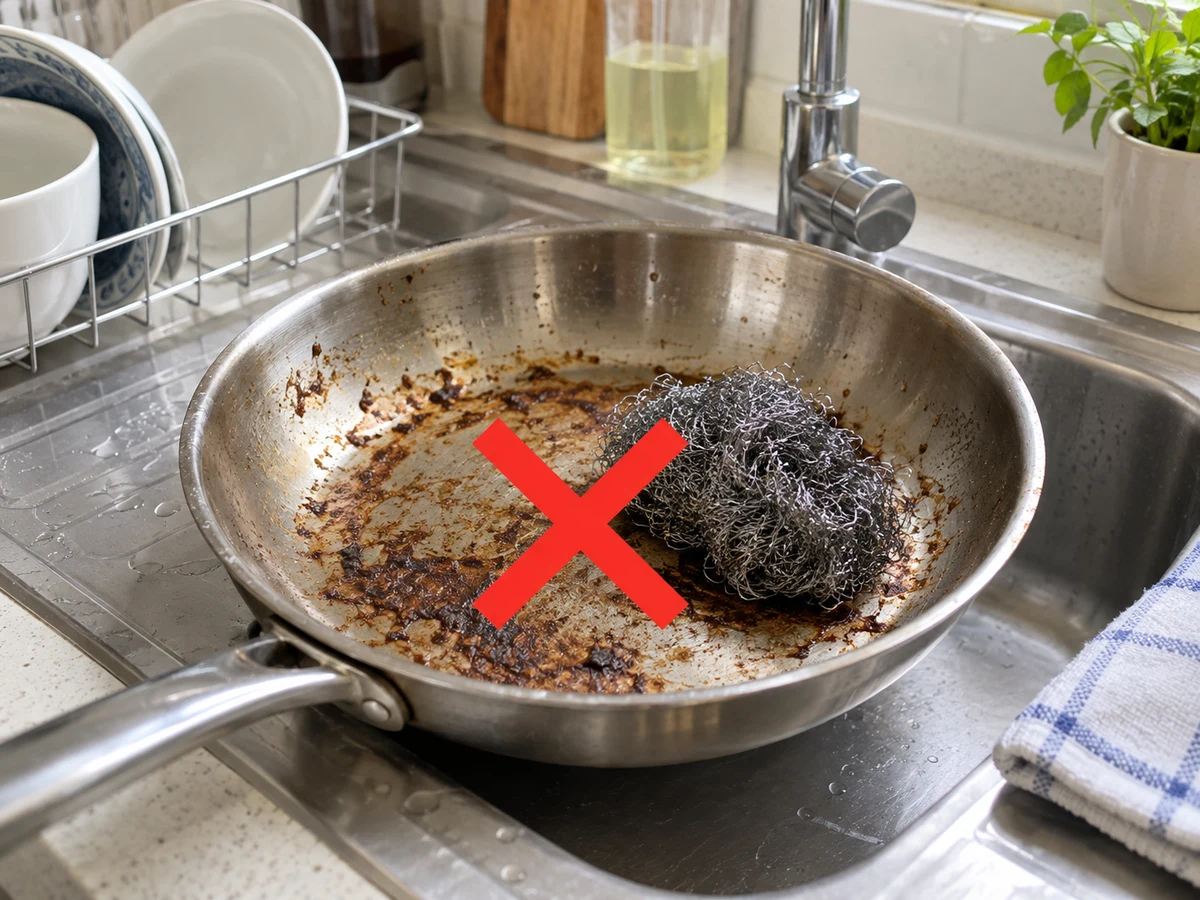
Scraping hard with steel wool
✓ Correct actionLift food residue, then add warm water and detergent to the cooled pan and soften stuck food briefly as directed.
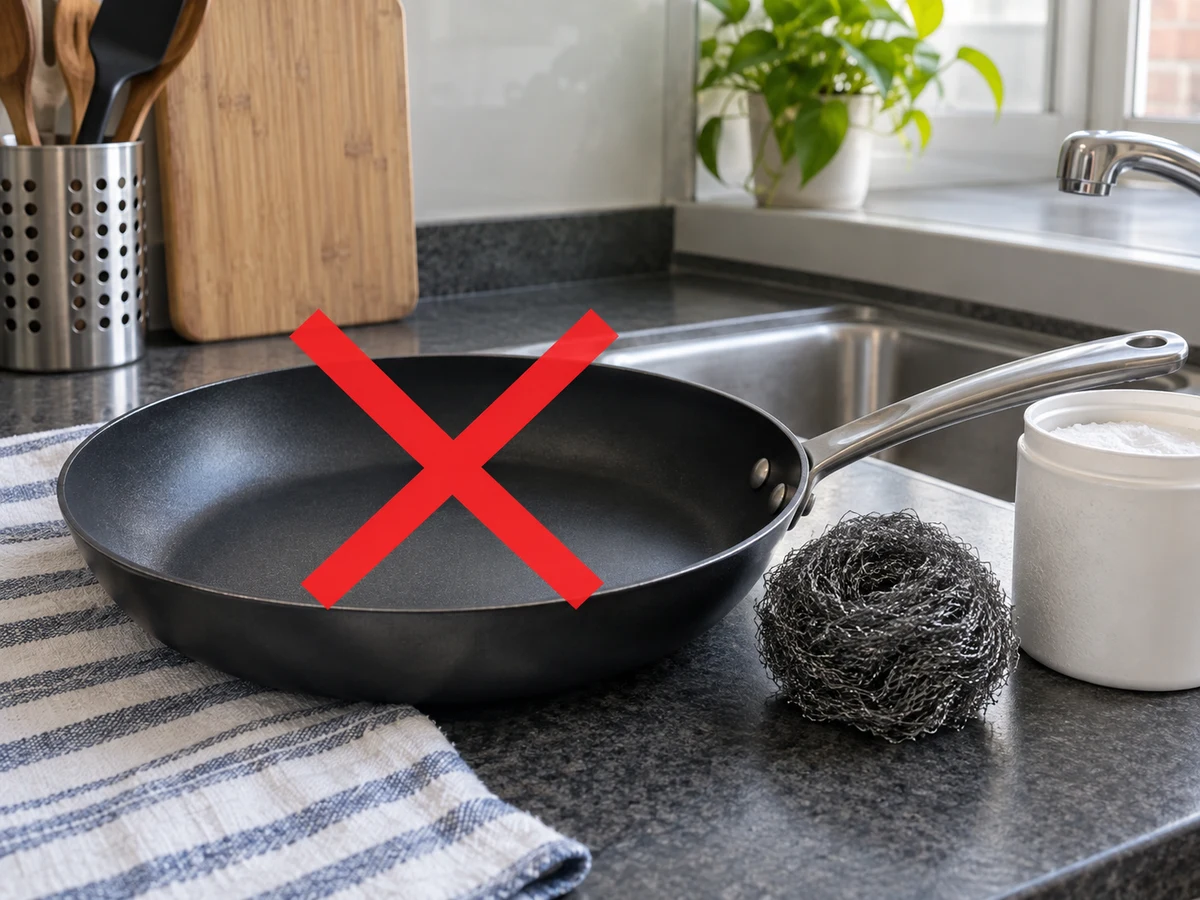
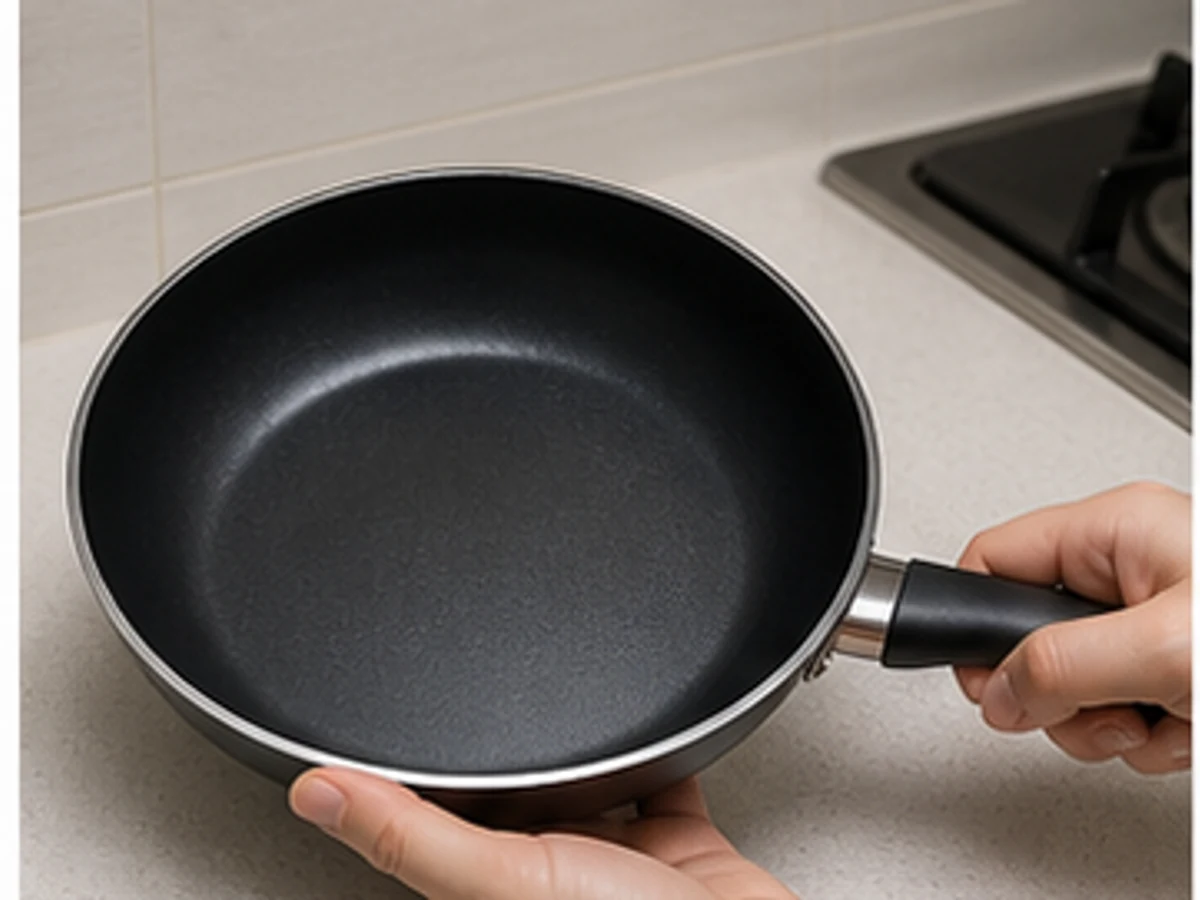
Treating a non-stick pan as bare steel
✓ Correct actionFirst confirm the cooking surface is uncoated stainless steel; clean nonstick or other coatings by their own instructions, without bare-steel cleaners or abrasives.
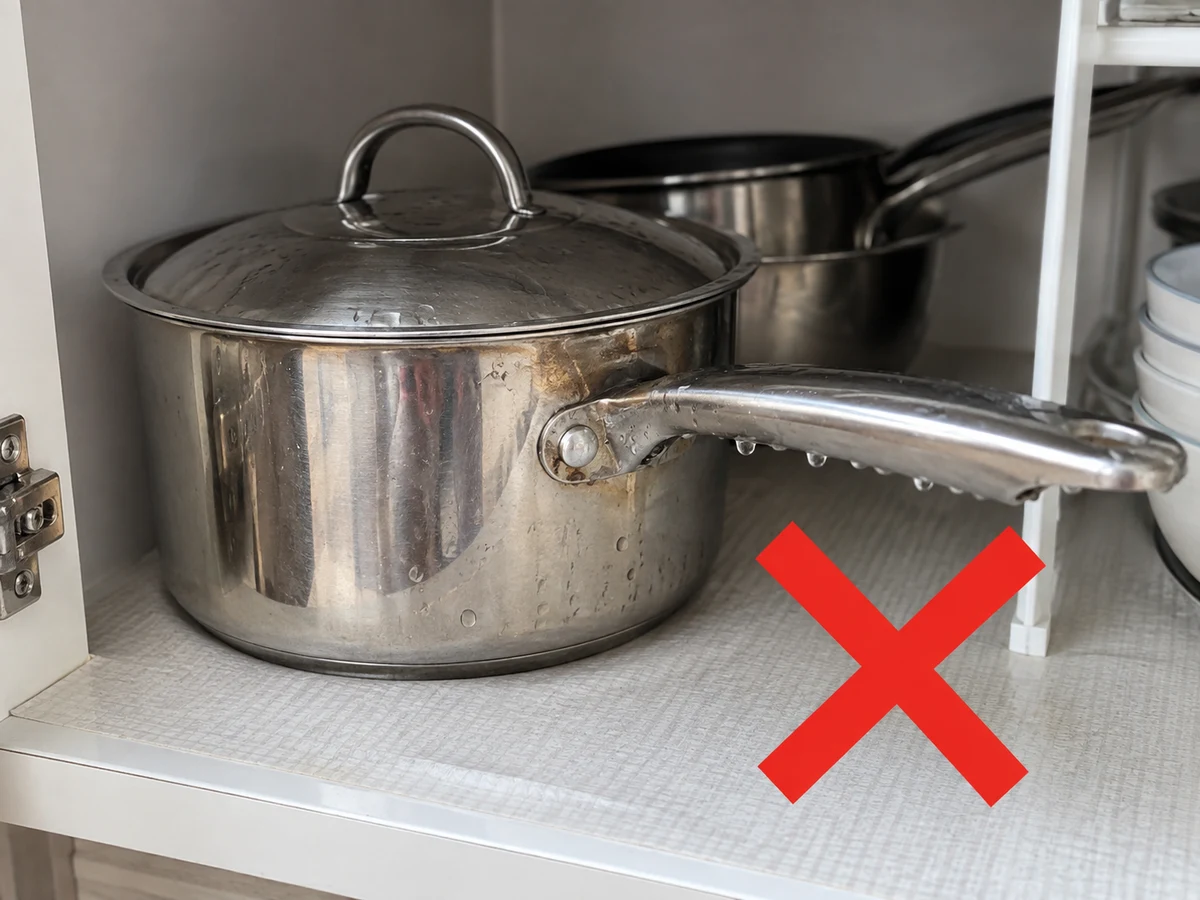
Storing with damp handle joints
✓ Correct actionRinse and dry rims, handle joints and bases; check loose handles, warping and sharp edges before storage.
Practical tips
Tips for helpers
- Let the pan cool before adding water.
- Dry handle joints where water hides.
Tips for employers
- Distinguish coated pans from steel.
- Approve the stainless-steel stain cleaner.
Completion checklist
Checked 0 / 4