Kitchen cleaning
How to Organise Refrigerator Food and Reduce Cross-contamination
Contain raw food, separate ready-to-eat items, use safe shelf order and preserve airflow
Overview
The priority is separating raw meat, poultry and seafood from cooked and ready-to-eat food so juices cannot drip onto them. Follow package and manufacturer storage instructions. This guide invents no storage duration, temperature or other food-safety threshold.
Tools needed
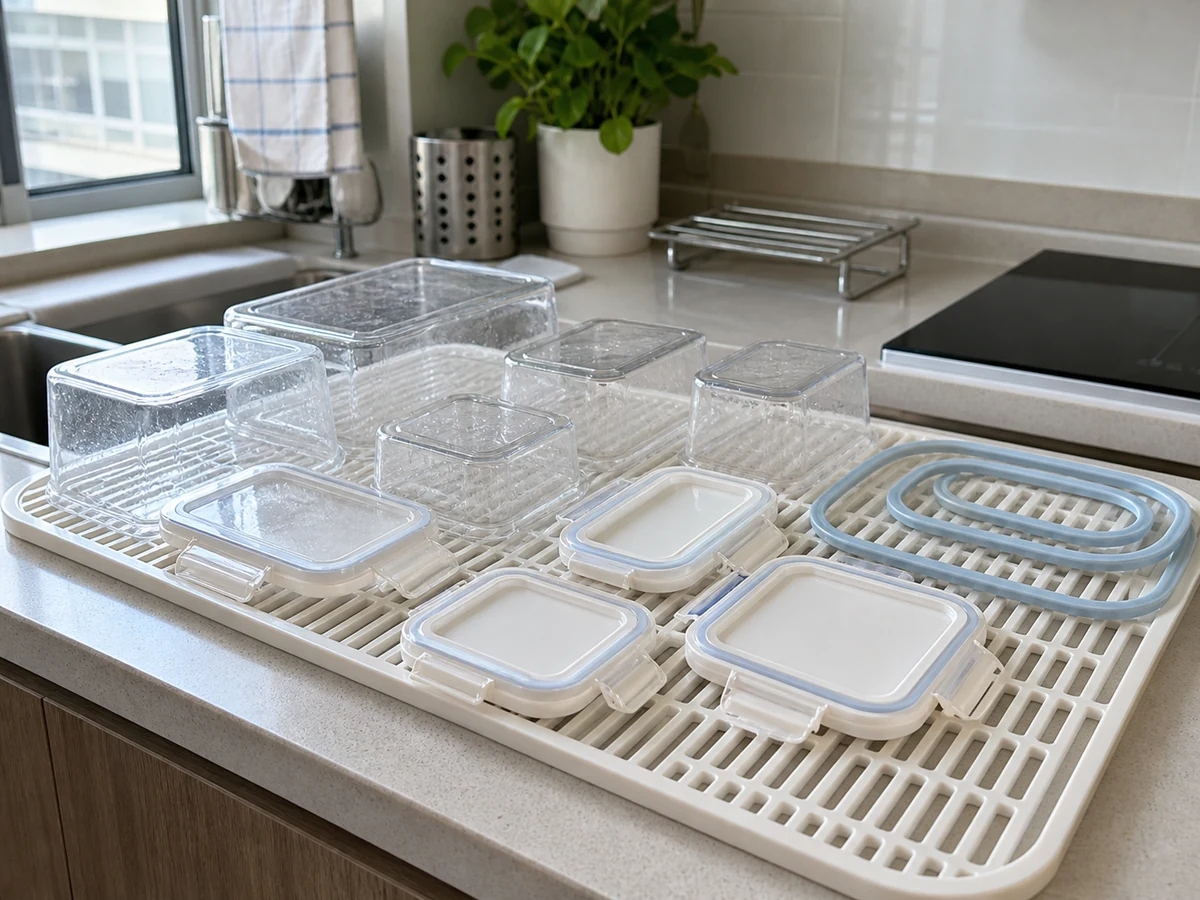
- Clean lidded or seal-able food containers
- Leak-containing shallow trays
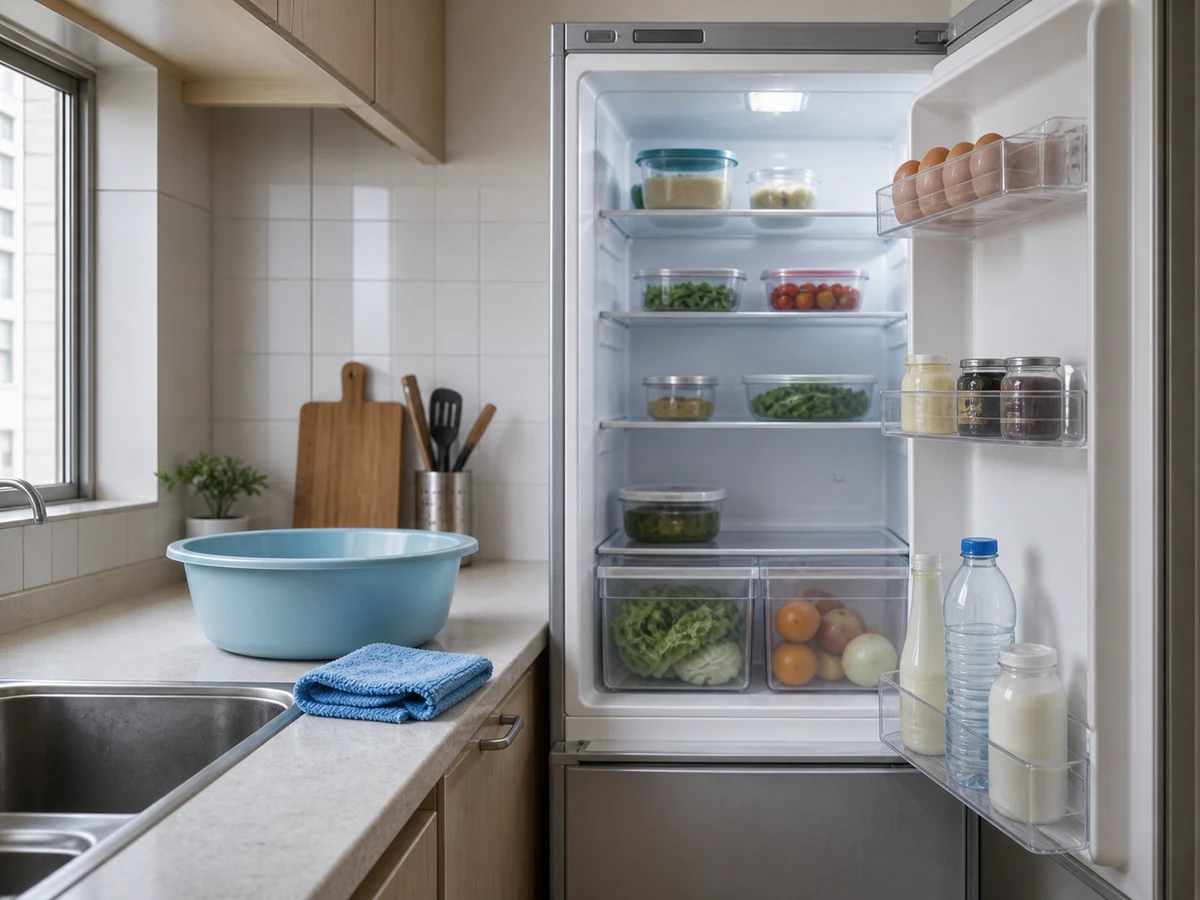
- Clean refrigerator-only cloth
- One cleaner suitable for a food area
- Waste bags
- Handwashing supplies
Cleaning steps
Wash hands and prepare a clean area
Wash hands and work in small batches on a clean surface. Do not leave food that needs refrigeration outside the refrigerator for a prolonged period.
Check packages and condition
Check package integrity, food labels and visible leaks. Separate damaged, suspect or discard items and follow the label and household rules.
Cover cooked and ready-to-eat food
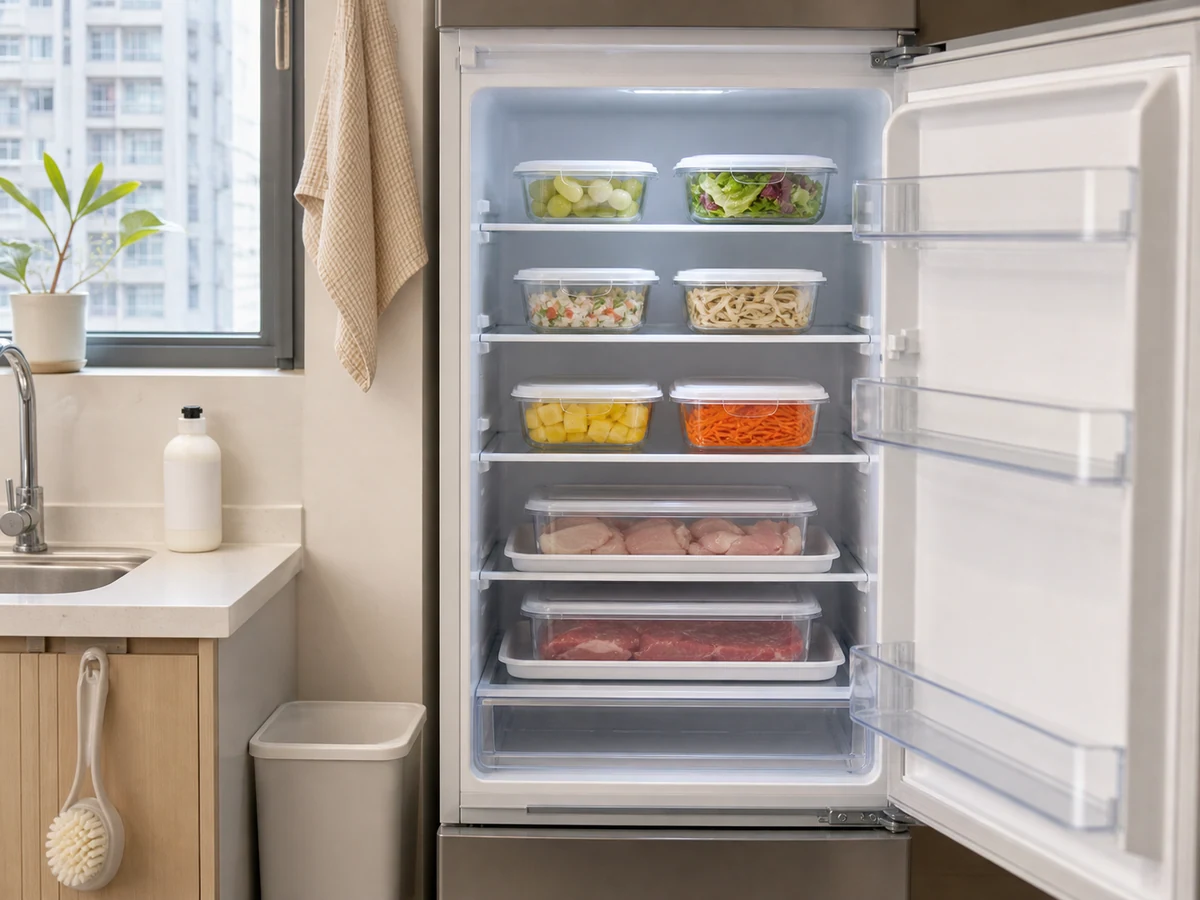
Place cooked and ready-to-eat food in lidded or sealed containers on higher shelves away from raw-food juices.
Contain raw meat, poultry and seafood
Keep intact original packs or place raw items in sealed leak-containing containers and shallow trays below cooked and ready-to-eat food.
Create separated zones
Separate raw, cooked, ready-to-eat and drink zones. Keep containers stable and upright; never keep raw-food tools or cleaners with food.
Keep cold-air paths open
Do not overfill the refrigerator or block vents. Arrange items according to the appliance maker so cold air can circulate.
Handle leaks promptly and wash hands
Remove a leaking pack, clean the affected area with one food-area-compatible method, remove residue and dry before returning food, then wash hands.
Common mistakes
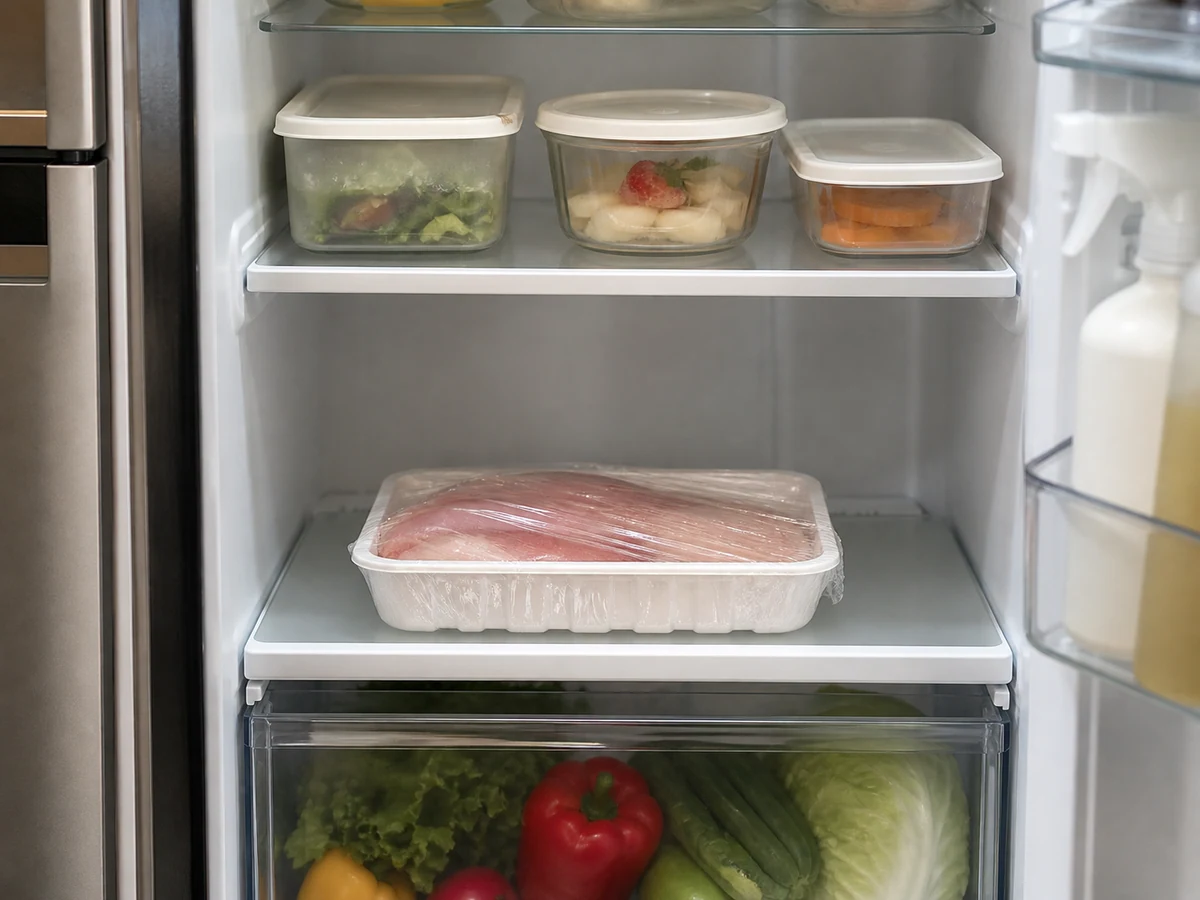
Storing raw food above cooked food
✓ Correct actionSeal raw meat, poultry and seafood and place them in a lower leak tray.
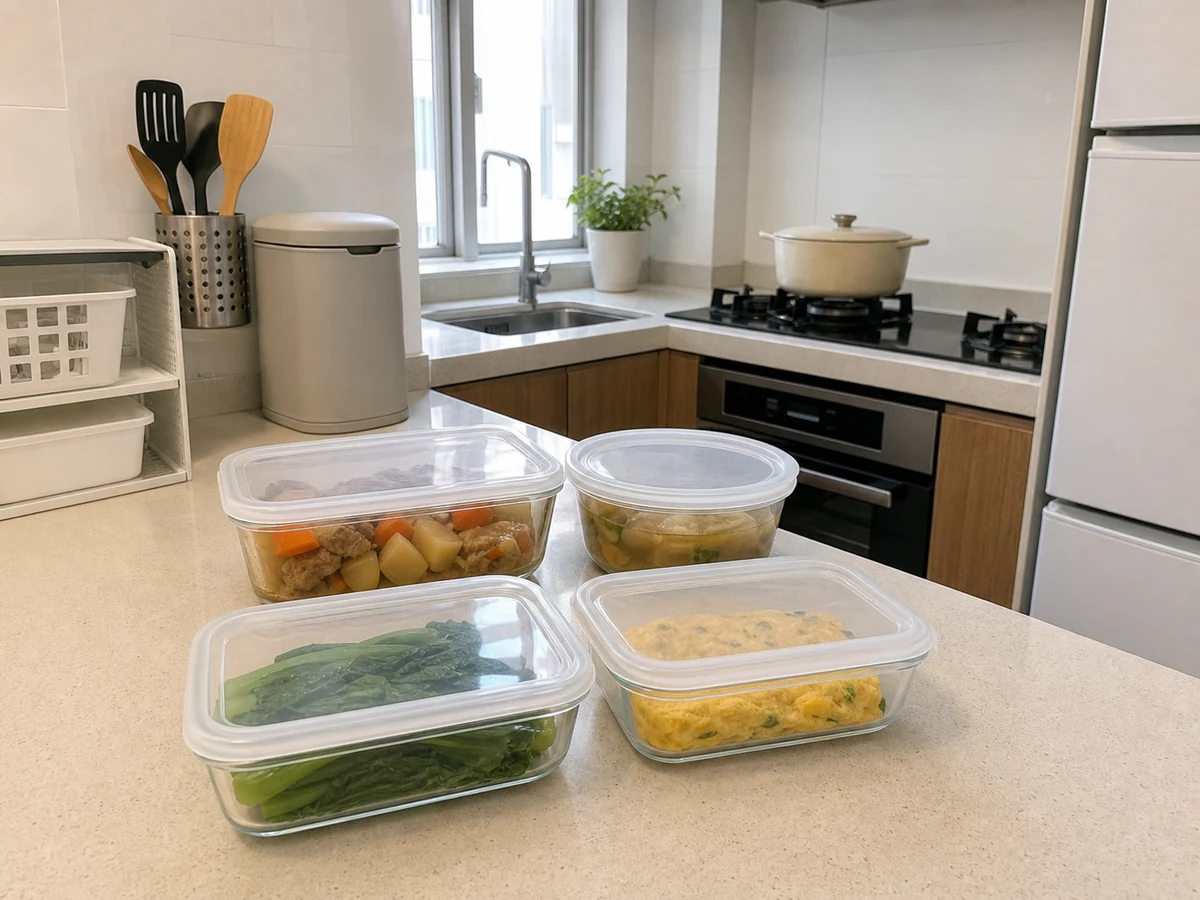
Leaving cooked or ready-to-eat food uncovered
✓ Correct actionUse stable lidded or sealed containers.
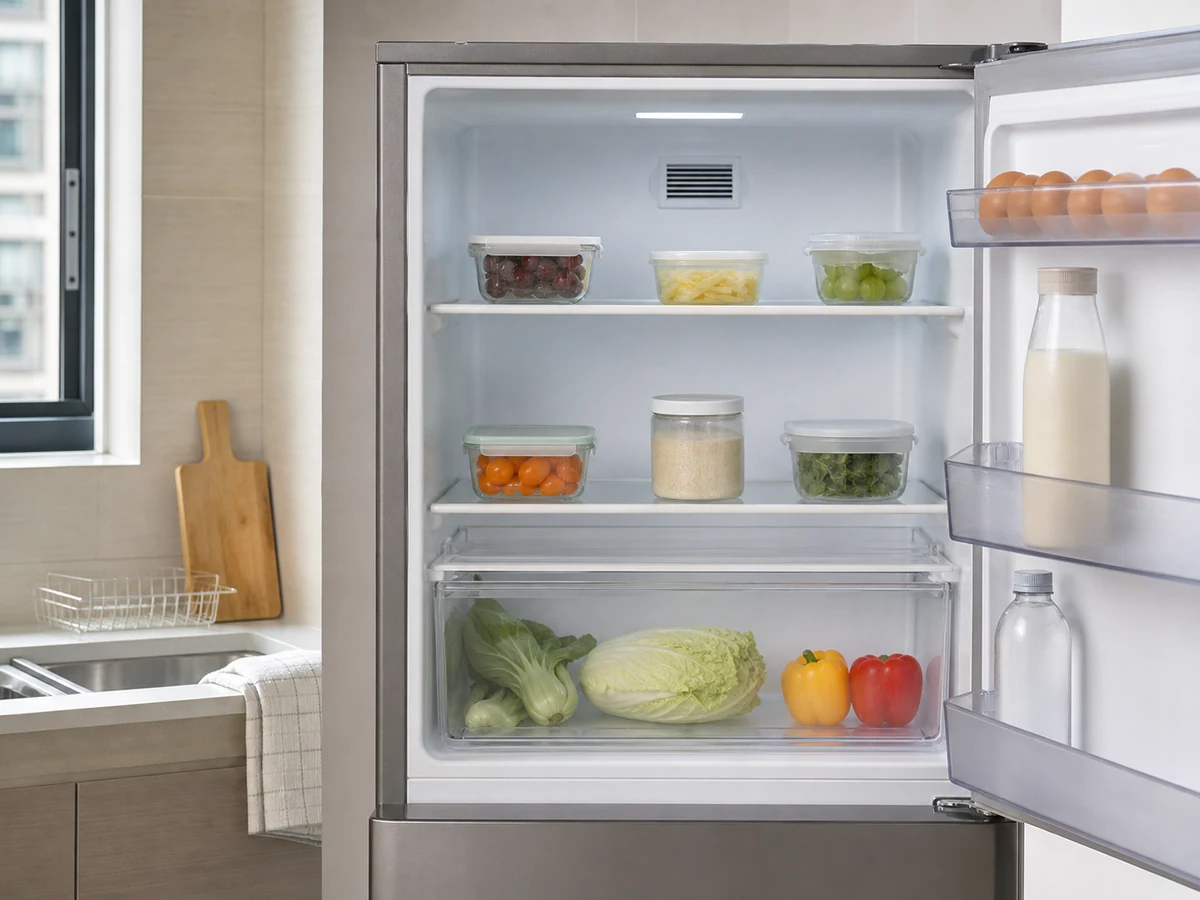
Overfilling or blocking vents
✓ Correct actionReduce stacks and retain the maker-required airflow space.
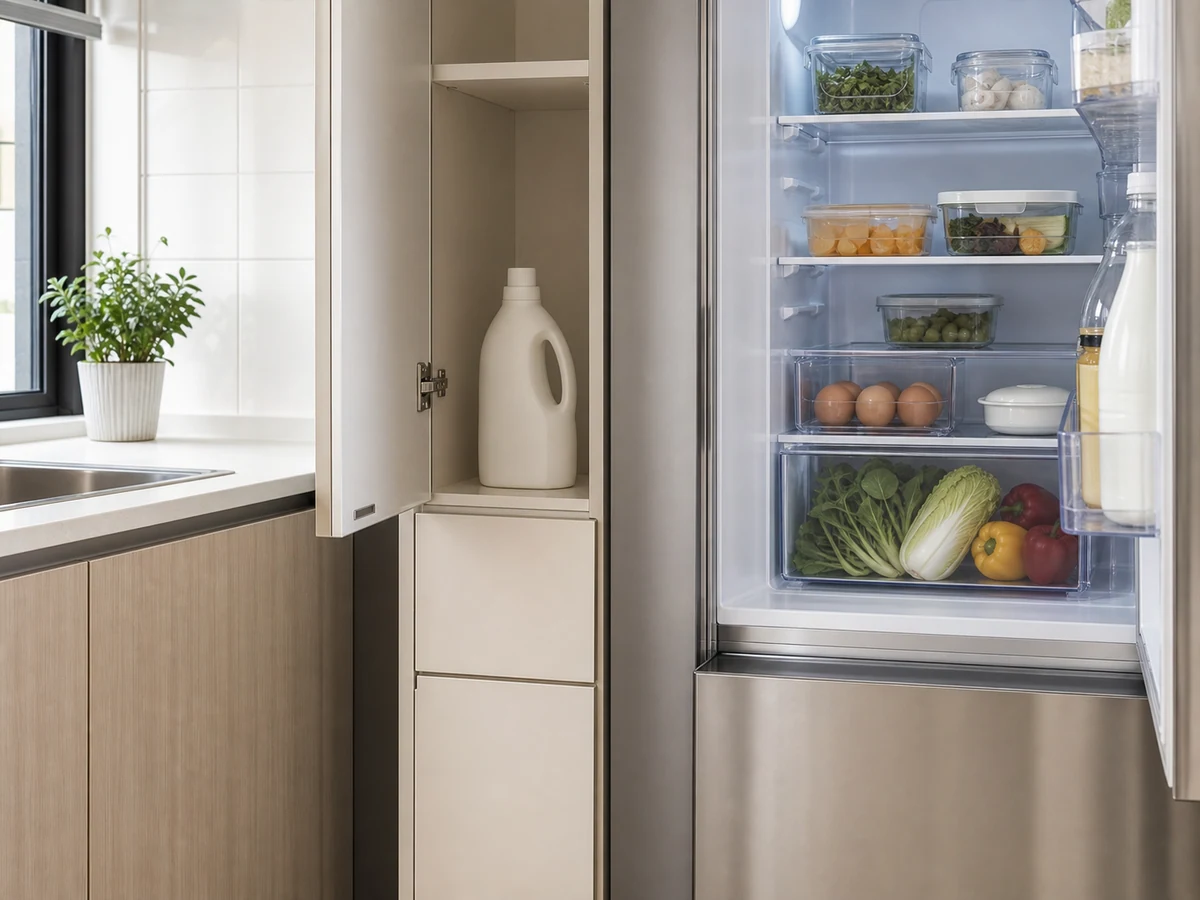
Storing cleaners with food
✓ Correct actionKeep every cleaning product outside the refrigerator and away from food.
Practical tips
Tips for helpers
- Stable shallow trays under raw-food containers make leaks easier to detect and contain.
- Work in small batches so only a little food is out and the refrigerator door is not held open.
Tips for employers
- Provide enough lidded containers and leak trays, and designate raw and ready-to-eat zones.
- For special dietary or medical needs, the employer should give separate explicit food-handling directions.
Completion checklist
Checked 0 / 8