
Critical safety ruleKitchen fire safety
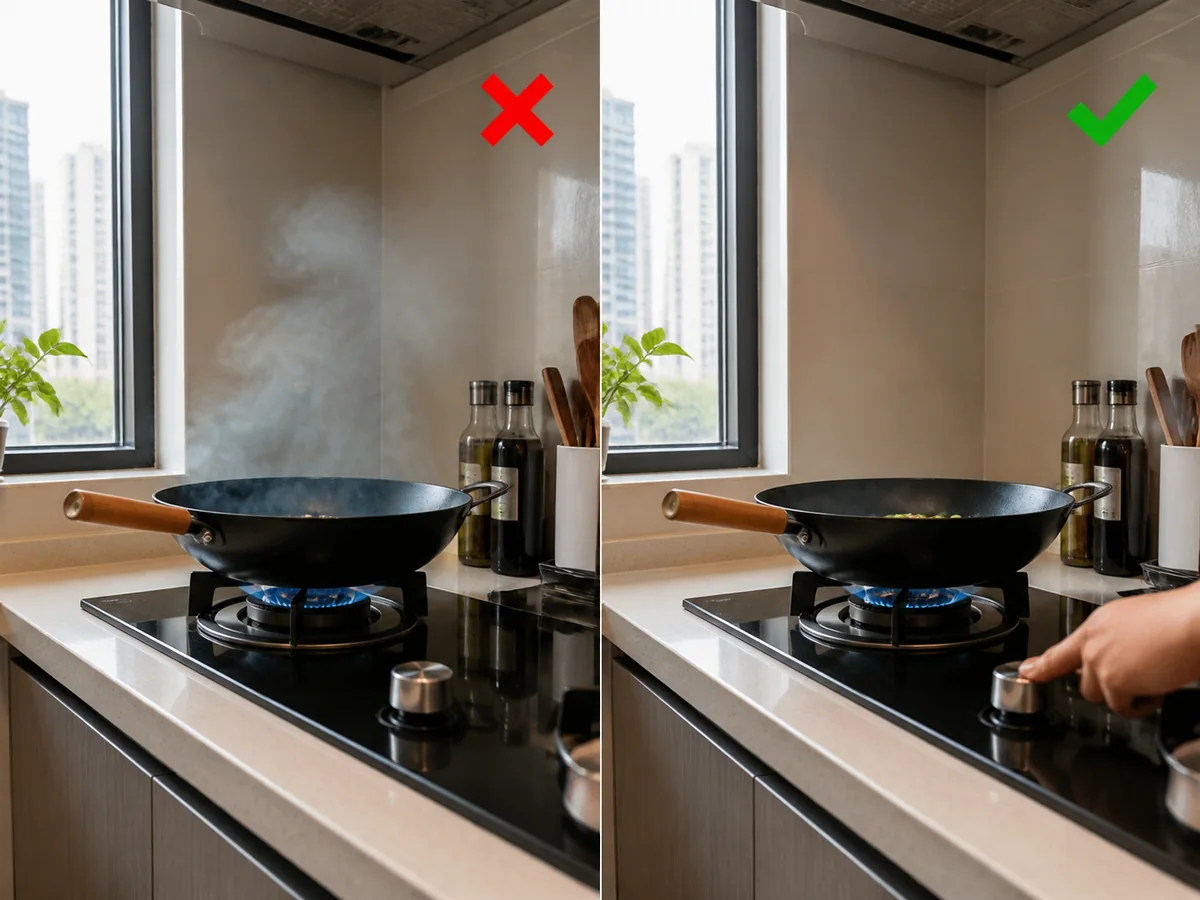
Never leave cooking unattended
Stay in the kitchen while the stove is on; turn it off before you leave.
View safety lesson →Browse collection
Build clear habits for supervising heat, hot oil and surfaces, pan handles, knives, and food handling.
Stay in the kitchen while the stove is on; turn it off before you leave.
View safety lesson →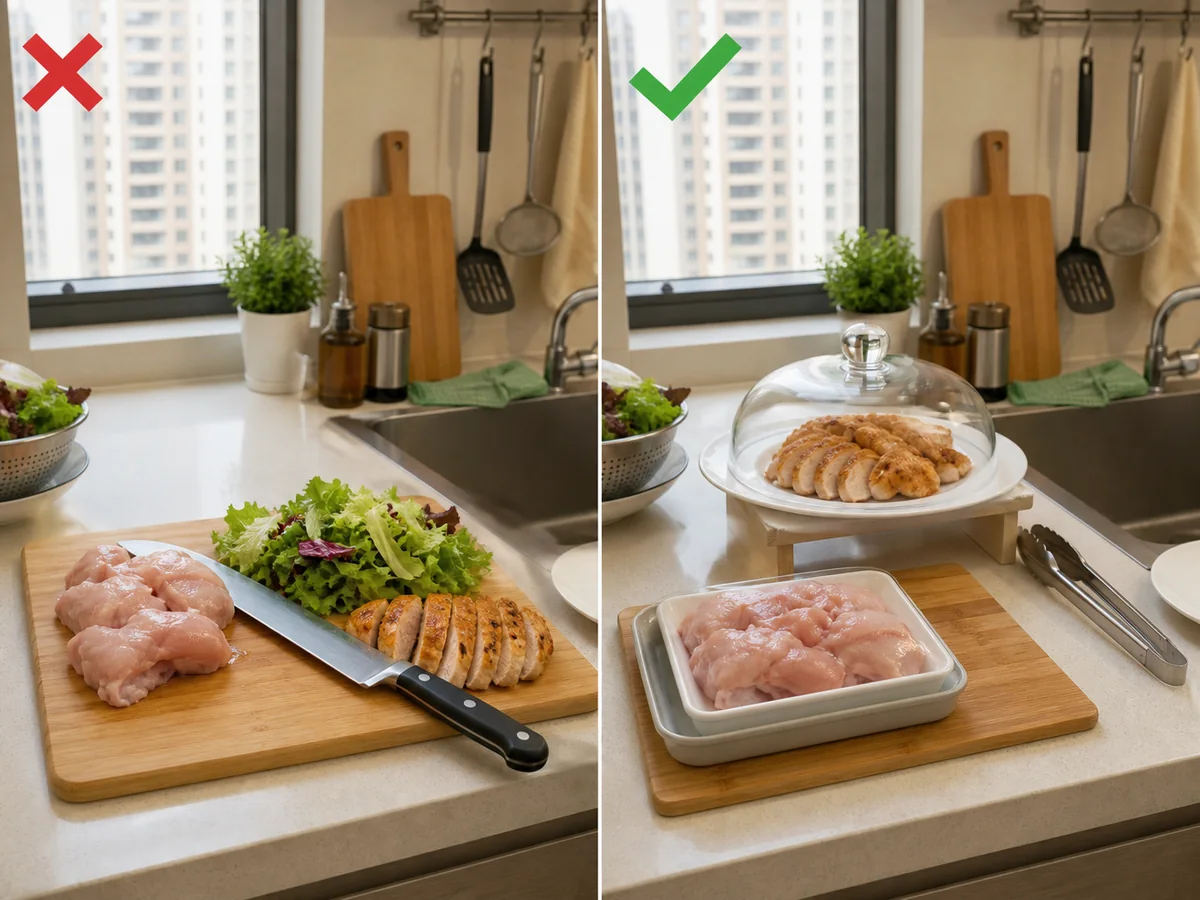
Use separate chopping boards and knives; keep cooked or ready-to-eat food above sealed raw meat in the fridge.
View safety lesson →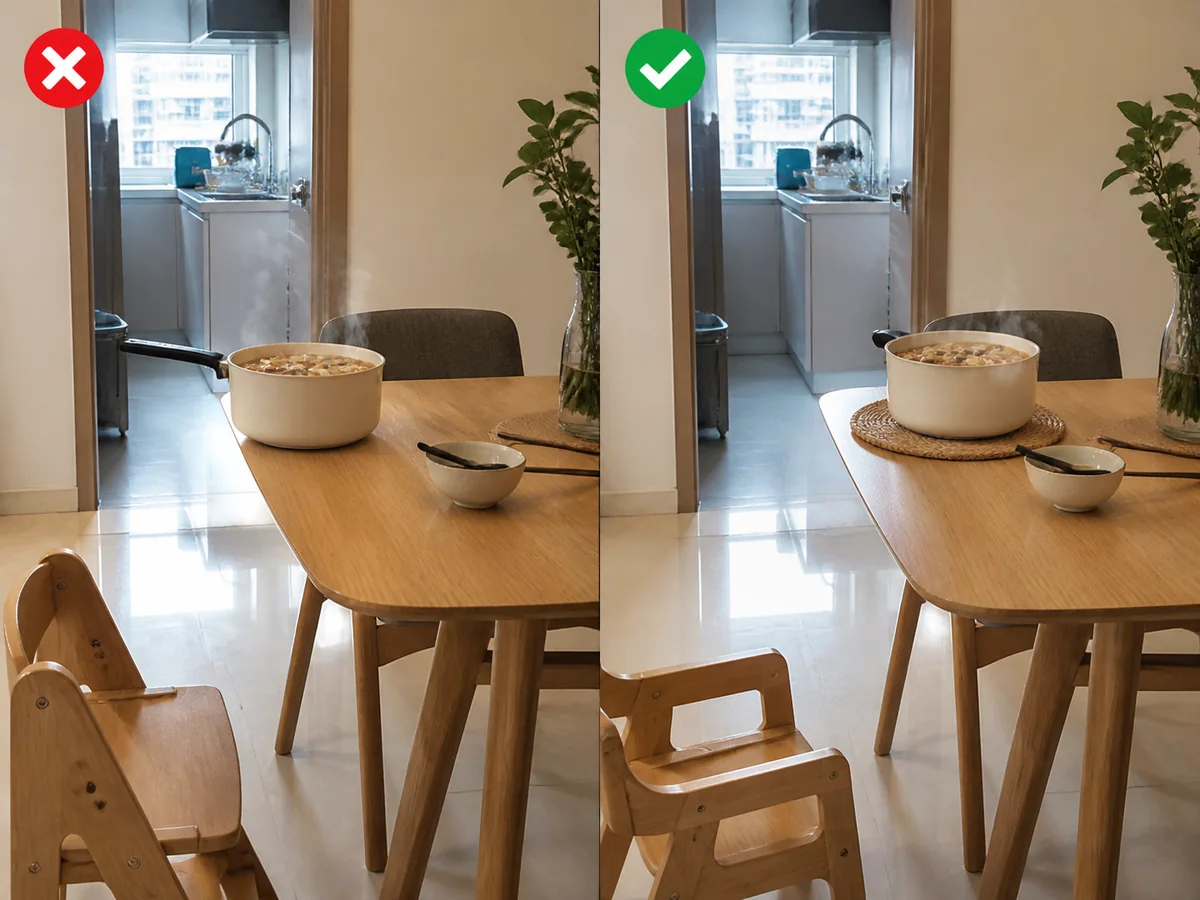
Turn pot handles inward, keep hot food away from table edges, and never carry a child while holding hot food.
View safety lesson →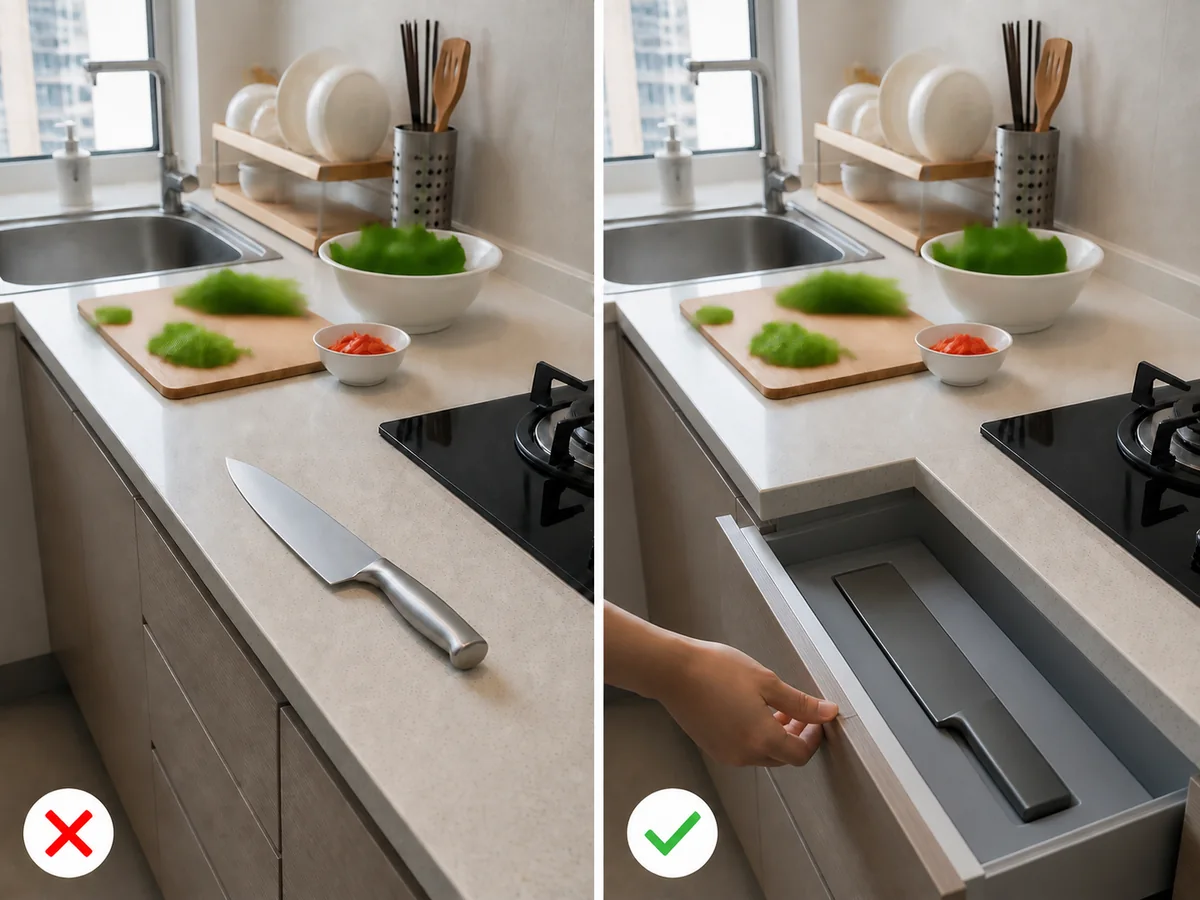
Store knives in a secure knife block, sheath, or safe place with the blade protected and out of children's reach.
View safety lesson →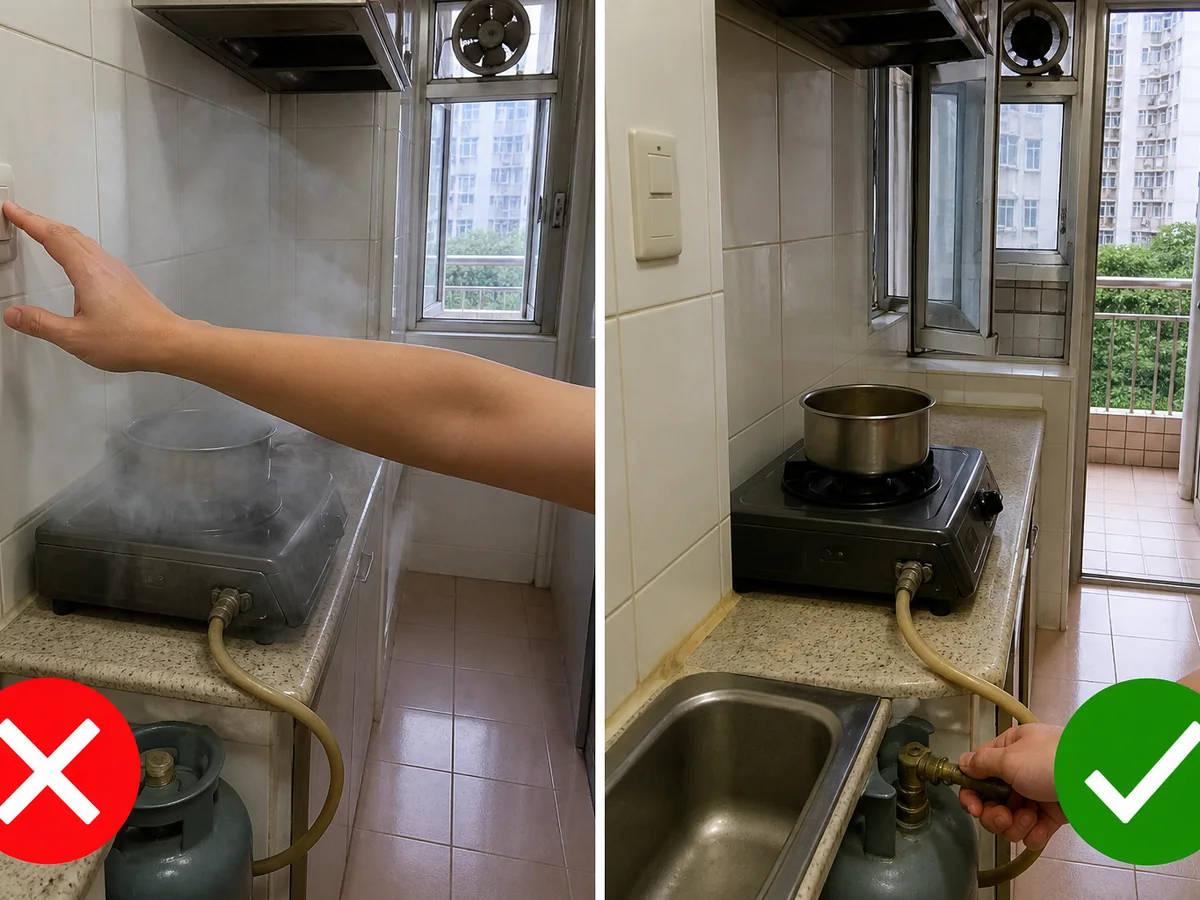
Do not operate switches, appliances, phones, or doorbells; move away before calling for help.
View safety lesson →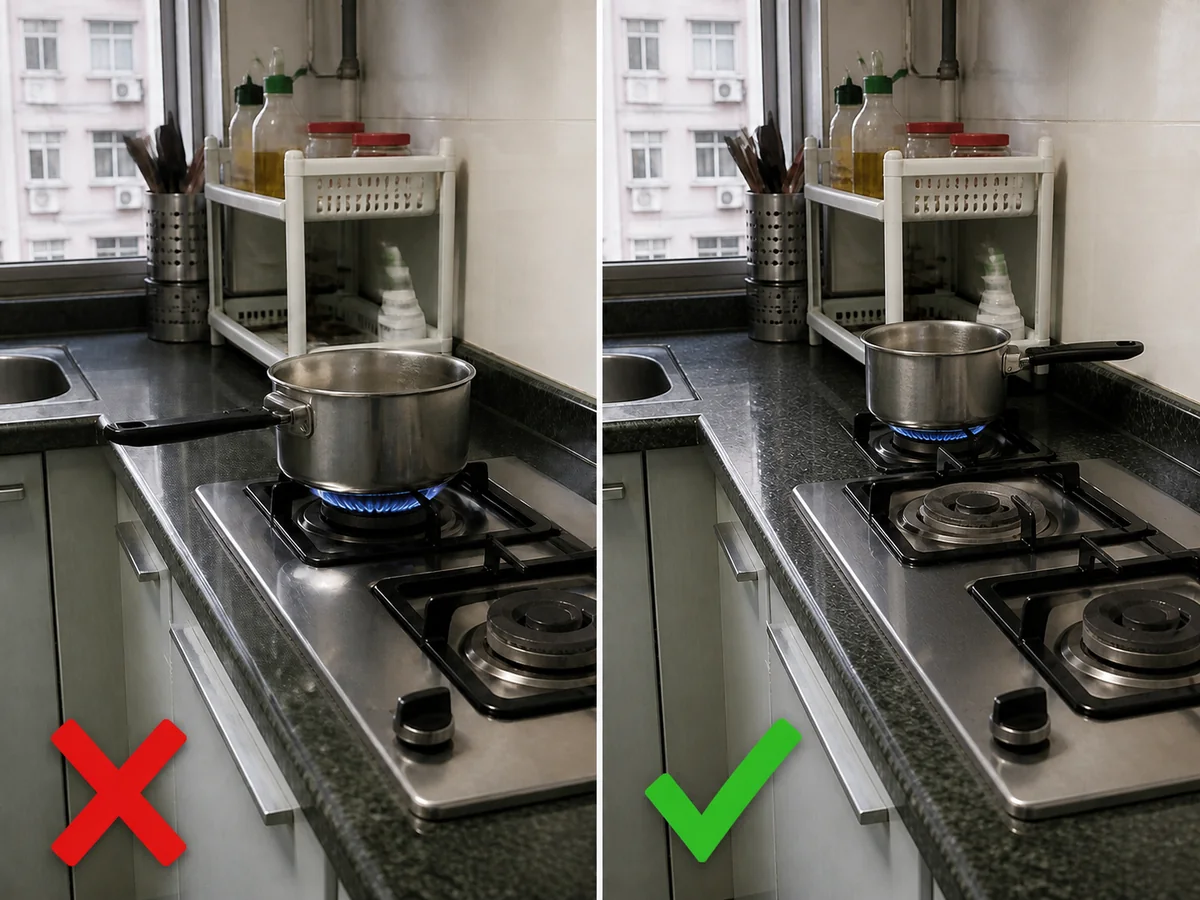
Turn pot and pan handles inward or toward the wall, away from the cooker edge, people, and other hot burners.
View safety lesson →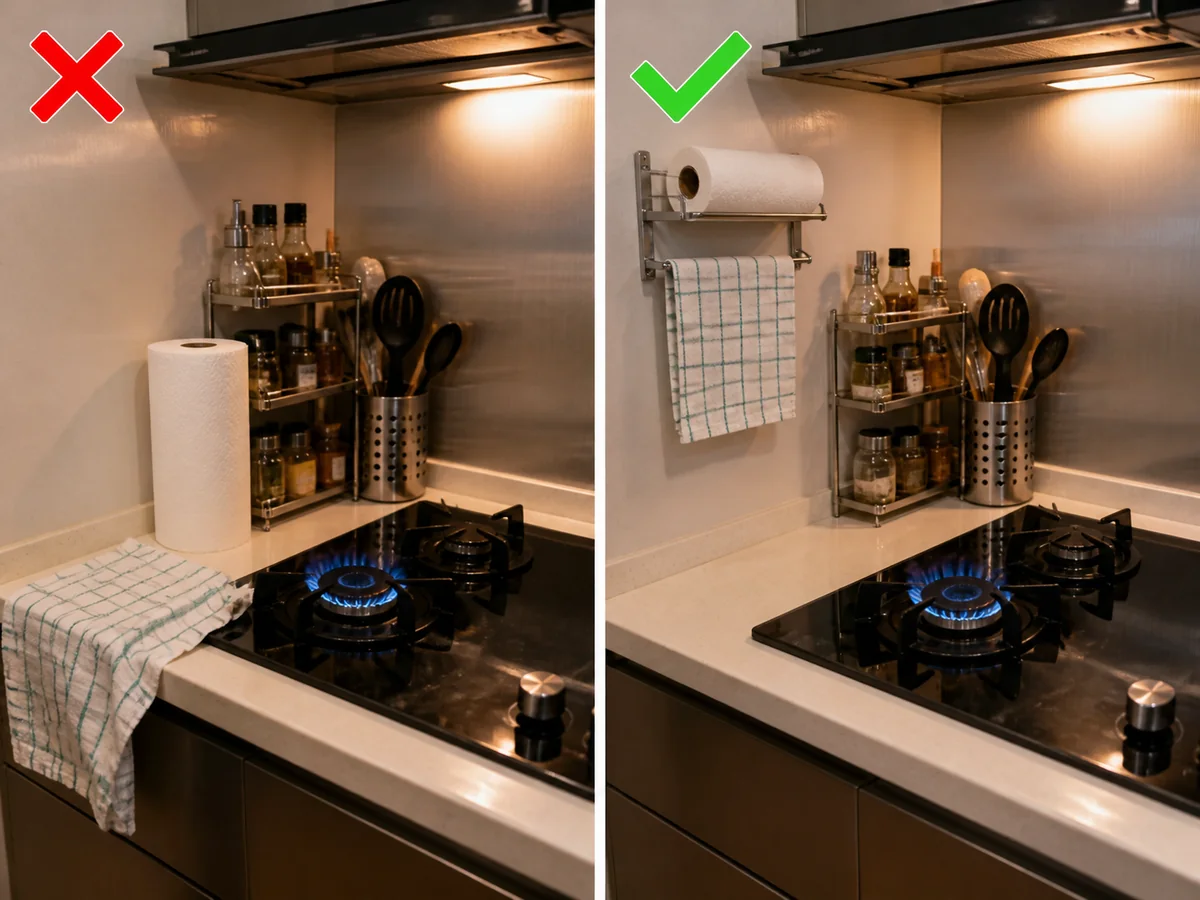
Before turning on the stove, remove cloths, kitchen paper, packaging, plastic bags, and aerosol cans from the cooking area.
View safety lesson →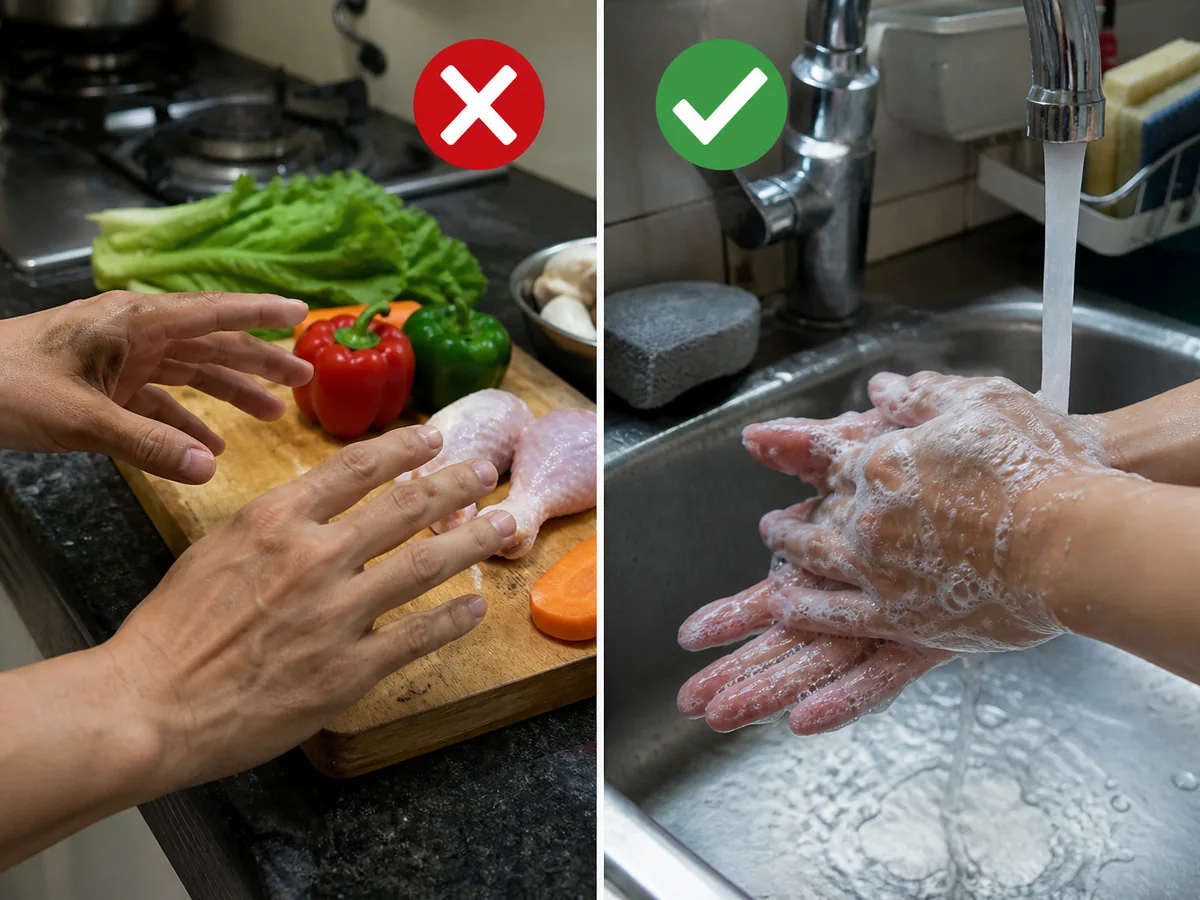
Wash with water and liquid soap for at least 20 seconds before food and after handling raw food.
View safety lesson →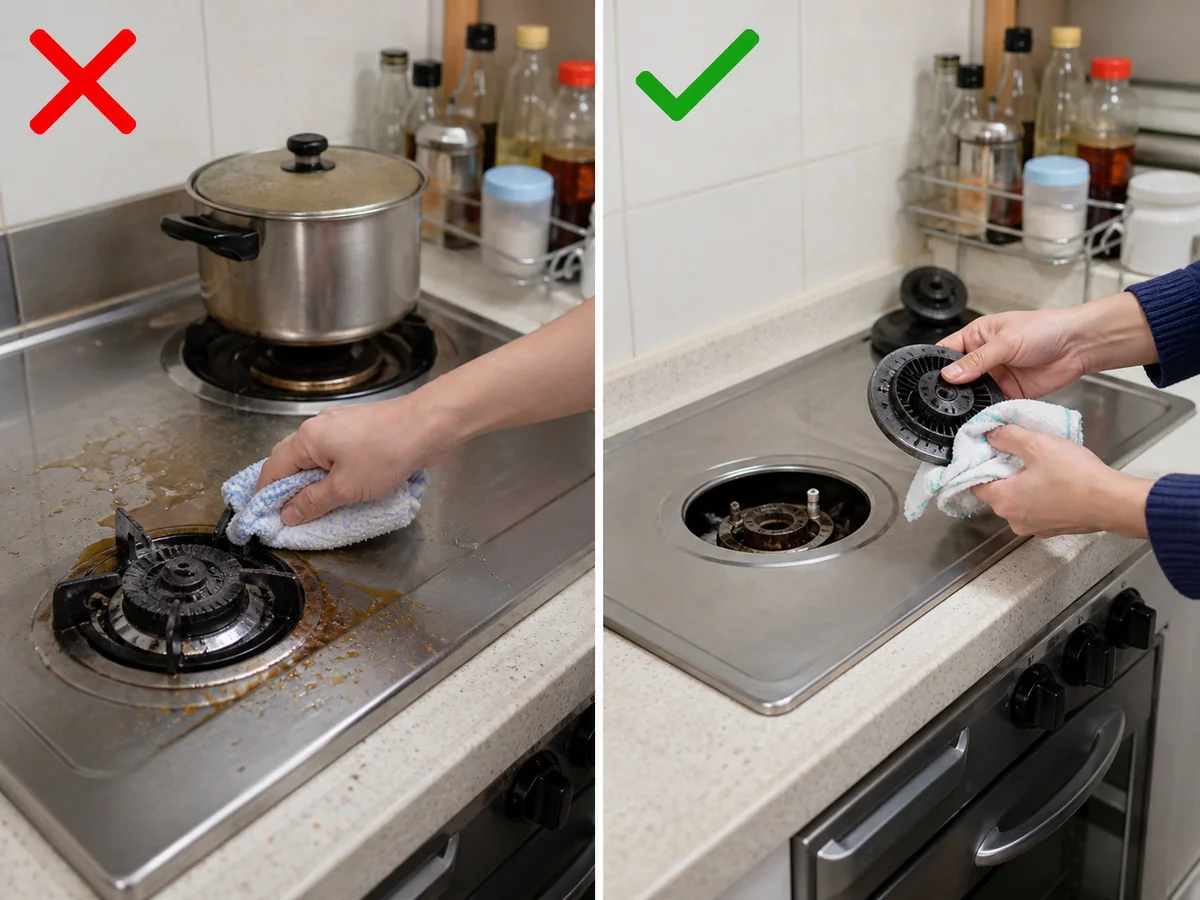
Switch off after a boil-over, let the cooker cool fully, and clean only as instructed; stop use and tell the employer if the flame is abnormal.
View safety lesson →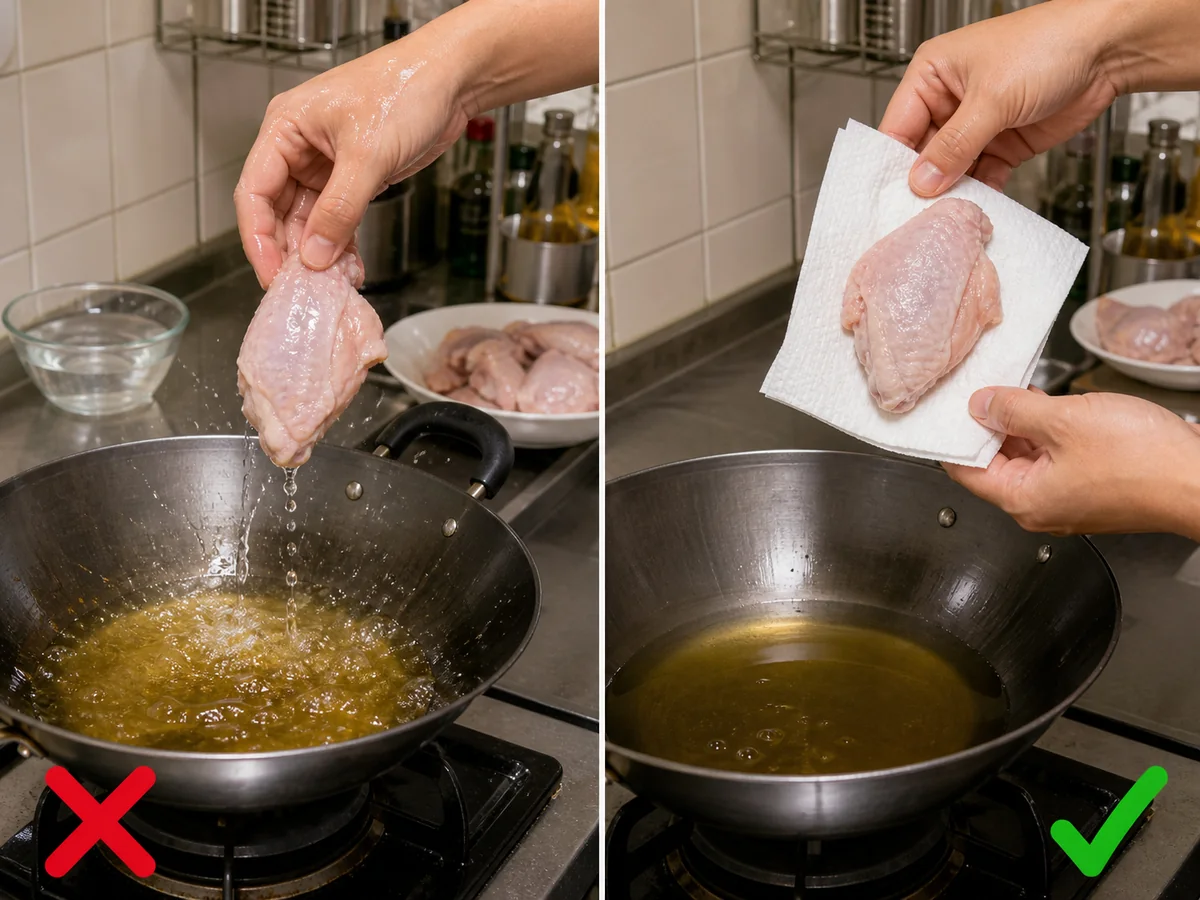
Dry food, utensils, and the cooker area before frying, and never pour water into very hot or burning oil.
View safety lesson →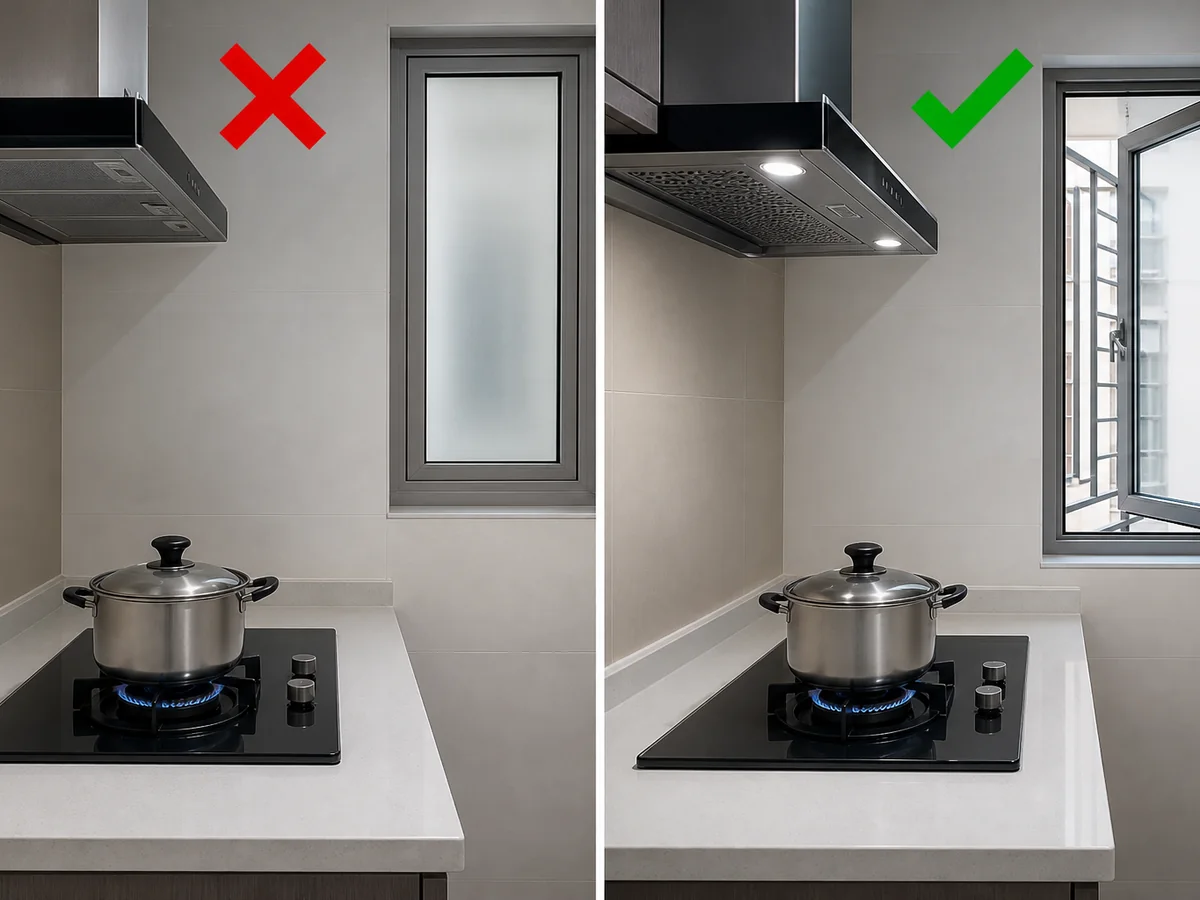
Start suitable ventilation before cooking and keep fresh air flowing without blowing directly on the flame.
View safety lesson →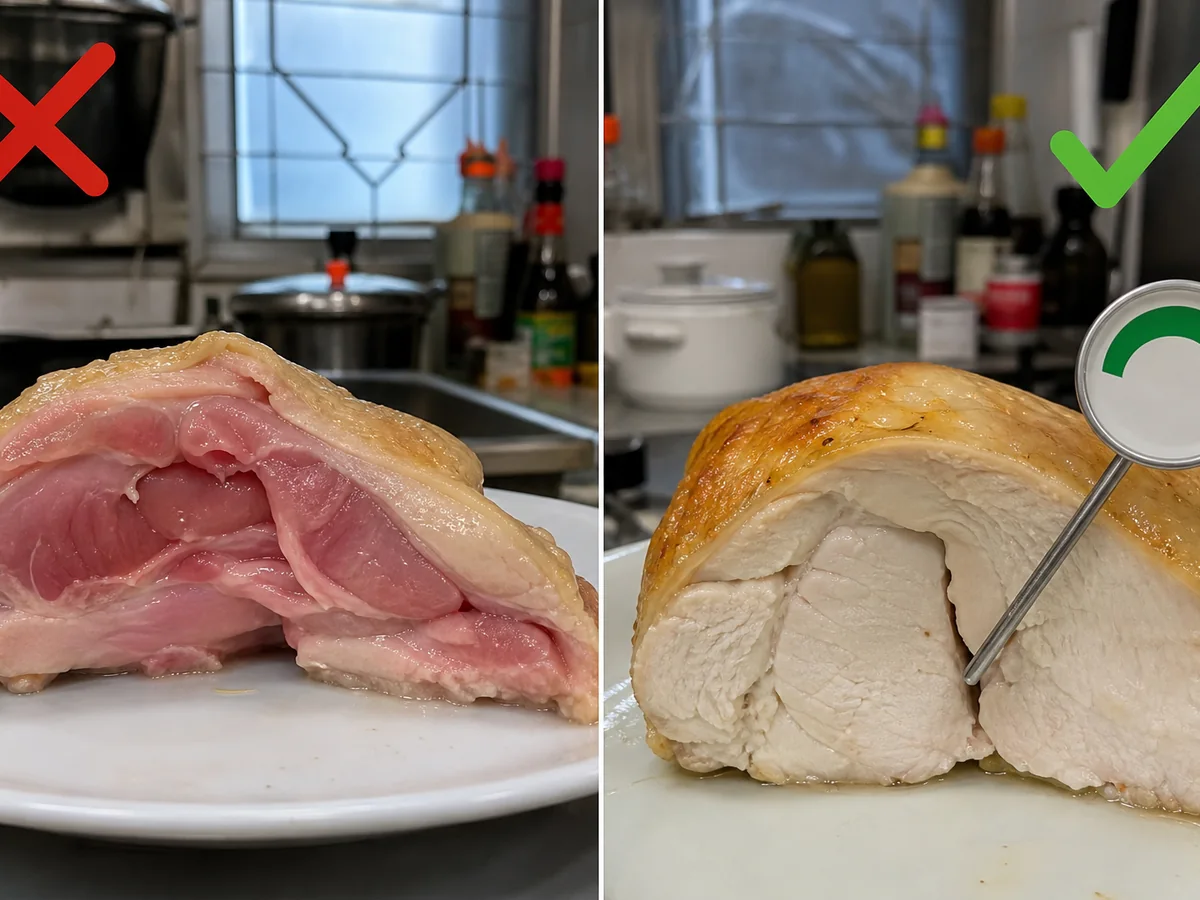
Use a food thermometer to confirm at least 75°C in the thickest centre.
View safety lesson →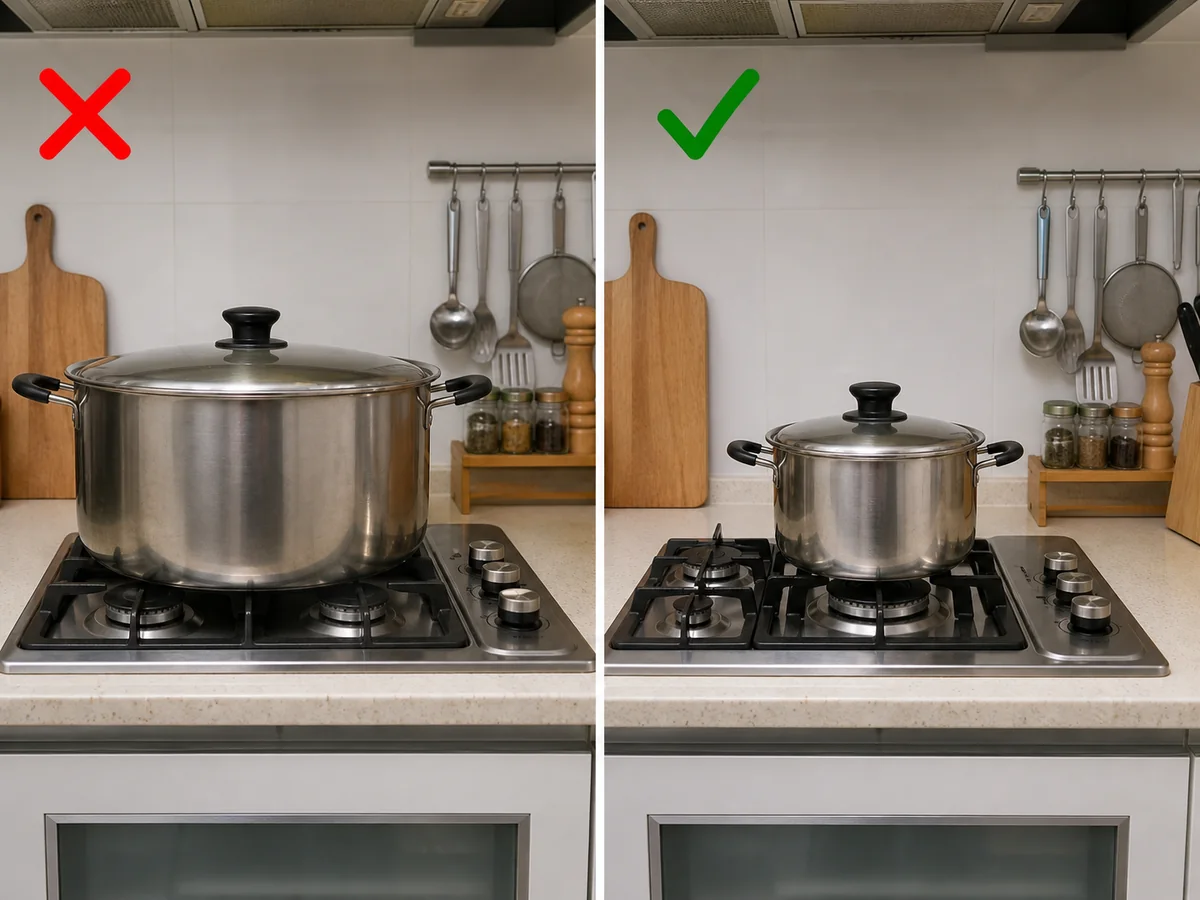
Choose cookware that suits the burner instructions and does not reflect excessive heat onto controls, tubing, or nearby items.
View safety lesson →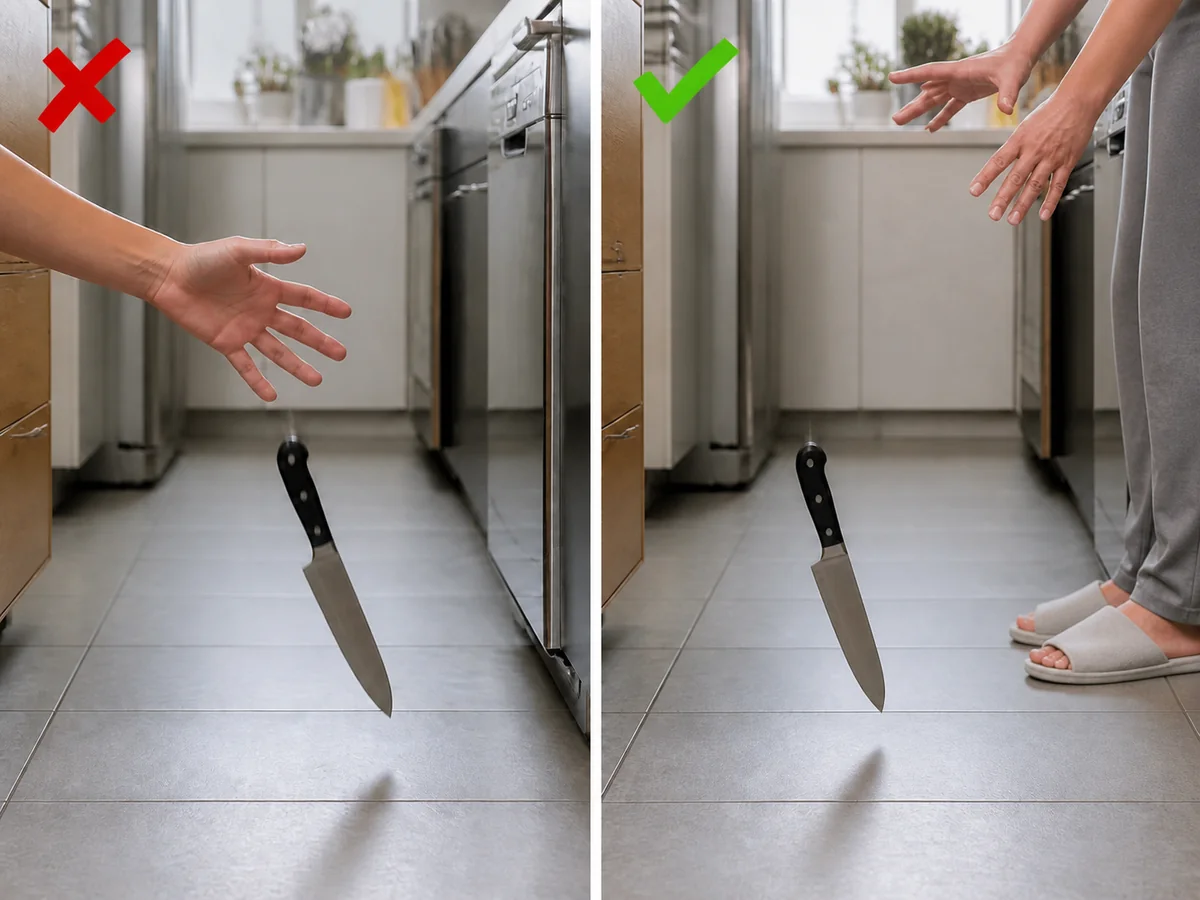
If a knife slips, let it fall, step back, warn people nearby, and pick it up only after it has stopped moving.
View safety lesson →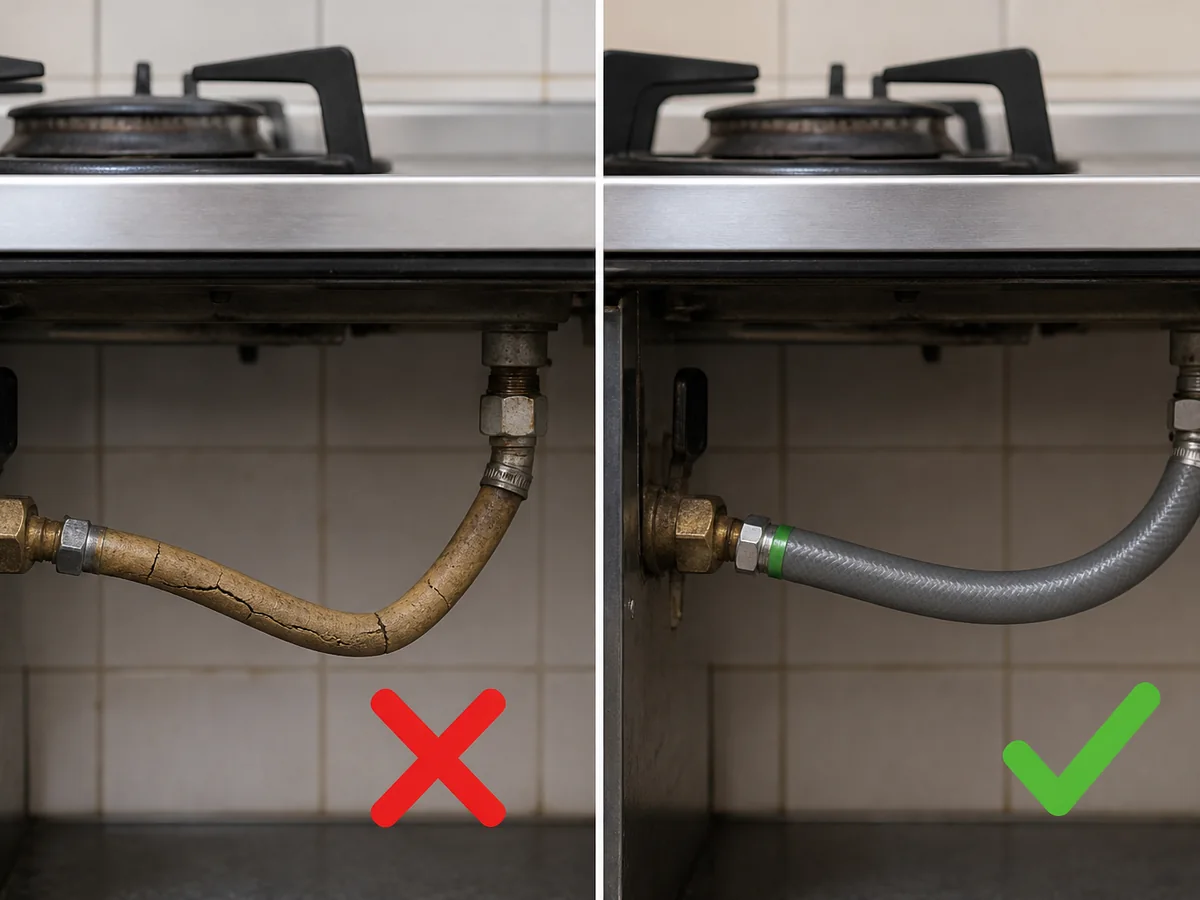
Inspect flexible gas tubing for cracks, ageing, loose joints, and its printed service-life date.
View safety lesson →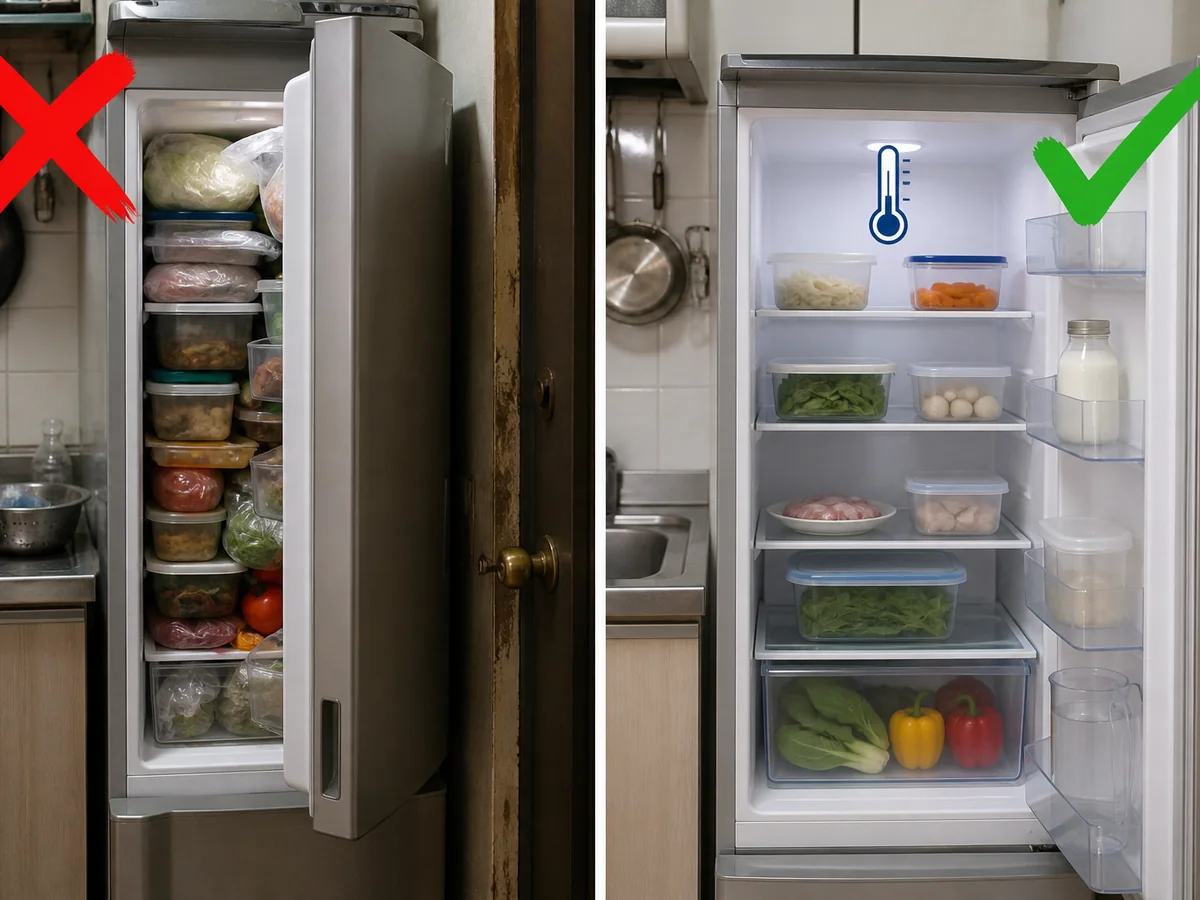
Use a thermometer to confirm the fridge is at or below 4°C and freezer at or below −18°C.
View safety lesson →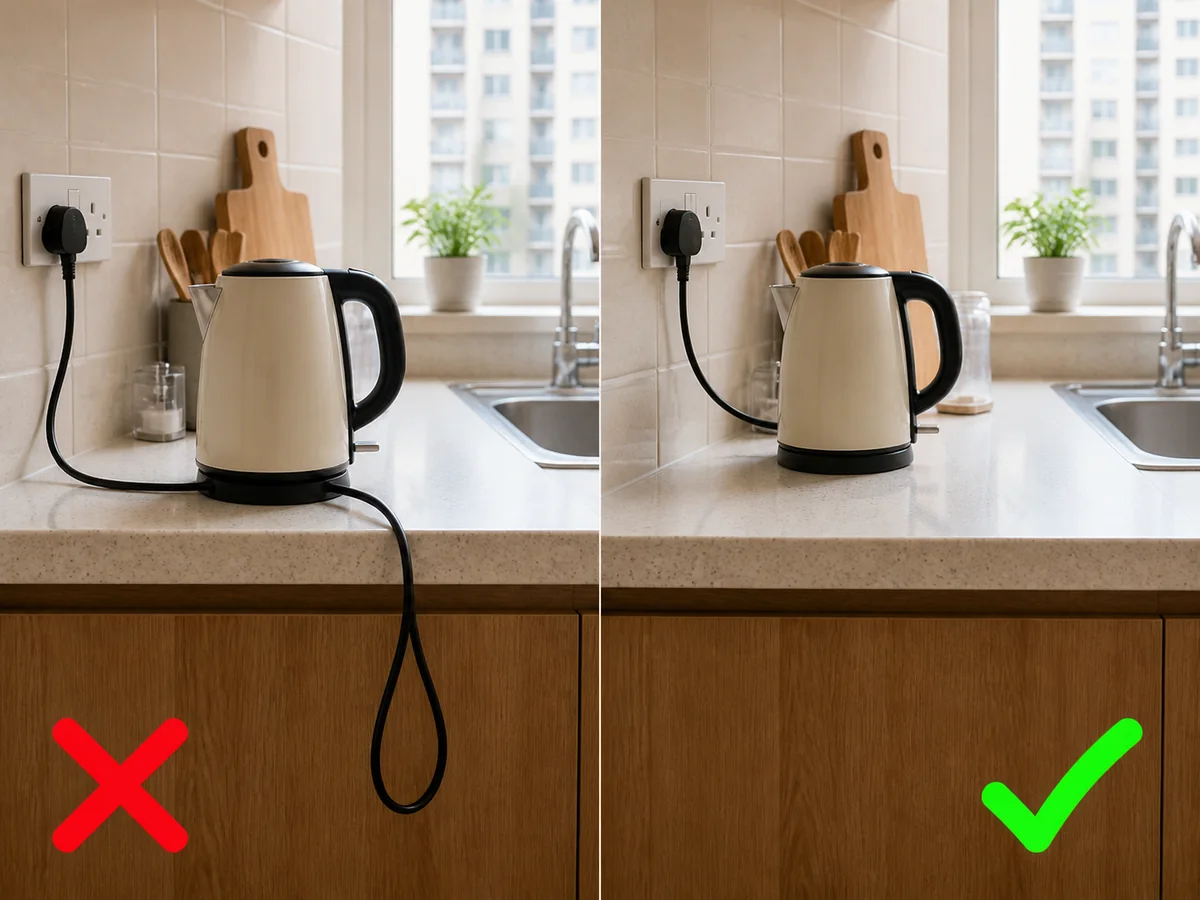
Place kettles and heated appliances securely at the back of the counter and keep their cords where children cannot pull them.
View safety lesson →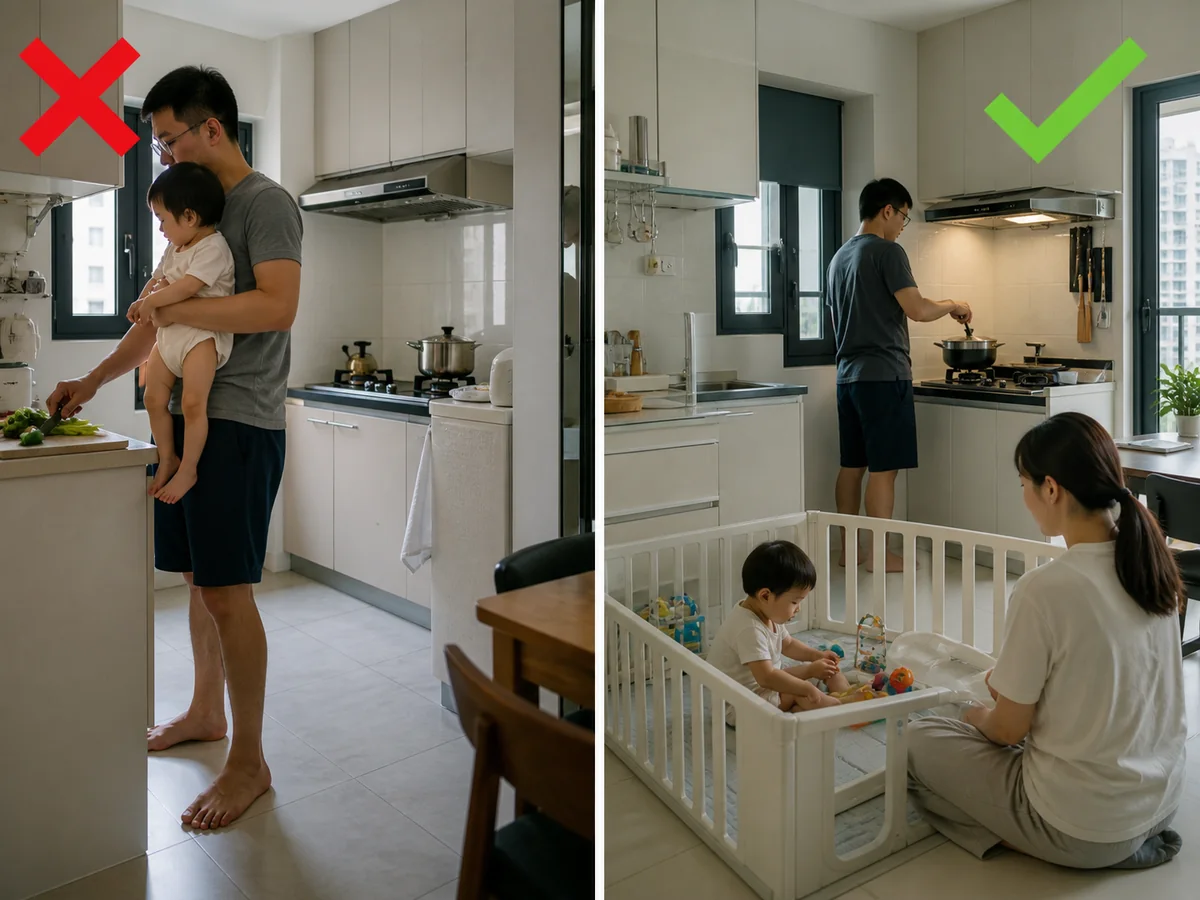
Before using a flame, hot oil, or hot pan, ask another adult to supervise the child or place the child safely away from the cooking area.
View safety lesson →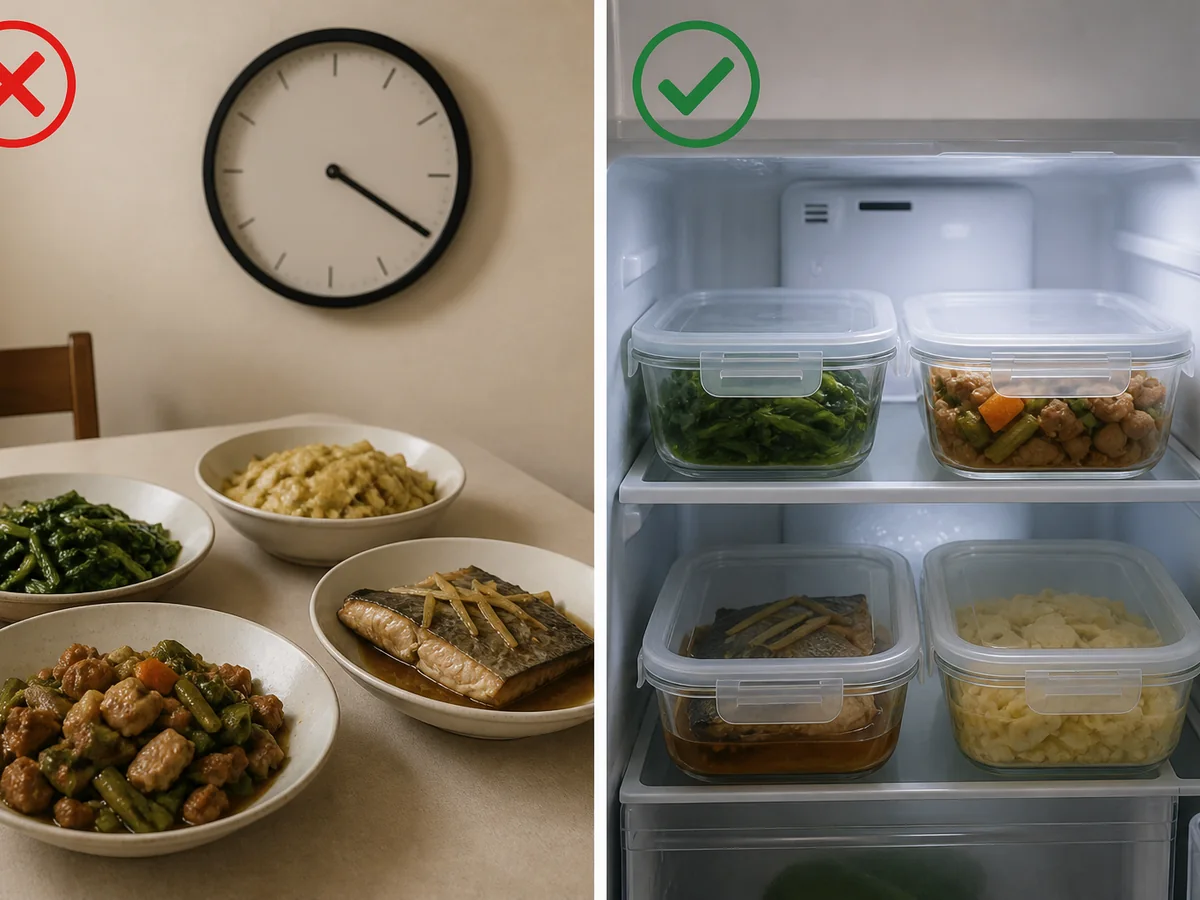
Note the time and refrigerate cooked or purchased perishable food within two hours.
View safety lesson →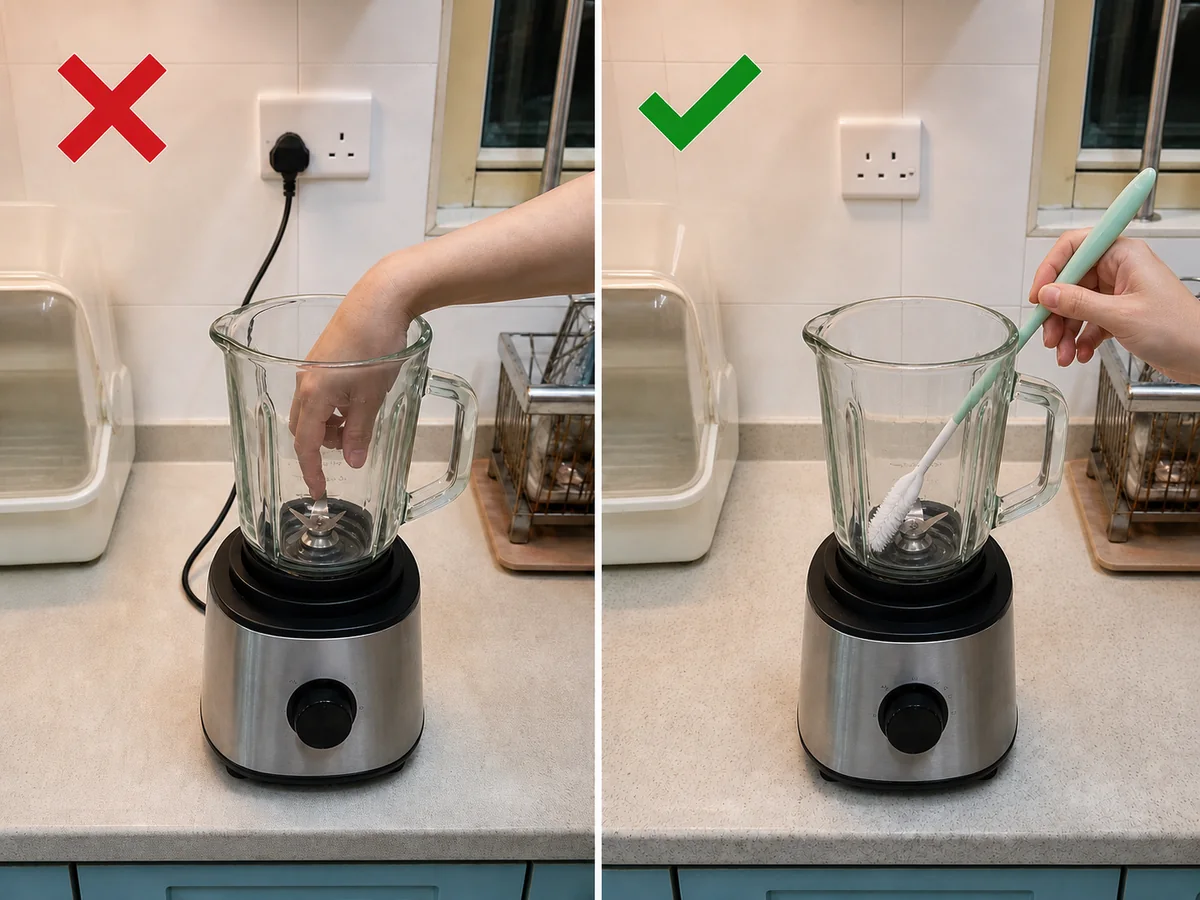
Switch off and unplug, wait for the blades to stop, then fit, remove, or clean them as instructed.
View safety lesson →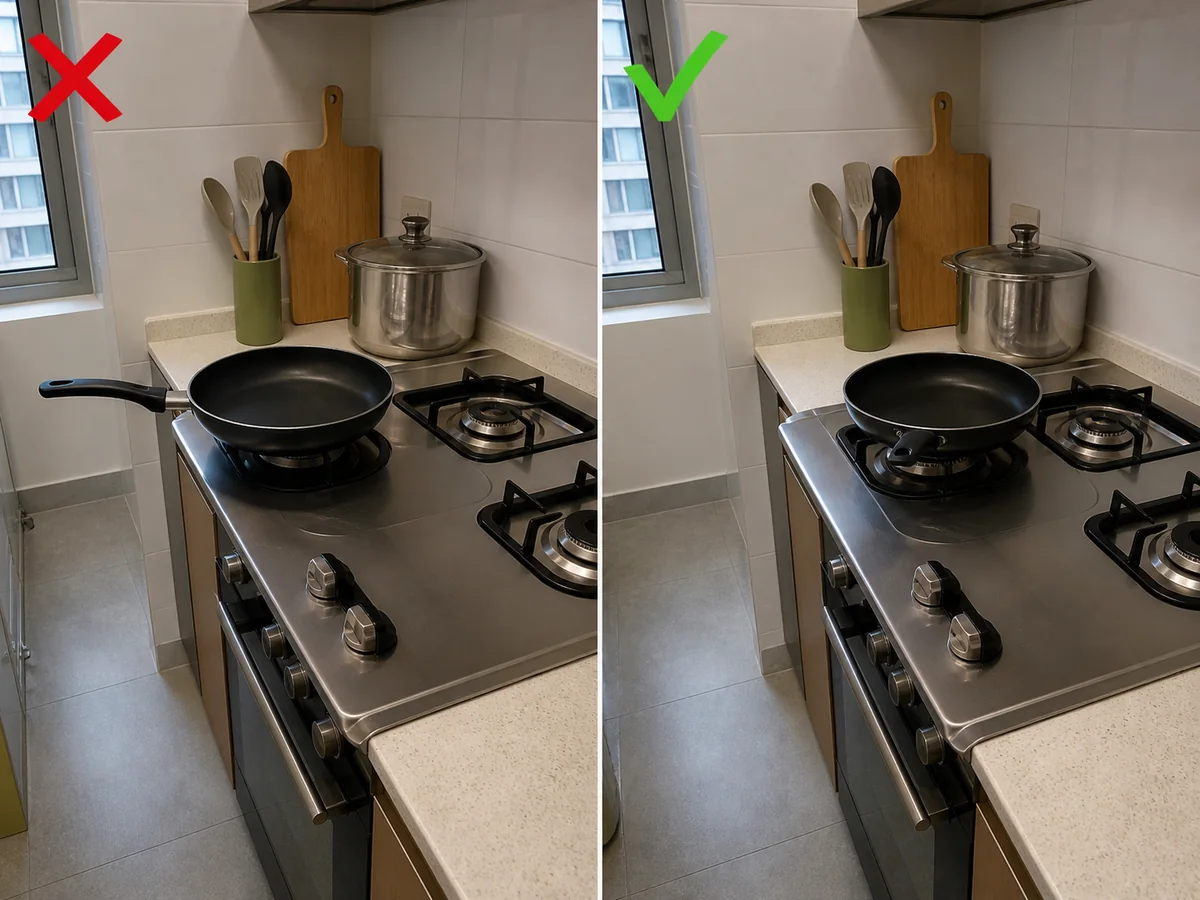
Use a burner suited to the frying pan, keep the pan near the centre and stable, and turn the handle to a safe position.
View safety lesson →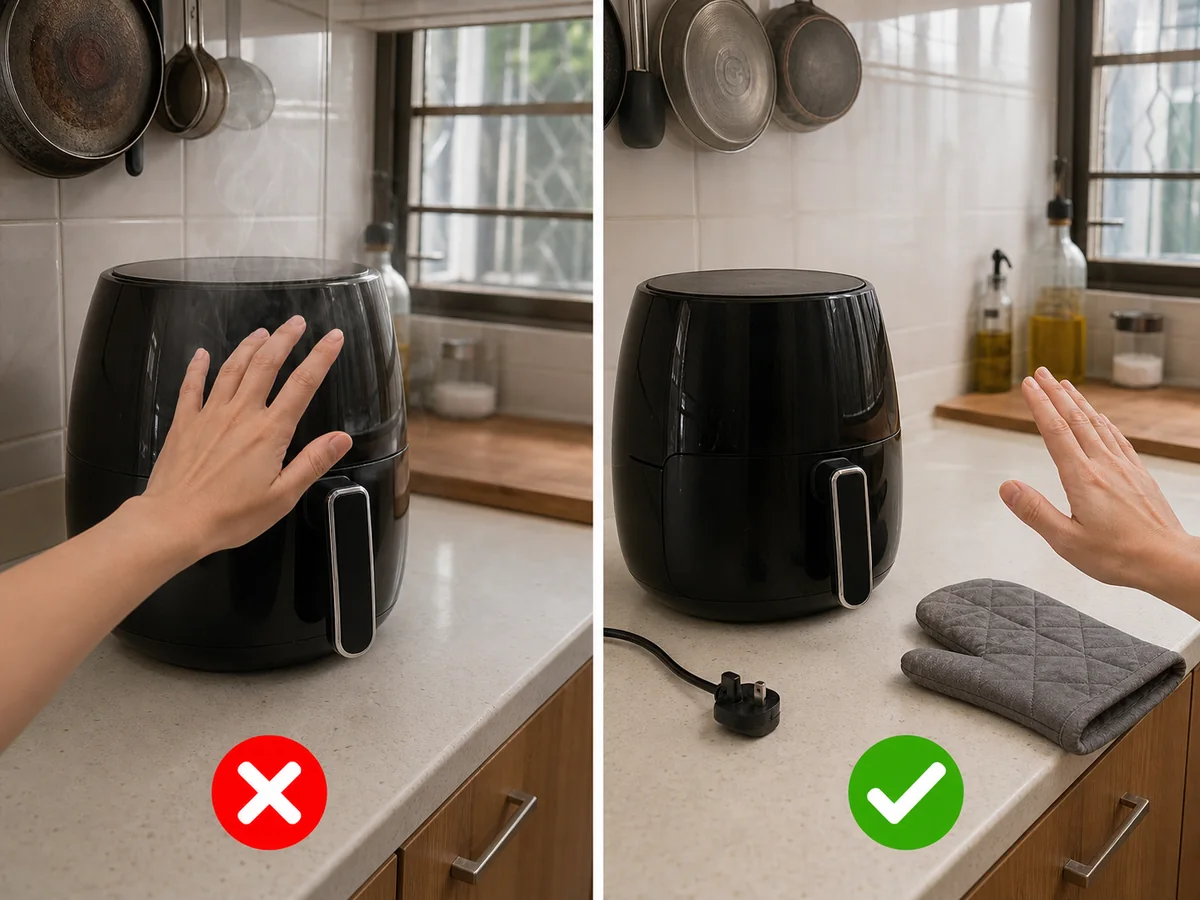
After use, switch off and unplug, then let the body, basket, tray, and interior cool as instructed before cleaning or storage.
View safety lesson →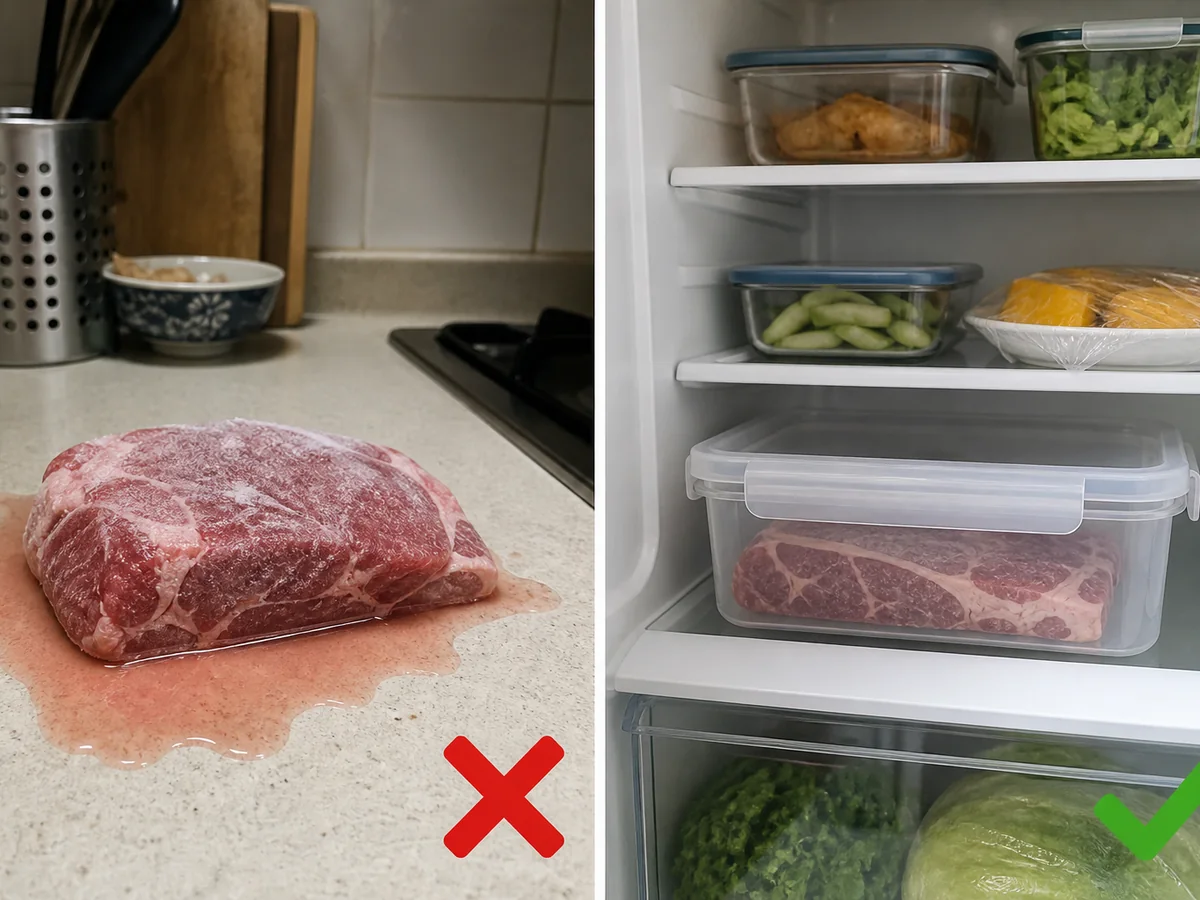
Thaw in the refrigerator; approved running-water or microwave methods require immediate cooking.
View safety lesson →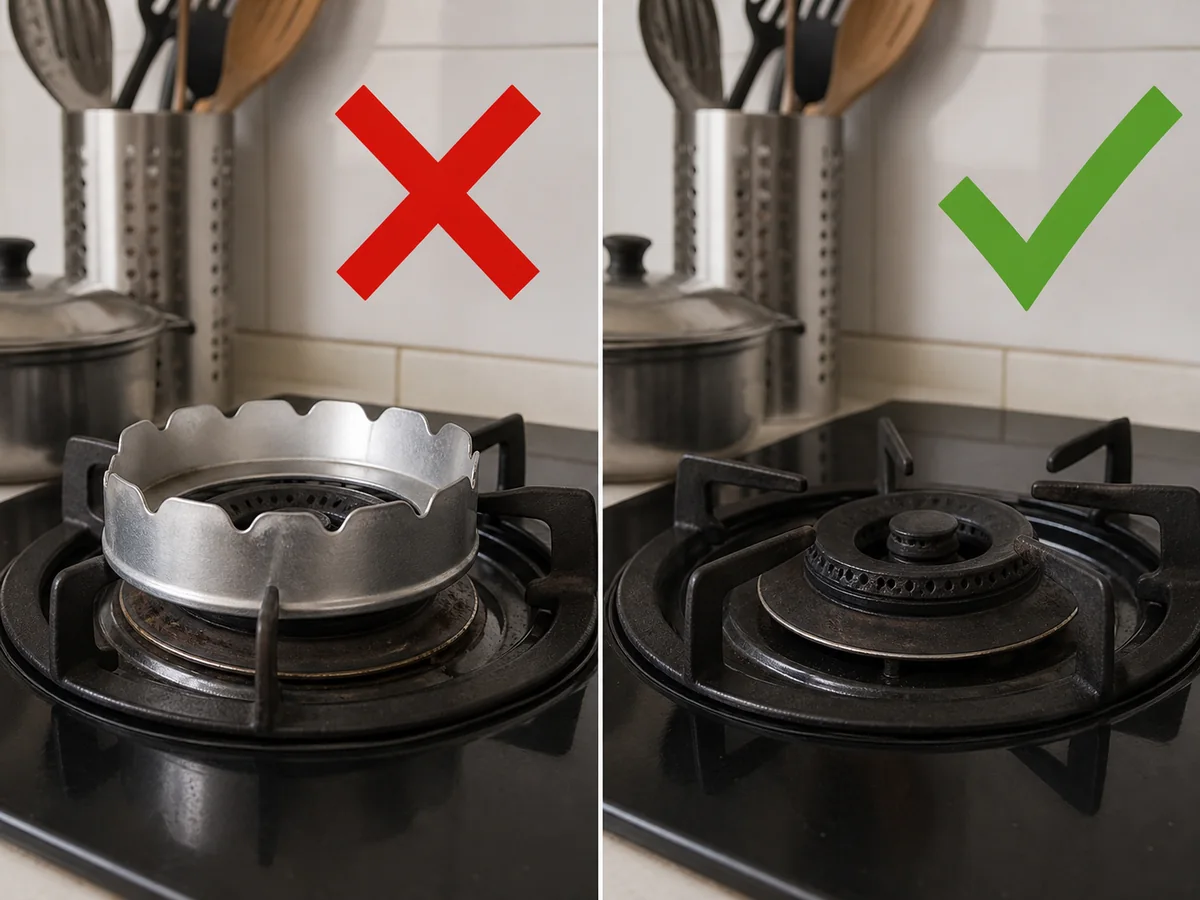
Do not add an energy-saving ring, flame concentrator, or accessory not supplied or approved by the original cooker manufacturer.
View safety lesson →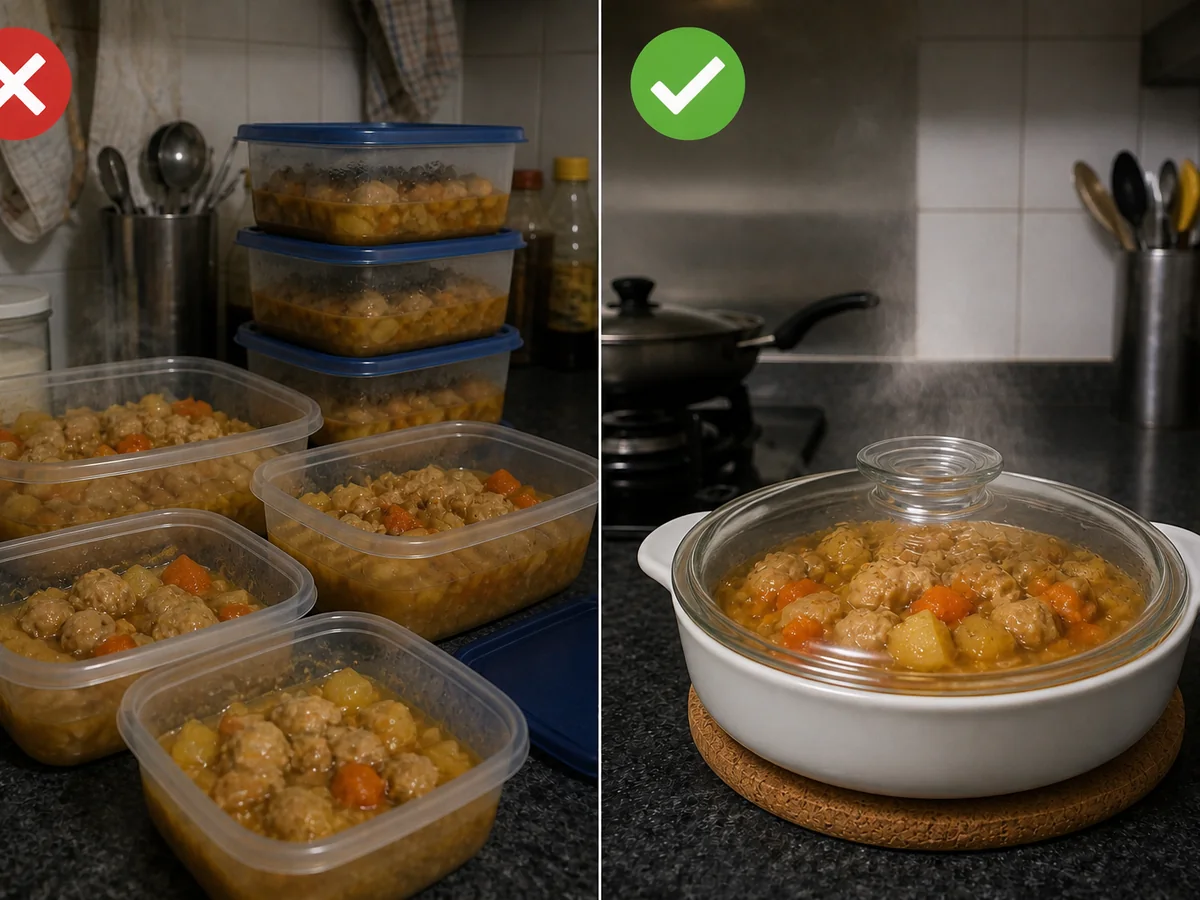
Take only the needed portion, reheat the centre to at least 75°C, and do not reheat refrigerated leftovers more than once.
View safety lesson →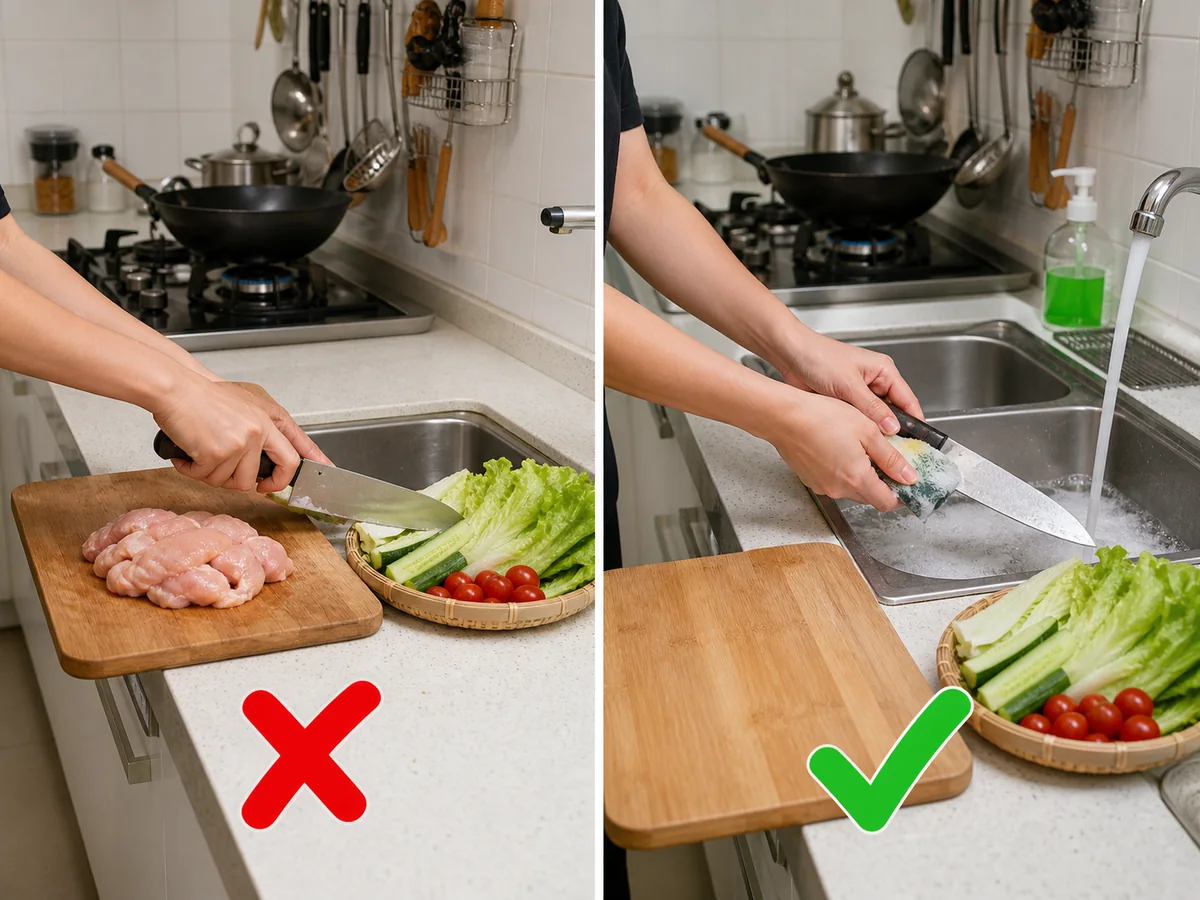
After raw meat, poultry, seafood, or eggs, clean utensils and worktops thoroughly with hot water and detergent, then sanitise where appropriate.
View safety lesson →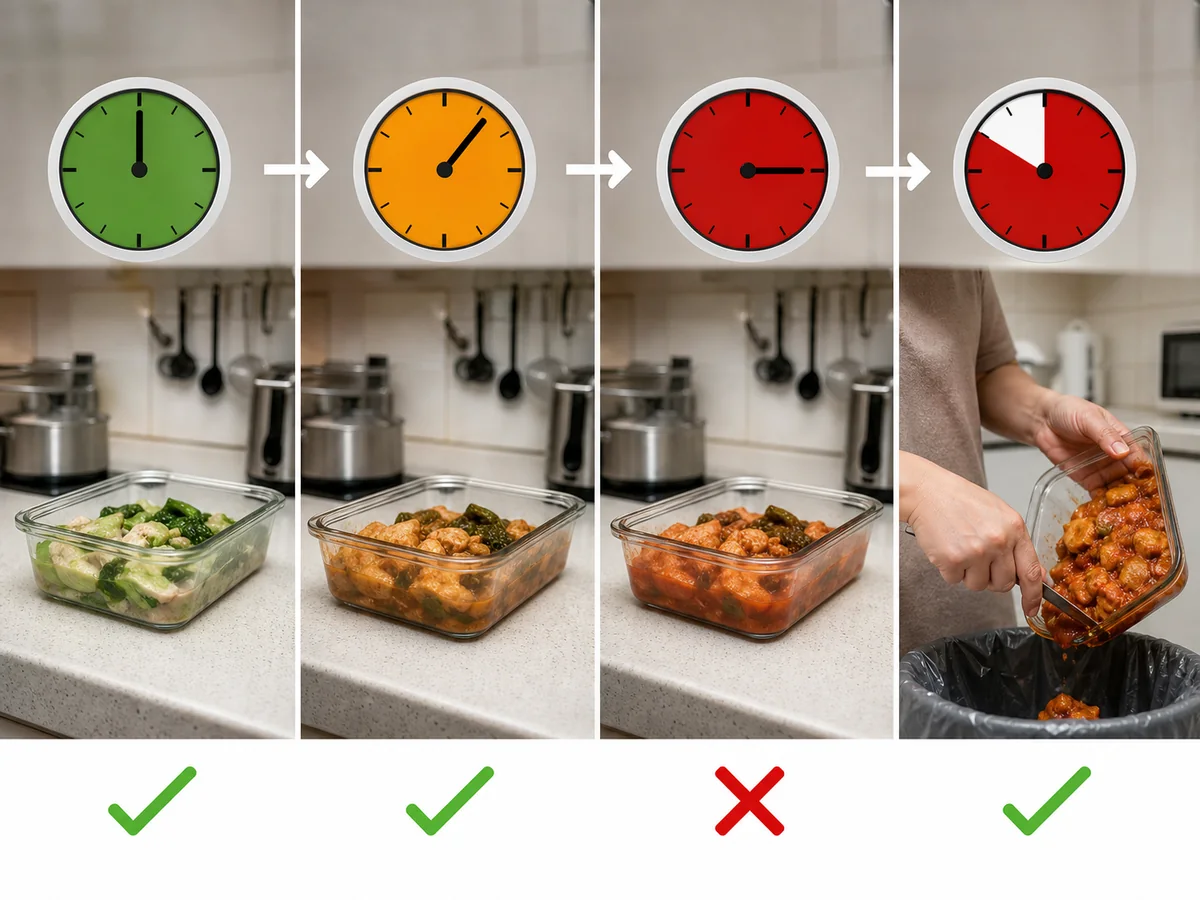
Count cumulative time at 4–60°C: under two hours, eat or refrigerate; two to four hours, eat immediately; over four hours, discard.
View safety lesson →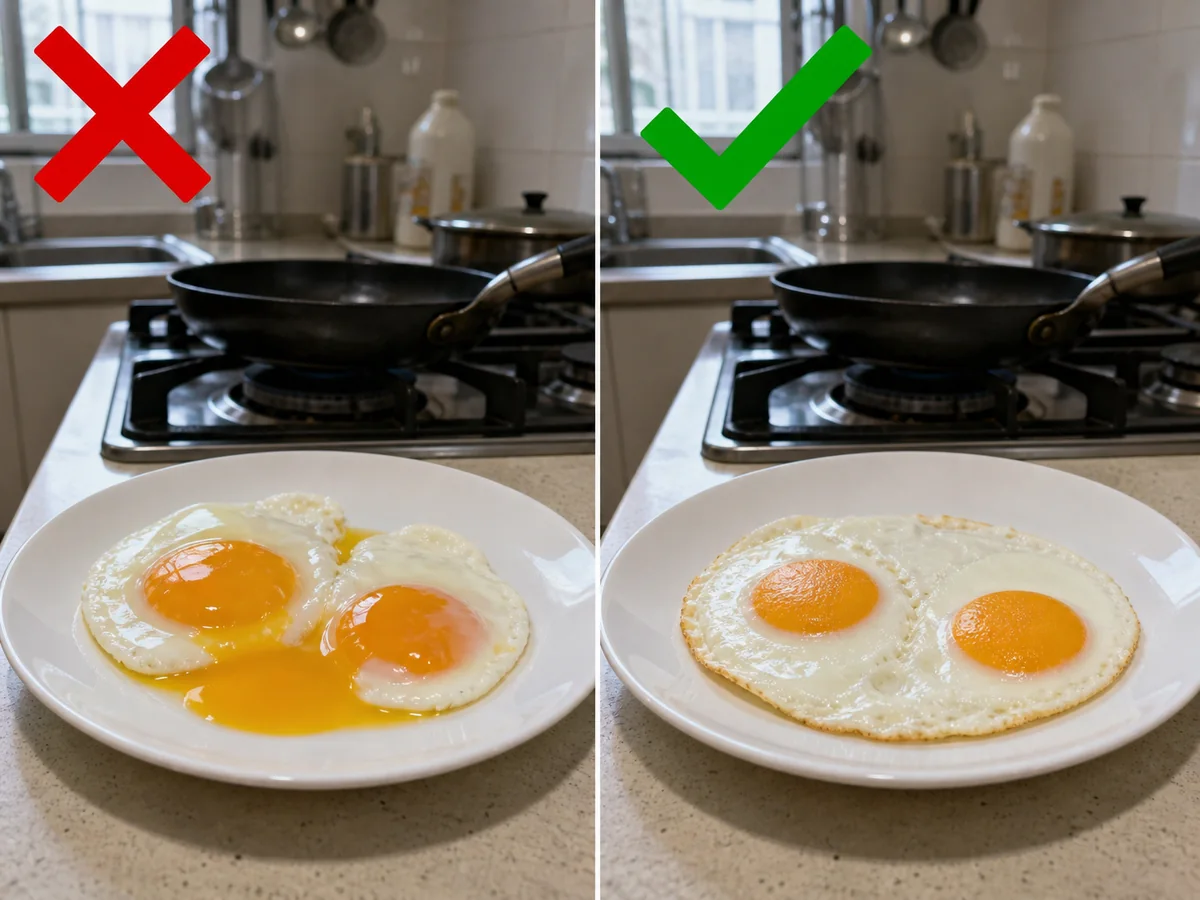
For routine household cooking, cook eggs thoroughly until both white and yolk are firm; ask the employer about any specific meal requirement.
View safety lesson →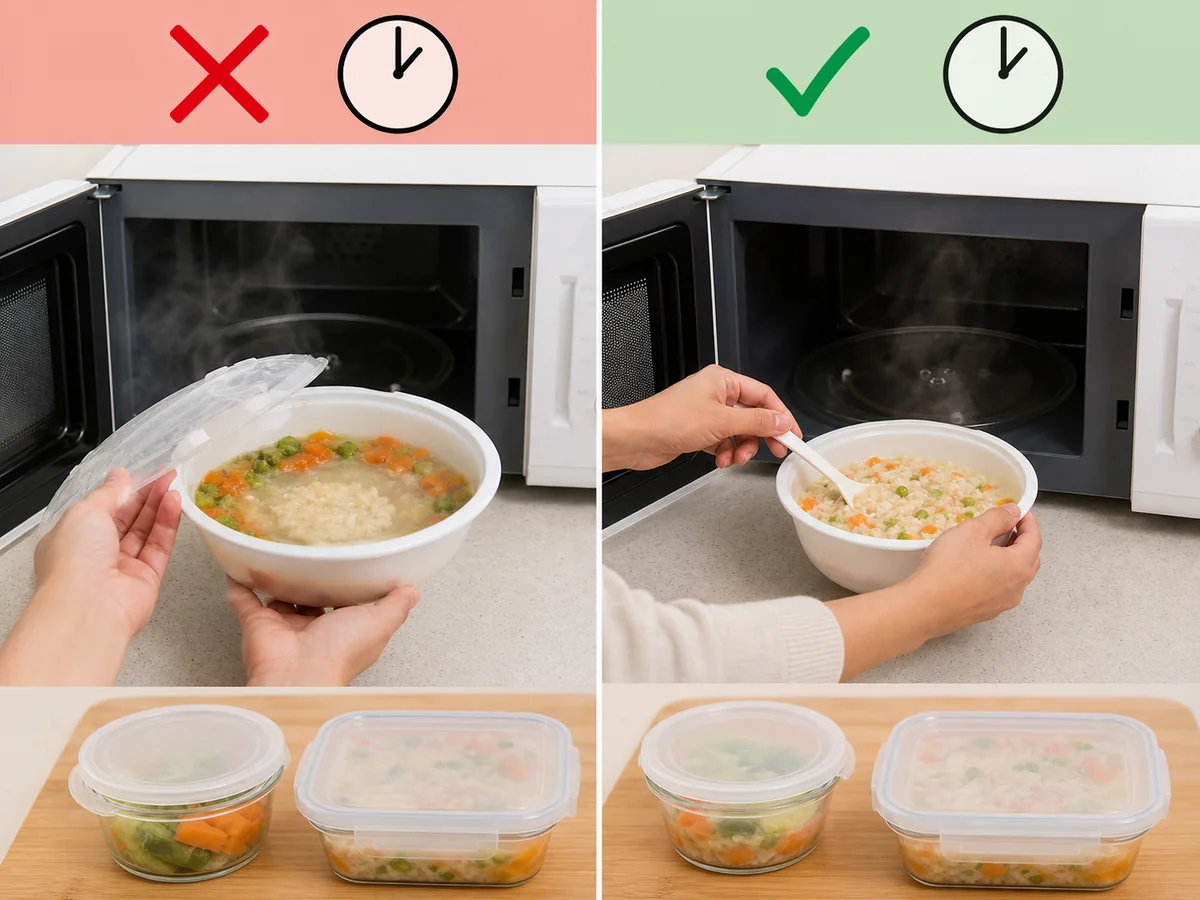
Where suitable, stir or turn food partway through, allow standing time, and check the centre is thoroughly hot.
View safety lesson →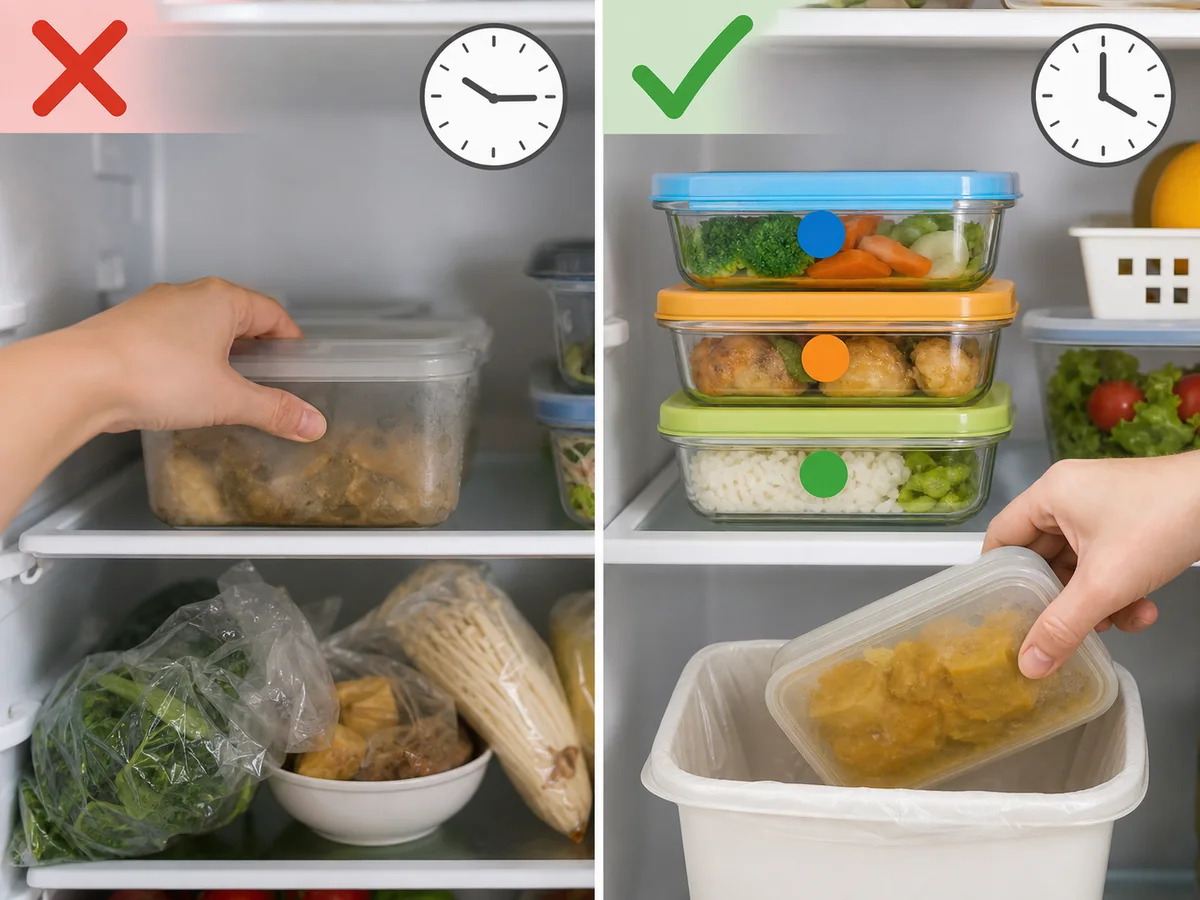
Date and refrigerate leftovers properly; discard them after more than three days, and discard sooner if they were mishandled.
View safety lesson →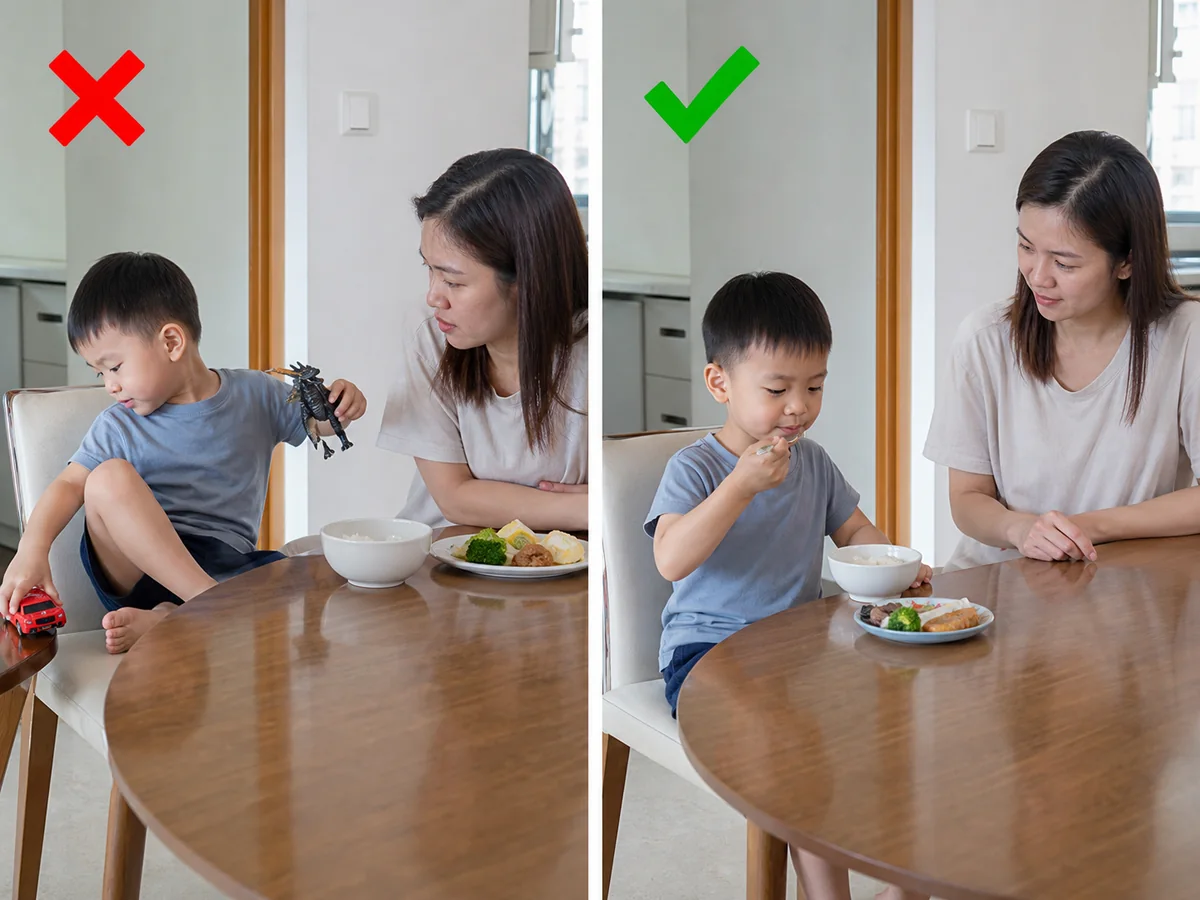
Have the child sit still and eat calmly with an adult nearby; do not let them run, play, or laugh with food in the mouth.
View safety lesson →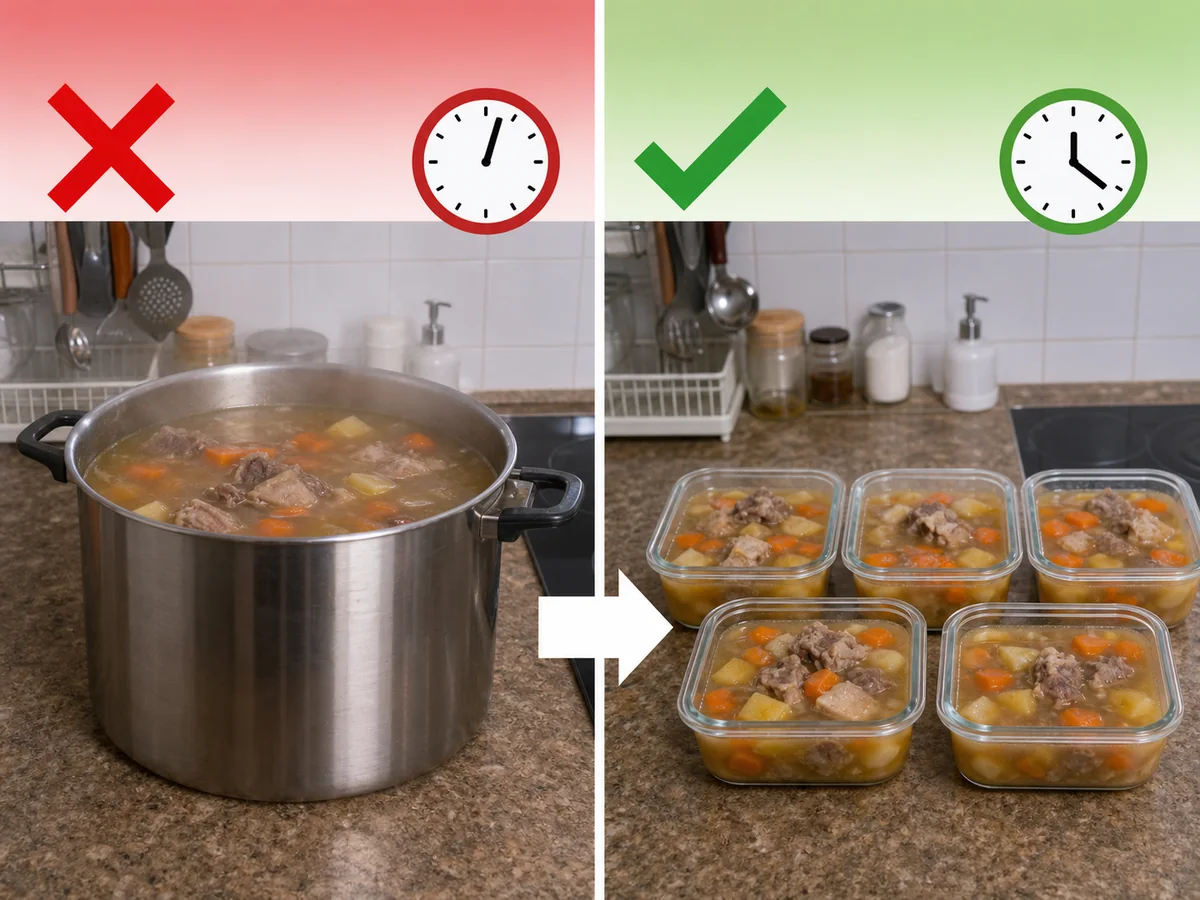
Divide large amounts into small portions in shallow containers and refrigerate promptly; do not wait for a whole pot to cool fully at room temperature.
View safety lesson →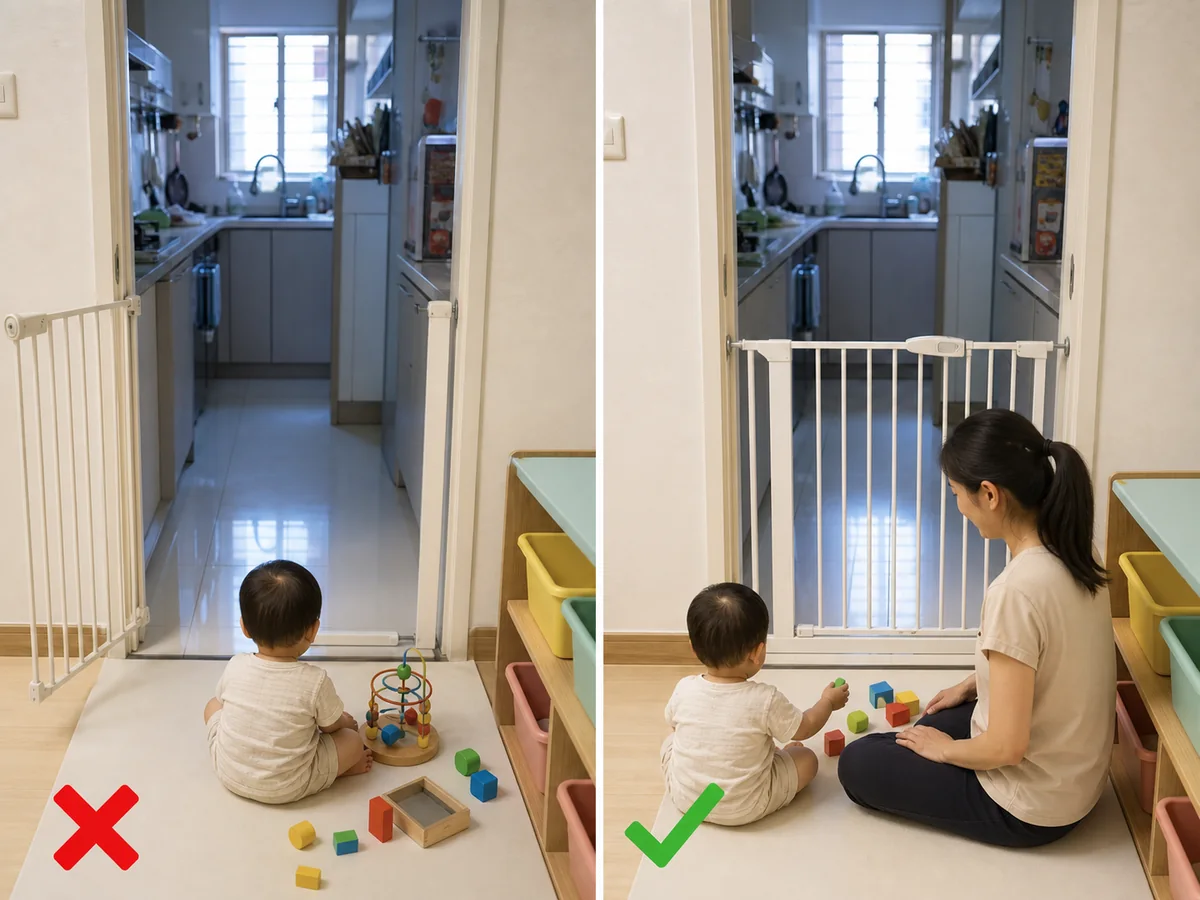
For a child under three, fit a suitable safety gate correctly at the kitchen entrance and close it every time.
View safety lesson →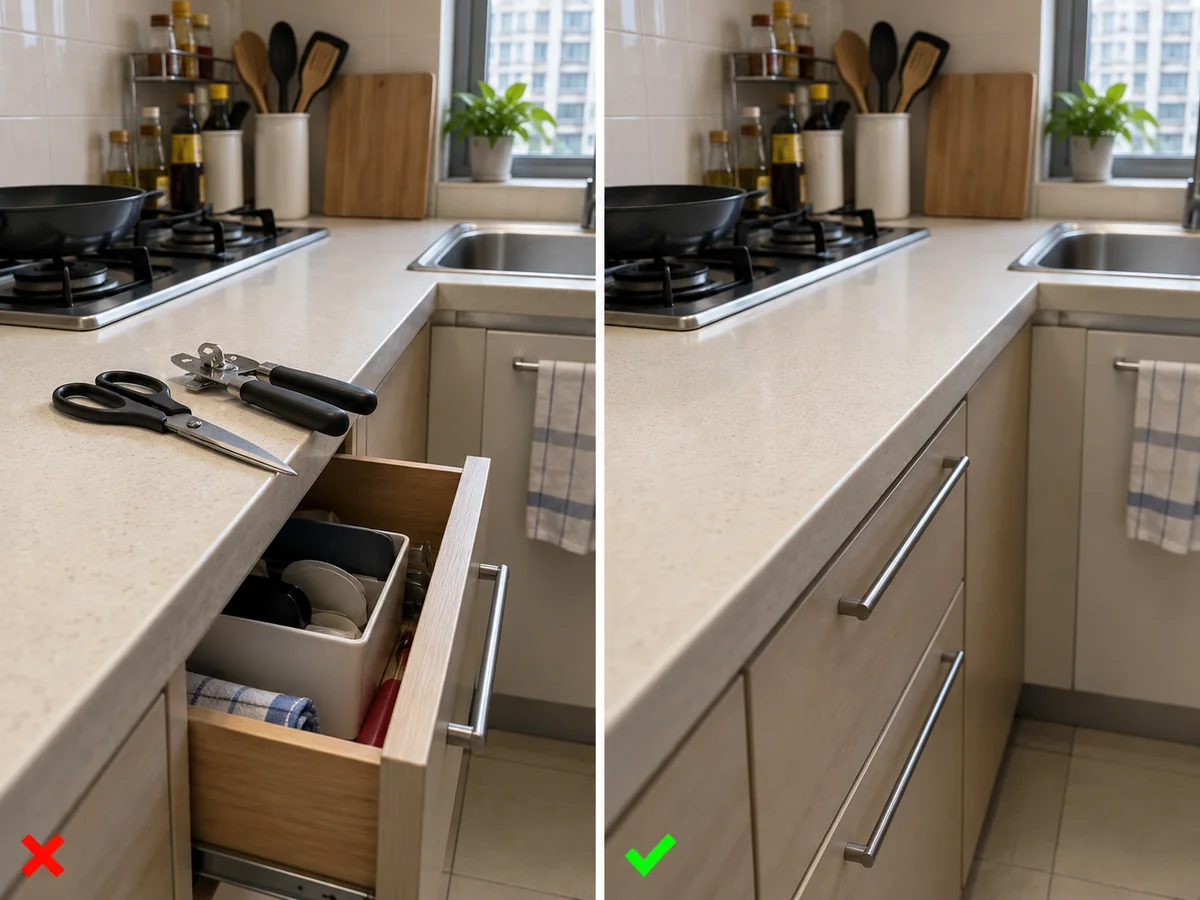
After cleaning and drying, return scissors and can openers to a closed or locked place.
View safety lesson →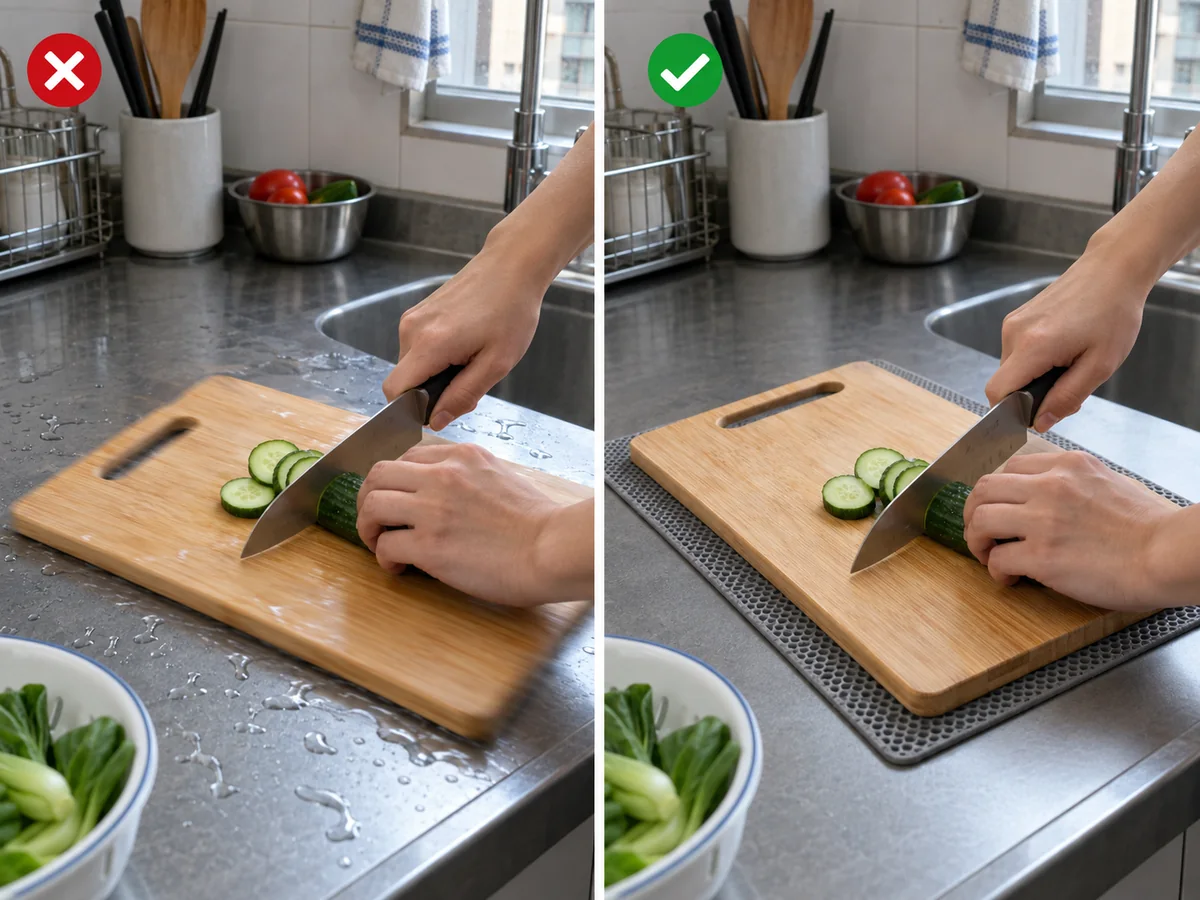
Place the board on a flat counter with a non-slip mat or clean damp cloth underneath.
View safety lesson →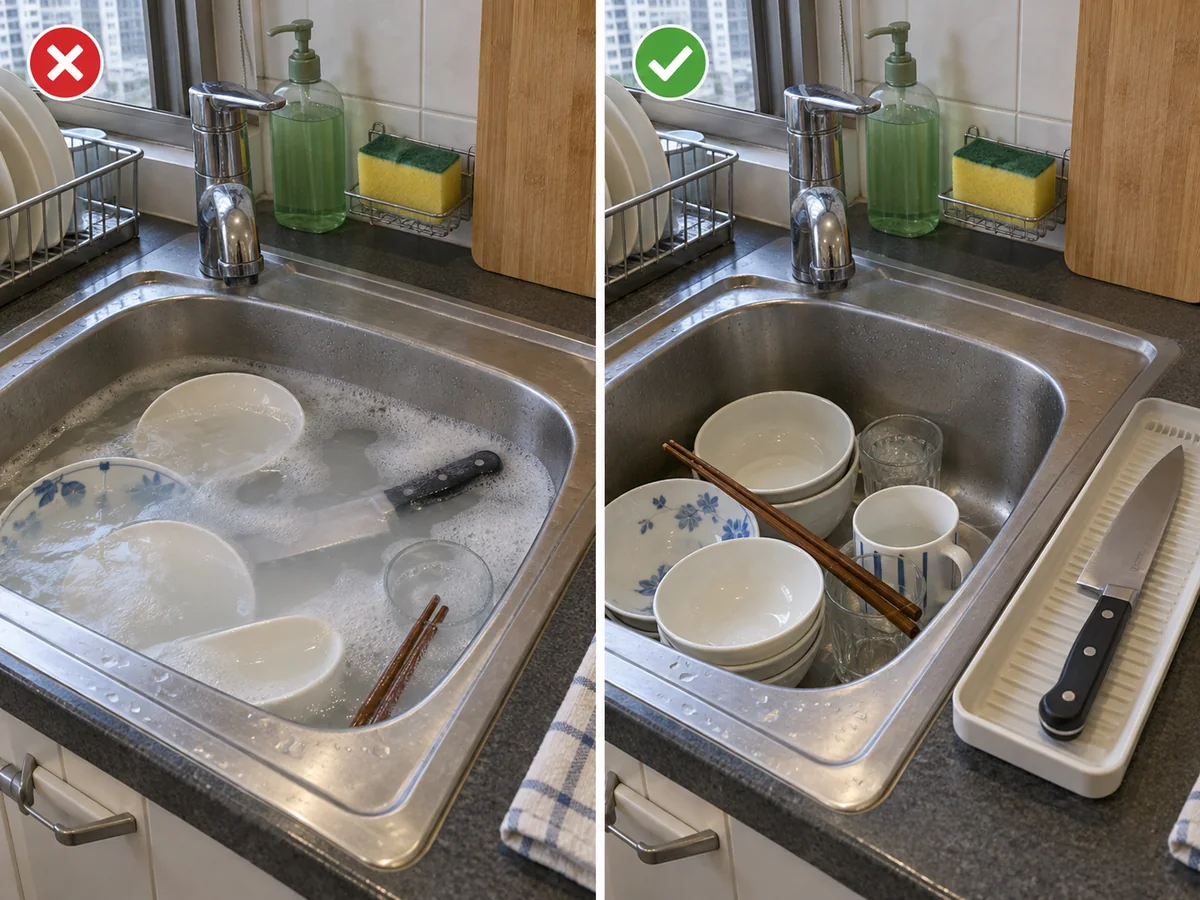
Keep used knives visible, wash them one at a time, and store them immediately.
View safety lesson →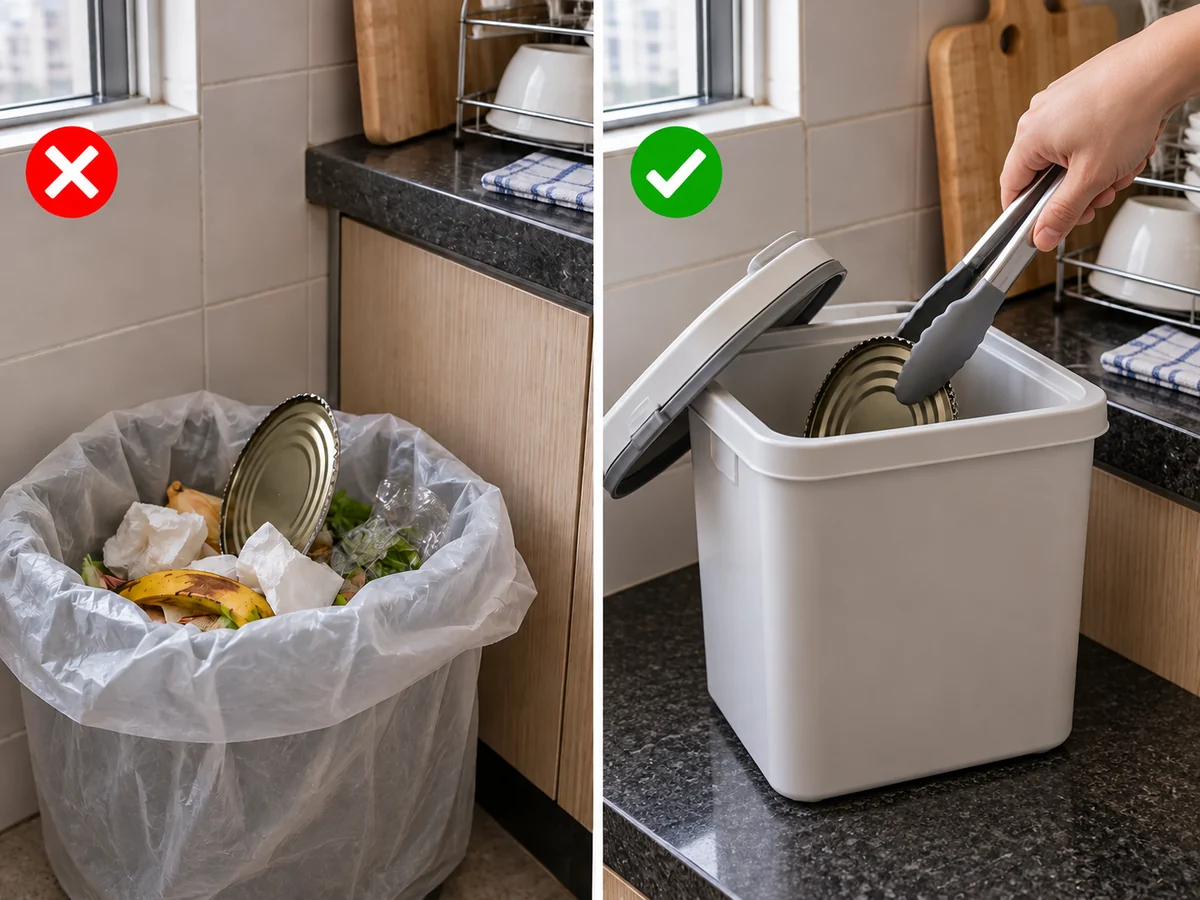
Control the sharp lid immediately after opening, wrap it, and place it in a puncture-resistant container.
View safety lesson →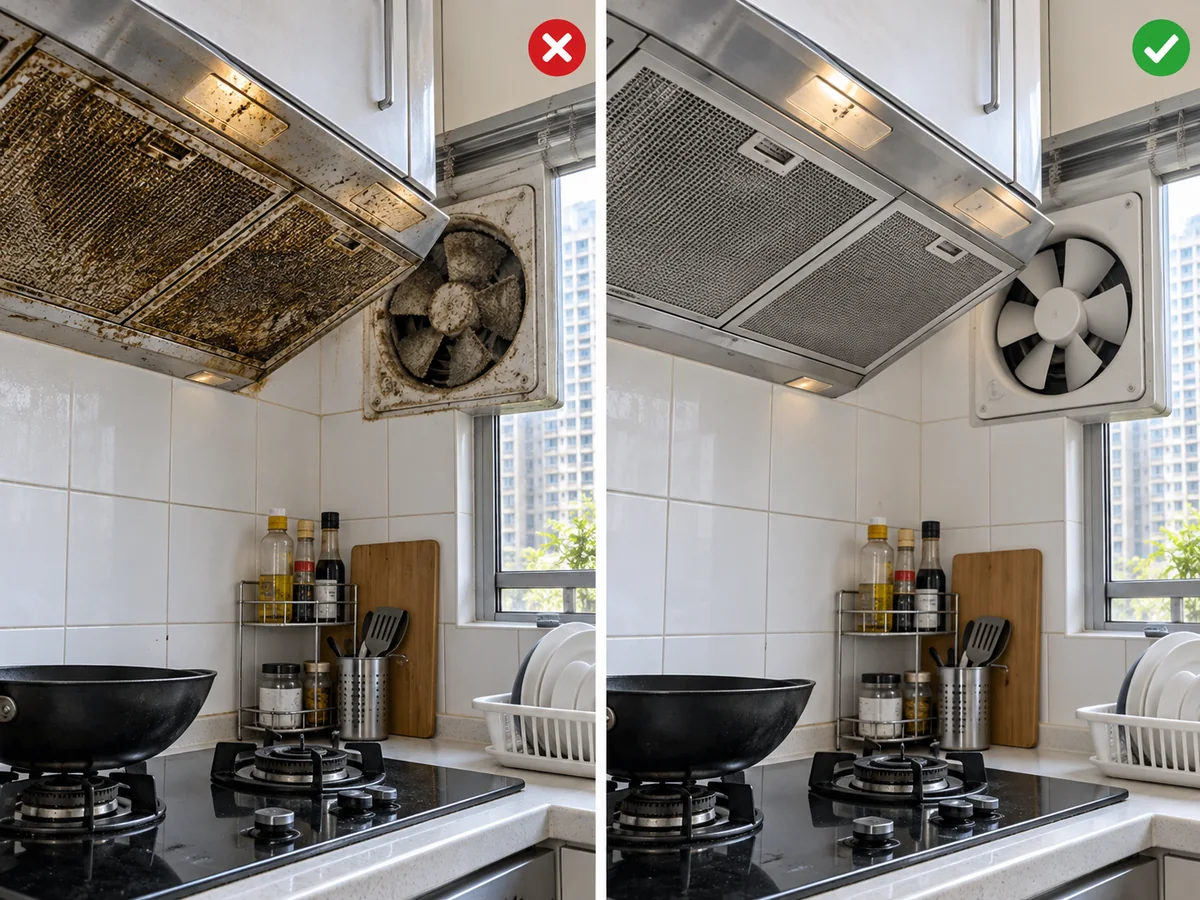
Following the maker’s instructions, remove dust and grease after power is off and parts are cool.
View safety lesson →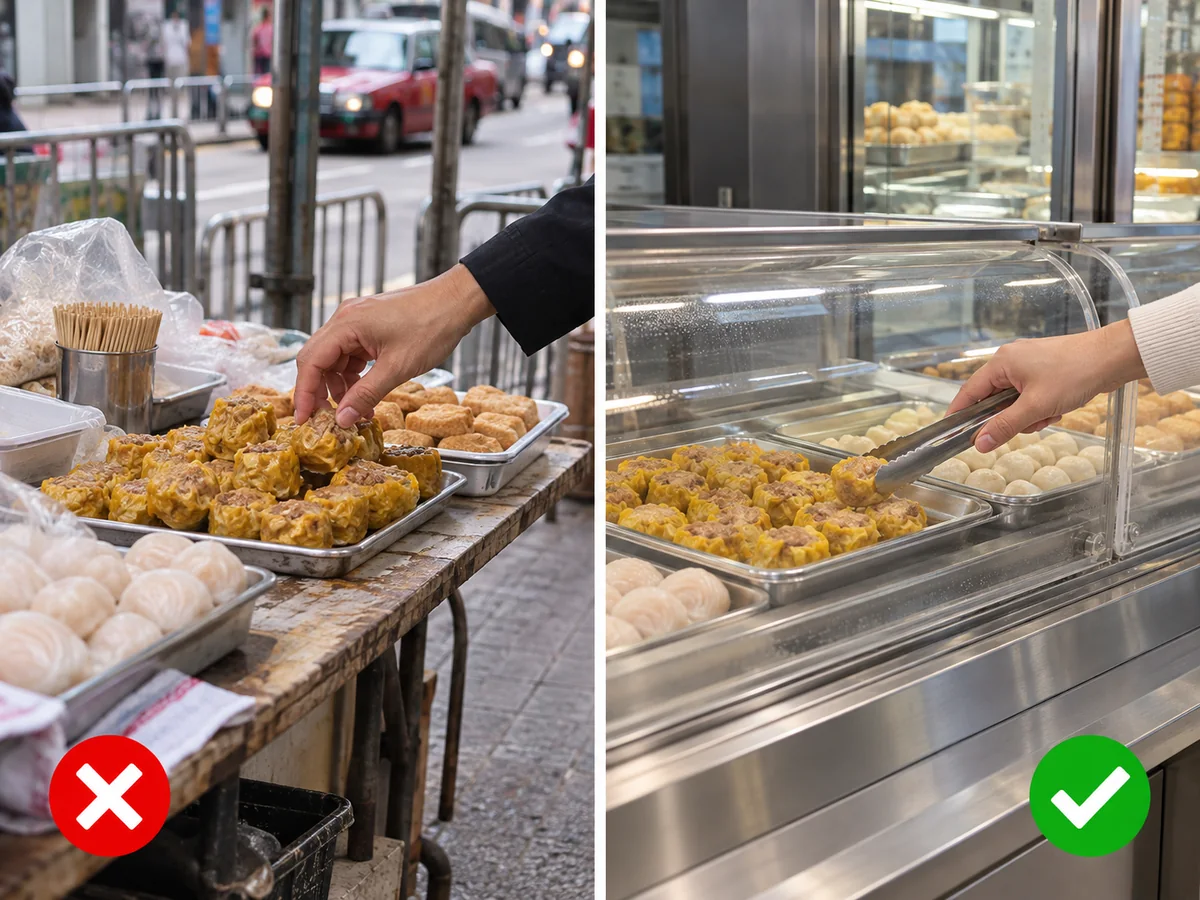
Choose hygienic shops that store chilled food properly and hold the required licence.
View safety lesson →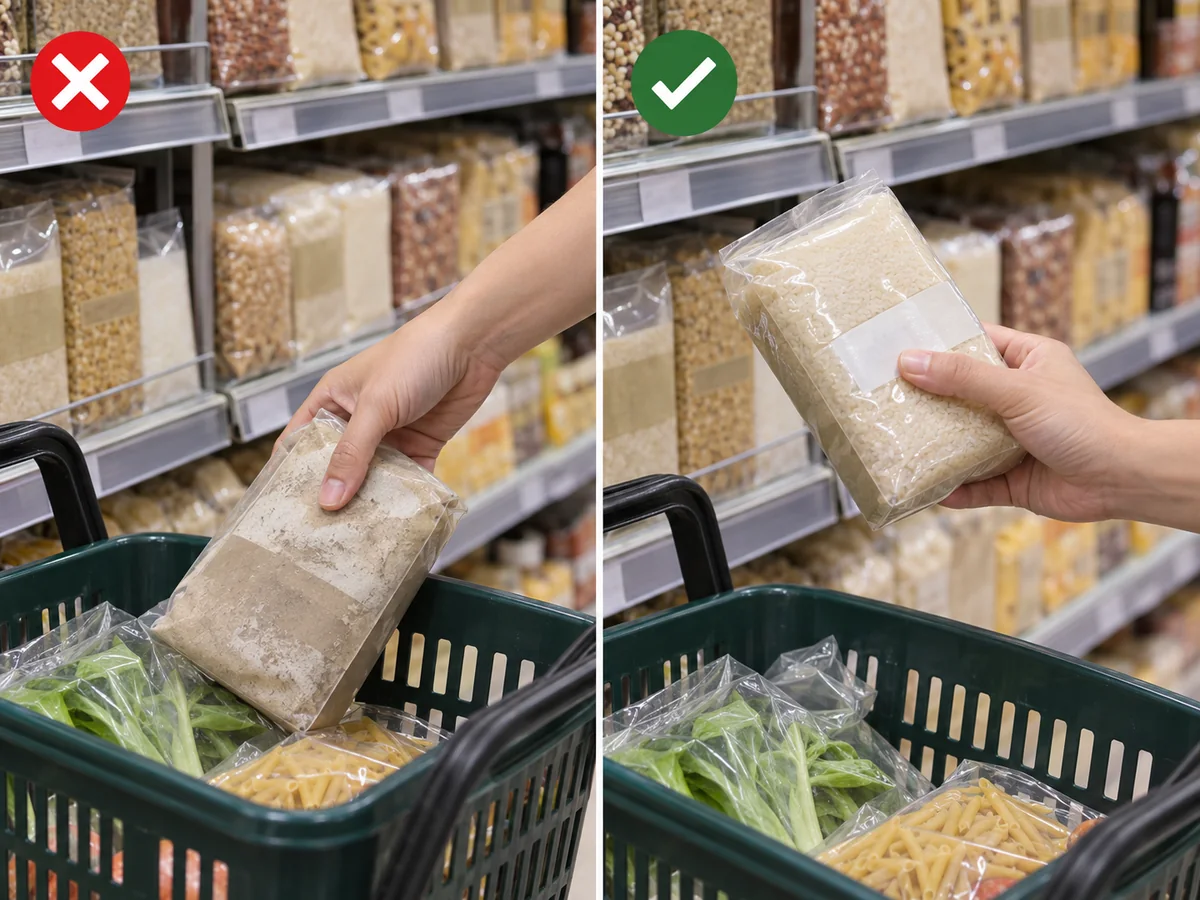
Read use-by or best-before labels and buy only what can be used in time.
View safety lesson →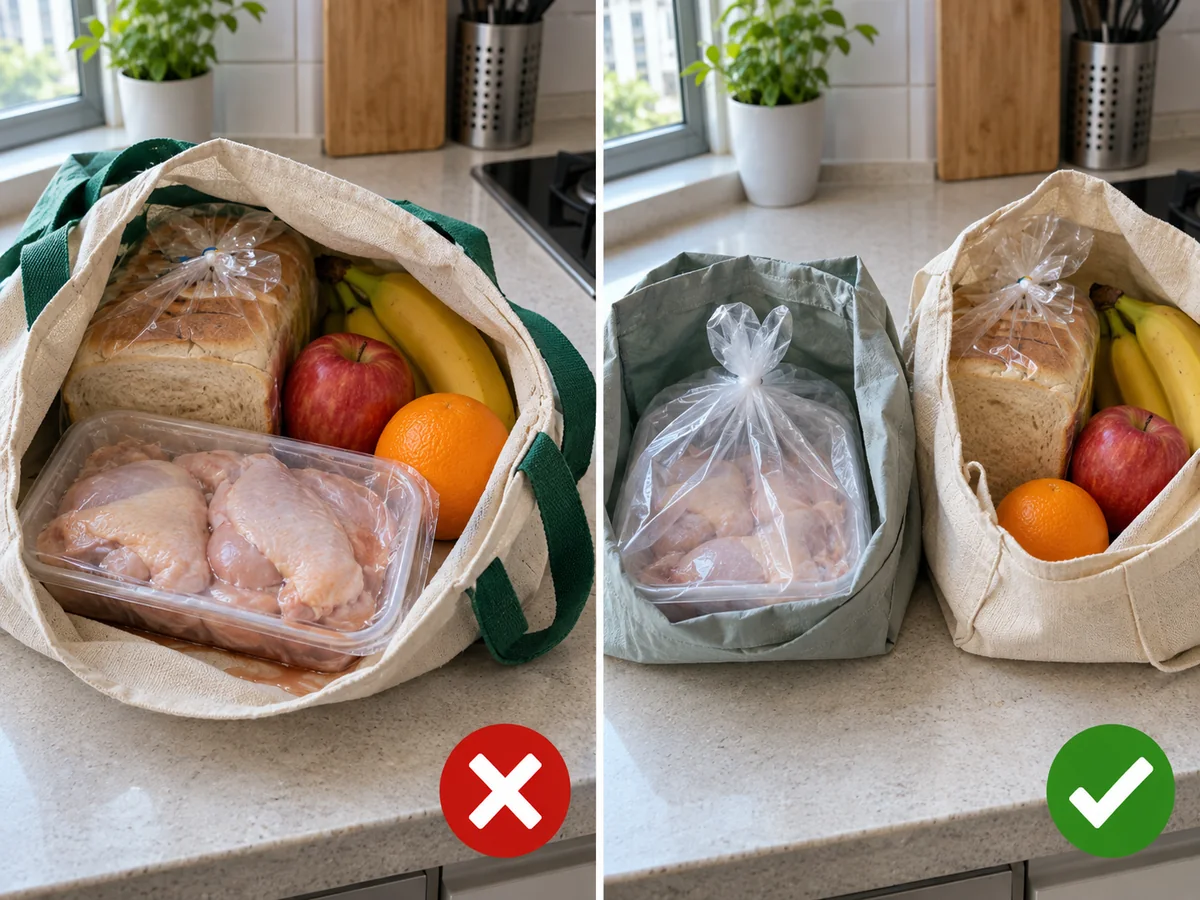
Wrap raw meat, poultry, and seafood separately from cooked and ready-to-eat food.
View safety lesson →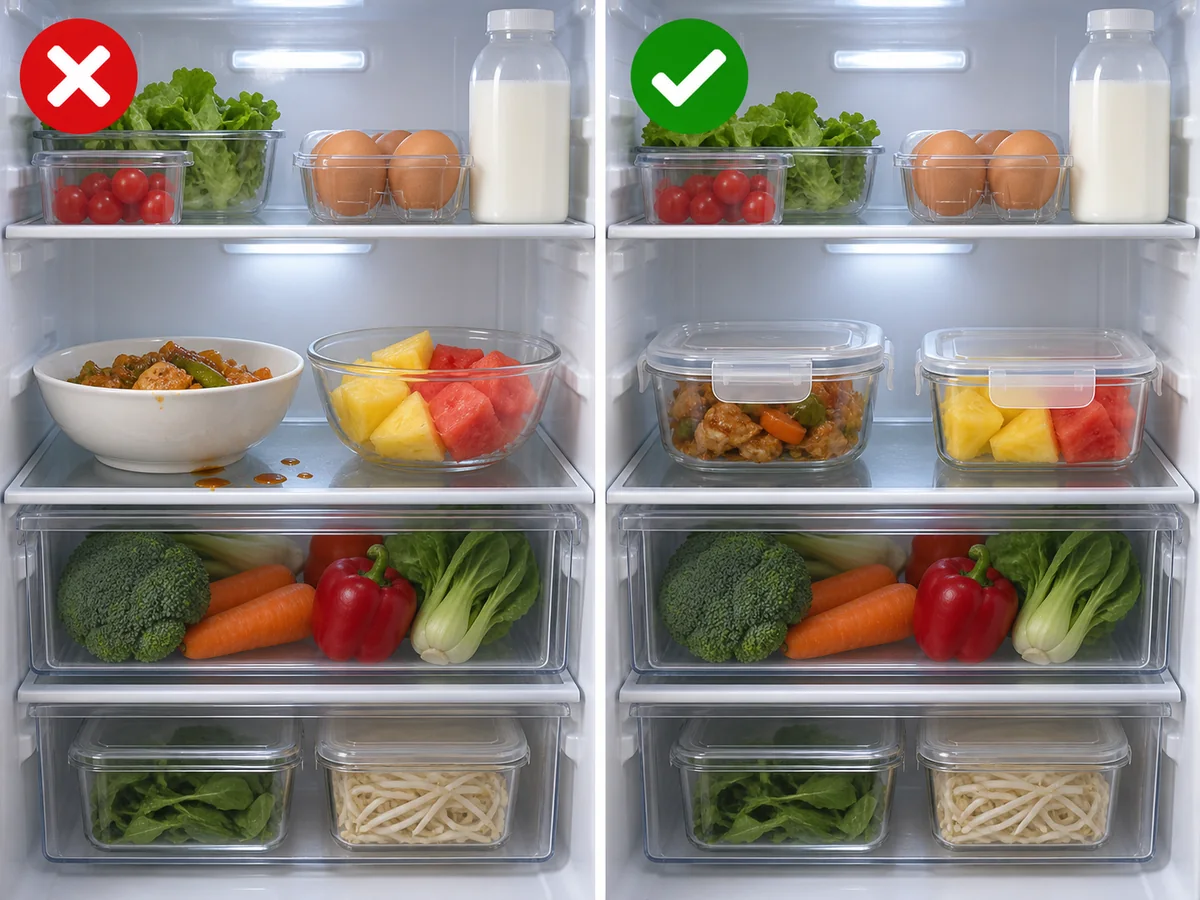
Refrigerate food in covered containers or sealed bags labelled with contents and date.
View safety lesson →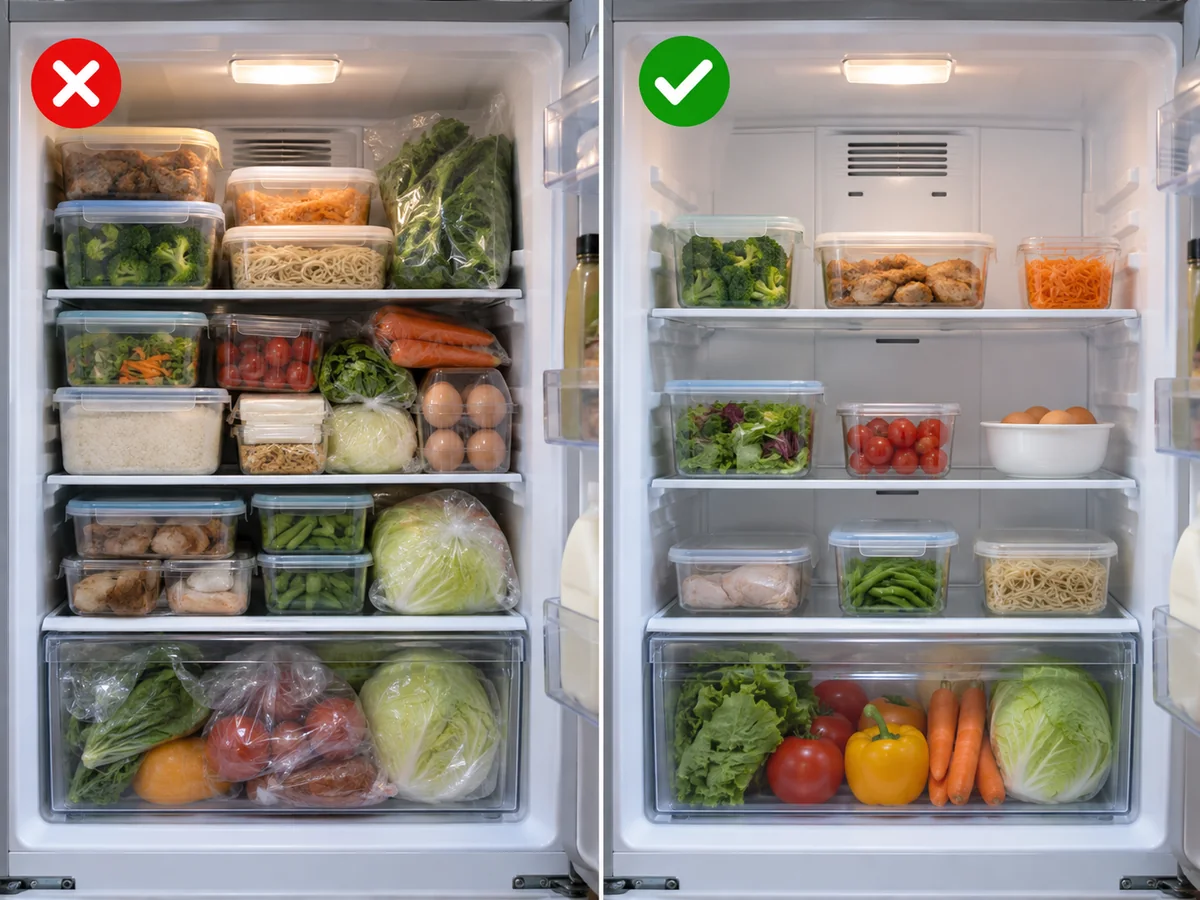
Leave gaps for cold air to circulate and buy in smaller batches when needed.
View safety lesson →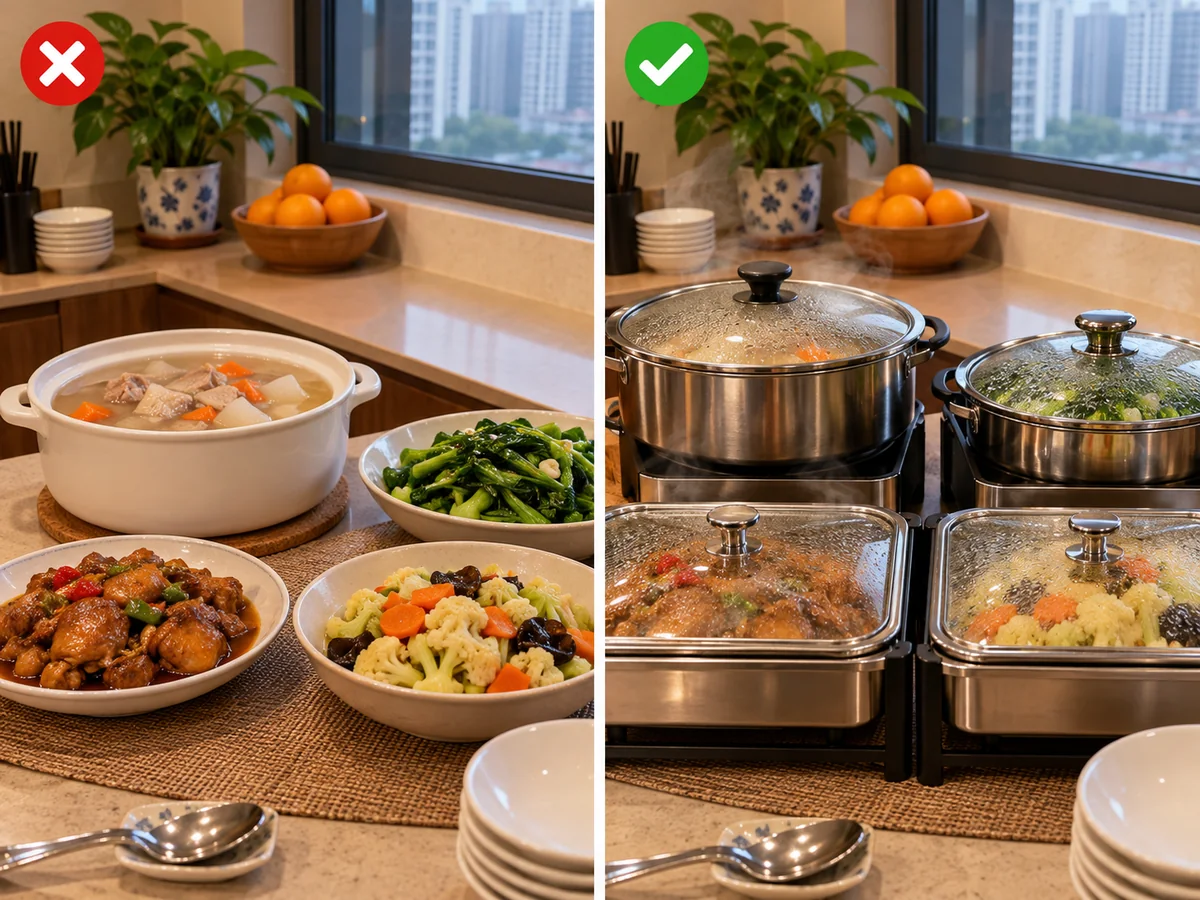
Keep cooked food above 60°C until serving, or cool and refrigerate it promptly.
View safety lesson →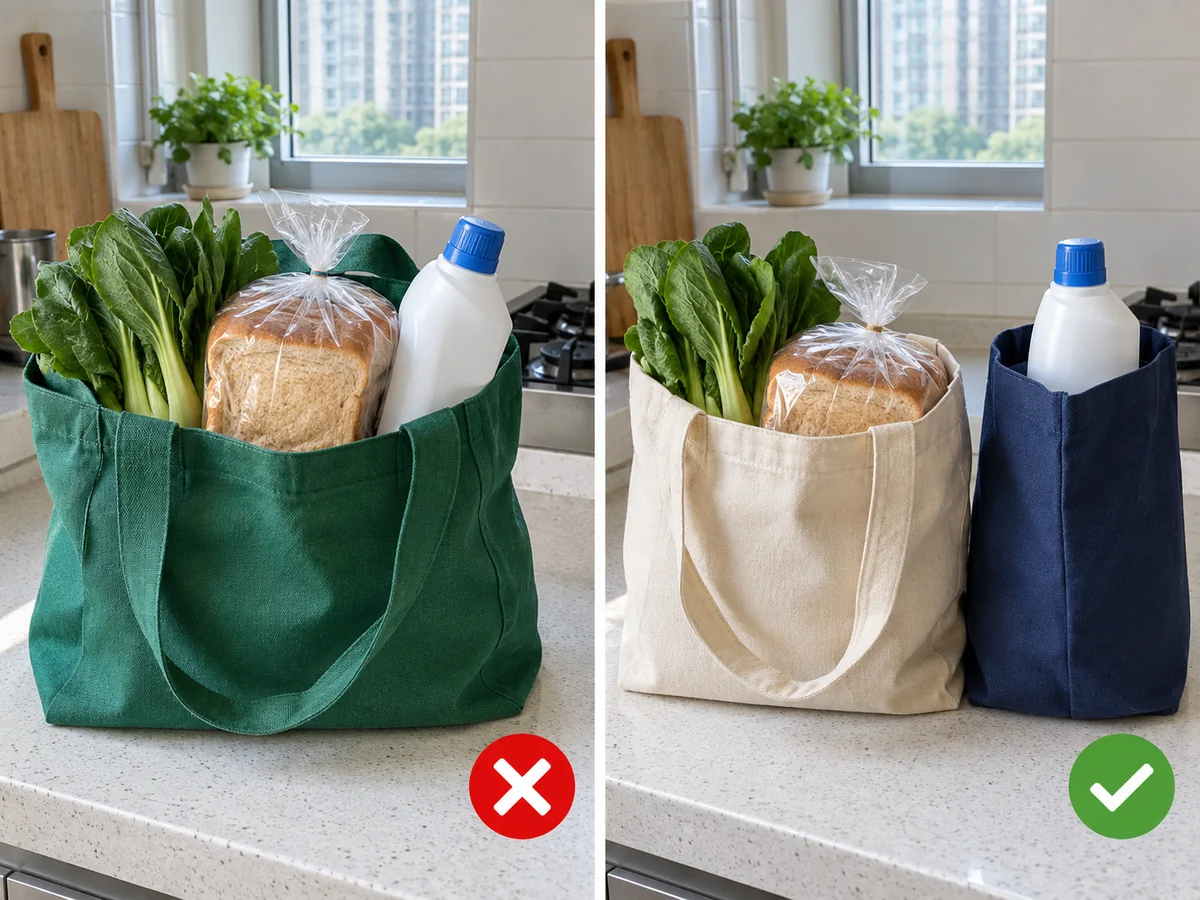
Place cleaners, bleach, and pesticides in bags separate from all food.
View safety lesson →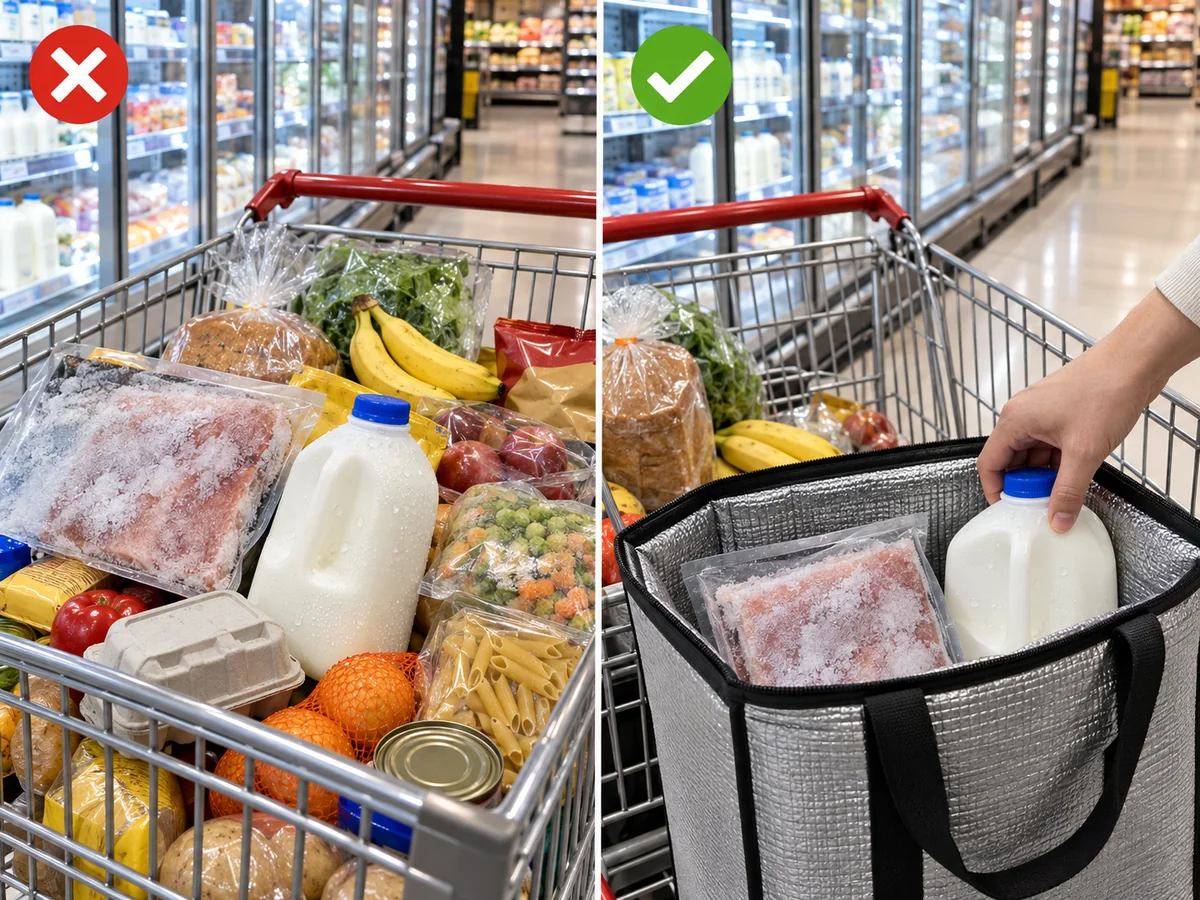
Collect chilled and frozen items last, then go home and refrigerate them promptly.
View safety lesson →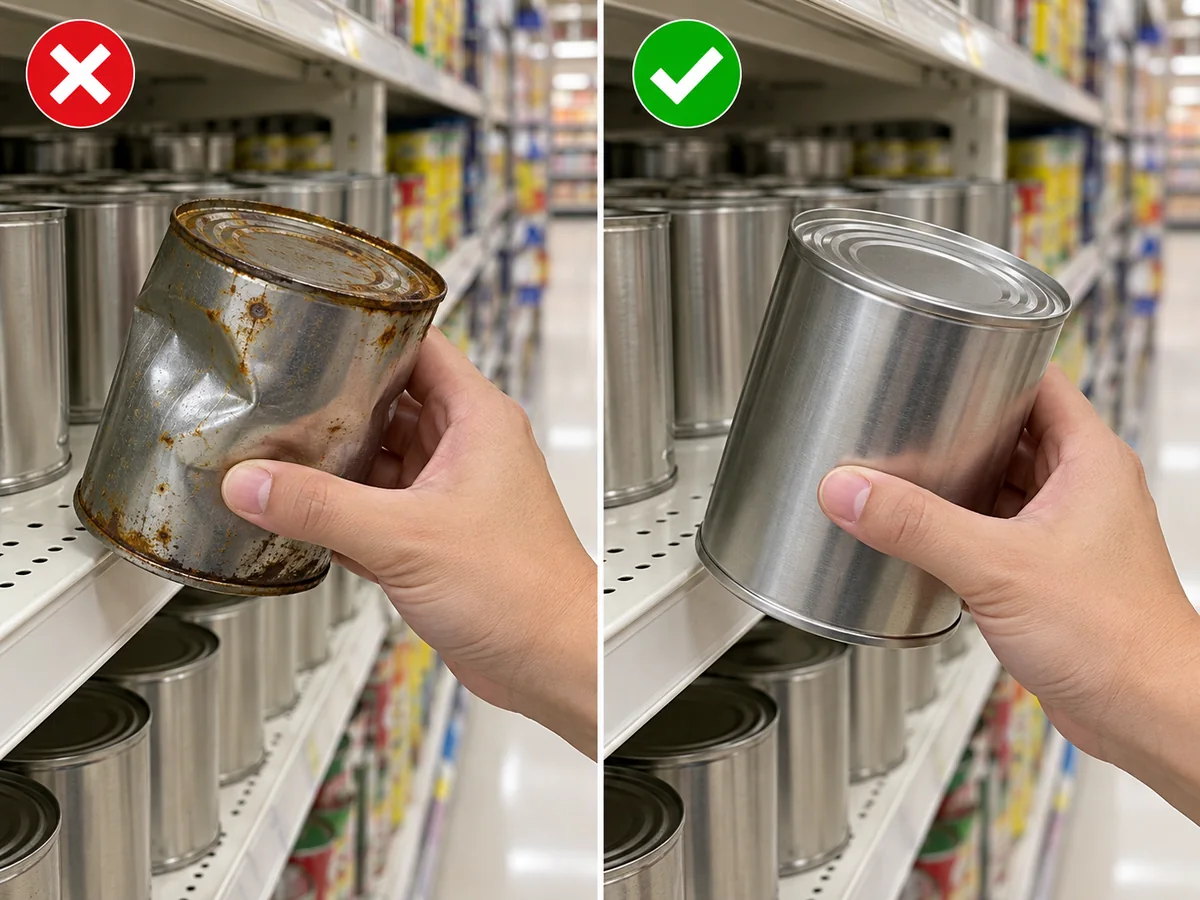
Before buying or opening, inspect the can body, seams, ends, and seal.
View safety lesson →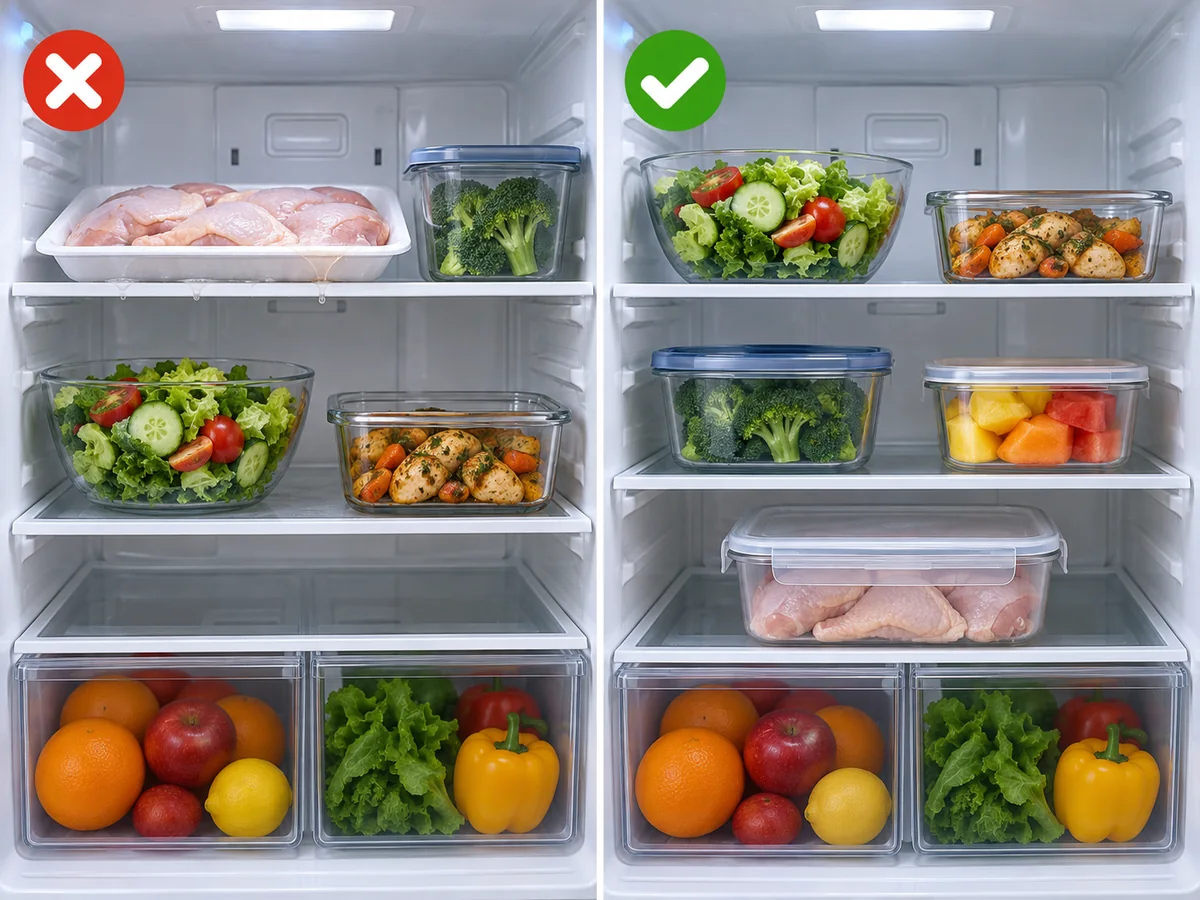
Seal raw meat, poultry, and seafood on the lowest shelf, with ready-to-eat food above.
View safety lesson →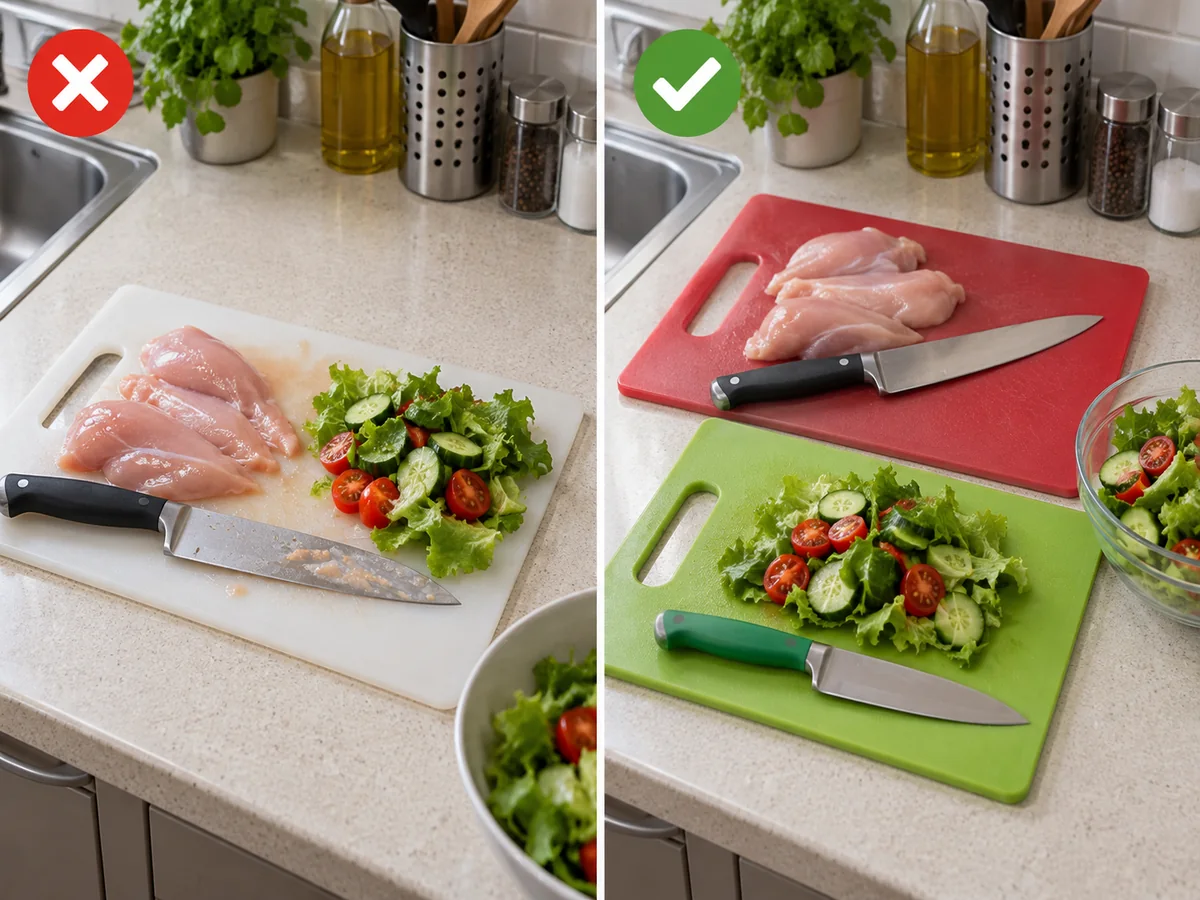
Use clearly distinguishable boards, knives, and tongs for raw and ready-to-eat food.
View safety lesson →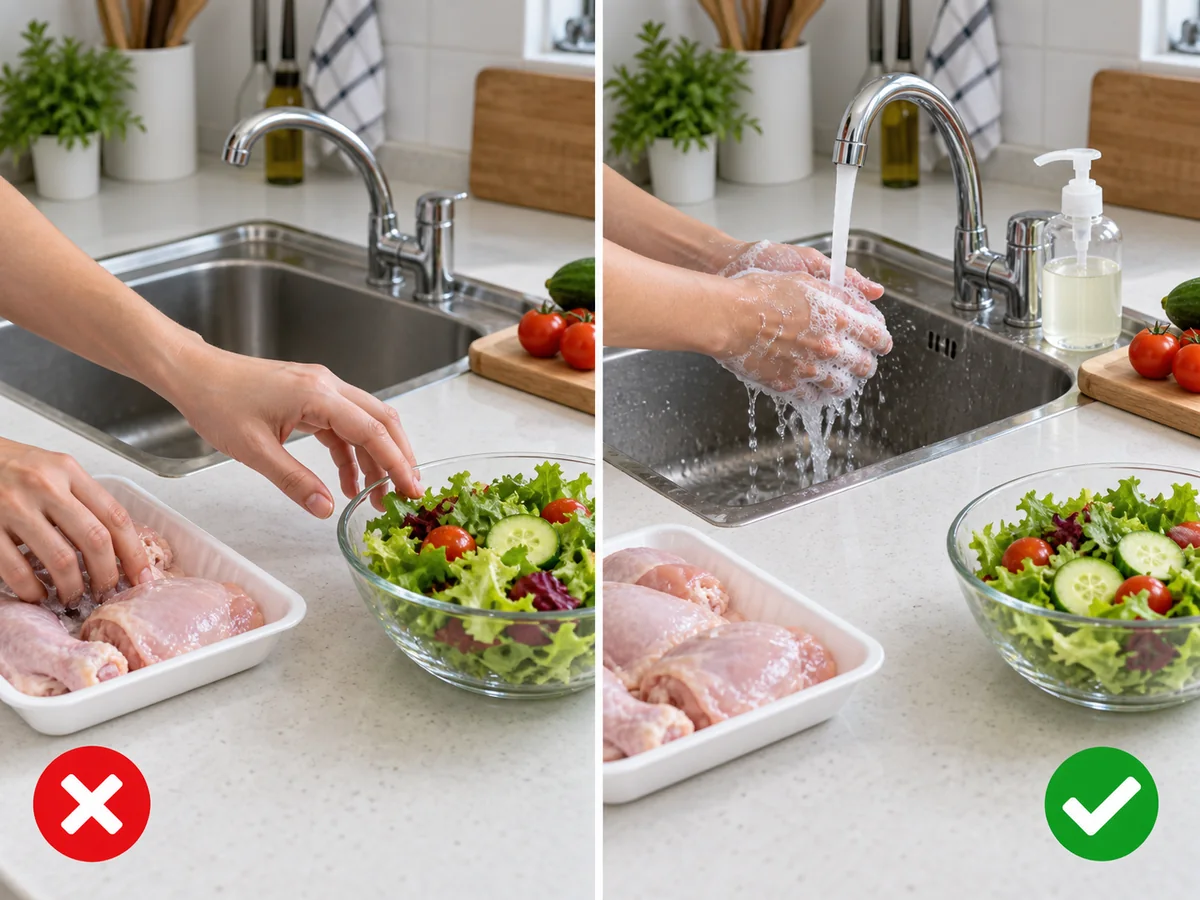
After raw meat, poultry, or seafood, wash with soap before touching cooked food, fruit, or utensils.
View safety lesson →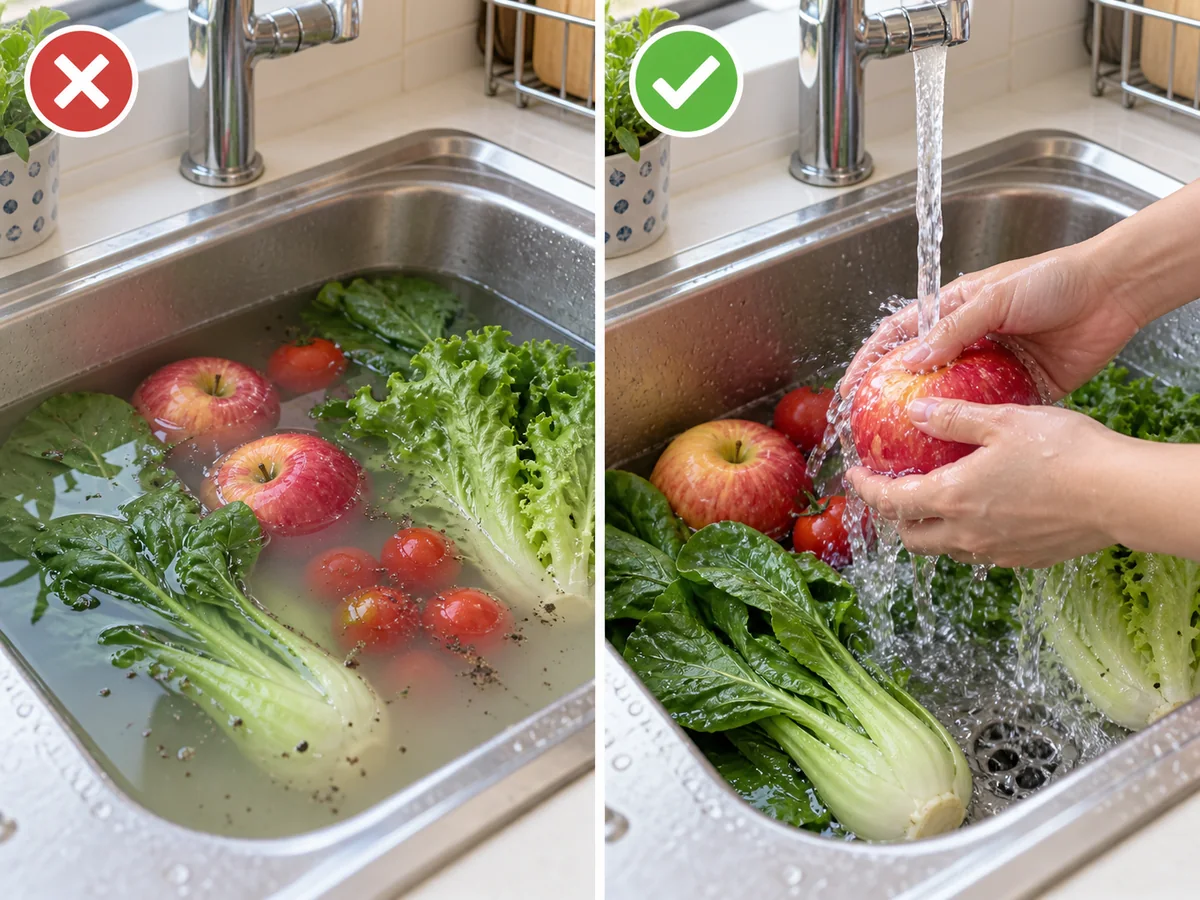
Rinse fruit and vegetables under running water before eating or cutting; never use detergent.
View safety lesson →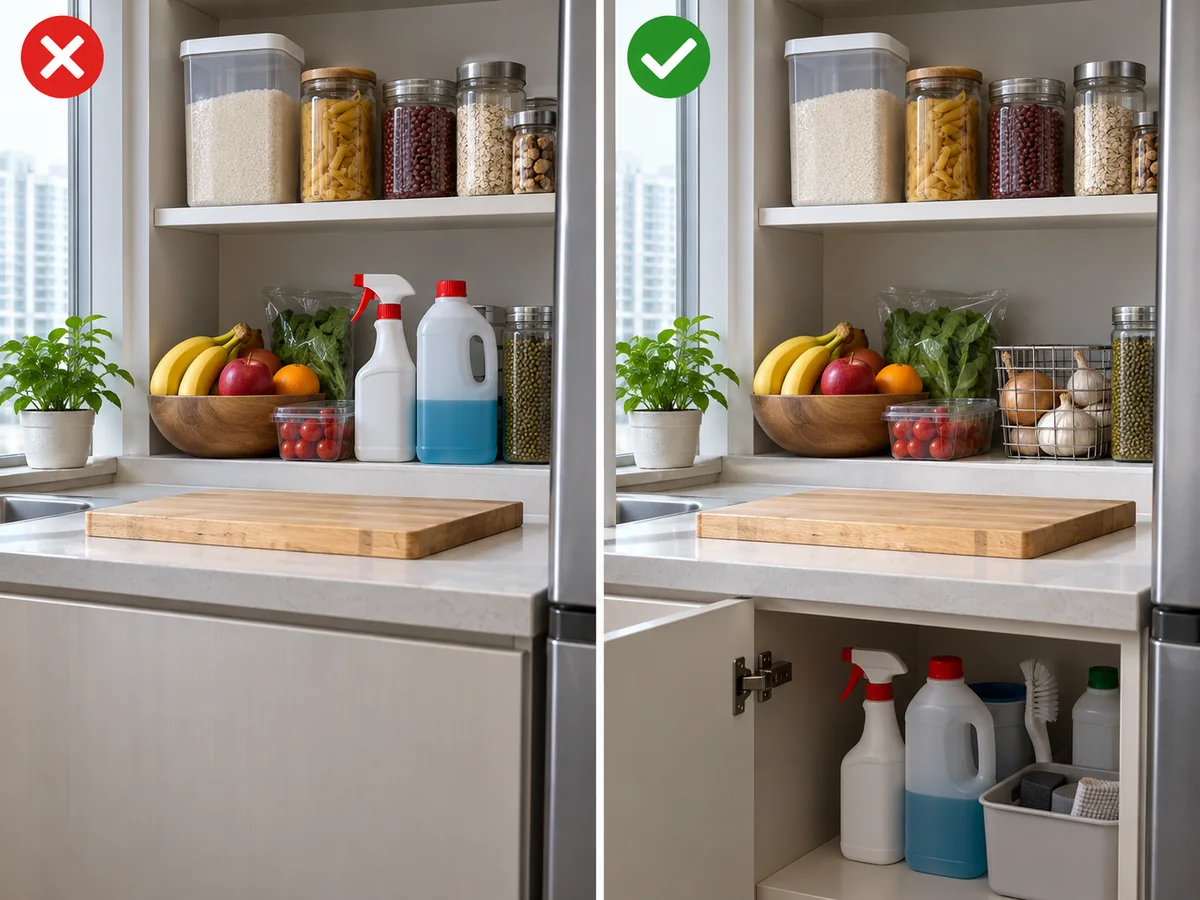
Lock cleaners, bleach, pesticides, and other chemicals together away from all food.
View safety lesson →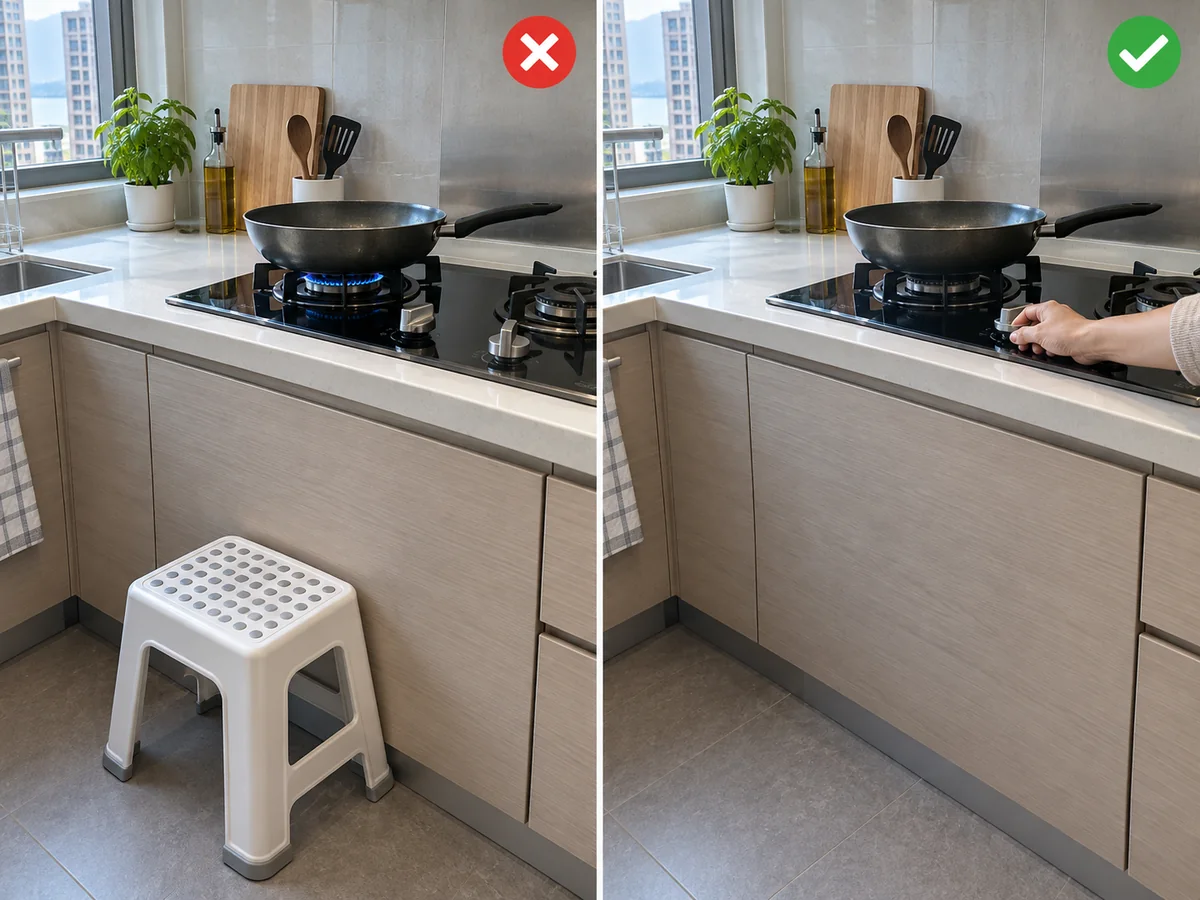
Only a safety-competent adult should operate a gas cooker; keep children away from controls.
View safety lesson →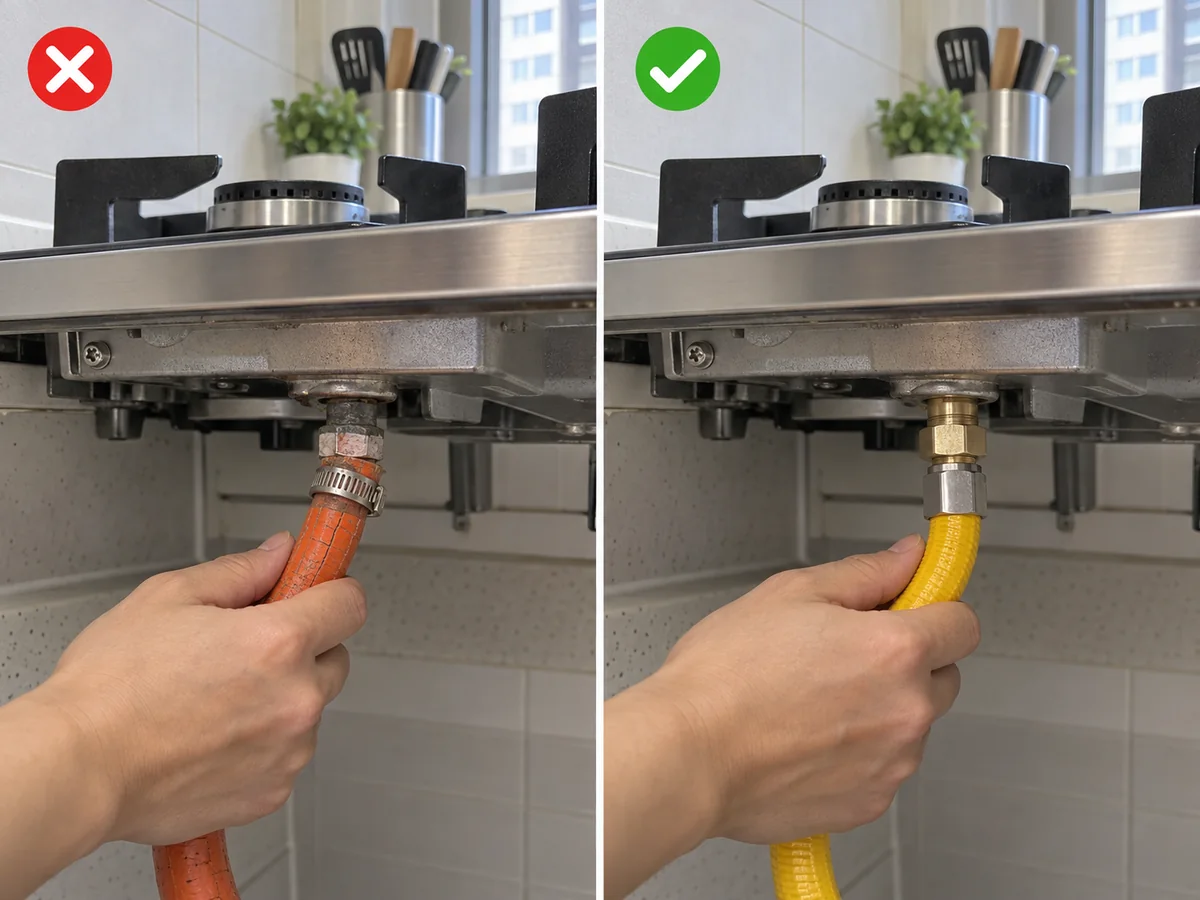
For burners, pan supports, tubing, or other parts, use maker-specified components and a qualified technician.
View safety lesson →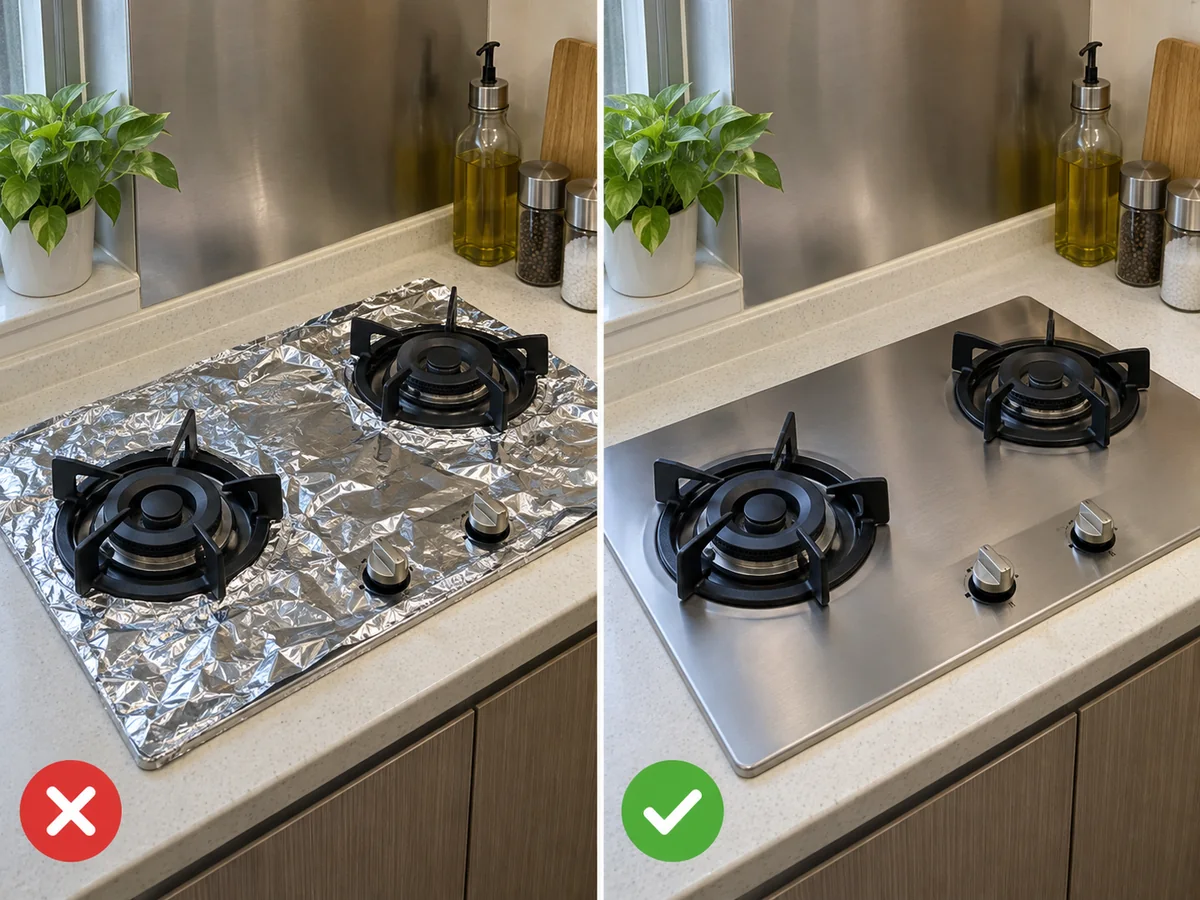
Keep burners, air inlets, and ventilation as designed; never cover the hob with foil.
View safety lesson →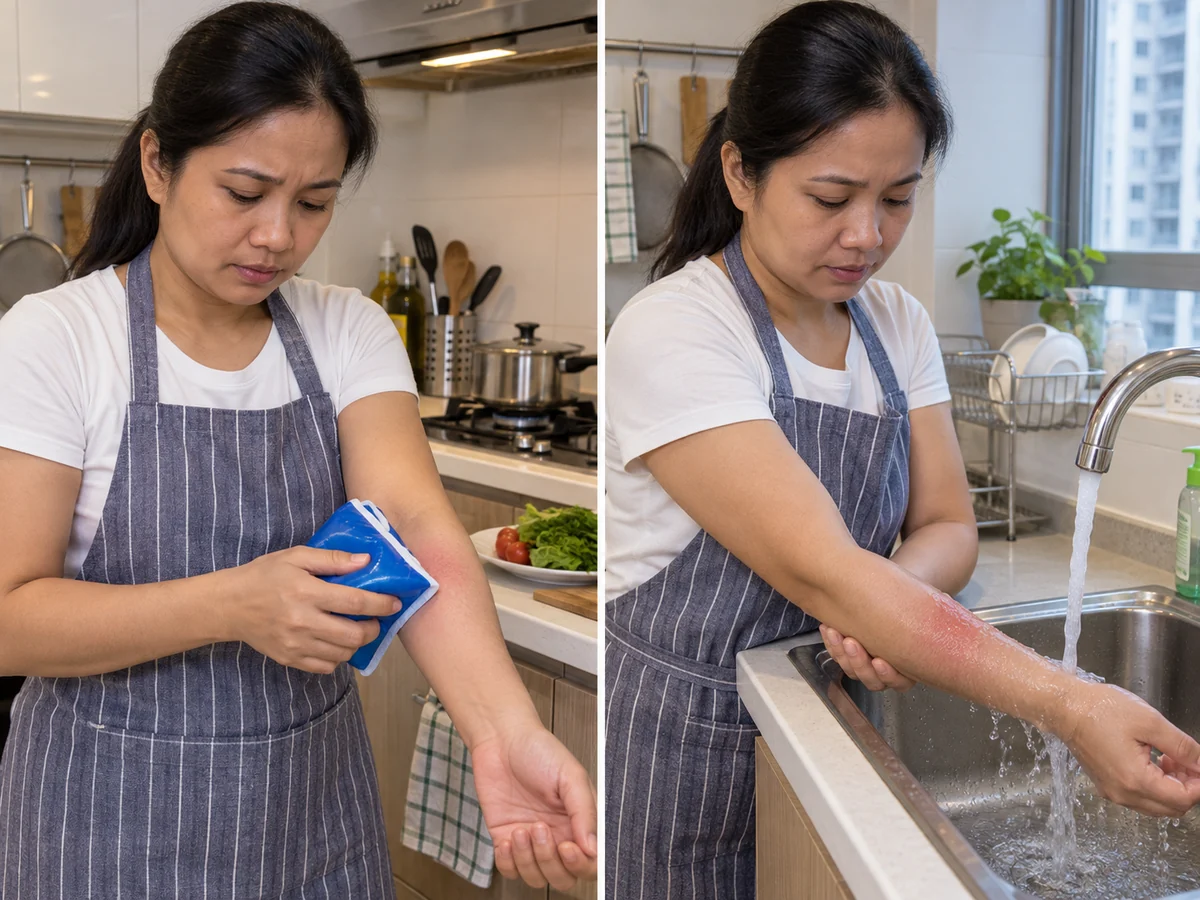
Move away from the heat source and cool a burn or scald promptly under gently running water.
View safety lesson →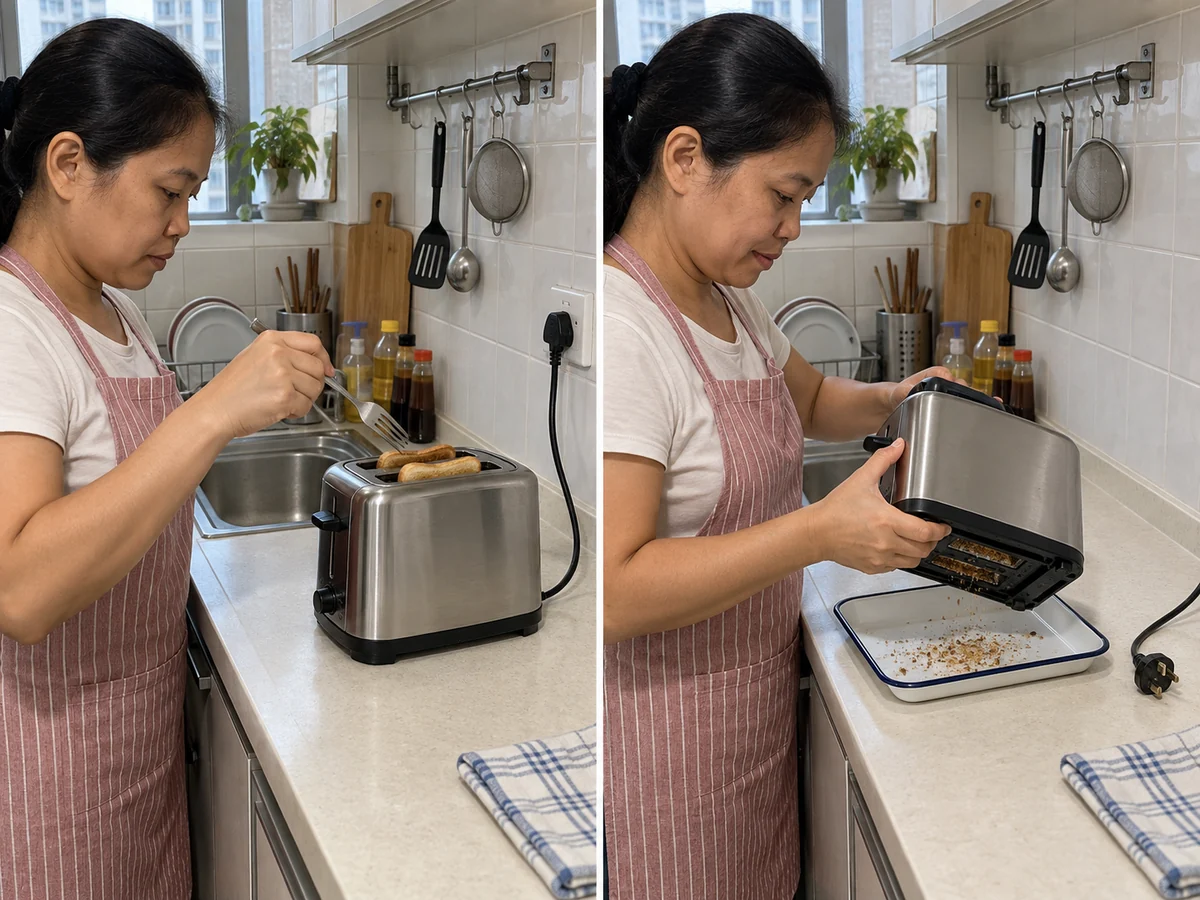
Switch off and unplug a toaster, let it cool, and use the maker's safe method before removing stuck food.
View safety lesson →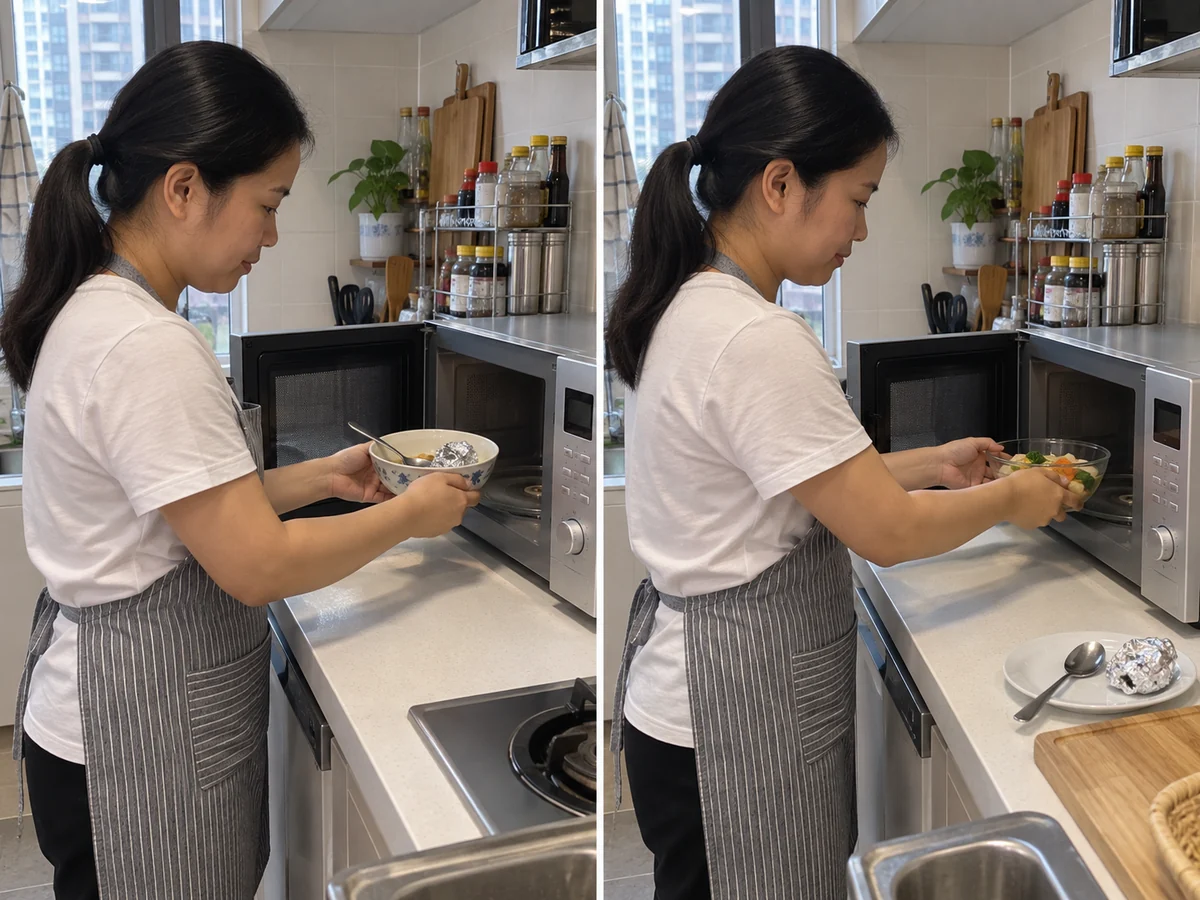
Use only containers confirmed suitable for microwave cooking and remove metal utensils, foil, and metal-trimmed items.
View safety lesson →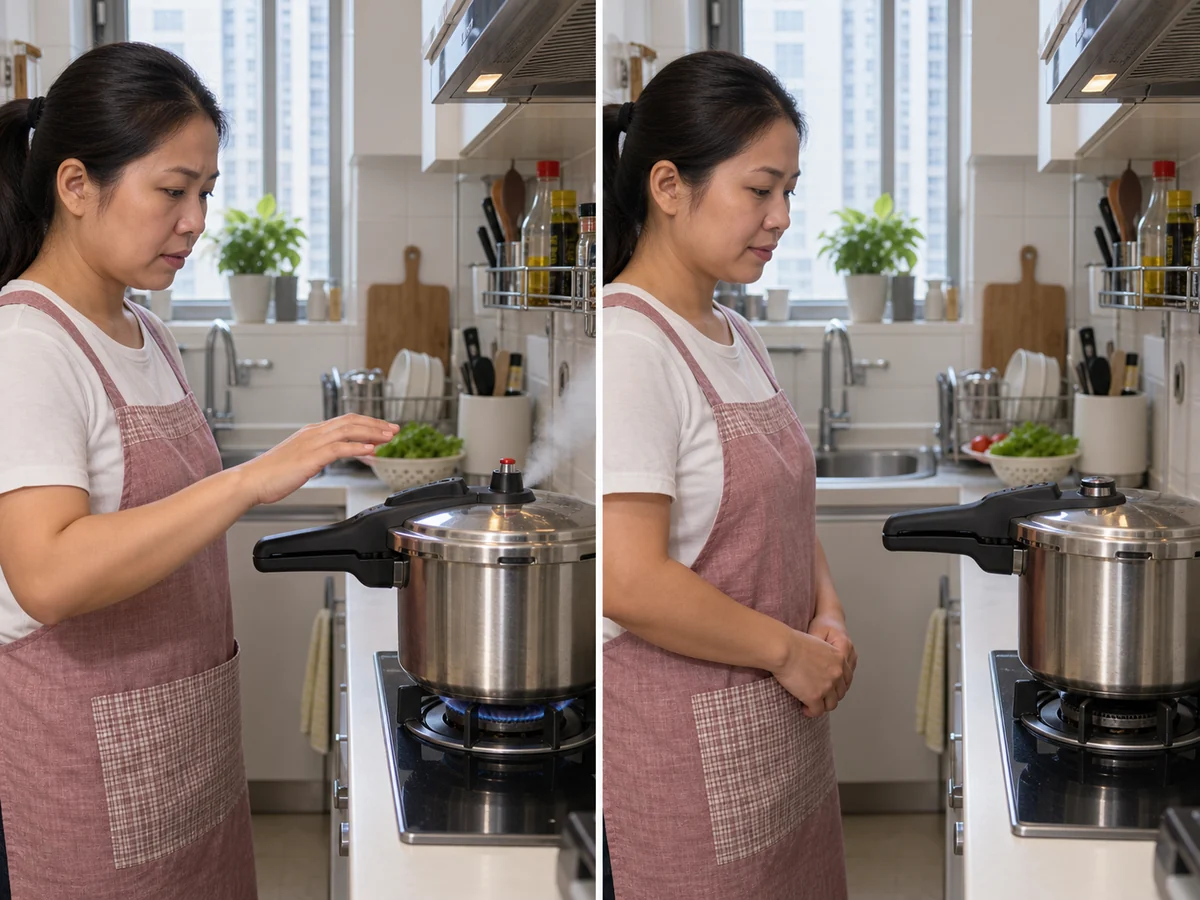
After cooking, release pressure only as the manual directs and confirm pressure is fully gone before opening the lid.
View safety lesson →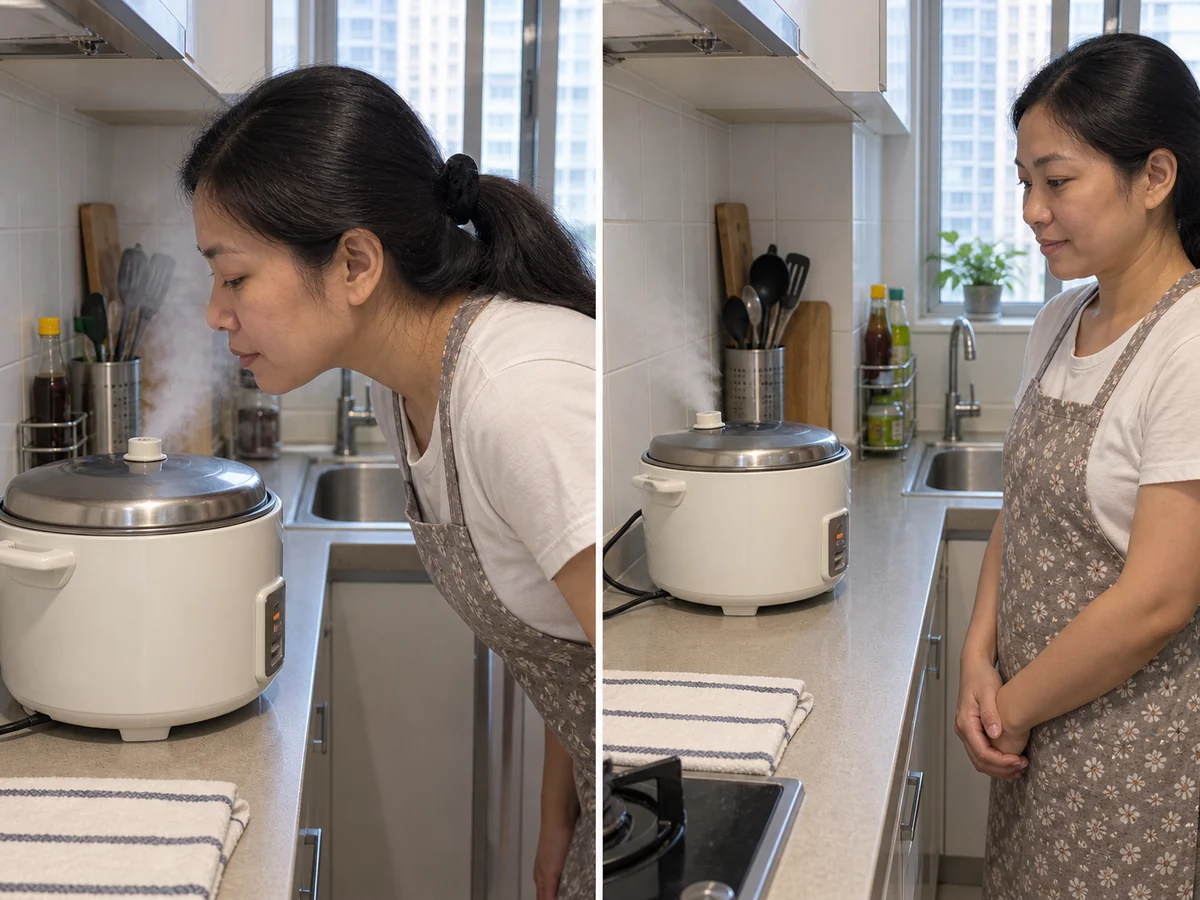
Place the rice cooker steadily so its steam vent points away from faces, hands, walkways, and children.
View safety lesson →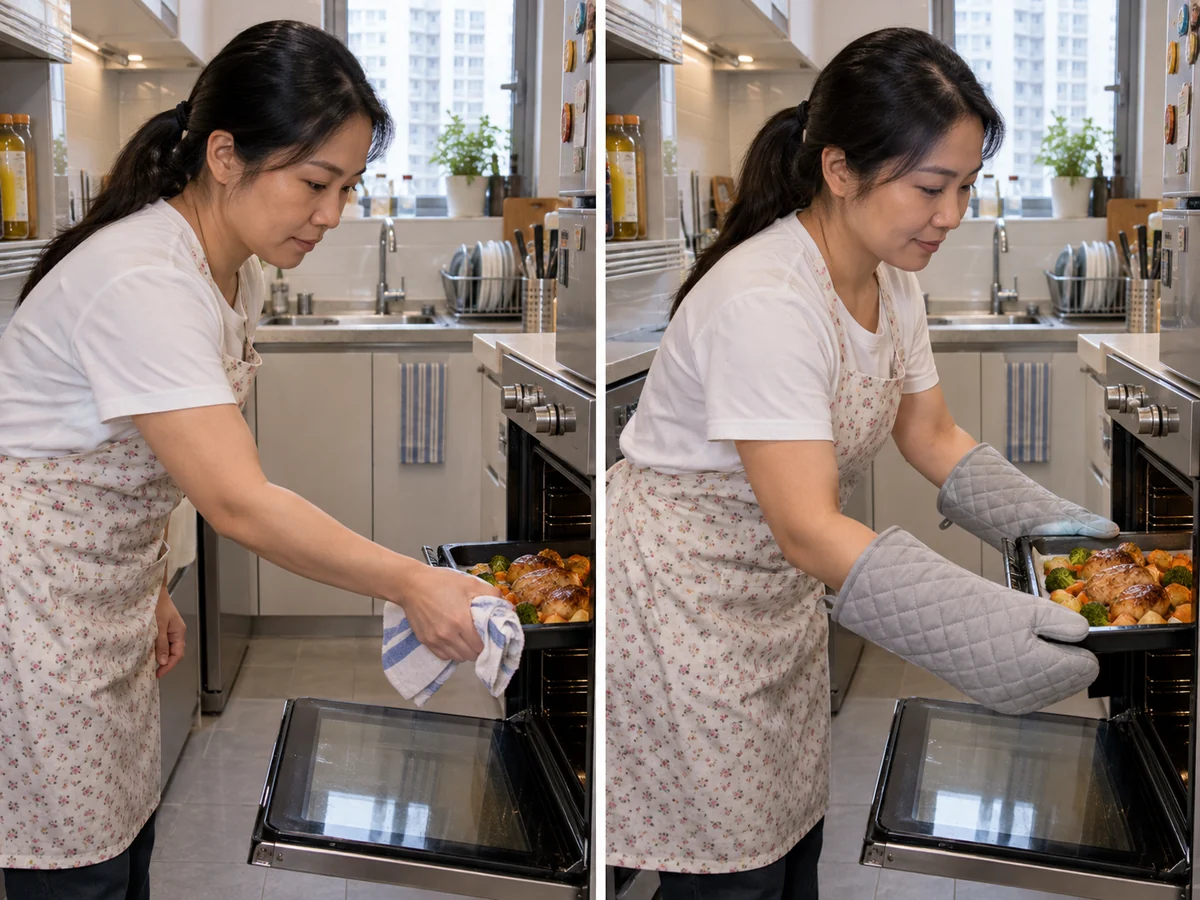
Use clean, dry, heat-resistant mitts that fully cover the hands when moving hot trays, pots, or dishes.
View safety lesson →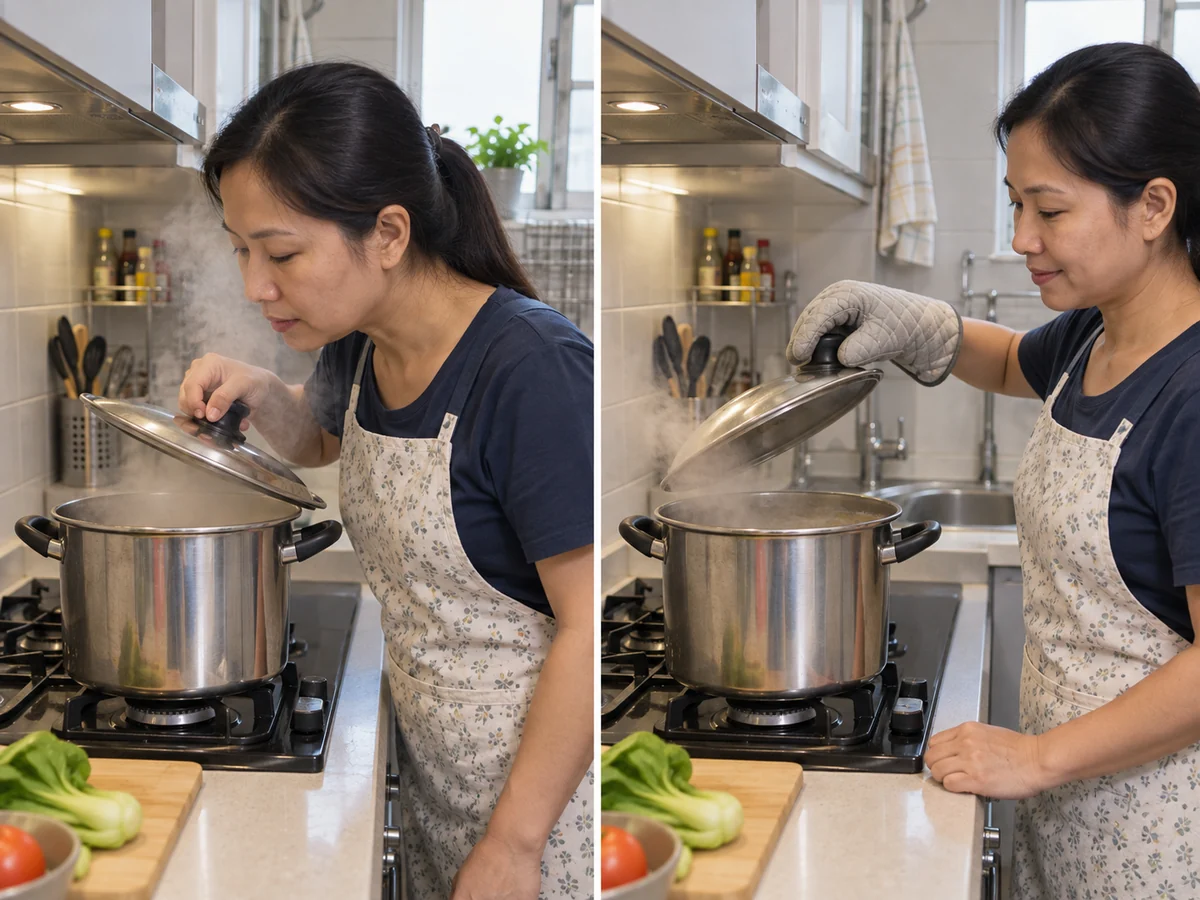
Stand back and lift the far edge of a hot lid first so steam escapes away from the face and hands.
View safety lesson →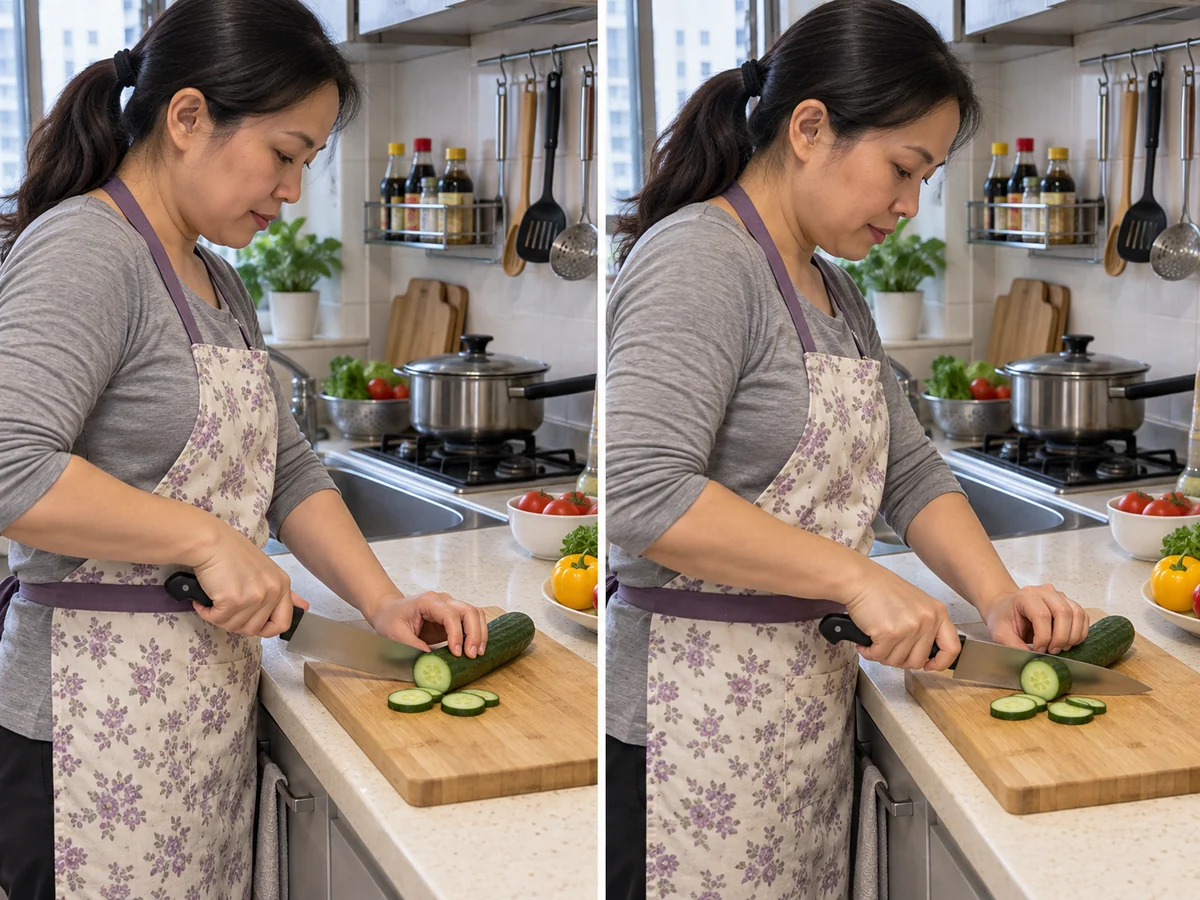
Use a stable work surface and direct the blade away from the hands, body, and anyone nearby.
View safety lesson →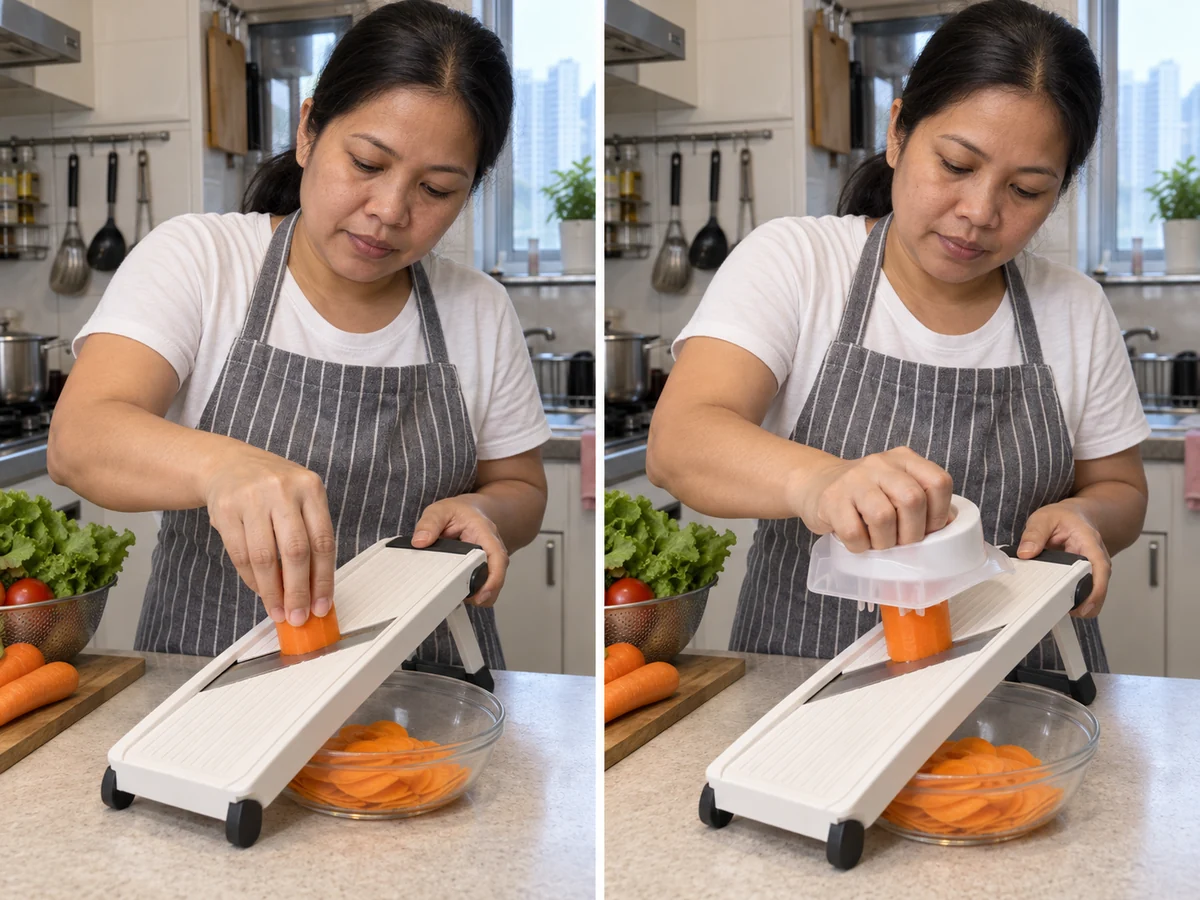
Fit the food holder or hand guard and follow the product instructions whenever using a mandoline slicer.
View safety lesson →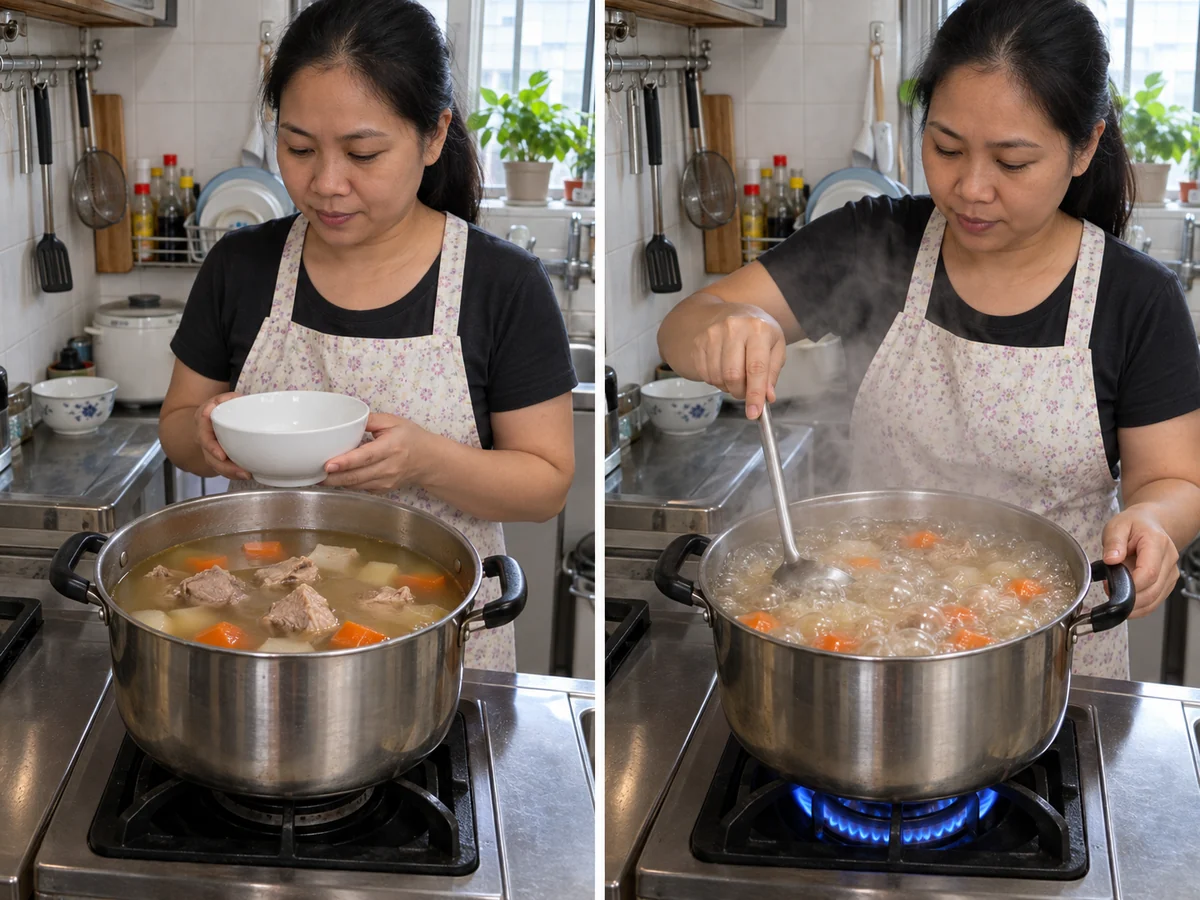
When cooking or reheating soup or stew, bring the whole pot to a full boil for at least one minute.
View safety lesson →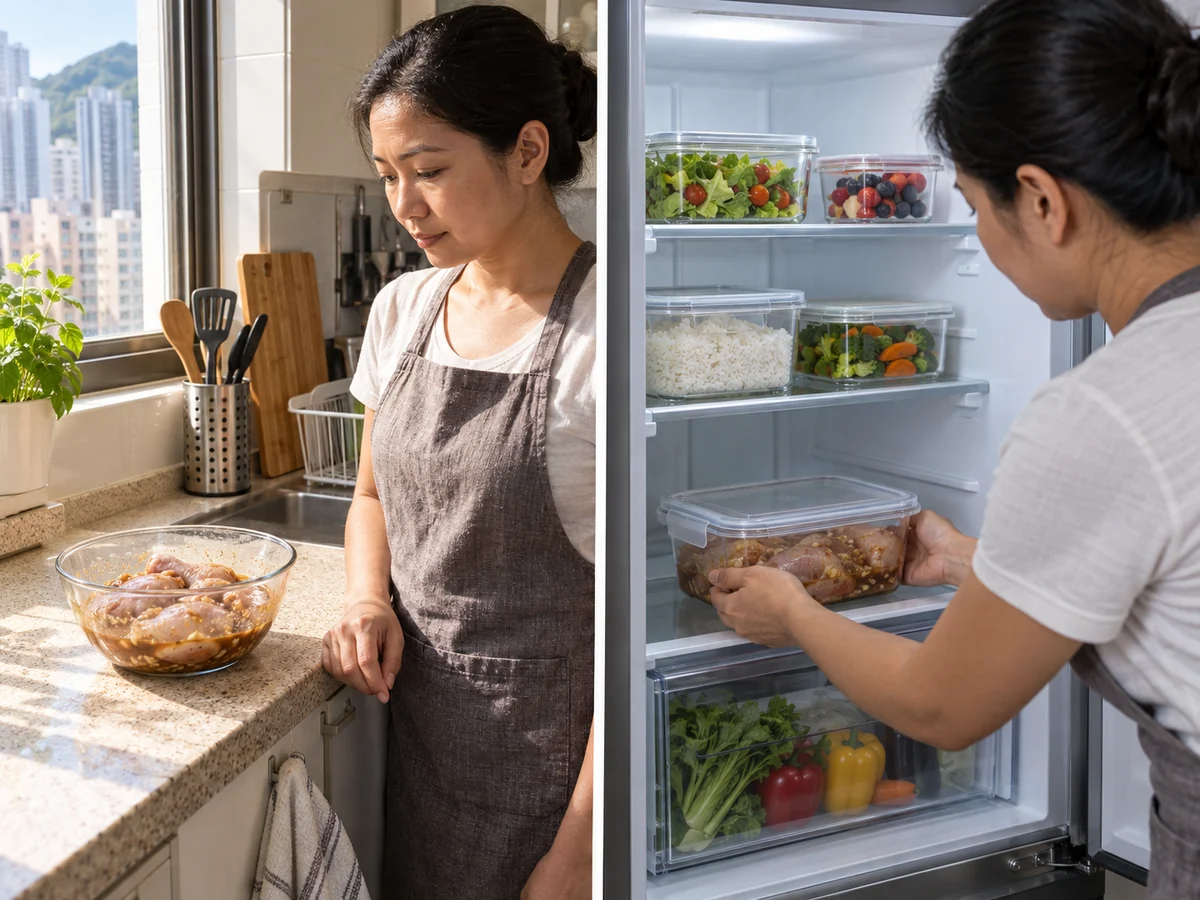
Keep meat, poultry, seafood, and other perishable food covered in the refrigerator throughout marinating.
View safety lesson →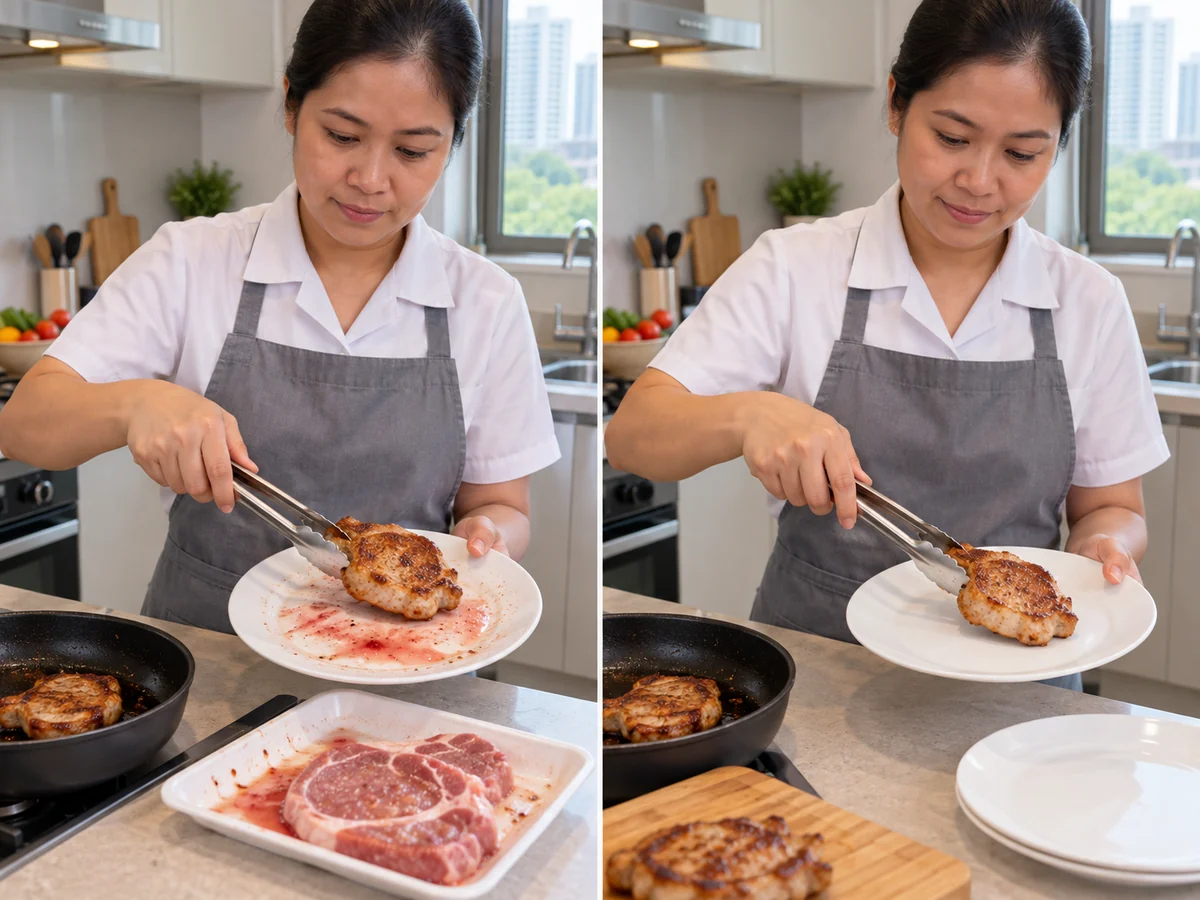
Move cooked meat to a fresh plate with clean tongs or chopsticks; never return it to the raw-meat plate.
View safety lesson →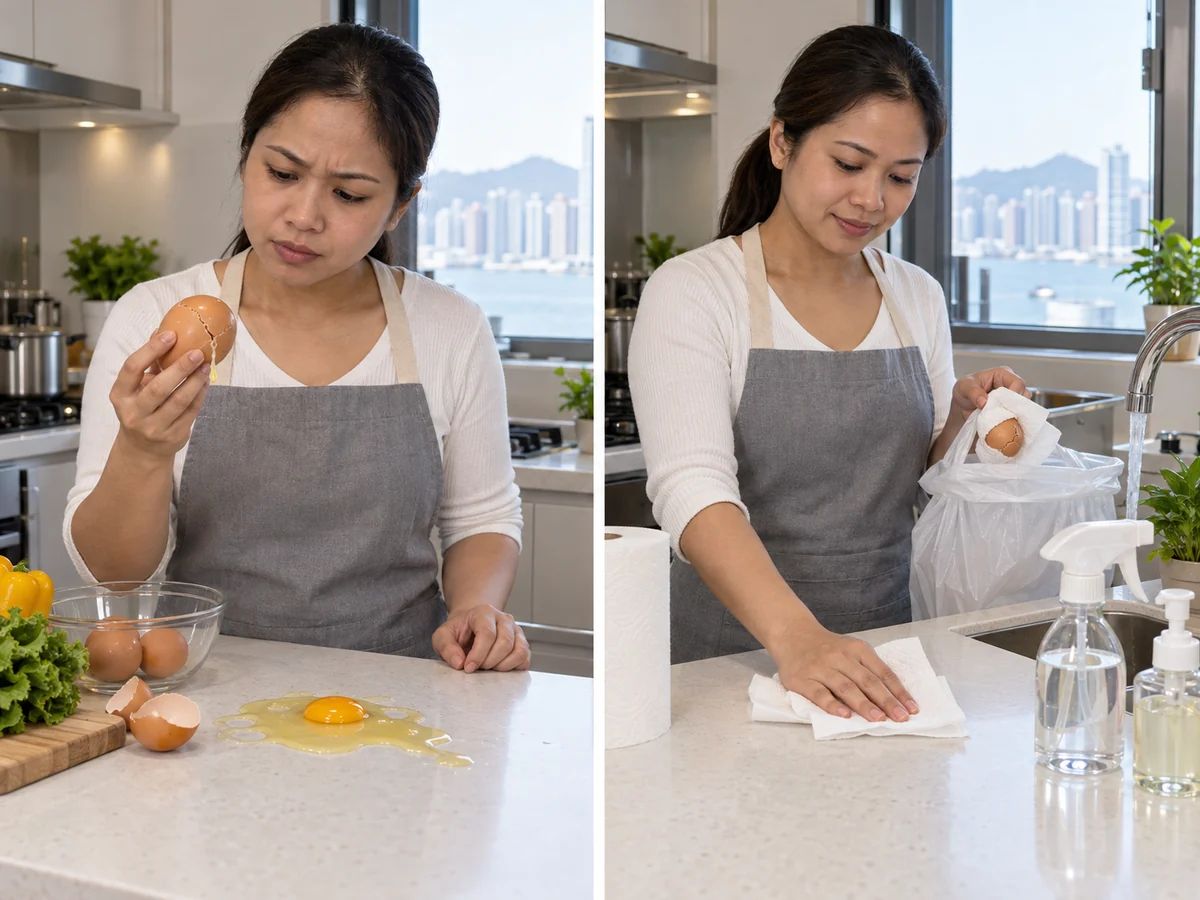
Seal and discard cracked eggs, then clean and disinfect every surface touched by the spill.
View safety lesson →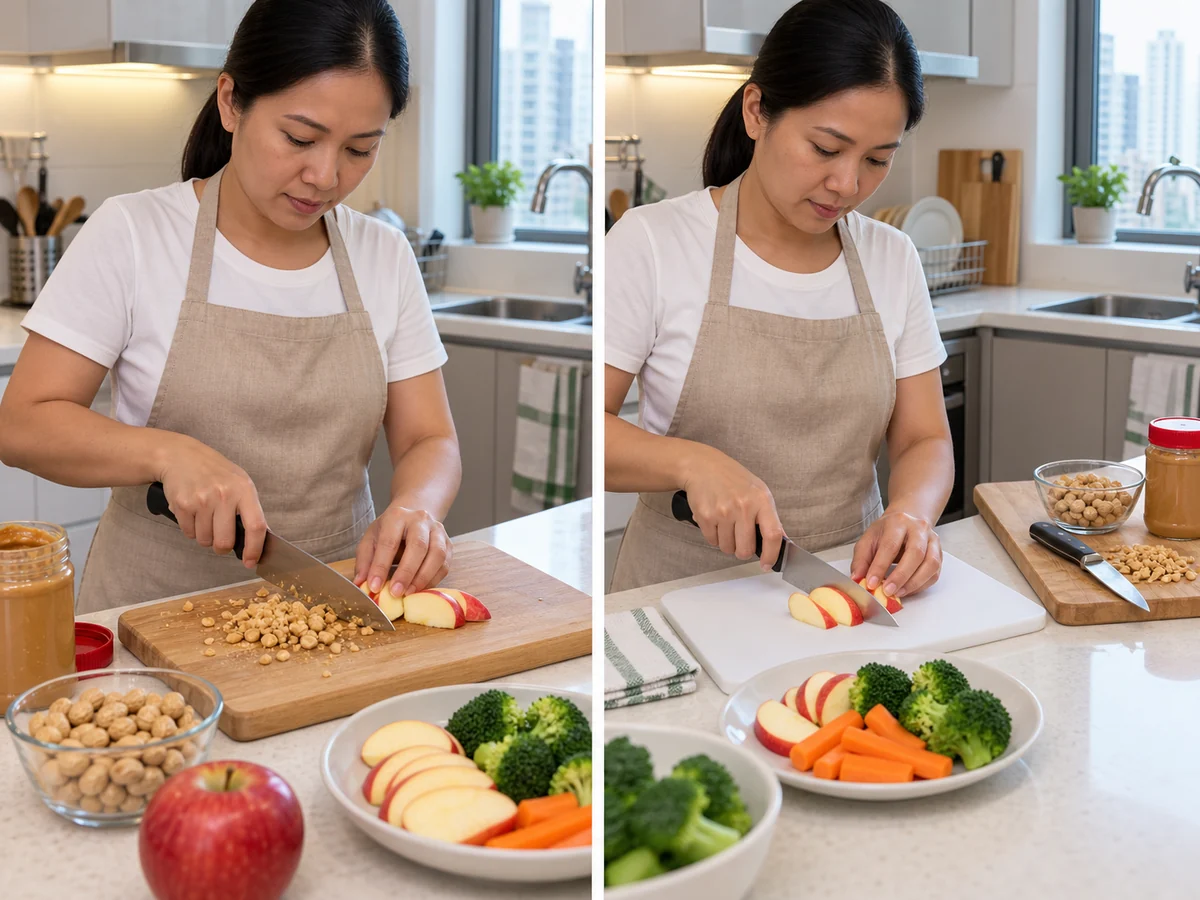
For a family member with a food allergy, check labels and separate ingredients, equipment, and cooking oil.
View safety lesson →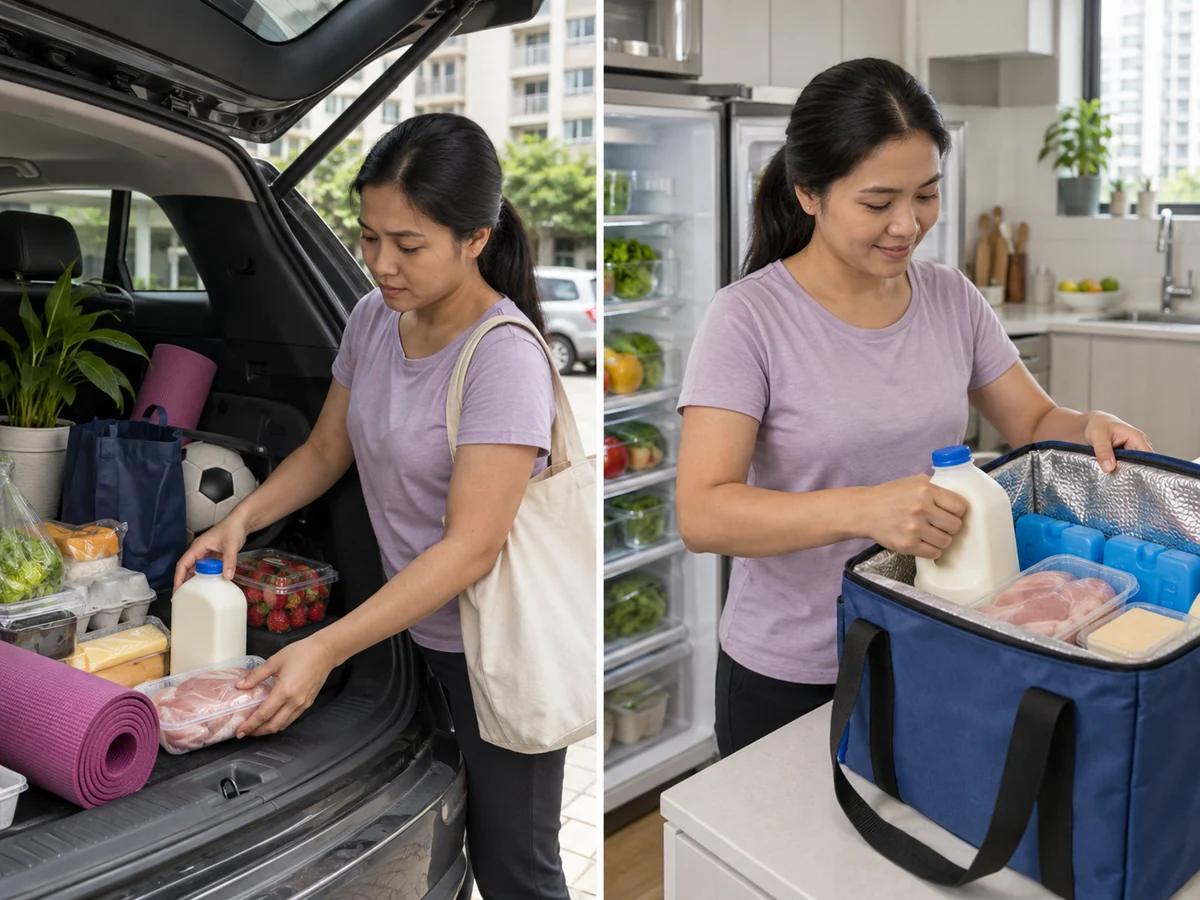
Collect chilled food last, carry it in an insulated bag with cold packs, and refrigerate it as soon as you arrive home.
View safety lesson →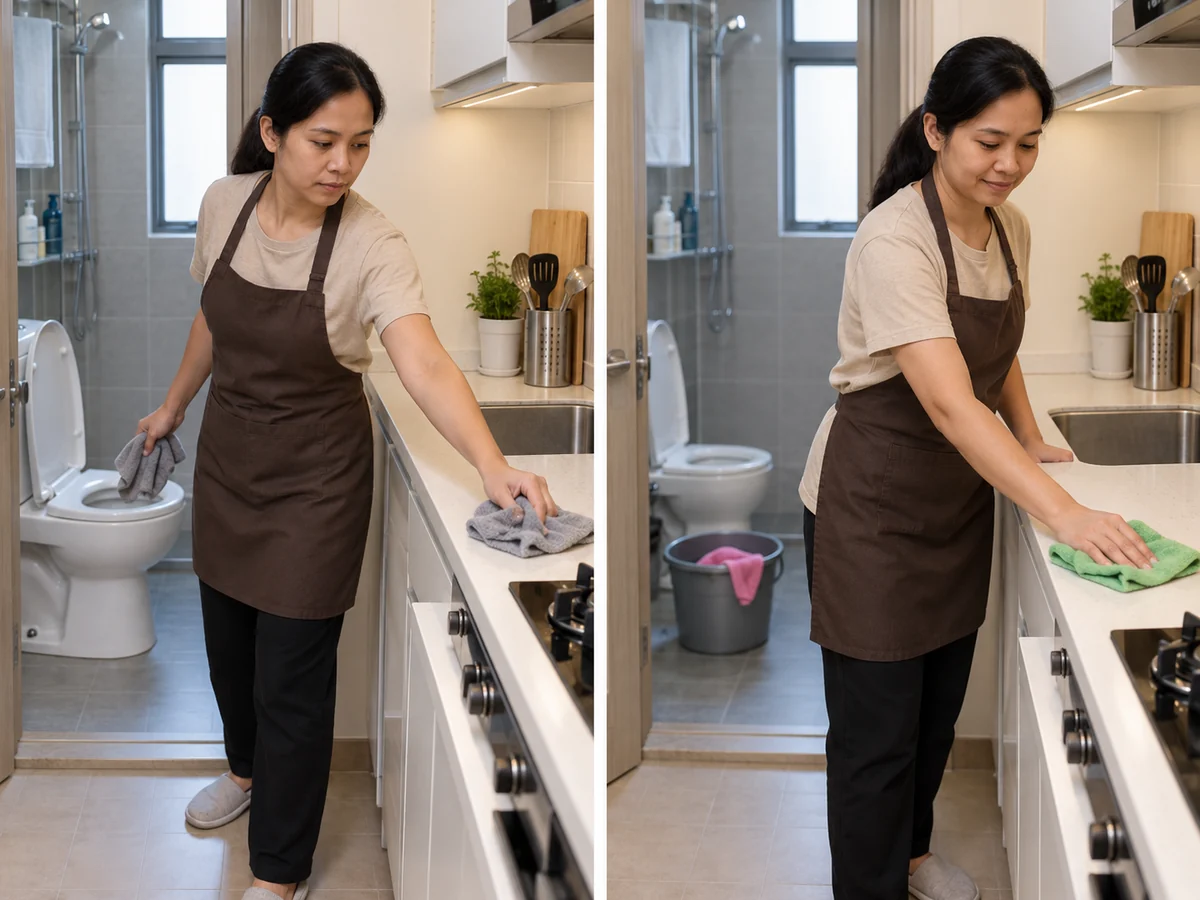
Colour-code or label toilet and kitchen cloths, and wash, dry, and store the two sets separately.
View safety lesson →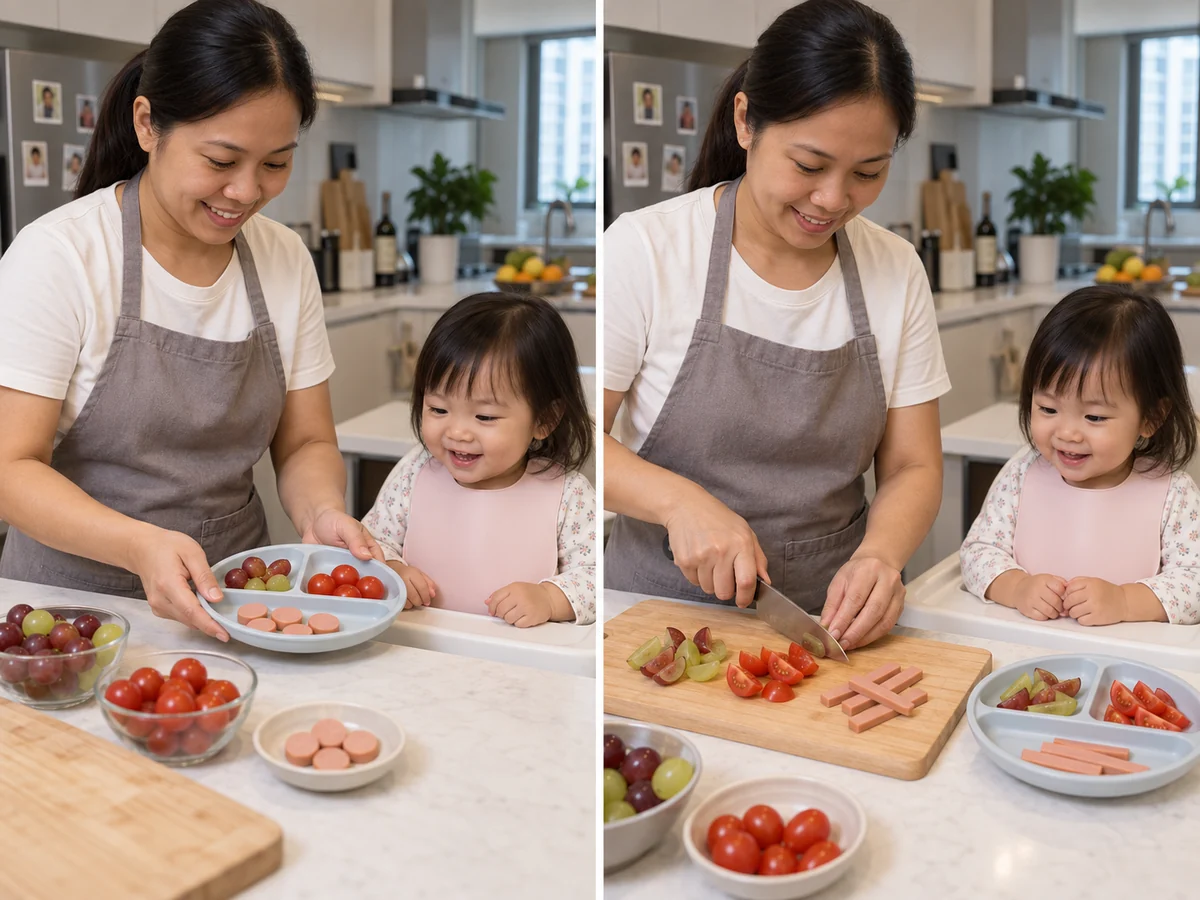
For a young child, remove hard parts and cut grapes, cherry tomatoes, and sausages lengthwise into quarters or smaller pieces.
View safety lesson →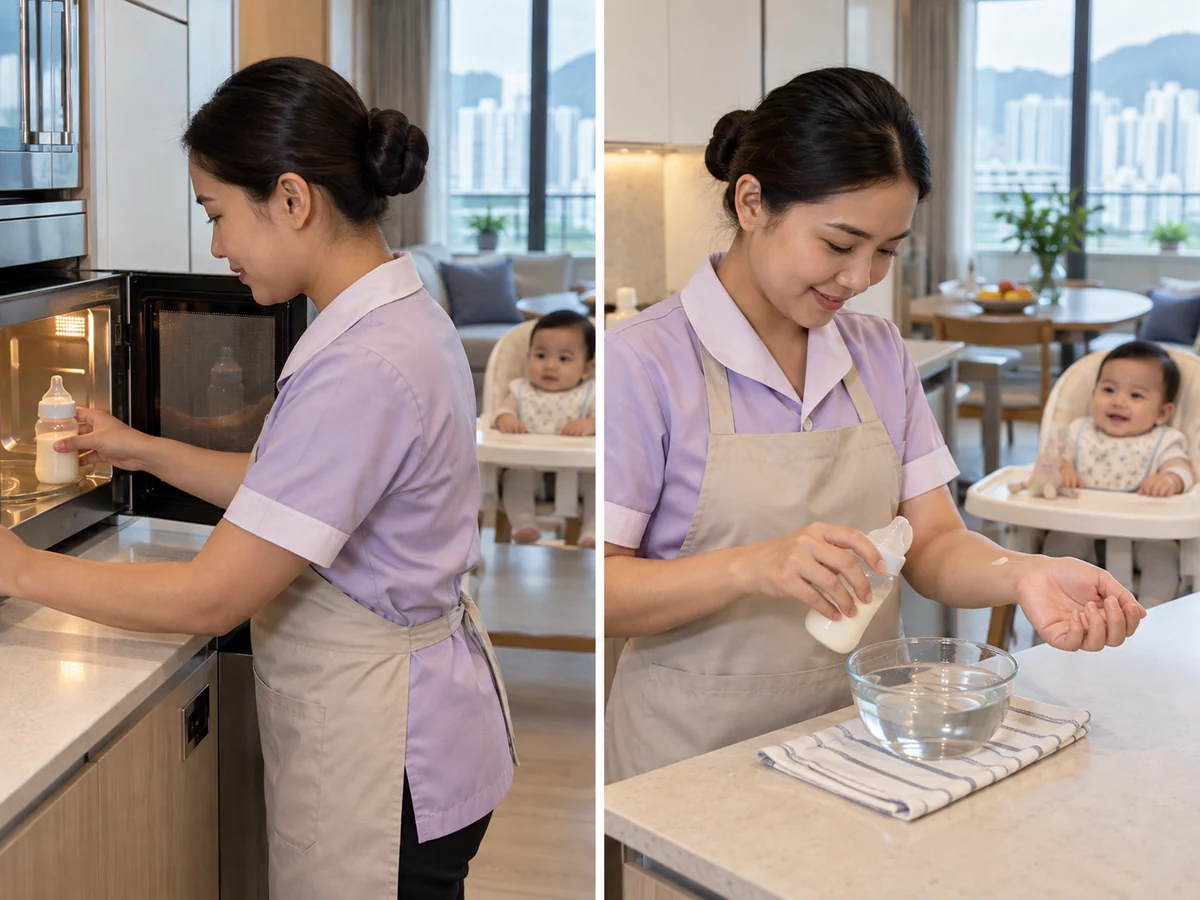
Warm a baby bottle with the agreed warmer or warm-water method, mix the milk, and test it on the inner wrist; never microwave it.
View safety lesson →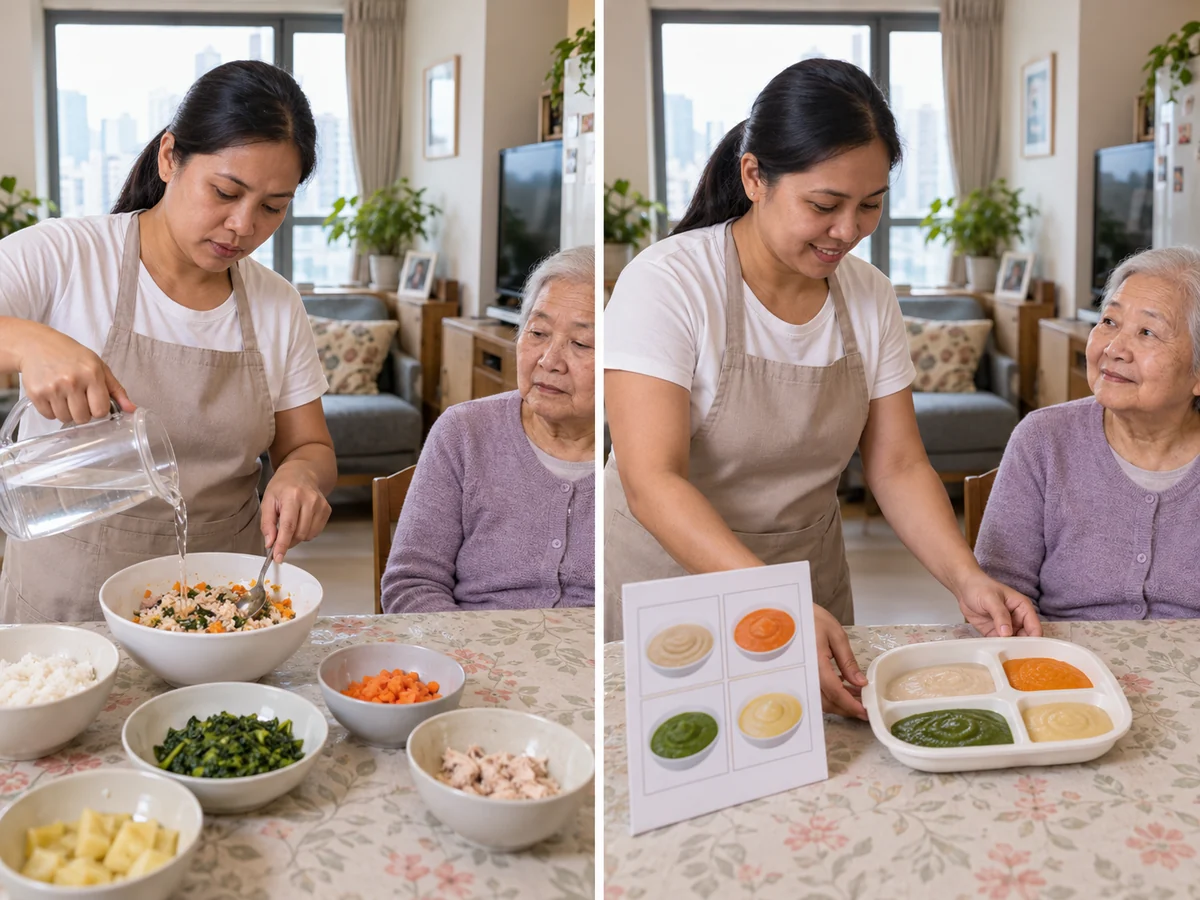
Prepare soft, minced, pureed, or thickened items exactly as specified by the healthcare, dietetic, or speech team.
View safety lesson →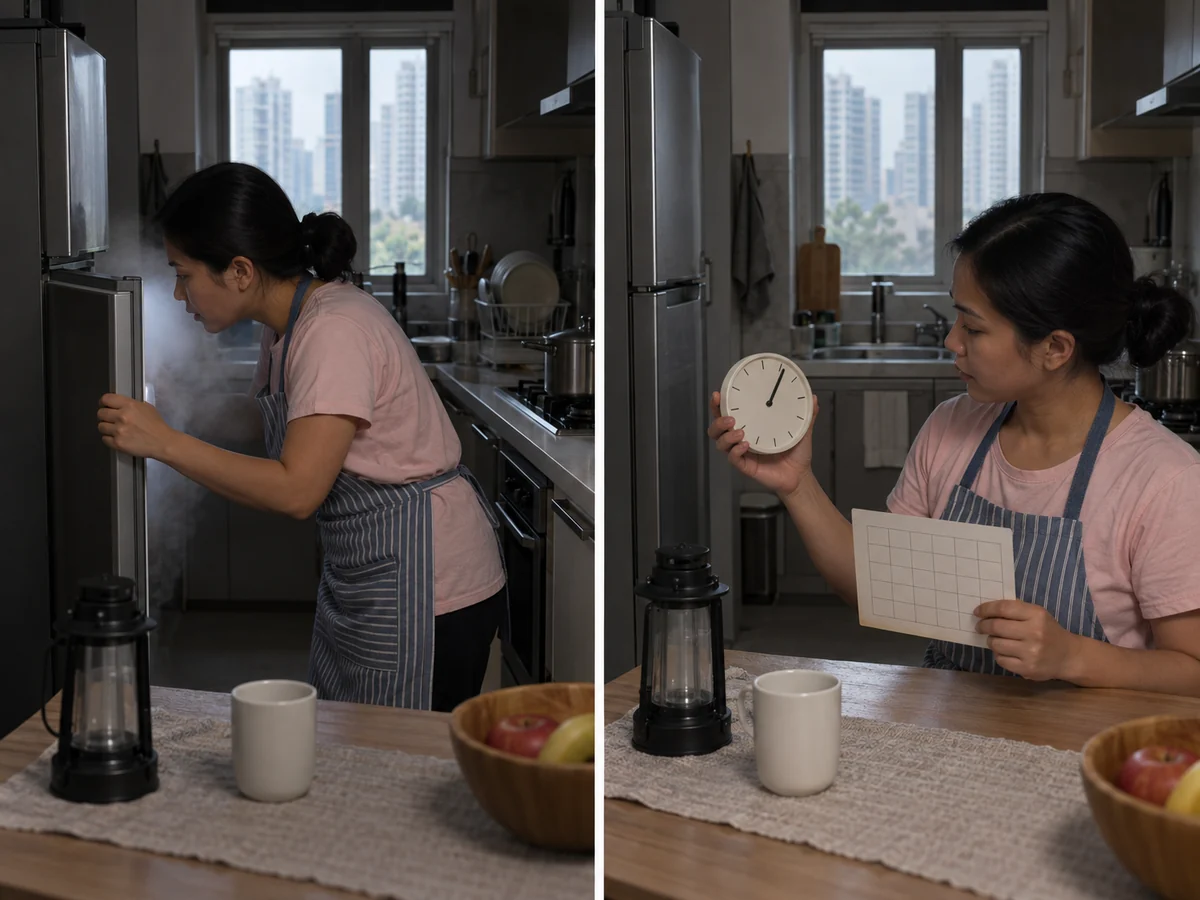
Note when the outage starts and keep refrigerator and freezer doors shut to preserve cold temperatures.
View safety lesson →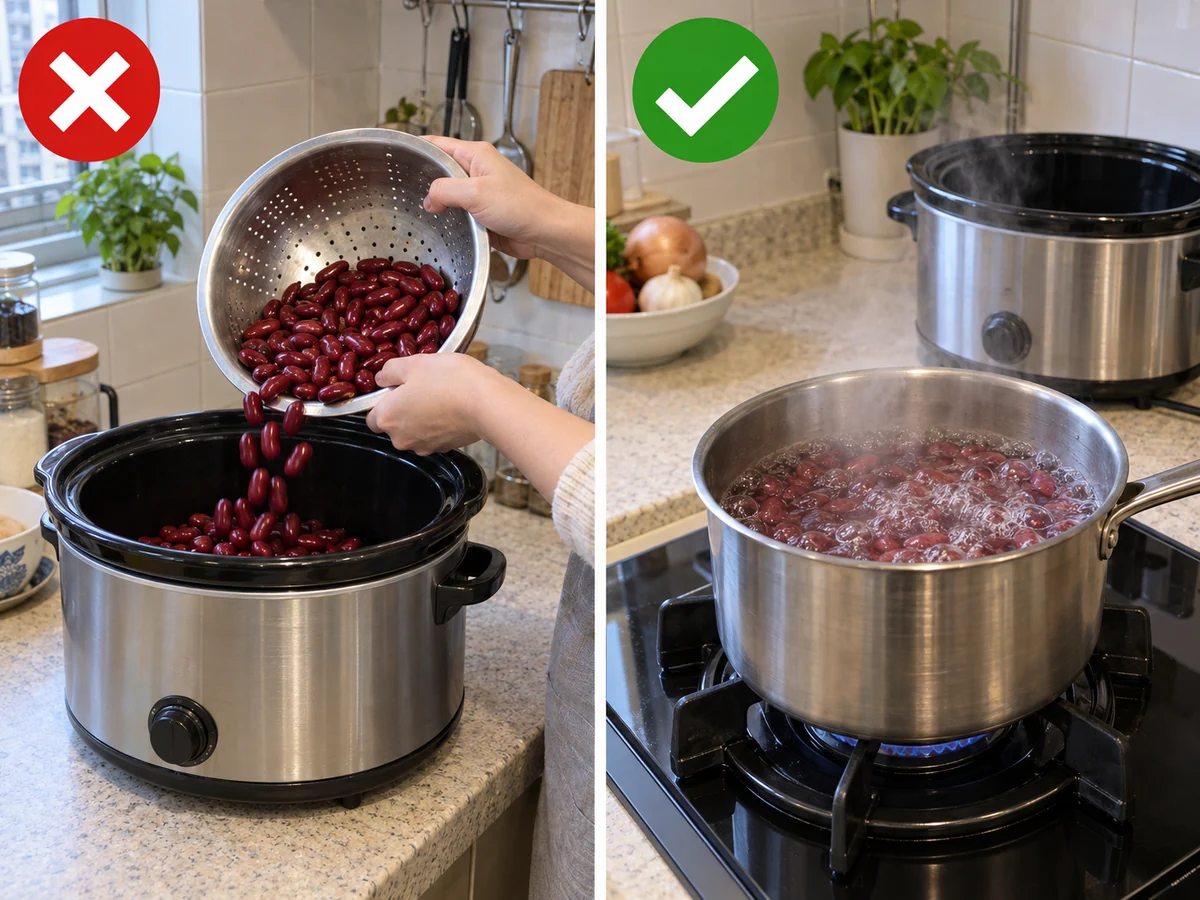
Soak them, discard the water, then boil thoroughly in fresh water before slow cooking. Use already cooked canned beans if the preparation is unfamiliar.
View safety lesson →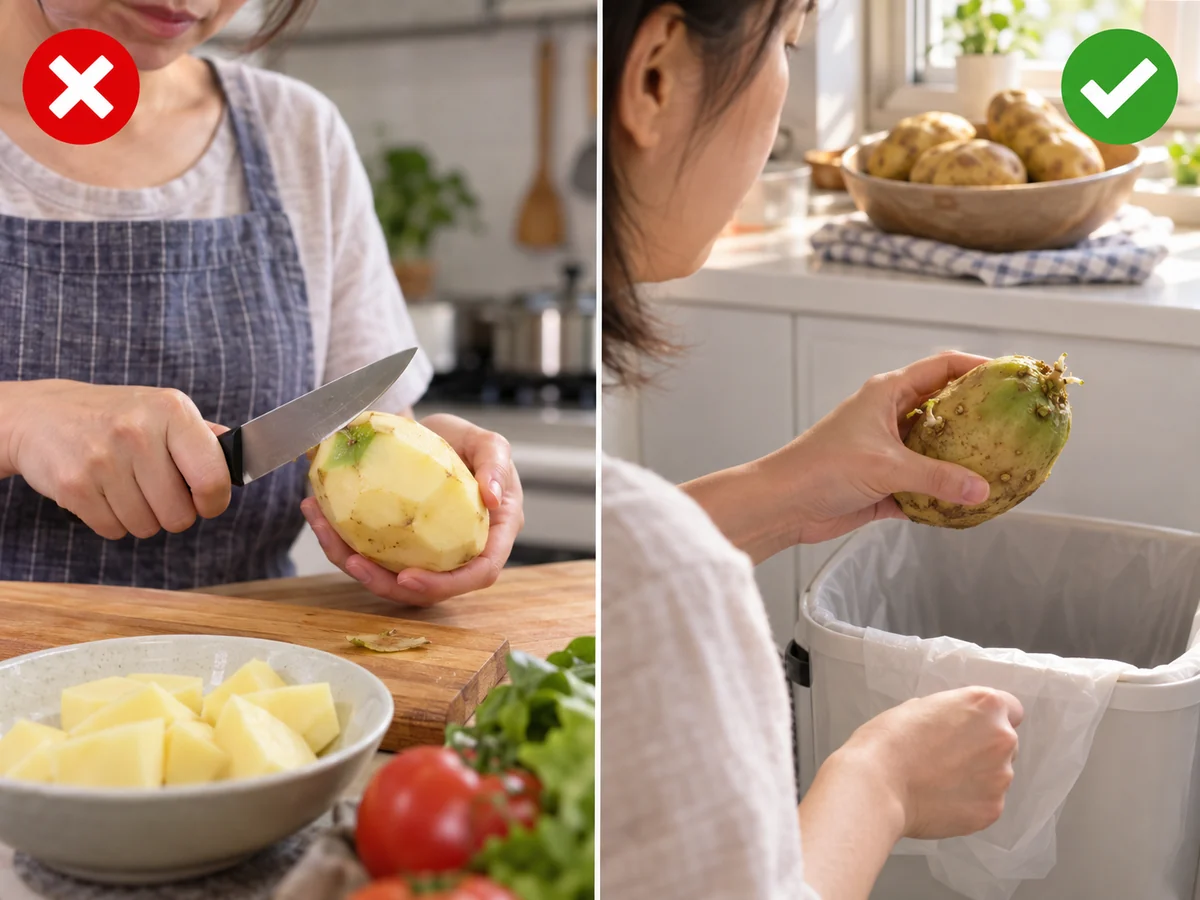
Reject potatoes that are green or sprouting instead of relying on trimming or cooking. Keep sound potatoes in a cool dry place away from sunlight.
View safety lesson →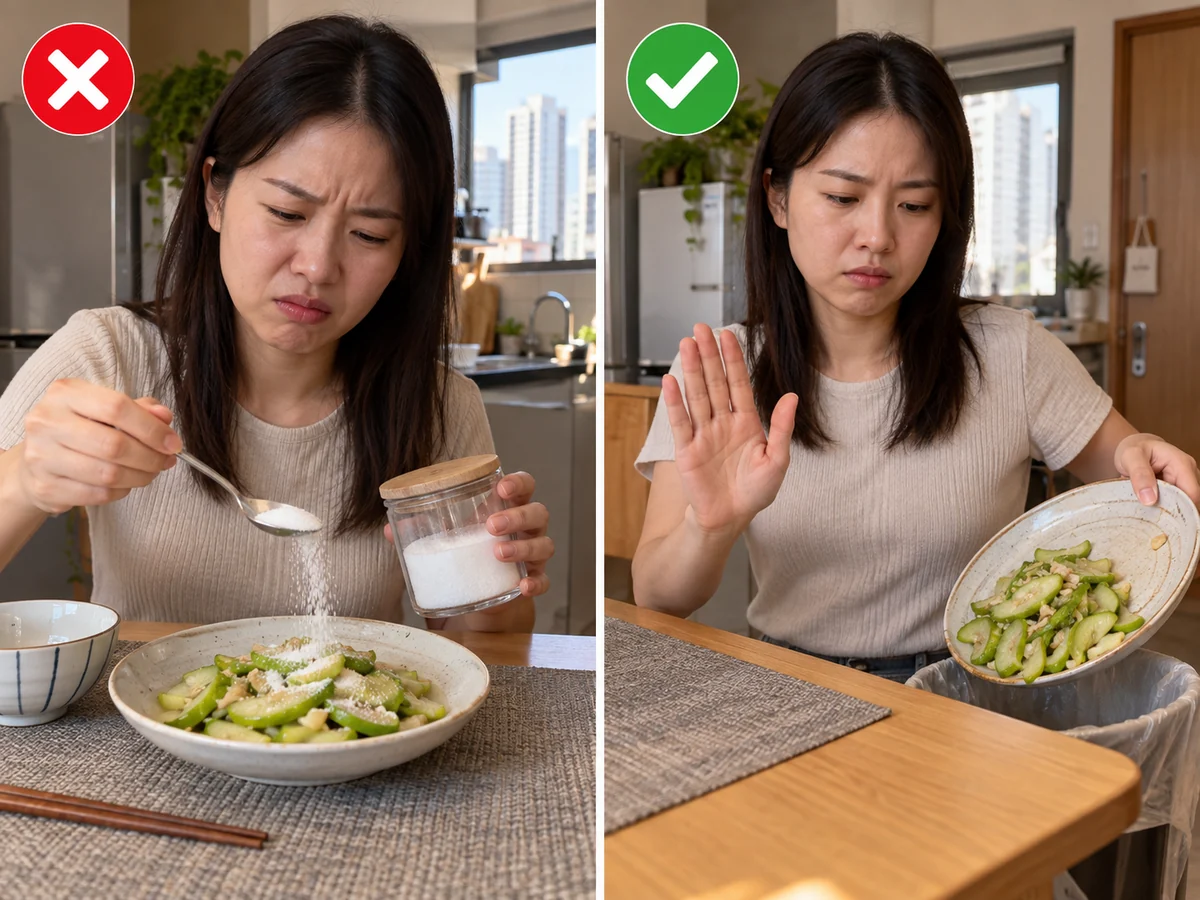
Stop eating a normally mild gourd if it tastes unusually bitter. Discard the affected dish; do not keep tasting or try to mask the taste.
View safety lesson →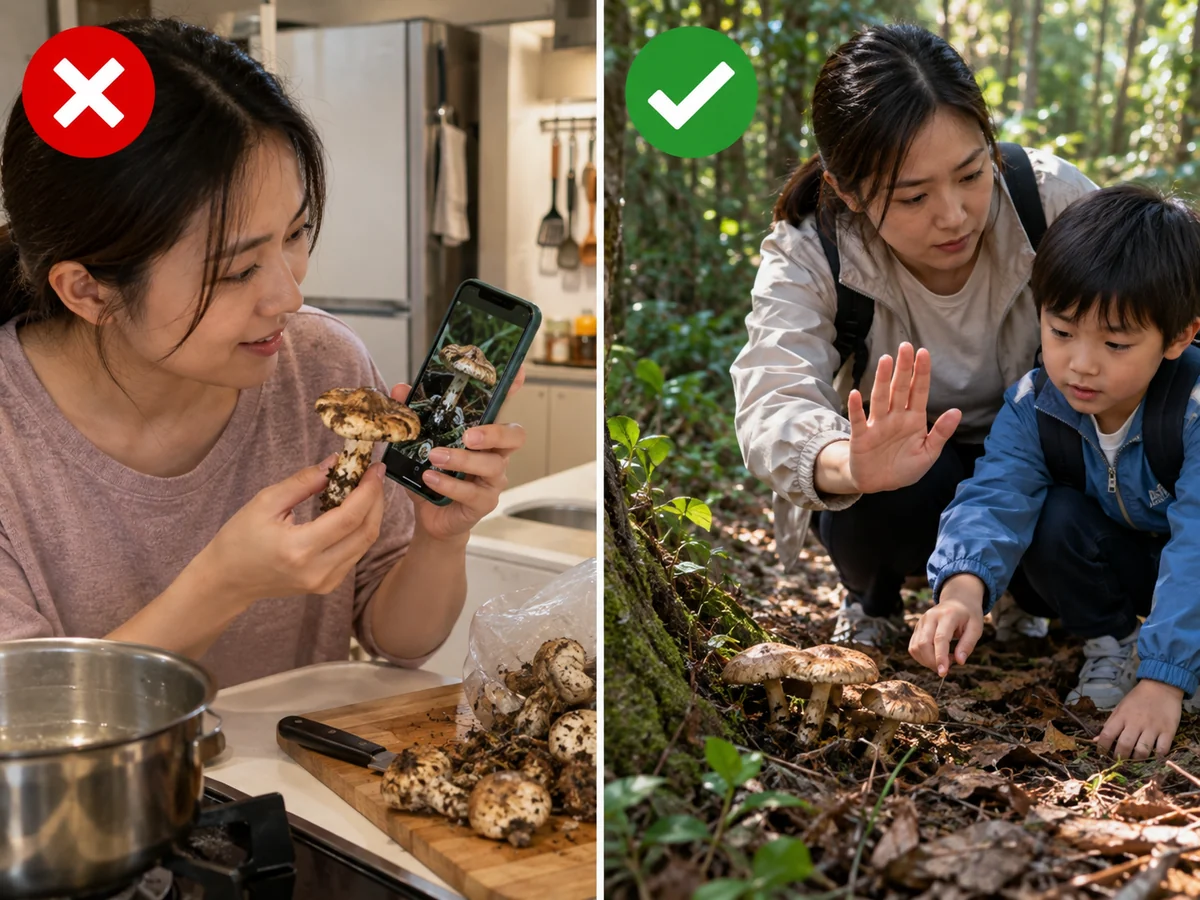
Do not cook or eat foraged wild mushrooms even if they look familiar. If eaten, keep a photo and details for medical staff without delaying care.
View safety lesson →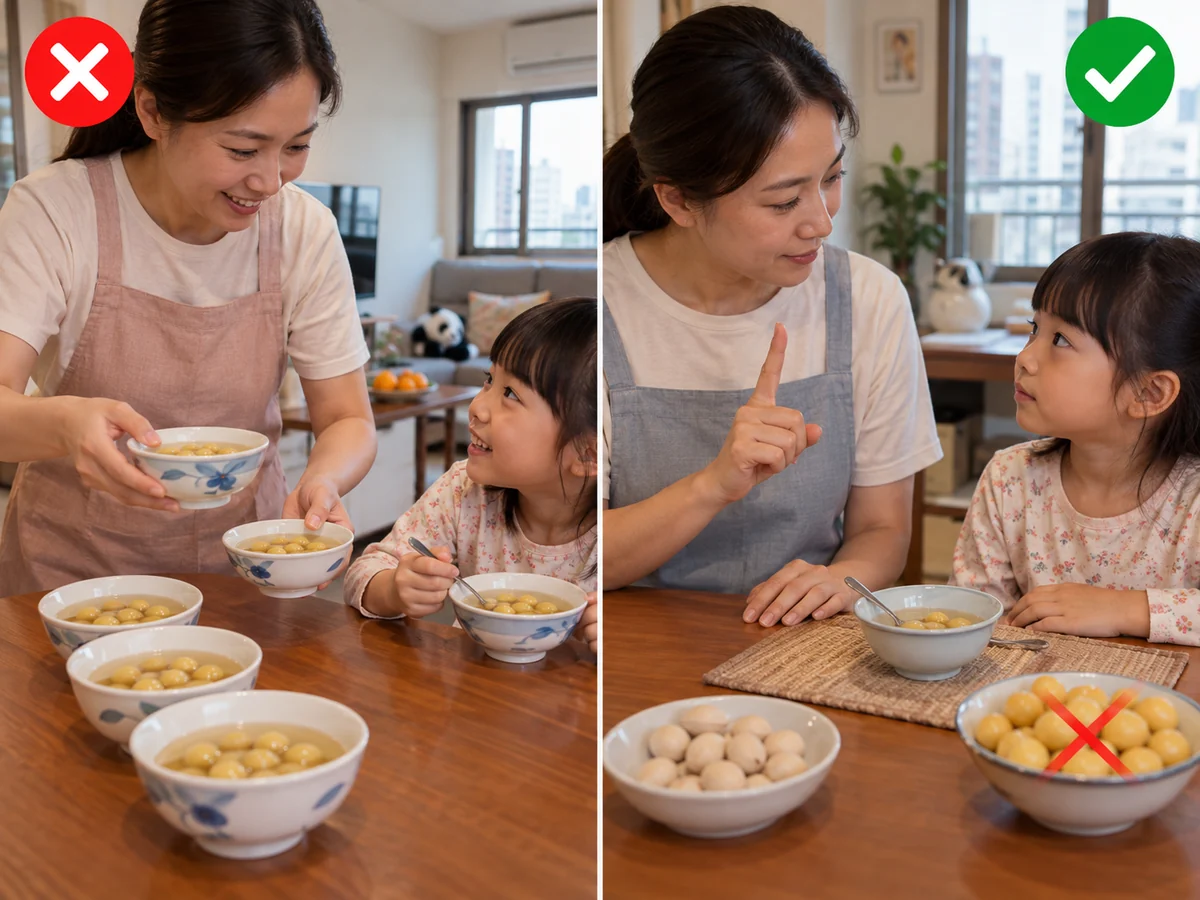
Do not serve raw ginkgo or allow large amounts of cooked ginkgo. If illness follows, record how much was eaten and seek medical advice.
View safety lesson →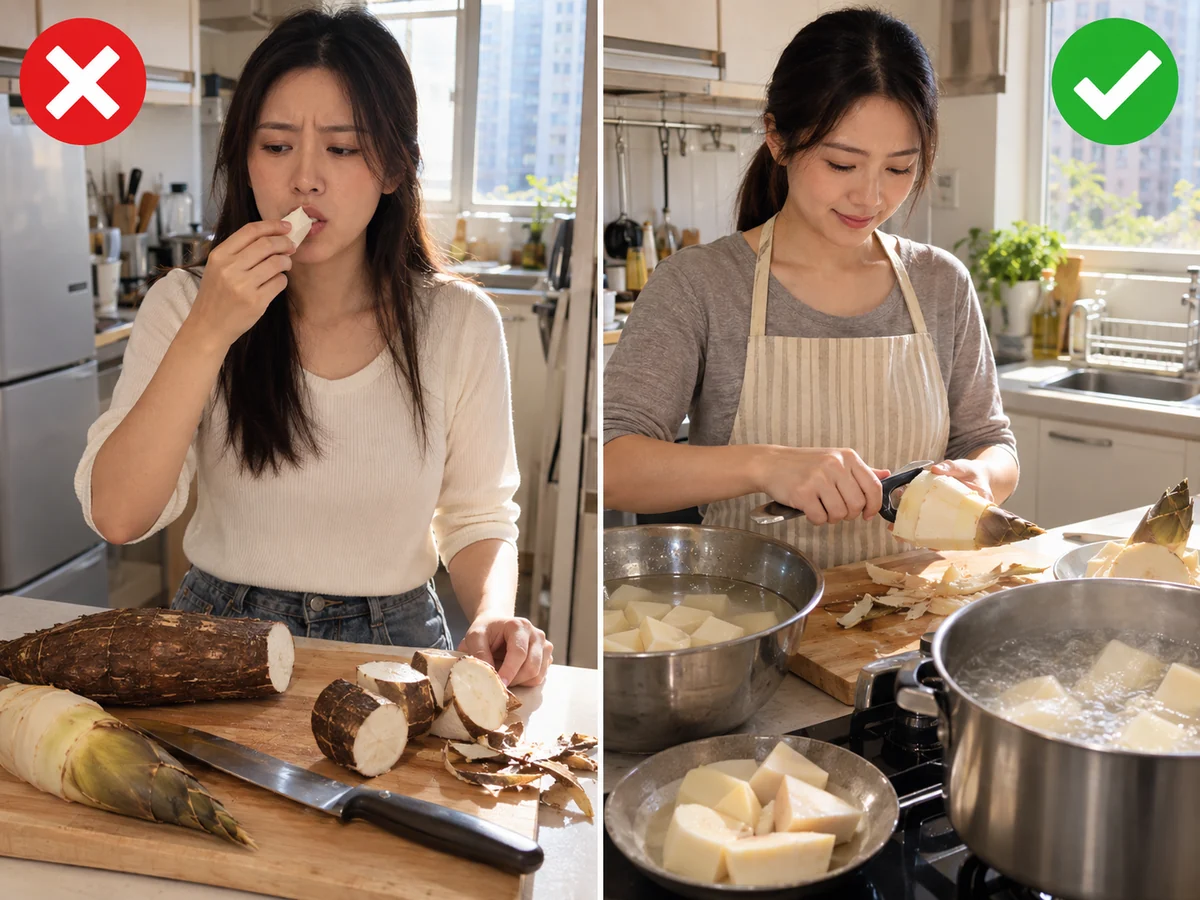
Peel, cut, soak and cook thoroughly as directed for that ingredient. Discard the preparation water and never taste raw pieces.
View safety lesson →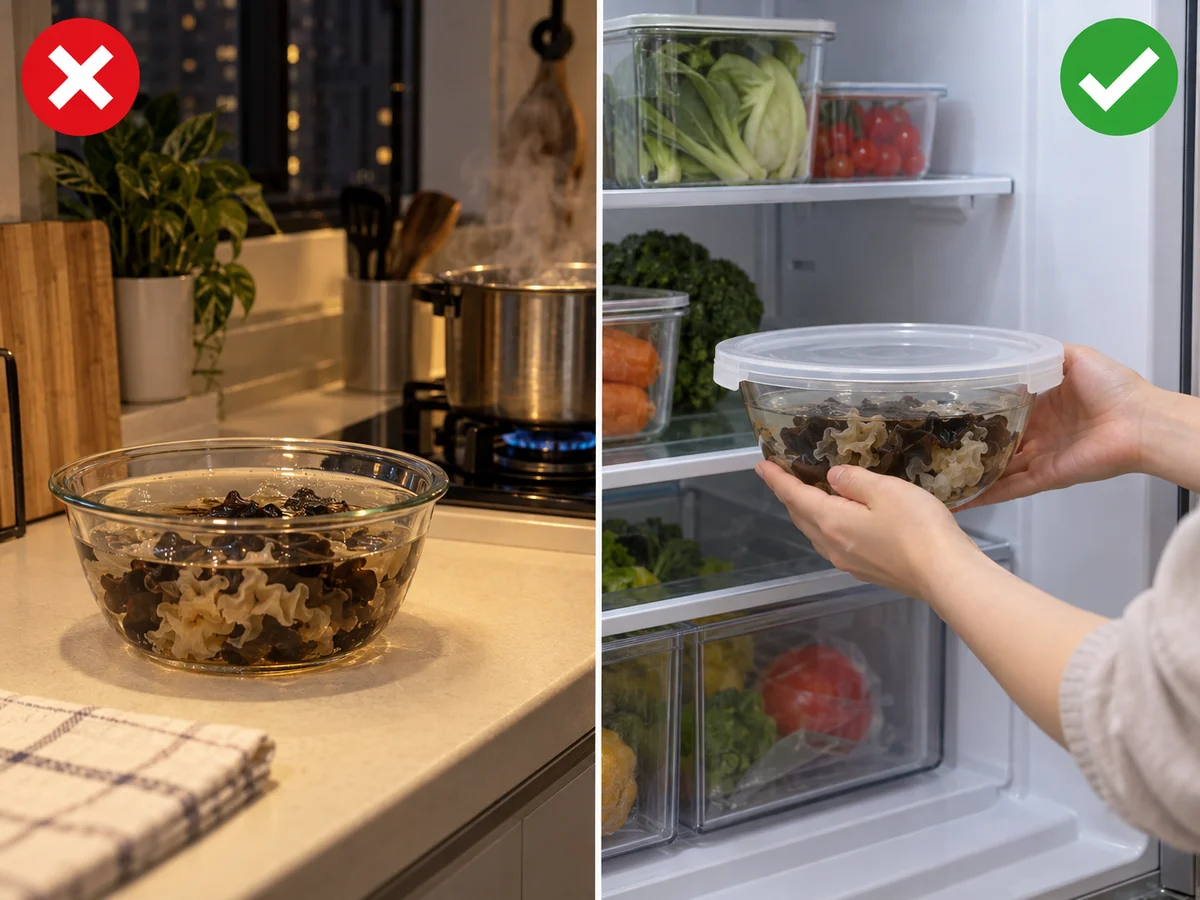
Keep soaking brief; use the refrigerator when a longer soak is needed. Discard fungus soaked too long or showing slime or an unusual smell; boiling is not a rescue.
View safety lesson →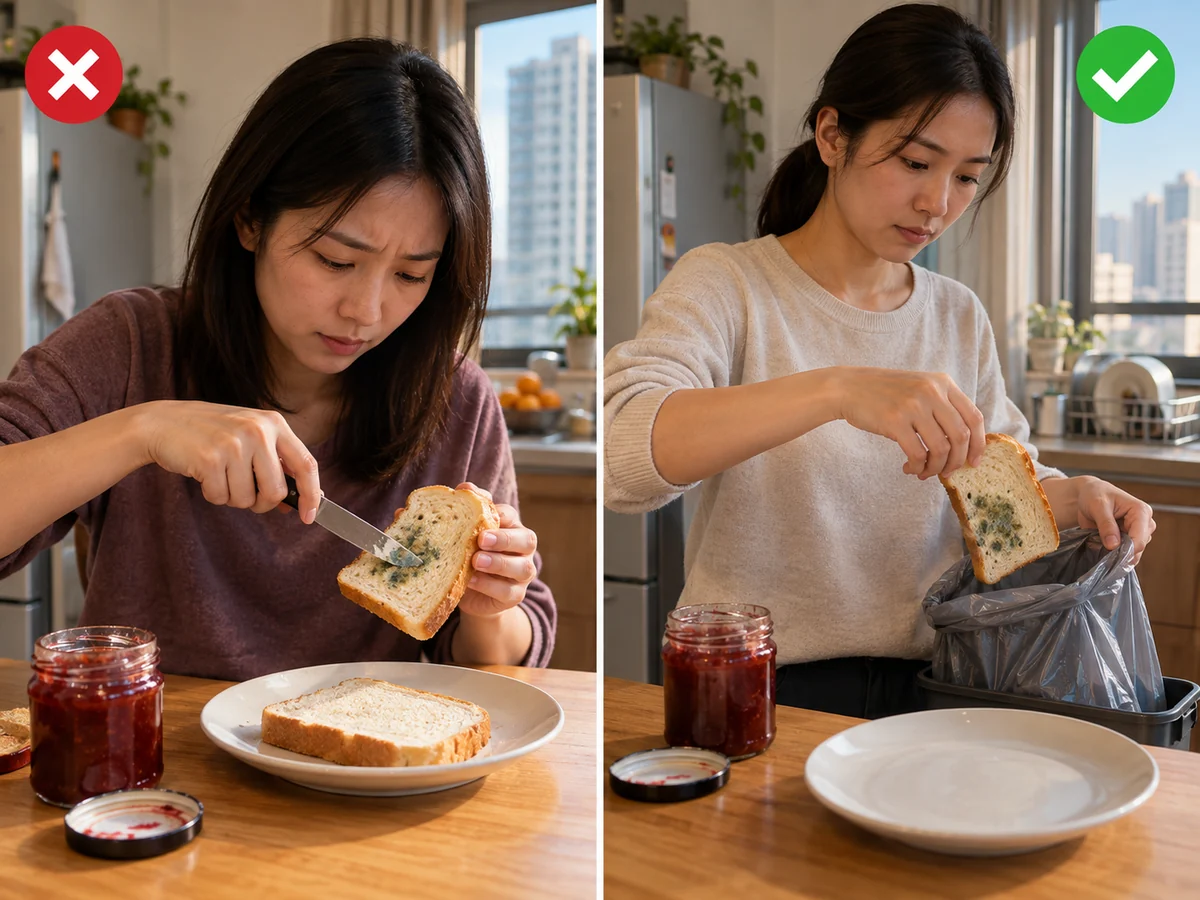
Discard unintentionally mouldy food; removing the visible patch does not remove all contamination. Do not taste it; bag it for disposal and clean the affected storage area.
View safety lesson →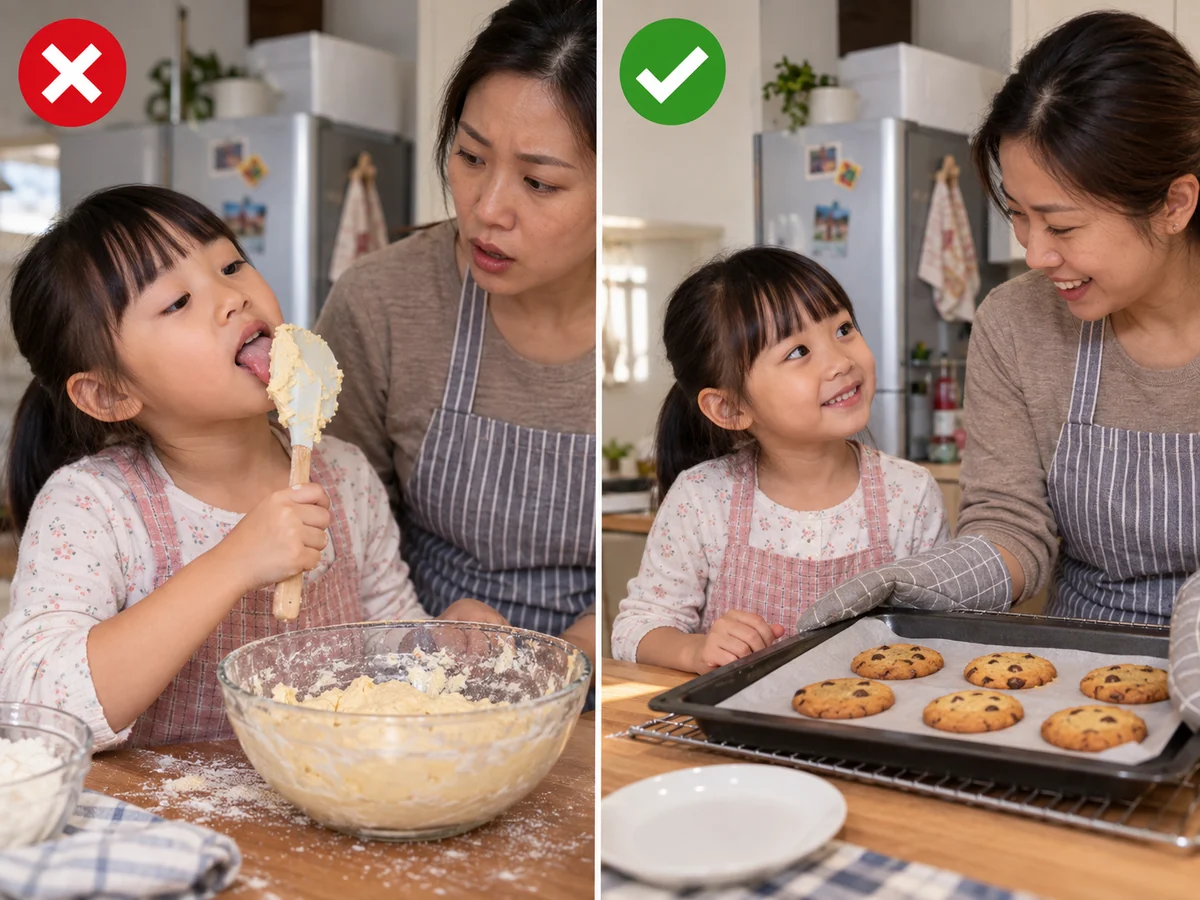
Keep raw flour and dough out of everyone's mouth and cook the recipe properly. Wash hands and clean utensils and surfaces that touched raw flour.
View safety lesson →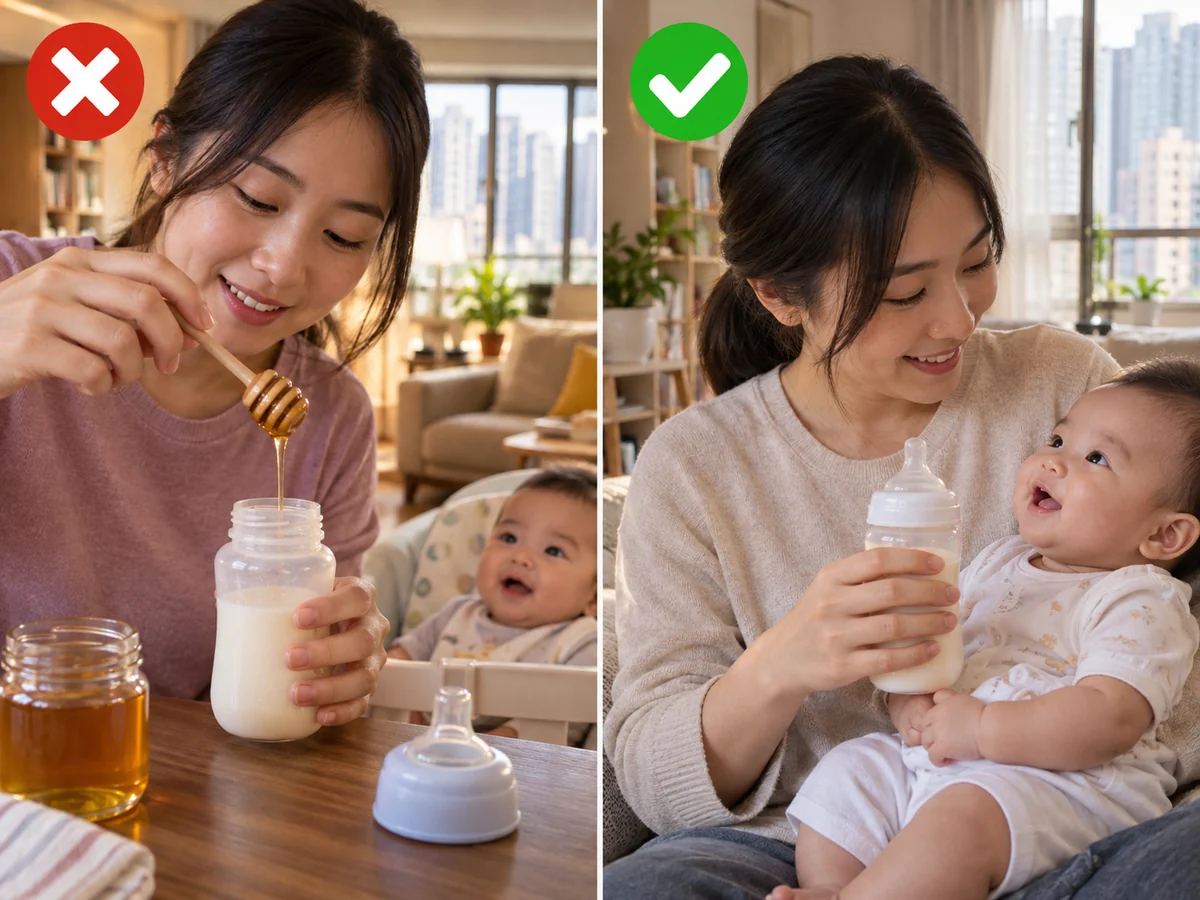
Give no honey to a baby under one year, including honey added to food or drinks. Tell every carer not to put honey on a dummy or in a bottle.
View safety lesson →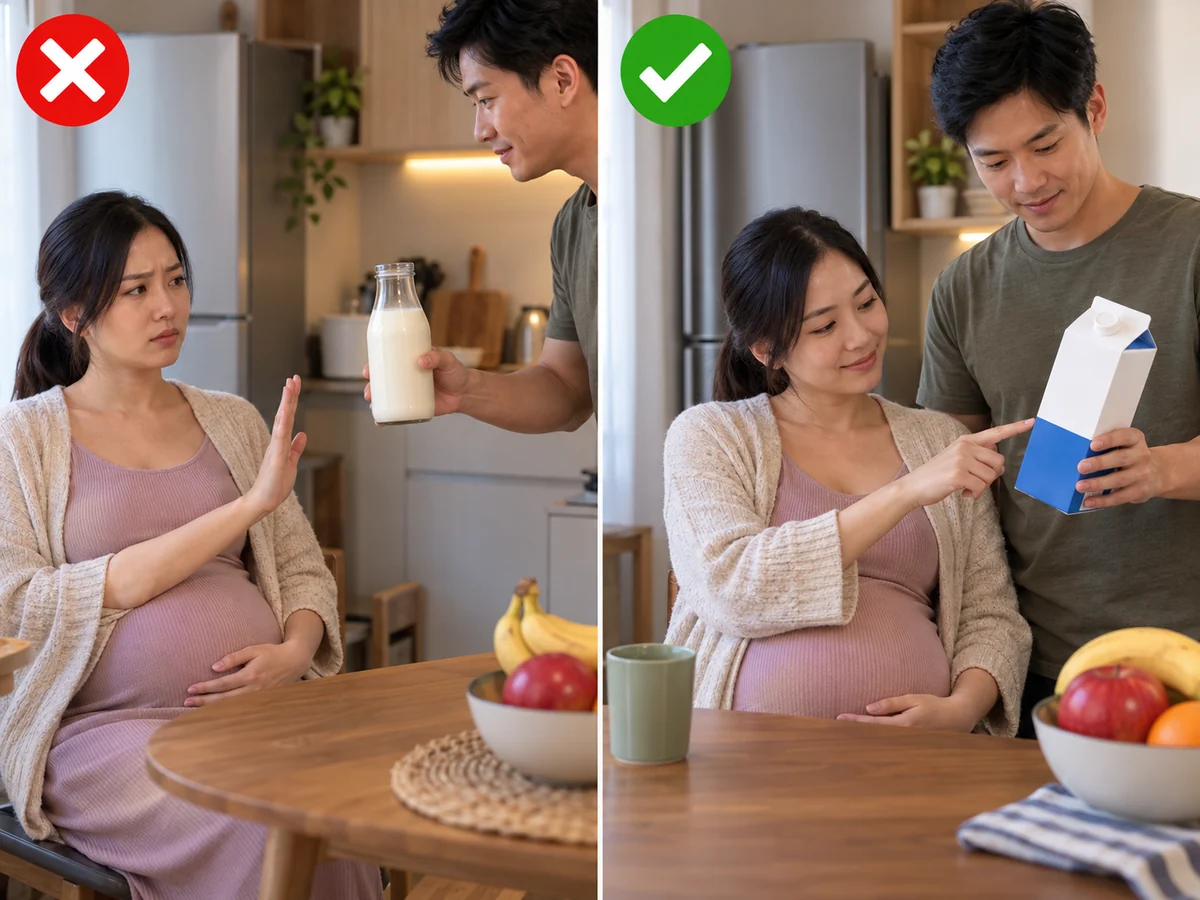
Choose suitably pasteurised dairy and read the product label before serving. Keep unpasteurised or unidentified dairy off that person's menu.
View safety lesson →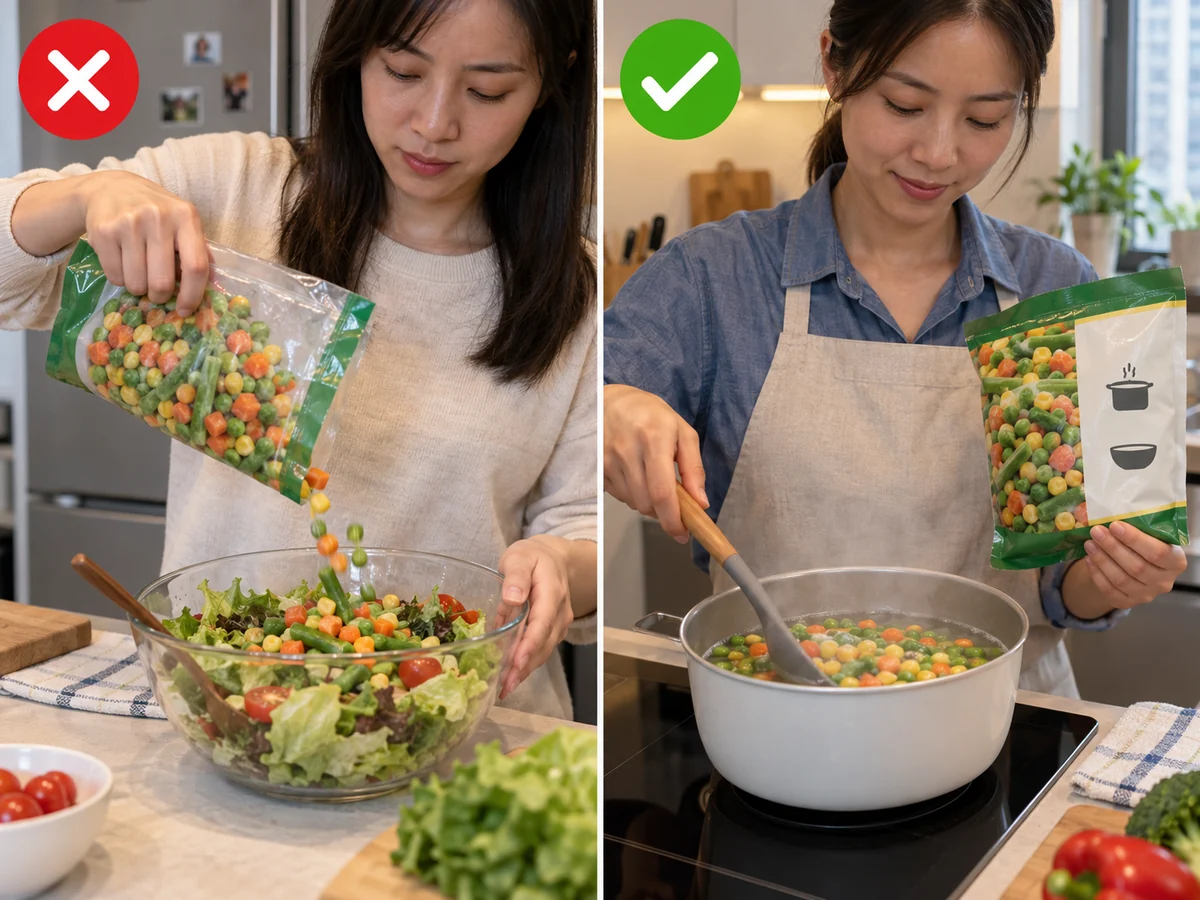
Cook frozen vegetables as directed unless the label clearly identifies them as ready to eat. Do not substitute thawing or rinsing for the required cooking step.
View safety lesson →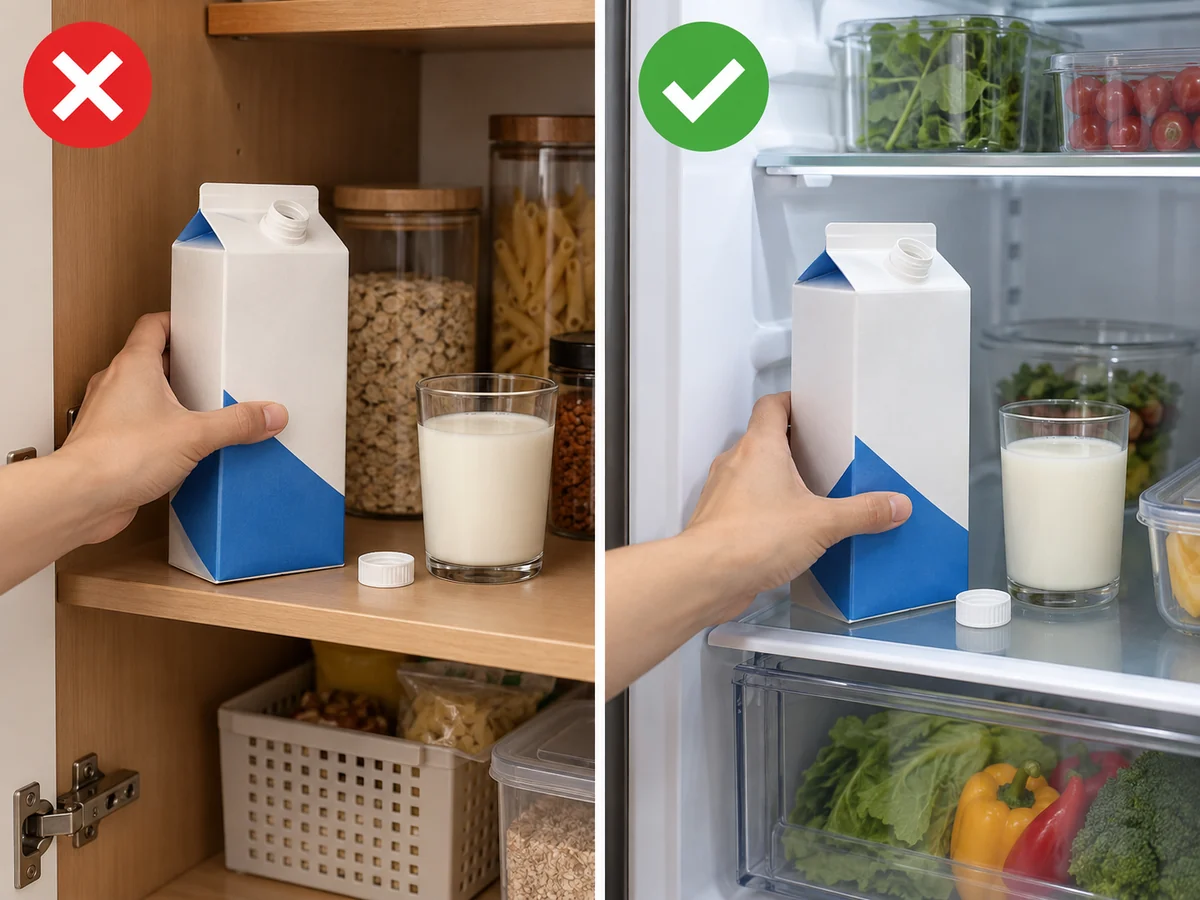
Refrigerate opened UHT milk and use it within the label's after-opening limit. Mark the opening time so the next carer can check it.
View safety lesson →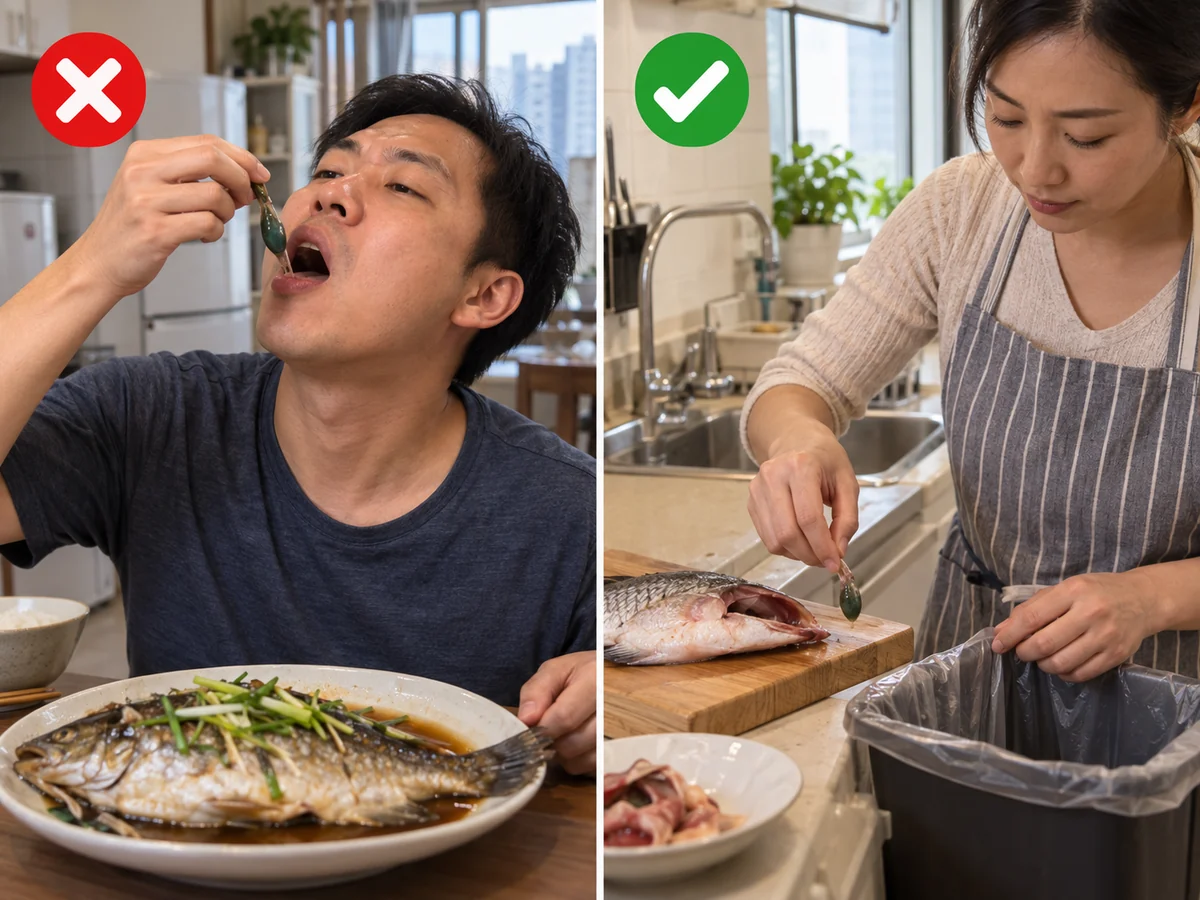
Never serve fish gall bladders as food or a home remedy. If swallowed, seek medical care promptly and report the fish type and time.
View safety lesson →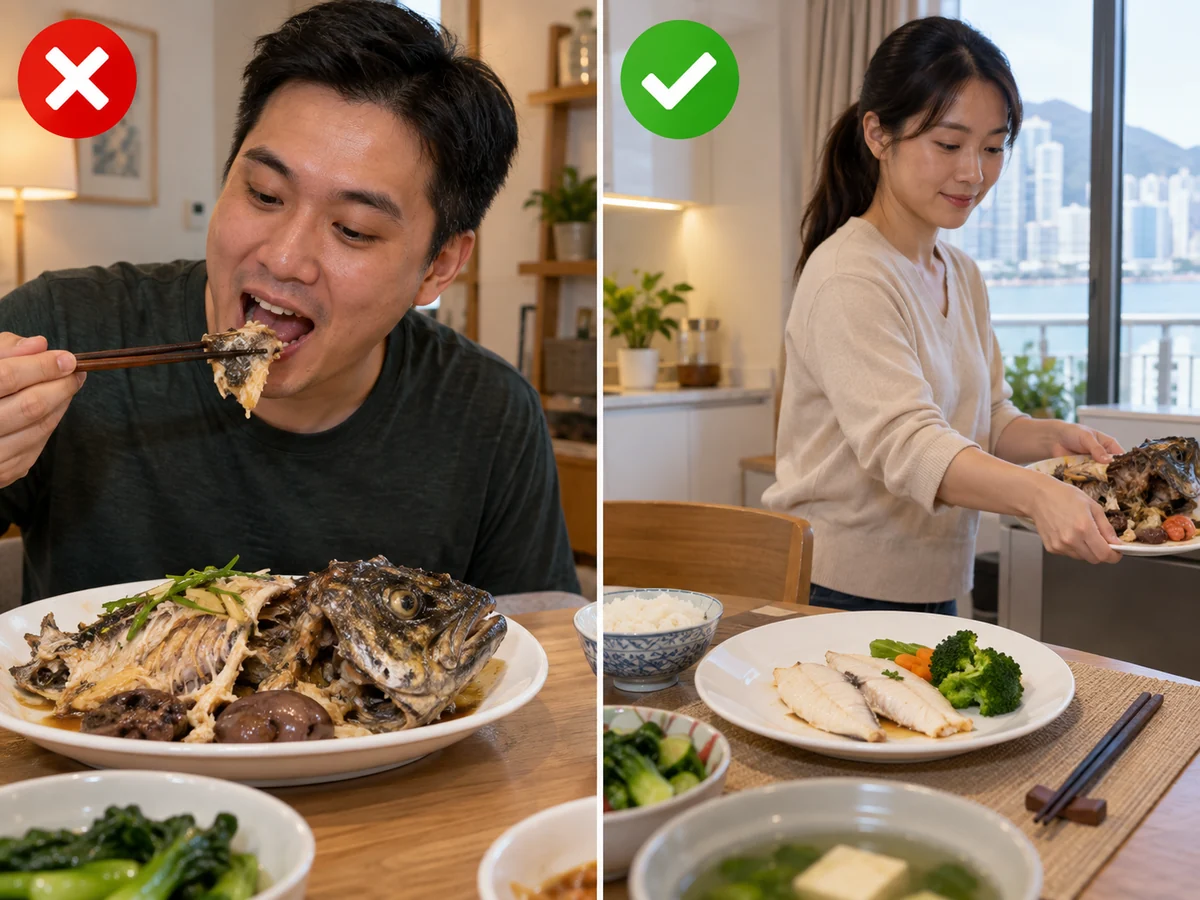
Avoid high-risk parts such as the head, organs, skin and roe. If diners become ill, keep fish details and seek medical care promptly.
View safety lesson →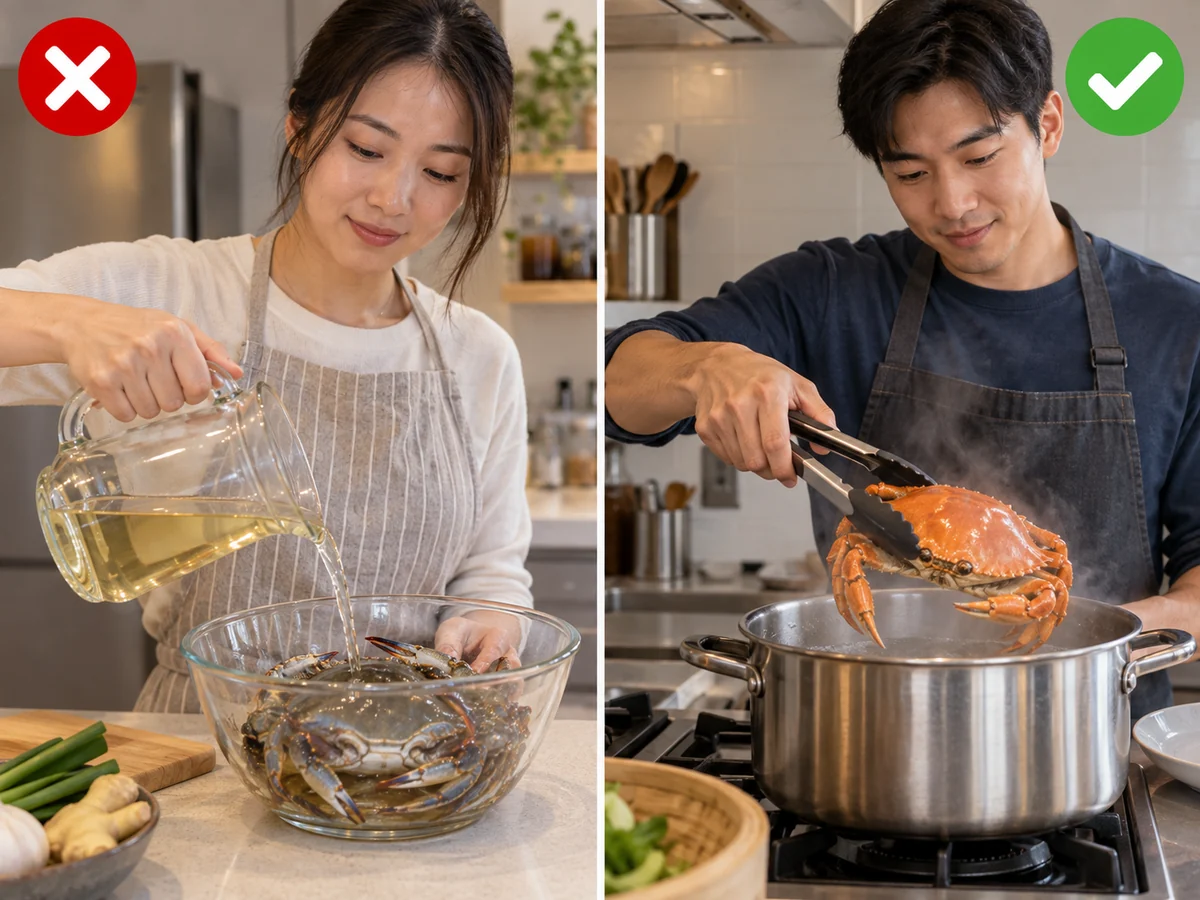
Do not use wine, vinegar or wasabi as a substitute for proper cooking. Explain the risk before serving a household recipe that calls for raw seafood.
View safety lesson →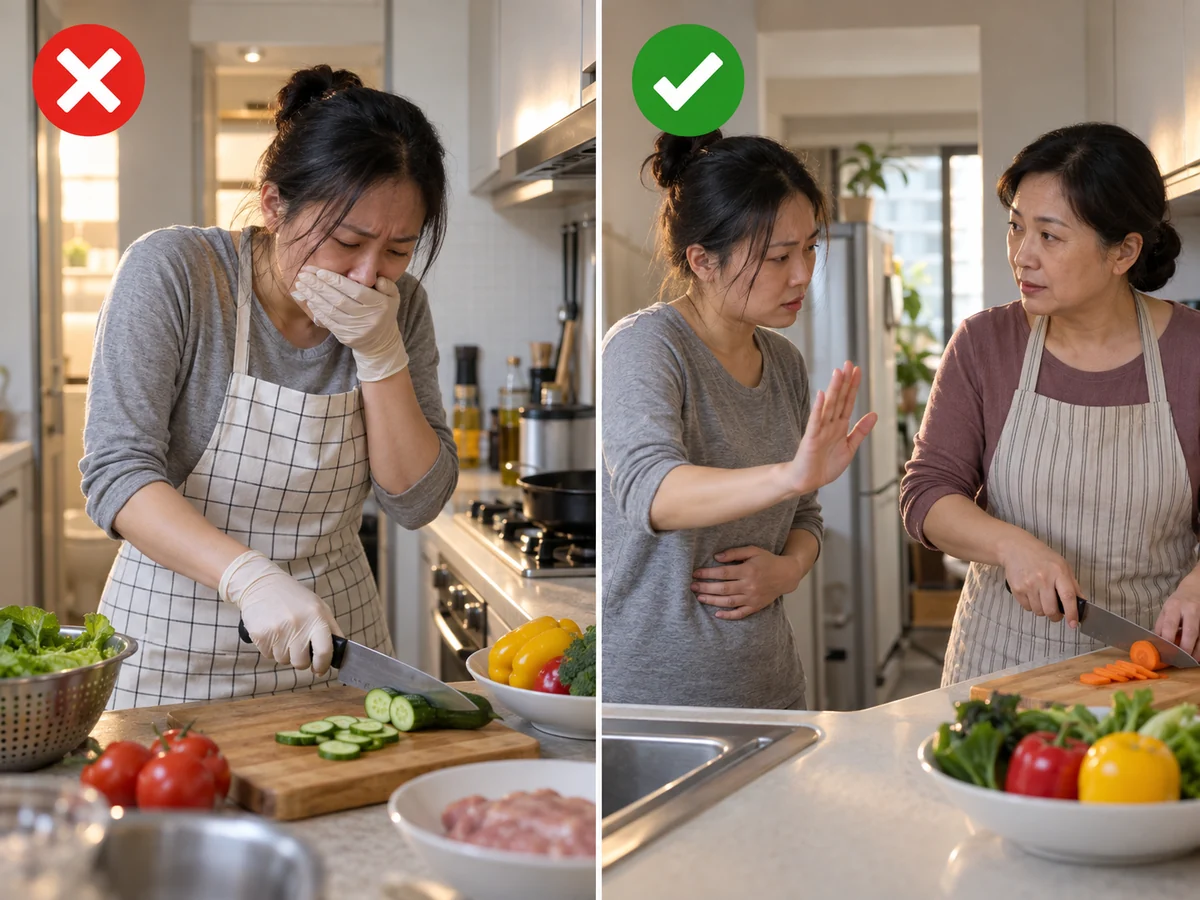
Stop preparing food and arrange for another person to take over. Seek medical advice and follow health guidance before returning to food handling.
View safety lesson →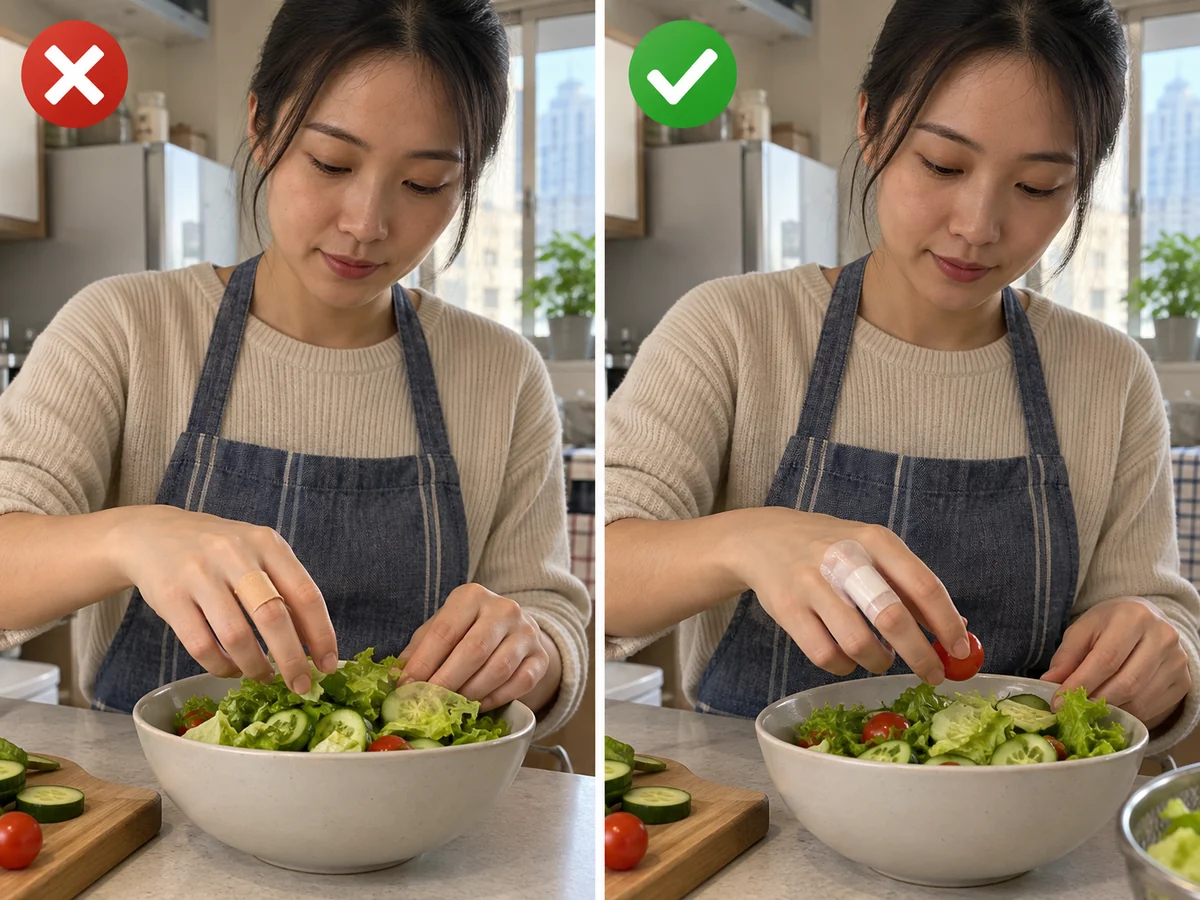
Cover suitable minor wounds securely with a waterproof dressing. Stop direct food handling and seek advice if the wound is infected or cannot be covered safely.
View safety lesson →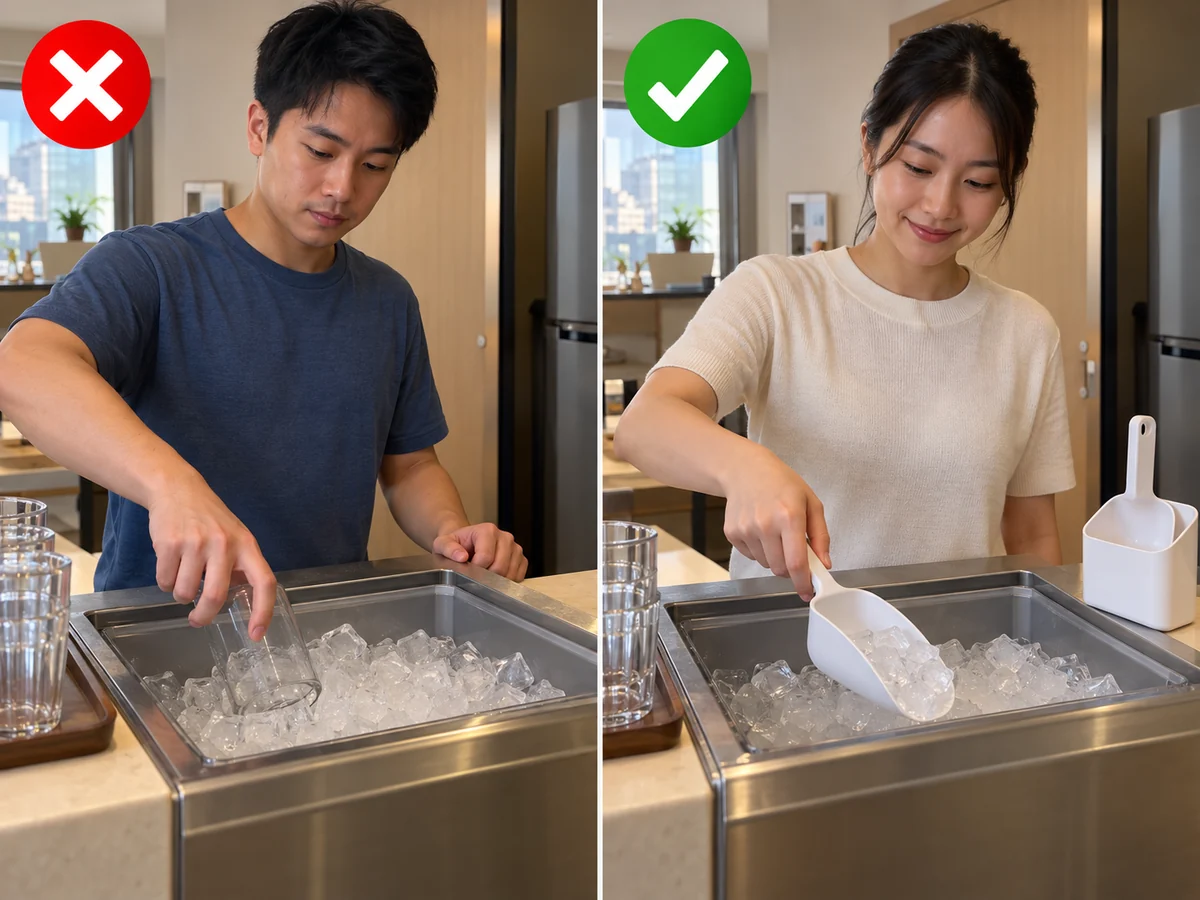
Use the scoop for edible ice and keep its handle away from the ice. If glass breaks into the ice, discard the affected ice instead of picking out visible pieces.
View safety lesson →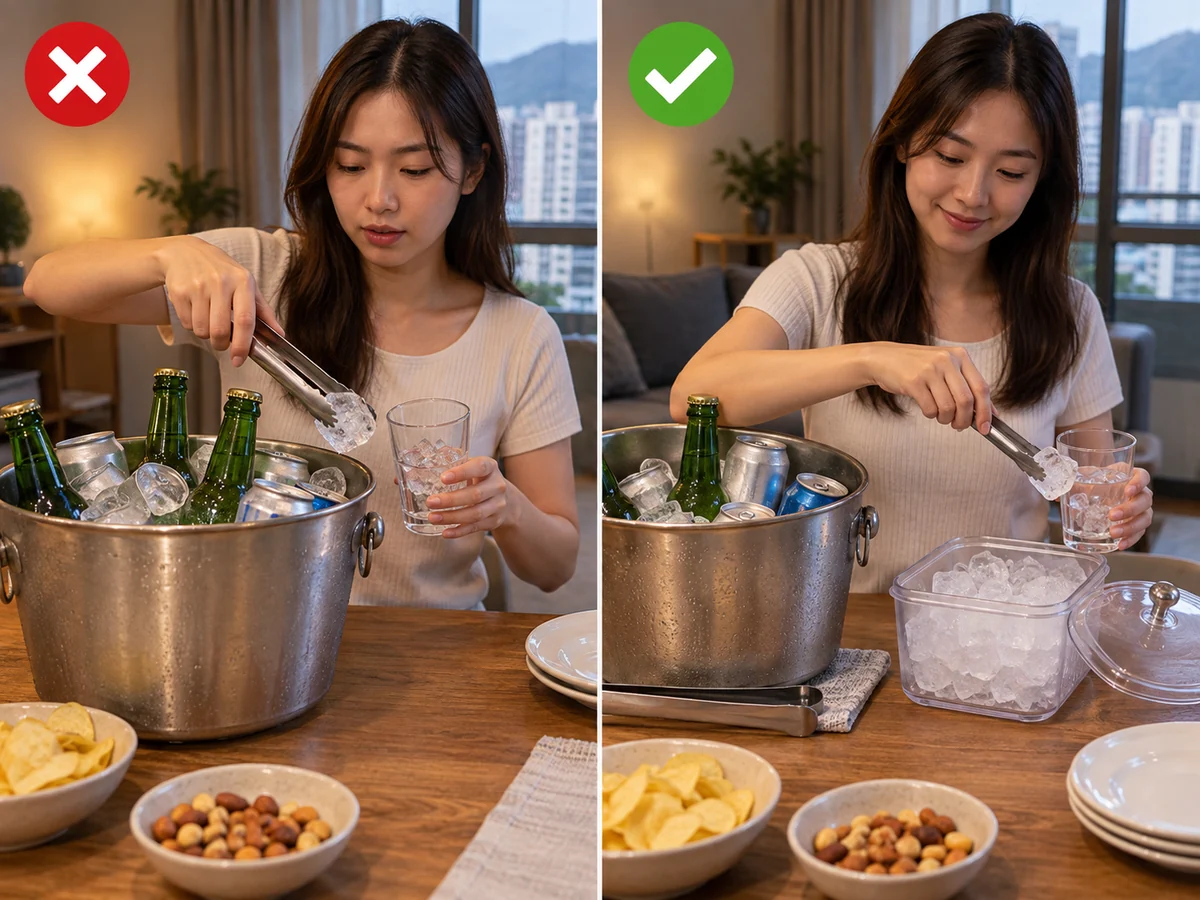
Keep edible ice separate from ice used to chill bottles or cans. Discard used cooling ice; keep drinking ice covered and reserved for food use.
View safety lesson →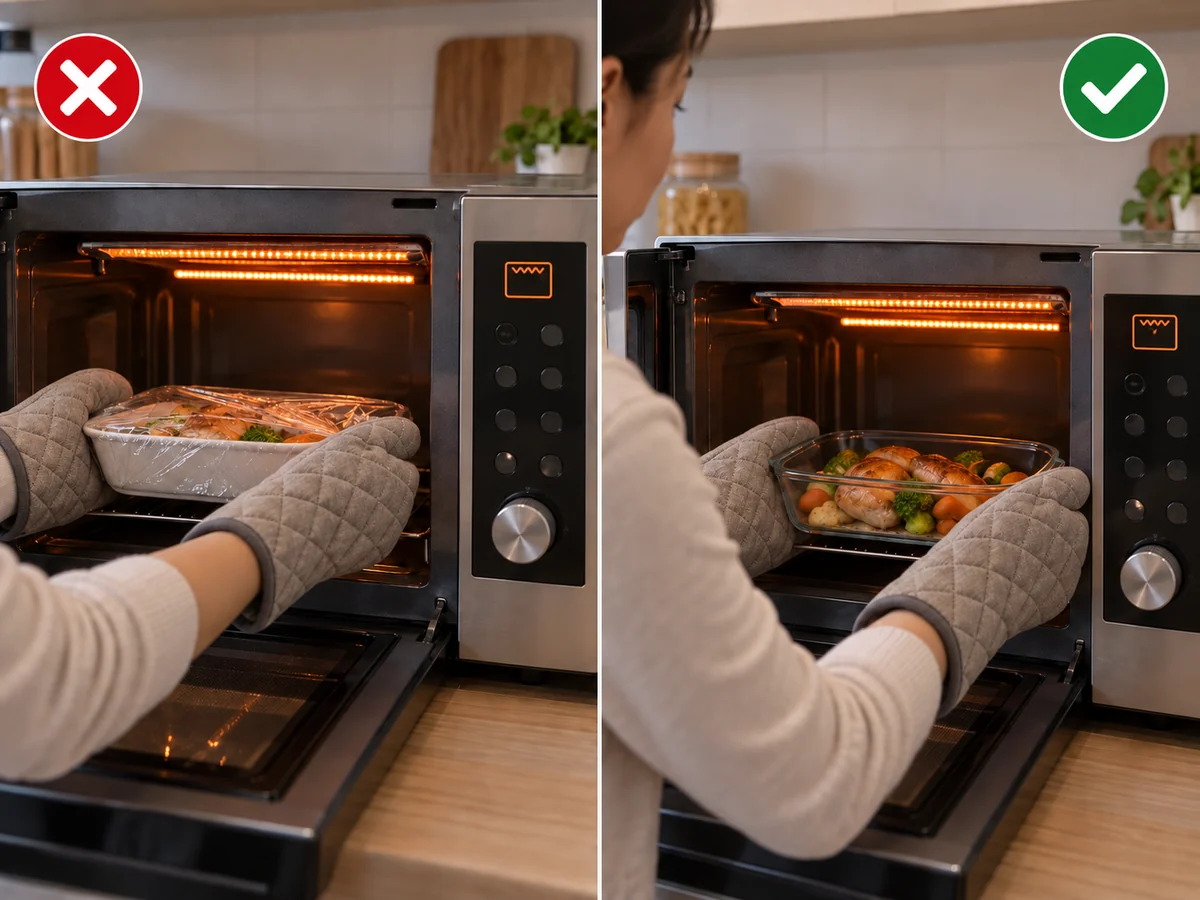
Use wrap only in the modes and conditions allowed by its label. Remove wrap for grill use and choose cookware approved for that mode.
View safety lesson →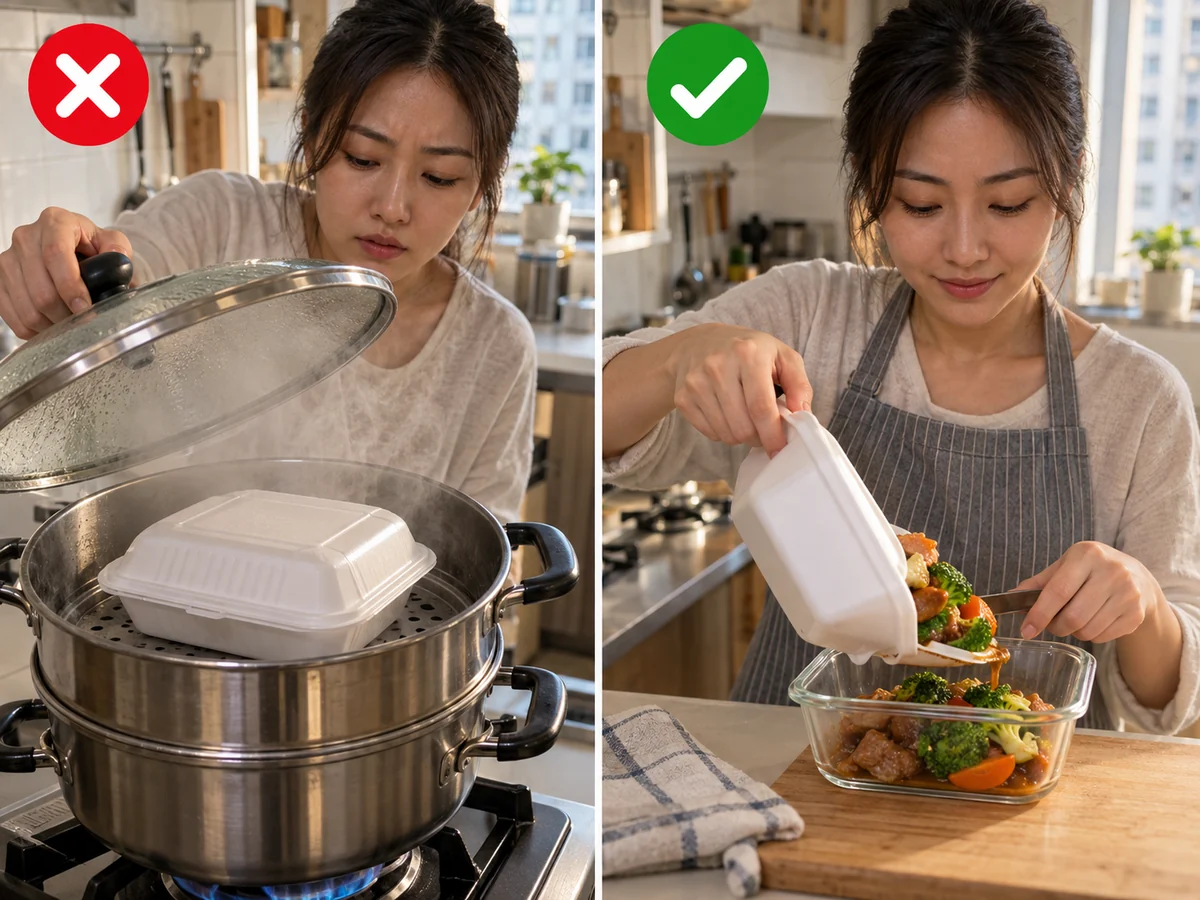
Transfer food to a container approved for that cooking method when suitability is unclear. Do not treat holding hot food as proof that a box is safe for cooking.
View safety lesson →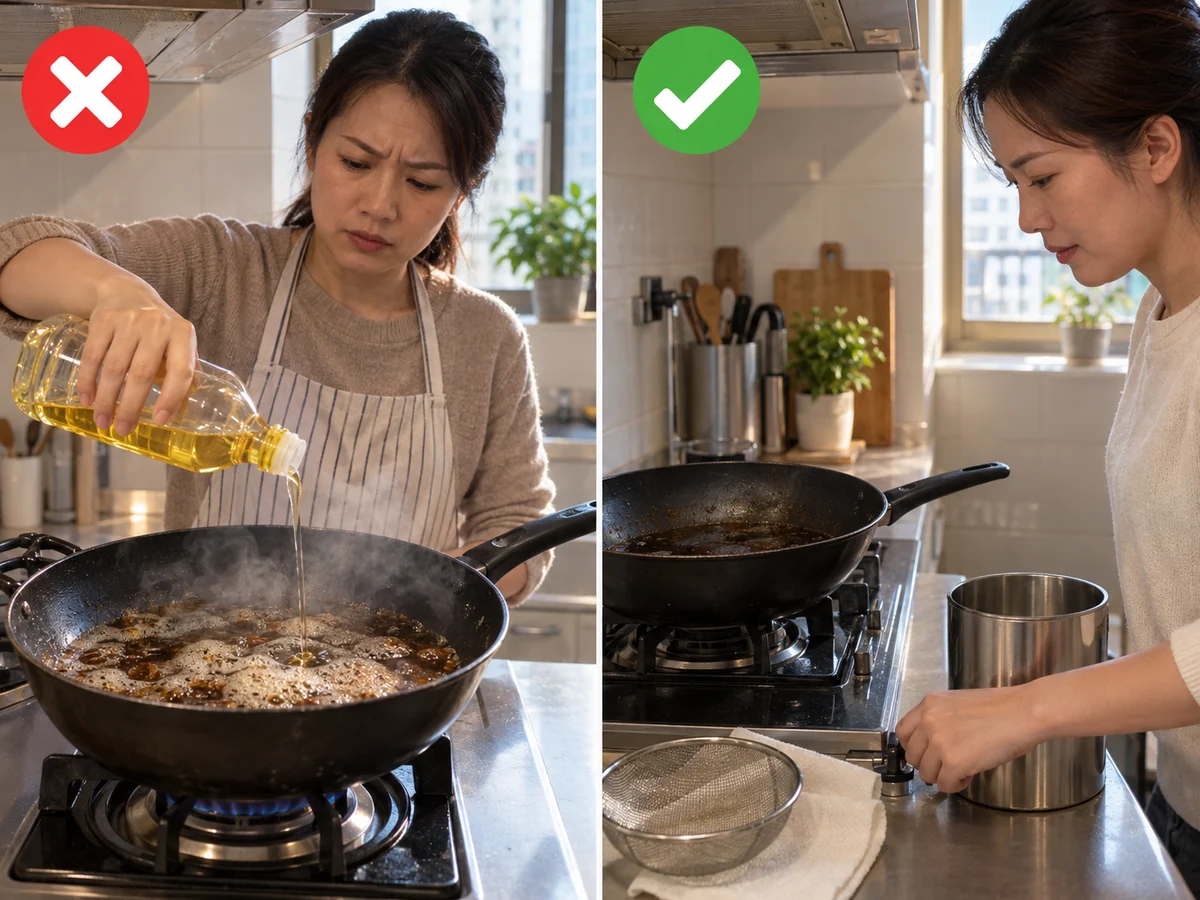
Stop using degraded oil instead of mixing in new oil. Turn off the heat, let it cool safely and follow the household's waste-oil disposal arrangement.
View safety lesson →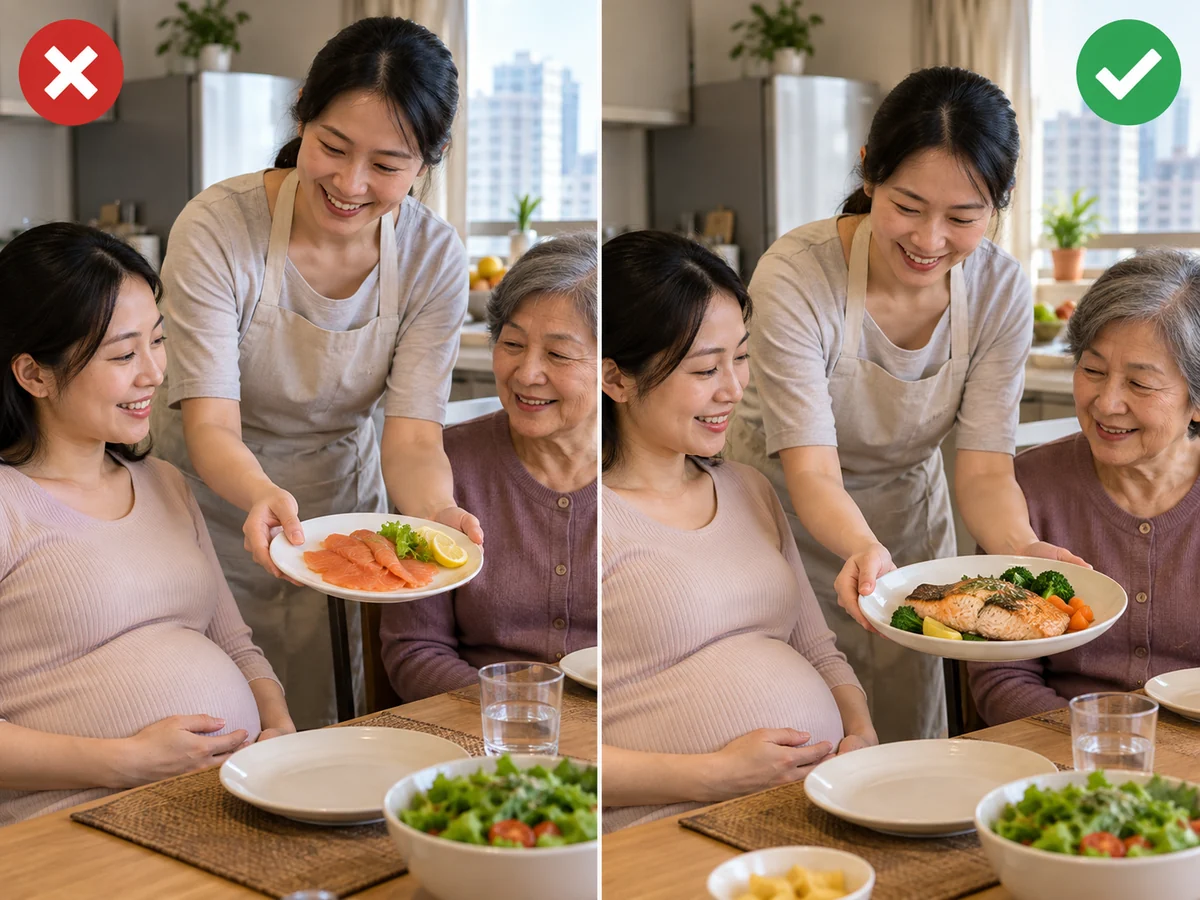
Do not serve uncooked cold-smoked fish to vulnerable people; choose thoroughly cooked fish instead. Refrigeration and a ready-to-eat label are not proof of safety; agree on a cooked alternative with the employer.
View safety lesson →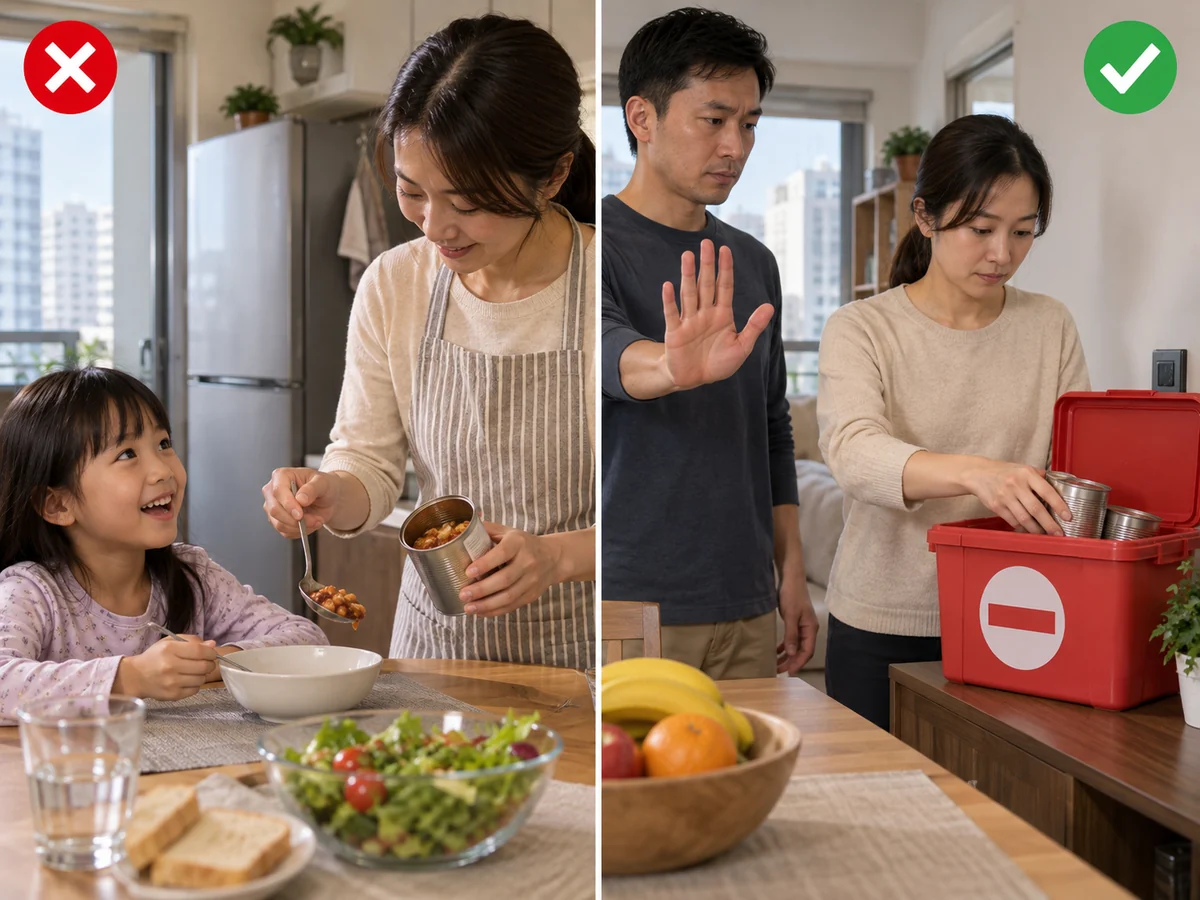
Stop using affected food and separate it so nobody takes it by mistake. Tell the household and follow the official or supplier's return instructions.
View safety lesson →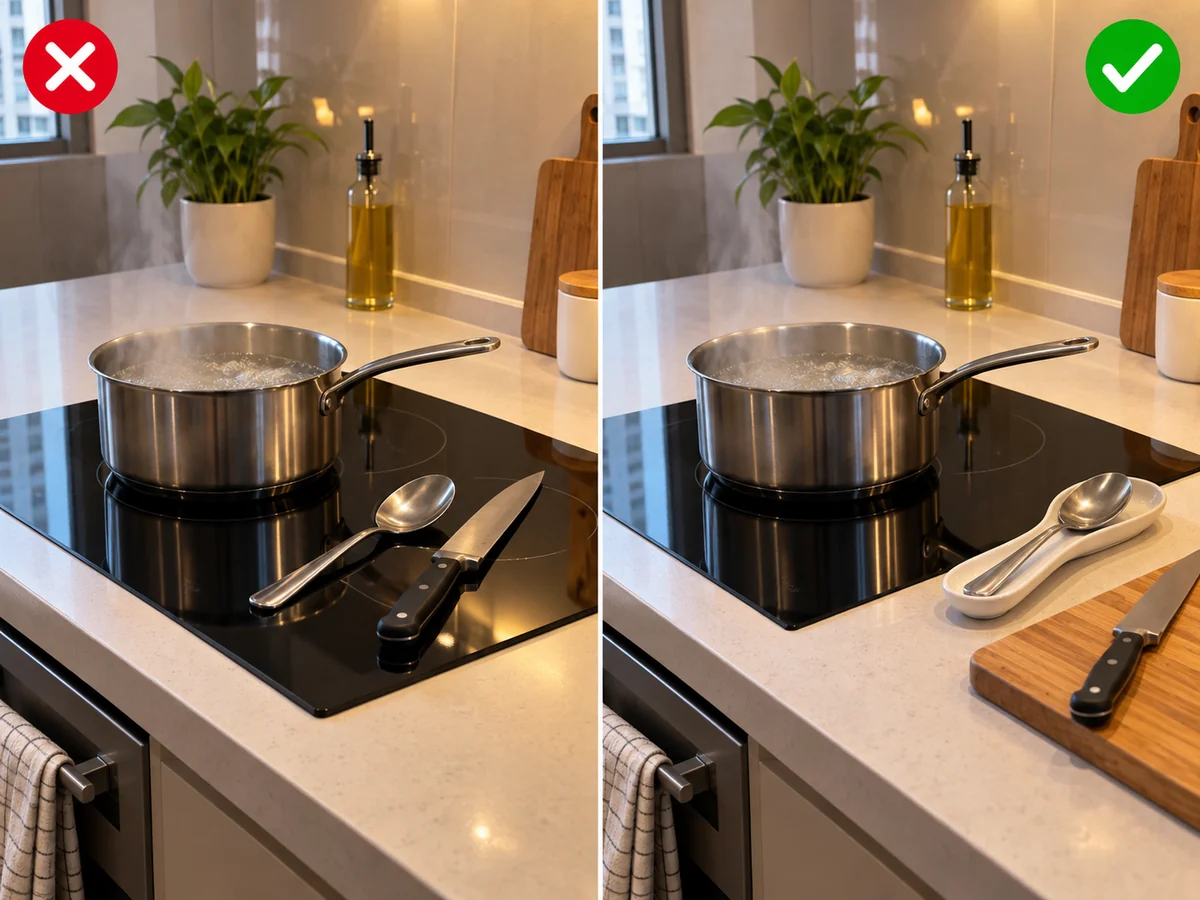
Keep the hob for suitable cookware and put utensils on a separate surface. Switch off after cooking and do not use the hob as storage.
View safety lesson →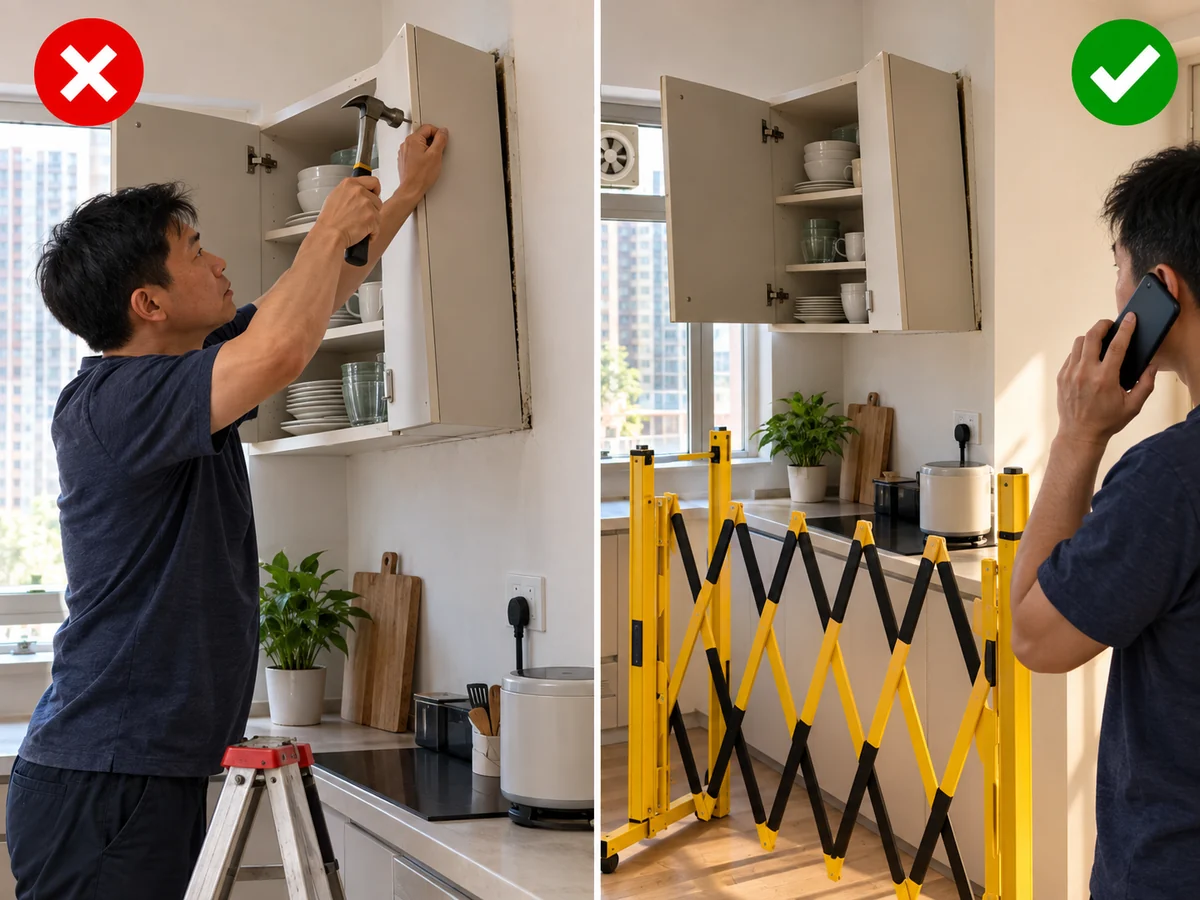
Stop using the cabinet and keep people out of the area beneath it. Arrange professional inspection of the wall, anchors and load; do not attempt an improvised repair.
View safety lesson →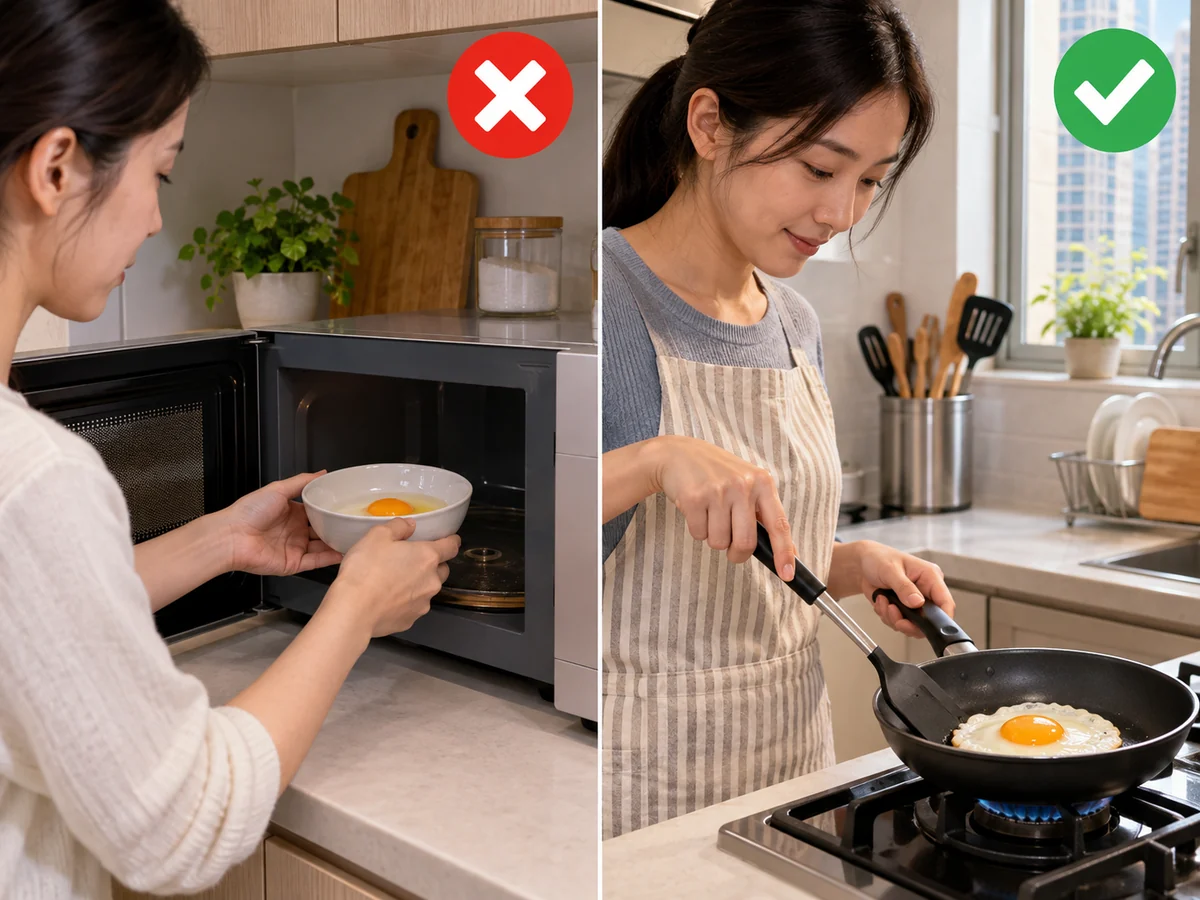
Do not directly microwave uncooked eggs; use a suitable alternative cooking method. Keep people back if an egg bursts and deal with burns promptly.
View safety lesson →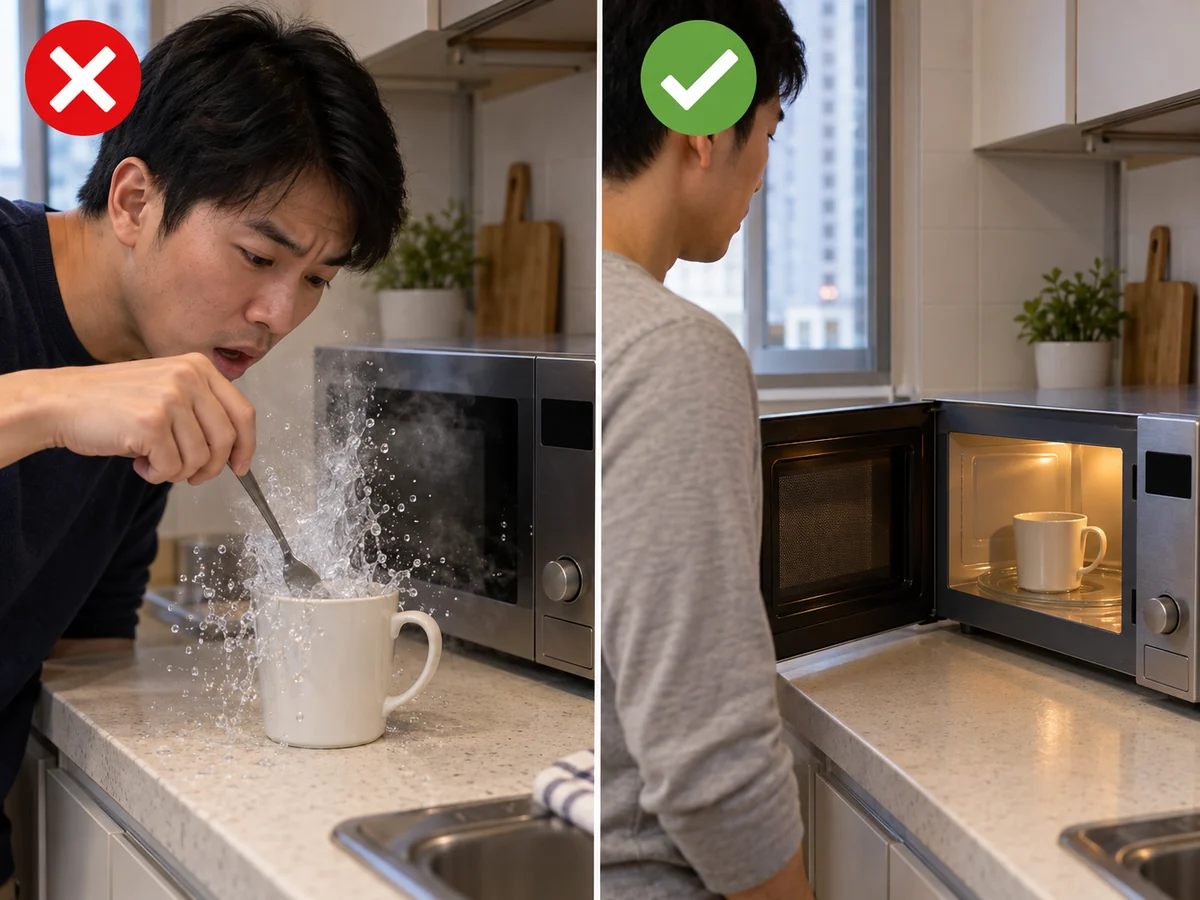
Avoid overheating water and allow the instructed standing time before handling. Keep your face away and do not abruptly add a spoon or powder to very hot water.
View safety lesson →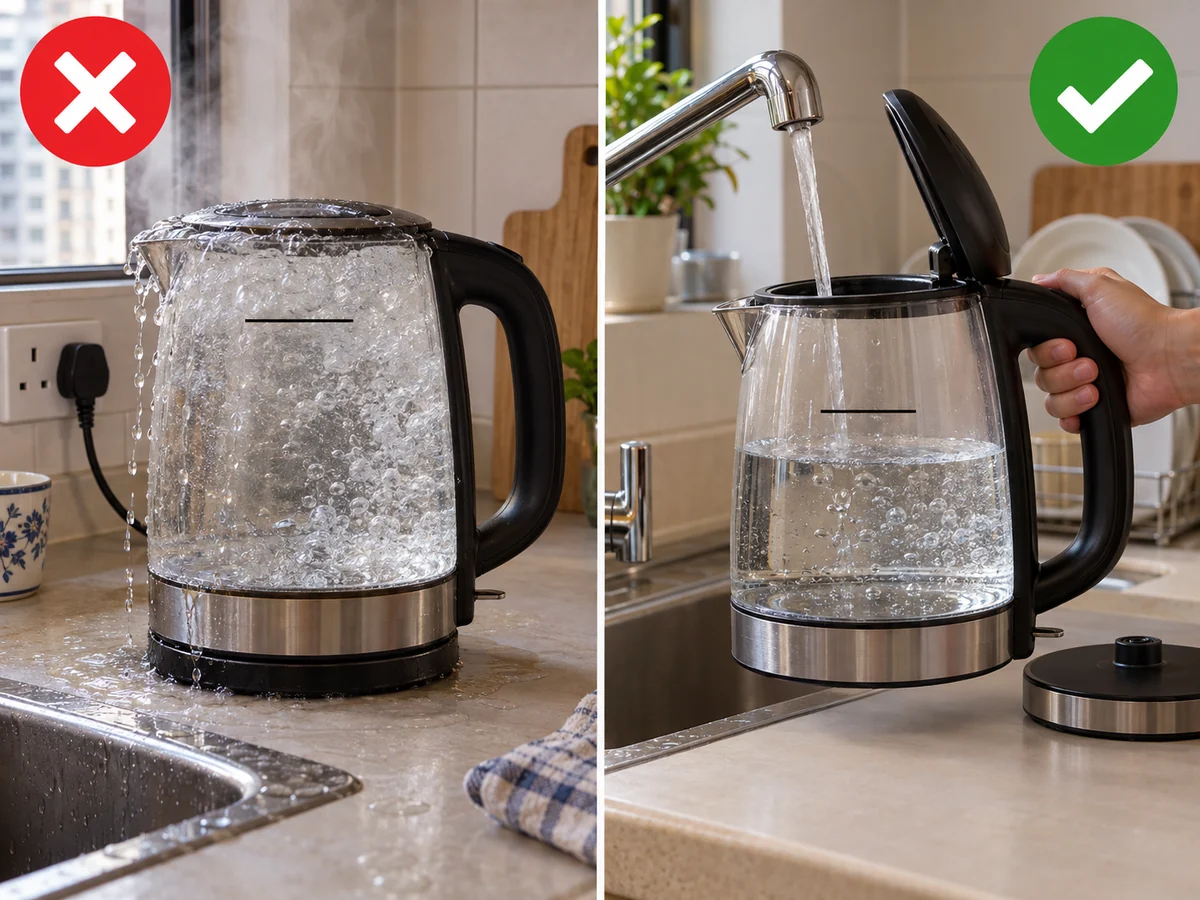
Keep water at or below the marked maximum level. Remove excess water before switching on and boil separate batches if needed.
View safety lesson →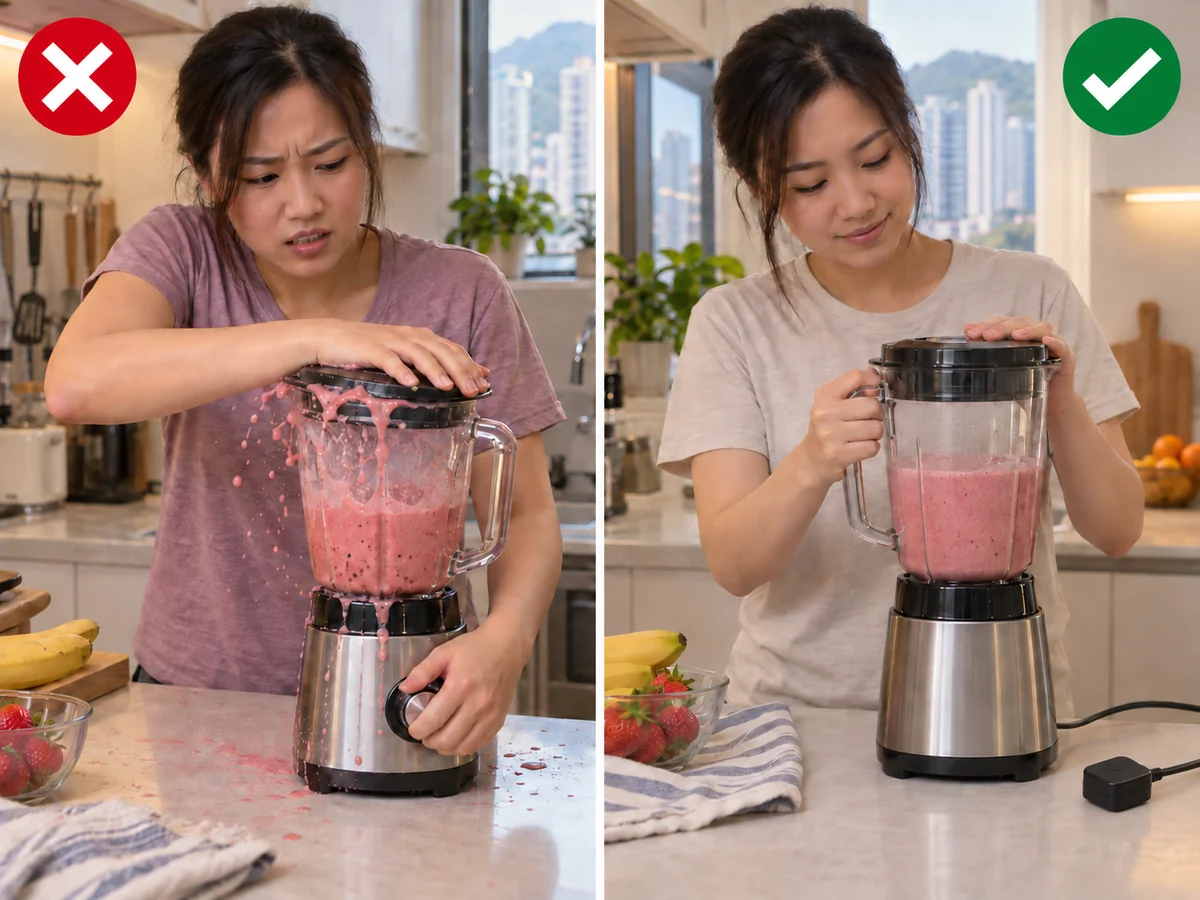
Confirm each required attachment is correctly locked before starting. Stop if a part will not lock; never bypass an interlock or hold a loose assembly together.
View safety lesson →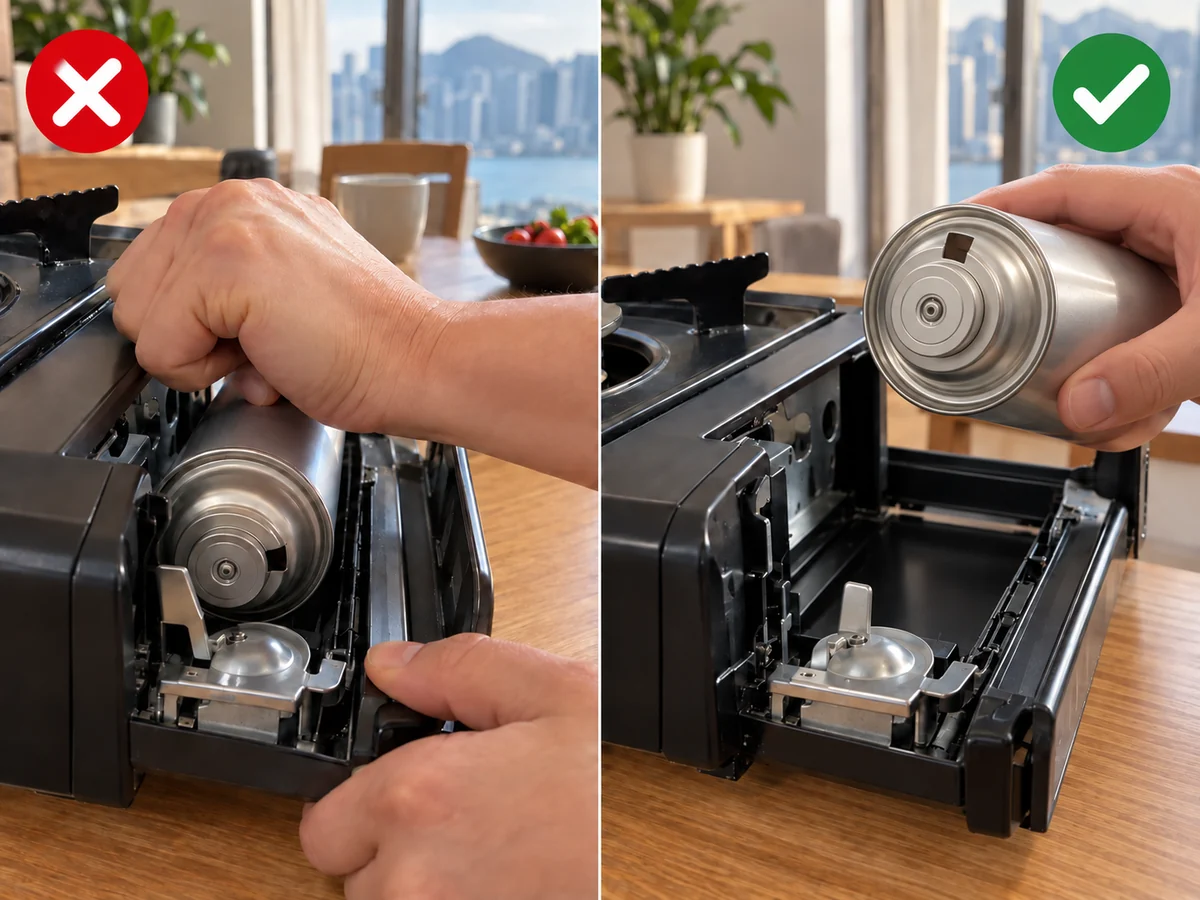
Install the cartridge exactly in the position shown in the appliance instructions. Stop if it does not fit or is damaged; do not force or modify it.
View safety lesson →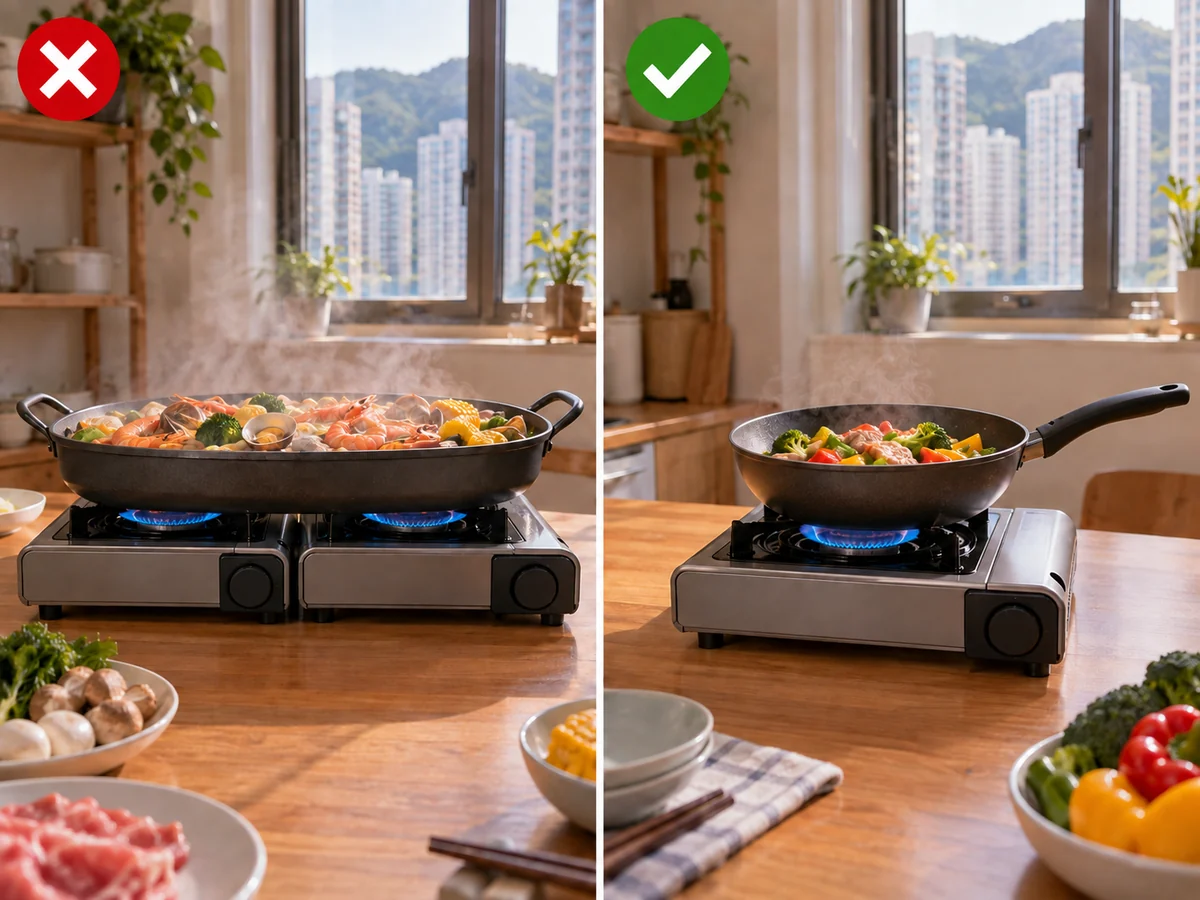
Do not operate cassette cookers side by side or under one shared pan. Arrange separate safe positions that follow the manufacturers' instructions.
View safety lesson →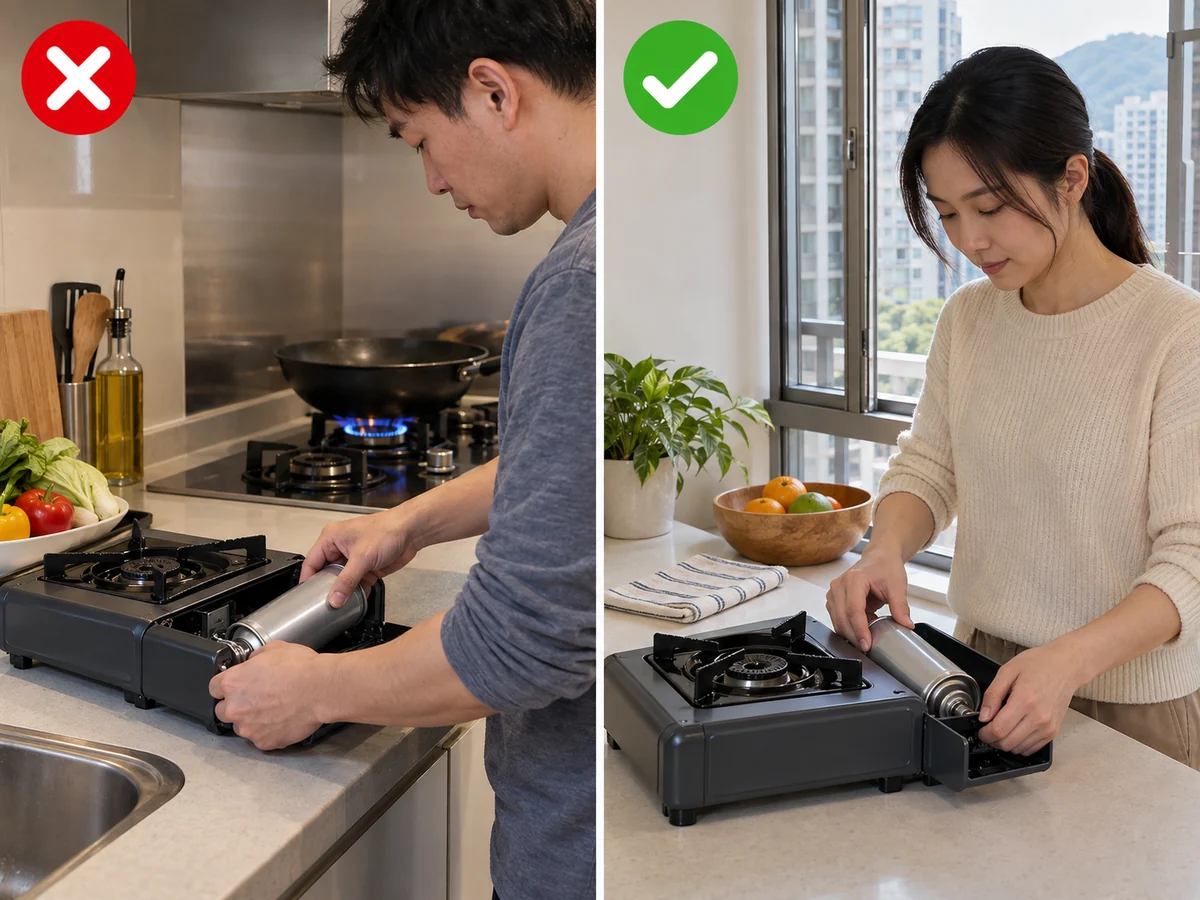
Change cartridges only in a ventilated place away from flames and heat. Stop if gas leaks and follow the household gas-leak response without creating sparks.
View safety lesson →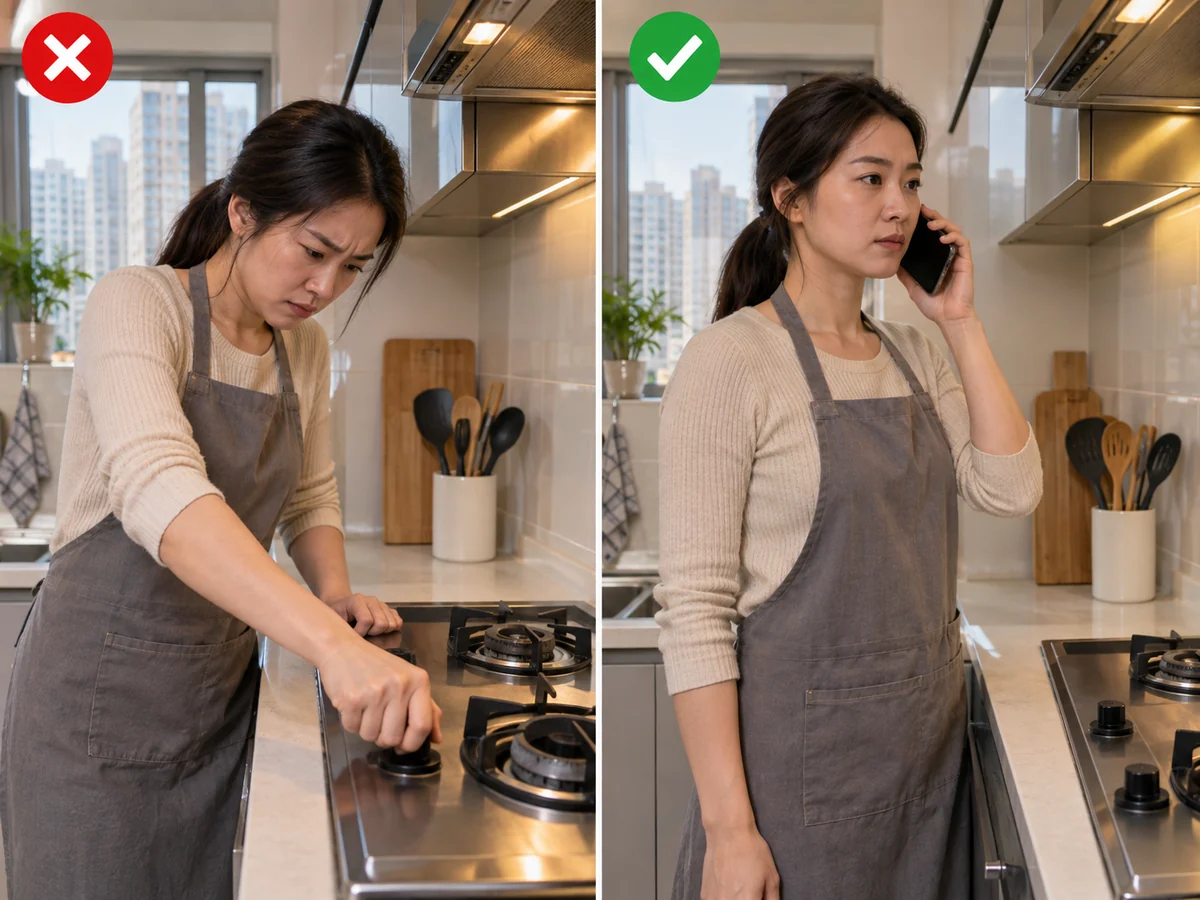
Stop using an appliance with repeated ignition failure and report it. Arrange a registered gas contractor; if gas is smelled, follow the gas-leak procedure.
View safety lesson →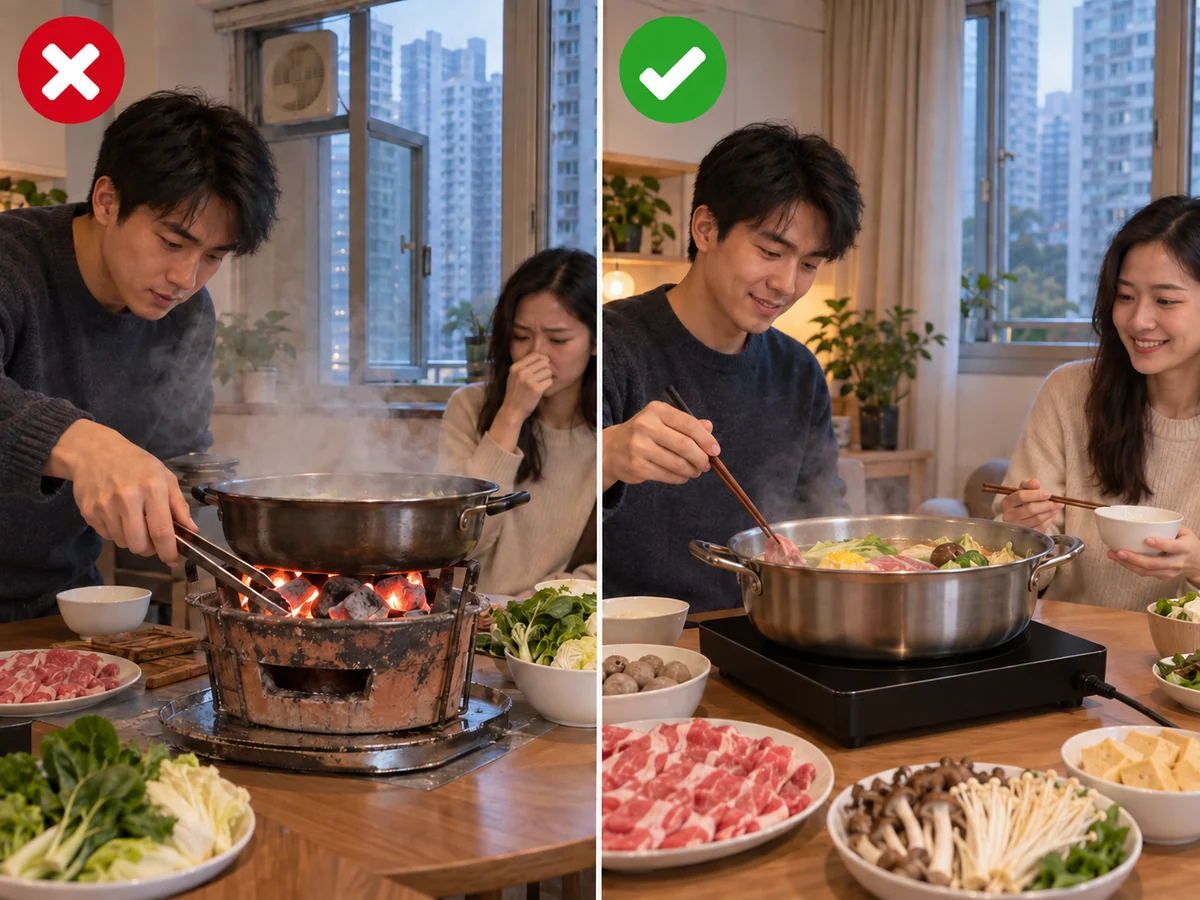
Never burn charcoal inside a home or other enclosed area. If headache or dizziness occurs near combustion, leave for fresh air and seek emergency help.
View safety lesson →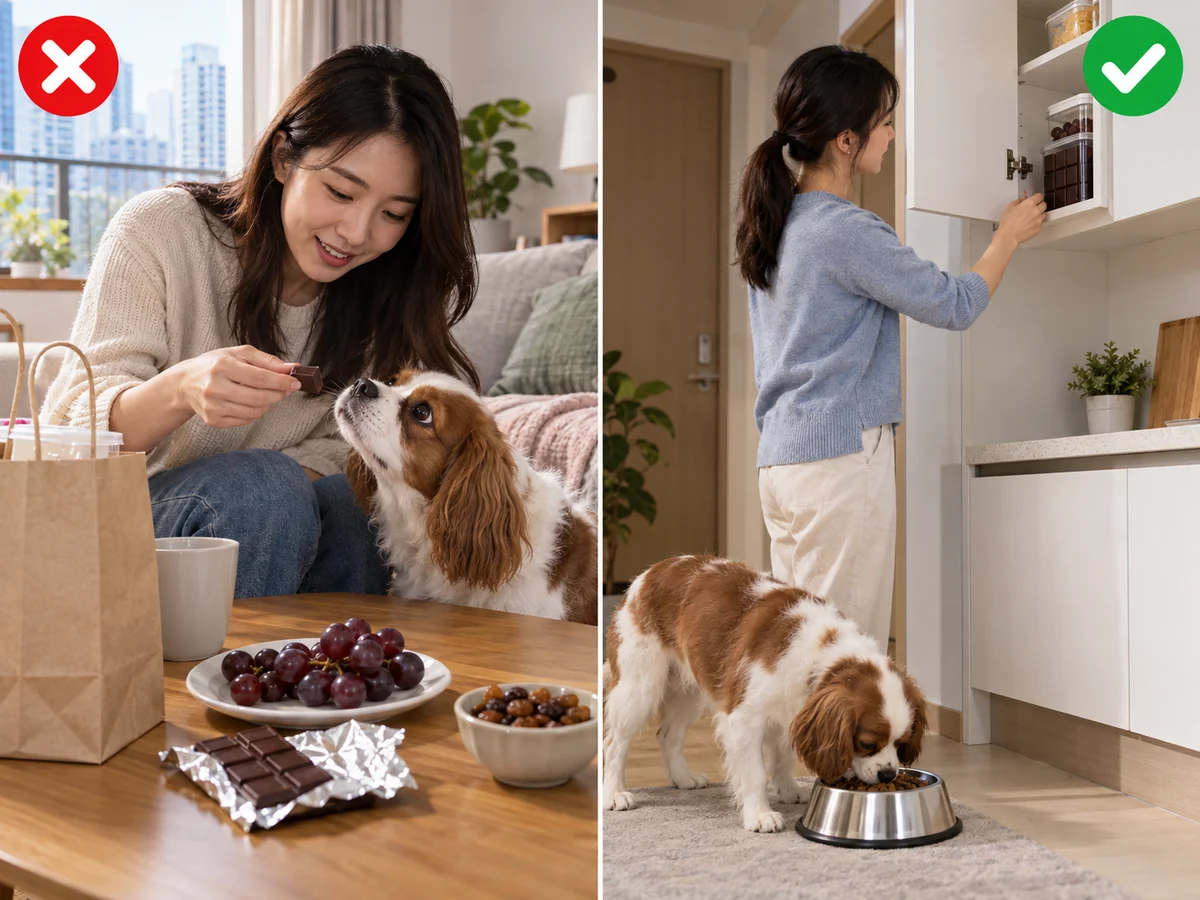
Do not give chocolate, grapes or raisins to dogs as treats. Contact a vet promptly after suspected ingestion rather than waiting for symptoms.
View safety lesson →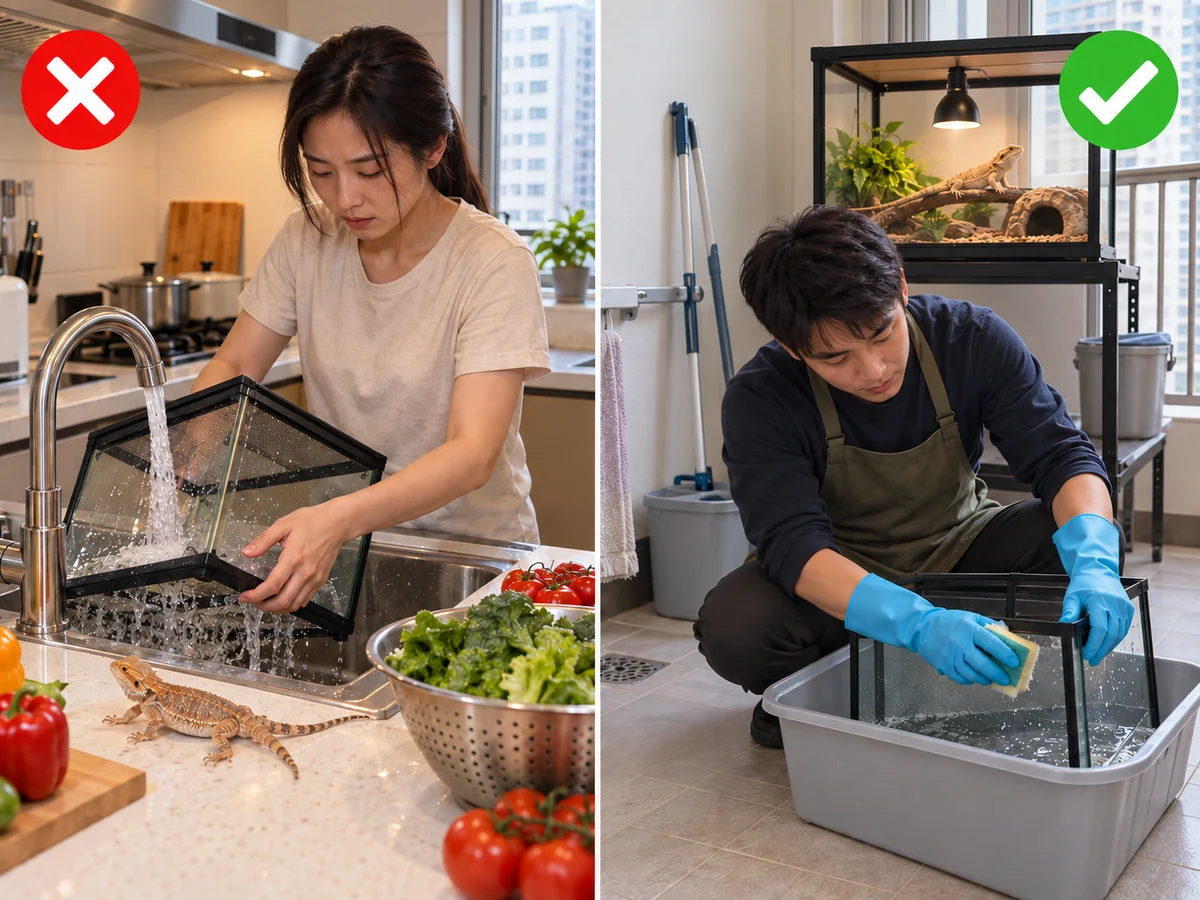
Keep reptiles and their tanks out of the kitchen and never wash tanks in the food sink. Wash hands with soap after touching the animal, equipment or tank water.
View safety lesson →