
Critical safety ruleSlip and fall prevention
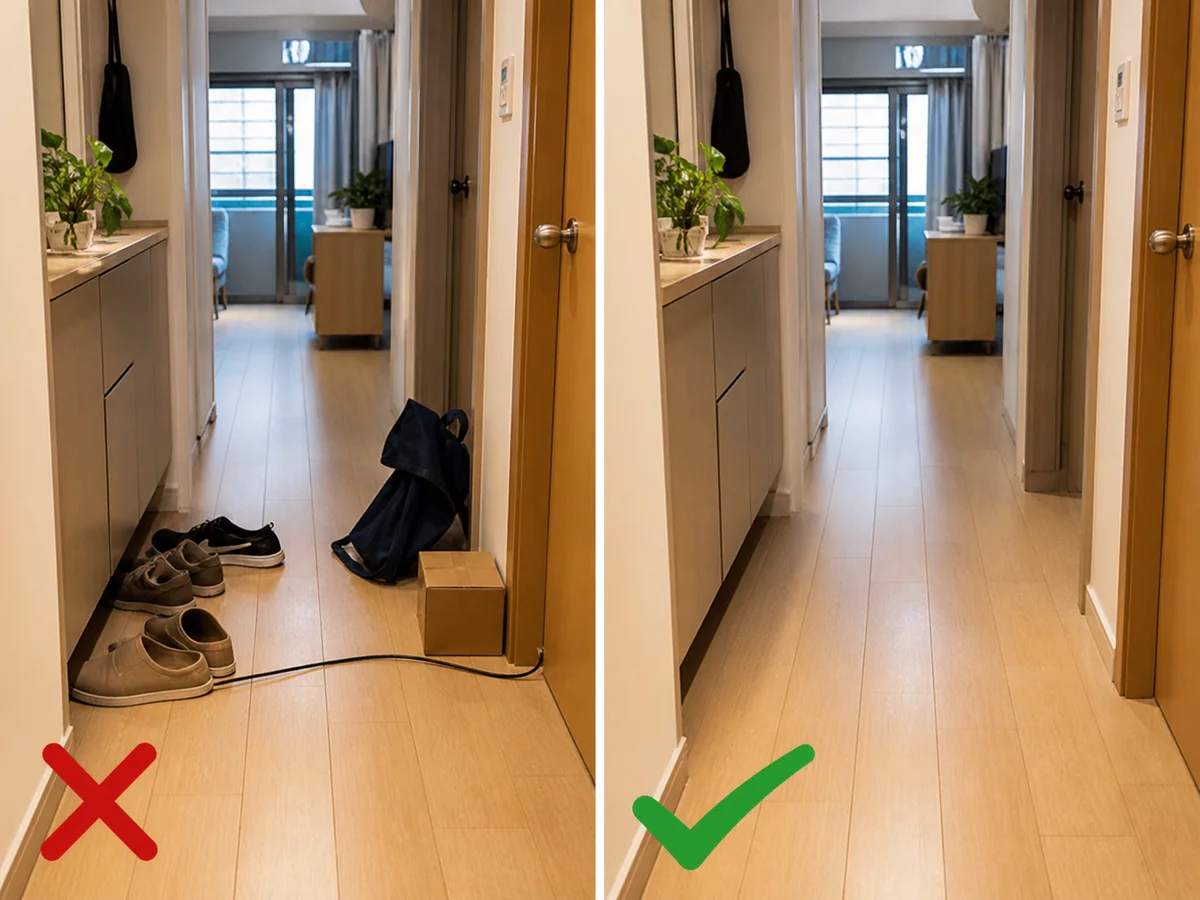
Keep walkways clear of clutter
Put away toys, shoes, bags, boxes, and cords crossing the floor so routes to rooms, exits, and bathrooms stay clear.
View safety lesson →Browse collection
Reduce window falls, choking, poisoning, drowning, scald, knife, and slip risks for children.
Put away toys, shoes, bags, boxes, and cords crossing the floor so routes to rooms, exits, and bathrooms stay clear.
View safety lesson →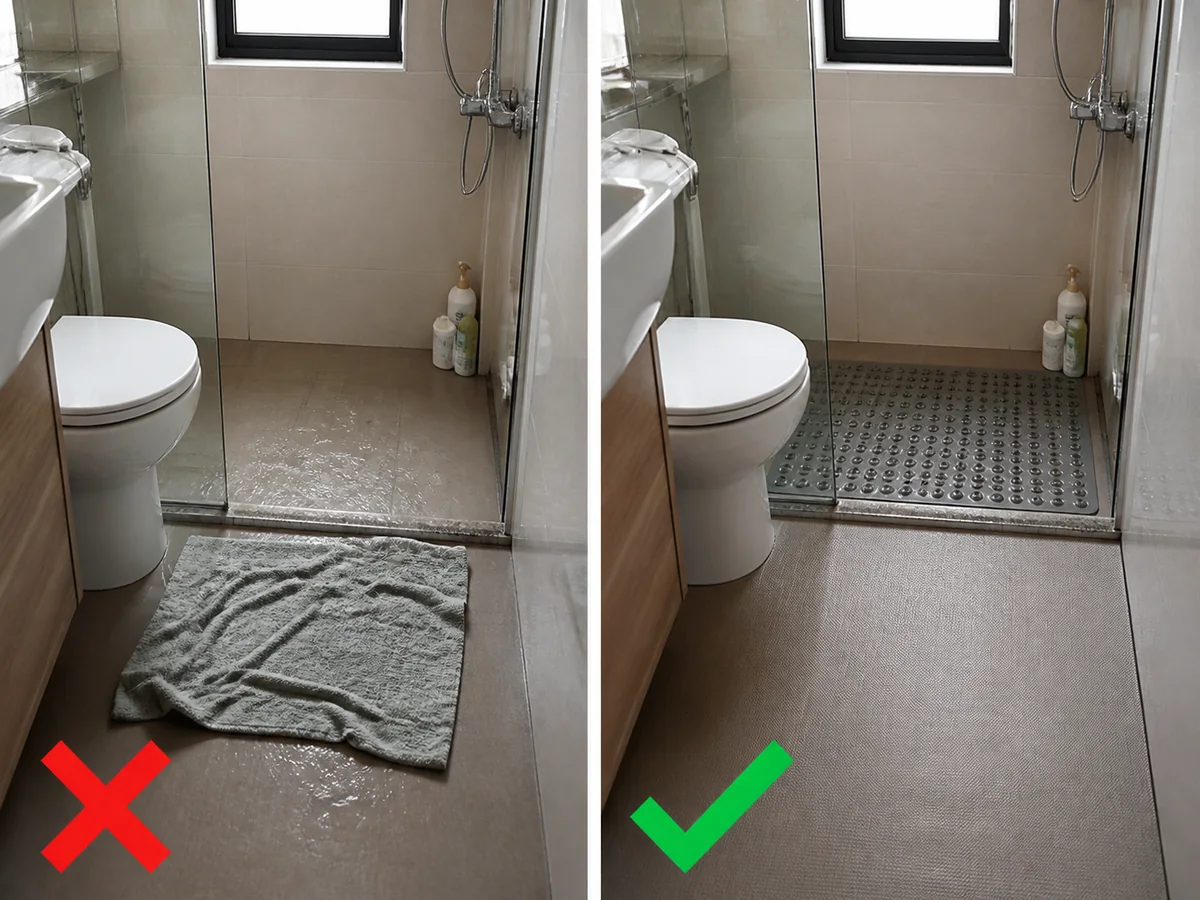
Use a secure, well-fitted anti-slip mat or surface in the bath or shower area, keep it in good condition, and keep the floor dry.
View safety lesson →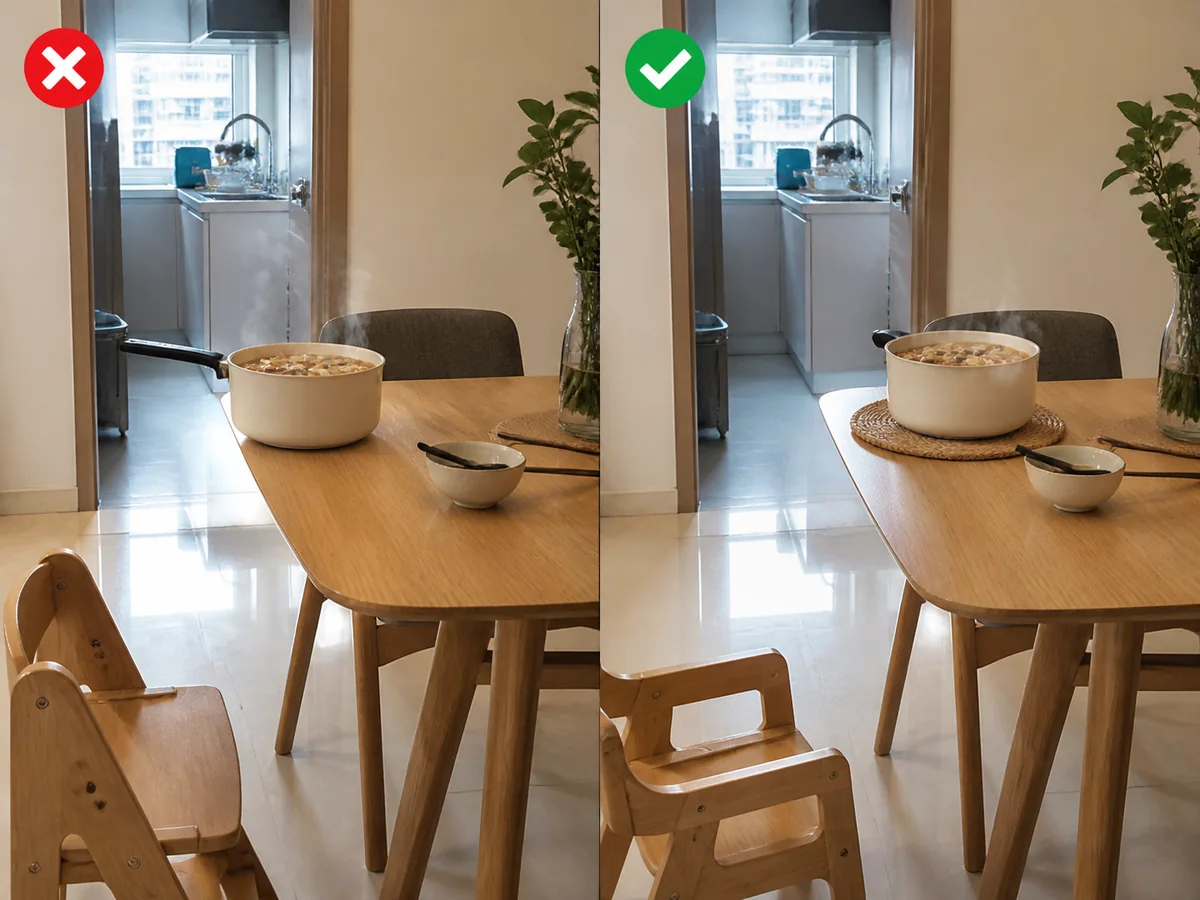
Turn pot handles inward, keep hot food away from table edges, and never carry a child while holding hot food.
View safety lesson →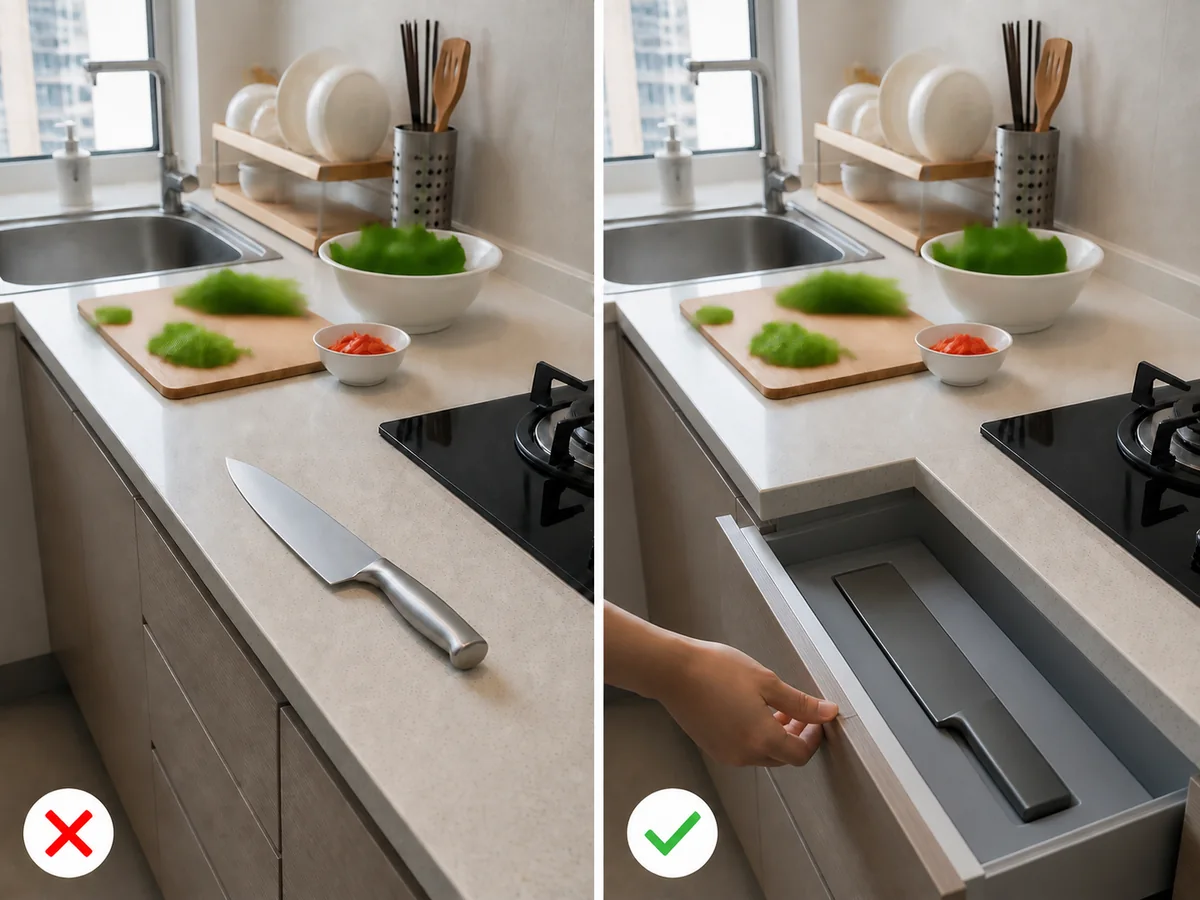
Store knives in a secure knife block, sheath, or safe place with the blade protected and out of children's reach.
View safety lesson →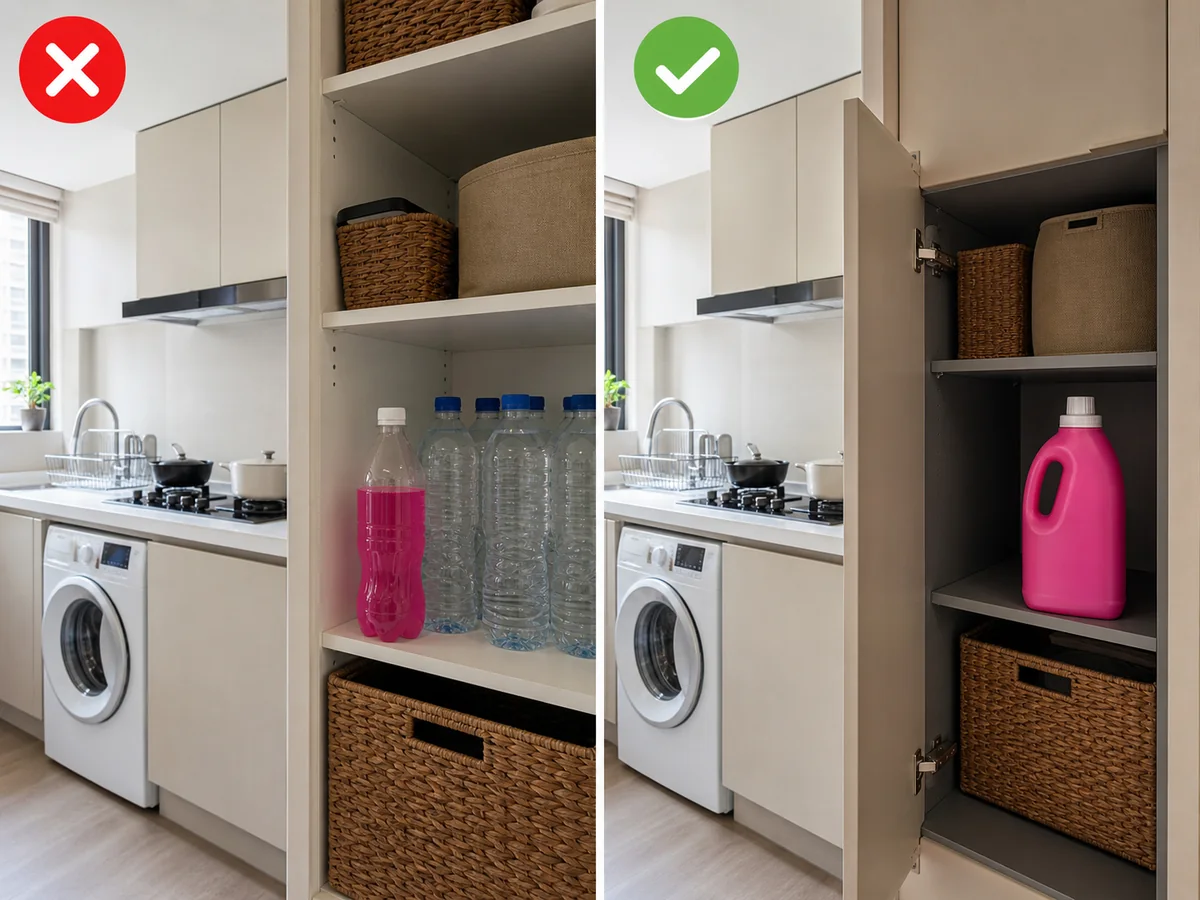
Keep cleaning products in their original, clearly labelled containers and out of children's reach.
View safety lesson →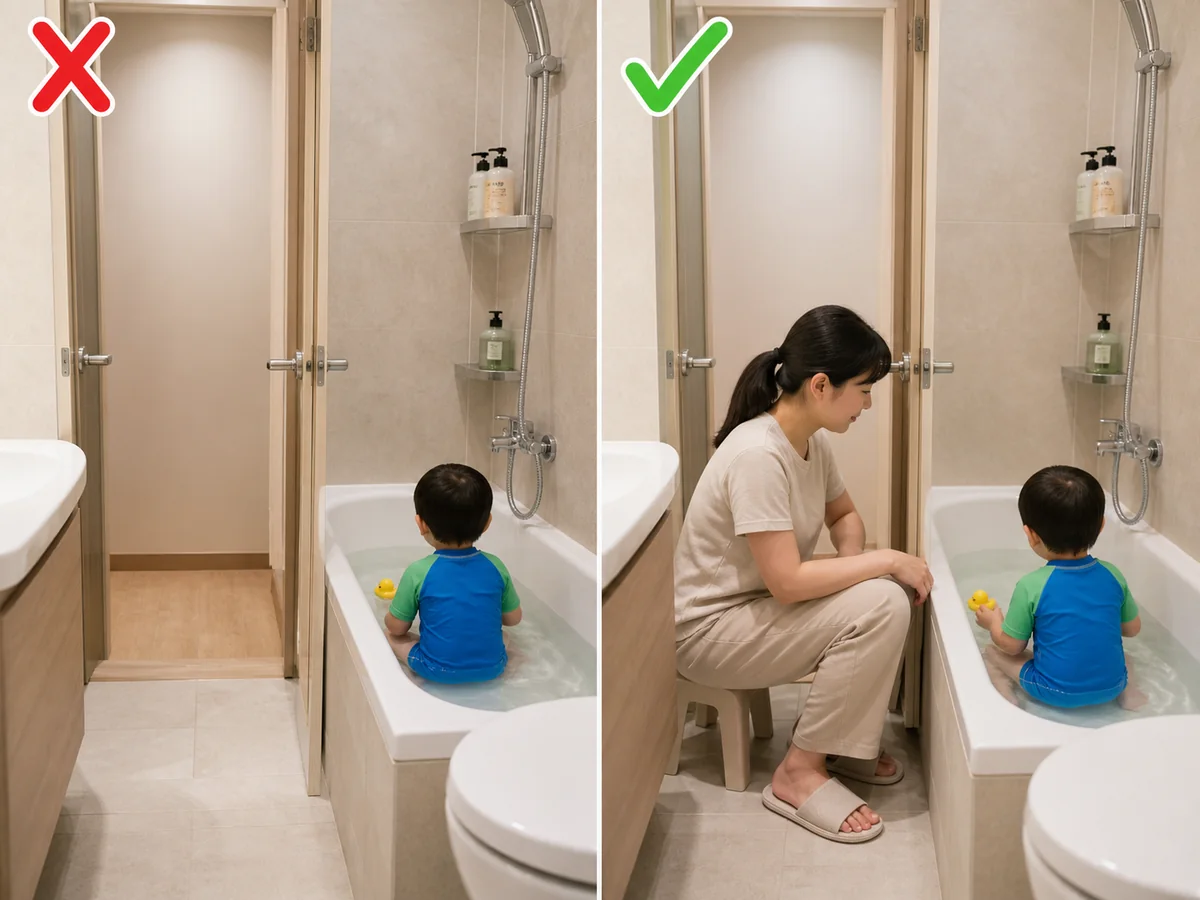
Prepare everything before bath time and keep an adult within arm's reach throughout. Never leave, even for a moment.
View safety lesson →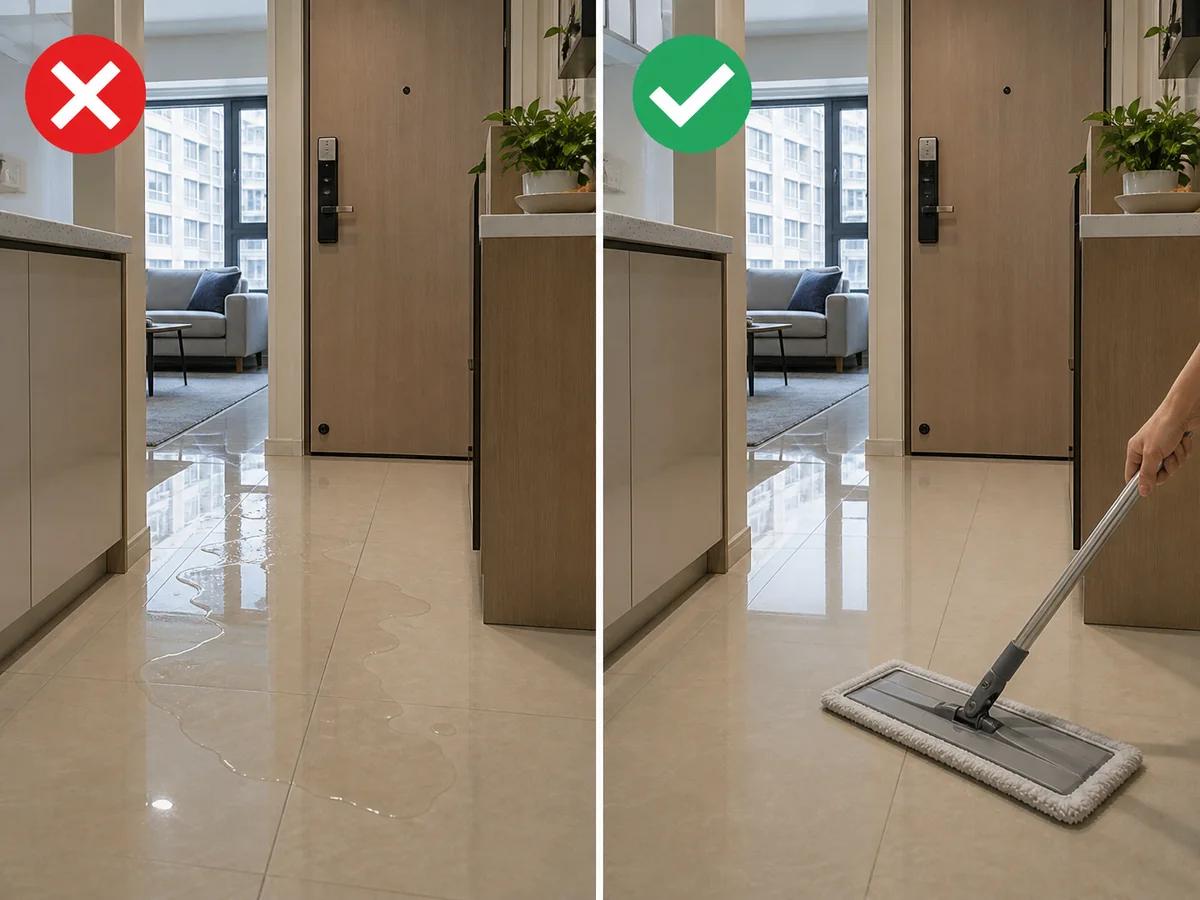
Clean up spills at once and dry the floor to prevent slips.
View safety lesson →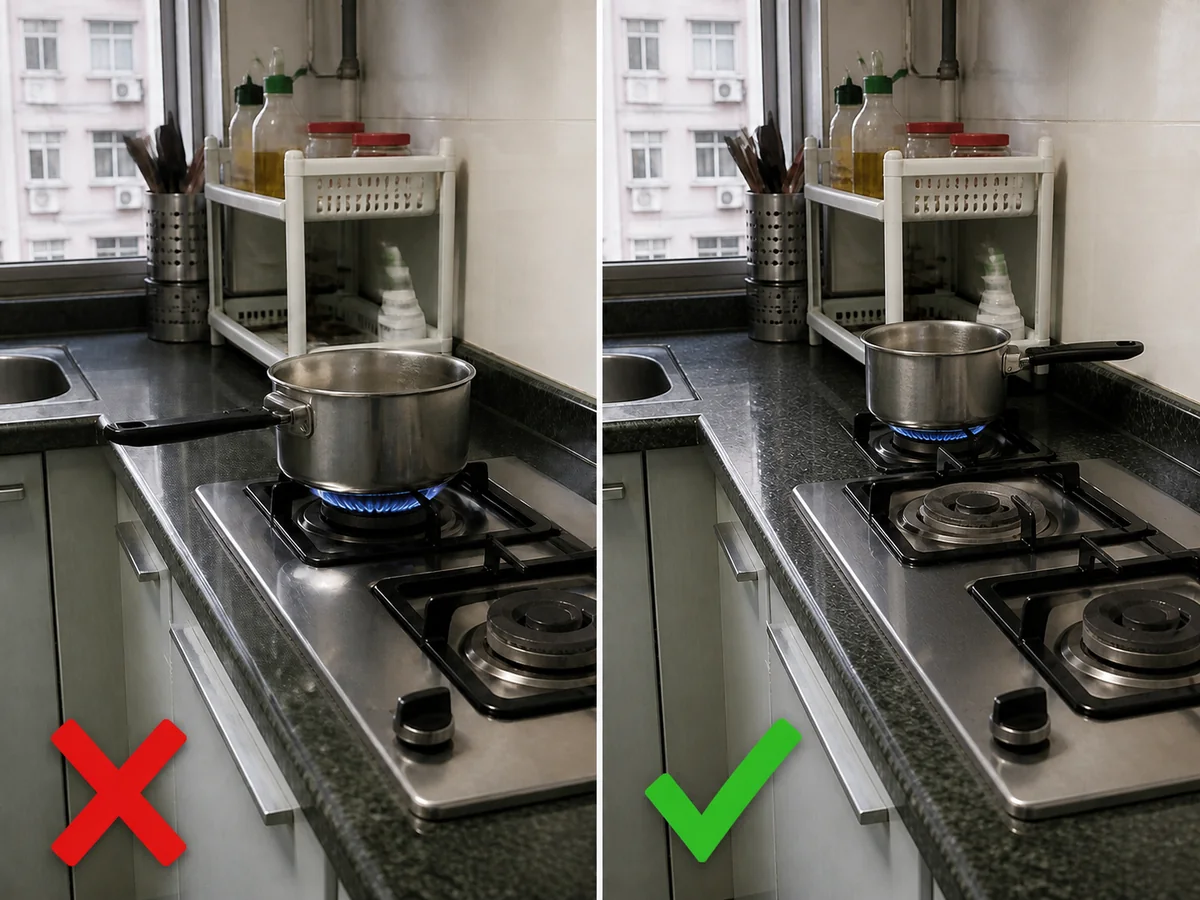
Turn pot and pan handles inward or toward the wall, away from the cooker edge, people, and other hot burners.
View safety lesson →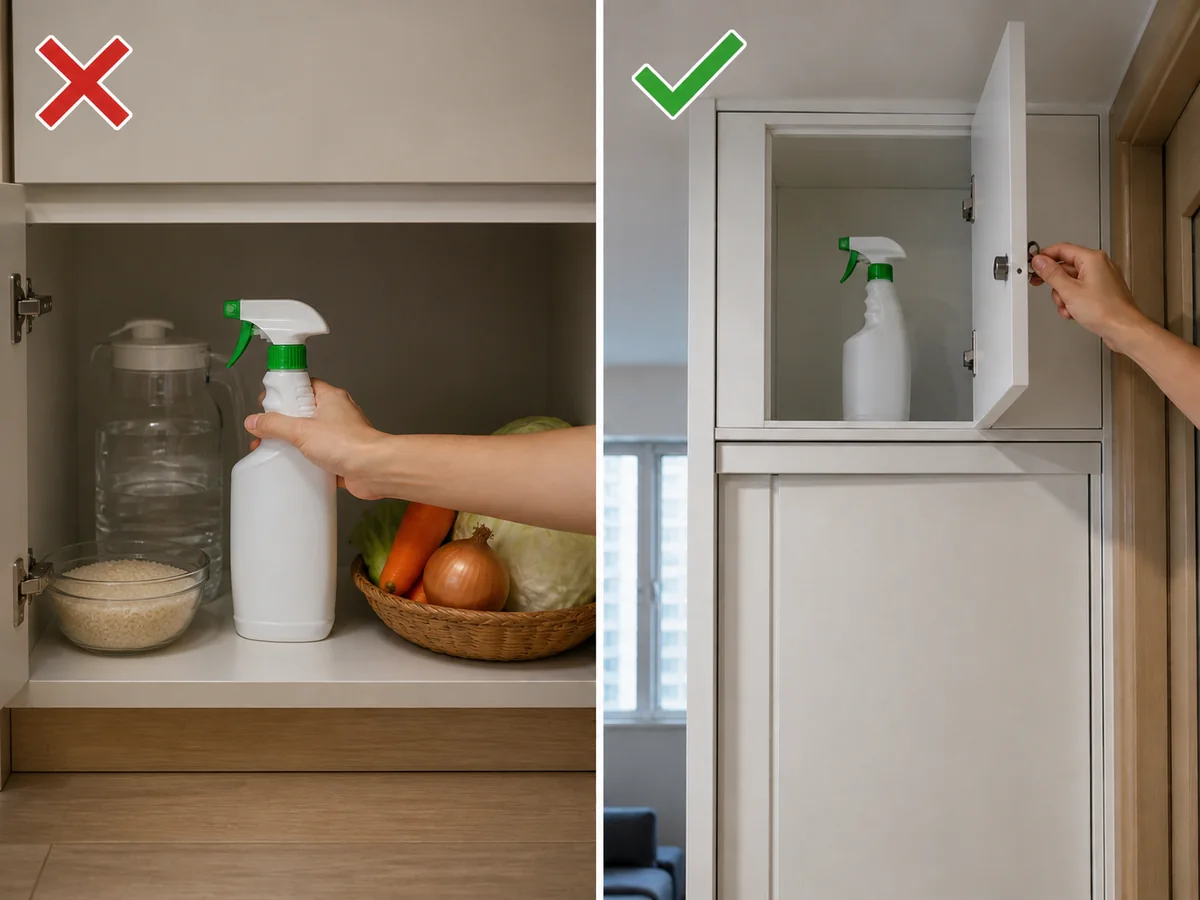
Keep pesticides in original labelled containers, locked out of children's reach, and separate from food, water, medicines, heat, and flame.
View safety lesson →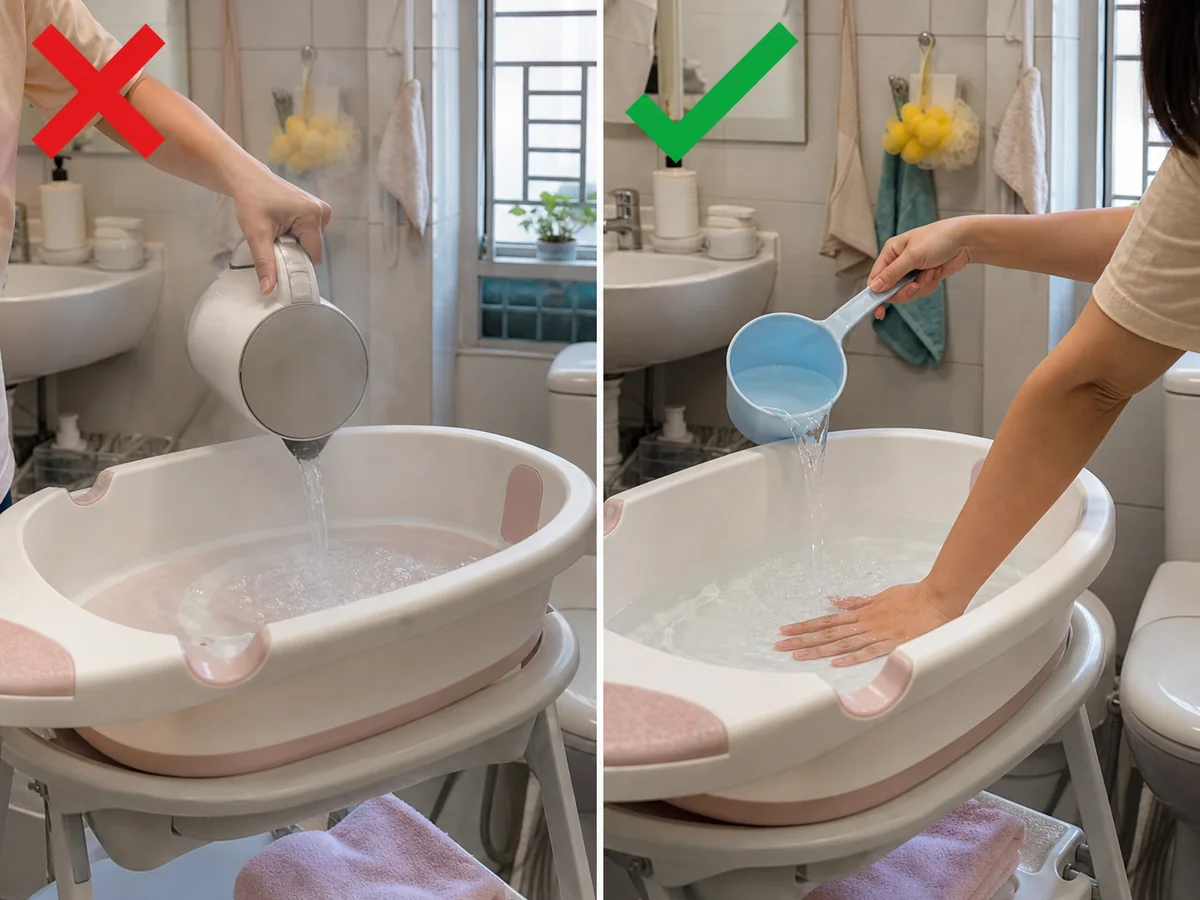
Run cold water first, then add hot water; mix thoroughly and test with an elbow or thermometer. About 37–38°C is suitable for a baby's bath.
View safety lesson →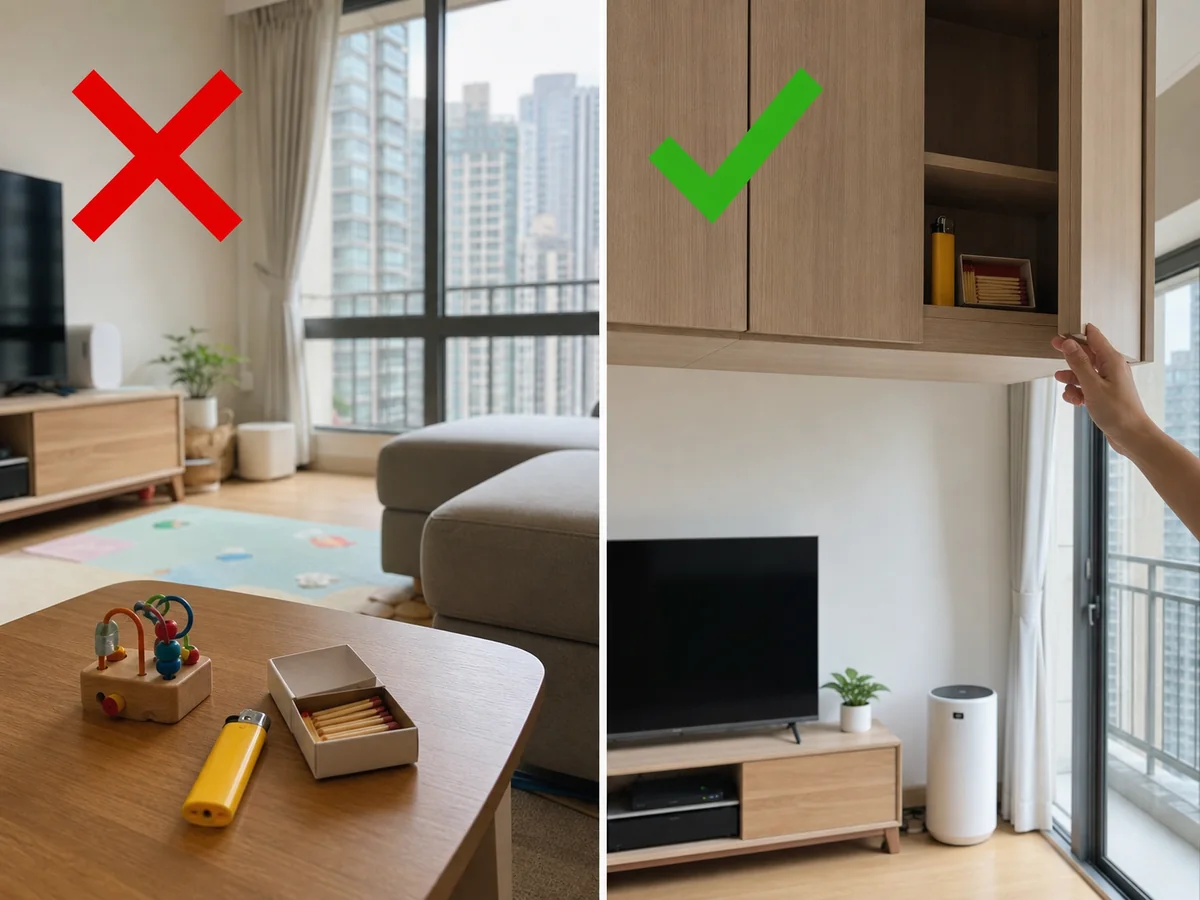
Return matches and lighters immediately after use to a high, secure place that children cannot reach.
View safety lesson →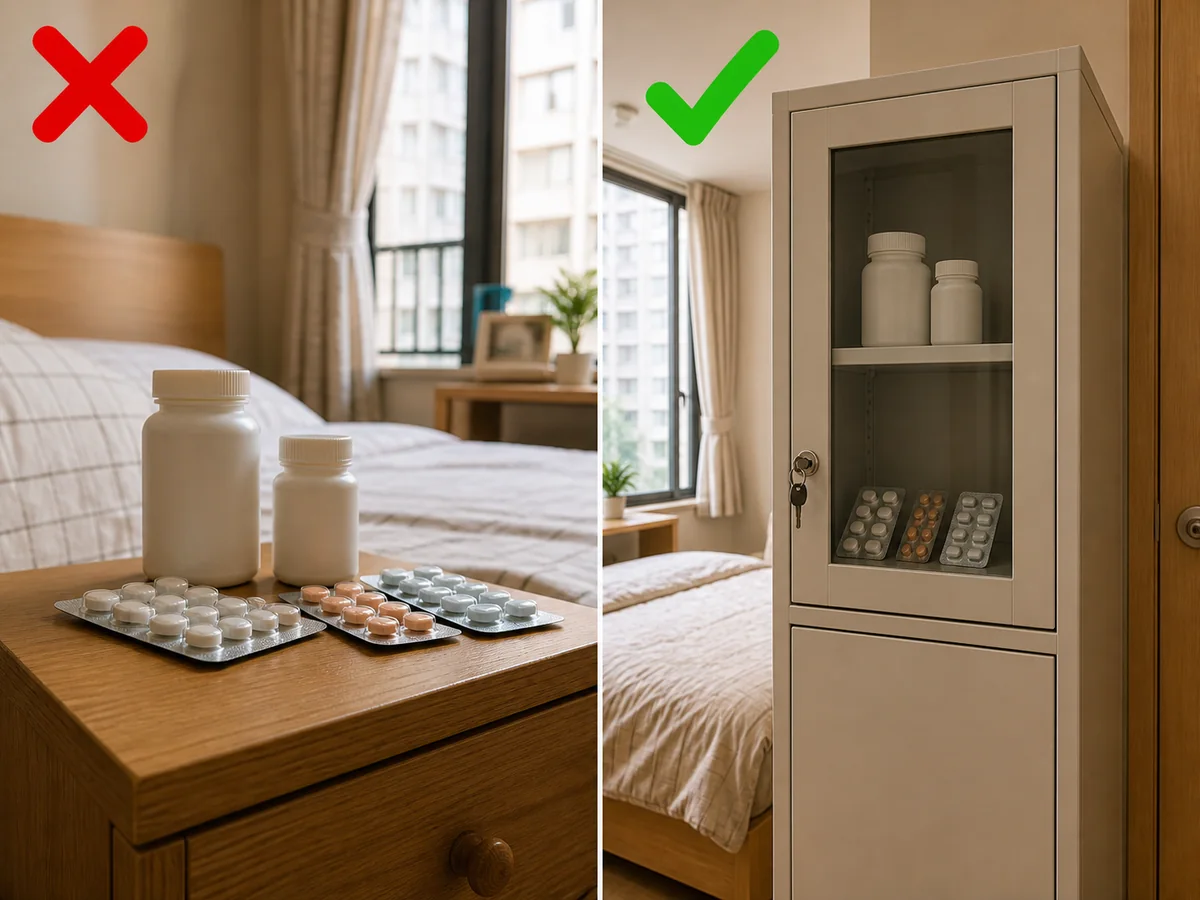
Return every medicine to a locked cabinet immediately after use, keep the original label, and never leave it in a handbag or on a table.
View safety lesson →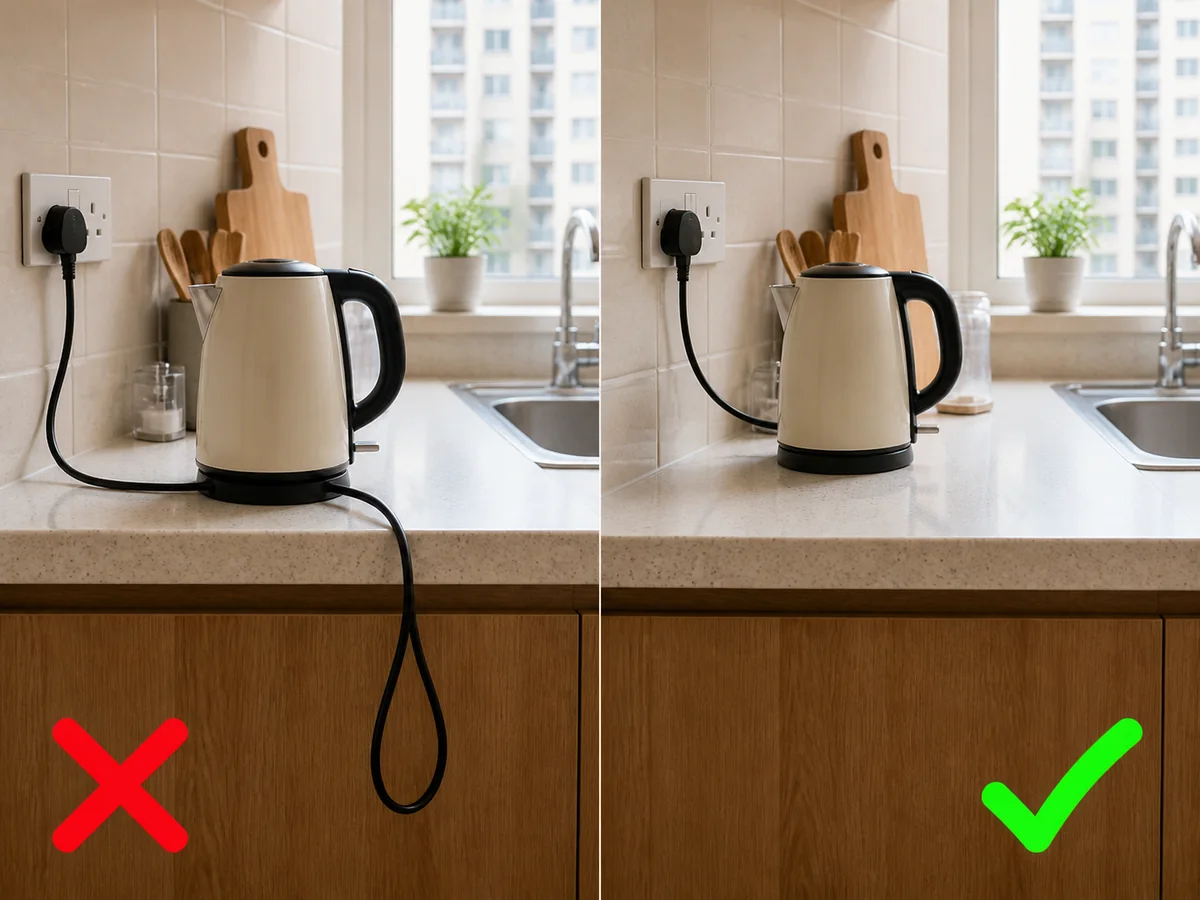
Place kettles and heated appliances securely at the back of the counter and keep their cords where children cannot pull them.
View safety lesson →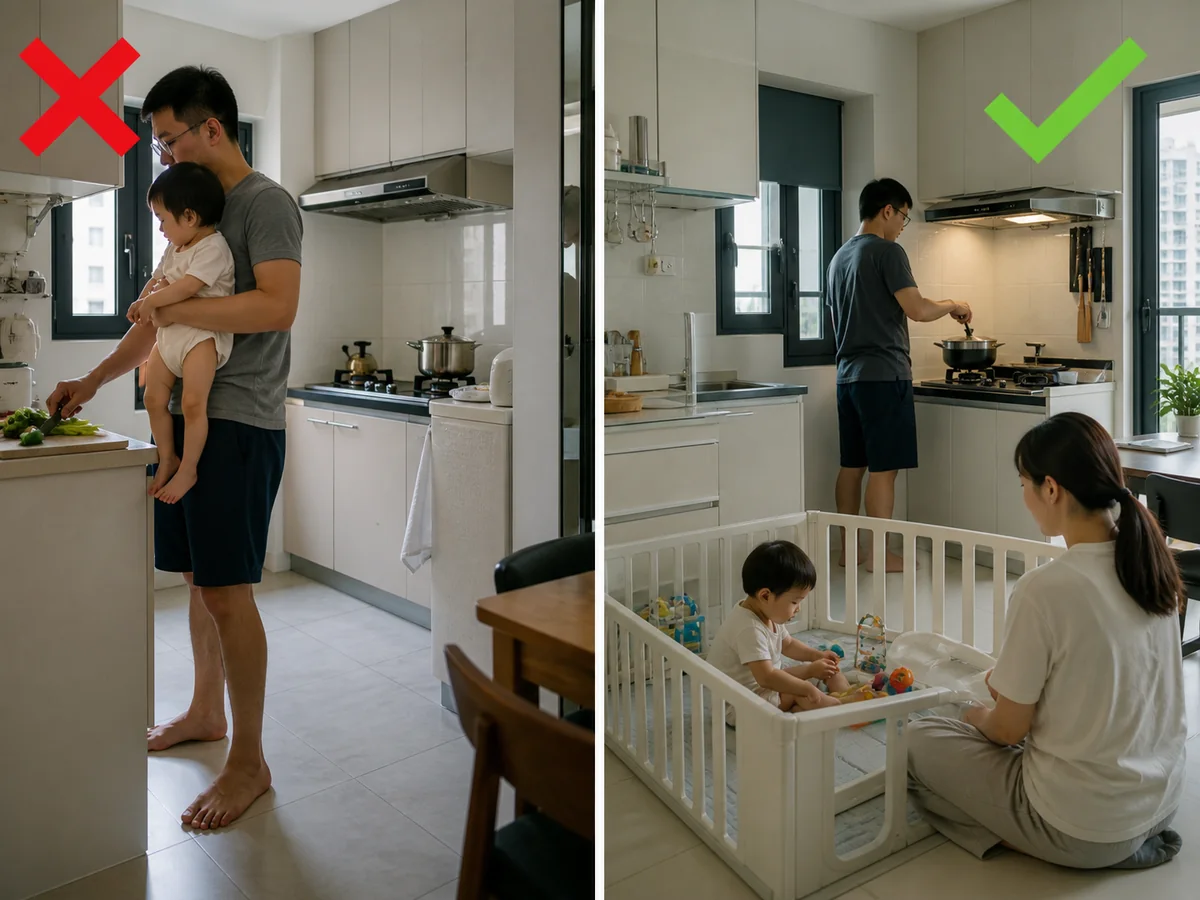
Before using a flame, hot oil, or hot pan, ask another adult to supervise the child or place the child safely away from the cooking area.
View safety lesson →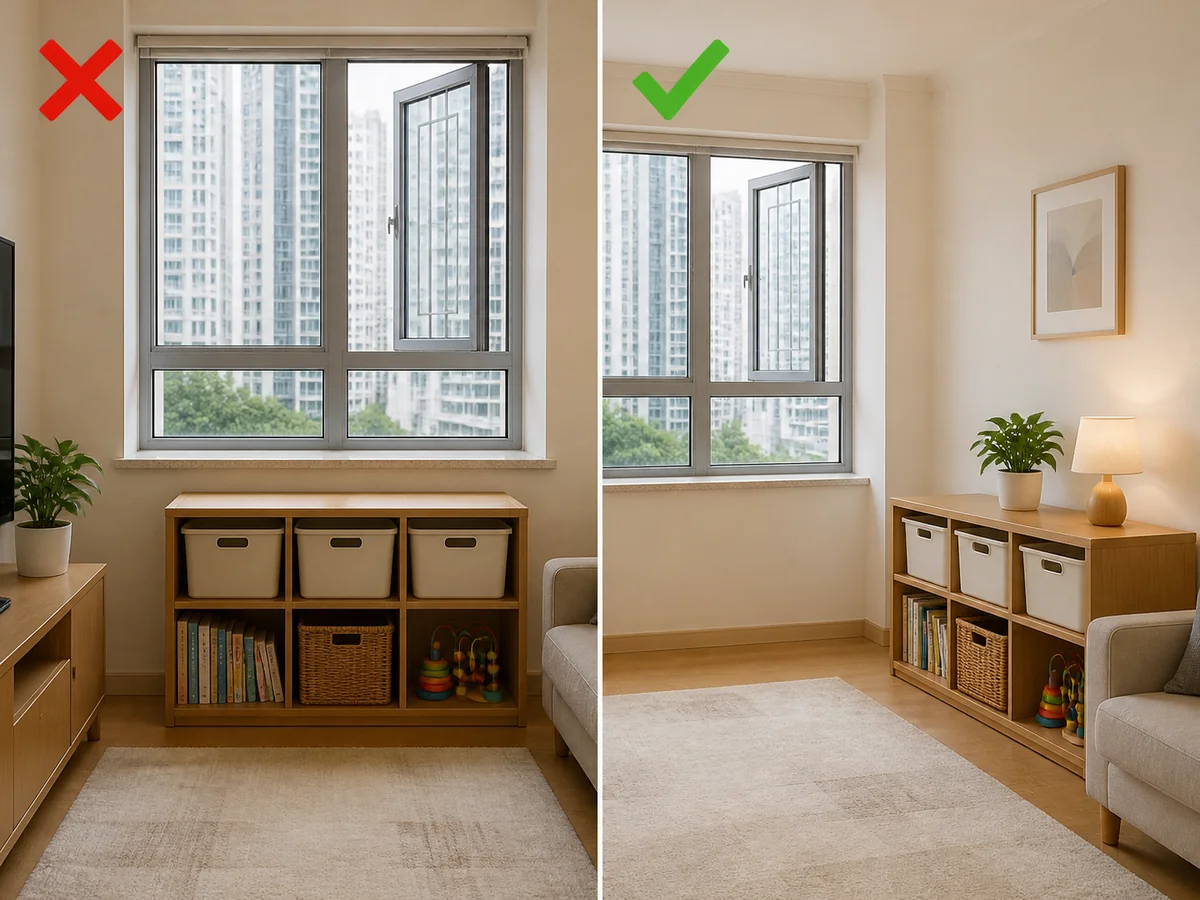
Move chairs, low cabinets, boxes, and other stepping items away from windows, and keep approved window guards locked.
View safety lesson →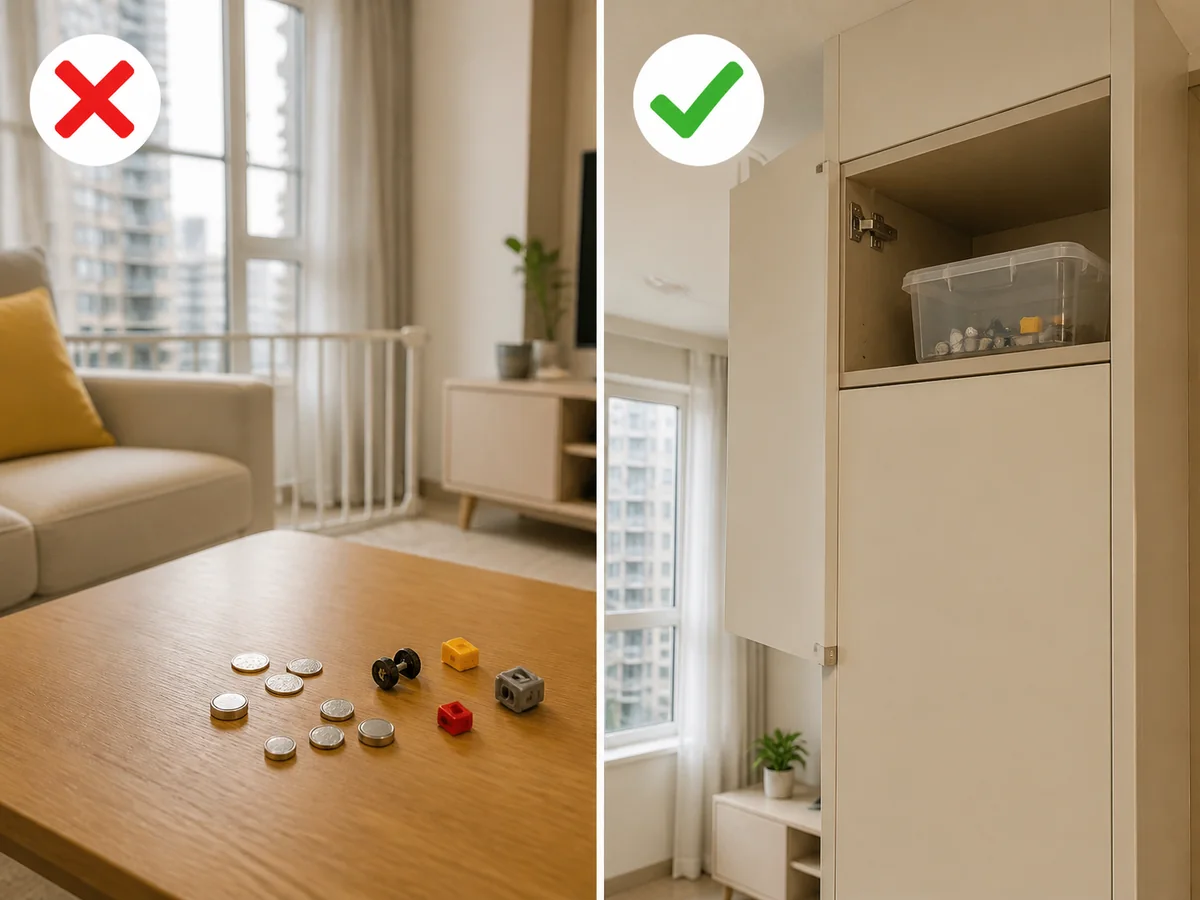
Keep coins, marbles, buttons, batteries, and loose toy parts out of a young child's sight and reach.
View safety lesson →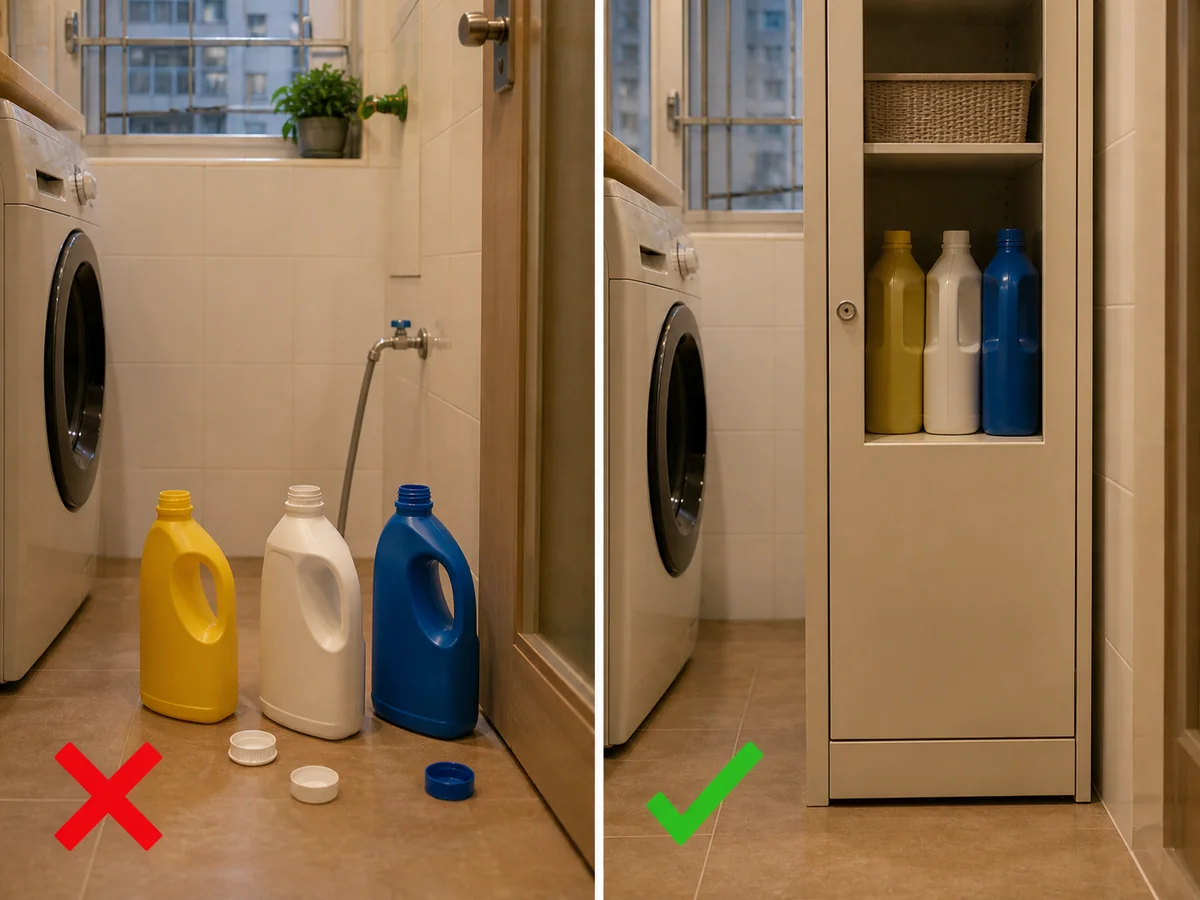
After each cleaning step, close the original cap and return the product to a locked cupboard; do not wait until the whole job is finished.
View safety lesson →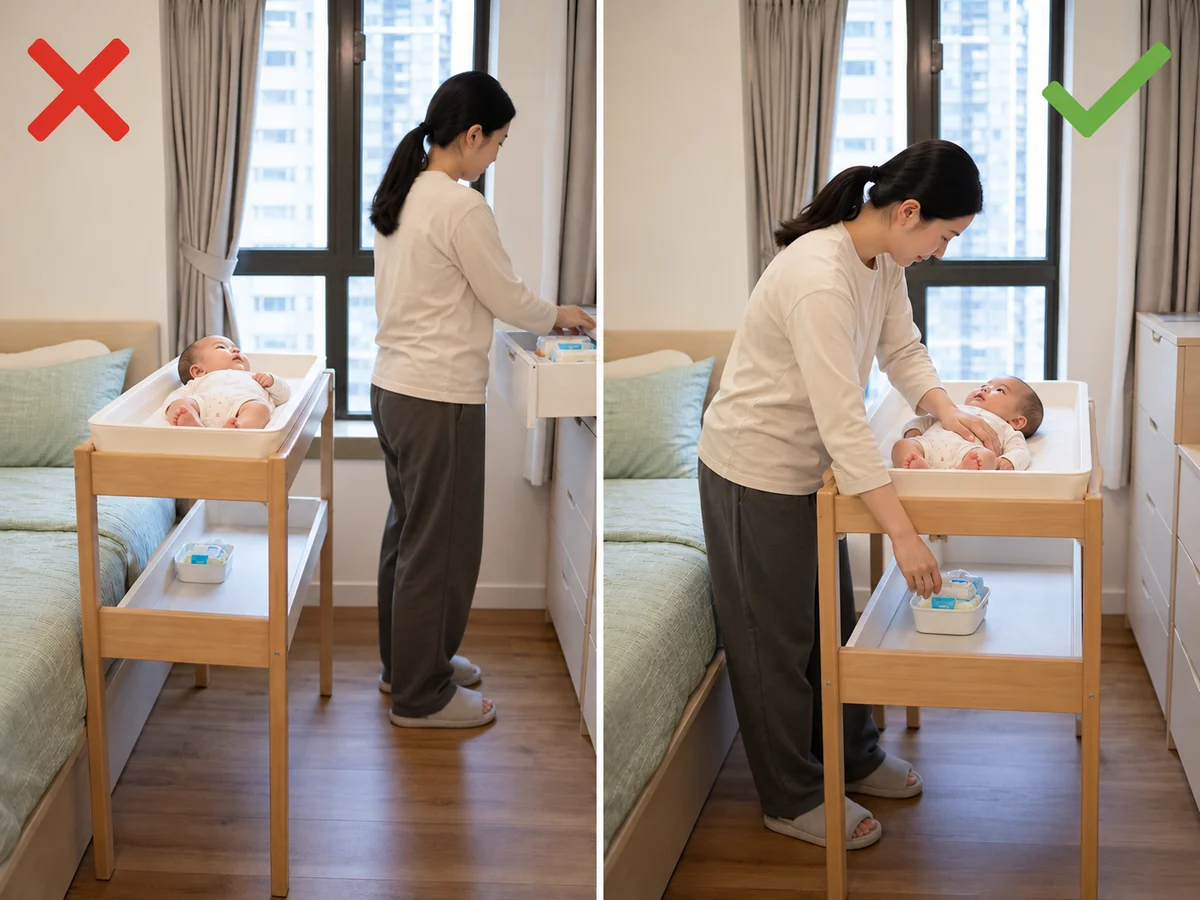
Keep a baby within an adult's reach on beds, sofas, or changing tables.
View safety lesson →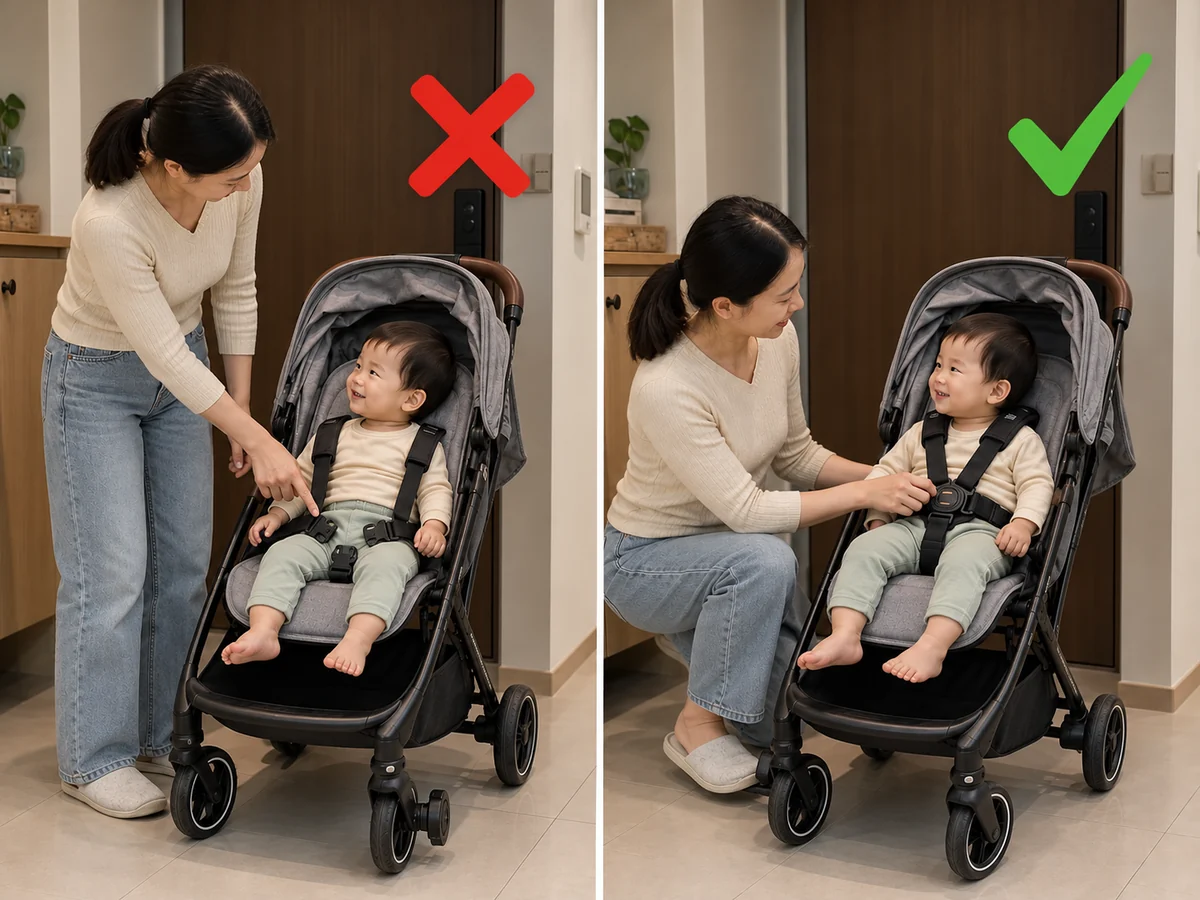
Fasten the harness every time and lock stroller or high-chair wheels when stopped.
View safety lesson →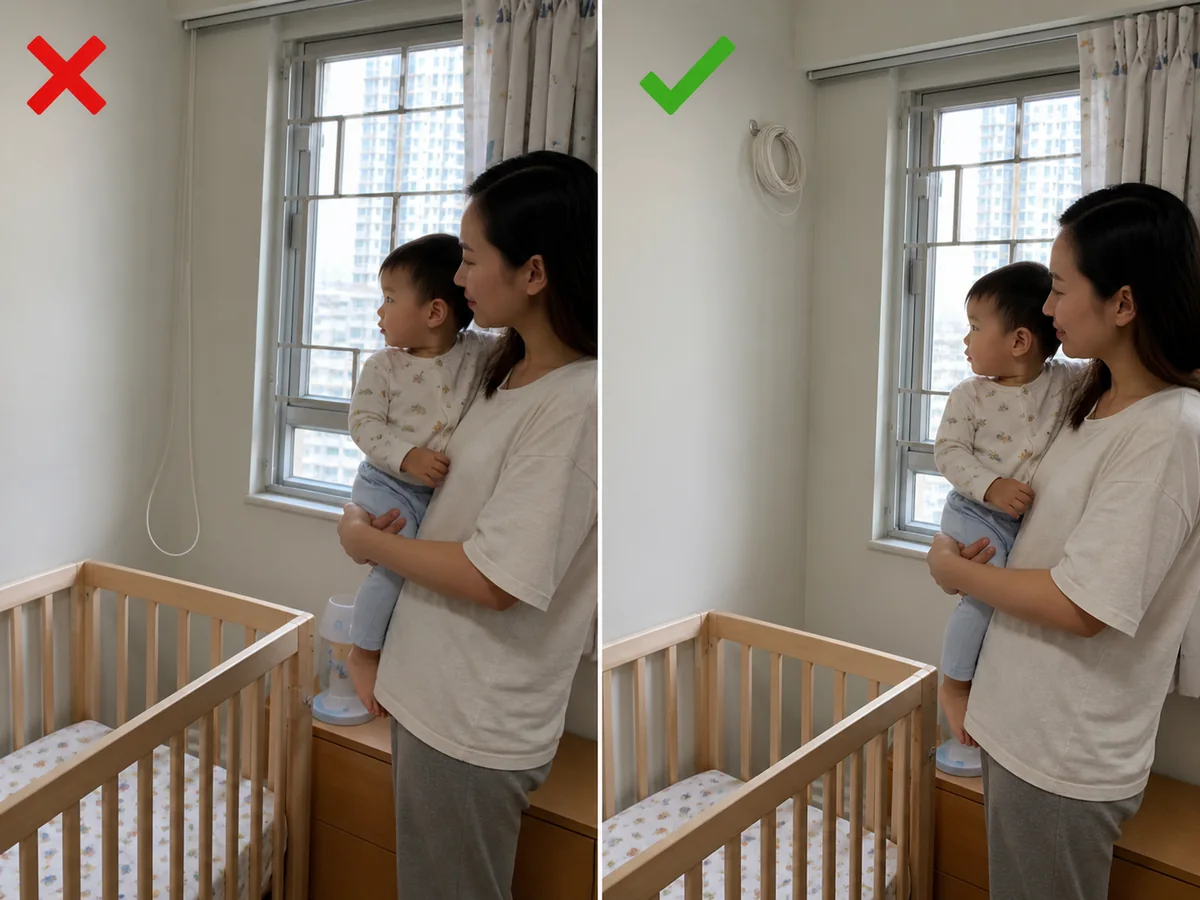
Fix curtain and blind cords high and completely out of children's reach.
View safety lesson →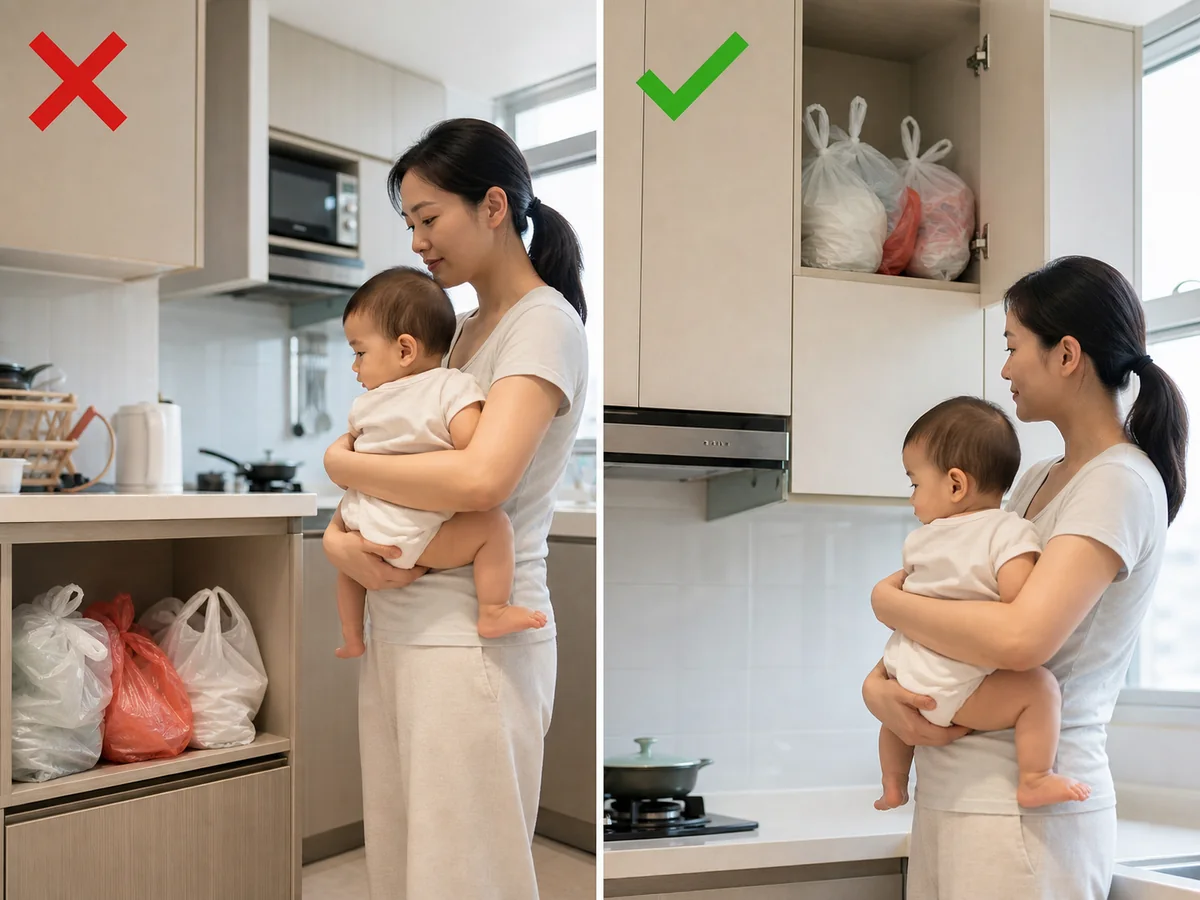
Put away or discard empty plastic bags immediately, out of children's reach.
View safety lesson →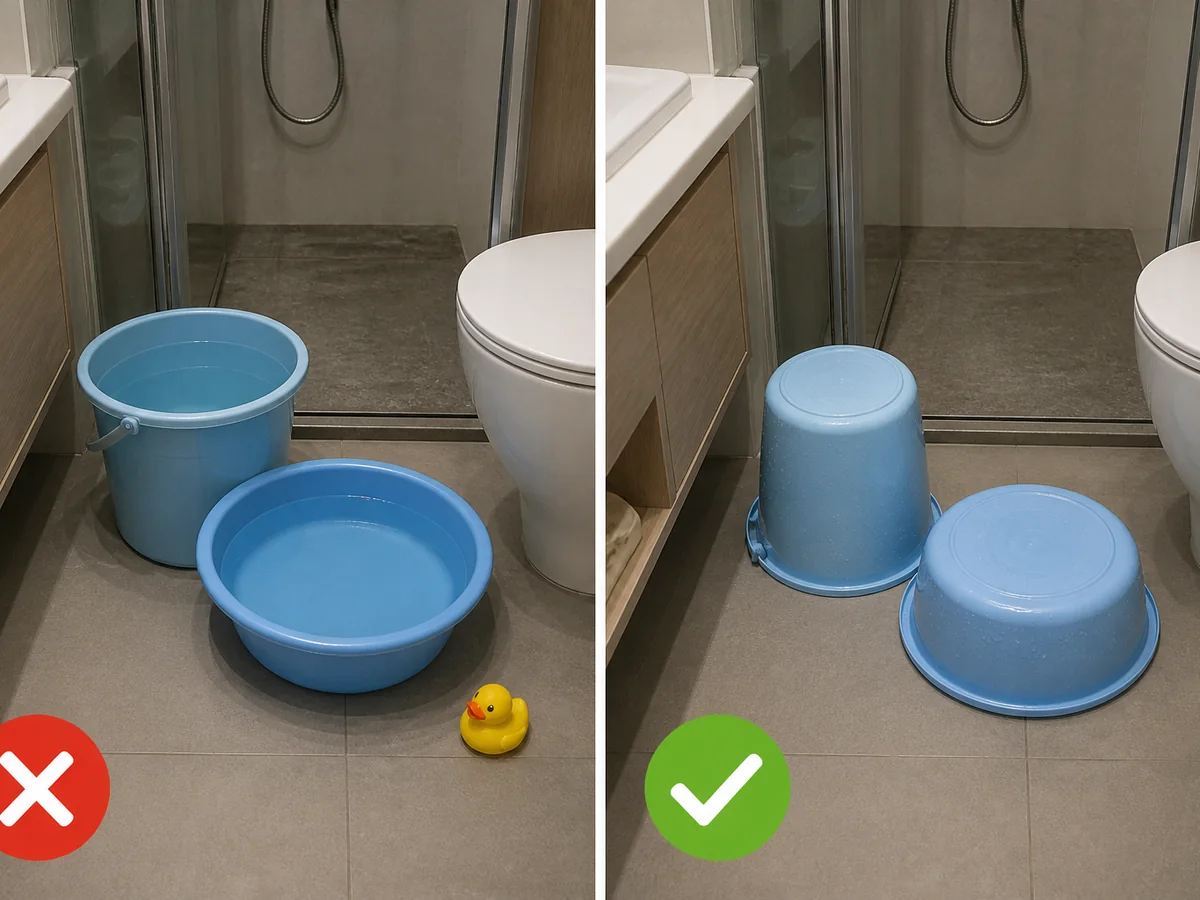
Empty baths, buckets, and basins immediately after bathing or cleaning, then store them upside down.
View safety lesson →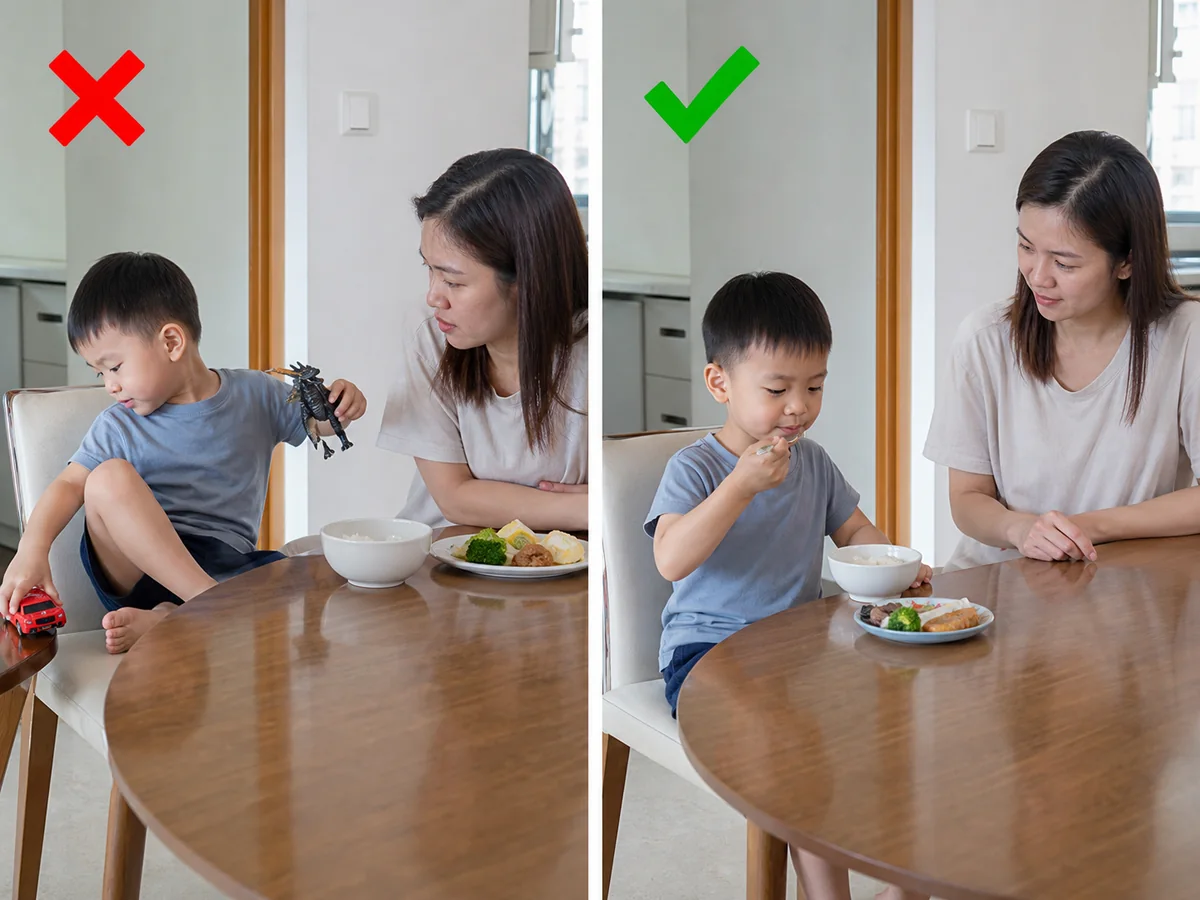
Have the child sit still and eat calmly with an adult nearby; do not let them run, play, or laugh with food in the mouth.
View safety lesson →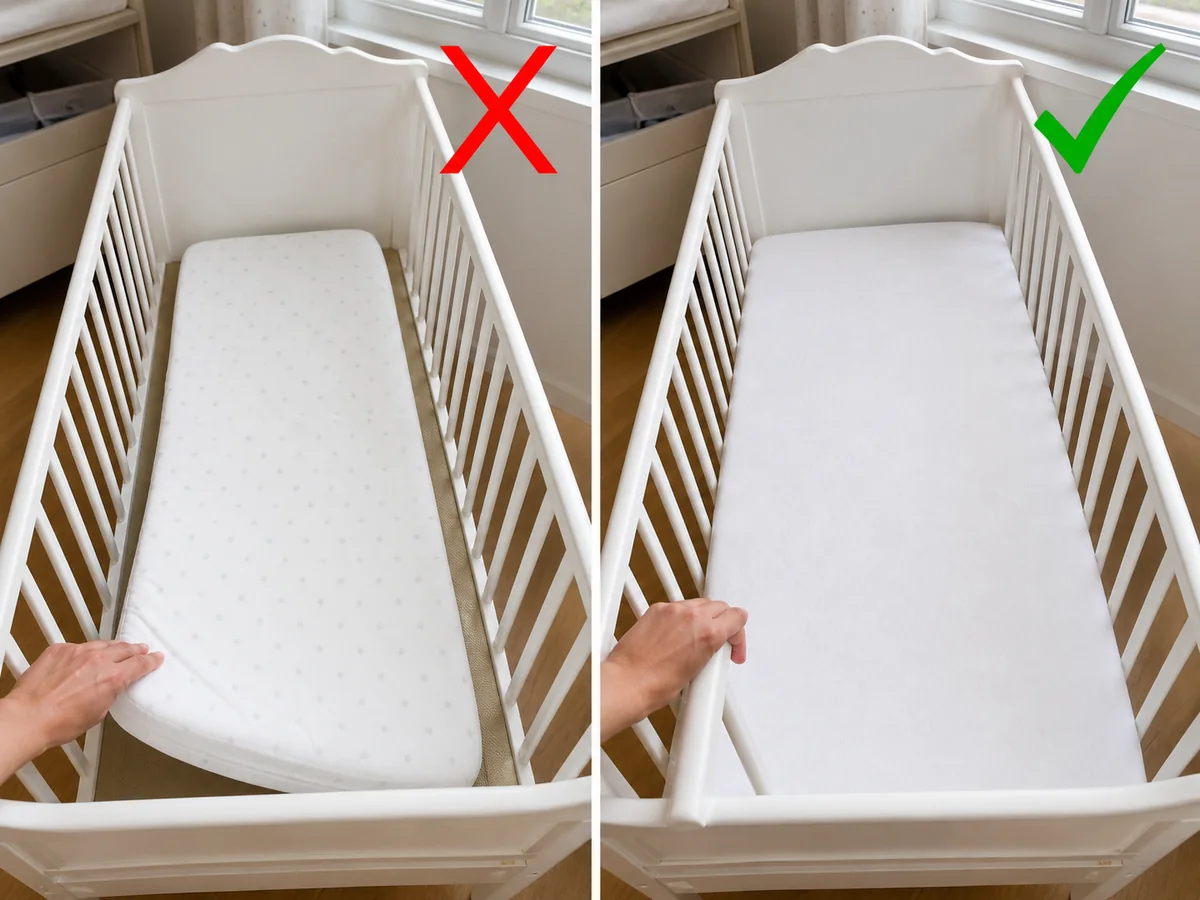
Use a firm, flat mattress of the correct size that fits the cot on every side without a gap that could trap the baby's head.
View safety lesson →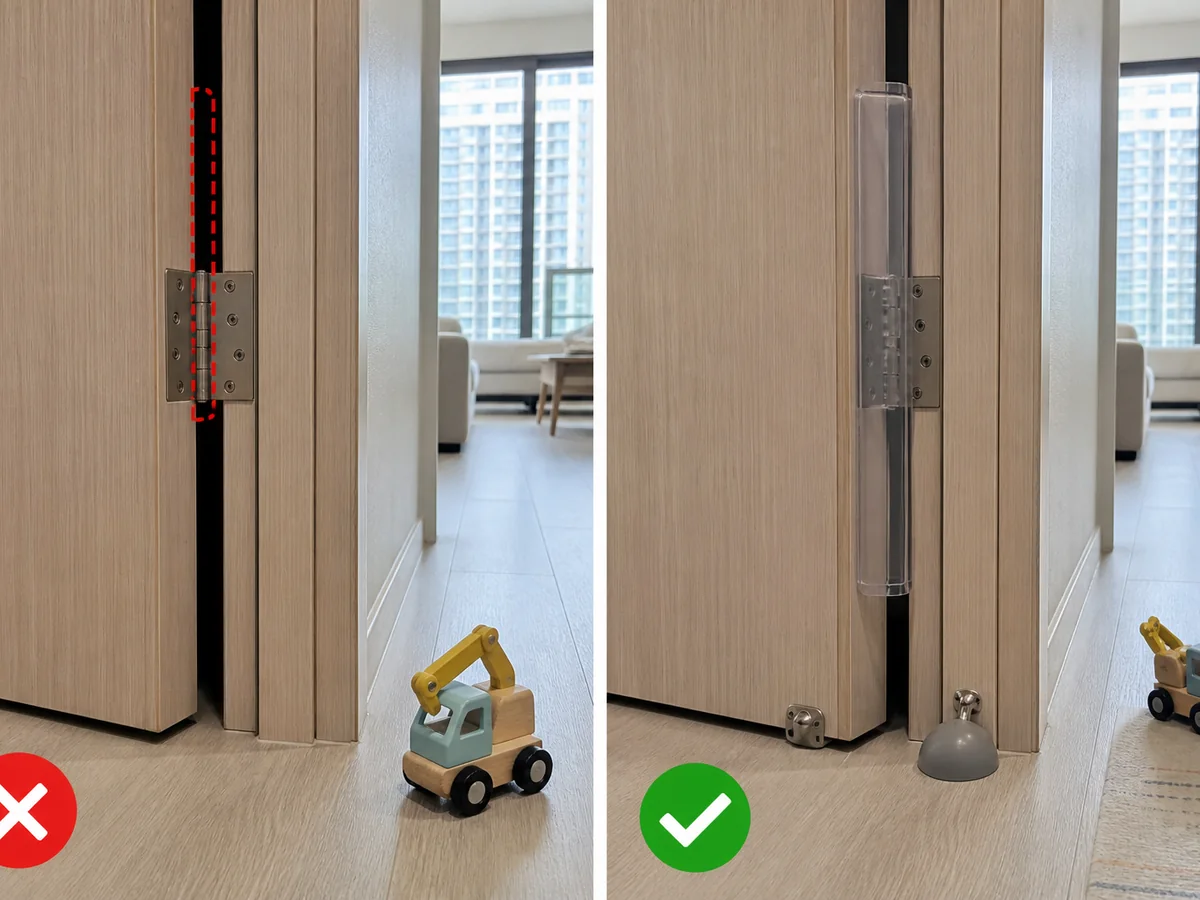
Check where the child is before moving a door and secure frequently open doors with a stopper or guard.
View safety lesson →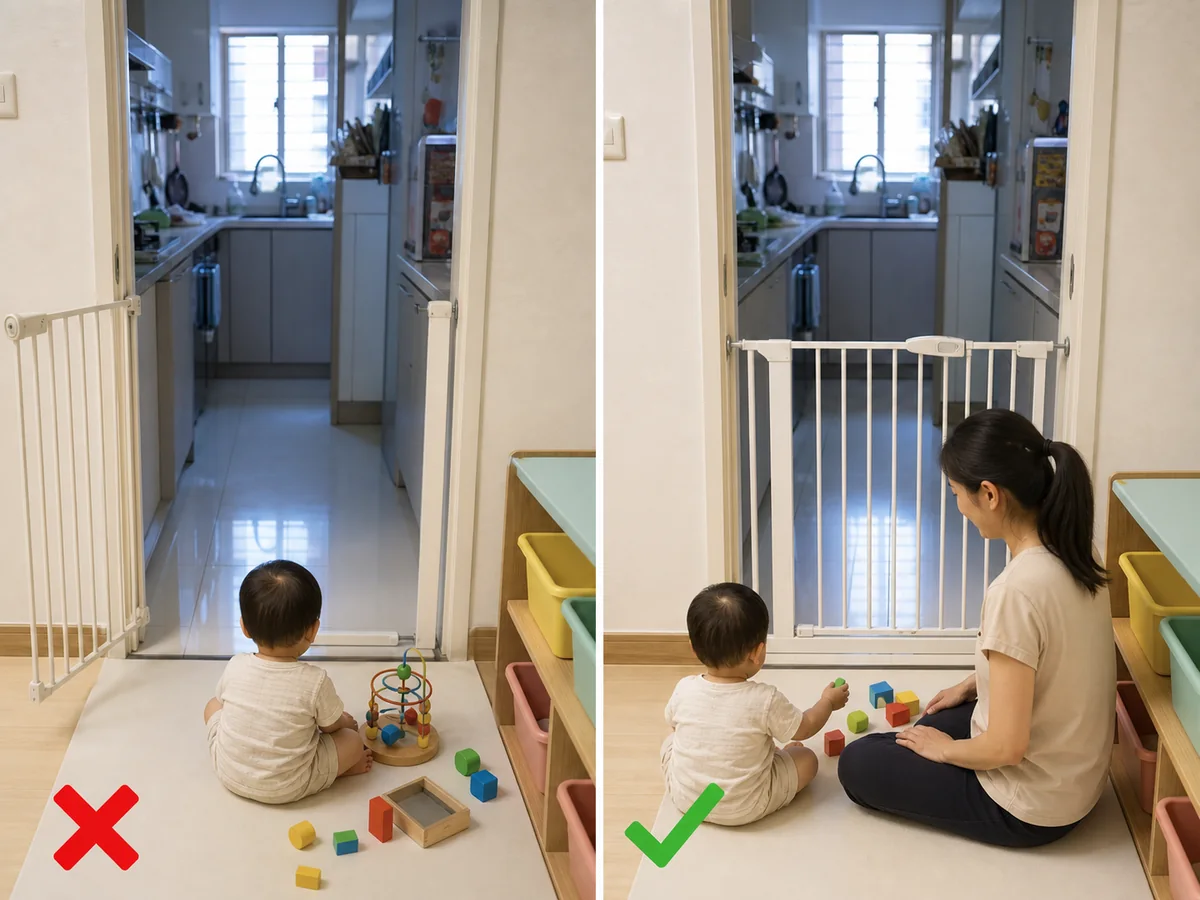
For a child under three, fit a suitable safety gate correctly at the kitchen entrance and close it every time.
View safety lesson →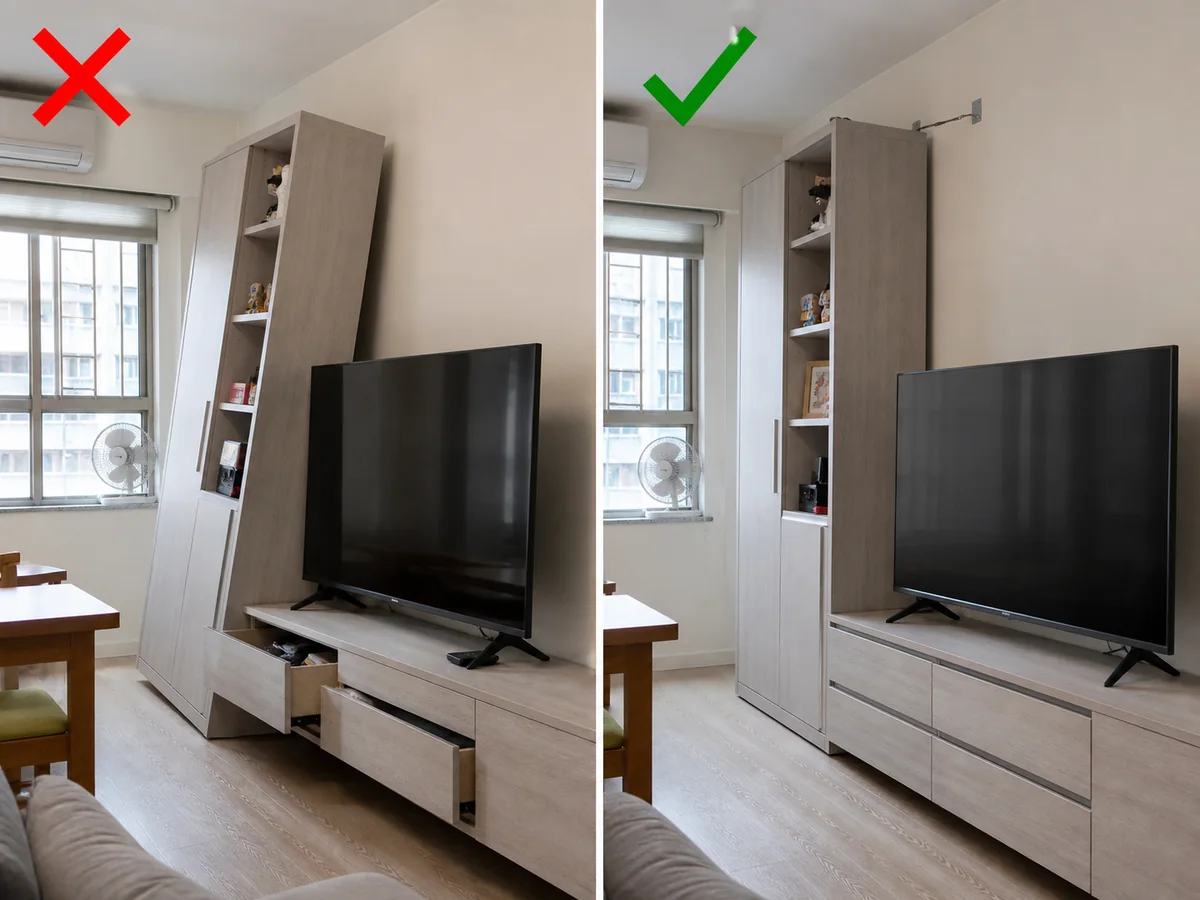
Anchor tall furniture and televisions with suitable fittings as instructed; a helper should stop use and tell the employer if anything is unstable.
View safety lesson →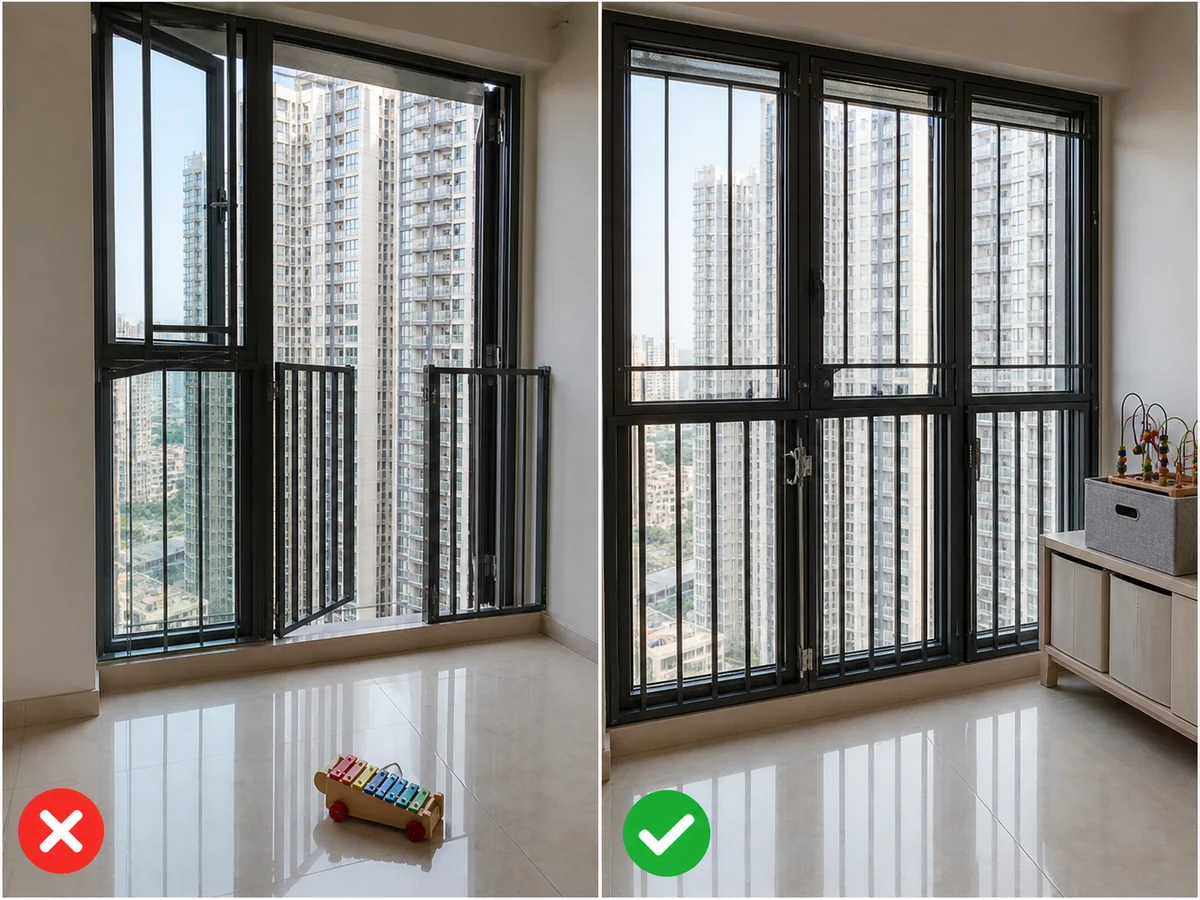
Homes with children need suitable window and balcony barriers kept locked as designed; the employer should arrange and check them regularly.
View safety lesson →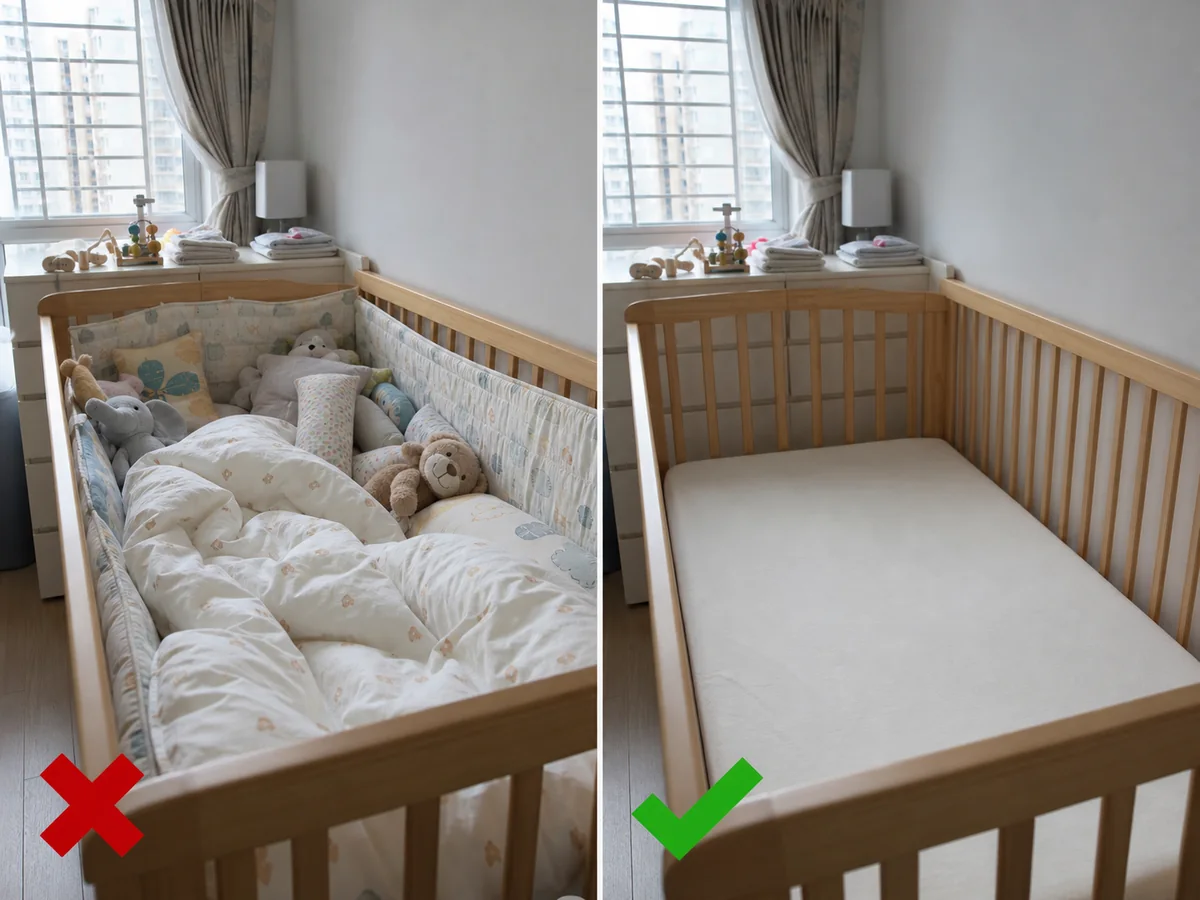
Place the baby on their back on a firm, flat mattress; apart from a fitted sheet, keep pillows, quilts, cushions, toys, and cot bumpers out.
View safety lesson →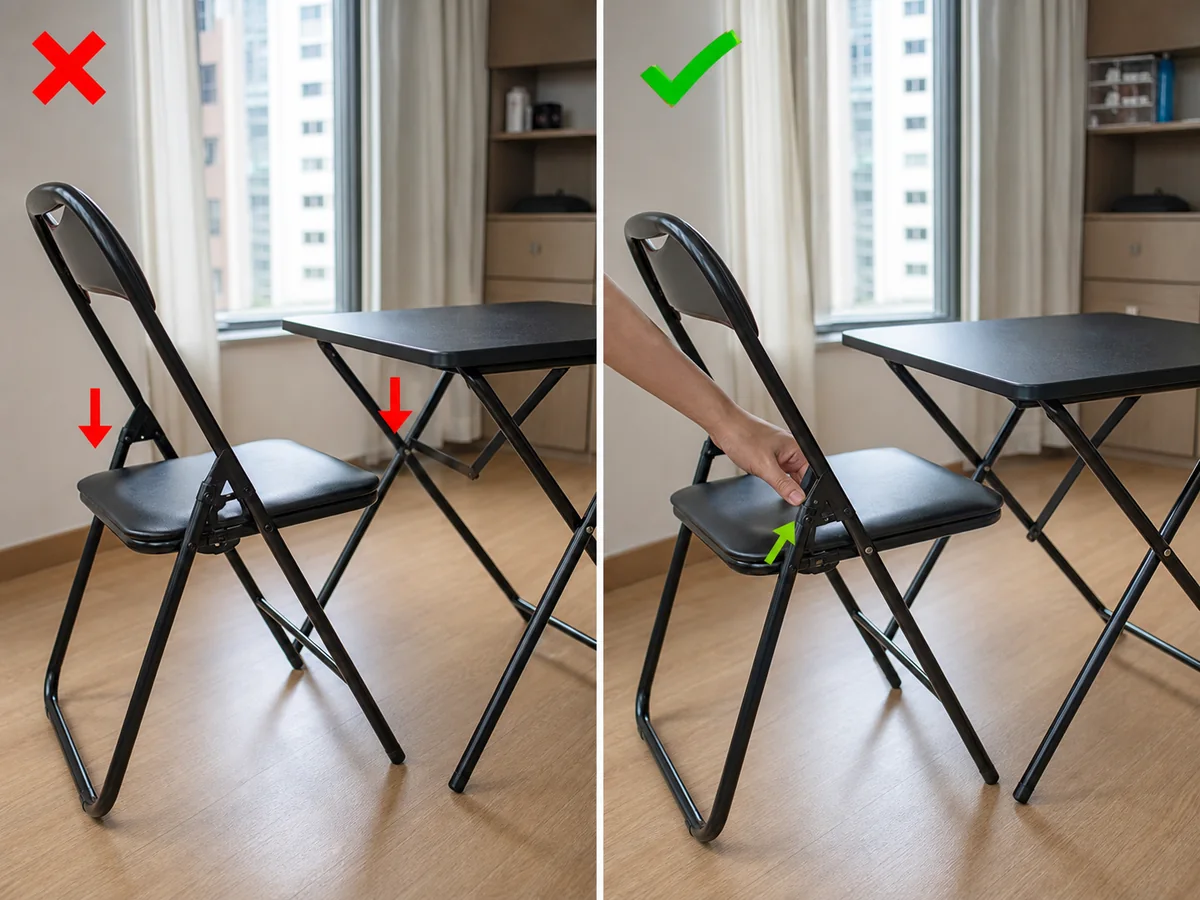
After opening folding furniture, confirm its safety lock is fully engaged; stop use and tell the employer if the lock fails.
View safety lesson →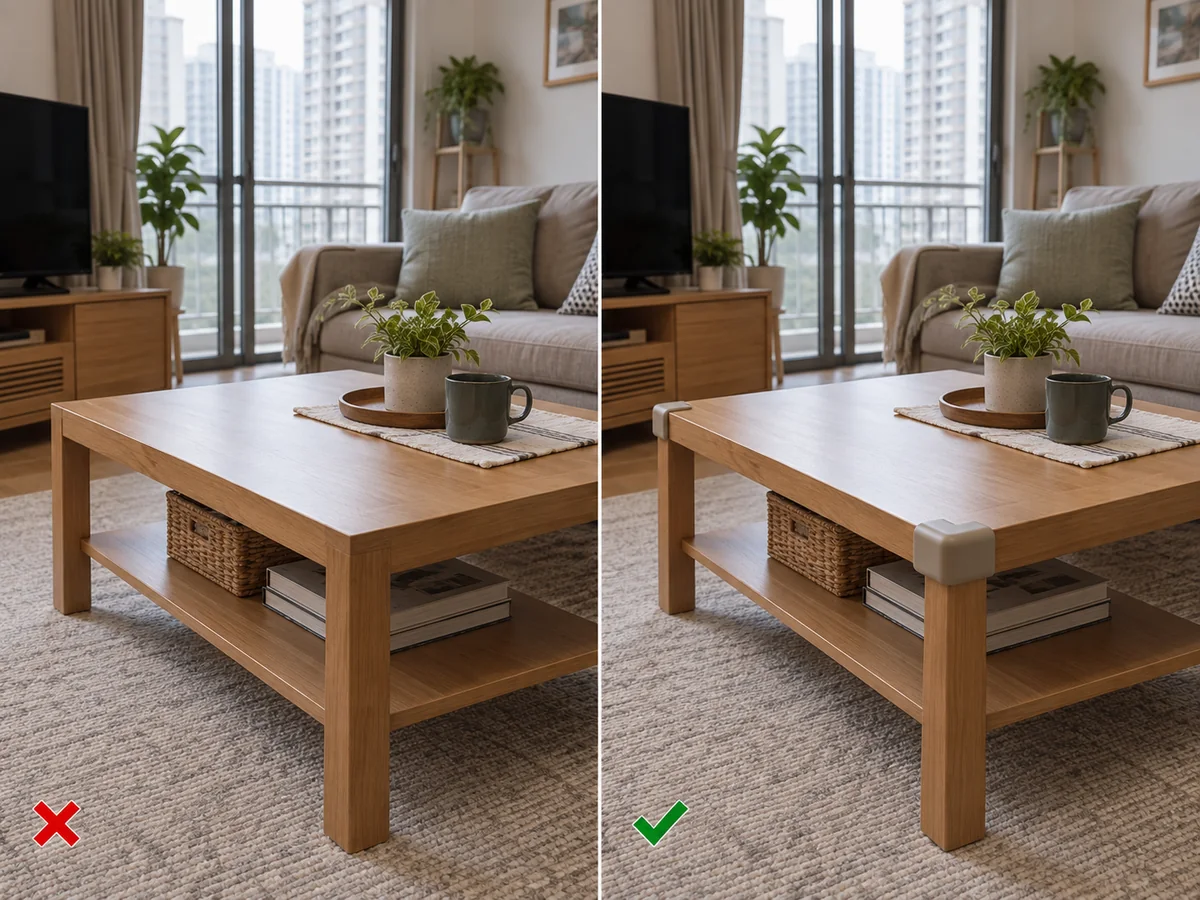
Fit secure corner guards within a young child’s reach and check them regularly.
View safety lesson →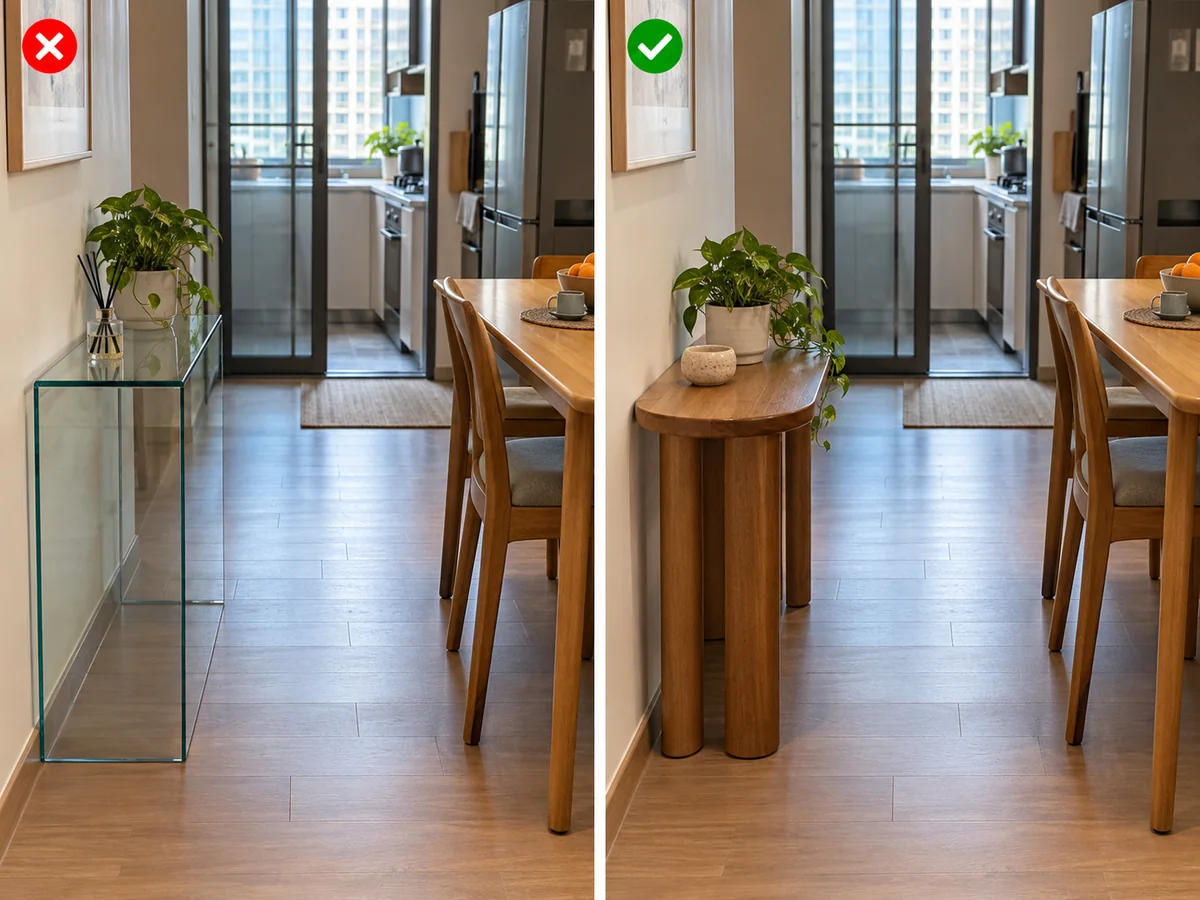
Use stable, rounded, shatter-resistant furniture where young children play.
View safety lesson →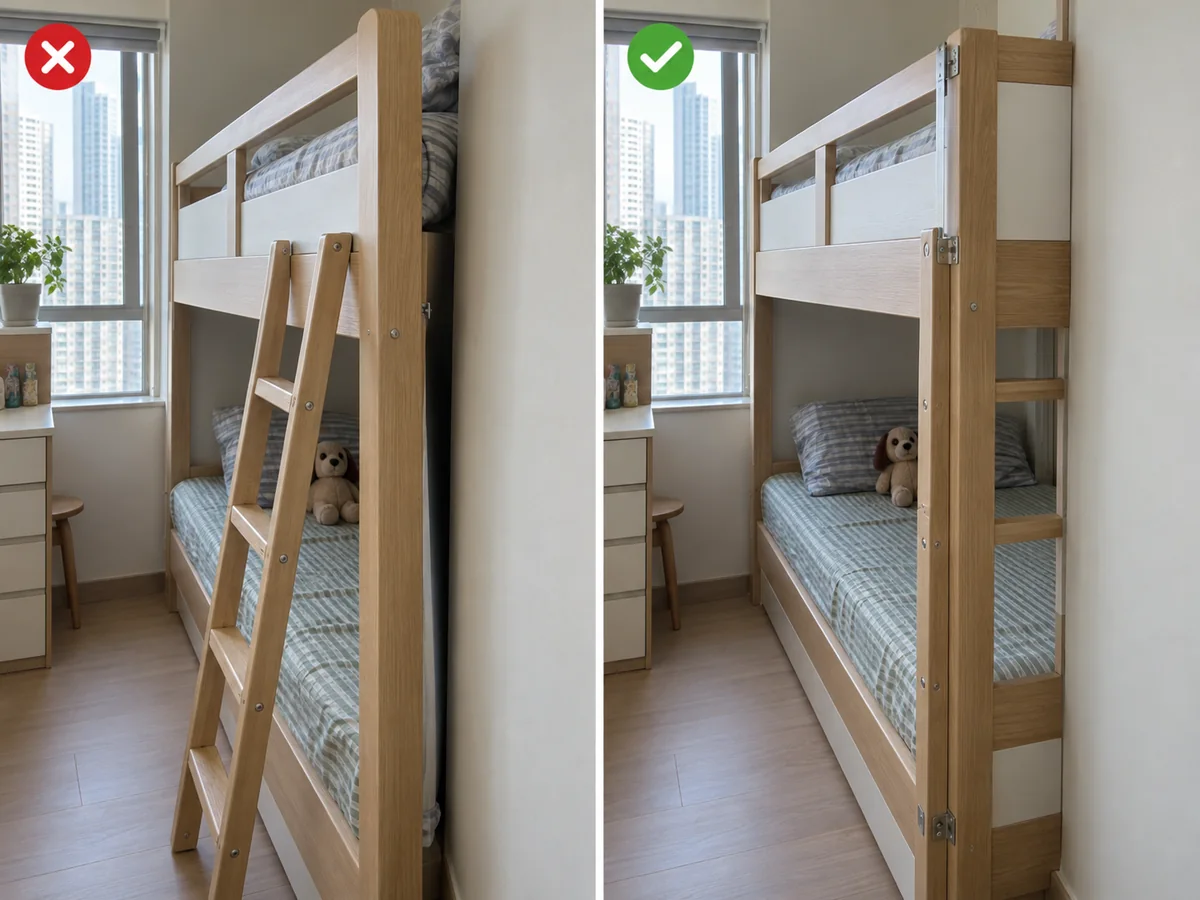
Before using a bunk bed, secure the ladder and remove trapping gaps beside the wall.
View safety lesson →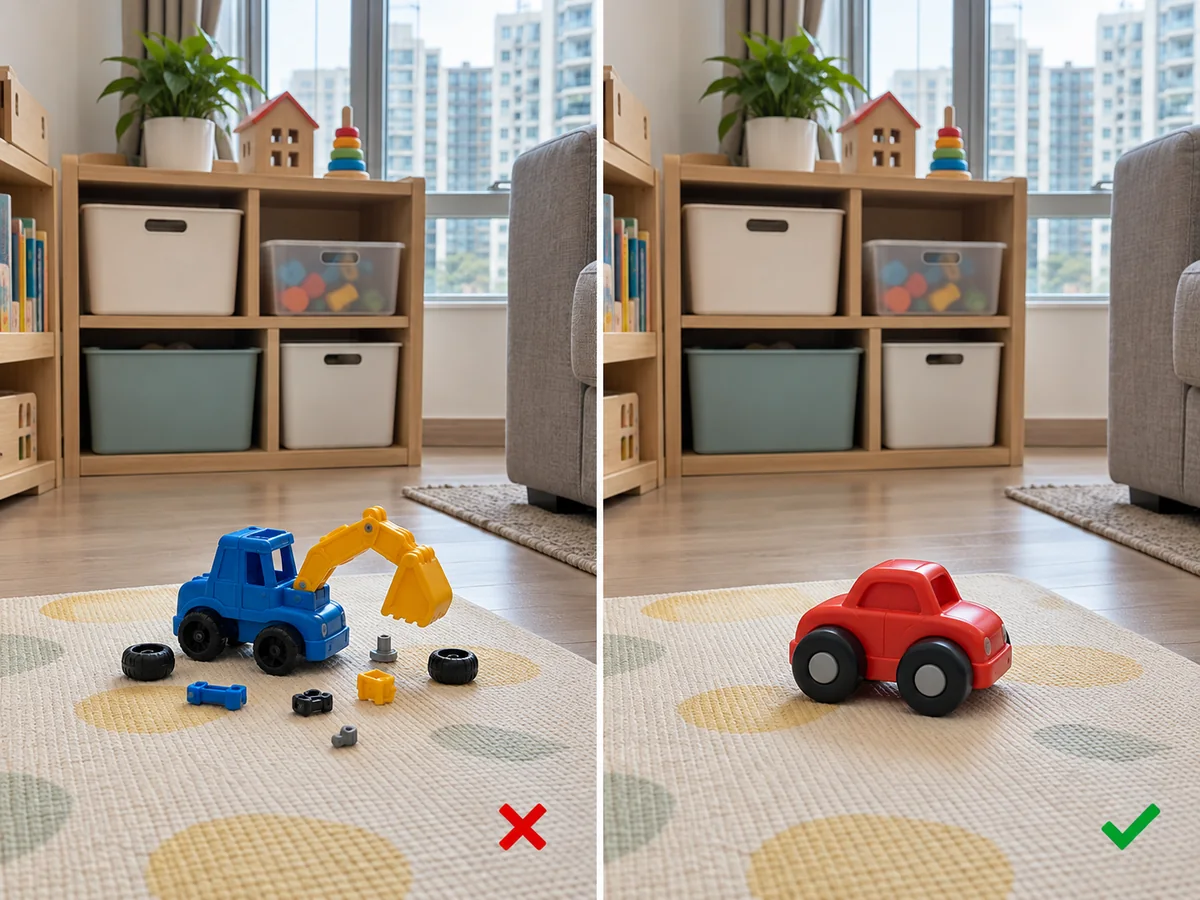
Choose age-appropriate toys and check for loose small parts before purchase and play.
View safety lesson →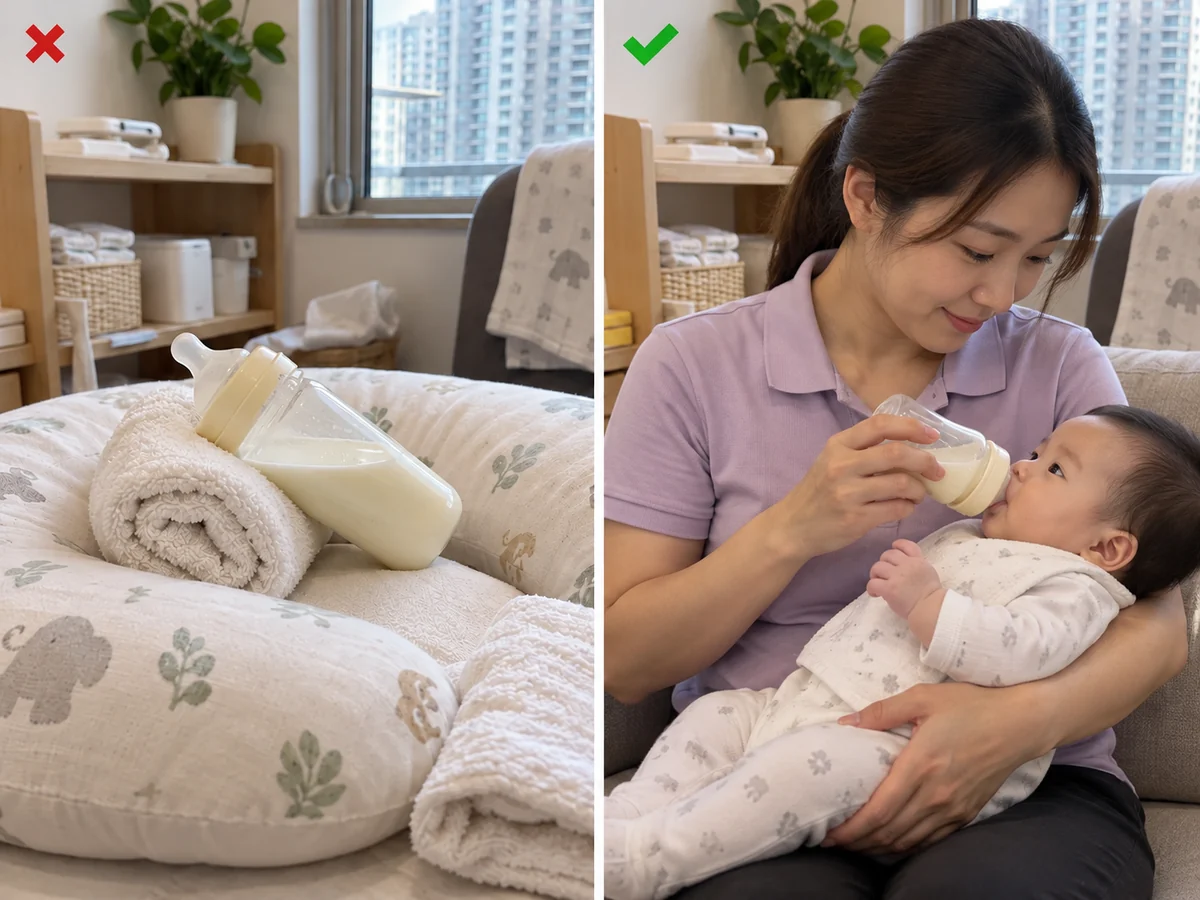
Hold the baby and remain present throughout; never prop the bottle for unattended feeding.
View safety lesson →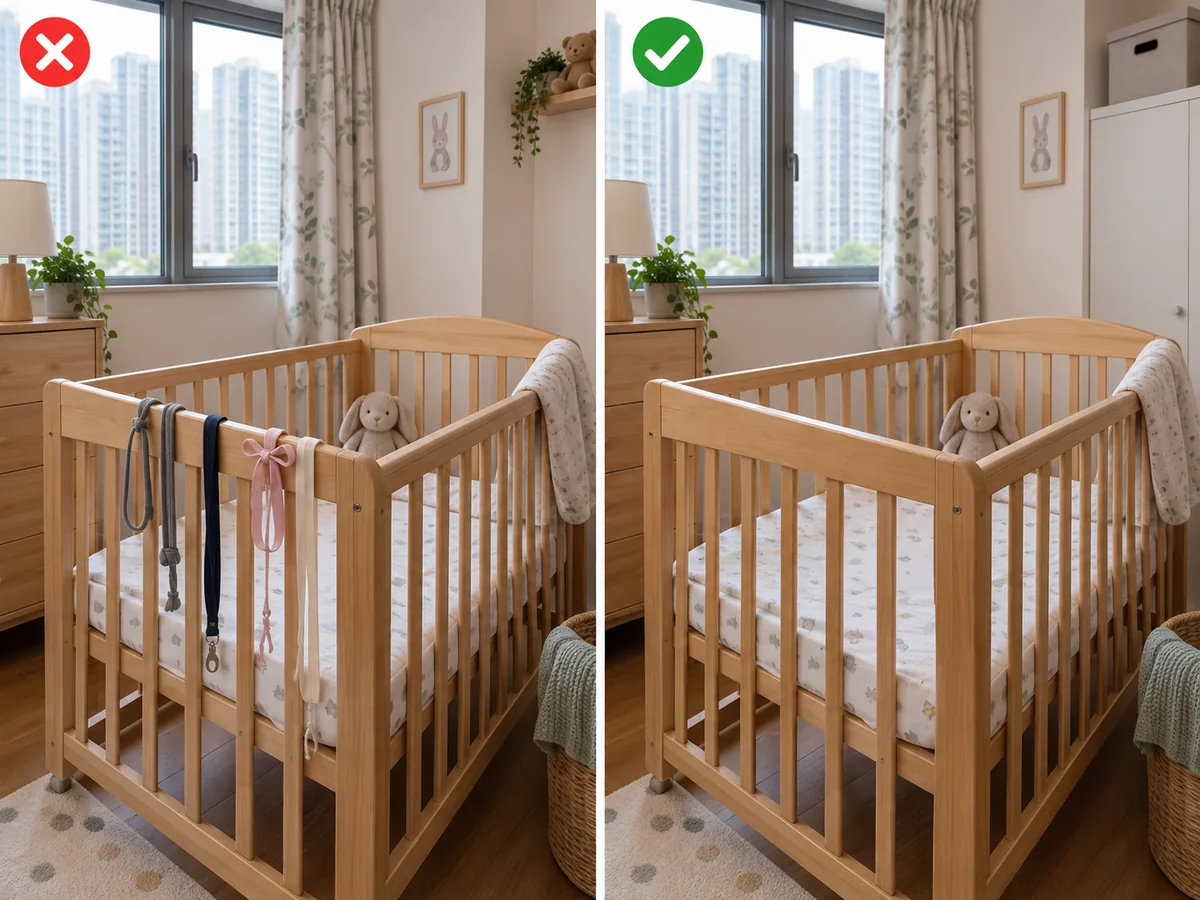
Remove cords, ties, hanging decorations, and clothing straps that could reach the cot.
View safety lesson →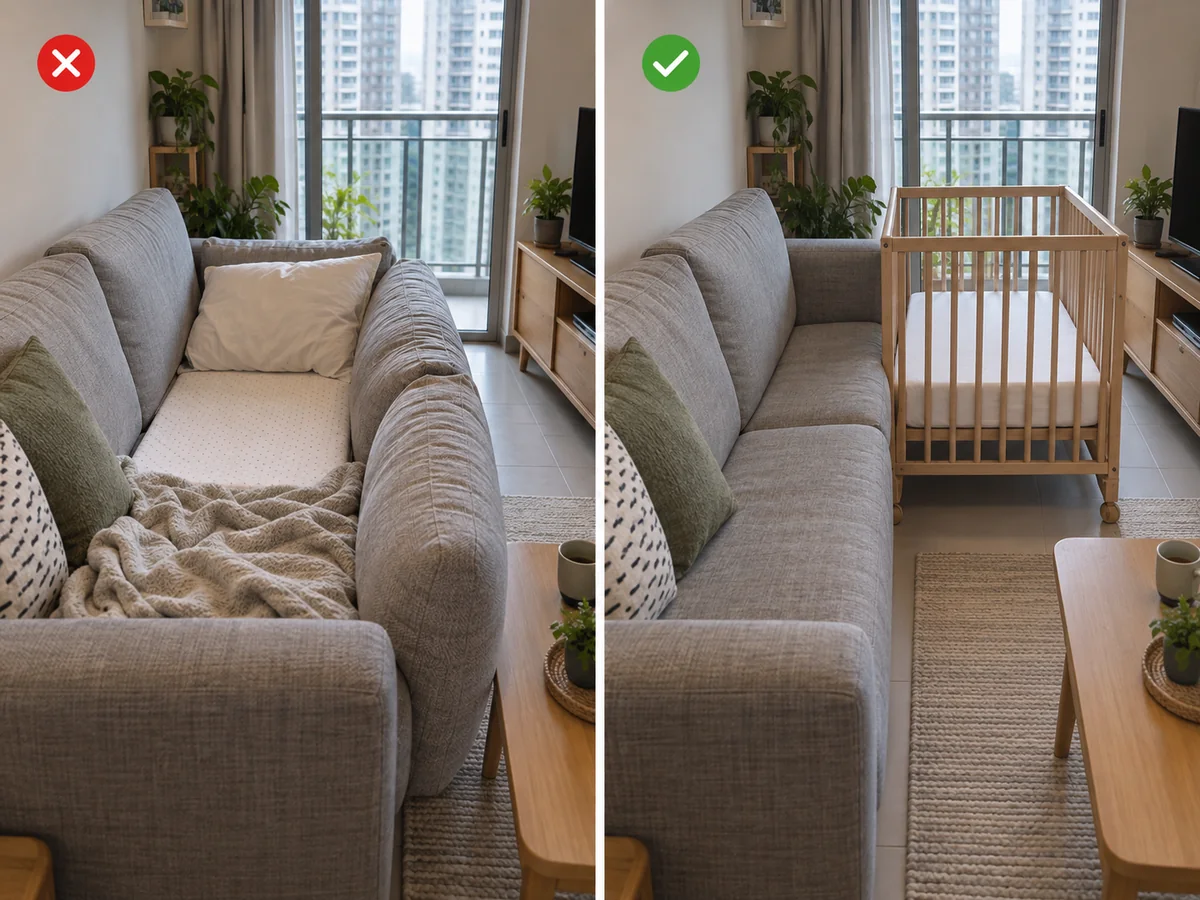
If the caregiver feels sleepy, return the baby to a separate, flat, clear sleep space.
View safety lesson →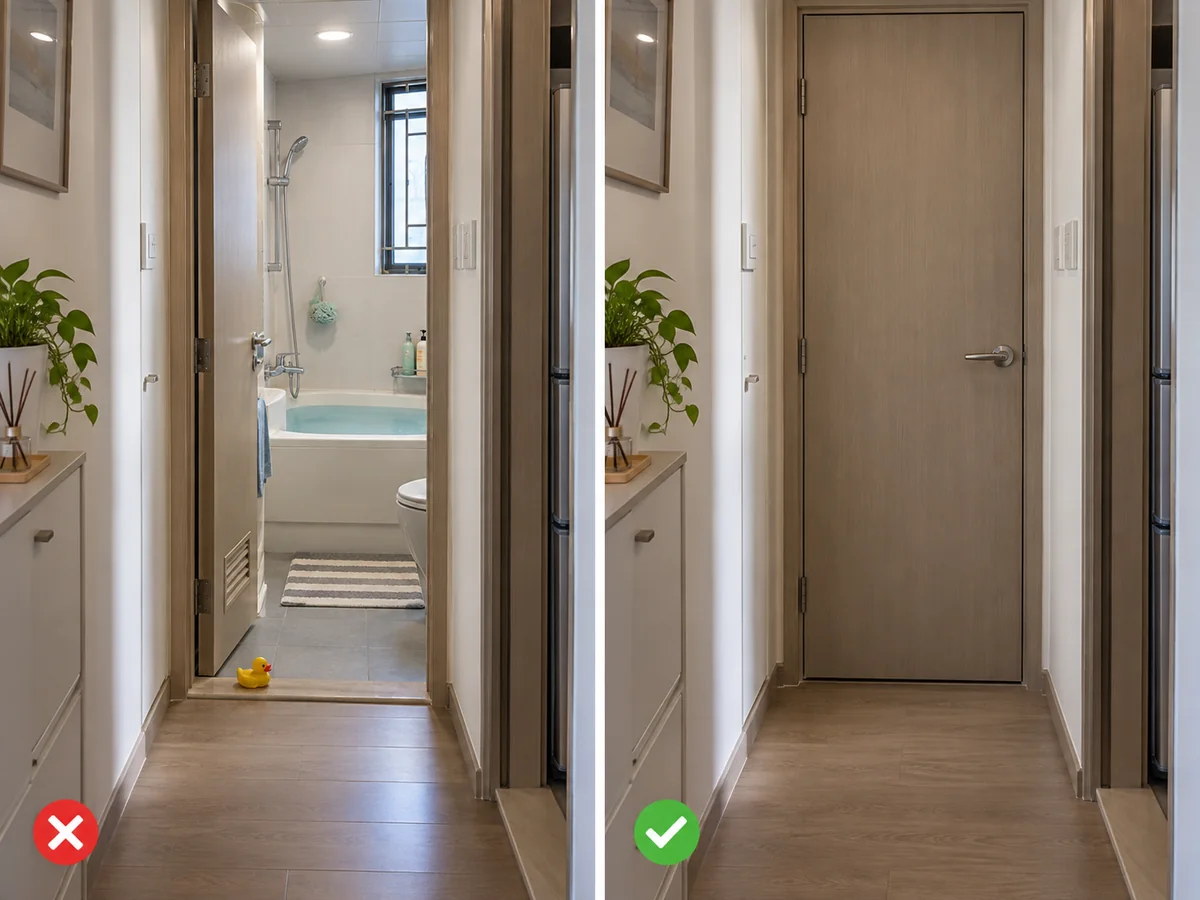
Close the bathroom when no adult is supervising and use an adult-controlled safe latch.
View safety lesson →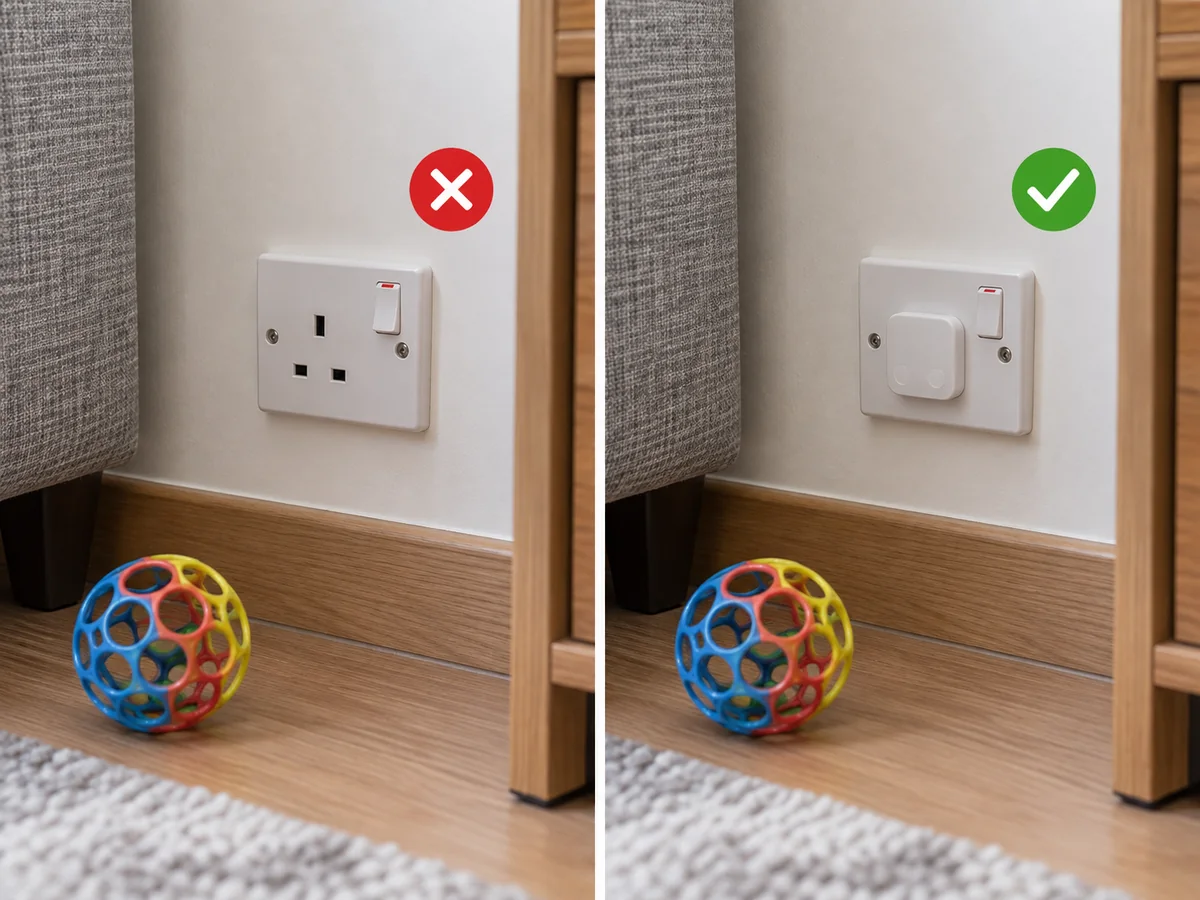
Fit suitable, secure childproof covers to unused sockets within a young child’s reach.
View safety lesson →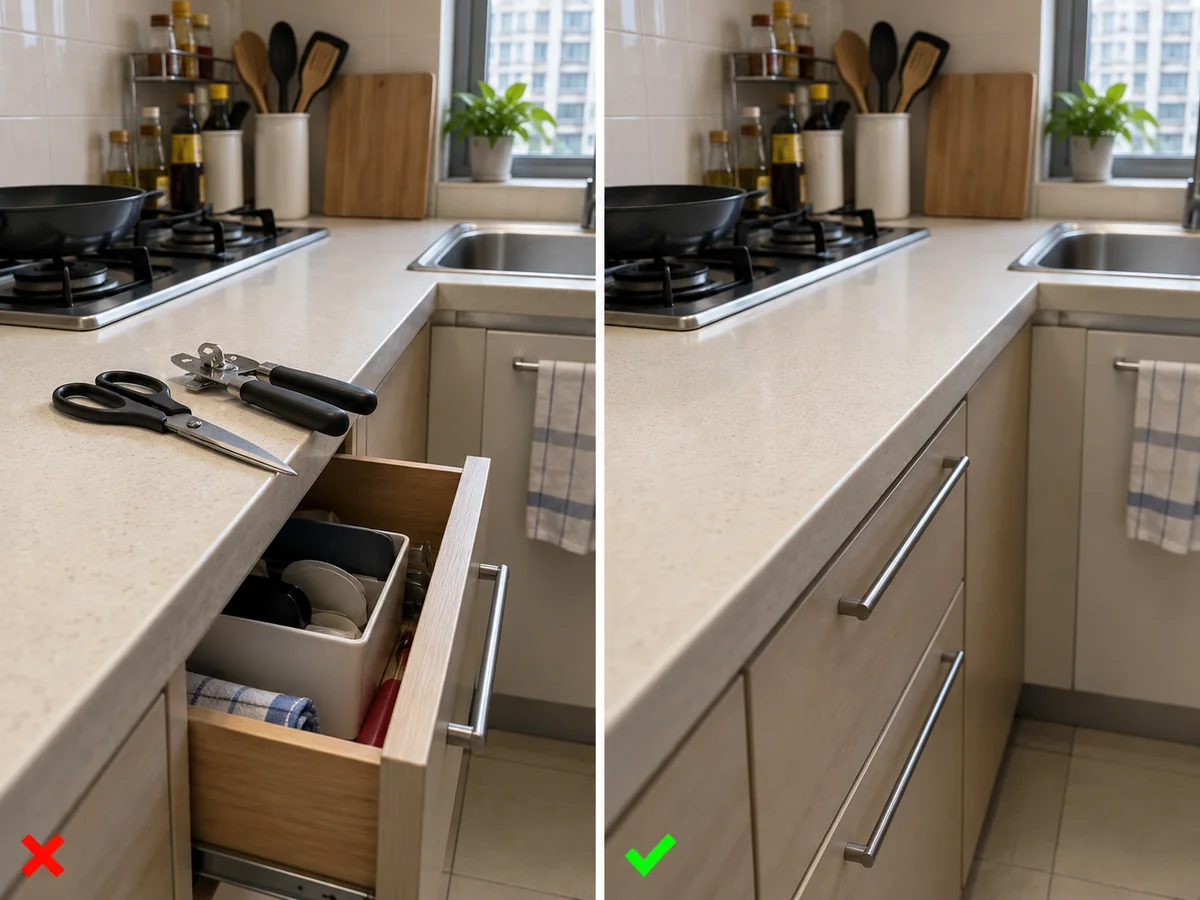
After cleaning and drying, return scissors and can openers to a closed or locked place.
View safety lesson →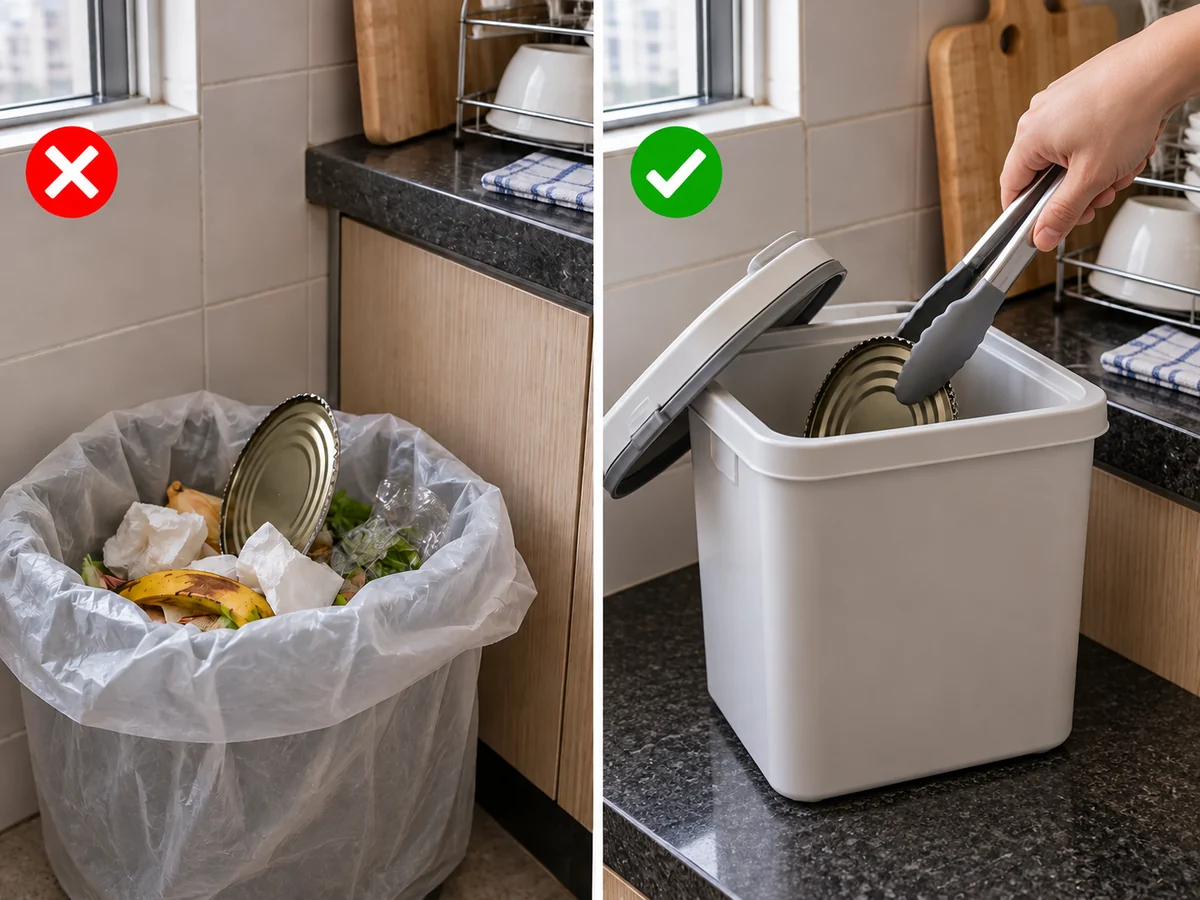
Control the sharp lid immediately after opening, wrap it, and place it in a puncture-resistant container.
View safety lesson →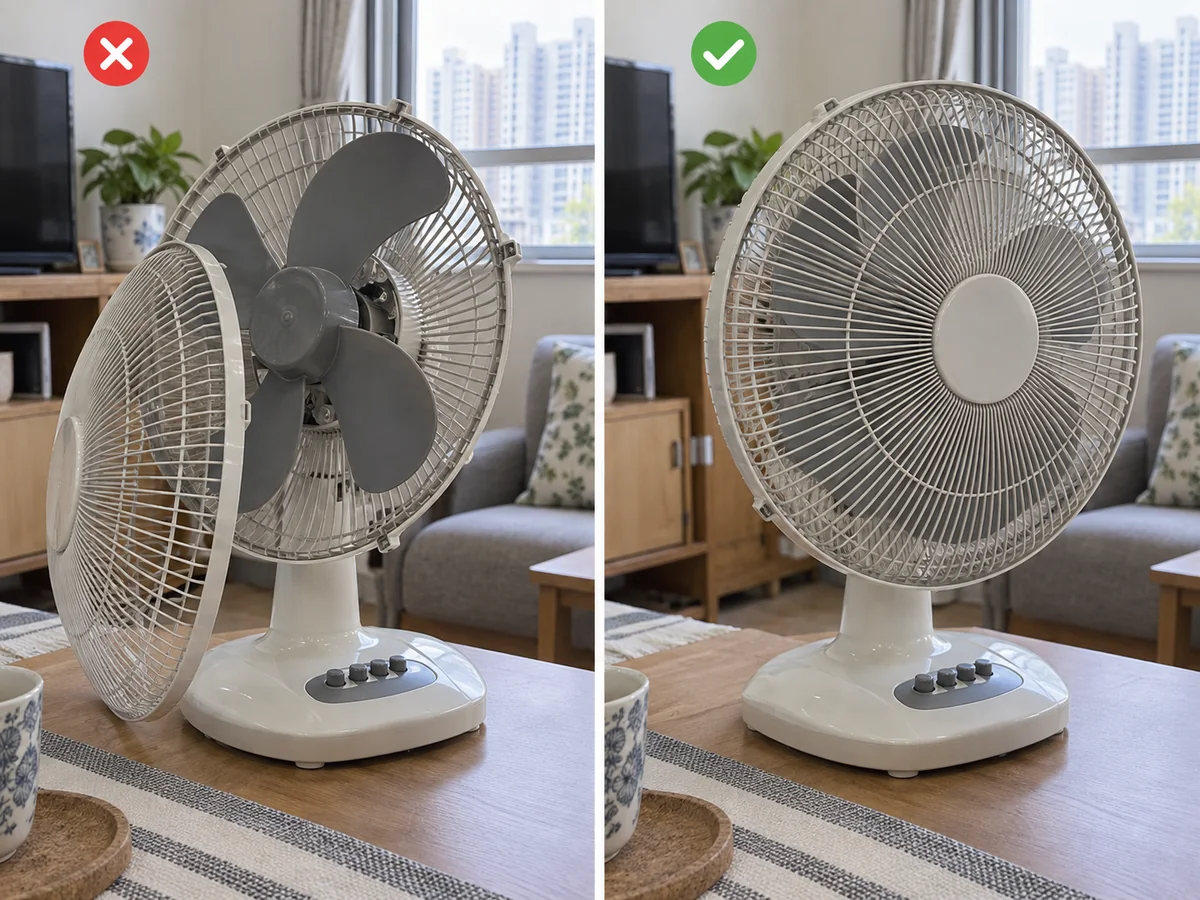
Before switching on a fan, check both guards are locked; stop if damaged or loose.
View safety lesson →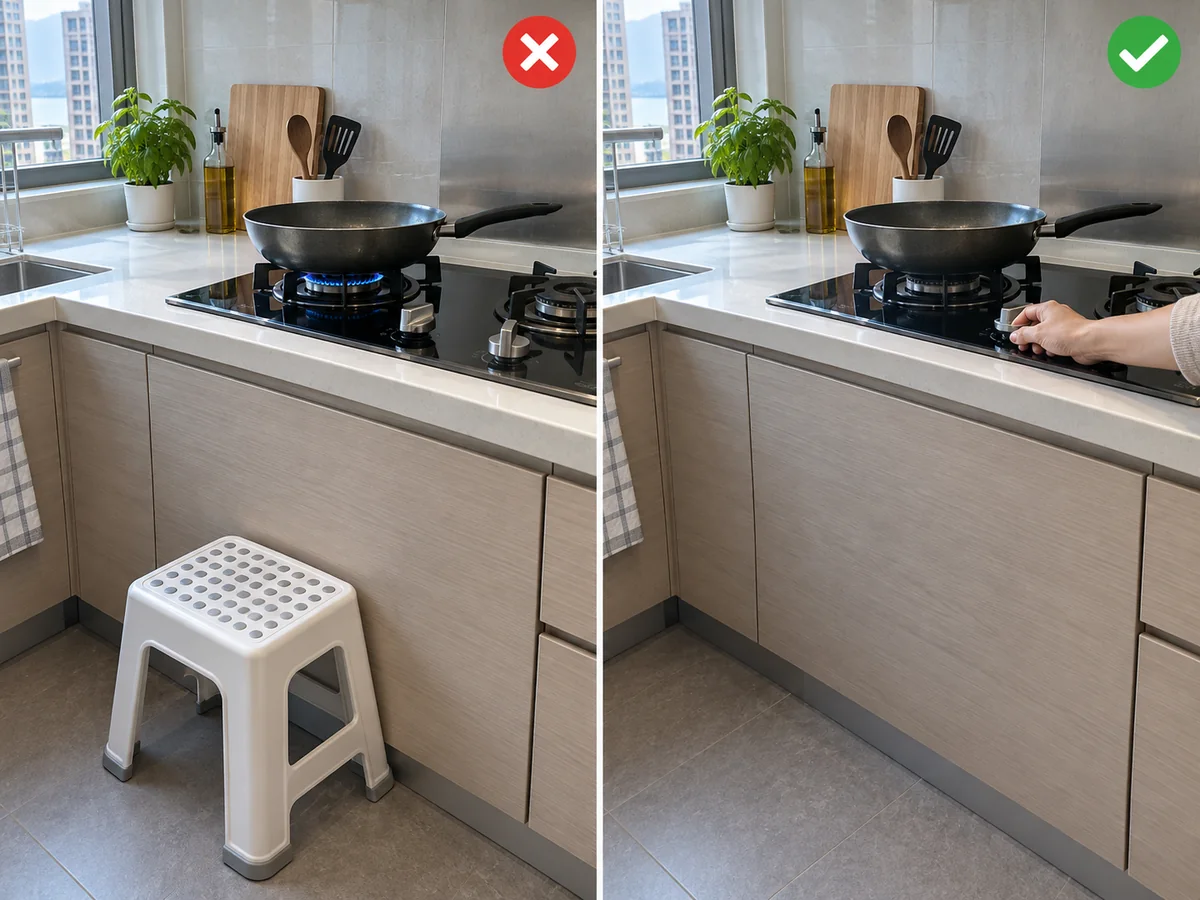
Only a safety-competent adult should operate a gas cooker; keep children away from controls.
View safety lesson →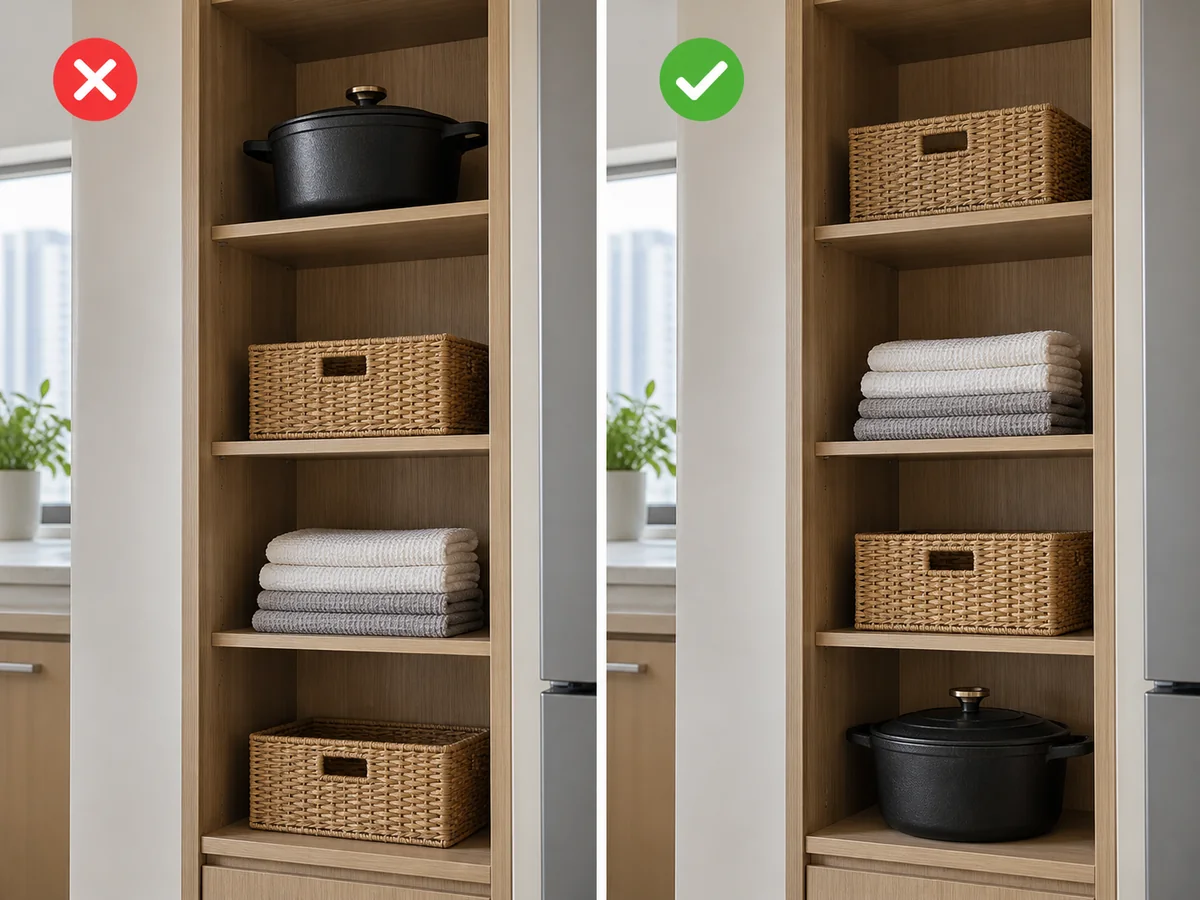
Keep frequently used heavy items on stable shelves below waist height, never overhead or on loose furniture.
View safety lesson →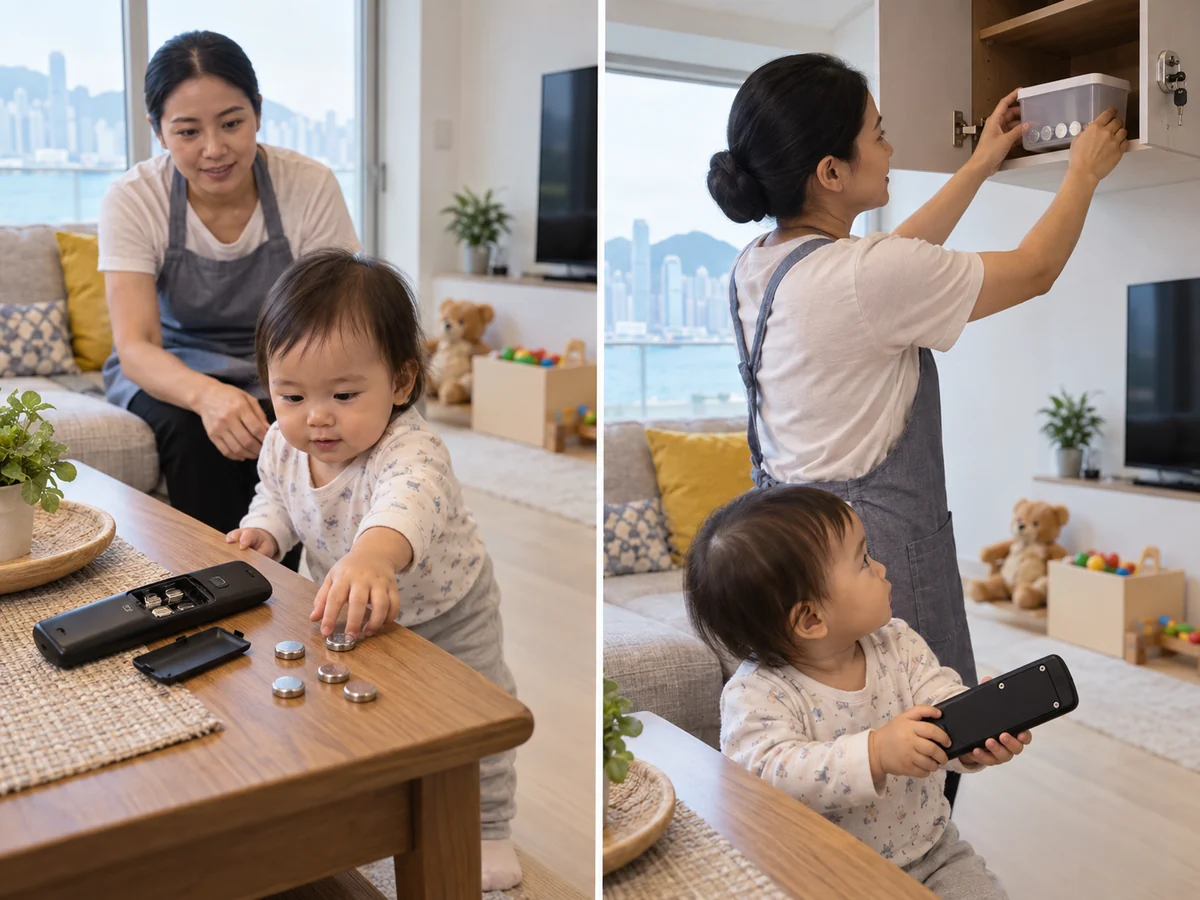
Seal every new and used button battery and lock it in a high cupboard; keep battery compartments secured with their screws.
View safety lesson →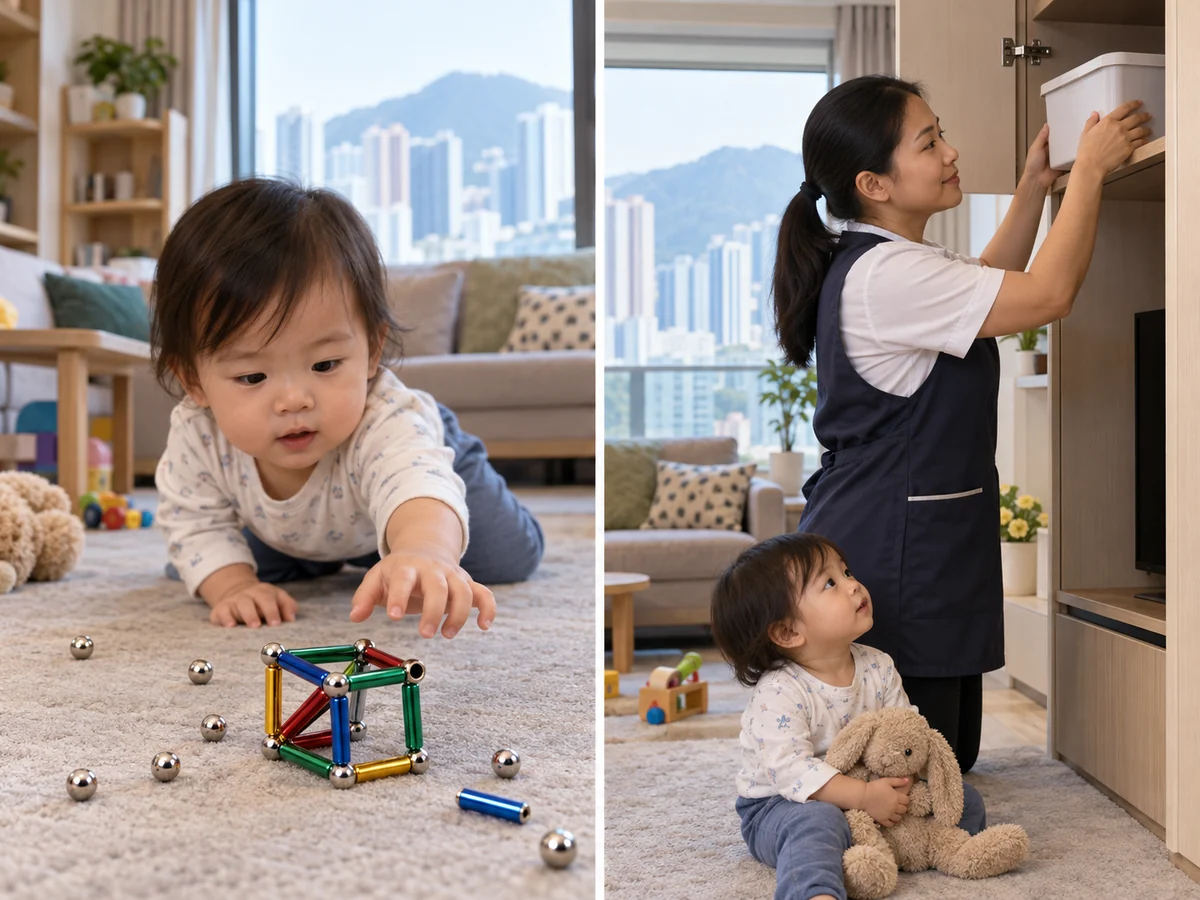
Lock away small high-powered magnets and magnetic toys; count every piece before and after closely supervised play.
View safety lesson →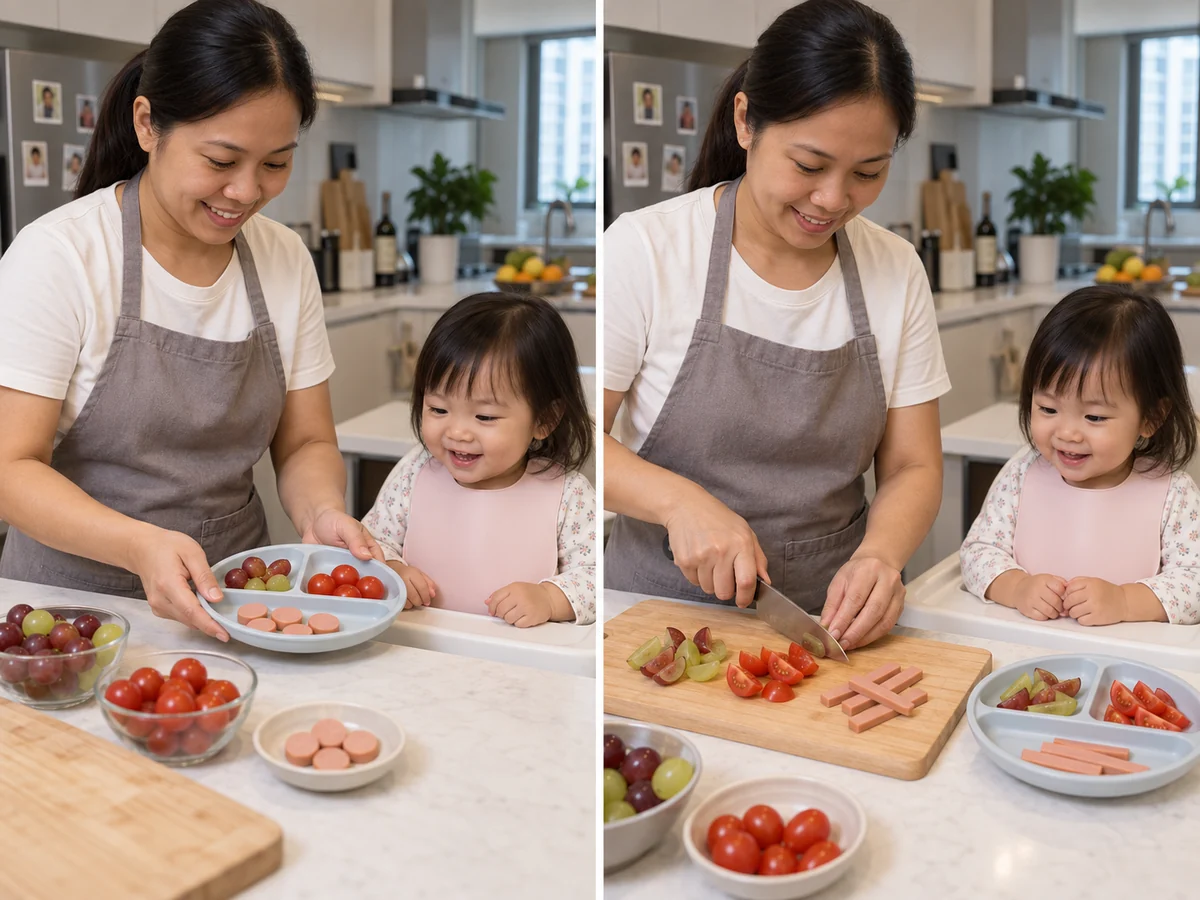
For a young child, remove hard parts and cut grapes, cherry tomatoes, and sausages lengthwise into quarters or smaller pieces.
View safety lesson →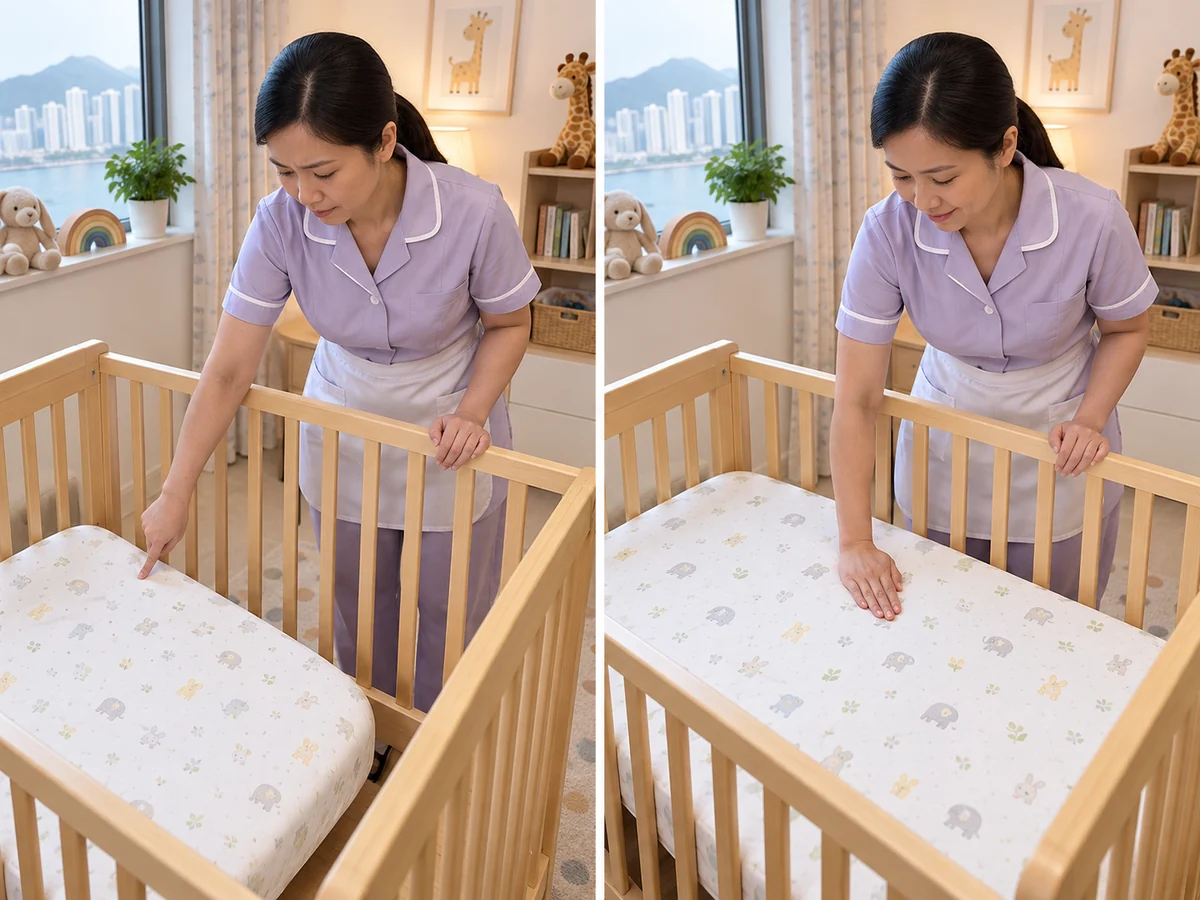
Use only a correctly sized, firm, flat cot mattress that fits snugly on every side, and recheck it after making the bed.
View safety lesson →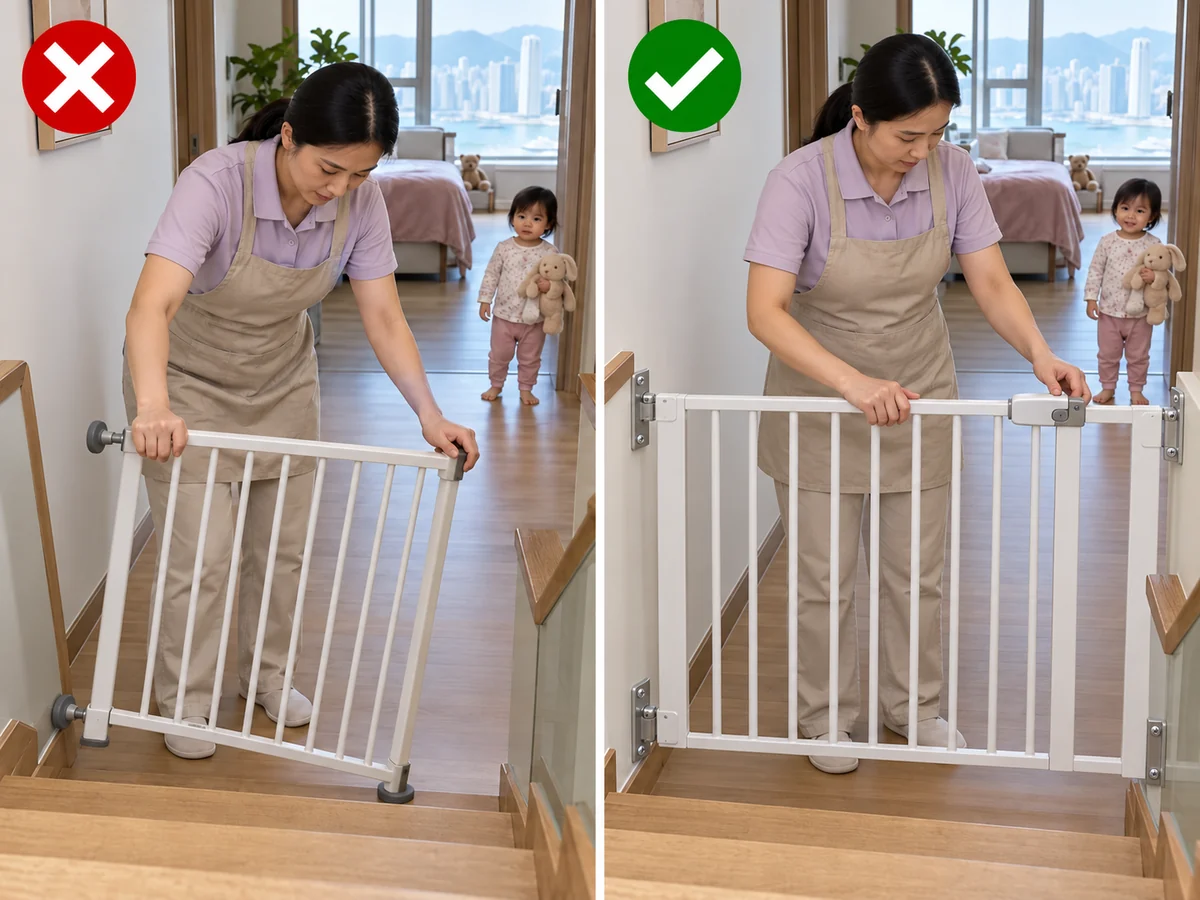
The employer should arrange a suitable stair gate installed to the manufacturer's directions; latch it after every passage and test the fixings daily.
View safety lesson →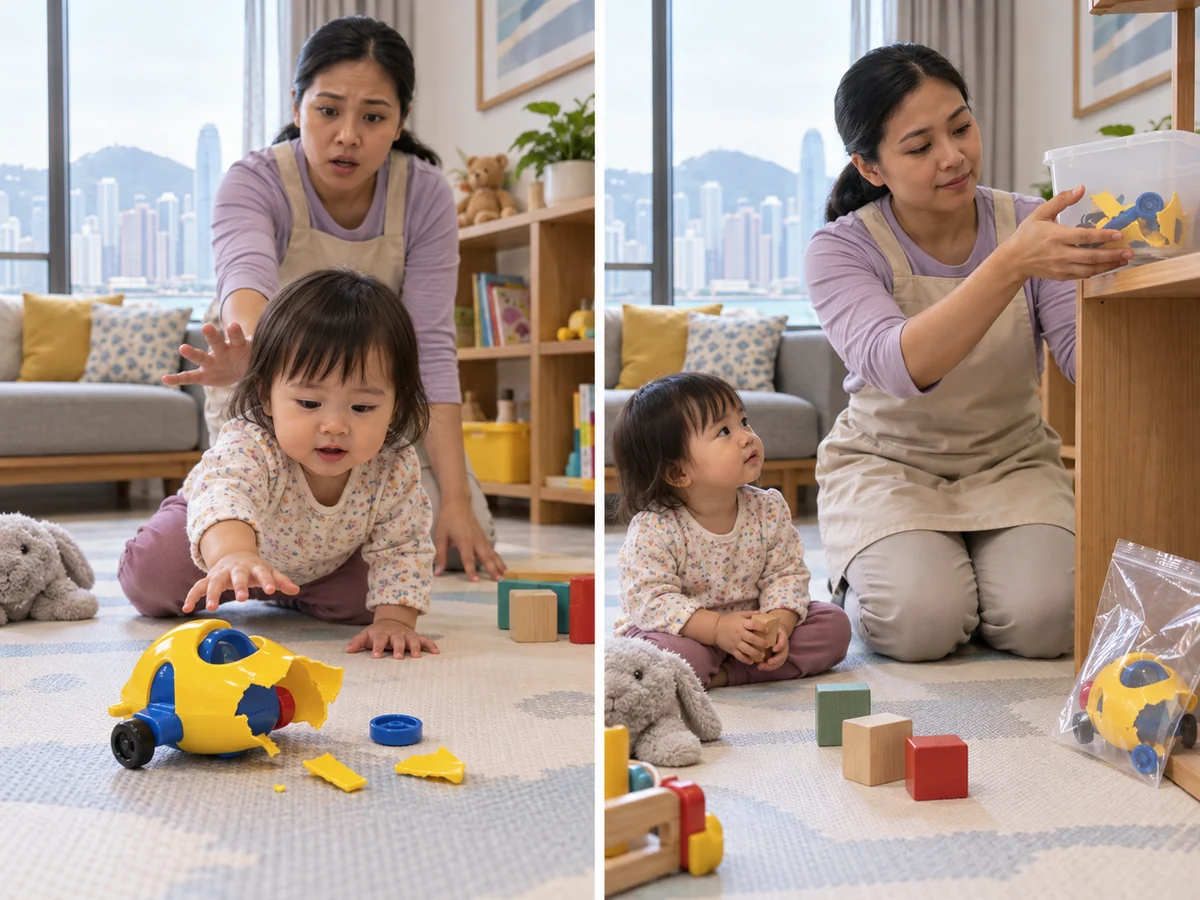
When a toy cracks, exposes a sharp edge, or sheds a small part, stop play immediately, collect the pieces, and isolate the whole toy.
View safety lesson →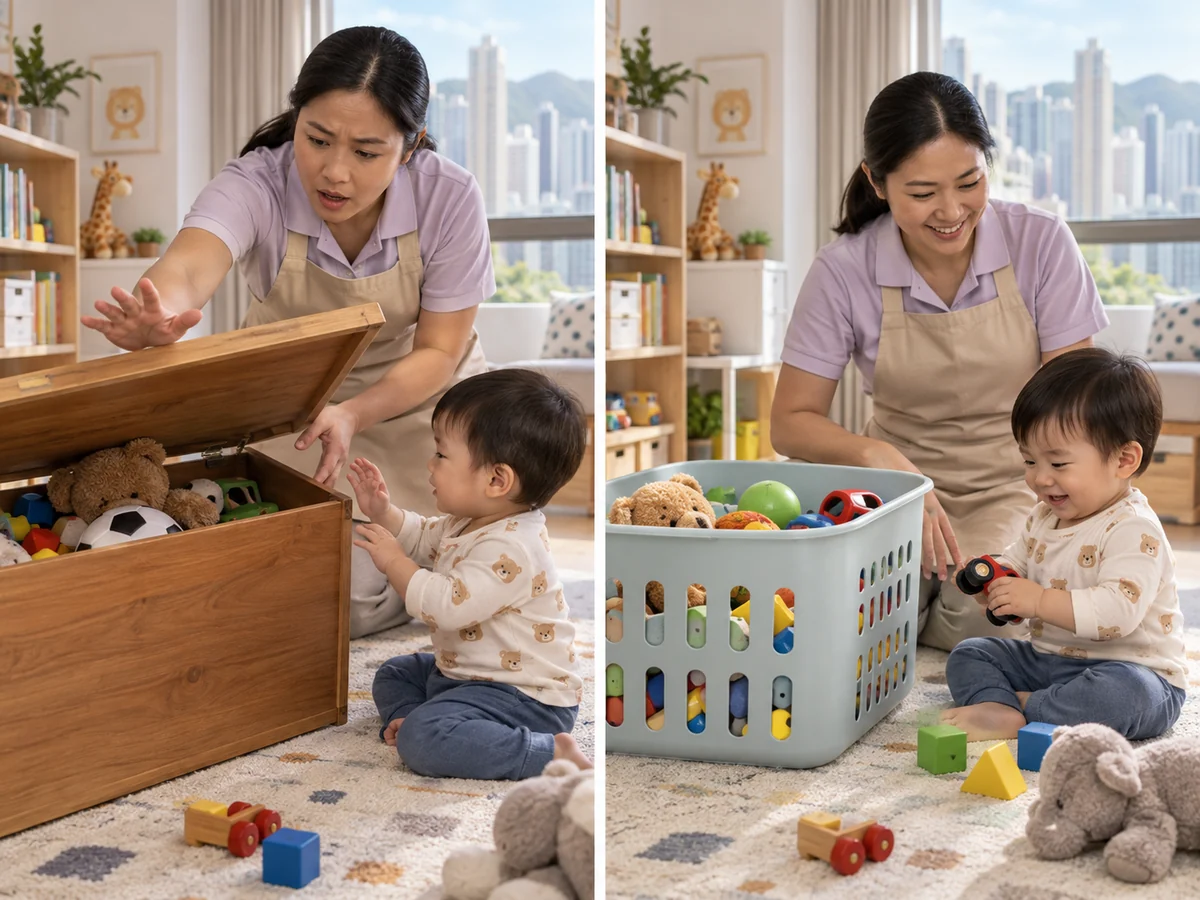
Prefer a lidless toy box; any chest with a lid needs reliable support, ventilation, and a latch that cannot trap a child, plus supervision.
View safety lesson →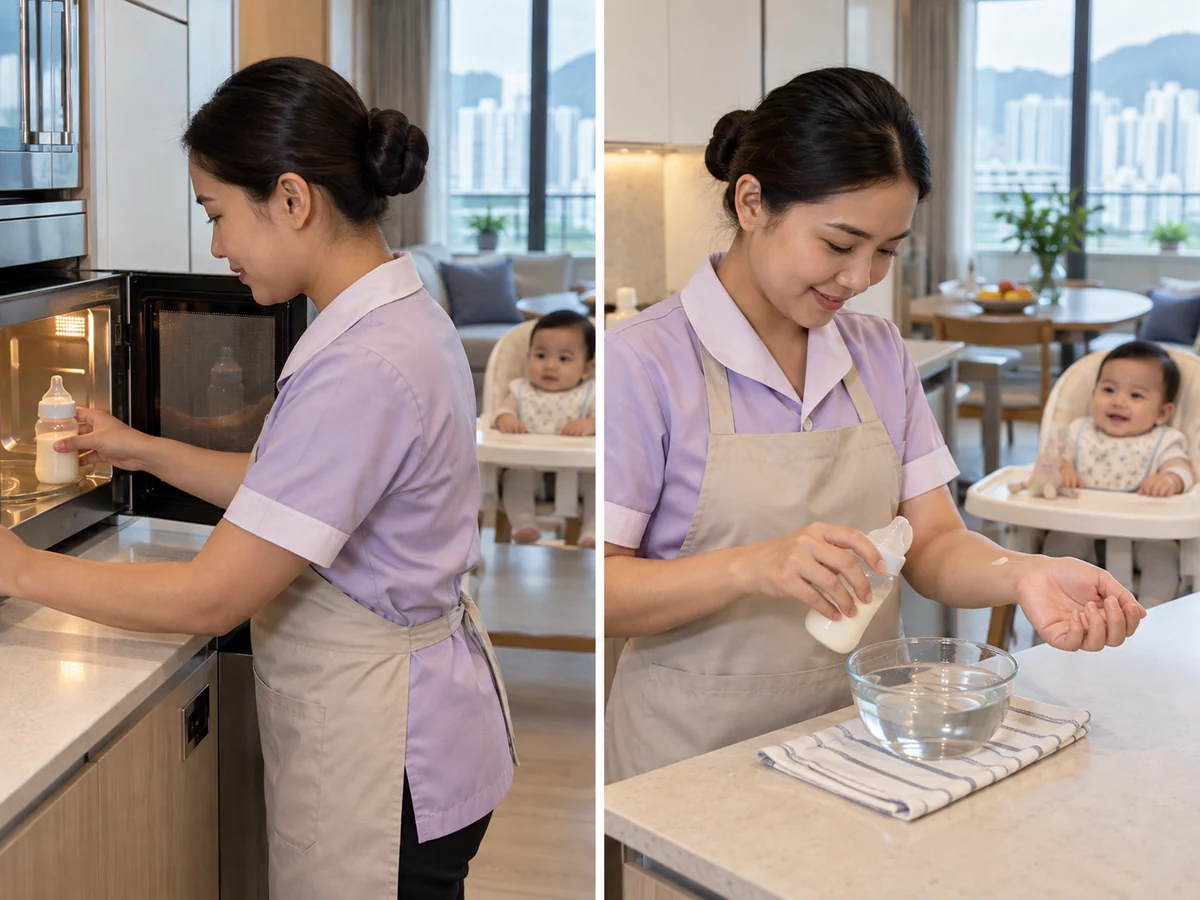
Warm a baby bottle with the agreed warmer or warm-water method, mix the milk, and test it on the inner wrist; never microwave it.
View safety lesson →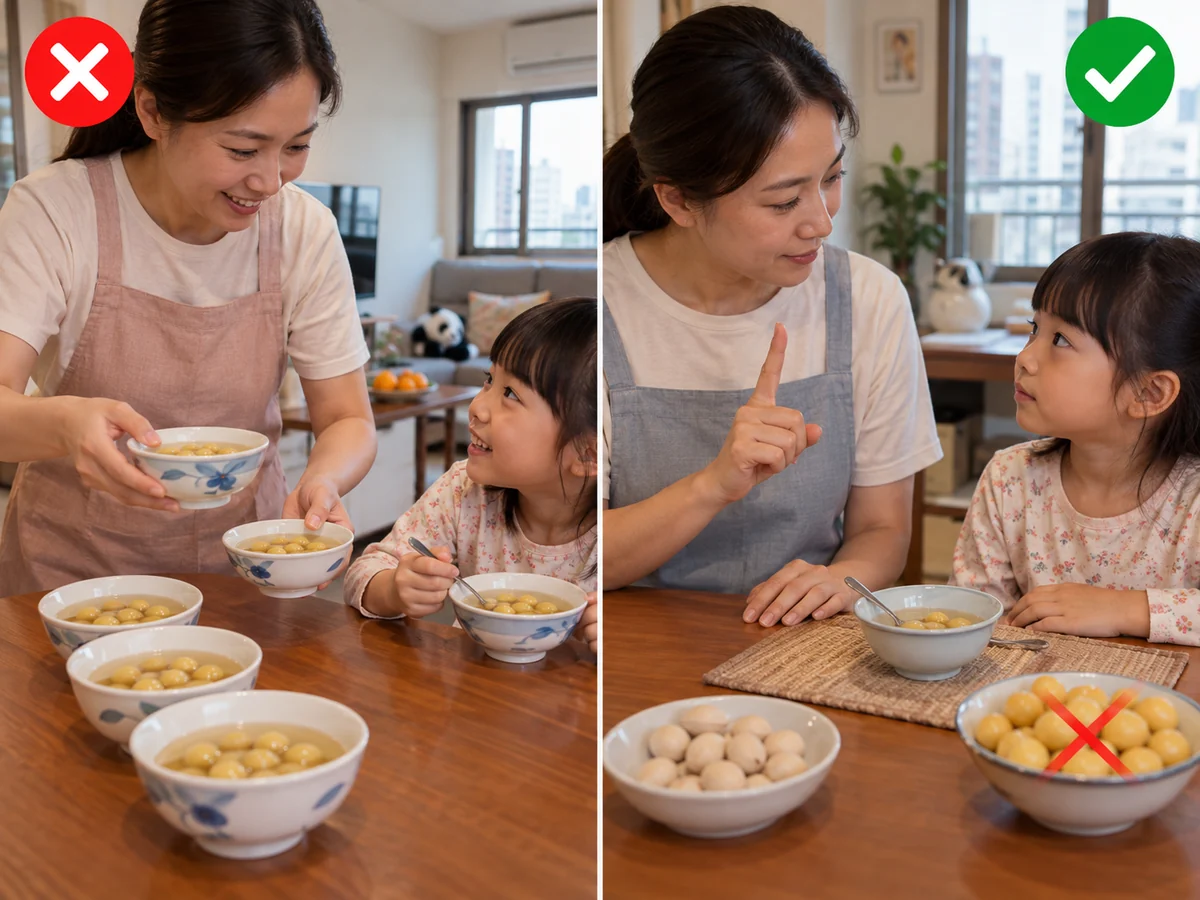
Do not serve raw ginkgo or allow large amounts of cooked ginkgo. If illness follows, record how much was eaten and seek medical advice.
View safety lesson →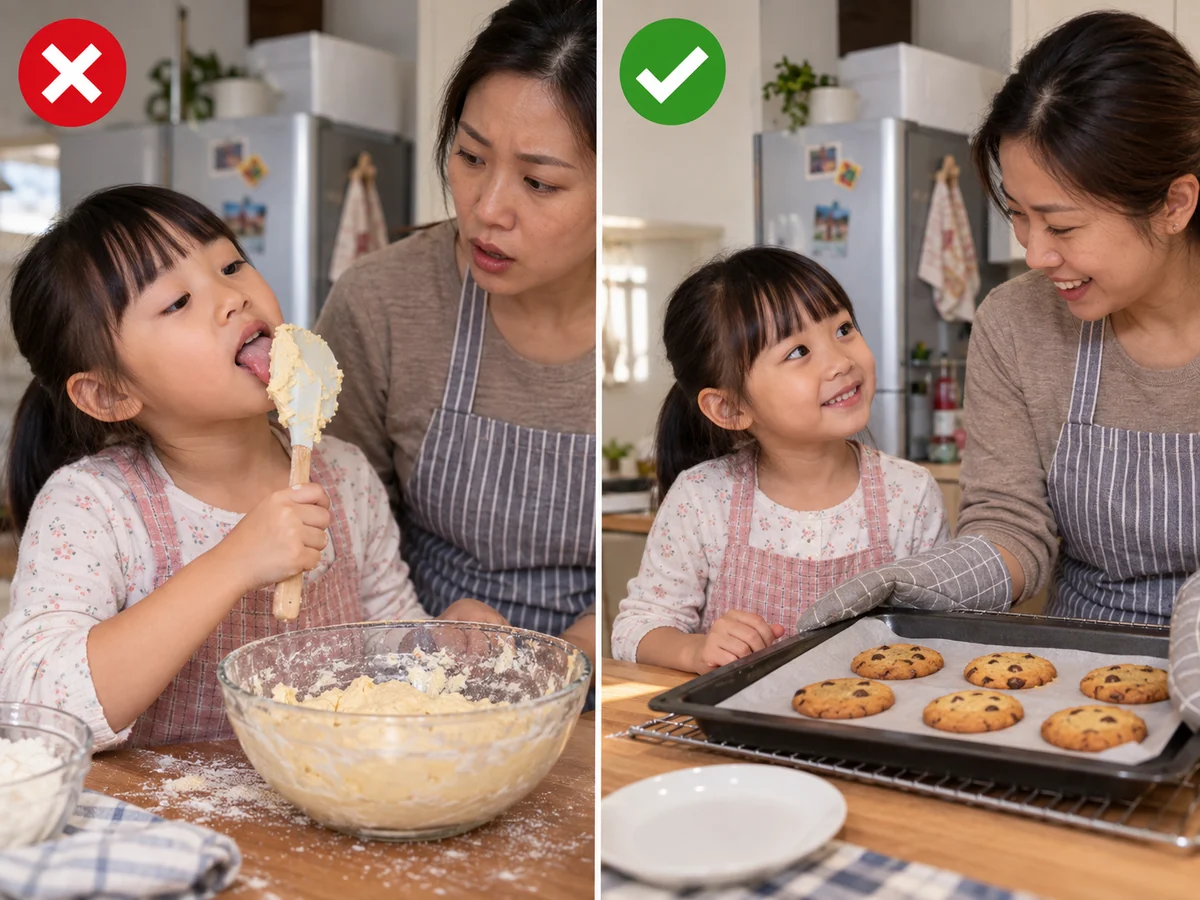
Keep raw flour and dough out of everyone's mouth and cook the recipe properly. Wash hands and clean utensils and surfaces that touched raw flour.
View safety lesson →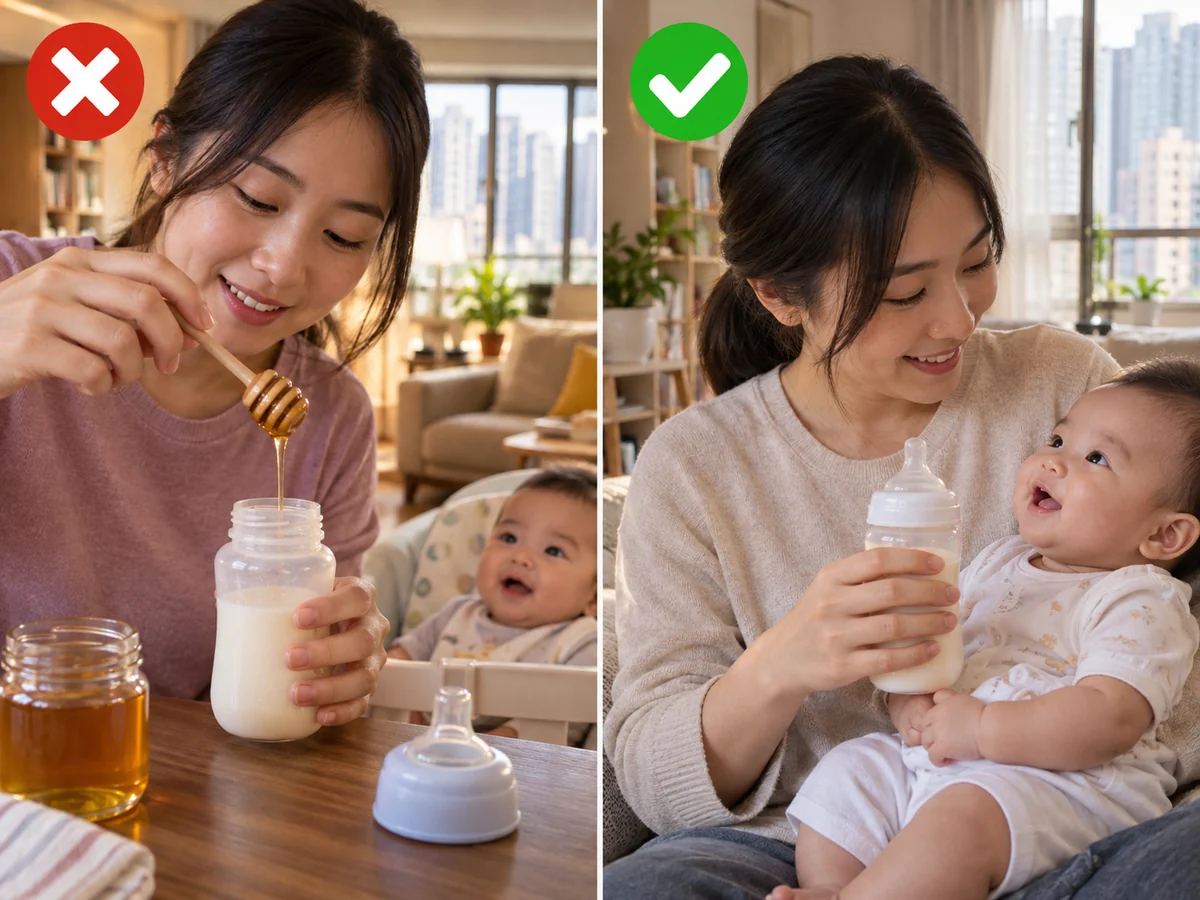
Give no honey to a baby under one year, including honey added to food or drinks. Tell every carer not to put honey on a dummy or in a bottle.
View safety lesson →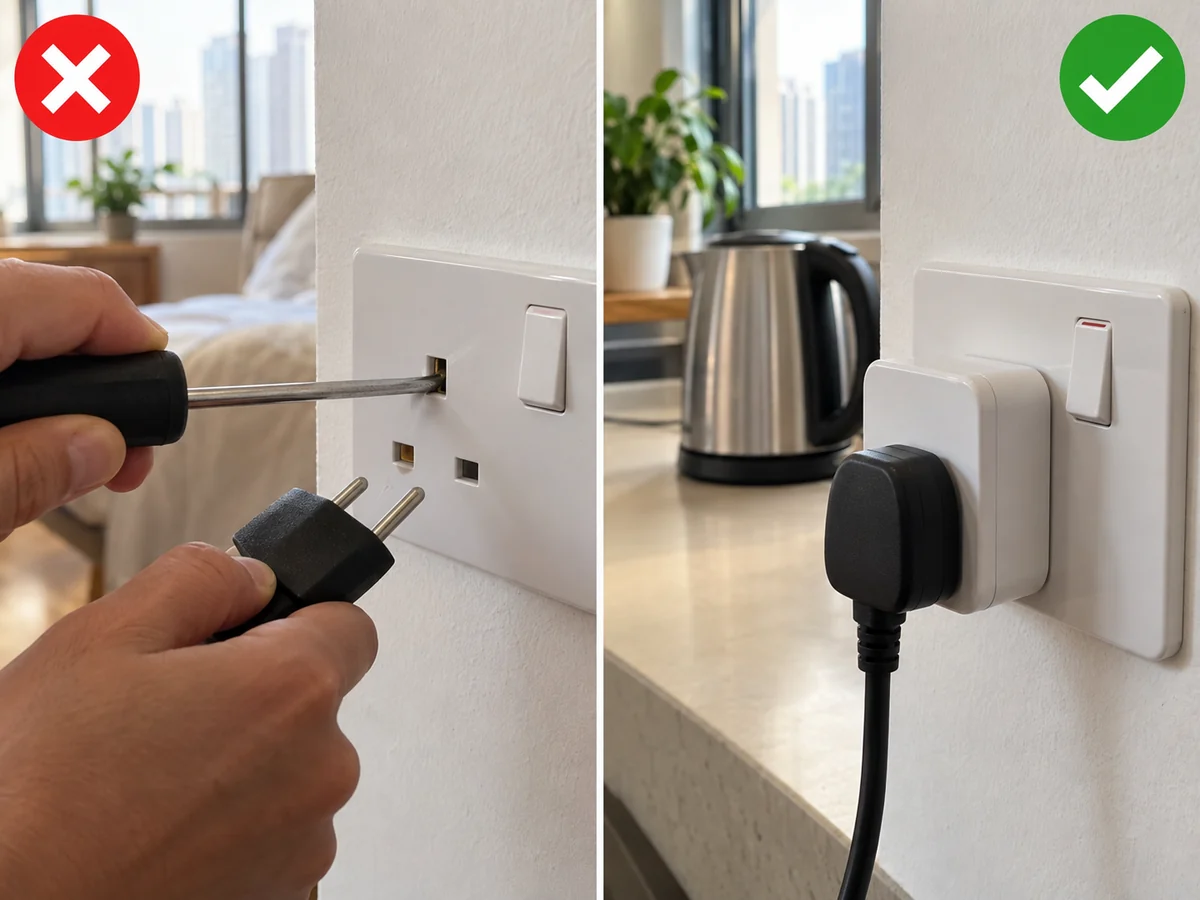
Use a suitable compliant connection instead of forcing the shutter open. Report a damaged socket and keep it out of use pending inspection.
View safety lesson →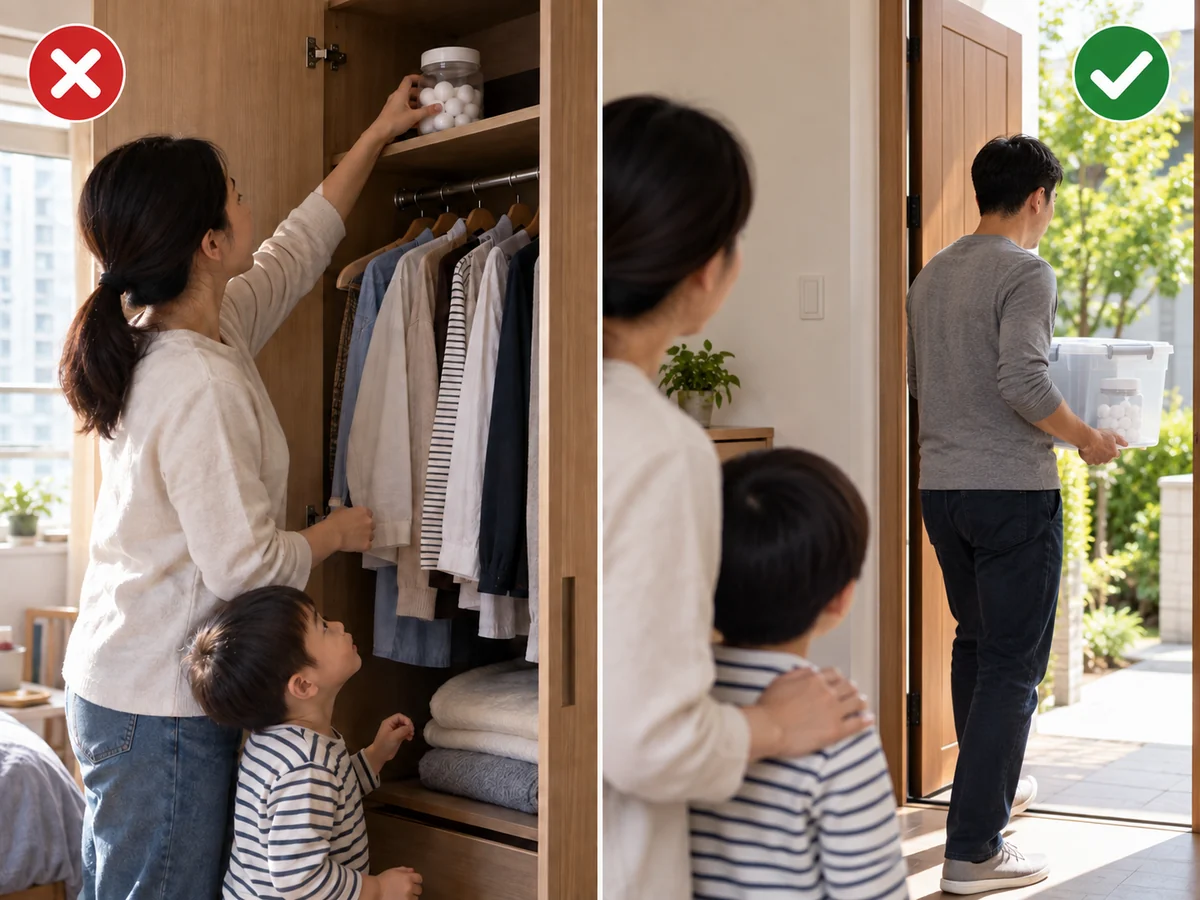
Avoid naphthalene products where a person with G6PD deficiency may be exposed. Keep an unidentified product unused and ask the healthcare team for suitable alternatives.
View safety lesson →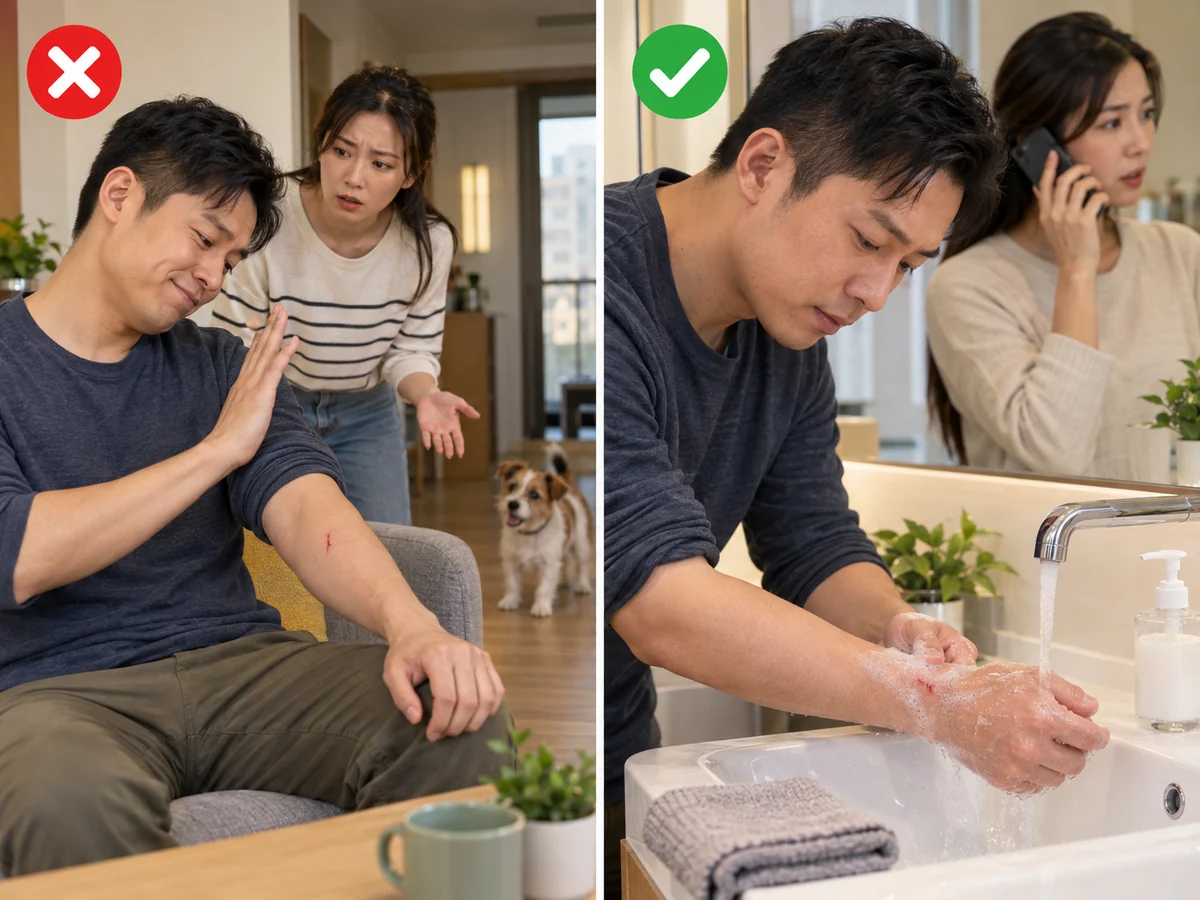
Wash the wound thoroughly with soap and water and seek prompt medical care. Give clinicians available animal details; call 999 for severe injury or uncontrolled bleeding.
View safety lesson →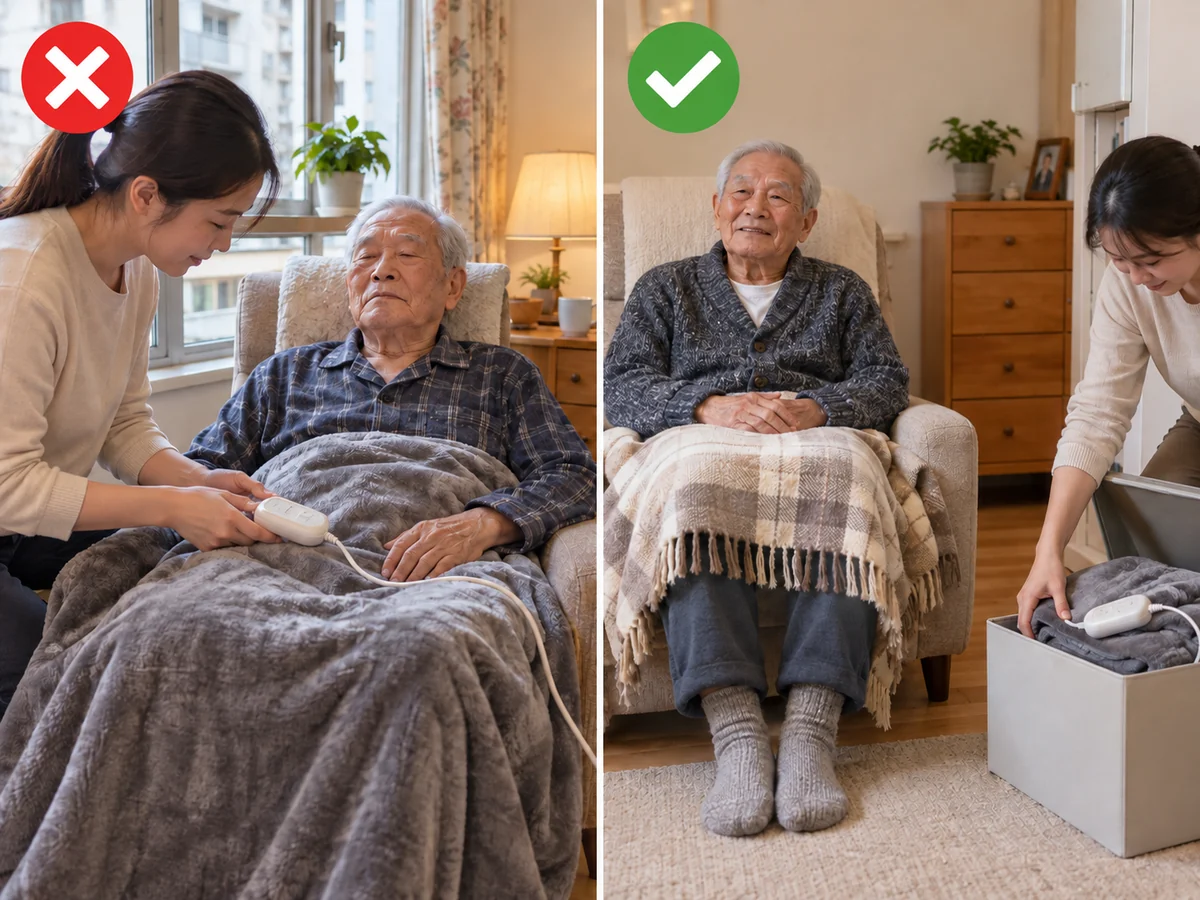
Do not use electric blankets for heat-insensitive people or young children; follow product limits and care advice for other users.
View safety lesson →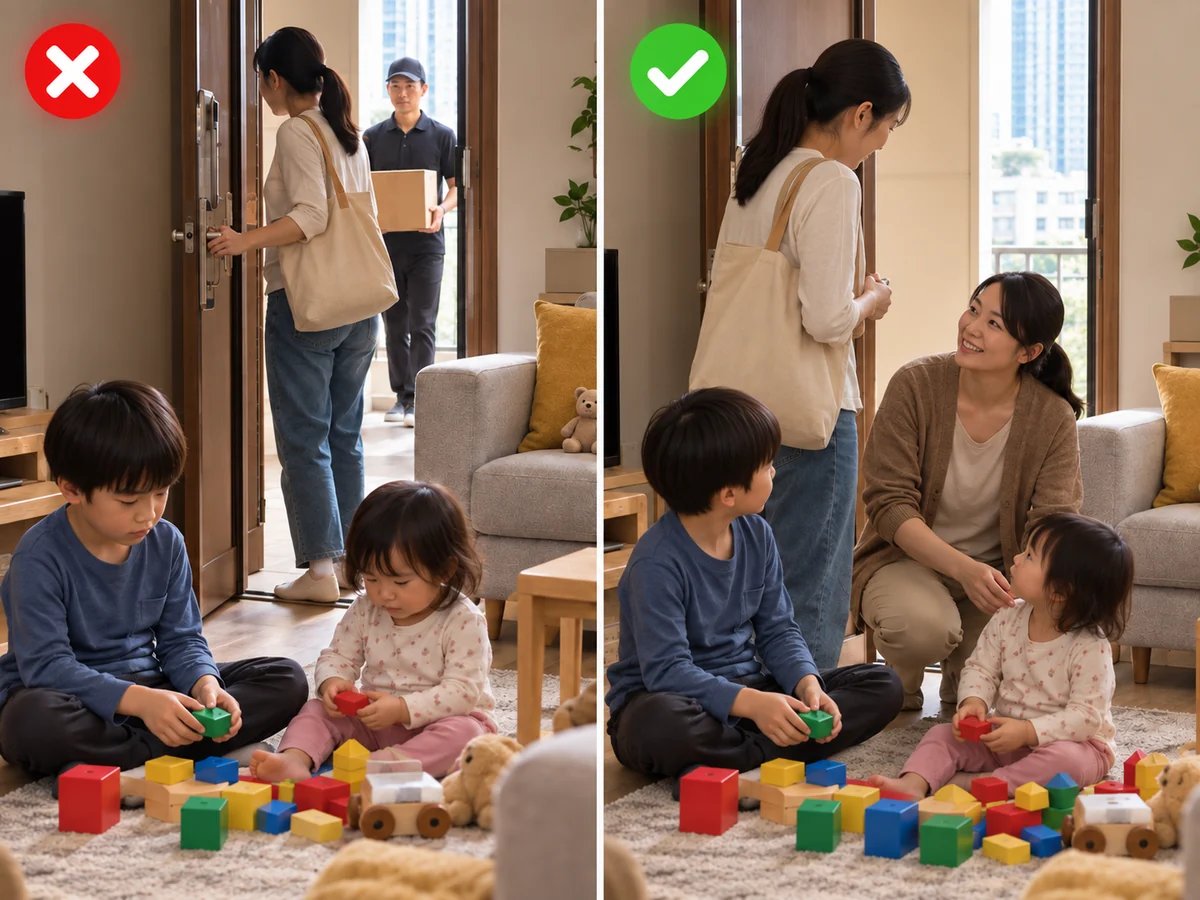
Leave only after that adult has arrived and accepted responsibility for the child. Make a direct handover; a sleeping child or older sibling is not adult supervision.
View safety lesson →
Never shake the baby; place the baby safely in a suitable cot and call for adult support. If shaking has occurred, seek urgent medical help and tell clinicians what happened.
View safety lesson →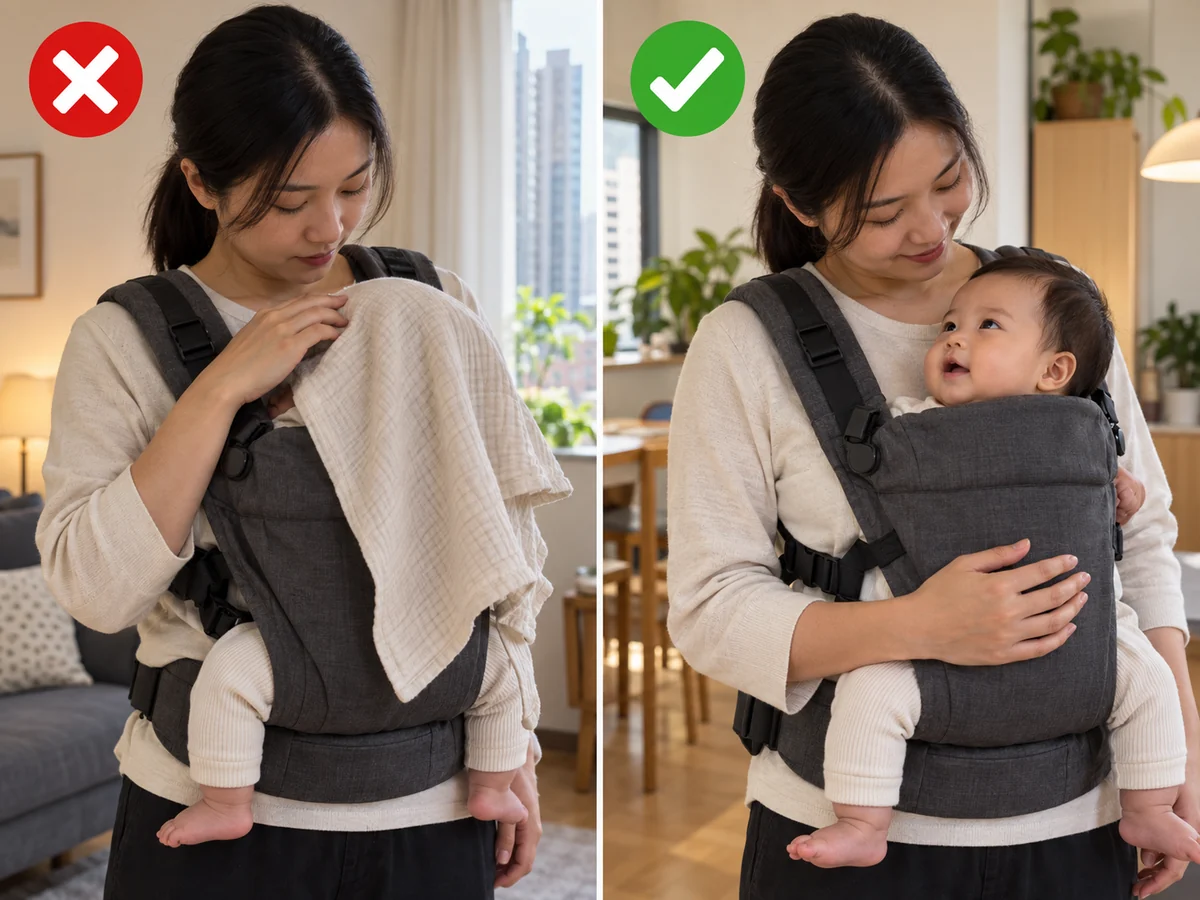
Keep the face visible, nose and mouth clear, and chin away from the chest. Recheck breathing and position after the baby falls asleep or shifts.
View safety lesson →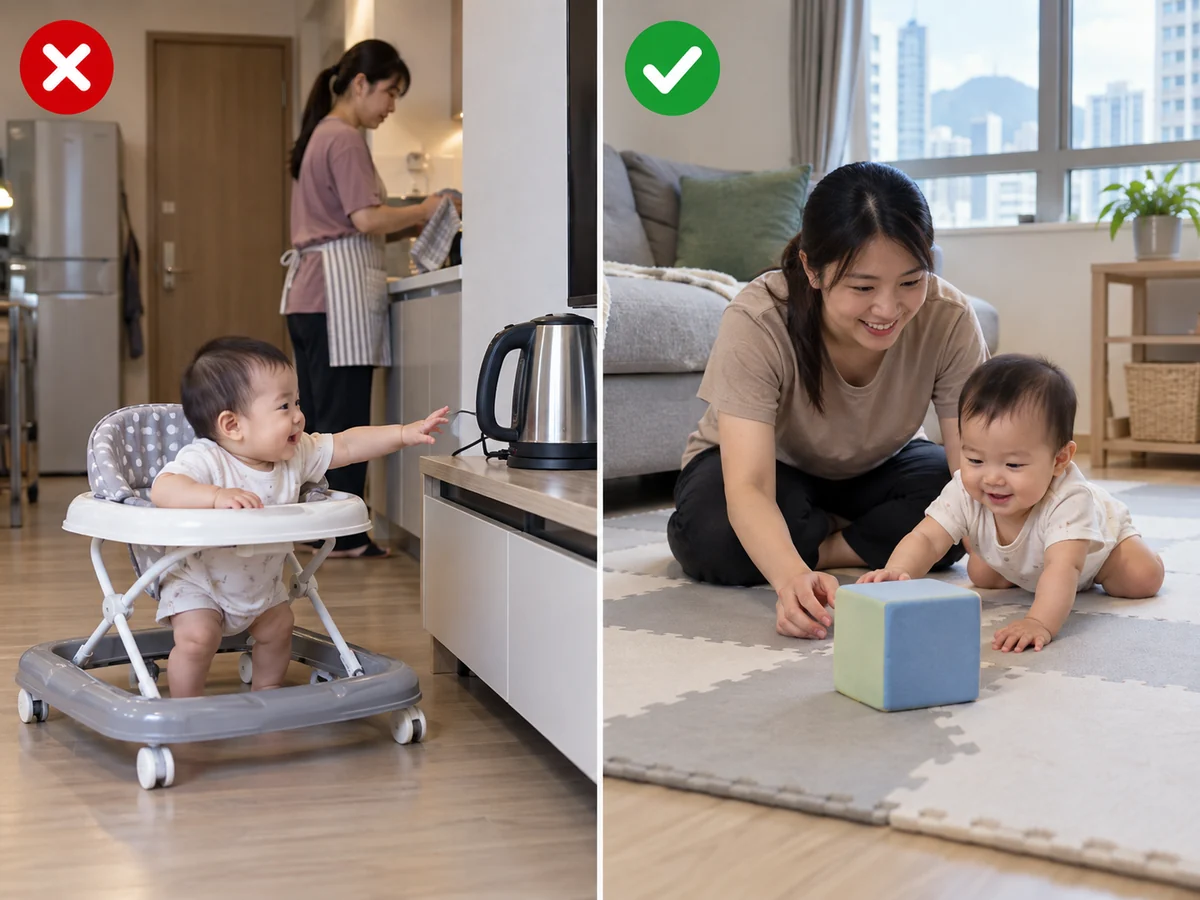
Avoid wheeled baby walkers and supervise suitable floor activity instead. Stay with the baby and let movement develop at the baby's own pace.
View safety lesson →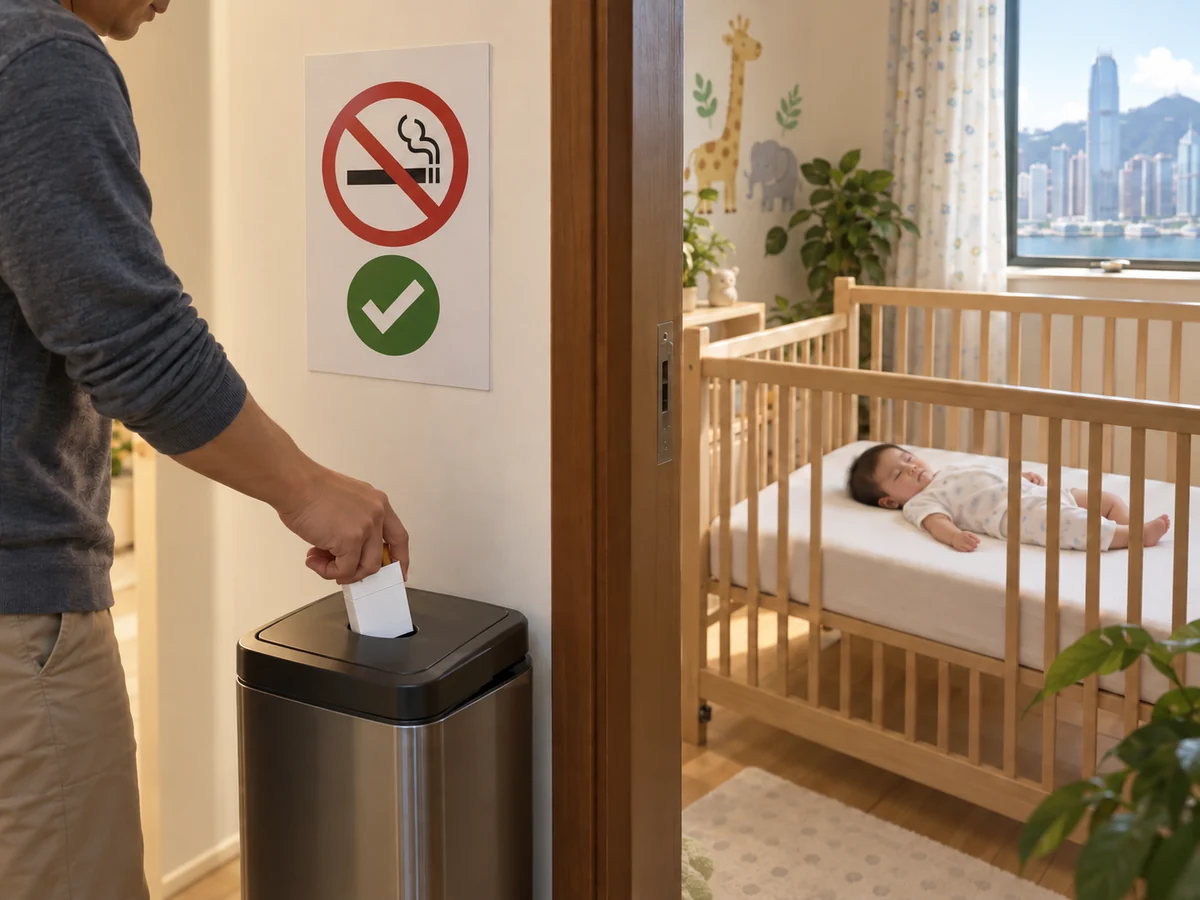
Keep the baby's living and sleeping environment free of tobacco smoke. Do not rely on a window or fan to make smoking nearby safe.
View safety lesson →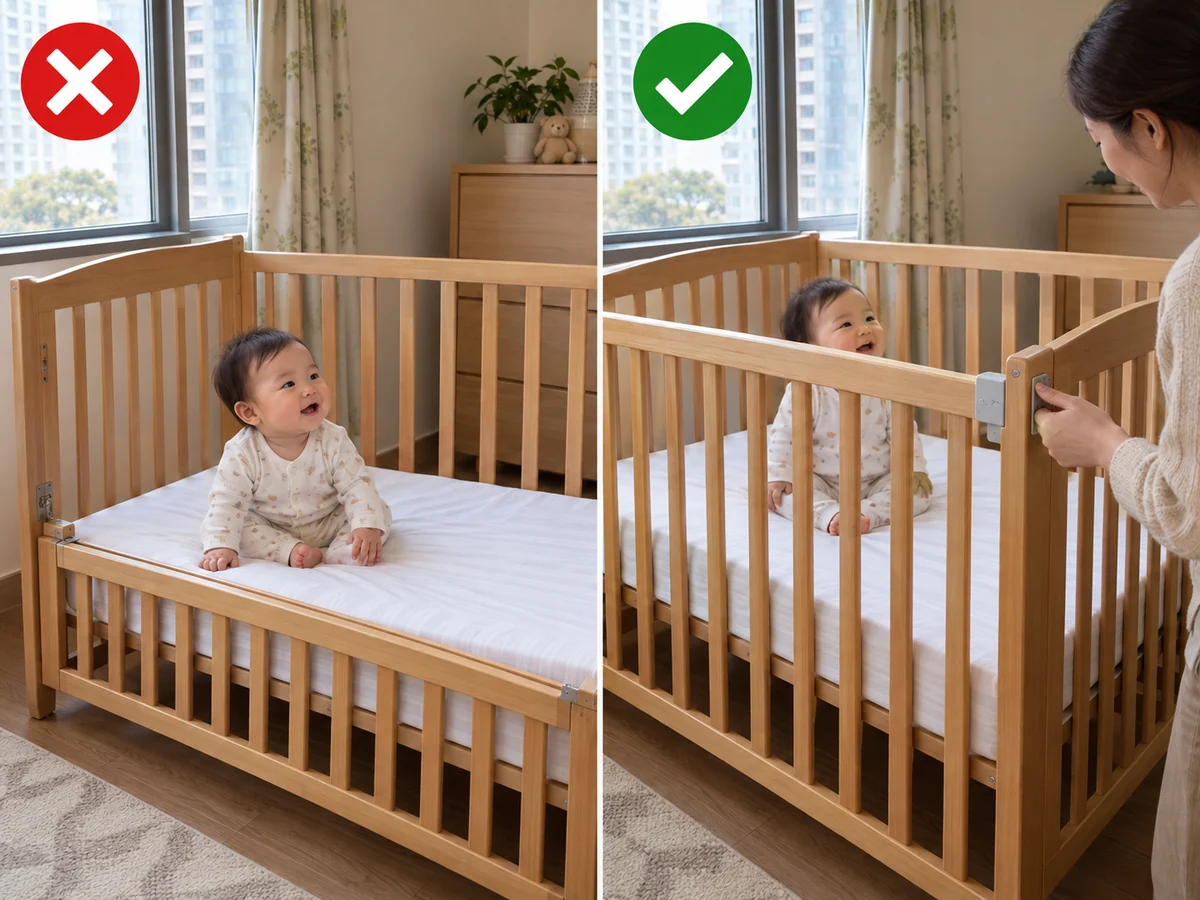
Raise and lock the cot side according to the manufacturer's instructions after care. Gently check the latch before stepping away; stop using a faulty cot.
View safety lesson →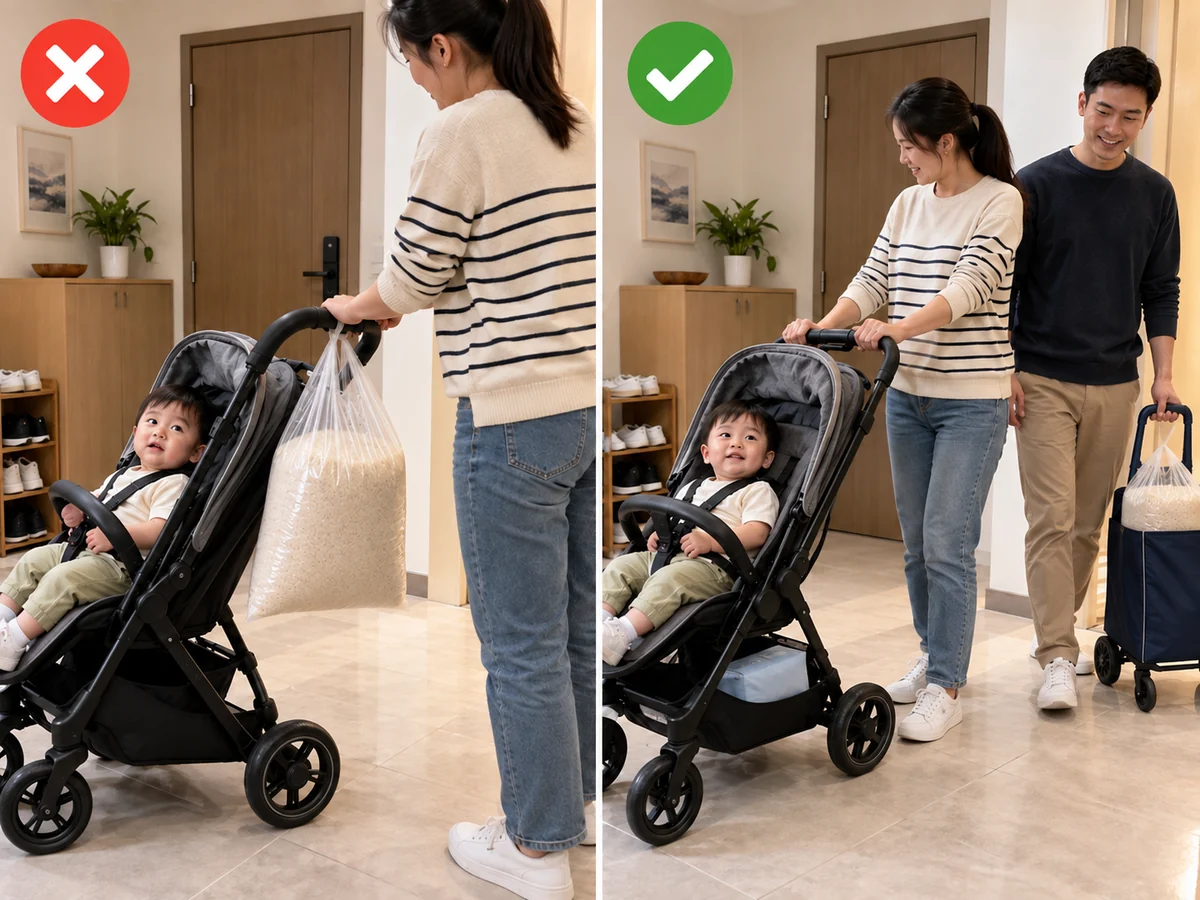
Use only the permitted storage space and keep heavy bags off the handles. Arrange separate transport for heavy shopping; brakes do not correct bad balance.
View safety lesson →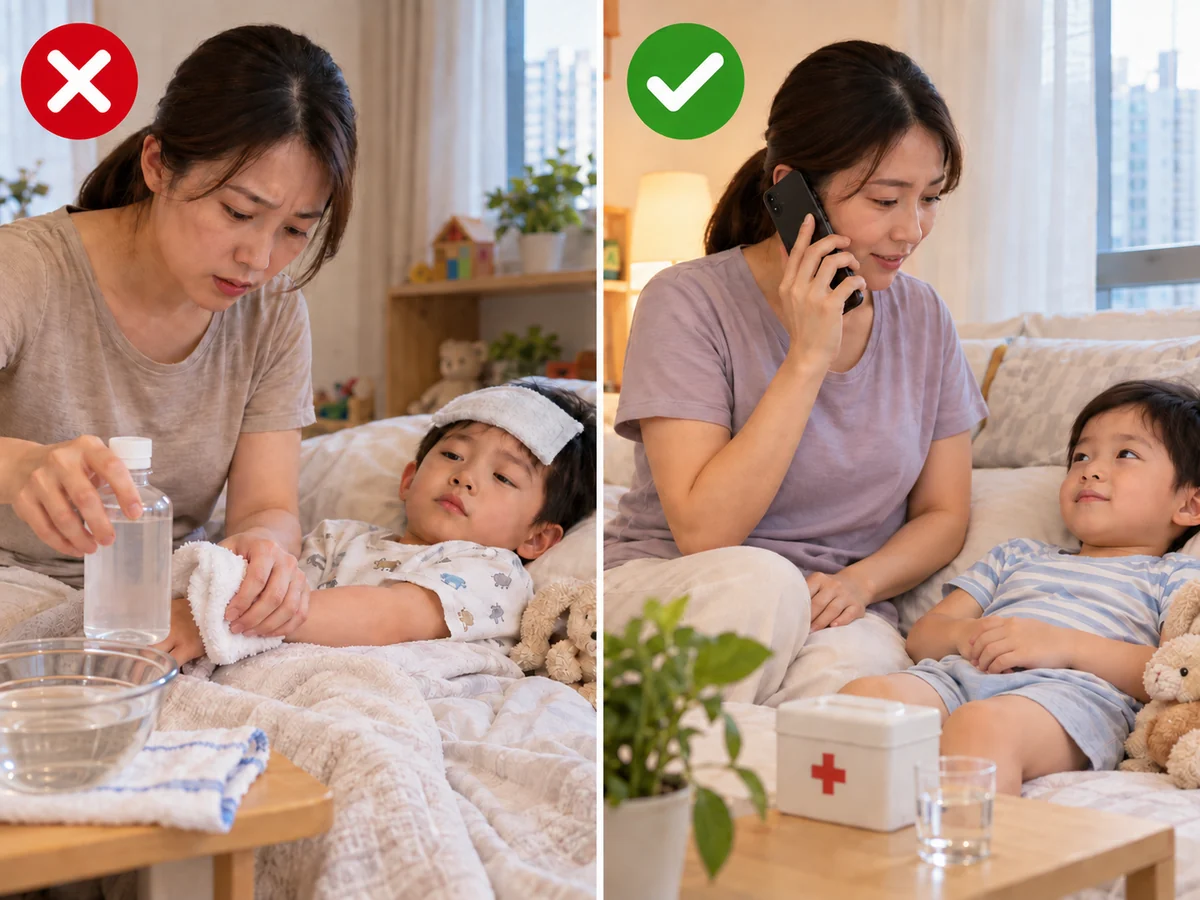
Do not use alcohol rubs or ice water for fever; follow age-appropriate medical advice. Seek prompt medical help for a young infant or a child who is very unwell or breathing poorly.
View safety lesson →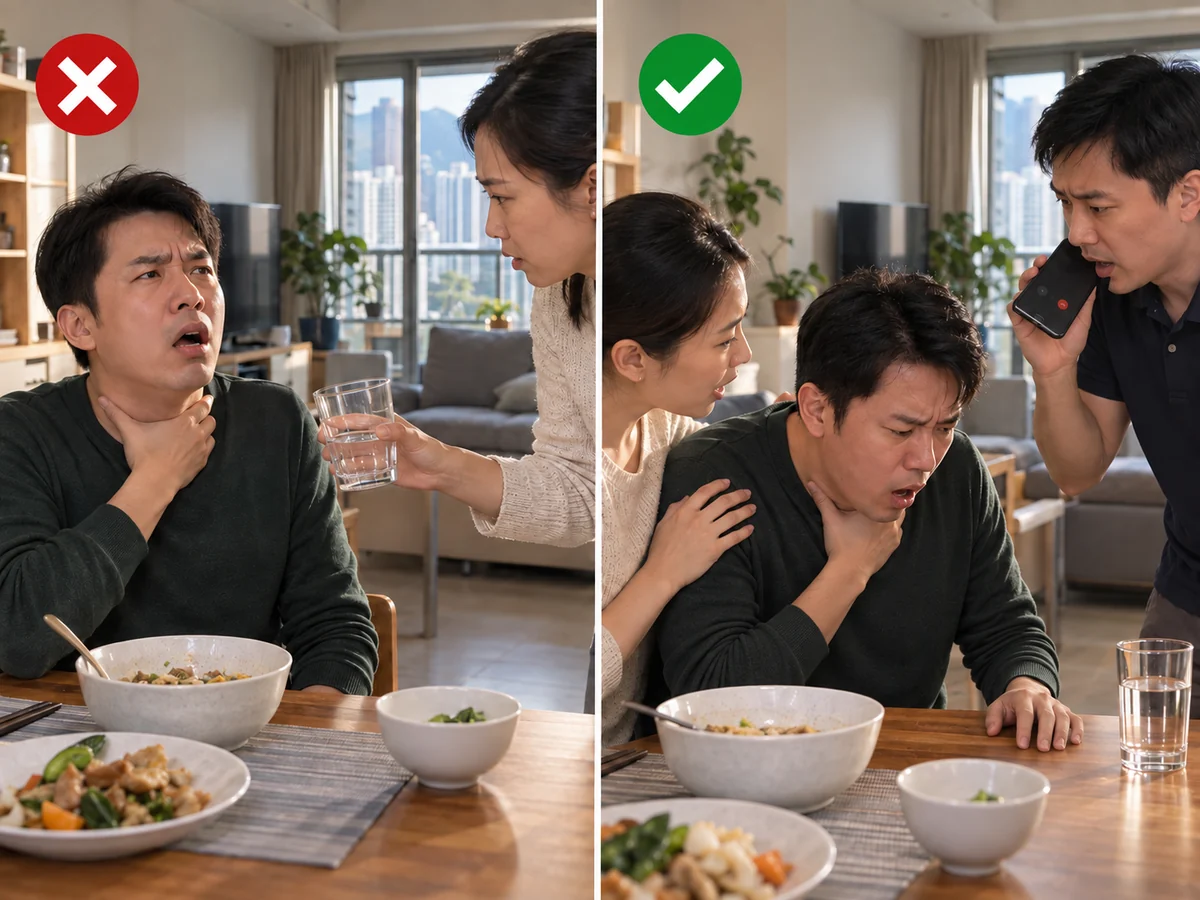
Encourage effective coughing; if they cannot speak or cough effectively, call 999 and follow age-appropriate trained or dispatcher-guided first aid. Do not give drinks or use adult abdominal thrusts on a baby; follow the operator if responsiveness changes.
View safety lesson →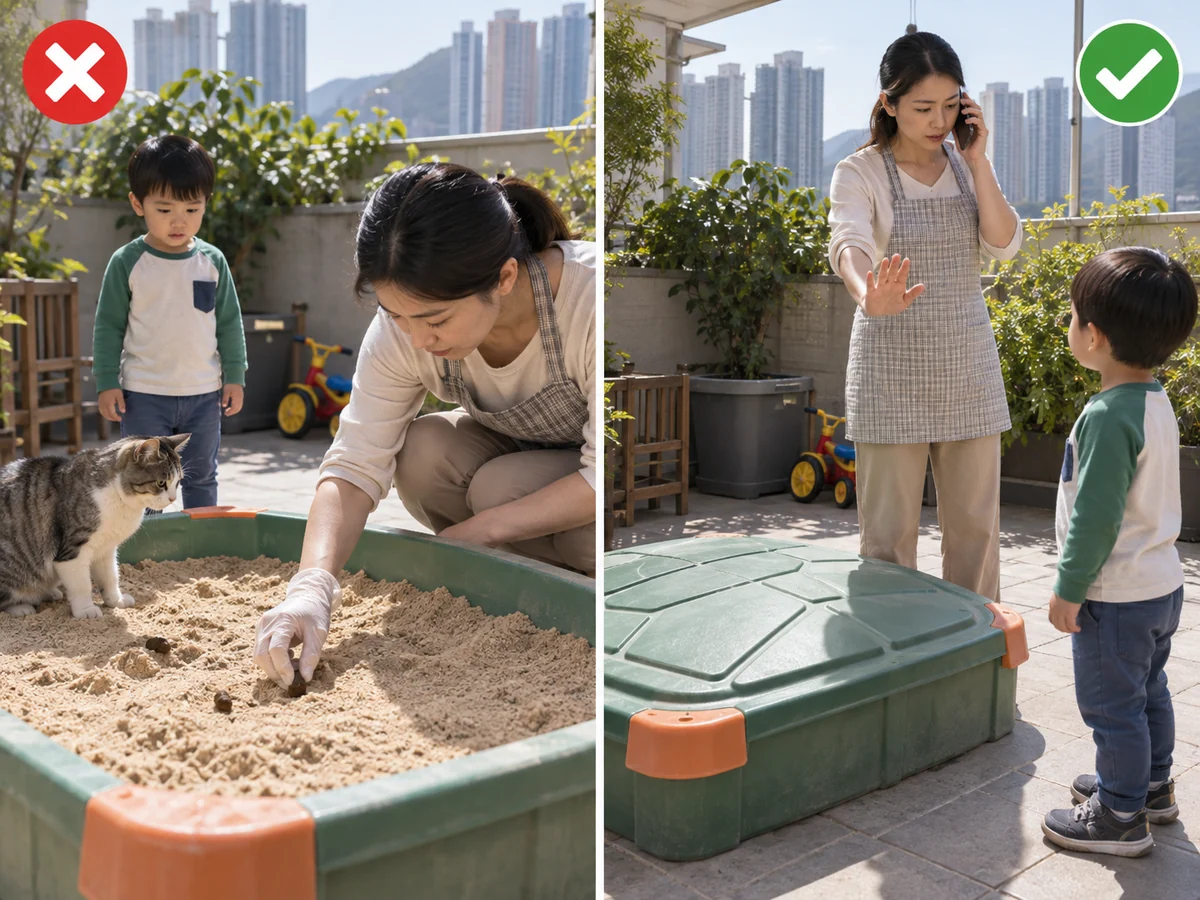
Cover a child's sandbox when unused to keep cats out; stop play and tell the employer if faecal contamination is found. Picking out visible faeces does not establish cleanliness; keep it out of use and wash hands with soap after sand contact.
View safety lesson →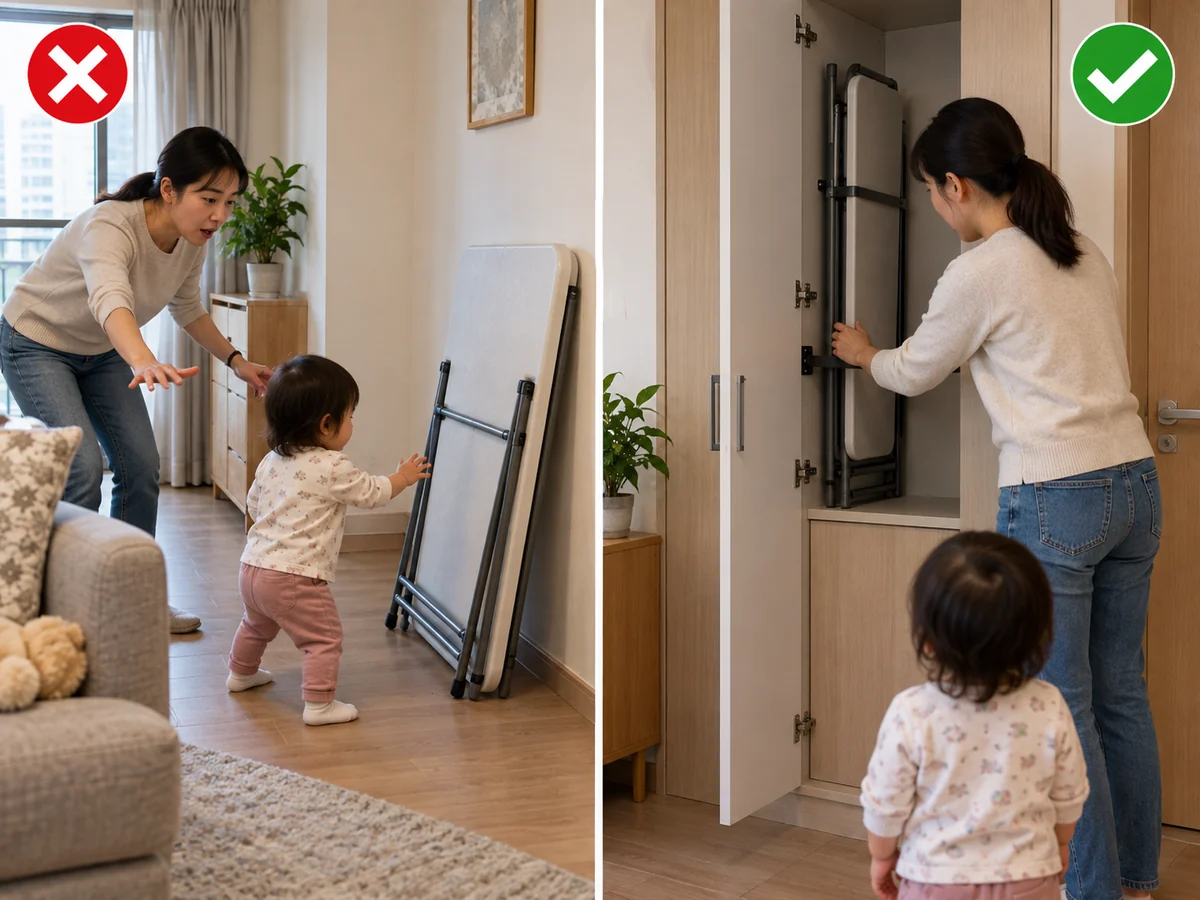
Secure the folded table as instructed so children cannot topple it; never let children crawl into or play with its leg frame. Do not leave it merely leaning against a wall; if it cannot be secured, arrange child-inaccessible storage with the employer.
View safety lesson →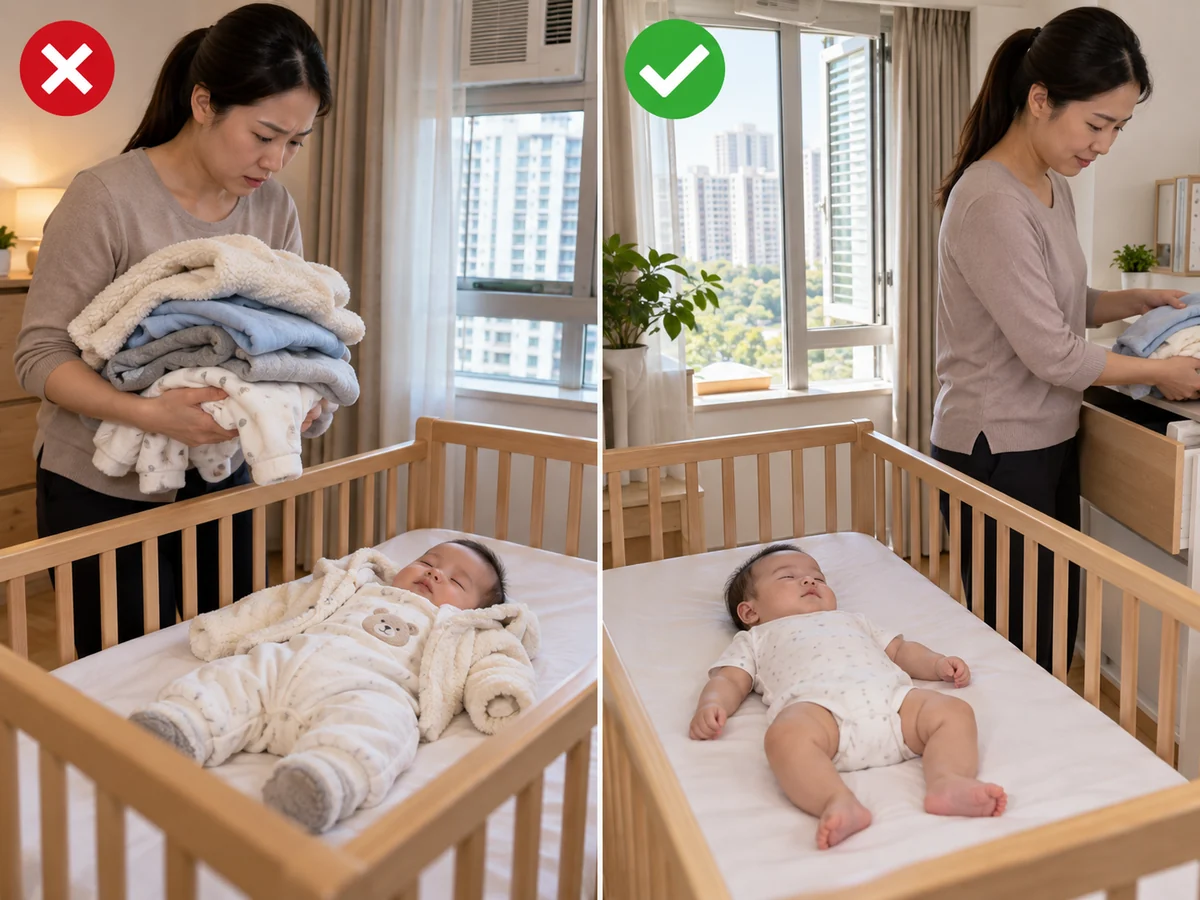
Dress a sleeping baby in suitable light clothing and keep the room comfortably ventilated; do not add layer upon layer for fear of cold. At handover explain the clothing and room conditions; retain back-sleeping and the clear cot without quilts or soft items.
View safety lesson →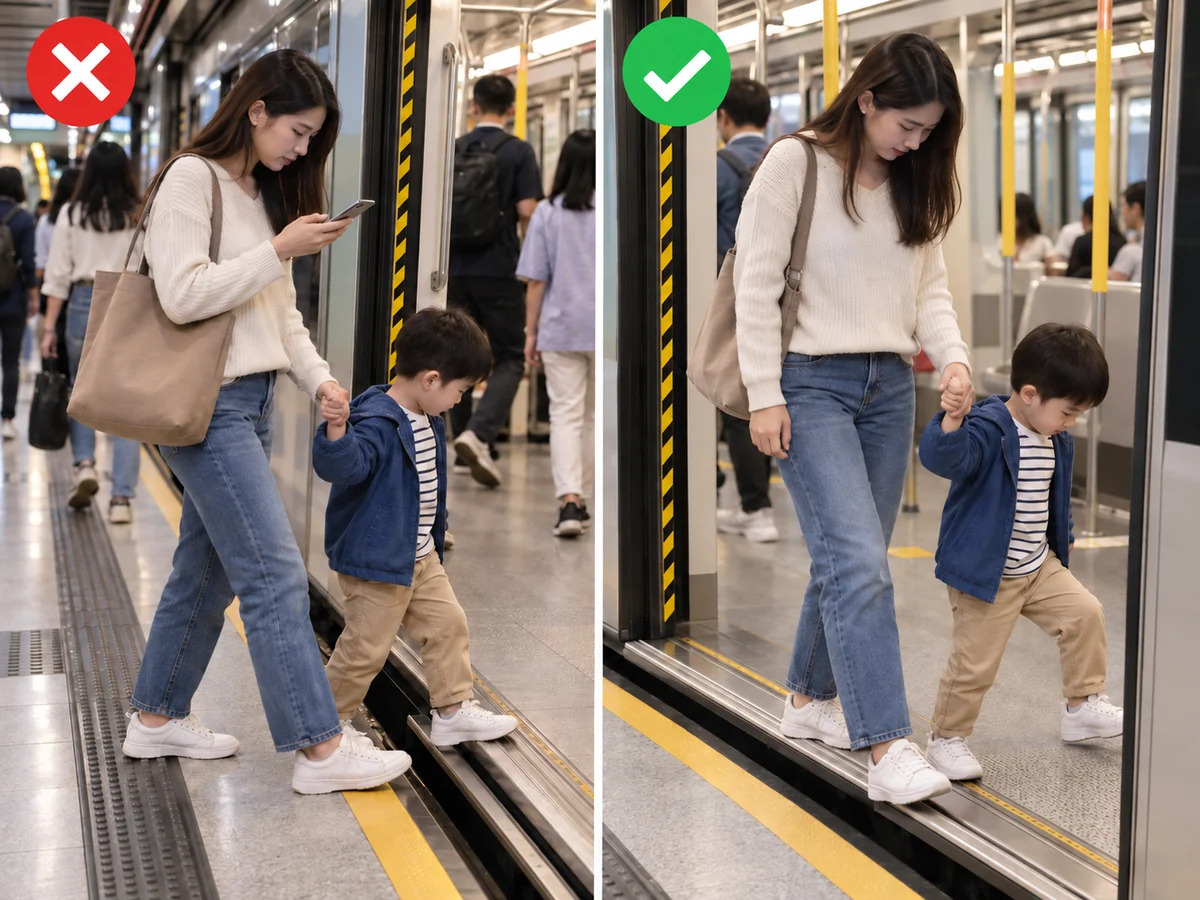
After the train stops and doors open, check the platform gap before helping the child across; ask staff if crossing is not safe. Use the help point to contact staff; do not enter the tracks for dropped items or rush through closing doors.
View safety lesson →